
Imagine trillions in real-world assets moving onto the blockchain, but with privacy strong enough to keep big institutions comfortable. That’s not some far-off crypto promise—it’s what Dusk Network is building right now. Since 2018, this Amsterdam-based Layer-1 has skipped the hype cycles and focused on real R&D. While others chased trends, Dusk spent years figuring out regulated finance on-chain. Now, as of January 7, 2026, their mainnet is live, and it’s not just a demo. Big players like NPEX—a Dutch exchange with €300 million under management—are already jumping in.
What really makes Dusk stand out? Their obsession with privacy and compliance. We’re talking zero-knowledge proofs (ZKPs) built right into the protocol. Transactions stay confidential, but regulators can still audit them if needed. Their Hedger privacy engine mixes homomorphic encryption and zk-SNARKs, hiding amounts, addresses, and identities—yet everything checks out as valid. This isn’t the wild west of total anonymity. It’s privacy you control: institutions can protect their strategies from rivals, but still provide the proof needed for laws like MiCA or GDPR. For tokenized bonds, equities, and commodities, that’s huge. Too much transparency leaks sensitive info; too much secrecy just brings headaches from regulators. Dusk threads the needle.
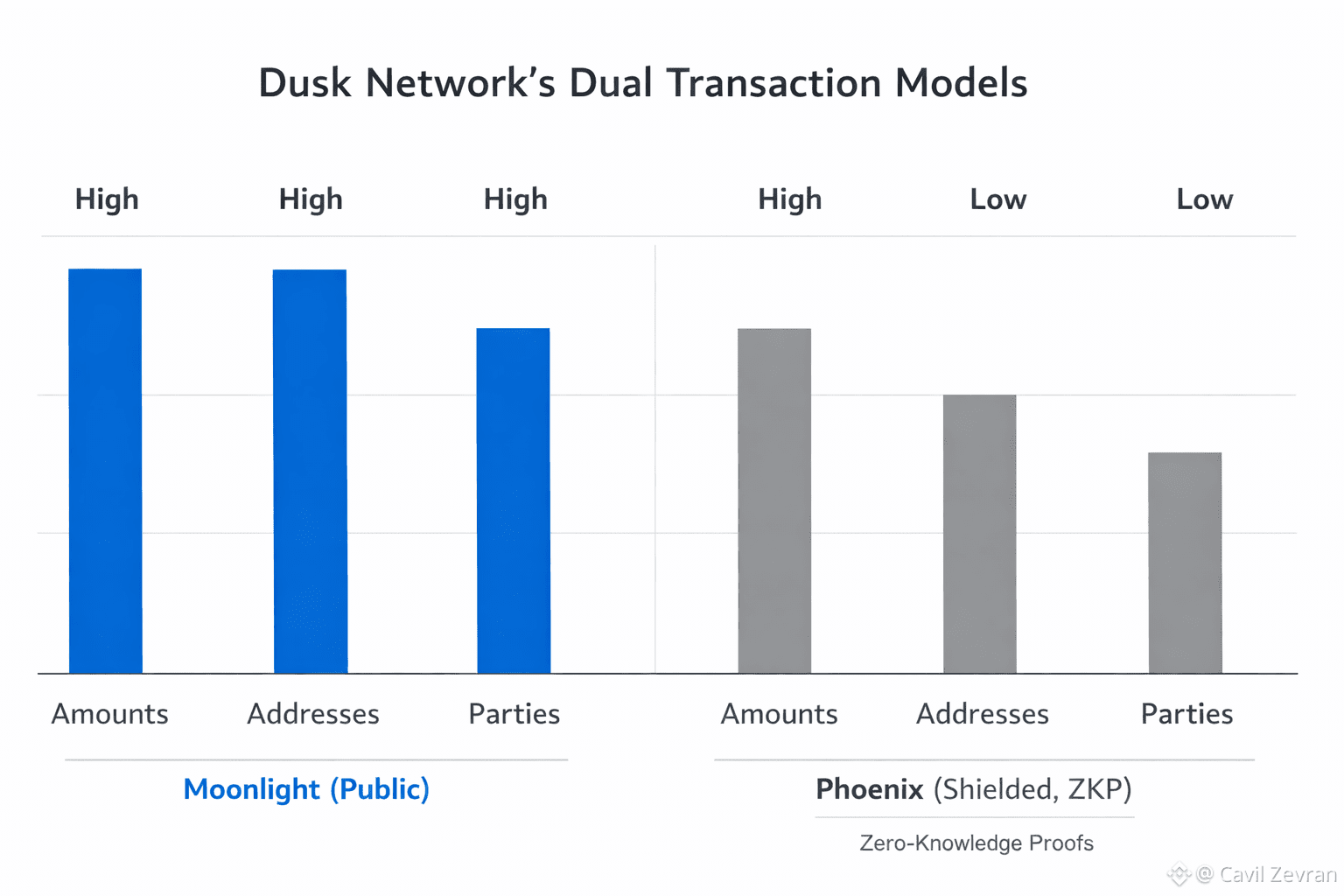
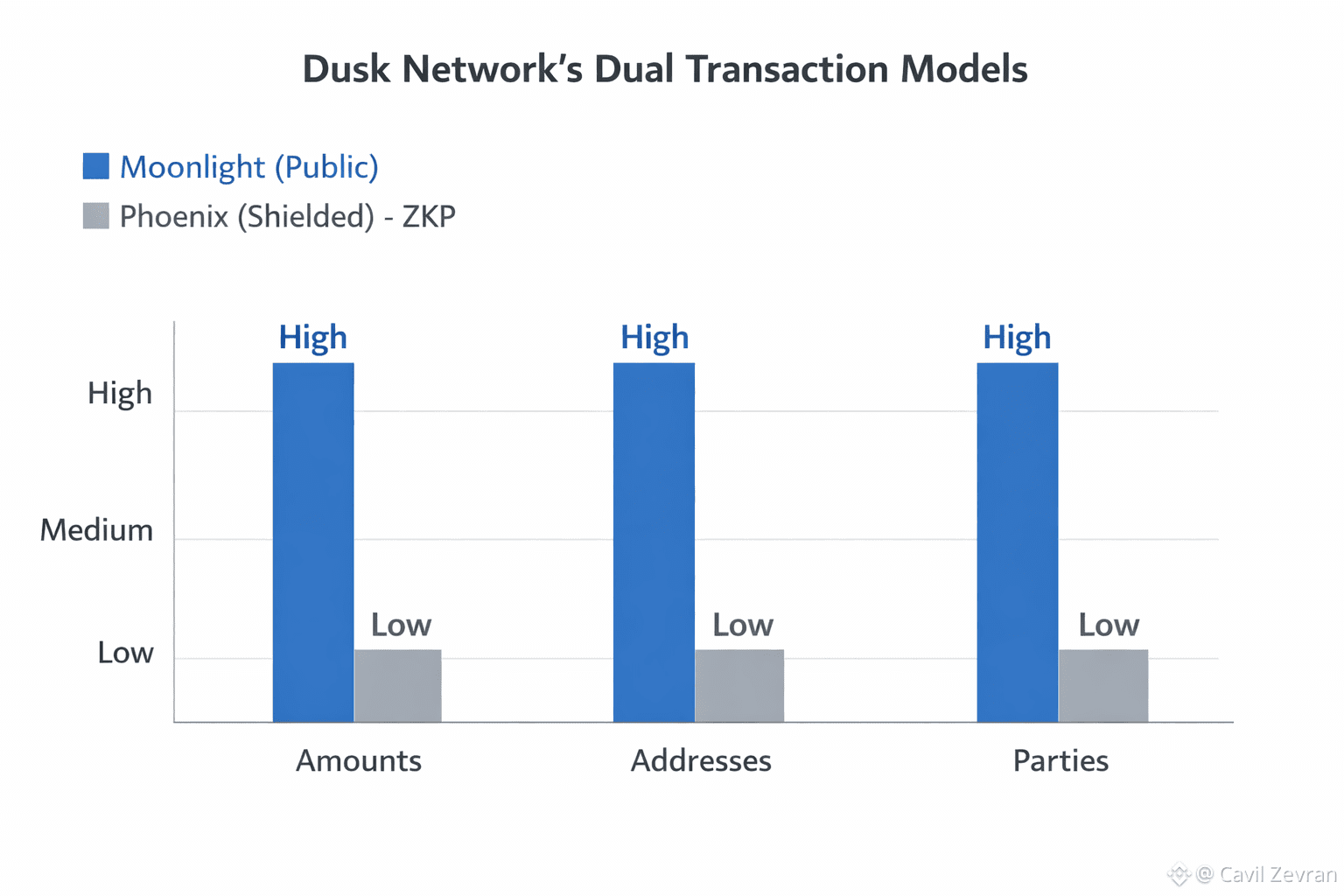
Under the hood, Dusk is built like serious enterprise tech. It’s modular, with separate layers to keep risks contained and upgrades painless. At the core, you’ve got DuskDS doing settlement, consensus, and data availability—fast and cheap. Above that is DuskEVM, which is fully EVM-compatible, so Ethereum developers can use their usual tools and deploy Solidity contracts without drama. Soon, DuskVM will launch—a WASM-based engine built for privacy-first computing. The network supports two transaction types: Moonlight for public, account-based operations (easy for exchanges), and Phoenix for private, UTXO-style transfers using ZKPs. Phoenix actually extends the UTXO model for more complex systems, keeping execution costs private while maintaining solid finality through committee consensus.
In the real-world asset game, Dusk is moving fast. Their work with NPEX isn’t vaporware—they’re actually set to tokenize over €300 million in bonds and private equity, plugging right into regulated trading under the EU’s DLT Pilot Regime. Add Chainlink’s CCIP for cross-chain moves and Data Streams for real-time price feeds, and Dusk isn’t limited to its own corner. Tokenized securities can flow across Ethereum, Solana, and more. Picture issuing sovereign green bonds for environmental projects—ZKPs can prove compliance and green credentials without spilling sensitive details. Delivery-vs-Payment (DvP) smart contracts handle instant settlement, cutting out the old T+2 delays and slashing risk. Suddenly, luxury assets like art or classic cars can get tokenized via SPVs, all with legal protection and audit trails.
When it comes to consensus, Dusk uses Succinct Attestation—a committee-based proof-of-stake. Randomly chosen provisioners propose, validate, and ratify blocks, giving fast, reliable finality. Leader selection is fair: private scores from hidden bids, hashed through Poseidon, so no whales can rig the system. Zero-Knowledge Segmented Byzantine Agreement (ZK-SBA) adds another privacy layer for staking and node selection. Fees run on gas, paid in LUX (1 LUX = 10⁻⁹ DUSK). Unused gas gets refunded, and reverted transactions only charge for what they used—efficient and friendly for institutional volumes.
The DUSK token holds it all together. It covers fees, powers staking for security, and lets holders vote on governance. Supply is capped at 1 billion, with half released up front and the rest trickling out over decades as rewards. Right now, about 37% of tokens are staked, spread across hundreds of provisioners, showing real buy-in. Bridges to chains like BSC keep liquidity moving, with thousands holding wrapped tokens and plenty of activity. Here’s something interesting: 96% of transactions are public, while just 4% are shielded. That’s probably going to shift as more institutions jump in and privacy gets more valuable.
Finally, Dusk’s Citadel protocol takes self-custody to a new level. It lets users prove KYC credentials with minimal disclosure—a one-way mirror for audits, so you can stay compliant without giving up privacy.


