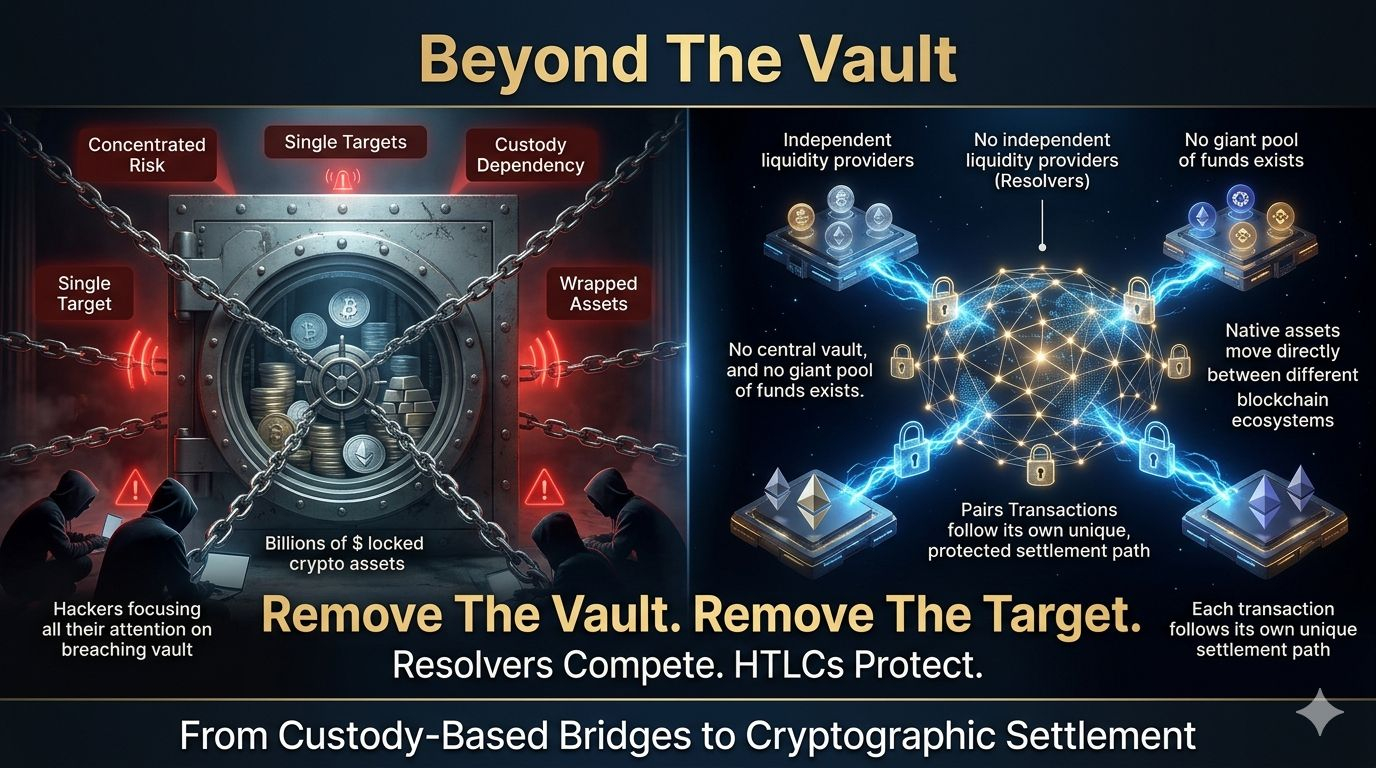
One thing that stands out when studying cross-chain infrastructure is that many security problems originate from the same place: a large pool of assets sitting inside a central vault.
Traditional bridges typically lock assets on one chain and issue wrapped versions on another. While this model has helped connect blockchain ecosystems, it also creates attractive targets for attackers because so much value is concentrated in a single location.
This is one reason Omniston, the execution layer developed by STON.fi, caught my attention.
Instead of relying on a shared vault, Omniston uses a network of independent liquidity providers known as resolvers.
When a user requests a swap, the protocol broadcasts a Request for Quote (RFQ), allowing multiple resolvers to compete and offer the best available execution. Rather than depending on one pool of funds, liquidity comes from participants competing to fulfill the request.
What I find most interesting is how settlement works.
Once a quote is selected, the user's assets are locked on the source chain while the resolver locks the corresponding assets on the destination chain. Both sides are linked through paired Hashed Timelock Contracts (HTLCs), creating a structure where the outcome is very clear.
Either the swap completes successfully for both parties, or the assets automatically return to their original owners according to the protocol rules.
There is no middle ground where funds are left permanently stuck between chains.
For me, this highlights a broader trend in DeFi. The next generation of cross-chain infrastructure isn't just focused on moving assets between networks. It's focused on reducing unnecessary trust assumptions and creating more predictable outcomes for users.
As Omniston expands its connectivity between TON and EVM ecosystems, it presents an interesting example of how cross-chain execution can evolve beyond the traditional bridge model.
Explore the ecosystem:
🔗 app.ston.fi/pools