



XRP is beginning to attract stronger attention from institutional markets as new investment products and derivatives access continue to develop around the asset.
A key part of this shift is the growing momentum around XRP ETFs. According to SoSoValue data referenced in the market update, XRP-related ETFs have recorded more than $75 million in net inflows so far in April. That figure is especially notable because it has already surpassed the total net inflows seen throughout the first quarter.
This suggests demand is accelerating rather than simply continuing at the same pace. When monthly inflows begin to outpace an entire previous quarter, it usually points to a meaningful change in investor behavior.
At the same time, Coinbase is preparing to expand XRP’s presence in regulated derivatives markets. The exchange is set to activate XRP Futures Trade at Settlement, also known as TAS, on May 1. Coinbase has also filed with the CFTC to support TAS functionality for XRP futures on Coinbase Derivatives.
This matters because TAS is commonly associated with more mature and institutionally traded markets. XRP being placed alongside assets such as Bitcoin, Ethereum, gold, and crude oil gives it a stronger position within traditional trading infrastructure.
The combination of ETF inflows and regulated futures access points toward deeper Wall Street involvement. XRP is no longer being viewed only through the lens of retail speculation. Instead, it appears to be moving into a phase where larger investors are paying closer attention.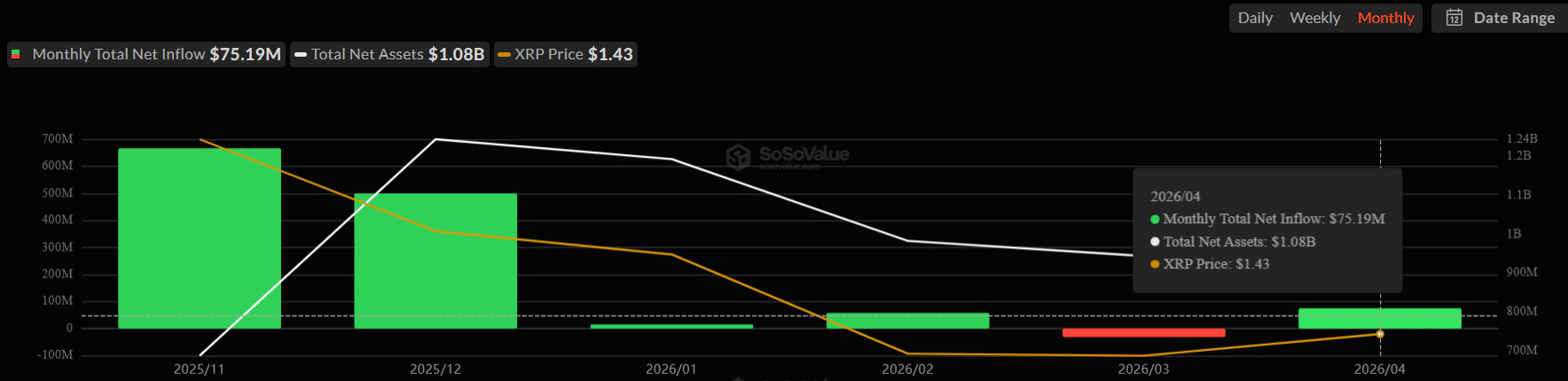
Price action has also started to reflect this shift. XRP has gained around 6% from its $1.30 opening level, with the move lining up closely with the rise in ETF inflows. While short-term volatility remains, the broader setup suggests that buyers may be positioning ahead of a larger move later in the year.
Another important factor is XRP’s long consolidation phase. Extended sideways movement can often frustrate traders, but it can also signal quiet accumulation when paired with declining exchange supply and rising institutional flows.
In this case, the current market structure looks less like weakness and more like a base being built. The inflows, derivatives expansion, and reduced available supply all point toward a market that may be preparing for a stronger institutional cycle.
If this trend continues into the second half of the year, XRP could benefit from a deeper shift in demand. The recent $75 million in ETF inflows may only be the early stage of a much larger rotation.
For now, XRP’s choppy price action should not be ignored. It may actually be part of a longer-term accumulation pattern, especially as Wall Street access expands and institutional interest continues to grow.
Final Takeaway
XRP’s prolonged consolidation, falling exchange supply, growing ETF inflows, and new regulated derivatives access all suggest that institutional demand is building. While the asset remains volatile in the short term, the broader structure is starting to look more like preparation for a potential second-half breakout than simple sideways movement.