@Pixels You know that feeling when you open a game and it just clicks? Like you’ve found a little corner of the internet that feels like home? That’s Pixels for you. It’s not flashy. No explosions, no crazy fast-paced action. Just soft, pixelated fields, the sound of a shovel digging into dirt, and the slow, satisfying rhythm of planting something and watching it grow. At first glance, it’s just another farming game. But spend an hour there, and you realize—this isn’t just playing. This is building.
Let me tell you the story. Back in late 2021, Luke Barwikowski and his small team put together the first version of Pixels in eight days. Eight days! And their total budget? Just $200. Can you believe that? They didn’t have big ads or fancy trailers. They just put it out there and said, “Hey, check this out. Tell us what you think.” And people did. They played, they gave feedback, and the team listened. Every week, they tweaked things, added new crops, fixed little bugs—making the world feel more alive, one update at a time. Then came the big move. In October 2023, they switched from Polygon to the Ronin Network. And wow, what a difference that made! Suddenly, transactions were fast, fees were almost nothing, and players from all over—Asia, Latin America, everywhere—started pouring in. Daily users jumped from a few thousand to over 170,000 overnight. By 2024, half a million people were logging in every day. But even as it grew, it never lost that warm, small-community vibe.
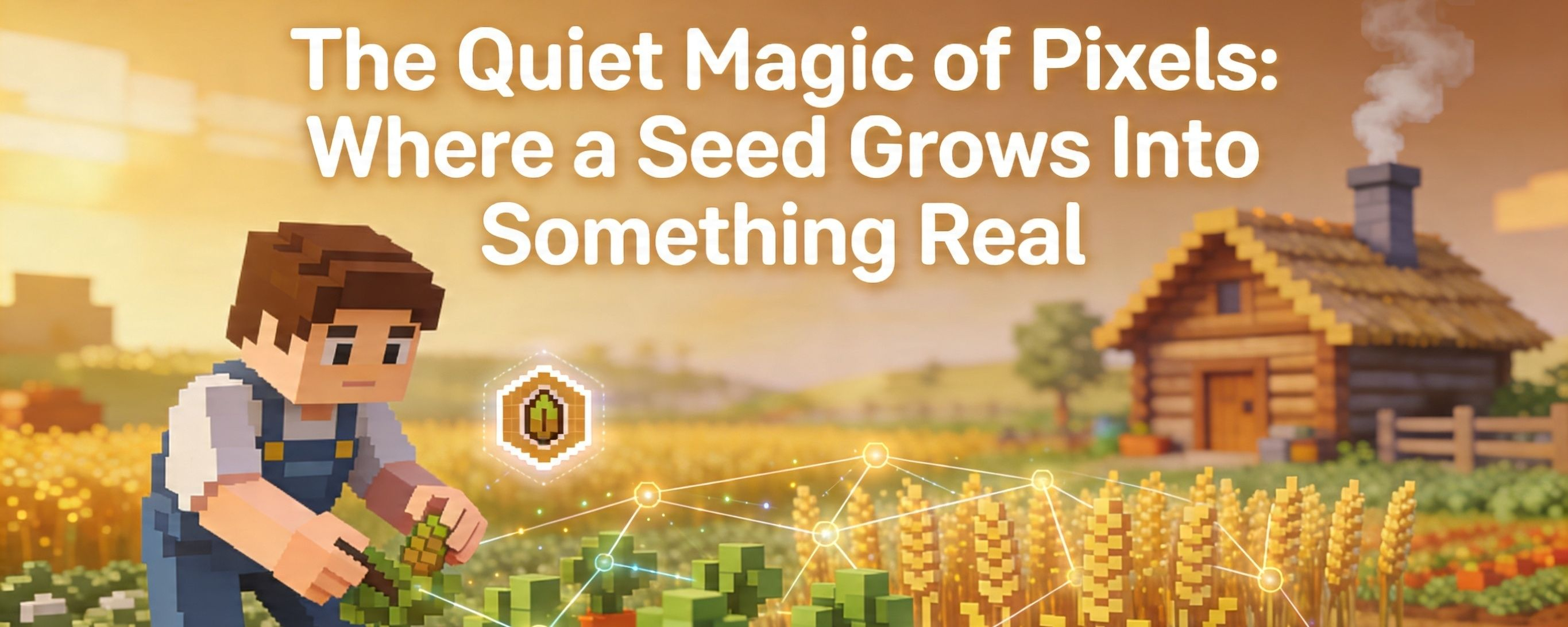
So what do you actually do in Pixels? Well, you plant seeds. You wait for them to grow. You harvest them. You chop wood, mine stones, cook meals, build little houses and gardens that are yours. It’s simple enough that anyone can pick it up in five minutes. But there’s so much more under the surface. Your skills get better the more you use them. Farm enough, and you unlock rare seeds that no one else has. Craft enough, and you can make tools and items that are totally unique. There’s forestry, mining, taking care of animals, even running your own little shop. It’s not about being the fastest or the strongest. It’s about taking your time, getting good at what you love, and making something you’re proud of. And land? Oh, land is special. You can play for free on public plots, and that’s totally fine. But when you own land—when it’s yours, recorded on the blockchain as an NFT—things change. You’re not just visiting anymore. You’re part of the world. You can grow more, earn more, even let other people use your land and share in what it produces. In Chapter 2, resources are tied right to where you are, so you end up working with others. Guilds form, friends help friends, and suddenly it’s not just a game—it’s a little community.
You’ve probably heard of all those Web3 games that promised big money and then crashed hard, right? Well, Pixels did things differently. They used to have a token called $BERRY, but it had issues with too much inflation. So they made the tough call to switch to $PIXEL. And this one’s different. It’s not just for buying and selling to make a quick profit. It’s the lifeblood of the whole game. You earn $PIXEL by doing real stuff: working your land, helping out, getting good at your skills. You spend it on things that make your game better—better tools, rare items, special access. And here’s the smart part: every time you spend, some of those tokens go back into the system or are removed completely. That keeps everything balanced, so the value stays steady. They call it RORS—Return on Reward Spend. Basically, for every token they give out, the game makes sure there’s real value behind it. It’s a circle that works. What you build, you own. What you own, you can keep, trade, or grow. And now there’s $vPIXEL too, a token that stays with you and works across different games—rewarding people who stick around and build, not just pass through.
Pixels isn’t standing still. Chapter 2 brought new ways to craft and connect. Chapter 3: Bountyfall added adventures, challenges, and seasonal events where everyone comes together to compete and win. The prize pools aren’t just handed out—they grow based on how much everyone puts in. But the coolest thing? It’s turning into more than just one game. Your items, your progress, your reputation—they follow you. They work in other games, other worlds. It’s becoming a whole ecosystem where what you create matters, no matter where you go. And they’re not stopping there. They’re working on new projects like Pixels Pals, a pet-themed game inspired by Tamagotchi, which will be the first mobile-first release, making it even easier for more people to join in.
So why has Pixels worked when so many others failed? I think it’s because they never forgot who they were making it for. They made it easy to start—no complicated wallets, no confusing words. But if you want to go deeper, all the tools are there. They kept the art style warm and familiar, like those old games we loved as kids, but built with modern tech that works perfectly. Most of all, they respected the players. They gave them ownership. They listened. They built something that feels like our place, not just something the developers made.
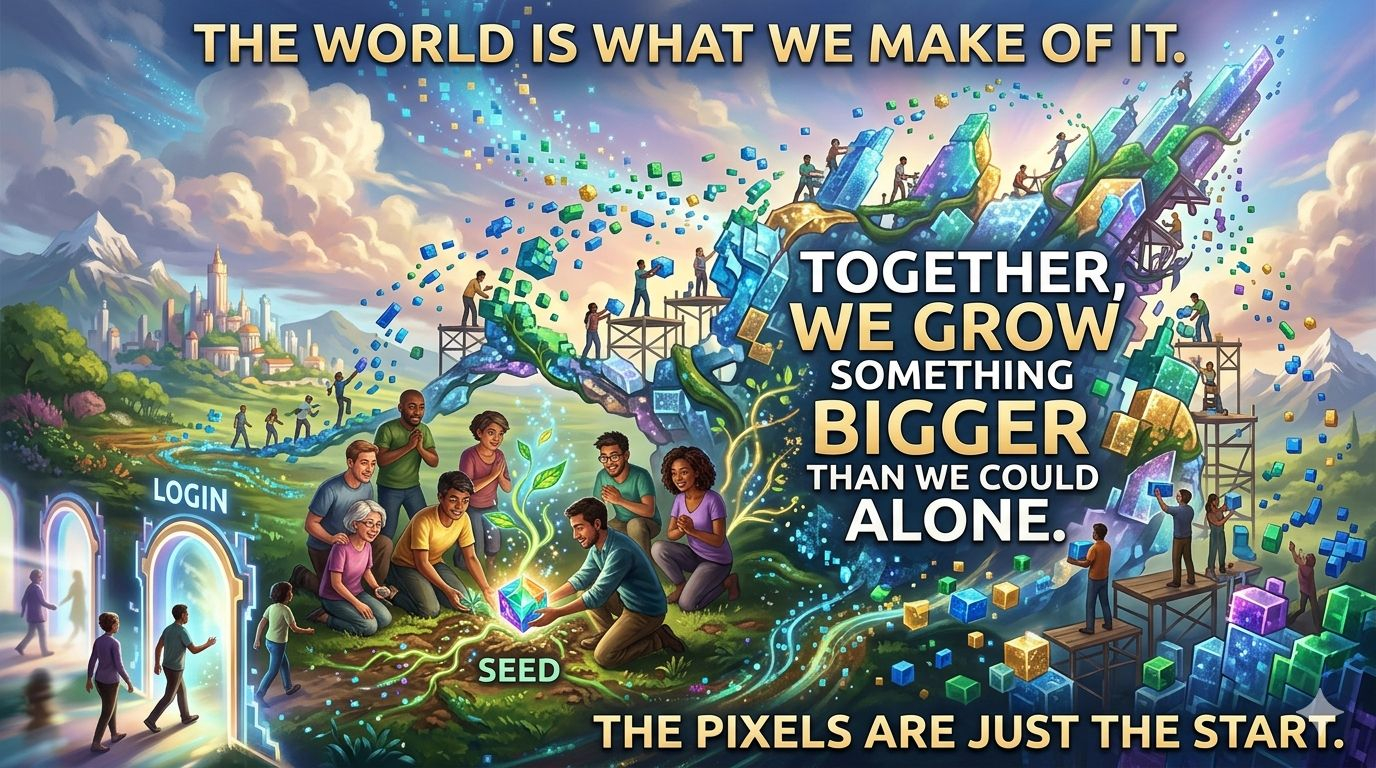
In a world that’s always rushing, always chasing the next big thing, Pixels moves at the speed of life. It reminds us that the best things aren’t the flashiest. They’re the things that feel real. The things that last. And that’s the magic, isn’t it? Not the blockchain, not the tokens. But millions of people logging in, planting a seed, and together growing something bigger than any of them could alone. The pixels are just the start. The world is what we make of it.