

That already says something. I’ve spent enough time around blockchain products to know the pattern: overengineered token systems, underbuilt gameplay, and a quiet assumption that “ownership” will carry the experience. It doesn’t. I’ve seen this fail repeatedly. You can’t financialize your way into engagement.
Pixels doesn’t try as hard to impress. That’s probably why it works better than most.
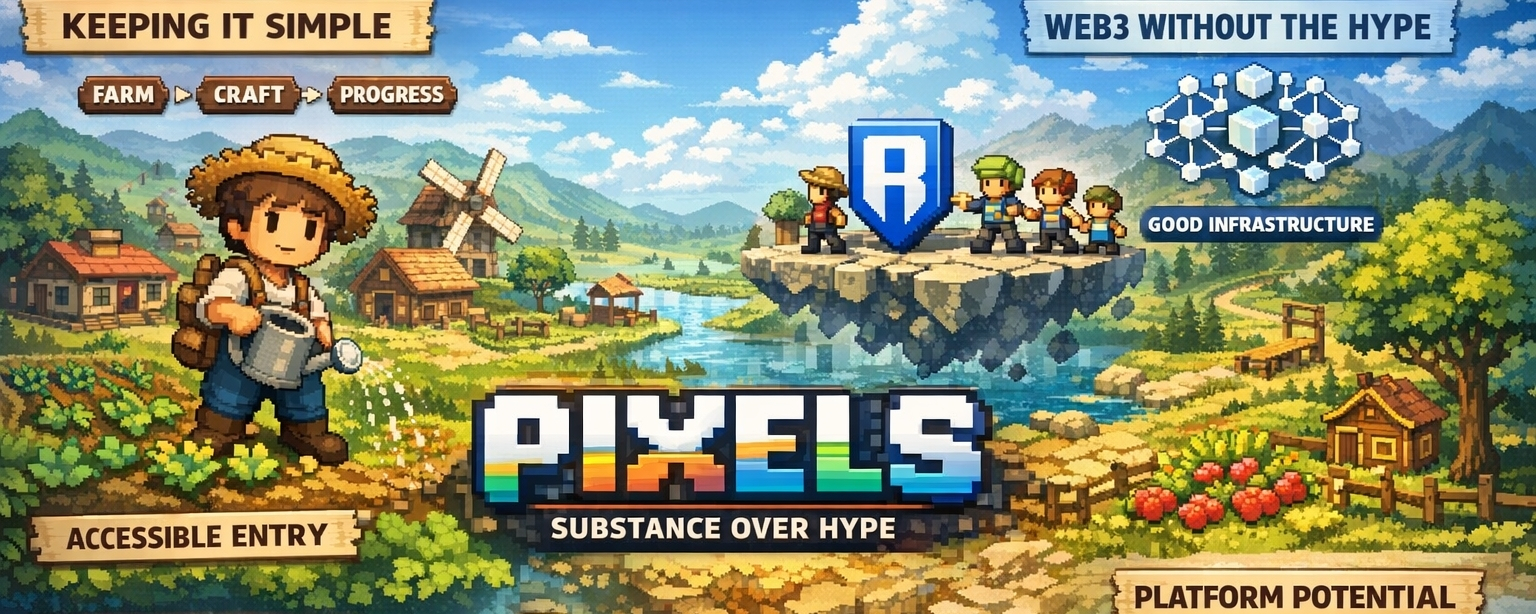
At a glance, it’s a farming game. Crops, land, crafting, some exploration, a shared world layered on top. Nothing groundbreaking. And that’s the point. Instead of inventing new behavior, it leans into patterns people already understand. You plant something. You come back. You upgrade. You expand. That loop is old, but it’s stable. In system design terms, it’s predictable input-output with visible state changes. Users don’t need a manual to understand why they should care.
That’s rare in Web3.
Most projects in this space assume users will tolerate complexity because the backend is novel. Wallets, tokens, staking logic, ownership layers stacked on top of each other. It’s a mess. Pixels mostly keeps that out of the way, at least early on. You can interact with the system without immediately being dragged into its economic model. That’s not innovation. That’s restraint.
And restraint is underrated.
Underneath the surface, the structure is doing something sensible. The farming loop feeds into crafting. Crafting feeds into progression. Progression unlocks new capabilities. It’s not deeply complex, but it doesn’t need to be. I’ve seen teams collapse their own products by overlinking systems until every action depends on five others. Pixels avoids some of that by keeping dependencies shallow enough to reason about. You upgrade a tool, you feel the difference. You unlock a recipe, you use it. No abstraction layers getting in the way.
That’s good system hygiene.
The accessibility piece is also worth calling out. Earlier NFT games made the same mistake over and over: they treated upfront asset ownership as onboarding. It’s not. It’s friction disguised as commitment. I’ve seen users bounce instantly when they realize they need to buy something just to try a product. Pixels lowers that barrier. You can enter, explore, and only later decide if you want deeper involvement. That changes the adoption curve entirely.
Now, the Ronin migration. That’s where this becomes more than just another game.
From an infrastructure perspective, this is the interesting part. Chains don’t become relevant because of whitepapers. They become relevant when something runs on them that people actually use. Daily. Repeatedly. Without being told to. Pixels gave Ronin that kind of load. Not theoretical throughput. Real activity.
I pay attention when that happens.
I’ve seen networks with impressive specs sit idle because nothing meaningful runs on them. Then a single application shows up and suddenly the chain looks alive. That’s not magic. That’s distribution meeting a usable product. Pixels did that job for Ronin. Whether it can sustain it is another question, but the initial signal was clear.
Of course, then there’s the token.
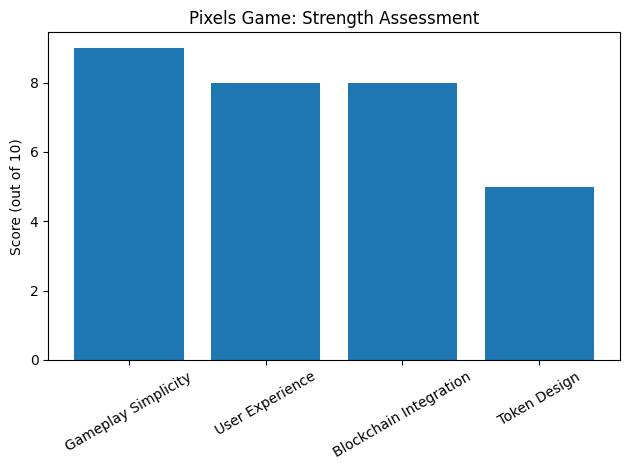
PIXEL sits as the premium layer, with BERRY handling softer in-game flow. On paper, that’s fine. It mirrors free-to-play economies: one currency for progression, another for acceleration, cosmetics, or status. I don’t have a problem with that structure. It’s been validated elsewhere.
But Web3 complicates everything.
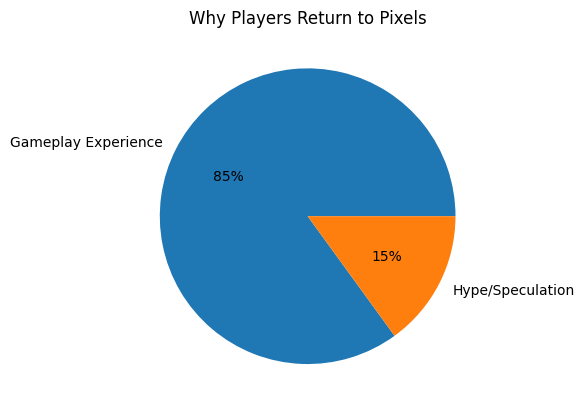
The moment a token trades publicly, the system stops being just a game economy. It becomes a financial object. Expectations shift. Behavior shifts. Suddenly, decisions are interpreted through price impact instead of user experience. I’ve seen this derail otherwise solid designs. What looks balanced in a closed system becomes unstable once external speculation kicks in.
Pixels hasn’t fully escaped that. I don’t think any project really has.
Still, it handles it better than most. Or at least it tries to keep the gameplay layer intact while the token layer does its thing. That separation matters. If the game collapses the moment token sentiment drops, then there was never a real product to begin with. Pixels seems more resilient than that, though I wouldn’t call it solved.
The reality is messier.
What I find more encouraging is the design philosophy underneath. It borrows heavily from systems that already work. Cozy loops. Incremental progression. Low-pressure interaction. These aren’t exciting ideas from a pitch-deck perspective, but they’re reliable. I trust systems that align with existing human behavior more than ones trying to rewrite it.
That’s just experience talking.
There’s also this emerging platform angle. Pixels isn’t just positioning itself as a game but as a kind of framework persistent worlds, user-generated spaces, shared infrastructure for items, maps, and interactions. I understand the appeal. Once you have identity, assets, and repeat engagement, the next step is abstraction.
I’ve also seen that go wrong.
Teams start with a solid product, then pivot into “platform thinking” too early. Everything becomes generalized. Complexity creeps in. Focus disappears. The original product weakens while the platform never quite materializes. It’s a common failure mode. Pixels will need to be careful here. Expanding the system is fine. Diluting it is not.
So where does that leave it
I’m still skeptical. That hasn’t changed. This space has earned that skepticism. Too many projects optimized for short-term attention instead of long-term function. Too many systems built around tokens instead of users. I don’t assume success anymore just because something looks active.
But I’m also not blind to progress.
Pixels looks like a product where the infrastructure is doing its job quietly. It’s there handling state, ownership, persistence but it’s not constantly demanding attention. That’s how it should be. Good infrastructure fades into the background. Bad infrastructure becomes the product.
Users don’t care about the chain. They care about whether the system works.
Pixels, for now, works. Not perfectly. Not completely. But enough to matter. And in a category full of noise, “working” is a higher bar than most people realize