
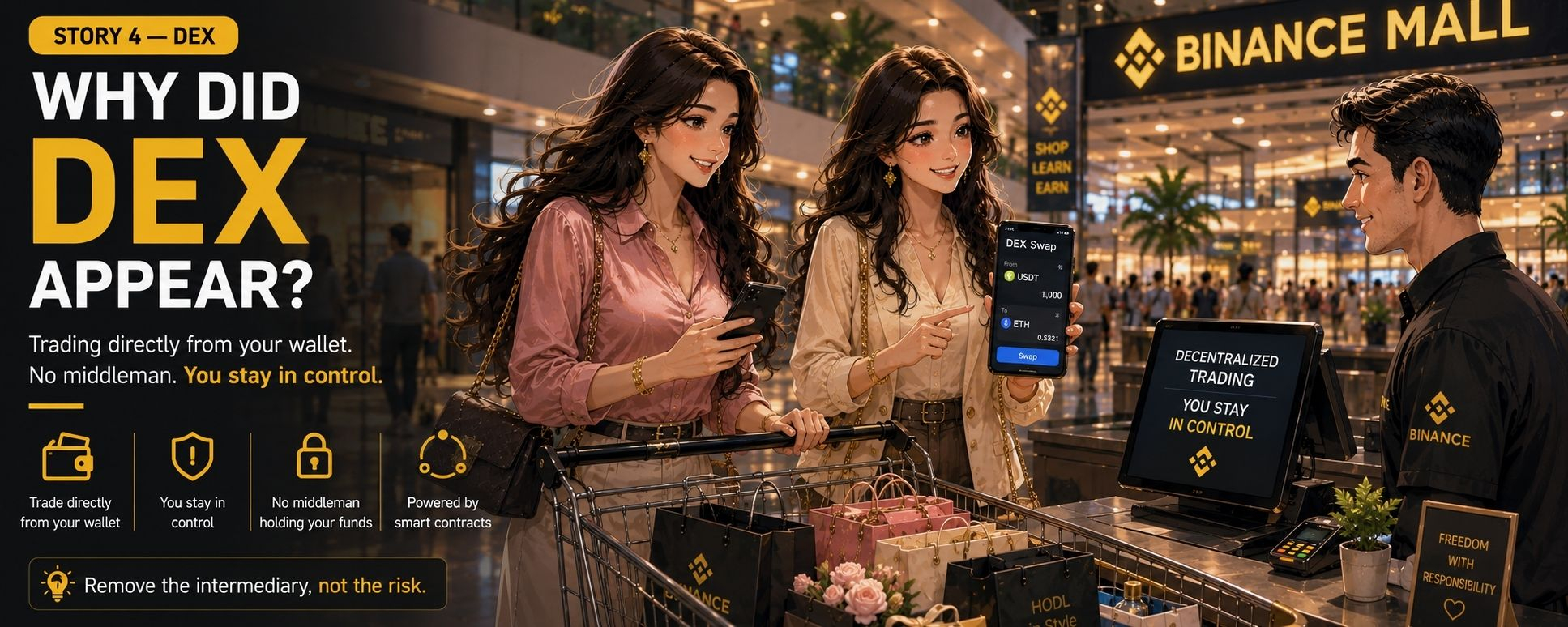

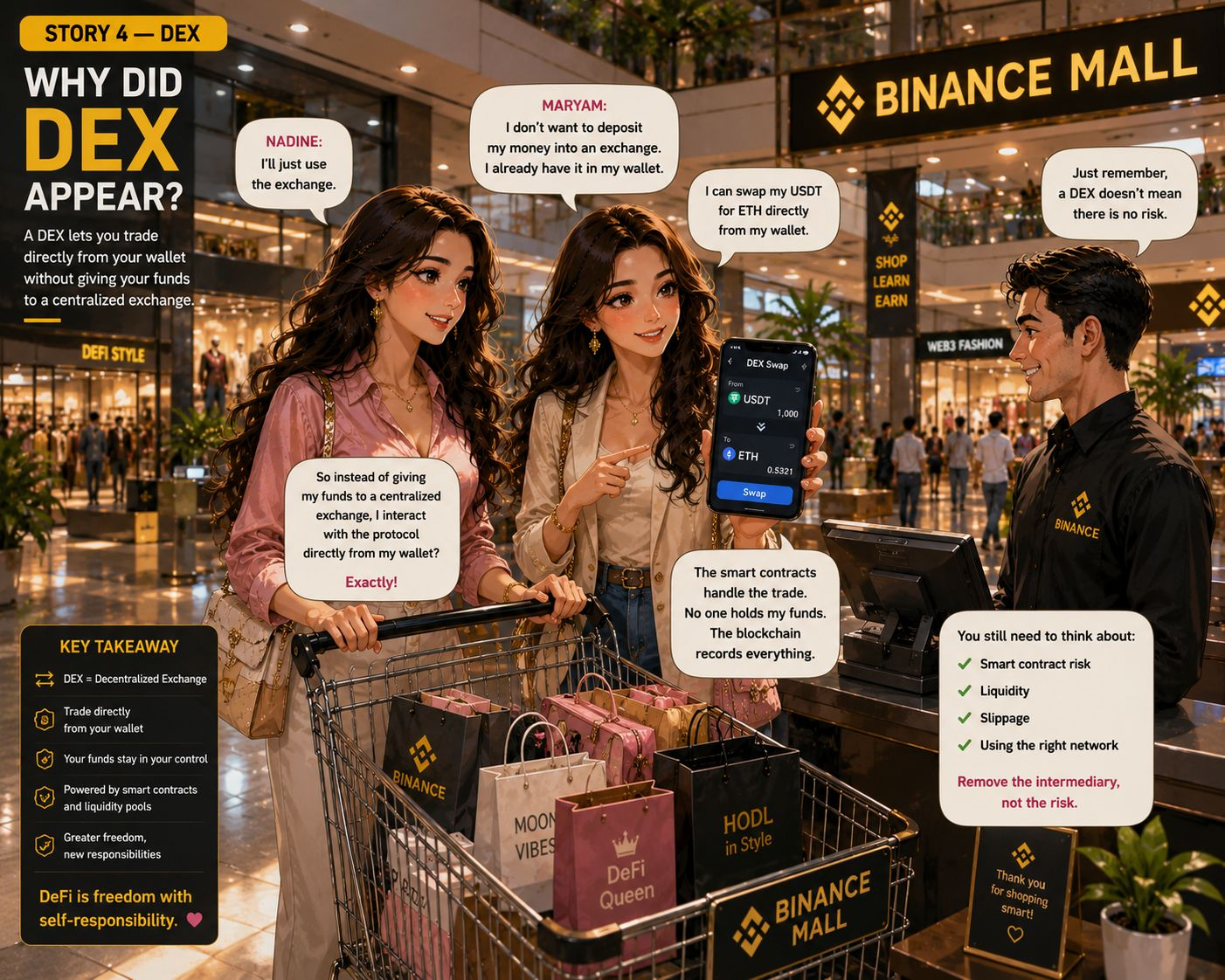
This time, they had come prepared.
A shopping cart was already half full when Maryam suddenly stopped in front of a store.
“Wait, Nadine. I want to buy something with my USDT.”
Nadine smiled.
“Easy. Just use the exchange.”
Maryam opened her phone.
“But I don't want to deposit my money into an exchange. I already have it in my wallet.”
Nadine looked at her.
“Then how are you going to swap it?”
Maryam smiled.
“I found another way.”
She opened an app on her phone.
“What is that?”
“A DEX.”
Nadine looked confused.
“Another exchange?”
“Kind of. But look.”
Maryam connected her wallet.
“I can swap my USDT for ETH directly from my wallet.”
Nadine leaned closer.
“Wait… you didn't send your USDT to an exchange?”
“No.”
“So who is holding your money?”
“No one is holding it for me.”
Nadine looked at the screen again.
“Then who makes the trade happen?”
“The smart contracts.”
Maryam selected USDT, chose ETH, entered the amount, and checked the details.
“The protocol finds the available liquidity, calculates the swap, and the blockchain records the transaction.”
Nadine smiled.
“So instead of giving my funds to a centralized exchange first, I interact with the protocol directly from my wallet?”
“Exactly.”
The cashier watched them for a moment and smiled.
“Just remember one thing.”
Both girls looked at him.
“A DEX doesn't mean there is no risk.”
Maryam nodded.
“You still need to think about smart-contract risk, liquidity, slippage, and whether you're using the right network.”
Nadine laughed.
“So there is no magic button after all.”
“Definitely not.”
They pushed their cart toward the next store.
Nadine looked at Maryam and said:
“I came here to buy things.
Somehow, I ended up learning how people trade without handing their funds to a traditional exchange.”
Maryam smiled.
“That’s DeFi for you.”
And the shopping continued.
---
A DEX, or Decentralized Exchange, allows users to swap assets directly from their wallets through blockchain-based smart contracts.
No traditional order desk is required to hold your funds.
But removing the intermediary doesn't remove risk.
It simply changes where the risk lives.