
stayed up later than i meant to last night going through the dispute resolution section and honestly this is the mechanic that separates Newton from every other compliance layer i've read about 😂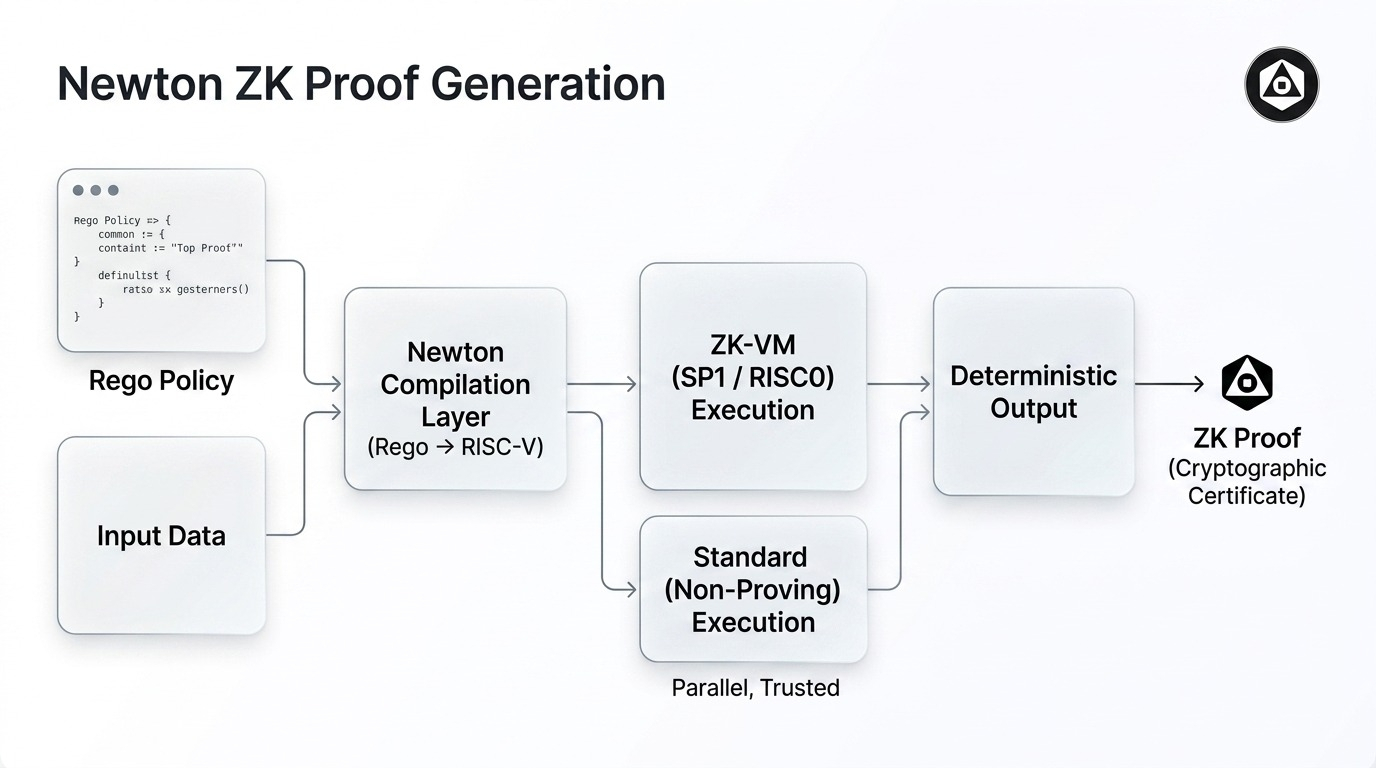
most decentralized systems that claim trustlessness still have a trust dependency buried somewhere in the resolution path. a multisig controls the upgrade. a governance vote decides the outcome. a committee reviews the dispute. someone somewhere has to be trusted to make the final call. Newton's challenge mechanism is designed to eliminate that dependency entirely - not reduce it, eliminate it.
here's how it actually works.
first, permissionless challenges. any entity can submit a challenge to an attestation – not just registered operators, not just protocol participants, not just known parties. a compliance auditor, an independent researcher, a competing application, an automated monitoring bot - anyone who detects a discrepancy between an on-chain attestation and the correct policy evaluation outcome can challenge it. this is a deliberate design choice with a specific implication: collusion between operators cannot go undetected because the entire world can independently verify, and anyone can hold the network accountable without asking permission.
second, the challenge window. after an attestation is recorded on-chain, a governance-defined dispute period begins. during this window the attestation is provisional. it cannot be used to authorize transactions. only after the window expires without a successful challenge does the attestation become final. this creates a meaningful separation between two states: attested – meaning operators signed it - and authorized - meaning no one proved it wrong within the dispute period. those are different things, and Newton keeps them separate.
third, ZK proof generation. when a challenger detects a discrepancy they generate a zero-knowledge proof by executing the same Rego policy inside a ZK virtual machine – SP1 or RISC0. the proof is a mathematical certificate that demonstrates: this specific policy, given these specific inputs, produces this specific output – and that output differs from what the operators attested. this is technically novel. Newton compiles the entire Rego evaluation engine to a RISC-V target and runs it inside the ZK-VM. because Rego is a pure functional language – same inputs, same rules, always same result, no side effects - the determinism required for ZK proving is built into the policy language itself. any Rego policy is automatically ZK-provable without any per-policy circuit engineering.
fourth, on-chain verification. the smart contract receives the challenge proof and verifies it purely through mathematics. it checks that the proof is valid, that the proven result differs from what operators attested, and that the challenge was submitted within the dispute window. no governance vote. no multisig approval. no human judgment required at any stage. the contract executes logic, not discretion.
fifth, economic consequences. if a challenge is verified, the operators who signed the incorrect attestation face slashing through EigenLayer's instant slashing mechanism - a meaningful percentage of their staked ETH or liquid staking tokens removed from circulation. this creates a direct economic cost for producing false attestations that scales with the operator's stake, making rational attacks progressively more expensive as total stake in the system grows. if the challenge is rejected - the proven result matches the attestation – the attestation stands and no penalty is applied.
what i kept thinking about after mapping all of this is the challenge window itself. the provisional period is necessary – it is what makes permissionless challenges possible and gives anyone time to verify independently. but for time-sensitive transactions, a period during which an attestation cannot be used to authorize settlement has real operational consequences. high-frequency financial operations, time-sensitive trade execution, real-time payment flows – all of these have to account for a window where the attestation they hold is mathematically valid but not yet operationally final.
the whitepaper acknowledges this as a deliberate design parameter - the challenge window duration is set through on-chain governance - which means it can be calibrated per risk profile. but calibration is a tradeoff. shorter window means faster finality and weaker dispute protection. longer window means stronger dispute protection and slower operational throughput. every application using Newton has to find its own point on that curve.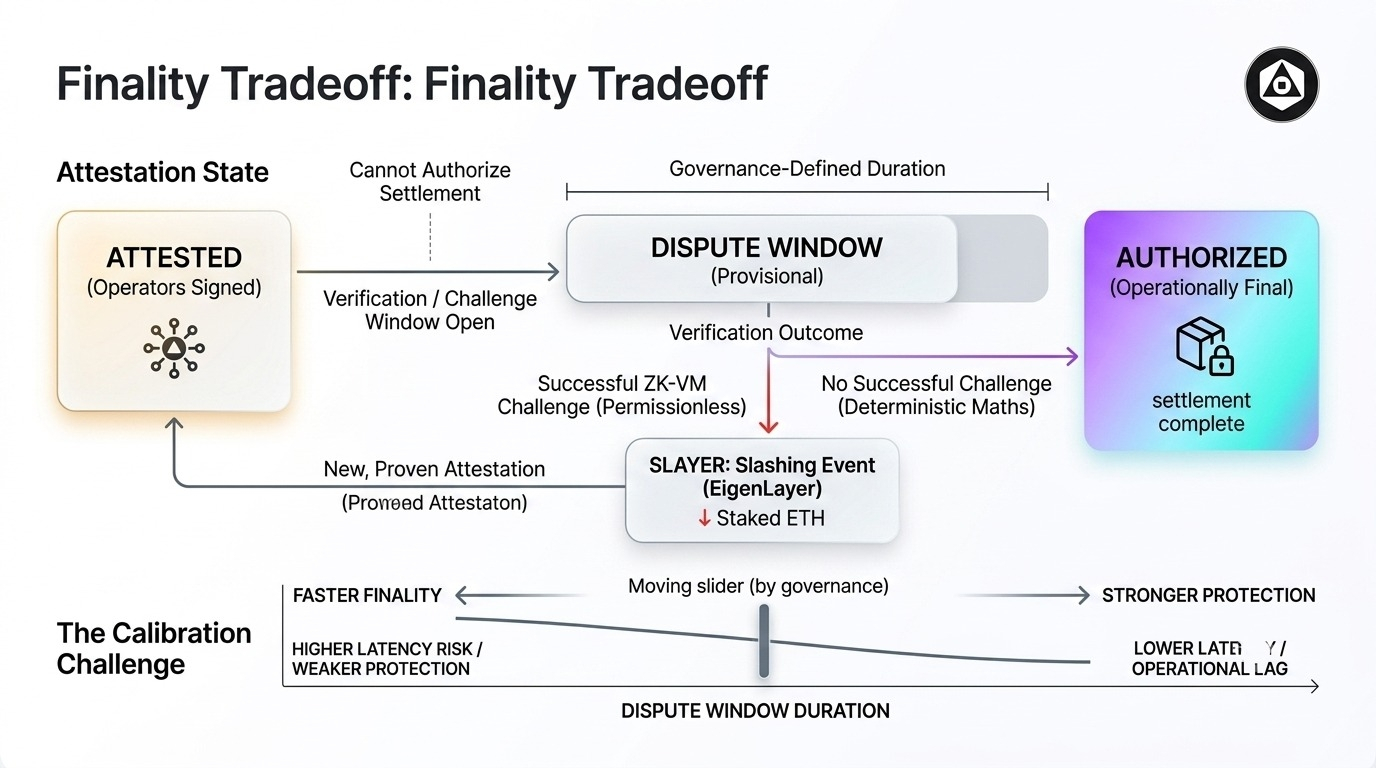
honestly dont know if the trustless dispute resolution mechanism is the cryptographic accountability system that finally makes decentralized policy enforcement genuinely trustless or a design where the challenge window creates an operational lag that high-frequency financial applications will find difficult to work around at the latency they actually need??🤔
