Let me tell you where I started with OpenLedger and why I had to completely rethink my initial read.
When I first looked at it, my instinct was simple. AI companies took data without paying. OpenLedger builds infrastructure to pay contributors. Fair compensation, on-chain attribution, automatic payment flows. Clean story. Easy to understand.
I spent two weeks thinking that was the whole thesis.
Then I started pulling on a thread that changed everything.
The payment narrative is real. But it's not the most important thing OpenLedger is solving.
Here's what I mean.
I've been through enough enterprise technology cycles to know how institutional adoption actually works. It doesn't happen because someone publishes a whitepaper about fairness. It doesn't happen because the compensation model is elegant. Enterprises move when their legal counsel tells them the cost of not moving exceeds the cost of changing.
So I started asking a different question.
Not "who benefits from fair data compensation?"
But "who is about to get sued if they can't answer basic questions about their training data in discovery?"
The answer to that question is a very long list of very large companies.
Think about what's actually happening in AI litigation right now.
The New York Times case against OpenAI isn't really about money. It's about discovery. When it goes to trial, lawyers will ask very specific questions. Which articles were used? How many times? What weight did they carry in training? Were licensing terms violated?
Those questions require answers. And the companies that can't answer them cleanly that genuinely don't know what data trained their models or where it came from face a different kind of exposure than companies that can produce a verifiable chain of attribution.
This is where OpenLedger stops being a "pay creators fairly" story and becomes something more structurally important.
Proof of Attribution is provenance infrastructure. It creates a cryptographic record of what data was used, how it influenced model outputs and who contributed it. That record isn't just useful for paying contributors.
It's a legal defense.
I want to be honest about something that took me a while to sit with.
The enterprises that need this most are the same ones most resistant to adopting it.
OpenAI, Google, Anthropic, Meta — these companies have legal teams specifically designed to argue that their current data practices are defensible. They're not going to voluntarily adopt attribution infrastructure that increases their cost structure and creates explicit records of what they did with training data.
They'll adopt it when courts tell them they have to. Or when regulators mandate disclosure. Or when the litigation costs of opacity exceed the operational costs of transparency.
That moment hasn't arrived yet.
But I've watched enough regulatory cycles to know how they end. Slowly, then all at once. The tobacco industry fought for decades. Then it didn't.
The question for $OPEN isn't whether that moment comes.
It's whether OpenLedger is operational, proven, and embedded in enough workflows before it does so that when enterprises are forced to move, there's somewhere credible to move to.
Here's what I watch now instead of token price.
Enterprise pilots. Not announcements actual pilots where a real organization is testing attribution infrastructure in a real workflow.
Legal team inquiries. When AI companies' procurement processes start including "data provenance verification" as a requirement, that's the signal.
Regulatory language. Every time the EU AI Act or US legislation uses words like "verifiable provenance" or "auditable training data," that's a tailwind that doesn't care about crypto market cycles.
None of those signals are screaming yet.
But they're murmuring. And in infrastructure, murmurs tend to become roars faster than anyone expects.
I'm positioned to watch. Not fully convinced it happens on the timeline $OPEN's token economics require. But convinced enough that I can't stop paying attention.
What would make you confident that enterprise AI adoption of attribution infrastructure is actually happening not just being discussed?
@OpenLedger $OPEN #OpenLedger

Статья
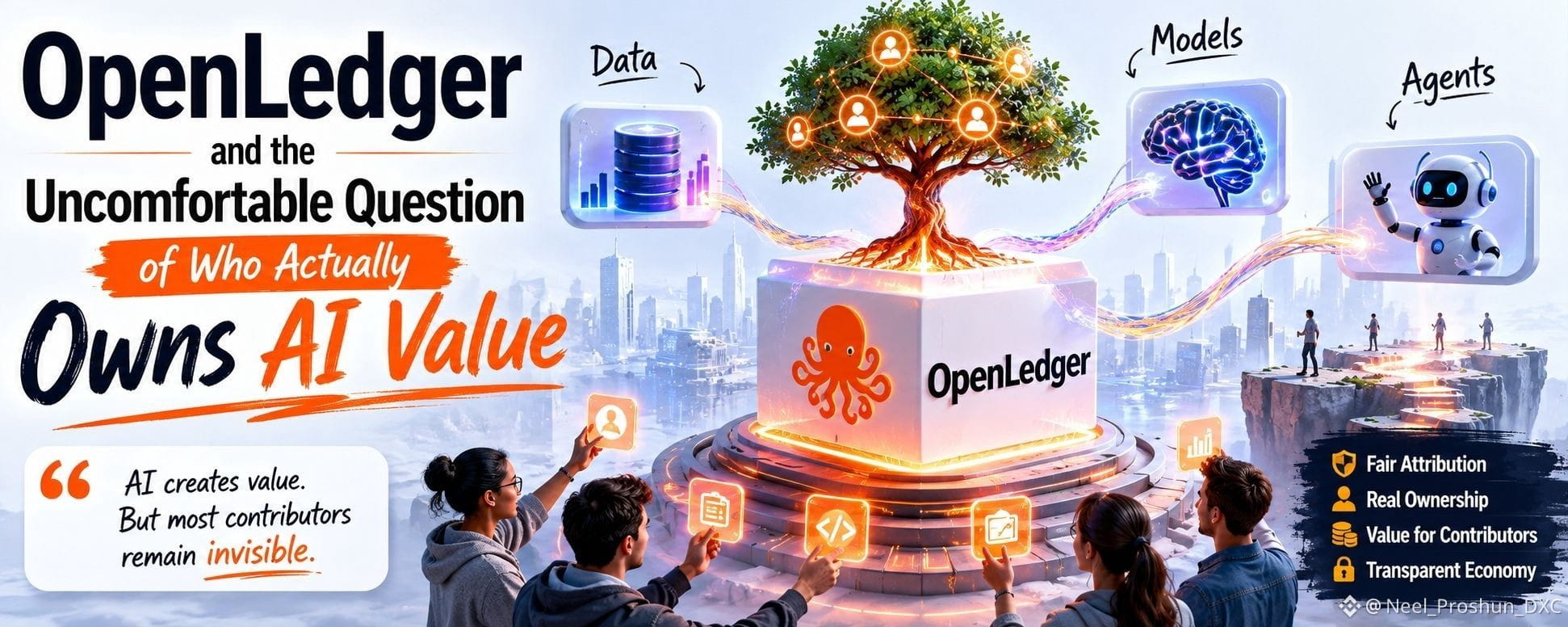
I Used to Think OpenLedger Was About Paying Creators. I Was Wrong About What It's Actually Solving.
Отказ от ответственности. Содержит мнения третьих сторон. Не является рекомендацией. Binance AI не предоставляет гарантий. См. Правила и условия.