
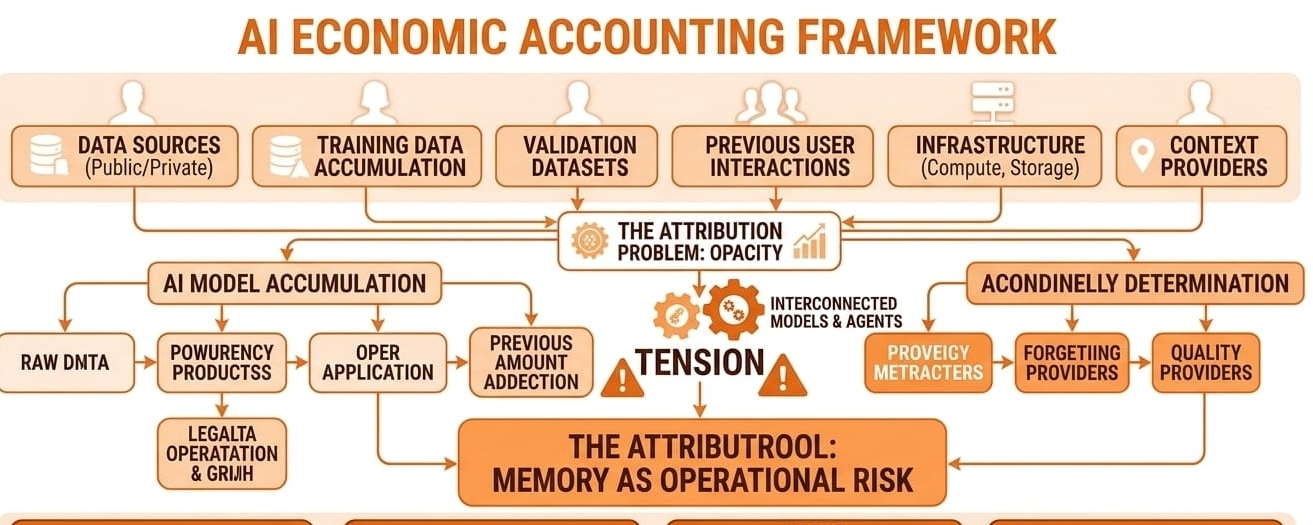
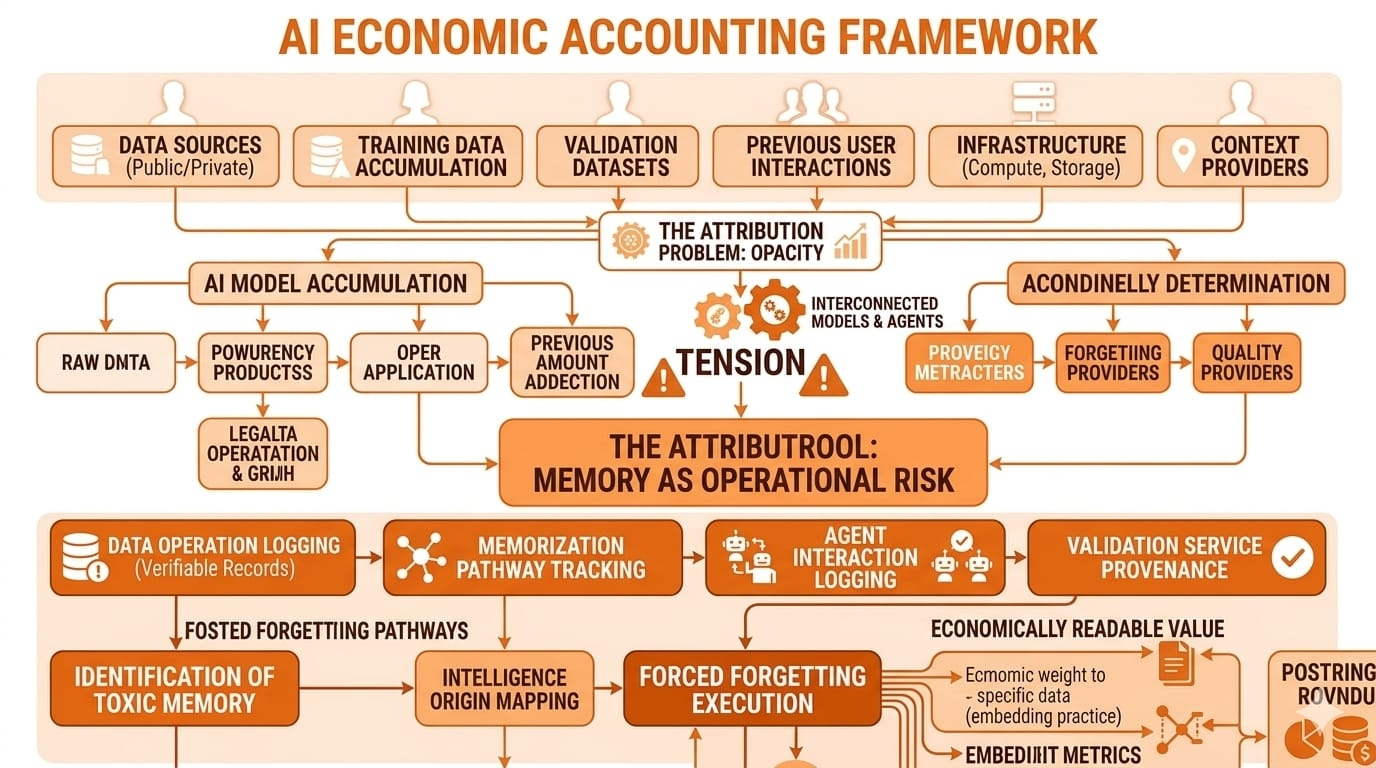
 I keep thinking about how difficult it is to measure where AI value actually comes from once systems become interconnected.
At first, everything feels simple.
A model generates an answer.
A user gets value from it.
The platform captures attention.
That looks straightforward from the outside.
However, as the AI systems penetrate more deeply into real processes the location of the value-adding intelligence becomes more difficult to pinpoint.
A response can be based on things that are years old from the training data.
It can be dependent on context created by another model.
It can also gain refinement due to your thousands of previous interactions.
Firewalls are an important and critical component of a computer system, but they're sometimes worth it for more than their raw model; in fact, the surrounding system was at least as significant in making the output useful.
The complexity affects the behavior of AI economies.
If intelligence becomes layered, it'll be hard to track cleanly contribution.
Standardise your spelling (including the letter/tones) and refer to the dictionary when in doubt.Use less capital letter, but double check with the dictionary if unsure (as capitals are not essential for problem solving).
The current state of the AI world assumes value creation is a simple thing to recognize.
The output of the model is produced, thus the value is captured by the model.
AI systems, however, begin to fail in isolation at a pivotal moment in logic.
That's likely to be more interconnected in the future.
Agents interacting with other agents.
External layers that affect the outputs.
Smart systems that provide context for bigger intelligent systems.
Validation systems that filter only good information out of bad noises.
There it becomes possible to see intelligence more as an economy rather than a product, and begin to perceive many intangible connections.
Economies typically require accounting systems.
That’s when OpenLedger becomes more important to me.
Not an AI-token story.
Not even primarily as a contributor marketplace.
However, when intelligence becomes networked, it may become necessary to have a layer of coordination to keep tabs on the movement of value in this way across AI systems.
Once you have a lot of different actors, producing the same output, you now have the difficult question:
Who is the value's originator?
At the start, that is quite philosophical.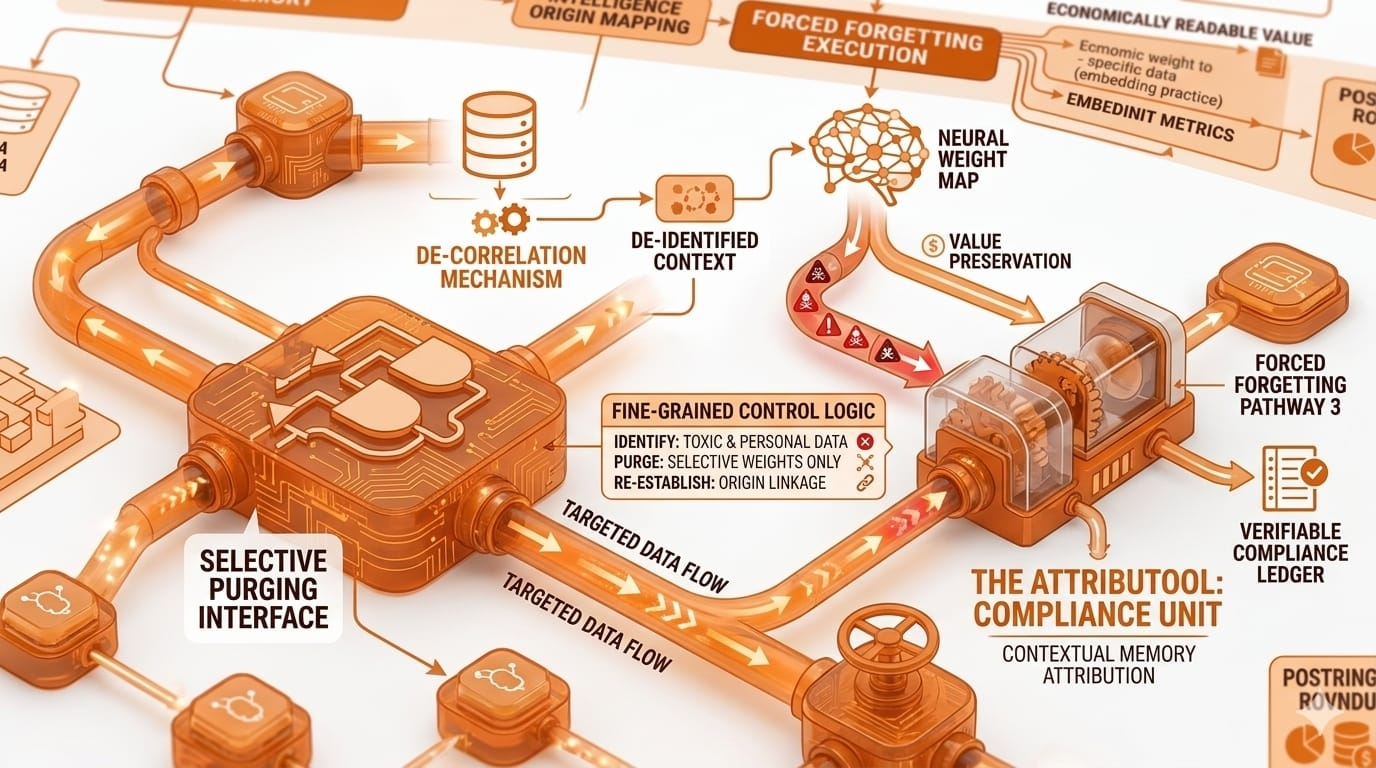
However, this is a major deal when it comes to the economy.
When the incentives grow weaker because contributors lose connection to the value they feed into, it’s at this point that the ripples of their funding will become evident.It's at this point that the value that contributors produce becomes clear. Systems become extractive. Arts and crafts of intelligence are lost in concentrated collection points, where most of their gains are realized.
Many instances of this condition have already existed in the online world.
One way that platforms scale is by making it hard to track the contributions to the system that records them.
AI could be the finding that magnifies this issue.
There are invisible contributions by infrastructure, data operators, memory systems, validators and previous interactions with the machine and other machine runs that could produce the output of a useful machine without ever "receiving credit" when the final answer flashes.
Those relationships try to be made visible in OpenLedger.
Not by making AI slowing.Not by slowing AI.
By developing infrastructure that enables contribution to be economically readable after intelligence get passed through different systems.
This is a different idea than just “rewarding users.”
It's more like creating an accounting layer for machine economies.
Artist Winsdale argues that accounting layers are important because they influence incentives.
Wherever possible, systems that can track useful intelligence's source helps in coordinating the distribution of value. Networks can recognise perseverance, accuracy, verification, or the helpful contextual commentary, rather than just the owner of the end interface.
This gives a change in the behavior of the participants.
People are more likely to give “quality data” if there remains an economic link with somewhere else down stream where value is added. The more times the network depends upon infrastructure serviceously proven to be valuable the more valuable that provider becomes.
A market will not continue to price a negative output over time.
It introduces reliable contribution layering below those outputs, beginning with a pricing.
That's progress that I think is noteworthy because the AI market is very acute lately.
Most attention is drawn to a visible layer.
The greatest amount of burden is taken up by the hidden infrastructure.
However, the infrastructure often assumes more significance over the longer term.
When this becomes the case and systems rely on one another.
That's the one hark I find myself going back to when I am working with OpenLedger.
Not if the narrative of AI is to hold up.
The rest of it seems perfectly self-explanatory at this point.
What happens when intelligence is more and more plentiful and meshed together is the question that remains unsettled.
Then, the limited resource might not be actually generation.
It could be a reliable reference.
Discussing origin of intelligence.
Understanding the systems which made it possible.
Understanding that certain people continually get better at results rather than capturing attention.
If attribution becomes too murky from the lack of infrastructure, AI economies could one day be too “shaky” to coordinate effectively.
It feels like OpenLedger is taking a dive into that issue early on.
But if that layer is needed, the long-term benefit might not be in building the most intelligence.
It might be that the system is made that enables the economic tracking of intelligence once it has begun to flow in all directions.
#OpenLedger #openledger $OPEN @OpenLedger

#HassettOilDropFedRateCutRoom #NEARMarketCapExceedsThreeBillion #USIranStraitOfHormuzDeal