

#plasma
plasma
Просмотров: 24.9M
333,011 обсуждают
Популярные
Новые

·
--
🚨 $XPL
{spot}(XPLUSDT)
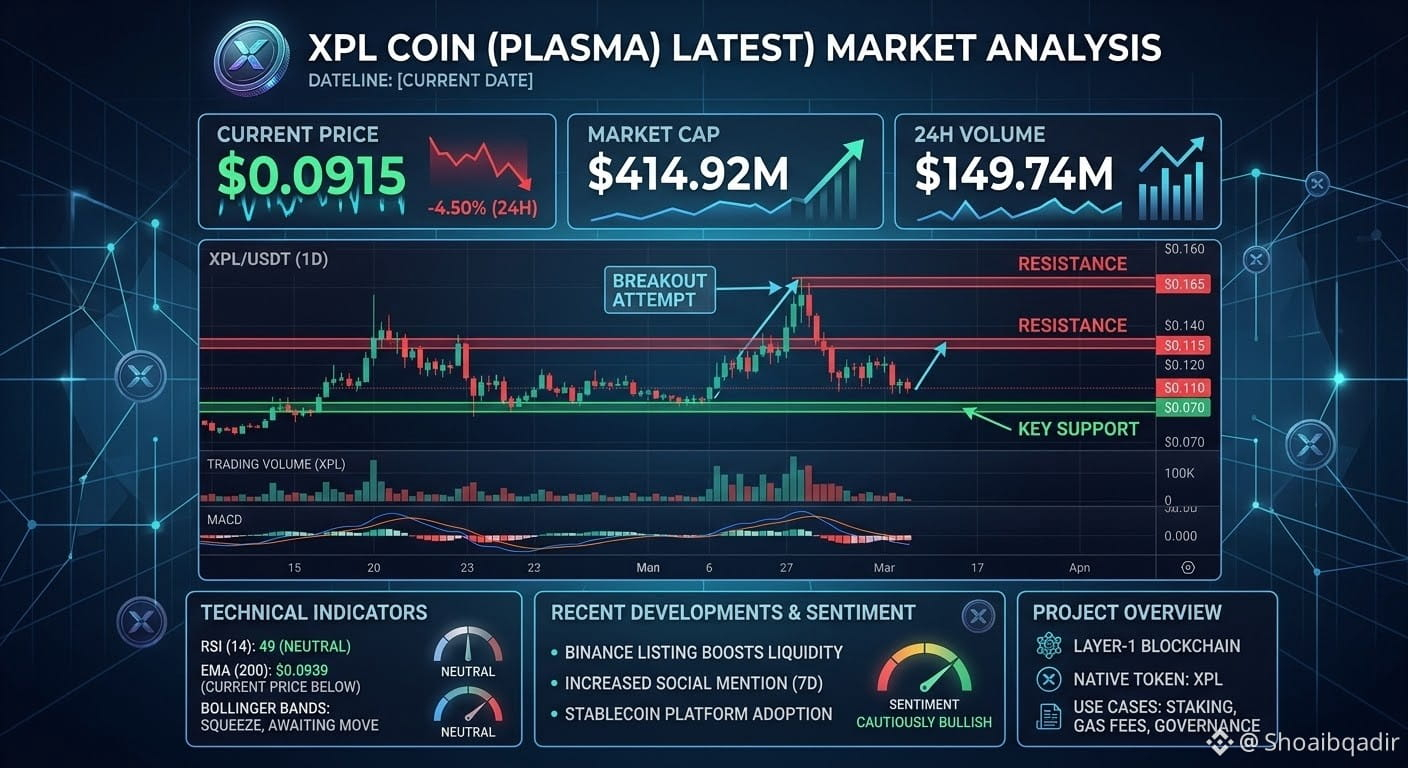
(Plasma) — Последний анализ рынка | 7 октября 2026 года
Текущая цена: ~$0.087
Тренд за 24 часа: медвежий 📉
Рыночная капитализация: ~$395M
Объём за 24 часа: ~$76M
🔎 Технический анализ
Сейчас XPL торгуется под давлением продавцов после того, как не смог удержаться выше отметки $0.09.
Ключевая поддержка: $0.085
Если этот уровень устоит, XPL может попытаться восстановиться до:
🎯 $0.090 → $0.095 → $0.100
Однако уверенный пробой ниже $0.085 может усилить давление продавцов. Следующая потенциальная область — около $0.080.
📈 Бычий сценарий:
Уверенный рост выше $0.095 может улучшить краткосрочный импульс и открыть путь к $0.10–$0.12.
📉 Медвежий сценарий:
Если $0.085 будет пробит на высоком объёме продаж, XPL может повторно протестировать область $0.080.
💡 Фундаментальный анализ
Plasma — блокчейн первого уровня, ориентированный на высокообъёмные и недорогие платежи в стейблкоинах. Акцент на стейблкоинах остаётся одной из главных причин, по которым трейдеры следят за XPL.
⚠️ Риск: XPL остаётся высоковолатильным активом. Трейдерам следует следить за динамикой биткоина, объёмом торгов, уровнями поддержки и общими настроениями на рынке альткоинов.
Общий прогноз: НЕЙТРАЛЬНЫЙ → С ОСТОРОЖНОСТЬЮ БЫЧИЙ выше $0.095
Не является финансовой рекомендацией. Всегда проводите собственное исследование перед торговлей.
#XPL #Plasma #CryptocurrencyWealth #BinanceHerYerde nce #Альткоины #Криптоанализ #trading
🚨 $XPL
(Plasma) — Последний анализ рынка | 7 октября 2026 года
Текущая цена: ~$0.087
Тренд за 24 часа: медвежий 📉
Рыночная капитализация: ~$395M
Объём за 24 часа: ~$76M
🔎 Технический анализ
Сейчас XPL торгуется под давлением продавцов после того, как не смог удержаться выше отметки $0.09.
Ключевая поддержка: $0.085
Если этот уровень устоит, XPL может попытаться восстановиться до:
🎯 $0.090 → $0.095 → $0.100
Однако уверенный пробой ниже $0.085 может усилить давление продавцов. Следующая потенциальная область — около $0.080.
📈 Бычий сценарий:
Уверенный рост выше $0.095 может улучшить краткосрочный импульс и открыть путь к $0.10–$0.12.
📉 Медвежий сценарий:
Если $0.085 будет пробит на высоком объёме продаж, XPL может повторно протестировать область $0.080.
💡 Фундаментальный анализ
Plasma — блокчейн первого уровня, ориентированный на высокообъёмные и недорогие платежи в стейблкоинах. Акцент на стейблкоинах остаётся одной из главных причин, по которым трейдеры следят за XPL.
⚠️ Риск: XPL остаётся высоковолатильным активом. Трейдерам следует следить за динамикой биткоина, объёмом торгов, уровнями поддержки и общими настроениями на рынке альткоинов.
Общий прогноз: НЕЙТРАЛЬНЫЙ → С ОСТОРОЖНОСТЬЮ БЫЧИЙ выше $0.095
Не является финансовой рекомендацией. Всегда проводите собственное исследование перед торговлей.
#XPL #Plasma #CryptocurrencyWealth #BinanceHerYerde nce #Альткоины #Криптоанализ #trading
(Plasma) — Последний анализ рынка | 7 октября 2026 года
Текущая цена: ~$0.087
Тренд за 24 часа: медвежий 📉
Рыночная капитализация: ~$395M
Объём за 24 часа: ~$76M
🔎 Технический анализ
Сейчас XPL торгуется под давлением продавцов после того, как не смог удержаться выше отметки $0.09.
Ключевая поддержка: $0.085
Если этот уровень устоит, XPL может попытаться восстановиться до:
🎯 $0.090 → $0.095 → $0.100
Однако уверенный пробой ниже $0.085 может усилить давление продавцов. Следующая потенциальная область — около $0.080.
📈 Бычий сценарий:
Уверенный рост выше $0.095 может улучшить краткосрочный импульс и открыть путь к $0.10–$0.12.
📉 Медвежий сценарий:
Если $0.085 будет пробит на высоком объёме продаж, XPL может повторно протестировать область $0.080.
💡 Фундаментальный анализ
Plasma — блокчейн первого уровня, ориентированный на высокообъёмные и недорогие платежи в стейблкоинах. Акцент на стейблкоинах остаётся одной из главных причин, по которым трейдеры следят за XPL.
⚠️ Риск: XPL остаётся высоковолатильным активом. Трейдерам следует следить за динамикой биткоина, объёмом торгов, уровнями поддержки и общими настроениями на рынке альткоинов.
Общий прогноз: НЕЙТРАЛЬНЫЙ → С ОСТОРОЖНОСТЬЮ БЫЧИЙ выше $0.095
Не является финансовой рекомендацией. Всегда проводите собственное исследование перед торговлей.
#XPL #Plasma #CryptocurrencyWealth #BinanceHerYerde nce #Альткоины #Криптоанализ #trading
336

·
--
Статья
Разбор Plasma (XPL): Стоит ли покупать монету прямо сейчас?Сеть Plasma и её нативный токен $XPL продолжают привлекать внимание сообщества благодаря узкой специализации — созданию высокомасштабируемой инфраструктуры для платежей в стейблкоинах и интеграции с необанкингом.
Приводим подробный разбор фундаментальных факторов, последней аналитики и возможных сценариев движения цены XPL.
📌 Главные новости и фундаментальные драйверы
1. Технические обновления и рост экосистемы
Обновление v3:
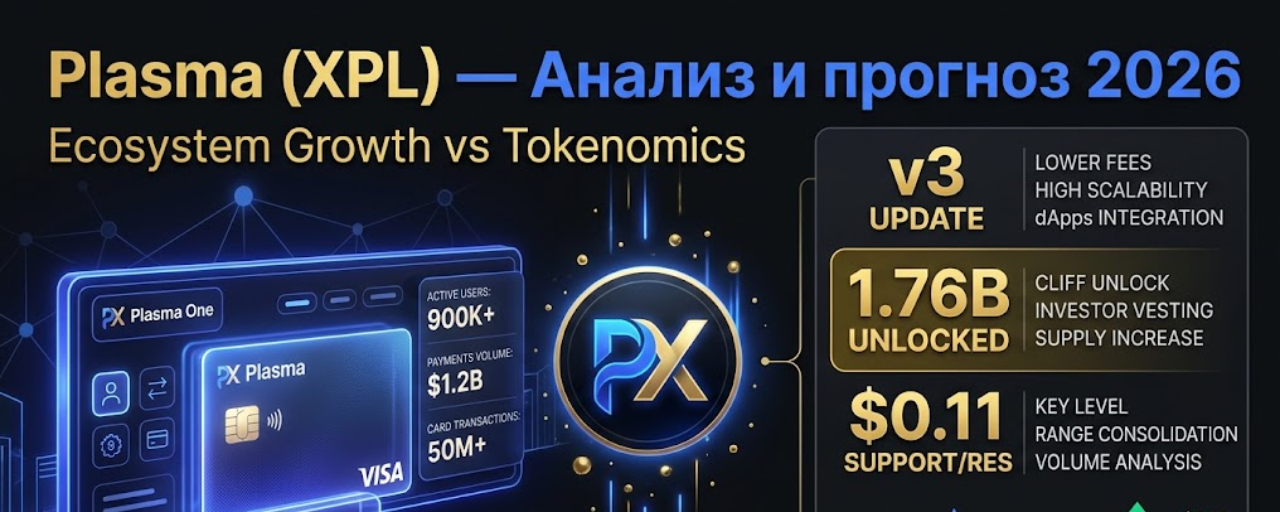
Внедрение протокола Plasma v3 позволило существенно снизить комиссии и повысить скорость транзакций для dApps.
Запуск Plasma One:
Запуск необанка со встроенной поддержкой Visa и стейблкоинов стимулирует органический спрос на XPL как базовый актив для газа и стейкинга.
Ончейн-активность:
Объем стейблкоинов в сети превышает $900M+, а количество активных пользователей продолжает расти.
2. Давление со стороны токеномики (Разблокировки & Инфляция)
Масштабные разблокировки:
В третьем квартале прошёл крупнейший клифф-разблок (Cliff Unlock) для инвесторов и команды (~1.76 млрд XPL), который увеличил циркулирующее предложение более чем на 60%.
Стейкинг и инфляция:
Запуск PoS-валидаторов принес доходность держателям, но также задействовал годовую инфляцию на уровне 5% (с постепенным снижением до 3%).
📊 Технический обзор и ключевые уровни
На данный момент XPL торгуется в районе $0.094 – $0.096. Актив закрепился выше скользящих средних MA50/EMA50, что указывает на попытки формирования локального восходящего тренда.
Поддержка: $0.088 – $0.090 (зона консолидации), ключевой уровень — $0.060.
Сопротивление: $0.110 (первый локальный барьер), далее — $0.150 и $0.250.
📈 Сценарии движения цены XPL
1. 🟢 Бычий сценарий (Успешное поглощение предложения)
Условие: Закрепление цены выше уровня $0.110 на высоких объемах торгов.
Драйверы: Быстрый рост транзакционного объема в сервисе Plasma One, сжигание комиссий, перекрывающее инфляцию, и общий позитивный тренд на рынке альткоинов.
Цели: $0.15 ➔ $0.25 ➔ $0.35.
2. 🟡 Базовый сценарий (Консолидация и накопление)
Условие: Удержание диапазона $0.088 – $0.110.
Драйверы: Рынок постепенно переваривает предложение после сентябрьского разблока. Покупатели удерживают важные уровни поддержки, но для импульса вверх пока не хватает ликвидности.
Цели: Торговля во флэте вокруг $0.095 – $0.100.
3. 🔴 Медвежий сценарий (Давление продавцов)
Условие: Пробой поддержки $0.088 вниз на фоне негативного фона на широком рынке.
Драйверы: Фиксация прибыли инвесторами после разблокировки токенов и слабая динамика привлечения новых пользователей.
Цели: Откат к уровням $0.075 и повторный тест минимумов на уровне $0.060.
💡 Итог для трейдеров и инвесторов
Plasma (XPL) демонстрирует сильную фундаментальную базу в сфере платежных решений и стейблкоинов.
Однако инвесторам следует учитывать высокое давление со стороны разблокированных токенов.
Следите за пробоем ключевого уровня $0.110 для входа в бычий тренд и соблюдайте риски.
{future}(XPLUSDT)
#Plasma #CryptoNews #priceprediction #CryptoAnalysis
Разбор Plasma (XPL): Стоит ли покупать монету прямо сейчас?
Сеть Plasma и её нативный токен $XPL продолжают привлекать внимание сообщества благодаря узкой специализации — созданию высокомасштабируемой инфраструктуры для платежей в стейблкоинах и интеграции с необанкингом.
Приводим подробный разбор фундаментальных факторов, последней аналитики и возможных сценариев движения цены XPL.
📌 Главные новости и фундаментальные драйверы
1. Технические обновления и рост экосистемы
Обновление v3:
Внедрение протокола Plasma v3 позволило существенно снизить комиссии и повысить скорость транзакций для dApps.
Запуск Plasma One:
Запуск необанка со встроенной поддержкой Visa и стейблкоинов стимулирует органический спрос на XPL как базовый актив для газа и стейкинга.
Ончейн-активность:
Объем стейблкоинов в сети превышает $900M+, а количество активных пользователей продолжает расти.
2. Давление со стороны токеномики (Разблокировки & Инфляция)
Масштабные разблокировки:
В третьем квартале прошёл крупнейший клифф-разблок (Cliff Unlock) для инвесторов и команды (~1.76 млрд XPL), который увеличил циркулирующее предложение более чем на 60%.
Стейкинг и инфляция:
Запуск PoS-валидаторов принес доходность держателям, но также задействовал годовую инфляцию на уровне 5% (с постепенным снижением до 3%).
📊 Технический обзор и ключевые уровни
На данный момент XPL торгуется в районе $0.094 – $0.096. Актив закрепился выше скользящих средних MA50/EMA50, что указывает на попытки формирования локального восходящего тренда.
Поддержка: $0.088 – $0.090 (зона консолидации), ключевой уровень — $0.060.
Сопротивление: $0.110 (первый локальный барьер), далее — $0.150 и $0.250.
📈 Сценарии движения цены XPL
1. 🟢 Бычий сценарий (Успешное поглощение предложения)
Условие: Закрепление цены выше уровня $0.110 на высоких объемах торгов.
Драйверы: Быстрый рост транзакционного объема в сервисе Plasma One, сжигание комиссий, перекрывающее инфляцию, и общий позитивный тренд на рынке альткоинов.
Цели: $0.15 ➔ $0.25 ➔ $0.35.
2. 🟡 Базовый сценарий (Консолидация и накопление)
Условие: Удержание диапазона $0.088 – $0.110.
Драйверы: Рынок постепенно переваривает предложение после сентябрьского разблока. Покупатели удерживают важные уровни поддержки, но для импульса вверх пока не хватает ликвидности.
Цели: Торговля во флэте вокруг $0.095 – $0.100.
3. 🔴 Медвежий сценарий (Давление продавцов)
Условие: Пробой поддержки $0.088 вниз на фоне негативного фона на широком рынке.
Драйверы: Фиксация прибыли инвесторами после разблокировки токенов и слабая динамика привлечения новых пользователей.
Цели: Откат к уровням $0.075 и повторный тест минимумов на уровне $0.060.
💡 Итог для трейдеров и инвесторов
Plasma (XPL) демонстрирует сильную фундаментальную базу в сфере платежных решений и стейблкоинов.
Однако инвесторам следует учитывать высокое давление со стороны разблокированных токенов.
Следите за пробоем ключевого уровня $0.110 для входа в бычий тренд и соблюдайте риски.
#Plasma #CryptoNews #priceprediction #CryptoAnalysis
Приводим подробный разбор фундаментальных факторов, последней аналитики и возможных сценариев движения цены XPL.
📌 Главные новости и фундаментальные драйверы
1. Технические обновления и рост экосистемы
Обновление v3:
Внедрение протокола Plasma v3 позволило существенно снизить комиссии и повысить скорость транзакций для dApps.
Запуск Plasma One:
Запуск необанка со встроенной поддержкой Visa и стейблкоинов стимулирует органический спрос на XPL как базовый актив для газа и стейкинга.
Ончейн-активность:
Объем стейблкоинов в сети превышает $900M+, а количество активных пользователей продолжает расти.
2. Давление со стороны токеномики (Разблокировки & Инфляция)
Масштабные разблокировки:
В третьем квартале прошёл крупнейший клифф-разблок (Cliff Unlock) для инвесторов и команды (~1.76 млрд XPL), который увеличил циркулирующее предложение более чем на 60%.
Стейкинг и инфляция:
Запуск PoS-валидаторов принес доходность держателям, но также задействовал годовую инфляцию на уровне 5% (с постепенным снижением до 3%).
📊 Технический обзор и ключевые уровни
На данный момент XPL торгуется в районе $0.094 – $0.096. Актив закрепился выше скользящих средних MA50/EMA50, что указывает на попытки формирования локального восходящего тренда.
Поддержка: $0.088 – $0.090 (зона консолидации), ключевой уровень — $0.060.
Сопротивление: $0.110 (первый локальный барьер), далее — $0.150 и $0.250.
📈 Сценарии движения цены XPL
1. 🟢 Бычий сценарий (Успешное поглощение предложения)
Условие: Закрепление цены выше уровня $0.110 на высоких объемах торгов.
Драйверы: Быстрый рост транзакционного объема в сервисе Plasma One, сжигание комиссий, перекрывающее инфляцию, и общий позитивный тренд на рынке альткоинов.
Цели: $0.15 ➔ $0.25 ➔ $0.35.
2. 🟡 Базовый сценарий (Консолидация и накопление)
Условие: Удержание диапазона $0.088 – $0.110.
Драйверы: Рынок постепенно переваривает предложение после сентябрьского разблока. Покупатели удерживают важные уровни поддержки, но для импульса вверх пока не хватает ликвидности.
Цели: Торговля во флэте вокруг $0.095 – $0.100.
3. 🔴 Медвежий сценарий (Давление продавцов)
Условие: Пробой поддержки $0.088 вниз на фоне негативного фона на широком рынке.
Драйверы: Фиксация прибыли инвесторами после разблокировки токенов и слабая динамика привлечения новых пользователей.
Цели: Откат к уровням $0.075 и повторный тест минимумов на уровне $0.060.
💡 Итог для трейдеров и инвесторов
Plasma (XPL) демонстрирует сильную фундаментальную базу в сфере платежных решений и стейблкоинов.
Однако инвесторам следует учитывать высокое давление со стороны разблокированных токенов.
Следите за пробоем ключевого уровня $0.110 для входа в бычий тренд и соблюдайте риски.
#Plasma #CryptoNews #priceprediction #CryptoAnalysis
80

·
--
#Plasma $XPL
Я внимательно слежу за развитием @plasma, и это вдохновляет — видеть, как проект реально формирует практическую ценность в блокчейн-среде. Plasma делает акцент на масштабируемости, эффективности и долгосрочном росте, что критически важно для массового внедрения. Токен $XPL играет важную роль в экосистеме, поддерживая сетевые операции и участие сообщества. Я считаю, что #plasma has обладает большим потенциалом по мере того, как экосистема продолжает расширяться.
#Plasma $XPL
Я внимательно слежу за развитием @plasma, и это вдохновляет — видеть, как проект реально формирует практическую ценность в блокчейн-среде. Plasma делает акцент на масштабируемости, эффективности и долгосрочном росте, что критически важно для массового внедрения. Токен $XPL играет важную роль в экосистеме, поддерживая сетевые операции и участие сообщества. Я считаю, что #plasma has обладает большим потенциалом по мере того, как экосистема продолжает расширяться.
Я внимательно слежу за развитием @plasma, и это вдохновляет — видеть, как проект реально формирует практическую ценность в блокчейн-среде. Plasma делает акцент на масштабируемости, эффективности и долгосрочном росте, что критически важно для массового внедрения. Токен $XPL играет важную роль в экосистеме, поддерживая сетевые операции и участие сообщества. Я считаю, что #plasma has обладает большим потенциалом по мере того, как экосистема продолжает расширяться.
574


Большая часть обсуждения вокруг $XPL right now сейчас сосредоточена на разблокировке токенов на 1,76 млрд.
Но, на мой взгляд, более интересный вопрос — что именно за этим событием с предложением скрывается.
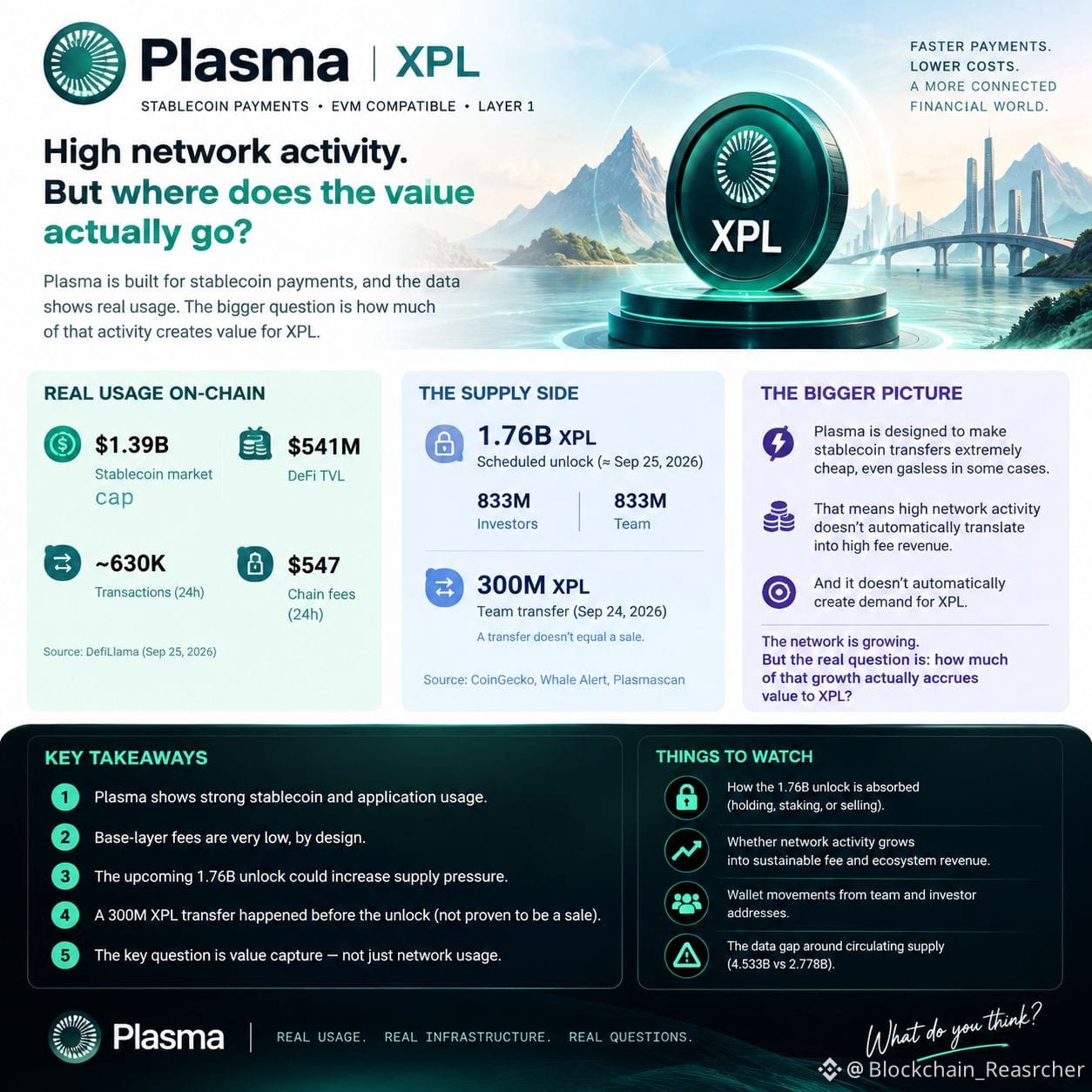
Плазма сейчас несёт примерно $1,39 млрд в стейблкоинах, около $541 млн в DeFi TVL и порядка 630 тыс. транзакций за 24 часа. Однако заявленные базовые комиссии составляют всего около $547 за день.
Такое несоответствие многое говорит о дизайне Plasma.
Сеть построена так, чтобы переводы стейблкоинов были крайне дешёвыми — в некоторых случаях даже абстрагируя газ от пользователей. Поэтому высокая активность не обязательно приводит к высокой комиссии"); и использование сети не обязательно автоматически конвертируется в сопоставимый спрос на XPL.
Затем — сторона предложения.
Около 1,76 млрд XPL запланированы к разблокировке примерно 25 сентября, включая примерно 833 млн для инвесторов и ещё 833 млн для команды. За один день до этого было зафиксировано перемещение 300 млн XPL с кошелька, помеченного как Plasma Team.
Это важно.
Но перевод — это не продажа. Без подтверждений в виде депозитов на биржах или фактических продаж называть это «давлением продаж» было бы предположением.
И именно здесь Plasma становится интересной: сеть может демонстрировать значимое использование стейблкоинов, в то время как предложение токена растёт, а прямое извлечение комиссий остаётся относительно слабым.
Так что ключевой вопрос может быть не в том, используется ли Plasma.
Очевидно, что используется.
Сложнее вопрос такой: какая часть этой растущей сетевой активности действительно конвертируется в ценность для XPL?
$XPL #Plasma @Plasma
{future}(XPLUSDT)
Большая часть обсуждения вокруг $XPL right now сейчас сосредоточена на разблокировке токенов на 1,76 млрд.
Но, на мой взгляд, более интересный вопрос — что именно за этим событием с предложением скрывается.
Плазма сейчас несёт примерно $1,39 млрд в стейблкоинах, около $541 млн в DeFi TVL и порядка 630 тыс. транзакций за 24 часа. Однако заявленные базовые комиссии составляют всего около $547 за день.
Такое несоответствие многое говорит о дизайне Plasma.
Сеть построена так, чтобы переводы стейблкоинов были крайне дешёвыми — в некоторых случаях даже абстрагируя газ от пользователей. Поэтому высокая активность не обязательно приводит к высокой комиссии"); и использование сети не обязательно автоматически конвертируется в сопоставимый спрос на XPL.
Затем — сторона предложения.
Около 1,76 млрд XPL запланированы к разблокировке примерно 25 сентября, включая примерно 833 млн для инвесторов и ещё 833 млн для команды. За один день до этого было зафиксировано перемещение 300 млн XPL с кошелька, помеченного как Plasma Team.
Это важно.
Но перевод — это не продажа. Без подтверждений в виде депозитов на биржах или фактических продаж называть это «давлением продаж» было бы предположением.
И именно здесь Plasma становится интересной: сеть может демонстрировать значимое использование стейблкоинов, в то время как предложение токена растёт, а прямое извлечение комиссий остаётся относительно слабым.
Так что ключевой вопрос может быть не в том, используется ли Plasma.
Очевидно, что используется.
Сложнее вопрос такой: какая часть этой растущей сетевой активности действительно конвертируется в ценность для XPL?
$XPL #Plasma @Plasma
Но, на мой взгляд, более интересный вопрос — что именно за этим событием с предложением скрывается.
Плазма сейчас несёт примерно $1,39 млрд в стейблкоинах, около $541 млн в DeFi TVL и порядка 630 тыс. транзакций за 24 часа. Однако заявленные базовые комиссии составляют всего около $547 за день.
Такое несоответствие многое говорит о дизайне Plasma.
Сеть построена так, чтобы переводы стейблкоинов были крайне дешёвыми — в некоторых случаях даже абстрагируя газ от пользователей. Поэтому высокая активность не обязательно приводит к высокой комиссии"); и использование сети не обязательно автоматически конвертируется в сопоставимый спрос на XPL.
Затем — сторона предложения.
Около 1,76 млрд XPL запланированы к разблокировке примерно 25 сентября, включая примерно 833 млн для инвесторов и ещё 833 млн для команды. За один день до этого было зафиксировано перемещение 300 млн XPL с кошелька, помеченного как Plasma Team.
Это важно.
Но перевод — это не продажа. Без подтверждений в виде депозитов на биржах или фактических продаж называть это «давлением продаж» было бы предположением.
И именно здесь Plasma становится интересной: сеть может демонстрировать значимое использование стейблкоинов, в то время как предложение токена растёт, а прямое извлечение комиссий остаётся относительно слабым.
Так что ключевой вопрос может быть не в том, используется ли Plasma.
Очевидно, что используется.
Сложнее вопрос такой: какая часть этой растущей сетевой активности действительно конвертируется в ценность для XPL?
$XPL #Plasma @Plasma
398

·
--
Проверено
@Plasma
Будущее платежей в стейблкоинах: Plasma ($XPL) 🚀
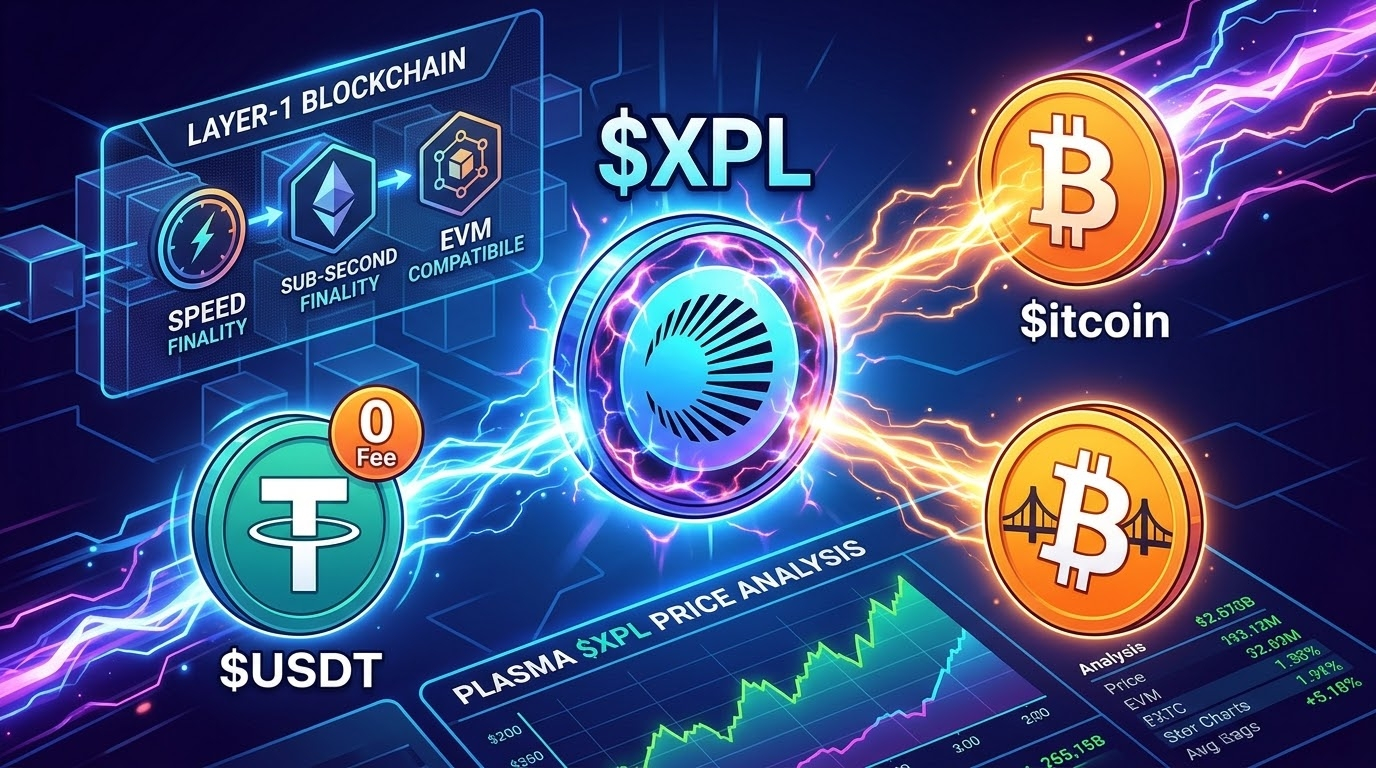
Глобальные платежи развиваются, и Plasma ($XPL) выходит на передний план, поскольку это блокчейн Layer-1, созданный специально для расчетов в стейблкоинах. Объединяя финальность за доли секунды через PlasmaBFT и полную совместимость с EVM, Plasma устраняет традиционные трения при переводе цифровых долларов on-chain.
Его главная инновация? Переводы $USDT с нулевой комиссией, обеспеченные paymasters на уровне протокола, а также мост Bitcoin с минимизацией доверия. $XPL
{future}(XPLUSDT)
Токен XPL находится в центре этой экономики — он обеспечивает консенсус Proof-of-Stake, питает сложные смарт-контракты и выигрывает от сжиганий комиссий по EIP-1559 по мере роста принятия сети. Поддерживаемый институциональными гигантами, Plasma соединяет традиционные финансы с скоростью Web3.
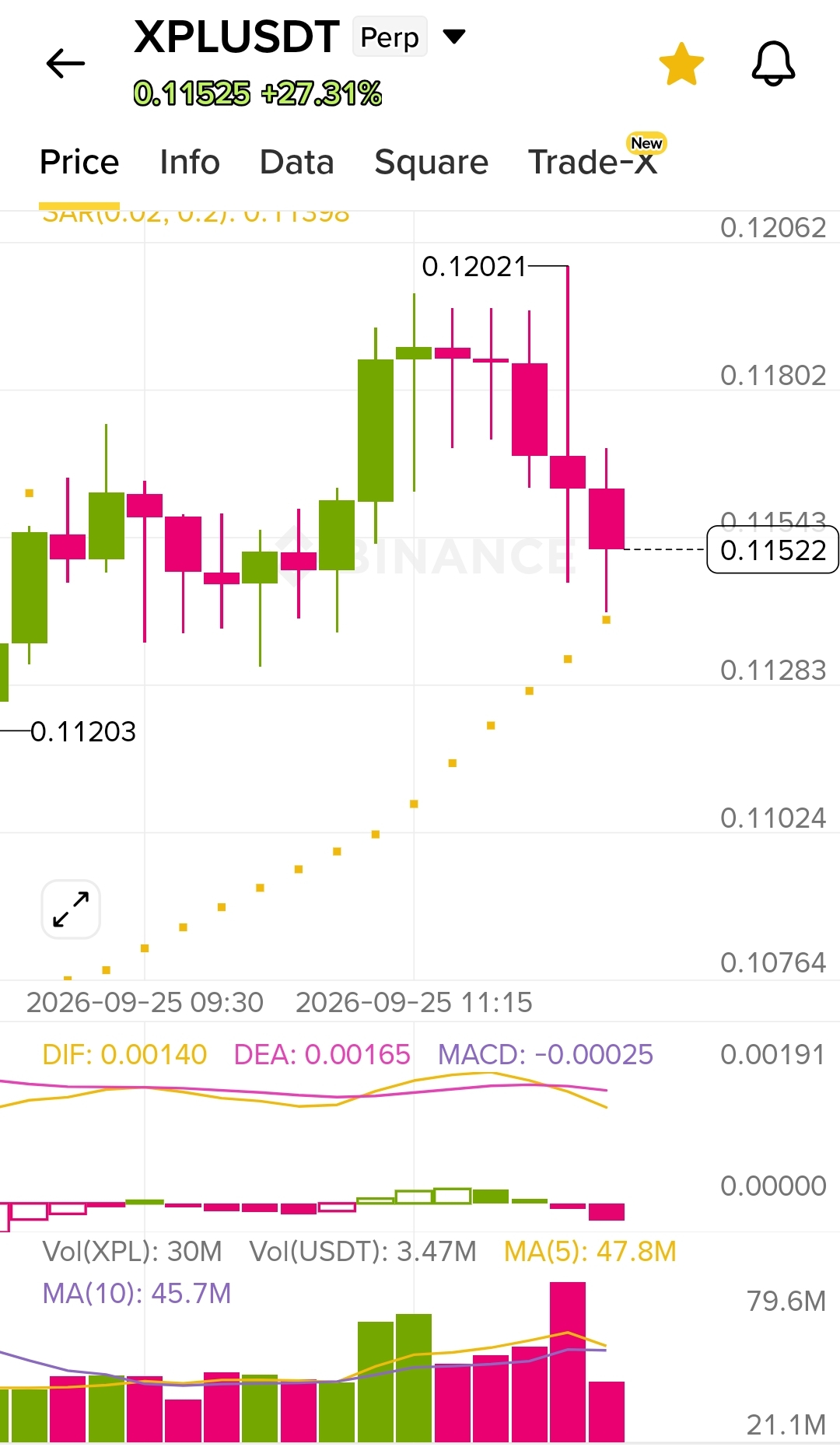
Анализ XPL/USDT
Текущая цена: $0.11522 (+27.31%)
Тренд: Откат от локального максимума $0.12021 после сильного бычьего ралли.
SAR: Точки ниже цены подтверждают активную поддержку восходящего тренда около $0.1130.
MACD: Бычье пересечение на медвежье (DIF 0.00140 < DEA 0.00165) сигнализирует о краткосрочном охлаждении/консолидации.
#Plasma
#Write2Earn!
#CFTCUpdatesGuidanceOnTokenizedAssets
$QNT
{future}(QNTUSDT)
$AR
{future}(ARUSDT)
#TradeHere☝️🤗
@Plasma
Будущее платежей в стейблкоинах: Plasma ($XPL ) 🚀
Глобальные платежи развиваются, и Plasma ($XPL ) выходит на передний план, поскольку это блокчейн Layer-1, созданный специально для расчетов в стейблкоинах. Объединяя финальность за доли секунды через PlasmaBFT и полную совместимость с EVM, Plasma устраняет традиционные трения при переводе цифровых долларов on-chain.
Его главная инновация? Переводы $USDT с нулевой комиссией, обеспеченные paymasters на уровне протокола, а также мост Bitcoin с минимизацией доверия. $XPL
Токен XPL находится в центре этой экономики — он обеспечивает консенсус Proof-of-Stake, питает сложные смарт-контракты и выигрывает от сжиганий комиссий по EIP-1559 по мере роста принятия сети. Поддерживаемый институциональными гигантами, Plasma соединяет традиционные финансы с скоростью Web3.
Анализ XPL/USDT
Текущая цена: $0.11522 (+27.31%)
Тренд: Откат от локального максимума $0.12021 после сильного бычьего ралли.
SAR: Точки ниже цены подтверждают активную поддержку восходящего тренда около $0.1130.
MACD: Бычье пересечение на медвежье (DIF 0.00140 < DEA 0.00165) сигнализирует о краткосрочном охлаждении/консолидации.
#Plasma
#Write2Earn!
#CFTCUpdatesGuidanceOnTokenizedAssets
$QNT
$AR
#TradeHere☝️🤗
Будущее платежей в стейблкоинах: Plasma ($XPL ) 🚀
Глобальные платежи развиваются, и Plasma ($XPL ) выходит на передний план, поскольку это блокчейн Layer-1, созданный специально для расчетов в стейблкоинах. Объединяя финальность за доли секунды через PlasmaBFT и полную совместимость с EVM, Plasma устраняет традиционные трения при переводе цифровых долларов on-chain.
Его главная инновация? Переводы $USDT с нулевой комиссией, обеспеченные paymasters на уровне протокола, а также мост Bitcoin с минимизацией доверия. $XPL
Токен XPL находится в центре этой экономики — он обеспечивает консенсус Proof-of-Stake, питает сложные смарт-контракты и выигрывает от сжиганий комиссий по EIP-1559 по мере роста принятия сети. Поддерживаемый институциональными гигантами, Plasma соединяет традиционные финансы с скоростью Web3.
Анализ XPL/USDT
Текущая цена: $0.11522 (+27.31%)
Тренд: Откат от локального максимума $0.12021 после сильного бычьего ралли.
SAR: Точки ниже цены подтверждают активную поддержку восходящего тренда около $0.1130.
MACD: Бычье пересечение на медвежье (DIF 0.00140 < DEA 0.00165) сигнализирует о краткосрочном охлаждении/консолидации.
#Plasma
#Write2Earn!
#CFTCUpdatesGuidanceOnTokenizedAssets
$QNT
$AR
#TradeHere☝️🤗
4
10
961

·
--
Рост
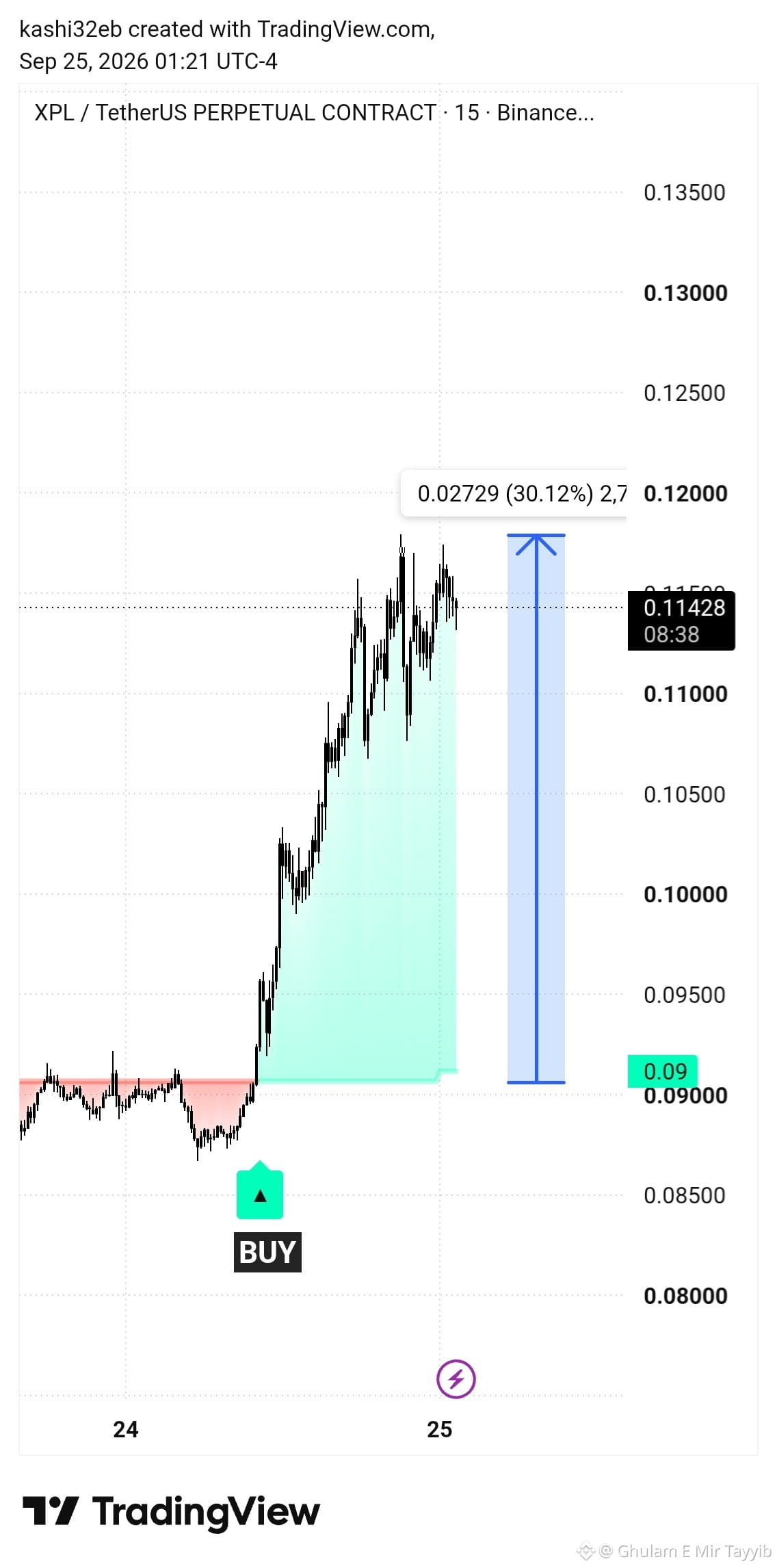
$XPL только что выкачала 30% от пробоя — переходим с $0.09 к максимумам около $0.114, даже с учётом сегодняшнего анлока токенов! 🚀
Plasma наращивает платежно-ориентированную сеть, и этот всплеск показывает, что спрос без труда поглощает новое предложение — бычий сигнал для динамики проекта.
👉 Это будет распродажа после анлока или свежий пробой? Как думаете?
#XPL #Plasma #BinanceTopGainer
{future}(XPLUSDT)
$XPL только что выкачала 30% от пробоя — переходим с $0.09 к максимумам около $0.114, даже с учётом сегодняшнего анлока токенов! 🚀
Plasma наращивает платежно-ориентированную сеть, и этот всплеск показывает, что спрос без труда поглощает новое предложение — бычий сигнал для динамики проекта.
👉 Это будет распродажа после анлока или свежий пробой? Как думаете?
#XPL #Plasma #BinanceTopGainer
Plasma наращивает платежно-ориентированную сеть, и этот всплеск показывает, что спрос без труда поглощает новое предложение — бычий сигнал для динамики проекта.
👉 Это будет распродажа после анлока или свежий пробой? Как думаете?
#XPL #Plasma #BinanceTopGainer
1
109

·
--
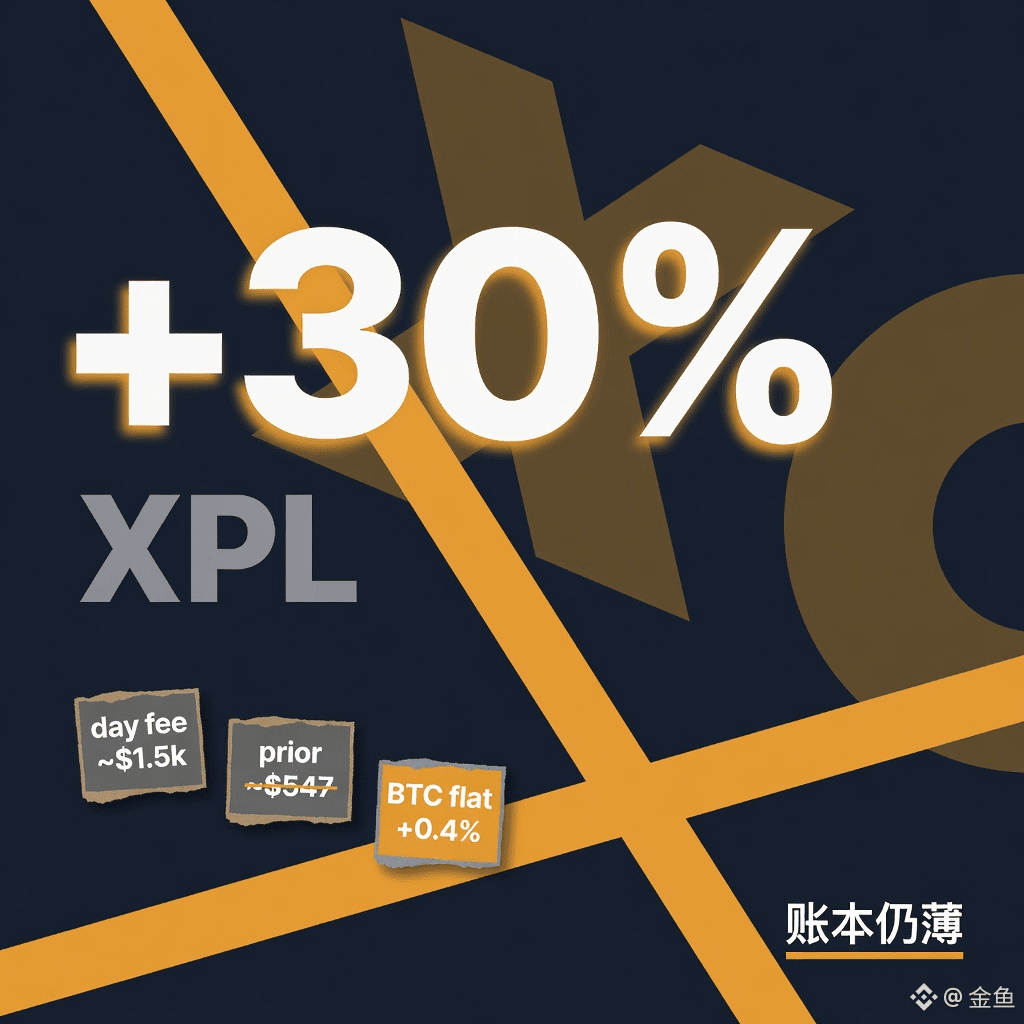
Аренда на день выросла почти в 3 раза, а на счету все еще только одна тысяча пятьсот.
$XPL Binance 0.116, в день примерно +30%; объем сделок около 0.42 млрд.
Плата за Plasma в день — около 1546 долларов, в предыдущий день — около 547.
Ставка OKX — около +0.005%, позиция около 1010 млн.
$BTC за день только +0.4%.
Процентные пункты «поджигали», но монетизация еще не выросла.
#Plasma #стейблкоин-цепь
Аренда на день выросла почти в 3 раза, а на счету все еще только одна тысяча пятьсот.
$XPL Binance 0.116, в день примерно +30%; объем сделок около 0.42 млрд.
Плата за Plasma в день — около 1546 долларов, в предыдущий день — около 547.
Ставка OKX — около +0.005%, позиция около 1010 млн.
$BTC за день только +0.4%.
Процентные пункты «поджигали», но монетизация еще не выросла.
#Plasma #стейблкоин-цепь
$XPL Binance 0.116, в день примерно +30%; объем сделок около 0.42 млрд.
Плата за Plasma в день — около 1546 долларов, в предыдущий день — около 547.
Ставка OKX — около +0.005%, позиция около 1010 млн.
$BTC за день только +0.4%.
Процентные пункты «поджигали», но монетизация еще не выросла.
#Plasma #стейблкоин-цепь
159

·
--
Рост
$XPL Отскок +22%! Seed Gainer Solid Support Base — Параболик SAR Трейлинг-уровень на отметке $0.10782 с целью $0.11805: ретест пика?
Показываем сильную бычью консолидацию в списке Seed gainer на Binance: впечатляющий торговый объём 40.99M USDT (392.57M XPL) поддерживает движение. $XPL (Plasma) закрепила надёжную нижнюю опору, зафиксировав +22.56% дневного роста! Отскочив от минимума 0.08681, чтобы протестировать 24-часовой пик 0.11805, ценовое движение завершило здоровую фазу охлаждения и сейчас консолидируется около 0.11154.
Торговый сценарий: Бычье продолжение / Скальп-отскок
Зона входа: 0.10900 – 0.11200 (набирайте длинные позиции рядом с трейлинг-уровнем SAR, выступающим опорой)
Цели: 0.11805 ➡️ 0.12600 ➡️ 0.13500
Стоп-лосс: Ниже 0.10500
Технически: 15-минутный график демонстрирует учебный сценарий возможности покупки на спаде после отскока от дна свинга 0.10592. Параболические SAR-трейлинг точки расположены прямо под ценовым движением, фиксируя динамическую поддержку на уровне 0.10782, тогда как RSI (6) чисто сбросился до сбалансированных 43.84. Этот сброс индикатора даёт покупателям «простор» для следующего восходящего прорыва. Решительное закрытие 15-минутной свечи выше 0.11400 расчистит путь для полного ретеста пикового уровня 0.11805.
Ты покупаешь этот отскок от поддержки... или ждёшь подтверждения прорыва выше 0.11400?
Торговать сейчас $XPL
{spot}(XPLUSDT)
#XPL #Plasma #cryptotrading #cryptosignals
$XPL Отскок +22%! Seed Gainer Solid Support Base — Параболик SAR Трейлинг-уровень на отметке $0.10782 с целью $0.11805: ретест пика?
Показываем сильную бычью консолидацию в списке Seed gainer на Binance: впечатляющий торговый объём 40.99M USDT (392.57M XPL) поддерживает движение. $XPL (Plasma) закрепила надёжную нижнюю опору, зафиксировав +22.56% дневного роста! Отскочив от минимума 0.08681, чтобы протестировать 24-часовой пик 0.11805, ценовое движение завершило здоровую фазу охлаждения и сейчас консолидируется около 0.11154.
Торговый сценарий: Бычье продолжение / Скальп-отскок
Зона входа: 0.10900 – 0.11200 (набирайте длинные позиции рядом с трейлинг-уровнем SAR, выступающим опорой)
Цели: 0.11805 ➡️ 0.12600 ➡️ 0.13500
Стоп-лосс: Ниже 0.10500
Технически: 15-минутный график демонстрирует учебный сценарий возможности покупки на спаде после отскока от дна свинга 0.10592. Параболические SAR-трейлинг точки расположены прямо под ценовым движением, фиксируя динамическую поддержку на уровне 0.10782, тогда как RSI (6) чисто сбросился до сбалансированных 43.84. Этот сброс индикатора даёт покупателям «простор» для следующего восходящего прорыва. Решительное закрытие 15-минутной свечи выше 0.11400 расчистит путь для полного ретеста пикового уровня 0.11805.
Ты покупаешь этот отскок от поддержки... или ждёшь подтверждения прорыва выше 0.11400?
Торговать сейчас $XPL
#XPL #Plasma #cryptotrading #cryptosignals
Показываем сильную бычью консолидацию в списке Seed gainer на Binance: впечатляющий торговый объём 40.99M USDT (392.57M XPL) поддерживает движение. $XPL (Plasma) закрепила надёжную нижнюю опору, зафиксировав +22.56% дневного роста! Отскочив от минимума 0.08681, чтобы протестировать 24-часовой пик 0.11805, ценовое движение завершило здоровую фазу охлаждения и сейчас консолидируется около 0.11154.
Торговый сценарий: Бычье продолжение / Скальп-отскок
Зона входа: 0.10900 – 0.11200 (набирайте длинные позиции рядом с трейлинг-уровнем SAR, выступающим опорой)
Цели: 0.11805 ➡️ 0.12600 ➡️ 0.13500
Стоп-лосс: Ниже 0.10500
Технически: 15-минутный график демонстрирует учебный сценарий возможности покупки на спаде после отскока от дна свинга 0.10592. Параболические SAR-трейлинг точки расположены прямо под ценовым движением, фиксируя динамическую поддержку на уровне 0.10782, тогда как RSI (6) чисто сбросился до сбалансированных 43.84. Этот сброс индикатора даёт покупателям «простор» для следующего восходящего прорыва. Решительное закрытие 15-минутной свечи выше 0.11400 расчистит путь для полного ретеста пикового уровня 0.11805.
Ты покупаешь этот отскок от поддержки... или ждёшь подтверждения прорыва выше 0.11400?
Торговать сейчас $XPL
#XPL #Plasma #cryptotrading #cryptosignals
1
127

·
--
На днях шорт-сайд прямо упёрся в шорты по XPL, делая ставку на то, что «разблокировка — и цена рухнет»。
Но ничего не рухнуло — наоборот, их же самих и выдавило.
Эта разблокировка — это негатив или ловушка? Сначала таймлайн.
Ровно год назад, 25 сентября 2025 года: бета-сеть Plasma mainnet запустилась, в тот же день на Binance открылся спот, а раздачу (airdop) для HODLer объявили на день раньше.
Сегодня, 25 сентября 2026 года, дата совпадает вплоть до секунды — это не случайность, условия прописаны жёстко: команда + институционалы суммарно владеют 50% от объёма Genesis, и предусмотрено разблокировать там одну треть после полного года работы mainnet. Причём этот момент попадает ровно сегодня. В пересчёте это 1.67 млрд монет — 16.7% от Genesis.
Так что весь шум на площадках про «на Binance завезли» и «раздача пришла» — по сути, это старые новости годичной давности, которые снова прокручивают в эфире. Настоящий триггер — это обрыв этой разблокировки.
Фраза «всё разблокируют — и это точно устроит распродажу» тоже сказана слишком сильно. Поступит только одна треть от суммарного объёма команды + институционалов, а не всё. Розничная часть публичной продажи, которая разблокировалась 28 июля, уже давно прошла — это другая история, и её не надо смешивать с этой паникой.
2.78 млрд долларов незакрытых контрактов навалились прямо перед обрывом: шортисты хотели заранее собрать урожай, но в итоге их же выдавили из позиций. Этот рост — это «выталкивание» из-за перегруженных позиций, а не приток новых денег.
Если бы это был я, я бы за этой волной не гнался. Выдавливание может дать цену на короткое время, но не может обеспечить устойчивый спрос для удержания. Если уж менять мнение — надо смотреть, куда в ближайшие две недели уйдут эти 1.67 млрд монет в ончейне: большая часть будет в залоге или уйдёт в долгую блокировку — значит, «обрыв» окажется ложной тревогой; а вот если начнёт массово течь на биржи, тогда падение, скорее всего, только начинается.
$XPL #Plasma #разблокировка
На днях шорт-сайд прямо упёрся в шорты по XPL, делая ставку на то, что «разблокировка — и цена рухнет»。
Но ничего не рухнуло — наоборот, их же самих и выдавило.
Эта разблокировка — это негатив или ловушка? Сначала таймлайн.
Ровно год назад, 25 сентября 2025 года: бета-сеть Plasma mainnet запустилась, в тот же день на Binance открылся спот, а раздачу (airdop) для HODLer объявили на день раньше.
Сегодня, 25 сентября 2026 года, дата совпадает вплоть до секунды — это не случайность, условия прописаны жёстко: команда + институционалы суммарно владеют 50% от объёма Genesis, и предусмотрено разблокировать там одну треть после полного года работы mainnet. Причём этот момент попадает ровно сегодня. В пересчёте это 1.67 млрд монет — 16.7% от Genesis.
Так что весь шум на площадках про «на Binance завезли» и «раздача пришла» — по сути, это старые новости годичной давности, которые снова прокручивают в эфире. Настоящий триггер — это обрыв этой разблокировки.
Фраза «всё разблокируют — и это точно устроит распродажу» тоже сказана слишком сильно. Поступит только одна треть от суммарного объёма команды + институционалов, а не всё. Розничная часть публичной продажи, которая разблокировалась 28 июля, уже давно прошла — это другая история, и её не надо смешивать с этой паникой.
2.78 млрд долларов незакрытых контрактов навалились прямо перед обрывом: шортисты хотели заранее собрать урожай, но в итоге их же выдавили из позиций. Этот рост — это «выталкивание» из-за перегруженных позиций, а не приток новых денег.
Если бы это был я, я бы за этой волной не гнался. Выдавливание может дать цену на короткое время, но не может обеспечить устойчивый спрос для удержания. Если уж менять мнение — надо смотреть, куда в ближайшие две недели уйдут эти 1.67 млрд монет в ончейне: большая часть будет в залоге или уйдёт в долгую блокировку — значит, «обрыв» окажется ложной тревогой; а вот если начнёт массово течь на биржи, тогда падение, скорее всего, только начинается.
$XPL #Plasma #разблокировка
Но ничего не рухнуло — наоборот, их же самих и выдавило.
Эта разблокировка — это негатив или ловушка? Сначала таймлайн.
Ровно год назад, 25 сентября 2025 года: бета-сеть Plasma mainnet запустилась, в тот же день на Binance открылся спот, а раздачу (airdop) для HODLer объявили на день раньше.
Сегодня, 25 сентября 2026 года, дата совпадает вплоть до секунды — это не случайность, условия прописаны жёстко: команда + институционалы суммарно владеют 50% от объёма Genesis, и предусмотрено разблокировать там одну треть после полного года работы mainnet. Причём этот момент попадает ровно сегодня. В пересчёте это 1.67 млрд монет — 16.7% от Genesis.
Так что весь шум на площадках про «на Binance завезли» и «раздача пришла» — по сути, это старые новости годичной давности, которые снова прокручивают в эфире. Настоящий триггер — это обрыв этой разблокировки.
Фраза «всё разблокируют — и это точно устроит распродажу» тоже сказана слишком сильно. Поступит только одна треть от суммарного объёма команды + институционалов, а не всё. Розничная часть публичной продажи, которая разблокировалась 28 июля, уже давно прошла — это другая история, и её не надо смешивать с этой паникой.
2.78 млрд долларов незакрытых контрактов навалились прямо перед обрывом: шортисты хотели заранее собрать урожай, но в итоге их же выдавили из позиций. Этот рост — это «выталкивание» из-за перегруженных позиций, а не приток новых денег.
Если бы это был я, я бы за этой волной не гнался. Выдавливание может дать цену на короткое время, но не может обеспечить устойчивый спрос для удержания. Если уж менять мнение — надо смотреть, куда в ближайшие две недели уйдут эти 1.67 млрд монет в ончейне: большая часть будет в залоге или уйдёт в долгую блокировку — значит, «обрыв» окажется ложной тревогой; а вот если начнёт массово течь на биржи, тогда падение, скорее всего, только начинается.
$XPL #Plasma #разблокировка
132

·
--
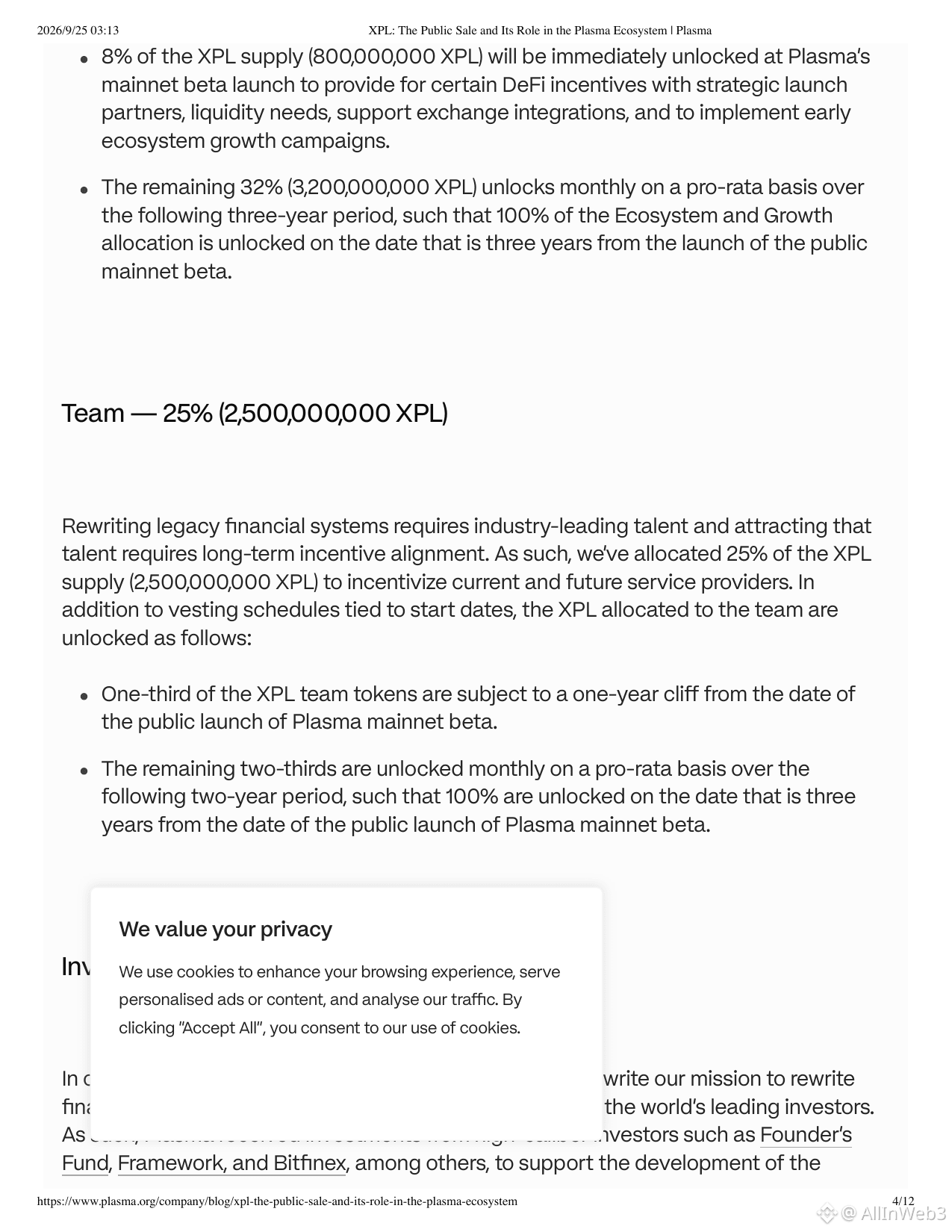
$XPL Я сначала присматриваюсь: цена растёт, а сегодня я как раз попал в узел разблокировки на 1 год. В правилах распределения, опубликованных Plasma в июле 2025 года, указано, что в исходных 10 млрд монет доля команды и инвесторов — по 25% каждая; первая треть разблокируется после того, как в основной сети пройдёт полный год с момента публичного запуска. Основная сеть запущена 25 сентября 2025 года; если рассчитать по первоначальному плану, две группы в первой партии в сумме — около 1,667 млрд монет. Это истечение старого правила, а не сегодняшняя новая позитивная новость, и тем более не означает, что монеты уже проданы.
На Binance спотовые торги вчера в 23:00 по полной минуте/часу закрылись с 0.09316 до 0.10272 — рост примерно на 10,3%, объём около 3,15 млн USDT; в 00:00 вернулись к 0.10038, в 02:00 снова закрылись на 0.10460, а часовой максимум был 0.10516. Покупатели идут вверх, упираясь в потенциальное предложение, но после разблокировки реальный отток/направления средств пока не подтверждены — нельзя просто списать всё на фразу «негатив уже выкуплен».
Я смотрю только на то, как после разблокировки перемещаются средства в публичных кошельках и как заходят деньги на биржи, а также на то, сможет ли спот удержаться по сделкам. Если следующий полный час пройдёт с объёмом и закрытием выше 0.10516 — это будет считаться подтверждением по краткосрочному тренду; если же закроемся ниже 0.10000, это будет больше похоже на выкуп/разгон раньше времени с последующим откатом. Объём разблокировки — это плановый объём, а не объём продаж. #XPL #Plasma #разблокировка токенов
$XPL Я сначала присматриваюсь: цена растёт, а сегодня я как раз попал в узел разблокировки на 1 год. В правилах распределения, опубликованных Plasma в июле 2025 года, указано, что в исходных 10 млрд монет доля команды и инвесторов — по 25% каждая; первая треть разблокируется после того, как в основной сети пройдёт полный год с момента публичного запуска. Основная сеть запущена 25 сентября 2025 года; если рассчитать по первоначальному плану, две группы в первой партии в сумме — около 1,667 млрд монет. Это истечение старого правила, а не сегодняшняя новая позитивная новость, и тем более не означает, что монеты уже проданы.
На Binance спотовые торги вчера в 23:00 по полной минуте/часу закрылись с 0.09316 до 0.10272 — рост примерно на 10,3%, объём около 3,15 млн USDT; в 00:00 вернулись к 0.10038, в 02:00 снова закрылись на 0.10460, а часовой максимум был 0.10516. Покупатели идут вверх, упираясь в потенциальное предложение, но после разблокировки реальный отток/направления средств пока не подтверждены — нельзя просто списать всё на фразу «негатив уже выкуплен».
Я смотрю только на то, как после разблокировки перемещаются средства в публичных кошельках и как заходят деньги на биржи, а также на то, сможет ли спот удержаться по сделкам. Если следующий полный час пройдёт с объёмом и закрытием выше 0.10516 — это будет считаться подтверждением по краткосрочному тренду; если же закроемся ниже 0.10000, это будет больше похоже на выкуп/разгон раньше времени с последующим откатом. Объём разблокировки — это плановый объём, а не объём продаж. #XPL #Plasma #разблокировка токенов
На Binance спотовые торги вчера в 23:00 по полной минуте/часу закрылись с 0.09316 до 0.10272 — рост примерно на 10,3%, объём около 3,15 млн USDT; в 00:00 вернулись к 0.10038, в 02:00 снова закрылись на 0.10460, а часовой максимум был 0.10516. Покупатели идут вверх, упираясь в потенциальное предложение, но после разблокировки реальный отток/направления средств пока не подтверждены — нельзя просто списать всё на фразу «негатив уже выкуплен».
Я смотрю только на то, как после разблокировки перемещаются средства в публичных кошельках и как заходят деньги на биржи, а также на то, сможет ли спот удержаться по сделкам. Если следующий полный час пройдёт с объёмом и закрытием выше 0.10516 — это будет считаться подтверждением по краткосрочному тренду; если же закроемся ниже 0.10000, это будет больше похоже на выкуп/разгон раньше времени с последующим откатом. Объём разблокировки — это плановый объём, а не объём продаж. #XPL #Plasma #разблокировка токенов
1
42

·
--
Рост
Проверено
Тяга, которая удерживает меня в XPL — это противоречие между быстрым движением и более тяжёлым вопросом, который стоит за ним. Plasma строит L1, сосредоточенную вокруг стейблкоинов, и когда в сеть в качестве нативных активов заходят USDC и EURC, идея становится ближе к реальной финансовой архитектуре, а не просто к новой цепочке. Но $0.1024 и +16.28% появляются до разблокировки примерно 1.8 млрд XPL 25 сентября. Поэтому для меня текущий импульс — не история; настоящее испытание — как поведут себя цена и ликвидность, когда это предложение выйдет на рынок.
#Plasma #marouan47 #BinanceWillListHyperliquid(HYPE) @Plasma
$XPL
{spot}(XPLUSDT)
$XAI
{spot}(XAIUSDT)
Тяга, которая удерживает меня в XPL — это противоречие между быстрым движением и более тяжёлым вопросом, который стоит за ним. Plasma строит L1, сосредоточенную вокруг стейблкоинов, и когда в сеть в качестве нативных активов заходят USDC и EURC, идея становится ближе к реальной финансовой архитектуре, а не просто к новой цепочке. Но $0.1024 и +16.28% появляются до разблокировки примерно 1.8 млрд XPL 25 сентября. Поэтому для меня текущий импульс — не история; настоящее испытание — как поведут себя цена и ликвидность, когда это предложение выйдет на рынок.
#Plasma #marouan47 #BinanceWillListHyperliquid(HYPE) @Plasma
$XPL
$XAI
#Plasma #marouan47 #BinanceWillListHyperliquid(HYPE) @Plasma
$XPL
$XAI
2
616

·
--
Статья
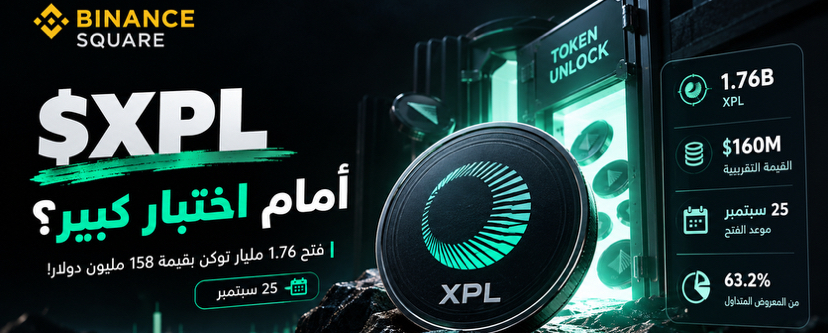
🚨 $XPL ждет серьезное испытание в ближайшие часы!25 сентября сообщество Plasma ждет важное событие: около 1,76 млрд XPL будет открыто для торгов на сумму примерно 158–160 млн долларов. И самое главное — этот объем составляет около 63,2% от текущего обращающегося предложения. ([Binance](https://www.binance.com/en-AE/square/post/09-20-2026-xpl-and-other-tokens-will-see-large-scale-unlocking-next-week-368699270572598?utm_source=chatgpt.com))
Такие Token Unlock привлекают внимание трейдеров, потому что поступление на рынок крупной партии токенов может увеличить ликвидность и волатильность, особенно если некоторые держатели решат продать часть своей доли.
🚨 $XPL ждет серьезное испытание в ближайшие часы!
25 сентября сообщество Plasma ждет важное событие: около 1,76 млрд XPL будет открыто для торгов на сумму примерно 158–160 млн долларов. И самое главное — этот объем составляет около 63,2% от текущего обращающегося предложения. (Binance)
Такие Token Unlock привлекают внимание трейдеров, потому что поступление на рынок крупной партии токенов может увеличить ликвидность и волатильность, особенно если некоторые держатели решат продать часть своей доли.
Такие Token Unlock привлекают внимание трейдеров, потому что поступление на рынок крупной партии токенов может увеличить ликвидность и волатильность, особенно если некоторые держатели решат продать часть своей доли.
157

·
--
Рост
Сеть #Plasma , построенная на блокчейне первого уровня #Layer1 , представляет вам Aurora — операционную систему компании Plasma Nu, которая объединяет услуги консьержа и стиль жизни.
Цена сейчас 0.08$ и совсем скоро 🚀 🚀
$XPL #AURORA #TrendingTopic
{spot}(XPLUSDT)
Сеть #Plasma , построенная на блокчейне первого уровня #Layer1 , представляет вам Aurora — операционную систему компании Plasma Nu, которая объединяет услуги консьержа и стиль жизни.
Цена сейчас 0.08$ и совсем скоро 🚀 🚀
$XPL #AURORA #TrendingTopic
Цена сейчас 0.08$ и совсем скоро 🚀 🚀
$XPL #AURORA #TrendingTopic
1
1
76
·
--
Проверено
🌐 Почему Plasma ($XPL) может стать следующим большим шлюзом для массового внедрения Web3Web3-сфера быстро развивается, но для реального глобального внедрения нужна инфраструктура, которая масштабируется, работает молниеносно и при этом остается экономически эффективной. Именно поэтому я так внимательно слежу за развитием @plasma.
Вместо того чтобы полагаться на краткоживущие рыночные хайп-поводы, Plasma тихо и последовательно строит реальную, устойчивую пользу для экосистемы. Вот более внимательный взгляд на то, почему $XPL заслуживает вашего внимания:
🔥 Ключевые опоры экосистемы Plasma
⚡ Непревзойденная масштабируемость и скорость: Plasma создана специально, чтобы справляться с сетевой перегруженностью, обеспечивая высокопроизводительные транзакции с минимальной задержкой.
🌐 Почему Plasma ($XPL) может стать следующим большим шлюзом для массового внедрения Web3
Web3-сфера быстро развивается, но для реального глобального внедрения нужна инфраструктура, которая масштабируется, работает молниеносно и при этом остается экономически эффективной. Именно поэтому я так внимательно слежу за развитием @plasma.
Вместо того чтобы полагаться на краткоживущие рыночные хайп-поводы, Plasma тихо и последовательно строит реальную, устойчивую пользу для экосистемы. Вот более внимательный взгляд на то, почему $XPL заслуживает вашего внимания:
🔥 Ключевые опоры экосистемы Plasma
⚡ Непревзойденная масштабируемость и скорость: Plasma создана специально, чтобы справляться с сетевой перегруженностью, обеспечивая высокопроизводительные транзакции с минимальной задержкой.
Вместо того чтобы полагаться на краткоживущие рыночные хайп-поводы, Plasma тихо и последовательно строит реальную, устойчивую пользу для экосистемы. Вот более внимательный взгляд на то, почему $XPL заслуживает вашего внимания:
🔥 Ключевые опоры экосистемы Plasma
⚡ Непревзойденная масштабируемость и скорость: Plasma создана специально, чтобы справляться с сетевой перегруженностью, обеспечивая высокопроизводительные транзакции с минимальной задержкой.
246

·
--
Рост
🚀 $XPL — это действительно лучшее решение Layer-1 для глобальных платежей?
Пока большинство сетей Layer-1 пытаются делать всё, Plasma ($XPL) сосредоточен на решении одной из самых больших реальных проблем криптовалют: беспрепятственных платежей стейблкоинами.
Вот почему $XPL сейчас привлекает к себе серьёзное внимание 👇
🔹 Переводы USDT без комиссий: Plasma позволяет пользователям переводить $USDT без необходимости иметь нативные токены газа в своих кошельках.
🔹 Совместимость с EVM и нативный мост для BTC: разработчики могут легко запускать dApps в экосистеме Ethereum, а $BTC при этом органично входит в систему через мост с минимизацией доверия.
🔹 Фокус на глобальных платежах: создан специально для институциональных платежей, расчётов между торговцами и международных денежных переводов.
📊 Цена и рыночные настроения:
XPL удерживает ключевые уровни поддержки, пока объём продолжает расти на торговых парах. Прорыв по импульсу может в ближайшее время нацелиться на более высокие зоны сопротивления.
👉 Какой у вас прогноз по $XPL? Вы держите или торгуете в рамках диапазона?
Нажмите на XPL ниже, чтобы проверить live-графики и торговать! 👇
#Plasma
Отказ от ответственности: не является финансовым советом. Всегда проводите собственное исследование (DYOR).
XPL
🚀 $XPL — это действительно лучшее решение Layer-1 для глобальных платежей?
Пока большинство сетей Layer-1 пытаются делать всё, Plasma ($XPL ) сосредоточен на решении одной из самых больших реальных проблем криптовалют: беспрепятственных платежей стейблкоинами.
Вот почему $XPL сейчас привлекает к себе серьёзное внимание 👇
🔹 Переводы USDT без комиссий: Plasma позволяет пользователям переводить $USDT без необходимости иметь нативные токены газа в своих кошельках.
🔹 Совместимость с EVM и нативный мост для BTC: разработчики могут легко запускать dApps в экосистеме Ethereum, а $BTC при этом органично входит в систему через мост с минимизацией доверия.
🔹 Фокус на глобальных платежах: создан специально для институциональных платежей, расчётов между торговцами и международных денежных переводов.
📊 Цена и рыночные настроения:
XPL удерживает ключевые уровни поддержки, пока объём продолжает расти на торговых парах. Прорыв по импульсу может в ближайшее время нацелиться на более высокие зоны сопротивления.
👉 Какой у вас прогноз по $XPL ? Вы держите или торгуете в рамках диапазона?
Нажмите на XPL ниже, чтобы проверить live-графики и торговать! 👇
#Plasma
Отказ от ответственности: не является финансовым советом. Всегда проводите собственное исследование (DYOR).
XPL
Пока большинство сетей Layer-1 пытаются делать всё, Plasma ($XPL ) сосредоточен на решении одной из самых больших реальных проблем криптовалют: беспрепятственных платежей стейблкоинами.
Вот почему $XPL сейчас привлекает к себе серьёзное внимание 👇
🔹 Переводы USDT без комиссий: Plasma позволяет пользователям переводить $USDT без необходимости иметь нативные токены газа в своих кошельках.
🔹 Совместимость с EVM и нативный мост для BTC: разработчики могут легко запускать dApps в экосистеме Ethereum, а $BTC при этом органично входит в систему через мост с минимизацией доверия.
🔹 Фокус на глобальных платежах: создан специально для институциональных платежей, расчётов между торговцами и международных денежных переводов.
📊 Цена и рыночные настроения:
XPL удерживает ключевые уровни поддержки, пока объём продолжает расти на торговых парах. Прорыв по импульсу может в ближайшее время нацелиться на более высокие зоны сопротивления.
👉 Какой у вас прогноз по $XPL ? Вы держите или торгуете в рамках диапазона?
Нажмите на XPL ниже, чтобы проверить live-графики и торговать! 👇
#Plasma
Отказ от ответственности: не является финансовым советом. Всегда проводите собственное исследование (DYOR).
XPL
1
1
197
·
--
Рост
Цена монеты Plasma взлетает на 18% на фоне новостей о крупной вливании средств в рынок.. Цена монеты Plasma выросла на 18% одновременно с появлением сообщений о крупной операции по выпуску токенов (Token Unlock), запланированной на 25 сентября 2026 года; предполагается разместить около 1,89 млрд единиц монеты XPL (что составляет 18,9% от общего предложения), общая стоимость которых оценивается примерно в 150 млн долларов. Это будет сделано за счет сочетания операций по выпуску монет, предназначенных для команды и инвесторов (согласно системе "Cliff Unlock"), а также первых ежемесячных выплат в рамках плана поэтапного распределения (Vesting).
#Plasma #XPL #TrendingTopic
$XPL
{spot}(XPLUSDT)
Цена монеты Plasma взлетает на 18% на фоне новостей о крупной вливании средств в рынок.. Цена монеты Plasma выросла на 18% одновременно с появлением сообщений о крупной операции по выпуску токенов (Token Unlock), запланированной на 25 сентября 2026 года; предполагается разместить около 1,89 млрд единиц монеты XPL (что составляет 18,9% от общего предложения), общая стоимость которых оценивается примерно в 150 млн долларов. Это будет сделано за счет сочетания операций по выпуску монет, предназначенных для команды и инвесторов (согласно системе "Cliff Unlock"), а также первых ежемесячных выплат в рамках плана поэтапного распределения (Vesting).
#Plasma #XPL #TrendingTopic
$XPL
#Plasma #XPL #TrendingTopic
$XPL
1
50
·
--
Площадь Binance на одну ночь «заскочила» в ленту одним и тем же названием — Plasma. Интерес взлетел в 7,48 раза, но, как ни ищи по всему интернету, не удаётся найти ни одной новости, которая бы выдержала такую волну хайпа.
Цифры не лгут, но цифры и не равны правде. Этот сигнал измеряет скорость распространения контента: сравнение прогнозируемого объёма обсуждений за 48 часов со средним за 5 дней — рост в 7,48 раза. Звучит страшно, а если перевести по-человечески, то это значит: в какой-то момент пост с высокой популярностью был повторно разослан алгоритмом — и всё.
Никаких ссылок на твиты, без имени автора, без заголовка. Любые заявления про эирдропы, инсайды, «разблокировки» — выдумка. Этот сигнал измерял только просмотры и взаимодействия; он не измерял спотовые сделки, не измерял изменения по позициям, не измерял движение средств — рост числа обсуждений не означает, что реальные деньги двинулись.
Цена и обсуждения часто «кормят» друг друга по типичному сценарию: цена двигается — посты растут в числе; постов становится больше — подтягивается ещё аудитория для обсуждений. Этот цикл может крутиться сам по себе и не имеет прямой связи с фундаментальными факторами.
Меня здесь волнует не то, во сколько раз вырос объём обсуждений, а то, появится ли в ближайшие 24–48 часов реальное увеличение спотовых объёмов или официальные новости, которые это подтвердят. Пока этого не случилось, у меня смещение скорее в сторону снижения — похоже, что это просто самосоздающийся информационный «кокон». А вот когда подтвердят — тогда выводы пересмотрю.
$XPL #Plasma #стейблкоины
Площадь Binance на одну ночь «заскочила» в ленту одним и тем же названием — Plasma. Интерес взлетел в 7,48 раза, но, как ни ищи по всему интернету, не удаётся найти ни одной новости, которая бы выдержала такую волну хайпа.
Цифры не лгут, но цифры и не равны правде. Этот сигнал измеряет скорость распространения контента: сравнение прогнозируемого объёма обсуждений за 48 часов со средним за 5 дней — рост в 7,48 раза. Звучит страшно, а если перевести по-человечески, то это значит: в какой-то момент пост с высокой популярностью был повторно разослан алгоритмом — и всё.
Никаких ссылок на твиты, без имени автора, без заголовка. Любые заявления про эирдропы, инсайды, «разблокировки» — выдумка. Этот сигнал измерял только просмотры и взаимодействия; он не измерял спотовые сделки, не измерял изменения по позициям, не измерял движение средств — рост числа обсуждений не означает, что реальные деньги двинулись.
Цена и обсуждения часто «кормят» друг друга по типичному сценарию: цена двигается — посты растут в числе; постов становится больше — подтягивается ещё аудитория для обсуждений. Этот цикл может крутиться сам по себе и не имеет прямой связи с фундаментальными факторами.
Меня здесь волнует не то, во сколько раз вырос объём обсуждений, а то, появится ли в ближайшие 24–48 часов реальное увеличение спотовых объёмов или официальные новости, которые это подтвердят. Пока этого не случилось, у меня смещение скорее в сторону снижения — похоже, что это просто самосоздающийся информационный «кокон». А вот когда подтвердят — тогда выводы пересмотрю.
$XPL #Plasma #стейблкоины
Цифры не лгут, но цифры и не равны правде. Этот сигнал измеряет скорость распространения контента: сравнение прогнозируемого объёма обсуждений за 48 часов со средним за 5 дней — рост в 7,48 раза. Звучит страшно, а если перевести по-человечески, то это значит: в какой-то момент пост с высокой популярностью был повторно разослан алгоритмом — и всё.
Никаких ссылок на твиты, без имени автора, без заголовка. Любые заявления про эирдропы, инсайды, «разблокировки» — выдумка. Этот сигнал измерял только просмотры и взаимодействия; он не измерял спотовые сделки, не измерял изменения по позициям, не измерял движение средств — рост числа обсуждений не означает, что реальные деньги двинулись.
Цена и обсуждения часто «кормят» друг друга по типичному сценарию: цена двигается — посты растут в числе; постов становится больше — подтягивается ещё аудитория для обсуждений. Этот цикл может крутиться сам по себе и не имеет прямой связи с фундаментальными факторами.
Меня здесь волнует не то, во сколько раз вырос объём обсуждений, а то, появится ли в ближайшие 24–48 часов реальное увеличение спотовых объёмов или официальные новости, которые это подтвердят. Пока этого не случилось, у меня смещение скорее в сторону снижения — похоже, что это просто самосоздающийся информационный «кокон». А вот когда подтвердят — тогда выводы пересмотрю.
$XPL #Plasma #стейблкоины
132

·
--
Статья
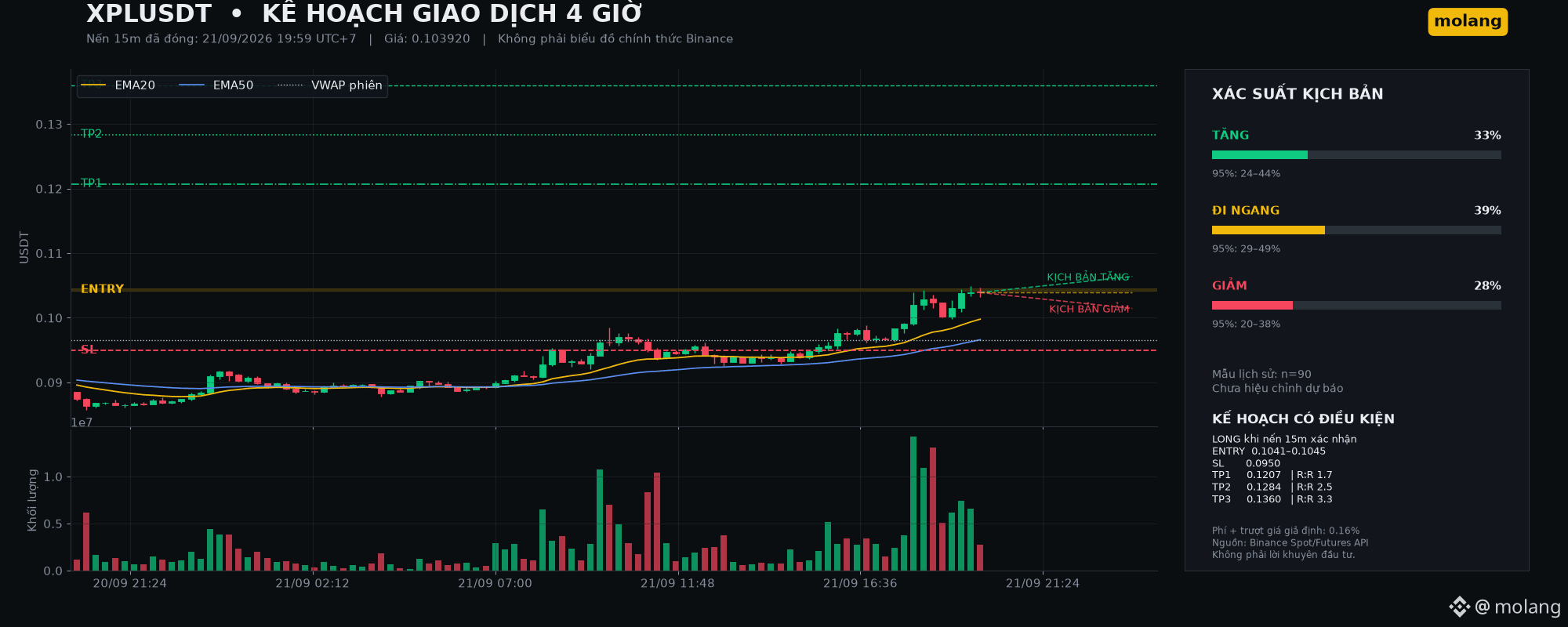
XPL УСКОРЯЕТСЯ: ВОЛНА СИЛЬНА, ЗАХОДИТЬ ПРИ ПОДТВЕРЖДЁННОМ ПРОБОЕXPL ускоряется: структура цены становится всё более плотной. На момент сбора данных 19:59 UTC+7, XPLUSDT на Binance торгуется на уровне 0.10392 USDT, рост примерно на 17.62% за 24 часа; объём по спотовой паре — около 24.3 млн USDT. Цена вышла из боковика около 0.09 и продолжает формировать более высокие минимумы, что указывает на то, что денежный поток активно поднимает уровень торгов.
Моё мнение: когда тренд/волна сильные — надо заходить решительно, но точка входа должна иметь подтверждение. На 15-минутном таймфрейме цена находится выше EMA20 и EMA50; EMA20 на 1-часовом таймфрейме выше EMA50; цена также выше EMA20 на 4-часовом. VWAP сессии около 0.09651 находится довольно далеко снизу, то есть покупатели контролируют ситуацию, но степень натяжения уже большая. Погоня за ценой сразу после одной сильной зелёной свечи легко превращает вас в ликвидность для хода фиксации прибыли.
XPL УСКОРЯЕТСЯ: ВОЛНА СИЛЬНА, ЗАХОДИТЬ ПРИ ПОДТВЕРЖДЁННОМ ПРОБОЕ
XPL ускоряется: структура цены становится всё более плотной. На момент сбора данных 19:59 UTC+7, XPLUSDT на Binance торгуется на уровне 0.10392 USDT, рост примерно на 17.62% за 24 часа; объём по спотовой паре — около 24.3 млн USDT. Цена вышла из боковика около 0.09 и продолжает формировать более высокие минимумы, что указывает на то, что денежный поток активно поднимает уровень торгов.
Моё мнение: когда тренд/волна сильные — надо заходить решительно, но точка входа должна иметь подтверждение. На 15-минутном таймфрейме цена находится выше EMA20 и EMA50; EMA20 на 1-часовом таймфрейме выше EMA50; цена также выше EMA20 на 4-часовом. VWAP сессии около 0.09651 находится довольно далеко снизу, то есть покупатели контролируют ситуацию, но степень натяжения уже большая. Погоня за ценой сразу после одной сильной зелёной свечи легко превращает вас в ликвидность для хода фиксации прибыли.
Моё мнение: когда тренд/волна сильные — надо заходить решительно, но точка входа должна иметь подтверждение. На 15-минутном таймфрейме цена находится выше EMA20 и EMA50; EMA20 на 1-часовом таймфрейме выше EMA50; цена также выше EMA20 на 4-часовом. VWAP сессии около 0.09651 находится довольно далеко снизу, то есть покупатели контролируют ситуацию, но степень натяжения уже большая. Погоня за ценой сразу после одной сильной зелёной свечи легко превращает вас в ликвидность для хода фиксации прибыли.
99

·
--
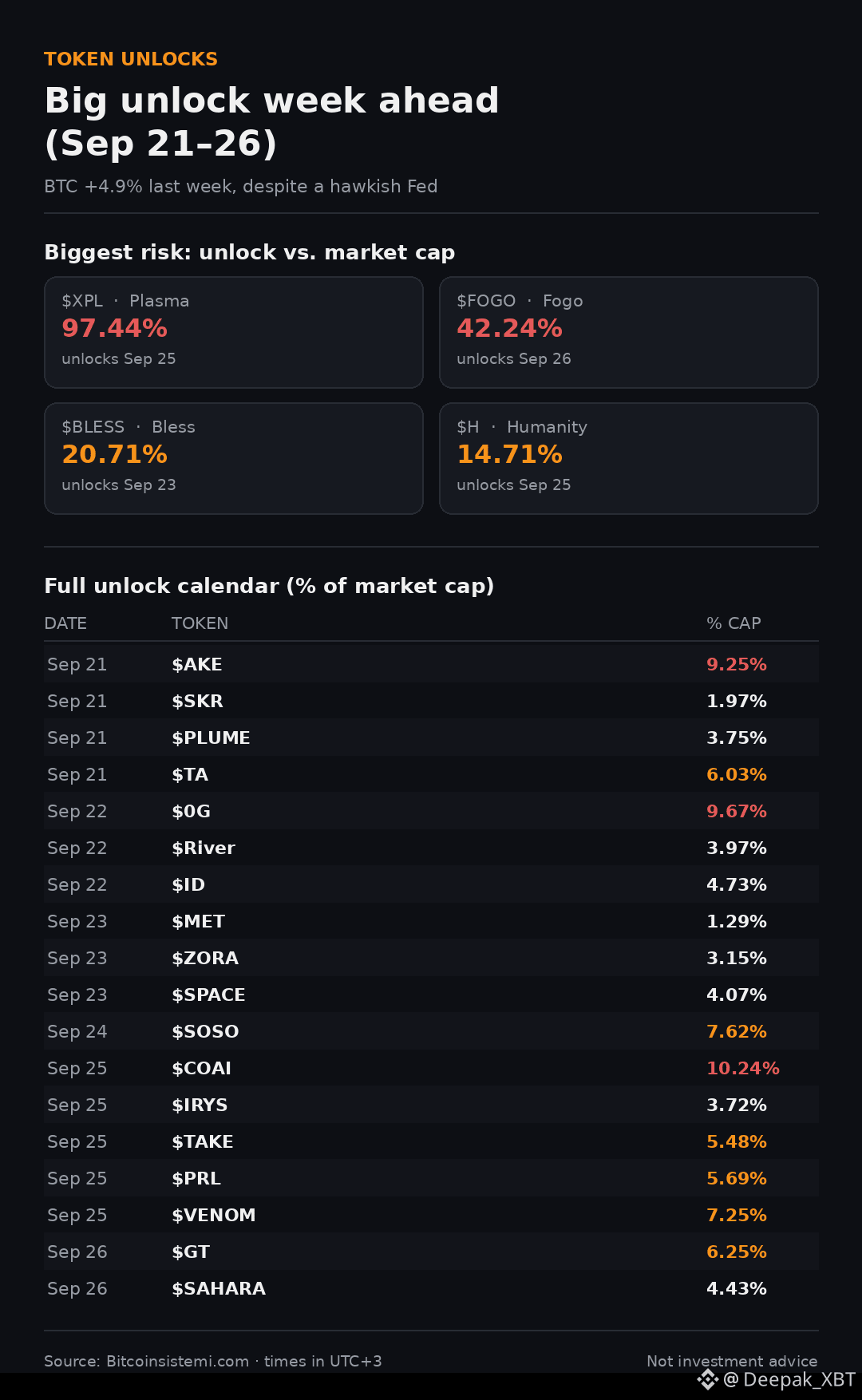
**Огромная неделя разблокировок токенов впереди — вот что стоит отслеживать 🔓**
Несмотря на жесткий настрой ФРС и тон после решения председателя Уорша, криптовалюта на прошлой неделе сильно подросла — BTC +4.9%, а большинство топ-10 альткоинов последовали за ним.
Но плотный календарь разблокировок (21–26 сентября) может проверить этот импульс:
🔴 **Крупнейшие риски:**
• **Plasma ($XPL)** — разблокировка на $151.64M = **97.44%** от рыночной капитализации (25 сентября)
• **Fogo** — $9.83M = **42.24%** от рыночной капитализации (26 сентября)
• **Bless** — $4.48M = **20.71%** от рыночной капитализации (23 сентября)
• **Humanity (H)** — $20.76M = 14.71% от рыночной капитализации (25 сентября)
**Также разблокируется на этой неделе:** Akedo, Seeker, Plume, Trusta.AI, 0G, River, Space ID, Meteora, Zora, Spacecoin, SoSoValue, ChainOpera AI, Irys, OVERTAKE, Perle Labs, Venom, GateToken, Sahara AI
Разблокировки вблизи/выше 15–20% от рыночной капитализации исторически создают дополнительное давление со стороны продавцов — стоит следить за динамикой цены в эти даты, особенно за почти полным высвобождением Plasma.
*NFA — DYOR* 🧠
#TokenUnlockSeries #Crypto_Jobs🎯 #Altcoins #Plasma #fogo
**Огромная неделя разблокировок токенов впереди — вот что стоит отслеживать 🔓**
Несмотря на жесткий настрой ФРС и тон после решения председателя Уорша, криптовалюта на прошлой неделе сильно подросла — BTC +4.9%, а большинство топ-10 альткоинов последовали за ним.
Но плотный календарь разблокировок (21–26 сентября) может проверить этот импульс:
🔴 **Крупнейшие риски:**
• **Plasma ($XPL)** — разблокировка на $151.64M = **97.44%** от рыночной капитализации (25 сентября)
• **Fogo** — $9.83M = **42.24%** от рыночной капитализации (26 сентября)
• **Bless** — $4.48M = **20.71%** от рыночной капитализации (23 сентября)
• **Humanity (H)** — $20.76M = 14.71% от рыночной капитализации (25 сентября)
**Также разблокируется на этой неделе:** Akedo, Seeker, Plume, Trusta.AI, 0G, River, Space ID, Meteora, Zora, Spacecoin, SoSoValue, ChainOpera AI, Irys, OVERTAKE, Perle Labs, Venom, GateToken, Sahara AI
Разблокировки вблизи/выше 15–20% от рыночной капитализации исторически создают дополнительное давление со стороны продавцов — стоит следить за динамикой цены в эти даты, особенно за почти полным высвобождением Plasma.
*NFA — DYOR* 🧠
#TokenUnlockSeries #Crypto_Jobs🎯 #Altcoins #Plasma #fogo
Несмотря на жесткий настрой ФРС и тон после решения председателя Уорша, криптовалюта на прошлой неделе сильно подросла — BTC +4.9%, а большинство топ-10 альткоинов последовали за ним.
Но плотный календарь разблокировок (21–26 сентября) может проверить этот импульс:
🔴 **Крупнейшие риски:**
• **Plasma ($XPL)** — разблокировка на $151.64M = **97.44%** от рыночной капитализации (25 сентября)
• **Fogo** — $9.83M = **42.24%** от рыночной капитализации (26 сентября)
• **Bless** — $4.48M = **20.71%** от рыночной капитализации (23 сентября)
• **Humanity (H)** — $20.76M = 14.71% от рыночной капитализации (25 сентября)
**Также разблокируется на этой неделе:** Akedo, Seeker, Plume, Trusta.AI, 0G, River, Space ID, Meteora, Zora, Spacecoin, SoSoValue, ChainOpera AI, Irys, OVERTAKE, Perle Labs, Venom, GateToken, Sahara AI
Разблокировки вблизи/выше 15–20% от рыночной капитализации исторически создают дополнительное давление со стороны продавцов — стоит следить за динамикой цены в эти даты, особенно за почти полным высвобождением Plasma.
*NFA — DYOR* 🧠
#TokenUnlockSeries #Crypto_Jobs🎯 #Altcoins #Plasma #fogo
2
1
1.5k

{spot}(XPLUSDT)
@Plasma плазма создает новый стандарт для быстрого, эффективного и ориентированного на стейблкоины блокчейн-инфраструктуры. Я рад(а) следить за ростом @Plasma и смотреть, как развивается $XPL по мере расширения экосистемы. Видение масштабируемых платежей и стейблкоинов делает Плазму проектом, за которым стоит наблюдать.
#Plasma @Plasma $XPL #Plasma
@Plasma плазма создает новый стандарт для быстрого, эффективного и ориентированного на стейблкоины блокчейн-инфраструктуры. Я рад(а) следить за ростом @Plasma и смотреть, как развивается $XPL по мере расширения экосистемы. Видение масштабируемых платежей и стейблкоинов делает Плазму проектом, за которым стоит наблюдать.
#Plasma @Plasma $XPL #Plasma
#Plasma @Plasma $XPL #Plasma
2
180
Войдите, чтобы посмотреть больше материала
Присоединяйтесь к пользователям криптовалют по всему миру на Binance Square
⚡️ Получайте новейшую и полезную информацию о криптоактивах.
💬 Нам доверяет крупнейшая в мире криптобиржа.
👍 Получите достоверные аналитические данные от верифицированных создателей контента.
Эл. почта/номер телефона
В тренде
1
#ПротоколFOMC
Просмотров: 36,549
182 обсуждают
2
#fomcотслеживание
Просмотров: 48,650
414 обсуждают
3
#FedMinutesFocusOnOctoberPause
Просмотров: 285,527
1,734 обсуждают
4
#IMFGrantsWaiverForElSalvadorBitcoinBreach
Просмотров: 1,670
73 обсуждают
5
#BinanceLaunchesBinanceIntelligence
Просмотров: 1.2M
6,865 обсуждают
6
#EvernorthDelaysNasdaqDebutToOct12
Просмотров: 38,374
441 обсуждают
7
#RobinhoodAdds$25MInBitcoinToBalanceSheet
Просмотров: 14,274
88 обсуждают
8
#SP500AndNasdaqHitRecordHighs
Просмотров: 43,070
585 обсуждают
9
#USMortgageRatesRiseTo7.49%
Просмотров: 37,725
464 обсуждают
10
#BTCFallsBelow$84K
Просмотров: 155,314
252 обсуждают