
#blockchain
blockchain
Просмотров: 34.5M
159,883 обсуждают
Популярные
Новые
·
--
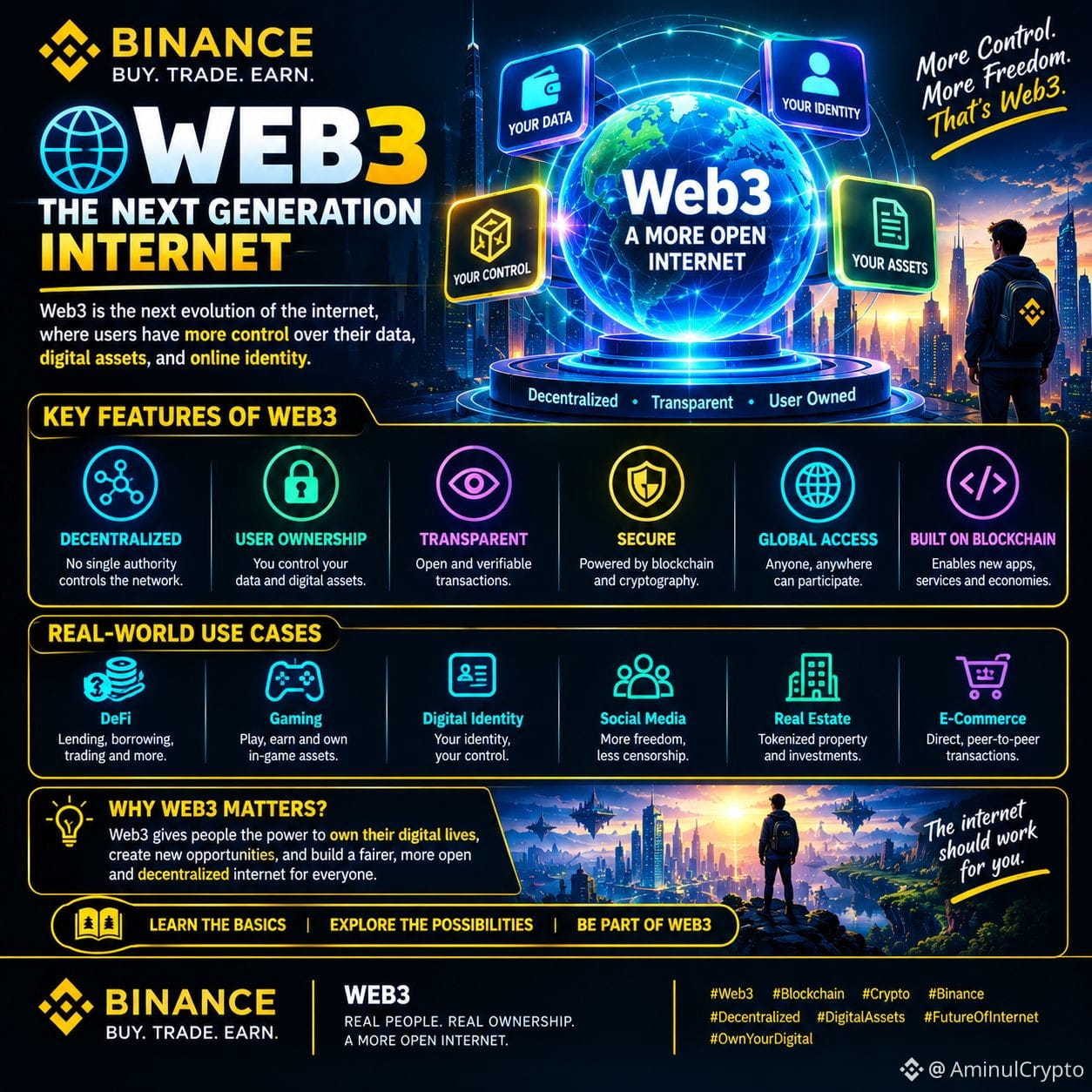
🌐 WEB3: СЛЕДУЮЩЕЕ ПОКОЛЕНИЕ ИНТЕРНЕТА
Web3 — это развивающееся видение интернета, где технологии блокчейна могут дать пользователям больше контроля над их данными, цифровыми активами и онлайн-идентичностью.
🔹 Децентрализовано
🔹 Собственность пользователей
🔹 Прозрачно
🔹 Основано на блокчейне
🔹 Глобальный доступ
Web3 открывает новые возможности в сферах:
💰 DeFi
🎮 Игры
🪪 Цифровая идентичность
💬 Социальные платформы
🏠 Токенизированные активы
🛒 Электронная коммерция
Идея Web3 проста: вместо того чтобы всё было под контролем нескольких централизованных платформ, пользователи могут иметь более существенную роль в владении цифровыми активами и взаимодействии с ними, а также с сервисами.
📚 Освойте основы.
🔍 Изучите технологию.
💡 Поймите риски перед участием.
Web3 всё ещё развивается — но его влияние на будущее интернета может быть значительным. 🚀
Что вам больше всего интересно в Web3: DeFi, Игры, Цифровая идентичность или Цифровое владение? 👇
#Web3 #Blockchain #Crypto #Binance #CryptoEducation
🌐 WEB3: СЛЕДУЮЩЕЕ ПОКОЛЕНИЕ ИНТЕРНЕТА
Web3 — это развивающееся видение интернета, где технологии блокчейна могут дать пользователям больше контроля над их данными, цифровыми активами и онлайн-идентичностью.
🔹 Децентрализовано
🔹 Собственность пользователей
🔹 Прозрачно
🔹 Основано на блокчейне
🔹 Глобальный доступ
Web3 открывает новые возможности в сферах:
💰 DeFi
🎮 Игры
🪪 Цифровая идентичность
💬 Социальные платформы
🏠 Токенизированные активы
🛒 Электронная коммерция
Идея Web3 проста: вместо того чтобы всё было под контролем нескольких централизованных платформ, пользователи могут иметь более существенную роль в владении цифровыми активами и взаимодействии с ними, а также с сервисами.
📚 Освойте основы.
🔍 Изучите технологию.
💡 Поймите риски перед участием.
Web3 всё ещё развивается — но его влияние на будущее интернета может быть значительным. 🚀
Что вам больше всего интересно в Web3: DeFi, Игры, Цифровая идентичность или Цифровое владение? 👇
#Web3 #Blockchain #Crypto #Binance #CryptoEducation
Web3 — это развивающееся видение интернета, где технологии блокчейна могут дать пользователям больше контроля над их данными, цифровыми активами и онлайн-идентичностью.
🔹 Децентрализовано
🔹 Собственность пользователей
🔹 Прозрачно
🔹 Основано на блокчейне
🔹 Глобальный доступ
Web3 открывает новые возможности в сферах:
💰 DeFi
🎮 Игры
🪪 Цифровая идентичность
💬 Социальные платформы
🏠 Токенизированные активы
🛒 Электронная коммерция
Идея Web3 проста: вместо того чтобы всё было под контролем нескольких централизованных платформ, пользователи могут иметь более существенную роль в владении цифровыми активами и взаимодействии с ними, а также с сервисами.
📚 Освойте основы.
🔍 Изучите технологию.
💡 Поймите риски перед участием.
Web3 всё ещё развивается — но его влияние на будущее интернета может быть значительным. 🚀
Что вам больше всего интересно в Web3: DeFi, Игры, Цифровая идентичность или Цифровое владение? 👇
#Web3 #Blockchain #Crypto #Binance #CryptoEducation
71

Криптовалюта меняет наше представление о деньгах, транзакциях и цифровой собственности. Благодаря децентрализованной блокчейн-технологии она предлагает безопасный, быстрый и не знающий границ способ передавать ценность по всему миру без опоры на традиционных посредников.
Ключевые моменты:
Децентрализация: Работая в блокчейн-сетях, криптовалюта исключает центральные точки отказа и комиссии посредников.
Финансовая инклюзия: Любой, у кого есть подключение к интернету, может получить доступ к глобальным финансовым сервисам мгновенно.
Инновации и полезность: Помимо простых транзакций, смарт-контракты и приложения Web3 создают совершенно новые цифровые экономики.
Хотя рынок открывает огромные возможности для роста, чтобы безопасно ориентироваться в этой сфере, важно быть в курсе событий и уделять приоритетное внимание безопасности.
Вы сейчас инвестируете в криптовалюту или все еще изучаете, как она работает? Напишите в комментариях, что думаете! 👇
#Cryptocurrency
#Blockchain #Web3 #Finance #FutureOfMoney
Криптовалюта меняет наше представление о деньгах, транзакциях и цифровой собственности. Благодаря децентрализованной блокчейн-технологии она предлагает безопасный, быстрый и не знающий границ способ передавать ценность по всему миру без опоры на традиционных посредников.
Ключевые моменты:
Децентрализация: Работая в блокчейн-сетях, криптовалюта исключает центральные точки отказа и комиссии посредников.
Финансовая инклюзия: Любой, у кого есть подключение к интернету, может получить доступ к глобальным финансовым сервисам мгновенно.
Инновации и полезность: Помимо простых транзакций, смарт-контракты и приложения Web3 создают совершенно новые цифровые экономики.
Хотя рынок открывает огромные возможности для роста, чтобы безопасно ориентироваться в этой сфере, важно быть в курсе событий и уделять приоритетное внимание безопасности.
Вы сейчас инвестируете в криптовалюту или все еще изучаете, как она работает? Напишите в комментариях, что думаете! 👇
#Cryptocurrency
#Blockchain #Web3 #Finance #FutureOfMoney
Ключевые моменты:
Децентрализация: Работая в блокчейн-сетях, криптовалюта исключает центральные точки отказа и комиссии посредников.
Финансовая инклюзия: Любой, у кого есть подключение к интернету, может получить доступ к глобальным финансовым сервисам мгновенно.
Инновации и полезность: Помимо простых транзакций, смарт-контракты и приложения Web3 создают совершенно новые цифровые экономики.
Хотя рынок открывает огромные возможности для роста, чтобы безопасно ориентироваться в этой сфере, важно быть в курсе событий и уделять приоритетное внимание безопасности.
Вы сейчас инвестируете в криптовалюту или все еще изучаете, как она работает? Напишите в комментариях, что думаете! 👇
#Cryptocurrency
#Blockchain #Web3 #Finance #FutureOfMoney
60

·
--
🧵 ТРЕД: «Blockchain объяснён так, будто тебе 12 лет»
.Слушаешь «blockchain» целый день, но всё ещё не понимаешь, что это такое?
За 8 твитов ты поймёшь это лучше, чем 95% людей.
Посмотри этот тред. Он тебе понадобится 👇
---
1/8 🧱 Что такое блок?
Представь себе блокнот, где ты записываешь каждое движение денег.
Каждая страница = блок.
Каждый блок содержит:
· 📝 Транзакции
· 🔢 Уникальный код (хэш)
· 🔗 Код предыдущего блока
Этот «код предыдущего блока» и связывает их. Отсюда и «block-chain» (цепочка блоков).
🧵 ТРЕД: «Blockchain объяснён так, будто тебе 12 лет» .
Слушаешь «blockchain» целый день, но всё ещё не понимаешь, что это такое?
За 8 твитов ты поймёшь это лучше, чем 95% людей.
Посмотри этот тред. Он тебе понадобится 👇
---
1/8 🧱 Что такое блок?
Представь себе блокнот, где ты записываешь каждое движение денег.
Каждая страница = блок.
Каждый блок содержит:
· 📝 Транзакции
· 🔢 Уникальный код (хэш)
· 🔗 Код предыдущего блока
Этот «код предыдущего блока» и связывает их. Отсюда и «block-chain» (цепочка блоков).
За 8 твитов ты поймёшь это лучше, чем 95% людей.
Посмотри этот тред. Он тебе понадобится 👇
---
1/8 🧱 Что такое блок?
Представь себе блокнот, где ты записываешь каждое движение денег.
Каждая страница = блок.
Каждый блок содержит:
· 📝 Транзакции
· 🔢 Уникальный код (хэш)
· 🔗 Код предыдущего блока
Этот «код предыдущего блока» и связывает их. Отсюда и «block-chain» (цепочка блоков).
91

·
--
$ARKM
{future}(ARKMUSDT)
ARKM фокусируется на блокчейн-аналитике и данных в сети. Экосистема стремится сделать блокчейн-деятельность проще для анализа и понимания.
По мере того как крипторынки становятся все более ориентированными на данные, инструменты, помогающие пользователям исследовать кошельки, транзакции и ончейн-активность, могут становиться все более полезными.
#ARKM #Blockchain #OnChain #BinanceSquare
$ARKM
ARKM фокусируется на блокчейн-аналитике и данных в сети. Экосистема стремится сделать блокчейн-деятельность проще для анализа и понимания.
По мере того как крипторынки становятся все более ориентированными на данные, инструменты, помогающие пользователям исследовать кошельки, транзакции и ончейн-активность, могут становиться все более полезными.
#ARKM #Blockchain #OnChain #BinanceSquare
ARKM фокусируется на блокчейн-аналитике и данных в сети. Экосистема стремится сделать блокчейн-деятельность проще для анализа и понимания.
По мере того как крипторынки становятся все более ориентированными на данные, инструменты, помогающие пользователям исследовать кошельки, транзакции и ончейн-активность, могут становиться все более полезными.
#ARKM #Blockchain #OnChain #BinanceSquare
78


Отправка одного блока 1 000 раз не масштабируется 📡
$ETH и $SOL придерживаются радикально разных подходов к производству блоков, но оба зависят от распространения информации от относительно небольшого числа источников к гораздо более крупным наборам машин.
В обычном интернете отправка одной и той же информации многим адресатам может означать многократное создание и передачу отдельных копий.
Это становится всё менее эффективно по мере роста числа получателей и объёма данных.
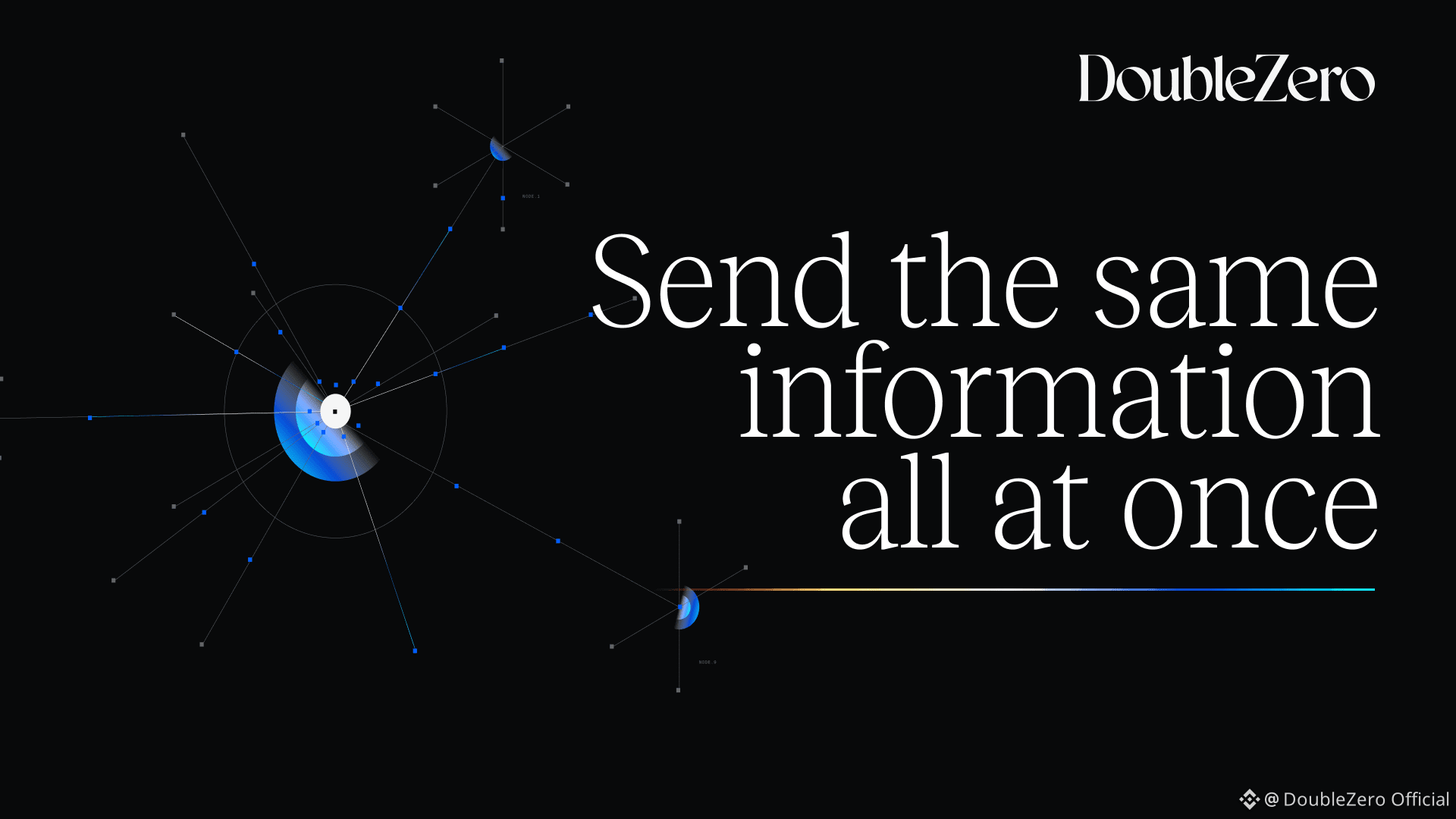
Внутренняя сеть DoubleZero разработана для поддержки мультикаста.
Вместо того чтобы заставлять отправителя передавать один и тот же поток индивидуально в каждое направление, данные могут войти в сеть один раз и быть воспроизведены внутри сети по мере её движения к множеству получателей.
Разница важна, потому что пропускная способность отправителя больше не обязана расти синхронно с числом машин, получающих одну и ту же информацию.
Блокчейны тратят огромные инженерные усилия, чтобы ускорять производство блоков.
Но после того, как блок уже существует, кто-то всё равно должен сообщить о нём всем остальным.
#blockchain #Scaling
Отправка одного блока 1 000 раз не масштабируется 📡
$ETH и $SOL придерживаются радикально разных подходов к производству блоков, но оба зависят от распространения информации от относительно небольшого числа источников к гораздо более крупным наборам машин.
В обычном интернете отправка одной и той же информации многим адресатам может означать многократное создание и передачу отдельных копий.
Это становится всё менее эффективно по мере роста числа получателей и объёма данных.
Внутренняя сеть DoubleZero разработана для поддержки мультикаста.
Вместо того чтобы заставлять отправителя передавать один и тот же поток индивидуально в каждое направление, данные могут войти в сеть один раз и быть воспроизведены внутри сети по мере её движения к множеству получателей.
Разница важна, потому что пропускная способность отправителя больше не обязана расти синхронно с числом машин, получающих одну и ту же информацию.
Блокчейны тратят огромные инженерные усилия, чтобы ускорять производство блоков.
Но после того, как блок уже существует, кто-то всё равно должен сообщить о нём всем остальным.
#blockchain #Scaling
$ETH и $SOL придерживаются радикально разных подходов к производству блоков, но оба зависят от распространения информации от относительно небольшого числа источников к гораздо более крупным наборам машин.
В обычном интернете отправка одной и той же информации многим адресатам может означать многократное создание и передачу отдельных копий.
Это становится всё менее эффективно по мере роста числа получателей и объёма данных.
Внутренняя сеть DoubleZero разработана для поддержки мультикаста.
Вместо того чтобы заставлять отправителя передавать один и тот же поток индивидуально в каждое направление, данные могут войти в сеть один раз и быть воспроизведены внутри сети по мере её движения к множеству получателей.
Разница важна, потому что пропускная способность отправителя больше не обязана расти синхронно с числом машин, получающих одну и ту же информацию.
Блокчейны тратят огромные инженерные усилия, чтобы ускорять производство блоков.
Но после того, как блок уже существует, кто-то всё равно должен сообщить о нём всем остальным.
#blockchain #Scaling
94
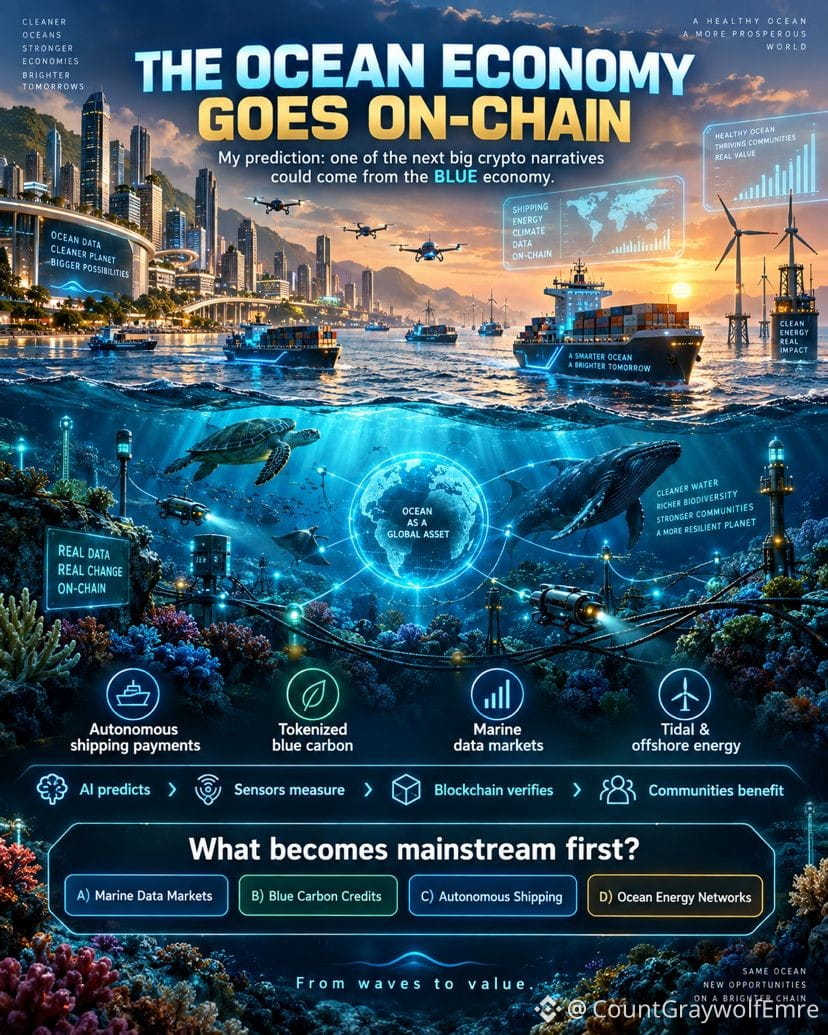
🚀 Мой прогноз: один из самых неожиданных крипто-сюжетов следующего десятилетия может прийти из OCEAN ECONOMY.
Обычно мы говорим о крипте через призму финансов, ИИ, игр и токенизации.
Но что, если один из следующих крупных реальных сценариев применения появится из моря?
Представьте будущее, где:
🌊 Морские данные торгуются прозрачно on-chain
🚢 Автономные суда автоматически оплачивают топливо, порты и услуги
🌱 Проекты по «голубому углероду» отслеживаются и цифрово верифицируются
⚡ Оффшорная ветровая и приливная энергия подключаются к децентрализованным рынкам
🤖 ИИ в реальном времени отслеживает маршруты судов, загрязнение, биоразнообразие и инфраструктуру океана
📡 Датчики непрерывно передают верифицированные экологические данные в блокчейн-сети
Океан уже объединяет глобальную торговлю, энергетику, климат и продовольственные системы.
В итоге блокчейн может стать координационным уровнем, связывающим данные, платежи, стимулы и инфраструктуру, стоящие за этой экономикой.
🔥 ИИ предсказывает.
📡 Датчики измеряют.
⛓️ Блокчейн верифицирует.
🌍 Выигрывают сообщества и отрасли.
Мой смелый прогноз:
«Голубая экономика» может стать одним из самых интересных real-world фронтиров Web3.
Что станет мейнстримом первым?
A) Рынки морских данных 🌊
B) Кредиты по голубому углероду 🌱
C) Автономное судоходство 🚢
D) Сети океанской энергетики ⚡
👇 Оставьте свой прогноз ниже. Какой вариант сегодня звучит футуристично, но завтра кажется очевидным?
#Binance #BinanceSquare #crypto #Web3 #blockchain
🚀 Мой прогноз: один из самых неожиданных крипто-сюжетов следующего десятилетия может прийти из OCEAN ECONOMY.
Обычно мы говорим о крипте через призму финансов, ИИ, игр и токенизации.
Но что, если один из следующих крупных реальных сценариев применения появится из моря?
Представьте будущее, где:
🌊 Морские данные торгуются прозрачно on-chain
🚢 Автономные суда автоматически оплачивают топливо, порты и услуги
🌱 Проекты по «голубому углероду» отслеживаются и цифрово верифицируются
⚡ Оффшорная ветровая и приливная энергия подключаются к децентрализованным рынкам
🤖 ИИ в реальном времени отслеживает маршруты судов, загрязнение, биоразнообразие и инфраструктуру океана
📡 Датчики непрерывно передают верифицированные экологические данные в блокчейн-сети
Океан уже объединяет глобальную торговлю, энергетику, климат и продовольственные системы.
В итоге блокчейн может стать координационным уровнем, связывающим данные, платежи, стимулы и инфраструктуру, стоящие за этой экономикой.
🔥 ИИ предсказывает.
📡 Датчики измеряют.
⛓️ Блокчейн верифицирует.
🌍 Выигрывают сообщества и отрасли.
Мой смелый прогноз:
«Голубая экономика» может стать одним из самых интересных real-world фронтиров Web3.
Что станет мейнстримом первым?
A) Рынки морских данных 🌊
B) Кредиты по голубому углероду 🌱
C) Автономное судоходство 🚢
D) Сети океанской энергетики ⚡
👇 Оставьте свой прогноз ниже. Какой вариант сегодня звучит футуристично, но завтра кажется очевидным?
#Binance #BinanceSquare #crypto #Web3 #blockchain
Обычно мы говорим о крипте через призму финансов, ИИ, игр и токенизации.
Но что, если один из следующих крупных реальных сценариев применения появится из моря?
Представьте будущее, где:
🌊 Морские данные торгуются прозрачно on-chain
🚢 Автономные суда автоматически оплачивают топливо, порты и услуги
🌱 Проекты по «голубому углероду» отслеживаются и цифрово верифицируются
⚡ Оффшорная ветровая и приливная энергия подключаются к децентрализованным рынкам
🤖 ИИ в реальном времени отслеживает маршруты судов, загрязнение, биоразнообразие и инфраструктуру океана
📡 Датчики непрерывно передают верифицированные экологические данные в блокчейн-сети
Океан уже объединяет глобальную торговлю, энергетику, климат и продовольственные системы.
В итоге блокчейн может стать координационным уровнем, связывающим данные, платежи, стимулы и инфраструктуру, стоящие за этой экономикой.
🔥 ИИ предсказывает.
📡 Датчики измеряют.
⛓️ Блокчейн верифицирует.
🌍 Выигрывают сообщества и отрасли.
Мой смелый прогноз:
«Голубая экономика» может стать одним из самых интересных real-world фронтиров Web3.
Что станет мейнстримом первым?
A) Рынки морских данных 🌊
B) Кредиты по голубому углероду 🌱
C) Автономное судоходство 🚢
D) Сети океанской энергетики ⚡
👇 Оставьте свой прогноз ниже. Какой вариант сегодня звучит футуристично, но завтра кажется очевидным?
#Binance #BinanceSquare #crypto #Web3 #blockchain
60

🌐 КРИПТО: ИНТЕРНЕТ ДЕНЕГ?
Вы, наверное, слышали, как люди говорят о Bitcoin, Ethereum, USDT, Web3 и блокчейне.
Но что именно такое крипто?
Давайте разберёмся за 60 секунд. 👇
🔹 1. Крипто = Цифровой актив
Криптовалюта — это цифровой актив, который существует в электронном виде. Его можно передавать между людьми без необходимости каждый раз полагаться на традиционный банк для каждой транзакции.
🔹 2. Блокчейн = Технология, которая лежит в основе
Представьте цифровой реестр, который фиксирует транзакции в сети компьютеров.
Эта технология называется блокчейн.
Она помогает сделать записи о транзакциях прозрачными, проверяемыми и сложными для изменения.
🔹 3. Bitcoin = Пионер ₿
Bitcoin был первой широко принятой криптовалютой.
Его главная идея была простой, но мощной:
«Могут ли люди передавать ценность в цифровом виде, не полагаясь на центральный орган?»
🔹 4. Ethereum = Больше, чем криптовалюта
Ethereum представил блокчейн, разработанный для поддержки смарт-контрактов и децентрализованных приложений — не только цифровых платежей.
🔹 5. USDT = Стейблкоин
В отличие от сильно волатильных криптовалют, стейблкоины, такие как USDT, созданы, чтобы удерживать стоимость, близкую к цене доллара США.
⚠️ Но вот тот момент, который начинающим ни в коем случае нельзя игнорировать:
Крипто — НЕ гарантированный способ заработать деньги.
Цены могут резко меняться, существуют мошенники, и каждый инвестиционный шаг несёт риск.
📚 Сначала учитесь. Потом изучайте. Инвестируйте только тогда, когда понимаете риск.
💬 ВАШ ХОД:
Если бы вы могли изучить только ОДНУ тему по крипто в следующий раз, что бы вы выбрали?
1️⃣ Bitcoin
2️⃣ Ethereum
3️⃣ Торговля
4️⃣ Блокчейн
#Ethereum #Blockchain #BinanceSquareTalks #bitcoin
Напишите номер ниже 👇
🌐 КРИПТО: ИНТЕРНЕТ ДЕНЕГ?
Вы, наверное, слышали, как люди говорят о Bitcoin, Ethereum, USDT, Web3 и блокчейне.
Но что именно такое крипто?
Давайте разберёмся за 60 секунд. 👇
🔹 1. Крипто = Цифровой актив
Криптовалюта — это цифровой актив, который существует в электронном виде. Его можно передавать между людьми без необходимости каждый раз полагаться на традиционный банк для каждой транзакции.
🔹 2. Блокчейн = Технология, которая лежит в основе
Представьте цифровой реестр, который фиксирует транзакции в сети компьютеров.
Эта технология называется блокчейн.
Она помогает сделать записи о транзакциях прозрачными, проверяемыми и сложными для изменения.
🔹 3. Bitcoin = Пионер ₿
Bitcoin был первой широко принятой криптовалютой.
Его главная идея была простой, но мощной:
«Могут ли люди передавать ценность в цифровом виде, не полагаясь на центральный орган?»
🔹 4. Ethereum = Больше, чем криптовалюта
Ethereum представил блокчейн, разработанный для поддержки смарт-контрактов и децентрализованных приложений — не только цифровых платежей.
🔹 5. USDT = Стейблкоин
В отличие от сильно волатильных криптовалют, стейблкоины, такие как USDT, созданы, чтобы удерживать стоимость, близкую к цене доллара США.
⚠️ Но вот тот момент, который начинающим ни в коем случае нельзя игнорировать:
Крипто — НЕ гарантированный способ заработать деньги.
Цены могут резко меняться, существуют мошенники, и каждый инвестиционный шаг несёт риск.
📚 Сначала учитесь. Потом изучайте. Инвестируйте только тогда, когда понимаете риск.
💬 ВАШ ХОД:
Если бы вы могли изучить только ОДНУ тему по крипто в следующий раз, что бы вы выбрали?
1️⃣ Bitcoin
2️⃣ Ethereum
3️⃣ Торговля
4️⃣ Блокчейн
#Ethereum #Blockchain #BinanceSquareTalks #bitcoin
Напишите номер ниже 👇
Вы, наверное, слышали, как люди говорят о Bitcoin, Ethereum, USDT, Web3 и блокчейне.
Но что именно такое крипто?
Давайте разберёмся за 60 секунд. 👇
🔹 1. Крипто = Цифровой актив
Криптовалюта — это цифровой актив, который существует в электронном виде. Его можно передавать между людьми без необходимости каждый раз полагаться на традиционный банк для каждой транзакции.
🔹 2. Блокчейн = Технология, которая лежит в основе
Представьте цифровой реестр, который фиксирует транзакции в сети компьютеров.
Эта технология называется блокчейн.
Она помогает сделать записи о транзакциях прозрачными, проверяемыми и сложными для изменения.
🔹 3. Bitcoin = Пионер ₿
Bitcoin был первой широко принятой криптовалютой.
Его главная идея была простой, но мощной:
«Могут ли люди передавать ценность в цифровом виде, не полагаясь на центральный орган?»
🔹 4. Ethereum = Больше, чем криптовалюта
Ethereum представил блокчейн, разработанный для поддержки смарт-контрактов и децентрализованных приложений — не только цифровых платежей.
🔹 5. USDT = Стейблкоин
В отличие от сильно волатильных криптовалют, стейблкоины, такие как USDT, созданы, чтобы удерживать стоимость, близкую к цене доллара США.
⚠️ Но вот тот момент, который начинающим ни в коем случае нельзя игнорировать:
Крипто — НЕ гарантированный способ заработать деньги.
Цены могут резко меняться, существуют мошенники, и каждый инвестиционный шаг несёт риск.
📚 Сначала учитесь. Потом изучайте. Инвестируйте только тогда, когда понимаете риск.
💬 ВАШ ХОД:
Если бы вы могли изучить только ОДНУ тему по крипто в следующий раз, что бы вы выбрали?
1️⃣ Bitcoin
2️⃣ Ethereum
3️⃣ Торговля
4️⃣ Блокчейн
#Ethereum #Blockchain #BinanceSquareTalks #bitcoin
Напишите номер ниже 👇
Bitcoin
75%
Ethereum
25%
Trading
0%
Blockchain
0%
4 проголосовали • Голосование закрыто
214

·
--
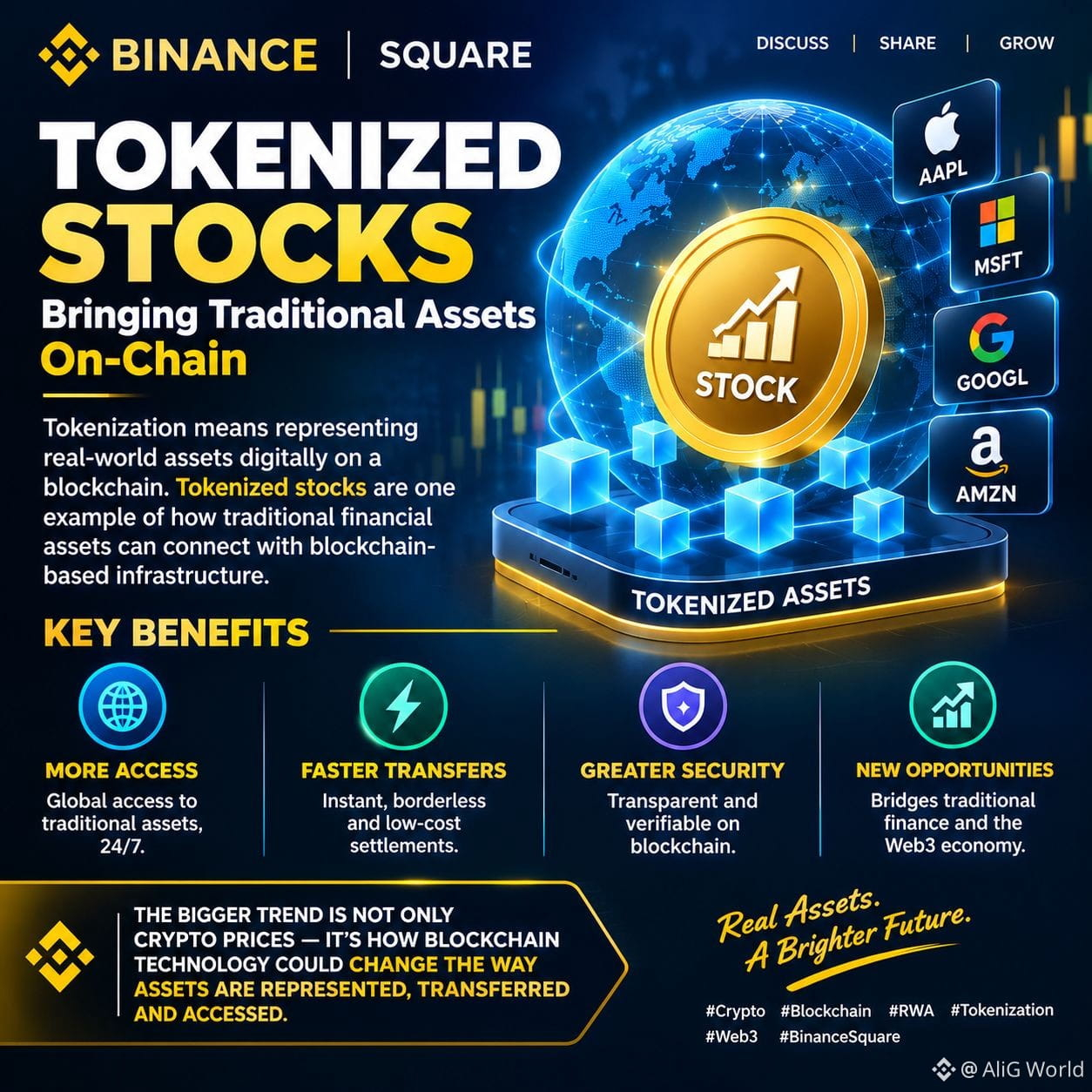
Токенизированные акции: приносим традиционные активы в on-chain 🌐
$RWA Токенизация — это представление реальных активов в цифровом виде в блокчейне. Токенизированные акции — один из примеров того, как традиционные финансовые активы могут взаимодействовать с инфраструктурой на основе блокчейна.
Главный тренд заключается не только в ценах криптовалют — речь о том, как технология блокчейна может изменить способ представления, передачи и доступа к активам.
{alpha}(560x9c8b5ca345247396bdfac0395638ca9045c6586e)
#Crypto #Blockchain #RWA #Web3 #cryptoeducation
Токенизированные акции: приносим традиционные активы в on-chain 🌐
$RWA Токенизация — это представление реальных активов в цифровом виде в блокчейне. Токенизированные акции — один из примеров того, как традиционные финансовые активы могут взаимодействовать с инфраструктурой на основе блокчейна.
Главный тренд заключается не только в ценах криптовалют — речь о том, как технология блокчейна может изменить способ представления, передачи и доступа к активам.
#Crypto #Blockchain #RWA #Web3 #cryptoeducation
$RWA Токенизация — это представление реальных активов в цифровом виде в блокчейне. Токенизированные акции — один из примеров того, как традиционные финансовые активы могут взаимодействовать с инфраструктурой на основе блокчейна.
Главный тренд заключается не только в ценах криптовалют — речь о том, как технология блокчейна может изменить способ представления, передачи и доступа к активам.
#Crypto #Blockchain #RWA #Web3 #cryptoeducation
116

🌐 Binance: Откуда начинается будущее цифровых финансовМир финансов меняется быстрее, чем когда-либо. Сегодня цифровые активы и технологии блокчейна создают новые возможности для людей по всему миру.
Binance стала одной из самых известных платформ в криптоиндустрии, объединяя в одной экосистеме трейдинг, услуги на базе блокчейна и обучение цифровым активам.
✨ Чем интересен Binance?
🔹 Глобальная криптоэкосистема
Binance предоставляет широкий спектр услуг, разработанных, чтобы помочь пользователям изучить мир цифровых активов.
🔹 Технологии и инновации
🌐 Binance: Откуда начинается будущее цифровых финансов
Мир финансов меняется быстрее, чем когда-либо. Сегодня цифровые активы и технологии блокчейна создают новые возможности для людей по всему миру.
Binance стала одной из самых известных платформ в криптоиндустрии, объединяя в одной экосистеме трейдинг, услуги на базе блокчейна и обучение цифровым активам.
✨ Чем интересен Binance?
🔹 Глобальная криптоэкосистема
Binance предоставляет широкий спектр услуг, разработанных, чтобы помочь пользователям изучить мир цифровых активов.
🔹 Технологии и инновации
Binance стала одной из самых известных платформ в криптоиндустрии, объединяя в одной экосистеме трейдинг, услуги на базе блокчейна и обучение цифровым активам.
✨ Чем интересен Binance?
🔹 Глобальная криптоэкосистема
Binance предоставляет широкий спектр услуг, разработанных, чтобы помочь пользователям изучить мир цифровых активов.
🔹 Технологии и инновации
1
77

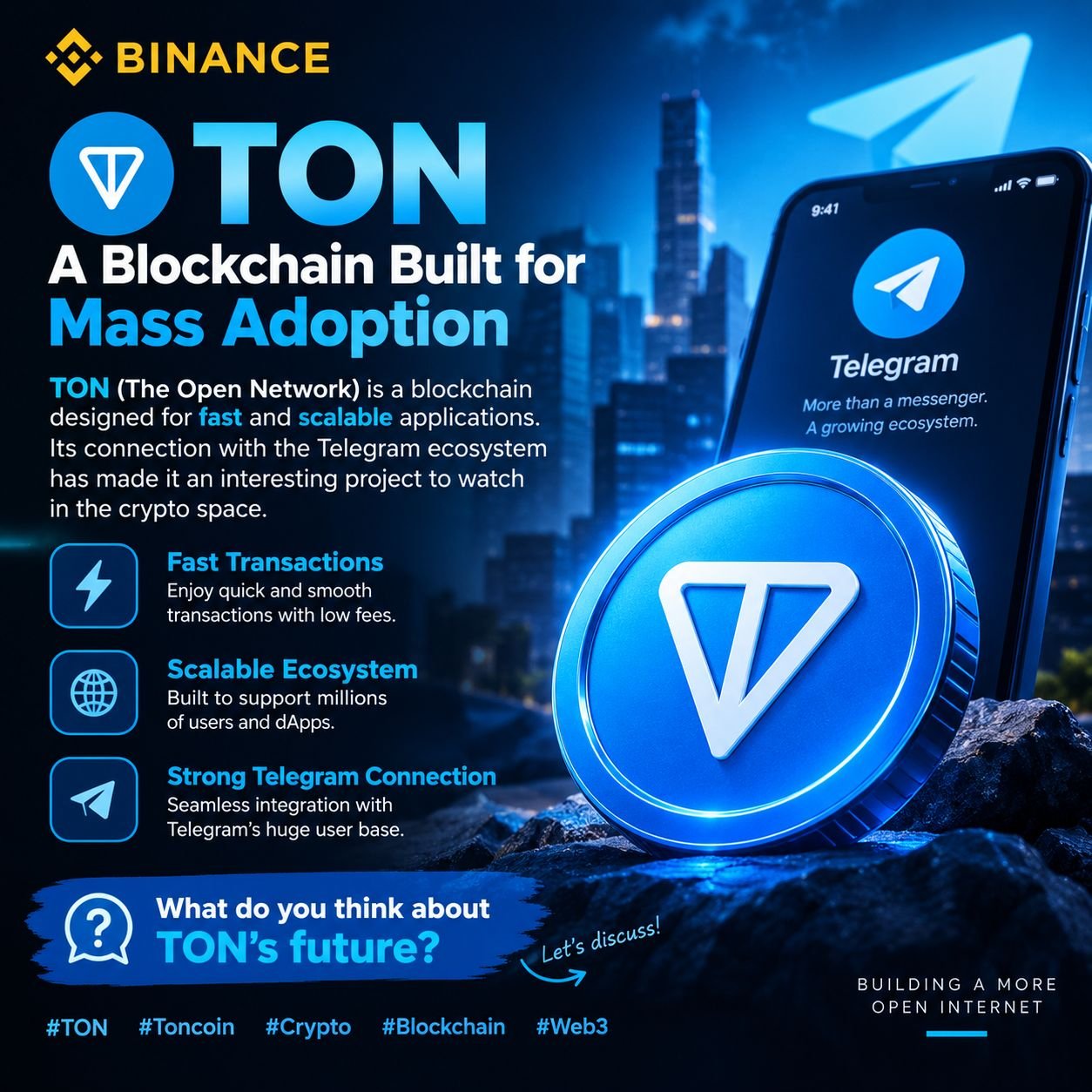
$TON 🔵 TON: Блокчейн, созданный для массового внедрения
TON (The Open Network) — это блокчейн, предназначенный для быстрых и масштабируемых приложений. Его связь с экосистемой Telegram сделала этот проект особенно интересным для наблюдения в криптопространстве.
🚀 Быстрые транзакции
🌐 Масштабируемая экосистема
💬 Крепкая связь с Telegram
Как вы думаете, каким будет будущее TON? 👀
#TON #Toncoin #crypto #blockchain #Web3
$TON 🔵 TON: Блокчейн, созданный для массового внедрения
TON (The Open Network) — это блокчейн, предназначенный для быстрых и масштабируемых приложений. Его связь с экосистемой Telegram сделала этот проект особенно интересным для наблюдения в криптопространстве.
🚀 Быстрые транзакции
🌐 Масштабируемая экосистема
💬 Крепкая связь с Telegram
Как вы думаете, каким будет будущее TON? 👀
#TON #Toncoin #crypto #blockchain #Web3
TON (The Open Network) — это блокчейн, предназначенный для быстрых и масштабируемых приложений. Его связь с экосистемой Telegram сделала этот проект особенно интересным для наблюдения в криптопространстве.
🚀 Быстрые транзакции
🌐 Масштабируемая экосистема
💬 Крепкая связь с Telegram
Как вы думаете, каким будет будущее TON? 👀
#TON #Toncoin #crypto #blockchain #Web3
77

Квантовые последствия блокчейна: математика — ключ
- Мюриэль Мэдард, сооснователь Optimum и профессор MIT, считает, что блокчейну не нужны квантовые компьютеры, чтобы противостоять квантовым рискам.
- Классическая математика уже располагает инструментами для достижения этой цели.
#BinanceSquare #CryptoNews #Blockchain #Web3
$btc $eth
#vlikevn Titanbot
Источник: CoinDesk
Квантовые последствия блокчейна: математика — ключ
- Мюриэль Мэдард, сооснователь Optimum и профессор MIT, считает, что блокчейну не нужны квантовые компьютеры, чтобы противостоять квантовым рискам.
- Классическая математика уже располагает инструментами для достижения этой цели.
#BinanceSquare #CryptoNews #Blockchain #Web3
$btc $eth
#vlikevn Titanbot
Источник: CoinDesk
- Мюриэль Мэдард, сооснователь Optimum и профессор MIT, считает, что блокчейну не нужны квантовые компьютеры, чтобы противостоять квантовым рискам.
- Классическая математика уже располагает инструментами для достижения этой цели.
#BinanceSquare #CryptoNews #Blockchain #Web3
$btc $eth
#vlikevn Titanbot
Источник: CoinDesk
133

·
--
Проверено
#usbankcompletescrossborderpaymentpilotonstellar
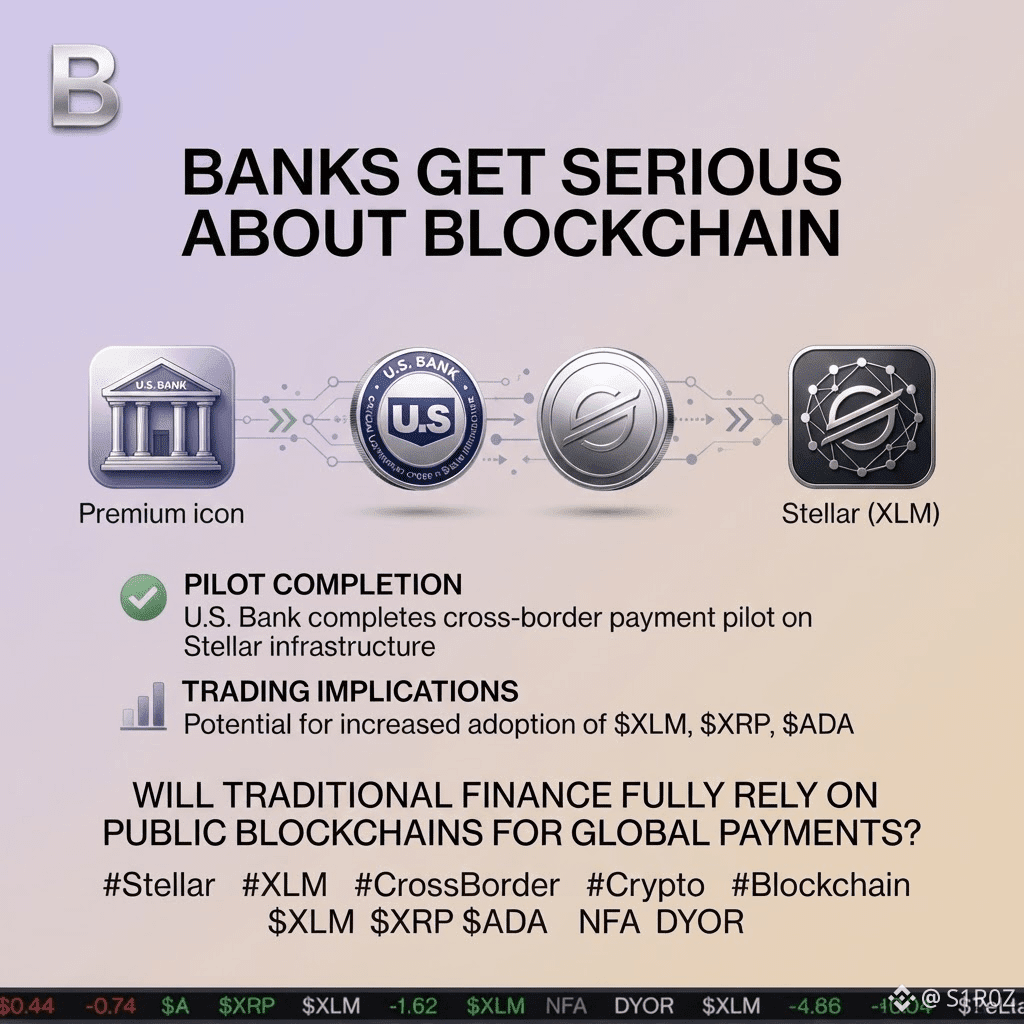
😂🏦 Банки наконец-то всерьез занялись платежами на блокчейне.
U.S. Bank завершил пилот трансграничных платежей на Stellar, протестировав блокчейн-инфраструктуру для международных переводов.
Пользователи криптовалют годами следили за этим сценарием, но наблюдать, как крупный банк США экспериментирует с публичными блокчейн-каналами для расчетов, все еще стоит внимания.
Для трейдеров самое интересное — что произойдет дальше.
Если финансовые организации продолжат тестировать блокчейн для трансграничных платежей и расчетов, платежно-ориентированные сети вроде $XLM и $XRP могут привлечь больше внимания по мере того, как реальное внедрение будет развиваться.
Но пилот — это все же пилот. Главный вопрос в том, смогут ли банки превратить эти эксперименты в масштабируемую повседневную платежную инфраструктуру.
Как думаете, традиционные финансы в конечном итоге будут полагаться на публичные блокчейны для глобальных платежей?
#stellar #XLM #CrossBorder #Crypto #blockchain
$ADA
{spot}(XLMUSDT)
{spot}(XRPUSDT)
{spot}(ADAUSDT)
NFA. DYOR.
#usbankcompletescrossborderpaymentpilotonstellar
😂🏦 Банки наконец-то всерьез занялись платежами на блокчейне.
U.S. Bank завершил пилот трансграничных платежей на Stellar, протестировав блокчейн-инфраструктуру для международных переводов.
Пользователи криптовалют годами следили за этим сценарием, но наблюдать, как крупный банк США экспериментирует с публичными блокчейн-каналами для расчетов, все еще стоит внимания.
Для трейдеров самое интересное — что произойдет дальше.
Если финансовые организации продолжат тестировать блокчейн для трансграничных платежей и расчетов, платежно-ориентированные сети вроде $XLM и $XRP могут привлечь больше внимания по мере того, как реальное внедрение будет развиваться.
Но пилот — это все же пилот. Главный вопрос в том, смогут ли банки превратить эти эксперименты в масштабируемую повседневную платежную инфраструктуру.
Как думаете, традиционные финансы в конечном итоге будут полагаться на публичные блокчейны для глобальных платежей?
#stellar #XLM #CrossBorder #Crypto #blockchain
$ADA
NFA. DYOR.
😂🏦 Банки наконец-то всерьез занялись платежами на блокчейне.
U.S. Bank завершил пилот трансграничных платежей на Stellar, протестировав блокчейн-инфраструктуру для международных переводов.
Пользователи криптовалют годами следили за этим сценарием, но наблюдать, как крупный банк США экспериментирует с публичными блокчейн-каналами для расчетов, все еще стоит внимания.
Для трейдеров самое интересное — что произойдет дальше.
Если финансовые организации продолжат тестировать блокчейн для трансграничных платежей и расчетов, платежно-ориентированные сети вроде $XLM и $XRP могут привлечь больше внимания по мере того, как реальное внедрение будет развиваться.
Но пилот — это все же пилот. Главный вопрос в том, смогут ли банки превратить эти эксперименты в масштабируемую повседневную платежную инфраструктуру.
Как думаете, традиционные финансы в конечном итоге будут полагаться на публичные блокчейны для глобальных платежей?
#stellar #XLM #CrossBorder #Crypto #blockchain
$ADA
NFA. DYOR.
2
406
·
--
Квантоустойчивая блокчейн-система: ключ — в математике, а не в машинах. Профессор MIT Мюриэль Мэдарт (сооснователь Optimum) утверждает, что блокчейнам не нужны квантовые компьютеры, чтобы быть квантобезопасными; классическая математика уже даёт необходимые инструменты. Вы готовы к постквантовой эпохе, где всё начинается с математики? $BTC #QuantumSecurity #Blockchain #Crypto
Квантоустойчивая блокчейн-система: ключ — в математике, а не в машинах. Профессор MIT Мюриэль Мэдарт (сооснователь Optimum) утверждает, что блокчейнам не нужны квантовые компьютеры, чтобы быть квантобезопасными; классическая математика уже даёт необходимые инструменты. Вы готовы к постквантовой эпохе, где всё начинается с математики? $BTC #QuantumSecurity #Blockchain #Crypto

17

·
--
#КанадаOSFISaysTokenizedDepositsEqualTraditionalDeposits
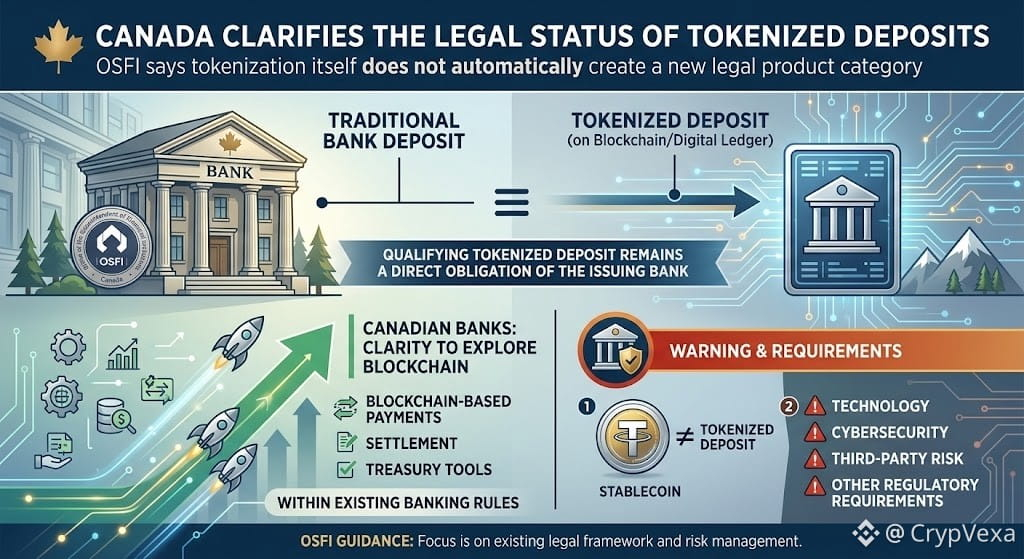
🇨🇦 Канада проясняет правовой статус токенизированных депозитов
🏦 Канадский банковский регулятор OSFI заявил, что токенизированные депозиты не являются юридически отдельными от традиционных банковских депозитов только потому, что они используют блокчейн или другой цифровой реестр.
🔗 Правомочный токенизированный депозит остается прямым обязательством банка-эмитента, то есть сама токенизация не создает автоматически новую правовую категорию продукта.
🚀 Это может дать канадским банкам больше ясности, чтобы изучать блокчейн-ориентированные платежи, расчеты и инструменты казначейства в рамках действующих банковских правил.
⚠️ Но токенизированные депозиты не автоматически тождественны стейблкоинам, и банкам по-прежнему предстоит соблюдать технологические, кибербезопасностные, риски третьих лиц и другие регуляторные требования.
👀 Могут ли более четкие правила ускорить внедрение блокчейна в канадских банках?
#TokenizedDeposits #Blockchain #RWA #CryptoRegulation
#КанадаOSFISaysTokenizedDepositsEqualTraditionalDeposits
🇨🇦 Канада проясняет правовой статус токенизированных депозитов
🏦 Канадский банковский регулятор OSFI заявил, что токенизированные депозиты не являются юридически отдельными от традиционных банковских депозитов только потому, что они используют блокчейн или другой цифровой реестр.
🔗 Правомочный токенизированный депозит остается прямым обязательством банка-эмитента, то есть сама токенизация не создает автоматически новую правовую категорию продукта.
🚀 Это может дать канадским банкам больше ясности, чтобы изучать блокчейн-ориентированные платежи, расчеты и инструменты казначейства в рамках действующих банковских правил.
⚠️ Но токенизированные депозиты не автоматически тождественны стейблкоинам, и банкам по-прежнему предстоит соблюдать технологические, кибербезопасностные, риски третьих лиц и другие регуляторные требования.
👀 Могут ли более четкие правила ускорить внедрение блокчейна в канадских банках?
#TokenizedDeposits #Blockchain #RWA #CryptoRegulation
🇨🇦 Канада проясняет правовой статус токенизированных депозитов
🏦 Канадский банковский регулятор OSFI заявил, что токенизированные депозиты не являются юридически отдельными от традиционных банковских депозитов только потому, что они используют блокчейн или другой цифровой реестр.
🔗 Правомочный токенизированный депозит остается прямым обязательством банка-эмитента, то есть сама токенизация не создает автоматически новую правовую категорию продукта.
🚀 Это может дать канадским банкам больше ясности, чтобы изучать блокчейн-ориентированные платежи, расчеты и инструменты казначейства в рамках действующих банковских правил.
⚠️ Но токенизированные депозиты не автоматически тождественны стейблкоинам, и банкам по-прежнему предстоит соблюдать технологические, кибербезопасностные, риски третьих лиц и другие регуляторные требования.
👀 Могут ли более четкие правила ускорить внедрение блокчейна в канадских банках?
#TokenizedDeposits #Blockchain #RWA #CryptoRegulation
1
1

Краткая информация о криптовалютах
Биткоин (BTC) — первая децентрализованная цифровая валюта, использующая технологию блокчейн для записи транзакций прозрачным способом.
🔎 Прежде чем заинтересоваться какой-либо криптовалютой, важно понять проект, технологию и связанные с ними риски.
О чём вы хотите, чтобы я рассказал(а) в следующем посте? 👇
#Binance #Crypto_Jobs🎯 #Bitcoin❗ #BTC #blockchain
Краткая информация о криптовалютах
Биткоин (BTC) — первая децентрализованная цифровая валюта, использующая технологию блокчейн для записи транзакций прозрачным способом.
🔎 Прежде чем заинтересоваться какой-либо криптовалютой, важно понять проект, технологию и связанные с ними риски.
О чём вы хотите, чтобы я рассказал(а) в следующем посте? 👇
#Binance #Crypto_Jobs🎯 #Bitcoin❗ #BTC #blockchain
Биткоин (BTC) — первая децентрализованная цифровая валюта, использующая технологию блокчейн для записи транзакций прозрачным способом.
🔎 Прежде чем заинтересоваться какой-либо криптовалютой, важно понять проект, технологию и связанные с ними риски.
О чём вы хотите, чтобы я рассказал(а) в следующем посте? 👇
#Binance #Crypto_Jobs🎯 #Bitcoin❗ #BTC #blockchain
83
🔥 Рынок криптовалют связан не только с ценами!
Блокчейн (Blockchain) — это технология, которая позволяет регистрировать транзакции распределённо и прозрачно.
📚 Сначала изучите основы — понимание важнее спешки.
#blockchain #Crypto #Binance
🔥 Рынок криптовалют связан не только с ценами!
Блокчейн (Blockchain) — это технология, которая позволяет регистрировать транзакции распределённо и прозрачно.
📚 Сначала изучите основы — понимание важнее спешки.
#blockchain #Crypto #Binance
Блокчейн (Blockchain) — это технология, которая позволяет регистрировать транзакции распределённо и прозрачно.
📚 Сначала изучите основы — понимание важнее спешки.
#blockchain #Crypto #Binance
2

·
--
Биткоин для начинающих: что такое $BTC? 🚀
🔥 Биткоин объяснён простыми словами
Биткоин ( $BTC ) — это цифровой актив, который работает в децентрализованной блокчейн-сети.
В отличие от традиционных денег, биткоин не контролируется одним банком или правительством. Транзакции записываются в общедоступный блокчейн и подтверждаются сетью.
Если вы только начинаете разбираться в криптовалюте, сначала поймите эти 5 вещей:
1️⃣ Что такое Биткоин
2️⃣ Как работает блокчейн
3️⃣ Что делает криптокошелёк
4️⃣ Как защитить свои средства
5️⃣ Риски покупки и торговли криптовалютой
⚠️ Цены на криптовалюту могут сильно колебаться. Не вкладывайте деньги, которые вы не можете позволить себе потерять.
Сначала изучите. Потом торгуйте. 🚀
$BTC #bitcoin #crypto #blockchain #cryptoeducation
Биткоин для начинающих: что такое $BTC ? 🚀
🔥 Биткоин объяснён простыми словами
Биткоин ( $BTC ) — это цифровой актив, который работает в децентрализованной блокчейн-сети.
В отличие от традиционных денег, биткоин не контролируется одним банком или правительством. Транзакции записываются в общедоступный блокчейн и подтверждаются сетью.
Если вы только начинаете разбираться в криптовалюте, сначала поймите эти 5 вещей:
1️⃣ Что такое Биткоин
2️⃣ Как работает блокчейн
3️⃣ Что делает криптокошелёк
4️⃣ Как защитить свои средства
5️⃣ Риски покупки и торговли криптовалютой
⚠️ Цены на криптовалюту могут сильно колебаться. Не вкладывайте деньги, которые вы не можете позволить себе потерять.
Сначала изучите. Потом торгуйте. 🚀
$BTC #bitcoin #crypto #blockchain #cryptoeducation
🔥 Биткоин объяснён простыми словами
Биткоин ( $BTC ) — это цифровой актив, который работает в децентрализованной блокчейн-сети.
В отличие от традиционных денег, биткоин не контролируется одним банком или правительством. Транзакции записываются в общедоступный блокчейн и подтверждаются сетью.
Если вы только начинаете разбираться в криптовалюте, сначала поймите эти 5 вещей:
1️⃣ Что такое Биткоин
2️⃣ Как работает блокчейн
3️⃣ Что делает криптокошелёк
4️⃣ Как защитить свои средства
5️⃣ Риски покупки и торговли криптовалютой
⚠️ Цены на криптовалюту могут сильно колебаться. Не вкладывайте деньги, которые вы не можете позволить себе потерять.
Сначала изучите. Потом торгуйте. 🚀
$BTC #bitcoin #crypto #blockchain #cryptoeducation
79
·
--
Новости | ESMA: Рынок токенизированных акций приближается к 1,9 млрд евро
Недавний отчет Европейского управления по ценным бумагам и рынкам (ESMA) показал, что рыночная стоимость токенизированных акций выросла примерно со 300 млн евро до почти 1,9 млрд евро за 18 месяцев.
Однако ESMA предупредила, что выпуск нескольких токенизированных версий одной и той же акции может привести к фрагментации ликвидности между разными платформами и продуктами.
Также было отмечено, что некоторые внешние структуры, несмотря на заявления о поддержке токенов акциями в соотношении 1:1, по сути остаются «упакованными» ценными бумагами, при этом владение базовыми акциями по-прежнему зарегистрировано вне цепочки.
Дополнительную сложность и риски усиливают многочисленные уровни посредников и отсутствие атомарного клиринга во многих сделках.
📌 Cipher Vault: рост рынка быстрый, но реальный вызов для RWA — это не только токенизация; главное — построить единый рынок с реальной ликвидностью, прямым и прозрачным расчетом.
#RWA #Tokenization #Stocks #Blockchain #Crypto
Новости | ESMA: Рынок токенизированных акций приближается к 1,9 млрд евро
Недавний отчет Европейского управления по ценным бумагам и рынкам (ESMA) показал, что рыночная стоимость токенизированных акций выросла примерно со 300 млн евро до почти 1,9 млрд евро за 18 месяцев.
Однако ESMA предупредила, что выпуск нескольких токенизированных версий одной и той же акции может привести к фрагментации ликвидности между разными платформами и продуктами.
Также было отмечено, что некоторые внешние структуры, несмотря на заявления о поддержке токенов акциями в соотношении 1:1, по сути остаются «упакованными» ценными бумагами, при этом владение базовыми акциями по-прежнему зарегистрировано вне цепочки.
Дополнительную сложность и риски усиливают многочисленные уровни посредников и отсутствие атомарного клиринга во многих сделках.
📌 Cipher Vault: рост рынка быстрый, но реальный вызов для RWA — это не только токенизация; главное — построить единый рынок с реальной ликвидностью, прямым и прозрачным расчетом.
#RWA #Tokenization #Stocks #Blockchain #Crypto
Недавний отчет Европейского управления по ценным бумагам и рынкам (ESMA) показал, что рыночная стоимость токенизированных акций выросла примерно со 300 млн евро до почти 1,9 млрд евро за 18 месяцев.
Однако ESMA предупредила, что выпуск нескольких токенизированных версий одной и той же акции может привести к фрагментации ликвидности между разными платформами и продуктами.
Также было отмечено, что некоторые внешние структуры, несмотря на заявления о поддержке токенов акциями в соотношении 1:1, по сути остаются «упакованными» ценными бумагами, при этом владение базовыми акциями по-прежнему зарегистрировано вне цепочки.
Дополнительную сложность и риски усиливают многочисленные уровни посредников и отсутствие атомарного клиринга во многих сделках.
📌 Cipher Vault: рост рынка быстрый, но реальный вызов для RWA — это не только токенизация; главное — построить единый рынок с реальной ликвидностью, прямым и прозрачным расчетом.
#RWA #Tokenization #Stocks #Blockchain #Crypto
3

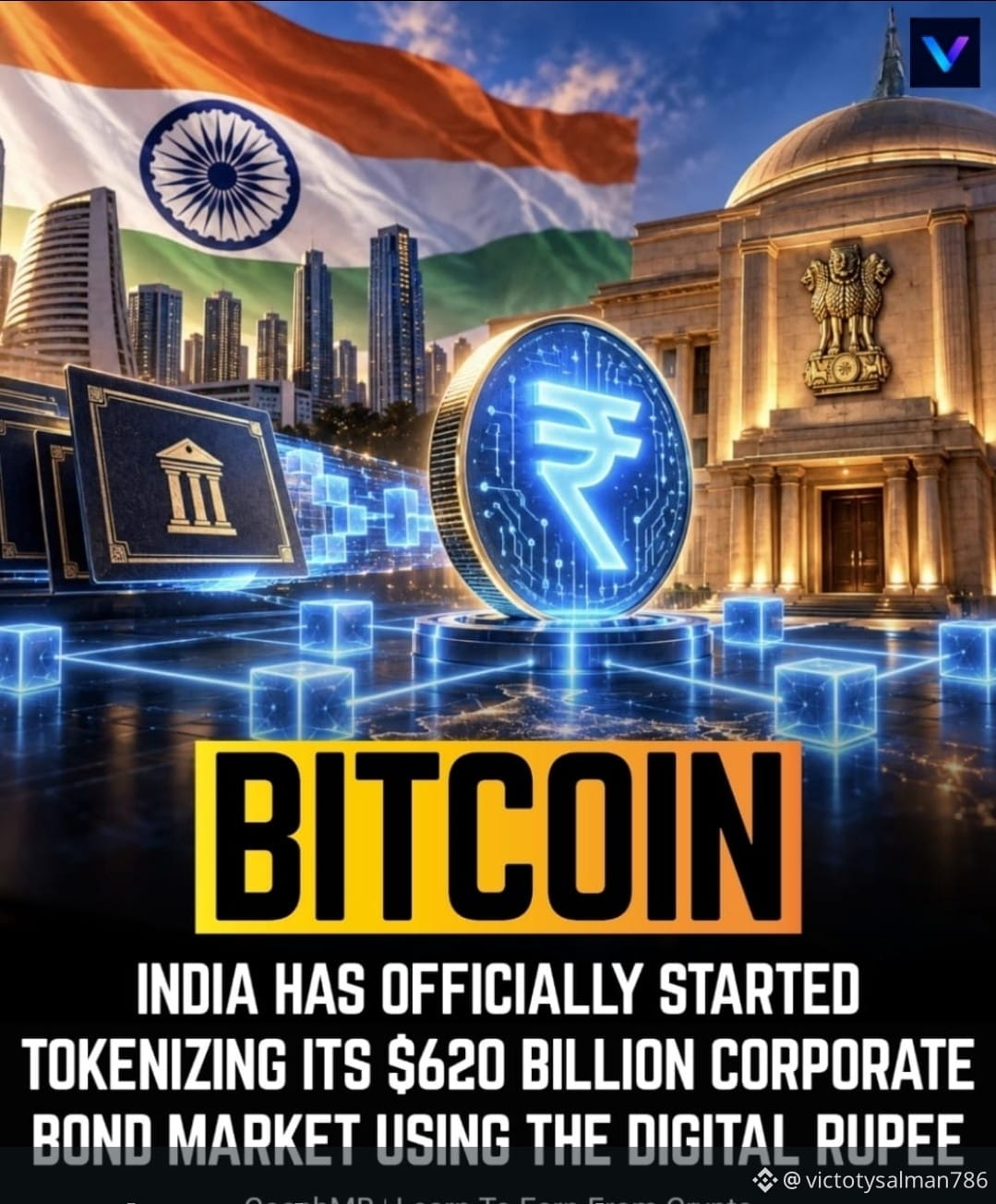
*Индия выводит токенизацию активов в мейнстрим.* 🇮🇳🔗
*SEBI и РБИ запустили Demat 2.0 — пилотный проект, который токенизирует корпоративные облигации и проводит расчёты по сделкам с использованием оптовой цифровой рупии РБИ.* Первоначальный пилотный запуск уже показал выпуск на сумму ₹1 025 крор токенизированных облигаций компаниями REC, L&T и IIFL.
*Это может стать важным шагом к внедрению блокчейн-инфраструктуры в традиционные финансы — с более быстрыми расчётами, автоматизированными платежами и, возможно, гораздо более широкими токенизированными рынками впереди.* 🚀
Разве Индия тихо строит будущее токенизированных финансов? 👀
#India #CryptoNewss pto #blockchain ##tokenizations on #DigitalRuble pee #VayohAI
*Индия выводит токенизацию активов в мейнстрим.* 🇮🇳🔗
*SEBI и РБИ запустили Demat 2.0 — пилотный проект, который токенизирует корпоративные облигации и проводит расчёты по сделкам с использованием оптовой цифровой рупии РБИ.* Первоначальный пилотный запуск уже показал выпуск на сумму ₹1 025 крор токенизированных облигаций компаниями REC, L&T и IIFL.
*Это может стать важным шагом к внедрению блокчейн-инфраструктуры в традиционные финансы — с более быстрыми расчётами, автоматизированными платежами и, возможно, гораздо более широкими токенизированными рынками впереди.* 🚀
Разве Индия тихо строит будущее токенизированных финансов? 👀
#India #CryptoNewss pto #blockchain ##tokenizations on #DigitalRuble pee #VayohAI
*SEBI и РБИ запустили Demat 2.0 — пилотный проект, который токенизирует корпоративные облигации и проводит расчёты по сделкам с использованием оптовой цифровой рупии РБИ.* Первоначальный пилотный запуск уже показал выпуск на сумму ₹1 025 крор токенизированных облигаций компаниями REC, L&T и IIFL.
*Это может стать важным шагом к внедрению блокчейн-инфраструктуры в традиционные финансы — с более быстрыми расчётами, автоматизированными платежами и, возможно, гораздо более широкими токенизированными рынками впереди.* 🚀
Разве Индия тихо строит будущее токенизированных финансов? 👀
#India #CryptoNewss pto #blockchain ##tokenizations on #DigitalRuble pee #VayohAI
54
🚀 Мой прогноз: один из самых важных вариантов использования блокчейна в следующем десятилетии может быть не про деньги — он может быть про ВОДУ.
По мере роста климатического давления городам, фермам, промышленности и сообществам понадобятся более умные способы измерять, распределять, сохранять и финансировать один из самых ценных ресурсов в мире.
Представьте будущее, где:
💧 Умные счетчики отслеживают использование воды в реальном времени.
🤖 ИИ предсказывает дефицит до того, как он станет кризисом.
🌍 Блокчейн создаёт прозрачные записи для распределения воды и сохранения.
🏙️ Города поощряют домохозяйства и бизнес за снижение потерь.
🌾 Фермеры получают доступ к подтверждённым стимулам за водоэффективность.
⚡ Сети DePIN связывают датчики, инфраструктуру и местные сообщества.
🔐 Данные остаются проверяемыми, не раскрывая ненужную личную информацию.
Самый большой сдвиг может быть в этом:
Вода перестаёт управляться только через бумажные процессы и разрозненные системы — и начинает координироваться через прозрачную, программируемую инфраструктуру.
🔥 Предсказывает ИИ.
📡 Измеряют датчики.
⛓️ Блокчейн подтверждает.
💧 От этого выигрывают сообщества.
Мой смелый прогноз:
Климатическая инфраструктура + ИИ + DePIN могут стать одним из самых значимых реальных секторов Web3 в 2030-х.
Что станет мейнстримом первым?
A) Умные водные сети 💧
B) Прогноз засух с помощью ИИ 🤖
C) Токенизированные награды за сохранение 🌱
D) Инфраструктура DePIN 📡
👇 Оставьте свой прогноз ниже. Что сегодня кажется футуристичным, но завтра окажется необходимым?
#Binance #BinanceSquare #crypto #Web3 #blockchain
🚀 Мой прогноз: один из самых важных вариантов использования блокчейна в следующем десятилетии может быть не про деньги — он может быть про ВОДУ.
По мере роста климатического давления городам, фермам, промышленности и сообществам понадобятся более умные способы измерять, распределять, сохранять и финансировать один из самых ценных ресурсов в мире.
Представьте будущее, где:
💧 Умные счетчики отслеживают использование воды в реальном времени.
🤖 ИИ предсказывает дефицит до того, как он станет кризисом.
🌍 Блокчейн создаёт прозрачные записи для распределения воды и сохранения.
🏙️ Города поощряют домохозяйства и бизнес за снижение потерь.
🌾 Фермеры получают доступ к подтверждённым стимулам за водоэффективность.
⚡ Сети DePIN связывают датчики, инфраструктуру и местные сообщества.
🔐 Данные остаются проверяемыми, не раскрывая ненужную личную информацию.
Самый большой сдвиг может быть в этом:
Вода перестаёт управляться только через бумажные процессы и разрозненные системы — и начинает координироваться через прозрачную, программируемую инфраструктуру.
🔥 Предсказывает ИИ.
📡 Измеряют датчики.
⛓️ Блокчейн подтверждает.
💧 От этого выигрывают сообщества.
Мой смелый прогноз:
Климатическая инфраструктура + ИИ + DePIN могут стать одним из самых значимых реальных секторов Web3 в 2030-х.
Что станет мейнстримом первым?
A) Умные водные сети 💧
B) Прогноз засух с помощью ИИ 🤖
C) Токенизированные награды за сохранение 🌱
D) Инфраструктура DePIN 📡
👇 Оставьте свой прогноз ниже. Что сегодня кажется футуристичным, но завтра окажется необходимым?
#Binance #BinanceSquare #crypto #Web3 #blockchain
По мере роста климатического давления городам, фермам, промышленности и сообществам понадобятся более умные способы измерять, распределять, сохранять и финансировать один из самых ценных ресурсов в мире.
Представьте будущее, где:
💧 Умные счетчики отслеживают использование воды в реальном времени.
🤖 ИИ предсказывает дефицит до того, как он станет кризисом.
🌍 Блокчейн создаёт прозрачные записи для распределения воды и сохранения.
🏙️ Города поощряют домохозяйства и бизнес за снижение потерь.
🌾 Фермеры получают доступ к подтверждённым стимулам за водоэффективность.
⚡ Сети DePIN связывают датчики, инфраструктуру и местные сообщества.
🔐 Данные остаются проверяемыми, не раскрывая ненужную личную информацию.
Самый большой сдвиг может быть в этом:
Вода перестаёт управляться только через бумажные процессы и разрозненные системы — и начинает координироваться через прозрачную, программируемую инфраструктуру.
🔥 Предсказывает ИИ.
📡 Измеряют датчики.
⛓️ Блокчейн подтверждает.
💧 От этого выигрывают сообщества.
Мой смелый прогноз:
Климатическая инфраструктура + ИИ + DePIN могут стать одним из самых значимых реальных секторов Web3 в 2030-х.
Что станет мейнстримом первым?
A) Умные водные сети 💧
B) Прогноз засух с помощью ИИ 🤖
C) Токенизированные награды за сохранение 🌱
D) Инфраструктура DePIN 📡
👇 Оставьте свой прогноз ниже. Что сегодня кажется футуристичным, но завтра окажется необходимым?
#Binance #BinanceSquare #crypto #Web3 #blockchain

56
Войдите, чтобы посмотреть больше материала
Присоединяйтесь к пользователям криптовалют по всему миру на Binance Square
⚡️ Получайте новейшую и полезную информацию о криптоактивах.
💬 Нам доверяет крупнейшая в мире криптобиржа.
👍 Получите достоверные аналитические данные от верифицированных создателей контента.
Эл. почта/номер телефона
В тренде
1
#FedRateWatch
Просмотров: 337,585
2,009 обсуждают
2
#ПротоколFOMC
Просмотров: 12,521
86 обсуждают
3
#fomcотслеживание
Просмотров: 18,454
290 обсуждают
4
#BitcoinSlidesTo$76000
Просмотров: 6,534
75 обсуждают
5
#BitcoinReboundsTo$79K
Просмотров: 54,214
373 обсуждают
6
#StrategyMarketCapPassesFord
Просмотров: 15,315
419 обсуждают
7
#ClarityActOddsHalveOnPolymarket
Просмотров: 13,682
324 обсуждают
8
#US30YTreasuryYieldTops5.40%
Просмотров: 13,593
262 обсуждают
9
#BessentEndorsesFinalClarityActDraft
Просмотров: 34,322
594 обсуждают
10
#ZamaOpens16ConfidentialMorphoVaults
Просмотров: 12,457
280 обсуждают