
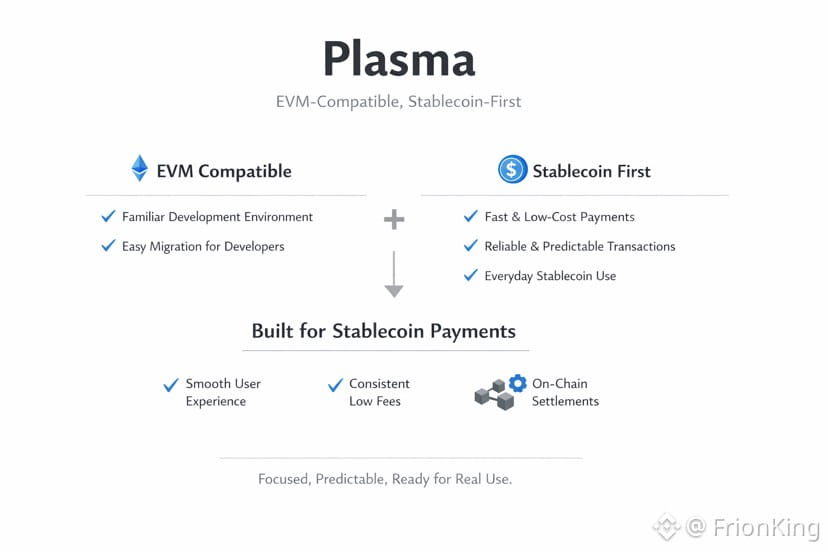
I look at Plasma in a pretty practical way, the market is not short on chains, what is rare is a platform that lets stablecoins behave like money, fast, cheap, clear, and reliable enough for users to come back every day. Plasma chooses a “stablecoin first” direction, it sounds simple, but it is actually a statement of priorities, optimize the payment experience first, then talk about everything else. Have you ever opened a payment app, pressed confirm, then waited, then wondered if the transaction was stuck.
What catches my attention is that Plasma pairs this with EVM compatibility. EVM is not just a technology, it is an entire ecosystem of developer habits, Solidity, libraries, token standards, audit processes, and workflows that have become muscle memory. When Plasma is EVM compatible, teams building payment apps do not have to relearn everything, they do not have to switch toolchains, they do not have to rebuild from scratch just to run on a new virtual machine. Instead of replacing the foundation, they can bring what already works and focus on what matters most, does the product have real users.
But saying EVM is still not enough, because “EVM compatible” is a line many chains already use. Plasma stands out because it puts stablecoins at the center of the design. Stablecoins come with a set of demanding requirements, fees must be low and stable, confirmation must be fast and predictable, the user experience must feel as smooth as Web2 payments, and most importantly it must not scare the user. Do you notice that users can tolerate risk when they speculate, but they rarely accept risk when they simply want to pay.
A “stablecoin first” system forces the infrastructure to optimize the payment loop. Creating invoices, sending, confirming, reconciling, refunding, managing state, these sound like business operations, not on chain games. When the infrastructure understands that most transactions are small, repeated, and latency sensitive, the design starts to prioritize stable throughput instead of just chasing a big TPS number for marketing. I believe this is the difference between a chain that can run a demo and a chain that can run revenue.
Plasma combining these two ideas creates a clear promise. Developers can ship faster because the EVM environment is familiar. Users can use it daily because stablecoins sit at the core of the experience. But the real question is whether Plasma can turn “compatibility” into “optimization”. Many chains claim compatibility, but when real apps arrive, fees still spike, latency still surprises, and then every promise becomes marketing. Would you choose a platform that sounds exciting, or a platform that lets you predict operating costs every day.
I also see Plasma as a way to redefine what a chain is trying to be. Not another place to swap and farm, but rails for stablecoin payments, where merchants and apps can build payment flows the way they do in Web2, but with on chain settlement. If executed well, stablecoins stop being tokens that sit in wallets waiting for an opportunity, they become working tools, payroll, fees, collections, subscriptions. When repeated behavior shows up, infrastructure demand shows up, and that is what creates a durable base of value.
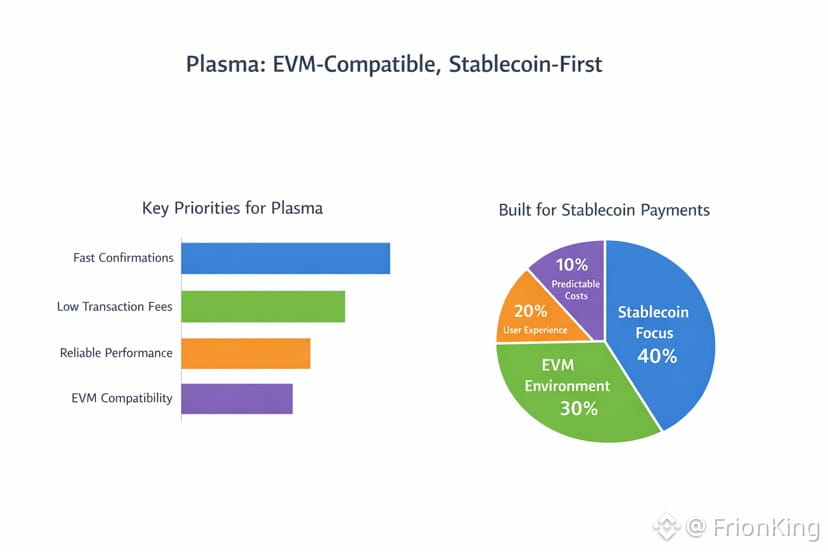
In the end, I think the most important point about Plasma is focus. Markets often reward broad narratives, but products win through specificity. Plasma chooses specificity, stablecoin first, plus a direct path into the biggest developer ecosystem through EVM. So what do you think, do stablecoin payments need “one more chain”, or do they need a chain disciplined enough to put the payment experience ahead of everything else.

