


I’ll be straight with you – I’ve been in this space long enough to develop a healthy dose of cynicism. We’ve all seen projects launch with massive fanfare, promise to “revolutionize” everything, then fade into obscurity or worse. I got rekt in 2018, rode the 2021 wave, survived 2022’s nuclear winter, and navigated the meme frenzy of 2024-2025. These days, very few things actually get me excited – like, can’t-stop-thinking-about-it excited. But Falcon Finance? It’s done that. Not because of some viral meme or airdrop lottery, but because it solves a problem I’ve personally battled for years: accessing liquidity in crypto without being forced to sell assets I believe in long-term. In a market as volatile as ours, that’s not just convenient – it’s liberating. And as we hit the end of 2025, with the year winding down and reflections kicking in, I figured it’s time to share why I’m all-in on this protocol.

It started innocently enough. I was grinding through another choppy December week – market dipping on holiday liquidity thins, alts bleeding a bit, BTC holding but teasing lower. I needed some stable cash to cover year-end expenses and maybe scoop a few opportunities without touching my core holdings. I’d used Maker for DAI back in the day, looped on Aave, even dabbled in some CeFi remnants. But nothing felt quite right anymore – too limited, too risky, or just clunky. Then I revisited Falcon Finance after seeing some quiet TVL growth mentions in my feed.
As of December 27, 2025, the numbers are impressive without screaming hype: TVL has organically climbed to $4.9B, USDf supply sitting at $4.4B+ across Ethereum, Base, Arbitrum, Solana, and recent Optimism deployments. Over 35 collateral adapters live now, covering everything from wrapped BTC and staked ETH to a growing lineup of RWAs – tokenized Treasuries via Ondo, gold tokens, corporate bonds, and even some real estate fractions starting to trickle in. The modular design is paying off big time; new assets get added faster than I’ve seen in any other protocol.
But stats aren’t what excite me – it’s how it feels to use. Deposit your assets (any liquid ones, seriously), mint USDf at safe overcollateralized ratios, and suddenly you’ve got dollar-pegged liquidity without a single sell order executed. Your original collateral? Still yours, still positioned for upside. Stake that USDf into sUSDf, and you’re earning 12-17% APY right now from the protocol’s automated, delta-neutral strategies – think smart arbitrage and optimized lending that holds up whether we’re pumping or dumping. In a year where most yield farms have either rugged or dried up, that’s ridiculously sustainable.
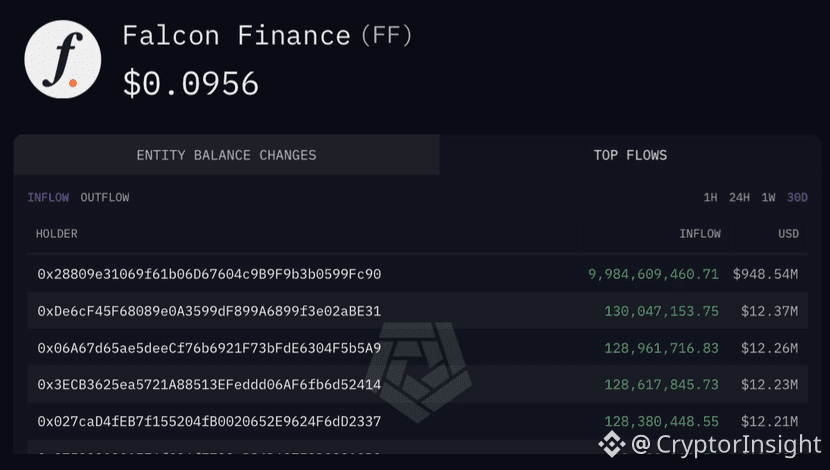
What really lights me up, though, is the bigger picture this unlocks. I’ve always been a long-term believer in crypto – stacked BTC and ETH because I think they’re generational wealth tools. But life doesn’t pause for bull runs. Emergencies happen, opportunities arise, taxes loom (especially wrapping up 2025). Selling always felt like capitulation – locking in losses or missing gains. Falcon changes that equation entirely. It’s like having a cheat code: borrow against your convictions without abandoning them.
There’s a subtle humor in how “boring” this feels on the surface. No dancing cats, no political drama, no promises of instant riches. Just clean, institutional-grade engineering doing what DeFi was always supposed to do – give you financial superpowers permissionlessly. The security gives me peace too: multiple audits from top firms, formal verification on key modules, diversified oracles that have shrugged off every attack vector thrown at them. Liquidations? They’re there as a safeguard, but with dynamic buffers and efficient mechanisms, they’re far less punishing than the old-school cascades we’ve all nightmares about.
My personal “aha” moment came last week. I collateralized a mix of BTC, some SOL (yeah, I still hold a bag), and tokenized gold. Minted a decent chunk of USDf, staked it for yield, and used part to settle some real-world stuff. Checked back a few days later – yields accruing, collateral value ticking up with the mini-recovery, no stress. It hit me: this is what financial freedom in crypto actually looks like. Not gambling on 100x tokens, but building resilient positions that let you thrive through volatility.
And the excitement compounds when I think about RWAs. Tokenization is no longer “coming” – it’s here, accelerating. With trillions in real-world value set to come on-chain, Falcon’s universal approach positions it perfectly as the collateral hub. Institutions want DeFi yields without selling safe assets? Retail wants to leverage crypto without forced exits? Falcon handles both seamlessly. Governance via $FF feels meaningful too – holders like us vote on new adapters, risk tunes, expansions. It’s ownership in the truest sense.
Look, I’m not saying it’s flawless. Overcollateralization means inefficiency if you’re reckless, and black swans can still hurt. Always manage positions, DYOR, all that. But for the first time in years, a protocol has me genuinely optimistic about DeFi maturing into something mainstream-useful.
As 2025 ends, I’m grateful for tools like this – ones that align with holding strong while living flexibly. Falcon Finance isn’t chasing trends; it’s building the foundation for the next era.
If any of this resonates, head to @Falcon Finance and mint your first USDf. Play with different collaterals, stake, and see the magic yourself.
What DeFi feature excites you most heading into 2026 – better yields, RWA bridges, or something else? Or what’s the one protocol that’s got you pumped right now? Share below – love hearing your takes! Repost if Falcon’s vision hits home.



