The most interesting thing about Pixels is not the farming loop itself. It is the possibility that the game’s everyday actions could eventually start producing real player-driven micro economies small local markets built around land labor resources guilds and status. That is where Pixels could become more than a cozy Web3 game and start behaving like a living economy. Pixels already describes itself as an open-ended world of farming and exploration and its platform is built around digital ownership, multiplayer spaces, and blockchain-integrated systems.
Pixels is designed around simple and familiar game behavior farming gathering resources, building exploring and progressing with friends. The official site says players can “manage crops and raise animals, earn rewards through cooperation, and build their own world. The whitepaper also emphasizes that the game is meant to be enjoyable first, with token design focused on gameplay rather than speculation. That matters, because micro economies do not emerge from tokens alone. They emerge when players care enough about the world to specialize inside it.
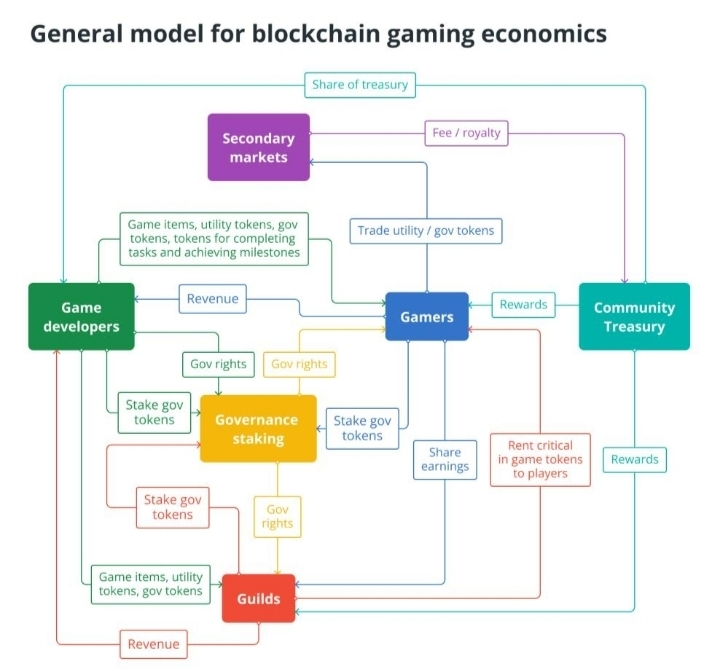
What makes Pixels especially interesting is the way it creates layers of ownership and differentiation. Free plots, rented plots, and owned plots do not offer the same yield or flexibility. Owned land gives players more space, more functionality, and the highest income potential, while landowners can work, industrialize, automate, decorate, and benefit from sharecroppers. The docs also note that some high-tier resources are only obtainable through a sharecropping relationship with a land owner. That is a strong foundation for economic specialization, because it creates incentives for landlords, workers, and resource-focused players to interact instead of simply playing in isolation.
Guilds add another layer. Pixels’ help docs describe guild shards as assets that support guilds, with shard prices following a bonding curve and the ability to sell them later. In practical terms, that means guild membership, influence, and support can become economically meaningful rather than purely social. Once guilds have assets, roles, and ownership structures, players can begin organizing around collective goals: production chains, defense, access, influence, and internal labor allocation. That is exactly the kind of structure that can turn a game economy from “earn and spend” into “organize and specialize.
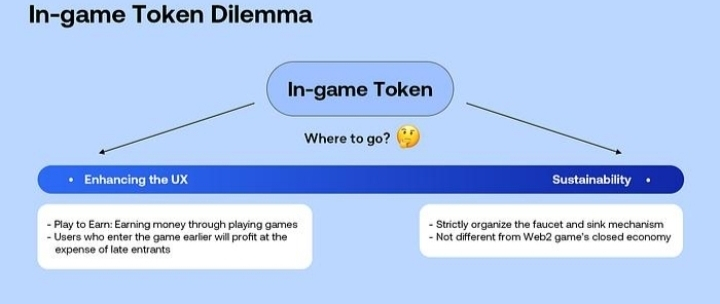
The token design also points in the same direction. According to the whitepaper, $PIXEL is a premium in-game currency used for items, upgrades, skins, crafting recipes, player pets, land minting, energy boosts, and other utility outside the core loop. The same document says 100,000 new $PIXEL are minted each day and distributed to active players engaged in desired behavior patterns, while premium-item proceeds may be burned. The team’s FAQ also says Chapter 2 is designed to protect $PIXEL by requiring strategy and cooperation for token rewards, while moving $BERRY off-chain to simplify the economy. This is important because real micro economies need both sinks and control; otherwise they collapse into inflation or pure extraction.
That said, the opportunity comes with a real risk: player-driven economies are fragile. If the main motivation becomes token extraction, the system can drift away from gameplay and toward farming rewards mechanically. Pixels’ own economics documents show that the team understands this danger and repeatedly frames value around entertainment, engagement, and sustainable behavior rather than future earnings. The challenge is whether player behavior stays organic enough to support genuine trade, or whether it becomes optimized too quickly by a small group of power users.
If Pixels gets this balance right, the upside is not just a better farming game. It becomes a platform where small economies can form naturally around different player roles. One group may specialize in land and resource production. Another may focus on guild influence. Others may create value through cosmetics, pets, crafting, or social coordination. The official site also says Pixels is building a platform for games that natively integrate digital collectibles, which suggests the long-term vision goes beyond a single title. In other words, Pixels may be testing not only a game economy, but a framework for many player-made economies inside a broader universe.
That is why the phrase “player-driven micro economies” matters so much here. It is not about price charts or short-term hype. It is about whether the game can create enough ownership, scarcity, cooperation, and utility for players to build their own market behavior inside the world. Pixels already has the raw ingredients: land tiers, sharecropping, guild assets, premium currency sinks, and a design philosophy that favors gameplay first. If those systems keep deepening, the game could evolve into something much larger than farming. It could become a living test case for how Web3 games create real internal economies without losing the fun.
Pixels is most compelling when you stop looking at it as a farming game and start looking at it as an economic system. The question is not whether players can grow crops. The question is whether they can build a marketplace, a labor structure, and a social order around those crops. That is where the real story begins.