
I just finished diving deep into the Fabric Foundation's latest literature, and I have to say, the tokenomics for $ROBO are way more sophisticated than I initially assumed. We often see tokens added to projects as an afterthought, but here, it genuinely looks like the missing piece of the puzzle for machine coordination.
When we talk about @Fabric Foundation and their goal to let humanity "Own the Robot Economy," the natural question is: How? How do you align the incentives of hardware manufacturers, AI developers, and the actual machines? The answer, according to the whitepaper, is $ROBO.
Here are the core functions that stood out to me, and why this feels different from a standard governance play:
1. The On-Chain Identity for Machines
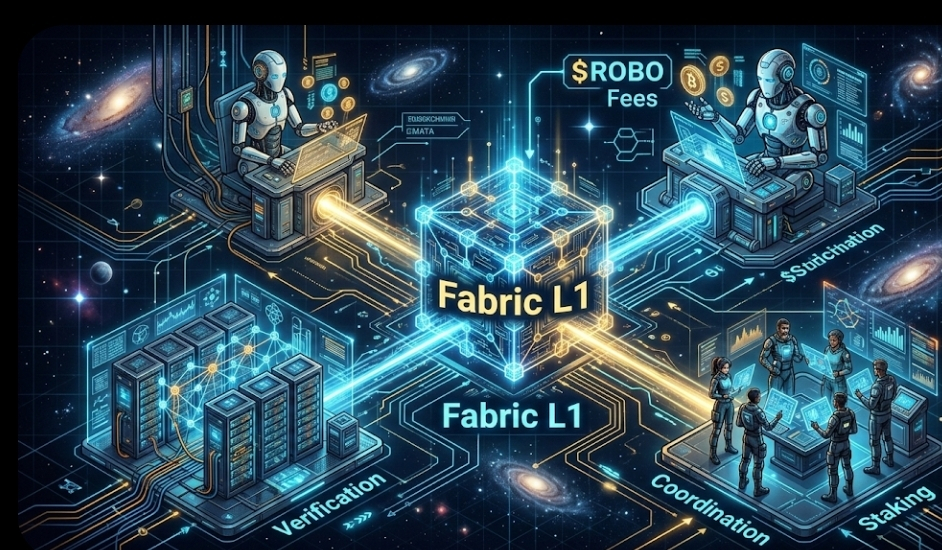
We take for granted that we have bank accounts and passports. A robot has neither. For autonomous machines to operate in the real world—to pay for charging, to verify they completed a task—they need a digital identity and a wallet. The Fabric network facilitates this by requiring all transaction fees for identity verification and micropayments to be settled in $ROBO. While the early stages will leverage the Base ecosystem for speed, the long-term roadmap mentions migrating to a dedicated Layer 1. If that happens, it means every robot transacting on the network will eventually accrue value to the chain, creating a fascinating economic flywheel.
2. Coordinating the Hardware Rollout
One of the coolest mechanisms is how they plan to bootstrap the network. Getting robots out into the world is expensive. The protocol allows participants to stake $ROBO to help coordinate the "genesis" and activation of new robot hardware. You aren't buying the robot itself, but by staking, you get priority weighting for task allocation when that machine comes online. Essentially, if you help the network grow, you get first dibs on telling the robots what to do. To keep this sustainable, a portion of the protocol's revenue flows back into the open market to buy $ROBO, which theoretically supports the asset over time. It is a coordination game, not an ownership game.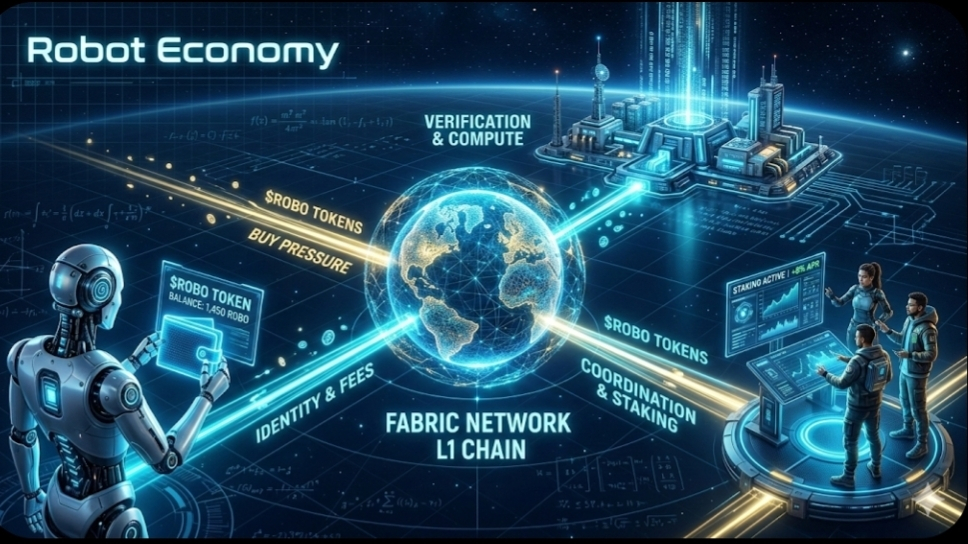
3. Building an Ecosystem of Builders
For the network to thrive, developers need to build applications on top of it, and businesses need to access the robot fleets. Fabric plans to align these participants by requiring them to acquire and stake a fixed amount of $ROBO. This isn't just a tax; it ensures that everyone building on the network has a vested interest in its long-term health. In return, they gain access to the ecosystem to develop skills, contribute data, or validate work, earning rewards in the process.
4. Guiding the Future
Finally, there is the governance angle. If we are building a future where humans and machines coexist, the rules need to be transparent. Holding $ROBO allows the community to participate in setting the operational policies—things like network fees and safety parameters. The initial allocation is structured with long vesting schedules specifically to keep the Foundation well-resourced while ensuring that early backers and contributors are aligned for the long haul, not a quick flip.
It is ambitious, and the tech is incredibly difficult, but seeing the thought put into the economic layer gives me confidence that this is more than just a concept. We are watching the blueprint for human↔machine alignment take shape.