Fogo begins with a very specific personality. It doesn’t feel like it was born from a grant program or a “let’s launch an L1 because every cycle needs one” mindset. It feels like it was born from watching trading systems misbehave when the market turns violent, then deciding the base layer should stop acting surprised.
The easiest way to misunderstand Fogo is to treat it like a branding exercise around speed. People see “SVM” and immediately file it into the mental drawer labeled clone, fork, copy, same thing. That drawer is convenient, but it hides what Fogo is actually doing. The core idea isn’t “we’re fast.” The core idea is “we’re choosing a proven execution environment so we can spend our energy on the parts that determine how the chain behaves under stress.”
That distinction matters because stress is where crypto usually tells on itself. Calm markets make almost everything look fine. Any chain can look smooth in light traffic. The truth only shows up when demand piles in at the same time: a liquidation cascade, a meme coin stampede, a sudden macro move that pulls every pair at once. In those hours, you don’t learn the chain’s philosophy. You learn its failure modes. Orders land late. Fees become unpredictable. Apps start rationing users. People blame wallets, RPCs, or “congestion,” but the problem is deeper. It’s the base layer behaving like a general-purpose public network when users need it to behave like financial infrastructure.
Fogo is created for that moment. Not for the benchmark screenshot moment, but for the moment traders remember.
What it’s trying to solve is simple to say and hard to build: on-chain execution that stays consistent when usage spikes. Not just high average throughput, but stable behavior in the tails. That’s the part most marketing avoids because it forces you to talk about uncomfortable realities: geographic distance between validators, performance variance across machines, network topology, coordination, and what happens when actors optimize for extraction instead of reliability.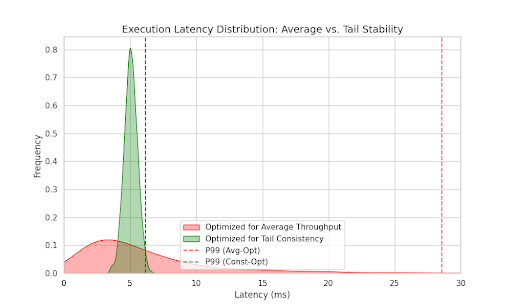
This is where the SVM choice becomes more than a label. Starting a brand-new Layer 1 from scratch usually means starting with a blank execution environment and then begging developers to move their mental models over. That’s a slow and expensive path, even when the tech is strong. Builders don’t just port code; they port assumptions, tooling, monitoring, indexing pipelines, wallet integrations, and operational habits. Those habits are the difference between “it compiles” and “it survives production.”
Fogo starts from a different position by building around the Solana Virtual Machine. The value isn’t just the performance profile people quote. The value is the starting ecosystem gravity: developers already understand the account-based state model, how concurrency behaves, how composability works in practice, and what kinds of design patterns survive real usage. Infrastructure teams already know what “good” looks like for RPCs, indexing, explorers, and program deployment workflows. Fogo doesn’t have to invent a new religion and then wait years for believers. It can focus on getting the base layer right for the job it’s targeting.
That’s why calling it a clone misses the point. Cloning is copying an engine and hoping the world shows up. Fogo is using a mature engine so it can make base-layer choices that most chains either avoid or postpone until after something breaks.
The people behind it are introduced in a way that matches this ethos. You hear names associated with trading systems and market structure rather than purely narrative-driven crypto building. Douglas Colkitt is often mentioned in connection with the project, with a background that points toward building trading mechanisms and thinking about how liquidity behaves in the real world. Robert Sagurton has been discussed as part of the early story as well, with experience tied to institutional-grade crypto work. Whether you love founder narratives or not, the relevance here is practical: the project’s priorities feel like they come from people who have seen what happens when latency and variance become profit-and-loss.
Once you look at the architecture through that lens, the design choices start to feel less like “cool features” and more like deliberate constraints.
One of Fogo’s biggest bets is acknowledging that distance isn’t a footnote. A blockchain is not a single computer. It’s a distributed system spread across the world. Messages take time to travel. Validators don’t all run the same hardware. Some operators are excellent, some are mediocre, and some are opportunistic. When a chain is designed as if all validators live next door to each other, it ends up with unpredictable delays that show up as user pain.
Fogo’s idea of validator zones is essentially a way of taking the physical world seriously. Instead of pretending the whole validator set must participate equally in every moment, the chain can use a subset as the active consensus group for a given period, then rotate. The practical intent is to reduce worst-case communication delay and keep block production and confirmation behavior tighter and more consistent. It’s not “centralization for fun.” It’s a choice that says: if your goal is predictable performance for trading, you cannot ignore network topology.
Another bet is that performance variance is not just a nuisance; it’s a structural risk. In real-time systems, averages don’t save you. The tail kills you. If a network has a long tail of slow blocks, intermittent stalls, or inconsistent prioritization behavior, traders experience that as randomness. Randomness in execution becomes a tax, and taxes in trading become strategy changes: market makers widen spreads, liquidators become more aggressive, and regular users get worse prices without understanding why.
So Fogo leans toward a tighter performance envelope. That means being opinionated about the validator client path and operational expectations. The controversial part is obvious: a more standardized high-performance approach can reduce the “anything goes” nature of participation. But the trade is also obvious: you gain a network that can behave more consistently under load.
This is where Firedancer enters the story, because it’s a high-performance validator client lineage built in C with a strong focus on speed and efficiency. Fogo’s choice to build around that kind of client path is another signal of what it values. A multi-client world offers diversity and resilience against single-implementation issues, but it also creates a reality where the network’s effective behavior can be anchored by slower implementations. Fogo’s direction suggests it’s willing to give up some of that diversity early to chase predictable performance. Again, not a moral claim. Just a business and engineering claim: trading systems value consistency more than theoretical elegance.
Fogo also doesn’t hide behind the fantasy that purely algorithmic rules will solve every social and economic problem. Every chain has a social layer; most chains just deny it until they need it. A curated or tightly managed validator set early on is one way to enforce network quality and behavior expectations, especially around performance standards and harmful extraction patterns. People can argue about this model, and they should, but it aligns with the project’s central thesis: if your product is meant to support real markets, you can’t be naive about operator incentives.
Then there’s the part that many chains treat as secondary but actually determines adoption: the user flow.
Trading apps die from friction long before they die from ideology. Constant signing prompts. Confusing fee behavior. Wallet compatibility issues. A user gets interrupted five times just to do something that feels like one action in their head. That’s why the idea of Sessions matters. A session-key model lets a user authorize a limited permission set once, then interact within that scope without re-signing every step. When done carefully, it’s not about reducing security; it’s about making security usable. A well-designed session system can also support fee sponsorship, where an app can cover transaction fees for users within specific constraints. That sounds small until you try onboarding someone who doesn’t want to manage gas logic. It’s the difference between a product that feels like software and a product that feels like equipment.
When you stitch these parts together, the intent becomes clearer: Fogo wants the chain to be a place where high-frequency, latency-sensitive, and volatility-sensitive applications can live without constantly inventing workarounds.
That’s also why the ecosystem story leans toward trading primitives and data plumbing rather than generic “everything” narratives. You see emphasis on order book style markets and the kinds of infrastructure that makes them viable: low-latency market data feeds, reliable oracle updates, and bridging paths that pull liquidity in rather than forcing it to be born from nothing. Oracles matter here in a very specific way. If market data lags, you don’t just get “worse UX.” You get structural opportunities for exploitation and broken liquidation logic. For derivatives and tight spreads, low-latency, high-integrity data isn’t optional. It’s part of the safety model.
Token utility fits into this like infrastructure economics, not mythology. The token pays for execution and storage, it can be staked or delegated to secure the network, and it can act as the governance handle for protocol evolution. The parts worth focusing on aren’t the standard bullet points; they’re the incentives. If Fogo wants consistent behavior under stress, validator economics can’t reward mere presence. They have to reward performance and reliability, and punish behavior that increases tail risk for the network. Fee mechanics and distribution also shape this: how base fees are handled, how priority fees behave under congestion, and how rewards flow to validators and stakers. A chain built for stress can’t afford a fee market that turns into a chaotic side game for insiders.
Governance, at least early, tends to be faster and more coordinated when it’s stewarded by a foundation-style structure. Fogo has communicated the existence of a foundation and an early phase where coordination is prioritized over slow, diffuse decision-making. That tends to annoy people who want maximal decentralization immediately, but it also matches the operational reality of launching a performance-sensitive network: you either coordinate upgrades and standards quickly, or you become a museum of half-finished compromises. The real test is whether that early coordination transitions into a governance system that users and builders can trust, where upgrades happen transparently and power doesn’t calcify.
Real-world use cases are where this thesis either becomes real or collapses.
If you’re trying to run an on-chain order book, stress isn’t hypothetical. Every burst of volume tests whether matching, cancels, and updates remain usable. AMMs can handle a lot, but they have well-known trade-offs in fast markets: slippage behavior, toxic flow, and cost structures that can punish traders when volatility spikes. Order books are more familiar to serious traders, but they demand tighter performance and data integrity. If Fogo can keep execution predictable in bursts, it becomes a more credible home for order book liquidity.
Liquidations are another concrete test. Most liquidation chaos is not “bad code.” It’s timing. When the chain’s behavior gets inconsistent, liquidations become a latency contest, and latency contests attract the most aggressive extractors. If execution windows are stable and congestion behavior is sane, liquidation mechanisms can behave more like rules than like a battlefield. That changes user trust.
Then there’s the onboarding layer. If Sessions and fee sponsorship are implemented cleanly, you can build trading apps that don’t treat the user like a part-time systems engineer. Users don’t need to love crypto. They need the product to work reliably when their money is on the line.
Competitor comparisons are best done quietly, because loud comparisons are usually marketing.
Against Solana itself, the relationship is complicated. Fogo inherits the execution model’s strengths and ecosystem familiarity, but it’s choosing a more opinionated base-layer path: zoning and tighter performance enforcement, plus a more standardized client approach. The trade is clear. You can chase broader participation and diversity, or you can chase tighter performance predictability. Different networks will make different calls.
Against Ethereum L2 ecosystems, the difference is less about who has better branding and more about what kind of settlement experience you’re building around. L2s can be excellent for composability and Ethereum liquidity gravity, but real-time trading has different tolerances around sequencing, latency variance, and congestion behavior. Fogo is positioning itself as a base layer optimized around that reality rather than a layered settlement approach where the trading experience is partially shaped by sequencing and external constraints.
Against app-specific trading chains, Fogo’s bet is that you can get many of the benefits of optimization while keeping developer portability. App chains can be extremely tuned, but they often sacrifice general composability and migration ease. Fogo is trying to stay general enough to host a broader ecosystem while being specialized enough at the base layer to make trading-grade behavior plausible.
The long-term vision that falls out of all this is not “be the next everything chain.” It’s closer to: make on-chain markets feel like infrastructure. Not perfect, not magical, just dependable enough that builders can design real products without constantly compensating for base-layer unpredictability.
Whether Fogo succeeds will be measured in boring ways that matter: how it handles bursts, how it handles congestion, how consistent confirmations feel across regions, whether traders trust liquidation behavior, whether makers keep tight spreads during volatility, whether apps can onboard users without turning them into signature machines, and whether governance and validator standards mature without becoming brittle or captured.