

#cryptoregulation
cryptoregulation
16.9M views
47,839 Discussing
ရေပန်းစားသော
နောက်ဆုံး

·
--
**🔓 The SEC Just Rewrote Who Gets to Hold Your Crypto**
For years, custody rules written for stocks and bonds simply didn't fit crypto. On October 1, the SEC proposed to fix that — and it's a bigger shift than the headlines suggest.
The new framework lets registered investment advisers and regulated funds self-custody crypto assets, but only under tightly defined conditions — like when no approved custodian is available. It also opens the door for state-chartered trust companies to act as custodians.
Important nuance most coverage glosses over: "self-custody" here means the adviser acts as custodian, not individual investors holding their own keys. Commissioner Hester Peirce was explicit about that distinction.
The safeguards built in:
🔐 At least two authorized people must approve any transfer
📋 Internal control reports required within six months
🏦 State trust companies must prove they're bank-authorized and keep client assets segregated
SEC Chairman Paul Atkins called it "a compliant pathway where none existed before" — replacing what he described as regulatory grey area left by rules never designed for $BTC or $ETH .
This is still just a proposal with a 60-day comment period, not a final rule. But it signals regulators are actively building infrastructure for institutional crypto adoption rather than leaving it in limbo.
Does clearer custody rules like this actually move more institutional capital into crypto, or is the bottleneck somewhere else entirely? 👇
#SEC #CryptoRegulation #BTC #Custody #CryptoNews
**🔓 The SEC Just Rewrote Who Gets to Hold Your Crypto**
For years, custody rules written for stocks and bonds simply didn't fit crypto. On October 1, the SEC proposed to fix that — and it's a bigger shift than the headlines suggest.
The new framework lets registered investment advisers and regulated funds self-custody crypto assets, but only under tightly defined conditions — like when no approved custodian is available. It also opens the door for state-chartered trust companies to act as custodians.
Important nuance most coverage glosses over: "self-custody" here means the adviser acts as custodian, not individual investors holding their own keys. Commissioner Hester Peirce was explicit about that distinction.
The safeguards built in:
🔐 At least two authorized people must approve any transfer
📋 Internal control reports required within six months
🏦 State trust companies must prove they're bank-authorized and keep client assets segregated
SEC Chairman Paul Atkins called it "a compliant pathway where none existed before" — replacing what he described as regulatory grey area left by rules never designed for $BTC or $ETH .
This is still just a proposal with a 60-day comment period, not a final rule. But it signals regulators are actively building infrastructure for institutional crypto adoption rather than leaving it in limbo.
Does clearer custody rules like this actually move more institutional capital into crypto, or is the bottleneck somewhere else entirely? 👇
#SEC #CryptoRegulation #BTC #Custody #CryptoNews
For years, custody rules written for stocks and bonds simply didn't fit crypto. On October 1, the SEC proposed to fix that — and it's a bigger shift than the headlines suggest.
The new framework lets registered investment advisers and regulated funds self-custody crypto assets, but only under tightly defined conditions — like when no approved custodian is available. It also opens the door for state-chartered trust companies to act as custodians.
Important nuance most coverage glosses over: "self-custody" here means the adviser acts as custodian, not individual investors holding their own keys. Commissioner Hester Peirce was explicit about that distinction.
The safeguards built in:
🔐 At least two authorized people must approve any transfer
📋 Internal control reports required within six months
🏦 State trust companies must prove they're bank-authorized and keep client assets segregated
SEC Chairman Paul Atkins called it "a compliant pathway where none existed before" — replacing what he described as regulatory grey area left by rules never designed for $BTC or $ETH .
This is still just a proposal with a 60-day comment period, not a final rule. But it signals regulators are actively building infrastructure for institutional crypto adoption rather than leaving it in limbo.
Does clearer custody rules like this actually move more institutional capital into crypto, or is the bottleneck somewhere else entirely? 👇
#SEC #CryptoRegulation #BTC #Custody #CryptoNews
15

Here's what happened when Hyperliquid's Policy Center quietly pushed for onchain perps to fall under MiFID II derivatives rules rather than MiCA.
Traders often turn to these decentralized setups hoping to avoid the pitfalls of regulated markets, but a shift like this could leave positions stranded or force unexpected exits at the worst time.
The Policy Center wants these perpetual contracts treated as traditional financial derivatives. This would impose MiFID II standards on what has been a more flexible crypto product under MiCA, potentially requiring extensive compliance that onchain platforms struggle with.
It could be a play for greater acceptance among institutions. Yet the warning signs are there. Higher operational costs might lead to service cuts, identity checks could alienate users, and leverage might get slashed, repeating patterns we've seen in other regulated corners of the market.
If you're active with $HYPE or trading $BTC and $ETH perps onchain, this classification battle is worth watching closely. The outcome could redefine access and risk for everyone.
What's your take?
#CryptoRegulation #OnchainPerps #MiFID
Here's what happened when Hyperliquid's Policy Center quietly pushed for onchain perps to fall under MiFID II derivatives rules rather than MiCA.
Traders often turn to these decentralized setups hoping to avoid the pitfalls of regulated markets, but a shift like this could leave positions stranded or force unexpected exits at the worst time.
The Policy Center wants these perpetual contracts treated as traditional financial derivatives. This would impose MiFID II standards on what has been a more flexible crypto product under MiCA, potentially requiring extensive compliance that onchain platforms struggle with.
It could be a play for greater acceptance among institutions. Yet the warning signs are there. Higher operational costs might lead to service cuts, identity checks could alienate users, and leverage might get slashed, repeating patterns we've seen in other regulated corners of the market.
If you're active with $HYPE or trading $BTC and $ETH perps onchain, this classification battle is worth watching closely. The outcome could redefine access and risk for everyone.
What's your take?
#CryptoRegulation #OnchainPerps #MiFID
Traders often turn to these decentralized setups hoping to avoid the pitfalls of regulated markets, but a shift like this could leave positions stranded or force unexpected exits at the worst time.
The Policy Center wants these perpetual contracts treated as traditional financial derivatives. This would impose MiFID II standards on what has been a more flexible crypto product under MiCA, potentially requiring extensive compliance that onchain platforms struggle with.
It could be a play for greater acceptance among institutions. Yet the warning signs are there. Higher operational costs might lead to service cuts, identity checks could alienate users, and leverage might get slashed, repeating patterns we've seen in other regulated corners of the market.
If you're active with $HYPE or trading $BTC and $ETH perps onchain, this classification battle is worth watching closely. The outcome could redefine access and risk for everyone.
What's your take?
#CryptoRegulation #OnchainPerps #MiFID

123

📜 رغم فشل قانون CLARITY، تشريعات العملات الرقمية تتوالى
كشف تقرير حديث عن استمرار التطور التشريعي لسوق العملات الرقمية في الولايات المتحدة، على الرغم من عدم إقرار قانون CLARITY المقترح سابقًا. يُشير هذا إلى أن الهيئات التنظيمية تواصل تحديد الأطر القانونية للقطاع، مما يعكس الأهمية المتزايدة للعملات الرقمية في المشهد المالي.
━━━━━━━━━━━━━━
📊 التأثير: 📈 مرتفع
🏷️ REGULATION
#CryptoRegulation #USPolicy #DigitalAssets #FinancialCompliance #Blockchain
📰 المصدر: coindesk.com
📜 رغم فشل قانون CLARITY، تشريعات العملات الرقمية تتوالى
كشف تقرير حديث عن استمرار التطور التشريعي لسوق العملات الرقمية في الولايات المتحدة، على الرغم من عدم إقرار قانون CLARITY المقترح سابقًا. يُشير هذا إلى أن الهيئات التنظيمية تواصل تحديد الأطر القانونية للقطاع، مما يعكس الأهمية المتزايدة للعملات الرقمية في المشهد المالي.
━━━━━━━━━━━━━━
📊 التأثير: 📈 مرتفع
🏷️ REGULATION
#CryptoRegulation #USPolicy #DigitalAssets #FinancialCompliance #Blockchain
📰 المصدر: coindesk.com
كشف تقرير حديث عن استمرار التطور التشريعي لسوق العملات الرقمية في الولايات المتحدة، على الرغم من عدم إقرار قانون CLARITY المقترح سابقًا. يُشير هذا إلى أن الهيئات التنظيمية تواصل تحديد الأطر القانونية للقطاع، مما يعكس الأهمية المتزايدة للعملات الرقمية في المشهد المالي.
━━━━━━━━━━━━━━
📊 التأثير: 📈 مرتفع
🏷️ REGULATION
#CryptoRegulation #USPolicy #DigitalAssets #FinancialCompliance #Blockchain
📰 المصدر: coindesk.com
1
12

·
--
欧洲加密用户更信任MiCA下的合规企业!Bitpanda CEO表示,MiCA让欧洲用户对监管平台更有信心,同时呼吁对违规平台严格执法。#CryptoRegulation #MiCA $BTC $ETH
European crypto users now trust regulated firms more thanks to MiCA! Bitpanda's co-CEO reveals MiCA boosted confidence in compliant platforms while calling for stricter enforcement against non-compliant ones. #CryptoRegulation #MiCA $BTC $ETH
欧洲加密用户更信任MiCA下的合规企业!Bitpanda CEO表示,MiCA让欧洲用户对监管平台更有信心,同时呼吁对违规平台严格执法。#CryptoRegulation #MiCA $BTC $ETH
European crypto users now trust regulated firms more thanks to MiCA! Bitpanda's co-CEO reveals MiCA boosted confidence in compliant platforms while calling for stricter enforcement against non-compliant ones. #CryptoRegulation #MiCA $BTC $ETH
European crypto users now trust regulated firms more thanks to MiCA! Bitpanda's co-CEO reveals MiCA boosted confidence in compliant platforms while calling for stricter enforcement against non-compliant ones. #CryptoRegulation #MiCA $BTC $ETH
394
Why is nobody talking about who actually gets to rewrite MiCA?
Every new regulation cycle leaves traders holding bags they cannot sell. You see a headline about Europe tightening rules and by the time you understand what it means for $BTC the move already happened.
The European Commission is reviewing MiCA and the submissions lay the conflict out in the open. Traditional finance wants stricter limits on $ETH and dollar stablecoins like $USDT so they can keep the rails they already control. Crypto-native players are arguing the opposite, saying Europe will just lose the market if it goes too far.
This is not some abstract policy debate. It is a case study of incumbents using the rulebook to lock in their position while the official story remains consumer protection.
Where do you think this review actually ends?
#MiCA #Bitcoin #CryptoRegulation
Why is nobody talking about who actually gets to rewrite MiCA?
Every new regulation cycle leaves traders holding bags they cannot sell. You see a headline about Europe tightening rules and by the time you understand what it means for $BTC the move already happened.
The European Commission is reviewing MiCA and the submissions lay the conflict out in the open. Traditional finance wants stricter limits on $ETH and dollar stablecoins like $USDT so they can keep the rails they already control. Crypto-native players are arguing the opposite, saying Europe will just lose the market if it goes too far.
This is not some abstract policy debate. It is a case study of incumbents using the rulebook to lock in their position while the official story remains consumer protection.
Where do you think this review actually ends?
#MiCA #Bitcoin #CryptoRegulation
Every new regulation cycle leaves traders holding bags they cannot sell. You see a headline about Europe tightening rules and by the time you understand what it means for $BTC the move already happened.
The European Commission is reviewing MiCA and the submissions lay the conflict out in the open. Traditional finance wants stricter limits on $ETH and dollar stablecoins like $USDT so they can keep the rails they already control. Crypto-native players are arguing the opposite, saying Europe will just lose the market if it goes too far.
This is not some abstract policy debate. It is a case study of incumbents using the rulebook to lock in their position while the official story remains consumer protection.
Where do you think this review actually ends?
#MiCA #Bitcoin #CryptoRegulation

20

·
--
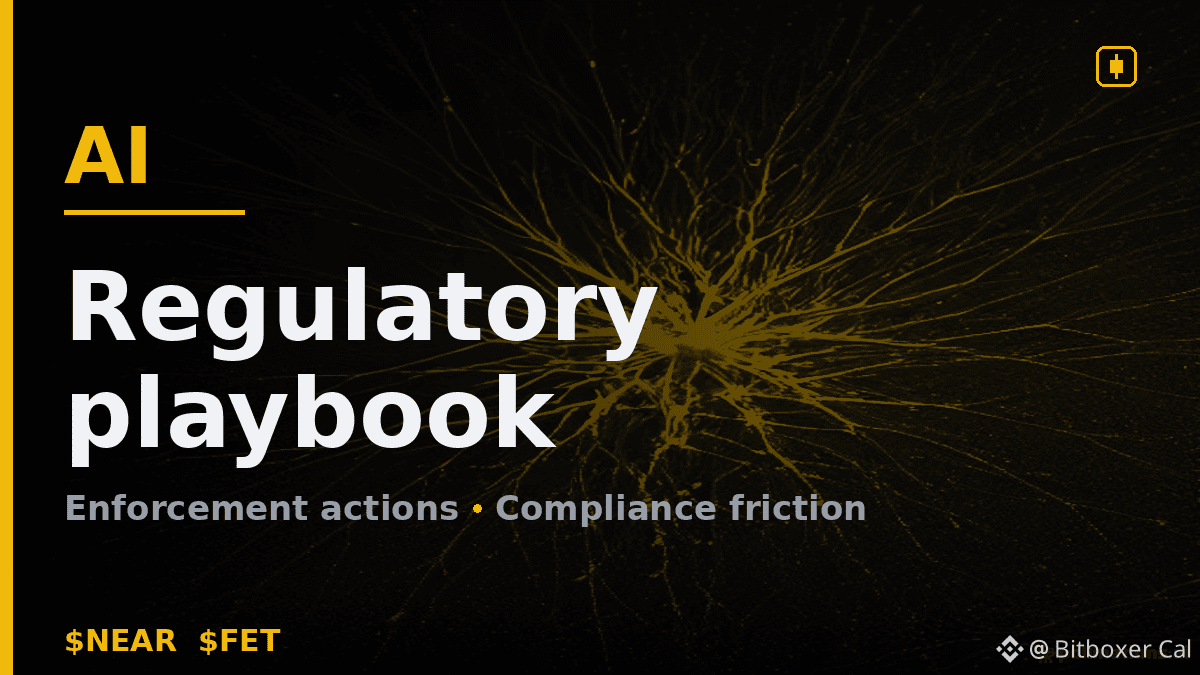
Jay Clayton is steering national AI policy, but should we be bracing for a pivot from innovation to pure enforcement?
Clayton built the SEC’s "regulation by enforcement" playbook, preferring legal pressure over clear rules. If this hits decentralized compute, projects like $NEAR and $FET might have to trade rapid network growth for defensive legal shielding. It all comes down to whether the government views AI as a utility or a security.
#CryptoRegulation #AI #Blockchain
Jay Clayton is steering national AI policy, but should we be bracing for a pivot from innovation to pure enforcement?
Clayton built the SEC’s "regulation by enforcement" playbook, preferring legal pressure over clear rules. If this hits decentralized compute, projects like $NEAR and $FET might have to trade rapid network growth for defensive legal shielding. It all comes down to whether the government views AI as a utility or a security.
#CryptoRegulation #AI #Blockchain
Clayton built the SEC’s "regulation by enforcement" playbook, preferring legal pressure over clear rules. If this hits decentralized compute, projects like $NEAR and $FET might have to trade rapid network growth for defensive legal shielding. It all comes down to whether the government views AI as a utility or a security.
#CryptoRegulation #AI #Blockchain
233

·
--
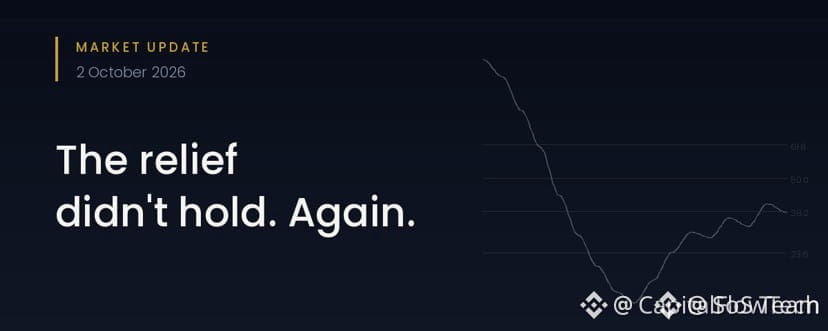
If you're still treating EU crypto rules as background noise, stop now.
Traders have lost millions sitting on positions when sudden compliance changes hit exchanges and freeze assets. The pain of not knowing when to exit or how new rules will hit $BTC prices is real and it keeps happening.
The European Commission is reviewing MiCA and the flood of submissions shows two camps fighting it out. Banks and regulators want heavier oversight on everything from $ETH staking to stablecoin issuance, arguing it protects retail from another collapse. Crypto firms and users are pushing back hard, saying the existing framework already drives business to friendlier jurisdictions and stifles growth.
I'm with the crypto side on this one. Looking at the numbers, over 150 detailed submissions highlight how extra layers could cut trading volumes by 20 percent in the EU. That kind of drop would mean missed entries for anyone holding $USDT pairs or looking to rotate into $BTC during dips.
Where do you think this review lands and how are you positioning for it?
#MiCA #Bitcoin #CryptoRegulation
If you're still treating EU crypto rules as background noise, stop now.
Traders have lost millions sitting on positions when sudden compliance changes hit exchanges and freeze assets. The pain of not knowing when to exit or how new rules will hit $BTC prices is real and it keeps happening.
The European Commission is reviewing MiCA and the flood of submissions shows two camps fighting it out. Banks and regulators want heavier oversight on everything from $ETH staking to stablecoin issuance, arguing it protects retail from another collapse. Crypto firms and users are pushing back hard, saying the existing framework already drives business to friendlier jurisdictions and stifles growth.
I'm with the crypto side on this one. Looking at the numbers, over 150 detailed submissions highlight how extra layers could cut trading volumes by 20 percent in the EU. That kind of drop would mean missed entries for anyone holding $USDT pairs or looking to rotate into $BTC during dips.
Where do you think this review lands and how are you positioning for it?
#MiCA #Bitcoin #CryptoRegulation
Traders have lost millions sitting on positions when sudden compliance changes hit exchanges and freeze assets. The pain of not knowing when to exit or how new rules will hit $BTC prices is real and it keeps happening.
The European Commission is reviewing MiCA and the flood of submissions shows two camps fighting it out. Banks and regulators want heavier oversight on everything from $ETH staking to stablecoin issuance, arguing it protects retail from another collapse. Crypto firms and users are pushing back hard, saying the existing framework already drives business to friendlier jurisdictions and stifles growth.
I'm with the crypto side on this one. Looking at the numbers, over 150 detailed submissions highlight how extra layers could cut trading volumes by 20 percent in the EU. That kind of drop would mean missed entries for anyone holding $USDT pairs or looking to rotate into $BTC during dips.
Where do you think this review lands and how are you positioning for it?
#MiCA #Bitcoin #CryptoRegulation
13
·
--
美国银行业大佬们又来搞事情了!独立社区银行家协会直接把美国货币监理署(OCC)告上法庭,指责他们越权给加密货币公司发信托牌照。这监管闹剧啥时候才是个头啊?传统金融和加密世界的斗争越来越激烈了!#CryptoRegulation $BTC $ETH
Banking giants are at it again! The Independent Community Bankers of America just sued the OCC, accusing them of overstepping authority by granting crypto trust charters. The drama between traditional finance and crypto continues! #CryptoRegulation $BTC $ETH
美国银行业大佬们又来搞事情了!独立社区银行家协会直接把美国货币监理署(OCC)告上法庭,指责他们越权给加密货币公司发信托牌照。这监管闹剧啥时候才是个头啊?传统金融和加密世界的斗争越来越激烈了!#CryptoRegulation $BTC $ETH
Banking giants are at it again! The Independent Community Bankers of America just sued the OCC, accusing them of overstepping authority by granting crypto trust charters. The drama between traditional finance and crypto continues! #CryptoRegulation $BTC $ETH
Banking giants are at it again! The Independent Community Bankers of America just sued the OCC, accusing them of overstepping authority by granting crypto trust charters. The drama between traditional finance and crypto continues! #CryptoRegulation $BTC $ETH
427
·
--
everyone thinks europe's stablecoin rules are already settled and done with, but actually the entire board is up for review and the goalposts are about to move again.
most traders just park their dry powder and assume liquidity is safe forever, only to wake up and find their favorite pairs delisted overnight. ngl getting trapped holding restricted stables while order books dry up is the easiest way to bleed capital without even making a bad trade.
look at how the market reacted during the first round of mica implementation. exchanges had to aggressively reshuffle listings, pushing massive volume into compliant assets like $USDC and euro-pegged tokens like $EURC while putting massive pressure on $USDT trading pairs across the region. now regulators are reviewing caps, reserve audits, and foreign currency transaction limits, which could trigger another wave of liquidity fragmentation.
the risk isn't just compliance paperwork, ser. if these updated thresholds squeeze daily transaction limits even tighter, localized liquidity pools will thin out fast, widening spreads and catching passive holders off guard before the market fully prices it in.
where do you think stablecoin liquidity moves next if europe tightens the screws even further?
#CryptoRegulation #MiCA #Stablecoins
everyone thinks europe's stablecoin rules are already settled and done with, but actually the entire board is up for review and the goalposts are about to move again.
most traders just park their dry powder and assume liquidity is safe forever, only to wake up and find their favorite pairs delisted overnight. ngl getting trapped holding restricted stables while order books dry up is the easiest way to bleed capital without even making a bad trade.
look at how the market reacted during the first round of mica implementation. exchanges had to aggressively reshuffle listings, pushing massive volume into compliant assets like $USDC and euro-pegged tokens like $EURC while putting massive pressure on $USDT trading pairs across the region. now regulators are reviewing caps, reserve audits, and foreign currency transaction limits, which could trigger another wave of liquidity fragmentation.
the risk isn't just compliance paperwork, ser. if these updated thresholds squeeze daily transaction limits even tighter, localized liquidity pools will thin out fast, widening spreads and catching passive holders off guard before the market fully prices it in.
where do you think stablecoin liquidity moves next if europe tightens the screws even further?
#CryptoRegulation #MiCA #Stablecoins
most traders just park their dry powder and assume liquidity is safe forever, only to wake up and find their favorite pairs delisted overnight. ngl getting trapped holding restricted stables while order books dry up is the easiest way to bleed capital without even making a bad trade.
look at how the market reacted during the first round of mica implementation. exchanges had to aggressively reshuffle listings, pushing massive volume into compliant assets like $USDC and euro-pegged tokens like $EURC while putting massive pressure on $USDT trading pairs across the region. now regulators are reviewing caps, reserve audits, and foreign currency transaction limits, which could trigger another wave of liquidity fragmentation.
the risk isn't just compliance paperwork, ser. if these updated thresholds squeeze daily transaction limits even tighter, localized liquidity pools will thin out fast, widening spreads and catching passive holders off guard before the market fully prices it in.
where do you think stablecoin liquidity moves next if europe tightens the screws even further?
#CryptoRegulation #MiCA #Stablecoins

1
·
--
中文版:
特朗普拟任AI czar的Jay Clayton,正是SEC加密"执法风暴"的始作俑者!这位前主席若掌管AI事务,加密市场或迎监管新篇章。准备好没?#TrumpAI #CryptoRegulation $BTC
English version:
Trump's pick for AI czar? Jay Clayton - the mastermind behind SEC's crypto enforcement crackdown. This ex-SEC head overseeing AI could reshape tech regulation. Crypto brace yourselves! #TrumpAI #CryptoRegulation $BTC
中文版:
特朗普拟任AI czar的Jay Clayton,正是SEC加密"执法风暴"的始作俑者!这位前主席若掌管AI事务,加密市场或迎监管新篇章。准备好没?#TrumpAI #CryptoRegulation $BTC
English version:
Trump's pick for AI czar? Jay Clayton - the mastermind behind SEC's crypto enforcement crackdown. This ex-SEC head overseeing AI could reshape tech regulation. Crypto brace yourselves! #TrumpAI #CryptoRegulation $BTC
特朗普拟任AI czar的Jay Clayton,正是SEC加密"执法风暴"的始作俑者!这位前主席若掌管AI事务,加密市场或迎监管新篇章。准备好没?#TrumpAI #CryptoRegulation $BTC
English version:
Trump's pick for AI czar? Jay Clayton - the mastermind behind SEC's crypto enforcement crackdown. This ex-SEC head overseeing AI could reshape tech regulation. Crypto brace yourselves! #TrumpAI #CryptoRegulation $BTC
290

·
--
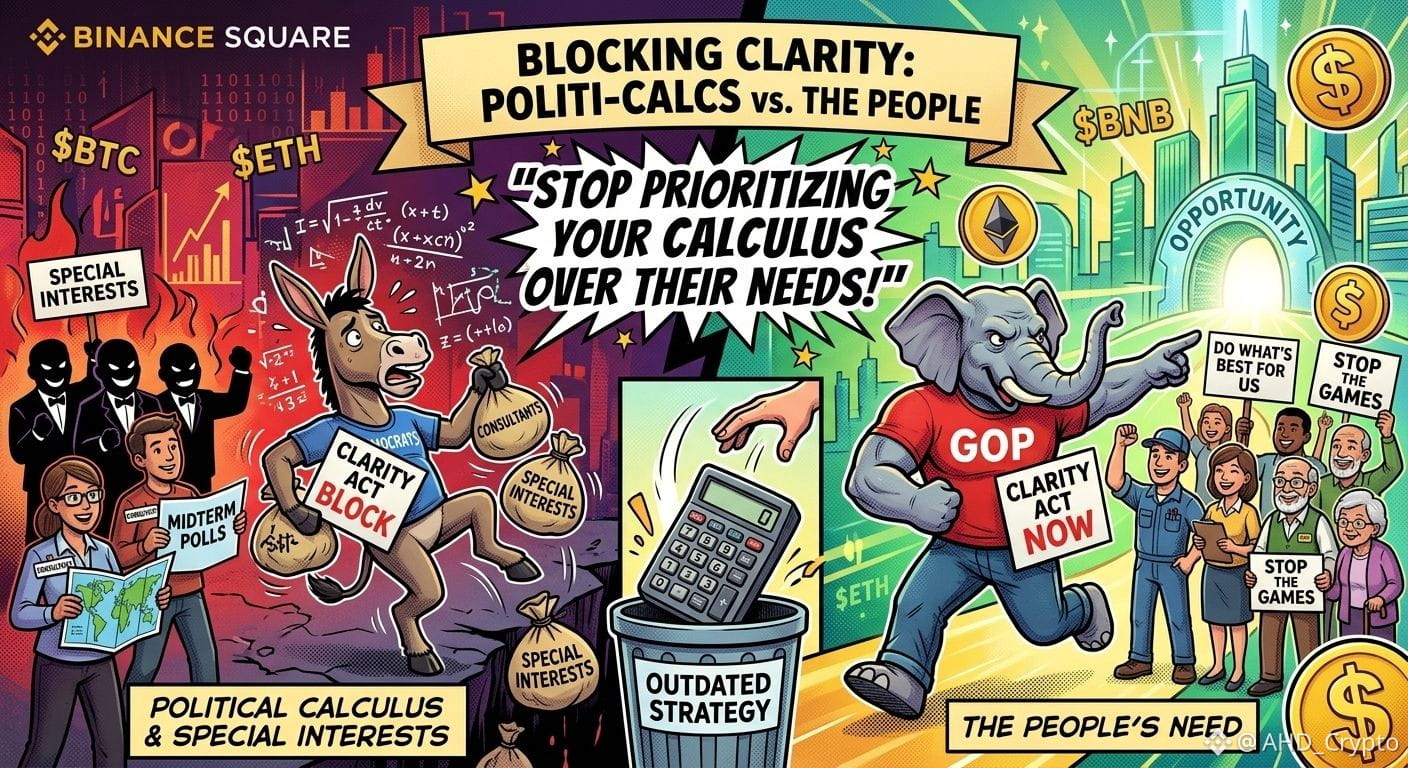
Senate Democrats Block Crypto $CLARITY Act: Political Gamesmanship Over Financial Innovation?
The battle for clear $BTC and altcoin regulation in the U.S. has hit another major roadblock. Following a tight 49–50 vote in the Senate, the Digital Asset Market Clarity Act failed to clear its procedural hurdle, sparking a fiery debate across Capitol Hill and the crypto ecosystem.
{spot}(BTCUSDT)
Senate Banking Committee Chairman Tim Scott (R-S.C.) slammed the opposition, stating that Democrats prioritized political calculus, consultants, and special interests over the needs of the American public.
Key Takeaways from the Legislative Breakdown
1- Negotiations Ignored: Senator Cynthia Lummis highlighted that Republicans incorporated 126 bipartisan revisions requested by Democrats—covering DeFi compliance, Bank Secrecy Act standards, and strict ethics requirements—yet the bill was still shot down.
2- Regulatory Uncertainty Remains: Without a single federal regulatory framework, oversight for digital commodities like $ETH and $SOL remains divided between the SEC and CFTC, keeping market participants in regulatory limbo.
{spot}(SOLUSDT)
{spot}(ETHUSDT)
3- Global Leadership at Risk: Senator Scott and White House advisors warned that stalling market structure rules pushes innovation overseas, leaving foreign regions to define global digital asset standards rather than the U.S.
What’s Next for the Market?
As political maneuvering stalls bipartisan progress, the crypto industry is forced to navigate ongoing enforcement actions. Will Washington bridge the divide, or will regulatory uncertainty force capital and innovation into foreign markets?
#writetoearn #CryptoRegulation #USPolitics #DigitalAssets #CLARITYAct
Senate Democrats Block Crypto $CLARITY Act: Political Gamesmanship Over Financial Innovation?
The battle for clear $BTC and altcoin regulation in the U.S. has hit another major roadblock. Following a tight 49–50 vote in the Senate, the Digital Asset Market Clarity Act failed to clear its procedural hurdle, sparking a fiery debate across Capitol Hill and the crypto ecosystem.
Senate Banking Committee Chairman Tim Scott (R-S.C.) slammed the opposition, stating that Democrats prioritized political calculus, consultants, and special interests over the needs of the American public.
Key Takeaways from the Legislative Breakdown
1- Negotiations Ignored: Senator Cynthia Lummis highlighted that Republicans incorporated 126 bipartisan revisions requested by Democrats—covering DeFi compliance, Bank Secrecy Act standards, and strict ethics requirements—yet the bill was still shot down.
2- Regulatory Uncertainty Remains: Without a single federal regulatory framework, oversight for digital commodities like $ETH and $SOL remains divided between the SEC and CFTC, keeping market participants in regulatory limbo.
3- Global Leadership at Risk: Senator Scott and White House advisors warned that stalling market structure rules pushes innovation overseas, leaving foreign regions to define global digital asset standards rather than the U.S.
What’s Next for the Market?
As political maneuvering stalls bipartisan progress, the crypto industry is forced to navigate ongoing enforcement actions. Will Washington bridge the divide, or will regulatory uncertainty force capital and innovation into foreign markets?
#writetoearn #CryptoRegulation #USPolitics #DigitalAssets #CLARITYAct
The battle for clear $BTC and altcoin regulation in the U.S. has hit another major roadblock. Following a tight 49–50 vote in the Senate, the Digital Asset Market Clarity Act failed to clear its procedural hurdle, sparking a fiery debate across Capitol Hill and the crypto ecosystem.
Senate Banking Committee Chairman Tim Scott (R-S.C.) slammed the opposition, stating that Democrats prioritized political calculus, consultants, and special interests over the needs of the American public.
Key Takeaways from the Legislative Breakdown
1- Negotiations Ignored: Senator Cynthia Lummis highlighted that Republicans incorporated 126 bipartisan revisions requested by Democrats—covering DeFi compliance, Bank Secrecy Act standards, and strict ethics requirements—yet the bill was still shot down.
2- Regulatory Uncertainty Remains: Without a single federal regulatory framework, oversight for digital commodities like $ETH and $SOL remains divided between the SEC and CFTC, keeping market participants in regulatory limbo.
3- Global Leadership at Risk: Senator Scott and White House advisors warned that stalling market structure rules pushes innovation overseas, leaving foreign regions to define global digital asset standards rather than the U.S.
What’s Next for the Market?
As political maneuvering stalls bipartisan progress, the crypto industry is forced to navigate ongoing enforcement actions. Will Washington bridge the divide, or will regulatory uncertainty force capital and innovation into foreign markets?
#writetoearn #CryptoRegulation #USPolitics #DigitalAssets #CLARITYAct
144

·
--
🚨 MICA PROPOSALS THREATEN DEFI LIQUIDITY AS $AAVE FOUNDER SPEAKS OUT AGAINST ECB RESTRICTIONS! ⚡
European central authorities are proposing aggressive MiCA mandates, targeting yield-bearing stablecoins and enforcing gated access to decentralized liquidity pools. 🌊 This regulatory friction threatens to isolate European capital, fragmenting global liquidity and suppressing institutional order flow into transparent smart contracts.
While policy barriers create short-term structural headwinds, permissionless infrastructure consistently captures capital due to superior settlement efficiency and zero counterparty risk. 💡 Open financial networks remain structurally positioned to absorb fragmented market depth over the macro horizon. 💬 Will regulatory gating stifle yield access, or will liquidity inevitably migrate to permissionless protocols? 👇
⚠️ Not financial advice. Always manage your risk. 🛡️
🏷️ #AAVE #DeFi #CryptoRegulation #MarketStructure
🎯 🦈
🚨 MICA PROPOSALS THREATEN DEFI LIQUIDITY AS $AAVE FOUNDER SPEAKS OUT AGAINST ECB RESTRICTIONS! ⚡
European central authorities are proposing aggressive MiCA mandates, targeting yield-bearing stablecoins and enforcing gated access to decentralized liquidity pools. 🌊 This regulatory friction threatens to isolate European capital, fragmenting global liquidity and suppressing institutional order flow into transparent smart contracts.
While policy barriers create short-term structural headwinds, permissionless infrastructure consistently captures capital due to superior settlement efficiency and zero counterparty risk. 💡 Open financial networks remain structurally positioned to absorb fragmented market depth over the macro horizon. 💬 Will regulatory gating stifle yield access, or will liquidity inevitably migrate to permissionless protocols? 👇
⚠️ Not financial advice. Always manage your risk. 🛡️
🏷️ #AAVE #DeFi #CryptoRegulation #MarketStructure
🎯 🦈
European central authorities are proposing aggressive MiCA mandates, targeting yield-bearing stablecoins and enforcing gated access to decentralized liquidity pools. 🌊 This regulatory friction threatens to isolate European capital, fragmenting global liquidity and suppressing institutional order flow into transparent smart contracts.
While policy barriers create short-term structural headwinds, permissionless infrastructure consistently captures capital due to superior settlement efficiency and zero counterparty risk. 💡 Open financial networks remain structurally positioned to absorb fragmented market depth over the macro horizon. 💬 Will regulatory gating stifle yield access, or will liquidity inevitably migrate to permissionless protocols? 👇
⚠️ Not financial advice. Always manage your risk. 🛡️
🏷️ #AAVE #DeFi #CryptoRegulation #MarketStructure
🎯 🦈
16

·
--
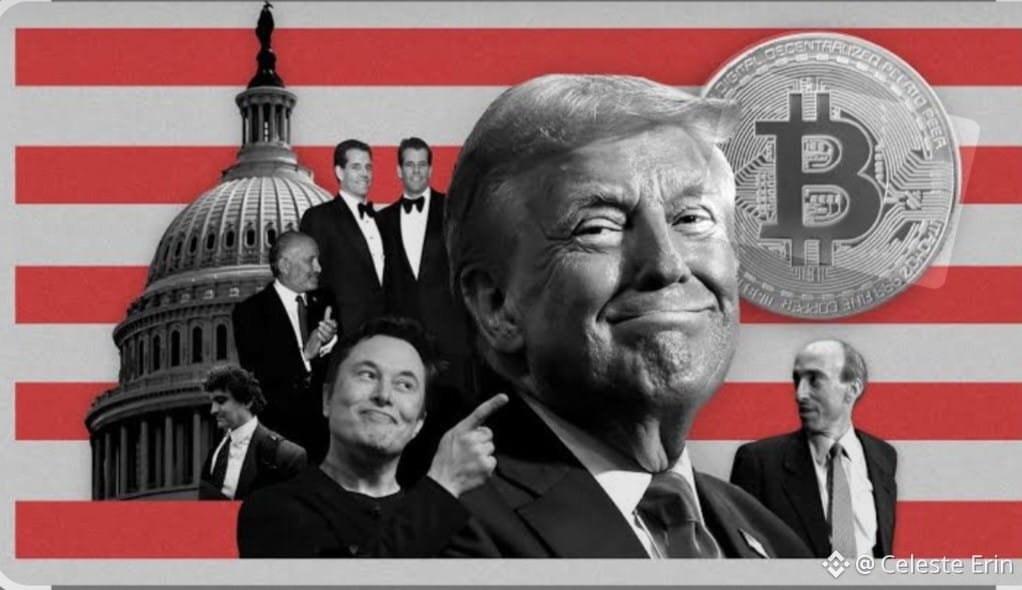
🚨 STAND WITH CRYPTO RESPALDA A CANDIDATOS BIPARTIDISTAS Y LANZA CAMPAÑA ELECTORAL EN EE. UU. 🏛️🇺🇸
El brazo político pro-cripto intensifica su presencia en las elecciones de mitad de período con anuncios estratégicos en la Cámara de Representantes 📊
Puntos clave del despliegue político:
🤝 Respaldo bipartidista: Apoyo confirmado a más de 30 candidatos de ambos partidos, incluidos Jon Husted (R-OH), Ashley Hinson (R-IA) y Chris Pappas (D-NH).
📺 Campaña publicitaria: Puesta en marcha de anuncios dirigidos a seis contiendas clave de la Cámara de Representantes para impulsar legisladores pro-cripto.
📜 Contexto regulatorio: La iniciativa busca presionar tras el bloqueo en el Senado de la Ley CLARITY, la cual pretendía definir el marco operativo de los activos digitales.
¿Consideran que el respaldo financiero y político de la comunidad cripto logrará inclinar la balanza legislativa para aprobar un marco regulatorio en el próximo Congreso?
💬👇 ¡Los leo en los comentarios!
#BinanceSquare #USCongress #CryptoRegulation #USPolitics #CryptoCommunit
$BTC
{spot}(BTCUSDT)
$BNB
{spot}(BNBUSDT)
$ETH
{spot}(ETHUSDT)
🚨 STAND WITH CRYPTO RESPALDA A CANDIDATOS BIPARTIDISTAS Y LANZA CAMPAÑA ELECTORAL EN EE. UU. 🏛️🇺🇸
El brazo político pro-cripto intensifica su presencia en las elecciones de mitad de período con anuncios estratégicos en la Cámara de Representantes 📊
Puntos clave del despliegue político:
🤝 Respaldo bipartidista: Apoyo confirmado a más de 30 candidatos de ambos partidos, incluidos Jon Husted (R-OH), Ashley Hinson (R-IA) y Chris Pappas (D-NH).
📺 Campaña publicitaria: Puesta en marcha de anuncios dirigidos a seis contiendas clave de la Cámara de Representantes para impulsar legisladores pro-cripto.
📜 Contexto regulatorio: La iniciativa busca presionar tras el bloqueo en el Senado de la Ley CLARITY, la cual pretendía definir el marco operativo de los activos digitales.
¿Consideran que el respaldo financiero y político de la comunidad cripto logrará inclinar la balanza legislativa para aprobar un marco regulatorio en el próximo Congreso?
💬👇 ¡Los leo en los comentarios!
#BinanceSquare #USCongress #CryptoRegulation #USPolitics #CryptoCommunit
$BTC
$BNB
$ETH
El brazo político pro-cripto intensifica su presencia en las elecciones de mitad de período con anuncios estratégicos en la Cámara de Representantes 📊
Puntos clave del despliegue político:
🤝 Respaldo bipartidista: Apoyo confirmado a más de 30 candidatos de ambos partidos, incluidos Jon Husted (R-OH), Ashley Hinson (R-IA) y Chris Pappas (D-NH).
📺 Campaña publicitaria: Puesta en marcha de anuncios dirigidos a seis contiendas clave de la Cámara de Representantes para impulsar legisladores pro-cripto.
📜 Contexto regulatorio: La iniciativa busca presionar tras el bloqueo en el Senado de la Ley CLARITY, la cual pretendía definir el marco operativo de los activos digitales.
¿Consideran que el respaldo financiero y político de la comunidad cripto logrará inclinar la balanza legislativa para aprobar un marco regulatorio en el próximo Congreso?
💬👇 ¡Los leo en los comentarios!
#BinanceSquare #USCongress #CryptoRegulation #USPolitics #CryptoCommunit
$BTC
$BNB
$ETH
349

·
--
#SECProposesCryptoCustodyFramework
🚨 SEC is coming for Crypto Custody! Bullish or Bearish? 🔒
The SEC just dropped a new proposal on Crypto Custody. They want stricter rules for qualified custodians, making it harder for platforms to hold your assets without heavy compliance.
Here is the raw breakdown:
• The Good: Big banks & institutions feel safer entering crypto.
• The Bad: Higher costs for exchanges, potential crackdown on DeFi staking/custody.
• The Ugly: Smaller platforms might get squeezed out.
Are we moving toward true adoption or just more centralized control?
🚨 Poll time: Does this make you feel SAFER holding crypto on CEXs?
1️⃣ Yes, regulation is needed!
2️⃣ No, "Not your keys, not your coins."
Drop your option below! 👇
#SEC #BinanceSquare #CryptoRegulation #BTC
$BTC
{future}(BTCUSDT)
$MAGMA
{future}(MAGMAUSDT)
$US
{future}(USUSDT)
#SECProposesCryptoCustodyFramework
🚨 SEC is coming for Crypto Custody! Bullish or Bearish? 🔒
The SEC just dropped a new proposal on Crypto Custody. They want stricter rules for qualified custodians, making it harder for platforms to hold your assets without heavy compliance.
Here is the raw breakdown:
• The Good: Big banks & institutions feel safer entering crypto.
• The Bad: Higher costs for exchanges, potential crackdown on DeFi staking/custody.
• The Ugly: Smaller platforms might get squeezed out.
Are we moving toward true adoption or just more centralized control?
🚨 Poll time: Does this make you feel SAFER holding crypto on CEXs?
1️⃣ Yes, regulation is needed!
2️⃣ No, "Not your keys, not your coins."
Drop your option below! 👇
#SEC #BinanceSquare #CryptoRegulation #BTC
$BTC
$MAGMA
$US
🚨 SEC is coming for Crypto Custody! Bullish or Bearish? 🔒
The SEC just dropped a new proposal on Crypto Custody. They want stricter rules for qualified custodians, making it harder for platforms to hold your assets without heavy compliance.
Here is the raw breakdown:
• The Good: Big banks & institutions feel safer entering crypto.
• The Bad: Higher costs for exchanges, potential crackdown on DeFi staking/custody.
• The Ugly: Smaller platforms might get squeezed out.
Are we moving toward true adoption or just more centralized control?
🚨 Poll time: Does this make you feel SAFER holding crypto on CEXs?
1️⃣ Yes, regulation is needed!
2️⃣ No, "Not your keys, not your coins."
Drop your option below! 👇
#SEC #BinanceSquare #CryptoRegulation #BTC
$BTC
$MAGMA
$US

149

🚨 CRYPTO REGULATION JUST ENTERED A NEW CHAPTER! 🔐
On October 1, the US Securities and Exchange Commission proposed new rules addressing how investment advisers and funds hold crypto assets. 🇺🇸
Why does this matter? 👀
🔹 Crypto custody remains a major concern for investors.
🔹 Clearer requirements could affect how financial firms manage digital assets.
🔹 Regulation may influence institutional participation in the crypto market.
But remember, this is a proposal, not a guarantee of higher prices or immediate changes for everyday traders. 📊
The big question is whether clearer rules will encourage more traditional financial institutions to enter the crypto space.
What do you think? Is regulatory clarity important for crypto's long-term growth? 👇
#Binance #CryptoNews #Bitcoin #Blockchain #CryptoRegulation
🚨 CRYPTO REGULATION JUST ENTERED A NEW CHAPTER! 🔐
On October 1, the US Securities and Exchange Commission proposed new rules addressing how investment advisers and funds hold crypto assets. 🇺🇸
Why does this matter? 👀
🔹 Crypto custody remains a major concern for investors.
🔹 Clearer requirements could affect how financial firms manage digital assets.
🔹 Regulation may influence institutional participation in the crypto market.
But remember, this is a proposal, not a guarantee of higher prices or immediate changes for everyday traders. 📊
The big question is whether clearer rules will encourage more traditional financial institutions to enter the crypto space.
What do you think? Is regulatory clarity important for crypto's long-term growth? 👇
#Binance #CryptoNews #Bitcoin #Blockchain #CryptoRegulation
On October 1, the US Securities and Exchange Commission proposed new rules addressing how investment advisers and funds hold crypto assets. 🇺🇸
Why does this matter? 👀
🔹 Crypto custody remains a major concern for investors.
🔹 Clearer requirements could affect how financial firms manage digital assets.
🔹 Regulation may influence institutional participation in the crypto market.
But remember, this is a proposal, not a guarantee of higher prices or immediate changes for everyday traders. 📊
The big question is whether clearer rules will encourage more traditional financial institutions to enter the crypto space.
What do you think? Is regulatory clarity important for crypto's long-term growth? 👇
#Binance #CryptoNews #Bitcoin #Blockchain #CryptoRegulation
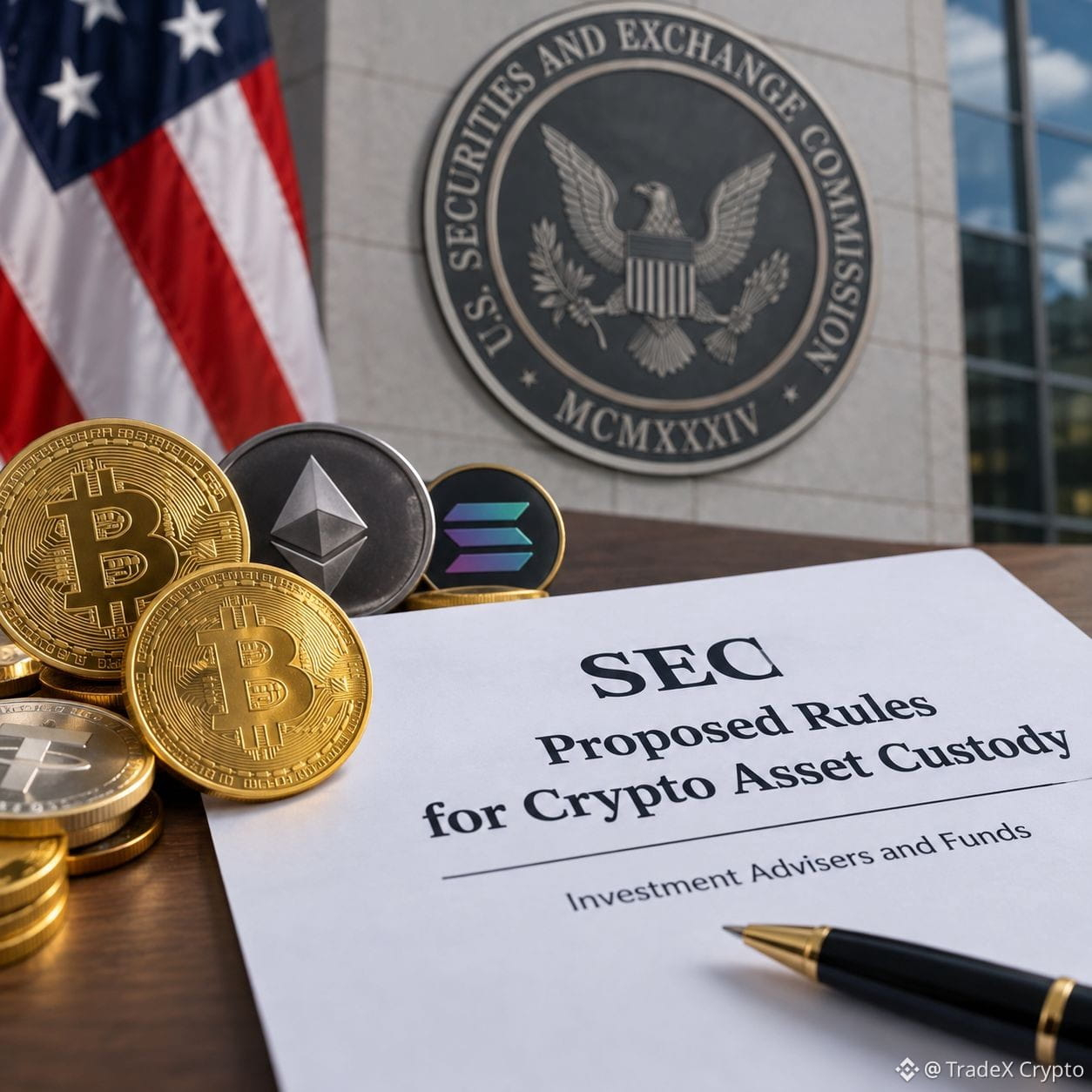
41


Article
U.S. Stablecoin Regulation Takes Its Next Big Step🚨 U.S. Stablecoin Rules Move Toward Implementation
The stablecoin story in the U.S. is shifting from legislation to execution.
On September 30, the U.S. Treasury issued an interim final rule explaining how states can seek approval for their payment-stablecoin regulatory frameworks under the GENIUS Act.
One detail stands out: states now have more flexibility around the initial certification deadline.
A state can submit a conditional or incomplete certification by January 18, 2028, even if some legislation or regulatory work is still unfinished.
But there’s an important distinction:
• Early filing can preserve a state's position
• Incomplete filings won't receive substantive review
• Final approval still depends on meeting the required standards
• Treasury must also complete the Paperwork Reduction Act process before submissions officially begin
The GENIUS Act allows qualifying state-regulated issuers with up to $10B in consolidated outstanding payment-stablecoin issuance to use the state pathway, provided their framework is considered substantially similar to federal requirements.
So this isn't simply about making stablecoin regulation easier.
It's about giving states more time to build compliant frameworks while keeping the substantive requirements around reserves, redemption, custody, supervision and enforcement.
For crypto markets, the bigger question is whether this regulatory pathway helps stablecoin companies scale in the U.S. while maintaining consistent standards.
The legislation is moving into implementation — now the details matter.
This is regulatory and market commentary, not financial advice.
#Stablecoins
{future}(SCRUSDT)
{future}(GTCUSDT)
{future}(USUSDT)
#CryptoRegulation #USDC #Crypto
U.S. Stablecoin Regulation Takes Its Next Big Step
🚨 U.S. Stablecoin Rules Move Toward Implementation
The stablecoin story in the U.S. is shifting from legislation to execution.
On September 30, the U.S. Treasury issued an interim final rule explaining how states can seek approval for their payment-stablecoin regulatory frameworks under the GENIUS Act.
One detail stands out: states now have more flexibility around the initial certification deadline.
A state can submit a conditional or incomplete certification by January 18, 2028, even if some legislation or regulatory work is still unfinished.
But there’s an important distinction:
• Early filing can preserve a state's position
• Incomplete filings won't receive substantive review
• Final approval still depends on meeting the required standards
• Treasury must also complete the Paperwork Reduction Act process before submissions officially begin
The GENIUS Act allows qualifying state-regulated issuers with up to $10B in consolidated outstanding payment-stablecoin issuance to use the state pathway, provided their framework is considered substantially similar to federal requirements.
So this isn't simply about making stablecoin regulation easier.
It's about giving states more time to build compliant frameworks while keeping the substantive requirements around reserves, redemption, custody, supervision and enforcement.
For crypto markets, the bigger question is whether this regulatory pathway helps stablecoin companies scale in the U.S. while maintaining consistent standards.
The legislation is moving into implementation — now the details matter.
This is regulatory and market commentary, not financial advice.
#Stablecoins
#CryptoRegulation #USDC #Crypto
The stablecoin story in the U.S. is shifting from legislation to execution.
On September 30, the U.S. Treasury issued an interim final rule explaining how states can seek approval for their payment-stablecoin regulatory frameworks under the GENIUS Act.
One detail stands out: states now have more flexibility around the initial certification deadline.
A state can submit a conditional or incomplete certification by January 18, 2028, even if some legislation or regulatory work is still unfinished.
But there’s an important distinction:
• Early filing can preserve a state's position
• Incomplete filings won't receive substantive review
• Final approval still depends on meeting the required standards
• Treasury must also complete the Paperwork Reduction Act process before submissions officially begin
The GENIUS Act allows qualifying state-regulated issuers with up to $10B in consolidated outstanding payment-stablecoin issuance to use the state pathway, provided their framework is considered substantially similar to federal requirements.
So this isn't simply about making stablecoin regulation easier.
It's about giving states more time to build compliant frameworks while keeping the substantive requirements around reserves, redemption, custody, supervision and enforcement.
For crypto markets, the bigger question is whether this regulatory pathway helps stablecoin companies scale in the U.S. while maintaining consistent standards.
The legislation is moving into implementation — now the details matter.
This is regulatory and market commentary, not financial advice.
#Stablecoins
#CryptoRegulation #USDC #Crypto
5

·
--
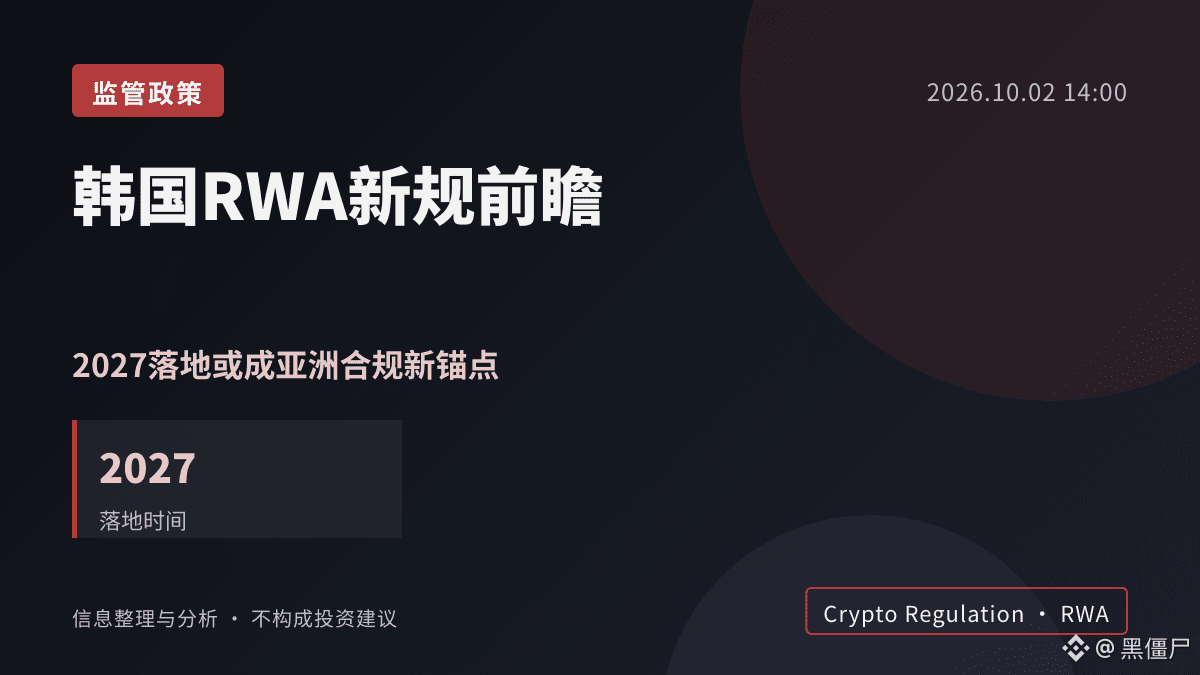
韩国拟推代币化证券细则,2027年落地或重塑亚洲RWA合规路径
据Cointelegraph报道,韩国金融监管机构已提出代币化证券的详细规则草案,涵盖资本要求与场外交易(OTC)安排,计划于2027年正式落地。这一进展为亚洲RWA赛道提供了新的监管锚点,其影响可能超出单一市场范畴。
韩国作为亚洲主要金融中心,其监管框架历来对区域市场具有示范效应。此次细则若按提案推进,将为代币化证券的发行、交易与清算建立明确标准,降低机构参与合规不确定性。对RWA项目而言,清晰的资本要求与OTC机制可能提升资产上链的可行性,尤其利好不动产、债券等传统资产代币化场景。
从市场反应看,规则落地前可能引发对合规成本与执行细节的讨论,部分项目或需调整现有架构以适应新要求。机构资金入场节奏或将取决于最终条款的灵活性与配套基础设施成熟度,目前仍处提案阶段,存在调整可能。
风险方面,最终规则可能在资本门槛、交易限制等方面收紧,增加中小项目合规负担;同时,OTC安排若透明度不足,或影响二级市场流动性预期。此外,韩国监管执行力度与跨部门协调效率仍是观察重点。
接下来需关注细则公开征求意见后的修订方向,以及韩国本土RWA项目与交易所的适配进展。若规则框架趋于明确,亚洲其他市场可能加速跟进类似安排,形成区域合规协同效应。
#RWA #CryptoRegulation
以上为信息整理与个人分析,不构成投资建议。
后续政策细节进一步明确后,我会继续更新。
韩国拟推代币化证券细则,2027年落地或重塑亚洲RWA合规路径
据Cointelegraph报道,韩国金融监管机构已提出代币化证券的详细规则草案,涵盖资本要求与场外交易(OTC)安排,计划于2027年正式落地。这一进展为亚洲RWA赛道提供了新的监管锚点,其影响可能超出单一市场范畴。
韩国作为亚洲主要金融中心,其监管框架历来对区域市场具有示范效应。此次细则若按提案推进,将为代币化证券的发行、交易与清算建立明确标准,降低机构参与合规不确定性。对RWA项目而言,清晰的资本要求与OTC机制可能提升资产上链的可行性,尤其利好不动产、债券等传统资产代币化场景。
从市场反应看,规则落地前可能引发对合规成本与执行细节的讨论,部分项目或需调整现有架构以适应新要求。机构资金入场节奏或将取决于最终条款的灵活性与配套基础设施成熟度,目前仍处提案阶段,存在调整可能。
风险方面,最终规则可能在资本门槛、交易限制等方面收紧,增加中小项目合规负担;同时,OTC安排若透明度不足,或影响二级市场流动性预期。此外,韩国监管执行力度与跨部门协调效率仍是观察重点。
接下来需关注细则公开征求意见后的修订方向,以及韩国本土RWA项目与交易所的适配进展。若规则框架趋于明确,亚洲其他市场可能加速跟进类似安排,形成区域合规协同效应。
#RWA #CryptoRegulation
以上为信息整理与个人分析,不构成投资建议。
后续政策细节进一步明确后,我会继续更新。
据Cointelegraph报道,韩国金融监管机构已提出代币化证券的详细规则草案,涵盖资本要求与场外交易(OTC)安排,计划于2027年正式落地。这一进展为亚洲RWA赛道提供了新的监管锚点,其影响可能超出单一市场范畴。
韩国作为亚洲主要金融中心,其监管框架历来对区域市场具有示范效应。此次细则若按提案推进,将为代币化证券的发行、交易与清算建立明确标准,降低机构参与合规不确定性。对RWA项目而言,清晰的资本要求与OTC机制可能提升资产上链的可行性,尤其利好不动产、债券等传统资产代币化场景。
从市场反应看,规则落地前可能引发对合规成本与执行细节的讨论,部分项目或需调整现有架构以适应新要求。机构资金入场节奏或将取决于最终条款的灵活性与配套基础设施成熟度,目前仍处提案阶段,存在调整可能。
风险方面,最终规则可能在资本门槛、交易限制等方面收紧,增加中小项目合规负担;同时,OTC安排若透明度不足,或影响二级市场流动性预期。此外,韩国监管执行力度与跨部门协调效率仍是观察重点。
接下来需关注细则公开征求意见后的修订方向,以及韩国本土RWA项目与交易所的适配进展。若规则框架趋于明确,亚洲其他市场可能加速跟进类似安排,形成区域合规协同效应。
#RWA #CryptoRegulation
以上为信息整理与个人分析,不构成投资建议。
后续政策细节进一步明确后,我会继续更新。
74

·
--
SEC just proposed new crypto custody rules — right as its crypto point-person exits 📋
The SEC issued a proposed rule today covering how investment advisers and funds custody crypto assets. The timing is notable: this lands as Commissioner Hester Peirce — the agency's steadiest crypto advocate and head of its inaugural Crypto Task Force — departs this week.
This continues a pattern we've been tracking: Congress's CLARITY Act failed 49-50 in September, and since then, both the CFTC and SEC have been moving on their own regulatory tracks instead of waiting for legislation.
Combined with the Reg CA fundraising exemptions proposed in August ($5M startup / $75M general), the SEC is building out a meaningful regulatory framework piece by piece — just without the one commissioner who's pushed hardest for crypto-friendly rules internally.
Worth watching who fills that advocacy gap once Peirce is gone.
$BTC
{spot}(BTCUSDT)
$ETH
{spot}(ETHUSDT)
#SEC #CryptoRegulation #cryptocustody
SEC just proposed new crypto custody rules — right as its crypto point-person exits 📋
The SEC issued a proposed rule today covering how investment advisers and funds custody crypto assets. The timing is notable: this lands as Commissioner Hester Peirce — the agency's steadiest crypto advocate and head of its inaugural Crypto Task Force — departs this week.
This continues a pattern we've been tracking: Congress's CLARITY Act failed 49-50 in September, and since then, both the CFTC and SEC have been moving on their own regulatory tracks instead of waiting for legislation.
Combined with the Reg CA fundraising exemptions proposed in August ($5M startup / $75M general), the SEC is building out a meaningful regulatory framework piece by piece — just without the one commissioner who's pushed hardest for crypto-friendly rules internally.
Worth watching who fills that advocacy gap once Peirce is gone.
$BTC
$ETH
#SEC #CryptoRegulation #cryptocustody
The SEC issued a proposed rule today covering how investment advisers and funds custody crypto assets. The timing is notable: this lands as Commissioner Hester Peirce — the agency's steadiest crypto advocate and head of its inaugural Crypto Task Force — departs this week.
This continues a pattern we've been tracking: Congress's CLARITY Act failed 49-50 in September, and since then, both the CFTC and SEC have been moving on their own regulatory tracks instead of waiting for legislation.
Combined with the Reg CA fundraising exemptions proposed in August ($5M startup / $75M general), the SEC is building out a meaningful regulatory framework piece by piece — just without the one commissioner who's pushed hardest for crypto-friendly rules internally.
Worth watching who fills that advocacy gap once Peirce is gone.
$BTC
$ETH
#SEC #CryptoRegulation #cryptocustody

57


#TreasuryLetsStatesFileStablecoinCertificationsEarly
Treasury Lets States File Stablecoin Certifications Early
U.S. stablecoin regulation just moved from legislation toward implementation—but states are not receiving automatic approval.
The Treasury Department, acting for the Stablecoin Certification Review Committee, issued an interim final rule on September 30 establishing the forms and procedures for states seeking approval of their payment-stablecoin regulatory regimes under the GENIUS Act. The rule took effect immediately.
The important change is flexibility around the initial deadline. States can submit a conditional or incomplete certification by January 18, 2028, even if additional legislation or regulatory work remains. That filing can preserve the state’s place in the process, but it will not begin substantive committee review until the certification is complete and unconditional.
There is also a practical caveat: Treasury says certifications will not be accepted until the required information collection receives approval under the Paperwork Reduction Act. The agency will announce when submissions can officially begin.
The GENIUS Act allows state-qualified issuers with no more than $10 billion in consolidated outstanding payment-stablecoin issuance to use a state pathway, provided the state regime is approved as substantially similar to federal standards.
My take: This reduces deadline risk for states and preserves regulatory competition, but it does not lower the substantive bar. The real test will be whether state regimes deliver comparable standards for reserves, redemption, custody, supervision and enforcement.
Will this flexibility accelerate compliant stablecoin innovation in the U.S.?
#Stablecoins #GENIUSAct #CryptoRegulation
$GTC $US $SCR
{future}(SCRUSDT)
{future}(USUSDT)
{future}(GTCUSDT)
#TreasuryLetsStatesFileStablecoinCertificationsEarly
Treasury Lets States File Stablecoin Certifications Early
U.S. stablecoin regulation just moved from legislation toward implementation—but states are not receiving automatic approval.
The Treasury Department, acting for the Stablecoin Certification Review Committee, issued an interim final rule on September 30 establishing the forms and procedures for states seeking approval of their payment-stablecoin regulatory regimes under the GENIUS Act. The rule took effect immediately.
The important change is flexibility around the initial deadline. States can submit a conditional or incomplete certification by January 18, 2028, even if additional legislation or regulatory work remains. That filing can preserve the state’s place in the process, but it will not begin substantive committee review until the certification is complete and unconditional.
There is also a practical caveat: Treasury says certifications will not be accepted until the required information collection receives approval under the Paperwork Reduction Act. The agency will announce when submissions can officially begin.
The GENIUS Act allows state-qualified issuers with no more than $10 billion in consolidated outstanding payment-stablecoin issuance to use a state pathway, provided the state regime is approved as substantially similar to federal standards.
My take: This reduces deadline risk for states and preserves regulatory competition, but it does not lower the substantive bar. The real test will be whether state regimes deliver comparable standards for reserves, redemption, custody, supervision and enforcement.
Will this flexibility accelerate compliant stablecoin innovation in the U.S.?
#Stablecoins #GENIUSAct #CryptoRegulation
$GTC $US $SCR
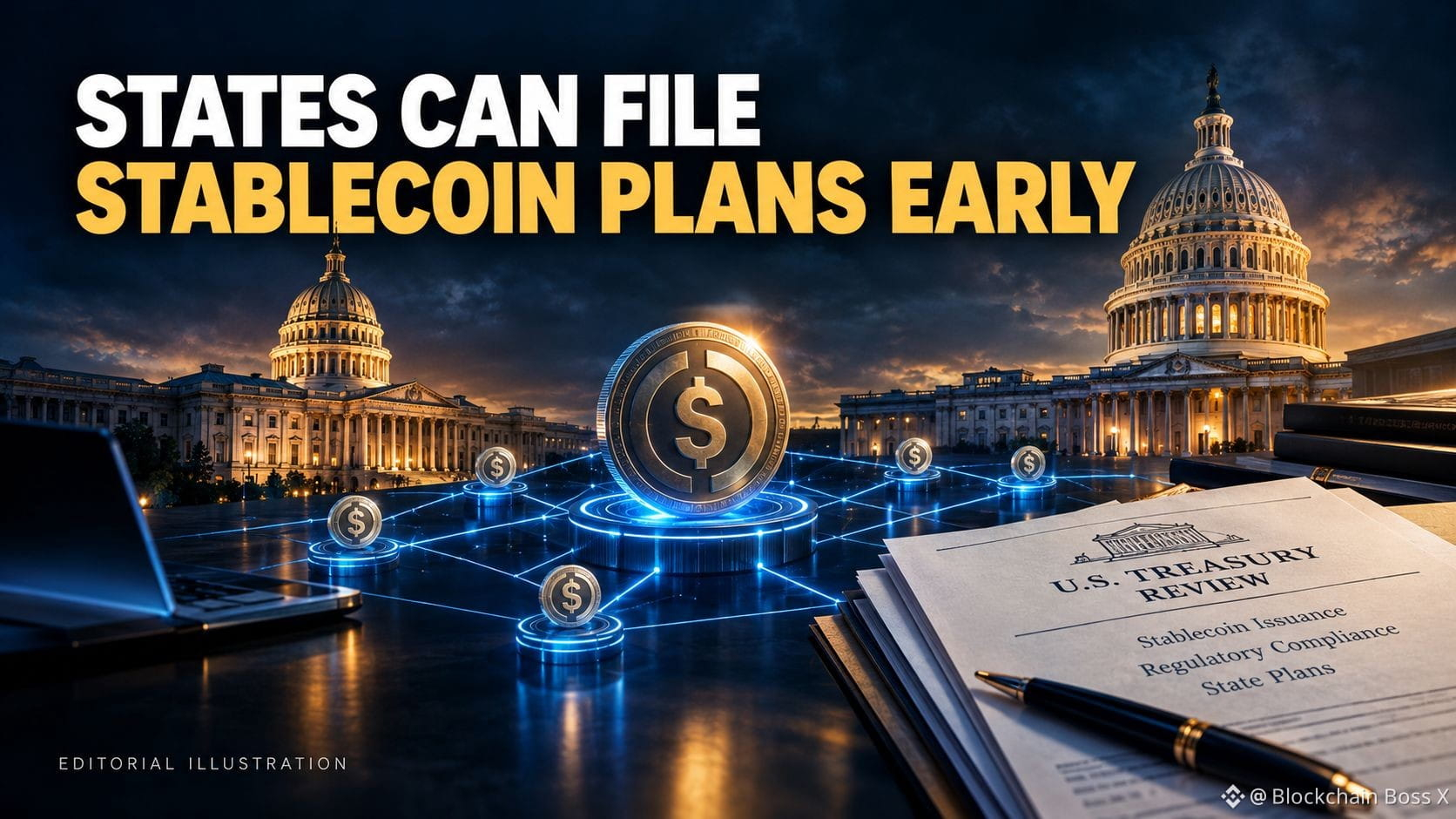
Treasury Lets States File Stablecoin Certifications Early
U.S. stablecoin regulation just moved from legislation toward implementation—but states are not receiving automatic approval.
The Treasury Department, acting for the Stablecoin Certification Review Committee, issued an interim final rule on September 30 establishing the forms and procedures for states seeking approval of their payment-stablecoin regulatory regimes under the GENIUS Act. The rule took effect immediately.
The important change is flexibility around the initial deadline. States can submit a conditional or incomplete certification by January 18, 2028, even if additional legislation or regulatory work remains. That filing can preserve the state’s place in the process, but it will not begin substantive committee review until the certification is complete and unconditional.
There is also a practical caveat: Treasury says certifications will not be accepted until the required information collection receives approval under the Paperwork Reduction Act. The agency will announce when submissions can officially begin.
The GENIUS Act allows state-qualified issuers with no more than $10 billion in consolidated outstanding payment-stablecoin issuance to use a state pathway, provided the state regime is approved as substantially similar to federal standards.
My take: This reduces deadline risk for states and preserves regulatory competition, but it does not lower the substantive bar. The real test will be whether state regimes deliver comparable standards for reserves, redemption, custody, supervision and enforcement.
Will this flexibility accelerate compliant stablecoin innovation in the U.S.?
#Stablecoins #GENIUSAct #CryptoRegulation
$GTC $US $SCR
287

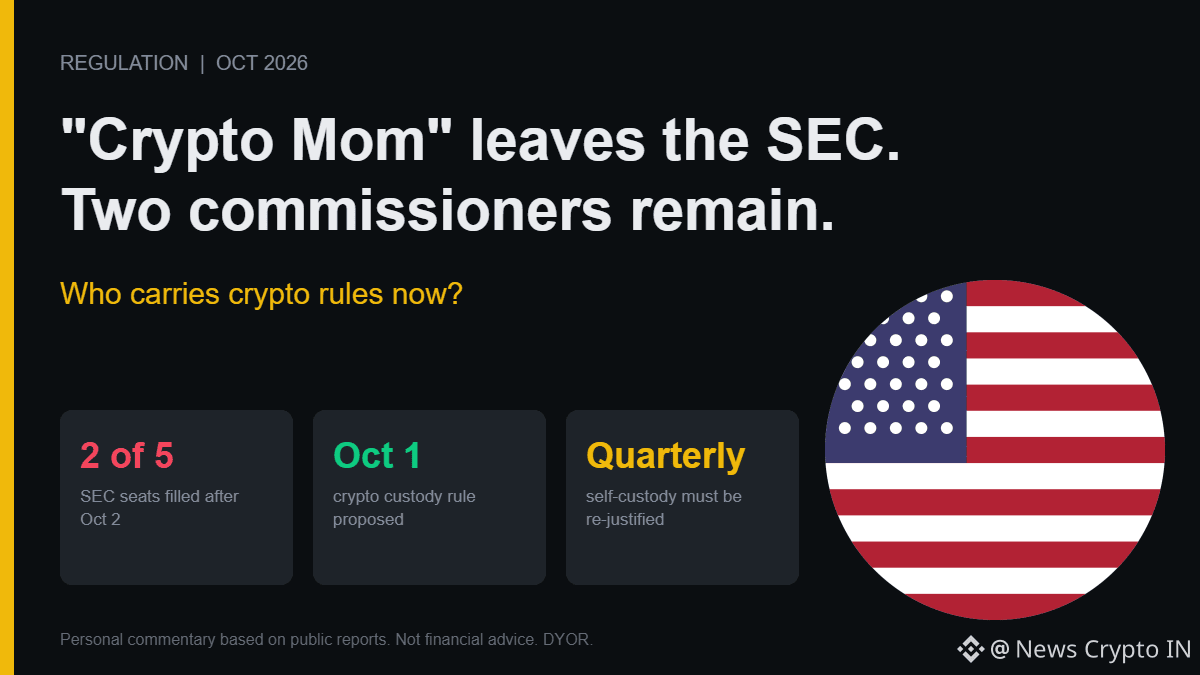
Hester Peirce, the SEC commissioner crypto nicknamed "Crypto Mom," leaves the agency today (Oct 2) for a law professorship. Her last act as Crypto Task Force chief: an Oct 1 proposal letting investment advisers and funds custody crypto, including self-custody in limited cases and state trust companies as custodians.
The custody rule is a real shift. Advisers could hold client crypto themselves when no permitted custodian is available for an asset, but they'd have to prove that for each asset and re-justify it every quarter. It's a door, not a free pass.
The bigger story is who's left. With Peirce gone, the SEC has two sitting commissioners out of five: Chair Paul Atkins and Mark Uyeda. Both lean crypto-friendly, so the direction likely doesn't reverse. But she was the one translating between industry legal teams and the rulemaking machine, and a lot is still pending: the broader crypto-asset framework, commodity-trust options deadlines, and the custody rewrite itself.
A two-person commission can still vote. What it loses is bandwidth and the person who knew this file best.
Does crypto policy at the SEC keep its momentum with two commissioners, or did the industry just lose its most effective insider?
#SEC #CryptoRegulation
Hester Peirce, the SEC commissioner crypto nicknamed "Crypto Mom," leaves the agency today (Oct 2) for a law professorship. Her last act as Crypto Task Force chief: an Oct 1 proposal letting investment advisers and funds custody crypto, including self-custody in limited cases and state trust companies as custodians.
The custody rule is a real shift. Advisers could hold client crypto themselves when no permitted custodian is available for an asset, but they'd have to prove that for each asset and re-justify it every quarter. It's a door, not a free pass.
The bigger story is who's left. With Peirce gone, the SEC has two sitting commissioners out of five: Chair Paul Atkins and Mark Uyeda. Both lean crypto-friendly, so the direction likely doesn't reverse. But she was the one translating between industry legal teams and the rulemaking machine, and a lot is still pending: the broader crypto-asset framework, commodity-trust options deadlines, and the custody rewrite itself.
A two-person commission can still vote. What it loses is bandwidth and the person who knew this file best.
Does crypto policy at the SEC keep its momentum with two commissioners, or did the industry just lose its most effective insider?
#SEC #CryptoRegulation
The custody rule is a real shift. Advisers could hold client crypto themselves when no permitted custodian is available for an asset, but they'd have to prove that for each asset and re-justify it every quarter. It's a door, not a free pass.
The bigger story is who's left. With Peirce gone, the SEC has two sitting commissioners out of five: Chair Paul Atkins and Mark Uyeda. Both lean crypto-friendly, so the direction likely doesn't reverse. But she was the one translating between industry legal teams and the rulemaking machine, and a lot is still pending: the broader crypto-asset framework, commodity-trust options deadlines, and the custody rewrite itself.
A two-person commission can still vote. What it loses is bandwidth and the person who knew this file best.
Does crypto policy at the SEC keep its momentum with two commissioners, or did the industry just lose its most effective insider?
#SEC #CryptoRegulation
204
Log in to explore more content
Join global crypto users on Binance Square
⚡️ Get latest and useful information about crypto.
💬 Trusted by the world’s largest crypto exchange.
👍 Discover real insights from verified creators.
အီးမေးလ် / ဖုန်းနံပါတ်
ရေပန်းစားနေသော ခေါင်းစဉ်များ
1
#NFPWatch
10.9M views
19,314 Discussing
2
#BitcoinFundingRateTriplesTo10%
176,640 views
1,220 Discussing
3
#BitcoinSurpasses$86KUp2.99%
58,483 views
116 Discussing
4
#ZcashFalls21%FromSeptemberPeak
93,352 views
865 Discussing
5
#USSeptemberPayrollsAdd29KUnemploymentRises4.2%
75,375 views
529 Discussing
6
#XRPPostsFirstThreeGreenMonthsInQ3
64,763 views
730 Discussing
7
#BNBChainTokenizedStocksTop$1BAt30%Share
28,633 views
38 Discussing
8
#BitcoinRisesToward$85K
129,365 views
158 Discussing
9
#AmazonPlansToSell$8BNvidiaChips
8,302 views
91 Discussing
10
#NEARFallsToAround$4.70Down14%
50,931 views
118 Discussing