

I've been keeping an eye on privacy projects for a while now, and Midnight Network has always felt like one of the more thoughtful ones in the space. Instead of chasing wild anonymity or sticking to full transparency, it focuses on something called rational privacy_letting you prove just enough on_chain without spilling everything else. As we get closer to late March 2026, the project is hitting some concrete milestones that make the whole thing feel less like a distant promise and more like something that's actually coming together.The team at Input Output Global designed Midnight as a partner chain to Cardano, borrowing its secure proof-of-stake foundation while building specialized tools for selective disclosure. At its heart are zero_knowledge proofs, refined with recursive techniques so verifications stay fast and compact. Developers use Compact, a language that feels familiar if you've ever written TypeScript, which means building privacy first smart contracts doesn't require deep cryptographic expertise anymore. This opens the door to practical apps like private voting in DAOs, shielded asset swaps, or compliant data sharing in regulated industries things that feel impossible on purely public ledgers.
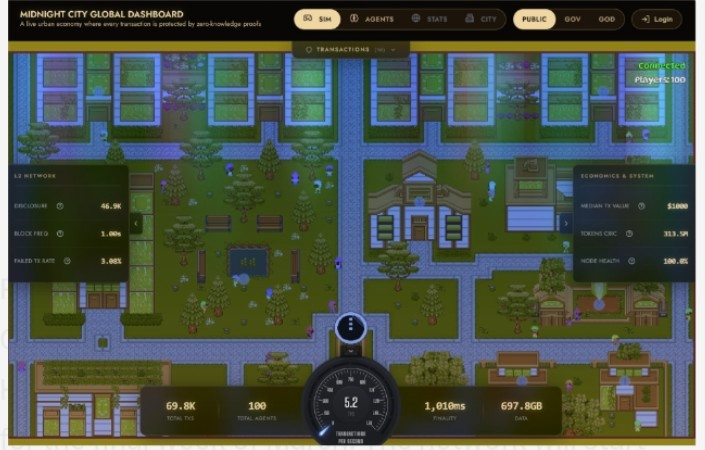
What stands out to me is how the network balances freedom with accountability. It supports three core ideas: private yet verifiable group decisions, discreet commerce that still meets rules, and authenticated expression without metadata leaks. These aren't abstract concepts anymore. The Midnight City simulation has been running live on the Preview network, letting AI agents carry out thousands of private interactions daily while the public can now watch aggregated metrics on a dashboard. It's a clever way to stress test everything before real users arrive.
Recent announcements add even more weight. At Consensus Hong Kong earlier this year, Charles Hoskinson confirmed the federated mainnet launch for the final week of March. The network will start with a small set of trusted operators including Google Cloud, Blockdaemon, Shielded Technologies, and AlphaTON Capital to ensure stability during the early Kūkolu phase. This bootstrapping approach prioritizes reliability over instant decentralization, which feels sensible given how new the ecosystem still is. NIGHT token holders will generate DUST for fees and participate in staking rewards, keeping incentives aligned without the usual gas price drama.

Naturally, there are hurdles. Proof generation still takes more resources than simple transactions, so very high_volume use might feel slower at first. The federated start means some trust in operators initially, even if the roadmap points toward broader decentralization later this year. And while rational privacy helps with compliance, it won't satisfy users who want total untraceability_it's a deliberate trade off.
One thing that surprised me in the latest updates is how openly they're sharing the simulation dashboard. Letting anyone peek at live private interactions (without exposing secrets) shows quiet confidence in the tech. Another detail worth noting is the growing list of node partners; each addition strengthens the foundation before the full community takes over.
Midnight isn't trying to be the loudest project out there. It simply aims to make privacy feel normal and usable on blockchain. As mainnet approaches, I'm curious to see how these careful steps translate into real adoption, but the groundwork already looks solid and refreshingly pragmatic.
@MidnightNetwork #night #Night $NIGHT