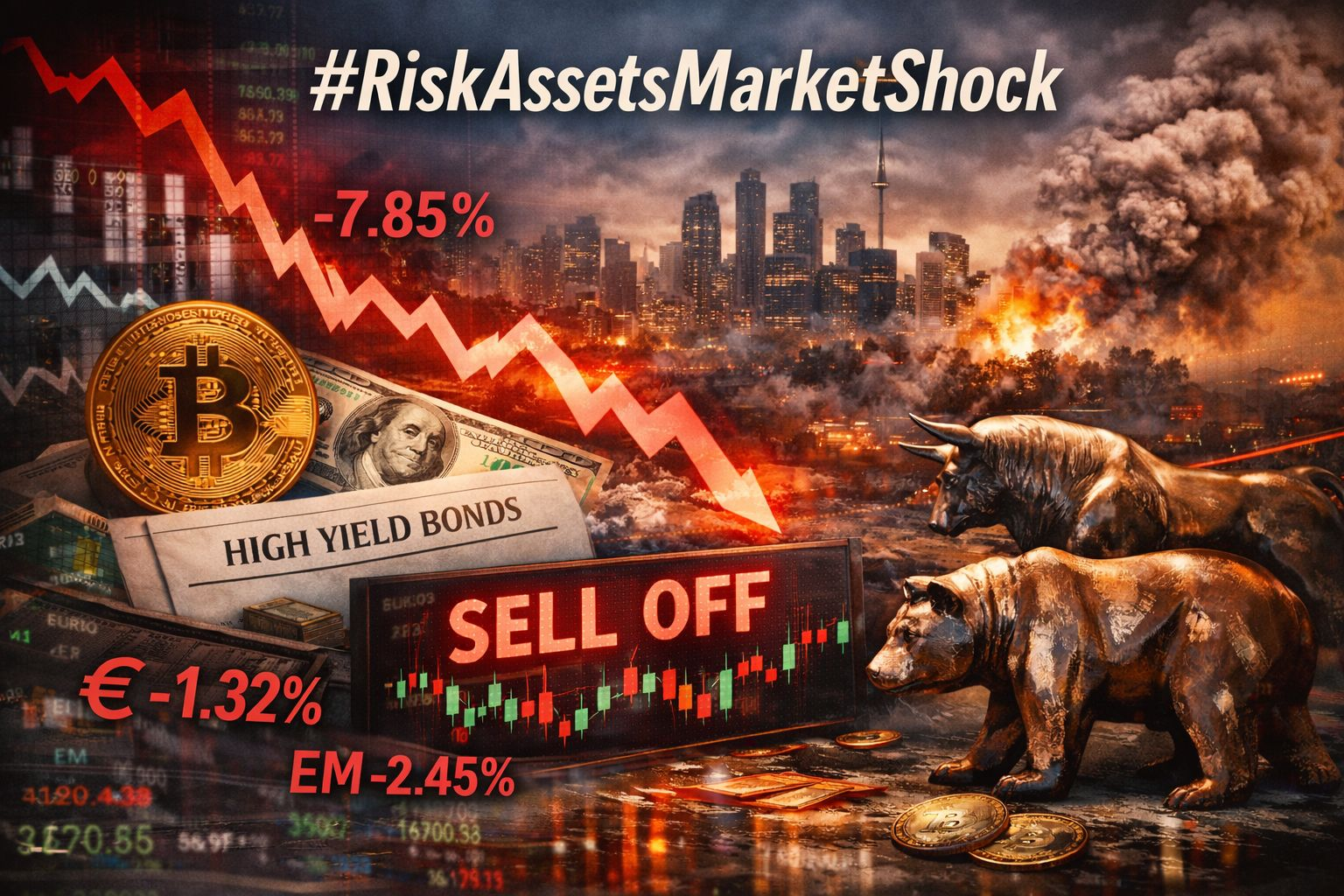
#RiskAssetsMarketShock Risk assets are facing renewed turbulence as investors react to tightening liquidity, shifting interest-rate expectations, and rising geopolitical uncertainty. Equities, cryptocurrencies, and high yield bonds have all shown sharp intraday swings, reflecting fragile sentiment and reduced risk appetite across global markets.
When central banks signal prolonged higher rates or delay anticipated cuts, leveraged positions tend to unwind quickly, triggering cascading sell offs in speculative sectors.
Crypto markets, often seen as high-beta proxies for risk sentiment, typically react first.
Sudden liquidations can accelerate price declines, amplifying volatility and forcing traders to reassess exposure.
Meanwhile, technology stocks and growth sectors may struggle as discount rates rise, reducing the attractiveness of future earnings projections.
Emerging markets also feel pressure through currency depreciation and capital outflows, adding another layer of stress to global portfolios.
However, market shocks don’t always signal long-term bearish trends. Historically, sharp corrections can create price discovery opportunities and flush out excessive leverage.
Institutional investors often use these periods to accumulate quality assets at discounted levels, gradually stabilizing markets.
Volume spikes, volatility compression, and improved macro clarity are early signs that the shock phase may be nearing exhaustion.
For traders and investors, risk management becomes critical during these phases. Maintaining disciplined stop losses, reducing overexposure, and focusing on high liquidity assets can help navigate uncertainty.
Ultimately, risk-asset shocks highlight the cyclical nature of markets periods of exuberance are frequently followed by sharp recalibration before the next structural trend emerges.
According to my understanding follow like comment.......