Global financial markets were rattled after a surprisingly strong U.S. jobs report challenged one of the biggest assumptions investors had been making throughout 2026: that interest rates were headed lower.
Instead, the labor market delivered a powerful signal that the U.S. economy remains far stronger than expected.
The result was immediate.
Wall Street turned red. Bitcoin extended its months-long decline. Gold lost ground despite persistent inflation concerns. And traders rapidly repriced the path of Federal Reserve policy.
A Jobs Report Nobody Expected
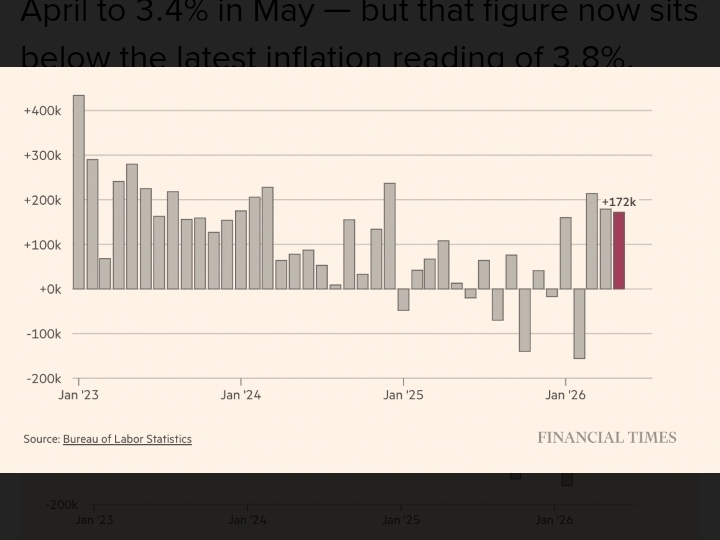
Economists were expecting a modest increase in employment after a sluggish 2025 that averaged only around 10,000 new jobs per month.
Instead, the latest report showed 172,000 jobs added versus forecasts near 85,000.
The unemployment rate remained stable at 4.3%, reinforcing the view that the labor market is no longer weakening and may actually be regaining momentum.
For policymakers fighting inflation, that is a significant development.
A strong labor market means consumers keep spending, businesses continue hiring, and inflation pressures can remain elevated for longer than expected.
Markets React Immediately
Investors quickly abandoned hopes of near-term monetary easing.
The S&P 500 fell nearly 1%, while the Nasdaq Composite dropped more than 1.5% as technology stocks came under pressure from rising rate expectations.
Bitcoin also suffered another wave of selling, trading below $62,000 and extending a dramatic decline from roughly $83,000 seen just weeks earlier.
Meanwhile, oil slipped toward $94 per barrel and gold surprisingly fell more than 1%, showing that markets were focused on higher interest rates rather than inflation hedging.
The Fed Narrative Has Changed
Perhaps the most important consequence of the jobs report is what it means for Federal Reserve policy.
Only days ago, markets believed any additional rate increase was years away.
Now traders are increasingly pricing in the possibility of a 25-basis-point rate hike before the end of 2026.
This shift is not based on one report alone.
Recent inflation data has remained stubbornly elevated. Producer prices have accelerated. Manufacturing and services activity have exceeded expectations. And now the labor market has delivered one of its strongest surprises of the year.
Together, these signals suggest inflation may not be cooling fast enough for the Fed to comfortably move toward lower rates.
Why Bitcoin Is Under Pressure
Bitcoin thrives when liquidity is abundant and borrowing costs are low.
A higher-rate environment creates the opposite conditions.
As bond yields rise, investors can earn stronger returns in lower-risk assets, reducing the appeal of speculative investments such as cryptocurrencies and high-growth technology stocks.
That dynamic is now weighing heavily on digital assets.
The market is beginning to realize that the next major move in Bitcoin may depend less on crypto-specific developments and more on the future direction of Federal Reserve policy.
What Happens Next?
All eyes are now on the Federal Reserve's upcoming meeting under new Chairman Kevin Warsh.
Investors will be watching for any indication that policymakers are becoming less confident about future rate cuts.
If inflation remains elevated and employment continues to surprise to the upside, expectations for additional tightening could grow even stronger.
For now, one message is clear:
The era of easy money may not be returning as quickly as markets hoped — and every asset class, from stocks to Bitcoin, is being forced to adjust to that reality.#USjobs #Binance #JPMorganBofACitiPlanTokenizedDepositNetwork #altcoins #AylaRiz $ALLO $ETH $CLO