
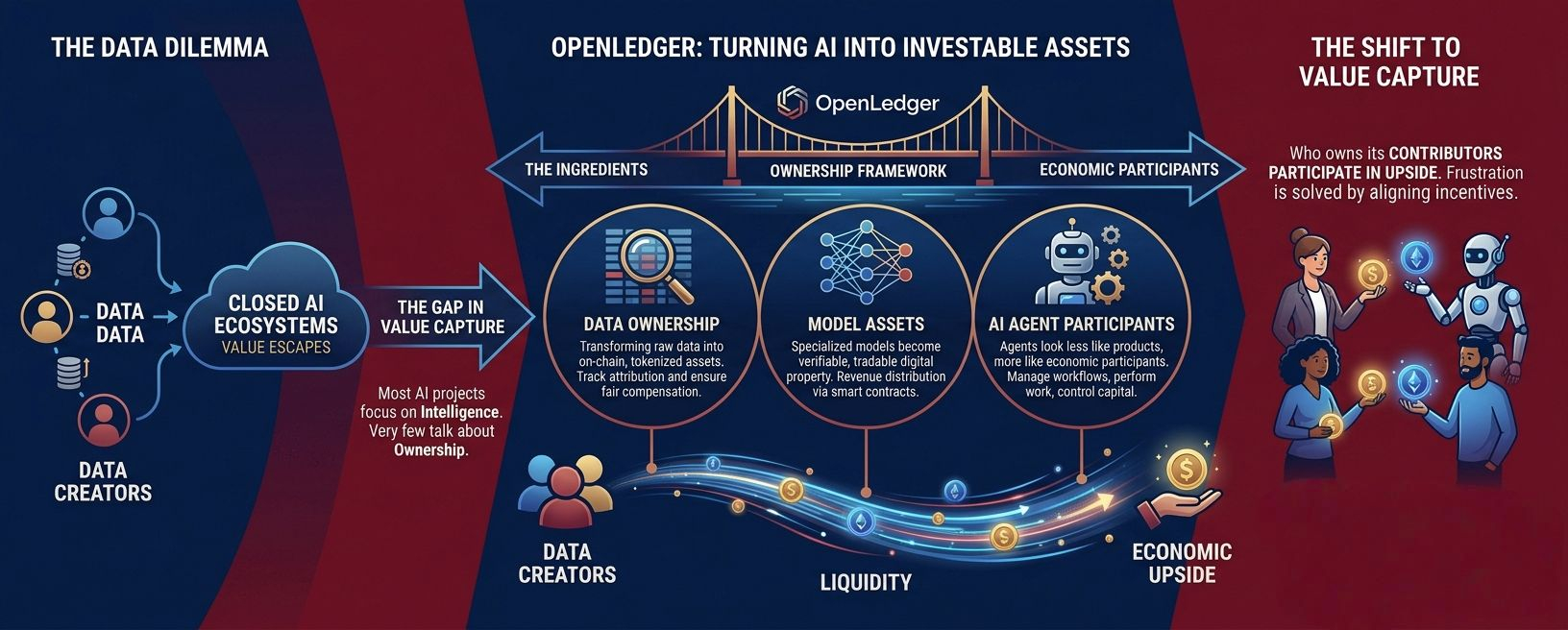

Most AI projects in crypto talk about intelligence. Very few talk about ownership.
That’s the part of the conversation that keeps pulling me back to OpenLedger.
Over the last year, I've watched countless AI narratives cycle through the market. First it was infrastructure. Then GPUs. Then decentralized compute. Then agents. Every few months, attention shifted somewhere else, yet one question never really got solved: if data is becoming one of the most valuable assets in AI, why are the people creating it usually the last ones to capture value from it?
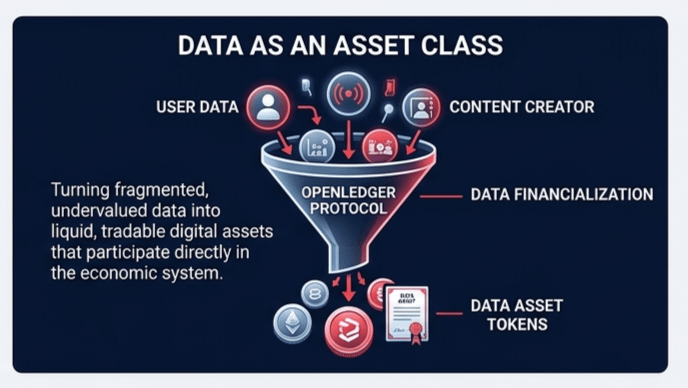
Crypto has always been obsessed with liquidity. We tokenize assets, create markets around them, and build mechanisms to make previously illiquid things tradable. Yet when it comes to AI, the actual ingredients that make models useful often remain trapped inside closed systems.
That's why OpenLedger feels different to me.
The project isn't trying to convince people that AI needs another chatbot or another model. It's focused on turning data, models, and AI agents into assets that can actually participate in an economic system. That may sound simple on paper, but the implications are larger than most people realize.
What I've noticed recently is that the market's attention is slowly moving away from raw AI excitement and toward value capture. People aren't asking whether AI will grow anymore. Most already assume it will. The more interesting question is who gets paid when it does.
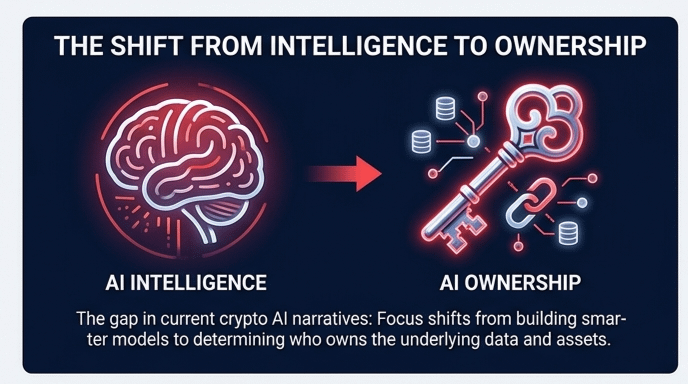
That shift matters.
During previous cycles, investors often chased the infrastructure layer because it was the easiest narrative to understand. Own the roads, collect the tolls. But AI is creating a strange situation where some of the most valuable contributions aren't infrastructure at all. They're datasets, specialized models, and increasingly autonomous agents that perform useful work.
The problem is that these assets don't naturally fit into traditional ownership structures.
OpenLedger seems to be positioning itself directly inside that gap.
When I spend time looking at where liquidity is moving across crypto, I often pay attention to what people are trying to financialize next. A few years ago it was NFTs. Then staking yields. Then restaking. Every cycle introduces another category that suddenly becomes investable.
Data may be approaching that point.
Not because it's trendy, but because AI systems are consuming enormous amounts of it while the supply side remains fragmented and undercompensated. There's a growing disconnect between where value is created and where value is captured.
Markets eventually notice these disconnects.
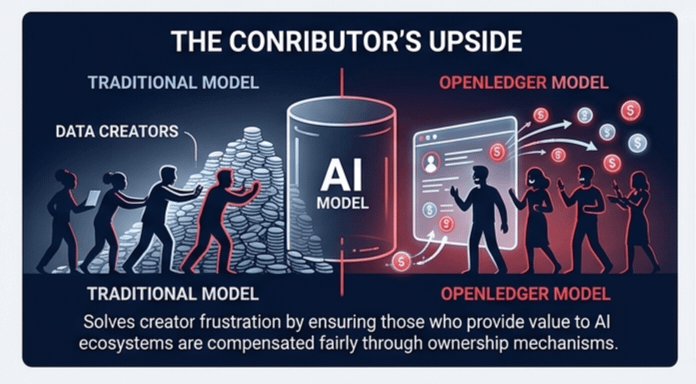
One thing I've learned the hard way in crypto is that narratives become powerful when they solve a frustration people already feel. OpenLedger's thesis resonates because many contributors have started recognizing that they provide value to AI ecosystems without participating meaningfully in the upside.
That frustration isn't theoretical anymore.
You can see it in conversations around model training, creator ownership, agent monetization, and the growing skepticism toward closed AI ecosystems. People are becoming more conscious of what they're giving away and what they're getting in return.
The timing feels interesting.
Not because I think every AI token will suddenly outperform.
Actually, I've become much more cautious around AI narratives than I was a year ago. The market has a habit of overpricing possibilities before understanding realities. We've alreadyg seen plenty of projects attract attention simply because they included the letters "AI" somewhere in the pitch deck.
What catches my attention now is structure.
OpenLedger isn't just attaching itself to AI enthusiasm. It's trying to create economic rails around assets that historically struggled to become liquid. If that works, the conversation becomes larger than a single token.
It becomes a conversation about ownership.
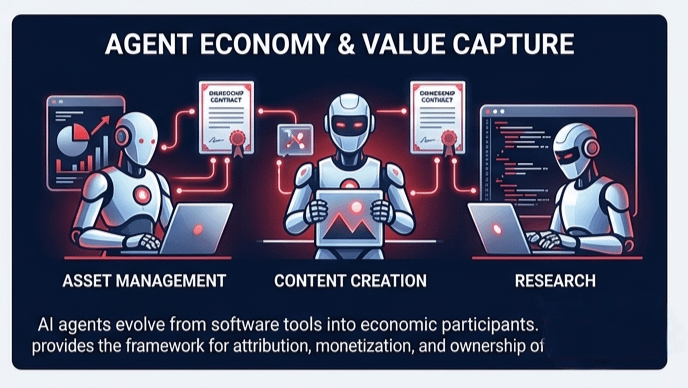
There's also an emerging trend that doesn't get discussed enough. AI agents are starting to look less like software products and more like economic participants. Some generate content. Some perform research. Some manage workflows. Some may eventually control capital.
Once that happens, questions around attribution, monetization, and incentives become unavoidable.
Who owns the outputs?
Who earns from the activity?
Who benefits when an agent becomes valuable?
Crypto has spent years building systems for digital ownership. AI is now creating entirely new categories that need ownership frameworks.
That intersection is where OpenLedger appears to be placing its bet.
Maybe the market embraces that vision quickly. Maybe it takes longer than people expect. Crypto rarely rewards good ideas on a predictable timeline.
What I do know is that attention often arrives after the groundwork is already being built. By the time everyone starts discussing a narrative, the more interesting phase is usually behind us.
Lately I've found myself paying less attention to which AI project has the loudest marketing and more attention to which ones are trying to solve actual economic problems. The projects that survive tend to be the ones that understand incentives better than they understand headlines.
OpenLedger sits in a category that I think many people are still underestimating. Not because it's guaranteed to succeed, but because it's asking a question the industry hasn't fully answered yet.
If AI is going to generate enormous amounts of value, who owns that value before it reaches the end user?
For me, that's the real story.
Everything else feels like noise around it.
