
The Art of Doing Nothing: How Old Whales Time the Bitcoin Market
One of the most interesting behavioral signals in Bitcoin comes from the realized price of old whales. This metric tracks the average acquisition price of $BTC held by long-standing whale entities.
When it flatlines, these wallets are doing nothing. And doing nothing, it turns out, is a precision strategy. What stands out historically is how little this cohort moves during major bottoming phases.
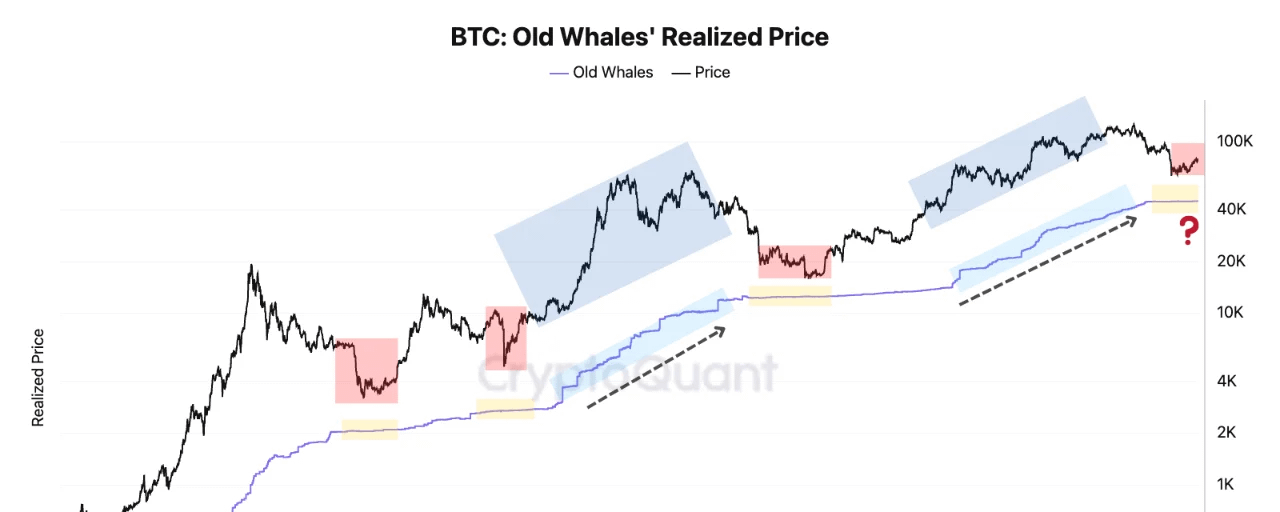
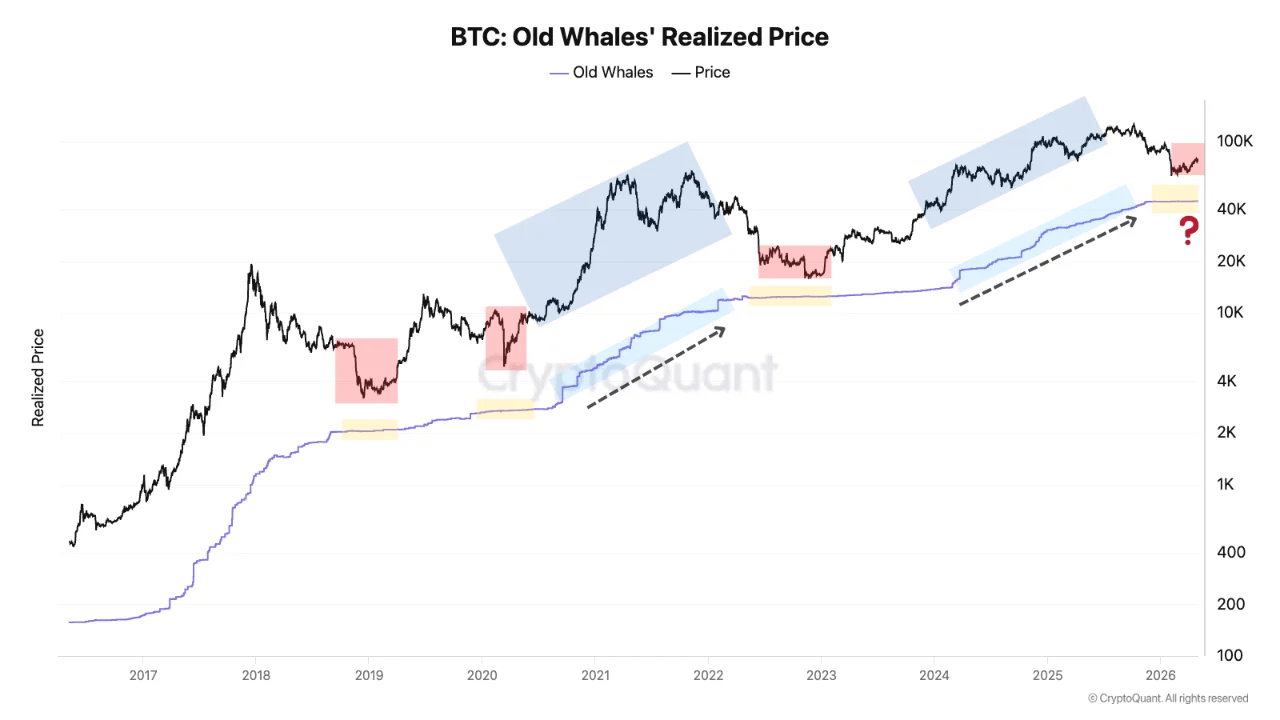
During the 2018–2019 bottom formation, old whales’ realized price stayed almost frozen between roughly $2.02k and $2.08k from September 2018 to April 2019. That is only about a 3% oscillation across nearly seven months.
A similar pattern appeared between January and June 2020, when realized price hovered between $2.06k and $2.07k, less than a 0.5% change across around five months.
The 2022 bear market showed the same behavior. From June 2022 to February 2023, old whales realized price remained compressed between roughly $12.2k and $12.4k, only around a 1.6% range across eight months.
This matters because old whales are not typically the cohort that panic-sells bottoms or chases every short-term move. Their realized price tends to stay remarkably stable when the market is under stress, suggesting limited activity, strong conviction, or a preference to wait while weaker hands transfer supply.
Then the market turns, and so do they.
Once price enters a healthier upward structure, old whale realized price starts to climb in steps. This indicates that older, large holders are becoming active again, but not randomly. Historically, these upward repricing phases have appeared alongside improving market structure, stronger demand, and broader cycle expansion.
That is why this metric is not just a cost-basis indicator, but a behavioral map.
The current question is whether the latest flattening in old whales’ realized price is another pause before repricing higher, or whether Bitcoin still needs more confirmation before this cohort moves again.