
Pixels (PIXEL) starts from a simple place. A small, open world where nothing feels urgent. You plant things, walk around, collect, build a rhythm without really thinking about it. It runs on the , but that detail sits more in the background than usual, like something you’re aware of but not constantly reminded about. At first, it feels almost disarming. Not because it’s doing something revolutionary, but because it isn’t trying so hard to prove that it is.
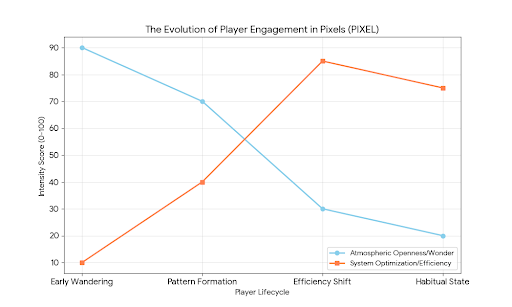
That quietness is what pulls you in. Not excitement, not hype—just a kind of steady presence. The loop is familiar enough that you don’t question it. Farming mechanics have always had that effect. They don’t demand attention; they borrow it slowly. You log in, do a few small things, leave, and then come back later without needing a reason. It feels harmless, maybe even a little comforting.
But comfort in this space usually comes with a condition attached.
After a while, you start noticing how people move inside the world. Not just what they’re doing, but how they’re doing it. The early wandering turns into patterns. The patterns turn into efficiency. And efficiency quietly becomes the main language. Nobody announces it. It just happens. The way it always does. What starts as a place to exist in begins shifting into something to manage.
It’s not unique to Pixels. It’s something deeper in how these systems behave once people settle in. The moment actions have any kind of value attached—time, tokens, resources—people begin shaping themselves around that value. They find the edges, the shortcuts, the routines that give more for less. And slowly, the world starts feeling less like a world and more like a structure being worked through.
Pixels seems like it’s trying to resist that, at least a little. The pace is slower, the design softer, like it’s encouraging you not to rush. But that only holds for so long. Players don’t stay in that state forever. Given enough time, even the calmest system gets pulled toward optimization. It’s almost inevitable. People don’t break systems—they reveal them.
What’s left after that shift is what matters.
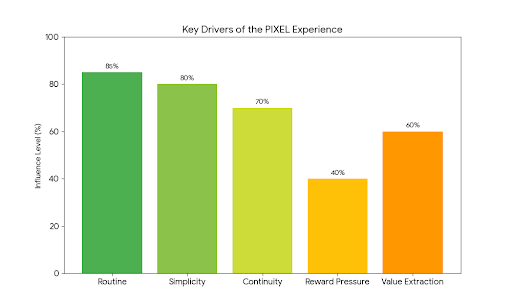
And what’s left here is mostly habit. Not the loud kind that pulls you in, but the quiet kind that keeps you from fully stepping away. You check in. You maintain things. You recognize names, routines, small changes. It’s not particularly exciting, but it’s enough to create a sense of continuity. And in a space where most things feel temporary, that continuity carries more weight than it probably should.
Still, habits are fragile. They depend on things staying just stable enough. If the balance shifts—if rewards feel off, if the pace changes, if attention drifts somewhere else—that quiet routine starts to break. And once it breaks, it doesn’t always rebuild itself. That’s where a lot of these worlds struggle, not in attracting people but in holding them without forcing them.
There’s also this underlying tension that never fully disappears. You can feel it even when nothing is happening. Is this a place you exist in, or a system you’re working through? The two can overlap for a while, but they don’t stay aligned forever. Some players just want a space to return to. Others are looking for something to extract, optimize, or grow. And over time, those intentions start shaping the environment more than the design itself.
That’s when things become harder to ignore.
The world starts to flatten a little. Not visually, but emotionally. It becomes more predictable, more structured, less open than it first seemed. And even if nothing is technically broken, something feels slightly off. Like the system is still running, but the meaning behind it has shifted.
And yet, it doesn’t completely lose its pull.
There’s something about its simplicity that keeps it from collapsing under its own weight. It doesn’t overextend. It doesn’t try to become everything at once. It just continues, quietly, almost stubbornly, offering the same small loop again and again. For some people, that’s enough. Not because it’s impressive, but because it’s consistent.
Maybe that’s the real reason it exists in the first place. Not to solve the bigger problems, but to sit somewhere in the middle of them. Between play and pressure, between routine and reward, between staying and leaving. It doesn’t resolve those tensions. It just lives inside them.
And that makes it easier to watch.
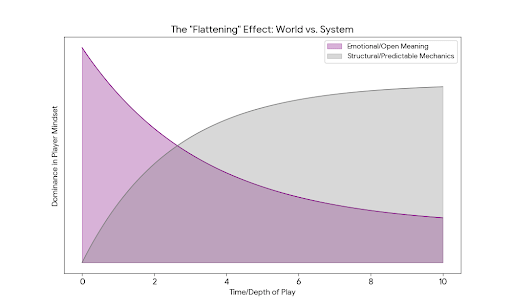
Not with expectation, but with a kind of patience. The kind that comes from seeing how these things usually unfold. It might grow into something more grounded, or it might slowly drift into the same patterns everything else does. Either way, the interesting part isn’t the outcome. It’s the way people shape it over time, and how the system quietly shapes them back.