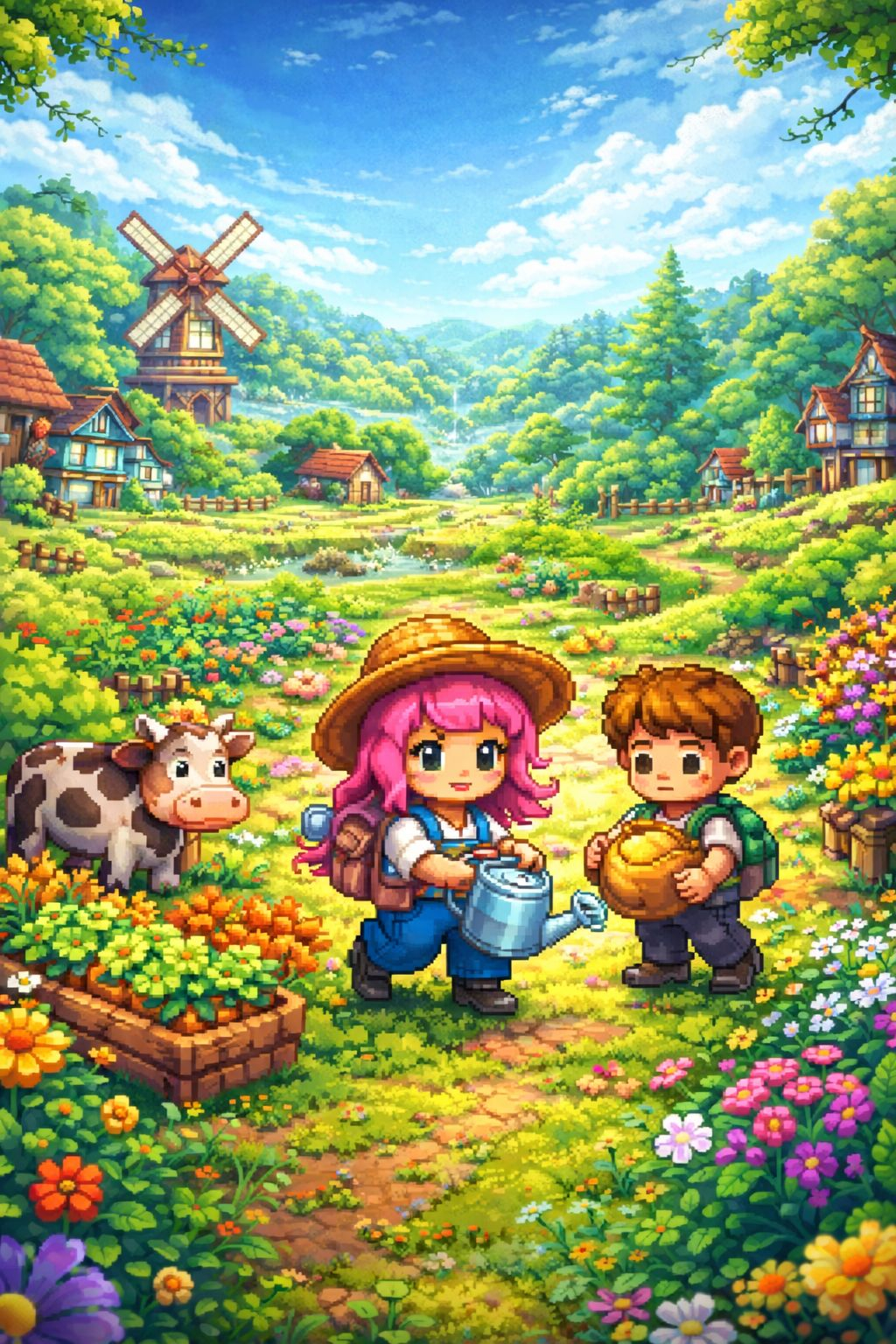
Most games are built around loops: play → earn → spend → repeat. You’re chasing rewards designed by developers. But Pixels shifts that in a few important ways:
1. Ownership feels real
In traditional games, your progress lives on borrowed servers. In Pixels, your land, crops, and items actually belong to you. That changes your mindset—you’re not grinding, you’re building something persistent.
2. It’s player-driven, not developer-scripted
The economy isn’t fixed. Prices, trades, and value come from players. That unpredictability makes it feel less like a system… and more like a living world.
3. Progress becomes personal
There’s no single “right way” to play. Your farm, your strategy, your pace—it reflects you. That creates a sense of identity, not just progression.
4. Time investment feels meaningful
Instead of short-term rewards, Pixels rewards consistency and intention. Over time, it starts to feel like you’re nurturing something rather than completing tasks.
5. It triggers a mindset shift
This is the “awakening” part. You stop thinking like a player chasing rewards and start thinking like:
a builder
a trader
a creator inside an economy
That shift—from consumer to participant—is what makes it feel deeper than a typical game.
So it’s not that Pixels isn’t a game.
It’s that it blurs the line between game, economy, and personal space—and once you notice that, it’s hard to see it the same way again.
#Pixels #Web3 #Gaming #Ownership $PIXEL