
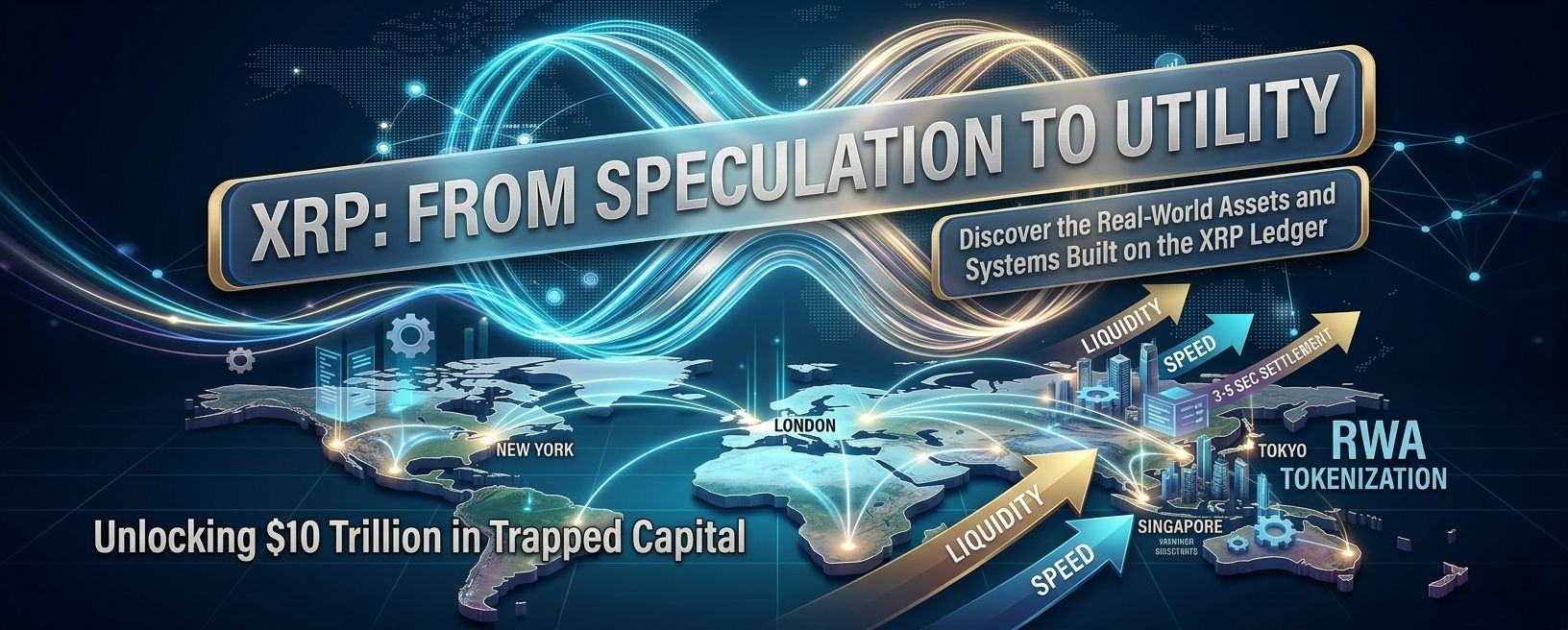
In the fast-moving world of digital assets, XRP has consistently stood out not just as a top-ten cryptocurrency by market cap, but as a specialized tool designed to solve a multi-trillion-dollar problem: the inefficiency of global value transfer.
While many assets compete to be "digital gold" or platforms for decentralized apps, XRP was engineered for utility. As we navigate 2026, its real-world value is becoming harder for the traditional financial sector to ignore.
1. Solving the "Nostro-Vostro" Liquidity Trap
The traditional banking system relies on an archaic "correspondent banking" model. Banks must hold massive amounts of pre-funded local currency in foreign accounts (Nostro/Vostro accounts) just to facilitate cross-border payments. This "dead liquidity" is estimated to trap over $10 trillion globally.
XRP acts as a bridge asset. By using XRP, financial institutions can swap their local currency for XRP and then into the destination currency in 3–5 seconds. This eliminates the need for pre-funded accounts, freeing up capital for banks to use elsewhere.
2. Speed and Scalability at Institutional Grade
For a digital asset to have real-world value in finance, it must be reliable. The XRP Ledger (XRPL) has maintained uptime for over a decade, handling:
* Settlement Times: 3–5 seconds (compared to days for SWIFT).
* Low Cost: Transaction fees are a fraction of a cent ($0.0002 on average).
* Throughput: Scalable to 1,500+ transactions per second, rivaling major credit card processors.
3. The Stablecoin Connection: RLUSD
A major leap in XRP’s utility is its synergy with Ripple USD (RLUSD). By integrating a 1:1 USD-pegged stablecoin on the XRP Ledger, Ripple has provided a "safe harbor" for institutional users. This allows for seamless transitions between volatile assets and stable value, making XRP-powered liquidity pools even more attractive for corporate treasury management.
4. Tokenizing the Real World (RWA)
Real-world utility in 2026 is increasingly about Tokenization. The XRPL was one of the first blockchains to feature a native Decentralized Exchange (DEX) and issued currencies. Today, it is being used to tokenize:
* Carbon Credits: Providing a transparent, immutable ledger for environmental impact.
* Real Estate & Bonds: Increasing the liquidity of traditionally "slow" assets.
* CBDCs: Several central banks are currently piloting private versions of the XRPL to issue Central Bank Digital Currencies.
The Bottom Line
XRP’s value isn't just a number on a screen; it's the cost saved by a remittance provider in Southeast Asia, the speed of a settlement for a manufacturer in Europe, and the transparency of a tokenized bond in New York.
As regulatory clarity—such as the recent CLARITY Act progress—solidifies its status as a digital commodity, XRP is transitioning from a speculative asset to the "plumbing" of a more efficient global economy.
#Binance #XRP #CryptoUtility #Ripple #Blockchain $XRP
