
Honestly last week I was reading about how governments distribute subsidies, and one number stuck with me. In many developing countries, leakage rates can reach 20–30%, meaning a significant portion of funds never reaches the intended recipients. It made me realize that the problem isn’t just about corruption or inefficiency, but about infrastructure. Without a verifiable identity layer and programmable distribution system, money simply cannot “know” where it should go.
This is where @SignOfficial Sign Protocol begins to feel like more than just another blockchain project. One idea that stands out is turning TokenTable into a programmable capital distribution engine with embedded identity constraints. Instead of sending funds blindly, distribution becomes conditional, verifiable, and traceable through on-chain attestations.
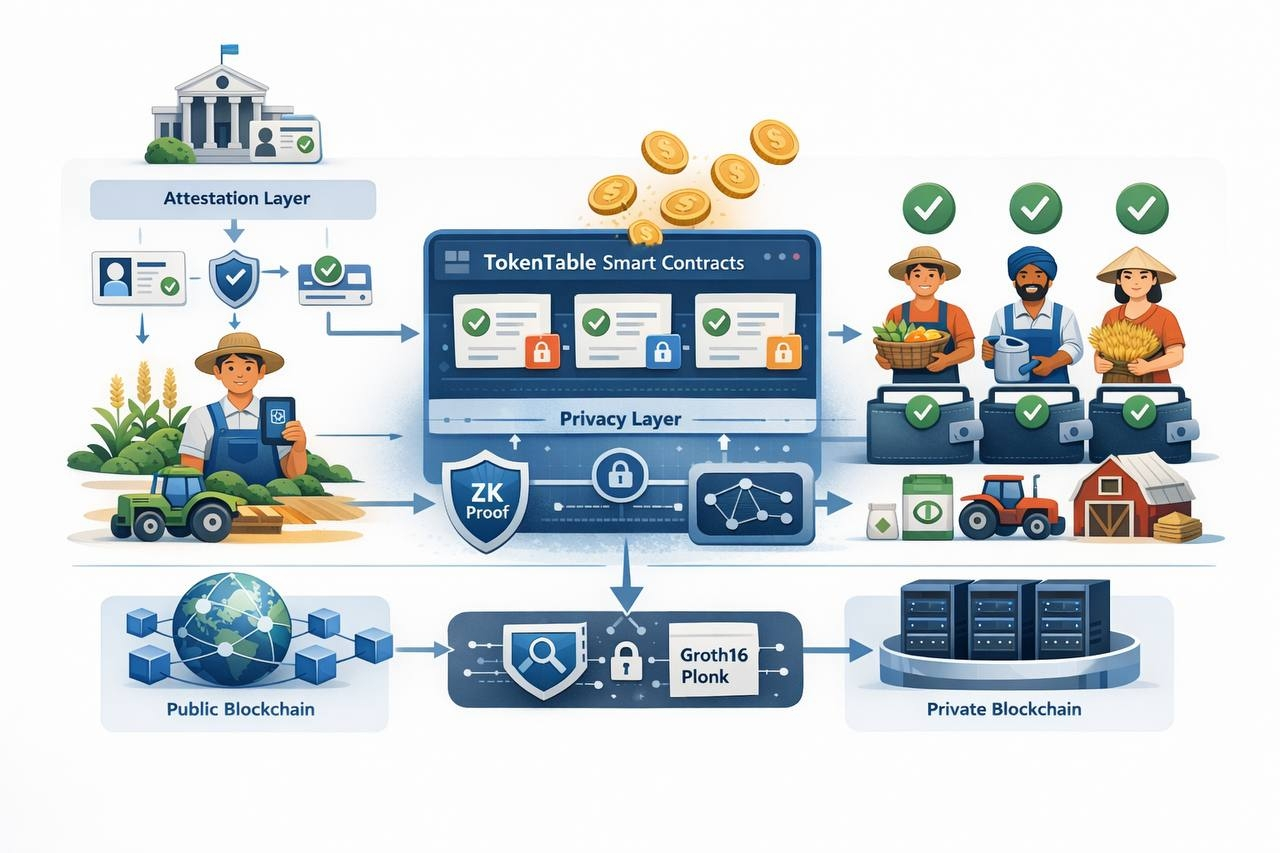
From a technical perspective, this is built on three tightly coupled layers. First is the attestation layer, where identity and eligibility are defined using W3C Verifiable Credentials and Decentralized Identifiers. Each recipient holds a cryptographic proof of eligibility, issued by a trusted authority, but stored in a self-sovereign manner. Second is the execution layer, where TokenTable enforces distribution logic through smart contracts. Third is the privacy layer, powered by zero-knowledge proofs such as Groth16 or Plonk, allowing users to prove eligibility without revealing sensitive data.
To make this concrete, imagine a government allocating a $500 million agricultural subsidy program to 5 million farmers. Traditionally, if even 15% is lost due to inefficiencies, that’s $75 million wasted. With Sign’s model, each farmer receives a zk-attested credential proving land ownership and farming activity. TokenTable then executes distribution only to wallets that can generate valid zero-knowledge proofs tied to these credentials.
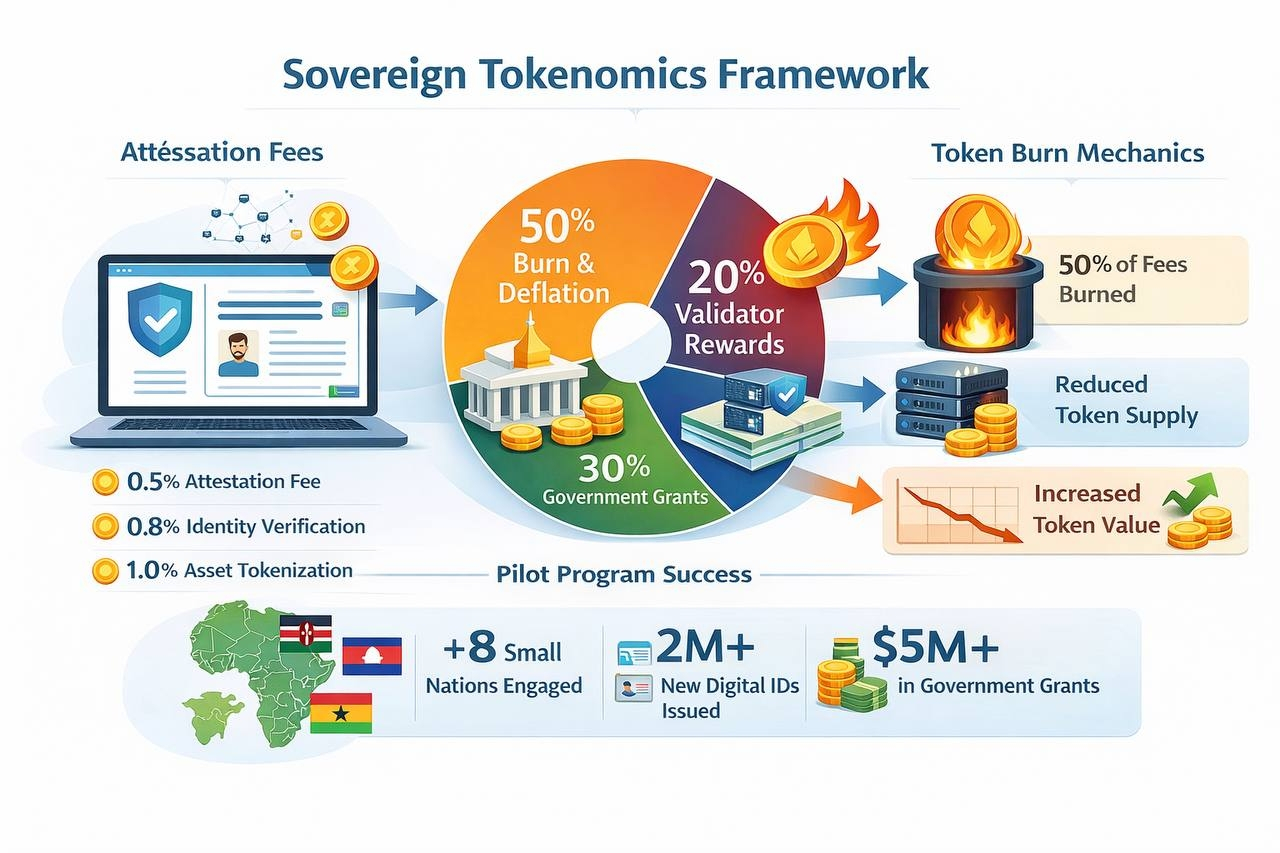
If we assume a reduction in leakage from 15% to just 2%, the system effectively saves $65 million in a single program. More importantly, distribution latency drops from weeks to near real-time settlement, thanks to a hybrid architecture combining public EVM chains for transparency and a high-throughput private execution layer similar to Hyperledger Fabric X.
What makes this interesting is not just efficiency, but programmability. Funds can be “tagged” with constraints at the protocol level. For example, subsidies can only be spent on verified agricultural suppliers, enforced through composable attestations. This turns capital into a rule-enforcing asset rather than passive money, something traditional banking systems cannot easily replicate.
There is also a deeper implication around identity. Because credentials are revocable via mechanisms like Bitstring Status Lists, governments retain the ability to update eligibility dynamically without rewriting the entire system. At the same time, users maintain privacy through selective disclosure, which addresses one of the biggest criticisms of public blockchain systems.
Still I find myself thinking about the trade-offs. This model assumes a high level of trust in the issuing authority and the integrity of the credential system. If the input data is flawed, the entire system inherits that flaw. And while zero-knowledge proofs protect privacy, they also add computational overhead, which may become significant at national scale.

Even so the direction feels compelling. Instead of asking whether blockchain can replace existing systems, Sign reframes the question: what if money, identity, and policy could be executed within the same programmable framework?
If that vision holds, then $SIGN is not just building infrastructure. It is redefining how governments interact with citizens at a protocol level. And honestly, that shift feels much bigger than most people realize today.