
$NVDAon
Here’s a current, data-backed analysis of why global and regional stock markets have been weak in February 2026 — including technical, macroeconomic, and sentiment drivers:
Major Drivers of February Stock Weakness (global & India)

The Economic Times
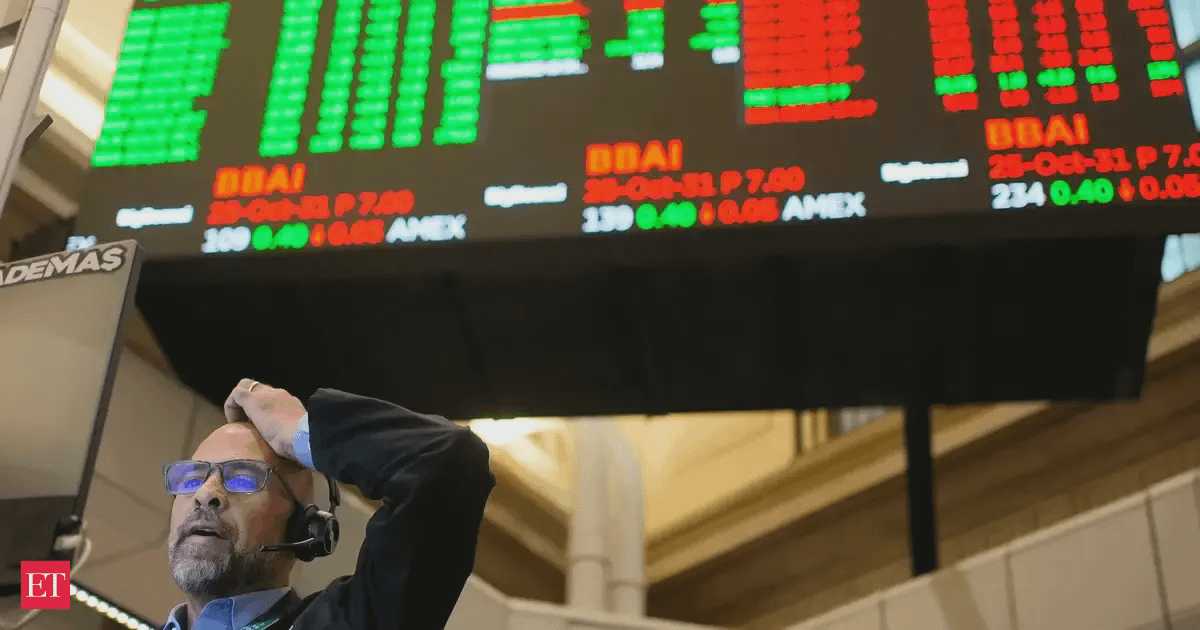
US stock market on the verge of largest loss today: Dow, S&P 500, Nasdaq 100 wiped out over 1.5% as losses
Yesterday


Reuters
Selloff wipes out nearly $1 trillion from software and services stocks as investors debate AI's existential threat
21 days ago



Moneycontrol
Closing Bell: Markets takes another AI beating; Sensex drops 1069 pts, Nifty breaches 25,500
Today
The Economic Times
Nifty IT's 21% February crash is worst since the 2008 global financial crisis. More pain or perfect time to buy?
Today
📉 1. Tech & Software Sector Sell-Off
One of the biggest contributors to market weakness in February is sharp selling pressure in technology and software stocks, especially growth and AI-linked names:
Software stocks have suffered broad sell-offs as investors reassess long-term earnings and disruption risks tied to AI and automation themes.
In India, the Nifty IT index plunged dramatically in February, marking one of its worst monthly performances since 2008 — driven by heavy selling across IT heavyweights.
Improving technologies (e.g., AI coding tools) that appear to displace legacy services have ironically sparked investor fear, prompting traders to de-risk from tech exposures.
Technical takeaway: Weakness in a leadership sector (tech) often pulls broader indices lower as market breadth deteriorates.
🌐 2. Global Macro & Policy Concerns
Markets aren’t just falling in pockets — macro factors are amplifying risk aversion:
💰 Trade Policy and Tariffs
Renewed uncertainty over U.S. tariff rhetoric has unsettled markets by threatening global trade flows and corporate margins, particularly for export-oriented sectors.
🪖 Geopolitical Risk
Heightened tensions in the Middle East and geopolitical unpredictability have boosted safe-haven flows and undercut risk sentiment.
💱 Currency & Commodities
A weaker rupee and rising oil prices are adding cost pressures to emerging markets and complicating the earnings outlook for companies reliant on imports.
Outcome: Investors are reducing exposure to risk assets and reallocating to perceived defensive assets (e.g., bonds, gold).
🧠 3. Technical and Sentiment Triggers
🔄 Volatility and Seasonality
Historically, February tends to be a softer month for equities, showing negative average returns in many markets — creating a technical bias toward caution.
📊 Profit Taking & Risk Off Flows
After strong gains earlier in the year, traders have booked profits across sectors — which often exacerbates downturns when sentiment is fragile.
🔁 Rotation to Lower-Risk Sectors
Slowdowns in tech have led to rotation into defensive/value areas like utilities, energy, and materials, which limits broad market strength and spreads weakness across indices.
📊 4. Sentiment & Structural Factors
🧪 AI & Disruption Narrative
Ironically, as long-term AI investment remains strong, short-term sentiment has turned negative on fears that AI will disrupt revenues before earnings catch up — leading to deep valuation resets.
📉 Technical Negatives in Major Names
Even large cap stocks like Microsoft are testing critical long-term support levels, amplifying technical selling and investor caution.