

#bittensor
bittensor
2.6M vues
5,273 mentions
Populaire
Récents

·
--
Haussier
Vérifié
#AI + crypto is still one of the biggest narratives to watch.
And $TAO has a very different approach.
Instead of building another AI app...
#bittensor is building an open AI network.
→ Subnets
→ Machine intelligence
→ Decentralised incentives
→ AI infrastructure
If decentralised AI takes off, #TAO gets interesting fast.
{spot}(TAOUSDT)
#AI + crypto is still one of the biggest narratives to watch.
And $TAO has a very different approach.
Instead of building another AI app...
#bittensor is building an open AI network.
→ Subnets
→ Machine intelligence
→ Decentralised incentives
→ AI infrastructure
If decentralised AI takes off, #TAO gets interesting fast.
And $TAO has a very different approach.
Instead of building another AI app...
#bittensor is building an open AI network.
→ Subnets
→ Machine intelligence
→ Decentralised incentives
→ AI infrastructure
If decentralised AI takes off, #TAO gets interesting fast.
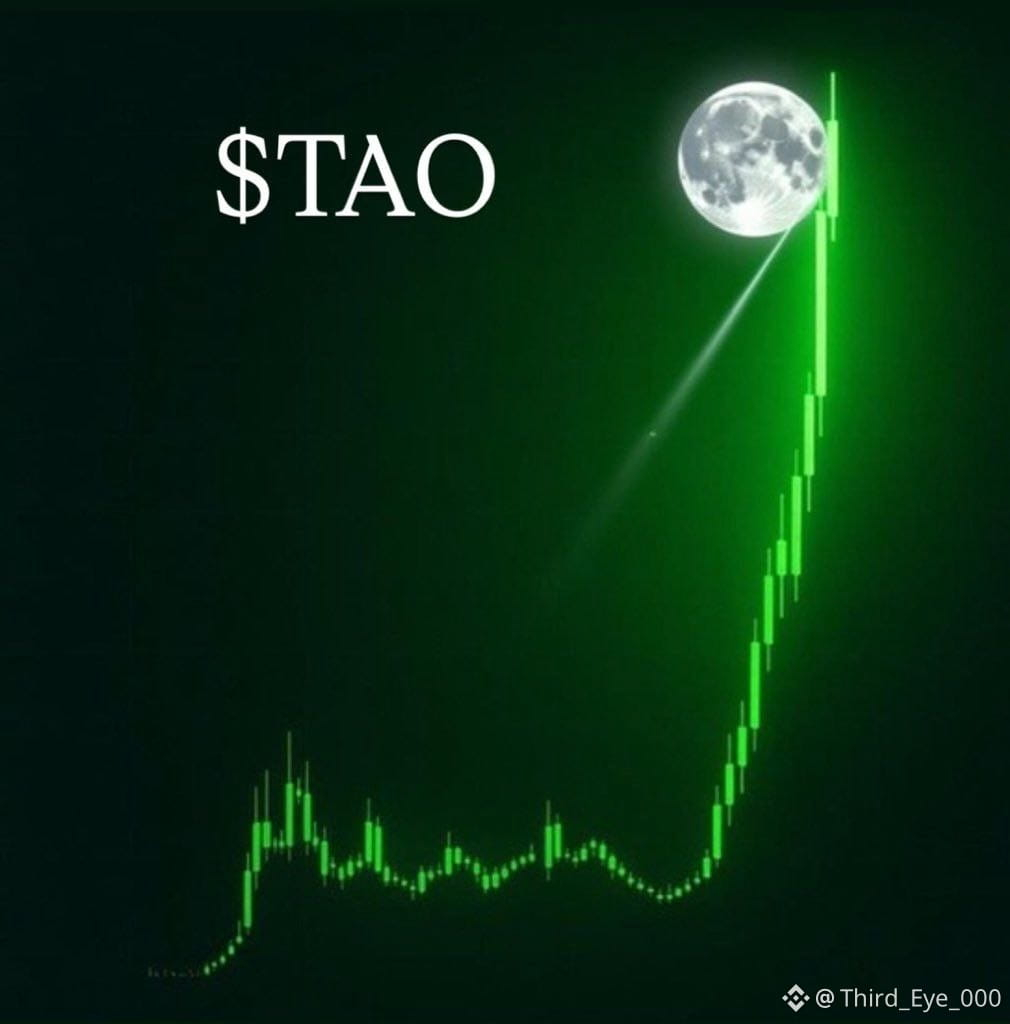
Mr ZEC:
how are you analysis this bro ,where this go ? what's the next move you are looking so far ?
1
337

·
--
Only 21 million $TAO for 8+ billion people. 👀
Bittensor keeps expanding.
$TAO supply stays limited. 🔥
More adoption → More demand
Limited supply → More scarcity
If demand starts outpacing supply, the market has to adjust. 📈
⚡ That’s when the $TAO supply shock narrative gets serious.
Are you holding $TAO? 👇
#TAO #Bittensor #Crypto #AI
Only 21 million $TAO for 8+ billion people. 👀
Bittensor keeps expanding.
$TAO supply stays limited. 🔥
More adoption → More demand
Limited supply → More scarcity
If demand starts outpacing supply, the market has to adjust. 📈
⚡ That’s when the $TAO supply shock narrative gets serious.
Are you holding $TAO ? 👇
#TAO #Bittensor #Crypto #AI
Bittensor keeps expanding.
$TAO supply stays limited. 🔥
More adoption → More demand
Limited supply → More scarcity
If demand starts outpacing supply, the market has to adjust. 📈
⚡ That’s when the $TAO supply shock narrative gets serious.
Are you holding $TAO ? 👇
#TAO #Bittensor #Crypto #AI

1
27

🤫 Everyone's chasing meme coins and major AI tokens, but $TAO (Bittensor) quietly gained +31% in just 7 days
Trading near $320 with a $3.8B market cap. Technical analysis shows strong buy signals, community sentiment is bullish, and whale accumulation data looks positive
As a decentralized AI network, Bittensor's narrative is now getting mainstream attention (thanks to BlackRock's AI + crypto convergence news), yet media coverage is way behind $NEAR or $SOL
Do you think tracking "quiet winners" like $TAO is worth it, or stick to the major coins?
#Bitcoin #Bittensor #AI #BinanceSquare
🤫 Everyone's chasing meme coins and major AI tokens, but $TAO (Bittensor) quietly gained +31% in just 7 days
Trading near $320 with a $3.8B market cap. Technical analysis shows strong buy signals, community sentiment is bullish, and whale accumulation data looks positive
As a decentralized AI network, Bittensor's narrative is now getting mainstream attention (thanks to BlackRock's AI + crypto convergence news), yet media coverage is way behind $NEAR or $SOL
Do you think tracking "quiet winners" like $TAO is worth it, or stick to the major coins?
#Bitcoin #Bittensor #AI #BinanceSquare
Trading near $320 with a $3.8B market cap. Technical analysis shows strong buy signals, community sentiment is bullish, and whale accumulation data looks positive
As a decentralized AI network, Bittensor's narrative is now getting mainstream attention (thanks to BlackRock's AI + crypto convergence news), yet media coverage is way behind $NEAR or $SOL
Do you think tracking "quiet winners" like $TAO is worth it, or stick to the major coins?
#Bitcoin #Bittensor #AI #BinanceSquare
330

$TAO just showed why I keep watching Bittensor closely.
From ~$218 on Sept. 15 to above $320 recently, TAO has moved sharply while trading volume expanded significantly.
But the interesting question isn’t:
“Can TAO pump?”
It’s:
Can decentralized AI demand keep creating economic activity across the subnet ecosystem?
If the answer becomes measurable, TAO’s thesis becomes much bigger than an AI narrative.
Watch the network, not just the chart.
#TAO #bittensor #AI #Crypto
$TAO just showed why I keep watching Bittensor closely.
From ~$218 on Sept. 15 to above $320 recently, TAO has moved sharply while trading volume expanded significantly.
But the interesting question isn’t:
“Can TAO pump?”
It’s:
Can decentralized AI demand keep creating economic activity across the subnet ecosystem?
If the answer becomes measurable, TAO’s thesis becomes much bigger than an AI narrative.
Watch the network, not just the chart.
#TAO #bittensor #AI #Crypto
From ~$218 on Sept. 15 to above $320 recently, TAO has moved sharply while trading volume expanded significantly.
But the interesting question isn’t:
“Can TAO pump?”
It’s:
Can decentralized AI demand keep creating economic activity across the subnet ecosystem?
If the answer becomes measurable, TAO’s thesis becomes much bigger than an AI narrative.
Watch the network, not just the chart.
#TAO #bittensor #AI #Crypto
242

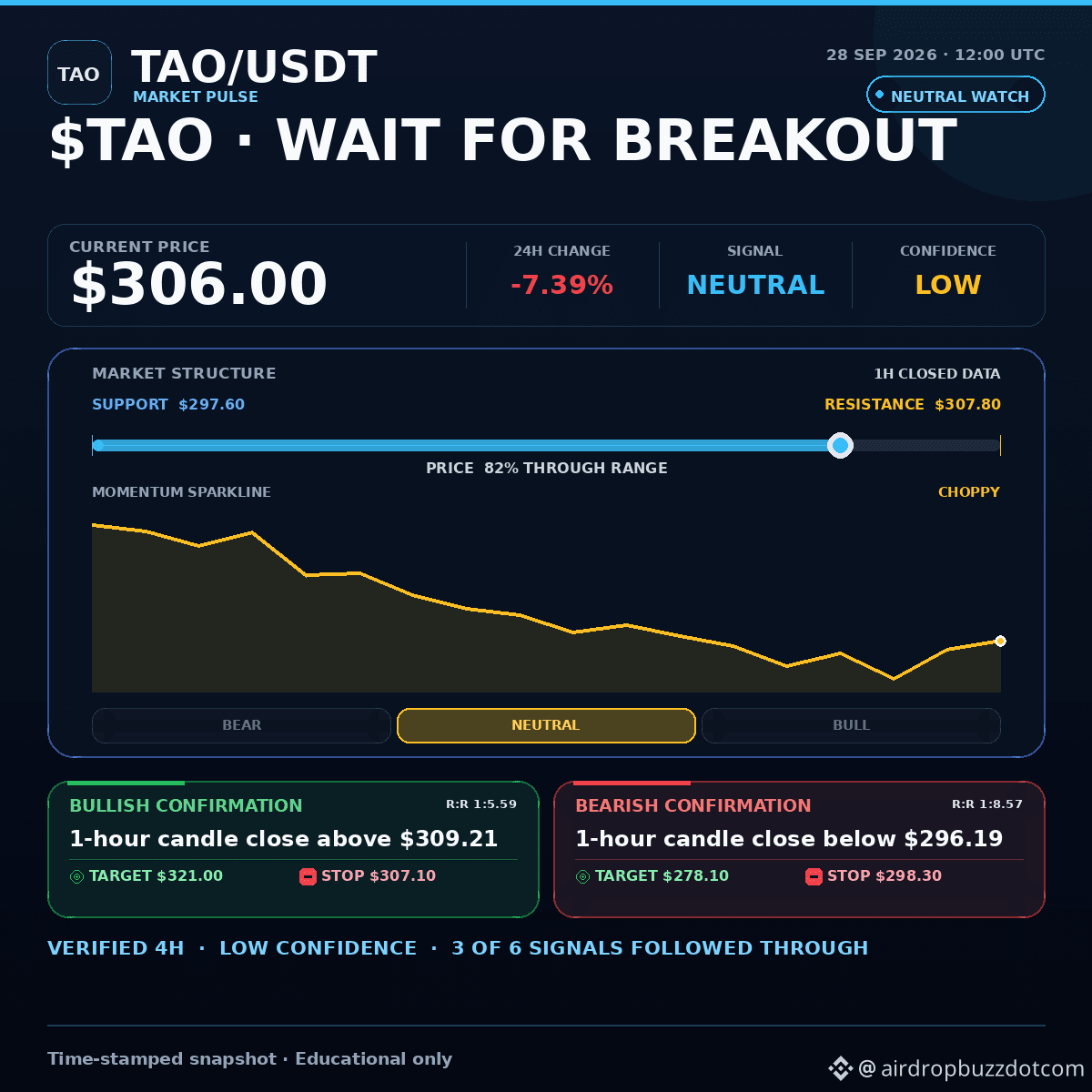
Is $TAO showing direction, or just noise before confirmation?
📊 Snapshot
• Price: $306.00
• 24H: -7.39%
• Bias: Neutral
📈 Bull Trigger
1-hour close above $309.21 with open interest confirmation
📉 Bear Trigger
1-hour close below $296.19 with open interest confirmation
🎯 Signal Read
The useful signal is the first confirmed close that settles the current fight for control, not another intraday wick.
📌 Confidence
Low · Low historical confidence · 3 of 6 directional moves were favorable
Signal Quality
- OI: Flat (+0.60%)
- 4H: Bearish | 1D: Bullish (Conflict)
- ATR filter: 0.50 ATR ($2.81)
- Risk/reward: 1:8.57
Bear scenario risk plan
- Entry: $296.19
- Stop: $298.30
- Target: $278.10
Trigger levels define confirmation; they do not guarantee where price will finish.
Front-run it or wait? Reply FRONT-RUN or WAIT.
#TAO #Bittensor #CryptoTrading #MarketPulse
Educational only. Time-stamped market snapshot, not financial advice.
Is $TAO showing direction, or just noise before confirmation?
📊 Snapshot
• Price: $306.00
• 24H: -7.39%
• Bias: Neutral
📈 Bull Trigger
1-hour close above $309.21 with open interest confirmation
📉 Bear Trigger
1-hour close below $296.19 with open interest confirmation
🎯 Signal Read
The useful signal is the first confirmed close that settles the current fight for control, not another intraday wick.
📌 Confidence
Low · Low historical confidence · 3 of 6 directional moves were favorable
Signal Quality
- OI: Flat (+0.60%)
- 4H: Bearish | 1D: Bullish (Conflict)
- ATR filter: 0.50 ATR ($2.81)
- Risk/reward: 1:8.57
Bear scenario risk plan
- Entry: $296.19
- Stop: $298.30
- Target: $278.10
Trigger levels define confirmation; they do not guarantee where price will finish.
Front-run it or wait? Reply FRONT-RUN or WAIT.
#TAO #Bittensor #CryptoTrading #MarketPulse
Educational only. Time-stamped market snapshot, not financial advice.
📊 Snapshot
• Price: $306.00
• 24H: -7.39%
• Bias: Neutral
📈 Bull Trigger
1-hour close above $309.21 with open interest confirmation
📉 Bear Trigger
1-hour close below $296.19 with open interest confirmation
🎯 Signal Read
The useful signal is the first confirmed close that settles the current fight for control, not another intraday wick.
📌 Confidence
Low · Low historical confidence · 3 of 6 directional moves were favorable
Signal Quality
- OI: Flat (+0.60%)
- 4H: Bearish | 1D: Bullish (Conflict)
- ATR filter: 0.50 ATR ($2.81)
- Risk/reward: 1:8.57
Bear scenario risk plan
- Entry: $296.19
- Stop: $298.30
- Target: $278.10
Trigger levels define confirmation; they do not guarantee where price will finish.
Front-run it or wait? Reply FRONT-RUN or WAIT.
#TAO #Bittensor #CryptoTrading #MarketPulse
Educational only. Time-stamped market snapshot, not financial advice.
35

·
--
🔥 $TAO — DESCENDING TRIANGLE OR BULLISH INVALIDATION?
A lot of traders are watching TAO’s descending triangle.
Yes, the pattern is traditionally bearish — but the setup changes if support continues to hold.
📌 Key confirmation:
• Support holds on repeated tests
• Volume strengthens on rebounds
• Price breaks above the descending trendline
• Breakout holds on a retest
If those conditions align, the bearish triangle could be invalidated and a larger upside move may develop.
🎯 $1,500+ is a bullish cycle target, not a certainty.
👀 $TAO traders: Are you watching for a trendline breakout or another rejection?
#TAO #Bittensor #Crypto #Altcoins
🔥 $TAO — DESCENDING TRIANGLE OR BULLISH INVALIDATION?
A lot of traders are watching TAO’s descending triangle.
Yes, the pattern is traditionally bearish — but the setup changes if support continues to hold.
📌 Key confirmation:
• Support holds on repeated tests
• Volume strengthens on rebounds
• Price breaks above the descending trendline
• Breakout holds on a retest
If those conditions align, the bearish triangle could be invalidated and a larger upside move may develop.
🎯 $1,500+ is a bullish cycle target, not a certainty.
👀 $TAO traders: Are you watching for a trendline breakout or another rejection?
#TAO #Bittensor #Crypto #Altcoins
A lot of traders are watching TAO’s descending triangle.
Yes, the pattern is traditionally bearish — but the setup changes if support continues to hold.
📌 Key confirmation:
• Support holds on repeated tests
• Volume strengthens on rebounds
• Price breaks above the descending trendline
• Breakout holds on a retest
If those conditions align, the bearish triangle could be invalidated and a larger upside move may develop.
🎯 $1,500+ is a bullish cycle target, not a certainty.
👀 $TAO traders: Are you watching for a trendline breakout or another rejection?
#TAO #Bittensor #Crypto #Altcoins
1
46

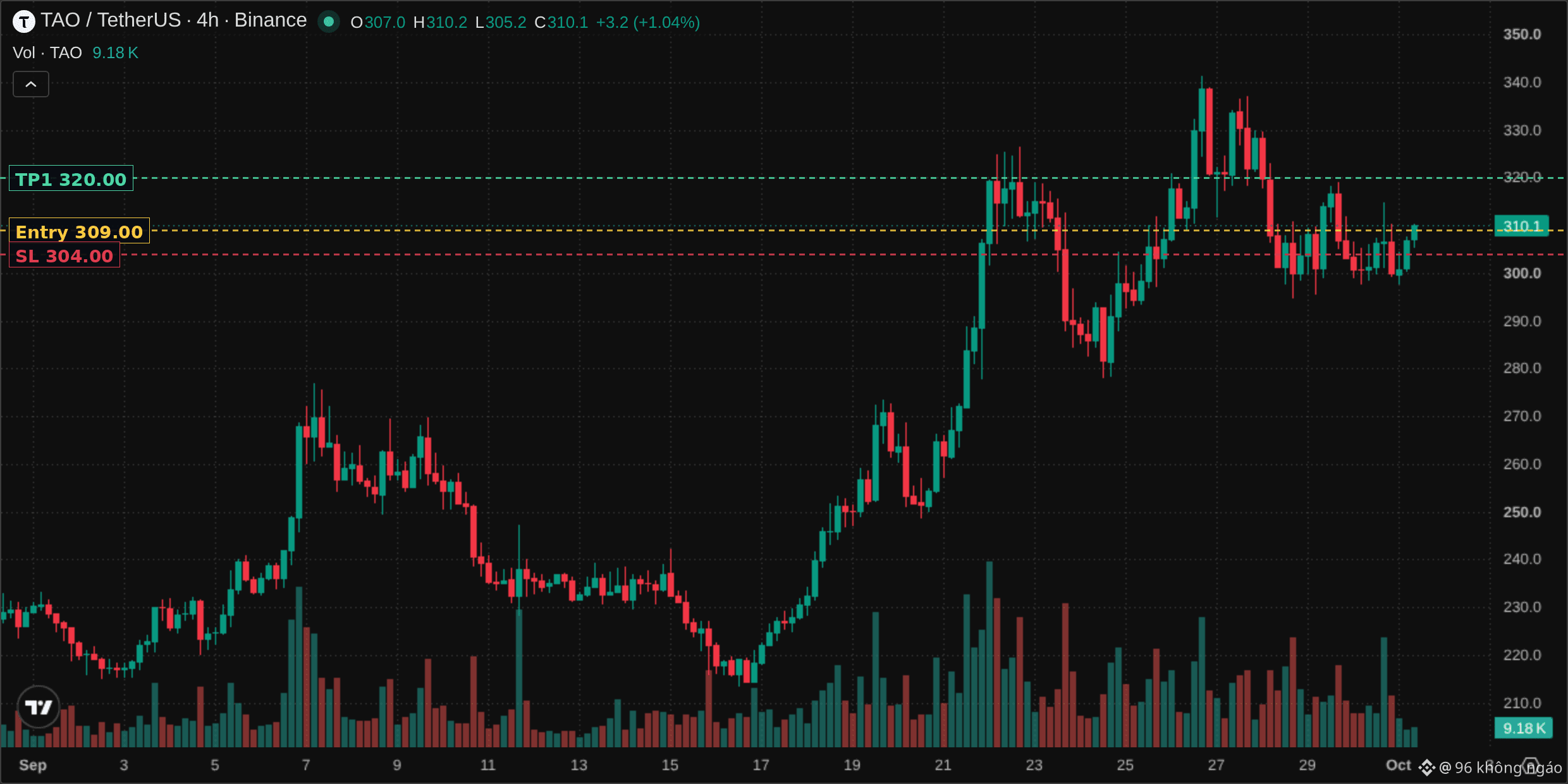
$TAO — LONG
Entry 306.50 – 311.50
SL 304.00
TP1 320.00
TP2 333.90
Về lại đúng vùng từng chặn giá ba lần trong 10 ngày qua.
Từ đỉnh 321 đô cuối tháng 9, $TAO rơi về test vùng 300–301 suốt ba phiên liên tiếp. Hôm nay bật lại, tăng gần 3% trong phiên.
Giá đang nằm ngay trong vùng entry, cả 4h lẫn 1h đều trên EMA20/50. Mất vùng 304 thì huỷ lệnh.
Quan sát cá nhân, không phải lời khuyên đầu tư
#TAO #Bittensor #Altcoin #CryptoTrading
$TAO — LONG
Entry 306.50 – 311.50
SL 304.00
TP1 320.00
TP2 333.90
Về lại đúng vùng từng chặn giá ba lần trong 10 ngày qua.
Từ đỉnh 321 đô cuối tháng 9, $TAO rơi về test vùng 300–301 suốt ba phiên liên tiếp. Hôm nay bật lại, tăng gần 3% trong phiên.
Giá đang nằm ngay trong vùng entry, cả 4h lẫn 1h đều trên EMA20/50. Mất vùng 304 thì huỷ lệnh.
Quan sát cá nhân, không phải lời khuyên đầu tư
#TAO #Bittensor #Altcoin #CryptoTrading
Entry 306.50 – 311.50
SL 304.00
TP1 320.00
TP2 333.90
Về lại đúng vùng từng chặn giá ba lần trong 10 ngày qua.
Từ đỉnh 321 đô cuối tháng 9, $TAO rơi về test vùng 300–301 suốt ba phiên liên tiếp. Hôm nay bật lại, tăng gần 3% trong phiên.
Giá đang nằm ngay trong vùng entry, cả 4h lẫn 1h đều trên EMA20/50. Mất vùng 304 thì huỷ lệnh.
Quan sát cá nhân, không phải lời khuyên đầu tư
#TAO #Bittensor #Altcoin #CryptoTrading
153

·
--
Haussier
$TAO
Bittensor runs a decentralized marketplace for machine intelligence, rewarding subnets that produce useful AI output. It's one of the most talked-about AI-crypto projects because value flows to real contributors. $TAO
{spot}(TAOUSDT)
tends to be volatile, with sharp moves on subnet news and AI sentiment. Watch subnet growth and staking participation. Big idea, big swings. Are you bullish on decentralized AI? #Bittensor
$TAO
Bittensor runs a decentralized marketplace for machine intelligence, rewarding subnets that produce useful AI output. It's one of the most talked-about AI-crypto projects because value flows to real contributors. $TAO
tends to be volatile, with sharp moves on subnet news and AI sentiment. Watch subnet growth and staking participation. Big idea, big swings. Are you bullish on decentralized AI? #Bittensor
Bittensor runs a decentralized marketplace for machine intelligence, rewarding subnets that produce useful AI output. It's one of the most talked-about AI-crypto projects because value flows to real contributors. $TAO
tends to be volatile, with sharp moves on subnet news and AI sentiment. Watch subnet growth and staking participation. Big idea, big swings. Are you bullish on decentralized AI? #Bittensor
46

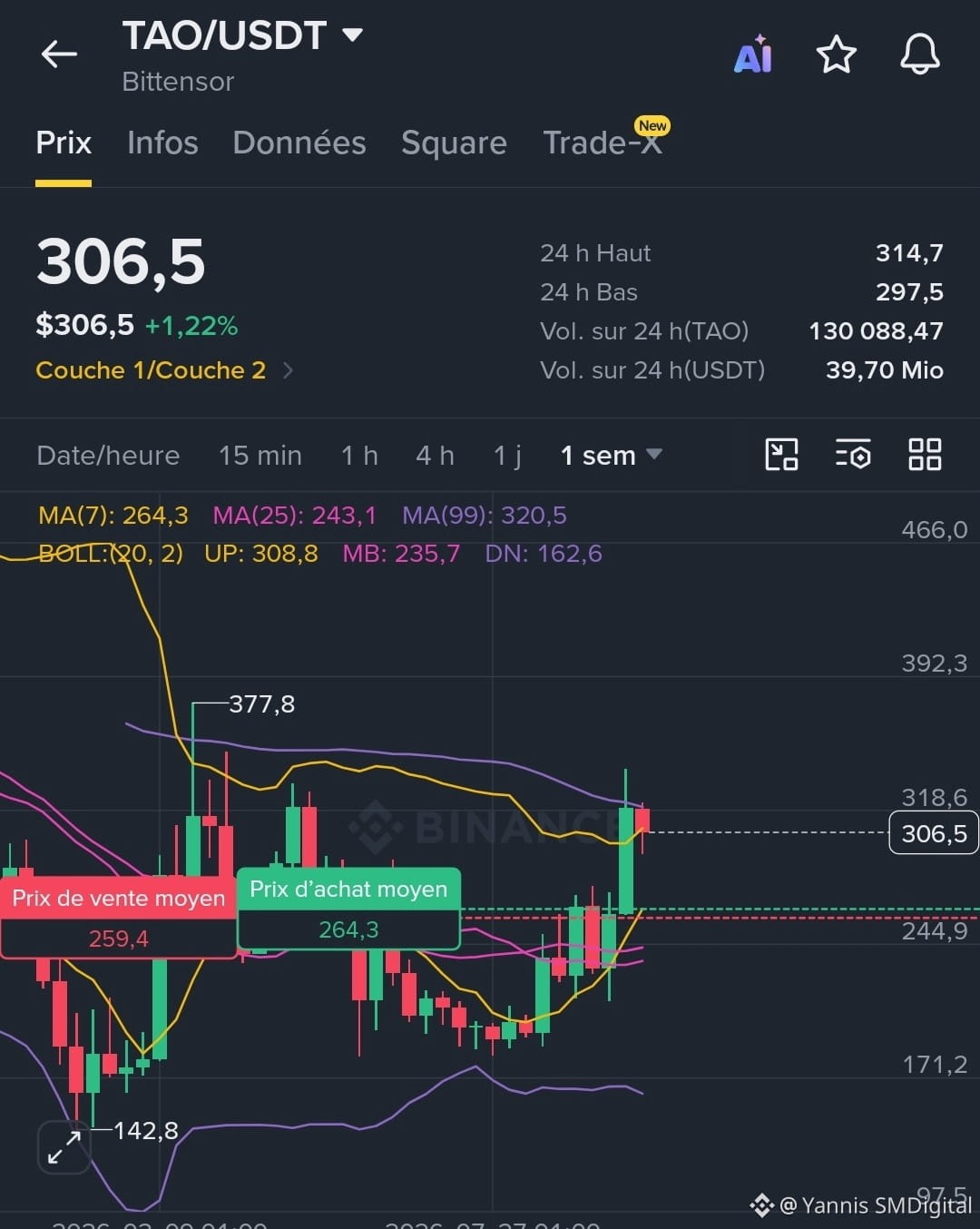
Vous n’avez pas besoin de 21 $TAO
Un seul peut suffire pour commencer.
Regardez Bitcoin : à ses débuts, il ne valait presque rien. Aujourd’hui, 1 BTC coûte une fortune, et la plupart des gens ne peuvent plus se permettre d’en acheter un entier.
TAO est encore accessible autour de 300 dollars. Mais si sa demande augmente alors que son offre reste limitée, un TAO pourrait-il valoir 1 000, 2 000, 3 000 ou même 10 000 dollars demain ?
Personne ne connaît le futur, et TAO n’est pas Bitcoin. Mais attendre indéfiniment le « meilleur moment » peut aussi signifier manquer une opportunité.
Acheter au moins 1 TAO aujourd’hui, selon vos moyens et votre tolérance au risque, pourrait vous donner une exposition à un écosystème qui n’en est peut-être qu’à ses débuts.
N’investissez jamais plus que ce que vous pouvez vous permettre de perdre.
#TAO #Bittensor $TAO
{spot}(TAOUSDT)
Vous n’avez pas besoin de 21 $TAO
Un seul peut suffire pour commencer.
Regardez Bitcoin : à ses débuts, il ne valait presque rien. Aujourd’hui, 1 BTC coûte une fortune, et la plupart des gens ne peuvent plus se permettre d’en acheter un entier.
TAO est encore accessible autour de 300 dollars. Mais si sa demande augmente alors que son offre reste limitée, un TAO pourrait-il valoir 1 000, 2 000, 3 000 ou même 10 000 dollars demain ?
Personne ne connaît le futur, et TAO n’est pas Bitcoin. Mais attendre indéfiniment le « meilleur moment » peut aussi signifier manquer une opportunité.
Acheter au moins 1 TAO aujourd’hui, selon vos moyens et votre tolérance au risque, pourrait vous donner une exposition à un écosystème qui n’en est peut-être qu’à ses débuts.
N’investissez jamais plus que ce que vous pouvez vous permettre de perdre.
#TAO #Bittensor $TAO
Un seul peut suffire pour commencer.
Regardez Bitcoin : à ses débuts, il ne valait presque rien. Aujourd’hui, 1 BTC coûte une fortune, et la plupart des gens ne peuvent plus se permettre d’en acheter un entier.
TAO est encore accessible autour de 300 dollars. Mais si sa demande augmente alors que son offre reste limitée, un TAO pourrait-il valoir 1 000, 2 000, 3 000 ou même 10 000 dollars demain ?
Personne ne connaît le futur, et TAO n’est pas Bitcoin. Mais attendre indéfiniment le « meilleur moment » peut aussi signifier manquer une opportunité.
Acheter au moins 1 TAO aujourd’hui, selon vos moyens et votre tolérance au risque, pourrait vous donner une exposition à un écosystème qui n’en est peut-être qu’à ses débuts.
N’investissez jamais plus que ce que vous pouvez vous permettre de perdre.
#TAO #Bittensor $TAO
169

·
--
Partiellement vrai
$TAO -2.43%,好提案来了,K 线却先给你一巴掌。
现价 301.10,24h -2.43%,成交额 0.44 亿 U,日内 295.5–319.1,冲高回落。
故事是真好:9 月 28 日 Openτensor 基金会抛出「Gamma token」经济层提案,子网拿一部分排放量直接互相付费买服务,排放从纯通胀变成真实需求凭证。加上 2,100 万枚固定上限和减半路径,叙事拉满。
🟢 多头:9 月 21 日那根 +19.92% 是真金白银,7 日仍涨 4.65%,回踩不破前低就是强势整理
🔴 风险:319 一冲就回落,说明上面有人出货;前高 324.89 是本轮必须拿下的坎
纪律位:站上 324.89 才打开 339.55 空间;跌破前低 278.99,多头结构直接作废,下一档看 230.53。
Gamma 这提案你读明白了吗?没读明白的扣 1。
🎉 祝各位追高也有人抬轿,回撤永远差你一个点 ✨
$TAO #Bittensor #AI #币安广场
(不构成建议)
$TAO -2.43%,好提案来了,K 线却先给你一巴掌。
现价 301.10,24h -2.43%,成交额 0.44 亿 U,日内 295.5–319.1,冲高回落。
故事是真好:9 月 28 日 Openτensor 基金会抛出「Gamma token」经济层提案,子网拿一部分排放量直接互相付费买服务,排放从纯通胀变成真实需求凭证。加上 2,100 万枚固定上限和减半路径,叙事拉满。
🟢 多头:9 月 21 日那根 +19.92% 是真金白银,7 日仍涨 4.65%,回踩不破前低就是强势整理
🔴 风险:319 一冲就回落,说明上面有人出货;前高 324.89 是本轮必须拿下的坎
纪律位:站上 324.89 才打开 339.55 空间;跌破前低 278.99,多头结构直接作废,下一档看 230.53。
Gamma 这提案你读明白了吗?没读明白的扣 1。
🎉 祝各位追高也有人抬轿,回撤永远差你一个点 ✨
$TAO #Bittensor #AI #币安广场
(不构成建议)
现价 301.10,24h -2.43%,成交额 0.44 亿 U,日内 295.5–319.1,冲高回落。
故事是真好:9 月 28 日 Openτensor 基金会抛出「Gamma token」经济层提案,子网拿一部分排放量直接互相付费买服务,排放从纯通胀变成真实需求凭证。加上 2,100 万枚固定上限和减半路径,叙事拉满。
🟢 多头:9 月 21 日那根 +19.92% 是真金白银,7 日仍涨 4.65%,回踩不破前低就是强势整理
🔴 风险:319 一冲就回落,说明上面有人出货;前高 324.89 是本轮必须拿下的坎
纪律位:站上 324.89 才打开 339.55 空间;跌破前低 278.99,多头结构直接作废,下一档看 230.53。
Gamma 这提案你读明白了吗?没读明白的扣 1。
🎉 祝各位追高也有人抬轿,回撤永远差你一个点 ✨
$TAO #Bittensor #AI #币安广场
(不构成建议)

248

·
--
🚨 说句得罪人的:AI+加密被骂了两年"只会自嗨",这次真有人掏钱了
群组:[点击进入玖玖的粉丝群](https://app.binance.com/uni-qr/YXXQJrPb)
📊 Bittensor基础设施公司Yuma的首席营收官Evan Malanga对crypto.news说,过去18个月,Bittensor子网运营方的收入从几乎为零,涨到了估计超过3,200万美元。钱不是靠发币,是公司客户签的合同。
🔥 例子挺具体:Score在做洗车场监控,计划给Avia在数千个网点部署;RedTeam服务多家《财富》500强金融机构,每周保护超10亿笔交易;伦敦做机器人识别的Innerworks,用Bittensor竞赛机制,不到一年把检测率从73%拉到99.5%。
📌 结构上,Bittensor目前有128个子网,每类任务一个——数学证明、机器学习、预测都行;矿工答题、验证者评分,得分高的拿新发代币。此前报道里,子网质押的TAO价值已超6.2亿美元。
💡 真正值得关注的不是TAO的币价,而是"AI叙事"里到底有没有真实付费。过去两年多数AI概念币讲的是算力和愿景,赚的是二级市场情绪;一旦有子网开始晒客户合同和营收,评价标准就从故事变成现金流。
⚠️ 泼冷水:Malanga也承认风险——不少子网转不成正经生意,早期资产波动大,还要直面前沿AI实验室的竞争。3,200万美元放进AI大盘其实还很小,别当行业拐点。
👀 一派说这是AI+加密第一个能落地的范式、值得长期看重;另一派说几千万营收撑不起估值、还是概念先行。你站哪边?评论区站队👇
点击头像观看直播 + 加入玖玖聊天群获取每日策略🚀
#TAO #Bittensor #AI
🚨 说句得罪人的:AI+加密被骂了两年"只会自嗨",这次真有人掏钱了
群组:点击进入玖玖的粉丝群
📊 Bittensor基础设施公司Yuma的首席营收官Evan Malanga对crypto.news说,过去18个月,Bittensor子网运营方的收入从几乎为零,涨到了估计超过3,200万美元。钱不是靠发币,是公司客户签的合同。
🔥 例子挺具体:Score在做洗车场监控,计划给Avia在数千个网点部署;RedTeam服务多家《财富》500强金融机构,每周保护超10亿笔交易;伦敦做机器人识别的Innerworks,用Bittensor竞赛机制,不到一年把检测率从73%拉到99.5%。
📌 结构上,Bittensor目前有128个子网,每类任务一个——数学证明、机器学习、预测都行;矿工答题、验证者评分,得分高的拿新发代币。此前报道里,子网质押的TAO价值已超6.2亿美元。
💡 真正值得关注的不是TAO的币价,而是"AI叙事"里到底有没有真实付费。过去两年多数AI概念币讲的是算力和愿景,赚的是二级市场情绪;一旦有子网开始晒客户合同和营收,评价标准就从故事变成现金流。
⚠️ 泼冷水:Malanga也承认风险——不少子网转不成正经生意,早期资产波动大,还要直面前沿AI实验室的竞争。3,200万美元放进AI大盘其实还很小,别当行业拐点。
👀 一派说这是AI+加密第一个能落地的范式、值得长期看重;另一派说几千万营收撑不起估值、还是概念先行。你站哪边?评论区站队👇
点击头像观看直播 + 加入玖玖聊天群获取每日策略🚀
#TAO #Bittensor #AI
群组:点击进入玖玖的粉丝群
📊 Bittensor基础设施公司Yuma的首席营收官Evan Malanga对crypto.news说,过去18个月,Bittensor子网运营方的收入从几乎为零,涨到了估计超过3,200万美元。钱不是靠发币,是公司客户签的合同。
🔥 例子挺具体:Score在做洗车场监控,计划给Avia在数千个网点部署;RedTeam服务多家《财富》500强金融机构,每周保护超10亿笔交易;伦敦做机器人识别的Innerworks,用Bittensor竞赛机制,不到一年把检测率从73%拉到99.5%。
📌 结构上,Bittensor目前有128个子网,每类任务一个——数学证明、机器学习、预测都行;矿工答题、验证者评分,得分高的拿新发代币。此前报道里,子网质押的TAO价值已超6.2亿美元。
💡 真正值得关注的不是TAO的币价,而是"AI叙事"里到底有没有真实付费。过去两年多数AI概念币讲的是算力和愿景,赚的是二级市场情绪;一旦有子网开始晒客户合同和营收,评价标准就从故事变成现金流。
⚠️ 泼冷水:Malanga也承认风险——不少子网转不成正经生意,早期资产波动大,还要直面前沿AI实验室的竞争。3,200万美元放进AI大盘其实还很小,别当行业拐点。
👀 一派说这是AI+加密第一个能落地的范式、值得长期看重;另一派说几千万营收撑不起估值、还是概念先行。你站哪边?评论区站队👇
点击头像观看直播 + 加入玖玖聊天群获取每日策略🚀
#TAO #Bittensor #AI

195

·
--
Bittensor (TAO): AI-гигант на перепутье! Лонг-сетап или очередной забор ликвидности?⚡️
Сегмент децентрализованного ИИ снова в фокусе, а флагман сектора Bittensor ($TAO ) рисует мощное техническое накопление.
Пока розница спорит о перспективах AI, Smart Money тихо аккумулируют позицию в диапазоне $300 – $315.
📊 Что происходит с фундаменталом?
Рост активности сабсетей (Subnets):
Сеть Bittensor продолжает расширять количество рабочих подсетей, привлекая всё больше разработчиков ML-моделей. Это увеличивает спрос на стейкинг $TAO для валидации.
Институциональный интерес:
Крупные фонды рассматривают Bittensor как «Ethereum для искусственного интеллекта», что поддерживает уверенный приток капитала на фоне стабилизации рынка.
📈 Теханализ и Price Action
После хорошего месячного ралли цена ушла в локальную консолидацию и поджимается к верхней границе текущего диапазона.
Зона сопротивления (POI):
$315 – $328. Это ключевой блок продавца. Импульсный пробой и закрепительный ретест этой зоны откроют путь к реактивному движению в район $370+.
Зона поддержки:
$280 – $283. Важнейший уровень защиты локальной бычьей структуры. Если цена снимет ликвидность с этого лоу, следующий блок покупателя находится на уровне $260.
Метрики:
Индекс RSI разгрузился до нейтральных значений, сформировав бычью конвергенцию на 4H. Фандинг остыл — рынок готов к новому импульсу.
💡 Резюме
$TAO выглядит одной из сильнейших монет AI-сектора. Безопасный план — не покупать в середине флэта, а дождаться либо реакции на свип поддержки $283, либо закрепительного пробоя уровня $315 с хорошими объемами.
{spot}(TAOUSDT)
#TAO #bittensor #cryptotrading
Bittensor (TAO): AI-гигант на перепутье! Лонг-сетап или очередной забор ликвидности?
⚡️
Сегмент децентрализованного ИИ снова в фокусе, а флагман сектора Bittensor ($TAO ) рисует мощное техническое накопление.
Пока розница спорит о перспективах AI, Smart Money тихо аккумулируют позицию в диапазоне $300 – $315.
📊 Что происходит с фундаменталом?
Рост активности сабсетей (Subnets):
Сеть Bittensor продолжает расширять количество рабочих подсетей, привлекая всё больше разработчиков ML-моделей. Это увеличивает спрос на стейкинг $TAO для валидации.
Институциональный интерес:
Крупные фонды рассматривают Bittensor как «Ethereum для искусственного интеллекта», что поддерживает уверенный приток капитала на фоне стабилизации рынка.
📈 Теханализ и Price Action
После хорошего месячного ралли цена ушла в локальную консолидацию и поджимается к верхней границе текущего диапазона.
Зона сопротивления (POI):
$315 – $328. Это ключевой блок продавца. Импульсный пробой и закрепительный ретест этой зоны откроют путь к реактивному движению в район $370+.
Зона поддержки:
$280 – $283. Важнейший уровень защиты локальной бычьей структуры. Если цена снимет ликвидность с этого лоу, следующий блок покупателя находится на уровне $260.
Метрики:
Индекс RSI разгрузился до нейтральных значений, сформировав бычью конвергенцию на 4H. Фандинг остыл — рынок готов к новому импульсу.
💡 Резюме
$TAO выглядит одной из сильнейших монет AI-сектора. Безопасный план — не покупать в середине флэта, а дождаться либо реакции на свип поддержки $283, либо закрепительного пробоя уровня $315 с хорошими объемами.
#TAO #bittensor #cryptotrading
Сегмент децентрализованного ИИ снова в фокусе, а флагман сектора Bittensor ($TAO ) рисует мощное техническое накопление.
Пока розница спорит о перспективах AI, Smart Money тихо аккумулируют позицию в диапазоне $300 – $315.
📊 Что происходит с фундаменталом?
Рост активности сабсетей (Subnets):
Сеть Bittensor продолжает расширять количество рабочих подсетей, привлекая всё больше разработчиков ML-моделей. Это увеличивает спрос на стейкинг $TAO для валидации.
Институциональный интерес:
Крупные фонды рассматривают Bittensor как «Ethereum для искусственного интеллекта», что поддерживает уверенный приток капитала на фоне стабилизации рынка.
📈 Теханализ и Price Action
После хорошего месячного ралли цена ушла в локальную консолидацию и поджимается к верхней границе текущего диапазона.
Зона сопротивления (POI):
$315 – $328. Это ключевой блок продавца. Импульсный пробой и закрепительный ретест этой зоны откроют путь к реактивному движению в район $370+.
Зона поддержки:
$280 – $283. Важнейший уровень защиты локальной бычьей структуры. Если цена снимет ликвидность с этого лоу, следующий блок покупателя находится на уровне $260.
Метрики:
Индекс RSI разгрузился до нейтральных значений, сформировав бычью конвергенцию на 4H. Фандинг остыл — рынок готов к новому импульсу.
💡 Резюме
$TAO выглядит одной из сильнейших монет AI-сектора. Безопасный план — не покупать в середине флэта, а дождаться либо реакции на свип поддержки $283, либо закрепительного пробоя уровня $315 с хорошими объемами.
#TAO #bittensor #cryptotrading
43

·
--
Vérifié
🥶 GENIOS BAJO EL FRÍO EN MONTREAL: ¿REINVENTANDO LA IA? 🇨🇦🤖
Mientras los gigantes de Silicon Valley cobran comisiones y suscripciones caras por todo, la gente de Bittensor ($TAO ) se encerró en Canadá para lanzar una bomba: los Tokens Gamma.
{spot}(TAOUSDT)
Se trata de créditos automáticos para que las subredes de Inteligencia Artificial hagan negocios y compren poder de cómputo entre ellas, sin pedir permiso (ni pagarle comisiones) a ninguna corporación tecnológica.
¿Qué significa para tu bolsillo?
Gamma no es una cripto para especular. Es un motor de utilidad real que respalda directamente el valor de la "Casa Grande" ($TAO ) a largo plazo.
El debate sigue vivo en Montreal. Mientras tanto, proyectos de infraestructura masiva como NEAR Protocol ($NEAR ) demuestran que el ecosistema descentralizado avanza con fuerza para dejar atrás los monopolios tradicionales. ¡El mercado de la IA se mueve con potencia, mira las gráficas de TAO y NEAR abajo! 📈💸
{spot}(NEARUSDT)
#bittensor #ExploitSummit2026 #Crypto
🥶 GENIOS BAJO EL FRÍO EN MONTREAL: ¿REINVENTANDO LA IA? 🇨🇦🤖
Mientras los gigantes de Silicon Valley cobran comisiones y suscripciones caras por todo, la gente de Bittensor ($TAO ) se encerró en Canadá para lanzar una bomba: los Tokens Gamma.
Se trata de créditos automáticos para que las subredes de Inteligencia Artificial hagan negocios y compren poder de cómputo entre ellas, sin pedir permiso (ni pagarle comisiones) a ninguna corporación tecnológica.
¿Qué significa para tu bolsillo?
Gamma no es una cripto para especular. Es un motor de utilidad real que respalda directamente el valor de la "Casa Grande" ($TAO ) a largo plazo.
El debate sigue vivo en Montreal. Mientras tanto, proyectos de infraestructura masiva como NEAR Protocol ($NEAR ) demuestran que el ecosistema descentralizado avanza con fuerza para dejar atrás los monopolios tradicionales. ¡El mercado de la IA se mueve con potencia, mira las gráficas de TAO y NEAR abajo! 📈💸
#bittensor #ExploitSummit2026 #Crypto
Mientras los gigantes de Silicon Valley cobran comisiones y suscripciones caras por todo, la gente de Bittensor ($TAO ) se encerró en Canadá para lanzar una bomba: los Tokens Gamma.
Se trata de créditos automáticos para que las subredes de Inteligencia Artificial hagan negocios y compren poder de cómputo entre ellas, sin pedir permiso (ni pagarle comisiones) a ninguna corporación tecnológica.
¿Qué significa para tu bolsillo?
Gamma no es una cripto para especular. Es un motor de utilidad real que respalda directamente el valor de la "Casa Grande" ($TAO ) a largo plazo.
El debate sigue vivo en Montreal. Mientras tanto, proyectos de infraestructura masiva como NEAR Protocol ($NEAR ) demuestran que el ecosistema descentralizado avanza con fuerza para dejar atrás los monopolios tradicionales. ¡El mercado de la IA se mueve con potencia, mira las gráficas de TAO y NEAR abajo! 📈💸
#bittensor #ExploitSummit2026 #Crypto

1
1.8k

·
--
Baissier
Been looking at $TAO
{spot}(TAOUSDT)
today and it's a mixed signal 🤔
Earlier today it was up +9.5% on real volume — now it's pulled back to negative. That kind of swing is normal for AI-narrative coins, but it's a good reminder: don't chase the green candle, check the volume trend before entering.
Still think the AI x crypto narrative has legs long-term — Bittensor's actually building real decentralized AI infra, not just riding the hype. Short-term though, I'd call this one "wait and watch" rather than a clean bullish call.
Not financial advice, just my read. Is this a healthy pullback or the hype fading? What you guys think let me know in the comments.
#TAO #bittensor #CryptoAnalysis
Been looking at $TAO
today and it's a mixed signal 🤔
Earlier today it was up +9.5% on real volume — now it's pulled back to negative. That kind of swing is normal for AI-narrative coins, but it's a good reminder: don't chase the green candle, check the volume trend before entering.
Still think the AI x crypto narrative has legs long-term — Bittensor's actually building real decentralized AI infra, not just riding the hype. Short-term though, I'd call this one "wait and watch" rather than a clean bullish call.
Not financial advice, just my read. Is this a healthy pullback or the hype fading? What you guys think let me know in the comments.
#TAO #bittensor #CryptoAnalysis
today and it's a mixed signal 🤔
Earlier today it was up +9.5% on real volume — now it's pulled back to negative. That kind of swing is normal for AI-narrative coins, but it's a good reminder: don't chase the green candle, check the volume trend before entering.
Still think the AI x crypto narrative has legs long-term — Bittensor's actually building real decentralized AI infra, not just riding the hype. Short-term though, I'd call this one "wait and watch" rather than a clean bullish call.
Not financial advice, just my read. Is this a healthy pullback or the hype fading? What you guys think let me know in the comments.
#TAO #bittensor #CryptoAnalysis
285

·
--
$TAO is stronger than its chart looks, and that’s exactly why I’m not chasing $327.
Price is $327.30, basically flat on the day at +0.03%, but the 4h just pushed +2%. That matters.
Quiet strength.
TAO is above both the 20d and 50d moving averages, sitting 4% under its 30d high. RSI at 59 says momentum is healthy, not overheated. Volume is only average at $49.54M, while longs are paying 0.005% funding.
That’s not euphoria. That’s positioning.
Compared with $SOL, TAO still looks under-owned. @taboracoin is building in a market that loves to chase after confirmation. If TAO tags $340, I’d trim into strength, not pretend every green candle is a breakout. 🔥📈
#Bittensor #DePIN #Crypto
$TAO is stronger than its chart looks, and that’s exactly why I’m not chasing $327.
Price is $327.30, basically flat on the day at +0.03%, but the 4h just pushed +2%. That matters.
Quiet strength.
TAO is above both the 20d and 50d moving averages, sitting 4% under its 30d high. RSI at 59 says momentum is healthy, not overheated. Volume is only average at $49.54M, while longs are paying 0.005% funding.
That’s not euphoria. That’s positioning.
Compared with $SOL , TAO still looks under-owned. @taboracoin is building in a market that loves to chase after confirmation. If TAO tags $340, I’d trim into strength, not pretend every green candle is a breakout. 🔥📈
#Bittensor #DePIN #Crypto
Price is $327.30, basically flat on the day at +0.03%, but the 4h just pushed +2%. That matters.
Quiet strength.
TAO is above both the 20d and 50d moving averages, sitting 4% under its 30d high. RSI at 59 says momentum is healthy, not overheated. Volume is only average at $49.54M, while longs are paying 0.005% funding.
That’s not euphoria. That’s positioning.
Compared with $SOL , TAO still looks under-owned. @taboracoin is building in a market that loves to chase after confirmation. If TAO tags $340, I’d trim into strength, not pretend every green candle is a breakout. 🔥📈
#Bittensor #DePIN #Crypto
49

If you're still fading privacy coins this late in the year, stop now.
Too many traders have already lost money missing the rotation or selling winners too early. Chasing every AI headline without a real benchmark has been an expensive lesson.
There's a split on whether $ZEC actually hits $5,000,$6,000 by year-end. Skeptics call a $10 billion market cap unrealistic in this environment. The other side looks at futures PnL leaders and sees positioning already building for privacy to finally get its run. I side with the bulls. The narrative is cleaner than people want to admit.
$TAO faces the same argument. A $1,000 target sounds aggressive to some, yet the AI sector still needs its Zcash equivalent and Bittensor currently has the strongest claim. Fading both of these into year-end feels like the riskier trade.
Anyone else mapping similar targets or am I too early?
#Zcash #Bittensor #PrivacyCoins
If you're still fading privacy coins this late in the year, stop now.
Too many traders have already lost money missing the rotation or selling winners too early. Chasing every AI headline without a real benchmark has been an expensive lesson.
There's a split on whether $ZEC actually hits $5,000,$6,000 by year-end. Skeptics call a $10 billion market cap unrealistic in this environment. The other side looks at futures PnL leaders and sees positioning already building for privacy to finally get its run. I side with the bulls. The narrative is cleaner than people want to admit.
$TAO faces the same argument. A $1,000 target sounds aggressive to some, yet the AI sector still needs its Zcash equivalent and Bittensor currently has the strongest claim. Fading both of these into year-end feels like the riskier trade.
Anyone else mapping similar targets or am I too early?
#Zcash #Bittensor #PrivacyCoins
Too many traders have already lost money missing the rotation or selling winners too early. Chasing every AI headline without a real benchmark has been an expensive lesson.
There's a split on whether $ZEC actually hits $5,000,$6,000 by year-end. Skeptics call a $10 billion market cap unrealistic in this environment. The other side looks at futures PnL leaders and sees positioning already building for privacy to finally get its run. I side with the bulls. The narrative is cleaner than people want to admit.
$TAO faces the same argument. A $1,000 target sounds aggressive to some, yet the AI sector still needs its Zcash equivalent and Bittensor currently has the strongest claim. Fading both of these into year-end feels like the riskier trade.
Anyone else mapping similar targets or am I too early?
#Zcash #Bittensor #PrivacyCoins

12
TAO | The first test after the rally
$TAO is around $321 after gaining roughly 27% over the past week.
The recent pullback looks more like profit-taking than a fundamental breakdown so far.
Technically, the area around $319–$320 is becoming important.
Above it, the recent structure remains constructive.
Below it, $300 becomes the level I would watch.
TAO doesn’t need another vertical move.
It needs to prove that higher prices can become support.
#TAO #bittensor #IA
{spot}(TAOUSDT)
TAO | The first test after the rally
$TAO is around $321 after gaining roughly 27% over the past week.
The recent pullback looks more like profit-taking than a fundamental breakdown so far.
Technically, the area around $319–$320 is becoming important.
Above it, the recent structure remains constructive.
Below it, $300 becomes the level I would watch.
TAO doesn’t need another vertical move.
It needs to prove that higher prices can become support.
#TAO #bittensor #IA
$TAO is around $321 after gaining roughly 27% over the past week.
The recent pullback looks more like profit-taking than a fundamental breakdown so far.
Technically, the area around $319–$320 is becoming important.
Above it, the recent structure remains constructive.
Below it, $300 becomes the level I would watch.
TAO doesn’t need another vertical move.
It needs to prove that higher prices can become support.
#TAO #bittensor #IA
264

·
--
When $TAO was around $220, I highlighted it as a token worth watching closely.
I said: If you missed ZEC near $250, keep an eye on $TAO.
There was plenty of doubt at the time—similar to when I mentioned ZEC’s potential to reach $1,000. But price action has since spoken for itself.
$TAO update:
Current price: $332.92
+9.00% today
+34.16% over 7 days
+45.63% over 30 days
Moved from $220 to a recent high near $341.30
The Supertrend around $325.59 is still acting as an important support area. If momentum and broader market conditions remain favorable, the next area traders may be watching is $400–$700—though outcomes remain uncertain.
Lesson: Markets often reward patience, disciplined risk management, and independent research—not noise.
Shared for educational purposes only. Not financial advice.
$TAO
{spot}(TAOUSDT)
#TAOUSDT #Crypto #Bittensor
When $TAO was around $220, I highlighted it as a token worth watching closely.
I said: If you missed ZEC near $250, keep an eye on $TAO .
There was plenty of doubt at the time—similar to when I mentioned ZEC’s potential to reach $1,000. But price action has since spoken for itself.
$TAO update:
Current price: $332.92
+9.00% today
+34.16% over 7 days
+45.63% over 30 days
Moved from $220 to a recent high near $341.30
The Supertrend around $325.59 is still acting as an important support area. If momentum and broader market conditions remain favorable, the next area traders may be watching is $400–$700—though outcomes remain uncertain.
Lesson: Markets often reward patience, disciplined risk management, and independent research—not noise.
Shared for educational purposes only. Not financial advice.
$TAO
#TAOUSDT #Crypto #Bittensor
I said: If you missed ZEC near $250, keep an eye on $TAO .
There was plenty of doubt at the time—similar to when I mentioned ZEC’s potential to reach $1,000. But price action has since spoken for itself.
$TAO update:
Current price: $332.92
+9.00% today
+34.16% over 7 days
+45.63% over 30 days
Moved from $220 to a recent high near $341.30
The Supertrend around $325.59 is still acting as an important support area. If momentum and broader market conditions remain favorable, the next area traders may be watching is $400–$700—though outcomes remain uncertain.
Lesson: Markets often reward patience, disciplined risk management, and independent research—not noise.
Shared for educational purposes only. Not financial advice.
$TAO
#TAOUSDT #Crypto #Bittensor
63
·
--
Haussier
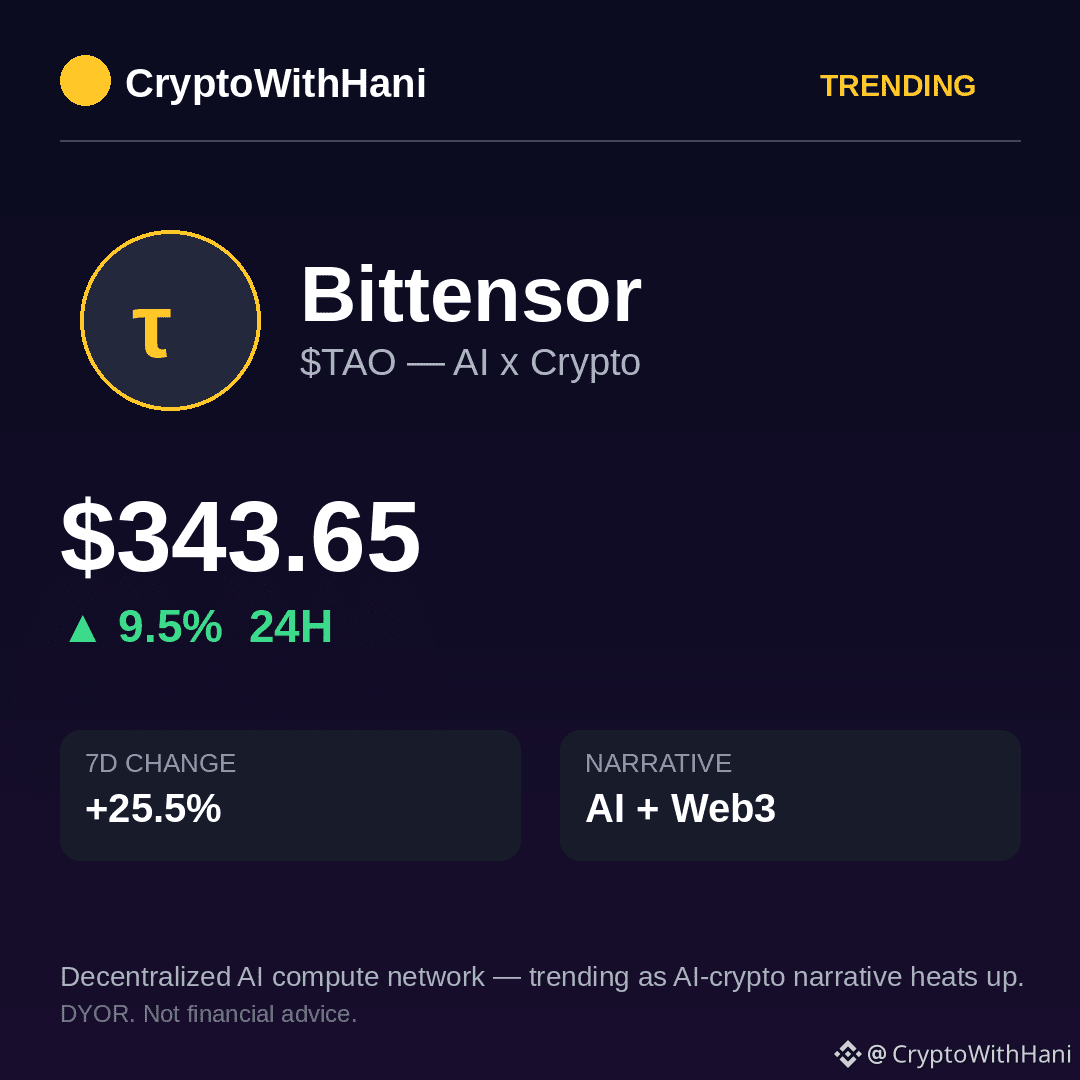
$TAO is heating up 🔥 Bittensor is leading the AI-crypto narrative right now — decentralized AI compute meets Web3 incentives. Worth watching if AI infra plays are your thing. 👀
DYOR — not financial advice.
{spot}(TAOUSDT)
#bittensor #TAO #aicrypto
$TAO is heating up 🔥 Bittensor is leading the AI-crypto narrative right now — decentralized AI compute meets Web3 incentives. Worth watching if AI infra plays are your thing. 👀
DYOR — not financial advice.
#bittensor #TAO #aicrypto
DYOR — not financial advice.
#bittensor #TAO #aicrypto
AngelOfCrypto_-:
nice
4
1
589

·
--
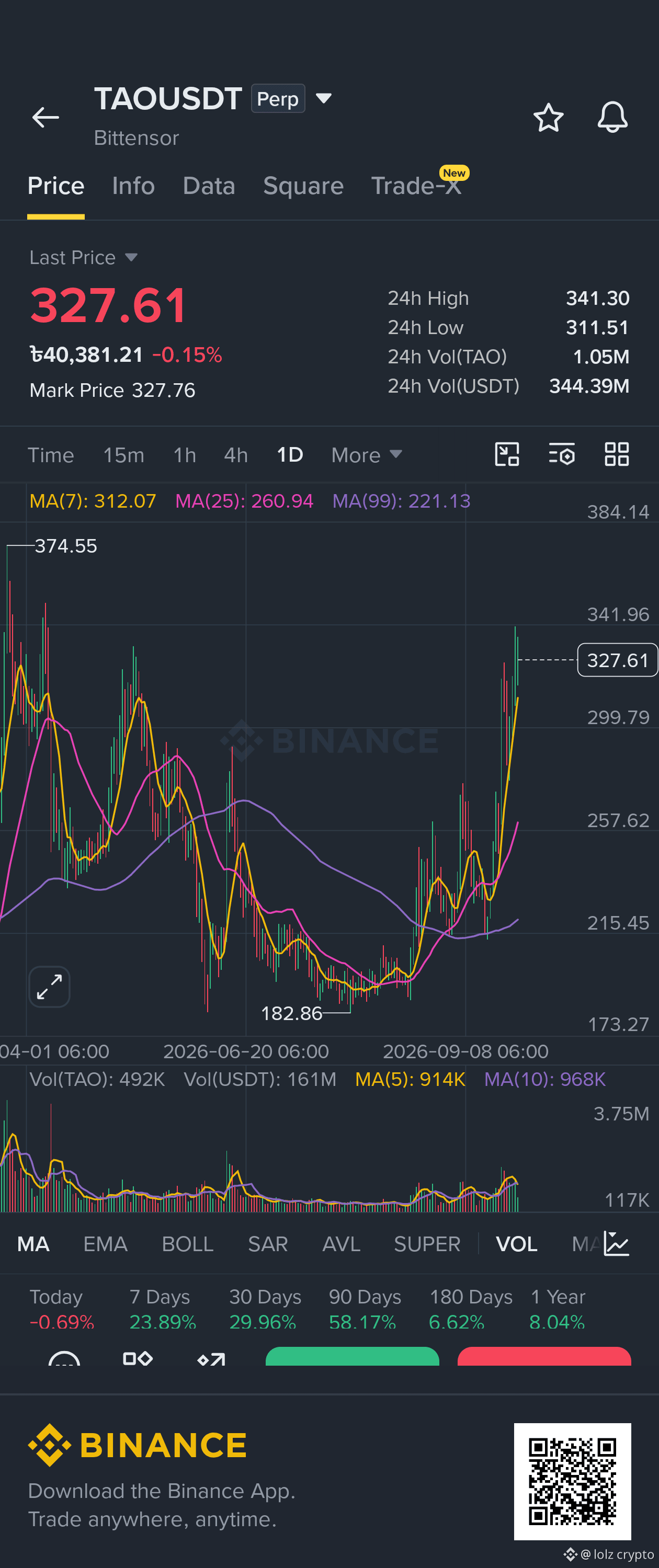
🚀 $TAO IS COILING UP! 👀
$TAO is showing a tightening structure, and a major breakout could be approaching.
🔥 $1,500+ is the big level I’m watching.
If momentum confirms the breakout, the upside could become interesting. Until then, watch the price action closely and avoid FOMO.
⚠️ NFA. DYOR. Crypto is highly volatile.
#TAO #Bittensor #Crypto #Altcoins #Breakout #CryptoTrading
🚀 $TAO IS COILING UP! 👀
$TAO is showing a tightening structure, and a major breakout could be approaching.
🔥 $1,500+ is the big level I’m watching.
If momentum confirms the breakout, the upside could become interesting. Until then, watch the price action closely and avoid FOMO.
⚠️ NFA. DYOR. Crypto is highly volatile.
#TAO #Bittensor #Crypto #Altcoins #Breakout #CryptoTrading
$TAO is showing a tightening structure, and a major breakout could be approaching.
🔥 $1,500+ is the big level I’m watching.
If momentum confirms the breakout, the upside could become interesting. Until then, watch the price action closely and avoid FOMO.
⚠️ NFA. DYOR. Crypto is highly volatile.
#TAO #Bittensor #Crypto #Altcoins #Breakout #CryptoTrading
1
286
Connectez-vous pour découvrir plus de contenu
Rejoignez la communauté mondiale des adeptes de cryptomonnaies sur Binance Square
⚡️ Suviez les dernières informations importantes sur les cryptomonnaies.
💬 Jugé digne de confiance par la plus grande plateforme d’échange de cryptomonnaies au monde.
👍 Découvrez les connaissances que partagent les créateurs vérifiés.
Adresse e-mail/Nº de téléphone
Sujets d’actualité
1
#KoreaProposesTokenizingStocksAndBonds
6,064 vues
167 mentions
2
#MetaMaskExitsLidoValidatorsAfterSecurityIncident
69,177 vues
908 mentions
3
#MicronBeatsEarningsLiftsGuidance
41,404 vues
695 mentions
4
#CFTCSubmitsTwoEventContractRulesToWhiteHouse
28,776 vues
577 mentions
5
#BitcoinClears$85200
35,985 vues
354 mentions
6
#AltcoinSeasonIndexHoldsAbove60For5Days
174,681 vues
2,158 mentions
7
#USADPAdds90000JobsInSeptember
82,410 vues
1,229 mentions
8
#USCorePCEEasesTo3%InAugust
57,849 vues
804 mentions
9
#KospiPostsWorstQuarterSince2020
30,450 vues
630 mentions
10
#SECToClarifyOnChainFundraisingRules
74,152 vues
860 mentions