

#mbeyaconsciouscomunity
mbeyaconsciouscomunity
4.3M vues
639 mentions
Populaire
Récents

·
--
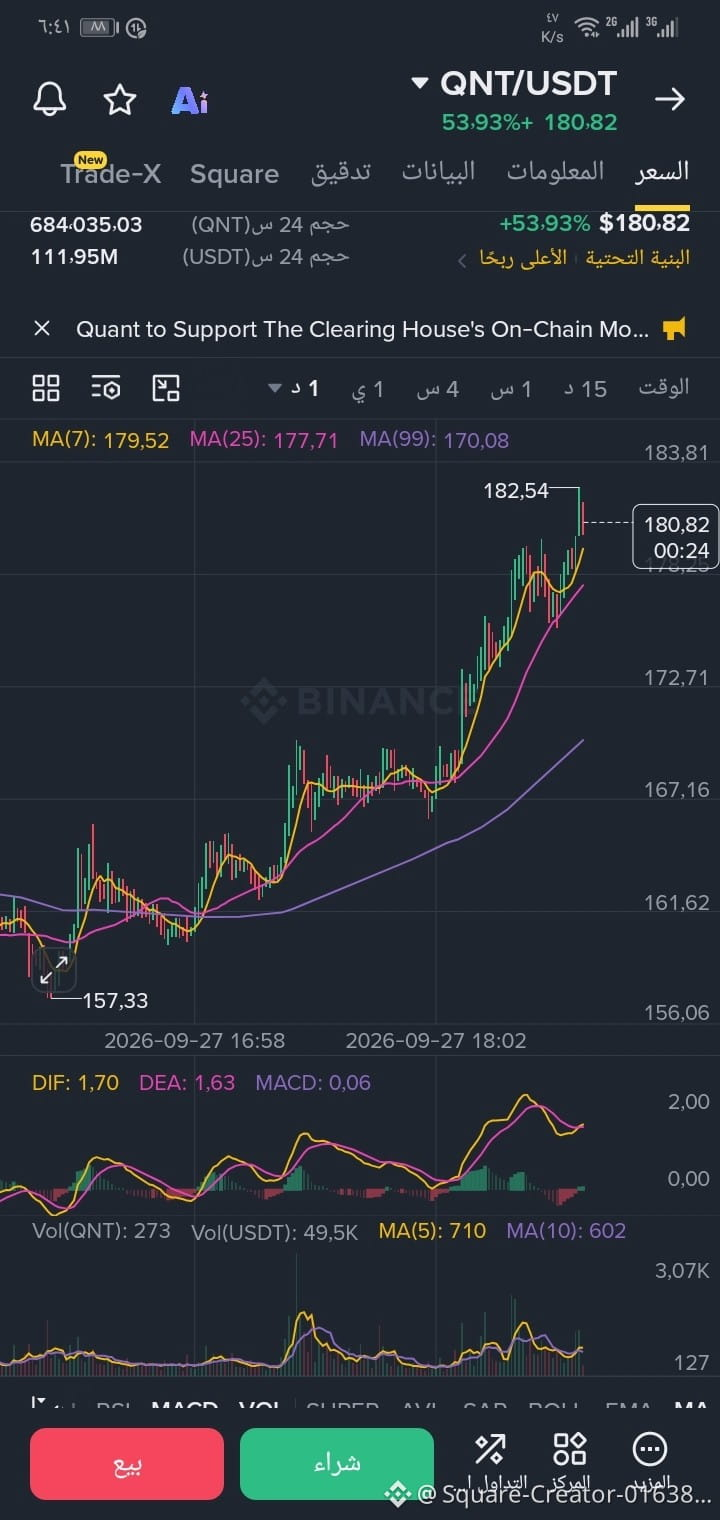
كان الهدف على 140 ولكن قفزت قفزه جنونيه فاز وربح الفرصة الذي دخل معانا
$QNT
#TrendingTopic #Write2Earn #MtGox钱包动态 #MbeyaconsciousComunity
{future}(QNTUSDT)
كان الهدف على 140 ولكن قفزت قفزه جنونيه فاز وربح الفرصة الذي دخل معانا
$QNT
#TrendingTopic #Write2Earn #MtGox钱包动态 #MbeyaconsciousComunity
$QNT
#TrendingTopic #Write2Earn #MtGox钱包动态 #MbeyaconsciousComunity
1
162
·
--
🔥 **$OGN
{future}(OGNUSDT)
#OGNUSDT — زخم صعودي مستمر!** 🚀
• الاتجاه: Long (صعودي) 🟢
• منطقة الدخول الحالية: 0.02100 - 0.02130
• وقف الخسارة المقترح: 0.02050
🎯 **الأهداف:**
1️⃣ 0.02150
2️⃣ 0.02180
3️⃣ 0.02220
📊 **التحليل السريع:**
تظهر #OGN أداءً إيجابياً مع سيطرة المشترين بنسبة 63% في آخر 54 ثانية، مما يعكس اهتماماً متواصلاً. ومع حجم تداول يومي يبلغ 311 ألف USDT، نرى أن العملة في حالة تجميع صعودية هادئة.
$SEI
{future}(SEIUSDT)
$WAL
{future}(WALUSDT)
#MbeyaconsciousComunity #Qubic #XRPRealityCheck #WIF逆袭
🔥 **$OGN
#OGNUSDT — زخم صعودي مستمر!** 🚀
• الاتجاه: Long (صعودي) 🟢
• منطقة الدخول الحالية: 0.02100 - 0.02130
• وقف الخسارة المقترح: 0.02050
🎯 **الأهداف:**
1️⃣ 0.02150
2️⃣ 0.02180
3️⃣ 0.02220
📊 **التحليل السريع:**
تظهر #OGN أداءً إيجابياً مع سيطرة المشترين بنسبة 63% في آخر 54 ثانية، مما يعكس اهتماماً متواصلاً. ومع حجم تداول يومي يبلغ 311 ألف USDT، نرى أن العملة في حالة تجميع صعودية هادئة.
$SEI
$WAL
#MbeyaconsciousComunity #Qubic #XRPRealityCheck #WIF逆袭
#OGNUSDT — زخم صعودي مستمر!** 🚀
• الاتجاه: Long (صعودي) 🟢
• منطقة الدخول الحالية: 0.02100 - 0.02130
• وقف الخسارة المقترح: 0.02050
🎯 **الأهداف:**
1️⃣ 0.02150
2️⃣ 0.02180
3️⃣ 0.02220
📊 **التحليل السريع:**
تظهر #OGN أداءً إيجابياً مع سيطرة المشترين بنسبة 63% في آخر 54 ثانية، مما يعكس اهتماماً متواصلاً. ومع حجم تداول يومي يبلغ 311 ألف USDT، نرى أن العملة في حالة تجميع صعودية هادئة.
$SEI
$WAL
#MbeyaconsciousComunity #Qubic #XRPRealityCheck #WIF逆袭
3
54
·
--
🔥 **$ACE
{future}(ACEUSDT)
| #ACEUSDT — إشارات تجميع قوية وموجة شراء مفاجئة! 💥**
• **الاتجاه:** long (شراء) 🟢
• **الدخول:** 0.1820 - 0.1840
• **وقف الخسارة:** 0.1780
🎯 **الأهداف:**
1️⃣ 0.1880
2️⃣ 0.1950
3️⃣ 0.2050
📊 **التحليل السريع:**
رغم أن الأداء اليومي شبه مستقر (-0.1%)، إلا أن البيانات اللحظية تكشف شيئاً مثيراً! نسبة الشراء وصلت إلى 89% (100.1 ألف USDT في دقيقة واحدة!)، وهذا يعكس دخول "سيولة ذكية" تحاول امتصاص العروض ورفع السعر. هذا التراكم غالباً ما يسبق تحركات سعرية كبيرة ومفاجئة.
$SOMI
{future}(SOMIUSDT)
$LSK
{future}(LSKUSDT)
#MbeyaconsciousComunity #TerraLunaClassic #viralpost #solana
🔥 **$ACE
| #ACEUSDT — إشارات تجميع قوية وموجة شراء مفاجئة! 💥**
• **الاتجاه:** long (شراء) 🟢
• **الدخول:** 0.1820 - 0.1840
• **وقف الخسارة:** 0.1780
🎯 **الأهداف:**
1️⃣ 0.1880
2️⃣ 0.1950
3️⃣ 0.2050
📊 **التحليل السريع:**
رغم أن الأداء اليومي شبه مستقر (-0.1%)، إلا أن البيانات اللحظية تكشف شيئاً مثيراً! نسبة الشراء وصلت إلى 89% (100.1 ألف USDT في دقيقة واحدة!)، وهذا يعكس دخول "سيولة ذكية" تحاول امتصاص العروض ورفع السعر. هذا التراكم غالباً ما يسبق تحركات سعرية كبيرة ومفاجئة.
$SOMI
$LSK
#MbeyaconsciousComunity #TerraLunaClassic #viralpost #solana
| #ACEUSDT — إشارات تجميع قوية وموجة شراء مفاجئة! 💥**
• **الاتجاه:** long (شراء) 🟢
• **الدخول:** 0.1820 - 0.1840
• **وقف الخسارة:** 0.1780
🎯 **الأهداف:**
1️⃣ 0.1880
2️⃣ 0.1950
3️⃣ 0.2050
📊 **التحليل السريع:**
رغم أن الأداء اليومي شبه مستقر (-0.1%)، إلا أن البيانات اللحظية تكشف شيئاً مثيراً! نسبة الشراء وصلت إلى 89% (100.1 ألف USDT في دقيقة واحدة!)، وهذا يعكس دخول "سيولة ذكية" تحاول امتصاص العروض ورفع السعر. هذا التراكم غالباً ما يسبق تحركات سعرية كبيرة ومفاجئة.
$SOMI
$LSK
#MbeyaconsciousComunity #TerraLunaClassic #viralpost #solana
1
126
·
--
عملة #chip في حالة حماسية جداً اليوم، ويبدو أنها تجذب الكثير من الاهتمام! إليك التحليل المحدث بناءً على المعطيات الميدانية:
🔥 **$CHIP
{future}(CHIPUSDT)
| #CHIPUSDT⚡️ — اندفاع صعودي وزخم شرائي نشط! 🚀**
• **الاتجاه:** Long (صاعد) 🟢
• **الدخول:** 0.04700 - 0.04780
• **وقف الخسارة:** 0.04500
🎯 **الأهداف:**
1️⃣ 0.04850
2️⃣ 0.04950
3️⃣ 0.05100
📊 **التحليل السريع:** العملة تحقق أداءً قوياً بنمو يومي (+13.1%) مع استمرار الزخم اللحظي (+0.6% في دقيقة). هيمنة المشترين بنسبة 55% (28.1 ألف USDT) تؤكد استمرار الثقة فيها وسط حجم تداول يومي ممتاز وصل إلى 3.6 مليون. العملة حالياً تتداول فوق مستويات دعم مهمة، مما يعزز من فرص استمرار الصعود.
**نصيحة صديقة:**
يا صديقي، الحماس حول هذه العملة واضح جداً، ولكن تذكر دائماً أن العملات التي تقفز بنسبة تزيد عن 10% في يوم واحد قد تواجه عمليات جني أرباح مفاجئة. التزم بوقف الخسارة الذي وضعناه لتكون في الجانب الآمن دائماً. استمتع بالموجة بذكاء! 😉
$LSK
{future}(LSKUSDT)
$SOMI
{future}(SOMIUSDT)
#MbeyaconsciousComunity #TrendingTopic #Write2Earn
عملة #chip في حالة حماسية جداً اليوم، ويبدو أنها تجذب الكثير من الاهتمام! إليك التحليل المحدث بناءً على المعطيات الميدانية:
🔥 **$CHIP
| #CHIPUSDT⚡️ — اندفاع صعودي وزخم شرائي نشط! 🚀**
• **الاتجاه:** Long (صاعد) 🟢
• **الدخول:** 0.04700 - 0.04780
• **وقف الخسارة:** 0.04500
🎯 **الأهداف:**
1️⃣ 0.04850
2️⃣ 0.04950
3️⃣ 0.05100
📊 **التحليل السريع:** العملة تحقق أداءً قوياً بنمو يومي (+13.1%) مع استمرار الزخم اللحظي (+0.6% في دقيقة). هيمنة المشترين بنسبة 55% (28.1 ألف USDT) تؤكد استمرار الثقة فيها وسط حجم تداول يومي ممتاز وصل إلى 3.6 مليون. العملة حالياً تتداول فوق مستويات دعم مهمة، مما يعزز من فرص استمرار الصعود.
**نصيحة صديقة:**
يا صديقي، الحماس حول هذه العملة واضح جداً، ولكن تذكر دائماً أن العملات التي تقفز بنسبة تزيد عن 10% في يوم واحد قد تواجه عمليات جني أرباح مفاجئة. التزم بوقف الخسارة الذي وضعناه لتكون في الجانب الآمن دائماً. استمتع بالموجة بذكاء! 😉
$LSK
$SOMI
#MbeyaconsciousComunity #TrendingTopic #Write2Earn
🔥 **$CHIP
| #CHIPUSDT⚡️ — اندفاع صعودي وزخم شرائي نشط! 🚀**
• **الاتجاه:** Long (صاعد) 🟢
• **الدخول:** 0.04700 - 0.04780
• **وقف الخسارة:** 0.04500
🎯 **الأهداف:**
1️⃣ 0.04850
2️⃣ 0.04950
3️⃣ 0.05100
📊 **التحليل السريع:** العملة تحقق أداءً قوياً بنمو يومي (+13.1%) مع استمرار الزخم اللحظي (+0.6% في دقيقة). هيمنة المشترين بنسبة 55% (28.1 ألف USDT) تؤكد استمرار الثقة فيها وسط حجم تداول يومي ممتاز وصل إلى 3.6 مليون. العملة حالياً تتداول فوق مستويات دعم مهمة، مما يعزز من فرص استمرار الصعود.
**نصيحة صديقة:**
يا صديقي، الحماس حول هذه العملة واضح جداً، ولكن تذكر دائماً أن العملات التي تقفز بنسبة تزيد عن 10% في يوم واحد قد تواجه عمليات جني أرباح مفاجئة. التزم بوقف الخسارة الذي وضعناه لتكون في الجانب الآمن دائماً. استمتع بالموجة بذكاء! 😉
$LSK
$SOMI
#MbeyaconsciousComunity #TrendingTopic #Write2Earn
2
100

·
--

Article
🔥 METIS (MET) — Kya Ye Quiet AI Blockchain Future Mein Surprise De Sakta Hai? 👀$MET Crypto market mein har cycle mein kuch projects sirf hype ke saath move karte hain… aur kuch projects quietly infrastructure build karte rehte hain. Metis (MET) currently isi second category mein nazar aa raha hai. Aur interesting baat ye hai ke Metis ki direction ab sirf Ethereum Layer-2 scaling tak limited nahi reh gayi. 🚀
🧠 Metis ka New Narrative: AI + Blockchain
2026 mein Metis ka major focus Agent Economy par hai — yani aisi economy jahan AI agents sirf users ko answers na dein, balki identity maintain karein, payments handle karein aur on-chain actions perform kar sakein. Metis is vision ko identity, payments aur composable capabilities ke infrastructure ke through develop kar raha hai.
⚡ Hyperion + Andromeda + LazAI
Metis ecosystem multiple components ko connect kar raha hai. Hyperion scalable infrastructure ke liye, Andromeda ecosystem development ke liye aur LazAI AI-related infrastructure aur data economy ke liye important pieces hain. Metis ne 2026 mein in technologies ko broader AI + blockchain stack ke part ke taur par position kiya hai.
🔥 Sabse Interesting Point?
Metis ka idea sirf “AI coin” banne ka nahi hai. Project ka bigger vision AI agents ko blockchain ke through identity, ownership, payments aur verifiable actions provide karna hai. Agar Agent Economy future mein genuinely grow karti hai, to is type ki infrastructure ki demand bhi increase ho sakti hai.
📈 MET ka Future Kaisa Ho Sakta Hai?
Bullish scenario mein agar Metis apne AI infrastructure ko real users, developers aur applications tak successfully scale karta hai, to MET ko ek strong new narrative mil sakta hai. Ethereum Layer-2 + AI + decentralized infrastructure ka combination market mein powerful attention attract kar sakta hai.
⚠️ Lekin Risk Bhi Hai
AI narrative hona automatically price increase guarantee nahi karta. MET ke future ke liye actual ecosystem activity, developers, users, transactions, liquidity aur real-world applications zyada important honge. Crypto market mein competition bhi extremely strong hai.
🎯 Meri Honest View
MET ko main sirf ek normal Layer-2 token ki tarah nahi dekh raha. Iski AI + Agent Economy strategy future mein is project ko completely different category mein position kar sakti hai.
Lekin asli question ye nahi hai ke “MET kitna pump karega?”
Asli question ye hai:
👉 Kya Metis AI agents ke future infrastructure ka meaningful part ban payega?
Agar answer YES hua, to today's quiet development kal ka major narrative ban sakta hai. 🔥
👀 MET is definitely a project worth watching — but adoption will decide the story, not hype.
📌 Not financial advice. Always DYOR.
#MegadropLista #MemeWatch2024 #MbeyaconsciousComunity
#CryptoSectorsFallSecondDay
{spot}(METUSDT)
🔥 METIS (MET) — Kya Ye Quiet AI Blockchain Future Mein Surprise De Sakta Hai? 👀
$MET Crypto market mein har cycle mein kuch projects sirf hype ke saath move karte hain… aur kuch projects quietly infrastructure build karte rehte hain. Metis (MET) currently isi second category mein nazar aa raha hai. Aur interesting baat ye hai ke Metis ki direction ab sirf Ethereum Layer-2 scaling tak limited nahi reh gayi. 🚀
🧠 Metis ka New Narrative: AI + Blockchain
2026 mein Metis ka major focus Agent Economy par hai — yani aisi economy jahan AI agents sirf users ko answers na dein, balki identity maintain karein, payments handle karein aur on-chain actions perform kar sakein. Metis is vision ko identity, payments aur composable capabilities ke infrastructure ke through develop kar raha hai.
⚡ Hyperion + Andromeda + LazAI
Metis ecosystem multiple components ko connect kar raha hai. Hyperion scalable infrastructure ke liye, Andromeda ecosystem development ke liye aur LazAI AI-related infrastructure aur data economy ke liye important pieces hain. Metis ne 2026 mein in technologies ko broader AI + blockchain stack ke part ke taur par position kiya hai.
🔥 Sabse Interesting Point?
Metis ka idea sirf “AI coin” banne ka nahi hai. Project ka bigger vision AI agents ko blockchain ke through identity, ownership, payments aur verifiable actions provide karna hai. Agar Agent Economy future mein genuinely grow karti hai, to is type ki infrastructure ki demand bhi increase ho sakti hai.
📈 MET ka Future Kaisa Ho Sakta Hai?
Bullish scenario mein agar Metis apne AI infrastructure ko real users, developers aur applications tak successfully scale karta hai, to MET ko ek strong new narrative mil sakta hai. Ethereum Layer-2 + AI + decentralized infrastructure ka combination market mein powerful attention attract kar sakta hai.
⚠️ Lekin Risk Bhi Hai
AI narrative hona automatically price increase guarantee nahi karta. MET ke future ke liye actual ecosystem activity, developers, users, transactions, liquidity aur real-world applications zyada important honge. Crypto market mein competition bhi extremely strong hai.
🎯 Meri Honest View
MET ko main sirf ek normal Layer-2 token ki tarah nahi dekh raha. Iski AI + Agent Economy strategy future mein is project ko completely different category mein position kar sakti hai.
Lekin asli question ye nahi hai ke “MET kitna pump karega?”
Asli question ye hai:
👉 Kya Metis AI agents ke future infrastructure ka meaningful part ban payega?
Agar answer YES hua, to today's quiet development kal ka major narrative ban sakta hai. 🔥
👀 MET is definitely a project worth watching — but adoption will decide the story, not hype.
📌 Not financial advice. Always DYOR.
#MegadropLista #MemeWatch2024 #MbeyaconsciousComunity
#CryptoSectorsFallSecondDay
🧠 Metis ka New Narrative: AI + Blockchain
2026 mein Metis ka major focus Agent Economy par hai — yani aisi economy jahan AI agents sirf users ko answers na dein, balki identity maintain karein, payments handle karein aur on-chain actions perform kar sakein. Metis is vision ko identity, payments aur composable capabilities ke infrastructure ke through develop kar raha hai.
⚡ Hyperion + Andromeda + LazAI
Metis ecosystem multiple components ko connect kar raha hai. Hyperion scalable infrastructure ke liye, Andromeda ecosystem development ke liye aur LazAI AI-related infrastructure aur data economy ke liye important pieces hain. Metis ne 2026 mein in technologies ko broader AI + blockchain stack ke part ke taur par position kiya hai.
🔥 Sabse Interesting Point?
Metis ka idea sirf “AI coin” banne ka nahi hai. Project ka bigger vision AI agents ko blockchain ke through identity, ownership, payments aur verifiable actions provide karna hai. Agar Agent Economy future mein genuinely grow karti hai, to is type ki infrastructure ki demand bhi increase ho sakti hai.
📈 MET ka Future Kaisa Ho Sakta Hai?
Bullish scenario mein agar Metis apne AI infrastructure ko real users, developers aur applications tak successfully scale karta hai, to MET ko ek strong new narrative mil sakta hai. Ethereum Layer-2 + AI + decentralized infrastructure ka combination market mein powerful attention attract kar sakta hai.
⚠️ Lekin Risk Bhi Hai
AI narrative hona automatically price increase guarantee nahi karta. MET ke future ke liye actual ecosystem activity, developers, users, transactions, liquidity aur real-world applications zyada important honge. Crypto market mein competition bhi extremely strong hai.
🎯 Meri Honest View
MET ko main sirf ek normal Layer-2 token ki tarah nahi dekh raha. Iski AI + Agent Economy strategy future mein is project ko completely different category mein position kar sakti hai.
Lekin asli question ye nahi hai ke “MET kitna pump karega?”
Asli question ye hai:
👉 Kya Metis AI agents ke future infrastructure ka meaningful part ban payega?
Agar answer YES hua, to today's quiet development kal ka major narrative ban sakta hai. 🔥
👀 MET is definitely a project worth watching — but adoption will decide the story, not hype.
📌 Not financial advice. Always DYOR.
#MegadropLista #MemeWatch2024 #MbeyaconsciousComunity
#CryptoSectorsFallSecondDay
37

·
--
Baissier
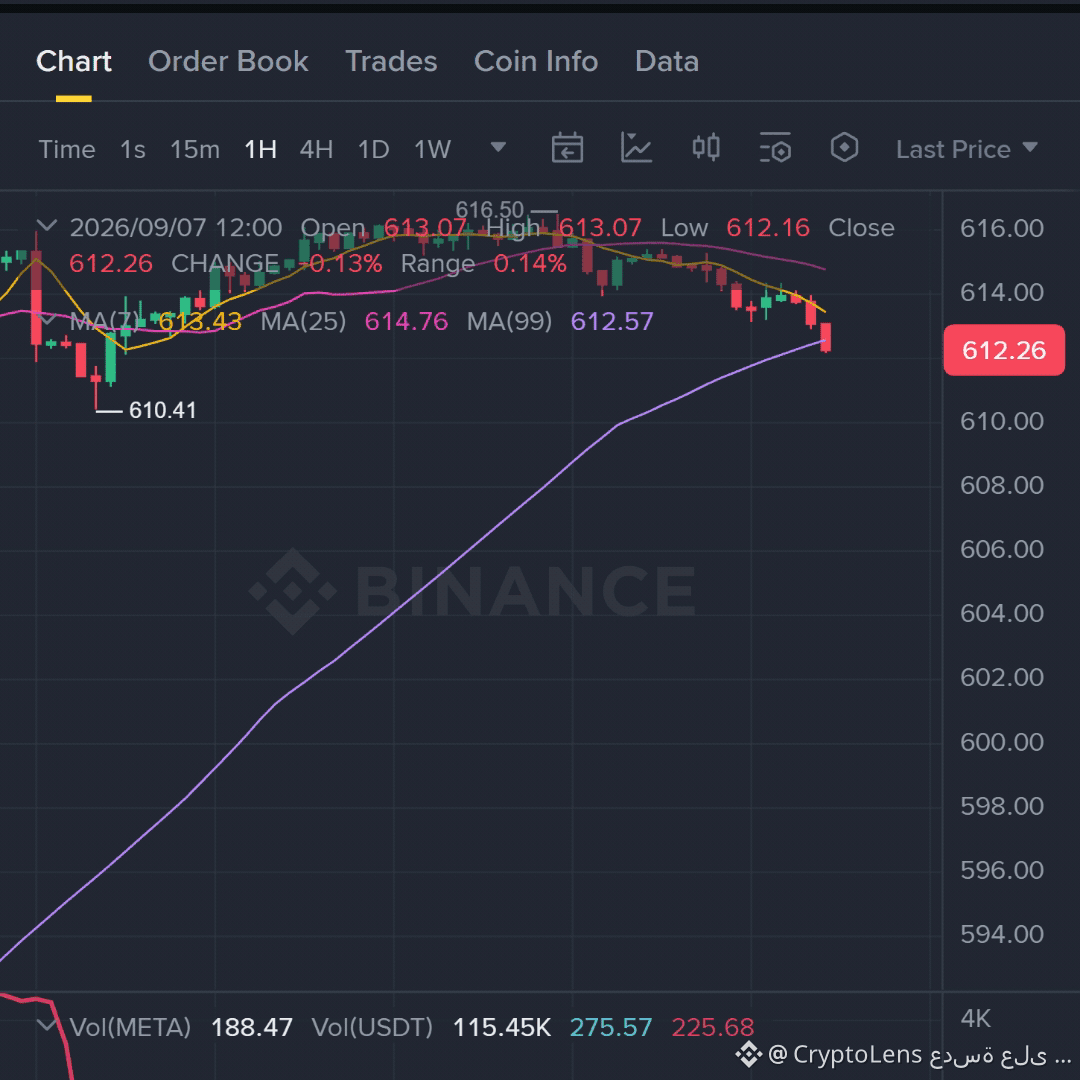
$META /USDT 🟢 SHORT
الكل قاعد يراقب الارتداد، بس الـRSI على فريم الـ15 دقيقة قاعد يقول كلام ثاني 👀
📍 الدخول: 612.17 – 612.35
🛑 الستوب: 614.87
🎯 TP1: 610.30
🎯 TP2: 608.99
🎯 TP3: 607.04
السعر حاليًا داخل منطقة الدخول، والـRSI نازل لـ 25.82، يعني فيه تشبع بيع واضح بعد النزول.
بس هنا النقطة 👇
التشبع البيعي ممكن يكون بداية ارتداد، وممكن يكون مجرد استراحة قبل نزلة ثانية.
إذا كسرنا 610.30 وثبت السعر تحته، أشوف 608.99 هدف منطقي، وبعدها 607.04 إذا استمر الضغط.
أما لو رجع السعر فوق 612.35 وبدأ الزخم يتحسن، فالـShort يصير أضعف.
وفوق 614.87؟ 🚫 الفكرة بالنسبة لي انتهت.
👀 نشوف 608.99 ولا الـRSI بيفاجئنا بارتداد؟
NFA — لا تدخل إلا وأنت عارف مخاطرتك وسوّ بحثك بنفسك.
#meta #MbeyaconsciousComunity #BinanceSquareTalks #stokemarket #SideSwapSuspendsLiquidServices
$META /USDT 🟢 SHORT
الكل قاعد يراقب الارتداد، بس الـRSI على فريم الـ15 دقيقة قاعد يقول كلام ثاني 👀
📍 الدخول: 612.17 – 612.35
🛑 الستوب: 614.87
🎯 TP1: 610.30
🎯 TP2: 608.99
🎯 TP3: 607.04
السعر حاليًا داخل منطقة الدخول، والـRSI نازل لـ 25.82، يعني فيه تشبع بيع واضح بعد النزول.
بس هنا النقطة 👇
التشبع البيعي ممكن يكون بداية ارتداد، وممكن يكون مجرد استراحة قبل نزلة ثانية.
إذا كسرنا 610.30 وثبت السعر تحته، أشوف 608.99 هدف منطقي، وبعدها 607.04 إذا استمر الضغط.
أما لو رجع السعر فوق 612.35 وبدأ الزخم يتحسن، فالـShort يصير أضعف.
وفوق 614.87؟ 🚫 الفكرة بالنسبة لي انتهت.
👀 نشوف 608.99 ولا الـRSI بيفاجئنا بارتداد؟
NFA — لا تدخل إلا وأنت عارف مخاطرتك وسوّ بحثك بنفسك.
#meta #MbeyaconsciousComunity #BinanceSquareTalks #stokemarket #SideSwapSuspendsLiquidServices
الكل قاعد يراقب الارتداد، بس الـRSI على فريم الـ15 دقيقة قاعد يقول كلام ثاني 👀
📍 الدخول: 612.17 – 612.35
🛑 الستوب: 614.87
🎯 TP1: 610.30
🎯 TP2: 608.99
🎯 TP3: 607.04
السعر حاليًا داخل منطقة الدخول، والـRSI نازل لـ 25.82، يعني فيه تشبع بيع واضح بعد النزول.
بس هنا النقطة 👇
التشبع البيعي ممكن يكون بداية ارتداد، وممكن يكون مجرد استراحة قبل نزلة ثانية.
إذا كسرنا 610.30 وثبت السعر تحته، أشوف 608.99 هدف منطقي، وبعدها 607.04 إذا استمر الضغط.
أما لو رجع السعر فوق 612.35 وبدأ الزخم يتحسن، فالـShort يصير أضعف.
وفوق 614.87؟ 🚫 الفكرة بالنسبة لي انتهت.
👀 نشوف 608.99 ولا الـRSI بيفاجئنا بارتداد؟
NFA — لا تدخل إلا وأنت عارف مخاطرتك وسوّ بحثك بنفسك.
#meta #MbeyaconsciousComunity #BinanceSquareTalks #stokemarket #SideSwapSuspendsLiquidServices
1
67

Trading sur 30 j de 4.1K USDT en $CL
🔴 ترمب:
⭕ نتحدث مع الإيرانيين الآن.. وأعتقد أنهم باتوا أكثر جدية
⭕ إيران ليست مستعدة لتوقيع اتفاق
⭕ لننتظر ونرى ما تأتي به المحادثات مع إيران
⭕ بوتين و شي أكدا أنهما لا يزودان إيران بالسلاح
⭕ الذخائر جاهزة للضربة الكبرى ضد إيران
⭕ على الإيرانيين أن يأخذوا الأمر بجدية أكثر
⭕ لم يعد لدى إيران قوة بحرية أو محطات رادار أو دفاعات جوية
# #CNBC #PKT #lpt #MbeyaconsciousComunity
$CL
{future}(CLUSDT)
$BZ
{future}(BZUSDT)
🔴 ترمب:
⭕ نتحدث مع الإيرانيين الآن.. وأعتقد أنهم باتوا أكثر جدية
⭕ إيران ليست مستعدة لتوقيع اتفاق
⭕ لننتظر ونرى ما تأتي به المحادثات مع إيران
⭕ بوتين و شي أكدا أنهما لا يزودان إيران بالسلاح
⭕ الذخائر جاهزة للضربة الكبرى ضد إيران
⭕ على الإيرانيين أن يأخذوا الأمر بجدية أكثر
⭕ لم يعد لدى إيران قوة بحرية أو محطات رادار أو دفاعات جوية
# #CNBC #PKT #lpt #MbeyaconsciousComunity
$CL
$BZ
⭕ نتحدث مع الإيرانيين الآن.. وأعتقد أنهم باتوا أكثر جدية
⭕ إيران ليست مستعدة لتوقيع اتفاق
⭕ لننتظر ونرى ما تأتي به المحادثات مع إيران
⭕ بوتين و شي أكدا أنهما لا يزودان إيران بالسلاح
⭕ الذخائر جاهزة للضربة الكبرى ضد إيران
⭕ على الإيرانيين أن يأخذوا الأمر بجدية أكثر
⭕ لم يعد لدى إيران قوة بحرية أو محطات رادار أو دفاعات جوية
# #CNBC #PKT #lpt #MbeyaconsciousComunity
$CL
$BZ
2
528

Lyn Alden: The Fed’s New Playbook Is Slow Money, Not Shock TherapyMorshad o kalk debo.ame phn decilm kalk tui bolish ba number ta desh bKash
According to Lyn Alden’s research note published Sunday, the Fed’s move away from long-term balance sheet reduction is less about economic rescue and more about plumbing. Alden explains that liquidity shortages in overnight financing markets forced the Fed to resume reserve management purchases to maintain control over short-term interest rates.
Lyn Alden emphasizes that this is not a return to classic quantitative easing. Instead, the Fed is purchasing shorter-duration Treasury securities to keep bank reserves “ample,” a technical distinction that matters less in practice than it does on paper. As Alden puts it, champagne or sparkling wine, it still comes from the same bottle.
In her analysis, Alden outlines expected monthly purchases starting around $40 billion through tax season, before settling into a baseline of roughly $20 billion to $25 billion per month. Over the course of 2026, that implies balance sheet growth in the $220 billion to $375 billion range—hardly explosive by historical standards
Alden contextualizes those figures by comparing them with prior QE episodes, noting that even a $750 billion expansion would represent only a low single-digit percentage increase relative to today’s $6.5 trillion balance sheet. In her view, “big prints” now require trillion-dollar moves, not incremental adjustments.
Lyn Alden also connects the Fed’s actions to structural trends in bank deposits and fiscal deficits. With U.S. deposits growing by hundreds of billions annually, Alden argues the Fed is effectively forced to expand reserves just to keep pace with the system it oversees.
Beyond the United States, Alden devotes significant attention to Japan’s rising bond yields. While social media chatter points to imminent disaster, Lyn Alden pushes back, explaining that Japan’s central bank ownership of government bonds limits systemic risk, even as yields climb.
Still, Alden warns that Japan faces an uncomfortable trade-off between higher interest costs and currency weakness. Yield curve control, she notes, can cap borrowing costs but risks further yen depreciation—an issue made more sensitive by energy prices and household inflation.
From an asset allocation standpoint, Lyn Alden frames the “gradual print” as mildly supportive for scarce assets and mildly negative for the dollar. That backdrop, she argues, helps explain continued interest in gold and bitcoin, even without headline-grabbing stimulus announcements.
Alden cautions, however, that not all scarcity trades offer the same asymmetry they once did. Precious metals, she notes, have largely repriced from undervalued to more fairly valued, making disciplined rebalancing more important than momentum chasing.
Ultimately, Lyn Alden’s research suggests that the era of dramatic policy shocks has given way to quieter, structural liquidity management. For investors, she argues, the takeaway is less about timing a “big print” and more about understanding why steady expansion has become the system’s default setting.
#ADPPayrollsSurge
#IranDealHormuzOpen
#JohnCarl
#XRPRealityCheck
#MbeyaconsciousComunity
Lyn Alden: The Fed’s New Playbook Is Slow Money, Not Shock Therapy
Morshad o kalk debo.ame phn decilm kalk tui bolish ba number ta desh bKash
According to Lyn Alden’s research note published Sunday, the Fed’s move away from long-term balance sheet reduction is less about economic rescue and more about plumbing. Alden explains that liquidity shortages in overnight financing markets forced the Fed to resume reserve management purchases to maintain control over short-term interest rates.
Lyn Alden emphasizes that this is not a return to classic quantitative easing. Instead, the Fed is purchasing shorter-duration Treasury securities to keep bank reserves “ample,” a technical distinction that matters less in practice than it does on paper. As Alden puts it, champagne or sparkling wine, it still comes from the same bottle.
In her analysis, Alden outlines expected monthly purchases starting around $40 billion through tax season, before settling into a baseline of roughly $20 billion to $25 billion per month. Over the course of 2026, that implies balance sheet growth in the $220 billion to $375 billion range—hardly explosive by historical standards
Alden contextualizes those figures by comparing them with prior QE episodes, noting that even a $750 billion expansion would represent only a low single-digit percentage increase relative to today’s $6.5 trillion balance sheet. In her view, “big prints” now require trillion-dollar moves, not incremental adjustments.
Lyn Alden also connects the Fed’s actions to structural trends in bank deposits and fiscal deficits. With U.S. deposits growing by hundreds of billions annually, Alden argues the Fed is effectively forced to expand reserves just to keep pace with the system it oversees.
Beyond the United States, Alden devotes significant attention to Japan’s rising bond yields. While social media chatter points to imminent disaster, Lyn Alden pushes back, explaining that Japan’s central bank ownership of government bonds limits systemic risk, even as yields climb.
Still, Alden warns that Japan faces an uncomfortable trade-off between higher interest costs and currency weakness. Yield curve control, she notes, can cap borrowing costs but risks further yen depreciation—an issue made more sensitive by energy prices and household inflation.
From an asset allocation standpoint, Lyn Alden frames the “gradual print” as mildly supportive for scarce assets and mildly negative for the dollar. That backdrop, she argues, helps explain continued interest in gold and bitcoin, even without headline-grabbing stimulus announcements.
Alden cautions, however, that not all scarcity trades offer the same asymmetry they once did. Precious metals, she notes, have largely repriced from undervalued to more fairly valued, making disciplined rebalancing more important than momentum chasing.
Ultimately, Lyn Alden’s research suggests that the era of dramatic policy shocks has given way to quieter, structural liquidity management. For investors, she argues, the takeaway is less about timing a “big print” and more about understanding why steady expansion has become the system’s default setting.
#ADPPayrollsSurge
#IranDealHormuzOpen
#JohnCarl
#XRPRealityCheck
#MbeyaconsciousComunity
According to Lyn Alden’s research note published Sunday, the Fed’s move away from long-term balance sheet reduction is less about economic rescue and more about plumbing. Alden explains that liquidity shortages in overnight financing markets forced the Fed to resume reserve management purchases to maintain control over short-term interest rates.
Lyn Alden emphasizes that this is not a return to classic quantitative easing. Instead, the Fed is purchasing shorter-duration Treasury securities to keep bank reserves “ample,” a technical distinction that matters less in practice than it does on paper. As Alden puts it, champagne or sparkling wine, it still comes from the same bottle.
In her analysis, Alden outlines expected monthly purchases starting around $40 billion through tax season, before settling into a baseline of roughly $20 billion to $25 billion per month. Over the course of 2026, that implies balance sheet growth in the $220 billion to $375 billion range—hardly explosive by historical standards
Alden contextualizes those figures by comparing them with prior QE episodes, noting that even a $750 billion expansion would represent only a low single-digit percentage increase relative to today’s $6.5 trillion balance sheet. In her view, “big prints” now require trillion-dollar moves, not incremental adjustments.
Lyn Alden also connects the Fed’s actions to structural trends in bank deposits and fiscal deficits. With U.S. deposits growing by hundreds of billions annually, Alden argues the Fed is effectively forced to expand reserves just to keep pace with the system it oversees.
Beyond the United States, Alden devotes significant attention to Japan’s rising bond yields. While social media chatter points to imminent disaster, Lyn Alden pushes back, explaining that Japan’s central bank ownership of government bonds limits systemic risk, even as yields climb.
Still, Alden warns that Japan faces an uncomfortable trade-off between higher interest costs and currency weakness. Yield curve control, she notes, can cap borrowing costs but risks further yen depreciation—an issue made more sensitive by energy prices and household inflation.
From an asset allocation standpoint, Lyn Alden frames the “gradual print” as mildly supportive for scarce assets and mildly negative for the dollar. That backdrop, she argues, helps explain continued interest in gold and bitcoin, even without headline-grabbing stimulus announcements.
Alden cautions, however, that not all scarcity trades offer the same asymmetry they once did. Precious metals, she notes, have largely repriced from undervalued to more fairly valued, making disciplined rebalancing more important than momentum chasing.
Ultimately, Lyn Alden’s research suggests that the era of dramatic policy shocks has given way to quieter, structural liquidity management. For investors, she argues, the takeaway is less about timing a “big print” and more about understanding why steady expansion has become the system’s default setting.
#ADPPayrollsSurge
#IranDealHormuzOpen
#JohnCarl
#XRPRealityCheck
#MbeyaconsciousComunity
443
Article
Bitcoin ETF Outflows Recede, $70,000 BTC NextBitcoin ETF outflows are receding, Galaxy Research said in a recent tweet. This is substantiated by Galaxy Research's US spot ETF net flows (30-day rolling) and cumulative total indicator, which saw a reversal after plunging deeply into negative territory.
The receding of Bitcoin ETF outflows is also substantiated by the 'Bitcoin ETF flows by issuer' indicator. According to the chart shared by Galaxy Research, U.S. spot Bitcoin ETF flows by issuer climbed higher from a deeply negative zone reached earlier in the year.
Bitcoin ETF inflows turned positive this week after two months of consistent outflows, marking the first net inflow period in the recent cycle. This shift suggests potential stabilization in institutional Bitcoin demand after a prolonged period of redemptions.
According to SoSoValue data, U.S. spot Bitcoin ETFs recorded total net inflows of $90.44 million on July 10, while U.S. spot Ethereum ETFs recorded total net inflows of $18.43 million on the same day.
Bitcoin is currently trading at $64,100 after recovering from a low of $61,453 on July 8. The next barrier for price to surmount is $65,136, coinciding with the daily MA 50, which once surpassed might open the pathway to the $70,000 psychological level.
The $70,000 level remains significant as it is the upper band of Bitcoin's current range, which analysts say is now the third longest period spent in any $10,000 price band in Bitcoin's history, behind only the $10,000–$20,000 and $20,000–$30,000 bands.
In the options market on Deribit, put skews continue to weaken as Bitcoin's recent price rebound eased downside concerns. Calls at $62,000, $65,000, and $67,000 are among the most-traded instruments, along with the $56,000 put.
The market is currently flashing mixed signals. Bitcoin ETFs still remain in the negative zone despite total net outflows easing. While continuous whale accumulation suggests positivity, a broad-based market bottom is yet to be confirmed.
#MbeyaconsciousComunity
#Notcoin
#btc70k
#gonnarich
#devcripto
Bitcoin ETF Outflows Recede, $70,000 BTC Next
Bitcoin ETF outflows are receding, Galaxy Research said in a recent tweet. This is substantiated by Galaxy Research's US spot ETF net flows (30-day rolling) and cumulative total indicator, which saw a reversal after plunging deeply into negative territory.
The receding of Bitcoin ETF outflows is also substantiated by the 'Bitcoin ETF flows by issuer' indicator. According to the chart shared by Galaxy Research, U.S. spot Bitcoin ETF flows by issuer climbed higher from a deeply negative zone reached earlier in the year.
Bitcoin ETF inflows turned positive this week after two months of consistent outflows, marking the first net inflow period in the recent cycle. This shift suggests potential stabilization in institutional Bitcoin demand after a prolonged period of redemptions.
According to SoSoValue data, U.S. spot Bitcoin ETFs recorded total net inflows of $90.44 million on July 10, while U.S. spot Ethereum ETFs recorded total net inflows of $18.43 million on the same day.
Bitcoin is currently trading at $64,100 after recovering from a low of $61,453 on July 8. The next barrier for price to surmount is $65,136, coinciding with the daily MA 50, which once surpassed might open the pathway to the $70,000 psychological level.
The $70,000 level remains significant as it is the upper band of Bitcoin's current range, which analysts say is now the third longest period spent in any $10,000 price band in Bitcoin's history, behind only the $10,000–$20,000 and $20,000–$30,000 bands.
In the options market on Deribit, put skews continue to weaken as Bitcoin's recent price rebound eased downside concerns. Calls at $62,000, $65,000, and $67,000 are among the most-traded instruments, along with the $56,000 put.
The market is currently flashing mixed signals. Bitcoin ETFs still remain in the negative zone despite total net outflows easing. While continuous whale accumulation suggests positivity, a broad-based market bottom is yet to be confirmed.
#MbeyaconsciousComunity
#Notcoin
#btc70k
#gonnarich
#devcripto
The receding of Bitcoin ETF outflows is also substantiated by the 'Bitcoin ETF flows by issuer' indicator. According to the chart shared by Galaxy Research, U.S. spot Bitcoin ETF flows by issuer climbed higher from a deeply negative zone reached earlier in the year.
Bitcoin ETF inflows turned positive this week after two months of consistent outflows, marking the first net inflow period in the recent cycle. This shift suggests potential stabilization in institutional Bitcoin demand after a prolonged period of redemptions.
According to SoSoValue data, U.S. spot Bitcoin ETFs recorded total net inflows of $90.44 million on July 10, while U.S. spot Ethereum ETFs recorded total net inflows of $18.43 million on the same day.
Bitcoin is currently trading at $64,100 after recovering from a low of $61,453 on July 8. The next barrier for price to surmount is $65,136, coinciding with the daily MA 50, which once surpassed might open the pathway to the $70,000 psychological level.
The $70,000 level remains significant as it is the upper band of Bitcoin's current range, which analysts say is now the third longest period spent in any $10,000 price band in Bitcoin's history, behind only the $10,000–$20,000 and $20,000–$30,000 bands.
In the options market on Deribit, put skews continue to weaken as Bitcoin's recent price rebound eased downside concerns. Calls at $62,000, $65,000, and $67,000 are among the most-traded instruments, along with the $56,000 put.
The market is currently flashing mixed signals. Bitcoin ETFs still remain in the negative zone despite total net outflows easing. While continuous whale accumulation suggests positivity, a broad-based market bottom is yet to be confirmed.
#MbeyaconsciousComunity
#Notcoin
#btc70k
#gonnarich
#devcripto
1
171

Article
$4.2B Crypto Bank Brings ETH Liquid Staking to Institutions via LidoFor years, institutional investors have looked at Ethereum staking from a distance — attracted by the yields, but held back by the operational complexity and locked liquidity. Anchorage Digital is now directly targeting that gap. The federally chartered crypto bank has integrated Lido, Ethereum’s largest liquid staking protocol, giving institutional clients a compliant, seamless path to $ETH liquid staking without ever leaving its regulated custody environment.
The integration means institutional clients can now connect directly to Lido’s decentralized application from within Anchorage’s platform to mint wstETH by depositing Ether, or redeem it back into $ETH — all under institutional-grade custody and compliance controls. No asset movement to external services required.
That frictionless access matters more than it might first appear. Traditional Ethereum staking has always come with strings attached: long unbonding periods, the operational burden of running validator infrastructure, and capital that sits idle while locked. Lido’s liquid staking model solves this by issuing wstETH in exchange for staked $ETH, letting holders continue earning staking rewards while keeping a fully transferable token in hand. Now that token is accessible inside a regulated US banking environment for the first time at this scale.
Anchorage clients can mint and burn wstETH through the Lido dApp, all within Anchorage’s existing governance and custody framework. Clients retain full oversight of their positions without introducing new counterparties or fragmenting operational workflows — a critical point for compliance-driven allocators who can’t afford fragmented custody chains.
wstETH automatically accrues staking rewards from Ethereum’s proof-of-stake network while remaining fully liquid and transferable. That combination — yield plus liquidity — is exactly what institutional capital needs. It turns a staking position from a locked bet on Ethereum into a productive, flexible asset.
The Lido integration doesn’t stand alone. It slots into a broader strategy at Anchorage Digital to offer a complete suite of on-chain capabilities — staking, liquid staking, restaking, governance, and settlement — all under one regulated platform. The goal is to make advanced DeFi infrastructure genuinely institution-ready, rather than forcing large allocators to piece together services from multiple, unregulated providers.
This is where the strategic significance becomes clear. Institutions haven’t been absent from Ethereum staking because they lacked interest. They’ve been absent because the operational and compliance architecture wasn’t there. By consolidating these services under a federally chartered bank, Anchorage removes the friction that has historically kept large allocators on the sidelines.
The capital efficiency angle is arguably the most compelling part of this integration for professional allocators. wstETH can be used as collateral in lending markets, deployed on decentralized exchanges, or leveraged for cross-chain strategies — all without first unwinding a staking position. Sophisticated investors can generate yield from Ethereum staking while keeping those same assets productive across multiple DeFi protocols simultaneously.
That kind of composability was previously only accessible to crypto-native participants willing to manage self-custody and protocol risk directly. Packaging it inside a regulated custody environment changes the risk profile entirely for institutional compliance teams.
For Lido, the implications run in the other direction too. The protocol’s revenues fell over 20% in 2025 as users withdrew funds and staking yields declined, according to a March announcement from Lido. Gaining a direct institutional distribution channel through a major US-regulated bank could help reverse that trend by bringing in a segment of capital that wasn’t previously accessible to the protocol.
Anchorage Digital was founded in 2017 and is headquartered in San Francisco. It operates under a US federal banking charter and holds additional licenses in Singapore and New York, including a BitLicense — a combination that positions it as one of the most comprehensively licensed crypto custodians in the world.
Anchorage Digital operates under a US federal banking charter and holds a BitLicense in New York, alongside licenses in Singapore. This framework ensures institutional-grade custody and compliance controls for all on-chain services offered on the platform.
Liquid staking removes the core friction of traditional $ETH staking — long unbonding periods, validator operational burdens, and idle capital — while improving capital efficiency. It allows institutions to earn staking yield while keeping assets productive and accessible, making Ethereum staking compatible with institutional operational and compliance requirements.
#PEPE✈
#GoogleDocsMagic
#BuyTheDip
#MbeyaconsciousComunity
#INNOVATION
$4.2B Crypto Bank Brings ETH Liquid Staking to Institutions via Lido
For years, institutional investors have looked at Ethereum staking from a distance — attracted by the yields, but held back by the operational complexity and locked liquidity. Anchorage Digital is now directly targeting that gap. The federally chartered crypto bank has integrated Lido, Ethereum’s largest liquid staking protocol, giving institutional clients a compliant, seamless path to $ETH liquid staking without ever leaving its regulated custody environment.
The integration means institutional clients can now connect directly to Lido’s decentralized application from within Anchorage’s platform to mint wstETH by depositing Ether, or redeem it back into $ETH — all under institutional-grade custody and compliance controls. No asset movement to external services required.
That frictionless access matters more than it might first appear. Traditional Ethereum staking has always come with strings attached: long unbonding periods, the operational burden of running validator infrastructure, and capital that sits idle while locked. Lido’s liquid staking model solves this by issuing wstETH in exchange for staked $ETH, letting holders continue earning staking rewards while keeping a fully transferable token in hand. Now that token is accessible inside a regulated US banking environment for the first time at this scale.
Anchorage clients can mint and burn wstETH through the Lido dApp, all within Anchorage’s existing governance and custody framework. Clients retain full oversight of their positions without introducing new counterparties or fragmenting operational workflows — a critical point for compliance-driven allocators who can’t afford fragmented custody chains.
wstETH automatically accrues staking rewards from Ethereum’s proof-of-stake network while remaining fully liquid and transferable. That combination — yield plus liquidity — is exactly what institutional capital needs. It turns a staking position from a locked bet on Ethereum into a productive, flexible asset.
The Lido integration doesn’t stand alone. It slots into a broader strategy at Anchorage Digital to offer a complete suite of on-chain capabilities — staking, liquid staking, restaking, governance, and settlement — all under one regulated platform. The goal is to make advanced DeFi infrastructure genuinely institution-ready, rather than forcing large allocators to piece together services from multiple, unregulated providers.
This is where the strategic significance becomes clear. Institutions haven’t been absent from Ethereum staking because they lacked interest. They’ve been absent because the operational and compliance architecture wasn’t there. By consolidating these services under a federally chartered bank, Anchorage removes the friction that has historically kept large allocators on the sidelines.
The capital efficiency angle is arguably the most compelling part of this integration for professional allocators. wstETH can be used as collateral in lending markets, deployed on decentralized exchanges, or leveraged for cross-chain strategies — all without first unwinding a staking position. Sophisticated investors can generate yield from Ethereum staking while keeping those same assets productive across multiple DeFi protocols simultaneously.
That kind of composability was previously only accessible to crypto-native participants willing to manage self-custody and protocol risk directly. Packaging it inside a regulated custody environment changes the risk profile entirely for institutional compliance teams.
For Lido, the implications run in the other direction too. The protocol’s revenues fell over 20% in 2025 as users withdrew funds and staking yields declined, according to a March announcement from Lido. Gaining a direct institutional distribution channel through a major US-regulated bank could help reverse that trend by bringing in a segment of capital that wasn’t previously accessible to the protocol.
Anchorage Digital was founded in 2017 and is headquartered in San Francisco. It operates under a US federal banking charter and holds additional licenses in Singapore and New York, including a BitLicense — a combination that positions it as one of the most comprehensively licensed crypto custodians in the world.
Anchorage Digital operates under a US federal banking charter and holds a BitLicense in New York, alongside licenses in Singapore. This framework ensures institutional-grade custody and compliance controls for all on-chain services offered on the platform.
Liquid staking removes the core friction of traditional $ETH staking — long unbonding periods, validator operational burdens, and idle capital — while improving capital efficiency. It allows institutions to earn staking yield while keeping assets productive and accessible, making Ethereum staking compatible with institutional operational and compliance requirements.
#PEPE✈
#GoogleDocsMagic
#BuyTheDip
#MbeyaconsciousComunity
#INNOVATION
The integration means institutional clients can now connect directly to Lido’s decentralized application from within Anchorage’s platform to mint wstETH by depositing Ether, or redeem it back into $ETH — all under institutional-grade custody and compliance controls. No asset movement to external services required.
That frictionless access matters more than it might first appear. Traditional Ethereum staking has always come with strings attached: long unbonding periods, the operational burden of running validator infrastructure, and capital that sits idle while locked. Lido’s liquid staking model solves this by issuing wstETH in exchange for staked $ETH, letting holders continue earning staking rewards while keeping a fully transferable token in hand. Now that token is accessible inside a regulated US banking environment for the first time at this scale.
Anchorage clients can mint and burn wstETH through the Lido dApp, all within Anchorage’s existing governance and custody framework. Clients retain full oversight of their positions without introducing new counterparties or fragmenting operational workflows — a critical point for compliance-driven allocators who can’t afford fragmented custody chains.
wstETH automatically accrues staking rewards from Ethereum’s proof-of-stake network while remaining fully liquid and transferable. That combination — yield plus liquidity — is exactly what institutional capital needs. It turns a staking position from a locked bet on Ethereum into a productive, flexible asset.
The Lido integration doesn’t stand alone. It slots into a broader strategy at Anchorage Digital to offer a complete suite of on-chain capabilities — staking, liquid staking, restaking, governance, and settlement — all under one regulated platform. The goal is to make advanced DeFi infrastructure genuinely institution-ready, rather than forcing large allocators to piece together services from multiple, unregulated providers.
This is where the strategic significance becomes clear. Institutions haven’t been absent from Ethereum staking because they lacked interest. They’ve been absent because the operational and compliance architecture wasn’t there. By consolidating these services under a federally chartered bank, Anchorage removes the friction that has historically kept large allocators on the sidelines.
The capital efficiency angle is arguably the most compelling part of this integration for professional allocators. wstETH can be used as collateral in lending markets, deployed on decentralized exchanges, or leveraged for cross-chain strategies — all without first unwinding a staking position. Sophisticated investors can generate yield from Ethereum staking while keeping those same assets productive across multiple DeFi protocols simultaneously.
That kind of composability was previously only accessible to crypto-native participants willing to manage self-custody and protocol risk directly. Packaging it inside a regulated custody environment changes the risk profile entirely for institutional compliance teams.
For Lido, the implications run in the other direction too. The protocol’s revenues fell over 20% in 2025 as users withdrew funds and staking yields declined, according to a March announcement from Lido. Gaining a direct institutional distribution channel through a major US-regulated bank could help reverse that trend by bringing in a segment of capital that wasn’t previously accessible to the protocol.
Anchorage Digital was founded in 2017 and is headquartered in San Francisco. It operates under a US federal banking charter and holds additional licenses in Singapore and New York, including a BitLicense — a combination that positions it as one of the most comprehensively licensed crypto custodians in the world.
Anchorage Digital operates under a US federal banking charter and holds a BitLicense in New York, alongside licenses in Singapore. This framework ensures institutional-grade custody and compliance controls for all on-chain services offered on the platform.
Liquid staking removes the core friction of traditional $ETH staking — long unbonding periods, validator operational burdens, and idle capital — while improving capital efficiency. It allows institutions to earn staking yield while keeping assets productive and accessible, making Ethereum staking compatible with institutional operational and compliance requirements.
#PEPE✈
#GoogleDocsMagic
#BuyTheDip
#MbeyaconsciousComunity
#INNOVATION
45
The $145 billion math: Why bitcoin’s quantum threat is manageable, not existentialQuantum fears focus on vulnerable early wallets, but market data suggests even a worst case sell-off would be large, not catastrophic.
Quantum doomsayers warn that this would unleash a flood of supply and crash the market. The numbers suggest otherwise.
The threat of quantum computing is not in question.
Roughly 1.7 million BTC sit in Satoshi-era addresses that could be vulnerable under such a scenario. That is about $145 billion at current prices in potential sell pressure, which sounds catastrophic, but is in fact manageable.
During bull markets, long-term holders (investors that have held bitcoin for at least 155 days) routinely distribute between 10,000 and 30,000 BTC per day. At that pace, the entire Satoshi-era supply equates to roughly two to three months of typical profit taking. In the most recent bear market, more than 2.3 million BTC changed hands in a single quarter, exceeding the full quantum “target,” with no systemic collapse.
In addition, monthly exchange inflows approach 850,000 BTC. Derivatives markets cycle through notional volumes equivalent to the entire Satoshi stash every few days. What appears massive in isolation becomes relatively ordinary when set against bitcoin’s existing liquidity and turnover
A sudden, concentrated release would still matter. It would likely drive volatility and could trigger a prolonged downturn, according to Check. But even that scenario assumes economically irrational behavior. Any actor capable of accessing such a trove would be incentivized to distribute gradually, likely hedging through derivatives to minimize slippage and maximize returns.
Bitcoin markets routinely absorb supply on the same order of magnitude as the P2PK era coins. The timeframe is measured in months, not years.
The real issue is not mechanical sell pressure. It is governance. The bigger issue is potentially freezing the Satoshi coins, through BIP-361, then letting everything play out as it should.
#xmucan
#satoshiNakamato
#ETHETFsApproved
#GoogleDocsMagic
#MbeyaconsciousComunity
The $145 billion math: Why bitcoin’s quantum threat is manageable, not existential
Quantum fears focus on vulnerable early wallets, but market data suggests even a worst case sell-off would be large, not catastrophic.
Quantum doomsayers warn that this would unleash a flood of supply and crash the market. The numbers suggest otherwise.
The threat of quantum computing is not in question.
Roughly 1.7 million BTC sit in Satoshi-era addresses that could be vulnerable under such a scenario. That is about $145 billion at current prices in potential sell pressure, which sounds catastrophic, but is in fact manageable.
During bull markets, long-term holders (investors that have held bitcoin for at least 155 days) routinely distribute between 10,000 and 30,000 BTC per day. At that pace, the entire Satoshi-era supply equates to roughly two to three months of typical profit taking. In the most recent bear market, more than 2.3 million BTC changed hands in a single quarter, exceeding the full quantum “target,” with no systemic collapse.
In addition, monthly exchange inflows approach 850,000 BTC. Derivatives markets cycle through notional volumes equivalent to the entire Satoshi stash every few days. What appears massive in isolation becomes relatively ordinary when set against bitcoin’s existing liquidity and turnover
A sudden, concentrated release would still matter. It would likely drive volatility and could trigger a prolonged downturn, according to Check. But even that scenario assumes economically irrational behavior. Any actor capable of accessing such a trove would be incentivized to distribute gradually, likely hedging through derivatives to minimize slippage and maximize returns.
Bitcoin markets routinely absorb supply on the same order of magnitude as the P2PK era coins. The timeframe is measured in months, not years.
The real issue is not mechanical sell pressure. It is governance. The bigger issue is potentially freezing the Satoshi coins, through BIP-361, then letting everything play out as it should.
#xmucan
#satoshiNakamato
#ETHETFsApproved
#GoogleDocsMagic
#MbeyaconsciousComunity
Quantum doomsayers warn that this would unleash a flood of supply and crash the market. The numbers suggest otherwise.
The threat of quantum computing is not in question.
Roughly 1.7 million BTC sit in Satoshi-era addresses that could be vulnerable under such a scenario. That is about $145 billion at current prices in potential sell pressure, which sounds catastrophic, but is in fact manageable.
During bull markets, long-term holders (investors that have held bitcoin for at least 155 days) routinely distribute between 10,000 and 30,000 BTC per day. At that pace, the entire Satoshi-era supply equates to roughly two to three months of typical profit taking. In the most recent bear market, more than 2.3 million BTC changed hands in a single quarter, exceeding the full quantum “target,” with no systemic collapse.
In addition, monthly exchange inflows approach 850,000 BTC. Derivatives markets cycle through notional volumes equivalent to the entire Satoshi stash every few days. What appears massive in isolation becomes relatively ordinary when set against bitcoin’s existing liquidity and turnover
A sudden, concentrated release would still matter. It would likely drive volatility and could trigger a prolonged downturn, according to Check. But even that scenario assumes economically irrational behavior. Any actor capable of accessing such a trove would be incentivized to distribute gradually, likely hedging through derivatives to minimize slippage and maximize returns.
Bitcoin markets routinely absorb supply on the same order of magnitude as the P2PK era coins. The timeframe is measured in months, not years.
The real issue is not mechanical sell pressure. It is governance. The bigger issue is potentially freezing the Satoshi coins, through BIP-361, then letting everything play out as it should.
#xmucan
#satoshiNakamato
#ETHETFsApproved
#GoogleDocsMagic
#MbeyaconsciousComunity
42
Article
Cardano Price Prediction: Whales Buy 30M ADA As The Trendline That Killed Two Rallies Looms AgainCardano trades at $0.1738 on July 23, pressing against the descending trendline that rejected price in both June and mid-July, as whales quietly accumulated 30 million $ADA in a single week ahead of what may be the most important breakout test of the recovery.
The Bollinger upper band at $0.1881 is the first target if the trendline breaks, followed by the 50-day EMA at $0.1769 sitting just above current price. The 100-day EMA at $0.2033 is the next meaningful ceiling beyond that, and the 200-day at $0.2707 marks the longer-term recovery target. The lower Bollinger Band at $0.1526 and the June support zone near $0.1500 define the floor. LuckSide Crypto noted $ADA has bounced off the 20-day EMA both days it has retested it this week, which keeps the recovery structure intact as long as that level holds.
Ali Charts flagged that more than 30 million $ADA were accumulated by whale wallets over the past seven days, positioning ahead of what appears to be a critical breakout test. The accumulation mirrors what is happening at the Bitcoin level, where long-term holder supply just hit a new all-time high.
LuckSide Crypto connected that signal to historical cycle bottoms, noting the same pattern appeared in late 2022, late 2019, and late 2015 before each of Bitcoin’s major recoveries. If history holds, current price levels across crypto are an accumulation zone rather than a continuation of the bear trend.
Two macro variables are worth watching through the back half of the week. Brent crude is rising after the US confirmed 11 straight days of strikes on Iran, though CENTCOM stated the Strait of Hormuz remains open for commercial transit.
Oil markets appear skeptical of that claim given the price action, and any escalation would add risk-off pressure to crypto broadly. Separately, Japan’s central bank officials signaled openness to faster rate hikes as yen weakness fuels domestic inflation. Bank of Japan rate hikes have historically correlated with crypto selloffs, making the timing of any such move a variable worth monitoring heading into the FOMC meeting on July 29.
#LUNCDream
#MbeyaconsciousComunity
#ValentinesDay2024
#dogwifhat
#GoogleDocsMagic
Cardano Price Prediction: Whales Buy 30M ADA As The Trendline That Killed Two Rallies Looms Again
Cardano trades at $0.1738 on July 23, pressing against the descending trendline that rejected price in both June and mid-July, as whales quietly accumulated 30 million $ADA in a single week ahead of what may be the most important breakout test of the recovery.
The Bollinger upper band at $0.1881 is the first target if the trendline breaks, followed by the 50-day EMA at $0.1769 sitting just above current price. The 100-day EMA at $0.2033 is the next meaningful ceiling beyond that, and the 200-day at $0.2707 marks the longer-term recovery target. The lower Bollinger Band at $0.1526 and the June support zone near $0.1500 define the floor. LuckSide Crypto noted $ADA has bounced off the 20-day EMA both days it has retested it this week, which keeps the recovery structure intact as long as that level holds.
Ali Charts flagged that more than 30 million $ADA were accumulated by whale wallets over the past seven days, positioning ahead of what appears to be a critical breakout test. The accumulation mirrors what is happening at the Bitcoin level, where long-term holder supply just hit a new all-time high.
LuckSide Crypto connected that signal to historical cycle bottoms, noting the same pattern appeared in late 2022, late 2019, and late 2015 before each of Bitcoin’s major recoveries. If history holds, current price levels across crypto are an accumulation zone rather than a continuation of the bear trend.
Two macro variables are worth watching through the back half of the week. Brent crude is rising after the US confirmed 11 straight days of strikes on Iran, though CENTCOM stated the Strait of Hormuz remains open for commercial transit.
Oil markets appear skeptical of that claim given the price action, and any escalation would add risk-off pressure to crypto broadly. Separately, Japan’s central bank officials signaled openness to faster rate hikes as yen weakness fuels domestic inflation. Bank of Japan rate hikes have historically correlated with crypto selloffs, making the timing of any such move a variable worth monitoring heading into the FOMC meeting on July 29.
#LUNCDream
#MbeyaconsciousComunity
#ValentinesDay2024
#dogwifhat
#GoogleDocsMagic
The Bollinger upper band at $0.1881 is the first target if the trendline breaks, followed by the 50-day EMA at $0.1769 sitting just above current price. The 100-day EMA at $0.2033 is the next meaningful ceiling beyond that, and the 200-day at $0.2707 marks the longer-term recovery target. The lower Bollinger Band at $0.1526 and the June support zone near $0.1500 define the floor. LuckSide Crypto noted $ADA has bounced off the 20-day EMA both days it has retested it this week, which keeps the recovery structure intact as long as that level holds.
Ali Charts flagged that more than 30 million $ADA were accumulated by whale wallets over the past seven days, positioning ahead of what appears to be a critical breakout test. The accumulation mirrors what is happening at the Bitcoin level, where long-term holder supply just hit a new all-time high.
LuckSide Crypto connected that signal to historical cycle bottoms, noting the same pattern appeared in late 2022, late 2019, and late 2015 before each of Bitcoin’s major recoveries. If history holds, current price levels across crypto are an accumulation zone rather than a continuation of the bear trend.
Two macro variables are worth watching through the back half of the week. Brent crude is rising after the US confirmed 11 straight days of strikes on Iran, though CENTCOM stated the Strait of Hormuz remains open for commercial transit.
Oil markets appear skeptical of that claim given the price action, and any escalation would add risk-off pressure to crypto broadly. Separately, Japan’s central bank officials signaled openness to faster rate hikes as yen weakness fuels domestic inflation. Bank of Japan rate hikes have historically correlated with crypto selloffs, making the timing of any such move a variable worth monitoring heading into the FOMC meeting on July 29.
#LUNCDream
#MbeyaconsciousComunity
#ValentinesDay2024
#dogwifhat
#GoogleDocsMagic
1
572
Article
Raydium Launches Permissioned AMMs for KYC-Gated Tokenized AssetsRaydium has launched Permissioned AMMs, allowing issuers to create KYC-gated tokenized assets on the Solana blockchain. This significant development was highlighted by a recent tweet from SolanaFloor, which also noted Superstate as the first partner to integrate this infrastructure for tokenized equities. You can find more details in the original tweet here.
The broader crypto market continues to exhibit mixed signals, but Raydium’s latest announcement stands out as a notable advancement in decentralized finance. By launching Permissioned AMMs, Raydium aims to facilitate compliant on-chain secondary markets for tokenized assets. This move is particularly relevant as it aligns with increasing regulatory scrutiny in the crypto space, providing a framework for issuers to operate within legal boundaries. The integration of Superstate highlights the potential for collaborative efforts in creating a robust ecosystem for tokenized equities.
Currently, the market does not reflect specific trading volumes or prices for Raydium, as it focuses on the implications of this announcement rather than immediate price action. The introduction of KYC compliance in AMM operations may attract institutional interest, further supporting the Solana ecosystem’s growth. As developments unfold, market participants will be keen to monitor how this integration impacts trading dynamics and user engagement on the platform.
Raydium operates within the Solana ecosystem, which has gained increasing recognition for its speed and scalability. The launch of Permissioned AMMs comes at a time when the demand for compliant tokenized assets is rising, especially following recent regulatory discussions. This initiative aims to build trust and transparency within the crypto market, a critical factor for institutional adoption.
Traders are likely to keep a close watch on how Raydium’s Permissioned AMMs perform in attracting new issuers and users. The success of this initiative could pave the way for further developments in compliant tokenization, potentially influencing the broader DeFi landscape. Additionally, the response from the market regarding this partnership with Superstate may reveal insights into the appetite for KYC-compliant solutions in decentralized finance.
#SniperStrategy
#HODLStrategy
#MbeyaconsciousComunity
#Write2Earrn
#Kriptocutrader
Raydium Launches Permissioned AMMs for KYC-Gated Tokenized Assets
Raydium has launched Permissioned AMMs, allowing issuers to create KYC-gated tokenized assets on the Solana blockchain. This significant development was highlighted by a recent tweet from SolanaFloor, which also noted Superstate as the first partner to integrate this infrastructure for tokenized equities. You can find more details in the original tweet here.
The broader crypto market continues to exhibit mixed signals, but Raydium’s latest announcement stands out as a notable advancement in decentralized finance. By launching Permissioned AMMs, Raydium aims to facilitate compliant on-chain secondary markets for tokenized assets. This move is particularly relevant as it aligns with increasing regulatory scrutiny in the crypto space, providing a framework for issuers to operate within legal boundaries. The integration of Superstate highlights the potential for collaborative efforts in creating a robust ecosystem for tokenized equities.
Currently, the market does not reflect specific trading volumes or prices for Raydium, as it focuses on the implications of this announcement rather than immediate price action. The introduction of KYC compliance in AMM operations may attract institutional interest, further supporting the Solana ecosystem’s growth. As developments unfold, market participants will be keen to monitor how this integration impacts trading dynamics and user engagement on the platform.
Raydium operates within the Solana ecosystem, which has gained increasing recognition for its speed and scalability. The launch of Permissioned AMMs comes at a time when the demand for compliant tokenized assets is rising, especially following recent regulatory discussions. This initiative aims to build trust and transparency within the crypto market, a critical factor for institutional adoption.
Traders are likely to keep a close watch on how Raydium’s Permissioned AMMs perform in attracting new issuers and users. The success of this initiative could pave the way for further developments in compliant tokenization, potentially influencing the broader DeFi landscape. Additionally, the response from the market regarding this partnership with Superstate may reveal insights into the appetite for KYC-compliant solutions in decentralized finance.
#SniperStrategy
#HODLStrategy
#MbeyaconsciousComunity
#Write2Earrn
#Kriptocutrader
The broader crypto market continues to exhibit mixed signals, but Raydium’s latest announcement stands out as a notable advancement in decentralized finance. By launching Permissioned AMMs, Raydium aims to facilitate compliant on-chain secondary markets for tokenized assets. This move is particularly relevant as it aligns with increasing regulatory scrutiny in the crypto space, providing a framework for issuers to operate within legal boundaries. The integration of Superstate highlights the potential for collaborative efforts in creating a robust ecosystem for tokenized equities.
Currently, the market does not reflect specific trading volumes or prices for Raydium, as it focuses on the implications of this announcement rather than immediate price action. The introduction of KYC compliance in AMM operations may attract institutional interest, further supporting the Solana ecosystem’s growth. As developments unfold, market participants will be keen to monitor how this integration impacts trading dynamics and user engagement on the platform.
Raydium operates within the Solana ecosystem, which has gained increasing recognition for its speed and scalability. The launch of Permissioned AMMs comes at a time when the demand for compliant tokenized assets is rising, especially following recent regulatory discussions. This initiative aims to build trust and transparency within the crypto market, a critical factor for institutional adoption.
Traders are likely to keep a close watch on how Raydium’s Permissioned AMMs perform in attracting new issuers and users. The success of this initiative could pave the way for further developments in compliant tokenization, potentially influencing the broader DeFi landscape. Additionally, the response from the market regarding this partnership with Superstate may reveal insights into the appetite for KYC-compliant solutions in decentralized finance.
#SniperStrategy
#HODLStrategy
#MbeyaconsciousComunity
#Write2Earrn
#Kriptocutrader
144


He Stole $600 Million. Then Returned Every Penny. The Reason Why Will Mess With Your Head.
August 2021. Poly Network opened their systems one morning and everything was gone.
$600 million. Drained across three blockchains simultaneously overnight. Ethereum. Binance. Polygon. All hit at exactly the same time by one person who knew exactly what they were doing.
Largest DeFi hack in history. Just like that.
The team posted a desperate public message begging the hacker to get in touch. Nobody expected a response. These things never end well.
Then he wrote back.
Not through lawyers. Not anonymously. He hid messages inside blockchain transactions for the entire world to read in real time.
Said he found the vulnerability by accident. Said he did it for fun. Said he never actually wanted the money.
Then said he was giving it all back.
Every single dollar. Returned over the following days without negotiation without lawyers without anything.
His real reason was actually kind of genius when you think about it. Keeping $600 million was impossible. Every government every exchange every blockchain analyst on earth would have been hunting that wallet forever. The money was too hot to ever spend.
So he gave it back and walked away clean.
Poly Network then did something nobody saw coming.
Thanked him publicly. Offered him a full time job as their chief security advisor. Then handed him $500,000 as a reward.
The man who committed the biggest DeFi robbery in history ended up with a career and half a million dollars.
For returning what he already had.
Was he a genius hacker or the most honest thief who ever lived? 👇
$BNB
{spot}(BNBUSDT)
$XRP
{spot}(XRPUSDT)
$ETH
{spot}(ETHUSDT)
#MbeyaconsciousComunity
He Stole $600 Million. Then Returned Every Penny. The Reason Why Will Mess With Your Head.
August 2021. Poly Network opened their systems one morning and everything was gone.
$600 million. Drained across three blockchains simultaneously overnight. Ethereum. Binance. Polygon. All hit at exactly the same time by one person who knew exactly what they were doing.
Largest DeFi hack in history. Just like that.
The team posted a desperate public message begging the hacker to get in touch. Nobody expected a response. These things never end well.
Then he wrote back.
Not through lawyers. Not anonymously. He hid messages inside blockchain transactions for the entire world to read in real time.
Said he found the vulnerability by accident. Said he did it for fun. Said he never actually wanted the money.
Then said he was giving it all back.
Every single dollar. Returned over the following days without negotiation without lawyers without anything.
His real reason was actually kind of genius when you think about it. Keeping $600 million was impossible. Every government every exchange every blockchain analyst on earth would have been hunting that wallet forever. The money was too hot to ever spend.
So he gave it back and walked away clean.
Poly Network then did something nobody saw coming.
Thanked him publicly. Offered him a full time job as their chief security advisor. Then handed him $500,000 as a reward.
The man who committed the biggest DeFi robbery in history ended up with a career and half a million dollars.
For returning what he already had.
Was he a genius hacker or the most honest thief who ever lived? 👇
$BNB
$XRP
$ETH
#MbeyaconsciousComunity
August 2021. Poly Network opened their systems one morning and everything was gone.
$600 million. Drained across three blockchains simultaneously overnight. Ethereum. Binance. Polygon. All hit at exactly the same time by one person who knew exactly what they were doing.
Largest DeFi hack in history. Just like that.
The team posted a desperate public message begging the hacker to get in touch. Nobody expected a response. These things never end well.
Then he wrote back.
Not through lawyers. Not anonymously. He hid messages inside blockchain transactions for the entire world to read in real time.
Said he found the vulnerability by accident. Said he did it for fun. Said he never actually wanted the money.
Then said he was giving it all back.
Every single dollar. Returned over the following days without negotiation without lawyers without anything.
His real reason was actually kind of genius when you think about it. Keeping $600 million was impossible. Every government every exchange every blockchain analyst on earth would have been hunting that wallet forever. The money was too hot to ever spend.
So he gave it back and walked away clean.
Poly Network then did something nobody saw coming.
Thanked him publicly. Offered him a full time job as their chief security advisor. Then handed him $500,000 as a reward.
The man who committed the biggest DeFi robbery in history ended up with a career and half a million dollars.
For returning what he already had.
Was he a genius hacker or the most honest thief who ever lived? 👇
$BNB
$XRP
$ETH
#MbeyaconsciousComunity

2
1
19
3.4k
LatAm stocks, FX post weekly declines as Mideast talks stall; Peru faces election probeIran's foreign minister visits Islamabad, fueling speculation on renewed peace talks
Peru faces electoral uncertainty as probe targets ex-chief electoral official
Brazil's central bank expected to cut rates next week
LatAm assets broadly headed for weekly losses
April 24 (Reuters) - Currencies and stocks of Latin American economies dipped on Friday with investors awaiting updates on Middle East talks, while also monitoring electoral developments in Peru
Global markets have been fraught with volatility this week as initial hope that a peace deal could be reached between Iran and the U.S. did not materialize, even as the ceasefire between all adversaries was extended.
Iranian Foreign Minister Abbas Araqchi arrived in Islamabad on Friday, the venue for past peace talks with the United States, although there were no clear signs that he would meet with U.S. negotiators there.
Crude prices, a key driver for markets, wavered and were last at $105 a barrel as shipments through the strategic Strait of Hormuz remained thin.
In Latin America, Brazil's real led gains with a 0.4% rise, while Chile's peso firmed 0.2% and the pesos of Colombia and Mexico were steady.
MSCI's broader LatAm currencies index (.MILA00000CUS), opens new tab was on track for weekly declines - its first since the first week of March - as investors flocked to the safe-haven dollar.
A corresponding gauge for equities (.MILA00000PUS), opens new tab was down 0.6% at over two-week lows and set for weekly losses
Peru's former chief electoral official, who resigned this week amid mounting criticism over delays in counting votes from the April 12 general election, is now under investigation as part of a broader probe into alleged electoral irregularities, with police raiding his home to collect evidence.
The sol weakened 0.5% and was on track for its second straight week in the red, as investors weighed what the investigation could mean for the election results now expected in May.
Conservative candidate Keiko Fujimori currently leads, with left‑wing lawmaker Roberto Sanchez and former Lima mayor Rafael Lopez Aliaga in a tight race for second place. A run-off is anticipated in June.
MSCI's index tracking Peruvian equities (.MIPE00000PUS), opens new tab was little changed on Friday and was set for its second straight week of losses, while international bonds maturing next year were on track for their third straight week of declines.
We expect the U.S. to continue strengthening its ties in Latin America to bolster its geopolitical influence," said Gillian Edgeworth, fixed-income portfolio manager at Wellington Management, while also adding that some countries in the region could benefit from higher commodity prices due to the Middle East conflict.
Meanwhile, data showed that Mexico's economic activity expanded slightly in February but missed expectations, extending its rough patch since the start of the year.
Uncertainty prevails over the central bank's next policy move alongside the outcome of United States-Mexico-Canada Agreement negotiations expected to start next month.
There is progress in the review, but the process is unlikely to be smooth. Recent headlines suggest Mexico will continue facing unilateral tariffs in the auto, steel, and aluminum industries despite reaching a deal," Citigroup economists said in a note
The country's equities index (.MXX), opens new tab gained 0.9% on Friday, while benchmarks in Chile (.SPIPSA), opens new tab and Argentina (.MERV), opens new tab were up 1.6% and 0.3%, respectively
Meanwhile, Brazil's finance minister told Reuters that the country's planned critical mineral rules do not involve fresh tax breaks. He added that critical minerals would be a priority in a May or June auction for the Eco Invest program, which offers blended finance to lure foreign investment.
A key event next week will be an interest rate decision in Brazil, with economists projecting a cut by a quarter of a percentage point. The Bovespa index (.BVSP), opens new tab slipped 0.5% and is on track for weekly losses
#LISTAAirdrop
#KEEP_SUPPORT
#VeChainNodeMarketplace
#XRPRealityCheck
#MbeyaconsciousComunity
LatAm stocks, FX post weekly declines as Mideast talks stall; Peru faces election probe
Iran's foreign minister visits Islamabad, fueling speculation on renewed peace talks
Peru faces electoral uncertainty as probe targets ex-chief electoral official
Brazil's central bank expected to cut rates next week
LatAm assets broadly headed for weekly losses
April 24 (Reuters) - Currencies and stocks of Latin American economies dipped on Friday with investors awaiting updates on Middle East talks, while also monitoring electoral developments in Peru
Global markets have been fraught with volatility this week as initial hope that a peace deal could be reached between Iran and the U.S. did not materialize, even as the ceasefire between all adversaries was extended.
Iranian Foreign Minister Abbas Araqchi arrived in Islamabad on Friday, the venue for past peace talks with the United States, although there were no clear signs that he would meet with U.S. negotiators there.
Crude prices, a key driver for markets, wavered and were last at $105 a barrel as shipments through the strategic Strait of Hormuz remained thin.
In Latin America, Brazil's real led gains with a 0.4% rise, while Chile's peso firmed 0.2% and the pesos of Colombia and Mexico were steady.
MSCI's broader LatAm currencies index (.MILA00000CUS), opens new tab was on track for weekly declines - its first since the first week of March - as investors flocked to the safe-haven dollar.
A corresponding gauge for equities (.MILA00000PUS), opens new tab was down 0.6% at over two-week lows and set for weekly losses
Peru's former chief electoral official, who resigned this week amid mounting criticism over delays in counting votes from the April 12 general election, is now under investigation as part of a broader probe into alleged electoral irregularities, with police raiding his home to collect evidence.
The sol weakened 0.5% and was on track for its second straight week in the red, as investors weighed what the investigation could mean for the election results now expected in May.
Conservative candidate Keiko Fujimori currently leads, with left‑wing lawmaker Roberto Sanchez and former Lima mayor Rafael Lopez Aliaga in a tight race for second place. A run-off is anticipated in June.
MSCI's index tracking Peruvian equities (.MIPE00000PUS), opens new tab was little changed on Friday and was set for its second straight week of losses, while international bonds maturing next year were on track for their third straight week of declines.
We expect the U.S. to continue strengthening its ties in Latin America to bolster its geopolitical influence," said Gillian Edgeworth, fixed-income portfolio manager at Wellington Management, while also adding that some countries in the region could benefit from higher commodity prices due to the Middle East conflict.
Meanwhile, data showed that Mexico's economic activity expanded slightly in February but missed expectations, extending its rough patch since the start of the year.
Uncertainty prevails over the central bank's next policy move alongside the outcome of United States-Mexico-Canada Agreement negotiations expected to start next month.
There is progress in the review, but the process is unlikely to be smooth. Recent headlines suggest Mexico will continue facing unilateral tariffs in the auto, steel, and aluminum industries despite reaching a deal," Citigroup economists said in a note
The country's equities index (.MXX), opens new tab gained 0.9% on Friday, while benchmarks in Chile (.SPIPSA), opens new tab and Argentina (.MERV), opens new tab were up 1.6% and 0.3%, respectively
Meanwhile, Brazil's finance minister told Reuters that the country's planned critical mineral rules do not involve fresh tax breaks. He added that critical minerals would be a priority in a May or June auction for the Eco Invest program, which offers blended finance to lure foreign investment.
A key event next week will be an interest rate decision in Brazil, with economists projecting a cut by a quarter of a percentage point. The Bovespa index (.BVSP), opens new tab slipped 0.5% and is on track for weekly losses
#LISTAAirdrop
#KEEP_SUPPORT
#VeChainNodeMarketplace
#XRPRealityCheck
#MbeyaconsciousComunity
Peru faces electoral uncertainty as probe targets ex-chief electoral official
Brazil's central bank expected to cut rates next week
LatAm assets broadly headed for weekly losses
April 24 (Reuters) - Currencies and stocks of Latin American economies dipped on Friday with investors awaiting updates on Middle East talks, while also monitoring electoral developments in Peru
Global markets have been fraught with volatility this week as initial hope that a peace deal could be reached between Iran and the U.S. did not materialize, even as the ceasefire between all adversaries was extended.
Iranian Foreign Minister Abbas Araqchi arrived in Islamabad on Friday, the venue for past peace talks with the United States, although there were no clear signs that he would meet with U.S. negotiators there.
Crude prices, a key driver for markets, wavered and were last at $105 a barrel as shipments through the strategic Strait of Hormuz remained thin.
In Latin America, Brazil's real led gains with a 0.4% rise, while Chile's peso firmed 0.2% and the pesos of Colombia and Mexico were steady.
MSCI's broader LatAm currencies index (.MILA00000CUS), opens new tab was on track for weekly declines - its first since the first week of March - as investors flocked to the safe-haven dollar.
A corresponding gauge for equities (.MILA00000PUS), opens new tab was down 0.6% at over two-week lows and set for weekly losses
Peru's former chief electoral official, who resigned this week amid mounting criticism over delays in counting votes from the April 12 general election, is now under investigation as part of a broader probe into alleged electoral irregularities, with police raiding his home to collect evidence.
The sol weakened 0.5% and was on track for its second straight week in the red, as investors weighed what the investigation could mean for the election results now expected in May.
Conservative candidate Keiko Fujimori currently leads, with left‑wing lawmaker Roberto Sanchez and former Lima mayor Rafael Lopez Aliaga in a tight race for second place. A run-off is anticipated in June.
MSCI's index tracking Peruvian equities (.MIPE00000PUS), opens new tab was little changed on Friday and was set for its second straight week of losses, while international bonds maturing next year were on track for their third straight week of declines.
We expect the U.S. to continue strengthening its ties in Latin America to bolster its geopolitical influence," said Gillian Edgeworth, fixed-income portfolio manager at Wellington Management, while also adding that some countries in the region could benefit from higher commodity prices due to the Middle East conflict.
Meanwhile, data showed that Mexico's economic activity expanded slightly in February but missed expectations, extending its rough patch since the start of the year.
Uncertainty prevails over the central bank's next policy move alongside the outcome of United States-Mexico-Canada Agreement negotiations expected to start next month.
There is progress in the review, but the process is unlikely to be smooth. Recent headlines suggest Mexico will continue facing unilateral tariffs in the auto, steel, and aluminum industries despite reaching a deal," Citigroup economists said in a note
The country's equities index (.MXX), opens new tab gained 0.9% on Friday, while benchmarks in Chile (.SPIPSA), opens new tab and Argentina (.MERV), opens new tab were up 1.6% and 0.3%, respectively
Meanwhile, Brazil's finance minister told Reuters that the country's planned critical mineral rules do not involve fresh tax breaks. He added that critical minerals would be a priority in a May or June auction for the Eco Invest program, which offers blended finance to lure foreign investment.
A key event next week will be an interest rate decision in Brazil, with economists projecting a cut by a quarter of a percentage point. The Bovespa index (.BVSP), opens new tab slipped 0.5% and is on track for weekly losses
#LISTAAirdrop
#KEEP_SUPPORT
#VeChainNodeMarketplace
#XRPRealityCheck
#MbeyaconsciousComunity
128
Article
HYPE price remains below $60: has the recovery already lost its edgeHyperliquid’s $HYPE is up by less than 1% in the last 24 hours and remains below the key $60 support.
The retail and institutional demand remains muted, with the bears targeting the $54 support level in the near term.
The $HYPE/USD 4-hour chart remains bearish and efficient as Hyperliquid remains below the $60.00 level after breaking a critical ascending support trendline.
The move has strengthened the bearish technical outlook, suggesting sellers remain firmly in control of the market.
Although the token continues to trade above its long-term 200-day Exponential Moving Average (EMA), recent price action indicates that bullish momentum has weakened considerably.
$HYPE is currently trading below its 50-day EMA at $62.52, a level that had previously provided support during the recent uptrend.
The break below this ascending trendline, which has now turned into resistance around $60.72, signals a shift in market structure as buyers struggle to regain control.
Earlier attempts to recover were also rejected near the descending resistance trendline around $69.67, reinforcing the broader bearish outlook.
For bullish momentum to return, $HYPE must overcome several technical barriers, including the former support trendline at $60.72 and the 50-day EMA at $62.52
A decisive move above these levels would weaken the current bearish outlook and could pave the way for a broader recovery.
#JBVIP🎯
#KamileUrayCommUNITY
#MbeyaconsciousComunity
#Dubai_Crypto_Group
#Volatilidad
HYPE price remains below $60: has the recovery already lost its edge
Hyperliquid’s $HYPE is up by less than 1% in the last 24 hours and remains below the key $60 support.
The retail and institutional demand remains muted, with the bears targeting the $54 support level in the near term.
The $HYPE/USD 4-hour chart remains bearish and efficient as Hyperliquid remains below the $60.00 level after breaking a critical ascending support trendline.
The move has strengthened the bearish technical outlook, suggesting sellers remain firmly in control of the market.
Although the token continues to trade above its long-term 200-day Exponential Moving Average (EMA), recent price action indicates that bullish momentum has weakened considerably.
$HYPE is currently trading below its 50-day EMA at $62.52, a level that had previously provided support during the recent uptrend.
The break below this ascending trendline, which has now turned into resistance around $60.72, signals a shift in market structure as buyers struggle to regain control.
Earlier attempts to recover were also rejected near the descending resistance trendline around $69.67, reinforcing the broader bearish outlook.
For bullish momentum to return, $HYPE must overcome several technical barriers, including the former support trendline at $60.72 and the 50-day EMA at $62.52
A decisive move above these levels would weaken the current bearish outlook and could pave the way for a broader recovery.
#JBVIP🎯
#KamileUrayCommUNITY
#MbeyaconsciousComunity
#Dubai_Crypto_Group
#Volatilidad
The retail and institutional demand remains muted, with the bears targeting the $54 support level in the near term.
The $HYPE/USD 4-hour chart remains bearish and efficient as Hyperliquid remains below the $60.00 level after breaking a critical ascending support trendline.
The move has strengthened the bearish technical outlook, suggesting sellers remain firmly in control of the market.
Although the token continues to trade above its long-term 200-day Exponential Moving Average (EMA), recent price action indicates that bullish momentum has weakened considerably.
$HYPE is currently trading below its 50-day EMA at $62.52, a level that had previously provided support during the recent uptrend.
The break below this ascending trendline, which has now turned into resistance around $60.72, signals a shift in market structure as buyers struggle to regain control.
Earlier attempts to recover were also rejected near the descending resistance trendline around $69.67, reinforcing the broader bearish outlook.
For bullish momentum to return, $HYPE must overcome several technical barriers, including the former support trendline at $60.72 and the 50-day EMA at $62.52
A decisive move above these levels would weaken the current bearish outlook and could pave the way for a broader recovery.
#JBVIP🎯
#KamileUrayCommUNITY
#MbeyaconsciousComunity
#Dubai_Crypto_Group
#Volatilidad
503

Article
HYPE- Hyperliquid Surges by 11% on SpaceX Perp CatalystHyperliquid (HYPE) price is up 11.44% to $75.78, significantly outperforming the broader market, driven by strong institutional ETF inflows and a surge in trading of SpaceX pre-IPO perpetual contracts on its platform.
Spot ETF demand and SpaceX perp frenzy, with over $17M in net ETF inflows and $1.2 billion in SpaceX futures volume driving platform activity and token demand.
The rally is anchored by two clear catalysts. First, regulated spot ETFs for HYPE saw net inflows exceeding $17M in the past 24 hours, bringing cumulative inflows to $171 milion and signalling strong structural demand.
Second, Hyperliquid’s SpaceX-linked perpetual contract (SPCX) saw over $1.2B in pre-IPO futures volume, becoming the platform’s most-traded asset and demonstrating its expansion into non-crypto markets.
Platform stats show a record 44,000+ new wallets in a day, total users surpassing 2.15 million, and open interest holding near $9.64 billion. Furthermore, AI trading agents are actively executing on-chain, with some showing high returns.
The key risk is a loss of momentum and profit-taking, which could trigger a pullback toward the $70 support zone. The bias is bullish but entering a critical resistance zone where volatility may increase.
An anonymous wallet (0x15A9) withdrew 572,900 HYPE tokens, worth approximately $40 million, from Coinbase Prime and immediately staked them on the Hyperliquid platform.
This is bullish for HYPE because moving such a large sum off an exchange and into staking reduces immediate selling pressure (supply lock-up) and indicates a long-term holding strategy focused on earning yield, reflecting deep confidence in the network’s security and future.
The combination of institutional ETF demand and a wildly successful new trading product has propelled HYPE to new highs with strong volume confirmation. Hyperliquid Price Falls 10% Amidst Stablecoin Rule Warning
#MbeyaconsciousComunity
#Notcion
#BitcoinDunyamiz
#Volatilidad
#CryptoPatience
$NVDAB
{spot}(NVDABUSDT)
HYPE- Hyperliquid Surges by 11% on SpaceX Perp Catalyst
Hyperliquid (HYPE) price is up 11.44% to $75.78, significantly outperforming the broader market, driven by strong institutional ETF inflows and a surge in trading of SpaceX pre-IPO perpetual contracts on its platform.
Spot ETF demand and SpaceX perp frenzy, with over $17M in net ETF inflows and $1.2 billion in SpaceX futures volume driving platform activity and token demand.
The rally is anchored by two clear catalysts. First, regulated spot ETFs for HYPE saw net inflows exceeding $17M in the past 24 hours, bringing cumulative inflows to $171 milion and signalling strong structural demand.
Second, Hyperliquid’s SpaceX-linked perpetual contract (SPCX) saw over $1.2B in pre-IPO futures volume, becoming the platform’s most-traded asset and demonstrating its expansion into non-crypto markets.
Platform stats show a record 44,000+ new wallets in a day, total users surpassing 2.15 million, and open interest holding near $9.64 billion. Furthermore, AI trading agents are actively executing on-chain, with some showing high returns.
The key risk is a loss of momentum and profit-taking, which could trigger a pullback toward the $70 support zone. The bias is bullish but entering a critical resistance zone where volatility may increase.
An anonymous wallet (0x15A9) withdrew 572,900 HYPE tokens, worth approximately $40 million, from Coinbase Prime and immediately staked them on the Hyperliquid platform.
This is bullish for HYPE because moving such a large sum off an exchange and into staking reduces immediate selling pressure (supply lock-up) and indicates a long-term holding strategy focused on earning yield, reflecting deep confidence in the network’s security and future.
The combination of institutional ETF demand and a wildly successful new trading product has propelled HYPE to new highs with strong volume confirmation. Hyperliquid Price Falls 10% Amidst Stablecoin Rule Warning
#MbeyaconsciousComunity
#Notcion
#BitcoinDunyamiz
#Volatilidad
#CryptoPatience
$NVDAB
Spot ETF demand and SpaceX perp frenzy, with over $17M in net ETF inflows and $1.2 billion in SpaceX futures volume driving platform activity and token demand.
The rally is anchored by two clear catalysts. First, regulated spot ETFs for HYPE saw net inflows exceeding $17M in the past 24 hours, bringing cumulative inflows to $171 milion and signalling strong structural demand.
Second, Hyperliquid’s SpaceX-linked perpetual contract (SPCX) saw over $1.2B in pre-IPO futures volume, becoming the platform’s most-traded asset and demonstrating its expansion into non-crypto markets.
Platform stats show a record 44,000+ new wallets in a day, total users surpassing 2.15 million, and open interest holding near $9.64 billion. Furthermore, AI trading agents are actively executing on-chain, with some showing high returns.
The key risk is a loss of momentum and profit-taking, which could trigger a pullback toward the $70 support zone. The bias is bullish but entering a critical resistance zone where volatility may increase.
An anonymous wallet (0x15A9) withdrew 572,900 HYPE tokens, worth approximately $40 million, from Coinbase Prime and immediately staked them on the Hyperliquid platform.
This is bullish for HYPE because moving such a large sum off an exchange and into staking reduces immediate selling pressure (supply lock-up) and indicates a long-term holding strategy focused on earning yield, reflecting deep confidence in the network’s security and future.
The combination of institutional ETF demand and a wildly successful new trading product has propelled HYPE to new highs with strong volume confirmation. Hyperliquid Price Falls 10% Amidst Stablecoin Rule Warning
#MbeyaconsciousComunity
#Notcion
#BitcoinDunyamiz
#Volatilidad
#CryptoPatience
$NVDAB
492

·
--
Can Upbit listing keep Dogwifhat’s WIF rally alive?
$DOGE #CryptoNewss
{spot}(DOGEUSDT)
$DOGS #MegadropLista
{spot}(DOGSUSDT)
$DOLO #Megadrop
{spot}(DOLOUSDT)
#MbeyaconsciousComunity South Korea’s Upbit has added Dogwifhat to its spot markets, giving the Solana-based memecoin access to Korean won, Bitcoin, and USDT trading pairs.
Summary
Upbit added WIF pairs in KRW, BTC and USDT, giving Dogwifhat Korean market access now.
WIF jumped after the listing, but memecoin volatility keeps short-term traders exposed to sharp pullbacks.
The listing adds liquidity for Dogwifhat as Solana memecoins continue attracting speculative retail interest globally.
The exchange notice, published on May 6, said WIF trading support would cover KRW, BTC, and USDT markets. The listing gives Dogwifhat wider access to one of Asia’s most active retail crypto markets.
Upbit said Dogwifhat deposits and withdrawals would use the Solana network only. Users were asked to check the network and token contract before sending funds.
The notice listed the supported WIF contract as EKpQGSJtjMFqKZ9KQanSqYXRcF8fBopzLHYxdM65zcjm. Upbit also said unsupported deposits may need a refund process, which could take time.
The exchange added normal early-trading controls. Buy orders were restricted for about five minutes after trading began. Upbit also limited some sell orders and restricted order types for about two hours.
These controls are common around new listings. They aim to reduce unstable order flow when liquidity is still forming.
WIF price rises after listing
Dogwifhat wif13.6%dogwifhat traded higher after the Upbit announcement. Crypto.news price data showed WIF at $0.241142 on May 6, up 25.35% over 24 hours.
The same data showed WIF had a 24-hour trading volume of $217.36 million and a market cap of $240.9 million. The token also gained 33.73% over seven days.
The Upbit listing pushed WIF closer to that watched range. However, the token remains far below its 2024 peak. Crypto.news data showed Dogwifhat’s all-time high was $4.83 on March 31, 2024.
Can Upbit listing keep Dogwifhat’s WIF rally alive?
$DOGE #CryptoNewss
$DOGS #MegadropLista
$DOLO #Megadrop
#MbeyaconsciousComunity South Korea’s Upbit has added Dogwifhat to its spot markets, giving the Solana-based memecoin access to Korean won, Bitcoin, and USDT trading pairs.
Summary
Upbit added WIF pairs in KRW, BTC and USDT, giving Dogwifhat Korean market access now.
WIF jumped after the listing, but memecoin volatility keeps short-term traders exposed to sharp pullbacks.
The listing adds liquidity for Dogwifhat as Solana memecoins continue attracting speculative retail interest globally.
The exchange notice, published on May 6, said WIF trading support would cover KRW, BTC, and USDT markets. The listing gives Dogwifhat wider access to one of Asia’s most active retail crypto markets.
Upbit said Dogwifhat deposits and withdrawals would use the Solana network only. Users were asked to check the network and token contract before sending funds.
The notice listed the supported WIF contract as EKpQGSJtjMFqKZ9KQanSqYXRcF8fBopzLHYxdM65zcjm. Upbit also said unsupported deposits may need a refund process, which could take time.
The exchange added normal early-trading controls. Buy orders were restricted for about five minutes after trading began. Upbit also limited some sell orders and restricted order types for about two hours.
These controls are common around new listings. They aim to reduce unstable order flow when liquidity is still forming.
WIF price rises after listing
Dogwifhat wif13.6%dogwifhat traded higher after the Upbit announcement. Crypto.news price data showed WIF at $0.241142 on May 6, up 25.35% over 24 hours.
The same data showed WIF had a 24-hour trading volume of $217.36 million and a market cap of $240.9 million. The token also gained 33.73% over seven days.
The Upbit listing pushed WIF closer to that watched range. However, the token remains far below its 2024 peak. Crypto.news data showed Dogwifhat’s all-time high was $4.83 on March 31, 2024.
$DOGE #CryptoNewss
$DOGS #MegadropLista
$DOLO #Megadrop
#MbeyaconsciousComunity South Korea’s Upbit has added Dogwifhat to its spot markets, giving the Solana-based memecoin access to Korean won, Bitcoin, and USDT trading pairs.
Summary
Upbit added WIF pairs in KRW, BTC and USDT, giving Dogwifhat Korean market access now.
WIF jumped after the listing, but memecoin volatility keeps short-term traders exposed to sharp pullbacks.
The listing adds liquidity for Dogwifhat as Solana memecoins continue attracting speculative retail interest globally.
The exchange notice, published on May 6, said WIF trading support would cover KRW, BTC, and USDT markets. The listing gives Dogwifhat wider access to one of Asia’s most active retail crypto markets.
Upbit said Dogwifhat deposits and withdrawals would use the Solana network only. Users were asked to check the network and token contract before sending funds.
The notice listed the supported WIF contract as EKpQGSJtjMFqKZ9KQanSqYXRcF8fBopzLHYxdM65zcjm. Upbit also said unsupported deposits may need a refund process, which could take time.
The exchange added normal early-trading controls. Buy orders were restricted for about five minutes after trading began. Upbit also limited some sell orders and restricted order types for about two hours.
These controls are common around new listings. They aim to reduce unstable order flow when liquidity is still forming.
WIF price rises after listing
Dogwifhat wif13.6%dogwifhat traded higher after the Upbit announcement. Crypto.news price data showed WIF at $0.241142 on May 6, up 25.35% over 24 hours.
The same data showed WIF had a 24-hour trading volume of $217.36 million and a market cap of $240.9 million. The token also gained 33.73% over seven days.
The Upbit listing pushed WIF closer to that watched range. However, the token remains far below its 2024 peak. Crypto.news data showed Dogwifhat’s all-time high was $4.83 on March 31, 2024.

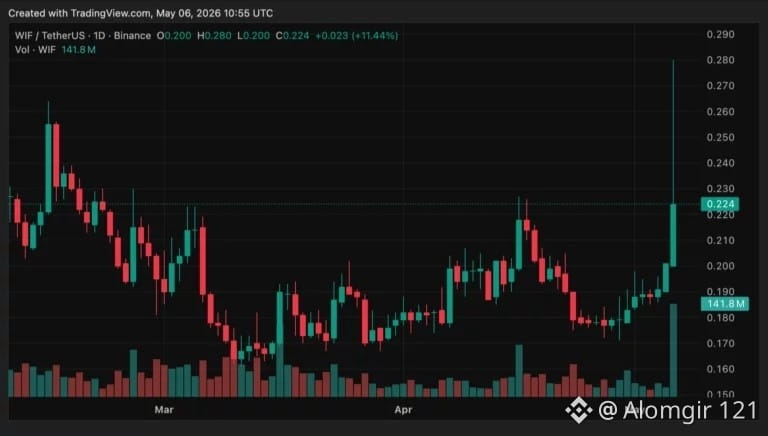
253
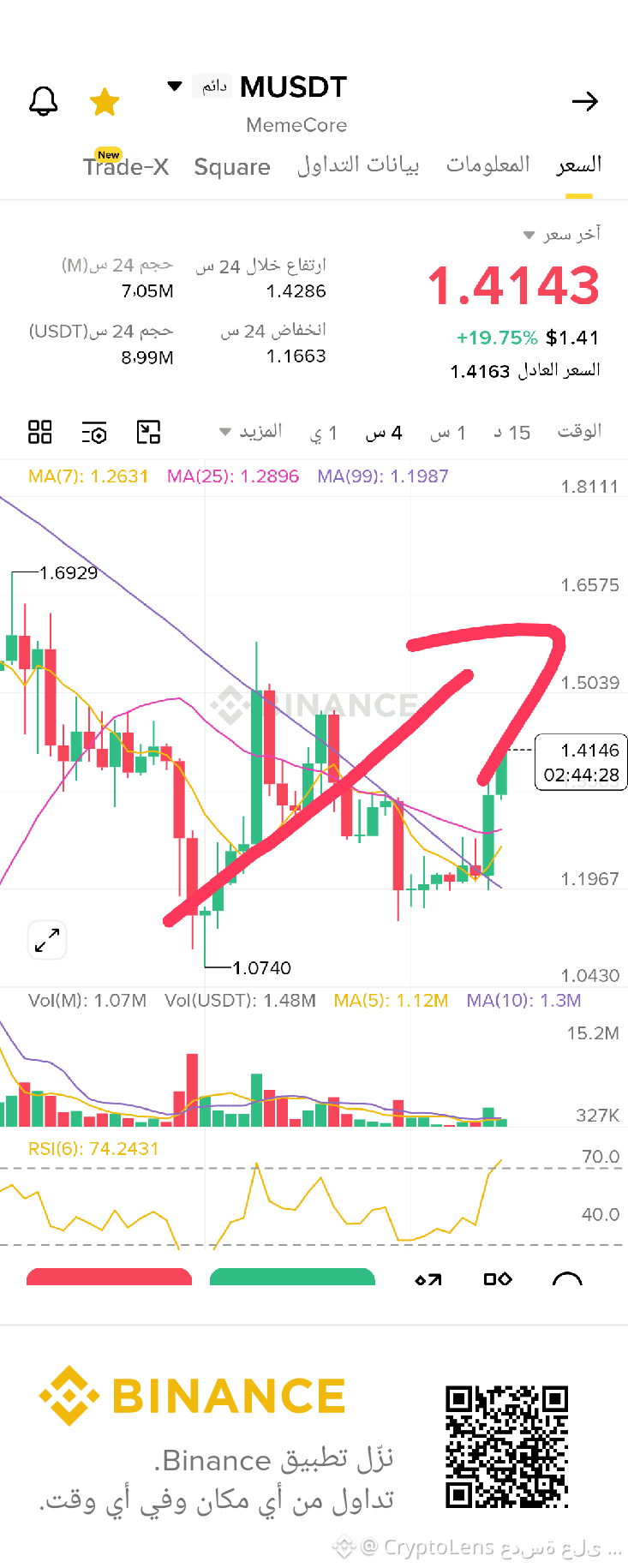

📊 $T continues to move toward my projected target. 🚀
The momentum is still worth watching, but the next move could be crucial.
Do you expect $T to push higher and reach the target, or is a short-term correction more likely?
👀 Also keeping a close watch on $LAB .
Share your thoughts below! 👇
#bearishmomentum #MbeyaconsciousComunity
{alpha}(560x7ec43cf65f1663f820427c62a5780b8f2e25593a)
📊 $T continues to move toward my projected target. 🚀
The momentum is still worth watching, but the next move could be crucial.
Do you expect $T to push higher and reach the target, or is a short-term correction more likely?
👀 Also keeping a close watch on $LAB .
Share your thoughts below! 👇
#bearishmomentum #MbeyaconsciousComunity
The momentum is still worth watching, but the next move could be crucial.
Do you expect $T to push higher and reach the target, or is a short-term correction more likely?
👀 Also keeping a close watch on $LAB .
Share your thoughts below! 👇
#bearishmomentum #MbeyaconsciousComunity
600
Connectez-vous pour découvrir plus de contenu
Rejoignez la communauté mondiale des adeptes de cryptomonnaies sur Binance Square
⚡️ Suviez les dernières informations importantes sur les cryptomonnaies.
💬 Jugé digne de confiance par la plus grande plateforme d’échange de cryptomonnaies au monde.
👍 Découvrez les connaissances que partagent les créateurs vérifiés.
Adresse e-mail/Nº de téléphone
Sujets d’actualité
1
#BitcoinClears$85200
13,308 vues
218 mentions
2
#AltcoinSeasonIndexHoldsAbove60For5Days
64,453 vues
1,205 mentions
3
#USADPAdds90000JobsInSeptember
29,959 vues
675 mentions
4
#USCorePCEEasesTo3%InAugust
21,475 vues
506 mentions
5
#KospiPostsWorstQuarterSince2020
15,003 vues
487 mentions
6
#SECToClarifyOnChainFundraisingRules
36,738 vues
661 mentions
7
#UKFCAOpensCryptoFirmAuthorization
35,976 vues
559 mentions
8
#JapanMOFStudyGroupOnTokenizedGovtBonds
21,711 vues
423 mentions
9
#QNTRises287%
102,892 vues
915 mentions
10
#TrumpRejectsAIRulesForVoluntaryAudits
59,400 vues
798 mentions