

#economicalert
economicalert
853,610 vues
726 mentions
Populaire
Récents

·
--
#FedMinutesShowSplitOnRateHikes
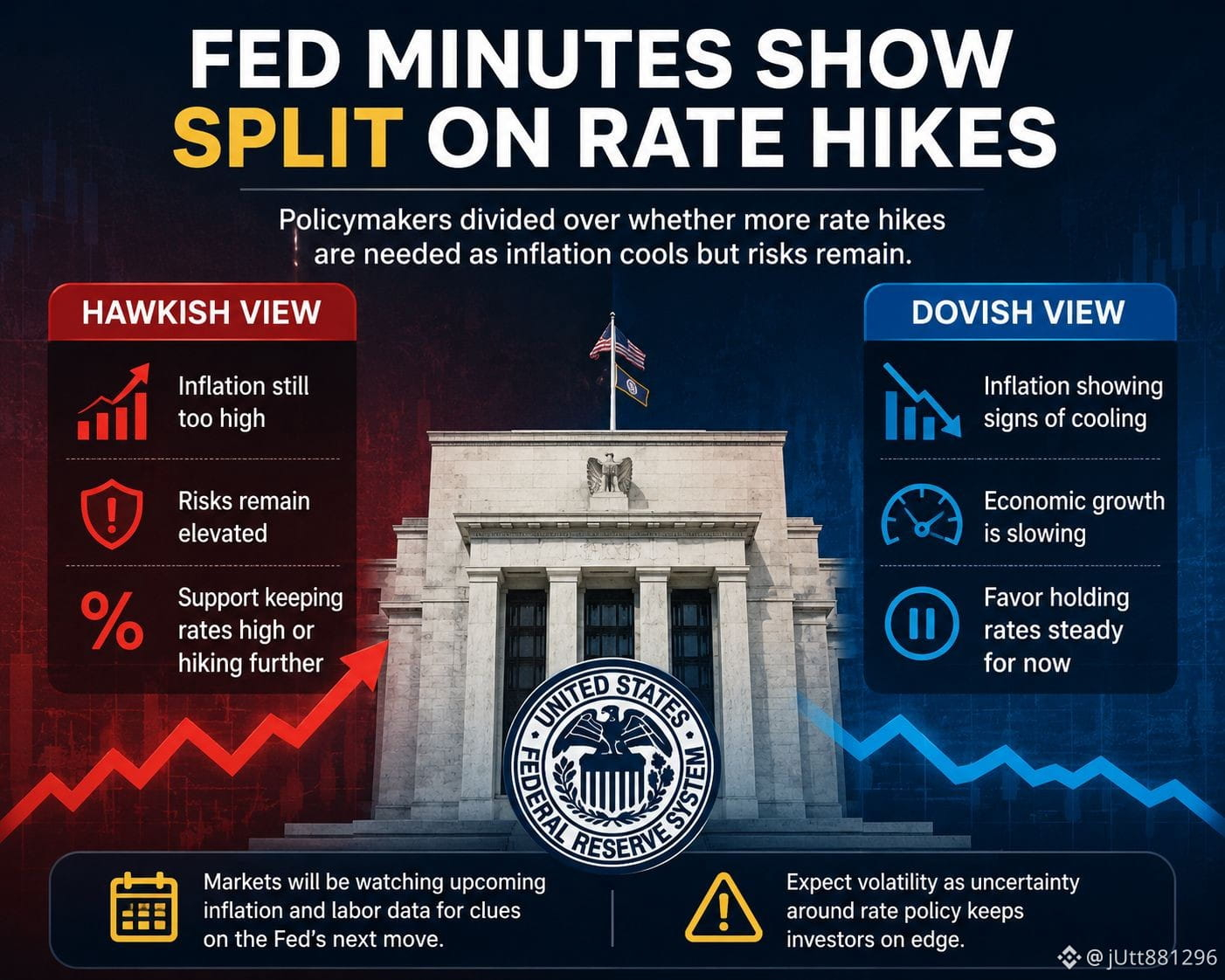
The latest Federal Reserve meeting minutes revealed a divided outlook among policymakers on the future path of interest rates. While some officials believe inflation risks still justify keeping rates elevated—or even considering further hikes—others see signs of slowing economic momentum and favor a more cautious approach.
This split highlights growing uncertainty over the U.S. economic outlook, leaving investors closely watching upcoming inflation and employment data for clues on the Fed's next move.
Markets may remain volatile as expectations shift, making risk management more important than ever for traders and investors.#EconomicAlert .#FedMinutesShowSplitOnRateHikes
#FedMinutesShowSplitOnRateHikes
The latest Federal Reserve meeting minutes revealed a divided outlook among policymakers on the future path of interest rates. While some officials believe inflation risks still justify keeping rates elevated—or even considering further hikes—others see signs of slowing economic momentum and favor a more cautious approach.
This split highlights growing uncertainty over the U.S. economic outlook, leaving investors closely watching upcoming inflation and employment data for clues on the Fed's next move.
Markets may remain volatile as expectations shift, making risk management more important than ever for traders and investors.#EconomicAlert .#FedMinutesShowSplitOnRateHikes
The latest Federal Reserve meeting minutes revealed a divided outlook among policymakers on the future path of interest rates. While some officials believe inflation risks still justify keeping rates elevated—or even considering further hikes—others see signs of slowing economic momentum and favor a more cautious approach.
This split highlights growing uncertainty over the U.S. economic outlook, leaving investors closely watching upcoming inflation and employment data for clues on the Fed's next move.
Markets may remain volatile as expectations shift, making risk management more important than ever for traders and investors.#EconomicAlert .#FedMinutesShowSplitOnRateHikes
2
173

·
--

Article
Breaking news: Economic data released
Important US figures... and market activityUS retail sales data released Wednesday showed continued strength in consumer spending during May, indicating that the world's largest economy remains underpinned by a robust domestic demand base despite challenges related to inflation, interest rates, and recent geopolitical developments.
Retail sales are among the most closely watched economic indicators by global markets, as they directly reflect the behavior of US consumers, who are the primary driver of economic activity in the United States, with consumer spending accounting for the largest share of GDP.
Monthly Growth Exceeds Expectations
According to the data released, US retail sales rose 0.9% month-on-month in May, exceeding market expectations of 0.5% growth.
The reading was also significantly higher than the 0.4% recorded in the previous month, reflecting a clear acceleration in the pace of consumer spending compared to the previous month.
This result indicates that American consumers continued to spend at a strong pace despite interest rates remaining relatively high, confirming the resilience of the US economy and its ability to absorb current monetary pressures.
Core Sales Confirm Strong Domestic Demand
The positive surprise was not limited to the headline index but also extended to core retail sales, which is considered a more accurate measure of real spending trends.
Core sales recorded growth of 0.8% in May, exceeding analysts' expectations of 0.6% and also higher than the previous reading of 0.7%.
These figures reflect continued momentum in key consumer sectors, indicating that domestic demand remains resilient even in an economic environment characterized by high borrowing costs.
Analysts believe this reading reinforces confidence in the US economy's ability to continue growing in the second half of the year without experiencing a sharp slowdown.
A Strong Year-On-Year Jump
On an annual basis, US retail sales grew by 6.88% in May, compared to 4.79% in the previous reading.
This increase demonstrates a broadening of the improvement in consumer activity, which is no longer limited to short-term monthly movements but is also evident when compared to last year's levels.
This reading also reflects the continued ability of US households to spend despite the inflationary pressures the economy has faced in recent years.
Impact of the Peace Agreement and the Federal Reserve's Decision
This data comes at a time when global markets are closely monitoring the implications of the preliminary agreement between the United States and Iran, which has helped to ease geopolitical concerns and significantly reduce oil prices in recent days.
This coincides with investors awaiting the Federal Reserve's interest rate decision today and its upcoming economic forecasts, especially given the ongoing debate about whether the central bank will need to further tighten monetary policy or whether current conditions allow for keeping interest rates unchanged.
In this context, the strength of retail sales is a crucial element in assessing the trajectory of the US economy, as it indicates that economic activity is maintaining its momentum despite the tight financing environment.
Mixed Reactions
Markets showed a mixed reaction following the release of the US retail sales data for May, which came in stronger than analysts' expectations.
Following the data release, the US dollar index maintained its positive performance, rising by approximately 0.12% to 99.40 points.
Conversely, gold came under some selling pressure after the data release.
Gold futures fell by about $3.75, or 0.09%, to trade near $4,350.65 an ounce, after fluctuating between $4,337.22 and $4,369.65 during the session.
Spot gold prices also held steady near $4,331 an ounce, showing little change.
Strong economic data appears to have partially diminished the appeal of the precious metal, particularly as bets on a rapid shift toward a more accommodative monetary policy by the Federal Reserve have receded.
In the US stock market, the reaction was more positive. Nasdaq 100 futures rose by about 0.52%, or 157.5 points, to 30,471, benefiting from continued demand for technology and growth stocks.
S&P 500 futures edged up 0.07% to 7,592.5, reflecting continued positive sentiment toward major U.S. companies.
Conversely, Dow Jones futures slipped 44 points, or 0.08%, to 52,426, reflecting some profit-taking in industrial and defensive stocks after the market's strong gains in recent sessions.
#EconomicAlert #America #jobs #dollar #CoinMarketCap $USDS $BTC
{future}(BTCUSDT)
Breaking news: Economic data released Important US figures... and market activity
US retail sales data released Wednesday showed continued strength in consumer spending during May, indicating that the world's largest economy remains underpinned by a robust domestic demand base despite challenges related to inflation, interest rates, and recent geopolitical developments.
Retail sales are among the most closely watched economic indicators by global markets, as they directly reflect the behavior of US consumers, who are the primary driver of economic activity in the United States, with consumer spending accounting for the largest share of GDP.
Monthly Growth Exceeds Expectations
According to the data released, US retail sales rose 0.9% month-on-month in May, exceeding market expectations of 0.5% growth.
The reading was also significantly higher than the 0.4% recorded in the previous month, reflecting a clear acceleration in the pace of consumer spending compared to the previous month.
This result indicates that American consumers continued to spend at a strong pace despite interest rates remaining relatively high, confirming the resilience of the US economy and its ability to absorb current monetary pressures.
Core Sales Confirm Strong Domestic Demand
The positive surprise was not limited to the headline index but also extended to core retail sales, which is considered a more accurate measure of real spending trends.
Core sales recorded growth of 0.8% in May, exceeding analysts' expectations of 0.6% and also higher than the previous reading of 0.7%.
These figures reflect continued momentum in key consumer sectors, indicating that domestic demand remains resilient even in an economic environment characterized by high borrowing costs.
Analysts believe this reading reinforces confidence in the US economy's ability to continue growing in the second half of the year without experiencing a sharp slowdown.
A Strong Year-On-Year Jump
On an annual basis, US retail sales grew by 6.88% in May, compared to 4.79% in the previous reading.
This increase demonstrates a broadening of the improvement in consumer activity, which is no longer limited to short-term monthly movements but is also evident when compared to last year's levels.
This reading also reflects the continued ability of US households to spend despite the inflationary pressures the economy has faced in recent years.
Impact of the Peace Agreement and the Federal Reserve's Decision
This data comes at a time when global markets are closely monitoring the implications of the preliminary agreement between the United States and Iran, which has helped to ease geopolitical concerns and significantly reduce oil prices in recent days.
This coincides with investors awaiting the Federal Reserve's interest rate decision today and its upcoming economic forecasts, especially given the ongoing debate about whether the central bank will need to further tighten monetary policy or whether current conditions allow for keeping interest rates unchanged.
In this context, the strength of retail sales is a crucial element in assessing the trajectory of the US economy, as it indicates that economic activity is maintaining its momentum despite the tight financing environment.
Mixed Reactions
Markets showed a mixed reaction following the release of the US retail sales data for May, which came in stronger than analysts' expectations.
Following the data release, the US dollar index maintained its positive performance, rising by approximately 0.12% to 99.40 points.
Conversely, gold came under some selling pressure after the data release.
Gold futures fell by about $3.75, or 0.09%, to trade near $4,350.65 an ounce, after fluctuating between $4,337.22 and $4,369.65 during the session.
Spot gold prices also held steady near $4,331 an ounce, showing little change.
Strong economic data appears to have partially diminished the appeal of the precious metal, particularly as bets on a rapid shift toward a more accommodative monetary policy by the Federal Reserve have receded.
In the US stock market, the reaction was more positive. Nasdaq 100 futures rose by about 0.52%, or 157.5 points, to 30,471, benefiting from continued demand for technology and growth stocks.
S&P 500 futures edged up 0.07% to 7,592.5, reflecting continued positive sentiment toward major U.S. companies.
Conversely, Dow Jones futures slipped 44 points, or 0.08%, to 52,426, reflecting some profit-taking in industrial and defensive stocks after the market's strong gains in recent sessions.
#EconomicAlert #America #jobs #dollar #CoinMarketCap $USDS $BTC
Retail sales are among the most closely watched economic indicators by global markets, as they directly reflect the behavior of US consumers, who are the primary driver of economic activity in the United States, with consumer spending accounting for the largest share of GDP.
Monthly Growth Exceeds Expectations
According to the data released, US retail sales rose 0.9% month-on-month in May, exceeding market expectations of 0.5% growth.
The reading was also significantly higher than the 0.4% recorded in the previous month, reflecting a clear acceleration in the pace of consumer spending compared to the previous month.
This result indicates that American consumers continued to spend at a strong pace despite interest rates remaining relatively high, confirming the resilience of the US economy and its ability to absorb current monetary pressures.
Core Sales Confirm Strong Domestic Demand
The positive surprise was not limited to the headline index but also extended to core retail sales, which is considered a more accurate measure of real spending trends.
Core sales recorded growth of 0.8% in May, exceeding analysts' expectations of 0.6% and also higher than the previous reading of 0.7%.
These figures reflect continued momentum in key consumer sectors, indicating that domestic demand remains resilient even in an economic environment characterized by high borrowing costs.
Analysts believe this reading reinforces confidence in the US economy's ability to continue growing in the second half of the year without experiencing a sharp slowdown.
A Strong Year-On-Year Jump
On an annual basis, US retail sales grew by 6.88% in May, compared to 4.79% in the previous reading.
This increase demonstrates a broadening of the improvement in consumer activity, which is no longer limited to short-term monthly movements but is also evident when compared to last year's levels.
This reading also reflects the continued ability of US households to spend despite the inflationary pressures the economy has faced in recent years.
Impact of the Peace Agreement and the Federal Reserve's Decision
This data comes at a time when global markets are closely monitoring the implications of the preliminary agreement between the United States and Iran, which has helped to ease geopolitical concerns and significantly reduce oil prices in recent days.
This coincides with investors awaiting the Federal Reserve's interest rate decision today and its upcoming economic forecasts, especially given the ongoing debate about whether the central bank will need to further tighten monetary policy or whether current conditions allow for keeping interest rates unchanged.
In this context, the strength of retail sales is a crucial element in assessing the trajectory of the US economy, as it indicates that economic activity is maintaining its momentum despite the tight financing environment.
Mixed Reactions
Markets showed a mixed reaction following the release of the US retail sales data for May, which came in stronger than analysts' expectations.
Following the data release, the US dollar index maintained its positive performance, rising by approximately 0.12% to 99.40 points.
Conversely, gold came under some selling pressure after the data release.
Gold futures fell by about $3.75, or 0.09%, to trade near $4,350.65 an ounce, after fluctuating between $4,337.22 and $4,369.65 during the session.
Spot gold prices also held steady near $4,331 an ounce, showing little change.
Strong economic data appears to have partially diminished the appeal of the precious metal, particularly as bets on a rapid shift toward a more accommodative monetary policy by the Federal Reserve have receded.
In the US stock market, the reaction was more positive. Nasdaq 100 futures rose by about 0.52%, or 157.5 points, to 30,471, benefiting from continued demand for technology and growth stocks.
S&P 500 futures edged up 0.07% to 7,592.5, reflecting continued positive sentiment toward major U.S. companies.
Conversely, Dow Jones futures slipped 44 points, or 0.08%, to 52,426, reflecting some profit-taking in industrial and defensive stocks after the market's strong gains in recent sessions.
#EconomicAlert #America #jobs #dollar #CoinMarketCap $USDS $BTC
172

·
--
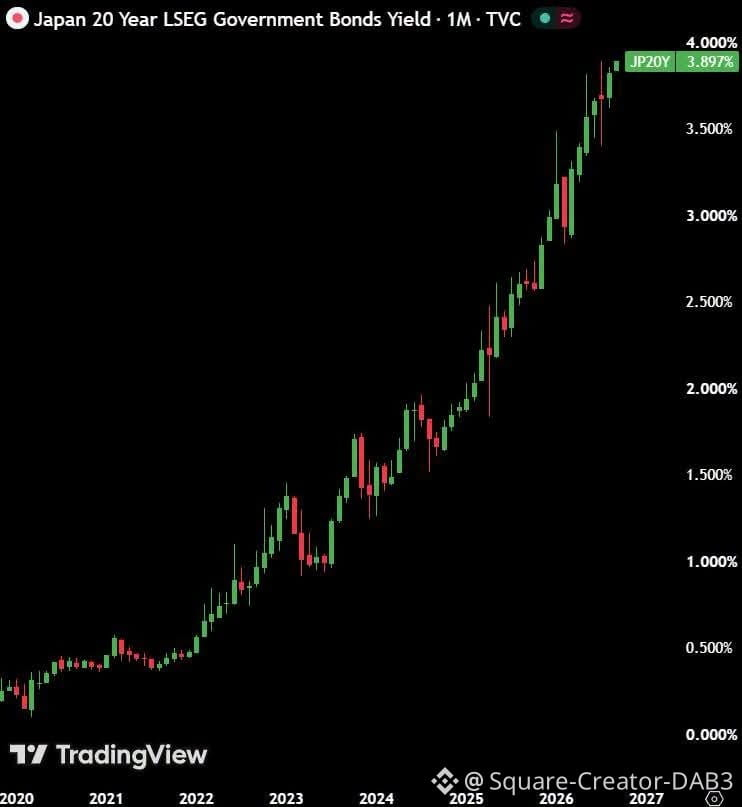
🚨 الوضع بات جنونياً؛ فقد وصل العائد على السندات اليابانية لأجل 20 عاماً إلى 2.9%، مسجلاً أعلى مستوى له منذ 31 عاماً. كما أن العوائد على السندات اليابانية لأجل عامين و5 أعوام و10 أعوام قد وصلت بالفعل إلى أعلى مستوياتها منذ أكثر من 30 عاماً. في عام 2008، تسبب سوق الإسكان الأمريكي في انهيار الاقتصاد العالمي؛ أما هذه المرة، فقد يكون سوق السندات اليابانية هو السبب.
#news #Japan #EconomicAlert
🚨 الوضع بات جنونياً؛ فقد وصل العائد على السندات اليابانية لأجل 20 عاماً إلى 2.9%، مسجلاً أعلى مستوى له منذ 31 عاماً. كما أن العوائد على السندات اليابانية لأجل عامين و5 أعوام و10 أعوام قد وصلت بالفعل إلى أعلى مستوياتها منذ أكثر من 30 عاماً. في عام 2008، تسبب سوق الإسكان الأمريكي في انهيار الاقتصاد العالمي؛ أما هذه المرة، فقد يكون سوق السندات اليابانية هو السبب.
#news #Japan #EconomicAlert
#news #Japan #EconomicAlert
1
76

Vérifié
#usadpweeklyemploymentrises12000
Plus d’emplois aux États-Unis = plus de pression sur la Fed. 🇺🇸📉
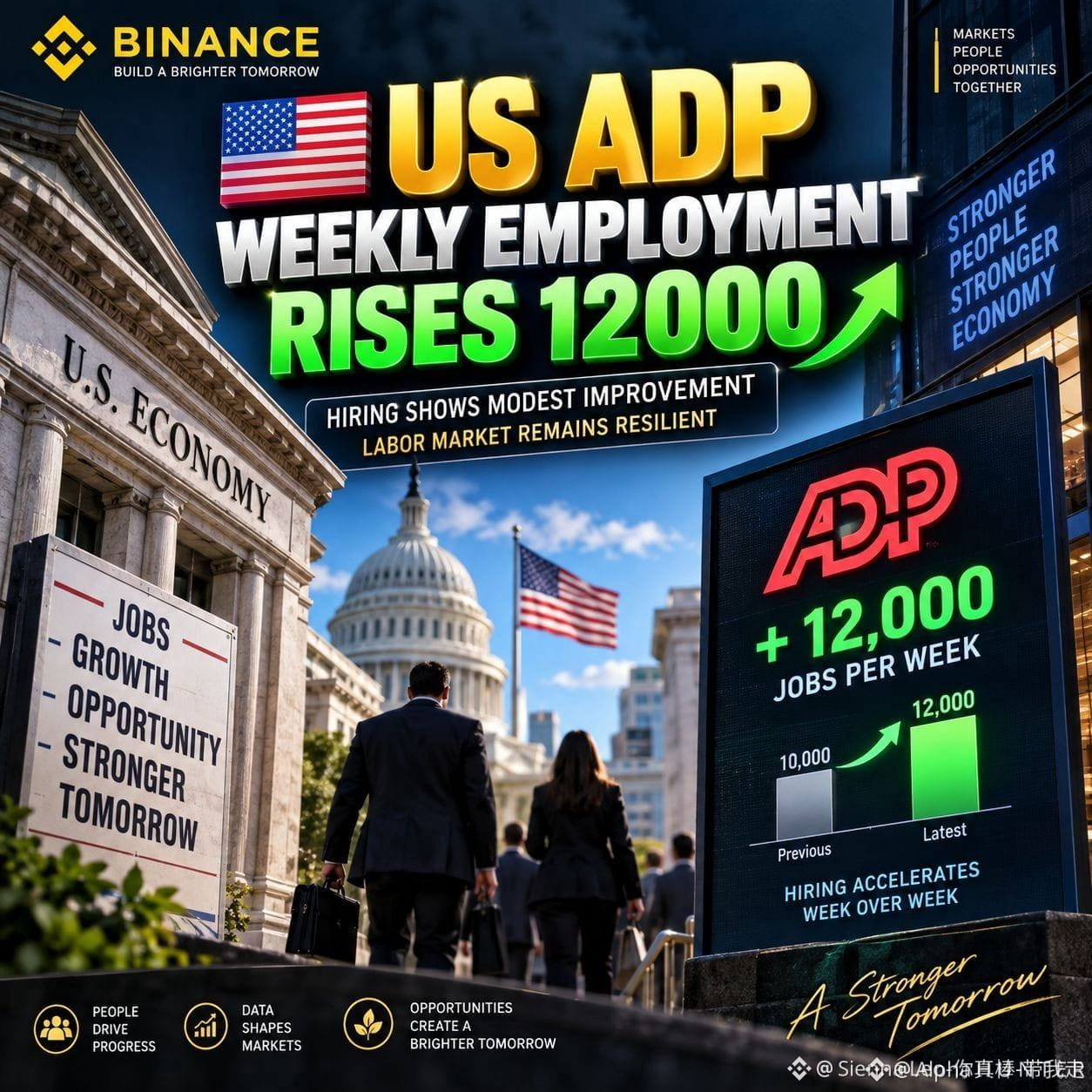
Les dernières données ADP viennent d’être publiées : elles montrent que les employeurs privés ajoutent désormais environ 12 000 emplois par semaine (une nette hausse par rapport à 10 000). Un marché du travail solide est une excellente nouvelle pour l’économie du quotidien, mais il jette une grosse courbe sur les marchés.
Pourquoi c’est important pour votre portefeuille :
Si le marché de l’emploi reste aussi résilient, la Fed a très peu d’incitation à se précipiter vers ces baisses de taux que nous attendons. Nous sommes probablement face à un environnement de taux « plus élevés plus longtemps », qui, traditionnellement, agit comme la gravité sur les actifs à risque.
Pour la communauté Crypto :
C’est un mix en ce moment. Une solidité macroéconomique plus large est fondamentalement une bonne chose, mais des politiques monétaires restrictives sont généralement baissières pour la crypto. Gardez un œil fixé sur le BTC et vos altcoins préférées au cours des prochains jours : ça pourrait devenir agité ! 🌊👀
Comment adaptez-vous votre stratégie de trading pour gérer un environnement de taux d’intérêt « plus élevés plus longtemps.
#EconomicAlert #Fed #jobs
$BZ
{future}(BZUSDT)
$IOST
{future}(IOSTUSDT)
$SC
{spot}(SCUSDT)
#usadpweeklyemploymentrises12000
Plus d’emplois aux États-Unis = plus de pression sur la Fed. 🇺🇸📉
Les dernières données ADP viennent d’être publiées : elles montrent que les employeurs privés ajoutent désormais environ 12 000 emplois par semaine (une nette hausse par rapport à 10 000). Un marché du travail solide est une excellente nouvelle pour l’économie du quotidien, mais il jette une grosse courbe sur les marchés.
Pourquoi c’est important pour votre portefeuille :
Si le marché de l’emploi reste aussi résilient, la Fed a très peu d’incitation à se précipiter vers ces baisses de taux que nous attendons. Nous sommes probablement face à un environnement de taux « plus élevés plus longtemps », qui, traditionnellement, agit comme la gravité sur les actifs à risque.
Pour la communauté Crypto :
C’est un mix en ce moment. Une solidité macroéconomique plus large est fondamentalement une bonne chose, mais des politiques monétaires restrictives sont généralement baissières pour la crypto. Gardez un œil fixé sur le BTC et vos altcoins préférées au cours des prochains jours : ça pourrait devenir agité ! 🌊👀
Comment adaptez-vous votre stratégie de trading pour gérer un environnement de taux d’intérêt « plus élevés plus longtemps.
#EconomicAlert #Fed #jobs
$BZ
$IOST
$SC
Plus d’emplois aux États-Unis = plus de pression sur la Fed. 🇺🇸📉
Les dernières données ADP viennent d’être publiées : elles montrent que les employeurs privés ajoutent désormais environ 12 000 emplois par semaine (une nette hausse par rapport à 10 000). Un marché du travail solide est une excellente nouvelle pour l’économie du quotidien, mais il jette une grosse courbe sur les marchés.
Pourquoi c’est important pour votre portefeuille :
Si le marché de l’emploi reste aussi résilient, la Fed a très peu d’incitation à se précipiter vers ces baisses de taux que nous attendons. Nous sommes probablement face à un environnement de taux « plus élevés plus longtemps », qui, traditionnellement, agit comme la gravité sur les actifs à risque.
Pour la communauté Crypto :
C’est un mix en ce moment. Une solidité macroéconomique plus large est fondamentalement une bonne chose, mais des politiques monétaires restrictives sont généralement baissières pour la crypto. Gardez un œil fixé sur le BTC et vos altcoins préférées au cours des prochains jours : ça pourrait devenir agité ! 🌊👀
Comment adaptez-vous votre stratégie de trading pour gérer un environnement de taux d’intérêt « plus élevés plus longtemps.
#EconomicAlert #Fed #jobs
$BZ
$IOST
$SC
1
3.7k
Vérifié
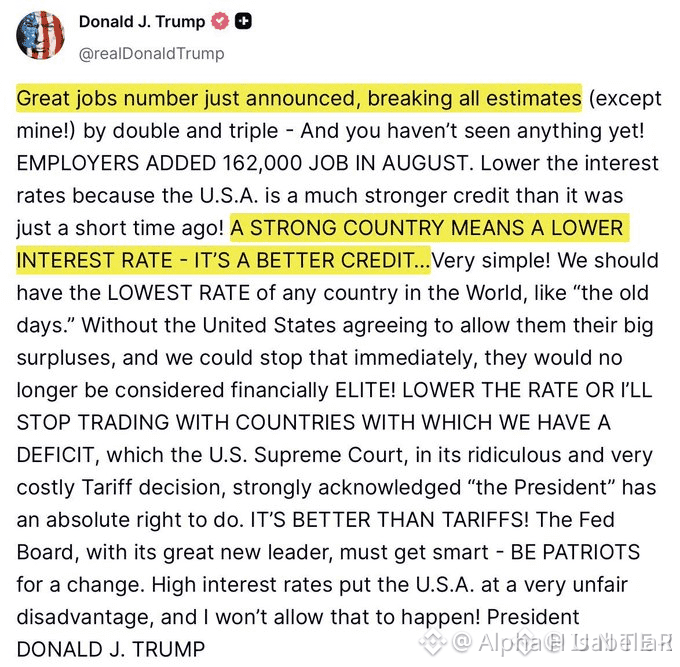
#usaugustjobgrowthnearlytriplesforecast 🇺🇸 Trump : le rapport sur l’emploi d’août dépasse les prévisions
« Baissez le taux ou j’arrêterai de commercer avec les pays avec lesquels nous avons un déficit. »
Les
États-Unis ont ajouté 162 000 emplois en août, soit près de
triple des 53 000 attendus par les économistes, tandis que le chômage est resté à 4,1 %.
Trump a utilisé ce rapport pour renouveler la pression sur la Fed afin qu’elle réduise les taux.
#USjobs #Fed #EconomicAlert
$BULLA
{future}(BULLAUSDT)
$BNB
{future}(BNBUSDT)
$DASH
{future}(DASHUSDT)
#usaugustjobgrowthnearlytriplesforecast 🇺🇸 Trump : le rapport sur l’emploi d’août dépasse les prévisions
« Baissez le taux ou j’arrêterai de commercer avec les pays avec lesquels nous avons un déficit. »
Les
États-Unis ont ajouté 162 000 emplois en août, soit près de
triple des 53 000 attendus par les économistes, tandis que le chômage est resté à 4,1 %.
Trump a utilisé ce rapport pour renouveler la pression sur la Fed afin qu’elle réduise les taux.
#USjobs #Fed #EconomicAlert
$BULLA
$BNB
$DASH
« Baissez le taux ou j’arrêterai de commercer avec les pays avec lesquels nous avons un déficit. »
Les
États-Unis ont ajouté 162 000 emplois en août, soit près de
triple des 53 000 attendus par les économistes, tandis que le chômage est resté à 4,1 %.
Trump a utilisé ce rapport pour renouveler la pression sur la Fed afin qu’elle réduise les taux.
#USjobs #Fed #EconomicAlert
$BULLA
$BNB
$DASH
4
4k

·
--
Haussier
⚡️
Key Economic Events This Week:
1 Tuesday - May JOLTS Job Openings Data
2 Tuesday - June CB Consumer Confidence Data
3 Wednesday - June ISM Manufacturing PMI Data
4 Thursday - June Jobs Report
5 Friday - US Markets Closed for 4th of July
Which release could move markets the most?👇
#EconomicAlert
#Event
#This
#WEEK
⚡️
Key Economic Events This Week:
1 Tuesday - May JOLTS Job Openings Data
2 Tuesday - June CB Consumer Confidence Data
3 Wednesday - June ISM Manufacturing PMI Data
4 Thursday - June Jobs Report
5 Friday - US Markets Closed for 4th of July
Which release could move markets the most?👇
#EconomicAlert
#Event
#This
#WEEK
Key Economic Events This Week:
1 Tuesday - May JOLTS Job Openings Data
2 Tuesday - June CB Consumer Confidence Data
3 Wednesday - June ISM Manufacturing PMI Data
4 Thursday - June Jobs Report
5 Friday - US Markets Closed for 4th of July
Which release could move markets the most?👇
#EconomicAlert
#Event
#This
#WEEK

48
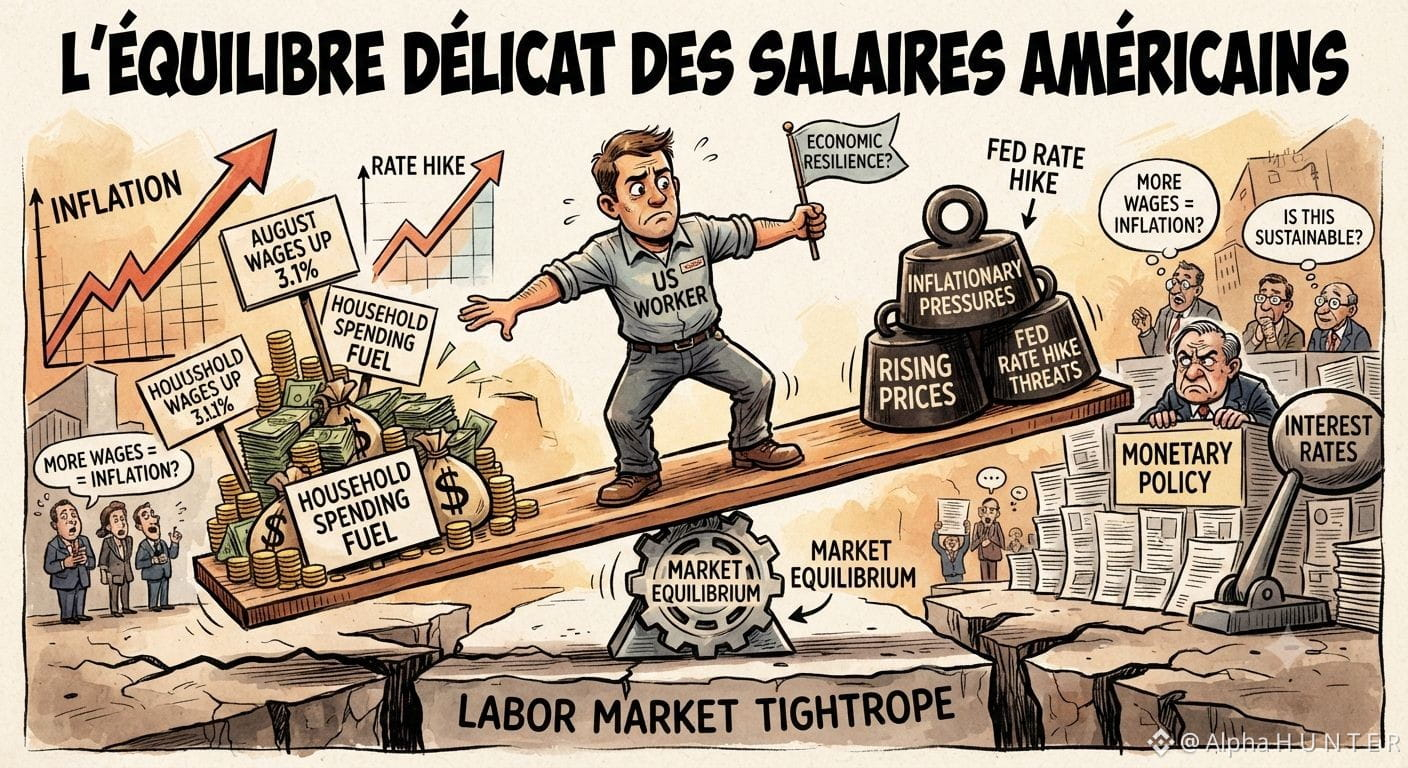
#usaugustavghourlyearningsrise3.1%
Les salaires commencent à être un peu plus élevés ! 💸 Les gains horaires moyens aux États-Unis ont officiellement augmenté de 3,1 % en ce mois d’août.
Si avoir plus d’argent dans nos poches est toujours une bonne nouvelle pour les dépenses des ménages, les marchés n’analysent jamais la croissance des salaires isolément. Les investisseurs évaluent sans cesse ces salaires plus généreux à la lumière des tendances plus larges de l’inflation, du marché du travail et de ce que la Réserve fédérale pourrait faire ensuite.
En ce moment, tout se résume à un délicat exercice d’équilibre : observons-nous une véritable résilience économique, ou simplement davantage de carburant pour les pressions inflationnistes dans les mois à venir ?
Selon vous, qu’est-ce qui influence actuellement le marché — une hausse saine des salaires, ou l’ombre imminente de l’inflation et des taux d’intérêt ? Dites-moi ce que vous en pensez ! 👇
#CryptoNews #EconomicAlert #Fed
$MARSCOIN
{future}(MARSCOINUSDT)
$SNXXB
{spot}(SNXXBUSDT)
$BTC
{future}(BTCUSDT)
#usaugustavghourlyearningsrise3.1%
Les salaires commencent à être un peu plus élevés ! 💸 Les gains horaires moyens aux États-Unis ont officiellement augmenté de 3,1 % en ce mois d’août.
Si avoir plus d’argent dans nos poches est toujours une bonne nouvelle pour les dépenses des ménages, les marchés n’analysent jamais la croissance des salaires isolément. Les investisseurs évaluent sans cesse ces salaires plus généreux à la lumière des tendances plus larges de l’inflation, du marché du travail et de ce que la Réserve fédérale pourrait faire ensuite.
En ce moment, tout se résume à un délicat exercice d’équilibre : observons-nous une véritable résilience économique, ou simplement davantage de carburant pour les pressions inflationnistes dans les mois à venir ?
Selon vous, qu’est-ce qui influence actuellement le marché — une hausse saine des salaires, ou l’ombre imminente de l’inflation et des taux d’intérêt ? Dites-moi ce que vous en pensez ! 👇
#CryptoNews #EconomicAlert #Fed
$MARSCOIN
$SNXXB
$BTC
Les salaires commencent à être un peu plus élevés ! 💸 Les gains horaires moyens aux États-Unis ont officiellement augmenté de 3,1 % en ce mois d’août.
Si avoir plus d’argent dans nos poches est toujours une bonne nouvelle pour les dépenses des ménages, les marchés n’analysent jamais la croissance des salaires isolément. Les investisseurs évaluent sans cesse ces salaires plus généreux à la lumière des tendances plus larges de l’inflation, du marché du travail et de ce que la Réserve fédérale pourrait faire ensuite.
En ce moment, tout se résume à un délicat exercice d’équilibre : observons-nous une véritable résilience économique, ou simplement davantage de carburant pour les pressions inflationnistes dans les mois à venir ?
Selon vous, qu’est-ce qui influence actuellement le marché — une hausse saine des salaires, ou l’ombre imminente de l’inflation et des taux d’intérêt ? Dites-moi ce que vous en pensez ! 👇
#CryptoNews #EconomicAlert #Fed
$MARSCOIN
$SNXXB
$BTC
472
#USWeeklyInitialJoblessClaimsRiseTo206000
N’IGNOREZ PAS LES DONNÉES
206K de premières déclarations peuvent sembler insignifiantes à elles seules.
Mais les marchés réagissent souvent lorsque de petits signaux économiques commencent à former un schéma plus large. Restez patient et surveillez les prochaines publications.
#EconomicAlert #jobs #Fed
$BTC
{future}(BTCUSDT)
$SOL
{future}(SOLUSDT)
$XAU
{future}(XAUUSDT)
#USWeeklyInitialJoblessClaimsRiseTo206000
N’IGNOREZ PAS LES DONNÉES
206K de premières déclarations peuvent sembler insignifiantes à elles seules.
Mais les marchés réagissent souvent lorsque de petits signaux économiques commencent à former un schéma plus large. Restez patient et surveillez les prochaines publications.
#EconomicAlert #jobs #Fed
$BTC
$SOL
$XAU
N’IGNOREZ PAS LES DONNÉES
206K de premières déclarations peuvent sembler insignifiantes à elles seules.
Mais les marchés réagissent souvent lorsque de petits signaux économiques commencent à former un schéma plus large. Restez patient et surveillez les prochaines publications.
#EconomicAlert #jobs #Fed
$BTC
$SOL
$XAU

466

Article
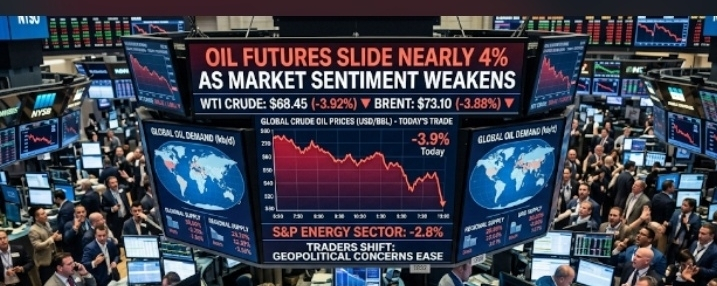
🛢️ Oil Futures Slide Nearly 4% as Market Sentiment WeakensGlobal oil futures fell around 4%, marking one of the sharpest daily declines in recent weeks as traders reacted to easing geopolitical concerns and improving supply expectations. The pullback reflects a shift in market sentiment, with investors reducing risk premiums that had previously supported higher crude prices. Lower oil prices may help ease inflationary pressures across major economies, potentially influencing central bank policies and broader financial markets. Energy-related stocks faced pressure, while investors closely monitored demand forecasts and inventory data for further direction.Market participants remain focused on upcoming economic indicators, supply developments, and global growth trends that could shape the next move in crude oil markets. 📉🛢️🌍
#OilFuturesFallAbout4% #HormuzStraitShips20MBarrelsDaily #EconomicAlert
$PEPE
{spot}(PEPEUSDT)
$OPG
{spot}(OPGUSDT)
$SOL
{spot}(SOLUSDT)
🛢️ Oil Futures Slide Nearly 4% as Market Sentiment Weakens
Global oil futures fell around 4%, marking one of the sharpest daily declines in recent weeks as traders reacted to easing geopolitical concerns and improving supply expectations. The pullback reflects a shift in market sentiment, with investors reducing risk premiums that had previously supported higher crude prices. Lower oil prices may help ease inflationary pressures across major economies, potentially influencing central bank policies and broader financial markets. Energy-related stocks faced pressure, while investors closely monitored demand forecasts and inventory data for further direction.Market participants remain focused on upcoming economic indicators, supply developments, and global growth trends that could shape the next move in crude oil markets. 📉🛢️🌍
#OilFuturesFallAbout4% #HormuzStraitShips20MBarrelsDaily #EconomicAlert
$PEPE
$OPG
$SOL
#OilFuturesFallAbout4% #HormuzStraitShips20MBarrelsDaily #EconomicAlert
$PEPE
$OPG
$SOL
3
143

·
--
Haussier
La economía venezolana se enfrenta a un escenario de crecimiento moderado (estimado en torno al 12%) y presiones inflacionarias significativas, proyectadas alrededor del 192%. Aunque los ingresos petroleros han mostrado un aumento interanual por la flexibilización de licencias internacionales, persisten graves desafíos por el diferencial cambiario y el bajo poder adquisitivo ciudadano.$BTC #VES #EconomicAlert $BTC
{spot}(BTCUSDT)
La economía venezolana se enfrenta a un escenario de crecimiento moderado (estimado en torno al 12%) y presiones inflacionarias significativas, proyectadas alrededor del 192%. Aunque los ingresos petroleros han mostrado un aumento interanual por la flexibilización de licencias internacionales, persisten graves desafíos por el diferencial cambiario y el bajo poder adquisitivo ciudadano.$BTC #VES #EconomicAlert $BTC
103

·
--
Kevin Hassett (conseiller éco principal de Trump) vient de lâcher une bombe : si le deal avec l’Iran passe et que le détroit d’Hormuz rouvre, les prix du pétrole vont plonger violemment.
Et selon lui, cette chute des prix de l’énergie va directement créer de la marge pour la Fed afin de baisser les taux d’intérêt.
« On s’attend à ce que les prix de l’énergie s’effondrent une fois l’accord conclu. Et quand ça arrivera, la Fed aura largement la place pour faire ce qu’il faut avec des taux plus bas. »
Core inflation qui reste calme + choc pétrolier qui disparaît = fenêtre pour des rate cuts plus tôt que prévu ?
Marchés crypto & actions vont adorer ce scénario Qu’en pensez-vous ? Bullish sur le risque ou vous restez prudent ?
#Crypto $BTC #Fed #TRUMP #EconomicAlert
Kevin Hassett (conseiller éco principal de Trump) vient de lâcher une bombe : si le deal avec l’Iran passe et que le détroit d’Hormuz rouvre, les prix du pétrole vont plonger violemment.
Et selon lui, cette chute des prix de l’énergie va directement créer de la marge pour la Fed afin de baisser les taux d’intérêt.
« On s’attend à ce que les prix de l’énergie s’effondrent une fois l’accord conclu. Et quand ça arrivera, la Fed aura largement la place pour faire ce qu’il faut avec des taux plus bas. »
Core inflation qui reste calme + choc pétrolier qui disparaît = fenêtre pour des rate cuts plus tôt que prévu ?
Marchés crypto & actions vont adorer ce scénario Qu’en pensez-vous ? Bullish sur le risque ou vous restez prudent ?
#Crypto $BTC #Fed #TRUMP #EconomicAlert
Et selon lui, cette chute des prix de l’énergie va directement créer de la marge pour la Fed afin de baisser les taux d’intérêt.
« On s’attend à ce que les prix de l’énergie s’effondrent une fois l’accord conclu. Et quand ça arrivera, la Fed aura largement la place pour faire ce qu’il faut avec des taux plus bas. »
Core inflation qui reste calme + choc pétrolier qui disparaît = fenêtre pour des rate cuts plus tôt que prévu ?
Marchés crypto & actions vont adorer ce scénario Qu’en pensez-vous ? Bullish sur le risque ou vous restez prudent ?
#Crypto $BTC #Fed #TRUMP #EconomicAlert
1
248
Article
🚨 Risk-Off in the Tech Sector & Pre-FOMC Tension: What to Expect from Crypto Right NowThe cryptocurrency market is navigating through high volatility this Tuesday evening, July 7, 2026. We are witnessing a critical global repricing event, driven by heavy profit-taking in the traditional tech market and mounting anticipation regarding the Federal Reserve's next steps.
For crypto investors, understanding current institutional flows is vital to avoid liquidity traps. Below is the exact market X-ray for this very moment, tailored for your trading strategy.
📊 Real-Time Quotes & Intraday Scenario
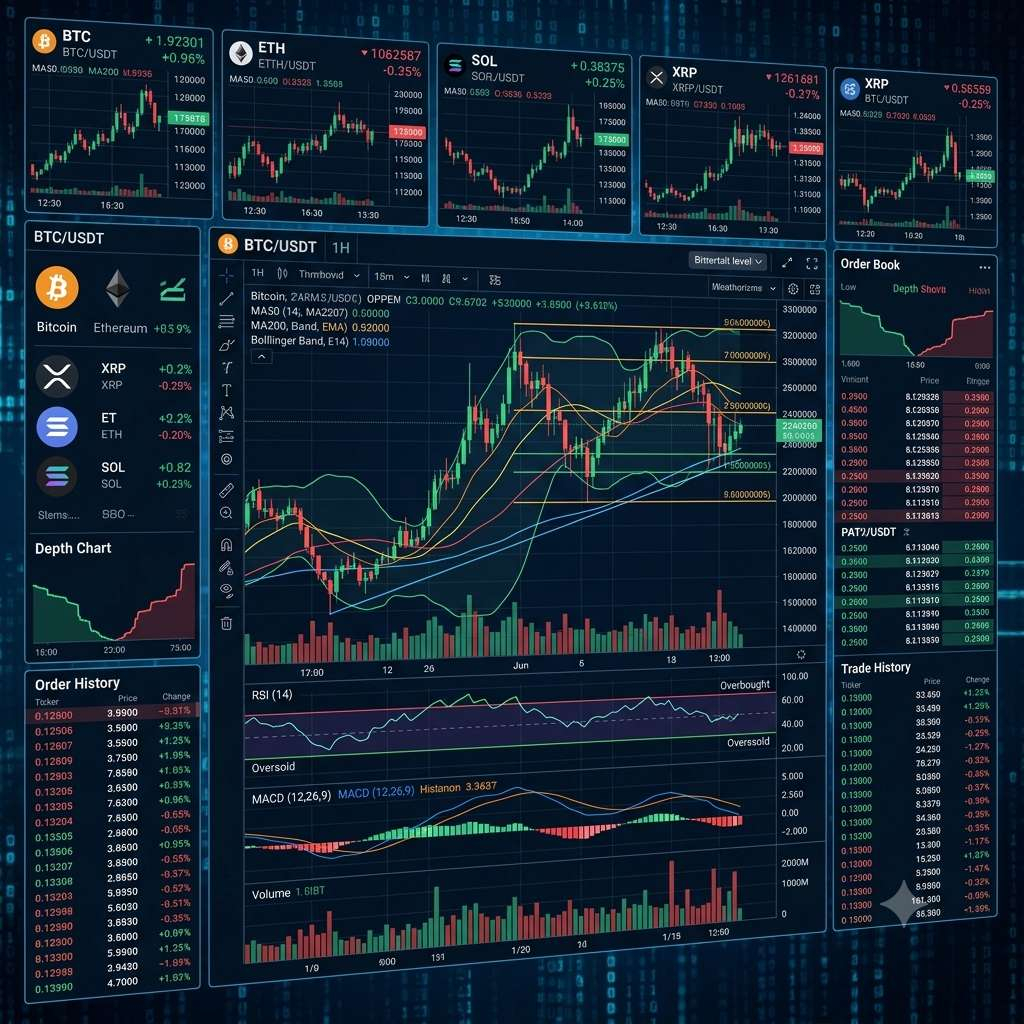
Bitcoin ($BTC ): $63,601.94 — Experiencing a slight retracement, currently consolidating local support.
Ethereum ($ETH ): $1,777.74 — Showing strong resilience, with traders actively monitoring institutional ETF flows.
BNB ($BNB ): $581.71 — Undergoing a standard correction perfectly aligned with the broader altcoin market.
Solana (SOL): $80.89 — Struggling in a technical battle against its historical Moving Average resistance.
🌎 The Macroeconomic Landscape: Capital Flight from AI
The traditional market took a severe hit today. The Nasdaq index retreated sharply, driven by a massive selloff in semiconductor and artificial intelligence stocks (such as Micron, AMD, and Intel).
Why does this impact the crypto market?
Risk-On Appetite: The crypto ecosystem and tech stocks (especially AI-related) share a massive portion of the same institutional capital profile. When investors begin to question whether AI companies can justify their massive infrastructure spending, capital flees to safer havens. This rotation drains overall market liquidity, directly impacting Bitcoin's order books.
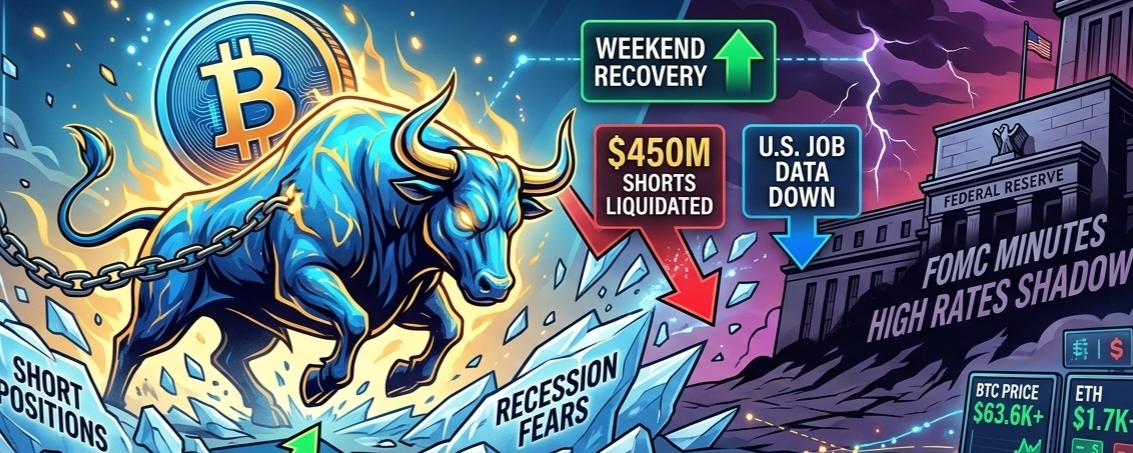
The FOMC Shadow: The entire market traded today with the handbrake on. Tomorrow (Wednesday), the Fed will release the minutes from its latest monetary policy meeting. Their last stance was perceived as highly hawkish, and market makers are aggressively scanning the data for any hints of upcoming interest rate cuts. High rates for a longer period strengthen the US Dollar (DXY) and heavily penalize risk-on assets like crypto.
📈 Technical Analysis: Critical Levels for the Next 24 Hours
Bitcoin has slightly lost its short-term momentum, pulling back from the local highs above $64,000 it attempted to conquer earlier today. We are now operating in a strict zone of indecision.
Immediate Support (BTC): The $62,500 to $63,000 range is the primary defense line for the bulls. Consistently losing this level could trigger a cascade of leveraged long liquidations, dragging the price straight back to the $61,500 structural base.
Major Resistance (BTC): The current institutional sell wall is heavily concentrated at $64,500. For a vigorous bullish resumption, Bitcoin needs genuine Spot buying volume to break out and close the daily candle definitively above this threshold.
Altcoin Watch (ETH & SOL): Ethereum demonstrates latent optimism due to recent regulatory developments in the US, holding extremely steady near the $1,777 mark. Meanwhile, Solana must execute a definitive breakout and consolidate above its 100-day EMA (around $81.60) to invalidate a bearish continuation toward $76.
Veredict:
The current setup demands heightened caution. High-leverage trading is strictly not recommended in the hours leading up to the FOMC minutes release. Capital markets are in capital-preservation mode, and Bitcoin will need to prove its decoupling from the weakness in the Nasdaq to establish its own bullish directional trend. Protect your capital and wait for clear confirmations.
Click here to trade 👇️👇👇👇👇
{future}(BTCUSDT)
{future}(ETHUSDT)
{future}(SOLUSDT)
#MarketSentimentToday #Market_Update #EconomicAlert #altcoins
🚨 Risk-Off in the Tech Sector & Pre-FOMC Tension: What to Expect from Crypto Right Now
The cryptocurrency market is navigating through high volatility this Tuesday evening, July 7, 2026. We are witnessing a critical global repricing event, driven by heavy profit-taking in the traditional tech market and mounting anticipation regarding the Federal Reserve's next steps.
For crypto investors, understanding current institutional flows is vital to avoid liquidity traps. Below is the exact market X-ray for this very moment, tailored for your trading strategy.
📊 Real-Time Quotes & Intraday Scenario
Bitcoin ($BTC ): $63,601.94 — Experiencing a slight retracement, currently consolidating local support.
Ethereum ($ETH ): $1,777.74 — Showing strong resilience, with traders actively monitoring institutional ETF flows.
BNB ($BNB ): $581.71 — Undergoing a standard correction perfectly aligned with the broader altcoin market.
Solana (SOL): $80.89 — Struggling in a technical battle against its historical Moving Average resistance.
🌎 The Macroeconomic Landscape: Capital Flight from AI
The traditional market took a severe hit today. The Nasdaq index retreated sharply, driven by a massive selloff in semiconductor and artificial intelligence stocks (such as Micron, AMD, and Intel).
Why does this impact the crypto market?
Risk-On Appetite: The crypto ecosystem and tech stocks (especially AI-related) share a massive portion of the same institutional capital profile. When investors begin to question whether AI companies can justify their massive infrastructure spending, capital flees to safer havens. This rotation drains overall market liquidity, directly impacting Bitcoin's order books.
The FOMC Shadow: The entire market traded today with the handbrake on. Tomorrow (Wednesday), the Fed will release the minutes from its latest monetary policy meeting. Their last stance was perceived as highly hawkish, and market makers are aggressively scanning the data for any hints of upcoming interest rate cuts. High rates for a longer period strengthen the US Dollar (DXY) and heavily penalize risk-on assets like crypto.
📈 Technical Analysis: Critical Levels for the Next 24 Hours
Bitcoin has slightly lost its short-term momentum, pulling back from the local highs above $64,000 it attempted to conquer earlier today. We are now operating in a strict zone of indecision.
Immediate Support (BTC): The $62,500 to $63,000 range is the primary defense line for the bulls. Consistently losing this level could trigger a cascade of leveraged long liquidations, dragging the price straight back to the $61,500 structural base.
Major Resistance (BTC): The current institutional sell wall is heavily concentrated at $64,500. For a vigorous bullish resumption, Bitcoin needs genuine Spot buying volume to break out and close the daily candle definitively above this threshold.
Altcoin Watch (ETH & SOL): Ethereum demonstrates latent optimism due to recent regulatory developments in the US, holding extremely steady near the $1,777 mark. Meanwhile, Solana must execute a definitive breakout and consolidate above its 100-day EMA (around $81.60) to invalidate a bearish continuation toward $76.
Veredict:
The current setup demands heightened caution. High-leverage trading is strictly not recommended in the hours leading up to the FOMC minutes release. Capital markets are in capital-preservation mode, and Bitcoin will need to prove its decoupling from the weakness in the Nasdaq to establish its own bullish directional trend. Protect your capital and wait for clear confirmations.
Click here to trade 👇️👇👇👇👇
#MarketSentimentToday #Market_Update #EconomicAlert #altcoins
For crypto investors, understanding current institutional flows is vital to avoid liquidity traps. Below is the exact market X-ray for this very moment, tailored for your trading strategy.
📊 Real-Time Quotes & Intraday Scenario
Bitcoin ($BTC ): $63,601.94 — Experiencing a slight retracement, currently consolidating local support.
Ethereum ($ETH ): $1,777.74 — Showing strong resilience, with traders actively monitoring institutional ETF flows.
BNB ($BNB ): $581.71 — Undergoing a standard correction perfectly aligned with the broader altcoin market.
Solana (SOL): $80.89 — Struggling in a technical battle against its historical Moving Average resistance.
🌎 The Macroeconomic Landscape: Capital Flight from AI
The traditional market took a severe hit today. The Nasdaq index retreated sharply, driven by a massive selloff in semiconductor and artificial intelligence stocks (such as Micron, AMD, and Intel).
Why does this impact the crypto market?
Risk-On Appetite: The crypto ecosystem and tech stocks (especially AI-related) share a massive portion of the same institutional capital profile. When investors begin to question whether AI companies can justify their massive infrastructure spending, capital flees to safer havens. This rotation drains overall market liquidity, directly impacting Bitcoin's order books.
The FOMC Shadow: The entire market traded today with the handbrake on. Tomorrow (Wednesday), the Fed will release the minutes from its latest monetary policy meeting. Their last stance was perceived as highly hawkish, and market makers are aggressively scanning the data for any hints of upcoming interest rate cuts. High rates for a longer period strengthen the US Dollar (DXY) and heavily penalize risk-on assets like crypto.
📈 Technical Analysis: Critical Levels for the Next 24 Hours
Bitcoin has slightly lost its short-term momentum, pulling back from the local highs above $64,000 it attempted to conquer earlier today. We are now operating in a strict zone of indecision.
Immediate Support (BTC): The $62,500 to $63,000 range is the primary defense line for the bulls. Consistently losing this level could trigger a cascade of leveraged long liquidations, dragging the price straight back to the $61,500 structural base.
Major Resistance (BTC): The current institutional sell wall is heavily concentrated at $64,500. For a vigorous bullish resumption, Bitcoin needs genuine Spot buying volume to break out and close the daily candle definitively above this threshold.
Altcoin Watch (ETH & SOL): Ethereum demonstrates latent optimism due to recent regulatory developments in the US, holding extremely steady near the $1,777 mark. Meanwhile, Solana must execute a definitive breakout and consolidate above its 100-day EMA (around $81.60) to invalidate a bearish continuation toward $76.
Veredict:
The current setup demands heightened caution. High-leverage trading is strictly not recommended in the hours leading up to the FOMC minutes release. Capital markets are in capital-preservation mode, and Bitcoin will need to prove its decoupling from the weakness in the Nasdaq to establish its own bullish directional trend. Protect your capital and wait for clear confirmations.
Click here to trade 👇️👇👇👇👇
#MarketSentimentToday #Market_Update #EconomicAlert #altcoins
2
104
🥇🚨 GOLD IS BACK — AND THIS IS BIGGER THAN INFLATION
Gold’s comeback isn’t just about rising prices anymore. 👀
Investors are increasingly turning to gold as protection against policy mistakes, geopolitical instability and currency debasement.
🔥 Why is gold gaining attention?
🏦 Concerns over fiscal sustainability
💵 Fear of currency debasement
🌍 Rising geopolitical risks
📉 Uncertainty around economic policy
🛡️ Growing demand for hard-asset protection
The message from markets is clear:
When confidence in policies and currencies starts to weaken, investors look for something they can trust.
And right now, GOLD is getting that attention. 🥇🔥
Could this be the beginning of another major gold cycle?
{stock_us}(GOLD.US)
#GOLD #XAUUSD #GoldenOpportunity dPrice #EconomicAlert nomy #Inflation #Markets #Macro #Investing #Finance #GlobalEconomics onomy 😍
🥇🚨 GOLD IS BACK — AND THIS IS BIGGER THAN INFLATION
Gold’s comeback isn’t just about rising prices anymore. 👀
Investors are increasingly turning to gold as protection against policy mistakes, geopolitical instability and currency debasement.
🔥 Why is gold gaining attention?
🏦 Concerns over fiscal sustainability
💵 Fear of currency debasement
🌍 Rising geopolitical risks
📉 Uncertainty around economic policy
🛡️ Growing demand for hard-asset protection
The message from markets is clear:
When confidence in policies and currencies starts to weaken, investors look for something they can trust.
And right now, GOLD is getting that attention. 🥇🔥
Could this be the beginning of another major gold cycle?
#GOLD #XAUUSD #GoldenOpportunity dPrice #EconomicAlert nomy #Inflation #Markets #Macro #Investing #Finance #GlobalEconomics onomy 😍
Gold’s comeback isn’t just about rising prices anymore. 👀
Investors are increasingly turning to gold as protection against policy mistakes, geopolitical instability and currency debasement.
🔥 Why is gold gaining attention?
🏦 Concerns over fiscal sustainability
💵 Fear of currency debasement
🌍 Rising geopolitical risks
📉 Uncertainty around economic policy
🛡️ Growing demand for hard-asset protection
The message from markets is clear:
When confidence in policies and currencies starts to weaken, investors look for something they can trust.
And right now, GOLD is getting that attention. 🥇🔥
Could this be the beginning of another major gold cycle?
#GOLD #XAUUSD #GoldenOpportunity dPrice #EconomicAlert nomy #Inflation #Markets #Macro #Investing #Finance #GlobalEconomics onomy 😍
132

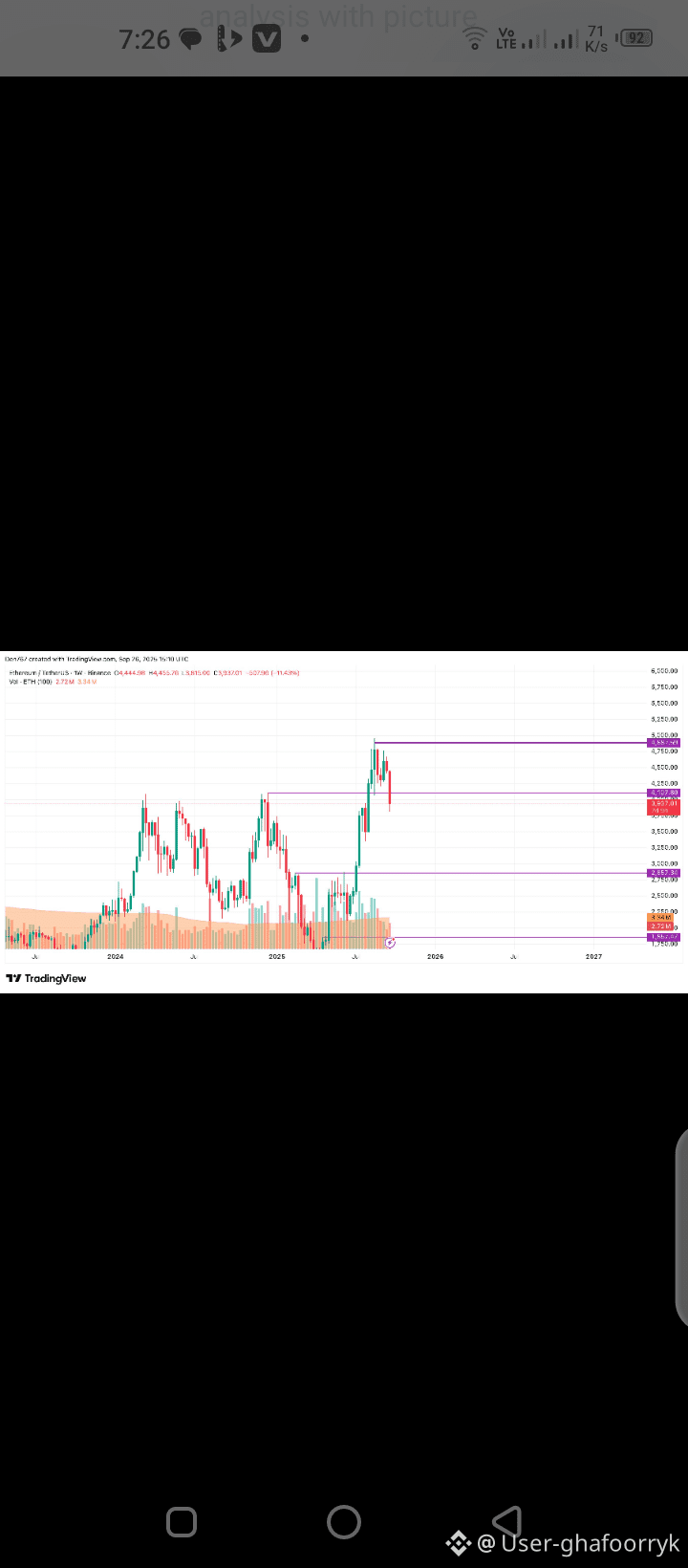
$ETH Latest Analysis — 27 Sep 2026
ETH Price: around $2,700–$2,712 �
CryptoSlate +1
Trend: Short-term structure remains constructive, but ETH is consolidating below resistance.
Resistance: $2,750–$2,820
Breakout level: A sustained move above $2,800 could open the $3,000–$3,050 area. �
UseTheBitcoin +1
Support: $2,600–$2,660, with stronger support around $2,530–$2,540.#BitwiseFilesFinalNEARSpotETFProspectus #EconomicAlert
{spot}(ETHUSDT)
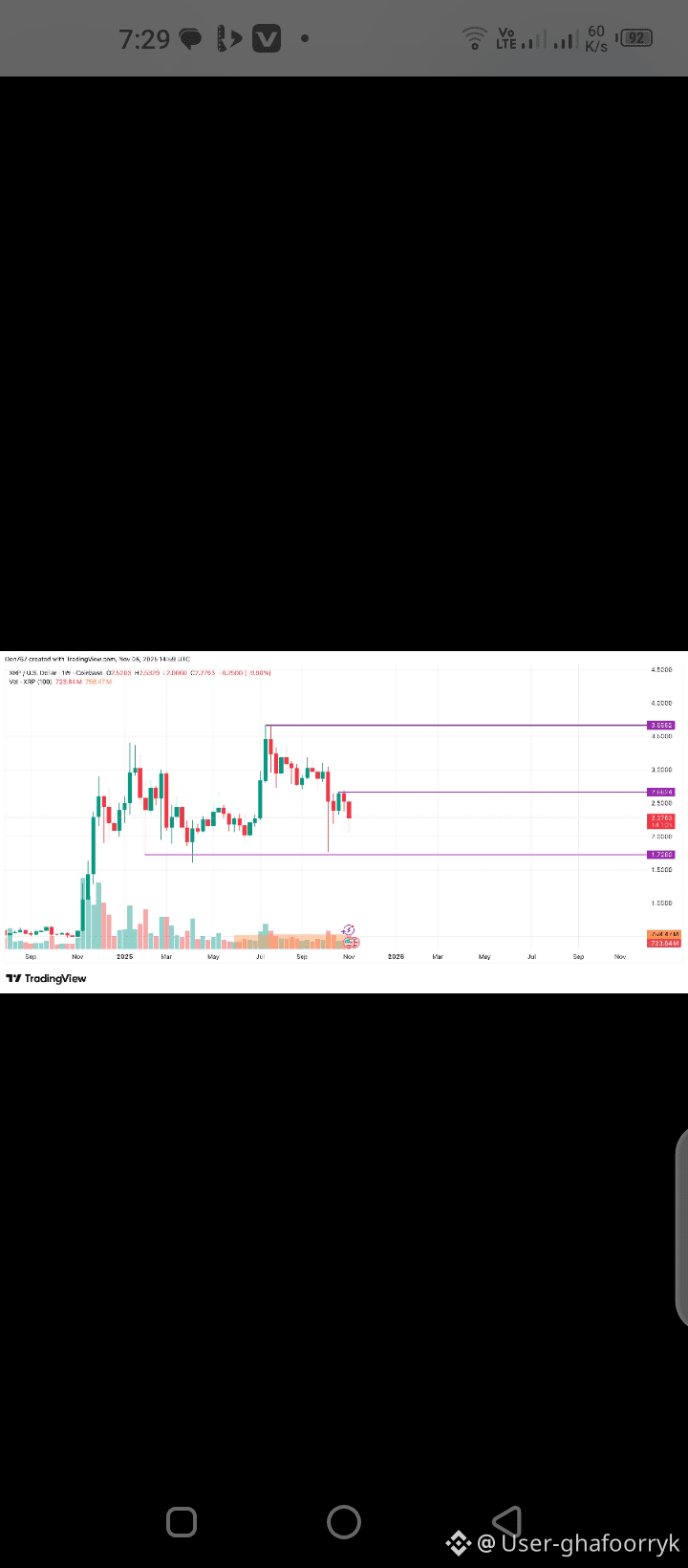
$XRP : around $1.55. Current technical data shows price near the $1.53–$1.55 area, with momentum mixed but several moving averages still signaling buying strength. �
Investing.com +1
Support: $1.50–$1.53
Resistance: $1.55–$1.58
Above $1.58: momentum could strengthen.
Below $1.50: downside pressure could increase.#XRPRealityCheck #BinanceHerYerde
{spot}(XRPUSDT)
$ETH Latest Analysis — 27 Sep 2026
ETH Price: around $2,700–$2,712 �
CryptoSlate +1
Trend: Short-term structure remains constructive, but ETH is consolidating below resistance.
Resistance: $2,750–$2,820
Breakout level: A sustained move above $2,800 could open the $3,000–$3,050 area. �
UseTheBitcoin +1
Support: $2,600–$2,660, with stronger support around $2,530–$2,540.#BitwiseFilesFinalNEARSpotETFProspectus #EconomicAlert
$XRP : around $1.55. Current technical data shows price near the $1.53–$1.55 area, with momentum mixed but several moving averages still signaling buying strength. �
Investing.com +1
Support: $1.50–$1.53
Resistance: $1.55–$1.58
Above $1.58: momentum could strengthen.
Below $1.50: downside pressure could increase.#XRPRealityCheck #BinanceHerYerde
ETH Price: around $2,700–$2,712 �
CryptoSlate +1
Trend: Short-term structure remains constructive, but ETH is consolidating below resistance.
Resistance: $2,750–$2,820
Breakout level: A sustained move above $2,800 could open the $3,000–$3,050 area. �
UseTheBitcoin +1
Support: $2,600–$2,660, with stronger support around $2,530–$2,540.#BitwiseFilesFinalNEARSpotETFProspectus #EconomicAlert
$XRP : around $1.55. Current technical data shows price near the $1.53–$1.55 area, with momentum mixed but several moving averages still signaling buying strength. �
Investing.com +1
Support: $1.50–$1.53
Resistance: $1.55–$1.58
Above $1.58: momentum could strengthen.
Below $1.50: downside pressure could increase.#XRPRealityCheck #BinanceHerYerde
51

#ETHETFsApproved $#One of the biggest traps in a crypto bull run is trying to overcomplicate things.
Some traders chase high-risk memecoins with excessive leverage, only to see sudden volatility trigger liquidations. Meanwhile, a simpler approach is to accumulate established assets like Ethereum ($ETH) in the Spot market. 🧵👇
Here’s why risk management and asset selection matter:
When you hold $ETH in Spot without leverage:
✅ No Liquidation Mechanism: A sudden 15%–20% market drop can reduce your position’s value, but it won’t automatically liquidate a non-leveraged Spot position.
✅ Ethereum Ecosystem: Ethereum remains a major blockchain infrastructure layer for DeFi, smart contracts, and decentralized applications.
✅ Less Leverage-Driven Pressure: Spot holders don’t have to manage the same liquidation and margin risks that come with leveraged Futures positions.
💡 The Math of Greed vs. Discipline:
Suppose you put $500 into $ETH during a market pullback.
If ETH rises 50%, that $500 position would become approximately $750 before fees and taxes.
Now compare that with a 20x Futures position.
Leverage magnifies both gains and losses. A relatively small adverse move can severely reduce your margin, and depending on the position, margin mode, and liquidation rules, a sharp wick can trigger liquidation before the market moves back in your expected direction. 📉
The key takeaway this bull cycle:
Leverage is a powerful tool, but it comes with significantly higher risk.
If you don’t have a defined risk-management framework, understand position sizing, stop-losses, and liquidation mechanics before using leverage.
Spot and Futures are fundamentally different risk profiles. Choose the approach that fits your strategy and risk tolerance—not the one promising the fastest gains.
Are you taking the longer-term Spot approach, or actively trading Futures this cycle?
#Ethereum #CryptoTrading #RiskManagement #SpotTrading #ETH #BTC #SOL #EconomicAlert
#ETHETFsApproved $#One of the biggest traps in a crypto bull run is trying to overcomplicate things.
Some traders chase high-risk memecoins with excessive leverage, only to see sudden volatility trigger liquidations. Meanwhile, a simpler approach is to accumulate established assets like Ethereum ($ETH) in the Spot market. 🧵👇
Here’s why risk management and asset selection matter:
When you hold $ETH in Spot without leverage:
✅ No Liquidation Mechanism: A sudden 15%–20% market drop can reduce your position’s value, but it won’t automatically liquidate a non-leveraged Spot position.
✅ Ethereum Ecosystem: Ethereum remains a major blockchain infrastructure layer for DeFi, smart contracts, and decentralized applications.
✅ Less Leverage-Driven Pressure: Spot holders don’t have to manage the same liquidation and margin risks that come with leveraged Futures positions.
💡 The Math of Greed vs. Discipline:
Suppose you put $500 into $ETH during a market pullback.
If ETH rises 50%, that $500 position would become approximately $750 before fees and taxes.
Now compare that with a 20x Futures position.
Leverage magnifies both gains and losses. A relatively small adverse move can severely reduce your margin, and depending on the position, margin mode, and liquidation rules, a sharp wick can trigger liquidation before the market moves back in your expected direction. 📉
The key takeaway this bull cycle:
Leverage is a powerful tool, but it comes with significantly higher risk.
If you don’t have a defined risk-management framework, understand position sizing, stop-losses, and liquidation mechanics before using leverage.
Spot and Futures are fundamentally different risk profiles. Choose the approach that fits your strategy and risk tolerance—not the one promising the fastest gains.
Are you taking the longer-term Spot approach, or actively trading Futures this cycle?
#Ethereum #CryptoTrading #RiskManagement #SpotTrading #ETH #BTC #SOL #EconomicAlert
Some traders chase high-risk memecoins with excessive leverage, only to see sudden volatility trigger liquidations. Meanwhile, a simpler approach is to accumulate established assets like Ethereum ($ETH) in the Spot market. 🧵👇
Here’s why risk management and asset selection matter:
When you hold $ETH in Spot without leverage:
✅ No Liquidation Mechanism: A sudden 15%–20% market drop can reduce your position’s value, but it won’t automatically liquidate a non-leveraged Spot position.
✅ Ethereum Ecosystem: Ethereum remains a major blockchain infrastructure layer for DeFi, smart contracts, and decentralized applications.
✅ Less Leverage-Driven Pressure: Spot holders don’t have to manage the same liquidation and margin risks that come with leveraged Futures positions.
💡 The Math of Greed vs. Discipline:
Suppose you put $500 into $ETH during a market pullback.
If ETH rises 50%, that $500 position would become approximately $750 before fees and taxes.
Now compare that with a 20x Futures position.
Leverage magnifies both gains and losses. A relatively small adverse move can severely reduce your margin, and depending on the position, margin mode, and liquidation rules, a sharp wick can trigger liquidation before the market moves back in your expected direction. 📉
The key takeaway this bull cycle:
Leverage is a powerful tool, but it comes with significantly higher risk.
If you don’t have a defined risk-management framework, understand position sizing, stop-losses, and liquidation mechanics before using leverage.
Spot and Futures are fundamentally different risk profiles. Choose the approach that fits your strategy and risk tolerance—not the one promising the fastest gains.
Are you taking the longer-term Spot approach, or actively trading Futures this cycle?
#Ethereum #CryptoTrading #RiskManagement #SpotTrading #ETH #BTC #SOL #EconomicAlert
92

·
--
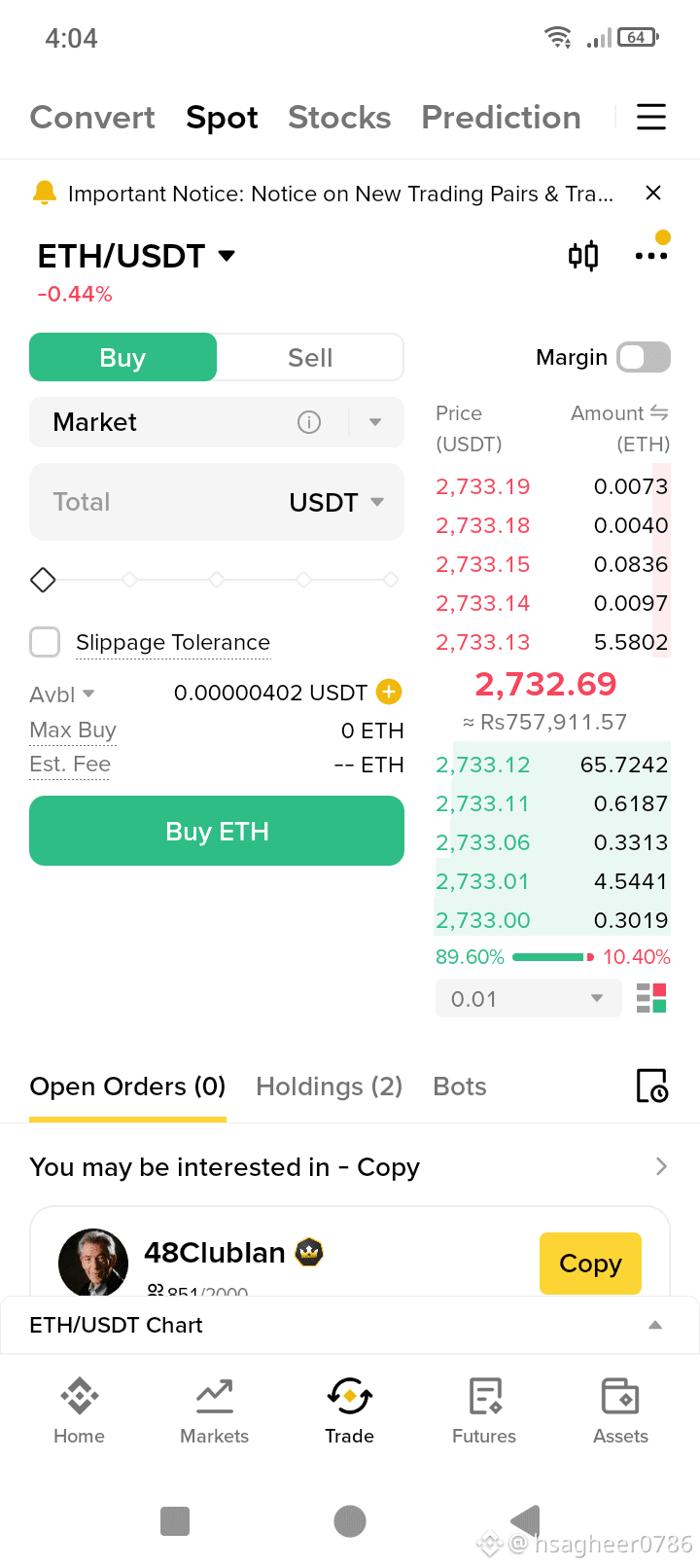
Here is a fresh technical setup and actionable trading guide for Ethereum (ETH) today:
ETH Trading Daily Brief
Ethereum is currently hovering in the $2,720 – $2,780 range. After testing upper resistance near $2,800, the market is consolidating as daily momentum indicators clash with short-term hourly pullbacks.
Key Technical Levels
Major Resistance ($2,800 – $2,820): A decisive daily close above $2,800 is required to open up a target trajectory toward $3,000.
Immediate Support ($2,700 – $2,720): Aligns with the 20-day EMA and daily Bollinger upper band zone.
Critical Invalidation Zone ($2,400 – $2,490): Slipping below this structural range invalidates the near-term bullish setup.
Today’s Key Execution Strategies
1. The Resistance Breakout Scenario
Setup: Wait for a 4-hour candle close above $2,805 on high volume.
Target: $2,950 – $3,000.
Stop Loss: Below $2,760.
2. The Support Dip-Buy (Range Trade)
Setup: Look for bullish reversal signals (hammer candles, bullish RSI divergence) near $2,700 – $2,720.
Target: $2,790.
Stop Loss: Below $2,680.
Risk Management Checklist
Cap Risk per Trade: Never risk more than 1–2% of your active trading capital on a single entry.
Account for Macro & Upgrades: Keep an eye on incoming protocol catalysts (such as upcoming testnet milestones) and macro volatility around US market opens.
Avoid Chasing the Middle: Entering trades between $2,740 and $2,770 yields a low reward-to-risk ratio. Wait for price action at the boundaries ($2,700 support or $2,800 breakout).
$ETH
{spot}(ETHUSDT)
#ETFvsBTC #EconomicAlert #ExpertParaCommUNITY
Here is a fresh technical setup and actionable trading guide for Ethereum (ETH) today:
ETH Trading Daily Brief
Ethereum is currently hovering in the $2,720 – $2,780 range. After testing upper resistance near $2,800, the market is consolidating as daily momentum indicators clash with short-term hourly pullbacks.
Key Technical Levels
Major Resistance ($2,800 – $2,820): A decisive daily close above $2,800 is required to open up a target trajectory toward $3,000.
Immediate Support ($2,700 – $2,720): Aligns with the 20-day EMA and daily Bollinger upper band zone.
Critical Invalidation Zone ($2,400 – $2,490): Slipping below this structural range invalidates the near-term bullish setup.
Today’s Key Execution Strategies
1. The Resistance Breakout Scenario
Setup: Wait for a 4-hour candle close above $2,805 on high volume.
Target: $2,950 – $3,000.
Stop Loss: Below $2,760.
2. The Support Dip-Buy (Range Trade)
Setup: Look for bullish reversal signals (hammer candles, bullish RSI divergence) near $2,700 – $2,720.
Target: $2,790.
Stop Loss: Below $2,680.
Risk Management Checklist
Cap Risk per Trade: Never risk more than 1–2% of your active trading capital on a single entry.
Account for Macro & Upgrades: Keep an eye on incoming protocol catalysts (such as upcoming testnet milestones) and macro volatility around US market opens.
Avoid Chasing the Middle: Entering trades between $2,740 and $2,770 yields a low reward-to-risk ratio. Wait for price action at the boundaries ($2,700 support or $2,800 breakout).
$ETH
#ETFvsBTC #EconomicAlert #ExpertParaCommUNITY
ETH Trading Daily Brief
Ethereum is currently hovering in the $2,720 – $2,780 range. After testing upper resistance near $2,800, the market is consolidating as daily momentum indicators clash with short-term hourly pullbacks.
Key Technical Levels
Major Resistance ($2,800 – $2,820): A decisive daily close above $2,800 is required to open up a target trajectory toward $3,000.
Immediate Support ($2,700 – $2,720): Aligns with the 20-day EMA and daily Bollinger upper band zone.
Critical Invalidation Zone ($2,400 – $2,490): Slipping below this structural range invalidates the near-term bullish setup.
Today’s Key Execution Strategies
1. The Resistance Breakout Scenario
Setup: Wait for a 4-hour candle close above $2,805 on high volume.
Target: $2,950 – $3,000.
Stop Loss: Below $2,760.
2. The Support Dip-Buy (Range Trade)
Setup: Look for bullish reversal signals (hammer candles, bullish RSI divergence) near $2,700 – $2,720.
Target: $2,790.
Stop Loss: Below $2,680.
Risk Management Checklist
Cap Risk per Trade: Never risk more than 1–2% of your active trading capital on a single entry.
Account for Macro & Upgrades: Keep an eye on incoming protocol catalysts (such as upcoming testnet milestones) and macro volatility around US market opens.
Avoid Chasing the Middle: Entering trades between $2,740 and $2,770 yields a low reward-to-risk ratio. Wait for price action at the boundaries ($2,700 support or $2,800 breakout).
$ETH
#ETFvsBTC #EconomicAlert #ExpertParaCommUNITY
958

·
--
$🚀 #EthereumSurpasses$2700
Ethereum has reclaimed the $2,700 level, putting ETH back in the spotlight. Binance data showed ETH reaching around $2,702 today.
The key question now is: Can ETH hold above $2,700, or will this become a temporary breakout?
If buyers maintain momentum, traders will be watching the $2,800 area next. If ETH loses the breakout zone, a retest of lower support could follow.
What do you think — continuation or pullback? 👇
#EconomicAlert $ETH
{future}(ETHUSDT)
$🚀 #EthereumSurpasses$2700
Ethereum has reclaimed the $2,700 level, putting ETH back in the spotlight. Binance data showed ETH reaching around $2,702 today.
The key question now is: Can ETH hold above $2,700, or will this become a temporary breakout?
If buyers maintain momentum, traders will be watching the $2,800 area next. If ETH loses the breakout zone, a retest of lower support could follow.
What do you think — continuation or pullback? 👇
#EconomicAlert $ETH
Ethereum has reclaimed the $2,700 level, putting ETH back in the spotlight. Binance data showed ETH reaching around $2,702 today.
The key question now is: Can ETH hold above $2,700, or will this become a temporary breakout?
If buyers maintain momentum, traders will be watching the $2,800 area next. If ETH loses the breakout zone, a retest of lower support could follow.
What do you think — continuation or pullback? 👇
#EconomicAlert $ETH
95


Article
Cavecom-e proyecta superar los 70 mil millones de dólares en transacciones por pago móvil al cierre de 2026
El presidente de la organización, Richard Ujueta Contreras, señaló que la modalidad de pago BNPL registró un crecimiento del 250% en el año 2025, convirtiéndose en una herramienta para dinamizar la economía y activar el consumo
Cavecom-e proyecta superar los 70.000 millones de dólares en transacciones por pago móvil al cierre
El presidente de la Cámara Venezolana de Comercio Electrónico, Richard Ujueta Contreras, destacó el crecimiento sostenido del pago móvil, así como su consolidación como herramienta para el emprendedor y la ciudadanía. Asimismo, proyectó superar los 70.000 millones de dólares en transacciones por pago móvil al cierre de 2026.
"Hay que también visualizar este crecimiento sostenido que ha tenido el uso del pago móvil, se convirtió en una herramienta importante para el emprendedor. (…) El año pasado cerró con 6.000 transacciones por minuto, 51 millardos de dólares se movieron en esa plataforma. A estas alturas tenemos un por encima de las 8.500 transacciones por minuto, lo que significa que las proyecciones que tenemos es que al final del año pudiéramos estar por encima de los 70.000 millones de dólares en transacciones", aseveró.
Ujueta Contreras precisó que el pago móvil se ha convertido en un instrumento utilizado por todos los niveles de la ciudadanía.
Leer más: CAVECOM-E y el Nagusi Intelligence Center realizan un acercamiento para impulsar la economía plateada y conectar startups venezolanas con la Unión Europea
El presidente de Cavecom-e apuntó que la población debe apegarse a las normativas relacionadas con el aumento de tarifas en pagos digitales. Ante esto, subrayó que el crecimiento del comercio electrónico se mantendrá durante el resto del año.
En este sentido, subrayó que el sistema ‘Buy Now Pay Later’ (BNPL) obtuvo un crecimiento del 250% respecto al año pasado, lo que permitió dinamizar la economía del país y brindar alternativas de consumo para los venezolanos.
Solamente el sector de BNPL, que es el sector de compre ahora y pague después, el año pasado tuvo un crecimiento del 250%, importantísimo. Este sector BNPL ha surfeado crisis para el ciudadano como el regreso a clases, los estrenos de diciembre y esa estructura ya ha alcanzado y ha superado los 10 millones de usuarios", apuntó.
#bnpl #venezuela #pagomovil #EconomicAlert #economy $CL $BZ
Cavecom-e proyecta superar los 70 mil millones de dólares en transacciones por pago móvil al cierre
de 2026
El presidente de la organización, Richard Ujueta Contreras, señaló que la modalidad de pago BNPL registró un crecimiento del 250% en el año 2025, convirtiéndose en una herramienta para dinamizar la economía y activar el consumo
Cavecom-e proyecta superar los 70.000 millones de dólares en transacciones por pago móvil al cierre
El presidente de la Cámara Venezolana de Comercio Electrónico, Richard Ujueta Contreras, destacó el crecimiento sostenido del pago móvil, así como su consolidación como herramienta para el emprendedor y la ciudadanía. Asimismo, proyectó superar los 70.000 millones de dólares en transacciones por pago móvil al cierre de 2026.
"Hay que también visualizar este crecimiento sostenido que ha tenido el uso del pago móvil, se convirtió en una herramienta importante para el emprendedor. (…) El año pasado cerró con 6.000 transacciones por minuto, 51 millardos de dólares se movieron en esa plataforma. A estas alturas tenemos un por encima de las 8.500 transacciones por minuto, lo que significa que las proyecciones que tenemos es que al final del año pudiéramos estar por encima de los 70.000 millones de dólares en transacciones", aseveró.
Ujueta Contreras precisó que el pago móvil se ha convertido en un instrumento utilizado por todos los niveles de la ciudadanía.
Leer más: CAVECOM-E y el Nagusi Intelligence Center realizan un acercamiento para impulsar la economía plateada y conectar startups venezolanas con la Unión Europea
El presidente de Cavecom-e apuntó que la población debe apegarse a las normativas relacionadas con el aumento de tarifas en pagos digitales. Ante esto, subrayó que el crecimiento del comercio electrónico se mantendrá durante el resto del año.
En este sentido, subrayó que el sistema ‘Buy Now Pay Later’ (BNPL) obtuvo un crecimiento del 250% respecto al año pasado, lo que permitió dinamizar la economía del país y brindar alternativas de consumo para los venezolanos.
Solamente el sector de BNPL, que es el sector de compre ahora y pague después, el año pasado tuvo un crecimiento del 250%, importantísimo. Este sector BNPL ha surfeado crisis para el ciudadano como el regreso a clases, los estrenos de diciembre y esa estructura ya ha alcanzado y ha superado los 10 millones de usuarios", apuntó.
#bnpl #venezuela #pagomovil #EconomicAlert #economy $CL $BZ
El presidente de la organización, Richard Ujueta Contreras, señaló que la modalidad de pago BNPL registró un crecimiento del 250% en el año 2025, convirtiéndose en una herramienta para dinamizar la economía y activar el consumo
Cavecom-e proyecta superar los 70.000 millones de dólares en transacciones por pago móvil al cierre
El presidente de la Cámara Venezolana de Comercio Electrónico, Richard Ujueta Contreras, destacó el crecimiento sostenido del pago móvil, así como su consolidación como herramienta para el emprendedor y la ciudadanía. Asimismo, proyectó superar los 70.000 millones de dólares en transacciones por pago móvil al cierre de 2026.
"Hay que también visualizar este crecimiento sostenido que ha tenido el uso del pago móvil, se convirtió en una herramienta importante para el emprendedor. (…) El año pasado cerró con 6.000 transacciones por minuto, 51 millardos de dólares se movieron en esa plataforma. A estas alturas tenemos un por encima de las 8.500 transacciones por minuto, lo que significa que las proyecciones que tenemos es que al final del año pudiéramos estar por encima de los 70.000 millones de dólares en transacciones", aseveró.
Ujueta Contreras precisó que el pago móvil se ha convertido en un instrumento utilizado por todos los niveles de la ciudadanía.
Leer más: CAVECOM-E y el Nagusi Intelligence Center realizan un acercamiento para impulsar la economía plateada y conectar startups venezolanas con la Unión Europea
El presidente de Cavecom-e apuntó que la población debe apegarse a las normativas relacionadas con el aumento de tarifas en pagos digitales. Ante esto, subrayó que el crecimiento del comercio electrónico se mantendrá durante el resto del año.
En este sentido, subrayó que el sistema ‘Buy Now Pay Later’ (BNPL) obtuvo un crecimiento del 250% respecto al año pasado, lo que permitió dinamizar la economía del país y brindar alternativas de consumo para los venezolanos.
Solamente el sector de BNPL, que es el sector de compre ahora y pague después, el año pasado tuvo un crecimiento del 250%, importantísimo. Este sector BNPL ha surfeado crisis para el ciudadano como el regreso a clases, los estrenos de diciembre y esa estructura ya ha alcanzado y ha superado los 10 millones de usuarios", apuntó.
#bnpl #venezuela #pagomovil #EconomicAlert #economy $CL $BZ
59
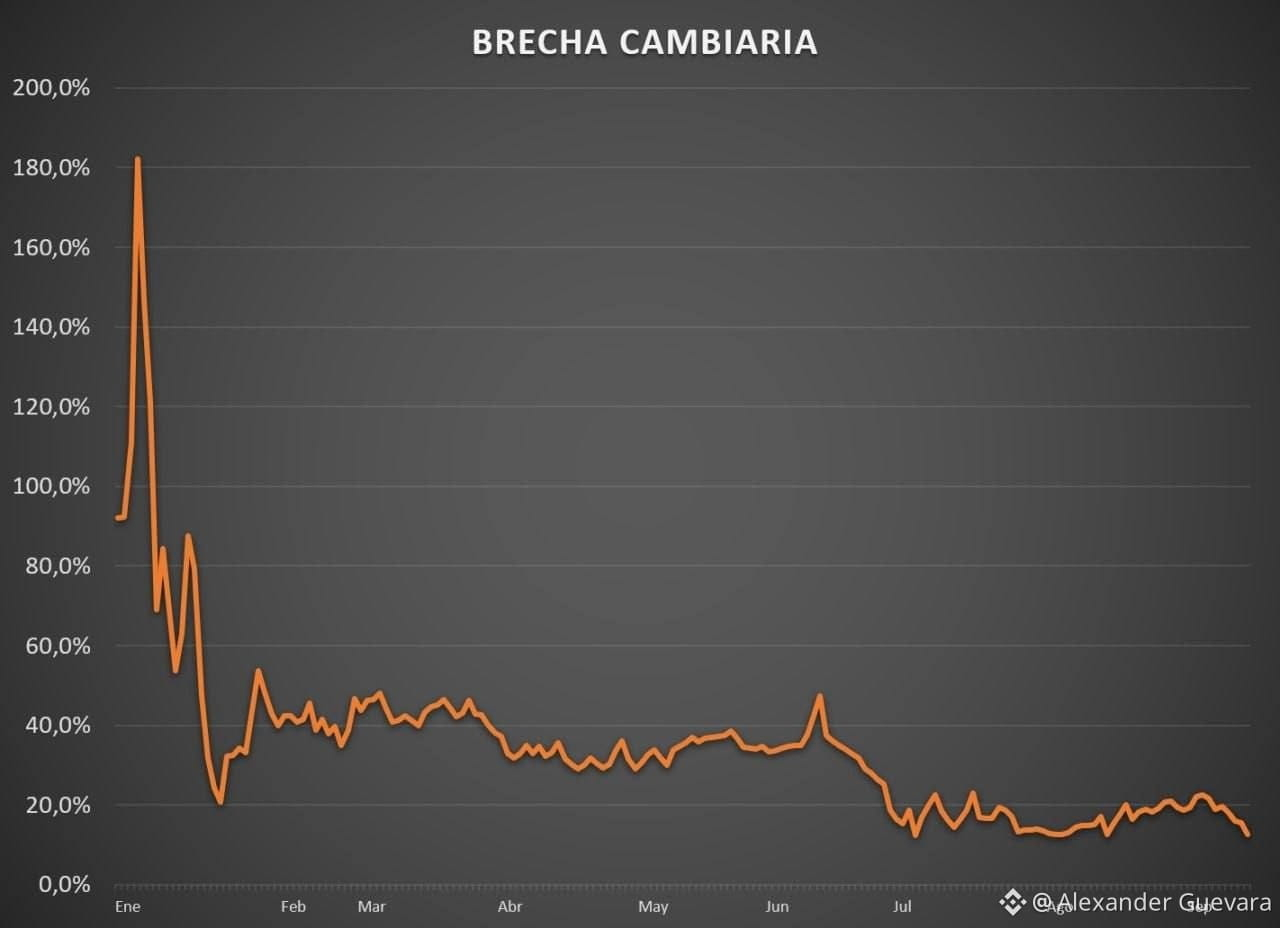
🔼BCV SIGUE SUBIENDO DE FORMA GALOPANTE EN BUSCA DE SEGUIR CERRANDO LA BRECHA CAMBIARIA.
🗓SUBE 4,31 BS PARA MAÑANA MIÉRCOLES
🤝⚠️El BCV continúa cerrando la brecha cambiaria de forma lenta, progresiva y sostenida en el tiempo.
📌SE MANTIENE TENDENCIA BAJISTA CON UN CIERRE CADA VEZ MAS BAJO DE LA BRECHA CAMBIARÍA DURANTE EL AÑO 2026.
🔽Tendencia bajista de la brecha cambiaría durante el año 2026
🇻🇪Economistas advierten que ajuste de tasas de interés bancarias será un obstáculo mayor para otorgamiento de créditos
Lo que busca el BCV con esta medida, según la presidenta y la economista jefe de la firma Síntesis Financiera, Tamara Herrera, es que no haya exceso de circulación de bolívares en el mercado para que los venezolanos no se “refugien” en la compra de dólares y así evitar la presión al alza del tipo de cambio.
#BCV #BrechaAlta #venezuela #EconomicAlert #economy $BTC
🔼BCV SIGUE SUBIENDO DE FORMA GALOPANTE EN BUSCA DE SEGUIR CERRANDO LA BRECHA CAMBIARIA.
🗓SUBE 4,31 BS PARA MAÑANA MIÉRCOLES
🤝⚠️El BCV continúa cerrando la brecha cambiaria de forma lenta, progresiva y sostenida en el tiempo.
📌SE MANTIENE TENDENCIA BAJISTA CON UN CIERRE CADA VEZ MAS BAJO DE LA BRECHA CAMBIARÍA DURANTE EL AÑO 2026.
🔽Tendencia bajista de la brecha cambiaría durante el año 2026
🇻🇪Economistas advierten que ajuste de tasas de interés bancarias será un obstáculo mayor para otorgamiento de créditos
Lo que busca el BCV con esta medida, según la presidenta y la economista jefe de la firma Síntesis Financiera, Tamara Herrera, es que no haya exceso de circulación de bolívares en el mercado para que los venezolanos no se “refugien” en la compra de dólares y así evitar la presión al alza del tipo de cambio.
#BCV #BrechaAlta #venezuela #EconomicAlert #economy $BTC
🗓SUBE 4,31 BS PARA MAÑANA MIÉRCOLES
🤝⚠️El BCV continúa cerrando la brecha cambiaria de forma lenta, progresiva y sostenida en el tiempo.
📌SE MANTIENE TENDENCIA BAJISTA CON UN CIERRE CADA VEZ MAS BAJO DE LA BRECHA CAMBIARÍA DURANTE EL AÑO 2026.
🔽Tendencia bajista de la brecha cambiaría durante el año 2026
🇻🇪Economistas advierten que ajuste de tasas de interés bancarias será un obstáculo mayor para otorgamiento de créditos
Lo que busca el BCV con esta medida, según la presidenta y la economista jefe de la firma Síntesis Financiera, Tamara Herrera, es que no haya exceso de circulación de bolívares en el mercado para que los venezolanos no se “refugien” en la compra de dólares y así evitar la presión al alza del tipo de cambio.
#BCV #BrechaAlta #venezuela #EconomicAlert #economy $BTC
145

·
--
⚔️ SOL vs ETH — Who Wins the Next Rally?
Solana continues to compete with Ethereum for users, liquidity, and developers.
🚀 SOL
🏆 ETH
Which one will outperform over the next 12 months?
$SOL $ETH #solanAnalysis #EconomicAlert
⚔️ SOL vs ETH — Who Wins the Next Rally?
Solana continues to compete with Ethereum for users, liquidity, and developers.
🚀 SOL
🏆 ETH
Which one will outperform over the next 12 months?
$SOL $ETH #solanAnalysis #EconomicAlert
Solana continues to compete with Ethereum for users, liquidity, and developers.
🚀 SOL
🏆 ETH
Which one will outperform over the next 12 months?
$SOL $ETH #solanAnalysis #EconomicAlert
98
Connectez-vous pour découvrir plus de contenu
Rejoignez la communauté mondiale des adeptes de cryptomonnaies sur Binance Square
⚡️ Suviez les dernières informations importantes sur les cryptomonnaies.
💬 Jugé digne de confiance par la plus grande plateforme d’échange de cryptomonnaies au monde.
👍 Découvrez les connaissances que partagent les créateurs vérifiés.
Adresse e-mail/Nº de téléphone
Sujets d’actualité
1
#FedMinutesFocusOnOctoberPause
277,921 vues
1,703 mentions
2
#IMFGrantsWaiverForElSalvadorBitcoinBreach
892 vues
50 mentions
3
#BinanceLaunchesBinanceIntelligence
1.2M vues
6,834 mentions
4
#EvernorthDelaysNasdaqDebutToOct12
37,216 vues
428 mentions
5
#RobinhoodAdds$25MInBitcoinToBalanceSheet
13,889 vues
87 mentions
6
#SP500AndNasdaqHitRecordHighs
41,990 vues
574 mentions
7
#USMortgageRatesRiseTo7.49%
37,137 vues
459 mentions
8
#BTCFallsBelow$84K
154,313 vues
249 mentions
9
#DubaiVARAIssuesReserveAssetAuditCircular
55,529 vues
1,025 mentions
10
#SECApproves3XBitcoinETF
53,459 vues
822 mentions