

#etfvsbtc
etfvsbtc
21.9M vues
16,524 mentions
Join the #ETFvsBTC campaign for a chance to win up to 500 FDUSD! Weigh in on the pros and cons of investing in Bitcoin ETFs as opposed to buying BTC directly.
Populaire
Récents

·
--

Article
24小时5.3亿美元爆掉!追高的多头呢?Coinglass的数据,周一24小时全网爆仓超过5.3亿美元,绝大多数是多单(TradingView引Benzinga)。大饼那天想冲84,000美元,结果没冲过去又跌回82,000一线;以太盘中摸到2,717美元也没站住。追突破的多单,基本全军覆没。
有意思的是机构那边。上周美国四类现货ETF合计净流入超过33亿美元,BTC一家就拿了23.9亿,BTC一家就拿了23.9亿,ETH 6.9亿,SOL1.88亿,SOL1.88亿,XRP 7560万(Cointelegraph引SoSoValue,9月29日报道)。结果到了周一,四类加起来只剩6480万美元,比上周五缩水了约80%。机构周五扫完货,周一直接歇菜。
更惨的是$ZEC。之前隐私币那波涨得太猛,周二直接跌9%,回到1,423美元附近;它的ETF周一还净流出810万美元,是当天唯一流出的品类(CoinDesk经TradersUnion)。涨的时候有多风光,回调的时候就有多狼狈。
所以你看,数据是真矛盾:ETF上周创纪录地买,价格却在跌;多头觉得84,000必破,结果爆仓5个多亿。这说明啥?说明现在这个位置多空分歧大到离谱,谁也说服不了谁。我反正是看不懂,索性把杠杆全关了,现货拿着睡觉香。#ETFvsBTC
24小时5.3亿美元爆掉!追高的多头呢?
Coinglass的数据,周一24小时全网爆仓超过5.3亿美元,绝大多数是多单(TradingView引Benzinga)。大饼那天想冲84,000美元,结果没冲过去又跌回82,000一线;以太盘中摸到2,717美元也没站住。追突破的多单,基本全军覆没。
有意思的是机构那边。上周美国四类现货ETF合计净流入超过33亿美元,BTC一家就拿了23.9亿,BTC一家就拿了23.9亿,ETH 6.9亿,SOL1.88亿,SOL1.88亿,XRP 7560万(Cointelegraph引SoSoValue,9月29日报道)。结果到了周一,四类加起来只剩6480万美元,比上周五缩水了约80%。机构周五扫完货,周一直接歇菜。
更惨的是$ZEC。之前隐私币那波涨得太猛,周二直接跌9%,回到1,423美元附近;它的ETF周一还净流出810万美元,是当天唯一流出的品类(CoinDesk经TradersUnion)。涨的时候有多风光,回调的时候就有多狼狈。
所以你看,数据是真矛盾:ETF上周创纪录地买,价格却在跌;多头觉得84,000必破,结果爆仓5个多亿。这说明啥?说明现在这个位置多空分歧大到离谱,谁也说服不了谁。我反正是看不懂,索性把杠杆全关了,现货拿着睡觉香。#ETFvsBTC
有意思的是机构那边。上周美国四类现货ETF合计净流入超过33亿美元,BTC一家就拿了23.9亿,BTC一家就拿了23.9亿,ETH 6.9亿,SOL1.88亿,SOL1.88亿,XRP 7560万(Cointelegraph引SoSoValue,9月29日报道)。结果到了周一,四类加起来只剩6480万美元,比上周五缩水了约80%。机构周五扫完货,周一直接歇菜。
更惨的是$ZEC。之前隐私币那波涨得太猛,周二直接跌9%,回到1,423美元附近;它的ETF周一还净流出810万美元,是当天唯一流出的品类(CoinDesk经TradersUnion)。涨的时候有多风光,回调的时候就有多狼狈。
所以你看,数据是真矛盾:ETF上周创纪录地买,价格却在跌;多头觉得84,000必破,结果爆仓5个多亿。这说明啥?说明现在这个位置多空分歧大到离谱,谁也说服不了谁。我反正是看不懂,索性把杠杆全关了,现货拿着睡觉香。#ETFvsBTC
风中浪客:
追突破的最容易被这种假动作收走,$BTC 84k、$ETH 2717都没站稳,多单扎堆就是燃料。等回踩确认再动手,别急着当烈士。
2
579

{spot}(BTCUSDT)
#ETFvsBTC aunque el bitcoin ha representado mayores retornos que cualquier etfs ...los etfs siguen siendo mejores mecanismos de inversión ya que suelen ser respaldados por empresas por un valor real y histórico
#ETFvsBTC aunque el bitcoin ha representado mayores retornos que cualquier etfs ...los etfs siguen siendo mejores mecanismos de inversión ya que suelen ser respaldados por empresas por un valor real y histórico
93
·
--
有意思的背离:$BTC 跌破 84000 的同一天,美国现货 ETF 单日净流入 $7.15 亿,$ETH 也有 $1.62 亿,两天合计 $17 亿。价格跌、机构买——这是"越跌越买"还是"接飞刀"?#ETFvsBTC #比特币现货ETF净流入1.91亿美元
有意思的背离:$BTC 跌破 84000 的同一天,美国现货 ETF 单日净流入 $7.15 亿,$ETH 也有 $1.62 亿,两天合计 $17 亿。价格跌、机构买——这是"越跌越买"还是"接飞刀"?#ETFvsBTC #比特币现货ETF净流入1.91亿美元
11

🚨 الأسعار بدأت تتحرك… لكن أموال الـETF لم تعد بعد.
📊 الأسبوع الماضي:
₿ Bitcoin ETFs: +$6.21M فقط
Ξ Ethereum ETFs: -$140M
ومع ذلك…
📈 $BTC استعاد $80K ثم تجاوز $82K
📈 $ETH اخترق مؤقتًا $2,700
والأهم أن BTC ETFs شهدت +$433M تدفقات يوم الجمعة وحده.
🔥 السوق امتص صدمتين كبيرتين:
• فشل تقدم CLARITY Act
• رفع الفيدرالي الفائدة إلى 3.75%–4.00%
ثم بدأ إعادة تسعير سريعة للأصول.
👀 الاختبار القادم واضح:
هل تلحق تدفقات الـETF بالأسعار؟
إذا عادت مئات الملايين إلى BTC وETH ETFs مع استمرار
الصعود → تتغير صورة السيولة المؤسسية.
أما إذا ارتفعت الأسعار بدون تدفقات قوية → يبقى الصعود أكثر
اعتمادًا على السبوت، المشتقات وShort Covering.
#CanaryFilesSecondAmendmentForStakedSEIETF #SaylorHintsStrategyBitcoinBuy #ETFvsBTC
🚨 الأسعار بدأت تتحرك… لكن أموال الـETF لم تعد بعد.
📊 الأسبوع الماضي:
₿ Bitcoin ETFs: +$6.21M فقط
Ξ Ethereum ETFs: -$140M
ومع ذلك…
📈 $BTC استعاد $80K ثم تجاوز $82K
📈 $ETH اخترق مؤقتًا $2,700
والأهم أن BTC ETFs شهدت +$433M تدفقات يوم الجمعة وحده.
🔥 السوق امتص صدمتين كبيرتين:
• فشل تقدم CLARITY Act
• رفع الفيدرالي الفائدة إلى 3.75%–4.00%
ثم بدأ إعادة تسعير سريعة للأصول.
👀 الاختبار القادم واضح:
هل تلحق تدفقات الـETF بالأسعار؟
إذا عادت مئات الملايين إلى BTC وETH ETFs مع استمرار
الصعود → تتغير صورة السيولة المؤسسية.
أما إذا ارتفعت الأسعار بدون تدفقات قوية → يبقى الصعود أكثر
اعتمادًا على السبوت، المشتقات وShort Covering.
#CanaryFilesSecondAmendmentForStakedSEIETF #SaylorHintsStrategyBitcoinBuy #ETFvsBTC
📊 الأسبوع الماضي:
₿ Bitcoin ETFs: +$6.21M فقط
Ξ Ethereum ETFs: -$140M
ومع ذلك…
📈 $BTC استعاد $80K ثم تجاوز $82K
📈 $ETH اخترق مؤقتًا $2,700
والأهم أن BTC ETFs شهدت +$433M تدفقات يوم الجمعة وحده.
🔥 السوق امتص صدمتين كبيرتين:
• فشل تقدم CLARITY Act
• رفع الفيدرالي الفائدة إلى 3.75%–4.00%
ثم بدأ إعادة تسعير سريعة للأصول.
👀 الاختبار القادم واضح:
هل تلحق تدفقات الـETF بالأسعار؟
إذا عادت مئات الملايين إلى BTC وETH ETFs مع استمرار
الصعود → تتغير صورة السيولة المؤسسية.
أما إذا ارتفعت الأسعار بدون تدفقات قوية → يبقى الصعود أكثر
اعتمادًا على السبوت، المشتقات وShort Covering.
#CanaryFilesSecondAmendmentForStakedSEIETF #SaylorHintsStrategyBitcoinBuy #ETFvsBTC


Good Luck 🎁🌟
De - K U M A I M -
1
6
131


·
--
「比特幣 ETF 遭遇自 6 月以來最重資金外流,資金流出 4.5 億美元,因“清晰度”法案未獲通過」:美國現貨比特幣 ETF 在一天內被投資人淨贖回約 4.5 億美元,是自 6 月 25 日以來最大單日撤資規模。所謂「資金外流」,是指賣出或贖回 ETF 的資金多於買入資金,反映部分投資人短期轉趨保守。
這波撤資與「數位資產市場清晰度法案」未能在美國參議院推進連結起來。該法案原本被市場視為可能為加密資產建立較明確監管架構的措施;投票未過,增加了政策與監管的不確定性,因此部分資金選擇先降低加密資產曝險。
不過,ETF 單日大量流出不等於比特幣必然持續下跌,也不代表所有投資人都轉為看空;它主要反映當時市場對監管消息的即時反應,以及短期避險情緒升溫。以上僅為市場分析,不構成投資建議。$BTC
{spot}(BTCUSDT)
#etf #ETFvsBTC
「比特幣 ETF 遭遇自 6 月以來最重資金外流,資金流出 4.5 億美元,因“清晰度”法案未獲通過」:美國現貨比特幣 ETF 在一天內被投資人淨贖回約 4.5 億美元,是自 6 月 25 日以來最大單日撤資規模。所謂「資金外流」,是指賣出或贖回 ETF 的資金多於買入資金,反映部分投資人短期轉趨保守。
這波撤資與「數位資產市場清晰度法案」未能在美國參議院推進連結起來。該法案原本被市場視為可能為加密資產建立較明確監管架構的措施;投票未過,增加了政策與監管的不確定性,因此部分資金選擇先降低加密資產曝險。
不過,ETF 單日大量流出不等於比特幣必然持續下跌,也不代表所有投資人都轉為看空;它主要反映當時市場對監管消息的即時反應,以及短期避險情緒升溫。以上僅為市場分析,不構成投資建議。$BTC
#etf #ETFvsBTC
這波撤資與「數位資產市場清晰度法案」未能在美國參議院推進連結起來。該法案原本被市場視為可能為加密資產建立較明確監管架構的措施;投票未過,增加了政策與監管的不確定性,因此部分資金選擇先降低加密資產曝險。
不過,ETF 單日大量流出不等於比特幣必然持續下跌,也不代表所有投資人都轉為看空;它主要反映當時市場對監管消息的即時反應,以及短期避險情緒升溫。以上僅為市場分析,不構成投資建議。$BTC
#etf #ETFvsBTC
260

·
--
Cập nhật ETF ngày 10/9 cho thấy bức tranh trái chiều giữa hai loại tài sản lớn.
ETF Bitcoin rút ròng 2.148 BTC trong ngày, tương đương khoảng 165,46 triệu đô, nhưng tính cả tuần thì vẫn hút ròng 8.587 BTC, khoảng 661,59 triệu đô. ETF
Ethereum cũng tương tự, rút ròng 9.540 ETH trong ngày, khoảng 23,2 triệu đô, nhưng tính tuần thì vẫn dương 39.046 ETH, gần 94,95 triệu đô.
Nhìn kỹ thì Grayscale là bên rút mạnh nhất trong ngày ở cả hai loại tài sản, trong khi BlackRock vẫn giữ vai trò trụ cột hút vốn dài hạn cho cả BTC lẫn ETH.
Mọi người thấy sao, một ngày rút ròng nhưng cả tuần vẫn dương như vậy có đáng lo không, hay chỉ là biến động bình thường trong ngắn hạn?
Thông tin mang tính tham khảo, không phải lời khuyên đầu tư.
#ETFvsBTC #ETFEthereum #BitcoinGoldenCrossConfirms #TrendingTopic
{future}(ZECUSDT)
{future}(ETHUSDT)
{future}(BTCUSDT)
Cập nhật ETF ngày 10/9 cho thấy bức tranh trái chiều giữa hai loại tài sản lớn.
ETF Bitcoin rút ròng 2.148 BTC trong ngày, tương đương khoảng 165,46 triệu đô, nhưng tính cả tuần thì vẫn hút ròng 8.587 BTC, khoảng 661,59 triệu đô. ETF
Ethereum cũng tương tự, rút ròng 9.540 ETH trong ngày, khoảng 23,2 triệu đô, nhưng tính tuần thì vẫn dương 39.046 ETH, gần 94,95 triệu đô.
Nhìn kỹ thì Grayscale là bên rút mạnh nhất trong ngày ở cả hai loại tài sản, trong khi BlackRock vẫn giữ vai trò trụ cột hút vốn dài hạn cho cả BTC lẫn ETH.
Mọi người thấy sao, một ngày rút ròng nhưng cả tuần vẫn dương như vậy có đáng lo không, hay chỉ là biến động bình thường trong ngắn hạn?
Thông tin mang tính tham khảo, không phải lời khuyên đầu tư.
#ETFvsBTC #ETFEthereum #BitcoinGoldenCrossConfirms #TrendingTopic
ETF Bitcoin rút ròng 2.148 BTC trong ngày, tương đương khoảng 165,46 triệu đô, nhưng tính cả tuần thì vẫn hút ròng 8.587 BTC, khoảng 661,59 triệu đô. ETF
Ethereum cũng tương tự, rút ròng 9.540 ETH trong ngày, khoảng 23,2 triệu đô, nhưng tính tuần thì vẫn dương 39.046 ETH, gần 94,95 triệu đô.
Nhìn kỹ thì Grayscale là bên rút mạnh nhất trong ngày ở cả hai loại tài sản, trong khi BlackRock vẫn giữ vai trò trụ cột hút vốn dài hạn cho cả BTC lẫn ETH.
Mọi người thấy sao, một ngày rút ròng nhưng cả tuần vẫn dương như vậy có đáng lo không, hay chỉ là biến động bình thường trong ngắn hạn?
Thông tin mang tính tham khảo, không phải lời khuyên đầu tư.
#ETFvsBTC #ETFEthereum #BitcoinGoldenCrossConfirms #TrendingTopic

535

$BTC
{spot}(BTCUSDT)
ETFs Just Pulled In $731M in One Day - The Biggest Inflow Since January
U.S. spot Bitcoin ETFs recorded $730.9M in net inflows on Thursday, with BlackRock's IBIT alone taking in around $454M. Six other funds also finished the day positive, pushing monthly inflows to roughly $3.5B -
the strongest month since September 2025.
And this is where it gets interesting: analysts say the concentration in IBIT looks more like institutional accumulation than short-term trading. At the same time, softer Fed language gave risk assets another boost, with Governor Christopher Waller signaling rates could stay unchanged if inflation keeps cooling.
Bitcoin moved back above $81K after the news, with $BTC trading around $80,950, while Coinbase jumped about 10%
and Circle gained roughly 16.5%
#ETFvsBTC
#BTC
$BTC
ETFs Just Pulled In $731M in One Day - The Biggest Inflow Since January
U.S. spot Bitcoin ETFs recorded $730.9M in net inflows on Thursday, with BlackRock's IBIT alone taking in around $454M. Six other funds also finished the day positive, pushing monthly inflows to roughly $3.5B -
the strongest month since September 2025.
And this is where it gets interesting: analysts say the concentration in IBIT looks more like institutional accumulation than short-term trading. At the same time, softer Fed language gave risk assets another boost, with Governor Christopher Waller signaling rates could stay unchanged if inflation keeps cooling.
Bitcoin moved back above $81K after the news, with $BTC trading around $80,950, while Coinbase jumped about 10%
and Circle gained roughly 16.5%
#ETFvsBTC
#BTC
ETFs Just Pulled In $731M in One Day - The Biggest Inflow Since January
U.S. spot Bitcoin ETFs recorded $730.9M in net inflows on Thursday, with BlackRock's IBIT alone taking in around $454M. Six other funds also finished the day positive, pushing monthly inflows to roughly $3.5B -
the strongest month since September 2025.
And this is where it gets interesting: analysts say the concentration in IBIT looks more like institutional accumulation than short-term trading. At the same time, softer Fed language gave risk assets another boost, with Governor Christopher Waller signaling rates could stay unchanged if inflation keeps cooling.
Bitcoin moved back above $81K after the news, with $BTC trading around $80,950, while Coinbase jumped about 10%
and Circle gained roughly 16.5%
#ETFvsBTC
#BTC

88

·
--
📈 BlackRock’s Bitcoin ETF is outperforming the S&P 500 ETF.
Since its January 2024 debut, IBIT is up 71%, slightly ahead of Vanguard’s S&P 500 ETF at 66%, according to Bloomberg’s Eric Balchunas.
Bitcoin ETFs are making a serious statement. 👀
Is this just the beginning of Bitcoin’s institutional era? ₿
#ETFvsBTC #ETFs $BITCOIN
📈 BlackRock’s Bitcoin ETF is outperforming the S&P 500 ETF.
Since its January 2024 debut, IBIT is up 71%, slightly ahead of Vanguard’s S&P 500 ETF at 66%, according to Bloomberg’s Eric Balchunas.
Bitcoin ETFs are making a serious statement. 👀
Is this just the beginning of Bitcoin’s institutional era? ₿
#ETFvsBTC #ETFs $BITCOIN
Since its January 2024 debut, IBIT is up 71%, slightly ahead of Vanguard’s S&P 500 ETF at 66%, according to Bloomberg’s Eric Balchunas.
Bitcoin ETFs are making a serious statement. 👀
Is this just the beginning of Bitcoin’s institutional era? ₿
#ETFvsBTC #ETFs $BITCOIN
68
·
--
🚨 JUST IN: U.S. spot Bitcoin ETFs had a massive August. ₿
They pulled in $3.5 billion during the month — their biggest monthly inflow since July 2025.
Institutional demand is clearly still strong.
🔥 But here’s the real question: Are these ETF inflows setting Bitcoin up for a new all-time high, or is a major pullback coming first?
What’s your BTC target for the next 3 months? 👀
#BTC #ETFvsBTC $BITCOIN
🚨 JUST IN: U.S. spot Bitcoin ETFs had a massive August. ₿
They pulled in $3.5 billion during the month — their biggest monthly inflow since July 2025.
Institutional demand is clearly still strong.
🔥 But here’s the real question: Are these ETF inflows setting Bitcoin up for a new all-time high, or is a major pullback coming first?
What’s your BTC target for the next 3 months? 👀
#BTC #ETFvsBTC $BITCOIN
They pulled in $3.5 billion during the month — their biggest monthly inflow since July 2025.
Institutional demand is clearly still strong.
🔥 But here’s the real question: Are these ETF inflows setting Bitcoin up for a new all-time high, or is a major pullback coming first?
What’s your BTC target for the next 3 months? 👀
#BTC #ETFvsBTC $BITCOIN
78

·
--
🏛️ ¡LUZ VERDE INSTITUCIONAL PARA EL ETF DE BITCOIN! 📊
Un hito sin precedentes para la industria financiera: los reguladores han aprobado formalmente la integración de los ETF de Bitcoin al contado. Este paso abre las puertas a miles de millones de dólares en capital institucional y consolida a Bitcoin como un activo global de reserva.
📈 El mercado cripto entra en una nueva era de madurez y liquidez masiva.
💬 ¿Consideras que esta aprobación cambiará para siempre el mercado financiero tradicional?
¡Te leo en los comentarios! 👇
#BTC #ETFvsBTC #blockchain
🏛️ ¡LUZ VERDE INSTITUCIONAL PARA EL ETF DE BITCOIN! 📊
Un hito sin precedentes para la industria financiera: los reguladores han aprobado formalmente la integración de los ETF de Bitcoin al contado. Este paso abre las puertas a miles de millones de dólares en capital institucional y consolida a Bitcoin como un activo global de reserva.
📈 El mercado cripto entra en una nueva era de madurez y liquidez masiva.
💬 ¿Consideras que esta aprobación cambiará para siempre el mercado financiero tradicional?
¡Te leo en los comentarios! 👇
#BTC #ETFvsBTC #blockchain
Un hito sin precedentes para la industria financiera: los reguladores han aprobado formalmente la integración de los ETF de Bitcoin al contado. Este paso abre las puertas a miles de millones de dólares en capital institucional y consolida a Bitcoin como un activo global de reserva.
📈 El mercado cripto entra en una nueva era de madurez y liquidez masiva.
💬 ¿Consideras que esta aprobación cambiará para siempre el mercado financiero tradicional?
¡Te leo en los comentarios! 👇
#BTC #ETFvsBTC #blockchain

1
1
2
437

·
--
Haussier
Los ETF Spot de Bitcoin frenan la sangría y vuelven a captar capital.
{future}(BTCUSDT)
Después de varios días consecutivos de salidas, los ETF Spot de Bitcoin registraron nuevamente entradas netas de capital, una señal que podría indicar un cambio en el sentimiento de los inversores institucionales. El flujo positivo llega en un momento clave para BTC, que intenta estabilizarse tras semanas de presión bajista y fuerte volatilidad.
Aunque el mercado sigue enfrentando incertidumbre macroeconómica y geopolítica, el regreso de los compradores a los ETF es visto como una señal de confianza de largo plazo y podría aportar soporte al precio de Bitcoin en las próximas semanas.
#btc
#ETFvsBTC
Los ETF Spot de Bitcoin frenan la sangría y vuelven a captar capital.
Después de varios días consecutivos de salidas, los ETF Spot de Bitcoin registraron nuevamente entradas netas de capital, una señal que podría indicar un cambio en el sentimiento de los inversores institucionales. El flujo positivo llega en un momento clave para BTC, que intenta estabilizarse tras semanas de presión bajista y fuerte volatilidad.
Aunque el mercado sigue enfrentando incertidumbre macroeconómica y geopolítica, el regreso de los compradores a los ETF es visto como una señal de confianza de largo plazo y podría aportar soporte al precio de Bitcoin en las próximas semanas.
#btc
#ETFvsBTC
Después de varios días consecutivos de salidas, los ETF Spot de Bitcoin registraron nuevamente entradas netas de capital, una señal que podría indicar un cambio en el sentimiento de los inversores institucionales. El flujo positivo llega en un momento clave para BTC, que intenta estabilizarse tras semanas de presión bajista y fuerte volatilidad.
Aunque el mercado sigue enfrentando incertidumbre macroeconómica y geopolítica, el regreso de los compradores a los ETF es visto como una señal de confianza de largo plazo y podría aportar soporte al precio de Bitcoin en las próximas semanas.
#btc
#ETFvsBTC

126

·
--
Partiellement vrai
Article
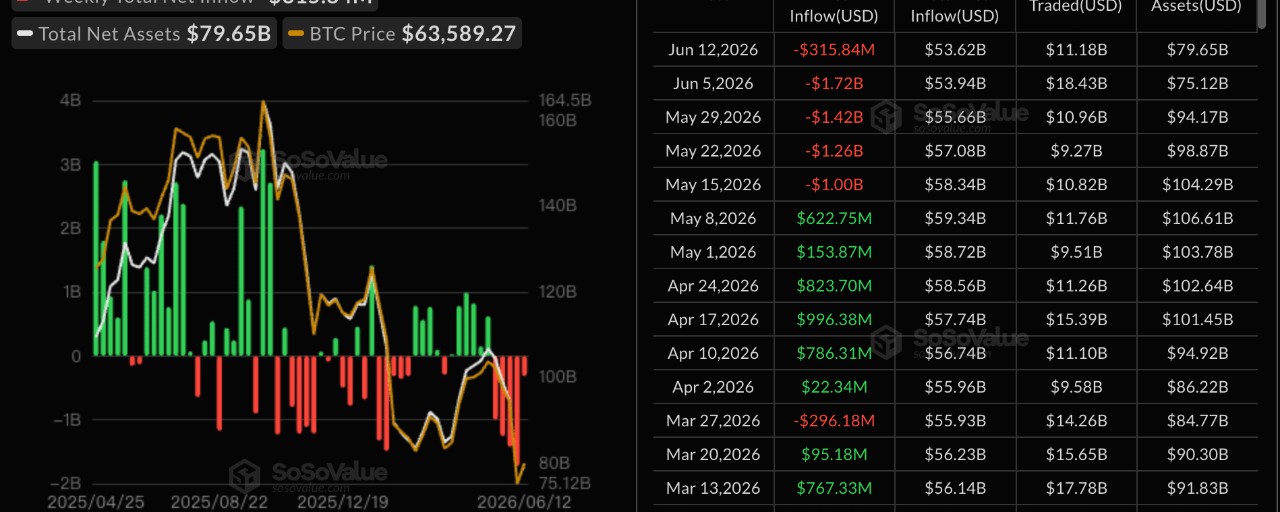
Bitcoin ETFs Extend Losing Streak as Investors Pull $316M in One WeekBitcoin spot ETFs continued to face selling pressure last week, recording net outflows of $316 million and marking the fifth consecutive week of investor withdrawals.
According to market data from SoSoValue, U.S. Bitcoin spot ETFs experienced significant outflows during the trading week of June 8–12 (Eastern Time), reflecting cautious sentiment among institutional investors despite Bitcoin's recent price movements.
Leading the outflows was BlackRock's IBIT ETF, which recorded $355 million in net outflows during the week. Despite this decline, IBIT remains the dominant Bitcoin ETF with cumulative net inflows totaling $62.11 billion since launch.
Meanwhile, Grayscale's GBTC saw investors withdraw approximately $87.9 million, pushing its total historical net outflows to $26.85 billion, continuing a long-term trend of capital leaving the fund.
On the positive side, Fidelity's FBTC stood out as the strongest performer among Bitcoin ETFs, attracting $55.7 million in net inflows. The fund's cumulative inflows have now reached $10.45 billion.
The latest data highlights ongoing caution in the crypto investment landscape as institutional investors continue adjusting their exposure to Bitcoin through ETF products.
#BTC #ETFvsBTC #ETFs. $BTC #ETFs $ETH
{spot}(BTCUSDT)
Bitcoin ETFs Extend Losing Streak as Investors Pull $316M in One Week
Bitcoin spot ETFs continued to face selling pressure last week, recording net outflows of $316 million and marking the fifth consecutive week of investor withdrawals.
According to market data from SoSoValue, U.S. Bitcoin spot ETFs experienced significant outflows during the trading week of June 8–12 (Eastern Time), reflecting cautious sentiment among institutional investors despite Bitcoin's recent price movements.
Leading the outflows was BlackRock's IBIT ETF, which recorded $355 million in net outflows during the week. Despite this decline, IBIT remains the dominant Bitcoin ETF with cumulative net inflows totaling $62.11 billion since launch.
Meanwhile, Grayscale's GBTC saw investors withdraw approximately $87.9 million, pushing its total historical net outflows to $26.85 billion, continuing a long-term trend of capital leaving the fund.
On the positive side, Fidelity's FBTC stood out as the strongest performer among Bitcoin ETFs, attracting $55.7 million in net inflows. The fund's cumulative inflows have now reached $10.45 billion.
The latest data highlights ongoing caution in the crypto investment landscape as institutional investors continue adjusting their exposure to Bitcoin through ETF products.
#BTC #ETFvsBTC #ETFs. $BTC #ETFs $ETH
According to market data from SoSoValue, U.S. Bitcoin spot ETFs experienced significant outflows during the trading week of June 8–12 (Eastern Time), reflecting cautious sentiment among institutional investors despite Bitcoin's recent price movements.
Leading the outflows was BlackRock's IBIT ETF, which recorded $355 million in net outflows during the week. Despite this decline, IBIT remains the dominant Bitcoin ETF with cumulative net inflows totaling $62.11 billion since launch.
Meanwhile, Grayscale's GBTC saw investors withdraw approximately $87.9 million, pushing its total historical net outflows to $26.85 billion, continuing a long-term trend of capital leaving the fund.
On the positive side, Fidelity's FBTC stood out as the strongest performer among Bitcoin ETFs, attracting $55.7 million in net inflows. The fund's cumulative inflows have now reached $10.45 billion.
The latest data highlights ongoing caution in the crypto investment landscape as institutional investors continue adjusting their exposure to Bitcoin through ETF products.
#BTC #ETFvsBTC #ETFs. $BTC #ETFs $ETH
464

·
--
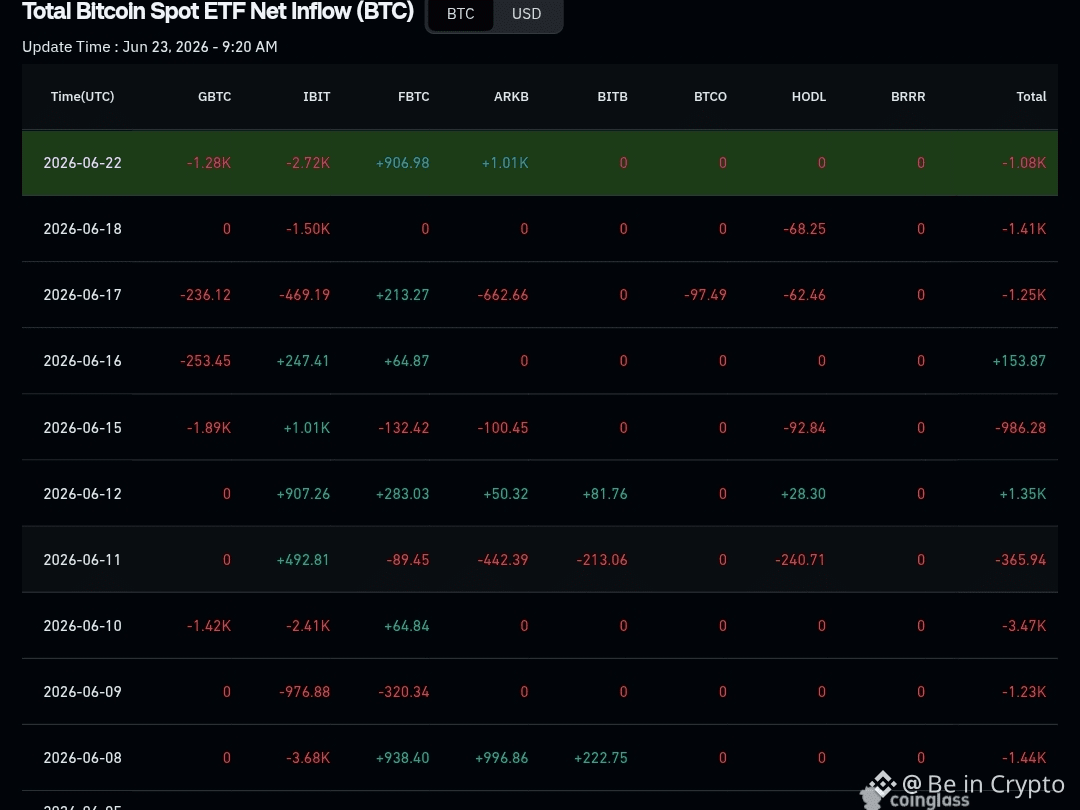
🚨 Bitcoin ETFs recorded significant outflows yesterday
over $6.3 billion$ exiting the funds over the last 30 days—the longest consecutive outflow streak on record
the reons are Three major force to sell
1. BlackRock's Head of Digital Assets, Robbie Mitchnick, laid it out clearly yesterday. Institutional investors aren't necessarily hating on crypto; **they are aggressively chasing the AI trade.** Trillions of dollars are rotating away from traditional alternative assets (like Bitcoin and Gold)
2.New Fed Chair Kevin Warsh took a strict hawkish stance to fight inflation, pushing U.S. Treasury yields to new highs. then Why hold volatile BTC when guaranteed government debt is paying top dollar?.
3.Easing geopolitical tensions have reduced demand for hedge assets like Bitcoin.
As investors redeemed ETF shares, issuers were forced to sell some of their BTC holdings to meet those withdrawals.
This looks more like a macro capital rotation than a loss of confidence in Bitcoin itself.
do you think is there any other resons was the biggest driver behind yesterday's outflows? 👇
$BTC
{future}(BTCUSDT)
#BTC #ETFvsBTC #BlackRock #MarketSentimentToday #AI
🚨 Bitcoin ETFs recorded significant outflows yesterday
over $6.3 billion$ exiting the funds over the last 30 days—the longest consecutive outflow streak on record
the reons are Three major force to sell
1. BlackRock's Head of Digital Assets, Robbie Mitchnick, laid it out clearly yesterday. Institutional investors aren't necessarily hating on crypto; **they are aggressively chasing the AI trade.** Trillions of dollars are rotating away from traditional alternative assets (like Bitcoin and Gold)
2.New Fed Chair Kevin Warsh took a strict hawkish stance to fight inflation, pushing U.S. Treasury yields to new highs. then Why hold volatile BTC when guaranteed government debt is paying top dollar?.
3.Easing geopolitical tensions have reduced demand for hedge assets like Bitcoin.
As investors redeemed ETF shares, issuers were forced to sell some of their BTC holdings to meet those withdrawals.
This looks more like a macro capital rotation than a loss of confidence in Bitcoin itself.
do you think is there any other resons was the biggest driver behind yesterday's outflows? 👇
$BTC
#BTC #ETFvsBTC #BlackRock #MarketSentimentToday #AI
over $6.3 billion$ exiting the funds over the last 30 days—the longest consecutive outflow streak on record
the reons are Three major force to sell
1. BlackRock's Head of Digital Assets, Robbie Mitchnick, laid it out clearly yesterday. Institutional investors aren't necessarily hating on crypto; **they are aggressively chasing the AI trade.** Trillions of dollars are rotating away from traditional alternative assets (like Bitcoin and Gold)
2.New Fed Chair Kevin Warsh took a strict hawkish stance to fight inflation, pushing U.S. Treasury yields to new highs. then Why hold volatile BTC when guaranteed government debt is paying top dollar?.
3.Easing geopolitical tensions have reduced demand for hedge assets like Bitcoin.
As investors redeemed ETF shares, issuers were forced to sell some of their BTC holdings to meet those withdrawals.
This looks more like a macro capital rotation than a loss of confidence in Bitcoin itself.
do you think is there any other resons was the biggest driver behind yesterday's outflows? 👇
$BTC
#BTC #ETFvsBTC #BlackRock #MarketSentimentToday #AI
116


·
--

Article
Institutional Wave:Spot ETFs Reshaping Bitcoin 📈
The financial landscape has experienced a historic paradigm shift with the explosive structural growth of spot exchange-traded funds. Traditional asset management giants have officially bridged the legacy gap, allowing Wall Street capital to flow seamlessly into the cryptocurrency ecosystem. For $BTC
{spot}(BTCUSDT)
, this institutional validation marks a massive transition from a niche speculative tool into a premier globally recognized asset class. By providing a fully regulated investment pipeline, spot vehicles eliminate the technical hurdles of self-custody and regulatory ambiguity for wealth managers. Consequently, multi-billion-dollar pension funds, corporate treasuries, and sovereign entities are strategically integrating @BitcoinKE into their long-term balance sheets. This permanent wave of institutional demand fundamentally alters market liquidity and dampens historic volatility cycles. As structural access expands globally, the digital commodity firmly establishes itself alongside legacy gold, cementing a decentralized future within mainstream portfolios. 🏛️
#ETFvsBTC #Finance #Institutional #Investing #WallStreet
Institutional Wave:
Spot ETFs Reshaping Bitcoin 📈
The financial landscape has experienced a historic paradigm shift with the explosive structural growth of spot exchange-traded funds. Traditional asset management giants have officially bridged the legacy gap, allowing Wall Street capital to flow seamlessly into the cryptocurrency ecosystem. For $BTC
, this institutional validation marks a massive transition from a niche speculative tool into a premier globally recognized asset class. By providing a fully regulated investment pipeline, spot vehicles eliminate the technical hurdles of self-custody and regulatory ambiguity for wealth managers. Consequently, multi-billion-dollar pension funds, corporate treasuries, and sovereign entities are strategically integrating @BitcoinKE into their long-term balance sheets. This permanent wave of institutional demand fundamentally alters market liquidity and dampens historic volatility cycles. As structural access expands globally, the digital commodity firmly establishes itself alongside legacy gold, cementing a decentralized future within mainstream portfolios. 🏛️
#ETFvsBTC #Finance #Institutional #Investing #WallStreet
The financial landscape has experienced a historic paradigm shift with the explosive structural growth of spot exchange-traded funds. Traditional asset management giants have officially bridged the legacy gap, allowing Wall Street capital to flow seamlessly into the cryptocurrency ecosystem. For $BTC
, this institutional validation marks a massive transition from a niche speculative tool into a premier globally recognized asset class. By providing a fully regulated investment pipeline, spot vehicles eliminate the technical hurdles of self-custody and regulatory ambiguity for wealth managers. Consequently, multi-billion-dollar pension funds, corporate treasuries, and sovereign entities are strategically integrating @BitcoinKE into their long-term balance sheets. This permanent wave of institutional demand fundamentally alters market liquidity and dampens historic volatility cycles. As structural access expands globally, the digital commodity firmly establishes itself alongside legacy gold, cementing a decentralized future within mainstream portfolios. 🏛️
#ETFvsBTC #Finance #Institutional #Investing #WallStreet
59

#ETFvsBTC
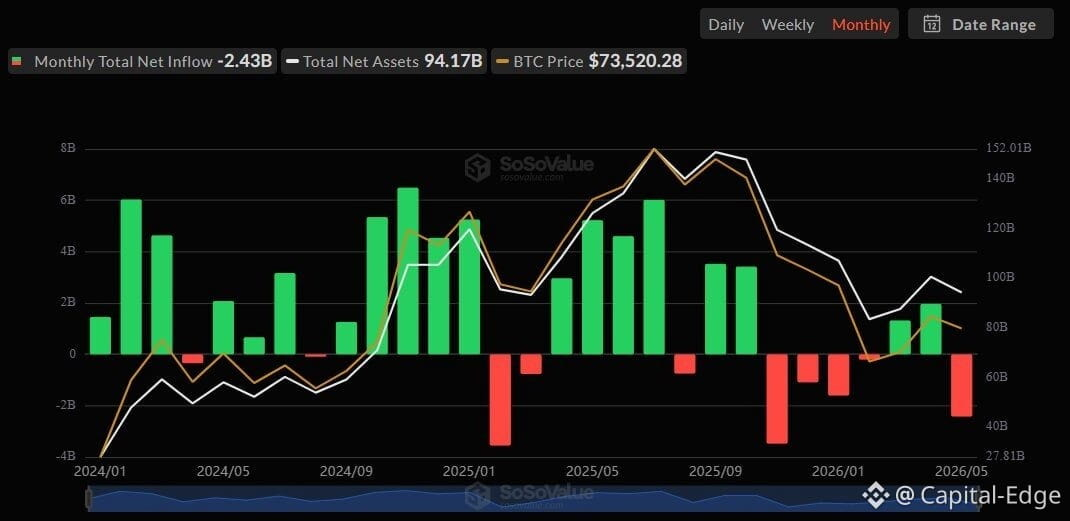
*Bitcoin ETF Outflows Hit $2.43B in May: Institutions Are Selling*
Fresh SoSoValue data shows Monthly Total Net Inflow at -$2.43B for May 2026. Total Net Assets dropped to $94.17B while BTC price holds $73,520.28.
*Chart Breakdown:*
1. *Big Red Bar*: May 2026 printed the largest outflow since Jan 2025. Green bars dominated the 2024 bull run, but 2026 is all red. That’s $2.43B pulled from BTC ETFs in one month.
2. *Price vs Flows*: BTC price and Total Net Assets move together. Both topped around Sept 2025 near $140B AUM. Since then, assets crashed from $152B to $94.17B. Price followed from $116K+ down to $73.5K.
3. *Pattern Shift*: From Jan 2024 to Sept 2025, inflows were massive. After Sept 2025, red outflow bars started. Q4 2025 and Q1 2026 saw heavy selling. Small bounce in April failed, and May flushed hard.
*Why It Matters*:
ETF flows drive this cycle. When institutions buy, BTC rips. When they sell, the whole market tanks. This -$2.43B matches the total market cap dropping 31% to $2.18T, BTC at $62.6K on CoinMarketCap, and alts bleeding 6-9%. Smart money is exiting.
*Bottom Line*:
Until green inflow bars return, rallies get sold. $94.17B AUM is the lowest since early 2025. If June prints another red bar, expect BTC to test $60K and drag the market lower.
Not financial advice. ETF data lags but shows real institutional sentiment.
#ETFvsBTC
*Bitcoin ETF Outflows Hit $2.43B in May: Institutions Are Selling*
Fresh SoSoValue data shows Monthly Total Net Inflow at -$2.43B for May 2026. Total Net Assets dropped to $94.17B while BTC price holds $73,520.28.
*Chart Breakdown:*
1. *Big Red Bar*: May 2026 printed the largest outflow since Jan 2025. Green bars dominated the 2024 bull run, but 2026 is all red. That’s $2.43B pulled from BTC ETFs in one month.
2. *Price vs Flows*: BTC price and Total Net Assets move together. Both topped around Sept 2025 near $140B AUM. Since then, assets crashed from $152B to $94.17B. Price followed from $116K+ down to $73.5K.
3. *Pattern Shift*: From Jan 2024 to Sept 2025, inflows were massive. After Sept 2025, red outflow bars started. Q4 2025 and Q1 2026 saw heavy selling. Small bounce in April failed, and May flushed hard.
*Why It Matters*:
ETF flows drive this cycle. When institutions buy, BTC rips. When they sell, the whole market tanks. This -$2.43B matches the total market cap dropping 31% to $2.18T, BTC at $62.6K on CoinMarketCap, and alts bleeding 6-9%. Smart money is exiting.
*Bottom Line*:
Until green inflow bars return, rallies get sold. $94.17B AUM is the lowest since early 2025. If June prints another red bar, expect BTC to test $60K and drag the market lower.
Not financial advice. ETF data lags but shows real institutional sentiment.
*Bitcoin ETF Outflows Hit $2.43B in May: Institutions Are Selling*
Fresh SoSoValue data shows Monthly Total Net Inflow at -$2.43B for May 2026. Total Net Assets dropped to $94.17B while BTC price holds $73,520.28.
*Chart Breakdown:*
1. *Big Red Bar*: May 2026 printed the largest outflow since Jan 2025. Green bars dominated the 2024 bull run, but 2026 is all red. That’s $2.43B pulled from BTC ETFs in one month.
2. *Price vs Flows*: BTC price and Total Net Assets move together. Both topped around Sept 2025 near $140B AUM. Since then, assets crashed from $152B to $94.17B. Price followed from $116K+ down to $73.5K.
3. *Pattern Shift*: From Jan 2024 to Sept 2025, inflows were massive. After Sept 2025, red outflow bars started. Q4 2025 and Q1 2026 saw heavy selling. Small bounce in April failed, and May flushed hard.
*Why It Matters*:
ETF flows drive this cycle. When institutions buy, BTC rips. When they sell, the whole market tanks. This -$2.43B matches the total market cap dropping 31% to $2.18T, BTC at $62.6K on CoinMarketCap, and alts bleeding 6-9%. Smart money is exiting.
*Bottom Line*:
Until green inflow bars return, rallies get sold. $94.17B AUM is the lowest since early 2025. If June prints another red bar, expect BTC to test $60K and drag the market lower.
Not financial advice. ETF data lags but shows real institutional sentiment.
91

·
--
Article
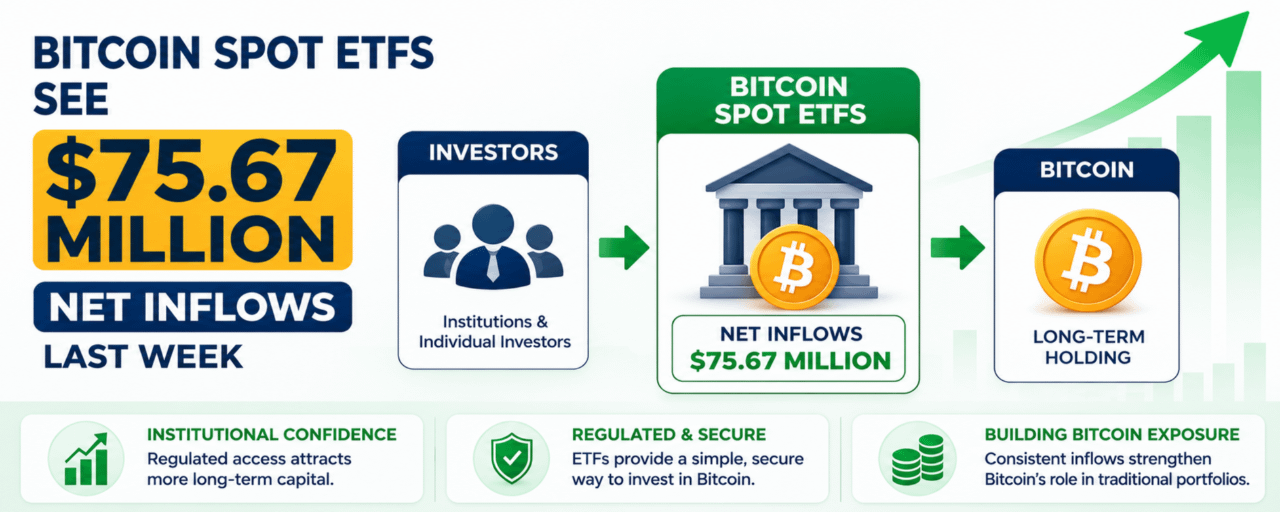
Bitcoin ETFs Keep Attracting Capital Why Steady Inflows Matter More Than Big Headlines@bitcoin spot ETFs recorded $75.67 million in net inflows last week, adding another chapter to one of the biggest shifts in the cryptocurrency market over the past two years. While the figure isn't the largest weekly inflow on record, it highlights something that often goes unnoticed: consistent institutional demand can be more meaningful than a single week of explosive buying.
Crypto investors naturally pay attention to price movements, but capital flows often tell a deeper story. ETF inflows reveal where money is actually moving, offering insight into how investors are positioning themselves beyond short-term market sentiment.
The latest inflows suggest that institutional interest in Bitcoin remains intact despite ongoing macroeconomic uncertainty. Markets continue to face questions around interest rates, inflation, and global economic growth, yet investors are still allocating fresh capital to regulated Bitcoin investment products.
That's an important distinction.
Unlike retail-driven buying during previous crypto cycles, ETF investments are often part of longer-term portfolio strategies. Pension funds, wealth managers, family offices, and institutional investors typically don't make allocation decisions based on daily price swings. Their investment process tends to be slower, more research-driven, and focused on long-term exposure rather than short-term speculation.
This gradual accumulation can create a different type of market dynamic.
Instead of sudden bursts of demand followed by equally sharp selling, steady #etf inflows provide a more consistent source of buying pressure. While they don't guarantee higher prices, they contribute to improving market depth and reinforce Bitcoin's growing role within traditional investment portfolios.
Another reason these inflows matter is what they represent psychologically.
Just a few years ago, many institutional investors viewed Bitcoin as an experimental asset. Today, regulated spot ETFs have made Bitcoin significantly easier to access without requiring investors to manage private keys or navigate cryptocurrency exchanges directly. That accessibility continues lowering barriers for traditional investors entering the market.
It's also worth remembering that ETF flows rarely move in a straight line. Some weeks see large inflows, while others experience modest outflows as investors rebalance portfolios or respond to changing macro conditions. Looking at a single week in isolation can be misleading. The broader trend remains far more valuable than individual data points.
The latest figures reinforce that broader trend.
Even during periods of uncertainty, capital continues finding its way into Bitcoin through regulated investment vehicles. That suggests many investors are treating Bitcoin less as a short-term trade and more as a strategic allocation within diversified portfolios.
Ultimately, ETF inflows are about more than numbers.
They reflect confidence, accessibility, and the gradual integration of digital assets into mainstream finance. Whether weekly inflows are $75 million or several billion, the bigger story is that institutional participation continues to grow.
For Bitcoin, that may prove more important over the long term than any single week's price movement.
$BTC $MSTR $MSTRon
#ETFs #ETFvsBTC #bitcoin
Bitcoin ETFs Keep Attracting Capital Why Steady Inflows Matter More Than Big Headlines
@Bitcoin spot ETFs recorded $75.67 million in net inflows last week, adding another chapter to one of the biggest shifts in the cryptocurrency market over the past two years. While the figure isn't the largest weekly inflow on record, it highlights something that often goes unnoticed: consistent institutional demand can be more meaningful than a single week of explosive buying.
Crypto investors naturally pay attention to price movements, but capital flows often tell a deeper story. ETF inflows reveal where money is actually moving, offering insight into how investors are positioning themselves beyond short-term market sentiment.
The latest inflows suggest that institutional interest in Bitcoin remains intact despite ongoing macroeconomic uncertainty. Markets continue to face questions around interest rates, inflation, and global economic growth, yet investors are still allocating fresh capital to regulated Bitcoin investment products.
That's an important distinction.
Unlike retail-driven buying during previous crypto cycles, ETF investments are often part of longer-term portfolio strategies. Pension funds, wealth managers, family offices, and institutional investors typically don't make allocation decisions based on daily price swings. Their investment process tends to be slower, more research-driven, and focused on long-term exposure rather than short-term speculation.
This gradual accumulation can create a different type of market dynamic.
Instead of sudden bursts of demand followed by equally sharp selling, steady #etf inflows provide a more consistent source of buying pressure. While they don't guarantee higher prices, they contribute to improving market depth and reinforce Bitcoin's growing role within traditional investment portfolios.
Another reason these inflows matter is what they represent psychologically.
Just a few years ago, many institutional investors viewed Bitcoin as an experimental asset. Today, regulated spot ETFs have made Bitcoin significantly easier to access without requiring investors to manage private keys or navigate cryptocurrency exchanges directly. That accessibility continues lowering barriers for traditional investors entering the market.
It's also worth remembering that ETF flows rarely move in a straight line. Some weeks see large inflows, while others experience modest outflows as investors rebalance portfolios or respond to changing macro conditions. Looking at a single week in isolation can be misleading. The broader trend remains far more valuable than individual data points.
The latest figures reinforce that broader trend.
Even during periods of uncertainty, capital continues finding its way into Bitcoin through regulated investment vehicles. That suggests many investors are treating Bitcoin less as a short-term trade and more as a strategic allocation within diversified portfolios.
Ultimately, ETF inflows are about more than numbers.
They reflect confidence, accessibility, and the gradual integration of digital assets into mainstream finance. Whether weekly inflows are $75 million or several billion, the bigger story is that institutional participation continues to grow.
For Bitcoin, that may prove more important over the long term than any single week's price movement.
$BTC $MSTR $MSTRon
#ETFs #ETFvsBTC #bitcoin
Crypto investors naturally pay attention to price movements, but capital flows often tell a deeper story. ETF inflows reveal where money is actually moving, offering insight into how investors are positioning themselves beyond short-term market sentiment.
The latest inflows suggest that institutional interest in Bitcoin remains intact despite ongoing macroeconomic uncertainty. Markets continue to face questions around interest rates, inflation, and global economic growth, yet investors are still allocating fresh capital to regulated Bitcoin investment products.
That's an important distinction.
Unlike retail-driven buying during previous crypto cycles, ETF investments are often part of longer-term portfolio strategies. Pension funds, wealth managers, family offices, and institutional investors typically don't make allocation decisions based on daily price swings. Their investment process tends to be slower, more research-driven, and focused on long-term exposure rather than short-term speculation.
This gradual accumulation can create a different type of market dynamic.
Instead of sudden bursts of demand followed by equally sharp selling, steady #etf inflows provide a more consistent source of buying pressure. While they don't guarantee higher prices, they contribute to improving market depth and reinforce Bitcoin's growing role within traditional investment portfolios.
Another reason these inflows matter is what they represent psychologically.
Just a few years ago, many institutional investors viewed Bitcoin as an experimental asset. Today, regulated spot ETFs have made Bitcoin significantly easier to access without requiring investors to manage private keys or navigate cryptocurrency exchanges directly. That accessibility continues lowering barriers for traditional investors entering the market.
It's also worth remembering that ETF flows rarely move in a straight line. Some weeks see large inflows, while others experience modest outflows as investors rebalance portfolios or respond to changing macro conditions. Looking at a single week in isolation can be misleading. The broader trend remains far more valuable than individual data points.
The latest figures reinforce that broader trend.
Even during periods of uncertainty, capital continues finding its way into Bitcoin through regulated investment vehicles. That suggests many investors are treating Bitcoin less as a short-term trade and more as a strategic allocation within diversified portfolios.
Ultimately, ETF inflows are about more than numbers.
They reflect confidence, accessibility, and the gradual integration of digital assets into mainstream finance. Whether weekly inflows are $75 million or several billion, the bigger story is that institutional participation continues to grow.
For Bitcoin, that may prove more important over the long term than any single week's price movement.
$BTC $MSTR $MSTRon
#ETFs #ETFvsBTC #bitcoin
2
276

·
--
26亿美元重新杀回Crypto:这轮上涨,已经不只是空头爆仓了。
美国现货比特币和以太坊ETF刚交出今年最强的一周。
BTC ETF单周净流入约19亿美元,ETH ETF净流入约6.97亿美元,合计约26亿美元,创2025年10月以来最高。
更夸张的是成交量。
BTC ETF一周成交约221亿美元,比前一周暴增219%;ETH ETF成交约69亿美元,增长259%。
两边加起来接近290亿美元。
前几天BTC从6.4万美元一路冲到接近8万美元,很多人把行情归因于空头爆仓。
现在完整数据出来后,可以看到另一股力量已经接上来了:机构资金真的重新进场。
BTC ETF周三净流入5.17亿美元,周四又流入6.06亿美元,其中BlackRock的IBIT单日就吸金约5.03亿美元。
ETH也没有掉队。
ETH ETF净资产一周从105亿美元升到143亿美元,涨幅接近36%,资金和币价同时在抬升。
目前BTC不同实时来源约在7.70万—7.73万美元,ETH约2415—2425美元附近。1
这组数据说明行情的结构正在变化:
逼空负责把价格拉起来,ETF资金开始负责接住高位。
但还不能直接宣布“大牛市重新开始”。
今年以来BTC ETF仍累计净流出约29亿美元,ETH ETF也还净流出约1.92亿美元。
换句话说,这一周很强,但还没有完全填掉今年留下的资金缺口。
接下来如果ETF连续第二、第三周保持大额净流入,这轮行情的性质才会真正从“反弹”向“资金趋势”升级。$BTC $ETH #etf #ETFvsBTC
26亿美元重新杀回Crypto:这轮上涨,已经不只是空头爆仓了。
美国现货比特币和以太坊ETF刚交出今年最强的一周。
BTC ETF单周净流入约19亿美元,ETH ETF净流入约6.97亿美元,合计约26亿美元,创2025年10月以来最高。
更夸张的是成交量。
BTC ETF一周成交约221亿美元,比前一周暴增219%;ETH ETF成交约69亿美元,增长259%。
两边加起来接近290亿美元。
前几天BTC从6.4万美元一路冲到接近8万美元,很多人把行情归因于空头爆仓。
现在完整数据出来后,可以看到另一股力量已经接上来了:机构资金真的重新进场。
BTC ETF周三净流入5.17亿美元,周四又流入6.06亿美元,其中BlackRock的IBIT单日就吸金约5.03亿美元。
ETH也没有掉队。
ETH ETF净资产一周从105亿美元升到143亿美元,涨幅接近36%,资金和币价同时在抬升。
目前BTC不同实时来源约在7.70万—7.73万美元,ETH约2415—2425美元附近。1
这组数据说明行情的结构正在变化:
逼空负责把价格拉起来,ETF资金开始负责接住高位。
但还不能直接宣布“大牛市重新开始”。
今年以来BTC ETF仍累计净流出约29亿美元,ETH ETF也还净流出约1.92亿美元。
换句话说,这一周很强,但还没有完全填掉今年留下的资金缺口。
接下来如果ETF连续第二、第三周保持大额净流入,这轮行情的性质才会真正从“反弹”向“资金趋势”升级。$BTC $ETH #etf #ETFvsBTC
美国现货比特币和以太坊ETF刚交出今年最强的一周。
BTC ETF单周净流入约19亿美元,ETH ETF净流入约6.97亿美元,合计约26亿美元,创2025年10月以来最高。
更夸张的是成交量。
BTC ETF一周成交约221亿美元,比前一周暴增219%;ETH ETF成交约69亿美元,增长259%。
两边加起来接近290亿美元。
前几天BTC从6.4万美元一路冲到接近8万美元,很多人把行情归因于空头爆仓。
现在完整数据出来后,可以看到另一股力量已经接上来了:机构资金真的重新进场。
BTC ETF周三净流入5.17亿美元,周四又流入6.06亿美元,其中BlackRock的IBIT单日就吸金约5.03亿美元。
ETH也没有掉队。
ETH ETF净资产一周从105亿美元升到143亿美元,涨幅接近36%,资金和币价同时在抬升。
目前BTC不同实时来源约在7.70万—7.73万美元,ETH约2415—2425美元附近。1
这组数据说明行情的结构正在变化:
逼空负责把价格拉起来,ETF资金开始负责接住高位。
但还不能直接宣布“大牛市重新开始”。
今年以来BTC ETF仍累计净流出约29亿美元,ETH ETF也还净流出约1.92亿美元。
换句话说,这一周很强,但还没有完全填掉今年留下的资金缺口。
接下来如果ETF连续第二、第三周保持大额净流入,这轮行情的性质才会真正从“反弹”向“资金趋势”升级。$BTC $ETH #etf #ETFvsBTC

5
30
17k

#ETFvsBTC #ETFvsBTC
Bitcoin and ETFs are shaping the future of finance in different ways.
🔹 BTC offers true ownership, decentralization, and 24/7 market access.
🔹 ETFs provide a familiar and regulated path for traditional investors.
🔹 Bitcoin lets you hold the asset directly, while ETFs offer exposure through financial markets.
🔹 Growing ETF adoption could bring more institutional capital into the crypto space.
In my view, ETFs help drive adoption, but Bitcoin remains the foundation of the digital asset ecosystem.
What do you prefer: Direct BTC ownership or Bitcoin ETFs?
#ETFvsBTC #Bitcoin #BTC #Crypto #Investing #Blockchain #BinanceSquare 🚀
#ETFvsBTC #ETFvsBTC
Bitcoin and ETFs are shaping the future of finance in different ways.
🔹 BTC offers true ownership, decentralization, and 24/7 market access.
🔹 ETFs provide a familiar and regulated path for traditional investors.
🔹 Bitcoin lets you hold the asset directly, while ETFs offer exposure through financial markets.
🔹 Growing ETF adoption could bring more institutional capital into the crypto space.
In my view, ETFs help drive adoption, but Bitcoin remains the foundation of the digital asset ecosystem.
What do you prefer: Direct BTC ownership or Bitcoin ETFs?
#ETFvsBTC #Bitcoin #BTC #Crypto #Investing #Blockchain #BinanceSquare 🚀
Bitcoin and ETFs are shaping the future of finance in different ways.
🔹 BTC offers true ownership, decentralization, and 24/7 market access.
🔹 ETFs provide a familiar and regulated path for traditional investors.
🔹 Bitcoin lets you hold the asset directly, while ETFs offer exposure through financial markets.
🔹 Growing ETF adoption could bring more institutional capital into the crypto space.
In my view, ETFs help drive adoption, but Bitcoin remains the foundation of the digital asset ecosystem.
What do you prefer: Direct BTC ownership or Bitcoin ETFs?
#ETFvsBTC #Bitcoin #BTC #Crypto #Investing #Blockchain #BinanceSquare 🚀

1
126

·
--
Article
Record outflows put pressure on US Bitcoin spot funds as institutional demand slowsRecord outflows put pressure on US Bitcoin spot funds as institutional demand slows.
US-listed spot Bitcoin ETFs saw their largest net daily outflows in June as Bitcoin's price fell below $60,000, reflecting continued weak institutional demand for the cryptocurrency.
Data from SoSoValue showed that the ETFs experienced net withdrawals of $696.3 million on Thursday, surpassing the previous record for the month of $519.2 million set on June 2.
This brings total outflows for June to $3.61 billion, while year-to-date net outflows have reached $4.6 billion, highlighting the ongoing pressure on Bitcoin-linked investment vehicles.
These withdrawals coincided with signs of slowing institutional demand. Strategy&, the largest publicly traded Bitcoin holder, reduced its purchases in June, raising questions about its strategy of conserving cash amid the market downturn.
The total net asset value of US Bitcoin spot funds has fallen below $73 billion for the first time since late 2024, impacted by continued withdrawals and a nearly 50% drop in Bitcoin's price from its peak in October 2025.
According to data from SoSoValue, the funds' net assets have declined from a peak of $169.5 billion in October 2025 to approximately $72.6 billion as of Friday, a decrease of nearly 57%.
In contrast, data from WalletPilot shows that the funds were holding approximately 1.24 million Bitcoin as of Tuesday's close of trading, with roughly 63,500 Bitcoin having exited these products in the past 30 days.
Meanwhile, Strategy& purchased only about 3,600 Bitcoin in June, compared to approximately 25,000 Bitcoin in May and over 50,000 Bitcoin in April. The company also recorded a net sale of 32 bitcoins earlier this month, one of the rare instances where it reduced its holdings.
Meanwhile, STRC's perpetual preferred stock came under pressure, closing at $75.69 on Thursday, down 6.37%, a level significantly below its $100 target price, indicating increasing pressure on the company amid the broader cryptocurrency market downturn.
#ETFvsBTC #BTC走势分析 #TNASSIMT #TradingCommunity
{future}(BTCUSDT)
{spot}(NVDABUSDT)
Record outflows put pressure on US Bitcoin spot funds as institutional demand slows
Record outflows put pressure on US Bitcoin spot funds as institutional demand slows.
US-listed spot Bitcoin ETFs saw their largest net daily outflows in June as Bitcoin's price fell below $60,000, reflecting continued weak institutional demand for the cryptocurrency.
Data from SoSoValue showed that the ETFs experienced net withdrawals of $696.3 million on Thursday, surpassing the previous record for the month of $519.2 million set on June 2.
This brings total outflows for June to $3.61 billion, while year-to-date net outflows have reached $4.6 billion, highlighting the ongoing pressure on Bitcoin-linked investment vehicles.
These withdrawals coincided with signs of slowing institutional demand. Strategy&, the largest publicly traded Bitcoin holder, reduced its purchases in June, raising questions about its strategy of conserving cash amid the market downturn.
The total net asset value of US Bitcoin spot funds has fallen below $73 billion for the first time since late 2024, impacted by continued withdrawals and a nearly 50% drop in Bitcoin's price from its peak in October 2025.
According to data from SoSoValue, the funds' net assets have declined from a peak of $169.5 billion in October 2025 to approximately $72.6 billion as of Friday, a decrease of nearly 57%.
In contrast, data from WalletPilot shows that the funds were holding approximately 1.24 million Bitcoin as of Tuesday's close of trading, with roughly 63,500 Bitcoin having exited these products in the past 30 days.
Meanwhile, Strategy& purchased only about 3,600 Bitcoin in June, compared to approximately 25,000 Bitcoin in May and over 50,000 Bitcoin in April. The company also recorded a net sale of 32 bitcoins earlier this month, one of the rare instances where it reduced its holdings.
Meanwhile, STRC's perpetual preferred stock came under pressure, closing at $75.69 on Thursday, down 6.37%, a level significantly below its $100 target price, indicating increasing pressure on the company amid the broader cryptocurrency market downturn.
#ETFvsBTC #BTC走势分析 #TNASSIMT #TradingCommunity
US-listed spot Bitcoin ETFs saw their largest net daily outflows in June as Bitcoin's price fell below $60,000, reflecting continued weak institutional demand for the cryptocurrency.
Data from SoSoValue showed that the ETFs experienced net withdrawals of $696.3 million on Thursday, surpassing the previous record for the month of $519.2 million set on June 2.
This brings total outflows for June to $3.61 billion, while year-to-date net outflows have reached $4.6 billion, highlighting the ongoing pressure on Bitcoin-linked investment vehicles.
These withdrawals coincided with signs of slowing institutional demand. Strategy&, the largest publicly traded Bitcoin holder, reduced its purchases in June, raising questions about its strategy of conserving cash amid the market downturn.
The total net asset value of US Bitcoin spot funds has fallen below $73 billion for the first time since late 2024, impacted by continued withdrawals and a nearly 50% drop in Bitcoin's price from its peak in October 2025.
According to data from SoSoValue, the funds' net assets have declined from a peak of $169.5 billion in October 2025 to approximately $72.6 billion as of Friday, a decrease of nearly 57%.
In contrast, data from WalletPilot shows that the funds were holding approximately 1.24 million Bitcoin as of Tuesday's close of trading, with roughly 63,500 Bitcoin having exited these products in the past 30 days.
Meanwhile, Strategy& purchased only about 3,600 Bitcoin in June, compared to approximately 25,000 Bitcoin in May and over 50,000 Bitcoin in April. The company also recorded a net sale of 32 bitcoins earlier this month, one of the rare instances where it reduced its holdings.
Meanwhile, STRC's perpetual preferred stock came under pressure, closing at $75.69 on Thursday, down 6.37%, a level significantly below its $100 target price, indicating increasing pressure on the company amid the broader cryptocurrency market downturn.
#ETFvsBTC #BTC走势分析 #TNASSIMT #TradingCommunity
135
Connectez-vous pour découvrir plus de contenu
Rejoignez la communauté mondiale des adeptes de cryptomonnaies sur Binance Square
⚡️ Suviez les dernières informations importantes sur les cryptomonnaies.
💬 Jugé digne de confiance par la plus grande plateforme d’échange de cryptomonnaies au monde.
👍 Découvrez les connaissances que partagent les créateurs vérifiés.
Adresse e-mail/Nº de téléphone
Cryptos associées
Sujets d’actualité
1
#QNTRises287%
9,609 vues
265 mentions
2
#TrumpRejectsAIRulesForVoluntaryAudits
12,218 vues
363 mentions
3
#BitgetHotWalletBreachTiedToThirdPartySecurityFlaw
6,010 vues
256 mentions
4
#OpenAIUnveilsAlwaysOnAgentDots
6,379 vues
295 mentions
5
#ChainlinkLaunchesBankSWIFTLedgerFramework
7,181 vues
237 mentions
6
#EarningsSeason
497,828 vues
3,662 mentions
7
#ZcashApproves$1.5MBugBounty
19 vues
2 mentions
8
#SECChairWantsStockMarketsOnChain
11,565 vues
235 mentions
9
#MulticoinInvestsInGrass
7,131 vues
155 mentions
10
#CEARenamesToBNBStandardUnderBNC
7,235 vues
155 mentions