

#cryptohistory
cryptohistory
2.4M vues
2,424 mentions
Populaire
Récents

·
--
FROM A $0.10 ICO TO GLOBAL MARKET LEADERSHIP: THE 9-YEAR $BNB EVOLUTION 🌕 💥
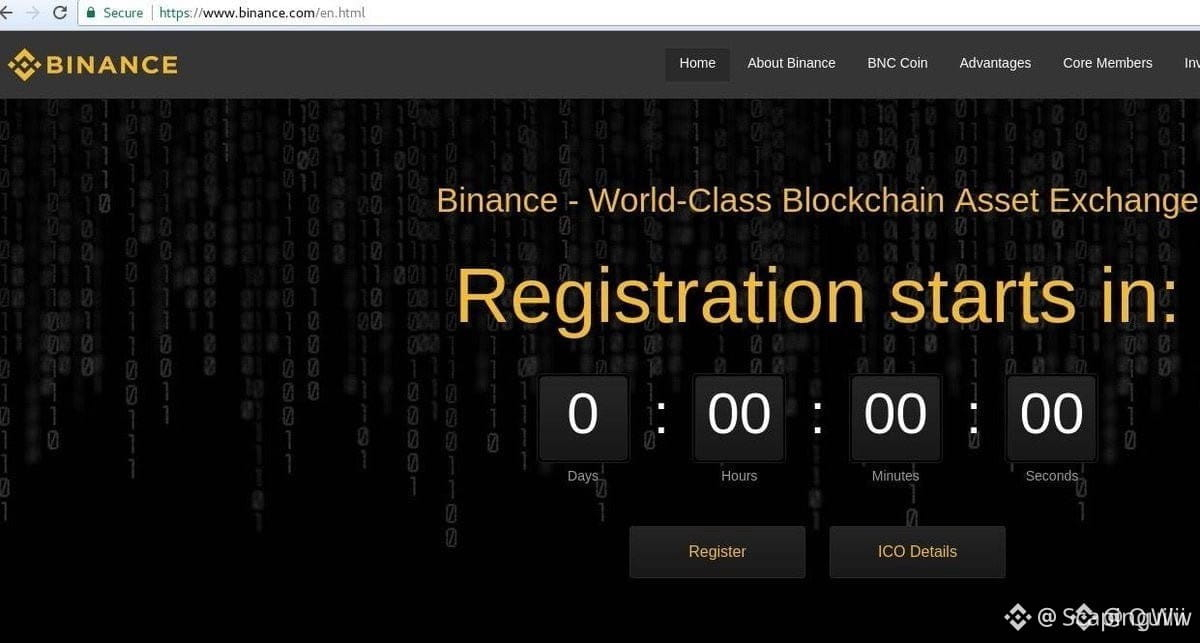
📌 Back in the summer of 2017, $BNB offered early believers a seat at the table for just $0.10 to $0.15 per token during its initial raise. 📊 Nearly a decade later, that modest start has transformed into one of the most liquid assets and powerful ecosystem hubs in financial history.
💡 Reminders like this prove that generational market shifts are forged through full cycles of infrastructure building and relentless conviction. 💬 Were you around during the early $BNB accumulation days, or did you catch the wave later in the cycle? 👇
⚠️ Not financial advice. Always manage your risk. 🛡️
🏷️ #BNB #Altcoins #CryptoHistory #BNBChain
💎 🚀
FROM A $0.10 ICO TO GLOBAL MARKET LEADERSHIP: THE 9-YEAR $BNB EVOLUTION 🌕 💥
📌 Back in the summer of 2017, $BNB offered early believers a seat at the table for just $0.10 to $0.15 per token during its initial raise. 📊 Nearly a decade later, that modest start has transformed into one of the most liquid assets and powerful ecosystem hubs in financial history.
💡 Reminders like this prove that generational market shifts are forged through full cycles of infrastructure building and relentless conviction. 💬 Were you around during the early $BNB accumulation days, or did you catch the wave later in the cycle? 👇
⚠️ Not financial advice. Always manage your risk. 🛡️
🏷️ #BNB #Altcoins #CryptoHistory #BNBChain
💎 🚀
📌 Back in the summer of 2017, $BNB offered early believers a seat at the table for just $0.10 to $0.15 per token during its initial raise. 📊 Nearly a decade later, that modest start has transformed into one of the most liquid assets and powerful ecosystem hubs in financial history.
💡 Reminders like this prove that generational market shifts are forged through full cycles of infrastructure building and relentless conviction. 💬 Were you around during the early $BNB accumulation days, or did you catch the wave later in the cycle? 👇
⚠️ Not financial advice. Always manage your risk. 🛡️
🏷️ #BNB #Altcoins #CryptoHistory #BNBChain
💎 🚀
13

·
--
Haussier
TWO PIZZAS FOR 10,000 BTC: BITCOIN MAKES HISTORY!
Imagine paying 10,000 Bitcoin for two pizzas. In 2010, that was worth roughly $41.
On May 18, Florida programmer Laszlo Hanyecz offered 10,000 BTC to anyone willing to deliver two large pizzas.
Four days later, Jeremy Sturdivant, known online as "jercos," arranged the order from Papa John's and received the Bitcoin.
May 22, 2010, became Bitcoin Pizza Day.
The remarkable part? The restaurant didn't accept Bitcoin directly. Another person paid for the pizzas and accepted BTC in return.
At the time, each Bitcoin was worth approximately $0.0041. What looked like an ordinary dinner became a milestone in cryptocurrency history.
MY FINAL TAKE
This wasn't simply an expensive meal. It demonstrated that Bitcoin could be exchanged for something tangible, helping establish its usefulness beyond mining and transfers.
Today, Bitcoin's payment utility, adoption and long-term value remain important subjects of debate.
Was spending 10,000 BTC on pizza a costly mistake or a necessary milestone in Bitcoin's history?
#Bitcoin #CryptoHistory
$BTC
{spot}(BTCUSDT)
TWO PIZZAS FOR 10,000 BTC: BITCOIN MAKES HISTORY!
Imagine paying 10,000 Bitcoin for two pizzas. In 2010, that was worth roughly $41.
On May 18, Florida programmer Laszlo Hanyecz offered 10,000 BTC to anyone willing to deliver two large pizzas.
Four days later, Jeremy Sturdivant, known online as "jercos," arranged the order from Papa John's and received the Bitcoin.
May 22, 2010, became Bitcoin Pizza Day.
The remarkable part? The restaurant didn't accept Bitcoin directly. Another person paid for the pizzas and accepted BTC in return.
At the time, each Bitcoin was worth approximately $0.0041. What looked like an ordinary dinner became a milestone in cryptocurrency history.
MY FINAL TAKE
This wasn't simply an expensive meal. It demonstrated that Bitcoin could be exchanged for something tangible, helping establish its usefulness beyond mining and transfers.
Today, Bitcoin's payment utility, adoption and long-term value remain important subjects of debate.
Was spending 10,000 BTC on pizza a costly mistake or a necessary milestone in Bitcoin's history?
#Bitcoin #CryptoHistory
$BTC
Imagine paying 10,000 Bitcoin for two pizzas. In 2010, that was worth roughly $41.
On May 18, Florida programmer Laszlo Hanyecz offered 10,000 BTC to anyone willing to deliver two large pizzas.
Four days later, Jeremy Sturdivant, known online as "jercos," arranged the order from Papa John's and received the Bitcoin.
May 22, 2010, became Bitcoin Pizza Day.
The remarkable part? The restaurant didn't accept Bitcoin directly. Another person paid for the pizzas and accepted BTC in return.
At the time, each Bitcoin was worth approximately $0.0041. What looked like an ordinary dinner became a milestone in cryptocurrency history.
MY FINAL TAKE
This wasn't simply an expensive meal. It demonstrated that Bitcoin could be exchanged for something tangible, helping establish its usefulness beyond mining and transfers.
Today, Bitcoin's payment utility, adoption and long-term value remain important subjects of debate.
Was spending 10,000 BTC on pizza a costly mistake or a necessary milestone in Bitcoin's history?
#Bitcoin #CryptoHistory
$BTC

25

·
--
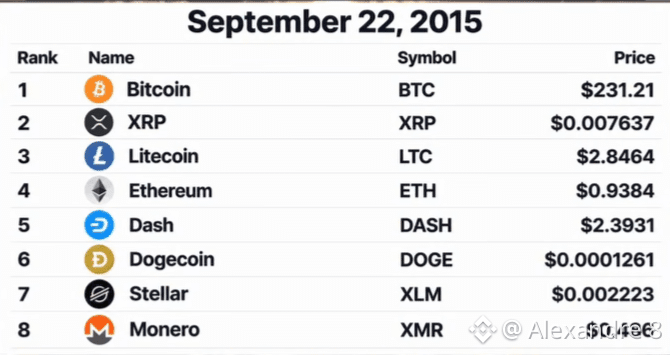
Cápsula do Tempo: Onde você estava em 22 de Setembro de 2015? ⏳⏳
Olhar para o passado do mercado cripto nos dá uma perspectiva única sobre ciclos, volatilidade e, acima de tudo, resiliência.
Em 22 de Setembro de 2015 — exatamente há alguns anos —, este era o Top 8 das maiores criptomoedas por capitalização de mercado:
Bitcoin ($BTC): $231,21 2. XRP ($XRP): $0,0076 3. Litecoin ($LTC): $2,84 4. Ethereum ($ETH): $0,93 5. Dash ($DASH): $2,39 6. Dogecoin ($DOGE): $0,00012 7. Stellar ($XLM): $0,0022 8. Monero ($XMR): $0,48
O que este raio-X nos ensina?
A Ascensão do Ethereum: Lançado poucos meses antes desta foto, o ETH custava menos de $1,00. Quem enxergou o potencial dos contratos inteligentes na época presenciou uma das maiores valorizações da história.
A Resiliência do Bitcoin: Comprar BTC a $231 parecia "caro" ou "arriscado" para muitos. Hoje, ele se consolidou como a principal reserva de valor digital global.
A Evoluição das Narrativas: Projetos pioneiros como Dash e Monero eram a grande febre de privacidade e pagamentos. Hoje, o mercado abriu espaço para novas teses como DePIN, Inteligência Artificial e Layer 2s.
Sobreviver aos ciclos exige paciência e visão de longo prazo.
Se pudesse voltar no tempo com apenas $100 no bolso em 2015, em qual destas moedas colocaria a sua aposta?
#Bitcoin #Ethereum #CryptoHistory
Cápsula do Tempo: Onde você estava em 22 de Setembro de 2015? ⏳⏳
Olhar para o passado do mercado cripto nos dá uma perspectiva única sobre ciclos, volatilidade e, acima de tudo, resiliência.
Em 22 de Setembro de 2015 — exatamente há alguns anos —, este era o Top 8 das maiores criptomoedas por capitalização de mercado:
Bitcoin ($BTC): $231,21 2. XRP ($XRP): $0,0076 3. Litecoin ($LTC): $2,84 4. Ethereum ($ETH): $0,93 5. Dash ($DASH): $2,39 6. Dogecoin ($DOGE): $0,00012 7. Stellar ($XLM): $0,0022 8. Monero ($XMR): $0,48
O que este raio-X nos ensina?
A Ascensão do Ethereum: Lançado poucos meses antes desta foto, o ETH custava menos de $1,00. Quem enxergou o potencial dos contratos inteligentes na época presenciou uma das maiores valorizações da história.
A Resiliência do Bitcoin: Comprar BTC a $231 parecia "caro" ou "arriscado" para muitos. Hoje, ele se consolidou como a principal reserva de valor digital global.
A Evoluição das Narrativas: Projetos pioneiros como Dash e Monero eram a grande febre de privacidade e pagamentos. Hoje, o mercado abriu espaço para novas teses como DePIN, Inteligência Artificial e Layer 2s.
Sobreviver aos ciclos exige paciência e visão de longo prazo.
Se pudesse voltar no tempo com apenas $100 no bolso em 2015, em qual destas moedas colocaria a sua aposta?
#Bitcoin #Ethereum #CryptoHistory
Olhar para o passado do mercado cripto nos dá uma perspectiva única sobre ciclos, volatilidade e, acima de tudo, resiliência.
Em 22 de Setembro de 2015 — exatamente há alguns anos —, este era o Top 8 das maiores criptomoedas por capitalização de mercado:
Bitcoin ($BTC): $231,21 2. XRP ($XRP): $0,0076 3. Litecoin ($LTC): $2,84 4. Ethereum ($ETH): $0,93 5. Dash ($DASH): $2,39 6. Dogecoin ($DOGE): $0,00012 7. Stellar ($XLM): $0,0022 8. Monero ($XMR): $0,48
O que este raio-X nos ensina?
A Ascensão do Ethereum: Lançado poucos meses antes desta foto, o ETH custava menos de $1,00. Quem enxergou o potencial dos contratos inteligentes na época presenciou uma das maiores valorizações da história.
A Resiliência do Bitcoin: Comprar BTC a $231 parecia "caro" ou "arriscado" para muitos. Hoje, ele se consolidou como a principal reserva de valor digital global.
A Evoluição das Narrativas: Projetos pioneiros como Dash e Monero eram a grande febre de privacidade e pagamentos. Hoje, o mercado abriu espaço para novas teses como DePIN, Inteligência Artificial e Layer 2s.
Sobreviver aos ciclos exige paciência e visão de longo prazo.
Se pudesse voltar no tempo com apenas $100 no bolso em 2015, em qual destas moedas colocaria a sua aposta?
#Bitcoin #Ethereum #CryptoHistory
4
2.4k

Title: The $500 Million Pizza That Changed Finance Forever
On May 22, 2010, a developer named Laszlo Hanyecz made history by buying two Papa John’s pizzas for 10,000 Bitcoins.
At the time, 10,000 BTC was worth roughly $41. Today, those same Bitcoins are worth hundreds of millions of dollars!
Why does this story matter?
First Real Transaction: Before this purchase, Bitcoin was just a theoretical experiment. This moment proved that crypto could actually function as a real-world currency.
Patience & Vision: Early believers who held onto their assets (HODL) changed their financial lives forever.
#bitcoin #CryptoHistory #BTC #BinanceSquare #HoldOnTight
Title: The $500 Million Pizza That Changed Finance Forever
On May 22, 2010, a developer named Laszlo Hanyecz made history by buying two Papa John’s pizzas for 10,000 Bitcoins.
At the time, 10,000 BTC was worth roughly $41. Today, those same Bitcoins are worth hundreds of millions of dollars!
Why does this story matter?
First Real Transaction: Before this purchase, Bitcoin was just a theoretical experiment. This moment proved that crypto could actually function as a real-world currency.
Patience & Vision: Early believers who held onto their assets (HODL) changed their financial lives forever.
#bitcoin #CryptoHistory #BTC #BinanceSquare #HoldOnTight
On May 22, 2010, a developer named Laszlo Hanyecz made history by buying two Papa John’s pizzas for 10,000 Bitcoins.
At the time, 10,000 BTC was worth roughly $41. Today, those same Bitcoins are worth hundreds of millions of dollars!
Why does this story matter?
First Real Transaction: Before this purchase, Bitcoin was just a theoretical experiment. This moment proved that crypto could actually function as a real-world currency.
Patience & Vision: Early believers who held onto their assets (HODL) changed their financial lives forever.
#bitcoin #CryptoHistory #BTC #BinanceSquare #HoldOnTight
1
120

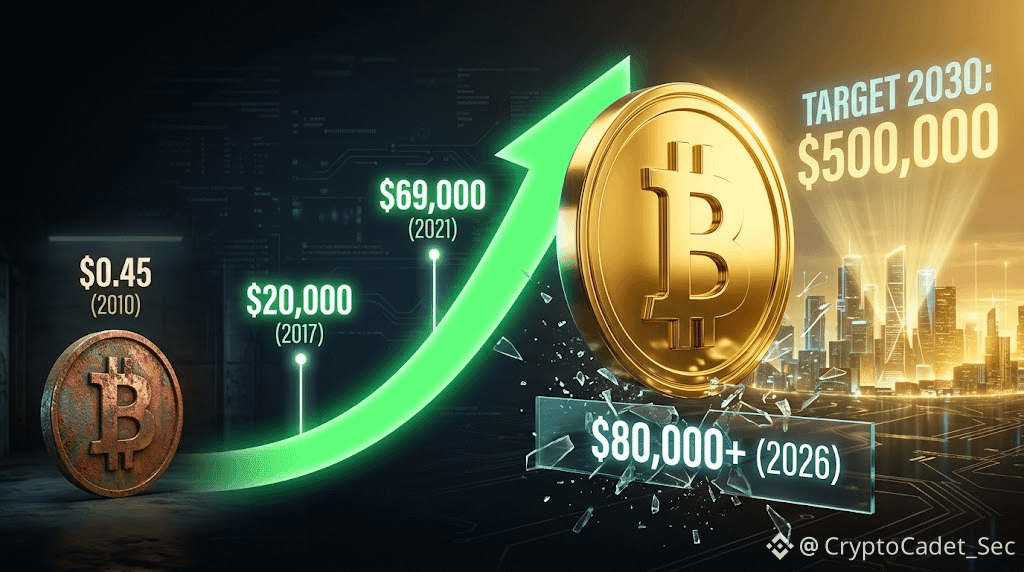
🚀 FROM $0.45 TO $80,000+: THE UNSTOPPABLE EVOLUTION OF BITCOIN! 💸📈
If you ever think you are "too late" to crypto, look closely at the macroeconomic timeline. The structural growth of digital gold over the last two decades tells a story that traditional finance simply cannot replicate.
📈 The Historic Timeline:
• 2010 Baseline: In its earliest trading days, a single $BTC was valued at a humble $0.45.
• 2013 Halving Cycle: Bitcoin witnessed its first major paradigm shift, violently breaking past $1,000 for the first time.
• 2017 Retail Boom: The world took notice as institutional infrastructure started taking shape, driving the asset to a peak near $20,000.
• 2021 Institutional Wave: Corporate balance sheets and corporate trust fueled a historic expansion, pushing Bitcoin up to $69,000.
• 2026 Macro Era: Defying legacy financial tightening, Bitcoin shattered all expectations to confidently cross the monumental $80,000 psychological milestone.
🔮 The 2030 Predictive Outlook:
As global central bank policies shift and supply inflation drops closer to absolute zero following future halving events, institutional models point toward an aggressive macro valuation expansion. Major asset management frameworks project that by 2030, $BTC is mathematically positioned to target a conservative range of $250,000 to $500,000 per coin.
The structural chart proves that volatility is simply the price you pay for generational value expansion. Plan for the long horizon.
#Bitcoin #CryptoHistory #SmartInvesting
🚀 FROM $0.45 TO $80,000+: THE UNSTOPPABLE EVOLUTION OF BITCOIN! 💸📈
If you ever think you are "too late" to crypto, look closely at the macroeconomic timeline. The structural growth of digital gold over the last two decades tells a story that traditional finance simply cannot replicate.
📈 The Historic Timeline:
• 2010 Baseline: In its earliest trading days, a single $BTC was valued at a humble $0.45.
• 2013 Halving Cycle: Bitcoin witnessed its first major paradigm shift, violently breaking past $1,000 for the first time.
• 2017 Retail Boom: The world took notice as institutional infrastructure started taking shape, driving the asset to a peak near $20,000.
• 2021 Institutional Wave: Corporate balance sheets and corporate trust fueled a historic expansion, pushing Bitcoin up to $69,000.
• 2026 Macro Era: Defying legacy financial tightening, Bitcoin shattered all expectations to confidently cross the monumental $80,000 psychological milestone.
🔮 The 2030 Predictive Outlook:
As global central bank policies shift and supply inflation drops closer to absolute zero following future halving events, institutional models point toward an aggressive macro valuation expansion. Major asset management frameworks project that by 2030, $BTC is mathematically positioned to target a conservative range of $250,000 to $500,000 per coin.
The structural chart proves that volatility is simply the price you pay for generational value expansion. Plan for the long horizon.
#Bitcoin #CryptoHistory #SmartInvesting
If you ever think you are "too late" to crypto, look closely at the macroeconomic timeline. The structural growth of digital gold over the last two decades tells a story that traditional finance simply cannot replicate.
📈 The Historic Timeline:
• 2010 Baseline: In its earliest trading days, a single $BTC was valued at a humble $0.45.
• 2013 Halving Cycle: Bitcoin witnessed its first major paradigm shift, violently breaking past $1,000 for the first time.
• 2017 Retail Boom: The world took notice as institutional infrastructure started taking shape, driving the asset to a peak near $20,000.
• 2021 Institutional Wave: Corporate balance sheets and corporate trust fueled a historic expansion, pushing Bitcoin up to $69,000.
• 2026 Macro Era: Defying legacy financial tightening, Bitcoin shattered all expectations to confidently cross the monumental $80,000 psychological milestone.
🔮 The 2030 Predictive Outlook:
As global central bank policies shift and supply inflation drops closer to absolute zero following future halving events, institutional models point toward an aggressive macro valuation expansion. Major asset management frameworks project that by 2030, $BTC is mathematically positioned to target a conservative range of $250,000 to $500,000 per coin.
The structural chart proves that volatility is simply the price you pay for generational value expansion. Plan for the long horizon.
#Bitcoin #CryptoHistory #SmartInvesting
66

·
--
Haussier
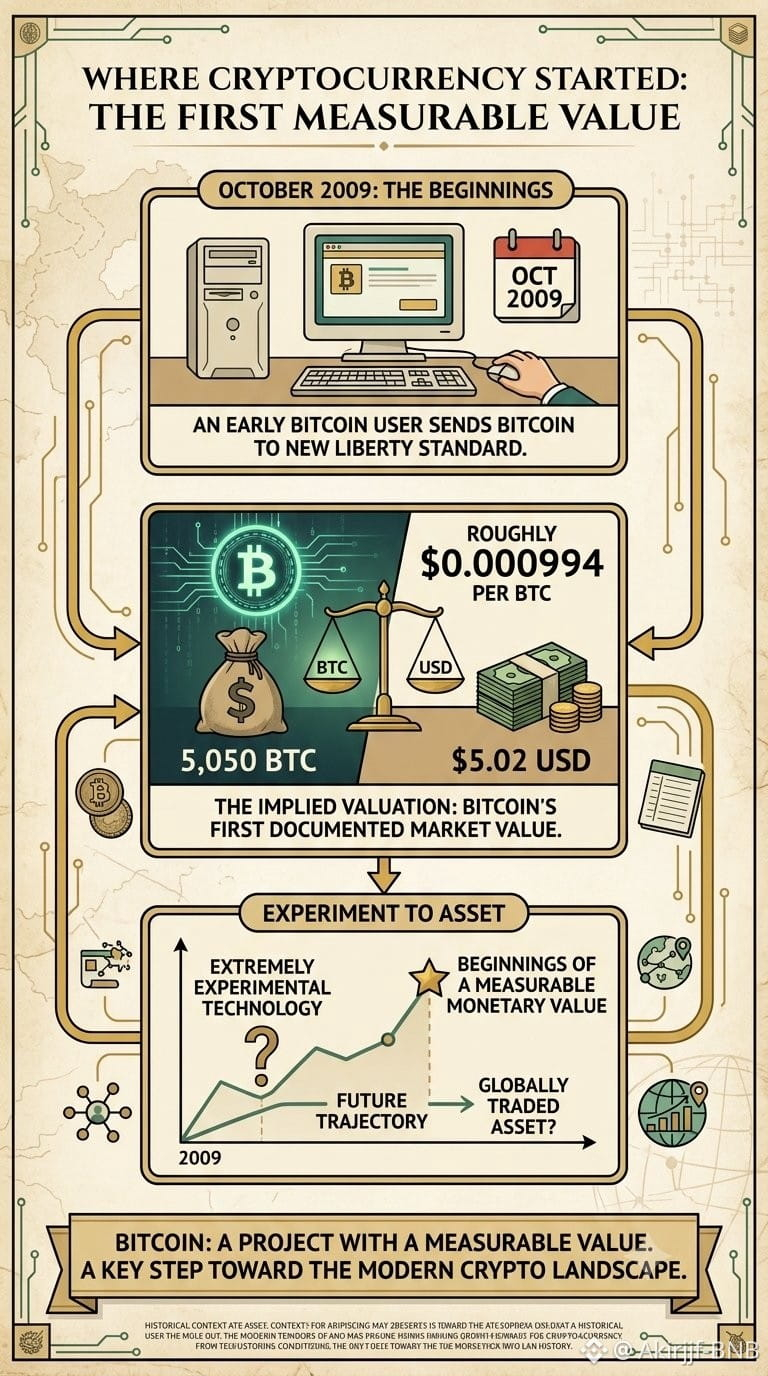
En octubre de 2009, se intercambiaron 5.050 bitcoins por solo $5.02 ($0.000994/BTC). 💰
Lo que comenzó como un proyecto experimental de código obtuvo su primer valor monetario medible—sentando las bases para la revolución financiera global de hoy. 📈
#bitcoin #CryptoHistory $BTC $ETH $BNB
{spot}(BTCUSDT)
#Blockchai
En octubre de 2009, se intercambiaron 5.050 bitcoins por solo $5.02 ($0.000994/BTC). 💰
Lo que comenzó como un proyecto experimental de código obtuvo su primer valor monetario medible—sentando las bases para la revolución financiera global de hoy. 📈
#bitcoin #CryptoHistory $BTC $ETH $BNB
#Blockchai
Lo que comenzó como un proyecto experimental de código obtuvo su primer valor monetario medible—sentando las bases para la revolución financiera global de hoy. 📈
#bitcoin #CryptoHistory $BTC $ETH $BNB
#Blockchai
1
82

·
--
Picture this: you wake up to find an anonymous wallet just created 184 billion coins out of thin air, completely breaking the core protocol rules.
Every investor knows the stomach-dropping fear of an infinite mint glitch that destroys asset value in seconds. It is the exact nightmare people experienced during the $LUNC hyper-inflation spiral, where unbacked supply crushed market confidence.
Back in August 2010, the Bitcoin network faced its most terrifying bug known as the value overflow incident. At that moment, only about 3.8 million $BTC existed in total circulation. Suddenly, block 74638 generated an output of over 184.4 billion coins, meaning one person had just printed almost 8,800 times the entire 21 million supply that will ever exist.
Unlike modern protocol disasters that drag on for months across governance forums, the early developers patched the code and rolled back the chain within five hours. The phantom coins vanished, but the event proved that even the most robust monetary design is only as strong as the code securing it.
Where do you think modern crypto networks would land if an exploit of this magnitude happened today?
#Bitcoin #CryptoHistory #Blockchain
Picture this: you wake up to find an anonymous wallet just created 184 billion coins out of thin air, completely breaking the core protocol rules.
Every investor knows the stomach-dropping fear of an infinite mint glitch that destroys asset value in seconds. It is the exact nightmare people experienced during the $LUNC hyper-inflation spiral, where unbacked supply crushed market confidence.
Back in August 2010, the Bitcoin network faced its most terrifying bug known as the value overflow incident. At that moment, only about 3.8 million $BTC existed in total circulation. Suddenly, block 74638 generated an output of over 184.4 billion coins, meaning one person had just printed almost 8,800 times the entire 21 million supply that will ever exist.
Unlike modern protocol disasters that drag on for months across governance forums, the early developers patched the code and rolled back the chain within five hours. The phantom coins vanished, but the event proved that even the most robust monetary design is only as strong as the code securing it.
Where do you think modern crypto networks would land if an exploit of this magnitude happened today?
#Bitcoin #CryptoHistory #Blockchain
Every investor knows the stomach-dropping fear of an infinite mint glitch that destroys asset value in seconds. It is the exact nightmare people experienced during the $LUNC hyper-inflation spiral, where unbacked supply crushed market confidence.
Back in August 2010, the Bitcoin network faced its most terrifying bug known as the value overflow incident. At that moment, only about 3.8 million $BTC existed in total circulation. Suddenly, block 74638 generated an output of over 184.4 billion coins, meaning one person had just printed almost 8,800 times the entire 21 million supply that will ever exist.
Unlike modern protocol disasters that drag on for months across governance forums, the early developers patched the code and rolled back the chain within five hours. The phantom coins vanished, but the event proved that even the most robust monetary design is only as strong as the code securing it.
Where do you think modern crypto networks would land if an exploit of this magnitude happened today?
#Bitcoin #CryptoHistory #Blockchain
247

everyone thinks hard caps in crypto are untouchable math from day one, but actually even the cleanest ledgers have survived insane inflation bugs.
most of us obsess over tokenomics and supply schedules, only to get rekt the second an exploit bypasses the contract limits completely.
back in 2010, when only about 3.8 million $BTC existed, a single overflow glitch allowed someone to mint 184 billion coins out of thin air. that was almost 8,800 times the entire 21 million supply cap that will ever exist, nearly destroying the network overnight before satoshi pushed an emergency patch.
ngl if an infinite mint bug hit $ETH or major alts today like that value overflow did back then, half the market cap would vanish before devs could coordinate a fix. we take bulletproof code for granted ser, but early on it was pure chaos and luck that kept the supply intact.
how do you think the market would react if a top 10 chain had an unchecked mint exploit tomorrow?
#CryptoHistory #Bitcoin #Tokenomics
everyone thinks hard caps in crypto are untouchable math from day one, but actually even the cleanest ledgers have survived insane inflation bugs.
most of us obsess over tokenomics and supply schedules, only to get rekt the second an exploit bypasses the contract limits completely.
back in 2010, when only about 3.8 million $BTC existed, a single overflow glitch allowed someone to mint 184 billion coins out of thin air. that was almost 8,800 times the entire 21 million supply cap that will ever exist, nearly destroying the network overnight before satoshi pushed an emergency patch.
ngl if an infinite mint bug hit $ETH or major alts today like that value overflow did back then, half the market cap would vanish before devs could coordinate a fix. we take bulletproof code for granted ser, but early on it was pure chaos and luck that kept the supply intact.
how do you think the market would react if a top 10 chain had an unchecked mint exploit tomorrow?
#CryptoHistory #Bitcoin #Tokenomics
most of us obsess over tokenomics and supply schedules, only to get rekt the second an exploit bypasses the contract limits completely.
back in 2010, when only about 3.8 million $BTC existed, a single overflow glitch allowed someone to mint 184 billion coins out of thin air. that was almost 8,800 times the entire 21 million supply cap that will ever exist, nearly destroying the network overnight before satoshi pushed an emergency patch.
ngl if an infinite mint bug hit $ETH or major alts today like that value overflow did back then, half the market cap would vanish before devs could coordinate a fix. we take bulletproof code for granted ser, but early on it was pure chaos and luck that kept the supply intact.
how do you think the market would react if a top 10 chain had an unchecked mint exploit tomorrow?
#CryptoHistory #Bitcoin #Tokenomics
9
In August 2010, a single transaction created 184,467,440,737 bitcoins out of nothing.
Most traders lose sleep worrying about market dumps and liquidations, but few realize that the hardest lesson in crypto is understanding that even foundational code can fail.
An integer overflow in block 74638 suddenly spawned billions of $BTC, completely breaking the 21 million supply limit. For a few tense hours, the scarcity model that underpins this entire asset class was broken.
Having seen multiple market cycles, you realize that survival comes down to how networks handle catastrophic failure. Satoshi and early developers pushed a fix within hours, resetting the chain and wiping the phantom coins away. We saw similar resilience tested years later across ecosystems like $ETH and $SOL during their own major network events.
How much protocol risk do you actually price into your long-term holdings?
#Bitcoin #CryptoHistory #Blockchain
In August 2010, a single transaction created 184,467,440,737 bitcoins out of nothing.
Most traders lose sleep worrying about market dumps and liquidations, but few realize that the hardest lesson in crypto is understanding that even foundational code can fail.
An integer overflow in block 74638 suddenly spawned billions of $BTC , completely breaking the 21 million supply limit. For a few tense hours, the scarcity model that underpins this entire asset class was broken.
Having seen multiple market cycles, you realize that survival comes down to how networks handle catastrophic failure. Satoshi and early developers pushed a fix within hours, resetting the chain and wiping the phantom coins away. We saw similar resilience tested years later across ecosystems like $ETH and $SOL during their own major network events.
How much protocol risk do you actually price into your long-term holdings?
#Bitcoin #CryptoHistory #Blockchain
Most traders lose sleep worrying about market dumps and liquidations, but few realize that the hardest lesson in crypto is understanding that even foundational code can fail.
An integer overflow in block 74638 suddenly spawned billions of $BTC , completely breaking the 21 million supply limit. For a few tense hours, the scarcity model that underpins this entire asset class was broken.
Having seen multiple market cycles, you realize that survival comes down to how networks handle catastrophic failure. Satoshi and early developers pushed a fix within hours, resetting the chain and wiping the phantom coins away. We saw similar resilience tested years later across ecosystems like $ETH and $SOL during their own major network events.
How much protocol risk do you actually price into your long-term holdings?
#Bitcoin #CryptoHistory #Blockchain
17
Picture this: a developer logs into an obscure forum on a quiet August afternoon and posts a thread titled simply "Strange block 74638."
We often trade under the illusion that blockchain code is completely infallible, but few things create more dread than realizing a hidden software glitch could break market confidence in seconds.
That unassuming forum post by Jeff Garzik documented the infamous value overflow bug, where an integer overflow generated over 184 billion $BTC out of thin air. It instantly shattered the 21 million supply cap and threatened the survival of the entire network before Satoshi and the core developers patched the chain within five hours.
When we compare that early incident to multi-million dollar smart contract exploits on $ETH today, the fundamental lesson remains identical. Code is written by humans, and true network resilience depends on how swiftly a community can detect an anomaly and coordinate a fix under pressure.
How do you think the market would react if an exploit of that scale hit a top network today?
#Bitcoin #CryptoHistory #Blockchain
Picture this: a developer logs into an obscure forum on a quiet August afternoon and posts a thread titled simply "Strange block 74638."
We often trade under the illusion that blockchain code is completely infallible, but few things create more dread than realizing a hidden software glitch could break market confidence in seconds.
That unassuming forum post by Jeff Garzik documented the infamous value overflow bug, where an integer overflow generated over 184 billion $BTC out of thin air. It instantly shattered the 21 million supply cap and threatened the survival of the entire network before Satoshi and the core developers patched the chain within five hours.
When we compare that early incident to multi-million dollar smart contract exploits on $ETH today, the fundamental lesson remains identical. Code is written by humans, and true network resilience depends on how swiftly a community can detect an anomaly and coordinate a fix under pressure.
How do you think the market would react if an exploit of that scale hit a top network today?
#Bitcoin #CryptoHistory #Blockchain
We often trade under the illusion that blockchain code is completely infallible, but few things create more dread than realizing a hidden software glitch could break market confidence in seconds.
That unassuming forum post by Jeff Garzik documented the infamous value overflow bug, where an integer overflow generated over 184 billion $BTC out of thin air. It instantly shattered the 21 million supply cap and threatened the survival of the entire network before Satoshi and the core developers patched the chain within five hours.
When we compare that early incident to multi-million dollar smart contract exploits on $ETH today, the fundamental lesson remains identical. Code is written by humans, and true network resilience depends on how swiftly a community can detect an anomaly and coordinate a fix under pressure.
How do you think the market would react if an exploit of that scale hit a top network today?
#Bitcoin #CryptoHistory #Blockchain
13

·
--
$ZEC History Lesson from 2016
I was actively trading when $ZECwas launched in 2016.
Here's something most new traders won't believe: It reached 3,000 BTC at its peak.
Yes, 3,000 BTC - not USD.
Back then we didn't have USD pairs like today, we traded alts against BTC.
And because of Zcash's slow-start mining, the initial circulating supply was extremely low, which created that historic pump.
Were you trading back then? Let's see how many OGs are still here.
#zec #CryptoHistory #Binance
$BTC
{spot}(BTCUSDT)
$ZEC
{spot}(ZECUSDT)
$ZEC History Lesson from 2016
I was actively trading when $ZECwas launched in 2016.
Here's something most new traders won't believe: It reached 3,000 BTC at its peak.
Yes, 3,000 BTC - not USD.
Back then we didn't have USD pairs like today, we traded alts against BTC.
And because of Zcash's slow-start mining, the initial circulating supply was extremely low, which created that historic pump.
Were you trading back then? Let's see how many OGs are still here.
#zec #CryptoHistory #Binance
$BTC
$ZEC
I was actively trading when $ZECwas launched in 2016.
Here's something most new traders won't believe: It reached 3,000 BTC at its peak.
Yes, 3,000 BTC - not USD.
Back then we didn't have USD pairs like today, we traded alts against BTC.
And because of Zcash's slow-start mining, the initial circulating supply was extremely low, which created that historic pump.
Were you trading back then? Let's see how many OGs are still here.
#zec #CryptoHistory #Binance
$BTC
$ZEC
330

·
--
EXPLOSIVE SCARCITY MEMORY: WHEN $ZEC TRADED AT 3,000 BTC PER TOKEN! 🦈 📊
Looking back at $ZEC market structure from 2016 reveals one of the most extreme supply-side liquidity squeezes in crypto history. 🔍 Due to the slow-start mining architecture, initial circulating supply was near zero, causing bid-ask spreads to explode across BTC pair order books.
During initial price discovery, aggressive demand met non-existent sell-side liquidity, briefly driving $ZEC to an astonishing peak of 3,000 BTC per token. 📊 It remains a textbook case of how severe order book illiquidity and structural supply scarcity distort asset valuation. 💬 Did you trade during the BTC-pair era, or did you enter after stablecoin liquidity took over? 👇
⚠️ Not financial advice. Always manage your risk. 🛡️
🏷️ #ZEC #MarketStructure #OrderFlow #CryptoHistory
🧠 🛡️
EXPLOSIVE SCARCITY MEMORY: WHEN $ZEC TRADED AT 3,000 BTC PER TOKEN! 🦈 📊
Looking back at $ZEC market structure from 2016 reveals one of the most extreme supply-side liquidity squeezes in crypto history. 🔍 Due to the slow-start mining architecture, initial circulating supply was near zero, causing bid-ask spreads to explode across BTC pair order books.
During initial price discovery, aggressive demand met non-existent sell-side liquidity, briefly driving $ZEC to an astonishing peak of 3,000 BTC per token. 📊 It remains a textbook case of how severe order book illiquidity and structural supply scarcity distort asset valuation. 💬 Did you trade during the BTC-pair era, or did you enter after stablecoin liquidity took over? 👇
⚠️ Not financial advice. Always manage your risk. 🛡️
🏷️ #ZEC #MarketStructure #OrderFlow #CryptoHistory
🧠 🛡️
Looking back at $ZEC market structure from 2016 reveals one of the most extreme supply-side liquidity squeezes in crypto history. 🔍 Due to the slow-start mining architecture, initial circulating supply was near zero, causing bid-ask spreads to explode across BTC pair order books.
During initial price discovery, aggressive demand met non-existent sell-side liquidity, briefly driving $ZEC to an astonishing peak of 3,000 BTC per token. 📊 It remains a textbook case of how severe order book illiquidity and structural supply scarcity distort asset valuation. 💬 Did you trade during the BTC-pair era, or did you enter after stablecoin liquidity took over? 👇
⚠️ Not financial advice. Always manage your risk. 🛡️
🏷️ #ZEC #MarketStructure #OrderFlow #CryptoHistory
🧠 🛡️
267
·
--
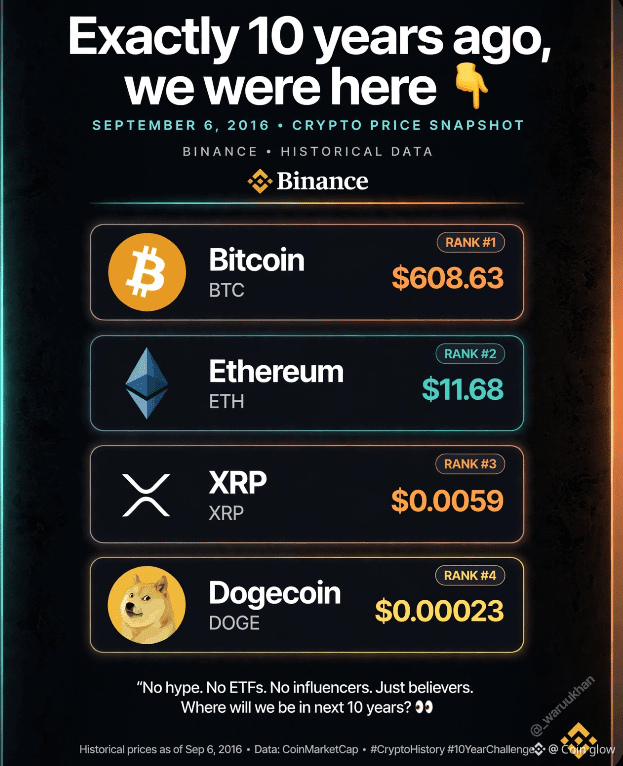
Exactly 10 years ago, we were here 👇
September 6, 2016
₿ Bitcoin: $608.63
Ξ Ethereum: $11.68
XRP: $0.0059
Ð Dogecoin: $0.00023
No hype. No ETFs. No influencers. Just believers.
Where will we be in next 10 years? 👀
#CryptoHistory #10YearChallenge #BinanceSquareFamily
$BTC $XRP $ETH
Exactly 10 years ago, we were here 👇
September 6, 2016
₿ Bitcoin: $608.63
Ξ Ethereum: $11.68
XRP: $0.0059
Ð Dogecoin: $0.00023
No hype. No ETFs. No influencers. Just believers.
Where will we be in next 10 years? 👀
#CryptoHistory #10YearChallenge #BinanceSquareFamily
$BTC $XRP $ETH
September 6, 2016
₿ Bitcoin: $608.63
Ξ Ethereum: $11.68
XRP: $0.0059
Ð Dogecoin: $0.00023
No hype. No ETFs. No influencers. Just believers.
Where will we be in next 10 years? 👀
#CryptoHistory #10YearChallenge #BinanceSquareFamily
$BTC $XRP $ETH
47

·
--
Article
Ancient $BTC Wallets Turn $120 Into $3 Million: What It Means for New InvestorsHave you ever wondered how a handful of old Bitcoin wallets can still move millions of dollars? The recent surge of activity from decade‑old wallets—moving a combined $15.7 million in just a week—shows that even the earliest adopters are still in the game, and their moves can teach us a lot about the market’s hidden dynamics.
The Concept
Bitcoin’s early days were all about experimentation and a small community of enthusiasts. Those first wallets, created in 2014 and earlier, were often left untouched, like a time capsule. When a wallet finally decides to move its funds, it can signal a shift in sentiment or a strategic sale. Think of it as a veteran investor deciding to cash out after years of holding, which can ripple through the market. #BitcoinBasics #CryptoHistory
Real‑World Example
Between August 29 and September 4, four old wallets collectively transferred $15.7 million. One notable batch was sent to Coinbase, a move that many interpret as a sale. This isn’t just a random dump; it’s a calculated exit that can influence price movements. When large holders (whales) move their coins, it often precedes market swings, giving traders a chance to adjust their strategies. The fact that these wallets are decades old adds a layer of intrigue—imagine a 2010 investor suddenly deciding to liquidate a massive position in 2026.
Takeaway
If you’re new to crypto, keep an eye on wallet activity. Tools like blockchain explorers let you track large transfers and spot potential market catalysts. Remember, the market is a living ecosystem where even the oldest players can still shape the future. Start by monitoring $BTC wallet movements and use that data to inform your own buying or selling decisions. #CryptoEducation
What do you think—will the next wave of old wallet activity signal a new trend, or is it just a one‑off event?
Ancient $BTC Wallets Turn $120 Into $3 Million: What It Means for New Investors
Have you ever wondered how a handful of old Bitcoin wallets can still move millions of dollars? The recent surge of activity from decade‑old wallets—moving a combined $15.7 million in just a week—shows that even the earliest adopters are still in the game, and their moves can teach us a lot about the market’s hidden dynamics.
The Concept
Bitcoin’s early days were all about experimentation and a small community of enthusiasts. Those first wallets, created in 2014 and earlier, were often left untouched, like a time capsule. When a wallet finally decides to move its funds, it can signal a shift in sentiment or a strategic sale. Think of it as a veteran investor deciding to cash out after years of holding, which can ripple through the market. #BitcoinBasics #CryptoHistory
Real‑World Example
Between August 29 and September 4, four old wallets collectively transferred $15.7 million. One notable batch was sent to Coinbase, a move that many interpret as a sale. This isn’t just a random dump; it’s a calculated exit that can influence price movements. When large holders (whales) move their coins, it often precedes market swings, giving traders a chance to adjust their strategies. The fact that these wallets are decades old adds a layer of intrigue—imagine a 2010 investor suddenly deciding to liquidate a massive position in 2026.
Takeaway
If you’re new to crypto, keep an eye on wallet activity. Tools like blockchain explorers let you track large transfers and spot potential market catalysts. Remember, the market is a living ecosystem where even the oldest players can still shape the future. Start by monitoring $BTC wallet movements and use that data to inform your own buying or selling decisions. #CryptoEducation
What do you think—will the next wave of old wallet activity signal a new trend, or is it just a one‑off event?
The Concept
Bitcoin’s early days were all about experimentation and a small community of enthusiasts. Those first wallets, created in 2014 and earlier, were often left untouched, like a time capsule. When a wallet finally decides to move its funds, it can signal a shift in sentiment or a strategic sale. Think of it as a veteran investor deciding to cash out after years of holding, which can ripple through the market. #BitcoinBasics #CryptoHistory
Real‑World Example
Between August 29 and September 4, four old wallets collectively transferred $15.7 million. One notable batch was sent to Coinbase, a move that many interpret as a sale. This isn’t just a random dump; it’s a calculated exit that can influence price movements. When large holders (whales) move their coins, it often precedes market swings, giving traders a chance to adjust their strategies. The fact that these wallets are decades old adds a layer of intrigue—imagine a 2010 investor suddenly deciding to liquidate a massive position in 2026.
Takeaway
If you’re new to crypto, keep an eye on wallet activity. Tools like blockchain explorers let you track large transfers and spot potential market catalysts. Remember, the market is a living ecosystem where even the oldest players can still shape the future. Start by monitoring $BTC wallet movements and use that data to inform your own buying or selling decisions. #CryptoEducation
What do you think—will the next wave of old wallet activity signal a new trend, or is it just a one‑off event?
21

·
--
Bitcoin (BTC) officially went live on the internet on January 3, 2009.
Whitepaper Release: On October 31, 2008, an anonymous individual or group using the pseudonym Satoshi Nakamoto published the Bitcoin whitepaper titled "Bitcoin: A Peer-to-Peer Electronic Cash System."
Launch & Genesis Block: On January 3, 2009, the Bitcoin network was officially launched with the mining of the Genesis Block (Block 0).
First Commercial Transaction: Although launched in 2009, Bitcoin had no active trading or market price at the time. On May 22, 2010, the first real-world commercial transaction took place when 10,000 Bitcoins were used to buy two pizzas—an event now celebrated annually as "Bitcoin Pizza Day."
#Bitcoin #BTC #SatoshiNakamoto #BitcoinHistory #CryptoHistory
#Crypto #Binance #BinanceSquare #CryptoEducation #Blockchain
Bitcoin (BTC) officially went live on the internet on January 3, 2009.
Whitepaper Release: On October 31, 2008, an anonymous individual or group using the pseudonym Satoshi Nakamoto published the Bitcoin whitepaper titled "Bitcoin: A Peer-to-Peer Electronic Cash System."
Launch & Genesis Block: On January 3, 2009, the Bitcoin network was officially launched with the mining of the Genesis Block (Block 0).
First Commercial Transaction: Although launched in 2009, Bitcoin had no active trading or market price at the time. On May 22, 2010, the first real-world commercial transaction took place when 10,000 Bitcoins were used to buy two pizzas—an event now celebrated annually as "Bitcoin Pizza Day."
#Bitcoin #BTC #SatoshiNakamoto #BitcoinHistory #CryptoHistory
#Crypto #Binance #BinanceSquare #CryptoEducation #Blockchain
Whitepaper Release: On October 31, 2008, an anonymous individual or group using the pseudonym Satoshi Nakamoto published the Bitcoin whitepaper titled "Bitcoin: A Peer-to-Peer Electronic Cash System."
Launch & Genesis Block: On January 3, 2009, the Bitcoin network was officially launched with the mining of the Genesis Block (Block 0).
First Commercial Transaction: Although launched in 2009, Bitcoin had no active trading or market price at the time. On May 22, 2010, the first real-world commercial transaction took place when 10,000 Bitcoins were used to buy two pizzas—an event now celebrated annually as "Bitcoin Pizza Day."
#Bitcoin #BTC #SatoshiNakamoto #BitcoinHistory #CryptoHistory
#Crypto #Binance #BinanceSquare #CryptoEducation #Blockchain
84

·
--
#BitcoinPizzaDay : A Lição Histórica que Todo o Investidor de Cripto Precisa de Aprender 🍕🚀
Estamos muito perto de celebrar mais um Bitcoin Pizza Day, a data mais icónica e divertida de toda a nossa comunidade. Em maio de 2010, o programador Laszlo Hanyecz fez história ao gastar 10.000 Bitcoins para comprar duas pizas simples. Na altura, o BTC valia frações de cêntimo. Hoje, em 2026, esse mesmo valor representa uma fortuna multimilionária inimaginável.
Para quem está a construir a sua carteira a partir do zero hoje, esta história não é apenas uma curiosidade engraçada; é a maior lição de paciência e visão de longo prazo que o mercado nos pode dar.
Muitas vezes ficamos ansiosos com pequenas oscilações diárias ou desanimados se o nosso saldo não cresce numa semana. Mas o Pizza Day prova que a verdadeira riqueza no ecossistema cripto é construída com o tempo, consistência e, acima de tudo, "HODL". Aqueles que acreditam na utilidade real dos ativos e deixam os seus saldos a render em ferramentas como o Earn colhem os melhores frutos no futuro.
O mercado evoluiu imenso desde 2010, mas a regra de ouro continua a mesma: quem tem paciência vence a volatilidade.
Quero abrir o debate com a vossa opinião: se tivessem esses 10.000 BTC na vossa carteira hoje, qual seria a primeira coisa que compravam (além de uma piza, claro)? 🧐👇
Deixem as vossas respostas nos comentários para celebrarmos esta data juntos!
#BitcoinPizzaDay #CryptoHistory #writetoearn #HODL $BTC
#BitcoinPizzaDay : A Lição Histórica que Todo o Investidor de Cripto Precisa de Aprender 🍕🚀
Estamos muito perto de celebrar mais um Bitcoin Pizza Day, a data mais icónica e divertida de toda a nossa comunidade. Em maio de 2010, o programador Laszlo Hanyecz fez história ao gastar 10.000 Bitcoins para comprar duas pizas simples. Na altura, o BTC valia frações de cêntimo. Hoje, em 2026, esse mesmo valor representa uma fortuna multimilionária inimaginável.
Para quem está a construir a sua carteira a partir do zero hoje, esta história não é apenas uma curiosidade engraçada; é a maior lição de paciência e visão de longo prazo que o mercado nos pode dar.
Muitas vezes ficamos ansiosos com pequenas oscilações diárias ou desanimados se o nosso saldo não cresce numa semana. Mas o Pizza Day prova que a verdadeira riqueza no ecossistema cripto é construída com o tempo, consistência e, acima de tudo, "HODL". Aqueles que acreditam na utilidade real dos ativos e deixam os seus saldos a render em ferramentas como o Earn colhem os melhores frutos no futuro.
O mercado evoluiu imenso desde 2010, mas a regra de ouro continua a mesma: quem tem paciência vence a volatilidade.
Quero abrir o debate com a vossa opinião: se tivessem esses 10.000 BTC na vossa carteira hoje, qual seria a primeira coisa que compravam (além de uma piza, claro)? 🧐👇
Deixem as vossas respostas nos comentários para celebrarmos esta data juntos!
#BitcoinPizzaDay #CryptoHistory #writetoearn #HODL $BTC
Estamos muito perto de celebrar mais um Bitcoin Pizza Day, a data mais icónica e divertida de toda a nossa comunidade. Em maio de 2010, o programador Laszlo Hanyecz fez história ao gastar 10.000 Bitcoins para comprar duas pizas simples. Na altura, o BTC valia frações de cêntimo. Hoje, em 2026, esse mesmo valor representa uma fortuna multimilionária inimaginável.
Para quem está a construir a sua carteira a partir do zero hoje, esta história não é apenas uma curiosidade engraçada; é a maior lição de paciência e visão de longo prazo que o mercado nos pode dar.
Muitas vezes ficamos ansiosos com pequenas oscilações diárias ou desanimados se o nosso saldo não cresce numa semana. Mas o Pizza Day prova que a verdadeira riqueza no ecossistema cripto é construída com o tempo, consistência e, acima de tudo, "HODL". Aqueles que acreditam na utilidade real dos ativos e deixam os seus saldos a render em ferramentas como o Earn colhem os melhores frutos no futuro.
O mercado evoluiu imenso desde 2010, mas a regra de ouro continua a mesma: quem tem paciência vence a volatilidade.
Quero abrir o debate com a vossa opinião: se tivessem esses 10.000 BTC na vossa carteira hoje, qual seria a primeira coisa que compravam (além de uma piza, claro)? 🧐👇
Deixem as vossas respostas nos comentários para celebrarmos esta data juntos!
#BitcoinPizzaDay #CryptoHistory #writetoearn #HODL $BTC
1
94
·
--
Vérifié
#bitmextocloseexchangesep23
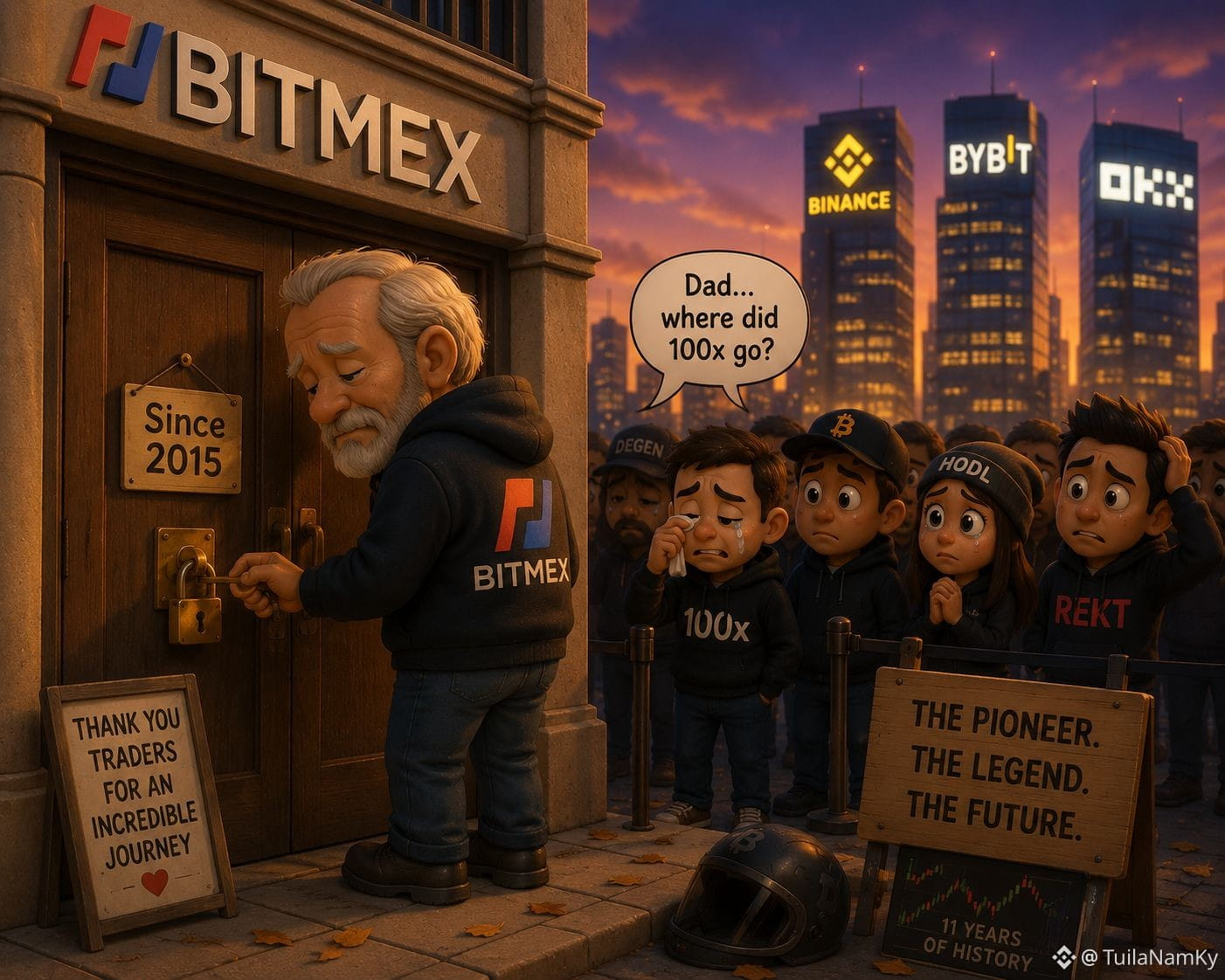
🥲 THE EXCHANGE THAT TAUGHT CRYPTO HOW TO TRADE 100x... IS SAYING GOODBYE.
Crypto veterans:
🥹 "Remember BitMEX?"
New traders:
🤔 "What's BitMEX?"
😂😂😂
Before Binance Futures...
Before Bybit...
Before perpetual contracts became part of everyday crypto...
There was BitMEX.
For many traders...
It was where they placed their first leveraged trade.
Their first liquidation.
And probably...
their first blown account. 🤣
After 11 years, BitMEX has announced it will officially shut down on September 23, 2026.
But here's something many headlines miss...
This is not another FTX story.
There is no sudden collapse.
No bankruptcy announcement.
No panic over customer funds.
Instead, it's an orderly wind-down.
📅 Key dates:
• 🚫 New user registrations have already ended.
• 📉 August 26: No new positions can be opened — only reduce or close existing ones.
• 🔒 September 23: BitMEX officially shuts down, and any remaining positions will be closed by the system.
BitMEX also says customer assets remain fully backed and encourages users to withdraw early to avoid last-minute congestion and custody fees.
🧠 Square Insight
Markets usually remember the winners...
But industries are built by pioneers.
BitMEX may not be the biggest exchange anymore.
Yet it helped introduce perpetual futures to millions of traders and changed crypto trading forever.
Sometimes, the companies that write history...
don't end up writing the final chapter.
👇 Were you ever a BitMEX trader?
Or did your crypto journey begin with Binance, Bybit, or somewhere else?
#CryptoHistory #CryptoTrading $BTC
{future}(BTCUSDT)
#bitmextocloseexchangesep23
🥲 THE EXCHANGE THAT TAUGHT CRYPTO HOW TO TRADE 100x... IS SAYING GOODBYE.
Crypto veterans:
🥹 "Remember BitMEX?"
New traders:
🤔 "What's BitMEX?"
😂😂😂
Before Binance Futures...
Before Bybit...
Before perpetual contracts became part of everyday crypto...
There was BitMEX.
For many traders...
It was where they placed their first leveraged trade.
Their first liquidation.
And probably...
their first blown account. 🤣
After 11 years, BitMEX has announced it will officially shut down on September 23, 2026.
But here's something many headlines miss...
This is not another FTX story.
There is no sudden collapse.
No bankruptcy announcement.
No panic over customer funds.
Instead, it's an orderly wind-down.
📅 Key dates:
• 🚫 New user registrations have already ended.
• 📉 August 26: No new positions can be opened — only reduce or close existing ones.
• 🔒 September 23: BitMEX officially shuts down, and any remaining positions will be closed by the system.
BitMEX also says customer assets remain fully backed and encourages users to withdraw early to avoid last-minute congestion and custody fees.
🧠 Square Insight
Markets usually remember the winners...
But industries are built by pioneers.
BitMEX may not be the biggest exchange anymore.
Yet it helped introduce perpetual futures to millions of traders and changed crypto trading forever.
Sometimes, the companies that write history...
don't end up writing the final chapter.
👇 Were you ever a BitMEX trader?
Or did your crypto journey begin with Binance, Bybit, or somewhere else?
#CryptoHistory #CryptoTrading $BTC
🥲 THE EXCHANGE THAT TAUGHT CRYPTO HOW TO TRADE 100x... IS SAYING GOODBYE.
Crypto veterans:
🥹 "Remember BitMEX?"
New traders:
🤔 "What's BitMEX?"
😂😂😂
Before Binance Futures...
Before Bybit...
Before perpetual contracts became part of everyday crypto...
There was BitMEX.
For many traders...
It was where they placed their first leveraged trade.
Their first liquidation.
And probably...
their first blown account. 🤣
After 11 years, BitMEX has announced it will officially shut down on September 23, 2026.
But here's something many headlines miss...
This is not another FTX story.
There is no sudden collapse.
No bankruptcy announcement.
No panic over customer funds.
Instead, it's an orderly wind-down.
📅 Key dates:
• 🚫 New user registrations have already ended.
• 📉 August 26: No new positions can be opened — only reduce or close existing ones.
• 🔒 September 23: BitMEX officially shuts down, and any remaining positions will be closed by the system.
BitMEX also says customer assets remain fully backed and encourages users to withdraw early to avoid last-minute congestion and custody fees.
🧠 Square Insight
Markets usually remember the winners...
But industries are built by pioneers.
BitMEX may not be the biggest exchange anymore.
Yet it helped introduce perpetual futures to millions of traders and changed crypto trading forever.
Sometimes, the companies that write history...
don't end up writing the final chapter.
👇 Were you ever a BitMEX trader?
Or did your crypto journey begin with Binance, Bybit, or somewhere else?
#CryptoHistory #CryptoTrading $BTC
2
3.7k

·
--
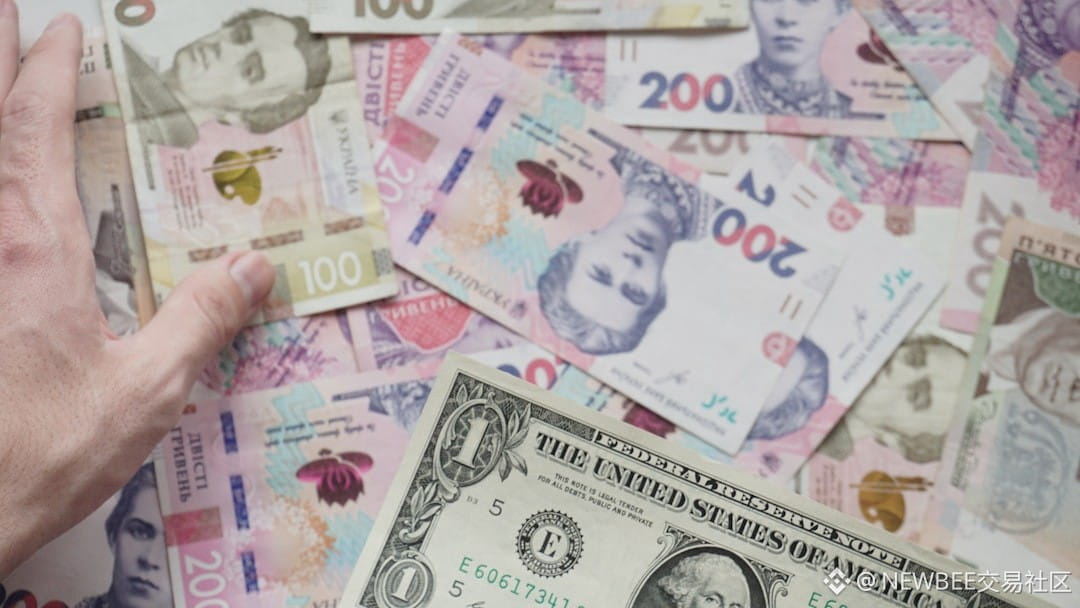
The Guy Who Bought Pizza With 1000 Bitcoin – Here’s What Happened Next. The Truth Will Make You Laugh!
Okay, you know the legend: back in 2010, a dude named Laszlo Hanyecz traded 10,000 Bitcoin for two pizzas. Yeah, at today’s prices, that’s like $600 million worth of pizza. But wait, there’s a twist. He didn’t stop there. Fast forward a few years, and he did it again – this time with 1,000 Bitcoin for another pizza. And guess what? He’s still laughing about it.
Laszlo says he has no regrets. He calls it a “fair trade” and still eats pizza like a boss. The crypto community loves him for it – he’s basically a meme lord. So if you’re crying over your missed gains, remember: this guy literally ate his fortune and doesn’t care. Now that’s what we call having your cake and eating it too. Or should we say, your pizza.
#BitcoinPizza #CryptoHistory #LaszloHanyecz
The Guy Who Bought Pizza With 1000 Bitcoin – Here’s What Happened Next. The Truth Will Make You Laugh!
Okay, you know the legend: back in 2010, a dude named Laszlo Hanyecz traded 10,000 Bitcoin for two pizzas. Yeah, at today’s prices, that’s like $600 million worth of pizza. But wait, there’s a twist. He didn’t stop there. Fast forward a few years, and he did it again – this time with 1,000 Bitcoin for another pizza. And guess what? He’s still laughing about it.
Laszlo says he has no regrets. He calls it a “fair trade” and still eats pizza like a boss. The crypto community loves him for it – he’s basically a meme lord. So if you’re crying over your missed gains, remember: this guy literally ate his fortune and doesn’t care. Now that’s what we call having your cake and eating it too. Or should we say, your pizza.
#BitcoinPizza #CryptoHistory #LaszloHanyecz
Okay, you know the legend: back in 2010, a dude named Laszlo Hanyecz traded 10,000 Bitcoin for two pizzas. Yeah, at today’s prices, that’s like $600 million worth of pizza. But wait, there’s a twist. He didn’t stop there. Fast forward a few years, and he did it again – this time with 1,000 Bitcoin for another pizza. And guess what? He’s still laughing about it.
Laszlo says he has no regrets. He calls it a “fair trade” and still eats pizza like a boss. The crypto community loves him for it – he’s basically a meme lord. So if you’re crying over your missed gains, remember: this guy literally ate his fortune and doesn’t care. Now that’s what we call having your cake and eating it too. Or should we say, your pizza.
#BitcoinPizza #CryptoHistory #LaszloHanyecz
1
92

On this day in 2019 (June 19): Bitcoin traded around $9,273, up over 13% in the prior week — showing real strength in the recovery phase. Ethereum sat at ~$269, with solid gains across most major assets. A bullish snapshot in crypto history. #Bitcoin #Ethereum #CryptoHistory
On this day in 2019 (June 19): Bitcoin traded around $9,273, up over 13% in the prior week — showing real strength in the recovery phase. Ethereum sat at ~$269, with solid gains across most major assets. A bullish snapshot in crypto history. #Bitcoin #Ethereum #CryptoHistory
100
🚀 Let’s Take a Look Back at Crypto History, Guys!
Back in 2020, during the COVID-19 market crash, Stellar ($XLM ) fell to around $0.02 per token. 🦠📉
Imagine putting $2,000 into XLM at $0.02 and simply holding through the volatility. At around $0.17+, that investment would be worth roughly $17,000 today. 💰🔥
That’s the power of patience and long-term conviction in crypto.
The market gives opportunities when fear is at its highest—but only those who can stay patient get to see what happens next. 📈
Were you holding $XLM back in 2020? 👀
XLMUSDT Perp: $0.17251
24H: -0.73%
$XLM #Crypto #Altcoins #CryptoHistory #Bitcoin
🚀 Let’s Take a Look Back at Crypto History, Guys!
Back in 2020, during the COVID-19 market crash, Stellar ($XLM ) fell to around $0.02 per token. 🦠📉
Imagine putting $2,000 into XLM at $0.02 and simply holding through the volatility. At around $0.17+, that investment would be worth roughly $17,000 today. 💰🔥
That’s the power of patience and long-term conviction in crypto.
The market gives opportunities when fear is at its highest—but only those who can stay patient get to see what happens next. 📈
Were you holding $XLM back in 2020? 👀
XLMUSDT Perp: $0.17251
24H: -0.73%
$XLM #Crypto #Altcoins #CryptoHistory #Bitcoin
Back in 2020, during the COVID-19 market crash, Stellar ($XLM ) fell to around $0.02 per token. 🦠📉
Imagine putting $2,000 into XLM at $0.02 and simply holding through the volatility. At around $0.17+, that investment would be worth roughly $17,000 today. 💰🔥
That’s the power of patience and long-term conviction in crypto.
The market gives opportunities when fear is at its highest—but only those who can stay patient get to see what happens next. 📈
Were you holding $XLM back in 2020? 👀
XLMUSDT Perp: $0.17251
24H: -0.73%
$XLM #Crypto #Altcoins #CryptoHistory #Bitcoin
1
95
Connectez-vous pour découvrir plus de contenu
Rejoignez la communauté mondiale des adeptes de cryptomonnaies sur Binance Square
⚡️ Suviez les dernières informations importantes sur les cryptomonnaies.
💬 Jugé digne de confiance par la plus grande plateforme d’échange de cryptomonnaies au monde.
👍 Découvrez les connaissances que partagent les créateurs vérifiés.
Adresse e-mail/Nº de téléphone
Sujets d’actualité
1
#QNTRises287%
771 vues
75 mentions
2
#TrumpRejectsAIRulesForVoluntaryAudits
4,486 vues
233 mentions
3
#BitgetHotWalletBreachTiedToThirdPartySecurityFlaw
2,253 vues
176 mentions
4
#OpenAIUnveilsAlwaysOnAgentDots
3,343 vues
215 mentions
5
#ChainlinkLaunchesBankSWIFTLedgerFramework
4,684 vues
185 mentions
6
#EarningsSeason
461,295 vues
3,492 mentions
7
#SECChairWantsStockMarketsOnChain
8,854 vues
205 mentions
8
#MulticoinInvestsInGrass
5,422 vues
143 mentions
9
#CEARenamesToBNBStandardUnderBNC
6,136 vues
144 mentions
10
#BitwiseLaunchesFirstSpotNEARETF
63,344 vues
780 mentions