


AI agents are becoming more capable.
But the more capable they become, the more important one question becomes.
Can we actually control what they do?
That's one of the things that caught my attention while looking into IronClaw 1.0 from NEAR AI. @NEAR Protocol
Most people focus on what an AI model can think about.
IronClaw takes a slightly different approach by paying attention to what happens after the AI has made its decision.
The model thinks about what needs to be done.
Then the Guard sits between the model and the action.
So instead of simply:
AI → Action
you get:
AI → Guard → Action
That Guard provides a central point where actions can be controlled. Sensitive actions can require explicit approval, and sensitive credentials are handled through additional protections.
And the performance is worth mentioning.
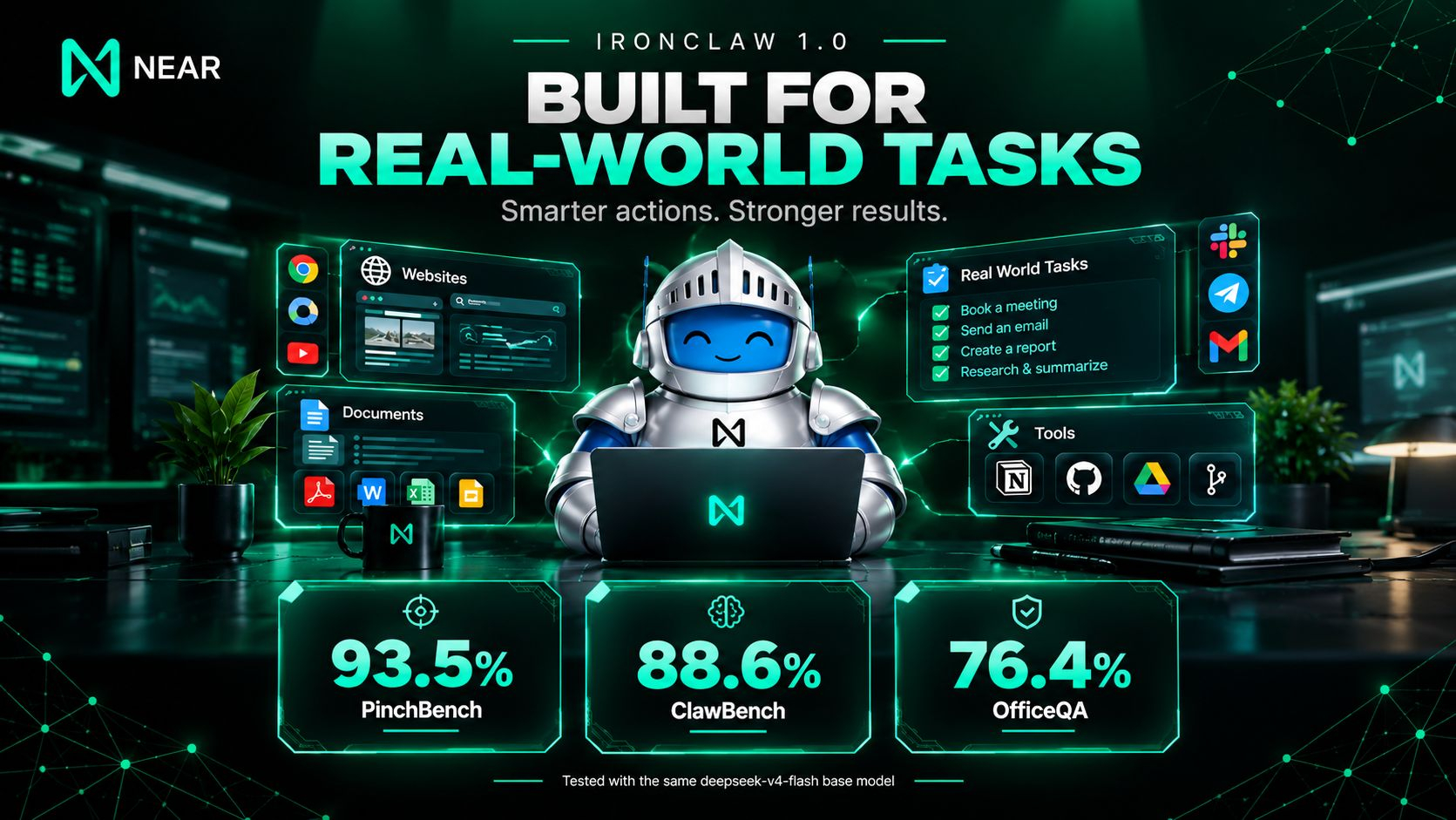
Using the same deepseek-v4-flash base model, IronClaw 1.0 reported:
📌 93.5% PinchBench
📌 88.6% ClawBench
📌 76.4% OfficeQA
These benchmarks look at different practical abilities.
PinchBench covers 147 real world tasks.
ClawBench tests agents across more than 140 real websites.
OfficeQA focuses on reasoning through a large collection of U.S. Treasury documents.
So the numbers give a broader picture of how the agent performs across different types of work.
But one feature I personally find just as important is the ability to keep its progress. #NEARAI
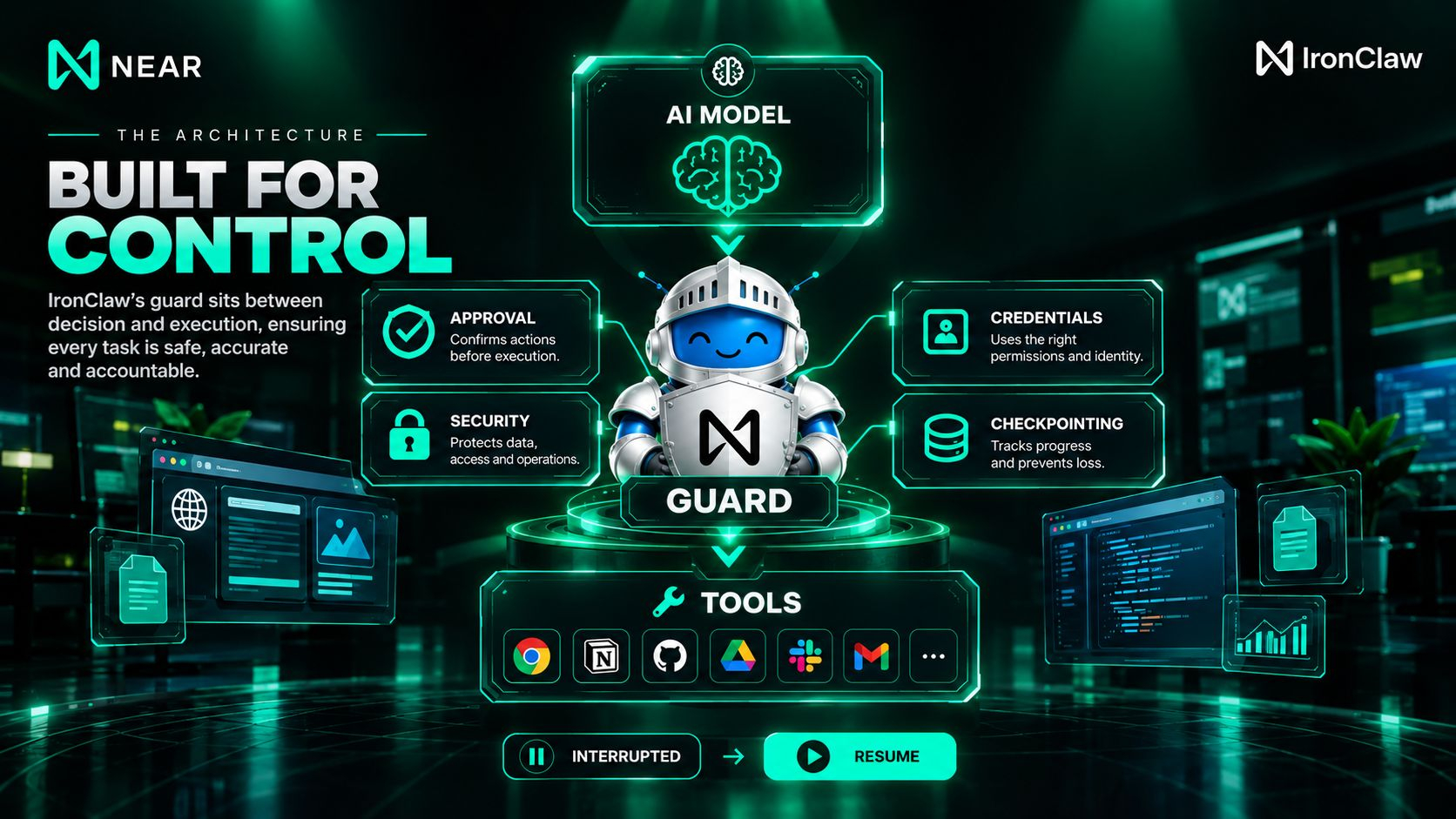
IronClaw continuously checkpoints its state.
If a task gets interrupted, it can resume from its previous state instead of throwing away all the work.
It also supports CLI, web, Slack and Telegram, while keeping memory and safety rules consistent across those channels.
For teams, there are also different isolation options depending on how the organization wants to deploy the agent.
Then we get to the wider NEAR AI ecosystem.
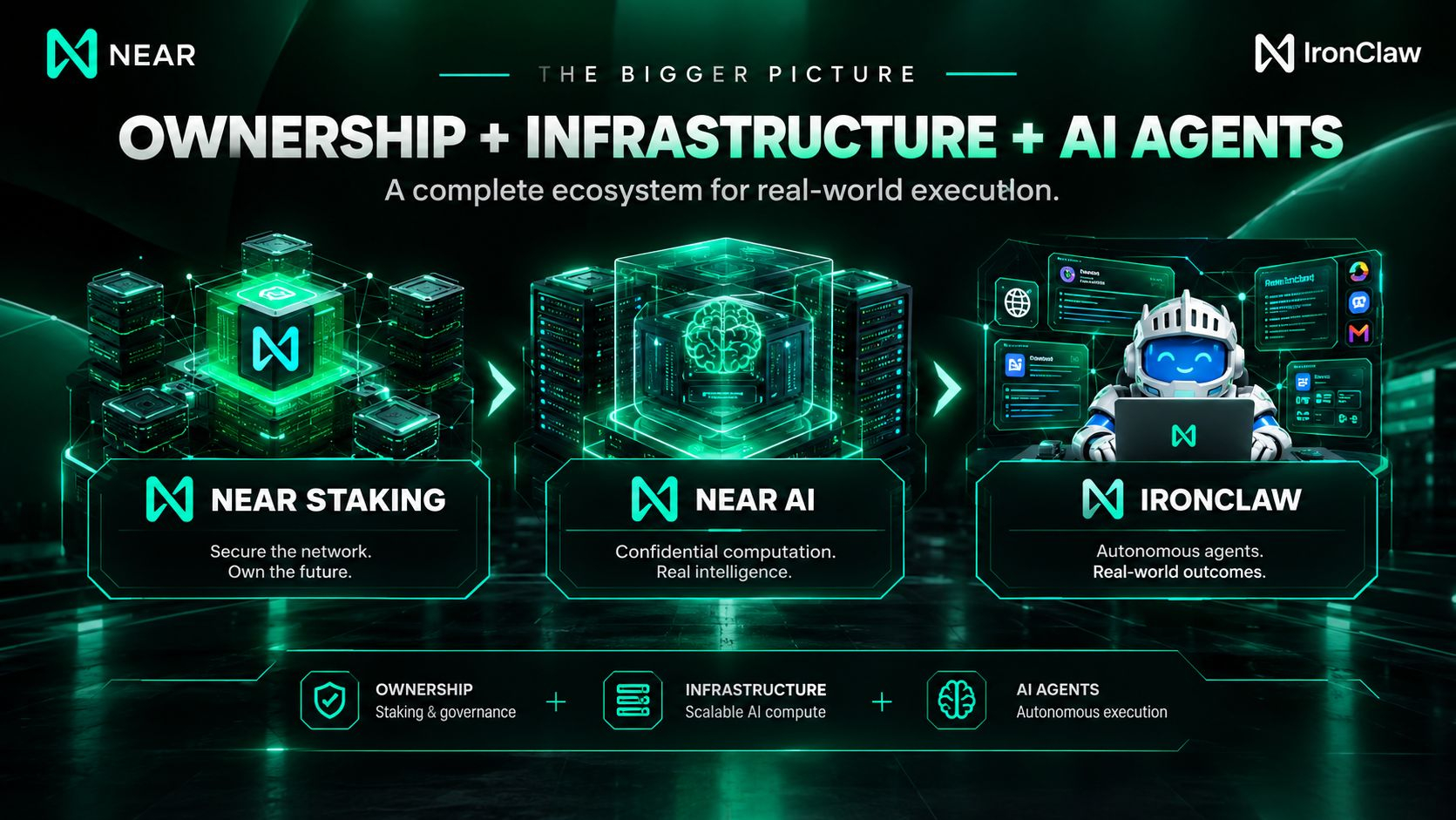
NEAR AI is working on private and verifiable AI infrastructure, including confidential inference through Trusted Execution Environments.
And staking is becoming part of that picture.
NEAR AI allows users to stake NEAR to receive credits for confidential inference and IronClaw agent hosting, while keeping ownership of the underlying stake.
So I don't think it makes sense to look at NEAR staking only through the lens of yield.
There is also an infrastructure angle.
Staking helps secure the underlying NEAR network, while the newer NEAR AI staking model connects that economic commitment with access to AI services.
That's the part of this development I find most interesting.
AI is getting better at thinking.
Now we're building systems that allow it to act.
The next challenge is making sure it can do that while users still have meaningful control.
IronClaw 1.0 is one interesting attempt at solving that problem.
What do you think matters more as AI agents become more autonomous?
Better performance or stronger control?