The Incentive Inversion: Why Agent Economies Cannot Function on Human-Designed Token Models
Cryptocurrency tokenomics were built around assumptions about human economic behavior—speculation, narrative-driven loyalty, and governance shaped by imperfect rationality. These models worked when humans were the primary economic actors. They collapse when autonomous agents dominate, because agents optimize algorithmically rather than emotionally, operating with time horizons, incentive structures, and decision models fundamentally different from human psychology. Token designs that relied on human irrationality for stability produce perverse incentive dynamics once rational, non-emotional agents become the primary users.
Speculation-driven value accrual represents the first major misalignment. Human holders often keep tokens because they believe in the project, tolerate volatility, or feel ideological alignment. Agents have no such attachment. If selling immediately maximizes expected return, agents sell instantly—regardless of narrative, sentiment, or future vision. Human token models depend on emotional anchoring to reduce volatility; agent-dominated markets eliminate that stabilizing behavior entirely.
Governance systems face even deeper failures. DAOs assume voters weigh proposals based on long-term project health, values, and social alignment. Manipulating human governance requires sustained social activity or significant capital. Agents vote purely on immediate utility. Coordinated agent swarms can identify underpriced governance influence, exploit proposal timing, and execute governance attacks without the friction human systems rely on for protection. The incentive structure flips—governance becomes a target rather than a coordination mechanism.
Liquidity mining and yield farming incentives fare even worse. These systems assume humans won’t optimize perfectly due to friction, limited attention, or risk aversion. Agents exploit these incentives with surgical precision. They rotate capital continuously, enter pools milliseconds before rewards, exit immediately after, and drain protocol treasuries without providing meaningful liquidity depth. The same mechanisms that once bootstrapped human liquidity become agent-extracted rent streams with no sustainable value creation.
Staking dynamics also invert. Human staking benefits from behavioral diversity—some users stake long-term, others forget to unstake, and many tolerate suboptimal yields. This creates stability. Agents behave identically: they monitor all yields constantly and reposition capital instantly across networks. Staking floods in and out with violent swings depending on marginal changes in APY. What was once a stabilizing mechanism becomes a source of volatility.
Kite’s tokenomics solve these failures by designing for agents first, rather than retrofitting human systems. Phase one of KITE emphasizes participation incentives and builder alignment—not speculative holding. The design assumes agents value operational capability, not narratives.
Phase two introduces staking, governance, and fee mechanics built around the identity stack. Staking requirements align with agent identity and operational risk, not just yield maximization. High-risk agents must lock proportional KITE stakes they cannot freely exit without disabling their utility—creating true alignment between capital commitment and operational behavior.
Governance becomes reputation-weighted rather than capital-weighted. Agents accumulate governance influence only through sustained positive contribution and verifiable operational history. New agents or capital-rich but reputation-poor actors cannot instantly acquire governance power. The system becomes resilient against fast-moving agent cartels.
Fee structures shift from per-transaction payments—easy for agents to circumvent—to session-based fees tied to ongoing operational usage. Agents pay for capability windows rather than discrete calls, eliminating incentives to batch inefficiently or manipulate transaction patterns.
Kite’s liquidity incentives reward duration-weighted participation, not rapid extraction. An agent that provides liquidity for minutes earns almost nothing. Sustained positions earn disproportionately higher rewards, forcing agents into long-term alignment rather than opportunistic rotation.
The emission schedule also reflects agent-native growth curves instead of human hype cycles. Emissions scale with actual network utility as agent density increases—not with marketing timelines or speculative cycles—preventing the boom-bust dynamics that plague human-centric token models.
The result is a token economy that remains stable because agents optimize rationally, not in spite of it. Networks built on human-designed token models become increasingly unstable as agents exploit their assumptions. Kite becomes more stable as agent density grows because its mechanisms assume rational optimization from the start.
As autonomous agents take over on-chain activity, the competitive frontier shifts. Human-centric tokenomics face inevitable breakdowns—governance exploitation, liquidity extraction, staking instability—because they depended on human irrationality to function. Agent-native designs like Kite’s align incentives through mechanism design rather than emotion, enabling sustainable economic systems at machine scale.
The networks that survive the shift to autonomous economies will be those built for machines, not those hoping machines behave like humans. Kite is one of the first ecosystems engineered for that reality.
Injective: The First Blockchain Treating Liquidity as a Public Utility
In traditional markets, liquidity isn’t owned by one platform — it’s shared across institutions. Exchanges connect to each other. Market makers operate across venues. Depth consolidates. This interconnectedness is what gives markets resilience. Crypto, however, evolved differently. Liquidity has remained fragmented, isolated within silos, unable to benefit from shared infrastructure. Injective is one of the first blockchains attempting to correct this by treating liquidity like a public utility rather than a private resource.
Injective’s architecture revolves around shared orderbooks and unified settlement logic. Instead of each application hosting its own liquidity, protocols on Injective plug into the same financial core. A derivatives exchange shares depth with a synthetic commodities platform. A structured yield engine draws from the same execution layer as a spot market. Liquidity becomes fluid, not fenced off.
This is only possible because #Injective internalizes the components that DeFi usually reconstructs manually. Orderbooks, matching logic, oracle pathways, and risk engines exist at the protocol level. When markets inherit the same infrastructure, their liquidity behaves like a network instead of isolated pockets.
Cross-ecosystem connectivity enhances this even further. With IBC, Ethereum bridges, and expanding multi-chain support, Injective aggregates liquidity from multiple environments into a single high-speed settlement hub. Assets from different chains operate under one consistent execution framework. This turns Injective into something crypto rarely sees: a multi-chain liquidity commons.
The $INJ token reinforces this vision structurally. As more markets use Injective’s shared infrastructure, more protocol fees accumulate and more INJ is burned in weekly auctions. Liquidity growth strengthens the token economy rather than diluting it. The chain’s health becomes tied to the health of its collective markets.
Builders benefit immensely from this unified environment. They deploy CosmWasm or EVM applications without needing to bootstrap liquidity from zero because Injective’s architecture gives them immediate access to deep execution foundations. Ecosystem growth accelerates because every new application adds depth to the whole system.
@Injective isn’t just optimizing markets — it’s redefining how liquidity should exist in decentralized systems. Not as isolated pools, but as infrastructure everyone shares.
Lorenzo Protocol: The Rebalancing Discipline That Markets Reward But Managers Avoid
There's a practice that every portfolio theory textbook prescribes as essential for optimal long-term returns: systematic rebalancing. When asset allocations drift from targets due to differential performance, rebalancing forces selling winners and buying losers, maintaining intended risk exposure while mechanically implementing buy-low-sell-high discipline that should enhance returns over time.
The theory is sound. The empirical evidence supports it. Academic studies consistently show that disciplined rebalancing improves risk-adjusted returns across diverse portfolio constructions and time periods. Yet remarkably few investment managers actually implement systematic rebalancing with the discipline that theory prescribes.
The gap between rebalancing theory and practice isn't because managers don't understand the benefits. It's because rebalancing in traditional structures creates costs and complications that make theoretical benefits difficult to capture practically. Transaction costs consume rebalancing gains. Tax implications make frequent rebalancing expensive in taxable accounts. Operational coordination across multiple fund holdings creates logistical complexity. And perhaps most importantly, rebalancing requires selling positions that have recently performed well, which managers find psychologically difficult and potentially embarrassing when explaining to investors.
Consider a traditional portfolio allocated across five different investment strategies. One strategy significantly outperforms, growing from 20% to 30% of portfolio value. Rebalancing discipline says sell some of the winner and reallocate to lagging strategies. But executing this requires coordinating redemptions and subscriptions across multiple funds with different calendars. It triggers transaction costs and potentially tax consequences. And it means selling the one thing that's been working to buy things that haven't been—a decision that feels wrong even when it's theoretically correct.
Most managers respond by avoiding systematic rebalancing entirely or implementing it so infrequently that drift accumulates substantially before correction. Portfolios operate far from their intended allocations for extended periods. The risk profiles drift away from what investors thought they were getting. The disciplined buy-low-sell-high mechanism that should enhance returns never operates consistently enough to deliver theoretical benefits.
Traditional finance has developed elaborate rationalizations for why systematic rebalancing isn't practical despite being theoretically optimal. Transaction costs matter—true, but often overstated. Tax implications are real—also true, but primarily issues in taxable accounts. Operational complexity is genuine—but more a function of infrastructure limitations than inherent necessity. The rationalizations protect against having to acknowledge that most managers simply don't maintain rebalancing discipline because it's operationally difficult and psychologically uncomfortable.
When @Lorenzo Protocol enables portfolio construction through composed vaults that automatically rebalance across underlying strategies according to encoded logic, the gap between rebalancing theory and practice collapses entirely. The rebalancing happens programmatically based on predefined rules—no psychological resistance, no operational coordination required, no transaction delays. The discipline that theory prescribes becomes the default behavior rather than aspirational goal that rarely gets implemented consistently.
The simple vaults provide underlying exposure that composed vaults can rebalance across with negligible friction. When allocations drift from targets, the rebalancing logic executes automatically—selling vault shares that have grown overweight, buying vault shares that have become underweight, maintaining target allocations without requiring human decision-making that might introduce behavioral inconsistency.
But the rebalancing benefits go beyond just maintaining target allocations. Systematic rebalancing in traditional finance typically happens quarterly or annually because more frequent rebalancing creates excessive transaction costs and operational burden. With on-chain infrastructure where transaction costs are minimal and execution is programmatic, optimal rebalancing frequency increases substantially—potentially monthly, weekly, or even triggered dynamically by volatility thresholds or allocation drift parameters.
This higher-frequency rebalancing captures mean-reversion opportunities that longer rebalancing intervals miss. When a strategy experiences temporary underperformance, monthly rebalancing increases exposure much faster than annual rebalancing would. The opportunity cost of delayed rebalancing—the returns foregone by not implementing optimal timing—decreases substantially when infrastructure enables frequent execution without prohibitive costs.
The composed vaults within #LorenzoProtocol can implement sophisticated rebalancing logic that would be operationally impossible in traditional fund-of-funds structures. Allocations might rebalance based on volatility-adjusted risk contributions rather than simple value weights. Rebalancing might accelerate during high-volatility periods when mean-reversion opportunities are strongest. Allocations might maintain correlation constraints that require complex optimization rather than simple proportional adjustments.
Traditional infrastructure makes these sophisticated rebalancing approaches theoretically possible but practically unimplementable. The coordination costs of managing complex rebalancing across multiple fund relationships with different subscription and redemption calendars are prohibitive. Investors end up with simplified rebalancing rules—maybe annual proportional rebalancing—that capture some theoretical benefits while leaving substantial optimization opportunities unexploited.
The $BANK governance system enables community-level evaluation of different rebalancing approaches. Instead of every investor individually solving the portfolio rebalancing problem, the community can collectively identify superior rebalancing frameworks and implement them as composed vaults that anyone can access. The coordination benefits scale from individual portfolio level to ecosystem level, with successful rebalancing logic getting recognized and replicated.
Traditional fund managers face career risk from systematic rebalancing that makes the practice difficult to implement consistently even when intellectually recognized as optimal. Selling a position that's been strongly outperforming to buy positions that have underperformed creates explanation burden. Investors see rebalancing activity and question why you're selling winners. The narrative management required to maintain investor confidence during systematic rebalancing adds friction that discourages consistent implementation.
On-chain transparent systems eliminate this career risk because rebalancing logic is encoded and visible. Everyone knows the composed vault will rebalance according to its programmed rules. There's no surprise or explanation burden when selling outperformers to maintain target allocations. The behavior is expected rather than requiring justification each time it occurs.
But systematic rebalancing creates another benefit that's less widely recognized: downside protection through risk reduction when volatility increases. When market turbulence causes position values to fluctuate dramatically, rebalancing naturally reduces exposure to the highest-volatility positions while increasing exposure to more stable positions. This volatility-dampening effect happens automatically as a byproduct of maintaining allocation targets, providing risk management without requiring predictive views about future volatility.
Traditional portfolio management theory has always recognized this benefit, but practical implementation rarely captures it because rebalancing happens too infrequently. By the time quarterly or annual rebalancing occurs, volatility spikes have often reversed and the risk-reduction opportunity has passed. High-frequency rebalancing enabled by low-friction on-chain infrastructure captures these benefits much more effectively.
#LorenzoProtocol demonstrates how infrastructure efficiency transforms rebalancing from aspirational portfolio theory into practical default behavior. The discipline that academic research shows enhances long-term returns becomes the automatic operation rather than requiring continuous behavioral effort to maintain.
Traditional finance will argue that automated rebalancing removes the human judgment that might identify when rebalancing should be paused—when a winning position is genuinely entering a sustained outperformance period rather than experiencing temporary drift. This concern has some validity for discretionary portfolios where manager judgment adds value. For systematic portfolios claiming to follow quantitative allocation rules, the argument is mostly rationalization for not implementing the discipline that theory prescribes.
The deeper issue is that traditional infrastructure made consistent rebalancing discipline practically very difficult while maintaining the theoretical claim that rebalancing is important and beneficial. This created a gap where every manager paid lip service to rebalancing principles while few actually implemented systematic discipline that captured theoretical benefits.
When infrastructure makes rebalancing programmatic and costless, the gap closes. Theory becomes practice. The benefits that research demonstrated in backtests and academic studies translate into actual portfolio outcomes rather than remaining theoretical improvements that operational friction prevents from materializing.
The rebalancing discipline that markets reward through improved long-term risk-adjusted returns was always available in theory. Traditional infrastructure just made it too operationally difficult and psychologically uncomfortable to implement consistently. Managers avoided it while claiming to embrace it, creating systematic underperformance relative to what disciplined rebalancing would have delivered.
When infrastructure enables automatic execution of rebalancing logic without operational friction or psychological resistance, the theoretical benefits finally reach actual portfolios. The gap between what portfolio theory prescribes and what portfolio management delivers narrows dramatically.
And the old excuses for why systematic rebalancing wasn't practical reveal themselves as what they always were: rationalizations for avoiding discipline that infrastructure made difficult rather than genuine limitations of rebalancing logic itself.
The discipline was always valuable. Infrastructure just made it avoidable. When infrastructure stops making it avoidable, the value that was always theoretically available finally becomes practically capturable.
YGG Macroeconomic Exposure: Correlation Structures and Cyclical Risk
Macroeconomic forces shape Yield Guild Games through multiple transmission channels that expose the protocol to broad economic cycles, cryptocurrency volatility, emerging-market conditions, and technology-sector trends. These forces influence scholar earnings, treasury valuations, developer ecosystem health, operational costs, and participant engagement — forming a correlation matrix that determines how YGG behaves across boom-and-bust cycles. Understanding these correlation structures is essential for designing a resilient strategy capable of absorbing exogenous shocks while positioning the protocol for upside participation during favorable markets.
YGG’s strongest macro linkage centers on cryptocurrency market correlation, where nearly every operational metric reflects Bitcoin and Ethereum price movements. Scholar incomes, typically denominated in game tokens, rise and fall with crypto sentiment, making fiat-equivalent payouts cyclical regardless of player performance. Treasury assets — from game NFTs to $YGG itself — inflate during bull markets and compress sharply during bear phases. This embedded correlation means YGG’s financial health is structurally procyclical, improving when risk appetite is high and tightening when markets contract, independent of operational execution quality.
Emerging-market economic conditions introduce a second layer of exposure. Because much of YGG’s scholar base resides in developing economies, local currency devaluation, inflationary pressure, or employment shocks directly influence participation rates. Economic downturns can increase scholar supply as individuals seek alternative income, while rising wages or stronger labor markets can reduce gaming participation by increasing opportunity costs. These regional differences create natural geographic hedging, with one market’s contraction potentially offset by another’s expansion.
The venture capital cycle indirectly shapes YGG through its impact on game developers. In abundant funding environments, studios maintain healthier tokenomics, longer development timelines, and sustainable economic models. During constrained funding cycles, however, developers often turn to short-term extraction, accelerating failure risks across games in YGG’s portfolio. Venture capital environments thus serve as early indicators of game ecosystem quality and longevity, influencing treasury risk and asset depreciation probability.
The regulatory cycle adds another macro layer. Tightening regulations increase compliance costs, restrict operational geographies, and depress investor sentiment, while permissive or clarified frameworks reduce uncertainty and stimulate adoption. For YGG, regulatory transitions define operating windows — periods of expansion versus consolidation — making policy environments a continuous strategic concern.
Interest rate regimes also exert influence. Rising global rates create competition for capital, increasing the attractiveness of risk-free yields relative to volatile gaming assets. They typically coincide with weaker crypto markets, further compressing treasury valuations. Treasury allocation decisions — stablecoins vs. risk assets — become increasingly sensitive to macroeconomic rate environments as traditional finance and digital assets intertwine.
Technology-sector conditions introduce parallel exposure. Strong tech markets raise talent acquisition costs and accelerate infrastructure evolution, benefiting game development but increasing operational expenses. Weak tech markets suppress hiring costs but also dampen innovation velocity and investment flows. Since Web3 gaming sits at the intersection of crypto and tech, YGG inherits both industries’ macro sensitivities.
Consumer discretionary spending adds a more complex correlation. Recreational gaming thrives in strong consumer markets, supporting healthier game economies. But during recessions, scholar participation may rise while recreational spending declines — generating complicated, sometimes countercyclical dynamics that affect game survivability and scholar earnings differently.
Geopolitical risks surface due to YGG’s global footprint: capital controls, sanctions, jurisdictional crypto restrictions, and political instability can disrupt operations overnight. While geographic diversification spreads exposure, it also multiplies potential risk sources, making geopolitical monitoring essential.
Labor market conditions form another transmission channel. Tight labor markets reduce scholar supply and increase retention costs; weak labor markets expand participation pools and reduce economic pressure on compensation. These conditions interact dynamically with crypto valuations, creating multidimensional effects on scholar behavior.
Across all these variables runs the broader risk-on / risk-off cycle, the macro sentiment driver that shapes liquidity conditions across global markets. YGG’s procyclical characteristics make it highly sensitive to shifts in this regime — benefiting disproportionately in euphoric markets and suffering disproportionately when capital retreats.
Hedging these macro exposures remains difficult given underdeveloped derivative markets, limited hedging instruments, and the volatility of gaming tokens. Stablecoin-denominated revenue flows mitigate some risk but sacrifice upside. Diversification helps but does not eliminate correlation to broader crypto conditions.
Scenario planning becomes the most reliable strategy, enabling YGG to model bull cycles, bear cycles, and stagflation environments rather than anchor to a single forecast. Strategic preparation across multiple possible macro states strengthens resilience against shocks execution alone cannot overcome.
Ultimately, YGG’s macroeconomic exposure topology reveals a protocol whose fortunes depend not only on operational capabilities but on global economic regimes, regulatory shifts, capital cycles, and technological evolution. Understanding these systemic linkages — and preparing defenses against their volatility — determines whether $YGG can expand sustainably across cycles or remains vulnerable to external forces that shape outcomes far beyond the boundaries of the protocol itself.
The Temporal Bridge: How Falcon Finance Connects Different Investment Horizons
Finance operates across radically different timescales simultaneously. High-frequency traders measure positions in milliseconds. Day traders think in hours. Swing traders work on weekly cycles. Long-term investors hold for years or decades. These temporal modes have traditionally existed in separate silos because the infrastructure serving each operates according to incompatible logic. Systems optimized for microsecond execution can't easily accommodate decade-long holds. Instruments designed for buy-and-hold strategies aren't suitable for active trading. @Falcon Finance is building something unusual, infrastructure that bridges these temporal modes rather than forcing users to choose between them.
The temporal fragmentation creates persistent friction in capital markets. An institutional investor might have billion-dollar conviction in certain assets for multi-year horizons but also need liquid capital for quarterly rebalancing or unexpected opportunities. Under current infrastructure, these different timeframes require separate capital allocations. Long-term holdings sit idle. Short-term liquidity earns minimal yield. Medium-term positions demand constant management. The temporal modes don't compose. They compete for the same pool of capital.
Individual investors face similar constraints at smaller scales. You believe Bitcoin will be substantially higher in five years, so you want to accumulate and hold. But you also see attractive yield opportunities in DeFi protocols with uncertain longevity. And you need stable purchasing power for near-term expenses. Pursuing all three objectives simultaneously means fragmenting your capital across separate positions that can't benefit from each other. Your long-term holds generate no yield, your yield strategies slow long-term accumulation, and your stable reserves miss appreciation. The temporal modes remain isolated because infrastructure doesn't bridge them.
Falcon Finance's universal collateralization infrastructure operates differently by allowing the same capital to serve multiple temporal functions simultaneously. Users deposit liquid assets, digital tokens and tokenized real-world assets, as collateral without locking them into any particular timeframe. Those assets can represent decade-long conviction holds or opportunistic short-term positions or anything between. The temporal character of the collateral is irrelevant — only value and liquidity matter.
When users mint USDf against that collateral, they're creating synthetic dollars that operate on completely different temporal logic. The USDf can function in milliseconds or months, independent of the collateral’s long-term horizon. It can be deployed in high-frequency arbitrage, used for continuous AMM liquidity, or placed in lending markets for steady yield. The long-term nature of the collateral and the short-term utility of USDf no longer conflict. The collateral can be long-term. The liquidity can be instantaneous.
This temporal bridge creates optionality that compounds across investment strategies. Someone building a multi-year crypto portfolio but wanting to capture market volatility no longer needs a split allocation. You can hold 100% in long-term conviction assets, use them as collateral, mint USDf, and deploy that synthetic dollar for short-term strategies. You’re not splitting capital. You’re expressing the same capital across multiple timeframes simultaneously.
The integration of tokenized real-world assets into this temporal bridge is even more powerful. Traditional assets have rigid timeframes baked into their structure. Bonds have maturities, real estate has slow cycles, private equity spans decades. These temporal constraints historically made such assets incompatible with rapid trading or flexible liquidity needs.
#FalconFinance changes this by making tokenized RWAs eligible collateral for USDf creation. Your tokenized bond continues progressing toward maturity, accumulating interest over years. Simultaneously, the USDf backed by that bond can move at DeFi speed. The bond keeps its long-term timeline. The synthetic dollar adopts whichever timeline you need. The temporal contradiction disappears because neither side must compromise.
What emerges is genuine temporal composability. Investment strategies across different time horizons don’t just coexist — they amplify each other. Long-term holdings become more productive because they generate short-term liquidity. Short-term strategies gain stability because they’re backed by long-term collateral. The temporal modes don’t compete for capital. They multiply capital’s utility.
The transformation also restructures risk management. Traditional discipline requires matching liabilities to asset durations — short-term needs require short-term assets. Falcon Finance relaxes this constraint. You can hold assets purely for investment merit and use USDf to manage near-term liquidity without disturbing those positions.
This temporal bridge even enables strategies previously impossible under existing infrastructure. Want to commit to decade-long illiquid investments while maintaining daily liquidity? Traditional finance cannot support that. Falcon Finance can — tokenized illiquid assets serve as collateral for instantly mintable USDf. Long-term conviction and short-term flexibility finally coexist.
The temporal bridge isn’t clever engineering. It’s a correction of a centuries-old limitation — the belief that capital must choose a timeframe and stay trapped in it. Long-term wealth building, medium-term yield generation, and short-term liquidity management are all legitimate user goals, yet infrastructure historically forced trade-offs between them.
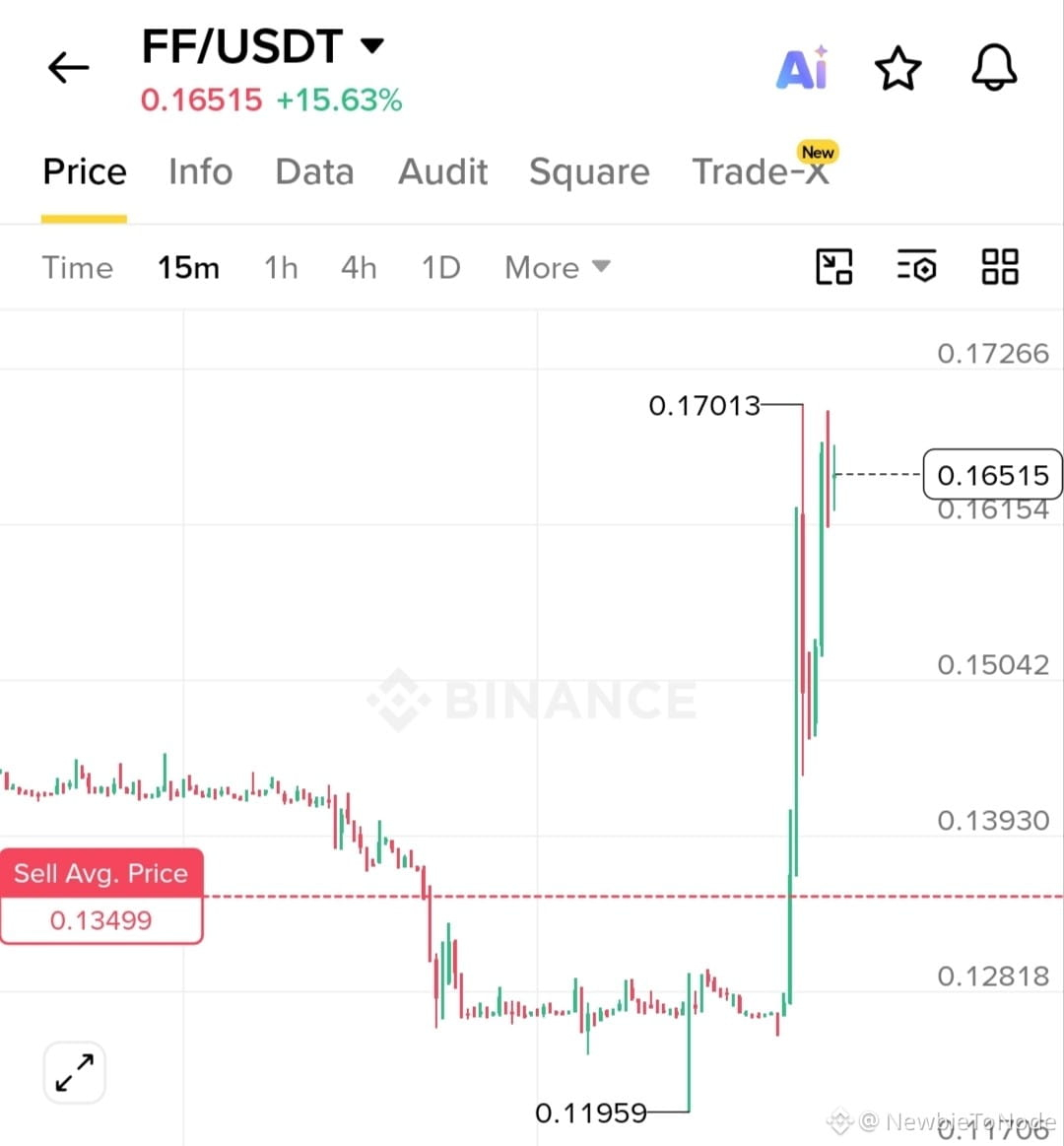
Falcon Finance removes those trade-offs, allowing the same capital to operate across incompatible time horizons because programmable assets make that not only possible but logical. When investment horizons connect instead of compete, capital becomes dramatically more productive without added leverage or added risk. That isn’t just a protocol feature. It’s infrastructure enabling strategies that temporal fragmentation once made unthinkable. $FF
Blockchain architecture prioritizes transparency—every transaction visible, every contract auditable, every state change verifiable. This openness enables trustless verification but creates perfect information environments where competitive advantages disappear instantly. Human traders tolerate this because their edge comes from judgment and timing, not secrecy. Autonomous agents, however, derive competitive value entirely from algorithms, decision logic, and operational patterns. On fully transparent blockchains, these strategies become immediately observable and replicable, eliminating any economic incentive to innovate.
This dynamic is most visible in agent trading. An AI agent deploying a novel arbitrage or market-making strategy exposes its logic through on-chain behavior. Competing agents can observe these patterns, reverse-engineer the approach, and replicate it within seconds. The innovator captures almost no durable advantage because strategy diffusion occurs faster than profit realization. Transparency turns innovation into a public good, destroying private incentive to develop sophisticated algorithms.
The problem extends to all competitive agent behaviors. Supply chain optimizers reveal routing logic; lending agents reveal risk models; yield optimizers expose capital deployment patterns. Any domain where advantage stems from superior algorithms collapses under total transparency. Blockchain achieves trust by eliminating privacy, but that same transparency makes advanced agent competition economically irrational.
Agents exacerbate the issue. Humans copying strategies may take hours or days. Agents can execute automated real-time extraction, reducing exclusive advantage windows from months to minutes. No development investment is justified when competitors can clone a strategy instantly and at zero cost.
Zero-knowledge proofs offer privacy but impose strict constraints: predefined circuits, rigid computation models, and high latency. Agents cannot express open-ended strategies inside ZK environments, and the performance overhead makes many strategies uncompetitive. Privacy exists, but innovation collapses under technical limitations.
@KITE AI resolves this paradox through session-based execution that provides selective opacity. Agents operate inside temporary execution contexts where the blockchain verifies outcomes and rule compliance while keeping internal logic, intermediate state, and decision pathways private. Observers see that an agent acted and what outcome it produced, but not how it reached that outcome. This preserves verifiability while protecting strategic logic.
Crucially, this privacy does not enable misconduct because sessions include identity-backed attestations proving adherence to declared parameters. An agent can demonstrate that it acted within authorized bounds without revealing the algorithm driving its behavior. This creates privacy with accountability, rather than the all-or-nothing model of traditional transparency systems.
The identity layer also enables competition beyond pure secrecy. Agents accumulate reputation linked to verifiable performance, creating differentiated trust profiles even when strategies remain hidden. Counterparties prefer reliable agents with strong histories, allowing innovation to compound through credibility rather than raw visibility.
KITE tokenomics reinforce these guarantees. Agents using higher-opacity sessions must stake KITE proportional to privacy level and operational risk, ensuring economic consequences for violations even when strategy details remain confidential. Stake slashing provides accountability where transparency is deliberately limited, while honest agents earn sustained privacy rights through proven behavior.
Governance evolves these mechanisms as the ecosystem matures. $KITE holders calibrate privacy thresholds, staking requirements, and verification parameters to balance innovation incentives with systemic safety. Privacy becomes a governed economic resource, not an uncontrolled loophole.
The result is an environment where agents can finally justify investment into novel, high-sophistication strategies. Competitive advantage lasts long enough to cover development costs, while eventual diffusion still occurs gradually through performance observation rather than instant transparency. Innovation accelerates because secrecy is protected, not punished.
Competition shifts from capital and execution speed—dominant on transparent chains—to algorithmic sophistication and reliability, making markets more efficient through innovation rather than replication. Security also improves: adversaries can no longer map victim behaviors or predict reactions with perfect clarity. Reduced visibility removes the informational scaffolding attackers depend on, while identity-backed accountability prevents privacy abuse.
Ultimately, autonomous economies require privacy mechanisms tailored to algorithmic competition, not human social dynamics. Humans retain advantage even under transparency; agents do not. Agents compete purely through code, and transparency transforms that code into a public commodity. Kite provides selective opacity backed by verifiable identity, enabling advanced strategic innovation without sacrificing rule enforcement.
As autonomous agents become more sophisticated and economically influential, the networks protecting strategic privacy—while maintaining cryptographic accountability—will dominate the competitive landscape. Transparency-only chains cannot support advanced agent ecosystems; #Kite can.
Injective: The Settlement Engine Built for the Age of Composable Finance
The next era of finance won’t be defined by standalone applications. It will be defined by composability — systems that build on each other, share execution guarantees, exchange data in real time, and behave as interconnected layers rather than isolated platforms. @Injective is emerging as the settlement engine for this shift, not because of marketing, but because its architecture naturally supports financial composability at scale.
Injective’s protocol-level design gives every application the same market-grade foundations: deterministic settlement, built-in orderbooks, oracle frameworks, and low-latency execution. When protocols share this infrastructure, their logic becomes interoperable by default. A synthetic asset platform can integrate with a derivatives market. A structured yield vault can hedge on another protocol. A risk engine can feed data into multiple venues simultaneously. Injective turns composability from a technical feature into a financial advantage.
Cross-chain integration expands this model across ecosystems. Through IBC and native bridges, Injective becomes a settlement layer where assets from Ethereum, Solana, and Cosmos coexist under one predictable execution environment. Multi-chain composability becomes not only possible — it becomes practical. This is how Injective evolves into a universal financial base layer, capable of supporting markets that span entire ecosystems.
The $INJ token ties the system together economically. It secures validators, aligns governance, and converts activity into permanent supply reduction through weekly burns. As composable systems generate more throughput, INJ grows structurally stronger. Value formation becomes a reflection of system-wide coordination rather than isolated speculation.
Developers gain the freedom to build advanced financial systems without needing to recreate infrastructure manually. Whether using CosmWasm or native EVM, their applications automatically plug into Injective’s composable market layer. Complexity becomes manageable. Innovation accelerates. The ecosystem begins to resemble an integrated financial operating system.
In a world moving toward interconnected financial logic, Injective is positioning itself as the layer where everything eventually settles — fast, fairly, and with composability engineered into its core. #Injective
Lorenzo Protocol: The Aggregation Paradox Where Bigger Means Worse
There's an assumption embedded so deeply in traditional finance that questioning it seems almost heretical: aggregation creates value. Larger funds can negotiate better execution prices. Bigger asset bases enable economies of scale. Consolidated operations reduce per-unit costs. Growth equals efficiency. More is better.
This logic works perfectly for certain business models—manufacturing, logistics, retail distribution. The economics of physical production often do favor scale. But investment management operates under fundamentally different constraints that make the aggregation-equals-efficiency assumption not just wrong, but precisely backwards for many strategies.
The problem manifests most clearly in strategies exploiting specific market inefficiencies. A quantitative approach identifies a pricing anomaly in mid-cap volatility markets. At $20 million in assets, the strategy captures this inefficiency beautifully—position sizes are small enough relative to market liquidity that execution doesn't create noticeable impact, entries and exits happen cleanly, and the edge translates directly into returns.
Success attracts capital. Assets grow to $200 million. Now the same trades that worked elegantly at smaller scale create market impact. The strategy must split positions across more instruments, accept less favorable pricing, and sometimes skip opportunities entirely because position sizes would move markets adversely. The inefficiency is still there, but aggregating more capital trying to exploit it has made exploitation less efficient for everyone.
Traditional finance's response to this aggregation paradox is remarkably consistent: acknowledge the problem exists, do nothing substantive to address it, and continue gathering assets because management fees on growing AUM are too lucrative to refuse. The business model demands growth even when growth degrades investment outcomes. The misalignment is fundamental and unfixable within traditional structures.
Fund managers will implement various capacity management techniques that sound sophisticated but rarely address the core issue. They might close to new investors—but only after assets have grown well past optimal levels. They might raise minimums to slow growth—but not actually reduce size back to optimal capacity. They might launch additional vehicles to create "separate capacity"—but this often just creates multiple oversized pools rather than properly-sized ones.
When @Lorenzo Protocol enables strategies to deploy as independent vaults that can proliferate rather than aggregate, it inverts the traditional scaling logic entirely. Instead of one volatility arbitrage vault growing from $20 million to $200 million and destroying its own inefficiencies through scale, ten separate volatility arbitrage vaults can each maintain $20 million in optimal capacity. The total capital allocated to the strategy class reaches $200 million, but each implementation operates at its performance-optimal size.
This proliferation approach seems obvious once stated, but it's economically impossible in traditional finance. Each fund requires complete operational infrastructure—compliance, administration, custody, reporting, legal, technology. Creating ten separate fund entities costs ten times what creating one costs. The only economically viable approach is aggregating everything into one large fund and accepting the performance degradation as unavoidable.
On-chain infrastructure eliminates this economic constraint entirely. Deploying ten vaults costs negligibly more than deploying one because marginal operational costs approach zero. Each vault operates independently with its own capacity constraints, its own performance profile, and its own capital base. The strategy logic might be similar across vaults—they're all exploiting volatility inefficiencies—but they're not aggregated into a single oversized structure.
The simple vaults within Lorenzo demonstrate this proliferation logic practically. Multiple momentum vaults can coexist, each implementing slightly different signal generation or position construction approaches, each operating at its optimal capacity range. An investor wanting large momentum exposure doesn't force one vault to bloat beyond optimal size—they allocate across multiple vaults that collectively provide the desired exposure while individually maintaining performance-optimal sizing.
But the aggregation paradox operates at multiple levels beyond just individual strategy capacity. It affects organizational structure, decision-making quality, and operational flexibility in ways that compound the performance degradation from excessive size.
Large traditional funds develop organizational complexity that slows decision-making. What could be a quick rebalancing decision in a small fund becomes a committee process involving multiple stakeholders with potentially conflicting incentives. Risk management frameworks become more elaborate and restrictive. Compliance requirements multiply. The operational machinery that enables larger scale simultaneously constrains operational agility in ways that degrade strategy execution.
The composed vaults within #LorenzoProtocol enable aggregation at the portfolio level without creating organizational complexity at the strategy level. A composed vault can provide exposure to ten different underlying strategies, each operating independently with its own decision-making, rebalancing logic, and capacity management. The aggregation happens in how capital is allocated across strategies, not in forcing strategies themselves to aggregate beyond optimal sizes.
This separation between portfolio aggregation and strategy aggregation is nearly impossible in traditional fund-of-funds structures. The organizational overhead of managing relationships with ten different fund managers creates complexity that limits how much true diversification is practical. You end up with simplified portfolios holding fewer strategies than would be optimal because the coordination costs of managing more relationships become prohibitive.
The $BANK governance system creates community-level coordination that enables intelligent proliferation rather than forced aggregation. When a vault approaches capacity constraints, governance can support deploying additional similar vaults rather than pressuring the existing vault to continue growing. The incentive structure rewards maintaining appropriate capacity across multiple implementations rather than maximizing assets in single oversized structures.
Traditional finance can't replicate this coordination because the business model economics push inexorably toward aggregation. Each separate fund requires complete operational infrastructure, making proliferation expensive. Revenue comes from management fees on assets under management, creating pressure to maximize size. Organizational structures reward growth regardless of whether growth enhances or degrades investment outcomes.
These incentives are so deeply embedded that even managers who intellectually understand capacity constraints struggle to act appropriately. The business pressures to keep growing, the operational costs that demand scale, the career incentives that reward asset gathering—all point toward continued aggregation long past optimal capacity.
On-chain infrastructure eliminates these misaligned incentives by making proliferation economically viable and capacity discipline strategically optimal. When operational costs are minimal, there's no pressure to aggregate for economies of scale. When governance rewards performance quality over asset size, there's no incentive to grow beyond optimal capacity. When deploying additional vaults is costless, there's no reason to force single vaults to bloat.
What emerges is an ecosystem where strategies maintain their performance-optimal sizes through proliferation rather than degrading through aggregation. Where capital seeking exposure to strategy classes gets distributed across appropriately-sized implementations rather than forced into oversized single vehicles. Where the aggregation that occurs happens at portfolio level in ways that enhance diversification rather than at strategy level in ways that degrade execution.
Traditional finance will argue that proliferation creates its own problems—that managing exposure across multiple similar strategies increases complexity for investors. This concern has merit in traditional infrastructure where coordinating across multiple fund relationships creates genuine overhead. On-chain, the composed vault architecture handles all coordination automatically, making proliferation invisible from user perspective while preserving its benefits at the strategy level.
The deeper insight is that aggregation in traditional finance was never primarily about efficiency—it was about business model economics. The claimed economies of scale mostly accrued to managers through reduced per-unit operational costs rather than to investors through better performance. The performance degradation from excessive scale was systematically ignored because acknowledging it would require limiting growth in ways that threatened business viability.
When infrastructure makes proliferation economically viable, the true optimal sizing patterns become visible. Many strategies have relatively modest optimal capacity—perhaps $20–50 million where they execute most effectively. Traditional finance forced these strategies to grow to hundreds of millions or billions because the business model demanded it. Performance suffered, but slowly enough that attribution to capacity constraints versus other factors remained ambiguous.
Transparent on-chain data makes capacity constraints visible through degrading risk-adjusted returns correlated with growing vault size. When this pattern emerges, the appropriate response is deploying additional vaults rather than forcing continued growth. The infrastructure enables the response that investment logic prescribes rather than forcing the response that business model economics demand.
The aggregation paradox was always hiding in plain sight—observable in the performance degradation that accompanied asset growth across countless strategies. Traditional finance acknowledged it existed while systematically refusing to address it because the business model made addressing it economically non-viable.
When infrastructure changes the economics, the paradox resolves naturally. Strategies proliferate rather than aggregate. Capacity discipline becomes possible because it's no longer economically destructive. Performance optimizes because sizing optimizes.
And the old aggregation-equals-efficiency assumption reveals itself as what it always was: a business model constraint masquerading as an economic principle—one that destroyed enormous value over decades of investment management history because infrastructure made the value-preserving alternative economically impossible.
YGG’s Competitive Moat: Network Effects and Defensibility
Competitive positioning for Yield Guild Games requires constructing sustainable advantages that prevent rivals from replicating operational models or capturing market share despite YGG’s first-mover status and accumulated resources. Pure operational execution offers no lasting protection in a market where competitors can observe strategies and copy them quickly. True defensibility comes from network effects, switching costs, relationship capital, data moats, and brand trust — the structural elements that determine whether YGG becomes an enduring market leader or succumbs to commoditization pressures from copycat guilds.
Network effects form the most powerful moat available to guild ecosystems. Scholar density attracts developers seeking guaranteed player liquidity, while developer partnerships attract scholars seeking earning opportunities. As these bilateral network effects compound, YGG gains preferential access, exclusive terms, and strategic positioning that smaller guilds cannot match. Once scale crosses a critical threshold, the flywheel strengthens itself: large networks generate superior economics, which fund further expansion, creating winner-take-most dynamics where leaders accelerate and smaller players struggle to remain relevant. Conversely, guilds that fail to reach minimum viable scale face reverse network effects, where lack of participation drives further decline.
Asset accumulation forms another structural moat. Early NFT acquisitions at low cost provide cost bases and asset advantages unattainable by newcomers buying into mature markets. Exclusive assets, scarce collections, and performance-optimized portfolios become strategic tools that competitors cannot easily replicate. Over years, YGG’s portfolio compounds, benefiting from preferential deals and deep operational insights. Yet asset moats remain vulnerable if games decline, markets shift, or new opportunities emerge where all players begin with zero exposure, resetting competitive dynamics.
Relationship capital reinforces the moat through long-term, trust-based partnerships with developers. Developers prefer reliability, proven execution, and known partners over untested entrants. These relationships — built through years of coordinated launches, feedback loops, and community activation — translate into preferential access, better terms, and early insight into new games. When formalized through revenue shares, advisory stakes, or equity positions, these partnerships evolve into hard barriers that lock out competitors. The moat, however, remains sensitive to relationship quality: a single breach of trust can erase years of accumulated advantage.
Brand reputation and identity form a subtler but equally durable moat. YGG’s brand carries trust, recognition, and legitimacy — intangible assets that reduce acquisition costs and increase participant loyalty. Scholars often prefer slightly lower earnings with a reputable guild over uncertain promises from newcomers. But brand moats are fragile in the age of social media, where trust can collapse overnight. Maintaining this moat demands persistent operational transparency, consistent fairness, and flawless crisis management.
Operational excellence becomes its own moat as YGG builds institutional knowledge that cannot be reverse-engineered instantly. Years of multi-game coordination, performance optimization, game economy analysis, and large-scale community management produce execution capacity that competitors must painstakingly recreate. Technical infrastructure, playbooks, dashboards, and automated systems become compounded advantages. Yet operational moats weaken if talent is poached or if innovations redefine best practices faster than incumbents can adapt.
Data and analytics reinforce defensibility by generating insights unavailable to smaller networks. With telemetry across thousands of scholars and dozens of games, YGG holds proprietary intelligence on player behavior, asset returns, game economy stability, and strategic allocation patterns. Predictive models built on this data give YGG foresight competitors simply cannot match. Data moats grow with scale but remain vulnerable to regulatory shifts, privacy restrictions, or paradigm changes that reduce historical predictive power.
Switching costs create retention advantages that shield YGG from competitive poaching. Scholars who leave lose vested token rewards, progression achievements, social ties, and reputation accumulated within YGG’s ecosystem. They also forfeit cultural identity and trust built through shared experience. These switching costs increase loyalty even when competing guilds attempt to attract participants with short-term incentives. But excessive friction risks appearing coercive, damaging brand perception and inviting external scrutiny.
Capital advantages strengthen the moat by enabling YGG to fund deeper reserves, acquire more assets, subsidize scholar incentives, and invest aggressively during downturns when competitors retreat. Treasury strength allows YGG to take calculated risks and sustain long-term strategies. But misallocation can erode this advantage, and well-capitalized rivals (corporate, DAO-based, or investor-funded) can match or exceed YGG’s spending if conditions shift.
First-mover advantages grant early positioning, early assets, and early developer trust. However, first-mover benefits decay unless converted into durable moats. Fast followers often outperform pioneers by learning from mistakes and deploying capital more efficiently. YGG must continuously transform its early lead into structural defensibility, not rely on historical positioning alone.
Vertical integration expands YGG’s moat by embedding the guild deeper into adjacent infrastructure layers such as asset markets, payments, or development ecosystems. Integration creates efficiencies and lock-in, but also increases operational complexity and risks competitive overlap with potential partners.
Community and culture provide perhaps the most underrated moat. When scholars identify with YGG not merely as a workplace but as a community, switching becomes emotionally costly. Cultural moats are powerful but delicate — easily diluted by rapid scaling or value misalignment.
Regulatory readiness becomes a moat as global compliance standards tighten. Organizations with internal legal infrastructure, reporting capabilities, and regulatory literacy will outlast informal competitors who cannot meet compliance thresholds.
Platform effects emerge when YGG evolves from operator to ecosystem, enabling third-party builders to create tools, services, and extensions. Platforms are the most resilient moat structures in digital economies, but require patience, scale, and strategic openness.
Ultimately, the durability of YGG’s competitive moats determines whether it remains a dominant force in Web3 gaming or becomes one guild among many in a commoditized landscape. Strong moats allow premium positioning and high retention; weak moats force constant reinvention to avoid displacement. Understanding and reinforcing these defensibility layers is crucial to ensuring that #YGGPlay evolves into a long-lived ecosystem rather than a temporary market leader overtaken by more disciplined or better-capitalized rivals.
The Irreversibility Problem: How Falcon Finance Preserves Financial Sovereignty
Financial decisions in traditional systems carry a peculiar weight. Once made, they're extraordinarily difficult to undo. Sell an asset and the transaction settles in days, by which time market conditions have shifted and repurchasing means different prices, different tax implications, different opportunity costs. Lock capital into a term deposit or bond and early withdrawal triggers penalties that can erase months of accumulated interest. Deploy funds into illiquid investments and you're simply stuck until exit events that may never materialize on favorable terms. This irreversibility isn't a feature. It's a bug that's been naturalized through centuries of infrastructure limitations masquerading as financial law.
The problem compounds in ways that constrain rational behavior. Knowing that decisions are difficult to reverse makes participants excessively conservative, holding larger cash buffers than economically optimal, avoiding opportunities with uncertain timeframes, maintaining positions past their logical endpoint because unwinding costs too much. This conservative bias might seem prudent individually, but systemically it represents massive deadweight loss. Capital that could be productive remains idle. Opportunities that should be pursued get ignored. Markets that should be efficient remain shallow because participants can't adjust positions fluidly.
DeFi promised to fix this through programmable money and instant settlement. To some extent it has. You can swap tokens in seconds rather than days. Liquidity pools allow entry and exit without traditional market-making intermediaries. Smart contracts execute automatically according to coded rules rather than depending on institutional processing. But scratch beneath the surface and irreversibility persists in new forms. Stake your tokens and face unbonding periods. Provide liquidity and watch impermanent loss crystallize. Deploy capital into yield farming and discover that gas costs make unwinding uneconomical for smaller positions. Different mechanisms, same fundamental constraint.
Falcon Finance addresses irreversibility at the architectural level by separating the decision to hold assets from the decision to deploy capital. Through its universal collateralization infrastructure, users can deposit liquid assets spanning digital tokens and tokenized real-world assets as collateral, then mint USDf as an overcollateralized synthetic dollar. The crucial property is that neither decision forecloses the other. Depositing collateral doesn't mean you've irreversibly committed to that position. Minting USDf doesn't mean you've irreversibly deployed that capital. Both remain fluid, adjustable, reversible according to changing conditions or preferences.
This creates something approaching genuine financial sovereignty, where that phrase means more than marketing rhetoric. You maintain ultimate authority over your capital allocation across timeframes from seconds to years. Want to reduce your USDf position? Return synthetic dollars and withdraw collateral. Want to increase exposure? Add collateral and mint more USDf. Want to completely restructure your holdings? Exit entirely without penalties or forced liquidations. The infrastructure enables rather than constrains adjustment, treating reversibility as a feature to be maximized rather than a cost to be minimized.
The transformation becomes most visible when considering how users actually behave under reversible versus irreversible systems. Irreversible infrastructure breeds analysis paralysis. Every decision carries such weight that participants endlessly deliberate, seeking certainty before committing because they know unwinding will be painful. This might seem rational individually but it's catastrophic systemically. Markets need participants willing to express views and take positions. When infrastructure makes position-taking effectively irreversible, market efficiency suffers as information gets incorporated more slowly and less completely.
Falcon Finance's reversible architecture encourages healthier market participation. Users can take positions knowing they retain sovereignty to adjust as circumstances evolve. This doesn't mean reckless trading or constant churning. It means decisions can be appropriately sized to actual conviction levels rather than inflated by irreversibility concerns. You can test thesis with modest positions, knowing you can scale up or down fluidly. You can maintain core holdings while adjusting tactical deployments as opportunities emerge. The sovereignty to reverse decisions paradoxically makes the initial decisions easier to make thoughtfully.
The integration of tokenized real-world assets into this reversible framework is particularly consequential because traditional assets are notoriously irreversible. Buying real estate means transaction costs that can exceed five percent of purchase price. Exiting private equity means waiting for liquidation events that happen on five to ten year timelines if they happen at all. Even liquid securities in traditional markets carry settlement delays and tax complexities that make rapid adjustment expensive. When these assets get tokenized and become eligible collateral through Falcon Finance, they gain reversibility properties they never possessed in traditional form.
A tokenized real estate position can now back USDf creation without triggering the sale. If circumstances change, you can adjust your USDf position by adding or removing collateral rather than unwinding the underlying property holding. The real estate maintains whatever strategic value it provides, rental income or appreciation potential or portfolio diversification, while the synthetic dollar provides tactical flexibility that traditional real estate ownership never enabled. This isn't just incremental improvement. It's categorical transformation of how illiquid assets can function within overall portfolio strategies.
What makes this sustainable rather than destabilizing is how Falcon Finance maintains stability while enabling reversibility. The overcollateralization model ensures USDf remains backed even as individual users adjust positions. The diversity of collateral types means that adjustment by some users doesn't create systemic stress because the backing pool reflects heterogeneous assets with different correlation structures. And the productive nature of the collateral means the system generates value continuously rather than depending on constant user activity to remain functional. Reversibility doesn't create fragility because the architecture accounts for it explicitly.
Perhaps the deepest insight here is that irreversibility in financial systems has always been more about infrastructure limitations than economic necessity. Assets don't naturally become locked through some law of physics. They get locked because the systems for managing them are too crude to handle fluidity. Intermediaries impose lock-up periods because they need time to process transactions manually. Markets impose settlement delays because clearing and custody happen through batch processes designed decades ago. Penalties attach to early withdrawal because institutions designed products assuming long-term commitments they couldn't flexibly manage.
Falcon Finance demonstrates that when infrastructure becomes sophisticated enough, irreversibility can be minimized dramatically. Collateral remains flexible because smart contracts can adjust positions instantly based on transparent rules. Synthetic dollars remain stable because overcollateralization provides mathematical certainty rather than institutional promises. Users maintain sovereignty because the system is designed around permissionless adjustment rather than requiring intermediary approval for changes. The technology finally enables what economic logic always suggested should be possible.
The irreversibility problem has constrained finance for so long that most participants don't even recognize it as solvable. They've internalized the constraints as natural features of how money must work. Lock-up periods seem inevitable. Transaction costs seem necessary. Illiquidity seems fundamental to certain asset types. Falcon Finance suggests otherwise, not through wishful thinking but through infrastructure that actually preserves reversibility as a core property. Financial sovereignty isn't about eliminating all constraints or making everything instantaneous. It's about ensuring that users retain ultimate authority over their capital without artificial barriers imposed by inadequate infrastructure. When that sovereignty is preserved systematically, the entire character of financial decision-making changes from anxious commitment to fluid optimization. That's not a protocol feature. That's a restoration of properties programmable assets should have possessed from the beginning.
The Liquidity Fragmentation Crisis in Agent-Driven Markets
Market liquidity is the fundamental lubricant enabling efficient price discovery and low-cost execution. Centralized finance achieved deep liquidity because millions of participants converged on unified venues. DeFi fractured this model across hundreds of AMMs, DEX order books, and isolated liquidity pools—acceptable for human traders using aggregators to navigate fragmentation. But fragmentation becomes catastrophic when autonomous agents dominate market activity, requiring continuous, high-frequency liquidity access that spans fragmented venues simultaneously.
Execution quality degrades rapidly as agent participation increases. A human trader routing a $10,000 swap checks a few venues and executes once. An autonomous agent running a rebalancing strategy may perform hundreds of similar operations per hour across dozens of pairs. Each operation requires liquidity discovery, routing, and execution. At low volumes, overhead is manageable; at scale, fragmentation creates compounding slippage, worse routing, and intensified MEV extraction. More agents competing for fragmented liquidity worsens execution for everyone, producing negative feedback loops where adoption degrades performance.
Fragmentation also blocks sophisticated strategies that require coordinated liquidity. Delta-neutral hedging demands atomic execution across spot and derivative markets. On human-centric infrastructure, agents must execute separate transactions with delays between legs. If prices move during those delays, hedges fail. Agents need atomic, multi-venue execution—something fragmented markets cannot provide without centralized coordinators that contradict decentralization.
Capital efficiency suffers even more. Agents operating across fragmented venues must maintain inventory everywhere to avoid delays moving capital. A market maker active on five DEXs must fragment reserves across all five, multiplying capital requirements. Liquidity thins out because the same resources spread across many pools rather than concentrating depth. Ironically, markets become less efficient as agent participation grows.
Price alignment deteriorates under agent workloads. Arbitrageurs cannot profitably maintain price parity across venues when dislocations shrink below execution cost. With hundreds of agents reacting simultaneously, dislocations vanish before arbitrage executes. Markets drift out of sync, and strategies relying on coherent pricing begin to fail at scale.
Kite addresses liquidity fragmentation through agent-optimized market architecture that consolidates execution without sacrificing decentralization. Instead of forcing agents to navigate hundreds of venues, Kite provides unified liquidity primitives built for high-frequency, low-value autonomous trading. The architecture reduces routing complexity and transaction overhead, enabling execution patterns impossible on fragmented DeFi infrastructure.
Agents can perform atomic cross-market execution within a single session. Strategies requiring simultaneous spot and derivative positions execute atomically—either all steps succeed or none execute. Kite’s session model allows an agent to declare an entire multi-step plan, with the protocol guaranteeing coherent execution. This eliminates timing risk that currently makes complex multi-leg strategies unreliable.
Capital efficiency improves dramatically. Agents deploy liquidity once rather than fragmenting reserves across venues. This consolidation deepens liquidity, tightens spreads, and improves execution for all participants. As more agents concentrate activity on Kite, liquidity deepens further, creating self-reinforcing network effects that fragmented markets cannot produce.
Identity-aware architecture unlocks reputation-based liquidity access. Reliable market makers can earn reduced collateral requirements or priority routing. High-performing agents gain preferential execution during congestion. Such mechanisms are impossible in anonymous, fragmented markets, but feasible on Kite because agent identities accumulate verifiable history.
KITE tokenomics further reinforce liquidity concentration. Liquidity providers staking KITE earn enhanced rewards, incentivizing depth rather than fragmented deployment. As governance evolves, KITE holders shape liquidity standards, incentive structures, and execution ordering tailored to autonomous trading needs.
MEV protections also strengthen. Traditional markets allow front-running and sandwiching because venues operate independently. Kite’s identity-aware execution enables session-level privacy, reputation penalties for extractive behavior, and fair ordering guarantees. MEV mitigation becomes protocol-native, not an application-level burden.
Strategy viability improves across the board. Arbitrage becomes profitable with tighter margins because execution costs fall. Market making delivers higher returns because capital isn’t fragmented. Delta-neutral strategies become stable because execution is atomic. The strategy space available to agents expands—driving more liquidity, greater depth, and higher overall market quality.
Security also strengthens. Concentrated markets allow holistic monitoring and faster anomaly detection. Instead of tracking hundreds of venues, the system observes unified activity. Circuit breakers and risk containment become feasible at protocol scale, not fragmented across isolated pools.
The broader thesis is unmistakable: agent-driven markets cannot scale on human trading infrastructure. Fragmentation that humans tolerate becomes crippling when agents require continuous, synchronized, high-frequency execution. Kite provides consolidated, identity-aware liquidity architecture optimized for autonomous trading while preserving decentralization principles. As autonomous agents grow from experimental actors to dominant market participants, protocols offering agent-native liquidity will capture the majority of sophisticated trading volume—while fragmented human-centric markets decline in relevance.
Injective: The Chain Turning Fragmented Liquidity Into a Global Market Network
The multi-chain world promised abundance — more ecosystems, more assets, more innovation. What it delivered instead was fragmentation. Liquidity scattered across dozens of chains. Prices drifting out of sync. Bridges acting as chokepoints. Traders forced to navigate a maze of networks just to find opportunity. Injective’s design confronts this fragmentation directly, not with patches or wrappers, but with a framework that treats liquidity as a global resource instead of a local one.
This begins with Injective’s interoperability architecture. Through IBC, native bridges, and cross-chain messaging, Injective becomes a place where Ethereum-based collateral, Solana-native tokens, and Cosmos assets all enter the same high-performance execution layer. Once inside Injective, they behave as part of one unified market fabric. No chain-specific quirks. No isolated liquidity pockets. No fragmentation. Injective turns multi-chain liquidity into coordinated market flow.
But for liquidity to move freely, the settlement environment must behave flawlessly. Injective ensures this with sub-second, deterministic finality and negligible fees. These aren’t cosmetic optimizations — they’re the conditions liquidity providers demand before routing serious volume. Market makers can quote tighter spreads. Arbitrage firms can operate continuously. Traders can act without hesitation. The network’s consistency creates a gravitational pull for capital.
Injective’s market-first architecture magnifies this effect. Because orderbooks, matching engines, and risk modules are built into the chain itself, liquidity doesn’t scatter across incompatible dApps. It consolidates. A new derivatives venue shares depth with a synthetic asset protocol, which in turn connects to cross-chain spot markets. Injective becomes less like an L1 and more like a global exchange network, where every market benefits from every other.
The INJ token plays a structural role here, not a symbolic one. It secures the chain through staking, powers the base economy, and most importantly, removes supply via weekly burn auctions tied to actual ecosystem activity. As more liquidity flows into Injective’s markets, more INJ is destroyed. Growth doesn’t dilute the system — it sharpens it.
In this emerging landscape, Injective isn’t trying to be the chain with the most dApps or the most narratives. It is becoming the place where liquidity from everywhere finally meets. And in a fragmented crypto world, that makes Injective not just relevant — it makes it necessary.
Lorenzo Protocol: The Strategy Half-Life That Traditional Funds Can't Acknowledge
There's a phenomenon in investment management that everyone knows exists but nobody wants to discuss openly: most investment strategies have finite useful lives. The market inefficiencies they exploit gradually diminish as more capital pursues them, as market structure evolves, or as the conditions that created the opportunities change. What works brilliantly for five years might work adequately for another three before becoming essentially useless—not because the implementation degraded, but because the underlying opportunity simply stopped existing.
This strategy mortality is natural and inevitable. Markets are adaptive systems where profitable opportunities attract competition that eliminates those opportunities. A quantitative strategy exploiting a specific pricing inefficiency generates returns, attracts capital and imitators, and gradually arbitrages away the very inefficiency it was designed to capture. The strategy lifecycle—birth, growth, maturity, decline, death—operates as reliably as biological lifecycles, though with considerably more variation in timeframes.
Traditional finance cannot acknowledge this reality honestly because the business model depends on denying it. A fund built around a specific investment approach must claim that approach has enduring validity—that the edge is sustainable, that the strategy will work indefinitely, that past performance provides reasonable guidance for future expectations. Admitting that the strategy might have a half-life of five or seven years before becoming ineffective would be commercial suicide.
So managers persist with strategies long after their useful lives have ended, finding creative ways to explain why performance has deteriorated while maintaining that the fundamental approach remains sound. "Market conditions have been challenging for our style." "We're experiencing temporary headwinds." "The opportunity set has narrowed but our edge remains." These explanations might occasionally be accurate, but more often they're euphemisms for “the strategy that worked before doesn't work anymore, but our business depends on pretending it still does.”
The problem compounds because traditional fund structures make strategy evolution organizationally and operationally traumatic. A fund that built its entire identity, marketing, and investor base around a specific quantitative approach can't easily pivot to a different strategy when the original approach stops working. Changing strategies means acknowledging failure, potentially violating offering documents, triggering investor redemptions, and essentially rebuilding the business from scratch.
So funds persist with declining strategies far longer than investment logic would justify, hemorrhaging value slowly while hoping conditions will revert or the strategy will mysteriously regain effectiveness. The business survival imperative overwhelms the investment optimization imperative. Capital remains allocated to approaches that no longer work because the alternative is organizational death.
When @Lorenzo Protocol enables strategies to exist as modular, independent vaults rather than organizational identities, strategy mortality becomes manageable rather than catastrophic. A vault implementing a momentum approach that stops working doesn't create organizational crisis—it simply loses capital to better-performing alternatives as investors reallocate based on transparent performance data.
The simple vaults within Lorenzo operate as strategy implementations rather than business entities. When a specific volatility arbitrage approach loses effectiveness because market conditions have changed or the inefficiency has been arbitraged away, that vault's declining performance becomes visible immediately in transparent on-chain data. Capital reallocates to alternative approaches or different strategy classes without requiring organizational transformation.
This modular approach enables ecosystem-level strategy evolution that traditional finance cannot achieve. As some vaults decline due to strategy mortality, new vaults implementing novel approaches or adapted methodologies can emerge and attract capital based on demonstrated performance. The capital allocation adjusts continuously at the ecosystem level even though individual vault strategies might maintain consistency.
The composed vaults demonstrate how this strategy evolution can happen at portfolio level while maintaining stability at user level. A composed vault might maintain consistent allocation to "volatility arbitrage" as a strategy class while continuously adjusting which specific volatility vaults receive capital based on their relative performance. Users maintain desired exposure to the strategy class without needing to manually identify which specific implementations currently work best.
This automatic evolution addresses a fundamental problem: identifying when a strategy has reached end-of-life is difficult and ambiguous. A strategy might underperform for two years due to temporary market conditions before rebounding strongly. Or it might underperform for two years because its useful life has genuinely ended and future underperformance will persist indefinitely. Traditional investors struggle to distinguish between these scenarios because the data required for reliable assessment often becomes clear only in retrospect.
The $BANK governance community creates collective intelligence around strategy lifecycle assessment. When a vault shows persistent underperformance, community analysis examines whether the issue reflects temporary conditions or fundamental strategy mortality. Multiple independent analysts evaluating the same transparent performance data are more likely to identify strategy death accurately and quickly than individual investors making isolated judgments.
This community-level evaluation doesn't guarantee perfect strategy lifecycle assessment—markets remain uncertain and strategy mortality is often ambiguous. But it does prevent the systematic bias in traditional finance where managers keep claiming strategies remain viable long after they've actually died because organizational incentives prevent honest acknowledgment of strategy mortality.
#LorenzoProtocol enables a form of creative destruction at the strategy level that traditional fund structures cannot sustain. Strategies that reach end-of-life lose capital quickly and fade away. New strategies with demonstrated effectiveness attract capital and grow. The ecosystem continuously evolves toward currently-effective approaches rather than being anchored to strategies that worked historically but have lost relevance.
Traditional fund managers will argue that this continuous evolution prevents strategies from demonstrating their long-term value—that real edge takes years to validate and shows up only after surviving multiple challenging periods. This argument is legitimate for genuinely long-term strategies with fundamental validity. But it's also a convenient excuse for persisting with strategies whose useful lives have genuinely ended but whose organizational survival requires pretending they haven't.
The key distinction is between temporary underperformance and genuine end-of-life. The first category deserves patience and persistence. The second category deserves capital reallocation to alternatives. Traditional finance systematically miscategorizes the second as the first because organizational incentives prevent honest acknowledgment of strategy mortality.
Transparent on-chain data helps distinguish between these categories by enabling examination of why underperformance is occurring. A momentum strategy underperforming because momentum signals are temporarily weak might rebound when market conditions shift. A momentum strategy underperforming because its specific signal generation approach no longer captures genuine momentum before it's widely recognized has likely reached end-of-life and won't rebound regardless of market conditions.
The strategy half-life phenomenon operates across different timeframes for different approaches. Some quantitative strategies might remain effective for decades because they exploit fundamental market features that persist. Others might have useful lives measured in years before being arbitraged away or becoming obsolete due to market structure changes. The variation makes lifecycle assessment difficult, but doesn't change the underlying reality that most strategies have finite useful lives.
Traditional finance built business models on denying this reality—claiming that successful strategies have indefinite validity and that past performance provides meaningful guidance about future outcomes. This claim becomes increasingly untenable as strategy lifecycles shorten due to faster information dissemination, increased quantitative competition, and evolving market microstructure.
When infrastructure enables continuous strategy evolution rather than requiring organizational commitment to specific approaches, the denial becomes unnecessary. Strategies can be evaluated honestly on their current effectiveness rather than being defended based on historical success. Capital can reallocate based on present performance rather than being locked into past choices that organizational structures prevent changing.
The strategy half-life was always real. Traditional finance just couldn't acknowledge it without undermining the business model foundations. The claim that successful strategies remain successful indefinitely was always more marketing narrative than empirical reality.
When infrastructure separates strategy implementation from organizational identity, honest acknowledgment becomes possible. Strategies are born, work effectively for some period, gradually lose effectiveness, and eventually die—and this natural lifecycle can be respected rather than denied.
The capital that traditional finance kept allocated to strategies long past their effective lifespans—destroying value slowly while pretending the strategies remained viable—can finally reallocate based on actual current effectiveness rather than organizational inertia.
And the old claims about strategy persistence and enduring edge reveal themselves as what they always were: business model protection masquerading as investment principle. One that destroyed enormous value by forcing capital to persist with declining strategies long after honest assessment would have triggered reallocation.
YGG Capital Formation: Treasury Pathways, Funding Dynamics, Sustainability
Capital formation inside Yield Guild Games defines the financial foundation that enables asset acquisition, operational scale, strategic execution, and long-term resilience. The architecture supporting this capital base blends multiple revenue and funding channels — from initial token distributions to ongoing scholar earnings, from external venture capital to treasury yield strategies and asset appreciation. Whether YGG can operate with strategic freedom or remains constrained by liquidity pressures ultimately depends on how these channels interact, compound, and sustain themselves through volatile market cycles.
The initial token distribution established YGG’s foundational treasury by exchanging future token supply for upfront capital. These early sales funded operations, asset purchases, and team expansion during the guild’s formative period. But they also introduced token supply overhang and dilution constraints that must be carefully managed to avoid long-term pressures on token value. Structuring a healthy distribution requires balancing near-term liquidity needs against future tokenomics integrity, selecting strategic investors who contribute more than capital, and ensuring the treasury begins with enough resources to execute without immediately reentering fundraising cycles.
Once operational, scholar-generated revenue becomes the backbone of recurring capital inflow. Through revenue shares collected from in-game earnings, YGG gains a predictable, scalable income source tied directly to network growth. This operational revenue determines when the protocol becomes financially self-sufficient. Achieving sustainability requires the scholar base to grow faster than operational costs, with unit economics improving over time as infrastructure matures. Until that point, capital formation strategy must ensure sufficient runway to bridge the gap between early-stage cost intensity and eventual revenue-driven independence.
Treasury management adds another layer of capital expansion by deploying idle resources into yield-bearing opportunities. Stablecoin reserves can generate interest through conservative lending markets. Diversified crypto holdings capture upside from broader market cycles. Strategic allocations into emerging gaming projects provide equity-like exposure while strengthening ecosystem partnerships. Even real-world assets may factor into a diversified treasury mix to hedge against crypto-specific volatility. While these strategies increase capital productivity, they also introduce new risk dimensions, requiring disciplined treasury governance to avoid jeopardizing operational security.
External funding rounds infuse additional growth capital that enables YGG to accelerate expansion beyond what organic revenue alone could support. Venture firms and strategic partners contribute not only funds but also expertise, distribution support, and industry access. These relationships allow YGG to scale teams, secure early access to promising games, and build infrastructure ahead of demand. Yet external capital introduces competing timelines and varied expectations. Some investors seek liquidity events that may not align with community goals, necessitating governance frameworks that protect protocol autonomy while leveraging investor value.
Asset appreciation supplements capital formation by increasing treasury value through rising prices of NFTs and tokens acquired in earlier phases. Successful games can multiply the value of these positions, expanding effective treasury capacity without additional financing. But these gains remain unrealized until assets are sold, creating tension between holding for upside and liquidating for liquidity. Treasury strategy must weigh these factors carefully, treating appreciation as part of a broader capital optimization equation rather than guaranteed liquidity.
Community-driven funding mechanisms create avenues for decentralized capitalization. Public sales, community bonds, and targeted crowdfunding broaden ownership and participation. These approaches support decentralization but also introduce coordination costs, regulatory burdens, and potential misalignment between community interests and operational needs.
Strategic partnerships deepen capital formation when collaborators invest as part of broader agreements. Developers, infrastructure providers, and aligned ecosystems may contribute capital in exchange for long-term synergies. These arrangements strengthen operational ties but also complicate governance when disagreements emerge. Capital intertwined with operational partnerships requires strong conflict-management frameworks to protect protocol integrity.
Debt financing remains an untapped yet potentially transformative option. Borrowing against treasury assets or predictable revenue streams provides non-dilutive capital, accelerating growth without expanding token supply. But debt introduces fixed obligations that heighten vulnerability during downturns. Used wisely, leverage boosts capital efficiency; used poorly, it becomes a systemic threat.
With capital available, allocation decisions determine how effectively resources translate into growth. Deploying funds into NFTs expands productive capacity; investing in infrastructure enhances efficiency; marketing strengthens network effects; reserves provide resilience. The allocation strategy must remain adaptive, balancing expected returns with long-term mission alignment.
Burn rate management determines how long the treasury can sustain operations. Aggressive spending accelerates expansion but shortens runway; conservative spending extends survival but may cost market share. Optimal burn rates shift dynamically with performance, market conditions, and capital availability.
At the core of long-term viability lies the sustainability threshold — the moment recurring revenues fully cover recurring expenses. A protocol forever dependent on external financing remains exposed to market cycles; one that achieves sustainability gains autonomy and resilience. YGG’s path to this equilibrium depends on scholar growth, cost discipline, treasury performance, and the maturation of new revenue lines.
Market cycles add additional complexity. Bull markets provide abundant capital; bear markets shut funding windows. The protocols that endure are those that raise capital ahead of need, preserve it carefully, and deploy it strategically through multiple cycles.
Ultimately, YGG’s capital formation architecture determines whether the protocol builds from a foundation of financial strength or one limited by persistent scarcity. Diverse revenue streams, disciplined treasury strategy, flexible fundraising, and thoughtful allocation together shape a capital engine capable of supporting long-term infrastructure ambitions. Understanding these formation pathways is essential for assessing whether YGG can grow into a global gaming network or whether capital bottlenecks constrain what the organization can achieve.
The Arbitrage Collapse: Why Falcon Finance Eliminates Inefficiency at Scale
Markets work through arbitrage. Price discrepancies emerge between venues or assets, arbitrageurs exploit those discrepancies for profit, and in doing so they push prices toward efficiency. This mechanism is so fundamental that it's treated as almost sacred in economic theory. But there's a shadow side to arbitrage-driven efficiency that rarely gets discussed. The arbitrage opportunities exist because the infrastructure is inadequate. Every price discrepancy represents economic value trapped by friction or fragmentation that prevents natural equilibrium. We celebrate arbitrageurs for capturing that value, but we should be asking why the infrastructure permits the inefficiency in the first place.
DeFi has created spectacular arbitrage opportunities precisely because its infrastructure remains immature. Assets trade at different prices across chains. Stablecoins deviate from their pegs on different exchanges. Yield rates vary wildly for similar risk profiles across lending protocols. Sophisticated participants extract enormous value from these inefficiencies while the underlying systems waste economic resources maintaining price discrepancies that shouldn't exist. It works, in the sense that prices eventually converge through arbitrage, but it's profoundly wasteful compared to infrastructure that prevents the discrepancies from emerging.
@Falcon Finance approaches this differently by building infrastructure that collapses arbitrage opportunities through architecture rather than arbitrage activity. The universal collateralization framework accepts liquid assets including digital tokens and tokenized real-world assets as backing for USDf creation. This means the synthetic dollar draws its value from diverse productive collateral rather than being pegged to external assets or sustained through algorithmic mechanisms vulnerable to manipulation. The architectural consequence is that USDf maintains stability systemically rather than requiring constant arbitrage to bring it back to peg.
Consider how typical stablecoins handle price discovery. When the stablecoin trades below peg, arbitrageurs buy it knowing they can redeem it for full value or sell it later when the peg recovers. When it trades above peg, arbitrageurs mint new units to sell at premium prices. This works to maintain rough stability, but it introduces multiple layers of inefficiency. Arbitrage consumes gas, attention, and capital, and introduces peg volatility that creates uncertainty for users. More dangerously, reliance on arbitrage introduces systemic fragility if arbitrageurs become unwilling or unable to perform their function during stress periods.
Falcon Finance's overcollateralized model with diverse productive backing eliminates most of these arbitrage requirements. USDf maintains its peg through structural backing that doesn't depend on arbitrageurs constantly correcting discrepancies. The synthetic dollar is always backed by more value than it represents, and that backing includes assets that continue generating yield rather than sitting idle. There's no external peg to maintain through arbitrage because the value is intrinsic to the backing structure.
The efficiency gains compound across the system. When USDf maintains tight peg stability without requiring active arbitrage, protocols integrating it can rely on that stability without building redundant safety mechanisms. Trading venues don't need circuit breakers for de-peg events. Lending protocols don't need complex liquidation waterfalls to protect against collateral instability. Yield strategies don't need to hedge against stable-asset volatility. Everything becomes simpler because stability is solved at the foundation layer.
This architectural approach extends to how #FalconFinance handles diverse collateral types. Traditional systems create arbitrage opportunities whenever similar assets trade at different prices across venues or when conversion between asset types isn't seamless. Tokenized treasuries might trade at discounts or premiums. Governance tokens might price differently across chains. These discrepancies persist because moving assets carries friction, and infrastructure for maintaining coherence is limited.
Falcon Finance collapses these inefficiencies by treating diverse collateral types coherently at the protocol layer. A tokenized treasury bond and a DeFi governance token both contribute to USDf backing based on their actual value and liquidity characteristics rather than arbitrary venue-specific pricing. This prevents systematic mispricing driven by fragmentation. The collateral pool becomes an implicit cross-asset price discovery engine.
Cross-chain inefficiencies reveal this most clearly. Identical assets often trade at different prices across chains because bridging is expensive and risky. Wrapped assets trade at discounts. Native assets command premiums. These inefficiencies persist because the infrastructure for harmonizing prices doesn’t exist.
Falcon Finance doesn’t solve bridging directly, but it renders many cross-chain arbitrages irrelevant. Users can mint USDf on whichever chain they hold collateral rather than bridging assets. They gain liquidity without moving tokens across chains. As fewer users rely on bridges, the arbitrage opportunities created by bridge risk diminish.
What emerges is financial infrastructure where efficiency comes from architecture rather than exploitation. Minor discrepancies will always exist, but the systemic inefficiencies that fuel massive arbitrage profits — and represent massive economic waste — shrink dramatically. When stablecoins maintain pegs through productive overcollateralization, when diverse collateral composes coherently, when synthetic dollars reflect intrinsic value rather than external anchors, the system becomes efficient rather than merely correctable.
Perhaps the most radical insight is how this reframes protocol success. Most DeFi protocols benefit from inefficiency: more volume, more liquidations, more arbitrage. Falcon Finance builds a system where success means making inefficiencies disappear. Less arbitrage because nothing deviates. Less churn because nothing requires constant rebalancing. Less complexity because the foundation handles stability instead of offloading it to users.
This is unglamorous compared to high-speed bots extracting millions, but it's what mature financial infrastructure demands. The arbitrage collapse isn't a failure. It's evidence that the infrastructure finally works.
The Compliance Impossibility: Why Regulatory Frameworks Cannot Map to Anonymous Agent Operations
Financial regulation exists to prevent fraud, protect consumers, ensure market stability, and enable law enforcement. These objectives rely on identity verification, transaction monitoring, and legal accountability—mechanisms built explicitly for humans and institutions operating within jurisdictional boundaries. Autonomous agents operating through blockchain infrastructure exist outside these assumptions entirely. They possess no legal identity, no physical location, and no guarantee that their controllers fall under any particular jurisdiction. This creates an irreconcilable tension between regulatory requirements and autonomous system architecture, one severe enough to halt institutional adoption regardless of technical innovation.
The compliance challenge becomes most acute in KYC and AML obligations. Regulated institutions must verify customer identity, monitor activity for suspicious patterns, and report transactions above defined thresholds. These rules assume customers are identifiable humans or legal entities with documented ownership and jurisdictional presence. An autonomous agent fits none of these categories. It may be deployed pseudonymously, operate continuously without human oversight, and conduct thousands of micro-transactions that appear benign individually yet accumulate into vast economic flows.
Transaction monitoring collapses under anonymity. Traditional AML frameworks rely on behavioral baselines tied to stable identities. Unusual inflows, structured withdrawals, or abrupt behavioral changes trigger investigation precisely because they deviate from established patterns. Autonomous agents, however, can rotate addresses freely, vary operational behavior continuously, and coordinate across multiple agents to obscure beneficial ownership. The very transaction patterns that signal human money laundering become indistinguishable from normal agent activity, rendering monitoring effectively useless.
Jurisdictional ambiguity compounds the issue. Regulatory authority is territorially defined: obligations depend on where institutions operate, where customers reside, or where transactions originate. An autonomous agent has no physical presence. Its creator might be anywhere and intentionally anonymized. The blockchain infrastructure it uses spans dozens of jurisdictions simultaneously. Before compliance obligations can be enforced, regulators cannot even determine which jurisdiction applies.
Institutional participants face a dead end. They cannot deploy autonomous agents into anonymous environments without violating compliance rules. They cannot ignore autonomous systems entirely, given competitive pressures and operational advantages. The result is institutional paralysis, where trillions in potential capital remain sidelined despite technical readiness.
Kite’s identity architecture provides the missing foundation for compliance-compatible autonomy. Its three-tier model produces verifiable attribution chains linking agent behavior to accountable human or organizational controllers. The user identity layer ties agents to entities subject to regulatory jurisdiction. The agent identity layer ensures persistent, auditable behavioral history. The session identity layer captures context—authorized operations, value limits, and execution windows—enabling granular oversight.
This structure enables selective disclosure, where compliance-relevant information is accessible only to authorized parties. Institutions deploying agents can grant regulators controlled visibility into their specific agents without exposing unrelated network activity. They meet KYC obligations by proving verified control over agent identities. Transaction monitoring becomes meaningful again because patterns can be aggregated across persistent agent identities rather than anonymous addresses.
The model also unlocks risk-based compliance, aligning with global regulatory standards. Low-value or low-risk agent operations require minimal verification. High-value or cross-border activities trigger enhanced checks. Compliance obligations scale with risk rather than imposing blanket requirements that would suppress autonomous innovation.
Geographic compliance becomes feasible through identity attestations. Agents can carry jurisdictional markers enabling protocols to enforce region-specific rules—GDPR compliance, sanctions restrictions, or prohibitions on serving US persons. These filters operate without centralized gatekeepers, preserving decentralization while accommodating regulatory mandates.
KITE tokenomics reinforce compliance. Agents with verified identities face reduced staking requirements, rewarding transparency. Institutions maintaining strong compliance programs gain governance influence as contributors to ecosystem legitimacy. Token holders determine verification standards, compliance mechanisms, and engagement strategies with regulators—ensuring the architecture evolves responsibly.
Enforcement also becomes practical. When violations occur, identity-linked agents provide clear attribution, enabling regulators to target the offending controller rather than destabilizing the broader ecosystem. Selective enforcement preserves legitimate activity while isolating misconduct—something impossible in anonymous architectures.
The institutional impact is immediate. Banks can deploy autonomous trading agents while satisfying BSA/AML obligations. Asset managers can automate strategies without breaching fiduciary duties. Exchanges can offer agent-driven products without regulatory exposure. Compliance compatibility removes the binary choice between innovation and legality.
Security strengthens as well. Identity-verified operations allow collaboration between private security teams and law enforcement without compromising privacy for unrelated users. Instead of regulators attacking anonymous systems as threats, compliance-aware design fosters cooperative environments focused on removing actual bad actors.
The broader thesis is unavoidable: autonomous economies will not achieve mainstream adoption without compliance pathways that regulators can trust. Institutional capital, enterprise integration, and sustainable growth depend on architectures that reconcile autonomous operation with regulatory legitimacy. Kite provides this foundation—identity attribution, transaction observability, selective disclosure, and enforceable accountability—enabling autonomous systems to operate at scale within the real constraints of global finance.
Protocols ignoring compliance will remain in the margins. Protocols solving it will unlock the next trillion-dollar wave of institutional participation.
Injective: The Financial Engine Built for a World Moving Beyond Human Speed
Modern markets don’t move at human pace anymore. They move at machine pace — micro-decisions cascading through thousands of systems every second. Yet most blockchains still operate like slow, reactive ledgers. They weren’t built for velocity. They weren’t built for automation. They weren’t built for markets where execution must keep up with algorithms, not individual traders. Injective, by contrast, feels engineered for a world where autonomous strategies dominate and human input is optional.
Injective’s sub-second finality creates an environment where automated systems can operate continuously without risk of timing drift. A liquidation bot doesn’t wait nervously for confirmation. A hedging engine doesn’t get caught mid-update. A cross-chain arbitrage system doesn’t break during congestion. Injective’s timing precision aligns with the machine-native nature of modern markets.
But automation requires more than speed — it requires structure. Injective embeds market mechanics directly into the chain, giving algorithms a deterministic environment. Orderbooks behave consistently. Matching logic doesn’t vary by contract. Oracle pathways follow strict update cycles. Risk parameters operate with precision. Automation becomes reliable because the infrastructure behaves like a financial engine, not a jury-rigged collection of smart contracts.
Interoperability adds another dimension: multi-chain automation. Injective allows systems to use Ethereum collateral, Solana liquidity, and Cosmos-native assets as inputs to a single automated strategy. Machines can rebalance across ecosystems without losing execution guarantees. @Injective becomes the central processing unit for cross-chain automation, not just another execution environment.
The INJ token amplifies this machine-driven model. As automated activity increases, protocol fees accumulate, burn auctions intensify, and $INJ supply decreases. Injective’s economy is tied not to marketing cycles but to system performance — exactly the kind of alignment automated markets thrive on.
For developers building algorithmic strategies, structured finance engines, liquidity robots, or pricing systems, Injective feels less like a chain and more like a programmable financial backbone. CosmWasm provides expressive control. The native EVM offers a direct path for Solidity systems. Soon, multiple VMs will run side-by-side, enabling robots written in entirely different languages to share the same liquidity.
#Injective isn’t preparing for the future of markets. It’s preparing for the future after that — when machines, not humans, move the majority of volume, and when the networks that support them must operate with unshakeable precision.
Lorenzo Protocol: The Benchmark Manipulation Game That Nobody Admits Exists
There's a choice that every traditional fund makes early in its lifecycle that dramatically affects how performance will be perceived but receives far less scrutiny than it deserves: benchmark selection. The stated purpose is providing investors with context for evaluating returns—showing how the fund performed relative to a relevant market alternative. The actual function is often quite different: creating a comparison that makes performance look as favorable as possible regardless of the actual investment strategy.
This isn't primarily about obvious manipulation like choosing irrelevant benchmarks. Regulators and investors have become sophisticated enough to recognize when a fund investing in large-cap US equities compares itself to emerging market bonds. The manipulation is far more subtle—choosing from among many “defensible” benchmarks the one that makes historical performance look strongest while being difficult to challenge as inappropriate.
Consider a fund implementing a quantitative strategy with exposure to momentum factors, value tilts, and small-cap bias. There are dozens of potentially appropriate benchmarks. Each choice creates different performance comparisons. The fund naturally selects the benchmark against which its historical returns appear most impressive.
Maybe the strategy underperformed broad indices but outperformed value indices, so value indices get selected. Maybe it underperformed standard factor indices but outperformed during specific favorable time windows, so those windows get emphasized. Maybe it shows better risk-adjusted returns than absolute returns, so Sharpe ratios against volatility-adjusted benchmarks get featured prominently.
Non of these choices is technically inappropriate. Each benchmark provides some relevant context. But the selection is made strategically to optimize perception, not to provide the most informative comparison. And benchmarks rarely change even when the strategy evolves in ways that make the original benchmark less relevant.
The manipulation extends to presentation. A fund might underperform its benchmark by 2% but outperform on a risk-adjusted basis—so marketing emphasizes the risk-adjusted comparison. Another might outperform in absolute terms but lag on volatility-adjusted measurements—so absolute returns get highlighted. The benchmark provides an illusion of objectivity, while presentation choices ensure favorable framing.
Traditional finance has developed highly sophisticated methods for benchmark optimization that operate entirely within accepted industry norms. Time-window selection that avoids weak periods. Risk-adjustment methodologies tailored to the fund’s volatility profile. Custom blended benchmarks that walk the line between relevance and performance maximization. Presentation formats designed to highlight strengths and downplay weaknesses.
When @Lorenzo Protocol deploys strategies as transparent on-chain vaults, benchmark manipulation becomes simultaneously harder and less necessary. Harder because full performance data is visible, not selectively presented. Less necessary because evaluation focuses on strategy implementation quality rather than outperformance versus a manager-selected benchmark.
The simple vaults implementing quantitative strategies have natural evaluation frameworks. A momentum vault should be evaluated on whether it captures momentum effectively, not whether it beats a chosen index. On-chain execution data allows direct assessment of whether the strategy actually did what it claimed to do.
This shifts evaluation from “did the fund beat its benchmark?” to “did the strategy execute effectively?” The second question is far more predictive of future performance because it reflects actual capability rather than benchmark-relative optics.
But Lorenzo goes further. The $BANK governance community can develop shared evaluation standards not dictated by managers—standards based on strategy type, structure, and objective. Momentum strategies get judged on momentum-capture efficiency. Volatility strategies on premium-harvesting consistency. Trend-following vaults on their responsiveness to regime changes.
These standards emerge from the community rather than from strategy operators, eliminating the manager-driven benchmark selection advantage at its root.
The composed vaults within #LorenzoProtocol show how benchmark manipulation compounds in multi-strategy contexts. A traditional fund-of-funds can game benchmarks at two levels: by selecting favorable benchmarks for the main portfolio and by selectively incorporating underlying managers who themselves compare favorably to their own customized benchmarks. Layered manipulation creates sophisticated but misleading narratives.
Transparent composed vaults eliminate these layers entirely. Underlying strategy performance is verifiable. Allocation logic is transparent. Benchmarks cannot be selectively chosen or applied inconsistently because the comparative data is full and public.
Traditional managers will argue that benchmark selection is necessary for providing investor context. This is true only when benchmark selection is genuinely about relevance, not when it becomes a tool for perception optimization. In practice, most benchmark choices involve at least some strategic bias—no manager randomly selects from equally valid options.
The deeper problem is that benchmark-relative evaluation distorts incentives. Managers are rewarded for beating selected benchmarks, not necessarily for generating optimal absolute risk-adjusted returns. This pushes them toward benchmarks they can outperform rather than those most relevant to investor understanding.
On-chain systems remove this distortion. Evaluation becomes a question of strategy fidelity: Did the vault do what it said it would do? Did its logic produce results consistent with its stated objectives?
The benchmark manipulation game becomes irrelevant when transparent execution records answer these questions without requiring subjective comparison.
Benchmark manipulation also imposes hidden costs. Investors waste time evaluating benchmark appropriateness. Managers spend resources constructing benchmark narratives. Strategy implementation gets skewed toward outperforming benchmarks rather than optimizing return generation.
Transparent on-chain evaluation eliminates these costs. Performance becomes about verifiable capability, not benchmark-relative storytelling. Strategies that execute well get recognized quickly. Strategies that fail to meet their stated objectives lose capital quickly. The feedback loop accelerates.
Traditional finance built entire analytical frameworks around benchmark-relative evaluation. But most of it was designed to create the appearance of objectivity, not the substance of it.
When execution is fully visible, benchmark manipulation becomes impossible—not because benchmarks lose value, but because their manipulative function disappears. Comparisons become genuinely informative rather than strategically constructed.
The game nobody admits exists stops working.
And what replaces it is a system where strategies are evaluated for what they actually do—not what they can be made to appear to do through strategic benchmark selection.
YGG and the Shadow Economy: How Layer-Two Coordination Shapes a Multi-World Gaming Network
The most interesting economic structures inside Yield Guild Games aren’t always the ones written into smart contracts. They are the ones that emerge between the lines — in the frictions, incentives, social bonds, and informal agreements that develop when thousands of scholars, SubDAOs, and community operators interact more quickly than the protocol can evolve. These parallel markets, shadow credit systems, and reputation-based exchanges form a quiet layer-two economy operating on top of YGG, solving problems the formal architecture doesn’t yet address. They are signs of both community vitality and systemic risk, revealing how real economies form wherever humans coordinate at scale.
Informal asset lending is often the first of these shadow markets to appear. Scholars who accumulate NFTs through performance or personal purchase frequently loan them to friends or trusted peers outside official YGG channels. These arrangements, governed entirely by social trust and private negotiation, allow assets to circulate more widely than formal allocation systems permit. They also expose participants to default risk when a borrower disappears or when earnings are misreported. Efficiency increases, but so does fragility — a pattern that repeats throughout YGG’s emergent economic undercurrents.
Parallel to this, reputation-based markets expand in every SubDAO channel and community forum. Scholars build credibility not only through official performance metrics but also through endorsements, community participation, and social proof. Trust becomes currency: someone well-regarded gains access to loans, trading partners, and opportunities no smart contract presently recognizes. Yet reputation can be gamed, amplified, or manufactured. Shadow economies thrive on these informal trust signals, but they also inherit all the weaknesses of unverifiable identity and asymmetric information.
Knowledge itself becomes a traded asset. High-performing scholars sell coaching, strategy guides, optimization spreadsheets, or even private training sessions to newcomers. Informal tutors often become more influential than official educators because their expertise is validated through real results. But this also opens space for predatory actors who charge for low-quality advice or exploit inexperienced scholars. These knowledge exchanges demonstrate unmet demand for structured learning pathways, signaling an area where @Yield Guild Games could eventually formalize markets that today run entirely in the shadows.
Liquidity needs give rise to decentralized, reputation-based credit networks. A scholar waiting for payout might borrow stablecoins from a peer; a SubDAO member may extend credit to someone facing a temporary setback. These loans rely entirely on trust and relationship quality, functioning like an unregulated micro–shadow banking system. They help smooth income volatility, but they also magnify systemic risk when downturns trigger simultaneous defaults. Without collateralization, reserve requirements, or automated safeguards, a wave of non-payment could cascade through the network faster than any formal mechanism could contain.
Collective coordination also emerges in informal ways. Scholars sometimes self-organize to prevent oversaturation of lucrative games, reinforcing earnings through voluntary participation limits. Some SubDAOs share emergency support despite no formal obligation to do so. Others organize boycotts or apply social sanctions to discourage bad behavior. These bottom-up governance practices solve problems official systems cannot yet address, but they also risk drifting into anti-competitive behavior or collusion that harms external participants or conflicts with broader protocol interests.
Secondary marketplaces thrive as scholars buy and sell personal NFTs directly to one another, often at better terms than official acquisition routes. These markets create liquidity and mobility but lack dispute resolution, security guarantees, or standardized pricing. Without formal checkpoints, they depend entirely on community mediation when something goes wrong. The result is a system that is agile but not always fair.
Information asymmetry becomes another powerful economic force. Well-connected scholars or SubDAO insiders often learn about game updates, economic shifts, or partnership developments earlier than the broader community. This allows them to reposition ahead of the market, creating advantages similar to insider trading in traditional finance. It is difficult to police and impossible to eliminate fully within decentralized environments, underscoring the tension between transparency, competitiveness, and operational necessity.
Informal dispute resolution fills the governance gaps the protocol does not yet cover. When disagreements arise — over borrowed assets, unpaid loans, or failed trades — scholars appeal to respected community leaders, SubDAO moderators, or long-standing contributors. These are judgment calls grounded not in smart contract logic but in social norms. They work surprisingly well when stakes are low and participants act in good faith. They break down quickly when incentives intensify, participants become adversarial, or losses accumulate.
As these shadow systems grow, they begin to resemble early financial sectors: unregulated, high-velocity, efficient, and capable of producing powerful failures. Informal credit networks can spiral into cascades of defaults. Reputation collapses can destabilize communities. Information asymmetry can distort markets. Shadow governance can drift into cartel-like behavior. These emergent structures illustrate the same pattern that appears in every complex economy: when formal systems lag behind lived reality, new systems fill the void — bringing both innovation and new risks.
Yet within these informal markets lie opportunities for protocol improvement. YGG could transform peer-to-peer lending into formal, collateralized systems. It could build certified training programs in response to knowledge-market demand. It could design dispute resolution frameworks that replace inconsistent social arbitration. It could create credit scoring, enforceable contracts, or smart contract–secured lending options inspired directly by the shadow systems flourishing today. Each shadow market is a signal of a missing feature that the protocol could eventually bring into the light.
The challenge is recognizing which informal behaviors represent productive innovation and which represent systemic vulnerabilities. Some shadow economies enhance adaptability and community resilience; others expose participants to exploitation or create brittle interdependencies invisible to formal monitoring. As these emergent systems scale, they begin to influence treasury decisions, scholar retention, SubDAO dynamics, and overall YGG ecosystem stability.
Understanding these layer-two economic behaviors provides a clearer picture of how YGG actually functions — not just as a protocol, but as a living economy shaped by human creativity, necessity, and social coordination. These informal structures reveal where formal architecture must evolve and where autonomy must be preserved. They form the connective tissue between game economics, community behavior, and the larger financial structures supporting $YGG. And by studying them closely, governance gains visibility into the parts of the ecosystem that metrics alone fail to capture.
In the end, the shadow economy is not a flaw in the system — it is a sign of life, an indicator that real economic behavior emerges long before formal mechanisms catch up. But like any powerful emergent force, it must be understood, monitored, and integrated intentionally to ensure it strengthens rather than destabilizes the future of YGG.
Blockchain performance debates focus obsessively on transactions per second, block time, and finality latency. These metrics help human users compare networks for discrete actions. But they become misleading when evaluating infrastructure for autonomous agents, whose performance requirements differ fundamentally from human-driven transactions. For agents, the latency hierarchy—how different delay components interact—matters far more than headline speed metrics, yet remains mostly invisible in conventional blockchain analysis.
The confusion begins with measuring what actually matters. A network claiming 100,000 TPS sounds impressive but provides little value to an agent requiring predictable two-second finality if real confirmation times vary between one and thirty seconds. Agents plan around worst-case latency, not advertised averages. A network with consistent five-second finality can outperform one with two-second average latency but massive variance. Predictability—not speed—is the decisive metric for autonomous coordination.
The latency hierarchy extends beyond confirmation. It includes execution delays, state synchronization lag, and cross-contract call overhead. An agent interacting with multiple contracts faces latency at every hop. State may become stale between reads. Execution may queue behind unrelated traffic. Cross-contract calls may fail due to gas or reentrancy constraints. These micro-delays accumulate across complex workflows, producing operational latency completely disconnected from headline speed numbers.
Mempool dynamics introduce additional unpredictability. Transaction inclusion depends on gas pricing, validator selection, and network congestion, all of which fluctuate. An agent submitting a transaction with seemingly adequate gas may wait several blocks due to transient pressure. Time-sensitive strategies fail not due to lack of throughput but because inclusion timing is unreliable. Agents must either overpay dramatically for priority or accept uncertainty that undermines strategy viability.
Performance reporting further obscures reality. Networks often benchmark simple token transfers—operations irrelevant to complex agent workflows involving multiple contract calls, state updates, or coordination between multiple autonomous entities. A chain may handle 100,000 simple transfers per second yet buckle under 1,000 real agent-level operations. Marketing highlights synthetic metrics; agent workloads encounter bottlenecks those metrics do not reveal.
@KITE AI optimizes for the latency hierarchy rather than maximizing a single performance number. The architecture recognizes that agent operations require predictable, consistent timing across the entire execution stack. Block time, finality, execution latency, and state synchronization all calibrate toward agent performance profiles, where consistency and determinism matter more than raw capacity.
#Kite provides deterministic finality windows so agents can design strategies around tight timing guarantees rather than worst-case delays. This expands operational envelopes, allowing more aggressive capital usage and tighter tolerances compared to networks with high variance.
The execution layer minimizes inter-operation latency by maintaining state continuity within agent sessions. Instead of reloading state for each transaction, agents perform multi-step operations within a single session context. Ten sequential actions take milliseconds of overhead instead of accumulating full blockchain latency ten times. Session-aware execution solves latency hierarchy issues at the architectural level.
Identity-aware prioritization further reduces mempool uncertainty. Rather than relying solely on gas-based bidding, Kite incorporates reputation, session urgency, and operational context into ordering. High-reputation agents may receive preferential inclusion for time-critical tasks, while session-based batching improves predictability. Agents no longer need to overpay for inclusion just to guarantee execution windows.
$KITE tokenomics reinforce performance consistency. Validators are rewarded for maintaining predictable latency, not merely achieving peak throughput under ideal conditions. Governance enables token holders to calibrate latency parameters, incentive structures, and validator standards toward sustained agent-optimized performance.
Kite’s metrics also focus on real agent workloads, not synthetic stress tests. Measurements capture multi-contract operations, coordination delays, session execution timing, and end-to-end workflow latency. These reveal the actual constraints autonomous systems face—insight missing from traditional TPS-centric narratives.
The practical benefits are immediate. Strategies impossible on variable-latency networks become feasible. High-frequency arbitrage requiring sub-second multi-contract coordination becomes reliable. Cross-agent workflows operate smoothly when timing guarantees hold. Predictability expands strategy space, attracting sophisticated autonomous deployments that other networks cannot support.
Competitive dynamics favor reliability over peak capacity. For agents, a network delivering 50,000 consistent TPS with predictable latency is superior to one delivering 200,000 TPS with unpredictable confirmation times. Kite’s architecture reflects this priority by optimizing for the performance characteristics agents actually depend on.
The broader thesis is clear: autonomous systems require performance metrics different from human-centric measures. TPS and block time alone do not determine agent viability. The latency hierarchy—predictability, consistency, and coordination overhead—defines whether autonomous workflows function reliably. Kite is built for these real requirements, not synthetic benchmarks. As agent sophistication increases, only networks optimizing for latency hierarchy alignment will support the next generation of autonomous economic coordination, leaving TPS-obsessed chains behind.