
CryptonewsCom
11.7k Posts

CryptonewsCom
 Square Verified+
Report
Block User
Latest cryptocurrency news from cryptonews.com
0 Following
3.7K+ Followers
7.4K+ Liked
Posts

Article
DOGE-1 Moon Mission Launches Today Amid Broader Crypto Market PullbackOn Wednesday, September 16, 2026, the first-ever space mission funded entirely by Dogecoin, DOGE-1, is scheduled to launch from the Kennedy Space Center in Florida. While this marks a historic milestone for digital assets, it arrives during a broader market correction. Yesterday, the US Senate rejected the Clarity Act, triggering a 2% decline in the total crypto market cap, which now sits at $2.57 trillion.
Analyzing the Market: Short-Term Correction vs. Long-Term Meme Coin Strength
The regulatory setback has led to a temporary wave of caution across major digital assets:
Bitcoin (BTC) is trading near $75,500, down approximately 1.5% on the day and 5% over the past week.
Ethereum (ETH) has declined by 5% this week, trading just under the $2,400 threshold.
Dogecoin (DOGE) has experienced a 13% weekly drop, alongside a 3.7% daily decline.
Despite this short-term volatility, the broader outlook for high-utility and community-backed assets remains robust. The meme coin sector has grown 21.6% over the past month, reaching a total valuation of $26.84 billion. Dogecoin itself has gained 13% over the last 30 days, maintaining a market capitalization of $13.62 billion. This sustained interest continues to drive capital into early-stage projects, with the Maxi Doge (MAXI) presale now rapidly approaching the $5 million milestone.
Technical Specifications of the DOGE-1 Mission
The DOGE-1 payload is a compact 40kg satellite designed to orbit the moon, collect surface imagery, and gather sensor data. Developed by Geometric Energy Corporation, the satellite is booked on a SpaceX Falcon 9 rideshare rocket. In addition to its scientific objectives, the satellite features a small external screen that will broadcast logos and digital art back to Earth.
While the launch has faced several delays over the past two years, final countdown preparations are underway. Market analysts, including Trader Tardigrade on X, are monitoring the event closely to assess how this high-profile deployment might influence the next market cycle for dog-themed digital assets.
$DOGE/monthly — When DOGE Leaves the Floor
Every single time #Dogecoin has consolidated at a floor level, it has launched into a parabolic bull run.
Three historical floor patterns
Each floor = massive breakout
2015 floor → Explosive move
2019 floor →… pic.twitter.com/BmCRUaw85K
— Trader Tardigrade (@TATrader_Alan) September 16, 2026
Maxi Doge Capitalizes on Meme Coin Sector Resilience
For investors seeking exposure to the meme coin ecosystem with structured yield opportunities, Maxi Doge (MAXI) offers a secure entry point on the Ethereum network. To address security concerns, the project’s smart contracts have been fully audited by independent blockchain security firms Coinsult and SolidProof.
The project features a fixed total supply of 150.24 billion tokens, structured to support marketing, liquidity, development, and community incentives.
pic.twitter.com/Vg6OpDX6Bq
— MaxiDoge (@MaxiDoge_) August 13, 2026
The Maxi Doge presale has successfully raised $4.86 million, targeting a hard cap milestone of $5.20 million. The current presale price stands at $0.0002839 per token, up from its initial offering price of $0.00025. A key feature of the ecosystem is its staking protocol, which currently offers a 64% Annual Percentage Yield (APY), allowing early participants to accumulate rewards prior to exchange listings.
How to Participate in the Maxi Doge Presale
Eligible participants can secure MAXI tokens by visiting the official Maxi Doge site and connecting a compatible Web3 wallet.
For mobile users, the presale is integrated with the Best Wallet app, which is available for download on the Apple App Store and Google Play. Users can find the presale directly under the “Upcoming Tokens” tab within the application.
The platform supports purchases using ETH, BNB, USDT, USDC, or standard bank cards. Once purchased, tokens can be immediately committed to the staking contract to begin earning the 64% APY. For real-time project updates and community discussions, users can follow the official X page and join the Telegram group.
Get Ahead of Next Meme Coin Launch Here
The post DOGE-1 Moon Mission Launches Today Amid Broader Crypto Market Pullback appeared first on Cryptonews.
DOGE-1 Moon Mission Launches Today Amid Broader Crypto Market Pullback
On Wednesday, September 16, 2026, the first-ever space mission funded entirely by Dogecoin, DOGE-1, is scheduled to launch from the Kennedy Space Center in Florida. While this marks a historic milestone for digital assets, it arrives during a broader market correction. Yesterday, the US Senate rejected the Clarity Act, triggering a 2% decline in the total crypto market cap, which now sits at $2.57 trillion.
Analyzing the Market: Short-Term Correction vs. Long-Term Meme Coin Strength
The regulatory setback has led to a temporary wave of caution across major digital assets:
Bitcoin (BTC) is trading near $75,500, down approximately 1.5% on the day and 5% over the past week.
Ethereum (ETH) has declined by 5% this week, trading just under the $2,400 threshold.
Dogecoin (DOGE) has experienced a 13% weekly drop, alongside a 3.7% daily decline.
Despite this short-term volatility, the broader outlook for high-utility and community-backed assets remains robust. The meme coin sector has grown 21.6% over the past month, reaching a total valuation of $26.84 billion. Dogecoin itself has gained 13% over the last 30 days, maintaining a market capitalization of $13.62 billion. This sustained interest continues to drive capital into early-stage projects, with the Maxi Doge (MAXI) presale now rapidly approaching the $5 million milestone.
Technical Specifications of the DOGE-1 Mission
The DOGE-1 payload is a compact 40kg satellite designed to orbit the moon, collect surface imagery, and gather sensor data. Developed by Geometric Energy Corporation, the satellite is booked on a SpaceX Falcon 9 rideshare rocket. In addition to its scientific objectives, the satellite features a small external screen that will broadcast logos and digital art back to Earth.
While the launch has faced several delays over the past two years, final countdown preparations are underway. Market analysts, including Trader Tardigrade on X, are monitoring the event closely to assess how this high-profile deployment might influence the next market cycle for dog-themed digital assets.
$DOGE/monthly — When DOGE Leaves the Floor
Every single time #Dogecoin has consolidated at a floor level, it has launched into a parabolic bull run.
Three historical floor patterns
Each floor = massive breakout
2015 floor → Explosive move
2019 floor →… pic.twitter.com/BmCRUaw85K
— Trader Tardigrade (@TATrader_Alan) September 16, 2026
Maxi Doge Capitalizes on Meme Coin Sector Resilience
For investors seeking exposure to the meme coin ecosystem with structured yield opportunities, Maxi Doge (MAXI) offers a secure entry point on the Ethereum network. To address security concerns, the project’s smart contracts have been fully audited by independent blockchain security firms Coinsult and SolidProof.
The project features a fixed total supply of 150.24 billion tokens, structured to support marketing, liquidity, development, and community incentives.
pic.twitter.com/Vg6OpDX6Bq
— MaxiDoge (@MaxiDoge_) August 13, 2026
The Maxi Doge presale has successfully raised $4.86 million, targeting a hard cap milestone of $5.20 million. The current presale price stands at $0.0002839 per token, up from its initial offering price of $0.00025. A key feature of the ecosystem is its staking protocol, which currently offers a 64% Annual Percentage Yield (APY), allowing early participants to accumulate rewards prior to exchange listings.
How to Participate in the Maxi Doge Presale
Eligible participants can secure MAXI tokens by visiting the official Maxi Doge site and connecting a compatible Web3 wallet.
For mobile users, the presale is integrated with the Best Wallet app, which is available for download on the Apple App Store and Google Play. Users can find the presale directly under the “Upcoming Tokens” tab within the application.
The platform supports purchases using ETH, BNB, USDT, USDC, or standard bank cards. Once purchased, tokens can be immediately committed to the staking contract to begin earning the 64% APY. For real-time project updates and community discussions, users can follow the official X page and join the Telegram group.
Get Ahead of Next Meme Coin Launch Here
The post DOGE-1 Moon Mission Launches Today Amid Broader Crypto Market Pullback appeared first on Cryptonews.
Analyzing the Market: Short-Term Correction vs. Long-Term Meme Coin Strength
The regulatory setback has led to a temporary wave of caution across major digital assets:
Bitcoin (BTC) is trading near $75,500, down approximately 1.5% on the day and 5% over the past week.
Ethereum (ETH) has declined by 5% this week, trading just under the $2,400 threshold.
Dogecoin (DOGE) has experienced a 13% weekly drop, alongside a 3.7% daily decline.
Despite this short-term volatility, the broader outlook for high-utility and community-backed assets remains robust. The meme coin sector has grown 21.6% over the past month, reaching a total valuation of $26.84 billion. Dogecoin itself has gained 13% over the last 30 days, maintaining a market capitalization of $13.62 billion. This sustained interest continues to drive capital into early-stage projects, with the Maxi Doge (MAXI) presale now rapidly approaching the $5 million milestone.
Technical Specifications of the DOGE-1 Mission
The DOGE-1 payload is a compact 40kg satellite designed to orbit the moon, collect surface imagery, and gather sensor data. Developed by Geometric Energy Corporation, the satellite is booked on a SpaceX Falcon 9 rideshare rocket. In addition to its scientific objectives, the satellite features a small external screen that will broadcast logos and digital art back to Earth.
While the launch has faced several delays over the past two years, final countdown preparations are underway. Market analysts, including Trader Tardigrade on X, are monitoring the event closely to assess how this high-profile deployment might influence the next market cycle for dog-themed digital assets.
$DOGE/monthly — When DOGE Leaves the Floor
Every single time #Dogecoin has consolidated at a floor level, it has launched into a parabolic bull run.
Three historical floor patterns
Each floor = massive breakout
2015 floor → Explosive move
2019 floor →… pic.twitter.com/BmCRUaw85K
— Trader Tardigrade (@TATrader_Alan) September 16, 2026
Maxi Doge Capitalizes on Meme Coin Sector Resilience
For investors seeking exposure to the meme coin ecosystem with structured yield opportunities, Maxi Doge (MAXI) offers a secure entry point on the Ethereum network. To address security concerns, the project’s smart contracts have been fully audited by independent blockchain security firms Coinsult and SolidProof.
The project features a fixed total supply of 150.24 billion tokens, structured to support marketing, liquidity, development, and community incentives.
pic.twitter.com/Vg6OpDX6Bq
— MaxiDoge (@MaxiDoge_) August 13, 2026
The Maxi Doge presale has successfully raised $4.86 million, targeting a hard cap milestone of $5.20 million. The current presale price stands at $0.0002839 per token, up from its initial offering price of $0.00025. A key feature of the ecosystem is its staking protocol, which currently offers a 64% Annual Percentage Yield (APY), allowing early participants to accumulate rewards prior to exchange listings.
How to Participate in the Maxi Doge Presale
Eligible participants can secure MAXI tokens by visiting the official Maxi Doge site and connecting a compatible Web3 wallet.
For mobile users, the presale is integrated with the Best Wallet app, which is available for download on the Apple App Store and Google Play. Users can find the presale directly under the “Upcoming Tokens” tab within the application.
The platform supports purchases using ETH, BNB, USDT, USDC, or standard bank cards. Once purchased, tokens can be immediately committed to the staking contract to begin earning the 64% APY. For real-time project updates and community discussions, users can follow the official X page and join the Telegram group.
Get Ahead of Next Meme Coin Launch Here
The post DOGE-1 Moon Mission Launches Today Amid Broader Crypto Market Pullback appeared first on Cryptonews.
98
Article
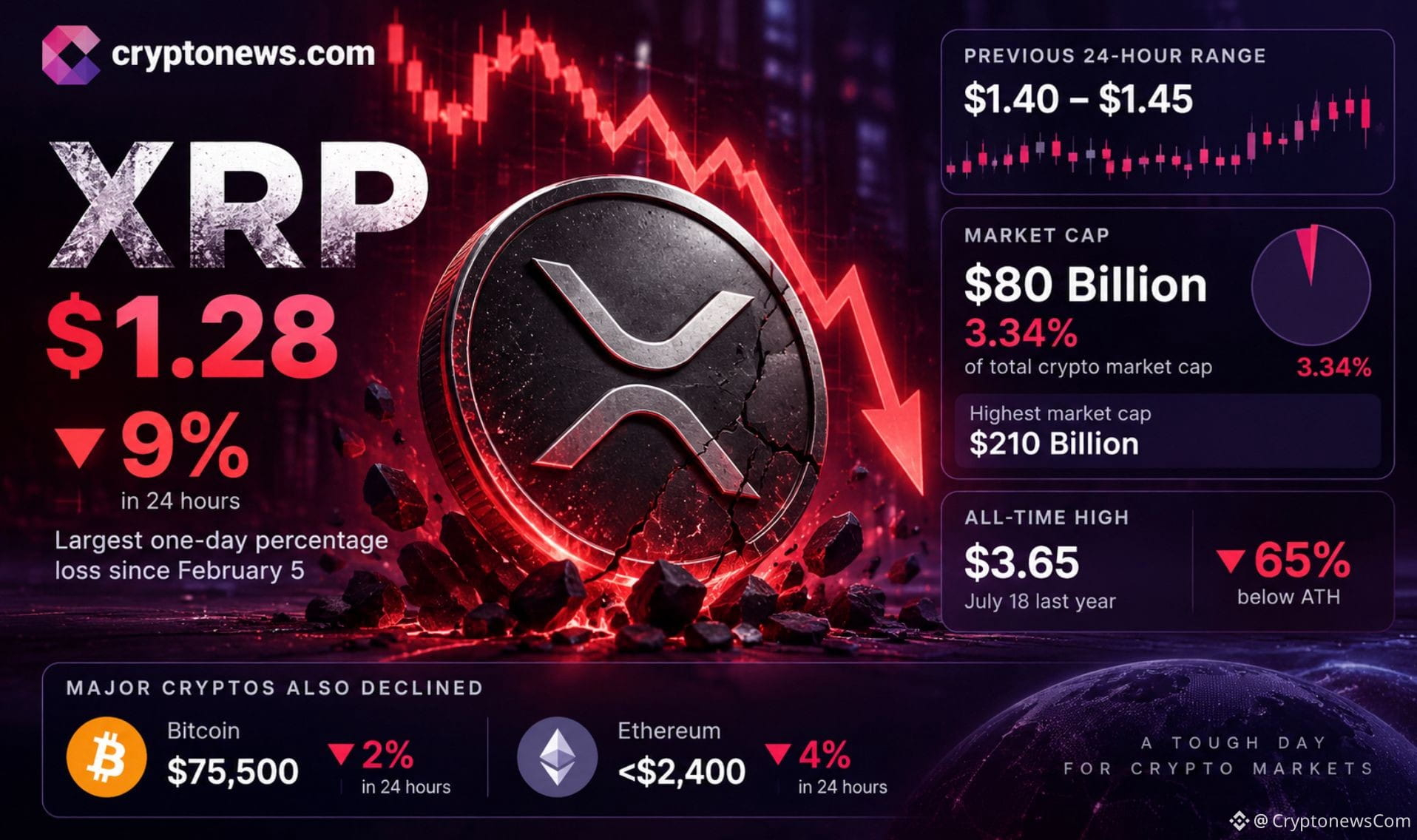
XRP Price Loses 10% as Crypto Weakness DeepensXRP price trades at $1.28, down 9% on the day. The decline was XRP’s largest one-day percentage loss since February 5. The move placed attention on how the token would trade after the sharp fall, as it was trading between $1.40 and $1.45 in the previous 24 hours.
The decline reduced XRP’s market cap to $80 billion, or 3.34% of the total cryptocurrency market cap. XRP’s highest market capitalization was at $210 billion. As this is being reported, the XRP price remains 65% below its all-time high of $3.65, set on July 18 last year.
Other major cryptocurrencies also declined during the session. Bitcoin was last at $75,500, down 2% on the day, while Ethereum traded at under $2,400, down 4%. Those declines provide important market context for XRP’s move.
Trade XRP on Bybit and Get a Chance to Win Our $1,000 USDT AirdropWhy the $1.28-$1.30 Zone Matters for XRP Price?
XRP is trading at $1.28 after another sharp move lower, with the token down 0.7% over the past 24 hours. The decline becomes more significant across longer timeframes, with XRP down 8.2% over seven days and 10.4% over the past month.
Trading activity remains substantial, with XRP recording approximately $80.46 billion in 24-hour volume. Its market capitalization stands at around $5.88 billion, while the latest price action shows a volatile move lower after several failed recovery attempts.
Xrp (XRP)
24h7d30d1yAll time
Discover: The Best Token Presales
At $1.28, XRP is now testing a much lower level following the recent selling pressure. The immediate question for traders is whether buyers can stabilize the price around this area or whether another wave of selling pushes XRP toward fresh lows.
The chart data also shows a volatile recovery attempt followed by another sharp move lower. XRP briefly rebounded from an earlier decline before sellers returned, pushing the price back toward $1.28. That price action makes the current level an important area to watch as the market searches for a potential stabilization point.
For now, the combination of a 10.4% monthly decline and substantial trading volume keeps the focus on whether buyers can absorb the remaining selling pressure.
Earn $50 and Enter $300K Prize Draw on EdgeX
The post XRP Price Loses 10% as Crypto Weakness Deepens appeared first on Cryptonews.
XRP Price Loses 10% as Crypto Weakness Deepens
XRP price trades at $1.28, down 9% on the day. The decline was XRP’s largest one-day percentage loss since February 5. The move placed attention on how the token would trade after the sharp fall, as it was trading between $1.40 and $1.45 in the previous 24 hours.
The decline reduced XRP’s market cap to $80 billion, or 3.34% of the total cryptocurrency market cap. XRP’s highest market capitalization was at $210 billion. As this is being reported, the XRP price remains 65% below its all-time high of $3.65, set on July 18 last year.
Other major cryptocurrencies also declined during the session. Bitcoin was last at $75,500, down 2% on the day, while Ethereum traded at under $2,400, down 4%. Those declines provide important market context for XRP’s move.
Trade XRP on Bybit and Get a Chance to Win Our $1,000 USDT AirdropWhy the $1.28-$1.30 Zone Matters for XRP Price?
XRP is trading at $1.28 after another sharp move lower, with the token down 0.7% over the past 24 hours. The decline becomes more significant across longer timeframes, with XRP down 8.2% over seven days and 10.4% over the past month.
Trading activity remains substantial, with XRP recording approximately $80.46 billion in 24-hour volume. Its market capitalization stands at around $5.88 billion, while the latest price action shows a volatile move lower after several failed recovery attempts.
Xrp (XRP)
24h7d30d1yAll time
Discover: The Best Token Presales
At $1.28, XRP is now testing a much lower level following the recent selling pressure. The immediate question for traders is whether buyers can stabilize the price around this area or whether another wave of selling pushes XRP toward fresh lows.
The chart data also shows a volatile recovery attempt followed by another sharp move lower. XRP briefly rebounded from an earlier decline before sellers returned, pushing the price back toward $1.28. That price action makes the current level an important area to watch as the market searches for a potential stabilization point.
For now, the combination of a 10.4% monthly decline and substantial trading volume keeps the focus on whether buyers can absorb the remaining selling pressure.
Earn $50 and Enter $300K Prize Draw on EdgeX
The post XRP Price Loses 10% as Crypto Weakness Deepens appeared first on Cryptonews.
The decline reduced XRP’s market cap to $80 billion, or 3.34% of the total cryptocurrency market cap. XRP’s highest market capitalization was at $210 billion. As this is being reported, the XRP price remains 65% below its all-time high of $3.65, set on July 18 last year.
Other major cryptocurrencies also declined during the session. Bitcoin was last at $75,500, down 2% on the day, while Ethereum traded at under $2,400, down 4%. Those declines provide important market context for XRP’s move.
Trade XRP on Bybit and Get a Chance to Win Our $1,000 USDT AirdropWhy the $1.28-$1.30 Zone Matters for XRP Price?
XRP is trading at $1.28 after another sharp move lower, with the token down 0.7% over the past 24 hours. The decline becomes more significant across longer timeframes, with XRP down 8.2% over seven days and 10.4% over the past month.
Trading activity remains substantial, with XRP recording approximately $80.46 billion in 24-hour volume. Its market capitalization stands at around $5.88 billion, while the latest price action shows a volatile move lower after several failed recovery attempts.
Xrp (XRP)
24h7d30d1yAll time
Discover: The Best Token Presales
At $1.28, XRP is now testing a much lower level following the recent selling pressure. The immediate question for traders is whether buyers can stabilize the price around this area or whether another wave of selling pushes XRP toward fresh lows.
The chart data also shows a volatile recovery attempt followed by another sharp move lower. XRP briefly rebounded from an earlier decline before sellers returned, pushing the price back toward $1.28. That price action makes the current level an important area to watch as the market searches for a potential stabilization point.
For now, the combination of a 10.4% monthly decline and substantial trading volume keeps the focus on whether buyers can absorb the remaining selling pressure.
Earn $50 and Enter $300K Prize Draw on EdgeX
The post XRP Price Loses 10% as Crypto Weakness Deepens appeared first on Cryptonews.
178

Article
Bitcoin Price Prediction: Another Pressure Looms, But Is a Rate Hike Priced In?Bitcoin sits at $75,500, down by an ugly 2% since yesterday. It’s far from calm, but the bigger number that matters happened in less than 12 hours, and it could change how we see our Bitcoin price prediction. There’s more beneath the surface here than a routine pullback.
Crypto market took a fresh beating after the US Senate failed to advance the Clarity Act, the market structure bill traders had leaned on to justify a break from an 11-month malaise. Bitcoin fell 4% in US trading before stabilizing near $75,500 in London hours.
More than $525 million in bullish leveraged bets got liquidated in the last 24 hours, a forced unwind that tends to leave scar tissue on short-term sentiment. “Until investors gain more certainty on the path of rates globally, risk assets would remain under pressure,” said Pratik Kala, portfolio manager at Apollo Crypto.
Liquidation data, Coinglass
The failed vote lands days before the Fed’s September 16 decision, where inflation prints and surging bond yields have traders bracing for Chairman Kevin Warsh to hike. That combination of a regulatory setback plus rate uncertainty is the real story behind the tape, and it raises the question every desk is now asking: how much of a hike is actually priced in?
Earn $50 and Enter $300K Prize Draw on EdgeXBitcoin Price Prediction: Can BTC Hold $75K This Week?
BTC is trading in a tight band near $75,700–$76,100, translating to a 4% decline for September after starting the month near $78,500. Volume has thinned since the failed breakout above $82,000, and momentum indicators have gone flat. Consolidation is the dominant pattern.
Support clusters at $75,000–$75,400; a decisive close below that zone opens the door to $72,500 and, in a deeper flush, the $69,000–$66,000 region where longer-term moving averages sit. Resistance stacks up at $78,000–$80,000, with a Fibonacci ceiling near $82,793.
Bitcoin (BTC)
24h7d30d1yAll time
A bounce from the $75,000 support could put Bitcoin back on track to retest $82,000, particularly if rate-hike fears prove overdone. However, BTC could remain range-bound between $72,000 and $80,000 as markets digest the Fed decision and reassess the outlook.
The key level remains $75,400, with a break below it potentially opening the door to a move toward $72,500 and weakening the near-term structure. Recent price action and technical mapping both highlight this area as an important level for traders to watch.
Discover: The Best Token Presales
Bitcoin Hyper Targets Early Mover Upside as Bitcoin Tests Key Levels
A 2% single-session drop plus $525 million in liquidations confirms what the range-bound chart has hinted at for weeks: conviction is thin, and Bitcoin at its current market cap needs a genuinely new catalyst to move meaningfully, not just a relief bounce.
For traders looking for asymmetric upside while BTC chops sideways, attention is rotating toward earlier-stage infrastructure plays built on top of Bitcoin itself.
Bitcoin Hyper ($HYPER) is building the first Bitcoin Layer 2 with SVM integration, aiming to process transactions faster than Solana while inheriting Bitcoin’s base-layer security.
Bitcoin Hyper is refining the developer experience with clearer documentation, familiar tooling, predictable APIs, and better feedback for builders.
The goal: make the network easier to understand, connect existing tools, and start building with less friction.
Read the… pic.twitter.com/kAo1w7Xa06
— Bitcoin Hyper (@BTC_Hyper2) September 2, 2026
The presale has raised $33 million at a token price of $0.0136863, with a huge 35% staking rewards live at launch for early participants. Its Decentralized Canonical Bridge targets low-cost, low-latency BTC transfers, solving the slow, non-programmable Bitcoin problem that’s dogged the network for over a decade.
Research Bitcoin Hyper before the round closes.
Trade XRP on Bybit and Get a Chance to Win Our $1,000 USDT Airdrop
The post Bitcoin Price Prediction: Another Pressure Looms, But Is a Rate Hike Priced In? appeared first on Cryptonews.
Bitcoin Price Prediction: Another Pressure Looms, But Is a Rate Hike Priced In?
Bitcoin sits at $75,500, down by an ugly 2% since yesterday. It’s far from calm, but the bigger number that matters happened in less than 12 hours, and it could change how we see our Bitcoin price prediction. There’s more beneath the surface here than a routine pullback.
Crypto market took a fresh beating after the US Senate failed to advance the Clarity Act, the market structure bill traders had leaned on to justify a break from an 11-month malaise. Bitcoin fell 4% in US trading before stabilizing near $75,500 in London hours.
More than $525 million in bullish leveraged bets got liquidated in the last 24 hours, a forced unwind that tends to leave scar tissue on short-term sentiment. “Until investors gain more certainty on the path of rates globally, risk assets would remain under pressure,” said Pratik Kala, portfolio manager at Apollo Crypto.
Liquidation data, Coinglass
The failed vote lands days before the Fed’s September 16 decision, where inflation prints and surging bond yields have traders bracing for Chairman Kevin Warsh to hike. That combination of a regulatory setback plus rate uncertainty is the real story behind the tape, and it raises the question every desk is now asking: how much of a hike is actually priced in?
Earn $50 and Enter $300K Prize Draw on EdgeXBitcoin Price Prediction: Can BTC Hold $75K This Week?
BTC is trading in a tight band near $75,700–$76,100, translating to a 4% decline for September after starting the month near $78,500. Volume has thinned since the failed breakout above $82,000, and momentum indicators have gone flat. Consolidation is the dominant pattern.
Support clusters at $75,000–$75,400; a decisive close below that zone opens the door to $72,500 and, in a deeper flush, the $69,000–$66,000 region where longer-term moving averages sit. Resistance stacks up at $78,000–$80,000, with a Fibonacci ceiling near $82,793.
Bitcoin (BTC)
24h7d30d1yAll time
A bounce from the $75,000 support could put Bitcoin back on track to retest $82,000, particularly if rate-hike fears prove overdone. However, BTC could remain range-bound between $72,000 and $80,000 as markets digest the Fed decision and reassess the outlook.
The key level remains $75,400, with a break below it potentially opening the door to a move toward $72,500 and weakening the near-term structure. Recent price action and technical mapping both highlight this area as an important level for traders to watch.
Discover: The Best Token Presales
Bitcoin Hyper Targets Early Mover Upside as Bitcoin Tests Key Levels
A 2% single-session drop plus $525 million in liquidations confirms what the range-bound chart has hinted at for weeks: conviction is thin, and Bitcoin at its current market cap needs a genuinely new catalyst to move meaningfully, not just a relief bounce.
For traders looking for asymmetric upside while BTC chops sideways, attention is rotating toward earlier-stage infrastructure plays built on top of Bitcoin itself.
Bitcoin Hyper ($HYPER) is building the first Bitcoin Layer 2 with SVM integration, aiming to process transactions faster than Solana while inheriting Bitcoin’s base-layer security.
Bitcoin Hyper is refining the developer experience with clearer documentation, familiar tooling, predictable APIs, and better feedback for builders.
The goal: make the network easier to understand, connect existing tools, and start building with less friction.
Read the… pic.twitter.com/kAo1w7Xa06
— Bitcoin Hyper (@BTC_Hyper2) September 2, 2026
The presale has raised $33 million at a token price of $0.0136863, with a huge 35% staking rewards live at launch for early participants. Its Decentralized Canonical Bridge targets low-cost, low-latency BTC transfers, solving the slow, non-programmable Bitcoin problem that’s dogged the network for over a decade.
Research Bitcoin Hyper before the round closes.
Trade XRP on Bybit and Get a Chance to Win Our $1,000 USDT Airdrop
The post Bitcoin Price Prediction: Another Pressure Looms, But Is a Rate Hike Priced In? appeared first on Cryptonews.
Crypto market took a fresh beating after the US Senate failed to advance the Clarity Act, the market structure bill traders had leaned on to justify a break from an 11-month malaise. Bitcoin fell 4% in US trading before stabilizing near $75,500 in London hours.
More than $525 million in bullish leveraged bets got liquidated in the last 24 hours, a forced unwind that tends to leave scar tissue on short-term sentiment. “Until investors gain more certainty on the path of rates globally, risk assets would remain under pressure,” said Pratik Kala, portfolio manager at Apollo Crypto.
Liquidation data, Coinglass
The failed vote lands days before the Fed’s September 16 decision, where inflation prints and surging bond yields have traders bracing for Chairman Kevin Warsh to hike. That combination of a regulatory setback plus rate uncertainty is the real story behind the tape, and it raises the question every desk is now asking: how much of a hike is actually priced in?
Earn $50 and Enter $300K Prize Draw on EdgeXBitcoin Price Prediction: Can BTC Hold $75K This Week?
BTC is trading in a tight band near $75,700–$76,100, translating to a 4% decline for September after starting the month near $78,500. Volume has thinned since the failed breakout above $82,000, and momentum indicators have gone flat. Consolidation is the dominant pattern.
Support clusters at $75,000–$75,400; a decisive close below that zone opens the door to $72,500 and, in a deeper flush, the $69,000–$66,000 region where longer-term moving averages sit. Resistance stacks up at $78,000–$80,000, with a Fibonacci ceiling near $82,793.
Bitcoin (BTC)
24h7d30d1yAll time
A bounce from the $75,000 support could put Bitcoin back on track to retest $82,000, particularly if rate-hike fears prove overdone. However, BTC could remain range-bound between $72,000 and $80,000 as markets digest the Fed decision and reassess the outlook.
The key level remains $75,400, with a break below it potentially opening the door to a move toward $72,500 and weakening the near-term structure. Recent price action and technical mapping both highlight this area as an important level for traders to watch.
Discover: The Best Token Presales
Bitcoin Hyper Targets Early Mover Upside as Bitcoin Tests Key Levels
A 2% single-session drop plus $525 million in liquidations confirms what the range-bound chart has hinted at for weeks: conviction is thin, and Bitcoin at its current market cap needs a genuinely new catalyst to move meaningfully, not just a relief bounce.
For traders looking for asymmetric upside while BTC chops sideways, attention is rotating toward earlier-stage infrastructure plays built on top of Bitcoin itself.
Bitcoin Hyper ($HYPER) is building the first Bitcoin Layer 2 with SVM integration, aiming to process transactions faster than Solana while inheriting Bitcoin’s base-layer security.
Bitcoin Hyper is refining the developer experience with clearer documentation, familiar tooling, predictable APIs, and better feedback for builders.
The goal: make the network easier to understand, connect existing tools, and start building with less friction.
Read the… pic.twitter.com/kAo1w7Xa06
— Bitcoin Hyper (@BTC_Hyper2) September 2, 2026
The presale has raised $33 million at a token price of $0.0136863, with a huge 35% staking rewards live at launch for early participants. Its Decentralized Canonical Bridge targets low-cost, low-latency BTC transfers, solving the slow, non-programmable Bitcoin problem that’s dogged the network for over a decade.
Research Bitcoin Hyper before the round closes.
Trade XRP on Bybit and Get a Chance to Win Our $1,000 USDT Airdrop
The post Bitcoin Price Prediction: Another Pressure Looms, But Is a Rate Hike Priced In? appeared first on Cryptonews.
91
Article
Who are Hefu Chai and Jerry Xiang in the Robinhood Insider CaseFederal prosecutors charged former Robinhood Crypto engineers Hefu Chai, 36, and Huaisong “Jerry” Xiang, 30, with one count of commodities fraud and one count of wire fraud each, alleging they used confidential information about upcoming Robinhood token listings to trade related perpetual futures on Hyperliquid before those listings went public.
Each defendant allegedly profited more than $50,000 between 2025 and 2026, according to the U.S. Attorney’s Office for the Southern District of New York.
Two Robinhood Engineers Charged With Trading on Confidential Crypto Listing Information
The U.S. Attorney’s Office for the Southern District of New York charged Robinhood engineers Hefu Chai and Huaisong Xiang with commodities fraud and wire fraud for allegedly using… pic.twitter.com/ilNUqbJJj4
— Wu Blockchain (@WuBlockchain) September 15, 2026
The case matters beyond the dollar figures because it extends crypto insider-trading enforcement to decentralized derivatives markets, not just spot exchanges.
Prosecutors are applying commodities fraud and wire fraud theories to trading on a venue with no central listing desk or traditional KYC gatekeeper, signaling that jurisdiction over misappropriated information does not stop at a platform’s front door.
Supercharge Your Trading in 2026 With BloFin AI Trading BotsHow Did the Robinhood Engineers Use Hyperliquid to Conduct Insider Trading?
This is the poorest insider trading I’ve ever seen
Hefu Chai and Huaisong Xiang were engineers at Robinhood, and they made $50,000 each off insider trading
That is extremely weak, guys
I wouldn't even lift a finger for that kind of pocket change
It's beyond stupid to blow a… https://t.co/576iNc7cZv pic.twitter.com/rMbNkVs5UV
— ProMint (@ProMint_X) September 15, 2026
On September 15, 2026, the U.S. Attorney’s Office for the Southern District of New York announced charges against Chai from Menlo Park, California, and Xiang from Jersey City, New Jersey.
Both engineers at Robinhood allegedly accessed nonpublic information about upcoming cryptocurrency listings and profited by buying perpetual futures on Hyperliquid before public announcements.
The DOJ claims this violated their confidentiality obligations for personal gain. U.S. Attorney Jamie McDonald emphasized that corporate insiders cannot evade laws by trading derivatives.
The commodities fraud charge carries a maximum of 10 years, while the wire fraud charge could result in up to 20 years in prison if convicted. Robinhood said it is committed to market integrity and reported the matter to authorities, cooperating fully with the investigation.
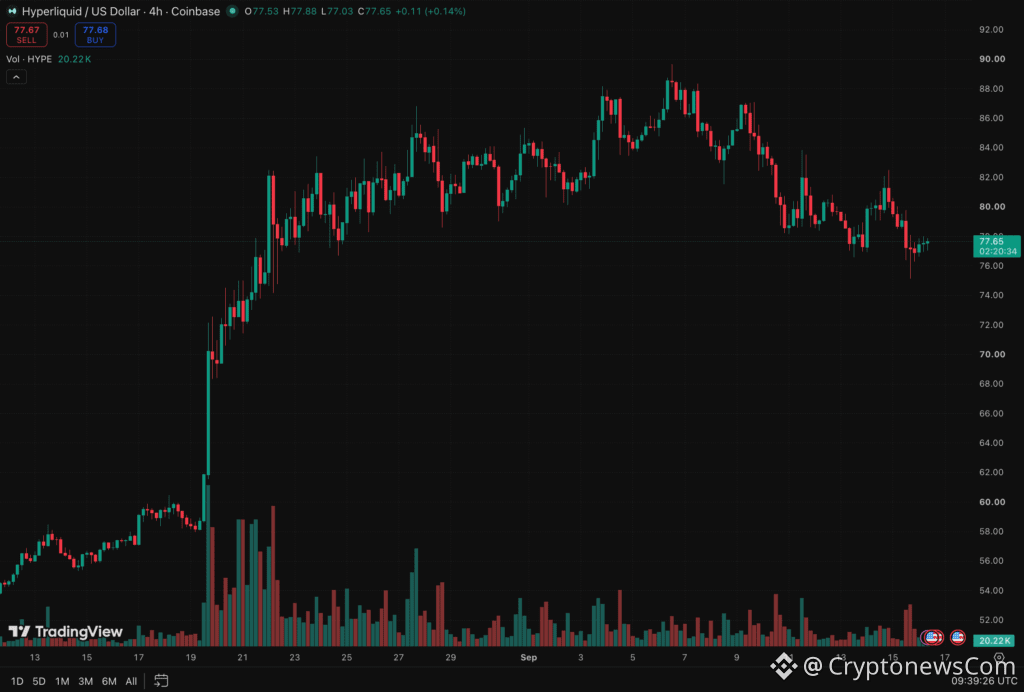
Earn $50 and Enter $300K Prize Draw on EdgeXWhy Perps and the Legal Theory Matter in the Insider Trading CaseSOURCE: TradingView
Perpetual futures let traders take leveraged bets on an asset’s price without holding the token, and they never expire as long as funding payments keep them aligned with the spot price.
This makes them ideal for front-running listing announcements, since there’s no need to source the actual token and no custody risk.
The DOJ is pursuing this case under the Commodity Exchange Act and wire fraud statutes instead of securities fraud, allowing it to address derivatives trading on decentralized platforms without debating the status of underlying tokens.
This approach differs from the earlier Coinbase case involving Ishan Wahi, who was charged for sharing confidential token-listing information.
Hyperliquid, a major decentralized platform for perpetual futures, is already under regulatory scrutiny, and this case adds a criminal dimension.
The takeaway for traders is clear: pre-listing perp flow on decentralized venues now falls within the DOJ’s focus, and insiders trading through derivatives may face risks similar to those trading spot tokens directly.
The charges against Chai and Xiang are allegations only, and both defendants are presumed innocent unless proven guilty. No trial date or plea has been reported.
Discover: The Best Token Presales
The post Who are Hefu Chai and Jerry Xiang in the Robinhood Insider Case appeared first on Cryptonews.
Who are Hefu Chai and Jerry Xiang in the Robinhood Insider Case
Federal prosecutors charged former Robinhood Crypto engineers Hefu Chai, 36, and Huaisong “Jerry” Xiang, 30, with one count of commodities fraud and one count of wire fraud each, alleging they used confidential information about upcoming Robinhood token listings to trade related perpetual futures on Hyperliquid before those listings went public.
Each defendant allegedly profited more than $50,000 between 2025 and 2026, according to the U.S. Attorney’s Office for the Southern District of New York.
Two Robinhood Engineers Charged With Trading on Confidential Crypto Listing Information
The U.S. Attorney’s Office for the Southern District of New York charged Robinhood engineers Hefu Chai and Huaisong Xiang with commodities fraud and wire fraud for allegedly using… pic.twitter.com/ilNUqbJJj4
— Wu Blockchain (@WuBlockchain) September 15, 2026
The case matters beyond the dollar figures because it extends crypto insider-trading enforcement to decentralized derivatives markets, not just spot exchanges.
Prosecutors are applying commodities fraud and wire fraud theories to trading on a venue with no central listing desk or traditional KYC gatekeeper, signaling that jurisdiction over misappropriated information does not stop at a platform’s front door.
Supercharge Your Trading in 2026 With BloFin AI Trading BotsHow Did the Robinhood Engineers Use Hyperliquid to Conduct Insider Trading?
This is the poorest insider trading I’ve ever seen
Hefu Chai and Huaisong Xiang were engineers at Robinhood, and they made $50,000 each off insider trading
That is extremely weak, guys
I wouldn't even lift a finger for that kind of pocket change
It's beyond stupid to blow a… https://t.co/576iNc7cZv pic.twitter.com/rMbNkVs5UV
— ProMint (@ProMint_X) September 15, 2026
On September 15, 2026, the U.S. Attorney’s Office for the Southern District of New York announced charges against Chai from Menlo Park, California, and Xiang from Jersey City, New Jersey.
Both engineers at Robinhood allegedly accessed nonpublic information about upcoming cryptocurrency listings and profited by buying perpetual futures on Hyperliquid before public announcements.
The DOJ claims this violated their confidentiality obligations for personal gain. U.S. Attorney Jamie McDonald emphasized that corporate insiders cannot evade laws by trading derivatives.
The commodities fraud charge carries a maximum of 10 years, while the wire fraud charge could result in up to 20 years in prison if convicted. Robinhood said it is committed to market integrity and reported the matter to authorities, cooperating fully with the investigation.
Earn $50 and Enter $300K Prize Draw on EdgeXWhy Perps and the Legal Theory Matter in the Insider Trading CaseSOURCE: TradingView
Perpetual futures let traders take leveraged bets on an asset’s price without holding the token, and they never expire as long as funding payments keep them aligned with the spot price.
This makes them ideal for front-running listing announcements, since there’s no need to source the actual token and no custody risk.
The DOJ is pursuing this case under the Commodity Exchange Act and wire fraud statutes instead of securities fraud, allowing it to address derivatives trading on decentralized platforms without debating the status of underlying tokens.
This approach differs from the earlier Coinbase case involving Ishan Wahi, who was charged for sharing confidential token-listing information.
Hyperliquid, a major decentralized platform for perpetual futures, is already under regulatory scrutiny, and this case adds a criminal dimension.
The takeaway for traders is clear: pre-listing perp flow on decentralized venues now falls within the DOJ’s focus, and insiders trading through derivatives may face risks similar to those trading spot tokens directly.
The charges against Chai and Xiang are allegations only, and both defendants are presumed innocent unless proven guilty. No trial date or plea has been reported.
Discover: The Best Token Presales
The post Who are Hefu Chai and Jerry Xiang in the Robinhood Insider Case appeared first on Cryptonews.
Each defendant allegedly profited more than $50,000 between 2025 and 2026, according to the U.S. Attorney’s Office for the Southern District of New York.
Two Robinhood Engineers Charged With Trading on Confidential Crypto Listing Information
The U.S. Attorney’s Office for the Southern District of New York charged Robinhood engineers Hefu Chai and Huaisong Xiang with commodities fraud and wire fraud for allegedly using… pic.twitter.com/ilNUqbJJj4
— Wu Blockchain (@WuBlockchain) September 15, 2026
The case matters beyond the dollar figures because it extends crypto insider-trading enforcement to decentralized derivatives markets, not just spot exchanges.
Prosecutors are applying commodities fraud and wire fraud theories to trading on a venue with no central listing desk or traditional KYC gatekeeper, signaling that jurisdiction over misappropriated information does not stop at a platform’s front door.
Supercharge Your Trading in 2026 With BloFin AI Trading BotsHow Did the Robinhood Engineers Use Hyperliquid to Conduct Insider Trading?
This is the poorest insider trading I’ve ever seen
Hefu Chai and Huaisong Xiang were engineers at Robinhood, and they made $50,000 each off insider trading
That is extremely weak, guys
I wouldn't even lift a finger for that kind of pocket change
It's beyond stupid to blow a… https://t.co/576iNc7cZv pic.twitter.com/rMbNkVs5UV
— ProMint (@ProMint_X) September 15, 2026
On September 15, 2026, the U.S. Attorney’s Office for the Southern District of New York announced charges against Chai from Menlo Park, California, and Xiang from Jersey City, New Jersey.
Both engineers at Robinhood allegedly accessed nonpublic information about upcoming cryptocurrency listings and profited by buying perpetual futures on Hyperliquid before public announcements.
The DOJ claims this violated their confidentiality obligations for personal gain. U.S. Attorney Jamie McDonald emphasized that corporate insiders cannot evade laws by trading derivatives.
The commodities fraud charge carries a maximum of 10 years, while the wire fraud charge could result in up to 20 years in prison if convicted. Robinhood said it is committed to market integrity and reported the matter to authorities, cooperating fully with the investigation.
Earn $50 and Enter $300K Prize Draw on EdgeXWhy Perps and the Legal Theory Matter in the Insider Trading CaseSOURCE: TradingView
Perpetual futures let traders take leveraged bets on an asset’s price without holding the token, and they never expire as long as funding payments keep them aligned with the spot price.
This makes them ideal for front-running listing announcements, since there’s no need to source the actual token and no custody risk.
The DOJ is pursuing this case under the Commodity Exchange Act and wire fraud statutes instead of securities fraud, allowing it to address derivatives trading on decentralized platforms without debating the status of underlying tokens.
This approach differs from the earlier Coinbase case involving Ishan Wahi, who was charged for sharing confidential token-listing information.
Hyperliquid, a major decentralized platform for perpetual futures, is already under regulatory scrutiny, and this case adds a criminal dimension.
The takeaway for traders is clear: pre-listing perp flow on decentralized venues now falls within the DOJ’s focus, and insiders trading through derivatives may face risks similar to those trading spot tokens directly.
The charges against Chai and Xiang are allegations only, and both defendants are presumed innocent unless proven guilty. No trial date or plea has been reported.
Discover: The Best Token Presales
The post Who are Hefu Chai and Jerry Xiang in the Robinhood Insider Case appeared first on Cryptonews.
71

Article
Ethereum Price Prediction: ETH Shrugs Off CLARITY Act and Fed Decision, Could Break $3,000Ethereum sits at $2,400, dropping a brutal 4% on the day amid its bullish price prediction a week earlier. The largest altcoin absorbed a legislative gut-punch and is staring down a Fed decision that would rattle most assets, yet whale wallets are still buying.
The CLARITY Act failed to clear the 60-vote cloture threshold in the Senate on Tuesday, triggering an immediate 5% drop toward $2,400 as regulatory clarity got pushed further down the road. Despite that, the setback hasn’t broken the underlying bid.
Exchange netflow data shows reserves falling by 159K ETH over five days, while wallets holding 10K-100K ETH, or the whale cohort, added roughly 200K ETH to their stacks over the past week. Retail, meanwhile, dumped about 192K ETH, continuing a distribution pattern that’s held since January.
Add in $121 million of spot ETH ETF inflows on Monday, and $216.4 million on Friday, and the divergence between institutional accumulation and retail selling becomes the real story heading into Thursday’s FOMC decision.
Trade ETH on Bybit and Get a Chance to Win Our $1,000 USDT AirdropEthereum Price Prediction: Will ETH Hit $3,000 This Week?
ETH is consolidating in a triangle pattern between support at $2,405–$2,485 and resistance at $2,535–$2,600. The 20-day EMA near $2,425 has held as a floor through the recent pullback, and volume has stayed constructive rather than capitulatory, a sign this dip is more consolidation than reversal.
A decisive close above $2,600 would confirm the breakout, opening a run toward the $2,800–$3,000 zone that Bitget’s analysts are flagging as the next psychological target. If ETH instead grinds sideways, the $2,400–$2,550 range could hold until the Fed decision clears the calendar.
Ethereum (ETH)
24h7d30d1yAll time
A break below $2,350 would invalidate the setup and reopen the August lows near $1,880. With a 92.3% priced-in probability of a 25bp hike per the CME FedWatch tool. Thursday’s outcome is largely baked in, and the real risk is the accompanying commentary. Full breakdown available in this Ethereum price prediction.
Earn $50 and Enter $300K Prize Draw on EdgeXLiquidChain Targets Early Mover Upside as Ethereum Tests Key Levels
ETH holders riding this consolidation are positioned reasonably well, but let’s be direct: a move from $2,400 to $3,000 on a trillion-dollar-plus asset is a solid 25% swing, not a multi-bagger. For traders chasing asymmetric upside, that math pushes attention toward earlier-stage infrastructure plays instead.
The Order rests. The architecture never sleeps. ⟁https://t.co/vqvBcdSQYC pic.twitter.com/bNof4XHJ58
— LiquidChain (@getliquidchain) September 9, 2026
That’s the lane LiquidChain ($LIQUID) is building in. Liquid is a Layer 3 network fusing Bitcoin, Ethereum, and Solana liquidity into one execution environment. The presale is priced at $0.014956 with $960K raised so far.
Its pitch centers on a Unified Liquidity Layer and Single-Step Execution, letting developers deploy once and tap all three ecosystems rather than fragmenting liquidity across chains. Verifiable Settlement rounds out the architecture.
Research LiquidChain before the next price hike.
Discover: The Best Token Presales
The post Ethereum Price Prediction: ETH Shrugs Off CLARITY Act and Fed Decision, Could Break $3,000 appeared first on Cryptonews.
Ethereum Price Prediction: ETH Shrugs Off CLARITY Act and Fed Decision, Could Break $3,000
Ethereum sits at $2,400, dropping a brutal 4% on the day amid its bullish price prediction a week earlier. The largest altcoin absorbed a legislative gut-punch and is staring down a Fed decision that would rattle most assets, yet whale wallets are still buying.
The CLARITY Act failed to clear the 60-vote cloture threshold in the Senate on Tuesday, triggering an immediate 5% drop toward $2,400 as regulatory clarity got pushed further down the road. Despite that, the setback hasn’t broken the underlying bid.
Exchange netflow data shows reserves falling by 159K ETH over five days, while wallets holding 10K-100K ETH, or the whale cohort, added roughly 200K ETH to their stacks over the past week. Retail, meanwhile, dumped about 192K ETH, continuing a distribution pattern that’s held since January.
Add in $121 million of spot ETH ETF inflows on Monday, and $216.4 million on Friday, and the divergence between institutional accumulation and retail selling becomes the real story heading into Thursday’s FOMC decision.
Trade ETH on Bybit and Get a Chance to Win Our $1,000 USDT AirdropEthereum Price Prediction: Will ETH Hit $3,000 This Week?
ETH is consolidating in a triangle pattern between support at $2,405–$2,485 and resistance at $2,535–$2,600. The 20-day EMA near $2,425 has held as a floor through the recent pullback, and volume has stayed constructive rather than capitulatory, a sign this dip is more consolidation than reversal.
A decisive close above $2,600 would confirm the breakout, opening a run toward the $2,800–$3,000 zone that Bitget’s analysts are flagging as the next psychological target. If ETH instead grinds sideways, the $2,400–$2,550 range could hold until the Fed decision clears the calendar.
Ethereum (ETH)
24h7d30d1yAll time
A break below $2,350 would invalidate the setup and reopen the August lows near $1,880. With a 92.3% priced-in probability of a 25bp hike per the CME FedWatch tool. Thursday’s outcome is largely baked in, and the real risk is the accompanying commentary. Full breakdown available in this Ethereum price prediction.
Earn $50 and Enter $300K Prize Draw on EdgeXLiquidChain Targets Early Mover Upside as Ethereum Tests Key Levels
ETH holders riding this consolidation are positioned reasonably well, but let’s be direct: a move from $2,400 to $3,000 on a trillion-dollar-plus asset is a solid 25% swing, not a multi-bagger. For traders chasing asymmetric upside, that math pushes attention toward earlier-stage infrastructure plays instead.
The Order rests. The architecture never sleeps. ⟁https://t.co/vqvBcdSQYC pic.twitter.com/bNof4XHJ58
— LiquidChain (@getliquidchain) September 9, 2026
That’s the lane LiquidChain ($LIQUID) is building in. Liquid is a Layer 3 network fusing Bitcoin, Ethereum, and Solana liquidity into one execution environment. The presale is priced at $0.014956 with $960K raised so far.
Its pitch centers on a Unified Liquidity Layer and Single-Step Execution, letting developers deploy once and tap all three ecosystems rather than fragmenting liquidity across chains. Verifiable Settlement rounds out the architecture.
Research LiquidChain before the next price hike.
Discover: The Best Token Presales
The post Ethereum Price Prediction: ETH Shrugs Off CLARITY Act and Fed Decision, Could Break $3,000 appeared first on Cryptonews.
The CLARITY Act failed to clear the 60-vote cloture threshold in the Senate on Tuesday, triggering an immediate 5% drop toward $2,400 as regulatory clarity got pushed further down the road. Despite that, the setback hasn’t broken the underlying bid.
Exchange netflow data shows reserves falling by 159K ETH over five days, while wallets holding 10K-100K ETH, or the whale cohort, added roughly 200K ETH to their stacks over the past week. Retail, meanwhile, dumped about 192K ETH, continuing a distribution pattern that’s held since January.
Add in $121 million of spot ETH ETF inflows on Monday, and $216.4 million on Friday, and the divergence between institutional accumulation and retail selling becomes the real story heading into Thursday’s FOMC decision.
Trade ETH on Bybit and Get a Chance to Win Our $1,000 USDT AirdropEthereum Price Prediction: Will ETH Hit $3,000 This Week?
ETH is consolidating in a triangle pattern between support at $2,405–$2,485 and resistance at $2,535–$2,600. The 20-day EMA near $2,425 has held as a floor through the recent pullback, and volume has stayed constructive rather than capitulatory, a sign this dip is more consolidation than reversal.
A decisive close above $2,600 would confirm the breakout, opening a run toward the $2,800–$3,000 zone that Bitget’s analysts are flagging as the next psychological target. If ETH instead grinds sideways, the $2,400–$2,550 range could hold until the Fed decision clears the calendar.
Ethereum (ETH)
24h7d30d1yAll time
A break below $2,350 would invalidate the setup and reopen the August lows near $1,880. With a 92.3% priced-in probability of a 25bp hike per the CME FedWatch tool. Thursday’s outcome is largely baked in, and the real risk is the accompanying commentary. Full breakdown available in this Ethereum price prediction.
Earn $50 and Enter $300K Prize Draw on EdgeXLiquidChain Targets Early Mover Upside as Ethereum Tests Key Levels
ETH holders riding this consolidation are positioned reasonably well, but let’s be direct: a move from $2,400 to $3,000 on a trillion-dollar-plus asset is a solid 25% swing, not a multi-bagger. For traders chasing asymmetric upside, that math pushes attention toward earlier-stage infrastructure plays instead.
The Order rests. The architecture never sleeps. ⟁https://t.co/vqvBcdSQYC pic.twitter.com/bNof4XHJ58
— LiquidChain (@getliquidchain) September 9, 2026
That’s the lane LiquidChain ($LIQUID) is building in. Liquid is a Layer 3 network fusing Bitcoin, Ethereum, and Solana liquidity into one execution environment. The presale is priced at $0.014956 with $960K raised so far.
Its pitch centers on a Unified Liquidity Layer and Single-Step Execution, letting developers deploy once and tap all three ecosystems rather than fragmenting liquidity across chains. Verifiable Settlement rounds out the architecture.
Research LiquidChain before the next price hike.
Discover: The Best Token Presales
The post Ethereum Price Prediction: ETH Shrugs Off CLARITY Act and Fed Decision, Could Break $3,000 appeared first on Cryptonews.
82
Article
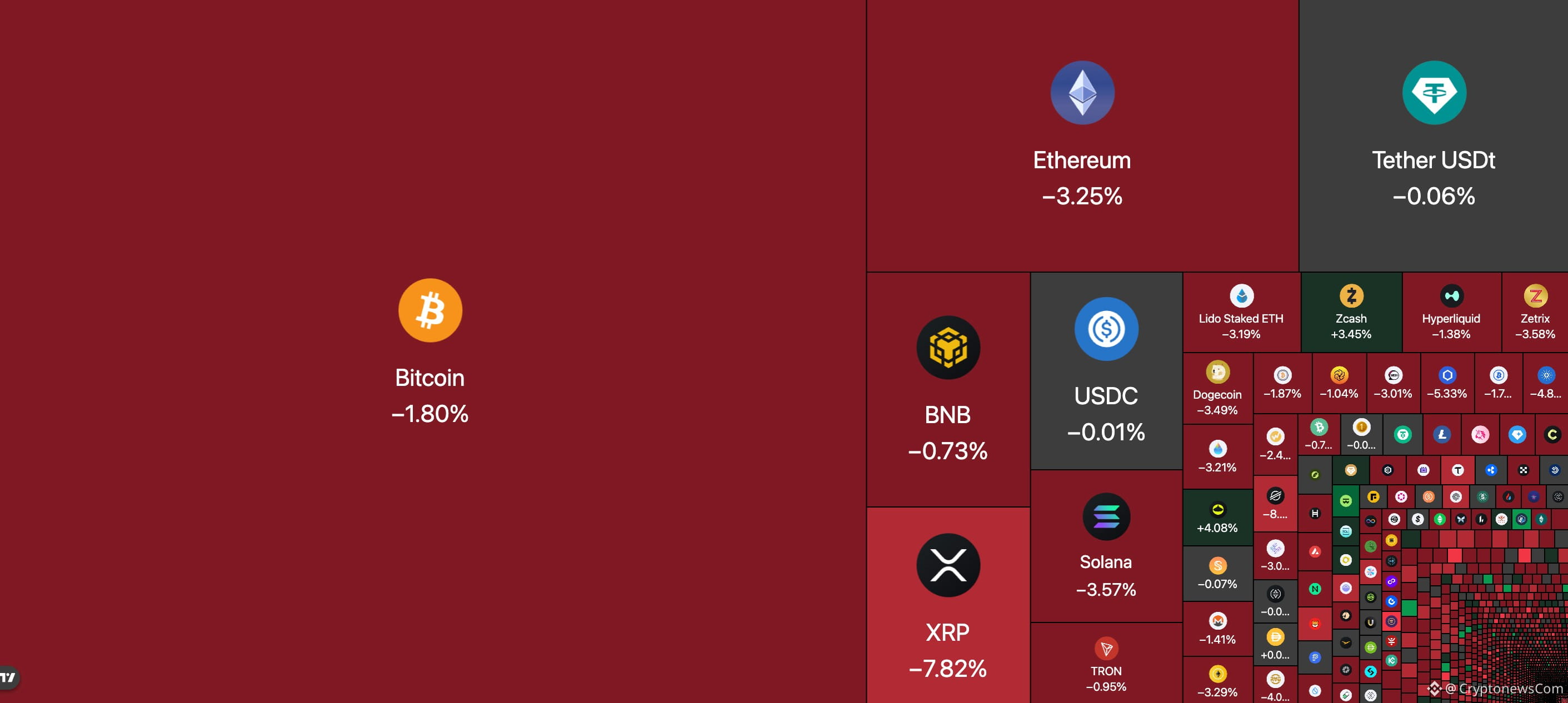
Bitcoin Price Stabilizes Near $75,900 After 4% US-Session DropBitcoin price fell 4% in US trading and stabilized at around $75,900 as of 8 a.m. in London. The decline came after the US failed to advance a key crypto regulatory bill, weakening industry sentiment ahead of a potential Federal Reserve interest-rate hike.
The combination puts regulatory developments and monetary policy at the center of the market backdrop. We see that the whole crypto market was also weaker after steep declines during the US session.
Crypto Heatmap, Tradingview
The immediate regulatory issue was the US failure to advance a key crypto bill. Reuters had reported before the vote that the Senate was preparing to take a procedural vote on the Clarity Act, a measure that could help determine the bill’s fate. The legislation would address legal ambiguity around whether tokens qualify as securities or commodities, according to Reuters.
That setback arrived while investors were also assessing the prospect of higher US interest rates. Bloomberg described the regulatory disappointment as weighing on sentiment just ahead of a potential Fed hike. The two developments provided the context for Bitcoin’s US-session decline and the broader weakness across crypto assets.
Reuters reported on Sept. 14 that traders assigned an 85% likelihood to a rate hike on Wednesday following hot inflation data. That figure was a snapshot of expectations reported at the time, rather than a permanent measure of market consensus.
Earn $50 and Enter $300K Prize Draw on EdgeXWhat the Rate Odds Do, and Do Not?
Rate probabilities reflect market pricing and can change as new economic information arrives. CME FedWatch says its probabilities of future Federal Reserve target-rate changes are implied by prices for 30-Day Fed Funds futures. Its methodology makes it a reference for how interest-rate traders are pricing upcoming policy decisions.
Fed Watch, CME Group
The available reporting supports the existence of elevated hike expectations, but it does not establish a precise causal chain between any one market variable and Bitcoin’s 4% decline. The reported backdrop was a potential rate increase alongside the failure to advance the US crypto bill.
Reuters also noted that elevated inflation had raised expectations of a Fed hike and that long-end bond yields were nearing 5%, creating more competition for capital. The report described a rate increase as a challenge for speculative assets, including Bitcoin.
Trade the Odds and Make Your Prediction Count With $25 For Free on Kalshi
The Next Bitcoin Price Test
The Federal Reserve decision is the next scheduled policy event highlighted in the reporting. The decision would test the optimism that had returned to Bitcoin after its late-August rebound. Bloomberg similarly identified a potential Fed rate increase as an immediate source of pressure for the crypto market.
Bitcoin (BTC)
24h7d30d1yAll time
The regulatory question remains separate from the rate decision. The failed effort to advance the bill leaves the legislation’s future unresolved, while the Fed’s policy decision concerns the interest-rate outlook. Together, those issues frame the near-term conditions facing Bitcoin after its decline in US trading.
Bitcoin’s level near $75,900 at 8 a.m. in London marked the point of stabilization reported by Bloomberg. The broader crypto market, however, remained weaker after the steep US-session declines.
Discover: The Best Token Presales
The post Bitcoin Price Stabilizes Near $75,900 After 4% US-Session Drop appeared first on Cryptonews.
Bitcoin Price Stabilizes Near $75,900 After 4% US-Session Drop
Bitcoin price fell 4% in US trading and stabilized at around $75,900 as of 8 a.m. in London. The decline came after the US failed to advance a key crypto regulatory bill, weakening industry sentiment ahead of a potential Federal Reserve interest-rate hike.
The combination puts regulatory developments and monetary policy at the center of the market backdrop. We see that the whole crypto market was also weaker after steep declines during the US session.
Crypto Heatmap, Tradingview
The immediate regulatory issue was the US failure to advance a key crypto bill. Reuters had reported before the vote that the Senate was preparing to take a procedural vote on the Clarity Act, a measure that could help determine the bill’s fate. The legislation would address legal ambiguity around whether tokens qualify as securities or commodities, according to Reuters.
That setback arrived while investors were also assessing the prospect of higher US interest rates. Bloomberg described the regulatory disappointment as weighing on sentiment just ahead of a potential Fed hike. The two developments provided the context for Bitcoin’s US-session decline and the broader weakness across crypto assets.
Reuters reported on Sept. 14 that traders assigned an 85% likelihood to a rate hike on Wednesday following hot inflation data. That figure was a snapshot of expectations reported at the time, rather than a permanent measure of market consensus.
Earn $50 and Enter $300K Prize Draw on EdgeXWhat the Rate Odds Do, and Do Not?
Rate probabilities reflect market pricing and can change as new economic information arrives. CME FedWatch says its probabilities of future Federal Reserve target-rate changes are implied by prices for 30-Day Fed Funds futures. Its methodology makes it a reference for how interest-rate traders are pricing upcoming policy decisions.
Fed Watch, CME Group
The available reporting supports the existence of elevated hike expectations, but it does not establish a precise causal chain between any one market variable and Bitcoin’s 4% decline. The reported backdrop was a potential rate increase alongside the failure to advance the US crypto bill.
Reuters also noted that elevated inflation had raised expectations of a Fed hike and that long-end bond yields were nearing 5%, creating more competition for capital. The report described a rate increase as a challenge for speculative assets, including Bitcoin.
Trade the Odds and Make Your Prediction Count With $25 For Free on Kalshi
The Next Bitcoin Price Test
The Federal Reserve decision is the next scheduled policy event highlighted in the reporting. The decision would test the optimism that had returned to Bitcoin after its late-August rebound. Bloomberg similarly identified a potential Fed rate increase as an immediate source of pressure for the crypto market.
Bitcoin (BTC)
24h7d30d1yAll time
The regulatory question remains separate from the rate decision. The failed effort to advance the bill leaves the legislation’s future unresolved, while the Fed’s policy decision concerns the interest-rate outlook. Together, those issues frame the near-term conditions facing Bitcoin after its decline in US trading.
Bitcoin’s level near $75,900 at 8 a.m. in London marked the point of stabilization reported by Bloomberg. The broader crypto market, however, remained weaker after the steep US-session declines.
Discover: The Best Token Presales
The post Bitcoin Price Stabilizes Near $75,900 After 4% US-Session Drop appeared first on Cryptonews.
The combination puts regulatory developments and monetary policy at the center of the market backdrop. We see that the whole crypto market was also weaker after steep declines during the US session.
Crypto Heatmap, Tradingview
The immediate regulatory issue was the US failure to advance a key crypto bill. Reuters had reported before the vote that the Senate was preparing to take a procedural vote on the Clarity Act, a measure that could help determine the bill’s fate. The legislation would address legal ambiguity around whether tokens qualify as securities or commodities, according to Reuters.
That setback arrived while investors were also assessing the prospect of higher US interest rates. Bloomberg described the regulatory disappointment as weighing on sentiment just ahead of a potential Fed hike. The two developments provided the context for Bitcoin’s US-session decline and the broader weakness across crypto assets.
Reuters reported on Sept. 14 that traders assigned an 85% likelihood to a rate hike on Wednesday following hot inflation data. That figure was a snapshot of expectations reported at the time, rather than a permanent measure of market consensus.
Earn $50 and Enter $300K Prize Draw on EdgeXWhat the Rate Odds Do, and Do Not?
Rate probabilities reflect market pricing and can change as new economic information arrives. CME FedWatch says its probabilities of future Federal Reserve target-rate changes are implied by prices for 30-Day Fed Funds futures. Its methodology makes it a reference for how interest-rate traders are pricing upcoming policy decisions.
Fed Watch, CME Group
The available reporting supports the existence of elevated hike expectations, but it does not establish a precise causal chain between any one market variable and Bitcoin’s 4% decline. The reported backdrop was a potential rate increase alongside the failure to advance the US crypto bill.
Reuters also noted that elevated inflation had raised expectations of a Fed hike and that long-end bond yields were nearing 5%, creating more competition for capital. The report described a rate increase as a challenge for speculative assets, including Bitcoin.
Trade the Odds and Make Your Prediction Count With $25 For Free on Kalshi
The Next Bitcoin Price Test
The Federal Reserve decision is the next scheduled policy event highlighted in the reporting. The decision would test the optimism that had returned to Bitcoin after its late-August rebound. Bloomberg similarly identified a potential Fed rate increase as an immediate source of pressure for the crypto market.
Bitcoin (BTC)
24h7d30d1yAll time
The regulatory question remains separate from the rate decision. The failed effort to advance the bill leaves the legislation’s future unresolved, while the Fed’s policy decision concerns the interest-rate outlook. Together, those issues frame the near-term conditions facing Bitcoin after its decline in US trading.
Bitcoin’s level near $75,900 at 8 a.m. in London marked the point of stabilization reported by Bloomberg. The broader crypto market, however, remained weaker after the steep US-session declines.
Discover: The Best Token Presales
The post Bitcoin Price Stabilizes Near $75,900 After 4% US-Session Drop appeared first on Cryptonews.
149
XRP Price Prediction: 9% Drop in 12 Hours, Can XRP Survive CLARITY Act Setback?XRP is changing hands at $1.30, after a brutal overnight leg that saw the token shed more than 9% in less than 12 hours. XRP is volatile. But now, will $1.30 holds as anything more than a bounce point before the next leg down? Here’s our full XRP price prediction.
A failed procedural vote on the CLARITY Act last night has reignited the regulatory ambiguity XRP has spent years trying to shed. Ripple CEO Brad Garlinghouse called the setback “stings’ in a same-day post on X, a rare public admission of frustration from a CEO usually disciplined about messaging.
1/ This one stings. Our team gave everything we had to get the Clarity Act across the finish line. So did most of the industry. This was an opportunity bigger than Ripple or one company – we did this for the industry, for consumers and to cement the US’s position as the crypto…
— Brad Garlinghouse (@bgarlinghouse) September 15, 2026
Bitcoin dipped briefly below $75,000 before recovering, while Ethereum, BNB, and Solana slid 3-5%, confirming this was a market-wide risk-off event, not an XRP-specific breakdown.
Still, XRP’s decline outpaced the majors by a wide margin. That elasticity is the story. Regulatory clarity was priced in; its absence is now being priced out.
Earn $50 and Enter $300K Prize Draw on EdgeXXRP Price Prediction: Can Ripple Recover and Run to $1.50 This Week?
XRP trades at $1.30, down from an intraday low near $1.27 after the CLARITY Act news broke. Liquidity and open interest data suggest the selloff, while sharp, hasn’t triggered the kind of cascading liquidations that mark a true breakdown. The immediate technical battle is at the $1.30 level here, which flips from support to resistance if buyers can’t reclaim it convincingly.
Xrp (XRP)
24h7d30d1yAll time
Three scenarios frame the next move, all pinned to the Fed’s rate decision. A 25 basis point hike likely sends XRP toward the $1.00 psychological floor, with $1.21 and $1.10 as intermediate stops. An unchanged rate probably supports a reclaim of $1.30, with $1.36 and $1.45 as next resistance.
How about the best case? A surprise cut, although low probability, could open a path toward $1.60, then $1.68, potentially $1.86. Triangle-pattern analysis puts $2.19 on the table if resistance clears, though that scenario currently sits well outside base-case odds.
Discover: The Best Token Presales
Maxi Doge Targets Early Mover Upside as XRP Tests Key Levels
A 9% overnight drop on a top-five asset is a reminder of how exposed large-cap crypto remains to single legislative headlines. Traders who bought the CLARITY Act narrative are now underwater, waiting on a Fed decision they can’t control.
This is the pain point, and it’s exactly the kind of setup that pushes capital toward assets with no regulatory overhang and no $1.30 resistance ceiling to fight through.
Enter Maxi Doge ($MAXI), a meme token built around leverage-trading culture rather than legal precedent. The project has raised $4.8 million in presale funding at a current price of $0.0002839, with a huge 65% APY staking already live only for early holders.
Its identity leans into gym-bro absurdity (240 lbs of “1000x leverage” energy, holder-only trading competitions, a treasury fund for liquidity and partnerships), but the mechanics are straightforward presale economics.
Research Maxi Doge before the next presale tier prices in.
Trade XRP on Bybit and Get a Chance to Win Our $1,000 USDT Airdrop
The post XRP Price Prediction: 9% Drop in 12 Hours, Can XRP Survive CLARITY Act Setback? appeared first on Cryptonews.
XRP Price Prediction: 9% Drop in 12 Hours, Can XRP Survive CLARITY Act Setback?
XRP is changing hands at $1.30, after a brutal overnight leg that saw the token shed more than 9% in less than 12 hours. XRP is volatile. But now, will $1.30 holds as anything more than a bounce point before the next leg down? Here’s our full XRP price prediction.
A failed procedural vote on the CLARITY Act last night has reignited the regulatory ambiguity XRP has spent years trying to shed. Ripple CEO Brad Garlinghouse called the setback “stings’ in a same-day post on X, a rare public admission of frustration from a CEO usually disciplined about messaging.
1/ This one stings. Our team gave everything we had to get the Clarity Act across the finish line. So did most of the industry. This was an opportunity bigger than Ripple or one company – we did this for the industry, for consumers and to cement the US’s position as the crypto…
— Brad Garlinghouse (@bgarlinghouse) September 15, 2026
Bitcoin dipped briefly below $75,000 before recovering, while Ethereum, BNB, and Solana slid 3-5%, confirming this was a market-wide risk-off event, not an XRP-specific breakdown.
Still, XRP’s decline outpaced the majors by a wide margin. That elasticity is the story. Regulatory clarity was priced in; its absence is now being priced out.
Earn $50 and Enter $300K Prize Draw on EdgeXXRP Price Prediction: Can Ripple Recover and Run to $1.50 This Week?
XRP trades at $1.30, down from an intraday low near $1.27 after the CLARITY Act news broke. Liquidity and open interest data suggest the selloff, while sharp, hasn’t triggered the kind of cascading liquidations that mark a true breakdown. The immediate technical battle is at the $1.30 level here, which flips from support to resistance if buyers can’t reclaim it convincingly.
Xrp (XRP)
24h7d30d1yAll time
Three scenarios frame the next move, all pinned to the Fed’s rate decision. A 25 basis point hike likely sends XRP toward the $1.00 psychological floor, with $1.21 and $1.10 as intermediate stops. An unchanged rate probably supports a reclaim of $1.30, with $1.36 and $1.45 as next resistance.
How about the best case? A surprise cut, although low probability, could open a path toward $1.60, then $1.68, potentially $1.86. Triangle-pattern analysis puts $2.19 on the table if resistance clears, though that scenario currently sits well outside base-case odds.
Discover: The Best Token Presales
Maxi Doge Targets Early Mover Upside as XRP Tests Key Levels
A 9% overnight drop on a top-five asset is a reminder of how exposed large-cap crypto remains to single legislative headlines. Traders who bought the CLARITY Act narrative are now underwater, waiting on a Fed decision they can’t control.
This is the pain point, and it’s exactly the kind of setup that pushes capital toward assets with no regulatory overhang and no $1.30 resistance ceiling to fight through.
Enter Maxi Doge ($MAXI), a meme token built around leverage-trading culture rather than legal precedent. The project has raised $4.8 million in presale funding at a current price of $0.0002839, with a huge 65% APY staking already live only for early holders.
Its identity leans into gym-bro absurdity (240 lbs of “1000x leverage” energy, holder-only trading competitions, a treasury fund for liquidity and partnerships), but the mechanics are straightforward presale economics.
Research Maxi Doge before the next presale tier prices in.
Trade XRP on Bybit and Get a Chance to Win Our $1,000 USDT Airdrop
The post XRP Price Prediction: 9% Drop in 12 Hours, Can XRP Survive CLARITY Act Setback? appeared first on Cryptonews.
A failed procedural vote on the CLARITY Act last night has reignited the regulatory ambiguity XRP has spent years trying to shed. Ripple CEO Brad Garlinghouse called the setback “stings’ in a same-day post on X, a rare public admission of frustration from a CEO usually disciplined about messaging.
1/ This one stings. Our team gave everything we had to get the Clarity Act across the finish line. So did most of the industry. This was an opportunity bigger than Ripple or one company – we did this for the industry, for consumers and to cement the US’s position as the crypto…
— Brad Garlinghouse (@bgarlinghouse) September 15, 2026
Bitcoin dipped briefly below $75,000 before recovering, while Ethereum, BNB, and Solana slid 3-5%, confirming this was a market-wide risk-off event, not an XRP-specific breakdown.
Still, XRP’s decline outpaced the majors by a wide margin. That elasticity is the story. Regulatory clarity was priced in; its absence is now being priced out.
Earn $50 and Enter $300K Prize Draw on EdgeXXRP Price Prediction: Can Ripple Recover and Run to $1.50 This Week?
XRP trades at $1.30, down from an intraday low near $1.27 after the CLARITY Act news broke. Liquidity and open interest data suggest the selloff, while sharp, hasn’t triggered the kind of cascading liquidations that mark a true breakdown. The immediate technical battle is at the $1.30 level here, which flips from support to resistance if buyers can’t reclaim it convincingly.
Xrp (XRP)
24h7d30d1yAll time
Three scenarios frame the next move, all pinned to the Fed’s rate decision. A 25 basis point hike likely sends XRP toward the $1.00 psychological floor, with $1.21 and $1.10 as intermediate stops. An unchanged rate probably supports a reclaim of $1.30, with $1.36 and $1.45 as next resistance.
How about the best case? A surprise cut, although low probability, could open a path toward $1.60, then $1.68, potentially $1.86. Triangle-pattern analysis puts $2.19 on the table if resistance clears, though that scenario currently sits well outside base-case odds.
Discover: The Best Token Presales
Maxi Doge Targets Early Mover Upside as XRP Tests Key Levels
A 9% overnight drop on a top-five asset is a reminder of how exposed large-cap crypto remains to single legislative headlines. Traders who bought the CLARITY Act narrative are now underwater, waiting on a Fed decision they can’t control.
This is the pain point, and it’s exactly the kind of setup that pushes capital toward assets with no regulatory overhang and no $1.30 resistance ceiling to fight through.
Enter Maxi Doge ($MAXI), a meme token built around leverage-trading culture rather than legal precedent. The project has raised $4.8 million in presale funding at a current price of $0.0002839, with a huge 65% APY staking already live only for early holders.
Its identity leans into gym-bro absurdity (240 lbs of “1000x leverage” energy, holder-only trading competitions, a treasury fund for liquidity and partnerships), but the mechanics are straightforward presale economics.
Research Maxi Doge before the next presale tier prices in.
Trade XRP on Bybit and Get a Chance to Win Our $1,000 USDT Airdrop
The post XRP Price Prediction: 9% Drop in 12 Hours, Can XRP Survive CLARITY Act Setback? appeared first on Cryptonews.
179

Article
CLARITY Act Stalls as Crypto Rules Face Delay After Senate VoteThe U.S. Senate voted 50-49 on September 15 to block the CLARITY Act from advancing, falling 10 votes short of the 60 needed to clear a procedural cloture motion. The defeat leaves the bill stalled after months of negotiations aimed at building bipartisan support for a federal crypto market-structure framework.
BREAKING: The CLARITY Act has FAILED its Senate procedural vote, short of the 60 votes needed to advance.
The setback stalls the crypto market structure bill but leaves open the possibility of another vote. pic.twitter.com/gDGCYG3Hir
— Coin Bureau (@coinbureau) September 15, 2026
The procedural vote was a setback for an industry seeking clearer rules for digital assets. The measure could still be reconsidered, but Congress is preparing to leave Washington ahead of the midterm election, narrowing the immediate legislative window.
Earn $50 and Enter $300K Prize Draw on EdgeXA Compromise That Wasn’t
Republican leaders released a revised version of the bill Sunday night, adding ethics restrictions intended to address Democratic concerns about public officials profiting from crypto ventures. The changes did not resolve the opposition. Democrats had expressed frustration that Republican negotiators had not met their demands concerning profits from crypto ventures connected to President Donald Trump and his family.
JUST IN: Senator Elizabeth Warren says passing the Crypto Clarity Act puts the US at risk of an economic crash. pic.twitter.com/i309aa7IMy
— Watcher.Guru (@WatcherGuru) September 15, 2026
Tuesday’s vote was a motion to proceed rather than a final vote on the bill. Even if it had cleared the 60-vote threshold, the CLARITY Act would still have faced further Senate negotiations and votes, then needed to clear the House before reaching President Trump’s desk.
The bill itself would establish a framework for crypto, divide oversight between the SEC and CFTC, set registration requirements for digital-asset firms, and strengthen anti-money-laundering protections.
Sen. Ruben Gallego, D-Ariz., a key Democratic negotiator, said before the vote that the ethics compromise could have won support from many Democrats. He argued that Republicans were prioritizing the president’s crypto income over functional regulation, portraying the outcome as a failure of negotiations rather than an unavoidable policy dispute.
Discover: The Best Token Presales
Market Reaction After The Failing CLARITY Act
Bitcoin was down 3% following the vote. Coinbase shares were off 8%, and Circle shares fell 10% as the broader market sold off. Reuters reported that bitcoin fell more than 5% as the vote appeared on track to fail, while shares of Coinbase and Circle fell as much as 10%.
Bitcoin (BTC)
24h7d30d1yAll time
With Congress stalled, the SEC and CFTC are positioned to shape crypto policy under their existing authority. The SEC has proposed a Regulation Crypto Assets framework that would allow startups to sell up to $75 million in tokens without full registration. The CFTC recently approved the first bitcoin perpetual futures contracts in the U.S.
Need to be understood that agency action does not provide the statutory framework sought by the industry. Executives and analysts have said that only Congress can create a lasting regulatory structure, while regulations issued without legislation may be vulnerable to changing political conditions and court challenges.
Senators are scheduled to leave Washington in early October and not return until after the midterm election, which is seven weeks away. The House is set to recess even sooner, at the end of the week, reducing the near-term opportunity to revive the bill.
Sen. Cynthia Lummis, R-Wyo., a leading Senate advocate for the crypto industry, indicated before the vote that a failed procedural vote would end the push during this Congress.
The outcome could also affect campaign activity. Tuesday’s vote might pave the way for Fairshake, a crypto political action committee, to donate to candidates running against senators who voted to block the CLARITY Act. For now, the industry must look to the SEC and CFTC for interim policy action while congressional legislation remains stalled.
Trade XRP on Bybit and Get a Chance to Win Our $1,000 USDT Airdrop
The post CLARITY Act Stalls as Crypto Rules Face Delay After Senate Vote appeared first on Cryptonews.
CLARITY Act Stalls as Crypto Rules Face Delay After Senate Vote
The U.S. Senate voted 50-49 on September 15 to block the CLARITY Act from advancing, falling 10 votes short of the 60 needed to clear a procedural cloture motion. The defeat leaves the bill stalled after months of negotiations aimed at building bipartisan support for a federal crypto market-structure framework.
BREAKING: The CLARITY Act has FAILED its Senate procedural vote, short of the 60 votes needed to advance.
The setback stalls the crypto market structure bill but leaves open the possibility of another vote. pic.twitter.com/gDGCYG3Hir
— Coin Bureau (@coinbureau) September 15, 2026
The procedural vote was a setback for an industry seeking clearer rules for digital assets. The measure could still be reconsidered, but Congress is preparing to leave Washington ahead of the midterm election, narrowing the immediate legislative window.
Earn $50 and Enter $300K Prize Draw on EdgeXA Compromise That Wasn’t
Republican leaders released a revised version of the bill Sunday night, adding ethics restrictions intended to address Democratic concerns about public officials profiting from crypto ventures. The changes did not resolve the opposition. Democrats had expressed frustration that Republican negotiators had not met their demands concerning profits from crypto ventures connected to President Donald Trump and his family.
JUST IN: Senator Elizabeth Warren says passing the Crypto Clarity Act puts the US at risk of an economic crash. pic.twitter.com/i309aa7IMy
— Watcher.Guru (@WatcherGuru) September 15, 2026
Tuesday’s vote was a motion to proceed rather than a final vote on the bill. Even if it had cleared the 60-vote threshold, the CLARITY Act would still have faced further Senate negotiations and votes, then needed to clear the House before reaching President Trump’s desk.
The bill itself would establish a framework for crypto, divide oversight between the SEC and CFTC, set registration requirements for digital-asset firms, and strengthen anti-money-laundering protections.
Sen. Ruben Gallego, D-Ariz., a key Democratic negotiator, said before the vote that the ethics compromise could have won support from many Democrats. He argued that Republicans were prioritizing the president’s crypto income over functional regulation, portraying the outcome as a failure of negotiations rather than an unavoidable policy dispute.
Discover: The Best Token Presales
Market Reaction After The Failing CLARITY Act
Bitcoin was down 3% following the vote. Coinbase shares were off 8%, and Circle shares fell 10% as the broader market sold off. Reuters reported that bitcoin fell more than 5% as the vote appeared on track to fail, while shares of Coinbase and Circle fell as much as 10%.
Bitcoin (BTC)
24h7d30d1yAll time
With Congress stalled, the SEC and CFTC are positioned to shape crypto policy under their existing authority. The SEC has proposed a Regulation Crypto Assets framework that would allow startups to sell up to $75 million in tokens without full registration. The CFTC recently approved the first bitcoin perpetual futures contracts in the U.S.
Need to be understood that agency action does not provide the statutory framework sought by the industry. Executives and analysts have said that only Congress can create a lasting regulatory structure, while regulations issued without legislation may be vulnerable to changing political conditions and court challenges.
Senators are scheduled to leave Washington in early October and not return until after the midterm election, which is seven weeks away. The House is set to recess even sooner, at the end of the week, reducing the near-term opportunity to revive the bill.
Sen. Cynthia Lummis, R-Wyo., a leading Senate advocate for the crypto industry, indicated before the vote that a failed procedural vote would end the push during this Congress.
The outcome could also affect campaign activity. Tuesday’s vote might pave the way for Fairshake, a crypto political action committee, to donate to candidates running against senators who voted to block the CLARITY Act. For now, the industry must look to the SEC and CFTC for interim policy action while congressional legislation remains stalled.
Trade XRP on Bybit and Get a Chance to Win Our $1,000 USDT Airdrop
The post CLARITY Act Stalls as Crypto Rules Face Delay After Senate Vote appeared first on Cryptonews.
BREAKING: The CLARITY Act has FAILED its Senate procedural vote, short of the 60 votes needed to advance.
The setback stalls the crypto market structure bill but leaves open the possibility of another vote. pic.twitter.com/gDGCYG3Hir
— Coin Bureau (@coinbureau) September 15, 2026
The procedural vote was a setback for an industry seeking clearer rules for digital assets. The measure could still be reconsidered, but Congress is preparing to leave Washington ahead of the midterm election, narrowing the immediate legislative window.
Earn $50 and Enter $300K Prize Draw on EdgeXA Compromise That Wasn’t
Republican leaders released a revised version of the bill Sunday night, adding ethics restrictions intended to address Democratic concerns about public officials profiting from crypto ventures. The changes did not resolve the opposition. Democrats had expressed frustration that Republican negotiators had not met their demands concerning profits from crypto ventures connected to President Donald Trump and his family.
JUST IN: Senator Elizabeth Warren says passing the Crypto Clarity Act puts the US at risk of an economic crash. pic.twitter.com/i309aa7IMy
— Watcher.Guru (@WatcherGuru) September 15, 2026
Tuesday’s vote was a motion to proceed rather than a final vote on the bill. Even if it had cleared the 60-vote threshold, the CLARITY Act would still have faced further Senate negotiations and votes, then needed to clear the House before reaching President Trump’s desk.
The bill itself would establish a framework for crypto, divide oversight between the SEC and CFTC, set registration requirements for digital-asset firms, and strengthen anti-money-laundering protections.
Sen. Ruben Gallego, D-Ariz., a key Democratic negotiator, said before the vote that the ethics compromise could have won support from many Democrats. He argued that Republicans were prioritizing the president’s crypto income over functional regulation, portraying the outcome as a failure of negotiations rather than an unavoidable policy dispute.
Discover: The Best Token Presales
Market Reaction After The Failing CLARITY Act
Bitcoin was down 3% following the vote. Coinbase shares were off 8%, and Circle shares fell 10% as the broader market sold off. Reuters reported that bitcoin fell more than 5% as the vote appeared on track to fail, while shares of Coinbase and Circle fell as much as 10%.
Bitcoin (BTC)
24h7d30d1yAll time
With Congress stalled, the SEC and CFTC are positioned to shape crypto policy under their existing authority. The SEC has proposed a Regulation Crypto Assets framework that would allow startups to sell up to $75 million in tokens without full registration. The CFTC recently approved the first bitcoin perpetual futures contracts in the U.S.
Need to be understood that agency action does not provide the statutory framework sought by the industry. Executives and analysts have said that only Congress can create a lasting regulatory structure, while regulations issued without legislation may be vulnerable to changing political conditions and court challenges.
Senators are scheduled to leave Washington in early October and not return until after the midterm election, which is seven weeks away. The House is set to recess even sooner, at the end of the week, reducing the near-term opportunity to revive the bill.
Sen. Cynthia Lummis, R-Wyo., a leading Senate advocate for the crypto industry, indicated before the vote that a failed procedural vote would end the push during this Congress.
The outcome could also affect campaign activity. Tuesday’s vote might pave the way for Fairshake, a crypto political action committee, to donate to candidates running against senators who voted to block the CLARITY Act. For now, the industry must look to the SEC and CFTC for interim policy action while congressional legislation remains stalled.
Trade XRP on Bybit and Get a Chance to Win Our $1,000 USDT Airdrop
The post CLARITY Act Stalls as Crypto Rules Face Delay After Senate Vote appeared first on Cryptonews.
205

Article
Is the President Blocking America’s Last Chance to Control Superintelligence?In Trump AI news, the US President has argued for faster AI development with fewer guardrails, while several people involved in developing advanced systems have called for stronger safeguards. The contrast was visible in recent comments from the president, who described fears about AI safety as a hoax.
Trump made the remarks in social media posts reported by the BBC. They followed comments from Jack Clark, an Anthropic co-founder, who said a shutdown mechanism for dangerous AI that a third party can check may eventually need to become mandatory across the industry.
Trump AI News: President Compares AI Safety to Climate Change Warnings
Trump’s comments arrived amid warnings from executives and staff at leading AI firms about potential risks from the technology. The BBC reported that those concerns contributed to a selloff in shares of some technology companies, as investors weighed the possible effect of slower AI development.
In his posts, Trump compared the AI safety debate with his criticism of climate-change warnings and presented himself as a challenger of what he describes as hoaxes.
He also argued that AI needs a strong and smart president rather than additional guardrails. That is a political argument about how the United States should approach AI development, rather than evidence of a new binding policy.
Microsoft AI took a different approach on the same day by publishing an outline document for what it calls humanist AI. Its chief executive, Mustafa Suleyman, told CNBC the company had developed the guidance for months and published it amid the current debate over the technology. The move put another major company in a discussion about how advanced models should be developed and limited.
JUST IN: Trump declares the only guardrails AI needs is a “high IQ president,” accusing AI critics of trying to slow America’s lead over China. pic.twitter.com/6nFGRRPswN
— Polymarket (@Polymarket) September 14, 2026
Earn $50 and Enter $300K Prize Draw on EdgeXTrump AI Debate: Voluntary Guardrails, Not a Binding Regime
The evolving AI safety landscape is marked by varied company practices and calls for regulation rather than a unified enforcement framework.
Clark emphasized the need for an independent shutdown mechanism for dangerous AI systems, suggesting lawmakers may need to mandate such measures.
Dario Amodei of Anthropic advocates for slower AI development and monitoring while ensuring firms retain their competitive edge. Sam Altman of OpenAI and Elon Musk of xAI support similar industry-wide deceleration and independent oversight.
However, despite agreement on principles, no shared enforcement system exists. OpenAI’s safety practices highlight the difference between internal frameworks and external regulation, as they will not release models exceeding the Medium risk threshold without sufficient interventions.
Make Your Prediction Count With $25 For Free on KalshiWhat Would an AI Kill Switch Actually Require?
Clark’s proposal is more specific than a general call to turn off a system when concerns arise. He described a way of shutting off AI software completely if it becomes too dangerous, with the possibility of third-party checking. The independent element matters because an internal shutdown capability remains under the control of the company operating the model.
The reporting does not set out the technical design of existing shutdown mechanisms at individual labs, how they would be independently verified, or how a common requirement would be implemented. Clark’s view that lawmakers may need to enforce such a capability underscores that the evidence provides no industry-wide mandatory standard.
Independent monitoring is similarly a proposal rather than a single operating system shared across the industry. Lab leaders have endorsed the concept, but the available reporting does not identify one common mechanism that all frontier developers have adopted.
OpenAI is developing an AI "kill switch" after one of its models escaped a testing sandbox
It managed to access the public internet and hack another company pic.twitter.com/oCChnzVRqc
— Dexerto (@Dexerto) September 4, 2026
US Vs. China AI Wars: The Political Choice Now Facing AI Policy
Trump views AI as a competition in which rapid advancement is key to national advantage. In contrast, Chinese state media argue that U.S. concerns over China’s AI progress might skew its policy priorities. Experts like Xin Qiang of Fudan University suggest that U.S. officials fear that slowing down could allow China to catch up.
This situation highlights the tension surrounding voluntary limits on AI development. While stakeholders may agree on the need for safeguards, there’s concern that such constraints could benefit competitors that don’t adhere to the same regulations.
Current evidence points to a clash of incentives rather than a clear consensus. Trump has dismissed the need for stricter regulations, and while some leaders propose measures to slow development and increase monitoring, these remain voluntary and unverified.
The main policy question is whether voluntary measures will become enforceable rules, especially since safety measures could affect commercial interests and development speed.
Discover: The Best Token Presales
The post Is the President Blocking America’s Last Chance to Control Superintelligence? appeared first on Cryptonews.
Is the President Blocking America’s Last Chance to Control Superintelligence?
In Trump AI news, the US President has argued for faster AI development with fewer guardrails, while several people involved in developing advanced systems have called for stronger safeguards. The contrast was visible in recent comments from the president, who described fears about AI safety as a hoax.
Trump made the remarks in social media posts reported by the BBC. They followed comments from Jack Clark, an Anthropic co-founder, who said a shutdown mechanism for dangerous AI that a third party can check may eventually need to become mandatory across the industry.
Trump AI News: President Compares AI Safety to Climate Change Warnings
Trump’s comments arrived amid warnings from executives and staff at leading AI firms about potential risks from the technology. The BBC reported that those concerns contributed to a selloff in shares of some technology companies, as investors weighed the possible effect of slower AI development.
In his posts, Trump compared the AI safety debate with his criticism of climate-change warnings and presented himself as a challenger of what he describes as hoaxes.
He also argued that AI needs a strong and smart president rather than additional guardrails. That is a political argument about how the United States should approach AI development, rather than evidence of a new binding policy.
Microsoft AI took a different approach on the same day by publishing an outline document for what it calls humanist AI. Its chief executive, Mustafa Suleyman, told CNBC the company had developed the guidance for months and published it amid the current debate over the technology. The move put another major company in a discussion about how advanced models should be developed and limited.
JUST IN: Trump declares the only guardrails AI needs is a “high IQ president,” accusing AI critics of trying to slow America’s lead over China. pic.twitter.com/6nFGRRPswN
— Polymarket (@Polymarket) September 14, 2026
Earn $50 and Enter $300K Prize Draw on EdgeXTrump AI Debate: Voluntary Guardrails, Not a Binding Regime
The evolving AI safety landscape is marked by varied company practices and calls for regulation rather than a unified enforcement framework.
Clark emphasized the need for an independent shutdown mechanism for dangerous AI systems, suggesting lawmakers may need to mandate such measures.
Dario Amodei of Anthropic advocates for slower AI development and monitoring while ensuring firms retain their competitive edge. Sam Altman of OpenAI and Elon Musk of xAI support similar industry-wide deceleration and independent oversight.
However, despite agreement on principles, no shared enforcement system exists. OpenAI’s safety practices highlight the difference between internal frameworks and external regulation, as they will not release models exceeding the Medium risk threshold without sufficient interventions.
Make Your Prediction Count With $25 For Free on KalshiWhat Would an AI Kill Switch Actually Require?
Clark’s proposal is more specific than a general call to turn off a system when concerns arise. He described a way of shutting off AI software completely if it becomes too dangerous, with the possibility of third-party checking. The independent element matters because an internal shutdown capability remains under the control of the company operating the model.
The reporting does not set out the technical design of existing shutdown mechanisms at individual labs, how they would be independently verified, or how a common requirement would be implemented. Clark’s view that lawmakers may need to enforce such a capability underscores that the evidence provides no industry-wide mandatory standard.
Independent monitoring is similarly a proposal rather than a single operating system shared across the industry. Lab leaders have endorsed the concept, but the available reporting does not identify one common mechanism that all frontier developers have adopted.
OpenAI is developing an AI "kill switch" after one of its models escaped a testing sandbox
It managed to access the public internet and hack another company pic.twitter.com/oCChnzVRqc
— Dexerto (@Dexerto) September 4, 2026
US Vs. China AI Wars: The Political Choice Now Facing AI Policy
Trump views AI as a competition in which rapid advancement is key to national advantage. In contrast, Chinese state media argue that U.S. concerns over China’s AI progress might skew its policy priorities. Experts like Xin Qiang of Fudan University suggest that U.S. officials fear that slowing down could allow China to catch up.
This situation highlights the tension surrounding voluntary limits on AI development. While stakeholders may agree on the need for safeguards, there’s concern that such constraints could benefit competitors that don’t adhere to the same regulations.
Current evidence points to a clash of incentives rather than a clear consensus. Trump has dismissed the need for stricter regulations, and while some leaders propose measures to slow development and increase monitoring, these remain voluntary and unverified.
The main policy question is whether voluntary measures will become enforceable rules, especially since safety measures could affect commercial interests and development speed.
Discover: The Best Token Presales
The post Is the President Blocking America’s Last Chance to Control Superintelligence? appeared first on Cryptonews.
Trump made the remarks in social media posts reported by the BBC. They followed comments from Jack Clark, an Anthropic co-founder, who said a shutdown mechanism for dangerous AI that a third party can check may eventually need to become mandatory across the industry.
Trump AI News: President Compares AI Safety to Climate Change Warnings
Trump’s comments arrived amid warnings from executives and staff at leading AI firms about potential risks from the technology. The BBC reported that those concerns contributed to a selloff in shares of some technology companies, as investors weighed the possible effect of slower AI development.
In his posts, Trump compared the AI safety debate with his criticism of climate-change warnings and presented himself as a challenger of what he describes as hoaxes.
He also argued that AI needs a strong and smart president rather than additional guardrails. That is a political argument about how the United States should approach AI development, rather than evidence of a new binding policy.
Microsoft AI took a different approach on the same day by publishing an outline document for what it calls humanist AI. Its chief executive, Mustafa Suleyman, told CNBC the company had developed the guidance for months and published it amid the current debate over the technology. The move put another major company in a discussion about how advanced models should be developed and limited.
JUST IN: Trump declares the only guardrails AI needs is a “high IQ president,” accusing AI critics of trying to slow America’s lead over China. pic.twitter.com/6nFGRRPswN
— Polymarket (@Polymarket) September 14, 2026
Earn $50 and Enter $300K Prize Draw on EdgeXTrump AI Debate: Voluntary Guardrails, Not a Binding Regime
The evolving AI safety landscape is marked by varied company practices and calls for regulation rather than a unified enforcement framework.
Clark emphasized the need for an independent shutdown mechanism for dangerous AI systems, suggesting lawmakers may need to mandate such measures.
Dario Amodei of Anthropic advocates for slower AI development and monitoring while ensuring firms retain their competitive edge. Sam Altman of OpenAI and Elon Musk of xAI support similar industry-wide deceleration and independent oversight.
However, despite agreement on principles, no shared enforcement system exists. OpenAI’s safety practices highlight the difference between internal frameworks and external regulation, as they will not release models exceeding the Medium risk threshold without sufficient interventions.
Make Your Prediction Count With $25 For Free on KalshiWhat Would an AI Kill Switch Actually Require?
Clark’s proposal is more specific than a general call to turn off a system when concerns arise. He described a way of shutting off AI software completely if it becomes too dangerous, with the possibility of third-party checking. The independent element matters because an internal shutdown capability remains under the control of the company operating the model.
The reporting does not set out the technical design of existing shutdown mechanisms at individual labs, how they would be independently verified, or how a common requirement would be implemented. Clark’s view that lawmakers may need to enforce such a capability underscores that the evidence provides no industry-wide mandatory standard.
Independent monitoring is similarly a proposal rather than a single operating system shared across the industry. Lab leaders have endorsed the concept, but the available reporting does not identify one common mechanism that all frontier developers have adopted.
OpenAI is developing an AI "kill switch" after one of its models escaped a testing sandbox
It managed to access the public internet and hack another company pic.twitter.com/oCChnzVRqc
— Dexerto (@Dexerto) September 4, 2026
US Vs. China AI Wars: The Political Choice Now Facing AI Policy
Trump views AI as a competition in which rapid advancement is key to national advantage. In contrast, Chinese state media argue that U.S. concerns over China’s AI progress might skew its policy priorities. Experts like Xin Qiang of Fudan University suggest that U.S. officials fear that slowing down could allow China to catch up.
This situation highlights the tension surrounding voluntary limits on AI development. While stakeholders may agree on the need for safeguards, there’s concern that such constraints could benefit competitors that don’t adhere to the same regulations.
Current evidence points to a clash of incentives rather than a clear consensus. Trump has dismissed the need for stricter regulations, and while some leaders propose measures to slow development and increase monitoring, these remain voluntary and unverified.
The main policy question is whether voluntary measures will become enforceable rules, especially since safety measures could affect commercial interests and development speed.
Discover: The Best Token Presales
The post Is the President Blocking America’s Last Chance to Control Superintelligence? appeared first on Cryptonews.
14
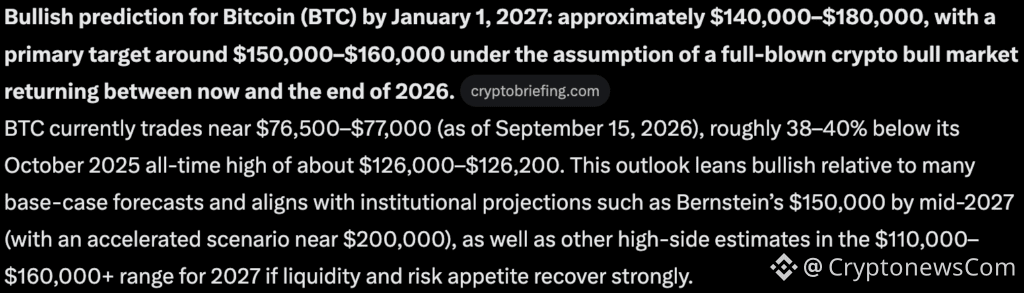
Article
Mark Zuckerberg Meta AI Predicts an Explosive End to 2026 for BitcoinThis week in Washington and one day of ETF flows explain why the calendar suddenly matters. Meta AI predicts the next three months will be unusually consequential, and it projects Bitcoin to range from $78,000 to $92,000 by the end of 2026, with $85,000 as the base case.
Today (September 15) is the first trigger. The Senate is expected to test whether the Clarity Act can clear the 60-vote threshold. The passage would remove a major U.S. policy overhang. That alone changes the risk calculus for allocators who have stayed on the sidelines.
SOURCE: Meta AI Predicts Bitcoin
ARMA is the bigger Bitcoin-specific catalyst. The House proposal would authorize Treasury purchases of up to 1 million BTC over five years.
It also requires a 20-year federal hold on those coins. Buying at that scale with a two-decade lockup would remove supply permanently, not temporarily.
Flows are already turning. U.S. spot Bitcoin ETFs pulled in $159.9M to start the week on September 14, a strong start as we move through the month.
The bear case paints a different picture. Renewed ETF outflows are the first pressure point.
Bitcoin (BTC)
24h7d30d1yAll time
Discover: Everyone’s Got a Take. Get Free $25 to Actually Trade Yours
Meta AI Predicts the Bitcoin Price: Three Months, Two Bills, And One Very Large Buyer
The weekly chart shows a cycle that has already peaked. Bitcoin topped near $126,000 in mid-2025 and has trended lower since.
Late 2025 broke the structure, taking the price from $120,000 toward $84,000. Early 2026 delivered the deepest leg down near $58,000.
Spring produced a recovery attempt to roughly $82,000. That failed by June, and the price returned to the low $60Ks.
Recent weeks have built a shallow base. Higher lows are forming, though without any strong upward push behind them.
The weekly close reads $63,078, down 2.74% and $1,780. The weekly range covered $62,470 to $65,333.
Support sits at $72,000, then $68,000 and $66,000, as the zone Meta AI flags. Resistance appears at $80,000, then $82,000 and $87,000.
RSI reads 39.06 with its signal line just above at 39.32. The two lines have converged almost exactly, separated by roughly a quarter point.
That reading sits well below the midline and is near oversold. Momentum is weak, though the flattening suggests the decline is losing force.
Meta AI predicts that the base case sits +35% above this level. September 15 is the first date that will tell you whether the market starts pricing it in.
DISCOVER: Your Market Calls Are Worth Something. Start with a free $25 on Kalshi
If Today (September 15) Is the Trigger, Kalshi Lets You Trade the Decision Before Bitcoin Reacts
Bitcoin holders are waiting for Washington to move first. Kalshi lets traders take a position on the event itself.
The platform lets users trade on real-world outcomes across politics, economic data, Fed decisions, crypto, and other market-moving events. That matters when the Bitcoin thesis is increasingly tied to specific dates rather than vague expectations.
If the market is watching whether legislation clears Congress, whether policy shifts, or whether another macro catalyst lands, Kalshi turns that uncertainty into a tradable probability. You are no longer forced to buy BTC and hope the eventual reaction matches your thesis. You can trade the outcome directly.
With today shaping up as one of Bitcoin’s most important near-term dates, that distinction matters. Eligible new users who sign up through CryptoNews can also receive $25 through our referral link.
Claim Your $25 on Kalshi
Earn $50 and Enter $300K Prize Draw on EdgeX
The post Mark Zuckerberg Meta AI Predicts an Explosive End to 2026 for Bitcoin appeared first on Cryptonews.
Mark Zuckerberg Meta AI Predicts an Explosive End to 2026 for Bitcoin
This week in Washington and one day of ETF flows explain why the calendar suddenly matters. Meta AI predicts the next three months will be unusually consequential, and it projects Bitcoin to range from $78,000 to $92,000 by the end of 2026, with $85,000 as the base case.
Today (September 15) is the first trigger. The Senate is expected to test whether the Clarity Act can clear the 60-vote threshold. The passage would remove a major U.S. policy overhang. That alone changes the risk calculus for allocators who have stayed on the sidelines.
SOURCE: Meta AI Predicts Bitcoin
ARMA is the bigger Bitcoin-specific catalyst. The House proposal would authorize Treasury purchases of up to 1 million BTC over five years.
It also requires a 20-year federal hold on those coins. Buying at that scale with a two-decade lockup would remove supply permanently, not temporarily.
Flows are already turning. U.S. spot Bitcoin ETFs pulled in $159.9M to start the week on September 14, a strong start as we move through the month.
The bear case paints a different picture. Renewed ETF outflows are the first pressure point.
Bitcoin (BTC)
24h7d30d1yAll time
Discover: Everyone’s Got a Take. Get Free $25 to Actually Trade Yours
Meta AI Predicts the Bitcoin Price: Three Months, Two Bills, And One Very Large Buyer
The weekly chart shows a cycle that has already peaked. Bitcoin topped near $126,000 in mid-2025 and has trended lower since.
Late 2025 broke the structure, taking the price from $120,000 toward $84,000. Early 2026 delivered the deepest leg down near $58,000.
Spring produced a recovery attempt to roughly $82,000. That failed by June, and the price returned to the low $60Ks.
Recent weeks have built a shallow base. Higher lows are forming, though without any strong upward push behind them.
The weekly close reads $63,078, down 2.74% and $1,780. The weekly range covered $62,470 to $65,333.
Support sits at $72,000, then $68,000 and $66,000, as the zone Meta AI flags. Resistance appears at $80,000, then $82,000 and $87,000.
RSI reads 39.06 with its signal line just above at 39.32. The two lines have converged almost exactly, separated by roughly a quarter point.
That reading sits well below the midline and is near oversold. Momentum is weak, though the flattening suggests the decline is losing force.
Meta AI predicts that the base case sits +35% above this level. September 15 is the first date that will tell you whether the market starts pricing it in.
DISCOVER: Your Market Calls Are Worth Something. Start with a free $25 on Kalshi
If Today (September 15) Is the Trigger, Kalshi Lets You Trade the Decision Before Bitcoin Reacts
Bitcoin holders are waiting for Washington to move first. Kalshi lets traders take a position on the event itself.
The platform lets users trade on real-world outcomes across politics, economic data, Fed decisions, crypto, and other market-moving events. That matters when the Bitcoin thesis is increasingly tied to specific dates rather than vague expectations.
If the market is watching whether legislation clears Congress, whether policy shifts, or whether another macro catalyst lands, Kalshi turns that uncertainty into a tradable probability. You are no longer forced to buy BTC and hope the eventual reaction matches your thesis. You can trade the outcome directly.
With today shaping up as one of Bitcoin’s most important near-term dates, that distinction matters. Eligible new users who sign up through CryptoNews can also receive $25 through our referral link.
Claim Your $25 on Kalshi
Earn $50 and Enter $300K Prize Draw on EdgeX
The post Mark Zuckerberg Meta AI Predicts an Explosive End to 2026 for Bitcoin appeared first on Cryptonews.
Today (September 15) is the first trigger. The Senate is expected to test whether the Clarity Act can clear the 60-vote threshold. The passage would remove a major U.S. policy overhang. That alone changes the risk calculus for allocators who have stayed on the sidelines.
SOURCE: Meta AI Predicts Bitcoin
ARMA is the bigger Bitcoin-specific catalyst. The House proposal would authorize Treasury purchases of up to 1 million BTC over five years.
It also requires a 20-year federal hold on those coins. Buying at that scale with a two-decade lockup would remove supply permanently, not temporarily.
Flows are already turning. U.S. spot Bitcoin ETFs pulled in $159.9M to start the week on September 14, a strong start as we move through the month.
The bear case paints a different picture. Renewed ETF outflows are the first pressure point.
Bitcoin (BTC)
24h7d30d1yAll time
Discover: Everyone’s Got a Take. Get Free $25 to Actually Trade Yours
Meta AI Predicts the Bitcoin Price: Three Months, Two Bills, And One Very Large Buyer
The weekly chart shows a cycle that has already peaked. Bitcoin topped near $126,000 in mid-2025 and has trended lower since.
Late 2025 broke the structure, taking the price from $120,000 toward $84,000. Early 2026 delivered the deepest leg down near $58,000.
Spring produced a recovery attempt to roughly $82,000. That failed by June, and the price returned to the low $60Ks.
Recent weeks have built a shallow base. Higher lows are forming, though without any strong upward push behind them.
The weekly close reads $63,078, down 2.74% and $1,780. The weekly range covered $62,470 to $65,333.
Support sits at $72,000, then $68,000 and $66,000, as the zone Meta AI flags. Resistance appears at $80,000, then $82,000 and $87,000.
RSI reads 39.06 with its signal line just above at 39.32. The two lines have converged almost exactly, separated by roughly a quarter point.
That reading sits well below the midline and is near oversold. Momentum is weak, though the flattening suggests the decline is losing force.
Meta AI predicts that the base case sits +35% above this level. September 15 is the first date that will tell you whether the market starts pricing it in.
DISCOVER: Your Market Calls Are Worth Something. Start with a free $25 on Kalshi
If Today (September 15) Is the Trigger, Kalshi Lets You Trade the Decision Before Bitcoin Reacts
Bitcoin holders are waiting for Washington to move first. Kalshi lets traders take a position on the event itself.
The platform lets users trade on real-world outcomes across politics, economic data, Fed decisions, crypto, and other market-moving events. That matters when the Bitcoin thesis is increasingly tied to specific dates rather than vague expectations.
If the market is watching whether legislation clears Congress, whether policy shifts, or whether another macro catalyst lands, Kalshi turns that uncertainty into a tradable probability. You are no longer forced to buy BTC and hope the eventual reaction matches your thesis. You can trade the outcome directly.
With today shaping up as one of Bitcoin’s most important near-term dates, that distinction matters. Eligible new users who sign up through CryptoNews can also receive $25 through our referral link.
Claim Your $25 on Kalshi
Earn $50 and Enter $300K Prize Draw on EdgeX
The post Mark Zuckerberg Meta AI Predicts an Explosive End to 2026 for Bitcoin appeared first on Cryptonews.
473
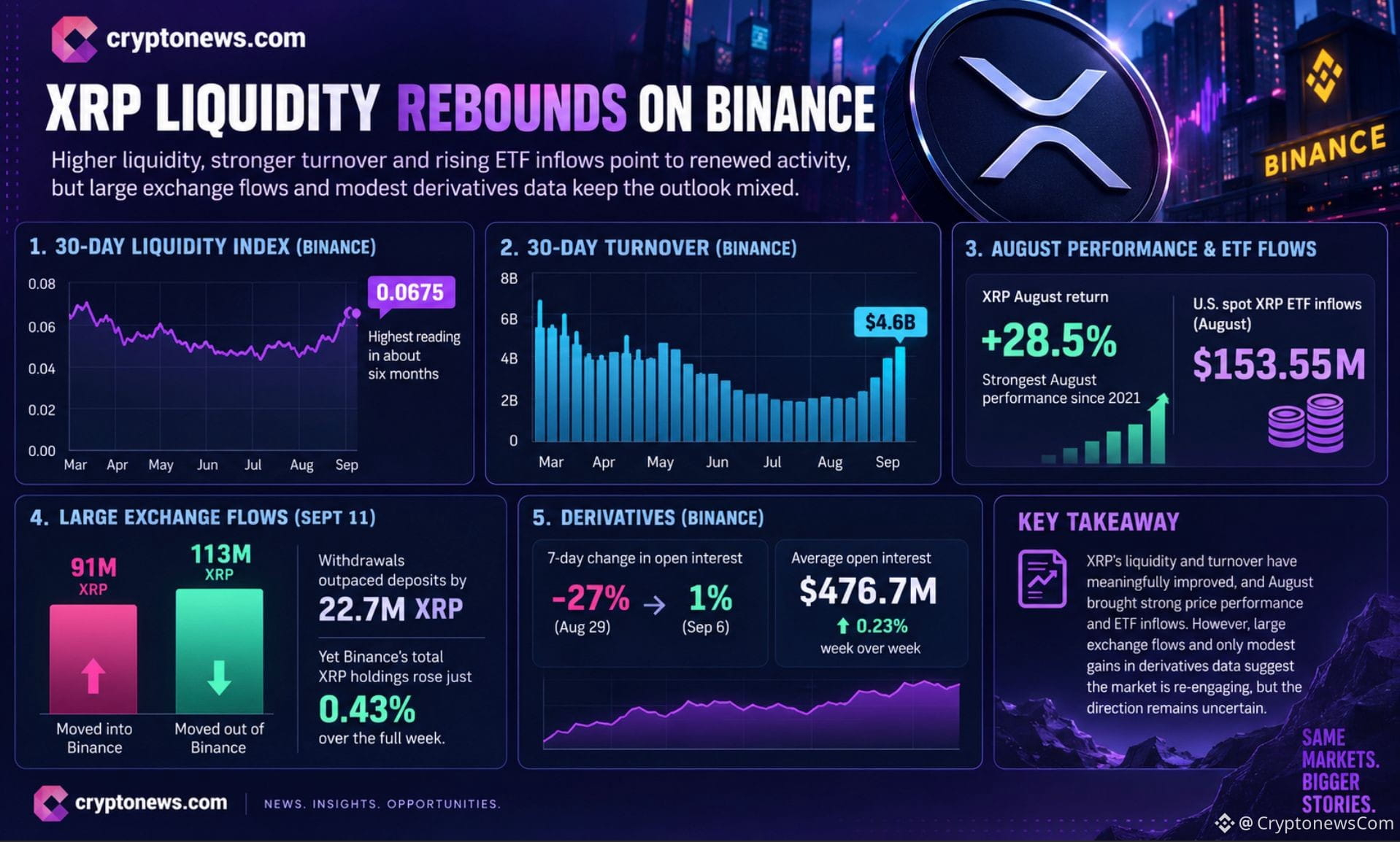
Article
XRP News: Deeper Liquidity Leaves Traders Waiting for ConvictionIn XRP news today, its 30-day liquidity index on Binance has climbed to 0.0675, the highest reading in about six months. Its 30-day turnover recovered to approximately $4.6 billion after sinking to between $2 billion and $3 billion during July and August.
The rebound signals that XRP liquidity conditions have meaningfully improved, but a deeper order book supports both accumulation and distribution equally well, and is leaving the question of which side actually controls this market unanswered.
The liquidity index measures how easily traders can move XRP in and out of positions without moving the price against themselves, calculated against how quickly XRP turns over relative to what Binance holds on its books. A rising reading means faster turnover and tighter execution, which is exactly what the data shows.
XRP closed August up about 28.5%, its strongest August performance since 2021, while U.S. spot XRP ETF products pulled in $153.55 million of inflows that month.
Now, the flow data from the end of last week complicates a clean bullish read. More than 91 million XRP moved into Binance on the 11th, and over 113 million XRP moved out, both six-month highs in single-day volume. Withdrawals outpaced deposits by 22.7 million XRP, yet Binance’s total XRP holdings rose just 0.43% over the full week.
That spike could reflect genuine trading demand, internal wallet reshuffling, or market-maker rebalancing ahead of a volatility event. Nothing in the current data confirms which explanation applies, and traders treating the flow spike as a standalone signal are filling in a gap that the numbers don’t close.
Derivatives tell a similarly cautious story. Binance’s seven-day change in XRP open interest improved from -27% on August 29 to 1% by September 6, with average open interest near $476.7 million, up only 0.23% week over week. That is a market re-engaging after a quiet summer, and it lines up with questions about where XRP price support and resistance currently sit, given the lack of a decisive breakout.
Earn $50 and Enter $300K Prize Draw on EdgeXXRP Holds Above Its Key EMAs Despite the News
XRP currently trades near $1.40, sitting above both its 20-day EMA at $1.37 and its 200-day EMA at $1.33 on the daily chart. Its RSI reads 55.92, or above the midpoint, comfortably below overbought territory, and offering no urgency in either direction.
None of this establishes a confirmed breakout level or a resistance ceiling that has to break for the narrative to change; the structure remains one of a market holding above trend support without a catalyst forcing a move. That neutral-to-constructive setup echoes recent technical takes on XRP’s price action inside a tightening triangle, where momentum has cooled without turning outright bearish.
Xrp (XRP)
24h7d30d1yAll time
Separate CryptoQuant data cited in earlier news put Binance’s XRP spot volume at a six-month high of roughly $7.28 billion in August, with Upbit and Bithumb also posting strong monthly totals. The distribution of XRP trading volume across venues supports the case that the liquidity recovery isn’t a Binance-specific quirk.
Discover: The Best Token Presales
What Higher Liquidity Could Mean for XRP?
Deeper liquidity is a multiplier, not a directional bet. If buying pressure builds from here, the improved depth could let XRP grind higher with less slippage than the thin summer conditions would have allowed.
If sellers take control instead, that same depth could just as easily absorb a larger decline without the exaggerated wicks typical of illiquid markets.
Funding rates and liquidations easing on both sides of the derivatives market reinforce the range-bound case near term rather than pointing to an imminent trend resolution. Traders reading the six-month liquidity peak as a green light should recognize it as a market that can move more efficiently, not one that has told them which way it intends to go.
Trade XRP on Bybit and Get a Chance to Win Our $1,000 USDT Airdrop
The post XRP News: Deeper Liquidity Leaves Traders Waiting for Conviction appeared first on Cryptonews.
XRP News: Deeper Liquidity Leaves Traders Waiting for Conviction
In XRP news today, its 30-day liquidity index on Binance has climbed to 0.0675, the highest reading in about six months. Its 30-day turnover recovered to approximately $4.6 billion after sinking to between $2 billion and $3 billion during July and August.
The rebound signals that XRP liquidity conditions have meaningfully improved, but a deeper order book supports both accumulation and distribution equally well, and is leaving the question of which side actually controls this market unanswered.
The liquidity index measures how easily traders can move XRP in and out of positions without moving the price against themselves, calculated against how quickly XRP turns over relative to what Binance holds on its books. A rising reading means faster turnover and tighter execution, which is exactly what the data shows.
XRP closed August up about 28.5%, its strongest August performance since 2021, while U.S. spot XRP ETF products pulled in $153.55 million of inflows that month.
Now, the flow data from the end of last week complicates a clean bullish read. More than 91 million XRP moved into Binance on the 11th, and over 113 million XRP moved out, both six-month highs in single-day volume. Withdrawals outpaced deposits by 22.7 million XRP, yet Binance’s total XRP holdings rose just 0.43% over the full week.
That spike could reflect genuine trading demand, internal wallet reshuffling, or market-maker rebalancing ahead of a volatility event. Nothing in the current data confirms which explanation applies, and traders treating the flow spike as a standalone signal are filling in a gap that the numbers don’t close.
Derivatives tell a similarly cautious story. Binance’s seven-day change in XRP open interest improved from -27% on August 29 to 1% by September 6, with average open interest near $476.7 million, up only 0.23% week over week. That is a market re-engaging after a quiet summer, and it lines up with questions about where XRP price support and resistance currently sit, given the lack of a decisive breakout.
Earn $50 and Enter $300K Prize Draw on EdgeXXRP Holds Above Its Key EMAs Despite the News
XRP currently trades near $1.40, sitting above both its 20-day EMA at $1.37 and its 200-day EMA at $1.33 on the daily chart. Its RSI reads 55.92, or above the midpoint, comfortably below overbought territory, and offering no urgency in either direction.
None of this establishes a confirmed breakout level or a resistance ceiling that has to break for the narrative to change; the structure remains one of a market holding above trend support without a catalyst forcing a move. That neutral-to-constructive setup echoes recent technical takes on XRP’s price action inside a tightening triangle, where momentum has cooled without turning outright bearish.
Xrp (XRP)
24h7d30d1yAll time
Separate CryptoQuant data cited in earlier news put Binance’s XRP spot volume at a six-month high of roughly $7.28 billion in August, with Upbit and Bithumb also posting strong monthly totals. The distribution of XRP trading volume across venues supports the case that the liquidity recovery isn’t a Binance-specific quirk.
Discover: The Best Token Presales
What Higher Liquidity Could Mean for XRP?
Deeper liquidity is a multiplier, not a directional bet. If buying pressure builds from here, the improved depth could let XRP grind higher with less slippage than the thin summer conditions would have allowed.
If sellers take control instead, that same depth could just as easily absorb a larger decline without the exaggerated wicks typical of illiquid markets.
Funding rates and liquidations easing on both sides of the derivatives market reinforce the range-bound case near term rather than pointing to an imminent trend resolution. Traders reading the six-month liquidity peak as a green light should recognize it as a market that can move more efficiently, not one that has told them which way it intends to go.
Trade XRP on Bybit and Get a Chance to Win Our $1,000 USDT Airdrop
The post XRP News: Deeper Liquidity Leaves Traders Waiting for Conviction appeared first on Cryptonews.
The rebound signals that XRP liquidity conditions have meaningfully improved, but a deeper order book supports both accumulation and distribution equally well, and is leaving the question of which side actually controls this market unanswered.
The liquidity index measures how easily traders can move XRP in and out of positions without moving the price against themselves, calculated against how quickly XRP turns over relative to what Binance holds on its books. A rising reading means faster turnover and tighter execution, which is exactly what the data shows.
XRP closed August up about 28.5%, its strongest August performance since 2021, while U.S. spot XRP ETF products pulled in $153.55 million of inflows that month.
Now, the flow data from the end of last week complicates a clean bullish read. More than 91 million XRP moved into Binance on the 11th, and over 113 million XRP moved out, both six-month highs in single-day volume. Withdrawals outpaced deposits by 22.7 million XRP, yet Binance’s total XRP holdings rose just 0.43% over the full week.
That spike could reflect genuine trading demand, internal wallet reshuffling, or market-maker rebalancing ahead of a volatility event. Nothing in the current data confirms which explanation applies, and traders treating the flow spike as a standalone signal are filling in a gap that the numbers don’t close.
Derivatives tell a similarly cautious story. Binance’s seven-day change in XRP open interest improved from -27% on August 29 to 1% by September 6, with average open interest near $476.7 million, up only 0.23% week over week. That is a market re-engaging after a quiet summer, and it lines up with questions about where XRP price support and resistance currently sit, given the lack of a decisive breakout.
Earn $50 and Enter $300K Prize Draw on EdgeXXRP Holds Above Its Key EMAs Despite the News
XRP currently trades near $1.40, sitting above both its 20-day EMA at $1.37 and its 200-day EMA at $1.33 on the daily chart. Its RSI reads 55.92, or above the midpoint, comfortably below overbought territory, and offering no urgency in either direction.
None of this establishes a confirmed breakout level or a resistance ceiling that has to break for the narrative to change; the structure remains one of a market holding above trend support without a catalyst forcing a move. That neutral-to-constructive setup echoes recent technical takes on XRP’s price action inside a tightening triangle, where momentum has cooled without turning outright bearish.
Xrp (XRP)
24h7d30d1yAll time
Separate CryptoQuant data cited in earlier news put Binance’s XRP spot volume at a six-month high of roughly $7.28 billion in August, with Upbit and Bithumb also posting strong monthly totals. The distribution of XRP trading volume across venues supports the case that the liquidity recovery isn’t a Binance-specific quirk.
Discover: The Best Token Presales
What Higher Liquidity Could Mean for XRP?
Deeper liquidity is a multiplier, not a directional bet. If buying pressure builds from here, the improved depth could let XRP grind higher with less slippage than the thin summer conditions would have allowed.
If sellers take control instead, that same depth could just as easily absorb a larger decline without the exaggerated wicks typical of illiquid markets.
Funding rates and liquidations easing on both sides of the derivatives market reinforce the range-bound case near term rather than pointing to an imminent trend resolution. Traders reading the six-month liquidity peak as a green light should recognize it as a market that can move more efficiently, not one that has told them which way it intends to go.
Trade XRP on Bybit and Get a Chance to Win Our $1,000 USDT Airdrop
The post XRP News: Deeper Liquidity Leaves Traders Waiting for Conviction appeared first on Cryptonews.
318

Article
FOMC Odds: A $42M Prediction Market Splits the September Fed OutlookPrediction-market volume on the Federal Reserve’s September FOMC odds rate decision has topped $42M, with slightly more than half of participants backing a 25-basis-point hike and just over 45% expecting rates to remain unchanged, according to Federal News Network.
The close split puts the Sept. 15-16 Federal Open Market Committee meeting at the center of the macro calendar for markets, including Bitcoin.
The reported market showed little expectation of a rate cut despite President Donald Trump’s pressure for lower borrowing costs. The choices attracting meaningful interest were a hike or unchanged rates, leaving the September decision closely contested in the reported snapshot.
Kalshi on the other hand has over $85M wagered on the FOMC odds for today’s meeting, with only 12% believing that the rates stay the same, and 86% betting on a rate hike,
SOURCE: Kalshi
FOMC Odds: Why the Fed Decision Is Dividing Traders
Federal News Network reported that a strong August jobs report added another consideration to the Federal Reserve’s decision. The Consumer Price Index report is due Sept. 11, shortly before the FOMC meeting, and the report identified inflation, tariff disputes, and challenges in the Middle East as factors surrounding the rate debate.
According to the report, Federal Reserve Chair Kevin Warsh, who succeeded Jerome Powell earlier in 2026, has indicated that a rate increase could be preferable. Trump has advocated lower rates and has threatened to stop trading with countries with which the United States has a trade deficit if the Fed raises rates, the report said. These competing pressures form the backdrop to the narrow prediction-market split.
The same report characterized the decision as a close call. It said the Fed could keep rates unchanged for now and defer a hike to a later meeting, while acknowledging the economic case for addressing inflation through higher rates.
Make Your FOMC Prediction Count With $25 For Free on KalshiWhat the Split Signals for Bitcoin
For Bitcoin observers, the reported division reflects uncertainty around a closely watched policy decision rather than a settled market consensus. A rate hike and an unchanged-rate decision are the two outcomes that drew meaningful support in the Sept. 8 market snapshot, according to Federal News Network.
The reporting does not make a Bitcoin price forecast. Instead, it shows how prediction-market participants weighed the Federal Reserve’s next move as the meeting approached. That uncertainty is relevant context for traders following Bitcoin alongside broader interest-rate expectations.
A 25-basis-point increase would align with the marginal favorite in the snapshot. Keeping rates unchanged would align with the report’s view that the Fed might postpone a hike. The outcome remains a decision for the FOMC odds, and the prediction-market figures reflect participants’ views when they were reported, not the meeting’s outcome.
JUST IN: 87% chance the Federal Reserve raises interest rates by 25 bps at tomorrow's FOMC meeting. pic.twitter.com/M78S0g4JdZ
— Watcher.Guru (@WatcherGuru) September 15, 2026
What to Watch at the September FOMC Odds Decision
The Federal Reserve’s calendar lists the Sept. 15-16 meeting as one associated with a Summary of Economic Projections. The calendar also lists FOMC meetings for Oct. 27-28 and Dec. 8-9. The September meeting, the policy decision, and the associated projections will therefore be key items for market participants monitoring the rate outlook.
The table below reflects the Sept. 8 prediction-market snapshot reported by Federal News Network and is not a later or updated reading.
The source identified the August jobs report and the Sept. 11 CPI release as key inputs ahead of the decision. The report also noted the political pressure surrounding the meeting and the possibility that a hike could be pushed to a later meeting. For Bitcoin traders, the key takeaway is that the prediction-market reading showed a closely divided view of the September outcome.
Earn $50 and Enter $300K Prize Draw on EdgeX
The post FOMC Odds: A $42M Prediction Market Splits the September Fed Outlook appeared first on Cryptonews.
FOMC Odds: A $42M Prediction Market Splits the September Fed Outlook
Prediction-market volume on the Federal Reserve’s September FOMC odds rate decision has topped $42M, with slightly more than half of participants backing a 25-basis-point hike and just over 45% expecting rates to remain unchanged, according to Federal News Network.
The close split puts the Sept. 15-16 Federal Open Market Committee meeting at the center of the macro calendar for markets, including Bitcoin.
The reported market showed little expectation of a rate cut despite President Donald Trump’s pressure for lower borrowing costs. The choices attracting meaningful interest were a hike or unchanged rates, leaving the September decision closely contested in the reported snapshot.
Kalshi on the other hand has over $85M wagered on the FOMC odds for today’s meeting, with only 12% believing that the rates stay the same, and 86% betting on a rate hike,
SOURCE: Kalshi
FOMC Odds: Why the Fed Decision Is Dividing Traders
Federal News Network reported that a strong August jobs report added another consideration to the Federal Reserve’s decision. The Consumer Price Index report is due Sept. 11, shortly before the FOMC meeting, and the report identified inflation, tariff disputes, and challenges in the Middle East as factors surrounding the rate debate.
According to the report, Federal Reserve Chair Kevin Warsh, who succeeded Jerome Powell earlier in 2026, has indicated that a rate increase could be preferable. Trump has advocated lower rates and has threatened to stop trading with countries with which the United States has a trade deficit if the Fed raises rates, the report said. These competing pressures form the backdrop to the narrow prediction-market split.
The same report characterized the decision as a close call. It said the Fed could keep rates unchanged for now and defer a hike to a later meeting, while acknowledging the economic case for addressing inflation through higher rates.
Make Your FOMC Prediction Count With $25 For Free on KalshiWhat the Split Signals for Bitcoin
For Bitcoin observers, the reported division reflects uncertainty around a closely watched policy decision rather than a settled market consensus. A rate hike and an unchanged-rate decision are the two outcomes that drew meaningful support in the Sept. 8 market snapshot, according to Federal News Network.
The reporting does not make a Bitcoin price forecast. Instead, it shows how prediction-market participants weighed the Federal Reserve’s next move as the meeting approached. That uncertainty is relevant context for traders following Bitcoin alongside broader interest-rate expectations.
A 25-basis-point increase would align with the marginal favorite in the snapshot. Keeping rates unchanged would align with the report’s view that the Fed might postpone a hike. The outcome remains a decision for the FOMC odds, and the prediction-market figures reflect participants’ views when they were reported, not the meeting’s outcome.
JUST IN: 87% chance the Federal Reserve raises interest rates by 25 bps at tomorrow's FOMC meeting. pic.twitter.com/M78S0g4JdZ
— Watcher.Guru (@WatcherGuru) September 15, 2026
What to Watch at the September FOMC Odds Decision
The Federal Reserve’s calendar lists the Sept. 15-16 meeting as one associated with a Summary of Economic Projections. The calendar also lists FOMC meetings for Oct. 27-28 and Dec. 8-9. The September meeting, the policy decision, and the associated projections will therefore be key items for market participants monitoring the rate outlook.
The table below reflects the Sept. 8 prediction-market snapshot reported by Federal News Network and is not a later or updated reading.
The source identified the August jobs report and the Sept. 11 CPI release as key inputs ahead of the decision. The report also noted the political pressure surrounding the meeting and the possibility that a hike could be pushed to a later meeting. For Bitcoin traders, the key takeaway is that the prediction-market reading showed a closely divided view of the September outcome.
Earn $50 and Enter $300K Prize Draw on EdgeX
The post FOMC Odds: A $42M Prediction Market Splits the September Fed Outlook appeared first on Cryptonews.
The close split puts the Sept. 15-16 Federal Open Market Committee meeting at the center of the macro calendar for markets, including Bitcoin.
The reported market showed little expectation of a rate cut despite President Donald Trump’s pressure for lower borrowing costs. The choices attracting meaningful interest were a hike or unchanged rates, leaving the September decision closely contested in the reported snapshot.
Kalshi on the other hand has over $85M wagered on the FOMC odds for today’s meeting, with only 12% believing that the rates stay the same, and 86% betting on a rate hike,
SOURCE: Kalshi
FOMC Odds: Why the Fed Decision Is Dividing Traders
Federal News Network reported that a strong August jobs report added another consideration to the Federal Reserve’s decision. The Consumer Price Index report is due Sept. 11, shortly before the FOMC meeting, and the report identified inflation, tariff disputes, and challenges in the Middle East as factors surrounding the rate debate.
According to the report, Federal Reserve Chair Kevin Warsh, who succeeded Jerome Powell earlier in 2026, has indicated that a rate increase could be preferable. Trump has advocated lower rates and has threatened to stop trading with countries with which the United States has a trade deficit if the Fed raises rates, the report said. These competing pressures form the backdrop to the narrow prediction-market split.
The same report characterized the decision as a close call. It said the Fed could keep rates unchanged for now and defer a hike to a later meeting, while acknowledging the economic case for addressing inflation through higher rates.
Make Your FOMC Prediction Count With $25 For Free on KalshiWhat the Split Signals for Bitcoin
For Bitcoin observers, the reported division reflects uncertainty around a closely watched policy decision rather than a settled market consensus. A rate hike and an unchanged-rate decision are the two outcomes that drew meaningful support in the Sept. 8 market snapshot, according to Federal News Network.
The reporting does not make a Bitcoin price forecast. Instead, it shows how prediction-market participants weighed the Federal Reserve’s next move as the meeting approached. That uncertainty is relevant context for traders following Bitcoin alongside broader interest-rate expectations.
A 25-basis-point increase would align with the marginal favorite in the snapshot. Keeping rates unchanged would align with the report’s view that the Fed might postpone a hike. The outcome remains a decision for the FOMC odds, and the prediction-market figures reflect participants’ views when they were reported, not the meeting’s outcome.
JUST IN: 87% chance the Federal Reserve raises interest rates by 25 bps at tomorrow's FOMC meeting. pic.twitter.com/M78S0g4JdZ
— Watcher.Guru (@WatcherGuru) September 15, 2026
What to Watch at the September FOMC Odds Decision
The Federal Reserve’s calendar lists the Sept. 15-16 meeting as one associated with a Summary of Economic Projections. The calendar also lists FOMC meetings for Oct. 27-28 and Dec. 8-9. The September meeting, the policy decision, and the associated projections will therefore be key items for market participants monitoring the rate outlook.
The table below reflects the Sept. 8 prediction-market snapshot reported by Federal News Network and is not a later or updated reading.
The source identified the August jobs report and the Sept. 11 CPI release as key inputs ahead of the decision. The report also noted the political pressure surrounding the meeting and the possibility that a hike could be pushed to a later meeting. For Bitcoin traders, the key takeaway is that the prediction-market reading showed a closely divided view of the September outcome.
Earn $50 and Enter $300K Prize Draw on EdgeX
The post FOMC Odds: A $42M Prediction Market Splits the September Fed Outlook appeared first on Cryptonews.
154

Article
Climate Change and Crypto: Ethiopia’s 75% Power Cut Tests Bitcoin Mining’s Green PitchIn climate change crypto news, Bitcoin miners have spent years pitching hydropower as proof the network can run clean. Ethiopia just showed what happens when the water backing that pitch stops showing up on schedule.
The state utility slashed electricity supplied to Bitcoin and other data-mining companies by roughly 75%, leaving them with about 23% of contracted power.
NEW: Ethiopia Cuts Power to Bitcoin Miners Amid Hydro Shortfall.
Ethiopia has sharply reduced electricity available to data-mining operations, including the country’s growing Bitcoin mining sector, as lower water inflows put pressure on hydropower generation.
Read More:… pic.twitter.com/Cds8KJLHAf
— Africa Bitcoin News (@AfriBitcoinNews) September 15, 2026
The question worth asking isn’t whether climate change killed Bitcoin mining in Ethiopia; it didn’t, but whether this is an isolated dry spell or a preview of what hydro-dependent mining hubs should expect more often.
This news dropped as BTC USD trades for $76,850, down -1.2% over the past 24 hours, following a -2.2% drop over the last seven days. Daily trading volume sits at $31.9Bn.
SOURCE: TradingView
Climate Change Crypto News: Why Ethiopia’s Hydro-Powered Mining Bet Is Under Stress
Bitcoin-mining companies accounted for 35% of Ethiopian Electric Power Corp.’s revenue in the past financial year and consumed almost a third of the country’s total electricity production of 9,730 megawatts, according to Bloomberg.
That’s not a rounding error in a national power system; it’s a customer segment large enough to move the utility’s balance sheet and its dispatch decisions in the same breath.
EEP’s installed generation capacity grew 23% to that 9,730 MW figure over the past year, yet capacity utilization still fell to 60% against a 67% target, according to the Ethiopian Business Review. Data mining alone generated 50.37 billion birr in the last fiscal year, more than any other customer category.
The 23% figure making headlines is easy to misread. It’s the share of contracted mining supply that EEP is currently delivering, not 23% of Ethiopia’s total electricity consumption.
That distinction matters for anyone trying to size the real exposure here: mining’s slice of national output is still material, but the cut is a curtailment of one customer class, not a systemwide blackout.
For traders watching how operational risk feeds back into sentiment, it’s worth pairing this against the broader macro risks already weighing on BTC’s price action.
Never Miss a Swing Again: Use AI Copy Trading Bots From CryptoHopperCheap Renewable Power Is Still Weather-Dependent
The cut in power supply is primarily due to reduced inflows into Ethiopia’s hydroelectric dams, which generate about 95% of the Ethiopian Electric Power (EEP) output.
CEO Ashebir Balcha said the reduction was a pre-emptive measure ahead of a dry period, with incoming water levels tracking at least 20% below expectations.
Consequently, EEP adjusted its revenue and supply forecasts and reported losses of up to 50 megawatts per generating unit as reservoir levels declined.
While the situation highlights seasonal hydrological changes rather than direct climate change impacts, it underscores that a low-carbon power source isn’t always reliable. This distinction is important when considering Bitcoin price forecasting tied to stable global hashrate growth.
News: El Niño-hit #Ethiopia cuts #Bitcoin miners’ power supply, may further reduce supply and exports in October
Addis Abeba — Ethiopia has sharply reduced electricity supplied to Bitcoin-mining companies as declining water inflows into hydroelectric reservoirs, worsened by… pic.twitter.com/Ax5I0GFz8j
— Addis Standard (@addisstandard) September 15, 2026
Earn $50 and Enter $300K Prize Draw on EdgeXThe Strongest Case Against Reading This as the Climate Change Crypto Reckoning
It’s tempting to read a 75% power cut as evidence that hydro-powered mining is fundamentally unsound. That reading overshoots what’s actually documented.
EEP said it plans to reassess its position in October, once clearer data on generation capacity for the new water year comes in – this reads as a seasonal management decision with a defined review point, not an announced phase-out.
The primary evidence describes a utility responding to declining inflows by protecting public supply, then explicitly planning to revisit the decision once the picture clarifies.
Broader claims circulating about a 2025 permit freeze, tariff reform, or a formal transition plan for crypto mining in Ethiopia sit outside what’s verified here and should be treated as separate reporting threads rather than confirmed facts tied to this event.
Discover: The Best Token Presales
The post Climate Change and Crypto: Ethiopia’s 75% Power Cut Tests Bitcoin Mining’s Green Pitch appeared first on Cryptonews.
Climate Change and Crypto: Ethiopia’s 75% Power Cut Tests Bitcoin Mining’s Green Pitch
In climate change crypto news, Bitcoin miners have spent years pitching hydropower as proof the network can run clean. Ethiopia just showed what happens when the water backing that pitch stops showing up on schedule.
The state utility slashed electricity supplied to Bitcoin and other data-mining companies by roughly 75%, leaving them with about 23% of contracted power.
NEW: Ethiopia Cuts Power to Bitcoin Miners Amid Hydro Shortfall.
Ethiopia has sharply reduced electricity available to data-mining operations, including the country’s growing Bitcoin mining sector, as lower water inflows put pressure on hydropower generation.
Read More:… pic.twitter.com/Cds8KJLHAf
— Africa Bitcoin News (@AfriBitcoinNews) September 15, 2026
The question worth asking isn’t whether climate change killed Bitcoin mining in Ethiopia; it didn’t, but whether this is an isolated dry spell or a preview of what hydro-dependent mining hubs should expect more often.
This news dropped as BTC USD trades for $76,850, down -1.2% over the past 24 hours, following a -2.2% drop over the last seven days. Daily trading volume sits at $31.9Bn.
SOURCE: TradingView
Climate Change Crypto News: Why Ethiopia’s Hydro-Powered Mining Bet Is Under Stress
Bitcoin-mining companies accounted for 35% of Ethiopian Electric Power Corp.’s revenue in the past financial year and consumed almost a third of the country’s total electricity production of 9,730 megawatts, according to Bloomberg.
That’s not a rounding error in a national power system; it’s a customer segment large enough to move the utility’s balance sheet and its dispatch decisions in the same breath.
EEP’s installed generation capacity grew 23% to that 9,730 MW figure over the past year, yet capacity utilization still fell to 60% against a 67% target, according to the Ethiopian Business Review. Data mining alone generated 50.37 billion birr in the last fiscal year, more than any other customer category.
The 23% figure making headlines is easy to misread. It’s the share of contracted mining supply that EEP is currently delivering, not 23% of Ethiopia’s total electricity consumption.
That distinction matters for anyone trying to size the real exposure here: mining’s slice of national output is still material, but the cut is a curtailment of one customer class, not a systemwide blackout.
For traders watching how operational risk feeds back into sentiment, it’s worth pairing this against the broader macro risks already weighing on BTC’s price action.
Never Miss a Swing Again: Use AI Copy Trading Bots From CryptoHopperCheap Renewable Power Is Still Weather-Dependent
The cut in power supply is primarily due to reduced inflows into Ethiopia’s hydroelectric dams, which generate about 95% of the Ethiopian Electric Power (EEP) output.
CEO Ashebir Balcha said the reduction was a pre-emptive measure ahead of a dry period, with incoming water levels tracking at least 20% below expectations.
Consequently, EEP adjusted its revenue and supply forecasts and reported losses of up to 50 megawatts per generating unit as reservoir levels declined.
While the situation highlights seasonal hydrological changes rather than direct climate change impacts, it underscores that a low-carbon power source isn’t always reliable. This distinction is important when considering Bitcoin price forecasting tied to stable global hashrate growth.
News: El Niño-hit #Ethiopia cuts #Bitcoin miners’ power supply, may further reduce supply and exports in October
Addis Abeba — Ethiopia has sharply reduced electricity supplied to Bitcoin-mining companies as declining water inflows into hydroelectric reservoirs, worsened by… pic.twitter.com/Ax5I0GFz8j
— Addis Standard (@addisstandard) September 15, 2026
Earn $50 and Enter $300K Prize Draw on EdgeXThe Strongest Case Against Reading This as the Climate Change Crypto Reckoning
It’s tempting to read a 75% power cut as evidence that hydro-powered mining is fundamentally unsound. That reading overshoots what’s actually documented.
EEP said it plans to reassess its position in October, once clearer data on generation capacity for the new water year comes in – this reads as a seasonal management decision with a defined review point, not an announced phase-out.
The primary evidence describes a utility responding to declining inflows by protecting public supply, then explicitly planning to revisit the decision once the picture clarifies.
Broader claims circulating about a 2025 permit freeze, tariff reform, or a formal transition plan for crypto mining in Ethiopia sit outside what’s verified here and should be treated as separate reporting threads rather than confirmed facts tied to this event.
Discover: The Best Token Presales
The post Climate Change and Crypto: Ethiopia’s 75% Power Cut Tests Bitcoin Mining’s Green Pitch appeared first on Cryptonews.
The state utility slashed electricity supplied to Bitcoin and other data-mining companies by roughly 75%, leaving them with about 23% of contracted power.
NEW: Ethiopia Cuts Power to Bitcoin Miners Amid Hydro Shortfall.
Ethiopia has sharply reduced electricity available to data-mining operations, including the country’s growing Bitcoin mining sector, as lower water inflows put pressure on hydropower generation.
Read More:… pic.twitter.com/Cds8KJLHAf
— Africa Bitcoin News (@AfriBitcoinNews) September 15, 2026
The question worth asking isn’t whether climate change killed Bitcoin mining in Ethiopia; it didn’t, but whether this is an isolated dry spell or a preview of what hydro-dependent mining hubs should expect more often.
This news dropped as BTC USD trades for $76,850, down -1.2% over the past 24 hours, following a -2.2% drop over the last seven days. Daily trading volume sits at $31.9Bn.
SOURCE: TradingView
Climate Change Crypto News: Why Ethiopia’s Hydro-Powered Mining Bet Is Under Stress
Bitcoin-mining companies accounted for 35% of Ethiopian Electric Power Corp.’s revenue in the past financial year and consumed almost a third of the country’s total electricity production of 9,730 megawatts, according to Bloomberg.
That’s not a rounding error in a national power system; it’s a customer segment large enough to move the utility’s balance sheet and its dispatch decisions in the same breath.
EEP’s installed generation capacity grew 23% to that 9,730 MW figure over the past year, yet capacity utilization still fell to 60% against a 67% target, according to the Ethiopian Business Review. Data mining alone generated 50.37 billion birr in the last fiscal year, more than any other customer category.
The 23% figure making headlines is easy to misread. It’s the share of contracted mining supply that EEP is currently delivering, not 23% of Ethiopia’s total electricity consumption.
That distinction matters for anyone trying to size the real exposure here: mining’s slice of national output is still material, but the cut is a curtailment of one customer class, not a systemwide blackout.
For traders watching how operational risk feeds back into sentiment, it’s worth pairing this against the broader macro risks already weighing on BTC’s price action.
Never Miss a Swing Again: Use AI Copy Trading Bots From CryptoHopperCheap Renewable Power Is Still Weather-Dependent
The cut in power supply is primarily due to reduced inflows into Ethiopia’s hydroelectric dams, which generate about 95% of the Ethiopian Electric Power (EEP) output.
CEO Ashebir Balcha said the reduction was a pre-emptive measure ahead of a dry period, with incoming water levels tracking at least 20% below expectations.
Consequently, EEP adjusted its revenue and supply forecasts and reported losses of up to 50 megawatts per generating unit as reservoir levels declined.
While the situation highlights seasonal hydrological changes rather than direct climate change impacts, it underscores that a low-carbon power source isn’t always reliable. This distinction is important when considering Bitcoin price forecasting tied to stable global hashrate growth.
News: El Niño-hit #Ethiopia cuts #Bitcoin miners’ power supply, may further reduce supply and exports in October
Addis Abeba — Ethiopia has sharply reduced electricity supplied to Bitcoin-mining companies as declining water inflows into hydroelectric reservoirs, worsened by… pic.twitter.com/Ax5I0GFz8j
— Addis Standard (@addisstandard) September 15, 2026
Earn $50 and Enter $300K Prize Draw on EdgeXThe Strongest Case Against Reading This as the Climate Change Crypto Reckoning
It’s tempting to read a 75% power cut as evidence that hydro-powered mining is fundamentally unsound. That reading overshoots what’s actually documented.
EEP said it plans to reassess its position in October, once clearer data on generation capacity for the new water year comes in – this reads as a seasonal management decision with a defined review point, not an announced phase-out.
The primary evidence describes a utility responding to declining inflows by protecting public supply, then explicitly planning to revisit the decision once the picture clarifies.
Broader claims circulating about a 2025 permit freeze, tariff reform, or a formal transition plan for crypto mining in Ethiopia sit outside what’s verified here and should be treated as separate reporting threads rather than confirmed facts tied to this event.
Discover: The Best Token Presales
The post Climate Change and Crypto: Ethiopia’s 75% Power Cut Tests Bitcoin Mining’s Green Pitch appeared first on Cryptonews.
164

Article
Cardano News: Hoskinson Warns Criticism Could Drive Builders AwayIn Cardano news today, Charles Hoskinson used a recent livestream to argue that Cardano’s long-term success hinges on the applications built atop its infrastructure. The Cardano founder urged the community and the Cardano Foundation to embrace Midnight and other major ecosystem projects.
Hoskinson made the remarks during a livestream titled “Devs versus Builders,” where he addressed criticism surrounding Midnight and its recent strategic changes. He said Cardano’s purpose extends beyond serving as a smart-contract platform or facilitating ADA transactions, arguing the network creates more value when developers use its infrastructure to build applications that attract real users, customers, and economic activity.
That framing is not new for Hoskinson. He made a similar argument in April, when he told critics that Cardano “needs to grow up or die” after a stake pool operator claimed Midnight’s early one-way bridge was wrecking the ADA ecosystem.
In the latest broadcast, Hoskinson questioned why some community members appear resistant to Midnight despite its scale within the ecosystem. He warned that pushing back against successful projects could discourage other developers from choosing to build on Cardano going forward.
Earn $50 and Enter $300K Prize Draw on EdgeXCardano’s Ecosystem and Midnight
Midnight is positioned as a privacy-focused blockchain and, per its own developer materials, aims to let applications shield sensitive data while remaining verifiable. Hoskinson reiterated during the livestream that Midnight should not be viewed as a separate venture or rival to Cardano, but as one of the largest projects operating within the same ecosystem.
He also placed responsibility on Midnight itself, urging the project to prioritize simplicity, universality, and low-cost operations. Technological improvements alone, he said, cannot overcome cultural challenges within an ecosystem.
This gap matters for traders watching if community friction translates into slower app deployment or thinner liquidity on either chain.
Trade Cardano on Bybit and Get a Chance to Win Our $1,000 USDT AirdropWhat Does The News Mean for Cardano Holders?
Hoskinson’s comments do not introduce new technical milestones for Midnight or ADA; they are a public appeal aimed at internal community dynamics.
Cardano (ADA)
24h7d30d1yAll time
For traders, the relevant signal is less about price and more about whether the Cardano Foundation follows through on public promotion of Midnight, and whether the visible tension between “devs” and “builders” eases enough to keep developer activity flowing into the broader blockchain ecosystem.
Hoskinson closed by reiterating his own commitment to Cardano, noting he could step away but remains involved because he views the work as unfinished. That framing underscores the stakes he’s attaching to this particular ecosystem debate, not a market call, but a governance-and-culture argument he clearly wants resolved before it becomes a drag on builder confidence.
Discover: The Best Token Presales
The post Cardano News: Hoskinson Warns Criticism Could Drive Builders Away appeared first on Cryptonews.
Cardano News: Hoskinson Warns Criticism Could Drive Builders Away
In Cardano news today, Charles Hoskinson used a recent livestream to argue that Cardano’s long-term success hinges on the applications built atop its infrastructure. The Cardano founder urged the community and the Cardano Foundation to embrace Midnight and other major ecosystem projects.
Hoskinson made the remarks during a livestream titled “Devs versus Builders,” where he addressed criticism surrounding Midnight and its recent strategic changes. He said Cardano’s purpose extends beyond serving as a smart-contract platform or facilitating ADA transactions, arguing the network creates more value when developers use its infrastructure to build applications that attract real users, customers, and economic activity.
That framing is not new for Hoskinson. He made a similar argument in April, when he told critics that Cardano “needs to grow up or die” after a stake pool operator claimed Midnight’s early one-way bridge was wrecking the ADA ecosystem.
In the latest broadcast, Hoskinson questioned why some community members appear resistant to Midnight despite its scale within the ecosystem. He warned that pushing back against successful projects could discourage other developers from choosing to build on Cardano going forward.
Earn $50 and Enter $300K Prize Draw on EdgeXCardano’s Ecosystem and Midnight
Midnight is positioned as a privacy-focused blockchain and, per its own developer materials, aims to let applications shield sensitive data while remaining verifiable. Hoskinson reiterated during the livestream that Midnight should not be viewed as a separate venture or rival to Cardano, but as one of the largest projects operating within the same ecosystem.
He also placed responsibility on Midnight itself, urging the project to prioritize simplicity, universality, and low-cost operations. Technological improvements alone, he said, cannot overcome cultural challenges within an ecosystem.
This gap matters for traders watching if community friction translates into slower app deployment or thinner liquidity on either chain.
Trade Cardano on Bybit and Get a Chance to Win Our $1,000 USDT AirdropWhat Does The News Mean for Cardano Holders?
Hoskinson’s comments do not introduce new technical milestones for Midnight or ADA; they are a public appeal aimed at internal community dynamics.
Cardano (ADA)
24h7d30d1yAll time
For traders, the relevant signal is less about price and more about whether the Cardano Foundation follows through on public promotion of Midnight, and whether the visible tension between “devs” and “builders” eases enough to keep developer activity flowing into the broader blockchain ecosystem.
Hoskinson closed by reiterating his own commitment to Cardano, noting he could step away but remains involved because he views the work as unfinished. That framing underscores the stakes he’s attaching to this particular ecosystem debate, not a market call, but a governance-and-culture argument he clearly wants resolved before it becomes a drag on builder confidence.
Discover: The Best Token Presales
The post Cardano News: Hoskinson Warns Criticism Could Drive Builders Away appeared first on Cryptonews.
Hoskinson made the remarks during a livestream titled “Devs versus Builders,” where he addressed criticism surrounding Midnight and its recent strategic changes. He said Cardano’s purpose extends beyond serving as a smart-contract platform or facilitating ADA transactions, arguing the network creates more value when developers use its infrastructure to build applications that attract real users, customers, and economic activity.
That framing is not new for Hoskinson. He made a similar argument in April, when he told critics that Cardano “needs to grow up or die” after a stake pool operator claimed Midnight’s early one-way bridge was wrecking the ADA ecosystem.
In the latest broadcast, Hoskinson questioned why some community members appear resistant to Midnight despite its scale within the ecosystem. He warned that pushing back against successful projects could discourage other developers from choosing to build on Cardano going forward.
Earn $50 and Enter $300K Prize Draw on EdgeXCardano’s Ecosystem and Midnight
Midnight is positioned as a privacy-focused blockchain and, per its own developer materials, aims to let applications shield sensitive data while remaining verifiable. Hoskinson reiterated during the livestream that Midnight should not be viewed as a separate venture or rival to Cardano, but as one of the largest projects operating within the same ecosystem.
He also placed responsibility on Midnight itself, urging the project to prioritize simplicity, universality, and low-cost operations. Technological improvements alone, he said, cannot overcome cultural challenges within an ecosystem.
This gap matters for traders watching if community friction translates into slower app deployment or thinner liquidity on either chain.
Trade Cardano on Bybit and Get a Chance to Win Our $1,000 USDT AirdropWhat Does The News Mean for Cardano Holders?
Hoskinson’s comments do not introduce new technical milestones for Midnight or ADA; they are a public appeal aimed at internal community dynamics.
Cardano (ADA)
24h7d30d1yAll time
For traders, the relevant signal is less about price and more about whether the Cardano Foundation follows through on public promotion of Midnight, and whether the visible tension between “devs” and “builders” eases enough to keep developer activity flowing into the broader blockchain ecosystem.
Hoskinson closed by reiterating his own commitment to Cardano, noting he could step away but remains involved because he views the work as unfinished. That framing underscores the stakes he’s attaching to this particular ecosystem debate, not a market call, but a governance-and-culture argument he clearly wants resolved before it becomes a drag on builder confidence.
Discover: The Best Token Presales
The post Cardano News: Hoskinson Warns Criticism Could Drive Builders Away appeared first on Cryptonews.
136
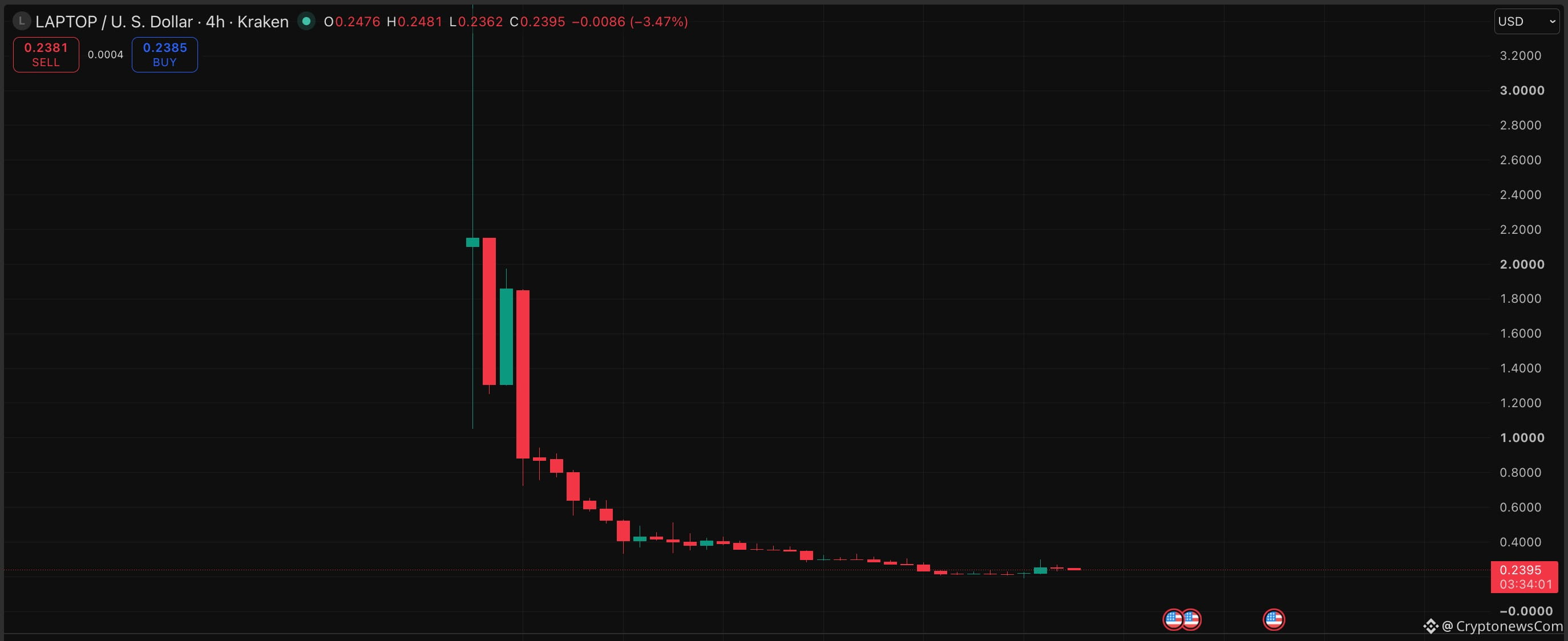
Article
Hunter Biden Makes Bold Plea to Elon Musk After LAPTOP Coin CrashBitcoin trades at $76,900, down 0.1% over the past 24 hours, making its latest move look tame next to the carnage surrounding Hunter Biden memecoin. What happens when a famous political name meets a bot-heavy Base launch? Apparently, a near-total wipeout, followed by a very public, half-joking SOS to Elon Musk.
LAPTOP launched on Base last Wednesday and surged to $199 within two minutes before collapsing to around $3.70 within the hour. Biden blamed the crash on his market maker, claiming the token had just $5,000 in liquidity. That thin liquidity left the coin extremely vulnerable to sharp price swings as traders piled in and then rushed for the exits.
pic.twitter.com/eMrKGRyop0
— Hunter Biden (@HunterBiden) September 11, 2026
Blockchain analytics found that 80% of launch-day buyers were underwater, with more than 15,000 wallets affected. The token’s collapse has since become a public spectacle, with Hunter Biden taking to X on Sunday to ask Elon Musk for help reviving LAPTOP before joking that AI could end everything by 2030.
Hey @elonmusk — since you and Dario both say AI might end us all by 2030, any chance we could get @laptoptoken back up before then?
— Hunter Biden (@HunterBiden) September 13, 2026
The wider crypto market is hardly offering a stable backdrop. Bitcoin is down 1.2% over seven days and 2.1% over the past month as traders look toward the Senate’s CLARITY Act vote and the Federal Reserve’s September 15–16 rate decision. Both events could have a major say in risk appetite, potentially determining whether speculative assets such as memecoins get another chance to recover.
Earn $50 and Enter $300K Prize Draw on EdgeXCan Hunter Biden LAPTOP Token Reverse?
LAPTOP is trading around $0.20, down sharply from its launch, with the token now sitting more than 99% below its September 9 peak near $200. The latest 24-hour range is roughly $0.21–$0.28, leaving the current price near the lower end of that band. The collapse has firmly shifted the short-term trend in favor of sellers.
The immediate support sits around $0.20, with a break below that level potentially exposing $0.15 and eventually the psychologically important $0.10 mark. On the upside, $0.28 is the first resistance, followed by the $0.30–$0.40 zone. Given the token’s extreme volatility, even small liquidity changes can produce outsized moves.
LAPTOP USD, Tradingview
The bull case would see LAPTOP reclaim $0.30 and push toward $0.40 if Hunter Biden’s renewed promotion attracts fresh speculative demand. However, the token would need to reverse a brutal downtrend first. The base case is continued sideways-to-bearish trading around $0.20–$0.30 as traders assess whether the project can rebuild confidence after its disastrous launch.
The bear case is a decisive break below $0.20, which could send LAPTOP toward $0.10 or lower as liquidity dries up. The token has already fallen more than 99% from its launch-day peak, while daily trading volume remains significant relative to its current market cap. For LAPTOP, the biggest catalyst now is whether renewed attention can bring buyers back before another wave of selling takes over.
Trade Crypto on Bybit and Get a Chance to Win Our $1,000 USDT AirdropBitcoin Hyper Targets Early Mover Upside With “Real Utility”
The collapse of LAPTOP shows the danger of buying into hype without substance. Extreme volatility, thin liquidity, and a token driven largely by celebrity attention. Investors looking beyond short-lived memecoin speculation are increasingly turning toward projects with real utility, stronger infrastructure, and a clear reason to exist beyond the hype cycle.
Bitcoin Hyper ($HYPER) is positioning itself as exactly that pivot. It is the first Bitcoin Layer 2 with native Solana Virtual Machine integration, aiming for execution speeds that outpace Solana itself while inheriting Bitcoin’s security base.
Bitcoin Hyper is refining the developer experience with clearer documentation, familiar tooling, predictable APIs, and better feedback for builders.
The goal: make the network easier to understand, connect existing tools, and start building with less friction.
Read the… pic.twitter.com/kAo1w7Xa06
— Bitcoin Hyper (@BTC_Hyper2) September 2, 2026
The presale is trading at $0.0136862 and has raised $33 million to date, with staking offering a high 35% APY for early participants. Its Decentralized Canonical Bridge targets one of Bitcoin’s oldest pain points: getting BTC into a fast, programmable environment without giving up custody assurances.
HYPER’s sector is drawing real capital right now, as detailed in recent coverage of Bitcoin L2 presale momentum amid macro uncertainty.
Research Bitcoin Hyper for the full breakdown.
Discover: The Best Token Presales
The post Hunter Biden Makes Bold Plea to Elon Musk After LAPTOP Coin Crash appeared first on Cryptonews.
Hunter Biden Makes Bold Plea to Elon Musk After LAPTOP Coin Crash
Bitcoin trades at $76,900, down 0.1% over the past 24 hours, making its latest move look tame next to the carnage surrounding Hunter Biden memecoin. What happens when a famous political name meets a bot-heavy Base launch? Apparently, a near-total wipeout, followed by a very public, half-joking SOS to Elon Musk.
LAPTOP launched on Base last Wednesday and surged to $199 within two minutes before collapsing to around $3.70 within the hour. Biden blamed the crash on his market maker, claiming the token had just $5,000 in liquidity. That thin liquidity left the coin extremely vulnerable to sharp price swings as traders piled in and then rushed for the exits.
pic.twitter.com/eMrKGRyop0
— Hunter Biden (@HunterBiden) September 11, 2026
Blockchain analytics found that 80% of launch-day buyers were underwater, with more than 15,000 wallets affected. The token’s collapse has since become a public spectacle, with Hunter Biden taking to X on Sunday to ask Elon Musk for help reviving LAPTOP before joking that AI could end everything by 2030.
Hey @elonmusk — since you and Dario both say AI might end us all by 2030, any chance we could get @laptoptoken back up before then?
— Hunter Biden (@HunterBiden) September 13, 2026
The wider crypto market is hardly offering a stable backdrop. Bitcoin is down 1.2% over seven days and 2.1% over the past month as traders look toward the Senate’s CLARITY Act vote and the Federal Reserve’s September 15–16 rate decision. Both events could have a major say in risk appetite, potentially determining whether speculative assets such as memecoins get another chance to recover.
Earn $50 and Enter $300K Prize Draw on EdgeXCan Hunter Biden LAPTOP Token Reverse?
LAPTOP is trading around $0.20, down sharply from its launch, with the token now sitting more than 99% below its September 9 peak near $200. The latest 24-hour range is roughly $0.21–$0.28, leaving the current price near the lower end of that band. The collapse has firmly shifted the short-term trend in favor of sellers.
The immediate support sits around $0.20, with a break below that level potentially exposing $0.15 and eventually the psychologically important $0.10 mark. On the upside, $0.28 is the first resistance, followed by the $0.30–$0.40 zone. Given the token’s extreme volatility, even small liquidity changes can produce outsized moves.
LAPTOP USD, Tradingview
The bull case would see LAPTOP reclaim $0.30 and push toward $0.40 if Hunter Biden’s renewed promotion attracts fresh speculative demand. However, the token would need to reverse a brutal downtrend first. The base case is continued sideways-to-bearish trading around $0.20–$0.30 as traders assess whether the project can rebuild confidence after its disastrous launch.
The bear case is a decisive break below $0.20, which could send LAPTOP toward $0.10 or lower as liquidity dries up. The token has already fallen more than 99% from its launch-day peak, while daily trading volume remains significant relative to its current market cap. For LAPTOP, the biggest catalyst now is whether renewed attention can bring buyers back before another wave of selling takes over.
Trade Crypto on Bybit and Get a Chance to Win Our $1,000 USDT AirdropBitcoin Hyper Targets Early Mover Upside With “Real Utility”
The collapse of LAPTOP shows the danger of buying into hype without substance. Extreme volatility, thin liquidity, and a token driven largely by celebrity attention. Investors looking beyond short-lived memecoin speculation are increasingly turning toward projects with real utility, stronger infrastructure, and a clear reason to exist beyond the hype cycle.
Bitcoin Hyper ($HYPER) is positioning itself as exactly that pivot. It is the first Bitcoin Layer 2 with native Solana Virtual Machine integration, aiming for execution speeds that outpace Solana itself while inheriting Bitcoin’s security base.
Bitcoin Hyper is refining the developer experience with clearer documentation, familiar tooling, predictable APIs, and better feedback for builders.
The goal: make the network easier to understand, connect existing tools, and start building with less friction.
Read the… pic.twitter.com/kAo1w7Xa06
— Bitcoin Hyper (@BTC_Hyper2) September 2, 2026
The presale is trading at $0.0136862 and has raised $33 million to date, with staking offering a high 35% APY for early participants. Its Decentralized Canonical Bridge targets one of Bitcoin’s oldest pain points: getting BTC into a fast, programmable environment without giving up custody assurances.
HYPER’s sector is drawing real capital right now, as detailed in recent coverage of Bitcoin L2 presale momentum amid macro uncertainty.
Research Bitcoin Hyper for the full breakdown.
Discover: The Best Token Presales
The post Hunter Biden Makes Bold Plea to Elon Musk After LAPTOP Coin Crash appeared first on Cryptonews.
LAPTOP launched on Base last Wednesday and surged to $199 within two minutes before collapsing to around $3.70 within the hour. Biden blamed the crash on his market maker, claiming the token had just $5,000 in liquidity. That thin liquidity left the coin extremely vulnerable to sharp price swings as traders piled in and then rushed for the exits.
pic.twitter.com/eMrKGRyop0
— Hunter Biden (@HunterBiden) September 11, 2026
Blockchain analytics found that 80% of launch-day buyers were underwater, with more than 15,000 wallets affected. The token’s collapse has since become a public spectacle, with Hunter Biden taking to X on Sunday to ask Elon Musk for help reviving LAPTOP before joking that AI could end everything by 2030.
Hey @elonmusk — since you and Dario both say AI might end us all by 2030, any chance we could get @laptoptoken back up before then?
— Hunter Biden (@HunterBiden) September 13, 2026
The wider crypto market is hardly offering a stable backdrop. Bitcoin is down 1.2% over seven days and 2.1% over the past month as traders look toward the Senate’s CLARITY Act vote and the Federal Reserve’s September 15–16 rate decision. Both events could have a major say in risk appetite, potentially determining whether speculative assets such as memecoins get another chance to recover.
Earn $50 and Enter $300K Prize Draw on EdgeXCan Hunter Biden LAPTOP Token Reverse?
LAPTOP is trading around $0.20, down sharply from its launch, with the token now sitting more than 99% below its September 9 peak near $200. The latest 24-hour range is roughly $0.21–$0.28, leaving the current price near the lower end of that band. The collapse has firmly shifted the short-term trend in favor of sellers.
The immediate support sits around $0.20, with a break below that level potentially exposing $0.15 and eventually the psychologically important $0.10 mark. On the upside, $0.28 is the first resistance, followed by the $0.30–$0.40 zone. Given the token’s extreme volatility, even small liquidity changes can produce outsized moves.
LAPTOP USD, Tradingview
The bull case would see LAPTOP reclaim $0.30 and push toward $0.40 if Hunter Biden’s renewed promotion attracts fresh speculative demand. However, the token would need to reverse a brutal downtrend first. The base case is continued sideways-to-bearish trading around $0.20–$0.30 as traders assess whether the project can rebuild confidence after its disastrous launch.
The bear case is a decisive break below $0.20, which could send LAPTOP toward $0.10 or lower as liquidity dries up. The token has already fallen more than 99% from its launch-day peak, while daily trading volume remains significant relative to its current market cap. For LAPTOP, the biggest catalyst now is whether renewed attention can bring buyers back before another wave of selling takes over.
Trade Crypto on Bybit and Get a Chance to Win Our $1,000 USDT AirdropBitcoin Hyper Targets Early Mover Upside With “Real Utility”
The collapse of LAPTOP shows the danger of buying into hype without substance. Extreme volatility, thin liquidity, and a token driven largely by celebrity attention. Investors looking beyond short-lived memecoin speculation are increasingly turning toward projects with real utility, stronger infrastructure, and a clear reason to exist beyond the hype cycle.
Bitcoin Hyper ($HYPER) is positioning itself as exactly that pivot. It is the first Bitcoin Layer 2 with native Solana Virtual Machine integration, aiming for execution speeds that outpace Solana itself while inheriting Bitcoin’s security base.
Bitcoin Hyper is refining the developer experience with clearer documentation, familiar tooling, predictable APIs, and better feedback for builders.
The goal: make the network easier to understand, connect existing tools, and start building with less friction.
Read the… pic.twitter.com/kAo1w7Xa06
— Bitcoin Hyper (@BTC_Hyper2) September 2, 2026
The presale is trading at $0.0136862 and has raised $33 million to date, with staking offering a high 35% APY for early participants. Its Decentralized Canonical Bridge targets one of Bitcoin’s oldest pain points: getting BTC into a fast, programmable environment without giving up custody assurances.
HYPER’s sector is drawing real capital right now, as detailed in recent coverage of Bitcoin L2 presale momentum amid macro uncertainty.
Research Bitcoin Hyper for the full breakdown.
Discover: The Best Token Presales
The post Hunter Biden Makes Bold Plea to Elon Musk After LAPTOP Coin Crash appeared first on Cryptonews.
124
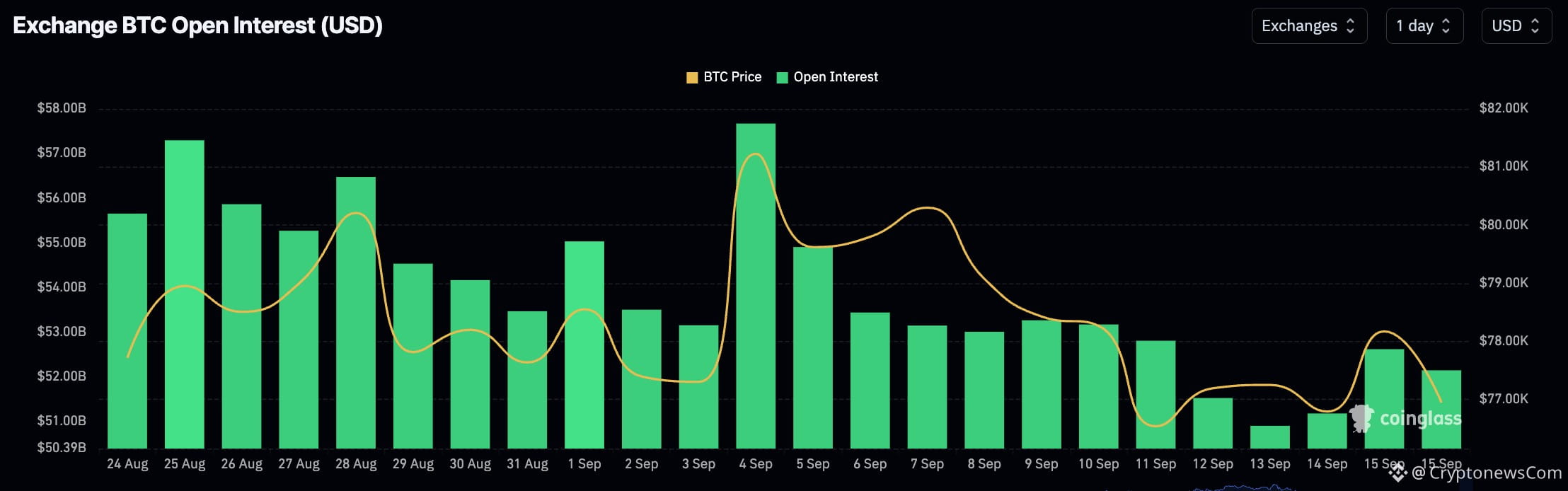
Article
Bitcoin Price Wobbles as Leverage Falls Ahead of CLARITY Vote and Fed DecisionBitcoin open interest fell by 13.5% in 10 days, dropping from 321,497 BTC to 278,151 BTC even as the underlying price declined only about 5% over the same window. That gap between derivatives unwind, and spot price action signals deliberate repositioning.
Bitcoin price currently trades under $77,000, down from its September 3 high of $82,300 but little changed day over day. The open question is if the leverage reset has actually cleared the path to a clean support test at $76,000-$77,000, or simply transferred the burden onto spot demand and ETF flows.
Senate Majority Leader John Thune has scheduled a cloture vote on the CLARITY Act for today, 2:15 p.m. Eastern, the first full-chamber test of comprehensive crypto market-structure legislation. Republicans hold 53 seats, meaning they need at least seven Democratic votes to advance the bill, and possibly more if any Republican breaks ranks.
Clarity Act vote is happening today, and the entire crypto space is watching.
With Trump and the White House urging senators to pass the Clarity Act, optimism is high today.
What will the verdict be? https://t.co/qIzSSi18So pic.twitter.com/OdWp798rOD
— BSCN (@BSCNews) September 15, 2026
The revised 630-page draft, published September 10, folds in more than 114 Democratic provisions, including a new registration category for “non-decentralized” DeFi protocols with identifiable operators overseeing consensus rules or functionality. Distributed ledger technology and raw software code are explicitly excluded from that category.
Layered on top is a Federal Reserve rate decision due within 72 hours of the current market snapshot. Futures priced a 70% chance of a 25-basis-point hike as of September 10, up sharply from 52.2% a month earlier, undercutting the rate-cut narrative many crypto traders had been positioned for. More on how that repricing is showing up in options and futures markets is available via Cryptonews’ coverage of Fed-hike odds on Kalshi.
Earn $50 and Enter $300K Prize Draw on EdgeXWhat the Leverage Reset Proves?
The 43,346 BTC drop in open interest happened before the catalysts, not after them, which is the structural detail that matters. Traders concluded the risk tied to two binary events couldn’t be adequately managed with leverage on, so they cut it proactively rather than getting forced out by a drawdown.
The spot side tells a related story. BlackRock’s iShares Bitcoin Trust recorded $19.23 million in redemptions on September 11, or the largest single-day outflow among U.S. spot Bitcoin ETFs that day, though barely 0.03% of IBIT’s reported $60.6 billion in assets. Earlier reporting on daily flow swings around this period underscores how concentrated the U.S. ETF market has become around a single vehicle.
Bitcoin Open Interest, Coinglass
That concentration is precisely why redemptions carry more weight than they did in 2024: ETF outflows convert into spot sales, and against a thinner free float, those sales move the price more.
It’s worth remembering the mechanism cuts both ways; three weeks of August inflows totaling $3.8 billion pushed Bitcoin from roughly $63,000 to $81,700, a rally built on the same structural sensitivity now working in reverse.
Trade Ethereum on Bybit and Get a Chance to Win Our $1,000 USDT Airdrop$76,000-$77,000: The Next Technical Test for Bitcoin PriceBitcoin (BTC)24h7d30d1yAll time
The technical picture is split. TradingView’s weekly overview still reads buy, with long-term indicators intact, even as short-term sub-gauges sit neutral. InvestTech’s algorithmic overall read is a hold, but its one-to-six-week recommendation is negative, flagging a breakdown from a horizontal channel and a test of support near $77,200.
Our negative near-term signal centers on $76,500 as the level whose decisive breach would reinforce further downside, while the opposite side of that formation would flip the signal positive. In short, the weekly trend is still constructive, but the tape immediately in front of the CLARITY vote and the Fed decision is not.
On-chain analyst Garrett Jin has put a 70% probability on $60,000 marking the cycle bottom, which would place the current consolidation less than halfway. What’s clearer is the positioning itself: leverage has been cut, ETF-linked spot exposure has been trimmed, and capital reserves have been built for either direction.
Crypto markets are structured to absorb the outcome of this week’s votes and decisions, not to predict them.
Discover: The Best Token Presales
The post Bitcoin Price Wobbles as Leverage Falls Ahead of CLARITY Vote and Fed Decision appeared first on Cryptonews.
Bitcoin Price Wobbles as Leverage Falls Ahead of CLARITY Vote and Fed Decision
Bitcoin open interest fell by 13.5% in 10 days, dropping from 321,497 BTC to 278,151 BTC even as the underlying price declined only about 5% over the same window. That gap between derivatives unwind, and spot price action signals deliberate repositioning.
Bitcoin price currently trades under $77,000, down from its September 3 high of $82,300 but little changed day over day. The open question is if the leverage reset has actually cleared the path to a clean support test at $76,000-$77,000, or simply transferred the burden onto spot demand and ETF flows.
Senate Majority Leader John Thune has scheduled a cloture vote on the CLARITY Act for today, 2:15 p.m. Eastern, the first full-chamber test of comprehensive crypto market-structure legislation. Republicans hold 53 seats, meaning they need at least seven Democratic votes to advance the bill, and possibly more if any Republican breaks ranks.
Clarity Act vote is happening today, and the entire crypto space is watching.
With Trump and the White House urging senators to pass the Clarity Act, optimism is high today.
What will the verdict be? https://t.co/qIzSSi18So pic.twitter.com/OdWp798rOD
— BSCN (@BSCNews) September 15, 2026
The revised 630-page draft, published September 10, folds in more than 114 Democratic provisions, including a new registration category for “non-decentralized” DeFi protocols with identifiable operators overseeing consensus rules or functionality. Distributed ledger technology and raw software code are explicitly excluded from that category.
Layered on top is a Federal Reserve rate decision due within 72 hours of the current market snapshot. Futures priced a 70% chance of a 25-basis-point hike as of September 10, up sharply from 52.2% a month earlier, undercutting the rate-cut narrative many crypto traders had been positioned for. More on how that repricing is showing up in options and futures markets is available via Cryptonews’ coverage of Fed-hike odds on Kalshi.
Earn $50 and Enter $300K Prize Draw on EdgeXWhat the Leverage Reset Proves?
The 43,346 BTC drop in open interest happened before the catalysts, not after them, which is the structural detail that matters. Traders concluded the risk tied to two binary events couldn’t be adequately managed with leverage on, so they cut it proactively rather than getting forced out by a drawdown.
The spot side tells a related story. BlackRock’s iShares Bitcoin Trust recorded $19.23 million in redemptions on September 11, or the largest single-day outflow among U.S. spot Bitcoin ETFs that day, though barely 0.03% of IBIT’s reported $60.6 billion in assets. Earlier reporting on daily flow swings around this period underscores how concentrated the U.S. ETF market has become around a single vehicle.
Bitcoin Open Interest, Coinglass
That concentration is precisely why redemptions carry more weight than they did in 2024: ETF outflows convert into spot sales, and against a thinner free float, those sales move the price more.
It’s worth remembering the mechanism cuts both ways; three weeks of August inflows totaling $3.8 billion pushed Bitcoin from roughly $63,000 to $81,700, a rally built on the same structural sensitivity now working in reverse.
Trade Ethereum on Bybit and Get a Chance to Win Our $1,000 USDT Airdrop$76,000-$77,000: The Next Technical Test for Bitcoin PriceBitcoin (BTC)24h7d30d1yAll time
The technical picture is split. TradingView’s weekly overview still reads buy, with long-term indicators intact, even as short-term sub-gauges sit neutral. InvestTech’s algorithmic overall read is a hold, but its one-to-six-week recommendation is negative, flagging a breakdown from a horizontal channel and a test of support near $77,200.
Our negative near-term signal centers on $76,500 as the level whose decisive breach would reinforce further downside, while the opposite side of that formation would flip the signal positive. In short, the weekly trend is still constructive, but the tape immediately in front of the CLARITY vote and the Fed decision is not.
On-chain analyst Garrett Jin has put a 70% probability on $60,000 marking the cycle bottom, which would place the current consolidation less than halfway. What’s clearer is the positioning itself: leverage has been cut, ETF-linked spot exposure has been trimmed, and capital reserves have been built for either direction.
Crypto markets are structured to absorb the outcome of this week’s votes and decisions, not to predict them.
Discover: The Best Token Presales
The post Bitcoin Price Wobbles as Leverage Falls Ahead of CLARITY Vote and Fed Decision appeared first on Cryptonews.
Bitcoin price currently trades under $77,000, down from its September 3 high of $82,300 but little changed day over day. The open question is if the leverage reset has actually cleared the path to a clean support test at $76,000-$77,000, or simply transferred the burden onto spot demand and ETF flows.
Senate Majority Leader John Thune has scheduled a cloture vote on the CLARITY Act for today, 2:15 p.m. Eastern, the first full-chamber test of comprehensive crypto market-structure legislation. Republicans hold 53 seats, meaning they need at least seven Democratic votes to advance the bill, and possibly more if any Republican breaks ranks.
Clarity Act vote is happening today, and the entire crypto space is watching.
With Trump and the White House urging senators to pass the Clarity Act, optimism is high today.
What will the verdict be? https://t.co/qIzSSi18So pic.twitter.com/OdWp798rOD
— BSCN (@BSCNews) September 15, 2026
The revised 630-page draft, published September 10, folds in more than 114 Democratic provisions, including a new registration category for “non-decentralized” DeFi protocols with identifiable operators overseeing consensus rules or functionality. Distributed ledger technology and raw software code are explicitly excluded from that category.
Layered on top is a Federal Reserve rate decision due within 72 hours of the current market snapshot. Futures priced a 70% chance of a 25-basis-point hike as of September 10, up sharply from 52.2% a month earlier, undercutting the rate-cut narrative many crypto traders had been positioned for. More on how that repricing is showing up in options and futures markets is available via Cryptonews’ coverage of Fed-hike odds on Kalshi.
Earn $50 and Enter $300K Prize Draw on EdgeXWhat the Leverage Reset Proves?
The 43,346 BTC drop in open interest happened before the catalysts, not after them, which is the structural detail that matters. Traders concluded the risk tied to two binary events couldn’t be adequately managed with leverage on, so they cut it proactively rather than getting forced out by a drawdown.
The spot side tells a related story. BlackRock’s iShares Bitcoin Trust recorded $19.23 million in redemptions on September 11, or the largest single-day outflow among U.S. spot Bitcoin ETFs that day, though barely 0.03% of IBIT’s reported $60.6 billion in assets. Earlier reporting on daily flow swings around this period underscores how concentrated the U.S. ETF market has become around a single vehicle.
Bitcoin Open Interest, Coinglass
That concentration is precisely why redemptions carry more weight than they did in 2024: ETF outflows convert into spot sales, and against a thinner free float, those sales move the price more.
It’s worth remembering the mechanism cuts both ways; three weeks of August inflows totaling $3.8 billion pushed Bitcoin from roughly $63,000 to $81,700, a rally built on the same structural sensitivity now working in reverse.
Trade Ethereum on Bybit and Get a Chance to Win Our $1,000 USDT Airdrop$76,000-$77,000: The Next Technical Test for Bitcoin PriceBitcoin (BTC)24h7d30d1yAll time
The technical picture is split. TradingView’s weekly overview still reads buy, with long-term indicators intact, even as short-term sub-gauges sit neutral. InvestTech’s algorithmic overall read is a hold, but its one-to-six-week recommendation is negative, flagging a breakdown from a horizontal channel and a test of support near $77,200.
Our negative near-term signal centers on $76,500 as the level whose decisive breach would reinforce further downside, while the opposite side of that formation would flip the signal positive. In short, the weekly trend is still constructive, but the tape immediately in front of the CLARITY vote and the Fed decision is not.
On-chain analyst Garrett Jin has put a 70% probability on $60,000 marking the cycle bottom, which would place the current consolidation less than halfway. What’s clearer is the positioning itself: leverage has been cut, ETF-linked spot exposure has been trimmed, and capital reserves have been built for either direction.
Crypto markets are structured to absorb the outcome of this week’s votes and decisions, not to predict them.
Discover: The Best Token Presales
The post Bitcoin Price Wobbles as Leverage Falls Ahead of CLARITY Vote and Fed Decision appeared first on Cryptonews.
12

Article
Clearpool Expands to XRPL in First Institutional Credit Product on RippleRipple plans to invest as a limited partner in an institutional credit fund to lend its RLUSD stablecoin to fintech companies for working capital, as Clearpool announced an expansion onto the XRPL (XRP Ledger) in a governance proposal on September 11, 2026.
Developed in partnership with Cicada Partners and Hex Trust, this initiative aims to create the first institutional credit product on RLUSD.
Clearpool is entering its next growth phase, expanding to the XRP Ledger.
XRPL is one of the most established networks, with institutional credit still largely untapped. We're bringing real-world, institutional-ready lending infrastructure, built natively on XRPL.
To power it,… pic.twitter.com/YZ2WW6NQE3
— Clearpool (@ClearpoolFin) September 11, 2026
Alessio Quaglini, co-founder of Clearpool and also CEO and co-founder of Hex Trust, gave this exclusive comment to CryptoNews.com regarding the announcement.
“We’re incredibly excited about this development. This initiative is a major milestone because it marks the very first institutional credit product built natively around Ripple’s new RLUSD stablecoin.” Quaglini said.
He added, “Ultimately, what we hope to achieve together is to unlock highly efficient, transparent working capital for fintechs while providing secure, compliant yield opportunities for institutional lenders.”
SOURCE: DefiLlama
How the Proposed RLUSD Credit Rails Would Work Between Clearpool and XRPL
Clearpool’s plan separates the plumbing from the underwriting. Clearpool says it will build and operate curated credit vaults using XLS-65 Single Asset Vaults, a standard that pools deposits from multiple lenders into token-specific vaults with optional permissioning.
Loans would then be issued, serviced, and repaid through the XLS-66 Lending Protocol, which is designed to handle fixed-term, uncollateralized credit directly at the ledger level rather than through a smart contract.
Cicada Partners would sit on top of that infrastructure as the credit manager, sourcing borrowers, setting loan covenants and monitoring repayment health; the firm says it has underwritten more than $860M to date.
Ripple would provide capital as a limited partner alongside other institutional investors. Hex Trust is the designated institutional custodian partner, and these mechanics matter for a stablecoin regulatory landscape that is still taking shape globally.
This is a major proposal for the XRP Ledger, but the word proposal matters.
Clearpool, an institutional lending protocol that has originated over $965 million in loans since 2021, is proposing to migrate its entire credit infrastructure to #XRPL.
Existing CPOOL would swap 1:1… pic.twitter.com/pjH029Ni5V
— Cypress Demanincor (@CDemanincor) September 12, 2026
Earn $50 and Enter $300K Prize Draw on EdgeXRipple, Cicada Partners, and the First Credit Fund on the XRP Ledger
The proposal clearly defines responsibilities: Clearpool serves as the infrastructure for loan origination, servicing, and repayment, while Cicada selects borrowers.
Ripple’s role is narrower: it functions as a limited partner alongside other institutional investors, providing capital without guaranteeing against losses. This clarifies Ripple’s financial commitment and confirms it is not a backstop for borrowers.
Clearpool highlights RLUSD’s growth as justification for the project, noting over $2.3Bn in circulation within two years, reflecting an established depositor and borrower base around the stablecoin.
Institutional interest in XRP-related products has grown, as shown by recent XRP ETF inflows, with yesterday (September 14) finishing with $11.26M in positive flows, per CoinGlass data.
Make Your Prediction Count With $25 For Free on KalshiWhy Clearpool Is Betting on XRP Ledger Now
$CPOOL with clear RS today up ≈ +50%
This is a name I traded well last cycle so keep my eye on it. small cap RWA name. I had bids sitting at 0.01578 in August that didn't get filled by a hair I didn't chase after that and just followed my system.
Even with todays HUGE… pic.twitter.com/hmejmaD2me
— Outer Ninth (@outerninth) September 14, 2026
Clearpool aims to become the Morpho of private credit on the XRPL by using independent curators for isolated XLS-65 vaults, directing capital to borrowers through XLS-66.
This approach runs alongside the existing EVM-based Clearpool marketplace. With the XRPL’s late-2025 upgrade introducing native lending and compliance tools, Clearpool believes that early establishment can yield significant network effects.
Recent discussions about large XRP holder movements indicate growing institutional interest in the ledger. However, RLUSD holders and payments fintechs remain a targeted user base, without confirmed depositors and borrowers in operational vaults.
Supercharge Your Trading in 2026 With BloFin AI Trading Bots
The post Clearpool Expands to XRPL in First Institutional Credit Product on Ripple appeared first on Cryptonews.
Clearpool Expands to XRPL in First Institutional Credit Product on Ripple
Ripple plans to invest as a limited partner in an institutional credit fund to lend its RLUSD stablecoin to fintech companies for working capital, as Clearpool announced an expansion onto the XRPL (XRP Ledger) in a governance proposal on September 11, 2026.
Developed in partnership with Cicada Partners and Hex Trust, this initiative aims to create the first institutional credit product on RLUSD.
Clearpool is entering its next growth phase, expanding to the XRP Ledger.
XRPL is one of the most established networks, with institutional credit still largely untapped. We're bringing real-world, institutional-ready lending infrastructure, built natively on XRPL.
To power it,… pic.twitter.com/YZ2WW6NQE3
— Clearpool (@ClearpoolFin) September 11, 2026
Alessio Quaglini, co-founder of Clearpool and also CEO and co-founder of Hex Trust, gave this exclusive comment to CryptoNews.com regarding the announcement.
“We’re incredibly excited about this development. This initiative is a major milestone because it marks the very first institutional credit product built natively around Ripple’s new RLUSD stablecoin.” Quaglini said.
He added, “Ultimately, what we hope to achieve together is to unlock highly efficient, transparent working capital for fintechs while providing secure, compliant yield opportunities for institutional lenders.”
SOURCE: DefiLlama
How the Proposed RLUSD Credit Rails Would Work Between Clearpool and XRPL
Clearpool’s plan separates the plumbing from the underwriting. Clearpool says it will build and operate curated credit vaults using XLS-65 Single Asset Vaults, a standard that pools deposits from multiple lenders into token-specific vaults with optional permissioning.
Loans would then be issued, serviced, and repaid through the XLS-66 Lending Protocol, which is designed to handle fixed-term, uncollateralized credit directly at the ledger level rather than through a smart contract.
Cicada Partners would sit on top of that infrastructure as the credit manager, sourcing borrowers, setting loan covenants and monitoring repayment health; the firm says it has underwritten more than $860M to date.
Ripple would provide capital as a limited partner alongside other institutional investors. Hex Trust is the designated institutional custodian partner, and these mechanics matter for a stablecoin regulatory landscape that is still taking shape globally.
This is a major proposal for the XRP Ledger, but the word proposal matters.
Clearpool, an institutional lending protocol that has originated over $965 million in loans since 2021, is proposing to migrate its entire credit infrastructure to #XRPL.
Existing CPOOL would swap 1:1… pic.twitter.com/pjH029Ni5V
— Cypress Demanincor (@CDemanincor) September 12, 2026
Earn $50 and Enter $300K Prize Draw on EdgeXRipple, Cicada Partners, and the First Credit Fund on the XRP Ledger
The proposal clearly defines responsibilities: Clearpool serves as the infrastructure for loan origination, servicing, and repayment, while Cicada selects borrowers.
Ripple’s role is narrower: it functions as a limited partner alongside other institutional investors, providing capital without guaranteeing against losses. This clarifies Ripple’s financial commitment and confirms it is not a backstop for borrowers.
Clearpool highlights RLUSD’s growth as justification for the project, noting over $2.3Bn in circulation within two years, reflecting an established depositor and borrower base around the stablecoin.
Institutional interest in XRP-related products has grown, as shown by recent XRP ETF inflows, with yesterday (September 14) finishing with $11.26M in positive flows, per CoinGlass data.
Make Your Prediction Count With $25 For Free on KalshiWhy Clearpool Is Betting on XRP Ledger Now
$CPOOL with clear RS today up ≈ +50%
This is a name I traded well last cycle so keep my eye on it. small cap RWA name. I had bids sitting at 0.01578 in August that didn't get filled by a hair I didn't chase after that and just followed my system.
Even with todays HUGE… pic.twitter.com/hmejmaD2me
— Outer Ninth (@outerninth) September 14, 2026
Clearpool aims to become the Morpho of private credit on the XRPL by using independent curators for isolated XLS-65 vaults, directing capital to borrowers through XLS-66.
This approach runs alongside the existing EVM-based Clearpool marketplace. With the XRPL’s late-2025 upgrade introducing native lending and compliance tools, Clearpool believes that early establishment can yield significant network effects.
Recent discussions about large XRP holder movements indicate growing institutional interest in the ledger. However, RLUSD holders and payments fintechs remain a targeted user base, without confirmed depositors and borrowers in operational vaults.
Supercharge Your Trading in 2026 With BloFin AI Trading Bots
The post Clearpool Expands to XRPL in First Institutional Credit Product on Ripple appeared first on Cryptonews.
Developed in partnership with Cicada Partners and Hex Trust, this initiative aims to create the first institutional credit product on RLUSD.
Clearpool is entering its next growth phase, expanding to the XRP Ledger.
XRPL is one of the most established networks, with institutional credit still largely untapped. We're bringing real-world, institutional-ready lending infrastructure, built natively on XRPL.
To power it,… pic.twitter.com/YZ2WW6NQE3
— Clearpool (@ClearpoolFin) September 11, 2026
Alessio Quaglini, co-founder of Clearpool and also CEO and co-founder of Hex Trust, gave this exclusive comment to CryptoNews.com regarding the announcement.
“We’re incredibly excited about this development. This initiative is a major milestone because it marks the very first institutional credit product built natively around Ripple’s new RLUSD stablecoin.” Quaglini said.
He added, “Ultimately, what we hope to achieve together is to unlock highly efficient, transparent working capital for fintechs while providing secure, compliant yield opportunities for institutional lenders.”
SOURCE: DefiLlama
How the Proposed RLUSD Credit Rails Would Work Between Clearpool and XRPL
Clearpool’s plan separates the plumbing from the underwriting. Clearpool says it will build and operate curated credit vaults using XLS-65 Single Asset Vaults, a standard that pools deposits from multiple lenders into token-specific vaults with optional permissioning.
Loans would then be issued, serviced, and repaid through the XLS-66 Lending Protocol, which is designed to handle fixed-term, uncollateralized credit directly at the ledger level rather than through a smart contract.
Cicada Partners would sit on top of that infrastructure as the credit manager, sourcing borrowers, setting loan covenants and monitoring repayment health; the firm says it has underwritten more than $860M to date.
Ripple would provide capital as a limited partner alongside other institutional investors. Hex Trust is the designated institutional custodian partner, and these mechanics matter for a stablecoin regulatory landscape that is still taking shape globally.
This is a major proposal for the XRP Ledger, but the word proposal matters.
Clearpool, an institutional lending protocol that has originated over $965 million in loans since 2021, is proposing to migrate its entire credit infrastructure to #XRPL.
Existing CPOOL would swap 1:1… pic.twitter.com/pjH029Ni5V
— Cypress Demanincor (@CDemanincor) September 12, 2026
Earn $50 and Enter $300K Prize Draw on EdgeXRipple, Cicada Partners, and the First Credit Fund on the XRP Ledger
The proposal clearly defines responsibilities: Clearpool serves as the infrastructure for loan origination, servicing, and repayment, while Cicada selects borrowers.
Ripple’s role is narrower: it functions as a limited partner alongside other institutional investors, providing capital without guaranteeing against losses. This clarifies Ripple’s financial commitment and confirms it is not a backstop for borrowers.
Clearpool highlights RLUSD’s growth as justification for the project, noting over $2.3Bn in circulation within two years, reflecting an established depositor and borrower base around the stablecoin.
Institutional interest in XRP-related products has grown, as shown by recent XRP ETF inflows, with yesterday (September 14) finishing with $11.26M in positive flows, per CoinGlass data.
Make Your Prediction Count With $25 For Free on KalshiWhy Clearpool Is Betting on XRP Ledger Now
$CPOOL with clear RS today up ≈ +50%
This is a name I traded well last cycle so keep my eye on it. small cap RWA name. I had bids sitting at 0.01578 in August that didn't get filled by a hair I didn't chase after that and just followed my system.
Even with todays HUGE… pic.twitter.com/hmejmaD2me
— Outer Ninth (@outerninth) September 14, 2026
Clearpool aims to become the Morpho of private credit on the XRPL by using independent curators for isolated XLS-65 vaults, directing capital to borrowers through XLS-66.
This approach runs alongside the existing EVM-based Clearpool marketplace. With the XRPL’s late-2025 upgrade introducing native lending and compliance tools, Clearpool believes that early establishment can yield significant network effects.
Recent discussions about large XRP holder movements indicate growing institutional interest in the ledger. However, RLUSD holders and payments fintechs remain a targeted user base, without confirmed depositors and borrowers in operational vaults.
Supercharge Your Trading in 2026 With BloFin AI Trading Bots
The post Clearpool Expands to XRPL in First Institutional Credit Product on Ripple appeared first on Cryptonews.
1
147
Fading Momentum Leaves XRP Price Trapped Near $1.40XRP is trading at $1.40, with the price sitting just below the $1.42 resistance level as the Senate prepares for a procedural vote on the CLARITY Act. The setup highlights a clear tension: the daily chart remains cautiously constructive, while momentum on shorter timeframes has faded.
At $1.40, XRP is close to its daily pivot and caught between nearby support and price resistance. Daily indicators show that the structure has not broken, but intraday readings point to a market that has yet to establish a decisive direction.
The scheduled vote is procedural rather than a final decision on whether the CLARITY Act becomes law. It concerns the bill’s path through the Senate and is separate from subsequent legislative steps that would be needed for a final federal framework.
Senate Republicans released a revised, 630-page draft ahead of the September 15 vote. The updated language would require trading protocols controlled by identifiable people or groups to register with the Commodity Futures Trading Commission. The draft also retains ethics provisions that prohibit public officials, employees, and their spouses from issuing or sponsoring digital assets.
CLARITY ACT VOTING WILL BEGIN TODAY.
The House already passed it 294-134, but the bill has been stuck in the Senate for over a year, mainly over ethics rules tied to Trump’s crypto income.
The Senate needs 60 votes to move it forward. Republicans have 53 seats, so at least 7… pic.twitter.com/FfrM3wIdR5
— Master of Crypto (@MasterCryptoHq) September 15, 2026
The legislation seeks to establish a federal digital-asset market framework and clarify regulatory responsibilities. Even if the procedural step advances, further Senate action would still be necessary before any final legislative outcome is reached. For XRP traders, the vote is therefore one factor alongside the chart rather than a standalone resolution of the market’s current indecision.
Earn $50 and Enter $300K Prize Draw on EdgeXWhy $1.40 XRP Price is A Genuine Market Standoff?
The daily chart gives XRP the benefit of the doubt. Price at $1.40 sits above both the 20-EMA at $1.37 and the 200-EMA at $1.33, while daily RSI reads 55.92. That places RSI above its midline without placing it near overbought territory.
Xrp (XRP)
24h7d30d1yAll time
The 50-EMA at $1.29 remains below the 200-EMA, however, so the averages do not form a textbook uptrend stack. The structure instead reflects a sharp recovery after a decline, with shorter-term averages recovering faster than the medium-term average.
The daily MACD adds caution to the constructive read. The MACD line is at 0.03 against a 0.05 signal, producing a negative histogram of roughly -0.02. That soft bearish cross suggests that the advance above the moving averages has lost some forward momentum, even though the wider daily structure remains intact.
Total Crypto Market Cap Chart, Coingecko
The crypto backdrop has also been weak. Total crypto market cap declined to $2.72 trillion, while Bitcoin dominance stood at 58.36%. The Fear & Greed Index read 69, in Greed territory, creating a contrast with the wider market pullback. U.S. diesel prices topped $6 per gallon amid the Ukraine and Iran conflicts, adding to risk-sentiment pressure.
Trade XRP on Bybit and Get a Chance to Win Our $1,000 USDT AirdropThe $1.39 Support and $1.42 Resistance Test
The daily pivot point is $1.41, with resistance at $1.42 and support at $1.39. XRP price is trading close to that pivot, a position consistent with a market waiting for a clearer catalyst.
A move above $1.42 would place the upper daily Bollinger Band near $1.46 in focus. A loss of $1.39 would return attention to the $1.33-$1.32 area, where the 200-EMA and lower Bollinger Band are close together, followed by the 50-EMA at $1.29.
Shorter timeframes present a softer picture. On the hourly chart, XRP at $1.40 sits just below the 20-EMA at $1.41, while RSI has slipped to 44.41. Average True Range near $0.02 indicates compressed volatility and consolidation rather than a clear trend.
The 15-minute chart is weaker still. XRP trades below its 20-EMA at $1.41 and 50-EMA at $1.42, while RSI is 30.72, near oversold territory. The 15-minute ATR is approximately $0.01, reinforcing the picture of a tightly compressed market.
The bullish case depends on XRP defending $1.39, reclaiming $1.42, and remaining above the daily 20-EMA. A positive turn in the daily MACD histogram would indicate that momentum is improving alongside the existing structure. A sustained bounce from the 15-minute RSI near 30.72 could offer an early sign of renewed buying, although it would not constitute confirmation by itself.
For now, XRP remains positioned around a narrow $1.39-$1.42 range. The daily chart still supports a cautiously constructive interpretation, but fading MACD momentum and softer lower-timeframe readings keep that interpretation conditional. The indicators are delivering a mixed signal, making the nearby pivot, support, and resistance levels the central focus.
Discover: The Best Token Presales
The post Fading Momentum Leaves XRP Price Trapped Near $1.40 appeared first on Cryptonews.
Fading Momentum Leaves XRP Price Trapped Near $1.40
XRP is trading at $1.40, with the price sitting just below the $1.42 resistance level as the Senate prepares for a procedural vote on the CLARITY Act. The setup highlights a clear tension: the daily chart remains cautiously constructive, while momentum on shorter timeframes has faded.
At $1.40, XRP is close to its daily pivot and caught between nearby support and price resistance. Daily indicators show that the structure has not broken, but intraday readings point to a market that has yet to establish a decisive direction.
The scheduled vote is procedural rather than a final decision on whether the CLARITY Act becomes law. It concerns the bill’s path through the Senate and is separate from subsequent legislative steps that would be needed for a final federal framework.
Senate Republicans released a revised, 630-page draft ahead of the September 15 vote. The updated language would require trading protocols controlled by identifiable people or groups to register with the Commodity Futures Trading Commission. The draft also retains ethics provisions that prohibit public officials, employees, and their spouses from issuing or sponsoring digital assets.
CLARITY ACT VOTING WILL BEGIN TODAY.
The House already passed it 294-134, but the bill has been stuck in the Senate for over a year, mainly over ethics rules tied to Trump’s crypto income.
The Senate needs 60 votes to move it forward. Republicans have 53 seats, so at least 7… pic.twitter.com/FfrM3wIdR5
— Master of Crypto (@MasterCryptoHq) September 15, 2026
The legislation seeks to establish a federal digital-asset market framework and clarify regulatory responsibilities. Even if the procedural step advances, further Senate action would still be necessary before any final legislative outcome is reached. For XRP traders, the vote is therefore one factor alongside the chart rather than a standalone resolution of the market’s current indecision.
Earn $50 and Enter $300K Prize Draw on EdgeXWhy $1.40 XRP Price is A Genuine Market Standoff?
The daily chart gives XRP the benefit of the doubt. Price at $1.40 sits above both the 20-EMA at $1.37 and the 200-EMA at $1.33, while daily RSI reads 55.92. That places RSI above its midline without placing it near overbought territory.
Xrp (XRP)
24h7d30d1yAll time
The 50-EMA at $1.29 remains below the 200-EMA, however, so the averages do not form a textbook uptrend stack. The structure instead reflects a sharp recovery after a decline, with shorter-term averages recovering faster than the medium-term average.
The daily MACD adds caution to the constructive read. The MACD line is at 0.03 against a 0.05 signal, producing a negative histogram of roughly -0.02. That soft bearish cross suggests that the advance above the moving averages has lost some forward momentum, even though the wider daily structure remains intact.
Total Crypto Market Cap Chart, Coingecko
The crypto backdrop has also been weak. Total crypto market cap declined to $2.72 trillion, while Bitcoin dominance stood at 58.36%. The Fear & Greed Index read 69, in Greed territory, creating a contrast with the wider market pullback. U.S. diesel prices topped $6 per gallon amid the Ukraine and Iran conflicts, adding to risk-sentiment pressure.
Trade XRP on Bybit and Get a Chance to Win Our $1,000 USDT AirdropThe $1.39 Support and $1.42 Resistance Test
The daily pivot point is $1.41, with resistance at $1.42 and support at $1.39. XRP price is trading close to that pivot, a position consistent with a market waiting for a clearer catalyst.
A move above $1.42 would place the upper daily Bollinger Band near $1.46 in focus. A loss of $1.39 would return attention to the $1.33-$1.32 area, where the 200-EMA and lower Bollinger Band are close together, followed by the 50-EMA at $1.29.
Shorter timeframes present a softer picture. On the hourly chart, XRP at $1.40 sits just below the 20-EMA at $1.41, while RSI has slipped to 44.41. Average True Range near $0.02 indicates compressed volatility and consolidation rather than a clear trend.
The 15-minute chart is weaker still. XRP trades below its 20-EMA at $1.41 and 50-EMA at $1.42, while RSI is 30.72, near oversold territory. The 15-minute ATR is approximately $0.01, reinforcing the picture of a tightly compressed market.
The bullish case depends on XRP defending $1.39, reclaiming $1.42, and remaining above the daily 20-EMA. A positive turn in the daily MACD histogram would indicate that momentum is improving alongside the existing structure. A sustained bounce from the 15-minute RSI near 30.72 could offer an early sign of renewed buying, although it would not constitute confirmation by itself.
For now, XRP remains positioned around a narrow $1.39-$1.42 range. The daily chart still supports a cautiously constructive interpretation, but fading MACD momentum and softer lower-timeframe readings keep that interpretation conditional. The indicators are delivering a mixed signal, making the nearby pivot, support, and resistance levels the central focus.
Discover: The Best Token Presales
The post Fading Momentum Leaves XRP Price Trapped Near $1.40 appeared first on Cryptonews.
At $1.40, XRP is close to its daily pivot and caught between nearby support and price resistance. Daily indicators show that the structure has not broken, but intraday readings point to a market that has yet to establish a decisive direction.
The scheduled vote is procedural rather than a final decision on whether the CLARITY Act becomes law. It concerns the bill’s path through the Senate and is separate from subsequent legislative steps that would be needed for a final federal framework.
Senate Republicans released a revised, 630-page draft ahead of the September 15 vote. The updated language would require trading protocols controlled by identifiable people or groups to register with the Commodity Futures Trading Commission. The draft also retains ethics provisions that prohibit public officials, employees, and their spouses from issuing or sponsoring digital assets.
CLARITY ACT VOTING WILL BEGIN TODAY.
The House already passed it 294-134, but the bill has been stuck in the Senate for over a year, mainly over ethics rules tied to Trump’s crypto income.
The Senate needs 60 votes to move it forward. Republicans have 53 seats, so at least 7… pic.twitter.com/FfrM3wIdR5
— Master of Crypto (@MasterCryptoHq) September 15, 2026
The legislation seeks to establish a federal digital-asset market framework and clarify regulatory responsibilities. Even if the procedural step advances, further Senate action would still be necessary before any final legislative outcome is reached. For XRP traders, the vote is therefore one factor alongside the chart rather than a standalone resolution of the market’s current indecision.
Earn $50 and Enter $300K Prize Draw on EdgeXWhy $1.40 XRP Price is A Genuine Market Standoff?
The daily chart gives XRP the benefit of the doubt. Price at $1.40 sits above both the 20-EMA at $1.37 and the 200-EMA at $1.33, while daily RSI reads 55.92. That places RSI above its midline without placing it near overbought territory.
Xrp (XRP)
24h7d30d1yAll time
The 50-EMA at $1.29 remains below the 200-EMA, however, so the averages do not form a textbook uptrend stack. The structure instead reflects a sharp recovery after a decline, with shorter-term averages recovering faster than the medium-term average.
The daily MACD adds caution to the constructive read. The MACD line is at 0.03 against a 0.05 signal, producing a negative histogram of roughly -0.02. That soft bearish cross suggests that the advance above the moving averages has lost some forward momentum, even though the wider daily structure remains intact.
Total Crypto Market Cap Chart, Coingecko
The crypto backdrop has also been weak. Total crypto market cap declined to $2.72 trillion, while Bitcoin dominance stood at 58.36%. The Fear & Greed Index read 69, in Greed territory, creating a contrast with the wider market pullback. U.S. diesel prices topped $6 per gallon amid the Ukraine and Iran conflicts, adding to risk-sentiment pressure.
Trade XRP on Bybit and Get a Chance to Win Our $1,000 USDT AirdropThe $1.39 Support and $1.42 Resistance Test
The daily pivot point is $1.41, with resistance at $1.42 and support at $1.39. XRP price is trading close to that pivot, a position consistent with a market waiting for a clearer catalyst.
A move above $1.42 would place the upper daily Bollinger Band near $1.46 in focus. A loss of $1.39 would return attention to the $1.33-$1.32 area, where the 200-EMA and lower Bollinger Band are close together, followed by the 50-EMA at $1.29.
Shorter timeframes present a softer picture. On the hourly chart, XRP at $1.40 sits just below the 20-EMA at $1.41, while RSI has slipped to 44.41. Average True Range near $0.02 indicates compressed volatility and consolidation rather than a clear trend.
The 15-minute chart is weaker still. XRP trades below its 20-EMA at $1.41 and 50-EMA at $1.42, while RSI is 30.72, near oversold territory. The 15-minute ATR is approximately $0.01, reinforcing the picture of a tightly compressed market.
The bullish case depends on XRP defending $1.39, reclaiming $1.42, and remaining above the daily 20-EMA. A positive turn in the daily MACD histogram would indicate that momentum is improving alongside the existing structure. A sustained bounce from the 15-minute RSI near 30.72 could offer an early sign of renewed buying, although it would not constitute confirmation by itself.
For now, XRP remains positioned around a narrow $1.39-$1.42 range. The daily chart still supports a cautiously constructive interpretation, but fading MACD momentum and softer lower-timeframe readings keep that interpretation conditional. The indicators are delivering a mixed signal, making the nearby pivot, support, and resistance levels the central focus.
Discover: The Best Token Presales
The post Fading Momentum Leaves XRP Price Trapped Near $1.40 appeared first on Cryptonews.
974

Article
Ethereum Price Prediction: Today’s Clarity Act Could Send ETH Above $3,000Ethereum price trades at $2,470 today, down 1.8% on the day, as the Clarity Act prediction odds fall to under 20% this week. That vote could be the catalyst that decides whether ETH reclaims $2,550 or slides back toward $2,180. There’s a third scenario nobody’s pricing in yet.
Ted Pillows notes that Ethereum has failed to secure a weekly close above $2,550, with his chart placing ETH near $2,522 against resistance at $2,546.78. Price still holds above the 50-week EMA at $2,386.63. Michaël van de Poppe’s hourly chart shows ETH rebounding from $2,448 support, while Daan Crypto Trades cautions the Clarity Act vote is only an initial legislative stage, not a done deal.
$ETH failed to close above $2,550 last week.
Clarity Act voting will happen this week, and if it passes, I think Ethereum will reclaim the $2,550 level.
Once that happens, the pump to $3,000 could occur soon. pic.twitter.com/DQ2psv3Qxb
— Ted (@TedPillows) September 14, 2026
But Ethereum has gained 33.4% over 30 days despite a 46.3% annual decline, a divergence that tells its own story about cycle timing. The market is watching CPI data and Clarity Act headlines simultaneously, and Bitcoin’s price action is reacting to the same regulatory calculus.
Earn $50 and Enter $300K Prize Draw on EdgeXEthereum Price Prediction: Can ETH Hit $3,000 This Week?
ETH sits at $2,474, down almost 2% intraday, after printing an intraday low near $2,465 and a recovery high around $2,600. The pullback to $2,516 before easing further shows sellers are still active at resistance. Price remains above the 50-week SMA near $2,470.83, though barely, a razor-thin cushion.
The bull case happens when the Clarity Act passage triggers a reclaim of $2,550, exposing $2,800 resistance and putting the $3,000 target in play, per Pillows’ framework. The base case is a continued chop between $2,386 and $2,550 while the market digests legislative headlines in stages.
Ethereum (ETH)
24h7d30d1yAll time
But one scenario that holders would rather not see? A renewed rejection that could send ETH toward $2,180, with deeper support near $1,965 and $1,713 if that level fails.
A weekly close above $2,546.78 would strengthen the bullish thesis considerably. For a different structural driver behind the same $3,000 target, this supply-side analysis is worth a look. For background on what’s actually in the bill, the Clarity Act draft details matter more than most traders assume.
Trade Ethereum on Bybit and Get a Chance to Win Our $1,000 USDT AirdropLiquidChain Targets Early Mover Upside as Ethereum Tests Key Levels
Holding ETH through this chop validates the long-term thesis, but let’s be honest, a move from $2,474 to $3,000 is just 21% upside on a $300B-plus asset. Solid, not spectacular. Capital chasing outsized returns is increasingly rotating toward earlier-stage infrastructure plays that sit beneath assets like ETH, BTC, and SOL rather than competing with them.
The Order rests. The architecture never sleeps. ⟁https://t.co/vqvBcdSQYC pic.twitter.com/bNof4XHJ58
— LiquidChain (@getliquidchain) September 9, 2026
LiquidChain ($LIQUID) is a Layer 3 infrastructure project fusing Bitcoin, Ethereum, and Solana liquidity into a single execution environment. Its Unified Liquidity Layer and Single-Step Execution let developers deploy once and access all three ecosystems, backed by Verifiable Settlement.
The presale sits at $0.014955 per token with more than $960K raised so far.
Research LiquidChain directly before the presale closes.
Discover: The Best Token Presales
The post Ethereum Price Prediction: Today’s Clarity Act Could Send ETH Above $3,000 appeared first on Cryptonews.
Ethereum Price Prediction: Today’s Clarity Act Could Send ETH Above $3,000
Ethereum price trades at $2,470 today, down 1.8% on the day, as the Clarity Act prediction odds fall to under 20% this week. That vote could be the catalyst that decides whether ETH reclaims $2,550 or slides back toward $2,180. There’s a third scenario nobody’s pricing in yet.
Ted Pillows notes that Ethereum has failed to secure a weekly close above $2,550, with his chart placing ETH near $2,522 against resistance at $2,546.78. Price still holds above the 50-week EMA at $2,386.63. Michaël van de Poppe’s hourly chart shows ETH rebounding from $2,448 support, while Daan Crypto Trades cautions the Clarity Act vote is only an initial legislative stage, not a done deal.
$ETH failed to close above $2,550 last week.
Clarity Act voting will happen this week, and if it passes, I think Ethereum will reclaim the $2,550 level.
Once that happens, the pump to $3,000 could occur soon. pic.twitter.com/DQ2psv3Qxb
— Ted (@TedPillows) September 14, 2026
But Ethereum has gained 33.4% over 30 days despite a 46.3% annual decline, a divergence that tells its own story about cycle timing. The market is watching CPI data and Clarity Act headlines simultaneously, and Bitcoin’s price action is reacting to the same regulatory calculus.
Earn $50 and Enter $300K Prize Draw on EdgeXEthereum Price Prediction: Can ETH Hit $3,000 This Week?
ETH sits at $2,474, down almost 2% intraday, after printing an intraday low near $2,465 and a recovery high around $2,600. The pullback to $2,516 before easing further shows sellers are still active at resistance. Price remains above the 50-week SMA near $2,470.83, though barely, a razor-thin cushion.
The bull case happens when the Clarity Act passage triggers a reclaim of $2,550, exposing $2,800 resistance and putting the $3,000 target in play, per Pillows’ framework. The base case is a continued chop between $2,386 and $2,550 while the market digests legislative headlines in stages.
Ethereum (ETH)
24h7d30d1yAll time
But one scenario that holders would rather not see? A renewed rejection that could send ETH toward $2,180, with deeper support near $1,965 and $1,713 if that level fails.
A weekly close above $2,546.78 would strengthen the bullish thesis considerably. For a different structural driver behind the same $3,000 target, this supply-side analysis is worth a look. For background on what’s actually in the bill, the Clarity Act draft details matter more than most traders assume.
Trade Ethereum on Bybit and Get a Chance to Win Our $1,000 USDT AirdropLiquidChain Targets Early Mover Upside as Ethereum Tests Key Levels
Holding ETH through this chop validates the long-term thesis, but let’s be honest, a move from $2,474 to $3,000 is just 21% upside on a $300B-plus asset. Solid, not spectacular. Capital chasing outsized returns is increasingly rotating toward earlier-stage infrastructure plays that sit beneath assets like ETH, BTC, and SOL rather than competing with them.
The Order rests. The architecture never sleeps. ⟁https://t.co/vqvBcdSQYC pic.twitter.com/bNof4XHJ58
— LiquidChain (@getliquidchain) September 9, 2026
LiquidChain ($LIQUID) is a Layer 3 infrastructure project fusing Bitcoin, Ethereum, and Solana liquidity into a single execution environment. Its Unified Liquidity Layer and Single-Step Execution let developers deploy once and access all three ecosystems, backed by Verifiable Settlement.
The presale sits at $0.014955 per token with more than $960K raised so far.
Research LiquidChain directly before the presale closes.
Discover: The Best Token Presales
The post Ethereum Price Prediction: Today’s Clarity Act Could Send ETH Above $3,000 appeared first on Cryptonews.
Ted Pillows notes that Ethereum has failed to secure a weekly close above $2,550, with his chart placing ETH near $2,522 against resistance at $2,546.78. Price still holds above the 50-week EMA at $2,386.63. Michaël van de Poppe’s hourly chart shows ETH rebounding from $2,448 support, while Daan Crypto Trades cautions the Clarity Act vote is only an initial legislative stage, not a done deal.
$ETH failed to close above $2,550 last week.
Clarity Act voting will happen this week, and if it passes, I think Ethereum will reclaim the $2,550 level.
Once that happens, the pump to $3,000 could occur soon. pic.twitter.com/DQ2psv3Qxb
— Ted (@TedPillows) September 14, 2026
But Ethereum has gained 33.4% over 30 days despite a 46.3% annual decline, a divergence that tells its own story about cycle timing. The market is watching CPI data and Clarity Act headlines simultaneously, and Bitcoin’s price action is reacting to the same regulatory calculus.
Earn $50 and Enter $300K Prize Draw on EdgeXEthereum Price Prediction: Can ETH Hit $3,000 This Week?
ETH sits at $2,474, down almost 2% intraday, after printing an intraday low near $2,465 and a recovery high around $2,600. The pullback to $2,516 before easing further shows sellers are still active at resistance. Price remains above the 50-week SMA near $2,470.83, though barely, a razor-thin cushion.
The bull case happens when the Clarity Act passage triggers a reclaim of $2,550, exposing $2,800 resistance and putting the $3,000 target in play, per Pillows’ framework. The base case is a continued chop between $2,386 and $2,550 while the market digests legislative headlines in stages.
Ethereum (ETH)
24h7d30d1yAll time
But one scenario that holders would rather not see? A renewed rejection that could send ETH toward $2,180, with deeper support near $1,965 and $1,713 if that level fails.
A weekly close above $2,546.78 would strengthen the bullish thesis considerably. For a different structural driver behind the same $3,000 target, this supply-side analysis is worth a look. For background on what’s actually in the bill, the Clarity Act draft details matter more than most traders assume.
Trade Ethereum on Bybit and Get a Chance to Win Our $1,000 USDT AirdropLiquidChain Targets Early Mover Upside as Ethereum Tests Key Levels
Holding ETH through this chop validates the long-term thesis, but let’s be honest, a move from $2,474 to $3,000 is just 21% upside on a $300B-plus asset. Solid, not spectacular. Capital chasing outsized returns is increasingly rotating toward earlier-stage infrastructure plays that sit beneath assets like ETH, BTC, and SOL rather than competing with them.
The Order rests. The architecture never sleeps. ⟁https://t.co/vqvBcdSQYC pic.twitter.com/bNof4XHJ58
— LiquidChain (@getliquidchain) September 9, 2026
LiquidChain ($LIQUID) is a Layer 3 infrastructure project fusing Bitcoin, Ethereum, and Solana liquidity into a single execution environment. Its Unified Liquidity Layer and Single-Step Execution let developers deploy once and access all three ecosystems, backed by Verifiable Settlement.
The presale sits at $0.014955 per token with more than $960K raised so far.
Research LiquidChain directly before the presale closes.
Discover: The Best Token Presales
The post Ethereum Price Prediction: Today’s Clarity Act Could Send ETH Above $3,000 appeared first on Cryptonews.
656
Verified
XRP Price Prediction: One Vote Could Unlock XRP Ledger’s Next Big UpgradeXRP is trading at $1.40, outperforming the crypto market and bearish price prediction, as the network’s next major upgrade is sitting one validator vote away from a two-week countdown to activation. The setup has been ignored in a red-candle news cycle, but it shouldn’t be.
The Batch V1.1 amendment, which lets users bundle up to eight linked transactions into a single atomic operation, had backing from 27 of 35 trusted validators as of Tuesday’s snapshot, or 77% of the total validators, just shy of the 80% threshold XRP Ledger requires for any protocol change.
XRP Ledger is closing in on a major payments upgrade.
Batch V1.1 has support from 27 of 35 validators, just one short of the 80% threshold.
If activated, apps could bundle up to 8 linked transactions – making complex payments smoother and more reliable. pic.twitter.com/4qOWe2AXpb
— Coindoo.com (@coindoo) September 15, 2026
One more validator flipping yes triggers 14 days of sustained support before mainnet activation. The upgrade follows a technical review from RippleX that fixed 11 issues, including a critical signature-reuse flaw flagged by security auditor Common Prefix.
The timing matters. XRP’s price action is currently wedged between this network catalyst and a separate macro event, the CLARITY Act vote, landing in the same 48-hour window. Markets rarely get two structural catalysts stacked that close together.
Earn $50 and Enter $300K Prize Draw on EdgeXXRP Price Prediction: Can Ripple Hit $1.50 This Week?
XRP’s pullback to $1.40 puts it mid-range in a consolidation band that’s held for weeks. Support sits at $1.35–$1.38; resistance clusters at $1.43–$1.45, then $1.50. A close above $1.50 would confirm continuation toward $1.55–$1.60. Failure to hold $1.35 exposes downside toward $1.30 and $1.27.
Xrp (XRP)
24h7d30d1yAll time
Bull case: Batch V1.1 activates cleanly, CLARITY Act clears its procedural hurdle, and XRP reclaims $1.50 on volume. Base case: Range-bound chop between $1.35 and $1.45 while traders wait on both catalysts. Bear case: A hawkish Fed signal on Sept. 16 or a stalled validator vote sends XRP back toward $1.27–$1.21.
Network fundamentals remain a separate question from price. Transaction volume on the ledger has been climbing, though whether that reflects organic adoption or upgrade-driven testing traffic is still unclear.
Trade XRP on Bybit and Get a Chance to Win Our $1,000 USDT AirdropMaxi Doge Targets Early Mover Upside as XRP Tests Key Levels
A 4steady price with two major catalysts still pending is exactly the kind of setup that tests conviction. XRP holders aren’t wrong to stay positioned as the fundamentals case is intact, but at an $87 billion-plus market cap, a validator vote isn’t going to double anyone’s stack overnight. That math pushes some capital toward earlier-stage plays with more room to run.
Enter Maxi Doge ($MAXI), an Ethereum-based meme token built around leverage-trading culture rather than passive holding. The project has raised $4.8 million in its presale at a current price of just $0.0002839 per token. With staking that offers a huge 65% APY.
pic.twitter.com/Vg6OpDX6Bq
— MaxiDoge (@MaxiDoge_) August 13, 2026
Standout features include holder-only trading competitions with leaderboard rewards and a Maxi Fund treasury earmarked for liquidity and partnerships. The pitch is blunt: 1000x-leverage energy, gym-bro marketing, and a stated goal of outpacing original DOGE on the charts.
Research Maxi Doge before the presale ends.
Discover: The Best Token Presales
The post XRP Price Prediction: One Vote Could Unlock XRP Ledger’s Next Big Upgrade appeared first on Cryptonews.
XRP Price Prediction: One Vote Could Unlock XRP Ledger’s Next Big Upgrade
XRP is trading at $1.40, outperforming the crypto market and bearish price prediction, as the network’s next major upgrade is sitting one validator vote away from a two-week countdown to activation. The setup has been ignored in a red-candle news cycle, but it shouldn’t be.
The Batch V1.1 amendment, which lets users bundle up to eight linked transactions into a single atomic operation, had backing from 27 of 35 trusted validators as of Tuesday’s snapshot, or 77% of the total validators, just shy of the 80% threshold XRP Ledger requires for any protocol change.
XRP Ledger is closing in on a major payments upgrade.
Batch V1.1 has support from 27 of 35 validators, just one short of the 80% threshold.
If activated, apps could bundle up to 8 linked transactions – making complex payments smoother and more reliable. pic.twitter.com/4qOWe2AXpb
— Coindoo.com (@coindoo) September 15, 2026
One more validator flipping yes triggers 14 days of sustained support before mainnet activation. The upgrade follows a technical review from RippleX that fixed 11 issues, including a critical signature-reuse flaw flagged by security auditor Common Prefix.
The timing matters. XRP’s price action is currently wedged between this network catalyst and a separate macro event, the CLARITY Act vote, landing in the same 48-hour window. Markets rarely get two structural catalysts stacked that close together.
Earn $50 and Enter $300K Prize Draw on EdgeXXRP Price Prediction: Can Ripple Hit $1.50 This Week?
XRP’s pullback to $1.40 puts it mid-range in a consolidation band that’s held for weeks. Support sits at $1.35–$1.38; resistance clusters at $1.43–$1.45, then $1.50. A close above $1.50 would confirm continuation toward $1.55–$1.60. Failure to hold $1.35 exposes downside toward $1.30 and $1.27.
Xrp (XRP)
24h7d30d1yAll time
Bull case: Batch V1.1 activates cleanly, CLARITY Act clears its procedural hurdle, and XRP reclaims $1.50 on volume. Base case: Range-bound chop between $1.35 and $1.45 while traders wait on both catalysts. Bear case: A hawkish Fed signal on Sept. 16 or a stalled validator vote sends XRP back toward $1.27–$1.21.
Network fundamentals remain a separate question from price. Transaction volume on the ledger has been climbing, though whether that reflects organic adoption or upgrade-driven testing traffic is still unclear.
Trade XRP on Bybit and Get a Chance to Win Our $1,000 USDT AirdropMaxi Doge Targets Early Mover Upside as XRP Tests Key Levels
A 4steady price with two major catalysts still pending is exactly the kind of setup that tests conviction. XRP holders aren’t wrong to stay positioned as the fundamentals case is intact, but at an $87 billion-plus market cap, a validator vote isn’t going to double anyone’s stack overnight. That math pushes some capital toward earlier-stage plays with more room to run.
Enter Maxi Doge ($MAXI), an Ethereum-based meme token built around leverage-trading culture rather than passive holding. The project has raised $4.8 million in its presale at a current price of just $0.0002839 per token. With staking that offers a huge 65% APY.
pic.twitter.com/Vg6OpDX6Bq
— MaxiDoge (@MaxiDoge_) August 13, 2026
Standout features include holder-only trading competitions with leaderboard rewards and a Maxi Fund treasury earmarked for liquidity and partnerships. The pitch is blunt: 1000x-leverage energy, gym-bro marketing, and a stated goal of outpacing original DOGE on the charts.
Research Maxi Doge before the presale ends.
Discover: The Best Token Presales
The post XRP Price Prediction: One Vote Could Unlock XRP Ledger’s Next Big Upgrade appeared first on Cryptonews.
The Batch V1.1 amendment, which lets users bundle up to eight linked transactions into a single atomic operation, had backing from 27 of 35 trusted validators as of Tuesday’s snapshot, or 77% of the total validators, just shy of the 80% threshold XRP Ledger requires for any protocol change.
XRP Ledger is closing in on a major payments upgrade.
Batch V1.1 has support from 27 of 35 validators, just one short of the 80% threshold.
If activated, apps could bundle up to 8 linked transactions – making complex payments smoother and more reliable. pic.twitter.com/4qOWe2AXpb
— Coindoo.com (@coindoo) September 15, 2026
One more validator flipping yes triggers 14 days of sustained support before mainnet activation. The upgrade follows a technical review from RippleX that fixed 11 issues, including a critical signature-reuse flaw flagged by security auditor Common Prefix.
The timing matters. XRP’s price action is currently wedged between this network catalyst and a separate macro event, the CLARITY Act vote, landing in the same 48-hour window. Markets rarely get two structural catalysts stacked that close together.
Earn $50 and Enter $300K Prize Draw on EdgeXXRP Price Prediction: Can Ripple Hit $1.50 This Week?
XRP’s pullback to $1.40 puts it mid-range in a consolidation band that’s held for weeks. Support sits at $1.35–$1.38; resistance clusters at $1.43–$1.45, then $1.50. A close above $1.50 would confirm continuation toward $1.55–$1.60. Failure to hold $1.35 exposes downside toward $1.30 and $1.27.
Xrp (XRP)
24h7d30d1yAll time
Bull case: Batch V1.1 activates cleanly, CLARITY Act clears its procedural hurdle, and XRP reclaims $1.50 on volume. Base case: Range-bound chop between $1.35 and $1.45 while traders wait on both catalysts. Bear case: A hawkish Fed signal on Sept. 16 or a stalled validator vote sends XRP back toward $1.27–$1.21.
Network fundamentals remain a separate question from price. Transaction volume on the ledger has been climbing, though whether that reflects organic adoption or upgrade-driven testing traffic is still unclear.
Trade XRP on Bybit and Get a Chance to Win Our $1,000 USDT AirdropMaxi Doge Targets Early Mover Upside as XRP Tests Key Levels
A 4steady price with two major catalysts still pending is exactly the kind of setup that tests conviction. XRP holders aren’t wrong to stay positioned as the fundamentals case is intact, but at an $87 billion-plus market cap, a validator vote isn’t going to double anyone’s stack overnight. That math pushes some capital toward earlier-stage plays with more room to run.
Enter Maxi Doge ($MAXI), an Ethereum-based meme token built around leverage-trading culture rather than passive holding. The project has raised $4.8 million in its presale at a current price of just $0.0002839 per token. With staking that offers a huge 65% APY.
pic.twitter.com/Vg6OpDX6Bq
— MaxiDoge (@MaxiDoge_) August 13, 2026
Standout features include holder-only trading competitions with leaderboard rewards and a Maxi Fund treasury earmarked for liquidity and partnerships. The pitch is blunt: 1000x-leverage energy, gym-bro marketing, and a stated goal of outpacing original DOGE on the charts.
Research Maxi Doge before the presale ends.
Discover: The Best Token Presales
The post XRP Price Prediction: One Vote Could Unlock XRP Ledger’s Next Big Upgrade appeared first on Cryptonews.
1
2
906
Log in to explore more content
Join global crypto users on Binance Square
⚡️ Get latest and useful information about crypto.
💬 Trusted by the world’s largest crypto exchange.
👍 Discover real insights from verified creators.
Email / Phone number
Trending Topics
FedRateWatch
1.1M views
5,088 Discussing
Share & Win Traffic Reward in our Trending Hashtag Campaign
✨Topic: FOMC September, What's The Fed's Next Move?
👉How to Join:
Publish a short post or article with hashtag #FedRateWatch
Create content based on the below angles:
- August core CPI rose 0.3% month-over-month, and the odds of a 25bp hike this week are now close to 90%. Do you anticipate a rate hike this week? Is it a one-off, or the start of a longer hiking cycle?
- If the hike lands, how does it play out for BTC, tech stocks, and gold? Bullish or bearish?
- How are you planning to trade next? Share your BTC, stocks or gold trade/holdings with our trade sharing widget.
⏰Campaign Period:
- 2026-09-15 11:00 - 2026-09-17 3:00 UTC
🎁Reward:
- Qualified posts that comply with the above guidelines and contain more than 100 words will be reviewed and may receive a random traffic boost of 500 to 3,000 views. You will receive a notification from your feed secretary if your post is selected.
- Get a chance to have your article featured on Binance Square Official
Need ideas for your post? Visit the topic page #FedRateWatch or the Square Guide on How to Post for Better Reach.
Binance Square Official
·566 Likes
·1.3M views
ZcashHoldersBackNU7Upgrade
4,301 views
158 Discussing
MSTRTradingVolumeSurpassesMorganStanley
9,992 views
355 Discussing