
Crypto Breaking
19.5k Posts

Crypto Breaking
 Square Verified+
Report
Block User
Get real-time cryptocurrency news, blockchain updates, market analysis, and expert insights. Explore the latest trends in Bitcoin, Ethereum, DeFi, and Web3.
6 Following
32.8K+ Followers
31.6K+ Liked
Posts
All
Quotes
Article
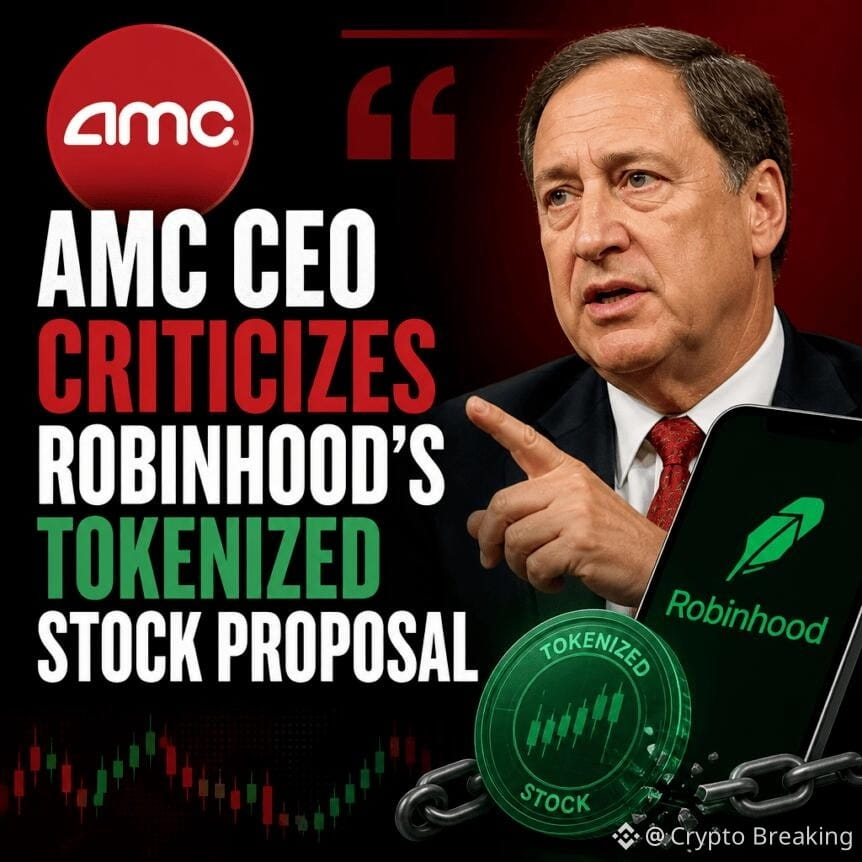
AMC CEO Criticizes Robinhood’s Tokenized Stock ProposalAMC Entertainment CEO Adam Aron has raised fresh concerns about Robinhood’s “tokenized stock” products, arguing that the offerings have no affiliation with AMC and that the company will ask its outside securities counsel to investigate the matter. In an X post on Friday, Aron called Robinhood’s tokenized AMC exposure “outrageous,” adding that Robinhood stock tokens are not registered under U.S. securities laws.
Aron also suggested the products may be restricted from being offered to U.S. investors and face additional limitations in other jurisdictions, including Canada, Switzerland, and the UK. The remarks add to an escalating pattern of scrutiny around tokenized stocks—blockchain-based instruments intended to track the value of traditional listed shares.
Key takeaways
Adam Aron says Robinhood has “no affiliation” with AMC for its tokenized stock offering and is seeking a review by outside securities counsel.
Aron characterizes Robinhood tokenized stock products as “outrageous” and says they are not registered under U.S. securities laws.
The criticism also points to potential cross-border offering restrictions, naming Canada, Switzerland, and the UK.
The dispute arrives amid broader industry tension over tokenized stock campaigns that have faced cancellations, including in connection with tokenized IPO access.
Robinhood’s tokenized stock program has evolved from earlier tokenized debt structures to an Ethereum-layer 2 ecosystem centered on Robinhood Chain.
Aron questions Robinhood’s tokenized AMC exposure
Aron’s comments were direct: he told X users that Robinhood has no affiliation with AMC regarding the company’s tokenized stock offerings designed to provide economic exposure to AMC shares. He further stated that Robinhood will request an investigation from outside securities counsel.
While Aron’s post does not spell out specific legal or operational details beyond affiliation and registration concerns, it frames the issue as one of investor-facing legitimacy—both in terms of corporate relationship and compliance with U.S. securities regulations. He also noted that the offerings “may not be offered to US investors” and are subject to restrictions in multiple other countries.
Robinhood co-founder and CEO Vlad Tenev responded publicly on X by asking Aron to share his exact concerns regarding the tokenized offering. According to the reporting, Robinhood did not issue a separate public statement.
What “tokenized stocks” are—and why regulators and issuers are watching
Tokenized stock products are designed to deliver economic exposure to traditional equities using blockchain-based representations. In the case of Robinhood’s ecosystem, the company’s earlier “stock tokens” were launched as tokenized debt securities issued by Jersey-based Robinhood Assets and structured as ERC-20 tokens.
Aron’s criticism reflects a broader debate that has emerged across the tokenized asset market: who bears responsibility for compliance, and what level of legitimacy and disclosure is required when tokenized instruments are tied to the performance of well-known public companies. When issuers or executives claim a lack of affiliation, it can also raise questions about branding, marketing, and investor expectations—especially for retail audiences.
For investors, the key issue is practical: if a tokenized product is not clearly registered—or if jurisdictions treat it differently—then availability, settlement, and redemption pathways may not match what users assume from the “stock-like” wrapper.
Broader backlash linked to tokenized IPO campaigns
Aron’s comments arrive after another high-profile controversy involving tokenized stock offerings tied to IPO access. Earlier this year, major crypto exchanges reportedly canceled tokenized SpaceX IPO allocation campaigns and, in some cases, pointed to execution or delivery limitations tied to underlying asset transfer.
According to earlier reporting cited in the article, platforms including Bybit, Binance, Bitget Wallet, and MEXC canceled tokenized SpaceX IPO campaigns after SpaceX began trading on the Nasdaq. Several platforms attributed their decision to an inability to deliver the underlying assets associated with xStocks, which is described in the article as Kraken-owned.
That episode underscores a recurring vulnerability in tokenized equity narratives: even if tokenization is technically feasible, the compliance and mechanics of delivering the referenced securities—especially on time and in the correct jurisdiction—can determine whether such products remain viable. AMC’s situation may be distinct from IPO access arrangements, but it highlights the same underlying tension between “token-as-stock” marketing and real-world legal and settlement constraints.
Robinhood’s tokenization roadmap: from early tokens to Robinhood Chain
The article notes that Robinhood’s first generation of stock tokens launched in July 2026 as tokenized debt securities issued by Jersey-based Robinhood Assets, using ERC-20 tokens to represent economic exposure to underlying assets such as U.S. stocks and exchange-traded funds.
It also describes Robinhood’s subsequent push into infrastructure that can host tokenized assets. In February, Robinhood launched a public testnet for Robinhood Chain, an Ethereum layer-2 network built using Arbitrum technology. Later, in October 2025, Robinhood shared plans to tokenize nearly 500 U.S. stocks and ETFs on Arbitrum.
In July 2026, the article further points to coverage that Bernstein analysts raised their price target on Robinhood Markets, predicting that tokenized equities and prediction markets would drive growth in the next phase rather than traditional crypto trading.
Taken together, the roadmap illustrates why this dispute matters beyond AMC specifically. If tokenized assets are meant to become a durable product category for retail users, then questions about issuer affiliation, regulatory registration status, and jurisdictional availability can directly affect adoption, partner relationships, and—potentially—compliance strategy across the broader tokenization stack.
What to watch next
Aron says Robinhood will involve outside securities counsel, but the immediate uncertainty for market participants is what the investigation will conclude and whether Robinhood responds with clarifications about the legal basis for its tokenized stock products. Readers should also watch for how other issuers, regulators, and intermediaries react as tokenized equity offerings move from pilot phases toward wider deployment.
This article was originally published as AMC CEO Criticizes Robinhood’s Tokenized Stock Proposal on Crypto Breaking News – your trusted source for crypto news, Bitcoin news, and blockchain updates.
AMC CEO Criticizes Robinhood’s Tokenized Stock Proposal
AMC Entertainment CEO Adam Aron has raised fresh concerns about Robinhood’s “tokenized stock” products, arguing that the offerings have no affiliation with AMC and that the company will ask its outside securities counsel to investigate the matter. In an X post on Friday, Aron called Robinhood’s tokenized AMC exposure “outrageous,” adding that Robinhood stock tokens are not registered under U.S. securities laws.
Aron also suggested the products may be restricted from being offered to U.S. investors and face additional limitations in other jurisdictions, including Canada, Switzerland, and the UK. The remarks add to an escalating pattern of scrutiny around tokenized stocks—blockchain-based instruments intended to track the value of traditional listed shares.
Key takeaways
Adam Aron says Robinhood has “no affiliation” with AMC for its tokenized stock offering and is seeking a review by outside securities counsel.
Aron characterizes Robinhood tokenized stock products as “outrageous” and says they are not registered under U.S. securities laws.
The criticism also points to potential cross-border offering restrictions, naming Canada, Switzerland, and the UK.
The dispute arrives amid broader industry tension over tokenized stock campaigns that have faced cancellations, including in connection with tokenized IPO access.
Robinhood’s tokenized stock program has evolved from earlier tokenized debt structures to an Ethereum-layer 2 ecosystem centered on Robinhood Chain.
Aron questions Robinhood’s tokenized AMC exposure
Aron’s comments were direct: he told X users that Robinhood has no affiliation with AMC regarding the company’s tokenized stock offerings designed to provide economic exposure to AMC shares. He further stated that Robinhood will request an investigation from outside securities counsel.
While Aron’s post does not spell out specific legal or operational details beyond affiliation and registration concerns, it frames the issue as one of investor-facing legitimacy—both in terms of corporate relationship and compliance with U.S. securities regulations. He also noted that the offerings “may not be offered to US investors” and are subject to restrictions in multiple other countries.
Robinhood co-founder and CEO Vlad Tenev responded publicly on X by asking Aron to share his exact concerns regarding the tokenized offering. According to the reporting, Robinhood did not issue a separate public statement.
What “tokenized stocks” are—and why regulators and issuers are watching
Tokenized stock products are designed to deliver economic exposure to traditional equities using blockchain-based representations. In the case of Robinhood’s ecosystem, the company’s earlier “stock tokens” were launched as tokenized debt securities issued by Jersey-based Robinhood Assets and structured as ERC-20 tokens.
Aron’s criticism reflects a broader debate that has emerged across the tokenized asset market: who bears responsibility for compliance, and what level of legitimacy and disclosure is required when tokenized instruments are tied to the performance of well-known public companies. When issuers or executives claim a lack of affiliation, it can also raise questions about branding, marketing, and investor expectations—especially for retail audiences.
For investors, the key issue is practical: if a tokenized product is not clearly registered—or if jurisdictions treat it differently—then availability, settlement, and redemption pathways may not match what users assume from the “stock-like” wrapper.
Broader backlash linked to tokenized IPO campaigns
Aron’s comments arrive after another high-profile controversy involving tokenized stock offerings tied to IPO access. Earlier this year, major crypto exchanges reportedly canceled tokenized SpaceX IPO allocation campaigns and, in some cases, pointed to execution or delivery limitations tied to underlying asset transfer.
According to earlier reporting cited in the article, platforms including Bybit, Binance, Bitget Wallet, and MEXC canceled tokenized SpaceX IPO campaigns after SpaceX began trading on the Nasdaq. Several platforms attributed their decision to an inability to deliver the underlying assets associated with xStocks, which is described in the article as Kraken-owned.
That episode underscores a recurring vulnerability in tokenized equity narratives: even if tokenization is technically feasible, the compliance and mechanics of delivering the referenced securities—especially on time and in the correct jurisdiction—can determine whether such products remain viable. AMC’s situation may be distinct from IPO access arrangements, but it highlights the same underlying tension between “token-as-stock” marketing and real-world legal and settlement constraints.
Robinhood’s tokenization roadmap: from early tokens to Robinhood Chain
The article notes that Robinhood’s first generation of stock tokens launched in July 2026 as tokenized debt securities issued by Jersey-based Robinhood Assets, using ERC-20 tokens to represent economic exposure to underlying assets such as U.S. stocks and exchange-traded funds.
It also describes Robinhood’s subsequent push into infrastructure that can host tokenized assets. In February, Robinhood launched a public testnet for Robinhood Chain, an Ethereum layer-2 network built using Arbitrum technology. Later, in October 2025, Robinhood shared plans to tokenize nearly 500 U.S. stocks and ETFs on Arbitrum.
In July 2026, the article further points to coverage that Bernstein analysts raised their price target on Robinhood Markets, predicting that tokenized equities and prediction markets would drive growth in the next phase rather than traditional crypto trading.
Taken together, the roadmap illustrates why this dispute matters beyond AMC specifically. If tokenized assets are meant to become a durable product category for retail users, then questions about issuer affiliation, regulatory registration status, and jurisdictional availability can directly affect adoption, partner relationships, and—potentially—compliance strategy across the broader tokenization stack.
What to watch next
Aron says Robinhood will involve outside securities counsel, but the immediate uncertainty for market participants is what the investigation will conclude and whether Robinhood responds with clarifications about the legal basis for its tokenized stock products. Readers should also watch for how other issuers, regulators, and intermediaries react as tokenized equity offerings move from pilot phases toward wider deployment.
This article was originally published as AMC CEO Criticizes Robinhood’s Tokenized Stock Proposal on Crypto Breaking News – your trusted source for crypto news, Bitcoin news, and blockchain updates.
Aron also suggested the products may be restricted from being offered to U.S. investors and face additional limitations in other jurisdictions, including Canada, Switzerland, and the UK. The remarks add to an escalating pattern of scrutiny around tokenized stocks—blockchain-based instruments intended to track the value of traditional listed shares.
Key takeaways
Adam Aron says Robinhood has “no affiliation” with AMC for its tokenized stock offering and is seeking a review by outside securities counsel.
Aron characterizes Robinhood tokenized stock products as “outrageous” and says they are not registered under U.S. securities laws.
The criticism also points to potential cross-border offering restrictions, naming Canada, Switzerland, and the UK.
The dispute arrives amid broader industry tension over tokenized stock campaigns that have faced cancellations, including in connection with tokenized IPO access.
Robinhood’s tokenized stock program has evolved from earlier tokenized debt structures to an Ethereum-layer 2 ecosystem centered on Robinhood Chain.
Aron questions Robinhood’s tokenized AMC exposure
Aron’s comments were direct: he told X users that Robinhood has no affiliation with AMC regarding the company’s tokenized stock offerings designed to provide economic exposure to AMC shares. He further stated that Robinhood will request an investigation from outside securities counsel.
While Aron’s post does not spell out specific legal or operational details beyond affiliation and registration concerns, it frames the issue as one of investor-facing legitimacy—both in terms of corporate relationship and compliance with U.S. securities regulations. He also noted that the offerings “may not be offered to US investors” and are subject to restrictions in multiple other countries.
Robinhood co-founder and CEO Vlad Tenev responded publicly on X by asking Aron to share his exact concerns regarding the tokenized offering. According to the reporting, Robinhood did not issue a separate public statement.
What “tokenized stocks” are—and why regulators and issuers are watching
Tokenized stock products are designed to deliver economic exposure to traditional equities using blockchain-based representations. In the case of Robinhood’s ecosystem, the company’s earlier “stock tokens” were launched as tokenized debt securities issued by Jersey-based Robinhood Assets and structured as ERC-20 tokens.
Aron’s criticism reflects a broader debate that has emerged across the tokenized asset market: who bears responsibility for compliance, and what level of legitimacy and disclosure is required when tokenized instruments are tied to the performance of well-known public companies. When issuers or executives claim a lack of affiliation, it can also raise questions about branding, marketing, and investor expectations—especially for retail audiences.
For investors, the key issue is practical: if a tokenized product is not clearly registered—or if jurisdictions treat it differently—then availability, settlement, and redemption pathways may not match what users assume from the “stock-like” wrapper.
Broader backlash linked to tokenized IPO campaigns
Aron’s comments arrive after another high-profile controversy involving tokenized stock offerings tied to IPO access. Earlier this year, major crypto exchanges reportedly canceled tokenized SpaceX IPO allocation campaigns and, in some cases, pointed to execution or delivery limitations tied to underlying asset transfer.
According to earlier reporting cited in the article, platforms including Bybit, Binance, Bitget Wallet, and MEXC canceled tokenized SpaceX IPO campaigns after SpaceX began trading on the Nasdaq. Several platforms attributed their decision to an inability to deliver the underlying assets associated with xStocks, which is described in the article as Kraken-owned.
That episode underscores a recurring vulnerability in tokenized equity narratives: even if tokenization is technically feasible, the compliance and mechanics of delivering the referenced securities—especially on time and in the correct jurisdiction—can determine whether such products remain viable. AMC’s situation may be distinct from IPO access arrangements, but it highlights the same underlying tension between “token-as-stock” marketing and real-world legal and settlement constraints.
Robinhood’s tokenization roadmap: from early tokens to Robinhood Chain
The article notes that Robinhood’s first generation of stock tokens launched in July 2026 as tokenized debt securities issued by Jersey-based Robinhood Assets, using ERC-20 tokens to represent economic exposure to underlying assets such as U.S. stocks and exchange-traded funds.
It also describes Robinhood’s subsequent push into infrastructure that can host tokenized assets. In February, Robinhood launched a public testnet for Robinhood Chain, an Ethereum layer-2 network built using Arbitrum technology. Later, in October 2025, Robinhood shared plans to tokenize nearly 500 U.S. stocks and ETFs on Arbitrum.
In July 2026, the article further points to coverage that Bernstein analysts raised their price target on Robinhood Markets, predicting that tokenized equities and prediction markets would drive growth in the next phase rather than traditional crypto trading.
Taken together, the roadmap illustrates why this dispute matters beyond AMC specifically. If tokenized assets are meant to become a durable product category for retail users, then questions about issuer affiliation, regulatory registration status, and jurisdictional availability can directly affect adoption, partner relationships, and—potentially—compliance strategy across the broader tokenization stack.
What to watch next
Aron says Robinhood will involve outside securities counsel, but the immediate uncertainty for market participants is what the investigation will conclude and whether Robinhood responds with clarifications about the legal basis for its tokenized stock products. Readers should also watch for how other issuers, regulators, and intermediaries react as tokenized equity offerings move from pilot phases toward wider deployment.
This article was originally published as AMC CEO Criticizes Robinhood’s Tokenized Stock Proposal on Crypto Breaking News – your trusted source for crypto news, Bitcoin news, and blockchain updates.
18
Article
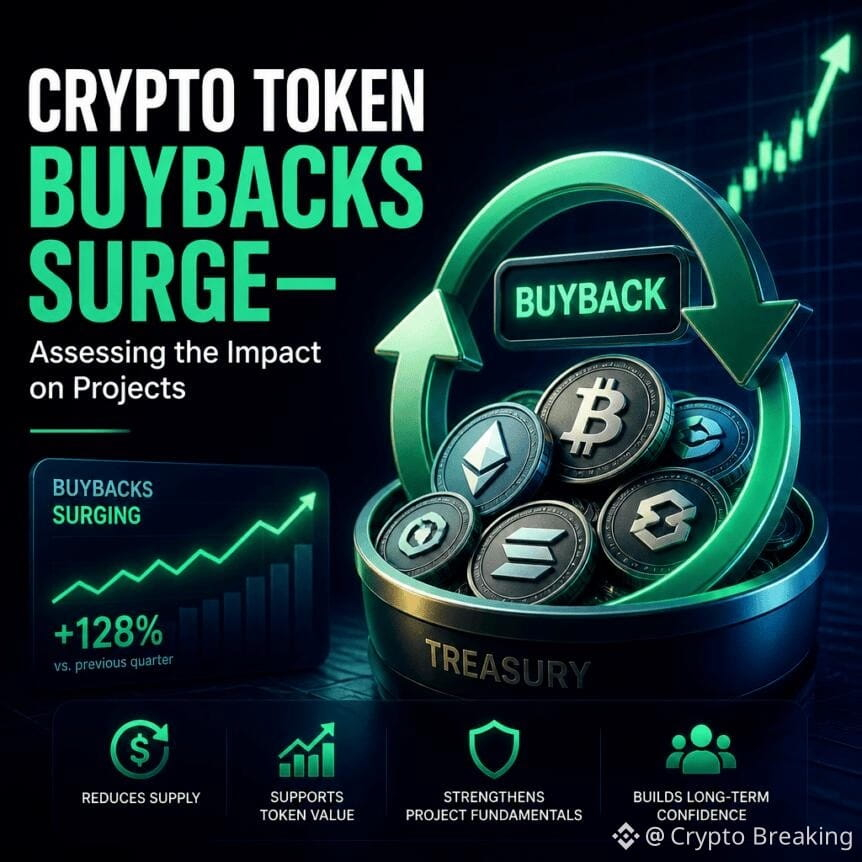
Crypto Token Buybacks Surge—Assessing the Impact on ProjectsIn 2026, token buybacks have become one of crypto’s most visible tokenomics moves, as more projects use protocol-generated revenue to repurchase their own tokens—often followed by holding or burning. Early-year data points to a rapid shift in how teams try to connect token value to economic activity, borrowing a familiar idea from TradFi while adapting it to on-chain mechanics.
According to Cointelegraph’s reporting, projects have spent roughly $640 million on token buybacks so far in 2026, about 17% higher than the comparable period in 2025. The same reporting also notes that the current spending is dramatically above the $366,000 figure recorded in 2024, with Hyperliquid and Pump.fun accounting for nearly 90% of the total.
Key takeaways
Revenue-funded buybacks are increasingly used to create market demand and, when paired with burns, reduce circulating supply.
Legal experts argue the main appeal is often simpler messaging—“bought and burned” is easier to explain than governance mechanics.
Buybacks can improve tokenholder alignment, but they cannot fix weak fundamentals if the protocol’s surplus is limited.
Investors are watching whether buybacks are genuine value capture or mostly financial engineering that props up prices temporarily.
Regulators are focusing on what actually underpins token value, which could reshape how these programs are framed.
Why buybacks—and burns—are catching on
The basic logic behind token buybacks is straightforward. When a project uses revenue to repurchase its own token, it creates additional demand in the open market. If repurchased tokens are then burned, supply contracts, which can increase scarcity and put upward pressure on price under favorable conditions.
Beyond the market mechanics, supporters say buybacks give tokenholders a clearer line of sight to how the protocol is doing economically. Orest Gavryliak, chief legal officer at decentralized exchange aggregator 1inch, told Cointelegraph Magazine that revenue-funded buybacks and burns typically reflect one of two objectives: reducing the circulating token supply or demonstrating a rationale for investing in protocol revenues.
“When projects implement revenue-funded buybacks and burns, they typically have one of two objectives in mind: either to decrease the token supply in circulation or to demonstrate the rationale for investing in protocol revenues.”
Gavryliak also highlighted the communication advantage. Telling users that a project has “bought and burned tokens” is, in his view, more direct than explaining how governance rights work, how fees are set, or how protocol usage translates into value.
That appeal matters in a market where many tokens have historically struggled to make a simple economic case. Buybacks attempt to address that gap by linking tokenholder outcomes to the protocol’s revenue rather than relying only on narrative or speculative momentum.
From “narratives” to value capture—what’s changed
The adoption of buybacks reflects a broader trend: some token models are trying to behave less like pure stories and more like systems that steadily capture value for holders. Max Shannon, senior research associate at Bitwise Europe, argued that buybacks and burns remain one of the clearer ways to accrue value to tokenholders because they create a continuous bid for tokens tied to protocol adoption.
“Buybacks and burns remain an effective way to accrue value to tokenholders: they create a continuous bid in the open market for the token, directly tethering token success to the platform’s adoption.”
This is a notable shift from earlier phases of crypto’s growth, when many participants leaned on narratives—buying tokens because of expected upside rather than a detailed economic mechanism.
Cointelegraph Magazine cites specific examples to show how aggressive some programs have become. Hyperliquid, it reports, has used 99% of its revenue to buy back and burn HYPE, and Pump.fun reportedly directs 50% of its revenue toward buying and burning PUMP. The same piece states that $446.65 million worth of PUMP has already been removed from circulation.
Spark takes a different approach. According to Cointelegraph Magazine, Spark has acquired more than 143 million SPK via open-market buybacks funded by protocol surplus, but those tokens have not been burned. Co-founder and CEO Sam MacPherson told Magazine the intent is not just supply reduction; instead, Spark is using buybacks to keep long-term economic participation aligned with the protocol’s success. He said the goal is to avoid turning the mechanism into a simplistic “dividend mechanism,” emphasizing flexibility over how acquired tokens are deployed.
Are buybacks the best use of surplus?
Even if buybacks are effective at returning value, the bigger investment question is whether they are the highest-value use of a protocol’s next dollar of capital.
MacPherson framed the issue in terms of opportunity cost: a project should ask what it can do with surplus that creates the most durable value. If a protocol can reinvest at attractive returns, reinvestment may outperform distributing value immediately via token repurchases.
“The question should be: what is the highest-value use of the next dollar of surplus?”
There is also a practical limit: buybacks do not automatically improve the underlying business. For projects that generate little real surplus, repurchases may become a way to temporarily influence token prices without addressing operational constraints.
Cointelegraph Magazine points to examples where strong buyback and burn activity did not prevent tokens from underperforming relative to earlier highs. Pump.fun has reportedly been aggressively buying and burning PUMP since July 2025, yet the token remains around 50% below its September 2025 all-time high. The piece also notes that UNI has given back roughly half of the gains after Uniswap unveiled its UNIfication proposal in November 2025.
Shannon cautioned that multiple factors can drive price changes, so these outcomes do not prove buybacks “failed.” Still, he said investors have started debating whether startups should dedicate less revenue to buybacks and burns and instead invest more in teams and product delivery.
“They have prompted investors to debate whether these startup-like projects would be better served by reducing the share of revenue committed to buybacks and burns and reinvesting more in the team and the project itself.”
In other words, investors are increasingly distinguishing between token programs that boost token economics in parallel with business improvements, and programs that primarily function as price support.
When tokens start to look like stocks—and why regulators care
Although buybacks resemble corporate share repurchase programs, tokenholders generally do not receive the same legal entitlements as shareholders. Gavryliak stressed this distinction, saying token buybacks are “a market mechanism, not a legally enforceable entitlement.”
Shannon and Spark’s leadership describe the goal differently: they frame tokens as a kind of on-chain participation mechanism rather than an equity substitute. MacPherson called Spark’s SPK acquisitions “pseudo-equity,” not in a legal sense, but economically—trying to reproduce characteristics like long-term alignment, participation in governance, and the ability for committed community members to benefit from protocol success.
As regulators revisit how tokens should be classified, buybacks could become a flashpoint—not because they automatically make tokens into securities, but because they may influence how markets interpret the “source of value.” Cointelegraph Magazine discussed the proposed Digital Asset Market Clarity (CLARITY) Act of 2025, noting it remains a draft and should not be treated as settled law.
Gavryliak’s view is that the question regulators may prioritize is whether token value primarily comes from the network’s functionality or from the project’s efforts to market and deliver returns. He warned against relying on stock-like framing without addressing what actually drives value.
“If it stems from the functionality of the network itself, then the asset looks like a commodity. But if the value is based on the efforts of the project’s team in matters of shipping, marketing, or providing returns to token holders, then it is already a security. In the end, don’t put the clothes of a stock on the token and expect it to be a commodity.”
There is also a deeper investor test implied by that logic: if buybacks were to stop, would holders still have a reason to hold? As Gavryliak put it, the mechanism may be cosmetic if the protocol’s value proposition is not durable.
“If the buybacks stopped, would there still be a reason to hold the token? If the answer is no, the problem runs deeper than tokenomics.”
With buybacks spreading, the next phase for investors is likely to focus less on the headline figure of repurchases and more on what they replace internally—how much surplus is left for development and whether token economics can survive without constant financial engineering. Regulators are also signaling that the narrative around “where value comes from” may matter as much as the program itself.
This article was originally published as Crypto Token Buybacks Surge—Assessing the Impact on Projects on Crypto Breaking News – your trusted source for crypto news, Bitcoin news, and blockchain updates.
Crypto Token Buybacks Surge—Assessing the Impact on Projects
In 2026, token buybacks have become one of crypto’s most visible tokenomics moves, as more projects use protocol-generated revenue to repurchase their own tokens—often followed by holding or burning. Early-year data points to a rapid shift in how teams try to connect token value to economic activity, borrowing a familiar idea from TradFi while adapting it to on-chain mechanics.
According to Cointelegraph’s reporting, projects have spent roughly $640 million on token buybacks so far in 2026, about 17% higher than the comparable period in 2025. The same reporting also notes that the current spending is dramatically above the $366,000 figure recorded in 2024, with Hyperliquid and Pump.fun accounting for nearly 90% of the total.
Key takeaways
Revenue-funded buybacks are increasingly used to create market demand and, when paired with burns, reduce circulating supply.
Legal experts argue the main appeal is often simpler messaging—“bought and burned” is easier to explain than governance mechanics.
Buybacks can improve tokenholder alignment, but they cannot fix weak fundamentals if the protocol’s surplus is limited.
Investors are watching whether buybacks are genuine value capture or mostly financial engineering that props up prices temporarily.
Regulators are focusing on what actually underpins token value, which could reshape how these programs are framed.
Why buybacks—and burns—are catching on
The basic logic behind token buybacks is straightforward. When a project uses revenue to repurchase its own token, it creates additional demand in the open market. If repurchased tokens are then burned, supply contracts, which can increase scarcity and put upward pressure on price under favorable conditions.
Beyond the market mechanics, supporters say buybacks give tokenholders a clearer line of sight to how the protocol is doing economically. Orest Gavryliak, chief legal officer at decentralized exchange aggregator 1inch, told Cointelegraph Magazine that revenue-funded buybacks and burns typically reflect one of two objectives: reducing the circulating token supply or demonstrating a rationale for investing in protocol revenues.
“When projects implement revenue-funded buybacks and burns, they typically have one of two objectives in mind: either to decrease the token supply in circulation or to demonstrate the rationale for investing in protocol revenues.”
Gavryliak also highlighted the communication advantage. Telling users that a project has “bought and burned tokens” is, in his view, more direct than explaining how governance rights work, how fees are set, or how protocol usage translates into value.
That appeal matters in a market where many tokens have historically struggled to make a simple economic case. Buybacks attempt to address that gap by linking tokenholder outcomes to the protocol’s revenue rather than relying only on narrative or speculative momentum.
From “narratives” to value capture—what’s changed
The adoption of buybacks reflects a broader trend: some token models are trying to behave less like pure stories and more like systems that steadily capture value for holders. Max Shannon, senior research associate at Bitwise Europe, argued that buybacks and burns remain one of the clearer ways to accrue value to tokenholders because they create a continuous bid for tokens tied to protocol adoption.
“Buybacks and burns remain an effective way to accrue value to tokenholders: they create a continuous bid in the open market for the token, directly tethering token success to the platform’s adoption.”
This is a notable shift from earlier phases of crypto’s growth, when many participants leaned on narratives—buying tokens because of expected upside rather than a detailed economic mechanism.
Cointelegraph Magazine cites specific examples to show how aggressive some programs have become. Hyperliquid, it reports, has used 99% of its revenue to buy back and burn HYPE, and Pump.fun reportedly directs 50% of its revenue toward buying and burning PUMP. The same piece states that $446.65 million worth of PUMP has already been removed from circulation.
Spark takes a different approach. According to Cointelegraph Magazine, Spark has acquired more than 143 million SPK via open-market buybacks funded by protocol surplus, but those tokens have not been burned. Co-founder and CEO Sam MacPherson told Magazine the intent is not just supply reduction; instead, Spark is using buybacks to keep long-term economic participation aligned with the protocol’s success. He said the goal is to avoid turning the mechanism into a simplistic “dividend mechanism,” emphasizing flexibility over how acquired tokens are deployed.
Are buybacks the best use of surplus?
Even if buybacks are effective at returning value, the bigger investment question is whether they are the highest-value use of a protocol’s next dollar of capital.
MacPherson framed the issue in terms of opportunity cost: a project should ask what it can do with surplus that creates the most durable value. If a protocol can reinvest at attractive returns, reinvestment may outperform distributing value immediately via token repurchases.
“The question should be: what is the highest-value use of the next dollar of surplus?”
There is also a practical limit: buybacks do not automatically improve the underlying business. For projects that generate little real surplus, repurchases may become a way to temporarily influence token prices without addressing operational constraints.
Cointelegraph Magazine points to examples where strong buyback and burn activity did not prevent tokens from underperforming relative to earlier highs. Pump.fun has reportedly been aggressively buying and burning PUMP since July 2025, yet the token remains around 50% below its September 2025 all-time high. The piece also notes that UNI has given back roughly half of the gains after Uniswap unveiled its UNIfication proposal in November 2025.
Shannon cautioned that multiple factors can drive price changes, so these outcomes do not prove buybacks “failed.” Still, he said investors have started debating whether startups should dedicate less revenue to buybacks and burns and instead invest more in teams and product delivery.
“They have prompted investors to debate whether these startup-like projects would be better served by reducing the share of revenue committed to buybacks and burns and reinvesting more in the team and the project itself.”
In other words, investors are increasingly distinguishing between token programs that boost token economics in parallel with business improvements, and programs that primarily function as price support.
When tokens start to look like stocks—and why regulators care
Although buybacks resemble corporate share repurchase programs, tokenholders generally do not receive the same legal entitlements as shareholders. Gavryliak stressed this distinction, saying token buybacks are “a market mechanism, not a legally enforceable entitlement.”
Shannon and Spark’s leadership describe the goal differently: they frame tokens as a kind of on-chain participation mechanism rather than an equity substitute. MacPherson called Spark’s SPK acquisitions “pseudo-equity,” not in a legal sense, but economically—trying to reproduce characteristics like long-term alignment, participation in governance, and the ability for committed community members to benefit from protocol success.
As regulators revisit how tokens should be classified, buybacks could become a flashpoint—not because they automatically make tokens into securities, but because they may influence how markets interpret the “source of value.” Cointelegraph Magazine discussed the proposed Digital Asset Market Clarity (CLARITY) Act of 2025, noting it remains a draft and should not be treated as settled law.
Gavryliak’s view is that the question regulators may prioritize is whether token value primarily comes from the network’s functionality or from the project’s efforts to market and deliver returns. He warned against relying on stock-like framing without addressing what actually drives value.
“If it stems from the functionality of the network itself, then the asset looks like a commodity. But if the value is based on the efforts of the project’s team in matters of shipping, marketing, or providing returns to token holders, then it is already a security. In the end, don’t put the clothes of a stock on the token and expect it to be a commodity.”
There is also a deeper investor test implied by that logic: if buybacks were to stop, would holders still have a reason to hold? As Gavryliak put it, the mechanism may be cosmetic if the protocol’s value proposition is not durable.
“If the buybacks stopped, would there still be a reason to hold the token? If the answer is no, the problem runs deeper than tokenomics.”
With buybacks spreading, the next phase for investors is likely to focus less on the headline figure of repurchases and more on what they replace internally—how much surplus is left for development and whether token economics can survive without constant financial engineering. Regulators are also signaling that the narrative around “where value comes from” may matter as much as the program itself.
This article was originally published as Crypto Token Buybacks Surge—Assessing the Impact on Projects on Crypto Breaking News – your trusted source for crypto news, Bitcoin news, and blockchain updates.
According to Cointelegraph’s reporting, projects have spent roughly $640 million on token buybacks so far in 2026, about 17% higher than the comparable period in 2025. The same reporting also notes that the current spending is dramatically above the $366,000 figure recorded in 2024, with Hyperliquid and Pump.fun accounting for nearly 90% of the total.
Key takeaways
Revenue-funded buybacks are increasingly used to create market demand and, when paired with burns, reduce circulating supply.
Legal experts argue the main appeal is often simpler messaging—“bought and burned” is easier to explain than governance mechanics.
Buybacks can improve tokenholder alignment, but they cannot fix weak fundamentals if the protocol’s surplus is limited.
Investors are watching whether buybacks are genuine value capture or mostly financial engineering that props up prices temporarily.
Regulators are focusing on what actually underpins token value, which could reshape how these programs are framed.
Why buybacks—and burns—are catching on
The basic logic behind token buybacks is straightforward. When a project uses revenue to repurchase its own token, it creates additional demand in the open market. If repurchased tokens are then burned, supply contracts, which can increase scarcity and put upward pressure on price under favorable conditions.
Beyond the market mechanics, supporters say buybacks give tokenholders a clearer line of sight to how the protocol is doing economically. Orest Gavryliak, chief legal officer at decentralized exchange aggregator 1inch, told Cointelegraph Magazine that revenue-funded buybacks and burns typically reflect one of two objectives: reducing the circulating token supply or demonstrating a rationale for investing in protocol revenues.
“When projects implement revenue-funded buybacks and burns, they typically have one of two objectives in mind: either to decrease the token supply in circulation or to demonstrate the rationale for investing in protocol revenues.”
Gavryliak also highlighted the communication advantage. Telling users that a project has “bought and burned tokens” is, in his view, more direct than explaining how governance rights work, how fees are set, or how protocol usage translates into value.
That appeal matters in a market where many tokens have historically struggled to make a simple economic case. Buybacks attempt to address that gap by linking tokenholder outcomes to the protocol’s revenue rather than relying only on narrative or speculative momentum.
From “narratives” to value capture—what’s changed
The adoption of buybacks reflects a broader trend: some token models are trying to behave less like pure stories and more like systems that steadily capture value for holders. Max Shannon, senior research associate at Bitwise Europe, argued that buybacks and burns remain one of the clearer ways to accrue value to tokenholders because they create a continuous bid for tokens tied to protocol adoption.
“Buybacks and burns remain an effective way to accrue value to tokenholders: they create a continuous bid in the open market for the token, directly tethering token success to the platform’s adoption.”
This is a notable shift from earlier phases of crypto’s growth, when many participants leaned on narratives—buying tokens because of expected upside rather than a detailed economic mechanism.
Cointelegraph Magazine cites specific examples to show how aggressive some programs have become. Hyperliquid, it reports, has used 99% of its revenue to buy back and burn HYPE, and Pump.fun reportedly directs 50% of its revenue toward buying and burning PUMP. The same piece states that $446.65 million worth of PUMP has already been removed from circulation.
Spark takes a different approach. According to Cointelegraph Magazine, Spark has acquired more than 143 million SPK via open-market buybacks funded by protocol surplus, but those tokens have not been burned. Co-founder and CEO Sam MacPherson told Magazine the intent is not just supply reduction; instead, Spark is using buybacks to keep long-term economic participation aligned with the protocol’s success. He said the goal is to avoid turning the mechanism into a simplistic “dividend mechanism,” emphasizing flexibility over how acquired tokens are deployed.
Are buybacks the best use of surplus?
Even if buybacks are effective at returning value, the bigger investment question is whether they are the highest-value use of a protocol’s next dollar of capital.
MacPherson framed the issue in terms of opportunity cost: a project should ask what it can do with surplus that creates the most durable value. If a protocol can reinvest at attractive returns, reinvestment may outperform distributing value immediately via token repurchases.
“The question should be: what is the highest-value use of the next dollar of surplus?”
There is also a practical limit: buybacks do not automatically improve the underlying business. For projects that generate little real surplus, repurchases may become a way to temporarily influence token prices without addressing operational constraints.
Cointelegraph Magazine points to examples where strong buyback and burn activity did not prevent tokens from underperforming relative to earlier highs. Pump.fun has reportedly been aggressively buying and burning PUMP since July 2025, yet the token remains around 50% below its September 2025 all-time high. The piece also notes that UNI has given back roughly half of the gains after Uniswap unveiled its UNIfication proposal in November 2025.
Shannon cautioned that multiple factors can drive price changes, so these outcomes do not prove buybacks “failed.” Still, he said investors have started debating whether startups should dedicate less revenue to buybacks and burns and instead invest more in teams and product delivery.
“They have prompted investors to debate whether these startup-like projects would be better served by reducing the share of revenue committed to buybacks and burns and reinvesting more in the team and the project itself.”
In other words, investors are increasingly distinguishing between token programs that boost token economics in parallel with business improvements, and programs that primarily function as price support.
When tokens start to look like stocks—and why regulators care
Although buybacks resemble corporate share repurchase programs, tokenholders generally do not receive the same legal entitlements as shareholders. Gavryliak stressed this distinction, saying token buybacks are “a market mechanism, not a legally enforceable entitlement.”
Shannon and Spark’s leadership describe the goal differently: they frame tokens as a kind of on-chain participation mechanism rather than an equity substitute. MacPherson called Spark’s SPK acquisitions “pseudo-equity,” not in a legal sense, but economically—trying to reproduce characteristics like long-term alignment, participation in governance, and the ability for committed community members to benefit from protocol success.
As regulators revisit how tokens should be classified, buybacks could become a flashpoint—not because they automatically make tokens into securities, but because they may influence how markets interpret the “source of value.” Cointelegraph Magazine discussed the proposed Digital Asset Market Clarity (CLARITY) Act of 2025, noting it remains a draft and should not be treated as settled law.
Gavryliak’s view is that the question regulators may prioritize is whether token value primarily comes from the network’s functionality or from the project’s efforts to market and deliver returns. He warned against relying on stock-like framing without addressing what actually drives value.
“If it stems from the functionality of the network itself, then the asset looks like a commodity. But if the value is based on the efforts of the project’s team in matters of shipping, marketing, or providing returns to token holders, then it is already a security. In the end, don’t put the clothes of a stock on the token and expect it to be a commodity.”
There is also a deeper investor test implied by that logic: if buybacks were to stop, would holders still have a reason to hold? As Gavryliak put it, the mechanism may be cosmetic if the protocol’s value proposition is not durable.
“If the buybacks stopped, would there still be a reason to hold the token? If the answer is no, the problem runs deeper than tokenomics.”
With buybacks spreading, the next phase for investors is likely to focus less on the headline figure of repurchases and more on what they replace internally—how much surplus is left for development and whether token economics can survive without constant financial engineering. Regulators are also signaling that the narrative around “where value comes from” may matter as much as the program itself.
This article was originally published as Crypto Token Buybacks Surge—Assessing the Impact on Projects on Crypto Breaking News – your trusted source for crypto news, Bitcoin news, and blockchain updates.
27
Article
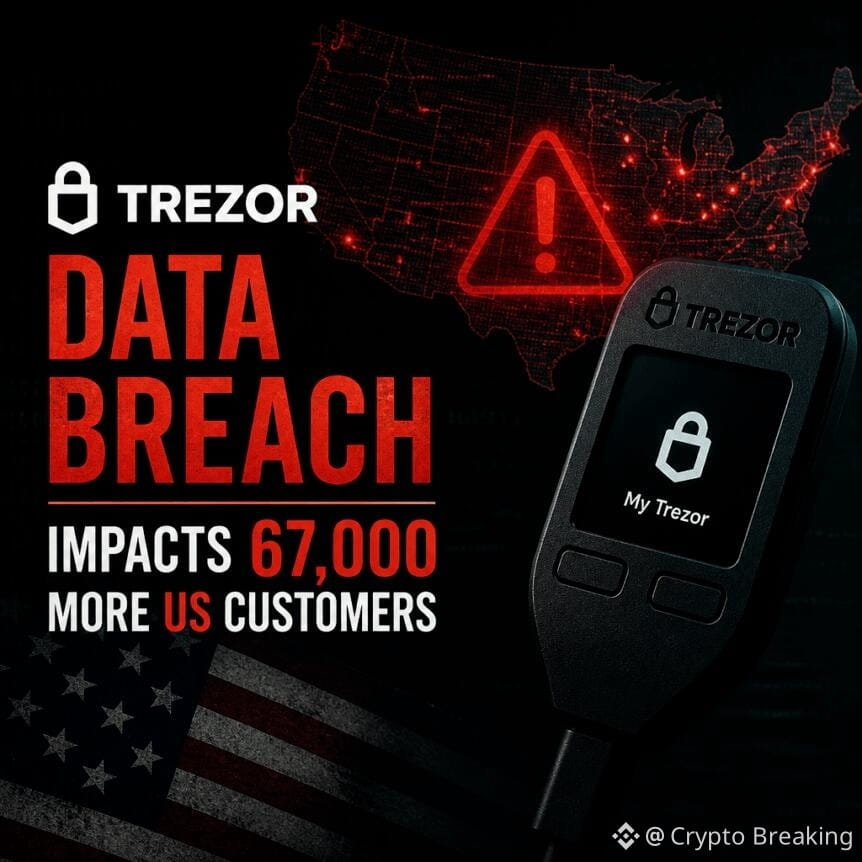
Trezor Data Breach Impacts 67,000 More US CustomersTrezor says the fallout from a data exposure tied to its shipping partner is wider than it first indicated. In a Friday post on X, the hardware wallet provider updated the number of potentially impacted US customers, saying an additional 67,000 people may have had their full order details exposed.
The company stressed that its own systems were not breached. However, it warned that exposed information—such as names, email addresses, shipping addresses, and order specifics—could still be used by criminals to target victims with convincing phishing attempts. The goal, Trezor said, would be to trick users into revealing seed phrases, the credentials that control funds stored in hardware wallets.
Key takeaways
Trezor’s latest update suggests the shipping-related exposure may involve an additional 67,000 US customers.
Company systems were not compromised, but order records were reportedly not deleted by the shipping provider for certain customer orders.
Trezor believes the main risk is impersonation-based phishing aimed at extracting wallet seed phrases.
Earlier estimates put the exposure at 14,000 users, indicating the scope expanded after further information from ShipMonk.
Investors and wallet users should treat any “Trezor support” messages as suspicious until verified through official channels.
Updated scope: more US customers at potential risk
Trezor’s Friday X update referenced a new report from its shipping provider, ShipMonk. The hardware wallet firm said the affected population includes US customers who placed orders between November 2019 and August 2021. According to Trezor, these customers may have had their complete details exposed, including identity and contact information, delivery addresses, and order-specific data.
This revision matters because it changes the number of people who may need to take additional precautions. Trezor initially estimated in August that only 14,000 users had their data exposed through ShipMonk. The new figure indicates that the problem’s reach was underestimated at the time—or that additional affected orders were identified as the investigation progressed.
What was exposed—and why it can still be dangerous
Trezor said the exposed records included the full set of personal and purchase information that bad actors typically need to make impersonation scams credible. That includes users’ names, email addresses, shipping addresses, and order specifics.
Even though Trezor said its systems were not breached, the company argued that the exposed information could be used to carry out more targeted social engineering. The concern is not just general spam or list-based fraud; it is the possibility of messages that appear to come from Trezor, designed to pressure recipients into revealing their seed phrases or otherwise compromising their wallets.
In other words, attackers may not need technical access to a wallet to cause loss. If a scam convincingly imitates the legitimate support process—or references a customer’s order to establish trust—victims may be more likely to comply.
Why impersonation scams keep costing the industry
Security research underscores how effective phishing and related social engineering can be in crypto. In the first quarter, blockchain security firm Hacken reported that social engineering and phishing drove most of the industry’s losses. According to Hacken, these attacks accounted for $306 million of $482 million total losses in that period.
The mechanics are often straightforward: fraudsters send messages that mimic trusted brands, then guide victims toward actions that compromise accounts or keys. Trezor’s warning fits that pattern, targeting the most sensitive asset in self-custody setups—the seed phrase.
Earlier coverage also highlighted how phishing can lead to direct on-chain loss. In July, a crypto investor reportedly lost nearly $1 million after signing a malicious phishing token approval transaction on Ethereum.
Trezor’s prior communications and what remains unclear
While the latest update expands the number of potentially impacted customers, it aligns with earlier disclosures that Trezor had been tracking risk tied to contact and support interactions. In January 2024, Trezor reported that about 66,000 users were at risk of phishing attacks if they had contacted the company’s support team since December 2021.
That earlier statement focused on a different slice of risk—support-related contact—whereas the new update centers on order-related data tied to shipping. Taken together, the communications suggest that Trezor’s threat model evolved as more information became available and as different parts of the customer journey were assessed.
One important point remains: Trezor continues to state that its systems were not compromised. The danger appears to come from information that may have been retained or not deleted by the shipping provider for certain orders, enabling third parties to craft more personalized scams.
What readers should watch next is whether Trezor provides further detail on mitigation steps—particularly how it plans to reach potentially exposed customers—and whether additional countries or time ranges are affected. The company’s current update is limited to additional 67,000 US customers in the November 2019 to August 2021 window, but future revisions are possible if ShipMonk’s findings expand again.
For now, the practical takeaway for hardware wallet holders is to be especially cautious of any outreach that claims to be from Trezor, especially if it references an order. Verify through official channels before taking any action, and treat requests involving seed phrases as an immediate red flag.
This article was originally published as Trezor Data Breach Impacts 67,000 More US Customers on Crypto Breaking News – your trusted source for crypto news, Bitcoin news, and blockchain updates.
Trezor Data Breach Impacts 67,000 More US Customers
Trezor says the fallout from a data exposure tied to its shipping partner is wider than it first indicated. In a Friday post on X, the hardware wallet provider updated the number of potentially impacted US customers, saying an additional 67,000 people may have had their full order details exposed.
The company stressed that its own systems were not breached. However, it warned that exposed information—such as names, email addresses, shipping addresses, and order specifics—could still be used by criminals to target victims with convincing phishing attempts. The goal, Trezor said, would be to trick users into revealing seed phrases, the credentials that control funds stored in hardware wallets.
Key takeaways
Trezor’s latest update suggests the shipping-related exposure may involve an additional 67,000 US customers.
Company systems were not compromised, but order records were reportedly not deleted by the shipping provider for certain customer orders.
Trezor believes the main risk is impersonation-based phishing aimed at extracting wallet seed phrases.
Earlier estimates put the exposure at 14,000 users, indicating the scope expanded after further information from ShipMonk.
Investors and wallet users should treat any “Trezor support” messages as suspicious until verified through official channels.
Updated scope: more US customers at potential risk
Trezor’s Friday X update referenced a new report from its shipping provider, ShipMonk. The hardware wallet firm said the affected population includes US customers who placed orders between November 2019 and August 2021. According to Trezor, these customers may have had their complete details exposed, including identity and contact information, delivery addresses, and order-specific data.
This revision matters because it changes the number of people who may need to take additional precautions. Trezor initially estimated in August that only 14,000 users had their data exposed through ShipMonk. The new figure indicates that the problem’s reach was underestimated at the time—or that additional affected orders were identified as the investigation progressed.
What was exposed—and why it can still be dangerous
Trezor said the exposed records included the full set of personal and purchase information that bad actors typically need to make impersonation scams credible. That includes users’ names, email addresses, shipping addresses, and order specifics.
Even though Trezor said its systems were not breached, the company argued that the exposed information could be used to carry out more targeted social engineering. The concern is not just general spam or list-based fraud; it is the possibility of messages that appear to come from Trezor, designed to pressure recipients into revealing their seed phrases or otherwise compromising their wallets.
In other words, attackers may not need technical access to a wallet to cause loss. If a scam convincingly imitates the legitimate support process—or references a customer’s order to establish trust—victims may be more likely to comply.
Why impersonation scams keep costing the industry
Security research underscores how effective phishing and related social engineering can be in crypto. In the first quarter, blockchain security firm Hacken reported that social engineering and phishing drove most of the industry’s losses. According to Hacken, these attacks accounted for $306 million of $482 million total losses in that period.
The mechanics are often straightforward: fraudsters send messages that mimic trusted brands, then guide victims toward actions that compromise accounts or keys. Trezor’s warning fits that pattern, targeting the most sensitive asset in self-custody setups—the seed phrase.
Earlier coverage also highlighted how phishing can lead to direct on-chain loss. In July, a crypto investor reportedly lost nearly $1 million after signing a malicious phishing token approval transaction on Ethereum.
Trezor’s prior communications and what remains unclear
While the latest update expands the number of potentially impacted customers, it aligns with earlier disclosures that Trezor had been tracking risk tied to contact and support interactions. In January 2024, Trezor reported that about 66,000 users were at risk of phishing attacks if they had contacted the company’s support team since December 2021.
That earlier statement focused on a different slice of risk—support-related contact—whereas the new update centers on order-related data tied to shipping. Taken together, the communications suggest that Trezor’s threat model evolved as more information became available and as different parts of the customer journey were assessed.
One important point remains: Trezor continues to state that its systems were not compromised. The danger appears to come from information that may have been retained or not deleted by the shipping provider for certain orders, enabling third parties to craft more personalized scams.
What readers should watch next is whether Trezor provides further detail on mitigation steps—particularly how it plans to reach potentially exposed customers—and whether additional countries or time ranges are affected. The company’s current update is limited to additional 67,000 US customers in the November 2019 to August 2021 window, but future revisions are possible if ShipMonk’s findings expand again.
For now, the practical takeaway for hardware wallet holders is to be especially cautious of any outreach that claims to be from Trezor, especially if it references an order. Verify through official channels before taking any action, and treat requests involving seed phrases as an immediate red flag.
This article was originally published as Trezor Data Breach Impacts 67,000 More US Customers on Crypto Breaking News – your trusted source for crypto news, Bitcoin news, and blockchain updates.
The company stressed that its own systems were not breached. However, it warned that exposed information—such as names, email addresses, shipping addresses, and order specifics—could still be used by criminals to target victims with convincing phishing attempts. The goal, Trezor said, would be to trick users into revealing seed phrases, the credentials that control funds stored in hardware wallets.
Key takeaways
Trezor’s latest update suggests the shipping-related exposure may involve an additional 67,000 US customers.
Company systems were not compromised, but order records were reportedly not deleted by the shipping provider for certain customer orders.
Trezor believes the main risk is impersonation-based phishing aimed at extracting wallet seed phrases.
Earlier estimates put the exposure at 14,000 users, indicating the scope expanded after further information from ShipMonk.
Investors and wallet users should treat any “Trezor support” messages as suspicious until verified through official channels.
Updated scope: more US customers at potential risk
Trezor’s Friday X update referenced a new report from its shipping provider, ShipMonk. The hardware wallet firm said the affected population includes US customers who placed orders between November 2019 and August 2021. According to Trezor, these customers may have had their complete details exposed, including identity and contact information, delivery addresses, and order-specific data.
This revision matters because it changes the number of people who may need to take additional precautions. Trezor initially estimated in August that only 14,000 users had their data exposed through ShipMonk. The new figure indicates that the problem’s reach was underestimated at the time—or that additional affected orders were identified as the investigation progressed.
What was exposed—and why it can still be dangerous
Trezor said the exposed records included the full set of personal and purchase information that bad actors typically need to make impersonation scams credible. That includes users’ names, email addresses, shipping addresses, and order specifics.
Even though Trezor said its systems were not breached, the company argued that the exposed information could be used to carry out more targeted social engineering. The concern is not just general spam or list-based fraud; it is the possibility of messages that appear to come from Trezor, designed to pressure recipients into revealing their seed phrases or otherwise compromising their wallets.
In other words, attackers may not need technical access to a wallet to cause loss. If a scam convincingly imitates the legitimate support process—or references a customer’s order to establish trust—victims may be more likely to comply.
Why impersonation scams keep costing the industry
Security research underscores how effective phishing and related social engineering can be in crypto. In the first quarter, blockchain security firm Hacken reported that social engineering and phishing drove most of the industry’s losses. According to Hacken, these attacks accounted for $306 million of $482 million total losses in that period.
The mechanics are often straightforward: fraudsters send messages that mimic trusted brands, then guide victims toward actions that compromise accounts or keys. Trezor’s warning fits that pattern, targeting the most sensitive asset in self-custody setups—the seed phrase.
Earlier coverage also highlighted how phishing can lead to direct on-chain loss. In July, a crypto investor reportedly lost nearly $1 million after signing a malicious phishing token approval transaction on Ethereum.
Trezor’s prior communications and what remains unclear
While the latest update expands the number of potentially impacted customers, it aligns with earlier disclosures that Trezor had been tracking risk tied to contact and support interactions. In January 2024, Trezor reported that about 66,000 users were at risk of phishing attacks if they had contacted the company’s support team since December 2021.
That earlier statement focused on a different slice of risk—support-related contact—whereas the new update centers on order-related data tied to shipping. Taken together, the communications suggest that Trezor’s threat model evolved as more information became available and as different parts of the customer journey were assessed.
One important point remains: Trezor continues to state that its systems were not compromised. The danger appears to come from information that may have been retained or not deleted by the shipping provider for certain orders, enabling third parties to craft more personalized scams.
What readers should watch next is whether Trezor provides further detail on mitigation steps—particularly how it plans to reach potentially exposed customers—and whether additional countries or time ranges are affected. The company’s current update is limited to additional 67,000 US customers in the November 2019 to August 2021 window, but future revisions are possible if ShipMonk’s findings expand again.
For now, the practical takeaway for hardware wallet holders is to be especially cautious of any outreach that claims to be from Trezor, especially if it references an order. Verify through official channels before taking any action, and treat requests involving seed phrases as an immediate red flag.
This article was originally published as Trezor Data Breach Impacts 67,000 More US Customers on Crypto Breaking News – your trusted source for crypto news, Bitcoin news, and blockchain updates.
46
Article
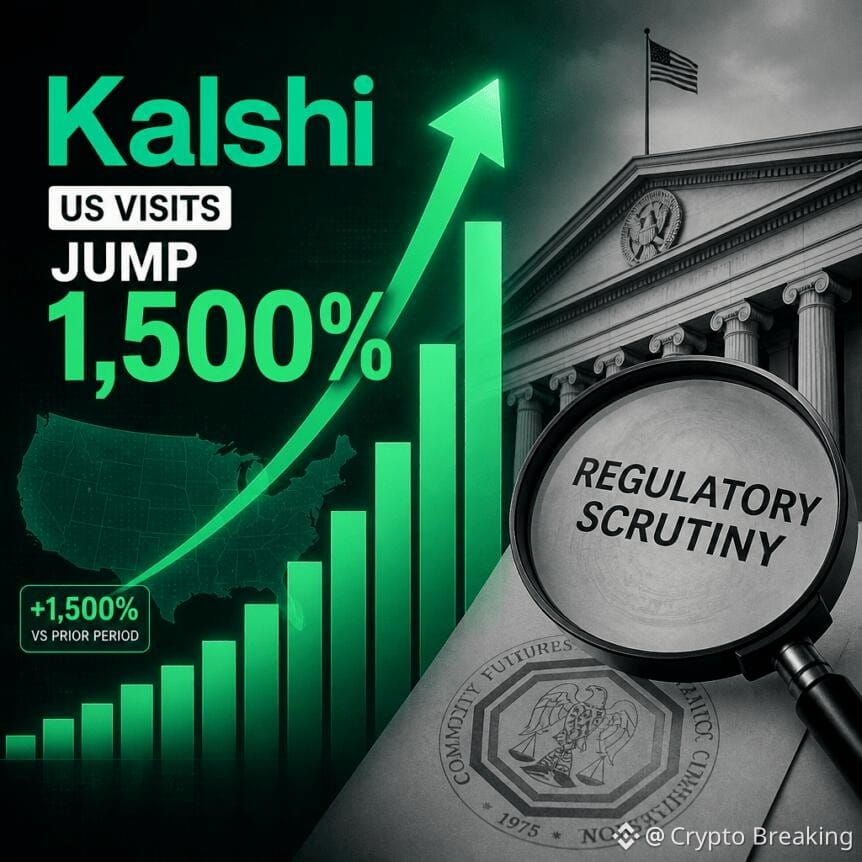
Kalshi US Visits Jump 1,500% as Regulatory Scrutiny IntensifiesKalshi’s prediction markets business is drawing sharply more attention from web users—at the same time as legal challenges intensify over how certain contracts should be regulated. New traffic estimates reviewed by Cointelegraph show that US visits to Kalshi surged over the past year, reflecting the platform’s rapid mainstream reach.
According to Similarweb traffic data analyzed by Cointelegraph, Kalshi logged 15.4 million visits from the United States in July, up about 1,520% from just under 1 million in August 2025. The US also remained the dominant source of site activity, accounting for nearly 80% of Kalshi’s traffic in July versus 72.8% in August 2025.
Key takeaways
Kalshi’s US web traffic reached 15.4 million visits in July, roughly a 1,520% jump versus August 2025, based on Similarweb estimates.
US users remained the largest share of traffic, at nearly 80% in July compared with 72.8% a year earlier.
Trading growth appears to be outpacing traffic growth, with monthly notional volume rising to about $40 billion in August from $874 million a year earlier, per Dune Analytics.
Sports-related contracts represented 83% of Kalshi’s trading volume in July, underscoring why regulatory scrutiny remains focused on event terms.
Even as traffic increased, Canada and the UK—jurisdictions where Kalshi’s member agreement restricts direct access—still contributed a small share of visits.
Traffic surges as the legal fight escalates
The visibility boost comes during a period of heightened scrutiny of prediction markets in the US. Kalshi has faced legal challenges tied to whether its sports contracts should fall under federal oversight or instead be treated as state-regulated gambling. The dispute has reached the US Supreme Court, after New Jersey took the matter to the Supreme Court, according to earlier coverage.
While web traffic is not the same thing as regulatory status, the strong jump in US visits helps explain why the company’s expanding contract catalog is attracting both user interest and legal attention. The geographic concentration also matters: with the US supplying most of Kalshi’s traffic, any ruling affecting how Kalshi structures or offers certain contracts could quickly reverberate through its core customer base.
Trading volume grows faster than visits
Kalshi’s traffic gains have coincided with even larger growth in trading activity. Dune Analytics’ prediction market data dashboard, as cited by Cointelegraph, shows that Kalshi recorded about $40 billion in monthly notional trading volume in August. That compares with roughly $874 million a year earlier, an increase of around 4,500%.
Looking across the broader prediction-market sector, the same Dune Analytics dashboard indicates that monthly notional volume rose to $50.7 billion from about $2 billion over the same period. Kalshi accounted for nearly 79% of that latest total, meaning the company is not only growing but also increasingly dominant within the category.
Sports contracts were central to this activity. Barron’s reported Thursday that sports-related contracts made up 83% of Kalshi’s trading volume in July. That skew is notable because it aligns with the regulatory focus of the ongoing court dispute—raising the stakes for what happens next if courts determine that certain event contracts should be handled differently.
International interest rises, even where access is restricted
Kalshi’s audience has expanded beyond the United States, though its traffic footprint remains heavily weighted toward the US. Similarweb estimates reviewed by Cointelegraph show that Canada generated about 450,000 visits to Kalshi’s website in July, up from roughly 50,000 in August 2025. UK visits also increased, reaching 296,000 in July from 31,000 a year earlier.
However, both countries fall into a category of restricted jurisdictions under Kalshi’s member agreement, which currently prohibits users from directly accessing or trading on the platform. Kalshi previously addressed this by partnering with Canadian financial services firm Wealthsimple in June to provide access to nearly 4,000 eligible Kalshi contracts through a separate app, as described in Kalshi’s announcement.
Even with visit counts increasing, the share of traffic from these restricted jurisdictions declined over the same period. From August 2025 to July 2026, Canada’s share slipped to 2.3% from 3.8%, while the UK’s share fell to 1.5% from 2.4%—suggesting that Kalshi’s overall growth is outpacing growth in these regions or that US traffic is rising even more quickly.
Cointelegraph reached out to Kalshi for comment on traffic from restricted jurisdictions but had not received a response by publication.
What investors and users should watch next
Kalshi’s traffic and volume growth point to strong demand for event-based markets, especially sports-driven contracts, but the company’s legal situation remains the key uncertainty. With the Supreme Court dispute now in view, readers should watch how court outcomes or compliance changes affect Kalshi’s product offerings—particularly contract types that have drawn the most regulatory attention.
This article was originally published as Kalshi US Visits Jump 1,500% as Regulatory Scrutiny Intensifies on Crypto Breaking News – your trusted source for crypto news, Bitcoin news, and blockchain updates.
Kalshi US Visits Jump 1,500% as Regulatory Scrutiny Intensifies
Kalshi’s prediction markets business is drawing sharply more attention from web users—at the same time as legal challenges intensify over how certain contracts should be regulated. New traffic estimates reviewed by Cointelegraph show that US visits to Kalshi surged over the past year, reflecting the platform’s rapid mainstream reach.
According to Similarweb traffic data analyzed by Cointelegraph, Kalshi logged 15.4 million visits from the United States in July, up about 1,520% from just under 1 million in August 2025. The US also remained the dominant source of site activity, accounting for nearly 80% of Kalshi’s traffic in July versus 72.8% in August 2025.
Key takeaways
Kalshi’s US web traffic reached 15.4 million visits in July, roughly a 1,520% jump versus August 2025, based on Similarweb estimates.
US users remained the largest share of traffic, at nearly 80% in July compared with 72.8% a year earlier.
Trading growth appears to be outpacing traffic growth, with monthly notional volume rising to about $40 billion in August from $874 million a year earlier, per Dune Analytics.
Sports-related contracts represented 83% of Kalshi’s trading volume in July, underscoring why regulatory scrutiny remains focused on event terms.
Even as traffic increased, Canada and the UK—jurisdictions where Kalshi’s member agreement restricts direct access—still contributed a small share of visits.
Traffic surges as the legal fight escalates
The visibility boost comes during a period of heightened scrutiny of prediction markets in the US. Kalshi has faced legal challenges tied to whether its sports contracts should fall under federal oversight or instead be treated as state-regulated gambling. The dispute has reached the US Supreme Court, after New Jersey took the matter to the Supreme Court, according to earlier coverage.
While web traffic is not the same thing as regulatory status, the strong jump in US visits helps explain why the company’s expanding contract catalog is attracting both user interest and legal attention. The geographic concentration also matters: with the US supplying most of Kalshi’s traffic, any ruling affecting how Kalshi structures or offers certain contracts could quickly reverberate through its core customer base.
Trading volume grows faster than visits
Kalshi’s traffic gains have coincided with even larger growth in trading activity. Dune Analytics’ prediction market data dashboard, as cited by Cointelegraph, shows that Kalshi recorded about $40 billion in monthly notional trading volume in August. That compares with roughly $874 million a year earlier, an increase of around 4,500%.
Looking across the broader prediction-market sector, the same Dune Analytics dashboard indicates that monthly notional volume rose to $50.7 billion from about $2 billion over the same period. Kalshi accounted for nearly 79% of that latest total, meaning the company is not only growing but also increasingly dominant within the category.
Sports contracts were central to this activity. Barron’s reported Thursday that sports-related contracts made up 83% of Kalshi’s trading volume in July. That skew is notable because it aligns with the regulatory focus of the ongoing court dispute—raising the stakes for what happens next if courts determine that certain event contracts should be handled differently.
International interest rises, even where access is restricted
Kalshi’s audience has expanded beyond the United States, though its traffic footprint remains heavily weighted toward the US. Similarweb estimates reviewed by Cointelegraph show that Canada generated about 450,000 visits to Kalshi’s website in July, up from roughly 50,000 in August 2025. UK visits also increased, reaching 296,000 in July from 31,000 a year earlier.
However, both countries fall into a category of restricted jurisdictions under Kalshi’s member agreement, which currently prohibits users from directly accessing or trading on the platform. Kalshi previously addressed this by partnering with Canadian financial services firm Wealthsimple in June to provide access to nearly 4,000 eligible Kalshi contracts through a separate app, as described in Kalshi’s announcement.
Even with visit counts increasing, the share of traffic from these restricted jurisdictions declined over the same period. From August 2025 to July 2026, Canada’s share slipped to 2.3% from 3.8%, while the UK’s share fell to 1.5% from 2.4%—suggesting that Kalshi’s overall growth is outpacing growth in these regions or that US traffic is rising even more quickly.
Cointelegraph reached out to Kalshi for comment on traffic from restricted jurisdictions but had not received a response by publication.
What investors and users should watch next
Kalshi’s traffic and volume growth point to strong demand for event-based markets, especially sports-driven contracts, but the company’s legal situation remains the key uncertainty. With the Supreme Court dispute now in view, readers should watch how court outcomes or compliance changes affect Kalshi’s product offerings—particularly contract types that have drawn the most regulatory attention.
This article was originally published as Kalshi US Visits Jump 1,500% as Regulatory Scrutiny Intensifies on Crypto Breaking News – your trusted source for crypto news, Bitcoin news, and blockchain updates.
According to Similarweb traffic data analyzed by Cointelegraph, Kalshi logged 15.4 million visits from the United States in July, up about 1,520% from just under 1 million in August 2025. The US also remained the dominant source of site activity, accounting for nearly 80% of Kalshi’s traffic in July versus 72.8% in August 2025.
Key takeaways
Kalshi’s US web traffic reached 15.4 million visits in July, roughly a 1,520% jump versus August 2025, based on Similarweb estimates.
US users remained the largest share of traffic, at nearly 80% in July compared with 72.8% a year earlier.
Trading growth appears to be outpacing traffic growth, with monthly notional volume rising to about $40 billion in August from $874 million a year earlier, per Dune Analytics.
Sports-related contracts represented 83% of Kalshi’s trading volume in July, underscoring why regulatory scrutiny remains focused on event terms.
Even as traffic increased, Canada and the UK—jurisdictions where Kalshi’s member agreement restricts direct access—still contributed a small share of visits.
Traffic surges as the legal fight escalates
The visibility boost comes during a period of heightened scrutiny of prediction markets in the US. Kalshi has faced legal challenges tied to whether its sports contracts should fall under federal oversight or instead be treated as state-regulated gambling. The dispute has reached the US Supreme Court, after New Jersey took the matter to the Supreme Court, according to earlier coverage.
While web traffic is not the same thing as regulatory status, the strong jump in US visits helps explain why the company’s expanding contract catalog is attracting both user interest and legal attention. The geographic concentration also matters: with the US supplying most of Kalshi’s traffic, any ruling affecting how Kalshi structures or offers certain contracts could quickly reverberate through its core customer base.
Trading volume grows faster than visits
Kalshi’s traffic gains have coincided with even larger growth in trading activity. Dune Analytics’ prediction market data dashboard, as cited by Cointelegraph, shows that Kalshi recorded about $40 billion in monthly notional trading volume in August. That compares with roughly $874 million a year earlier, an increase of around 4,500%.
Looking across the broader prediction-market sector, the same Dune Analytics dashboard indicates that monthly notional volume rose to $50.7 billion from about $2 billion over the same period. Kalshi accounted for nearly 79% of that latest total, meaning the company is not only growing but also increasingly dominant within the category.
Sports contracts were central to this activity. Barron’s reported Thursday that sports-related contracts made up 83% of Kalshi’s trading volume in July. That skew is notable because it aligns with the regulatory focus of the ongoing court dispute—raising the stakes for what happens next if courts determine that certain event contracts should be handled differently.
International interest rises, even where access is restricted
Kalshi’s audience has expanded beyond the United States, though its traffic footprint remains heavily weighted toward the US. Similarweb estimates reviewed by Cointelegraph show that Canada generated about 450,000 visits to Kalshi’s website in July, up from roughly 50,000 in August 2025. UK visits also increased, reaching 296,000 in July from 31,000 a year earlier.
However, both countries fall into a category of restricted jurisdictions under Kalshi’s member agreement, which currently prohibits users from directly accessing or trading on the platform. Kalshi previously addressed this by partnering with Canadian financial services firm Wealthsimple in June to provide access to nearly 4,000 eligible Kalshi contracts through a separate app, as described in Kalshi’s announcement.
Even with visit counts increasing, the share of traffic from these restricted jurisdictions declined over the same period. From August 2025 to July 2026, Canada’s share slipped to 2.3% from 3.8%, while the UK’s share fell to 1.5% from 2.4%—suggesting that Kalshi’s overall growth is outpacing growth in these regions or that US traffic is rising even more quickly.
Cointelegraph reached out to Kalshi for comment on traffic from restricted jurisdictions but had not received a response by publication.
What investors and users should watch next
Kalshi’s traffic and volume growth point to strong demand for event-based markets, especially sports-driven contracts, but the company’s legal situation remains the key uncertainty. With the Supreme Court dispute now in view, readers should watch how court outcomes or compliance changes affect Kalshi’s product offerings—particularly contract types that have drawn the most regulatory attention.
This article was originally published as Kalshi US Visits Jump 1,500% as Regulatory Scrutiny Intensifies on Crypto Breaking News – your trusted source for crypto news, Bitcoin news, and blockchain updates.
227
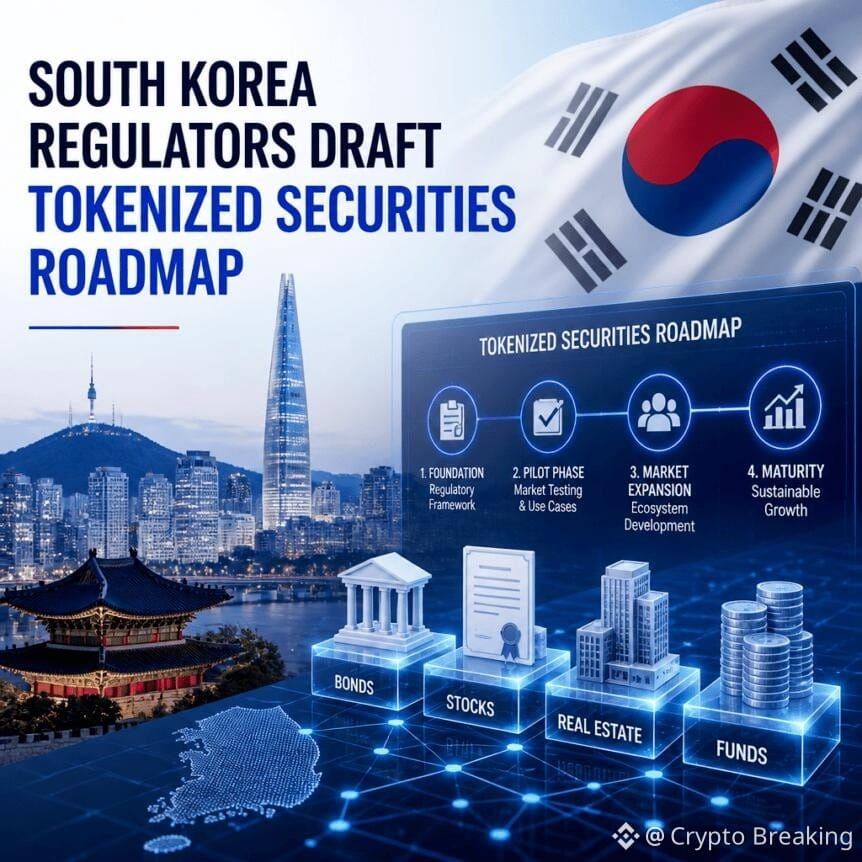
Article
South Korea Regulators Draft Tokenized Securities RoadmapSouth Korea’s Financial Services Commission (FSC) has laid out a three-phase plan to build the legal and technical groundwork for issuing tokenized securities—an effort that, if executed on schedule, would clarify how onchain securities could fit within the country’s existing capital markets framework.
In a press release issued Friday, the FSC said tokenized securities are expected to gain formal legal recognition starting Feb. 4, 2027, following an update to the Act on Electronic Registration of Stocks and Bonds. The initiative also points toward a later phase connecting tokenized issuance and payments with stablecoins.
Key takeaways
The FSC plans to recognize tokenized securities legally from Feb. 4, 2027 via amendments to the Act on Electronic Registration of Stocks and Bonds.
Phase one covers legal recognition for tokenized versions of selected instruments, including certain funds and bonds, along with unlisted stocks and fractional investment securities.
Phase two would broaden tokenization to apply to all publicly offered securities.
Phase three targets onchain payment flows linked to stablecoins, indicating regulators see stablecoins as part of the settlement picture.
Before launching the roadmap, the FSC intends to collaborate with the Korea Securities Depository (KSD) on the necessary tokenization infrastructure.
A date-specific shift toward legal recognition
Until now, tokenized securities have faced regulatory uncertainty in many jurisdictions—typically tied to questions about legal status, transfer mechanisms, and settlement. South Korea’s plan attempts to remove at least one major friction point by tying recognition of tokenized securities to a concrete legislative timetable.
The FSC said that beginning Feb. 4, 2027, tokenized securities would be recognized as digitized forms of securities after the scheduled update to the Act on Electronic Registration of Stocks and Bonds takes effect. This is intended to align the tokenized form with the legal infrastructure already used for registering and handling stocks and bonds electronically.
The roadmap is described as part of the implementation of amended versions of the Capital Markets Act and the Electronic Securities Act, which the FSC framed as the country’s first tokenized securities framework.
What the three phases cover
The FSC’s approach is staged, moving from recognition of specific instruments to broader application and then toward a more integrated onchain settlement model.
Phase one focuses on bringing tokenized securities into the regulatory and legal fold for a limited set of products. According to the FSC, legal recognition would apply to tokenized securities that include:
institutional money market funds
bonds
unlisted stocks
fractional investment securities
Phase two would expand tokenization to all publicly offered securities. For market participants, this sequencing matters: it suggests that issuers and intermediaries will be expected to adapt operational and compliance processes first for a controlled set of instruments, before the rulebook potentially broadens to cover a wider universe of public offerings.
Phase three is the most ambitious and forward-looking. The FSC said it aims to enable onchain payments connected to stablecoins. While the announcement stops short of detailing technical standards or regulatory limits for stablecoins in this context, the fact that stablecoin-linked payments are included in the final phase indicates regulators are thinking beyond token issuance alone and toward settlement and custody-to-payment workflows.
Rulemaking steps and the role of market infrastructure
Alongside the legislative timeline, the FSC laid out additional near-term administrative work. It said it plans to propose revisions to relevant subordinate regulations by the end of September—a step that typically determines how the law will function in practice, including the operational rules that govern issuance, transfer, and compliance.
Importantly, the FSC also indicated it would decide the timetable for phase two and phase three after the subordinate revisions are prepared, meaning that the later phases are not fully locked in by the Feb. 4, 2027 recognition date.
Before the roadmap begins, the FSC said it would work with the Korea Securities Depository (KSD) to develop the tokenization infrastructure required for the framework. For investors and firms, that matters because successful tokenization depends heavily on the readiness of core market plumbing—interfaces with registries, confirmation of ownership records, and the ability to reconcile onchain activity with established capital markets processes.
Why the roadmap signals a tightening regulatory stance
This announcement comes as South Korean regulators have been steadily moving closer to a defined regime for tokenized assets. Earlier, the FSC had indicated that it would publish detailed tokenized securities rules to bring them under the country’s capital markets framework in 2027, according to reporting on the FSC’s prior stance.
In addition, South Korea has been experimenting with tokenized settlement concepts outside of securities issuance. In April, the Ministry of Economy and Finance announced a pilot project using tokenized deposits for executing government operational spending, with a full rollout planned for the fourth quarter of 2026. That effort is separate from the FSC’s tokenized securities framework, but it reinforces the broader regulatory direction: using tokenization not only for trading or issuance, but potentially for real-world payments and operational transfers.
Viewed together, the FSC’s roadmap suggests South Korea is trying to reconcile two priorities that often clash in tokenization discussions: preserving the legal certainty of traditional capital markets while making room for blockchain-based representation and, eventually, onchain payment rails.
At the same time, the phased nature of the plan leaves practical questions open. The biggest uncertainty for market participants is likely how quickly phase two and phase three will move after the subordinate regulations are drafted, and what technical and compliance requirements will accompany stablecoin-linked onchain payments.
For readers watching this space, the next signals to track are the FSC’s subordinate regulation revisions due by the end of September and the details that emerge from its coordination with the KSD—especially anything clarifying how settlement, custody records, and stablecoin-linked payment flows will be handled under the updated legal framework.
This article was originally published as South Korea Regulators Draft Tokenized Securities Roadmap on Crypto Breaking News – your trusted source for crypto news, Bitcoin news, and blockchain updates.
South Korea Regulators Draft Tokenized Securities Roadmap
South Korea’s Financial Services Commission (FSC) has laid out a three-phase plan to build the legal and technical groundwork for issuing tokenized securities—an effort that, if executed on schedule, would clarify how onchain securities could fit within the country’s existing capital markets framework.
In a press release issued Friday, the FSC said tokenized securities are expected to gain formal legal recognition starting Feb. 4, 2027, following an update to the Act on Electronic Registration of Stocks and Bonds. The initiative also points toward a later phase connecting tokenized issuance and payments with stablecoins.
Key takeaways
The FSC plans to recognize tokenized securities legally from Feb. 4, 2027 via amendments to the Act on Electronic Registration of Stocks and Bonds.
Phase one covers legal recognition for tokenized versions of selected instruments, including certain funds and bonds, along with unlisted stocks and fractional investment securities.
Phase two would broaden tokenization to apply to all publicly offered securities.
Phase three targets onchain payment flows linked to stablecoins, indicating regulators see stablecoins as part of the settlement picture.
Before launching the roadmap, the FSC intends to collaborate with the Korea Securities Depository (KSD) on the necessary tokenization infrastructure.
A date-specific shift toward legal recognition
Until now, tokenized securities have faced regulatory uncertainty in many jurisdictions—typically tied to questions about legal status, transfer mechanisms, and settlement. South Korea’s plan attempts to remove at least one major friction point by tying recognition of tokenized securities to a concrete legislative timetable.
The FSC said that beginning Feb. 4, 2027, tokenized securities would be recognized as digitized forms of securities after the scheduled update to the Act on Electronic Registration of Stocks and Bonds takes effect. This is intended to align the tokenized form with the legal infrastructure already used for registering and handling stocks and bonds electronically.
The roadmap is described as part of the implementation of amended versions of the Capital Markets Act and the Electronic Securities Act, which the FSC framed as the country’s first tokenized securities framework.
What the three phases cover
The FSC’s approach is staged, moving from recognition of specific instruments to broader application and then toward a more integrated onchain settlement model.
Phase one focuses on bringing tokenized securities into the regulatory and legal fold for a limited set of products. According to the FSC, legal recognition would apply to tokenized securities that include:
institutional money market funds
bonds
unlisted stocks
fractional investment securities
Phase two would expand tokenization to all publicly offered securities. For market participants, this sequencing matters: it suggests that issuers and intermediaries will be expected to adapt operational and compliance processes first for a controlled set of instruments, before the rulebook potentially broadens to cover a wider universe of public offerings.
Phase three is the most ambitious and forward-looking. The FSC said it aims to enable onchain payments connected to stablecoins. While the announcement stops short of detailing technical standards or regulatory limits for stablecoins in this context, the fact that stablecoin-linked payments are included in the final phase indicates regulators are thinking beyond token issuance alone and toward settlement and custody-to-payment workflows.
Rulemaking steps and the role of market infrastructure
Alongside the legislative timeline, the FSC laid out additional near-term administrative work. It said it plans to propose revisions to relevant subordinate regulations by the end of September—a step that typically determines how the law will function in practice, including the operational rules that govern issuance, transfer, and compliance.
Importantly, the FSC also indicated it would decide the timetable for phase two and phase three after the subordinate revisions are prepared, meaning that the later phases are not fully locked in by the Feb. 4, 2027 recognition date.
Before the roadmap begins, the FSC said it would work with the Korea Securities Depository (KSD) to develop the tokenization infrastructure required for the framework. For investors and firms, that matters because successful tokenization depends heavily on the readiness of core market plumbing—interfaces with registries, confirmation of ownership records, and the ability to reconcile onchain activity with established capital markets processes.
Why the roadmap signals a tightening regulatory stance
This announcement comes as South Korean regulators have been steadily moving closer to a defined regime for tokenized assets. Earlier, the FSC had indicated that it would publish detailed tokenized securities rules to bring them under the country’s capital markets framework in 2027, according to reporting on the FSC’s prior stance.
In addition, South Korea has been experimenting with tokenized settlement concepts outside of securities issuance. In April, the Ministry of Economy and Finance announced a pilot project using tokenized deposits for executing government operational spending, with a full rollout planned for the fourth quarter of 2026. That effort is separate from the FSC’s tokenized securities framework, but it reinforces the broader regulatory direction: using tokenization not only for trading or issuance, but potentially for real-world payments and operational transfers.
Viewed together, the FSC’s roadmap suggests South Korea is trying to reconcile two priorities that often clash in tokenization discussions: preserving the legal certainty of traditional capital markets while making room for blockchain-based representation and, eventually, onchain payment rails.
At the same time, the phased nature of the plan leaves practical questions open. The biggest uncertainty for market participants is likely how quickly phase two and phase three will move after the subordinate regulations are drafted, and what technical and compliance requirements will accompany stablecoin-linked onchain payments.
For readers watching this space, the next signals to track are the FSC’s subordinate regulation revisions due by the end of September and the details that emerge from its coordination with the KSD—especially anything clarifying how settlement, custody records, and stablecoin-linked payment flows will be handled under the updated legal framework.
This article was originally published as South Korea Regulators Draft Tokenized Securities Roadmap on Crypto Breaking News – your trusted source for crypto news, Bitcoin news, and blockchain updates.
In a press release issued Friday, the FSC said tokenized securities are expected to gain formal legal recognition starting Feb. 4, 2027, following an update to the Act on Electronic Registration of Stocks and Bonds. The initiative also points toward a later phase connecting tokenized issuance and payments with stablecoins.
Key takeaways
The FSC plans to recognize tokenized securities legally from Feb. 4, 2027 via amendments to the Act on Electronic Registration of Stocks and Bonds.
Phase one covers legal recognition for tokenized versions of selected instruments, including certain funds and bonds, along with unlisted stocks and fractional investment securities.
Phase two would broaden tokenization to apply to all publicly offered securities.
Phase three targets onchain payment flows linked to stablecoins, indicating regulators see stablecoins as part of the settlement picture.
Before launching the roadmap, the FSC intends to collaborate with the Korea Securities Depository (KSD) on the necessary tokenization infrastructure.
A date-specific shift toward legal recognition
Until now, tokenized securities have faced regulatory uncertainty in many jurisdictions—typically tied to questions about legal status, transfer mechanisms, and settlement. South Korea’s plan attempts to remove at least one major friction point by tying recognition of tokenized securities to a concrete legislative timetable.
The FSC said that beginning Feb. 4, 2027, tokenized securities would be recognized as digitized forms of securities after the scheduled update to the Act on Electronic Registration of Stocks and Bonds takes effect. This is intended to align the tokenized form with the legal infrastructure already used for registering and handling stocks and bonds electronically.
The roadmap is described as part of the implementation of amended versions of the Capital Markets Act and the Electronic Securities Act, which the FSC framed as the country’s first tokenized securities framework.
What the three phases cover
The FSC’s approach is staged, moving from recognition of specific instruments to broader application and then toward a more integrated onchain settlement model.
Phase one focuses on bringing tokenized securities into the regulatory and legal fold for a limited set of products. According to the FSC, legal recognition would apply to tokenized securities that include:
institutional money market funds
bonds
unlisted stocks
fractional investment securities
Phase two would expand tokenization to all publicly offered securities. For market participants, this sequencing matters: it suggests that issuers and intermediaries will be expected to adapt operational and compliance processes first for a controlled set of instruments, before the rulebook potentially broadens to cover a wider universe of public offerings.
Phase three is the most ambitious and forward-looking. The FSC said it aims to enable onchain payments connected to stablecoins. While the announcement stops short of detailing technical standards or regulatory limits for stablecoins in this context, the fact that stablecoin-linked payments are included in the final phase indicates regulators are thinking beyond token issuance alone and toward settlement and custody-to-payment workflows.
Rulemaking steps and the role of market infrastructure
Alongside the legislative timeline, the FSC laid out additional near-term administrative work. It said it plans to propose revisions to relevant subordinate regulations by the end of September—a step that typically determines how the law will function in practice, including the operational rules that govern issuance, transfer, and compliance.
Importantly, the FSC also indicated it would decide the timetable for phase two and phase three after the subordinate revisions are prepared, meaning that the later phases are not fully locked in by the Feb. 4, 2027 recognition date.
Before the roadmap begins, the FSC said it would work with the Korea Securities Depository (KSD) to develop the tokenization infrastructure required for the framework. For investors and firms, that matters because successful tokenization depends heavily on the readiness of core market plumbing—interfaces with registries, confirmation of ownership records, and the ability to reconcile onchain activity with established capital markets processes.
Why the roadmap signals a tightening regulatory stance
This announcement comes as South Korean regulators have been steadily moving closer to a defined regime for tokenized assets. Earlier, the FSC had indicated that it would publish detailed tokenized securities rules to bring them under the country’s capital markets framework in 2027, according to reporting on the FSC’s prior stance.
In addition, South Korea has been experimenting with tokenized settlement concepts outside of securities issuance. In April, the Ministry of Economy and Finance announced a pilot project using tokenized deposits for executing government operational spending, with a full rollout planned for the fourth quarter of 2026. That effort is separate from the FSC’s tokenized securities framework, but it reinforces the broader regulatory direction: using tokenization not only for trading or issuance, but potentially for real-world payments and operational transfers.
Viewed together, the FSC’s roadmap suggests South Korea is trying to reconcile two priorities that often clash in tokenization discussions: preserving the legal certainty of traditional capital markets while making room for blockchain-based representation and, eventually, onchain payment rails.
At the same time, the phased nature of the plan leaves practical questions open. The biggest uncertainty for market participants is likely how quickly phase two and phase three will move after the subordinate regulations are drafted, and what technical and compliance requirements will accompany stablecoin-linked onchain payments.
For readers watching this space, the next signals to track are the FSC’s subordinate regulation revisions due by the end of September and the details that emerge from its coordination with the KSD—especially anything clarifying how settlement, custody records, and stablecoin-linked payment flows will be handled under the updated legal framework.
This article was originally published as South Korea Regulators Draft Tokenized Securities Roadmap on Crypto Breaking News – your trusted source for crypto news, Bitcoin news, and blockchain updates.
59
Article
Bitcoin (BTC) Reclaims $80,000 As Fed Cools Rate Hike ExpectationsBitcoin (BTC) reached another multi-month high after reclaiming $80,000, climbing to $81,749 on Thursday after Federal Reserve Governor Christopher Waller tempered expectations of a September rate hike.
However, the flagship cryptocurrency lost momentum after hitting a key resistance zone. If BTC holds above $80,000, it could target a move past $83,500 and confirm a falling wedge breakout.
Bitcoin (BTC) Back Above $80,000 After Rate Hike Odds Drop
Bitcoin (BTC) is currently trading around $80,826, up almost 4% in the past 24 hours. The rally helped the price overcome recent weakness and retest levels that halted its August rally. Buyers must convert $80,000 into support to sustain the latest breakout.
The reversal came after Federal Reserve Governor Christopher Waller cooled immediate expectations of a rate hike after the September FOMC meeting if incoming inflation data is favorable. However, he did not rule out a hike if inflation numbers come in higher. Waller’s comments put the focus on the upcoming August Consumer Price Index (CPI) data, making it a factor in whether interest rates remain stable or are raised higher.
Additionally, two- and ten-year Treasury bond yields fell, and the dollar weakened, creating a conducive environment for Bitcoin and other risk assets.
Corporate Demand Provides Additional Support
Returning corporate demand helped support Bitcoin’s latest resurgence. Strive CEO Matt Cole revealed the company could purchase over 20,000 BTC by the end of the year, helping shore up sentiment around the asset. The company disclosed a 1,800 BTC purchase earlier this week. The purchase was completed at an average price of $79,431, taking Strive’s total holdings to 23,156 BTC.
Capital-B, a company listed in France, raised €7.6 million through a private placement from Blockstream CEO Adam Back. The company disclosed it will use the proceeds from the raise to fund a 376 BTC acquisition. Returning corporate demand indicates renewed institutional confidence in the asset and suggests companies are buying and holding BTC on their books as a reserve asset again.
Weakening Dollar Pushes Bitcoin (BTC) Higher
Besides the Fed’s comments and declining Treasury bond yields, a weak dollar has also helped Bitcoin and the broader cryptocurrency market push higher. BTC’s move higher comes against the backdrop of a strengthening Japanese yen (JPY), which some reports state is likely due to central bank intervention.
The USD/JPY pair fell to 158.5 on Wednesday before sliding further to 155.4 on Thursday. This had a domino effect and put pressure on the US Dollar Index (DXY), pushing it down to 99. However, the suspected central bank intervention to prop up the yen has revived concerns about a carry-trade unwind. News outlet The Macro Paper commented on the probable intervention, stating:
“In the last 24 hours, USD/JPY has dropped almost 2.5%, which doesn’t happen without any major intervention. On top of that, BOJ is most likely expected to hike rates this month, with more rate hikes possible in Q4. This is the exact thing that happened in Q3 2024, when BOJ intervened and hiked rates together.”
Can Bitcoin (BTC) Overcome Key Resistance Zones
Bitcoin’s revival sees the cryptocurrency retesting the $81,000 to $82,500 zone that capped its August rally. A close above these levels could confirm a breakout and push the price towards $85,000. One analyst, Franklin, identified $83,450 as a key support level, adding that BTC was testing a falling wedge breakout. However, the price must close above resistance levels to confirm a breakout.
Momentum has strengthened as well, with the fear and greed index at 78 and the relative strength index (RSI) above 70, a level typically associated with overbought market conditions. Additionally, BTC is trading above all four moving averages on its daily chart (20-day at $74,775, 50-day at $68,489, 200-day at $69,602, and 100-day at $66,334). Bitcoin has also broken above the upper Bollinger Band on the 4-hour chart. This confirms substantial upside pressure, but could also suggest price action is getting stretched.
A look at CoinGlass’ liquidation heatmap shows that BTC has cleared several short clusters between $78,000 and $80,500. This likely triggered forced buying as traders closed their positions, accelerating upward momentum. The next major cluster sits between $81,300 and $81,600. If the flagship cryptocurrency clears this level, it could push towards $85,000, liquidating smaller clusters along the way. Meanwhile, downside liquidity is concentrated between $76,400 and $79,800. If the price falls below $80,000, it will likely drop towards these levels.
Disclaimer: This article is provided for informational purposes only. It is not offered or intended to be used as legal, tax, investment, financial, or other advice.
This article was originally published as Bitcoin (BTC) Reclaims $80,000 As Fed Cools Rate Hike Expectations on Crypto Breaking News – your trusted source for crypto news, Bitcoin news, and blockchain updates.
Bitcoin (BTC) Reclaims $80,000 As Fed Cools Rate Hike Expectations
Bitcoin (BTC) reached another multi-month high after reclaiming $80,000, climbing to $81,749 on Thursday after Federal Reserve Governor Christopher Waller tempered expectations of a September rate hike.
However, the flagship cryptocurrency lost momentum after hitting a key resistance zone. If BTC holds above $80,000, it could target a move past $83,500 and confirm a falling wedge breakout.
Bitcoin (BTC) Back Above $80,000 After Rate Hike Odds Drop
Bitcoin (BTC) is currently trading around $80,826, up almost 4% in the past 24 hours. The rally helped the price overcome recent weakness and retest levels that halted its August rally. Buyers must convert $80,000 into support to sustain the latest breakout.
The reversal came after Federal Reserve Governor Christopher Waller cooled immediate expectations of a rate hike after the September FOMC meeting if incoming inflation data is favorable. However, he did not rule out a hike if inflation numbers come in higher. Waller’s comments put the focus on the upcoming August Consumer Price Index (CPI) data, making it a factor in whether interest rates remain stable or are raised higher.
Additionally, two- and ten-year Treasury bond yields fell, and the dollar weakened, creating a conducive environment for Bitcoin and other risk assets.
Corporate Demand Provides Additional Support
Returning corporate demand helped support Bitcoin’s latest resurgence. Strive CEO Matt Cole revealed the company could purchase over 20,000 BTC by the end of the year, helping shore up sentiment around the asset. The company disclosed a 1,800 BTC purchase earlier this week. The purchase was completed at an average price of $79,431, taking Strive’s total holdings to 23,156 BTC.
Capital-B, a company listed in France, raised €7.6 million through a private placement from Blockstream CEO Adam Back. The company disclosed it will use the proceeds from the raise to fund a 376 BTC acquisition. Returning corporate demand indicates renewed institutional confidence in the asset and suggests companies are buying and holding BTC on their books as a reserve asset again.
Weakening Dollar Pushes Bitcoin (BTC) Higher
Besides the Fed’s comments and declining Treasury bond yields, a weak dollar has also helped Bitcoin and the broader cryptocurrency market push higher. BTC’s move higher comes against the backdrop of a strengthening Japanese yen (JPY), which some reports state is likely due to central bank intervention.
The USD/JPY pair fell to 158.5 on Wednesday before sliding further to 155.4 on Thursday. This had a domino effect and put pressure on the US Dollar Index (DXY), pushing it down to 99. However, the suspected central bank intervention to prop up the yen has revived concerns about a carry-trade unwind. News outlet The Macro Paper commented on the probable intervention, stating:
“In the last 24 hours, USD/JPY has dropped almost 2.5%, which doesn’t happen without any major intervention. On top of that, BOJ is most likely expected to hike rates this month, with more rate hikes possible in Q4. This is the exact thing that happened in Q3 2024, when BOJ intervened and hiked rates together.”
Can Bitcoin (BTC) Overcome Key Resistance Zones
Bitcoin’s revival sees the cryptocurrency retesting the $81,000 to $82,500 zone that capped its August rally. A close above these levels could confirm a breakout and push the price towards $85,000. One analyst, Franklin, identified $83,450 as a key support level, adding that BTC was testing a falling wedge breakout. However, the price must close above resistance levels to confirm a breakout.
Momentum has strengthened as well, with the fear and greed index at 78 and the relative strength index (RSI) above 70, a level typically associated with overbought market conditions. Additionally, BTC is trading above all four moving averages on its daily chart (20-day at $74,775, 50-day at $68,489, 200-day at $69,602, and 100-day at $66,334). Bitcoin has also broken above the upper Bollinger Band on the 4-hour chart. This confirms substantial upside pressure, but could also suggest price action is getting stretched.
A look at CoinGlass’ liquidation heatmap shows that BTC has cleared several short clusters between $78,000 and $80,500. This likely triggered forced buying as traders closed their positions, accelerating upward momentum. The next major cluster sits between $81,300 and $81,600. If the flagship cryptocurrency clears this level, it could push towards $85,000, liquidating smaller clusters along the way. Meanwhile, downside liquidity is concentrated between $76,400 and $79,800. If the price falls below $80,000, it will likely drop towards these levels.
Disclaimer: This article is provided for informational purposes only. It is not offered or intended to be used as legal, tax, investment, financial, or other advice.
This article was originally published as Bitcoin (BTC) Reclaims $80,000 As Fed Cools Rate Hike Expectations on Crypto Breaking News – your trusted source for crypto news, Bitcoin news, and blockchain updates.
However, the flagship cryptocurrency lost momentum after hitting a key resistance zone. If BTC holds above $80,000, it could target a move past $83,500 and confirm a falling wedge breakout.
Bitcoin (BTC) Back Above $80,000 After Rate Hike Odds Drop
Bitcoin (BTC) is currently trading around $80,826, up almost 4% in the past 24 hours. The rally helped the price overcome recent weakness and retest levels that halted its August rally. Buyers must convert $80,000 into support to sustain the latest breakout.
The reversal came after Federal Reserve Governor Christopher Waller cooled immediate expectations of a rate hike after the September FOMC meeting if incoming inflation data is favorable. However, he did not rule out a hike if inflation numbers come in higher. Waller’s comments put the focus on the upcoming August Consumer Price Index (CPI) data, making it a factor in whether interest rates remain stable or are raised higher.
Additionally, two- and ten-year Treasury bond yields fell, and the dollar weakened, creating a conducive environment for Bitcoin and other risk assets.
Corporate Demand Provides Additional Support
Returning corporate demand helped support Bitcoin’s latest resurgence. Strive CEO Matt Cole revealed the company could purchase over 20,000 BTC by the end of the year, helping shore up sentiment around the asset. The company disclosed a 1,800 BTC purchase earlier this week. The purchase was completed at an average price of $79,431, taking Strive’s total holdings to 23,156 BTC.
Capital-B, a company listed in France, raised €7.6 million through a private placement from Blockstream CEO Adam Back. The company disclosed it will use the proceeds from the raise to fund a 376 BTC acquisition. Returning corporate demand indicates renewed institutional confidence in the asset and suggests companies are buying and holding BTC on their books as a reserve asset again.
Weakening Dollar Pushes Bitcoin (BTC) Higher
Besides the Fed’s comments and declining Treasury bond yields, a weak dollar has also helped Bitcoin and the broader cryptocurrency market push higher. BTC’s move higher comes against the backdrop of a strengthening Japanese yen (JPY), which some reports state is likely due to central bank intervention.
The USD/JPY pair fell to 158.5 on Wednesday before sliding further to 155.4 on Thursday. This had a domino effect and put pressure on the US Dollar Index (DXY), pushing it down to 99. However, the suspected central bank intervention to prop up the yen has revived concerns about a carry-trade unwind. News outlet The Macro Paper commented on the probable intervention, stating:
“In the last 24 hours, USD/JPY has dropped almost 2.5%, which doesn’t happen without any major intervention. On top of that, BOJ is most likely expected to hike rates this month, with more rate hikes possible in Q4. This is the exact thing that happened in Q3 2024, when BOJ intervened and hiked rates together.”
Can Bitcoin (BTC) Overcome Key Resistance Zones
Bitcoin’s revival sees the cryptocurrency retesting the $81,000 to $82,500 zone that capped its August rally. A close above these levels could confirm a breakout and push the price towards $85,000. One analyst, Franklin, identified $83,450 as a key support level, adding that BTC was testing a falling wedge breakout. However, the price must close above resistance levels to confirm a breakout.
Momentum has strengthened as well, with the fear and greed index at 78 and the relative strength index (RSI) above 70, a level typically associated with overbought market conditions. Additionally, BTC is trading above all four moving averages on its daily chart (20-day at $74,775, 50-day at $68,489, 200-day at $69,602, and 100-day at $66,334). Bitcoin has also broken above the upper Bollinger Band on the 4-hour chart. This confirms substantial upside pressure, but could also suggest price action is getting stretched.
A look at CoinGlass’ liquidation heatmap shows that BTC has cleared several short clusters between $78,000 and $80,500. This likely triggered forced buying as traders closed their positions, accelerating upward momentum. The next major cluster sits between $81,300 and $81,600. If the flagship cryptocurrency clears this level, it could push towards $85,000, liquidating smaller clusters along the way. Meanwhile, downside liquidity is concentrated between $76,400 and $79,800. If the price falls below $80,000, it will likely drop towards these levels.
Disclaimer: This article is provided for informational purposes only. It is not offered or intended to be used as legal, tax, investment, financial, or other advice.
This article was originally published as Bitcoin (BTC) Reclaims $80,000 As Fed Cools Rate Hike Expectations on Crypto Breaking News – your trusted source for crypto news, Bitcoin news, and blockchain updates.
67
Article
IMF Says El Salvador’s Bitcoin Buying After Audit Used No Public FundsEl Salvador’s Bitcoin holdings grew after the International Monetary Fund (IMF) reviewed part of its $1.4 billion program in June 2025, but the IMF says the country did not use public money for the additional accumulation. In a Thursday statement, the lender said documents provided by Salvadoran authorities confirmed that the increase came from private donations rather than government-financed purchases.
The IMF also said operational control of El Salvador’s Chivo wallet has been transferred to a private operator, with the government keeping a minority stake and custodial responsibilities. The IMF added that it does not expect any further Bitcoin accumulation beyond donations that can be documented.
Key takeaways
The IMF verified that post–June 2025 Bitcoin increases were funded by private donations, not public resources.
The Chivo wallet’s majority ownership and day-to-day control moved to a private operator, while the government retained a minority stake and custody role.
The explanation is aimed at addressing renewed compliance concerns after El Salvador publicly reported large Bitcoin purchases in late 2025.
El Salvador is still holding a sizable Bitcoin reserve—about 7,764 BTC—valued at roughly $628 million at the price level cited by CoinGecko.
IMF: June 2025 accumulation did not involve government funds
According to the IMF, the key point from its June 2025 review was whether El Salvador’s Bitcoin accumulation reflected spending from public resources. In Thursday’s release, the IMF said it checked supplied documentation and found that the additional holdings were linked to private donations.
That matters because El Salvador’s IMF-supported financing arrangement is tied to economic and policy conditions, including boundaries around how public institutions engage with Bitcoin. The IMF’s statement effectively separates “donation-driven” increases from purchases that would otherwise imply further public financing.
Thursday’s release also states that the government does not intend to accumulate additional Bitcoin beyond what is documented as coming from donations—another signal that the IMF is drawing a line around what it considers compliant behavior under the program.
Chivo wallet control shifts, but custodial duties remain
In addition to the funding source question, the IMF’s statement addressed the structure around El Salvador’s Chivo Bitcoin wallet. The lender said majority ownership and operational control of the wallet have been transferred to a private operator, while the government retains a minority stake and custodial responsibilities.
For observers, this distinction goes beyond corporate housekeeping. Earlier IMF discussions around Bitcoin policy placed emphasis on reducing public-sector involvement. By describing a change in operational control and retaining only a narrower government role, the IMF is clarifying how it views the current setup relative to those earlier conditions.
Why the explanation became necessary again
While IMF scrutiny around El Salvador’s Bitcoin purchases has been ongoing, the latest clarification followed renewed controversy after El Salvador said in November 2025 that it had acquired 1,090 BTC valued at $100 million.
That November claim resurfaced questions about whether El Salvador was complying with its IMF program. Earlier coverage noted that the IMF arrangement includes restrictions intended to limit certain kinds of public-sector participation in Bitcoin.
The IMF’s June 2025 verification therefore appears aimed at reconciling the country’s reported reserve increases with the conditions the lender has set—particularly when El Salvador’s Bitcoin office posted that accumulation continued after earlier understandings were reached.
From “unwind Chivo involvement” to “no voluntary accumulation”
The current dispute has roots in the IMF’s original conditions under the financing arrangement. In December 2024, El Salvador agreed to limit public-sector involvement in Bitcoin. The deal outlined several elements: private-sector acceptance of Bitcoin was to be voluntary, taxes were to be paid in US dollars, and government involvement in Chivo was to be unwound.
In March 2025, the IMF issued additional documents barring what it described as “voluntary accumulation” of Bitcoin by the public sector. President Nayib Bukele publicly pushed back, saying purchases were “not stopping” and that El Salvador would continue adding at least one BTC daily.
Subsequently, the Bitcoin Office frequently posted that it was accumulating Bitcoin. In July 2025, the IMF offered an initial explanation for earlier reserve changes, saying no new Bitcoin had been purchased since the December agreement and attributing increases to consolidation among government wallets.
However, the November 2025 announcement about a much larger acquisition renewed doubts. An IMF representative previously told Cointelegraph that the lender would not provide “running commentary” on announcements and would assess compliance in due course. Thursday’s statement can be read as that due-course assessment for the period after the first review.
How big is El Salvador’s Bitcoin reserve now?
Based on the National Bitcoin Office’s official reserve tracker, El Salvador currently holds about 7,764 Bitcoin. Using a price level of $80,900 cited via CoinGecko, the reserve is valued at approximately $628 million.
Importantly, the IMF’s position suggests that at least part of the post-agreement reserve growth is not explained by government purchases, but rather by donation flows that Salvadoran authorities say can be documented. Readers should note that the IMF’s verification focuses on the source of accumulation, not on whether the reserve increased in absolute terms.
Going forward, market participants will likely watch two things closely: whether El Salvador continues to produce documentation supporting donation-linked increases, and how the operational role of the Chivo wallet evolves under the private operator structure. As the IMF turns compliance checks into formal findings, the durability of El Salvador’s Bitcoin narrative under the program may hinge on the clarity—and consistency—of that evidence.
This article was originally published as IMF Says El Salvador’s Bitcoin Buying After Audit Used No Public Funds on Crypto Breaking News – your trusted source for crypto news, Bitcoin news, and blockchain updates.
IMF Says El Salvador’s Bitcoin Buying After Audit Used No Public Funds
El Salvador’s Bitcoin holdings grew after the International Monetary Fund (IMF) reviewed part of its $1.4 billion program in June 2025, but the IMF says the country did not use public money for the additional accumulation. In a Thursday statement, the lender said documents provided by Salvadoran authorities confirmed that the increase came from private donations rather than government-financed purchases.
The IMF also said operational control of El Salvador’s Chivo wallet has been transferred to a private operator, with the government keeping a minority stake and custodial responsibilities. The IMF added that it does not expect any further Bitcoin accumulation beyond donations that can be documented.
Key takeaways
The IMF verified that post–June 2025 Bitcoin increases were funded by private donations, not public resources.
The Chivo wallet’s majority ownership and day-to-day control moved to a private operator, while the government retained a minority stake and custody role.
The explanation is aimed at addressing renewed compliance concerns after El Salvador publicly reported large Bitcoin purchases in late 2025.
El Salvador is still holding a sizable Bitcoin reserve—about 7,764 BTC—valued at roughly $628 million at the price level cited by CoinGecko.
IMF: June 2025 accumulation did not involve government funds
According to the IMF, the key point from its June 2025 review was whether El Salvador’s Bitcoin accumulation reflected spending from public resources. In Thursday’s release, the IMF said it checked supplied documentation and found that the additional holdings were linked to private donations.
That matters because El Salvador’s IMF-supported financing arrangement is tied to economic and policy conditions, including boundaries around how public institutions engage with Bitcoin. The IMF’s statement effectively separates “donation-driven” increases from purchases that would otherwise imply further public financing.
Thursday’s release also states that the government does not intend to accumulate additional Bitcoin beyond what is documented as coming from donations—another signal that the IMF is drawing a line around what it considers compliant behavior under the program.
Chivo wallet control shifts, but custodial duties remain
In addition to the funding source question, the IMF’s statement addressed the structure around El Salvador’s Chivo Bitcoin wallet. The lender said majority ownership and operational control of the wallet have been transferred to a private operator, while the government retains a minority stake and custodial responsibilities.
For observers, this distinction goes beyond corporate housekeeping. Earlier IMF discussions around Bitcoin policy placed emphasis on reducing public-sector involvement. By describing a change in operational control and retaining only a narrower government role, the IMF is clarifying how it views the current setup relative to those earlier conditions.
Why the explanation became necessary again
While IMF scrutiny around El Salvador’s Bitcoin purchases has been ongoing, the latest clarification followed renewed controversy after El Salvador said in November 2025 that it had acquired 1,090 BTC valued at $100 million.
That November claim resurfaced questions about whether El Salvador was complying with its IMF program. Earlier coverage noted that the IMF arrangement includes restrictions intended to limit certain kinds of public-sector participation in Bitcoin.
The IMF’s June 2025 verification therefore appears aimed at reconciling the country’s reported reserve increases with the conditions the lender has set—particularly when El Salvador’s Bitcoin office posted that accumulation continued after earlier understandings were reached.
From “unwind Chivo involvement” to “no voluntary accumulation”
The current dispute has roots in the IMF’s original conditions under the financing arrangement. In December 2024, El Salvador agreed to limit public-sector involvement in Bitcoin. The deal outlined several elements: private-sector acceptance of Bitcoin was to be voluntary, taxes were to be paid in US dollars, and government involvement in Chivo was to be unwound.
In March 2025, the IMF issued additional documents barring what it described as “voluntary accumulation” of Bitcoin by the public sector. President Nayib Bukele publicly pushed back, saying purchases were “not stopping” and that El Salvador would continue adding at least one BTC daily.
Subsequently, the Bitcoin Office frequently posted that it was accumulating Bitcoin. In July 2025, the IMF offered an initial explanation for earlier reserve changes, saying no new Bitcoin had been purchased since the December agreement and attributing increases to consolidation among government wallets.
However, the November 2025 announcement about a much larger acquisition renewed doubts. An IMF representative previously told Cointelegraph that the lender would not provide “running commentary” on announcements and would assess compliance in due course. Thursday’s statement can be read as that due-course assessment for the period after the first review.
How big is El Salvador’s Bitcoin reserve now?
Based on the National Bitcoin Office’s official reserve tracker, El Salvador currently holds about 7,764 Bitcoin. Using a price level of $80,900 cited via CoinGecko, the reserve is valued at approximately $628 million.
Importantly, the IMF’s position suggests that at least part of the post-agreement reserve growth is not explained by government purchases, but rather by donation flows that Salvadoran authorities say can be documented. Readers should note that the IMF’s verification focuses on the source of accumulation, not on whether the reserve increased in absolute terms.
Going forward, market participants will likely watch two things closely: whether El Salvador continues to produce documentation supporting donation-linked increases, and how the operational role of the Chivo wallet evolves under the private operator structure. As the IMF turns compliance checks into formal findings, the durability of El Salvador’s Bitcoin narrative under the program may hinge on the clarity—and consistency—of that evidence.
This article was originally published as IMF Says El Salvador’s Bitcoin Buying After Audit Used No Public Funds on Crypto Breaking News – your trusted source for crypto news, Bitcoin news, and blockchain updates.
The IMF also said operational control of El Salvador’s Chivo wallet has been transferred to a private operator, with the government keeping a minority stake and custodial responsibilities. The IMF added that it does not expect any further Bitcoin accumulation beyond donations that can be documented.
Key takeaways
The IMF verified that post–June 2025 Bitcoin increases were funded by private donations, not public resources.
The Chivo wallet’s majority ownership and day-to-day control moved to a private operator, while the government retained a minority stake and custody role.
The explanation is aimed at addressing renewed compliance concerns after El Salvador publicly reported large Bitcoin purchases in late 2025.
El Salvador is still holding a sizable Bitcoin reserve—about 7,764 BTC—valued at roughly $628 million at the price level cited by CoinGecko.
IMF: June 2025 accumulation did not involve government funds
According to the IMF, the key point from its June 2025 review was whether El Salvador’s Bitcoin accumulation reflected spending from public resources. In Thursday’s release, the IMF said it checked supplied documentation and found that the additional holdings were linked to private donations.
That matters because El Salvador’s IMF-supported financing arrangement is tied to economic and policy conditions, including boundaries around how public institutions engage with Bitcoin. The IMF’s statement effectively separates “donation-driven” increases from purchases that would otherwise imply further public financing.
Thursday’s release also states that the government does not intend to accumulate additional Bitcoin beyond what is documented as coming from donations—another signal that the IMF is drawing a line around what it considers compliant behavior under the program.
Chivo wallet control shifts, but custodial duties remain
In addition to the funding source question, the IMF’s statement addressed the structure around El Salvador’s Chivo Bitcoin wallet. The lender said majority ownership and operational control of the wallet have been transferred to a private operator, while the government retains a minority stake and custodial responsibilities.
For observers, this distinction goes beyond corporate housekeeping. Earlier IMF discussions around Bitcoin policy placed emphasis on reducing public-sector involvement. By describing a change in operational control and retaining only a narrower government role, the IMF is clarifying how it views the current setup relative to those earlier conditions.
Why the explanation became necessary again
While IMF scrutiny around El Salvador’s Bitcoin purchases has been ongoing, the latest clarification followed renewed controversy after El Salvador said in November 2025 that it had acquired 1,090 BTC valued at $100 million.
That November claim resurfaced questions about whether El Salvador was complying with its IMF program. Earlier coverage noted that the IMF arrangement includes restrictions intended to limit certain kinds of public-sector participation in Bitcoin.
The IMF’s June 2025 verification therefore appears aimed at reconciling the country’s reported reserve increases with the conditions the lender has set—particularly when El Salvador’s Bitcoin office posted that accumulation continued after earlier understandings were reached.
From “unwind Chivo involvement” to “no voluntary accumulation”
The current dispute has roots in the IMF’s original conditions under the financing arrangement. In December 2024, El Salvador agreed to limit public-sector involvement in Bitcoin. The deal outlined several elements: private-sector acceptance of Bitcoin was to be voluntary, taxes were to be paid in US dollars, and government involvement in Chivo was to be unwound.
In March 2025, the IMF issued additional documents barring what it described as “voluntary accumulation” of Bitcoin by the public sector. President Nayib Bukele publicly pushed back, saying purchases were “not stopping” and that El Salvador would continue adding at least one BTC daily.
Subsequently, the Bitcoin Office frequently posted that it was accumulating Bitcoin. In July 2025, the IMF offered an initial explanation for earlier reserve changes, saying no new Bitcoin had been purchased since the December agreement and attributing increases to consolidation among government wallets.
However, the November 2025 announcement about a much larger acquisition renewed doubts. An IMF representative previously told Cointelegraph that the lender would not provide “running commentary” on announcements and would assess compliance in due course. Thursday’s statement can be read as that due-course assessment for the period after the first review.
How big is El Salvador’s Bitcoin reserve now?
Based on the National Bitcoin Office’s official reserve tracker, El Salvador currently holds about 7,764 Bitcoin. Using a price level of $80,900 cited via CoinGecko, the reserve is valued at approximately $628 million.
Importantly, the IMF’s position suggests that at least part of the post-agreement reserve growth is not explained by government purchases, but rather by donation flows that Salvadoran authorities say can be documented. Readers should note that the IMF’s verification focuses on the source of accumulation, not on whether the reserve increased in absolute terms.
Going forward, market participants will likely watch two things closely: whether El Salvador continues to produce documentation supporting donation-linked increases, and how the operational role of the Chivo wallet evolves under the private operator structure. As the IMF turns compliance checks into formal findings, the durability of El Salvador’s Bitcoin narrative under the program may hinge on the clarity—and consistency—of that evidence.
This article was originally published as IMF Says El Salvador’s Bitcoin Buying After Audit Used No Public Funds on Crypto Breaking News – your trusted source for crypto news, Bitcoin news, and blockchain updates.
44
Article
Bitcoin ETF Inflows Reach $731M, Peak Since January as BTC Hits $80KUS-listed spot Bitcoin exchange-traded funds logged their strongest single-day inflows in nearly eight months after Bitcoin pushed back above the $80,000 mark. The rebound coincided with a broader improvement in ETF demand, though on-chain analysts warned that the move still leans heavily on positioning changes rather than entirely fresh spot buying.
According to SoSoValue, US spot Bitcoin ETFs received $730.9 million in net inflows on Thursday, the largest daily total since Jan. 14, when the funds attracted $843.6 million. That strong print followed $101.2 million in net inflows on Wednesday, as Bitcoin traded roughly between $76,000 and $81,000 earlier in the week before reclaiming the $80,000 level, based on CoinGecko price data.
Key takeaways
Spot Bitcoin ETF inflows surged: Thursday’s US net inflows totaled $730.9 million, the highest since mid-January.
BlackRock’s IBIT led the day: $454 million flowed into IBIT, about 62% of the overall total, per Farside Investors.
Not all funds contributed equally: most gained, while VanEck’s HODL and WisdomTree’s BTCW were the only two with outflows.
CryptoQuant sees limited fresh demand: it pointed to short covering and profit-taking rather than a clear shift to new long demand.
Key resistance is near $83K: CryptoQuant highlighted it as a threshold for confirming a new bull phase, with the 365-day moving average around $82,300.
ETF inflows hit a late-January high
The day’s inflow figure marks a notable acceleration compared with the prior session. SoSoValue data shows the Thursday total of $730.9 million followed Wednesday’s $101.2 million, indicating that ETF demand concentrated sharply in a single session rather than building steadily.
Tracking by Farside Investors shows the strongest contribution came from BlackRock’s iShares Bitcoin Trust (IBIT). The fund pulled in $454 million on Thursday—roughly 62% of all net inflows. Farside also indicates IBIT previously drew a larger single-day inflow of $503 million as recently as Aug. 20, underscoring that today’s jump is significant but not unprecedented.
Who bought—and who sold
Beyond IBIT, ARK Invest and 21Shares’ ARKB added $137.7 million. Fidelity’s FBTC brought in $74.4 million, while other major issuers did not show the same level of inflow.
On the downside, VanEck’s HODL and WisdomTree’s BTCW were the only funds to post net outflows on Thursday, recording $19.6 million and $5.2 million respectively. For investors monitoring fund-level sentiment, the distribution of flows suggests the rally day was broadly supportive, but not uniform across products.
CryptoQuant: rally may depend on positioning, not new demand
Even with the sharp improvement in ETF inflows, CryptoQuant cautioned that Bitcoin’s move may not yet reflect a strong wave of new long-term accumulation. In an assessment shared with Cointelegraph, CryptoQuant pointed to weaker spot demand alongside heavy short covering—a pattern that can lift price quickly without guaranteeing sustainability.
The analysis also referenced realized profit activity. CryptoQuant said holders realized approximately 23,000 BTC in net profits on Aug. 21, the highest daily amount this year. It further estimated that holders have realized roughly 110,000 BTC in net profits in total since Aug. 19, implying that parts of the rally coincided with profit-taking rather than solely fresh entries.
This matters for traders because ETF inflows are often treated as a proxy for institutional interest, but CryptoQuant’s framing suggests the immediate price advance may have been amplified by market mechanics—particularly the unwind of short positions—at least in the near term.
Attention turns to $83K and the 365-day moving average
CryptoQuant’s next major checkpoint sits near Bitcoin’s 365-day moving average, which it placed at about $82,300. Historically, CryptoQuant said this level has divided prior bull and bear regimes, with Bitcoin reaching $81,400 on Aug. 28 before slipping back below that threshold.
In its view, a decisive close above $83K would be the type of confirmation that signals the start (or resumption) of a new bull market phase. Conversely, CryptoQuant warned that if price fails to hold above the area, the pullback risk could extend toward the 200-day moving average near $69,000.
For market participants, the immediate takeaway is that today’s strong ETF inflows may help support the bid, but whether they translate into a durable trend likely depends on whether Bitcoin can overcome the key technical zone around the 365-day moving average and sustain trading above it.
Going into the next sessions, investors should watch for follow-through in ETF net flows after Thursday’s spike and for whether Bitcoin can secure and maintain closes above the $83K region highlighted by CryptoQuant—because that combination would better indicate that demand is shifting from short-covering and profit-taking toward sustained buying.
This article was originally published as Bitcoin ETF Inflows Reach $731M, Peak Since January as BTC Hits $80K on Crypto Breaking News – your trusted source for crypto news, Bitcoin news, and blockchain updates.
Bitcoin ETF Inflows Reach $731M, Peak Since January as BTC Hits $80K
US-listed spot Bitcoin exchange-traded funds logged their strongest single-day inflows in nearly eight months after Bitcoin pushed back above the $80,000 mark. The rebound coincided with a broader improvement in ETF demand, though on-chain analysts warned that the move still leans heavily on positioning changes rather than entirely fresh spot buying.
According to SoSoValue, US spot Bitcoin ETFs received $730.9 million in net inflows on Thursday, the largest daily total since Jan. 14, when the funds attracted $843.6 million. That strong print followed $101.2 million in net inflows on Wednesday, as Bitcoin traded roughly between $76,000 and $81,000 earlier in the week before reclaiming the $80,000 level, based on CoinGecko price data.
Key takeaways
Spot Bitcoin ETF inflows surged: Thursday’s US net inflows totaled $730.9 million, the highest since mid-January.
BlackRock’s IBIT led the day: $454 million flowed into IBIT, about 62% of the overall total, per Farside Investors.
Not all funds contributed equally: most gained, while VanEck’s HODL and WisdomTree’s BTCW were the only two with outflows.
CryptoQuant sees limited fresh demand: it pointed to short covering and profit-taking rather than a clear shift to new long demand.
Key resistance is near $83K: CryptoQuant highlighted it as a threshold for confirming a new bull phase, with the 365-day moving average around $82,300.
ETF inflows hit a late-January high
The day’s inflow figure marks a notable acceleration compared with the prior session. SoSoValue data shows the Thursday total of $730.9 million followed Wednesday’s $101.2 million, indicating that ETF demand concentrated sharply in a single session rather than building steadily.
Tracking by Farside Investors shows the strongest contribution came from BlackRock’s iShares Bitcoin Trust (IBIT). The fund pulled in $454 million on Thursday—roughly 62% of all net inflows. Farside also indicates IBIT previously drew a larger single-day inflow of $503 million as recently as Aug. 20, underscoring that today’s jump is significant but not unprecedented.
Who bought—and who sold
Beyond IBIT, ARK Invest and 21Shares’ ARKB added $137.7 million. Fidelity’s FBTC brought in $74.4 million, while other major issuers did not show the same level of inflow.
On the downside, VanEck’s HODL and WisdomTree’s BTCW were the only funds to post net outflows on Thursday, recording $19.6 million and $5.2 million respectively. For investors monitoring fund-level sentiment, the distribution of flows suggests the rally day was broadly supportive, but not uniform across products.
CryptoQuant: rally may depend on positioning, not new demand
Even with the sharp improvement in ETF inflows, CryptoQuant cautioned that Bitcoin’s move may not yet reflect a strong wave of new long-term accumulation. In an assessment shared with Cointelegraph, CryptoQuant pointed to weaker spot demand alongside heavy short covering—a pattern that can lift price quickly without guaranteeing sustainability.
The analysis also referenced realized profit activity. CryptoQuant said holders realized approximately 23,000 BTC in net profits on Aug. 21, the highest daily amount this year. It further estimated that holders have realized roughly 110,000 BTC in net profits in total since Aug. 19, implying that parts of the rally coincided with profit-taking rather than solely fresh entries.
This matters for traders because ETF inflows are often treated as a proxy for institutional interest, but CryptoQuant’s framing suggests the immediate price advance may have been amplified by market mechanics—particularly the unwind of short positions—at least in the near term.
Attention turns to $83K and the 365-day moving average
CryptoQuant’s next major checkpoint sits near Bitcoin’s 365-day moving average, which it placed at about $82,300. Historically, CryptoQuant said this level has divided prior bull and bear regimes, with Bitcoin reaching $81,400 on Aug. 28 before slipping back below that threshold.
In its view, a decisive close above $83K would be the type of confirmation that signals the start (or resumption) of a new bull market phase. Conversely, CryptoQuant warned that if price fails to hold above the area, the pullback risk could extend toward the 200-day moving average near $69,000.
For market participants, the immediate takeaway is that today’s strong ETF inflows may help support the bid, but whether they translate into a durable trend likely depends on whether Bitcoin can overcome the key technical zone around the 365-day moving average and sustain trading above it.
Going into the next sessions, investors should watch for follow-through in ETF net flows after Thursday’s spike and for whether Bitcoin can secure and maintain closes above the $83K region highlighted by CryptoQuant—because that combination would better indicate that demand is shifting from short-covering and profit-taking toward sustained buying.
This article was originally published as Bitcoin ETF Inflows Reach $731M, Peak Since January as BTC Hits $80K on Crypto Breaking News – your trusted source for crypto news, Bitcoin news, and blockchain updates.
According to SoSoValue, US spot Bitcoin ETFs received $730.9 million in net inflows on Thursday, the largest daily total since Jan. 14, when the funds attracted $843.6 million. That strong print followed $101.2 million in net inflows on Wednesday, as Bitcoin traded roughly between $76,000 and $81,000 earlier in the week before reclaiming the $80,000 level, based on CoinGecko price data.
Key takeaways
Spot Bitcoin ETF inflows surged: Thursday’s US net inflows totaled $730.9 million, the highest since mid-January.
BlackRock’s IBIT led the day: $454 million flowed into IBIT, about 62% of the overall total, per Farside Investors.
Not all funds contributed equally: most gained, while VanEck’s HODL and WisdomTree’s BTCW were the only two with outflows.
CryptoQuant sees limited fresh demand: it pointed to short covering and profit-taking rather than a clear shift to new long demand.
Key resistance is near $83K: CryptoQuant highlighted it as a threshold for confirming a new bull phase, with the 365-day moving average around $82,300.
ETF inflows hit a late-January high
The day’s inflow figure marks a notable acceleration compared with the prior session. SoSoValue data shows the Thursday total of $730.9 million followed Wednesday’s $101.2 million, indicating that ETF demand concentrated sharply in a single session rather than building steadily.
Tracking by Farside Investors shows the strongest contribution came from BlackRock’s iShares Bitcoin Trust (IBIT). The fund pulled in $454 million on Thursday—roughly 62% of all net inflows. Farside also indicates IBIT previously drew a larger single-day inflow of $503 million as recently as Aug. 20, underscoring that today’s jump is significant but not unprecedented.
Who bought—and who sold
Beyond IBIT, ARK Invest and 21Shares’ ARKB added $137.7 million. Fidelity’s FBTC brought in $74.4 million, while other major issuers did not show the same level of inflow.
On the downside, VanEck’s HODL and WisdomTree’s BTCW were the only funds to post net outflows on Thursday, recording $19.6 million and $5.2 million respectively. For investors monitoring fund-level sentiment, the distribution of flows suggests the rally day was broadly supportive, but not uniform across products.
CryptoQuant: rally may depend on positioning, not new demand
Even with the sharp improvement in ETF inflows, CryptoQuant cautioned that Bitcoin’s move may not yet reflect a strong wave of new long-term accumulation. In an assessment shared with Cointelegraph, CryptoQuant pointed to weaker spot demand alongside heavy short covering—a pattern that can lift price quickly without guaranteeing sustainability.
The analysis also referenced realized profit activity. CryptoQuant said holders realized approximately 23,000 BTC in net profits on Aug. 21, the highest daily amount this year. It further estimated that holders have realized roughly 110,000 BTC in net profits in total since Aug. 19, implying that parts of the rally coincided with profit-taking rather than solely fresh entries.
This matters for traders because ETF inflows are often treated as a proxy for institutional interest, but CryptoQuant’s framing suggests the immediate price advance may have been amplified by market mechanics—particularly the unwind of short positions—at least in the near term.
Attention turns to $83K and the 365-day moving average
CryptoQuant’s next major checkpoint sits near Bitcoin’s 365-day moving average, which it placed at about $82,300. Historically, CryptoQuant said this level has divided prior bull and bear regimes, with Bitcoin reaching $81,400 on Aug. 28 before slipping back below that threshold.
In its view, a decisive close above $83K would be the type of confirmation that signals the start (or resumption) of a new bull market phase. Conversely, CryptoQuant warned that if price fails to hold above the area, the pullback risk could extend toward the 200-day moving average near $69,000.
For market participants, the immediate takeaway is that today’s strong ETF inflows may help support the bid, but whether they translate into a durable trend likely depends on whether Bitcoin can overcome the key technical zone around the 365-day moving average and sustain trading above it.
Going into the next sessions, investors should watch for follow-through in ETF net flows after Thursday’s spike and for whether Bitcoin can secure and maintain closes above the $83K region highlighted by CryptoQuant—because that combination would better indicate that demand is shifting from short-covering and profit-taking toward sustained buying.
This article was originally published as Bitcoin ETF Inflows Reach $731M, Peak Since January as BTC Hits $80K on Crypto Breaking News – your trusted source for crypto news, Bitcoin news, and blockchain updates.
1
1
69

Article
IMF Says El Salvador’s Post-Review Bitcoin Purchases Used No Public FundsEl Salvador’s Bitcoin reserve increases after the IMF began reviewing its financing program do not involve new purchases funded by public resources, according to the International Monetary Fund. In documents shared with the lender, Salvadoran authorities attributed the growth to private donations after the IMF’s first review of the program concluded in June 2025.
In a Thursday statement, the IMF said it verified the explanation through materials provided by local authorities, concluding that the additions therefore should not be treated as additional government-funded Bitcoin buying within the terms of the program. The IMF also said control of the Chivo wallet—El Salvador’s state-linked Bitcoin wallet—has been shifted to a private operator, while the government retains a minority stake and certain custodial responsibilities.
Key takeaways
The IMF says post–June 2025 Bitcoin reserve increases were supported by documents showing they came from private donations, not government financing.
The lender expects no further Bitcoin accumulation beyond the donation activity it says is documented.
IMF said majority ownership and operational control of the Chivo wallet moved to a private operator, with the state keeping minority and custody roles.
El Salvador’s public announcements about ongoing accumulation have previously renewed scrutiny over compliance with IMF conditions.
IMF verification after the June 2025 review
The IMF’s latest explanation is aimed at clarifying the source of Bitcoin increases during the period following its first review of El Salvador’s IMF-supported financing arrangement. In its statement, the IMF said the documents submitted by Salvadoran authorities verified that the accumulation did not rely on “public resources.”
The distinction matters because El Salvador’s IMF deal includes restrictions on how the public sector can engage with Bitcoin. When Bitcoin-related activity appears to expand after key compliance checkpoints, investors and stakeholders typically look for whether the activity aligns with the program’s conditions—particularly around public funding and state-led accumulation.
The IMF also framed expectations going forward: it said it does not anticipate additional accumulation beyond what can be tied to documented donations. That message effectively sets a compliance ceiling for future reserve growth, at least as the IMF continues to monitor the arrangement.
Chivo wallet control reshuffle
Beyond the donation-source question, the IMF’s statement addressed governance of the Chivo wallet. According to the lender, majority ownership and operational control have been transferred to a private operator. At the same time, the government retains a minority stake and custodial responsibilities.
This matters because earlier IMF commitments emphasized reducing the government’s role in Bitcoin-related activity. A shift in operational control can be seen as consistent with a broader effort to move away from state-driven Bitcoin operations—though the exact implications for users and custody arrangements depend on how the private operator manages day-to-day functions.
How previous rules set the stage for scrutiny
El Salvador’s IMF controversy around Bitcoin centers on the line between government involvement and private-sector activity. In December 2024, the IMF agreement required changes that included limiting public-sector involvement in Bitcoin under the IMF package. The arrangement also made private-sector Bitcoin acceptance voluntary and required that taxes be paid in US dollars, while calling for government involvement in Chivo to be unwound.
Then, in March 2025, the IMF issued new documents that barred “voluntary accumulation” of Bitcoin by the public sector. President Nayib Bukele responded publicly, saying purchases were “not stopping” and that El Salvador would continue adding at least one BTC daily.
The tension between El Salvador’s statements about ongoing accumulation and the IMF’s restrictions has repeatedly reemerged in subsequent months. After the March 2025 update, the country’s Bitcoin Office often posted that El Salvador continued to accumulate Bitcoin, which prompted renewed questions about whether the additions were consistent with the program’s constraints.
From a private-donation explanation to a reserve tracker snapshot
The IMF previously addressed the issue after El Salvador’s December 2024 commitments. In July 2025, the IMF offered an initial explanation, stating that it had found no new Bitcoin purchased since the December agreement. At that time, it attributed increases to consolidation among government wallets.
However, El Salvador’s November 2025 announcement that it had acquired 1,090 BTC worth $100 million—after the first review timeline—brought the question back to the forefront. Coverage at the time highlighted compliance concerns tied to the $1.4 billion IMF program, and an IMF representative reportedly indicated the lender would not provide “running commentary” on announcements, assessing compliance in due course.
Now, the IMF says those due diligence efforts produced a clearer result: it verified that accumulation after the June 2025 review came from private donations rather than additional Bitcoin purchases financed with government resources.
For readers tracking the scale of El Salvador’s holdings, the National Bitcoin Office’s reserve tracker reports that El Salvador holds about 7,764 BTC. Using CoinGecko’s cited BTC price of $80,900, the stockpile is valued at roughly $628 million. The IMF’s framing suggests that the higher balance relative to earlier points should be interpreted, at least for IMF monitoring purposes, as donation-linked additions rather than new public-sector purchases.
What to watch next for investors and market participants
While the IMF’s latest statement provides a compliance-oriented explanation and sets expectations for future accumulation, uncertainty remains around how independently verifiable the donation documentation is over time and whether future reserve changes match the “documented donations only” boundary the IMF described. Market participants should continue to monitor subsequent IMF reviews, alongside updates from El Salvador’s Bitcoin Office and any further disclosures tied to the Chivo wallet’s private operator arrangements.
This article was originally published as IMF Says El Salvador’s Post-Review Bitcoin Purchases Used No Public Funds on Crypto Breaking News – your trusted source for crypto news, Bitcoin news, and blockchain updates.
IMF Says El Salvador’s Post-Review Bitcoin Purchases Used No Public Funds
El Salvador’s Bitcoin reserve increases after the IMF began reviewing its financing program do not involve new purchases funded by public resources, according to the International Monetary Fund. In documents shared with the lender, Salvadoran authorities attributed the growth to private donations after the IMF’s first review of the program concluded in June 2025.
In a Thursday statement, the IMF said it verified the explanation through materials provided by local authorities, concluding that the additions therefore should not be treated as additional government-funded Bitcoin buying within the terms of the program. The IMF also said control of the Chivo wallet—El Salvador’s state-linked Bitcoin wallet—has been shifted to a private operator, while the government retains a minority stake and certain custodial responsibilities.
Key takeaways
The IMF says post–June 2025 Bitcoin reserve increases were supported by documents showing they came from private donations, not government financing.
The lender expects no further Bitcoin accumulation beyond the donation activity it says is documented.
IMF said majority ownership and operational control of the Chivo wallet moved to a private operator, with the state keeping minority and custody roles.
El Salvador’s public announcements about ongoing accumulation have previously renewed scrutiny over compliance with IMF conditions.
IMF verification after the June 2025 review
The IMF’s latest explanation is aimed at clarifying the source of Bitcoin increases during the period following its first review of El Salvador’s IMF-supported financing arrangement. In its statement, the IMF said the documents submitted by Salvadoran authorities verified that the accumulation did not rely on “public resources.”
The distinction matters because El Salvador’s IMF deal includes restrictions on how the public sector can engage with Bitcoin. When Bitcoin-related activity appears to expand after key compliance checkpoints, investors and stakeholders typically look for whether the activity aligns with the program’s conditions—particularly around public funding and state-led accumulation.
The IMF also framed expectations going forward: it said it does not anticipate additional accumulation beyond what can be tied to documented donations. That message effectively sets a compliance ceiling for future reserve growth, at least as the IMF continues to monitor the arrangement.
Chivo wallet control reshuffle
Beyond the donation-source question, the IMF’s statement addressed governance of the Chivo wallet. According to the lender, majority ownership and operational control have been transferred to a private operator. At the same time, the government retains a minority stake and custodial responsibilities.
This matters because earlier IMF commitments emphasized reducing the government’s role in Bitcoin-related activity. A shift in operational control can be seen as consistent with a broader effort to move away from state-driven Bitcoin operations—though the exact implications for users and custody arrangements depend on how the private operator manages day-to-day functions.
How previous rules set the stage for scrutiny
El Salvador’s IMF controversy around Bitcoin centers on the line between government involvement and private-sector activity. In December 2024, the IMF agreement required changes that included limiting public-sector involvement in Bitcoin under the IMF package. The arrangement also made private-sector Bitcoin acceptance voluntary and required that taxes be paid in US dollars, while calling for government involvement in Chivo to be unwound.
Then, in March 2025, the IMF issued new documents that barred “voluntary accumulation” of Bitcoin by the public sector. President Nayib Bukele responded publicly, saying purchases were “not stopping” and that El Salvador would continue adding at least one BTC daily.
The tension between El Salvador’s statements about ongoing accumulation and the IMF’s restrictions has repeatedly reemerged in subsequent months. After the March 2025 update, the country’s Bitcoin Office often posted that El Salvador continued to accumulate Bitcoin, which prompted renewed questions about whether the additions were consistent with the program’s constraints.
From a private-donation explanation to a reserve tracker snapshot
The IMF previously addressed the issue after El Salvador’s December 2024 commitments. In July 2025, the IMF offered an initial explanation, stating that it had found no new Bitcoin purchased since the December agreement. At that time, it attributed increases to consolidation among government wallets.
However, El Salvador’s November 2025 announcement that it had acquired 1,090 BTC worth $100 million—after the first review timeline—brought the question back to the forefront. Coverage at the time highlighted compliance concerns tied to the $1.4 billion IMF program, and an IMF representative reportedly indicated the lender would not provide “running commentary” on announcements, assessing compliance in due course.
Now, the IMF says those due diligence efforts produced a clearer result: it verified that accumulation after the June 2025 review came from private donations rather than additional Bitcoin purchases financed with government resources.
For readers tracking the scale of El Salvador’s holdings, the National Bitcoin Office’s reserve tracker reports that El Salvador holds about 7,764 BTC. Using CoinGecko’s cited BTC price of $80,900, the stockpile is valued at roughly $628 million. The IMF’s framing suggests that the higher balance relative to earlier points should be interpreted, at least for IMF monitoring purposes, as donation-linked additions rather than new public-sector purchases.
What to watch next for investors and market participants
While the IMF’s latest statement provides a compliance-oriented explanation and sets expectations for future accumulation, uncertainty remains around how independently verifiable the donation documentation is over time and whether future reserve changes match the “documented donations only” boundary the IMF described. Market participants should continue to monitor subsequent IMF reviews, alongside updates from El Salvador’s Bitcoin Office and any further disclosures tied to the Chivo wallet’s private operator arrangements.
This article was originally published as IMF Says El Salvador’s Post-Review Bitcoin Purchases Used No Public Funds on Crypto Breaking News – your trusted source for crypto news, Bitcoin news, and blockchain updates.
In a Thursday statement, the IMF said it verified the explanation through materials provided by local authorities, concluding that the additions therefore should not be treated as additional government-funded Bitcoin buying within the terms of the program. The IMF also said control of the Chivo wallet—El Salvador’s state-linked Bitcoin wallet—has been shifted to a private operator, while the government retains a minority stake and certain custodial responsibilities.
Key takeaways
The IMF says post–June 2025 Bitcoin reserve increases were supported by documents showing they came from private donations, not government financing.
The lender expects no further Bitcoin accumulation beyond the donation activity it says is documented.
IMF said majority ownership and operational control of the Chivo wallet moved to a private operator, with the state keeping minority and custody roles.
El Salvador’s public announcements about ongoing accumulation have previously renewed scrutiny over compliance with IMF conditions.
IMF verification after the June 2025 review
The IMF’s latest explanation is aimed at clarifying the source of Bitcoin increases during the period following its first review of El Salvador’s IMF-supported financing arrangement. In its statement, the IMF said the documents submitted by Salvadoran authorities verified that the accumulation did not rely on “public resources.”
The distinction matters because El Salvador’s IMF deal includes restrictions on how the public sector can engage with Bitcoin. When Bitcoin-related activity appears to expand after key compliance checkpoints, investors and stakeholders typically look for whether the activity aligns with the program’s conditions—particularly around public funding and state-led accumulation.
The IMF also framed expectations going forward: it said it does not anticipate additional accumulation beyond what can be tied to documented donations. That message effectively sets a compliance ceiling for future reserve growth, at least as the IMF continues to monitor the arrangement.
Chivo wallet control reshuffle
Beyond the donation-source question, the IMF’s statement addressed governance of the Chivo wallet. According to the lender, majority ownership and operational control have been transferred to a private operator. At the same time, the government retains a minority stake and custodial responsibilities.
This matters because earlier IMF commitments emphasized reducing the government’s role in Bitcoin-related activity. A shift in operational control can be seen as consistent with a broader effort to move away from state-driven Bitcoin operations—though the exact implications for users and custody arrangements depend on how the private operator manages day-to-day functions.
How previous rules set the stage for scrutiny
El Salvador’s IMF controversy around Bitcoin centers on the line between government involvement and private-sector activity. In December 2024, the IMF agreement required changes that included limiting public-sector involvement in Bitcoin under the IMF package. The arrangement also made private-sector Bitcoin acceptance voluntary and required that taxes be paid in US dollars, while calling for government involvement in Chivo to be unwound.
Then, in March 2025, the IMF issued new documents that barred “voluntary accumulation” of Bitcoin by the public sector. President Nayib Bukele responded publicly, saying purchases were “not stopping” and that El Salvador would continue adding at least one BTC daily.
The tension between El Salvador’s statements about ongoing accumulation and the IMF’s restrictions has repeatedly reemerged in subsequent months. After the March 2025 update, the country’s Bitcoin Office often posted that El Salvador continued to accumulate Bitcoin, which prompted renewed questions about whether the additions were consistent with the program’s constraints.
From a private-donation explanation to a reserve tracker snapshot
The IMF previously addressed the issue after El Salvador’s December 2024 commitments. In July 2025, the IMF offered an initial explanation, stating that it had found no new Bitcoin purchased since the December agreement. At that time, it attributed increases to consolidation among government wallets.
However, El Salvador’s November 2025 announcement that it had acquired 1,090 BTC worth $100 million—after the first review timeline—brought the question back to the forefront. Coverage at the time highlighted compliance concerns tied to the $1.4 billion IMF program, and an IMF representative reportedly indicated the lender would not provide “running commentary” on announcements, assessing compliance in due course.
Now, the IMF says those due diligence efforts produced a clearer result: it verified that accumulation after the June 2025 review came from private donations rather than additional Bitcoin purchases financed with government resources.
For readers tracking the scale of El Salvador’s holdings, the National Bitcoin Office’s reserve tracker reports that El Salvador holds about 7,764 BTC. Using CoinGecko’s cited BTC price of $80,900, the stockpile is valued at roughly $628 million. The IMF’s framing suggests that the higher balance relative to earlier points should be interpreted, at least for IMF monitoring purposes, as donation-linked additions rather than new public-sector purchases.
What to watch next for investors and market participants
While the IMF’s latest statement provides a compliance-oriented explanation and sets expectations for future accumulation, uncertainty remains around how independently verifiable the donation documentation is over time and whether future reserve changes match the “documented donations only” boundary the IMF described. Market participants should continue to monitor subsequent IMF reviews, alongside updates from El Salvador’s Bitcoin Office and any further disclosures tied to the Chivo wallet’s private operator arrangements.
This article was originally published as IMF Says El Salvador’s Post-Review Bitcoin Purchases Used No Public Funds on Crypto Breaking News – your trusted source for crypto news, Bitcoin news, and blockchain updates.
67
Article
US-UK Joint Alliance Targets Crypto Scam Hubs with London PlanThe United States and the United Kingdom have announced a new joint law-enforcement effort aimed at dismantling “scam centers” that fuel crypto-related and cyber-enabled investment fraud. The U.S. Department of Justice says the initiative is structured as a first-of-its-kind international cooperation agreement designed to disable organized scam operations that move victims’ funds across borders.
In a statement released Thursday, the DOJ said the U.S. Attorney’s Office for the District of Columbia, the Crown Prosecution Service for England and Wales, and the UK’s National Crime Agency signed a memorandum of understanding outlining how the two countries will coordinate investigations. The agencies expect to identify shared targets, align investigative work, and determine which jurisdictions should prosecute specific cases.
Key takeaways
The U.S. and UK signed a memorandum of understanding to coordinate investigations into crypto and cyber-enabled investment fraud run from scam centers.
Agencies will conduct parallel investigations, share intelligence on organized crime groups, and discuss jurisdiction-specific prosecution strategy.
The DOJ says overlapping cases have already been identified, with plans for an in-person disruption operation in London in early October.
The announcement highlights rising U.S. losses tied to crypto investment fraud as reported to the FBI’s Internet Crime Complaint Center.
The joint pact builds on the U.S. Scam Center Strike Force launched in late 2025 to target Chinese organized crime networks operating primarily in Southeast Asia.
U.S. and UK coordinate parallel investigations
According to the DOJ, the memorandum of understanding sets out a practical framework for cross-border cooperation. The partners plan to pursue common targets through parallel investigations, exchange information about organized crime syndicates, and coordinate which legal jurisdictions will take the lead on prosecutions.
The DOJ also linked the announcement to existing investigative overlap, stating that authorities have already identified common cases. As part of the next phase, the agencies plan an in-person “disruption operation” with private-sector partners in London scheduled for early October.
Crypto investment fraud losses keep climbing
The new cooperation comes as reported U.S. harm from crypto investment fraud continues to rise. The DOJ cited data indicating that losses reported to the FBI’s Internet Crime Complaint Center increased by 89% in 2025 to $8.65 billion, up from $4.57 billion in 2023.
That escalation matters for how law enforcement allocates resources. While scams can vary in their methods—sometimes using fake investment platforms and other times employing more direct criminal coercion—the scale of victim losses increases the urgency to disrupt the criminal infrastructure behind them, including money flows, recruitment networks, and the operational hubs that process or redirect funds.
Expanding the U.S. “Scam Center Strike Force”
The joint U.S.-UK pact expands the scope of the Scam Center Strike Force, a U.S. initiative launched in November 2025 by U.S. Attorney Jeanine Ferris Pirro. The DOJ described the effort as focused on Chinese organized crime networks operating scam centers primarily in Southeast Asia, where schemes can include crypto investment fraud.
In the DOJ’s account, these operations are frequently intertwined with other serious crimes, including human trafficking and money laundering. The force is therefore not limited to prosecuting individual fraudsters; it is also aimed at dismantling the broader systems that enable recruitment, victim control, and financial movement.
The Strike Force includes a multi-agency set of U.S. partners: the FBI, U.S. Secret Service, Internal Revenue Service Criminal Investigation, and Homeland Security Investigations, alongside Justice Department components. The DOJ added that the initiative also works with the U.S. Treasury and State Department and with private-sector partners to disrupt scam operations and pursue victim fund recovery.
Other international raids show the pattern
The alliance is part of a wider enforcement trend in which agencies coordinate across jurisdictions to target scam center networks and the infrastructure around them. For example, the DOJ previously reported a Dubai police-led operation conducted with the FBI and China’s Ministry of Public Security. That action, announced on April 29, resulted in 276 arrests and the closure of at least nine crypto scam centers, according to the DOJ. The DOJ also said six people were charged over schemes that allegedly used fake crypto investment platforms to solicit deposits.
These cross-border actions reflect an operational reality: scam networks often rely on fragmented control across countries—where perpetrators, intermediaries, and the mechanisms used to receive or transfer illicit payments may not all sit in a single legal jurisdiction. Coordinated enforcement can therefore reduce the time criminals have to adjust or move operations after early disruptions.
In Southeast Asia, policymakers have also moved toward harsher criminal penalties. On May 15, the Myanmar military government released draft legislation proposing sentences ranging from 10 years to life in prison for digital currency fraud, with the death penalty possible in cases involving coercion at scam centers where coerced workers were killed. Later, on July 28, Parliament approved the bill, though presidential assent was not confirmed at the time of reporting.
Elsewhere, the scam ecosystem continues to evolve in ways that increase the complexity of enforcement. Earlier coverage from Cointelegraph noted a Bitcoin extortion scam that used the name of a Chinese newspaper, underscoring how criminals may rely on branding, impersonation, and attention-grabbing tactics to draw victims into payment or disclosure schemes.
What to watch next from the London operation
For investors, traders, and everyday users, the practical value of agreements like this is not in public statements alone, but in operational follow-through—especially when authorities plan disruption actions that bring together multiple investigative and prosecutorial systems. With the DOJ saying overlapping cases have already been identified and an in-person disruption operation is planned in London in early October, the next sign readers should look for is whether authorities announce specific arrests, charges, or confirmed closures of targeted scam centers as the cooperation moves from paperwork to courtroom and enforcement outcomes.
This article was originally published as US-UK Joint Alliance Targets Crypto Scam Hubs with London Plan on Crypto Breaking News – your trusted source for crypto news, Bitcoin news, and blockchain updates.
US-UK Joint Alliance Targets Crypto Scam Hubs with London Plan
The United States and the United Kingdom have announced a new joint law-enforcement effort aimed at dismantling “scam centers” that fuel crypto-related and cyber-enabled investment fraud. The U.S. Department of Justice says the initiative is structured as a first-of-its-kind international cooperation agreement designed to disable organized scam operations that move victims’ funds across borders.
In a statement released Thursday, the DOJ said the U.S. Attorney’s Office for the District of Columbia, the Crown Prosecution Service for England and Wales, and the UK’s National Crime Agency signed a memorandum of understanding outlining how the two countries will coordinate investigations. The agencies expect to identify shared targets, align investigative work, and determine which jurisdictions should prosecute specific cases.
Key takeaways
The U.S. and UK signed a memorandum of understanding to coordinate investigations into crypto and cyber-enabled investment fraud run from scam centers.
Agencies will conduct parallel investigations, share intelligence on organized crime groups, and discuss jurisdiction-specific prosecution strategy.
The DOJ says overlapping cases have already been identified, with plans for an in-person disruption operation in London in early October.
The announcement highlights rising U.S. losses tied to crypto investment fraud as reported to the FBI’s Internet Crime Complaint Center.
The joint pact builds on the U.S. Scam Center Strike Force launched in late 2025 to target Chinese organized crime networks operating primarily in Southeast Asia.
U.S. and UK coordinate parallel investigations
According to the DOJ, the memorandum of understanding sets out a practical framework for cross-border cooperation. The partners plan to pursue common targets through parallel investigations, exchange information about organized crime syndicates, and coordinate which legal jurisdictions will take the lead on prosecutions.
The DOJ also linked the announcement to existing investigative overlap, stating that authorities have already identified common cases. As part of the next phase, the agencies plan an in-person “disruption operation” with private-sector partners in London scheduled for early October.
Crypto investment fraud losses keep climbing
The new cooperation comes as reported U.S. harm from crypto investment fraud continues to rise. The DOJ cited data indicating that losses reported to the FBI’s Internet Crime Complaint Center increased by 89% in 2025 to $8.65 billion, up from $4.57 billion in 2023.
That escalation matters for how law enforcement allocates resources. While scams can vary in their methods—sometimes using fake investment platforms and other times employing more direct criminal coercion—the scale of victim losses increases the urgency to disrupt the criminal infrastructure behind them, including money flows, recruitment networks, and the operational hubs that process or redirect funds.
Expanding the U.S. “Scam Center Strike Force”
The joint U.S.-UK pact expands the scope of the Scam Center Strike Force, a U.S. initiative launched in November 2025 by U.S. Attorney Jeanine Ferris Pirro. The DOJ described the effort as focused on Chinese organized crime networks operating scam centers primarily in Southeast Asia, where schemes can include crypto investment fraud.
In the DOJ’s account, these operations are frequently intertwined with other serious crimes, including human trafficking and money laundering. The force is therefore not limited to prosecuting individual fraudsters; it is also aimed at dismantling the broader systems that enable recruitment, victim control, and financial movement.
The Strike Force includes a multi-agency set of U.S. partners: the FBI, U.S. Secret Service, Internal Revenue Service Criminal Investigation, and Homeland Security Investigations, alongside Justice Department components. The DOJ added that the initiative also works with the U.S. Treasury and State Department and with private-sector partners to disrupt scam operations and pursue victim fund recovery.
Other international raids show the pattern
The alliance is part of a wider enforcement trend in which agencies coordinate across jurisdictions to target scam center networks and the infrastructure around them. For example, the DOJ previously reported a Dubai police-led operation conducted with the FBI and China’s Ministry of Public Security. That action, announced on April 29, resulted in 276 arrests and the closure of at least nine crypto scam centers, according to the DOJ. The DOJ also said six people were charged over schemes that allegedly used fake crypto investment platforms to solicit deposits.
These cross-border actions reflect an operational reality: scam networks often rely on fragmented control across countries—where perpetrators, intermediaries, and the mechanisms used to receive or transfer illicit payments may not all sit in a single legal jurisdiction. Coordinated enforcement can therefore reduce the time criminals have to adjust or move operations after early disruptions.
In Southeast Asia, policymakers have also moved toward harsher criminal penalties. On May 15, the Myanmar military government released draft legislation proposing sentences ranging from 10 years to life in prison for digital currency fraud, with the death penalty possible in cases involving coercion at scam centers where coerced workers were killed. Later, on July 28, Parliament approved the bill, though presidential assent was not confirmed at the time of reporting.
Elsewhere, the scam ecosystem continues to evolve in ways that increase the complexity of enforcement. Earlier coverage from Cointelegraph noted a Bitcoin extortion scam that used the name of a Chinese newspaper, underscoring how criminals may rely on branding, impersonation, and attention-grabbing tactics to draw victims into payment or disclosure schemes.
What to watch next from the London operation
For investors, traders, and everyday users, the practical value of agreements like this is not in public statements alone, but in operational follow-through—especially when authorities plan disruption actions that bring together multiple investigative and prosecutorial systems. With the DOJ saying overlapping cases have already been identified and an in-person disruption operation is planned in London in early October, the next sign readers should look for is whether authorities announce specific arrests, charges, or confirmed closures of targeted scam centers as the cooperation moves from paperwork to courtroom and enforcement outcomes.
This article was originally published as US-UK Joint Alliance Targets Crypto Scam Hubs with London Plan on Crypto Breaking News – your trusted source for crypto news, Bitcoin news, and blockchain updates.
In a statement released Thursday, the DOJ said the U.S. Attorney’s Office for the District of Columbia, the Crown Prosecution Service for England and Wales, and the UK’s National Crime Agency signed a memorandum of understanding outlining how the two countries will coordinate investigations. The agencies expect to identify shared targets, align investigative work, and determine which jurisdictions should prosecute specific cases.
Key takeaways
The U.S. and UK signed a memorandum of understanding to coordinate investigations into crypto and cyber-enabled investment fraud run from scam centers.
Agencies will conduct parallel investigations, share intelligence on organized crime groups, and discuss jurisdiction-specific prosecution strategy.
The DOJ says overlapping cases have already been identified, with plans for an in-person disruption operation in London in early October.
The announcement highlights rising U.S. losses tied to crypto investment fraud as reported to the FBI’s Internet Crime Complaint Center.
The joint pact builds on the U.S. Scam Center Strike Force launched in late 2025 to target Chinese organized crime networks operating primarily in Southeast Asia.
U.S. and UK coordinate parallel investigations
According to the DOJ, the memorandum of understanding sets out a practical framework for cross-border cooperation. The partners plan to pursue common targets through parallel investigations, exchange information about organized crime syndicates, and coordinate which legal jurisdictions will take the lead on prosecutions.
The DOJ also linked the announcement to existing investigative overlap, stating that authorities have already identified common cases. As part of the next phase, the agencies plan an in-person “disruption operation” with private-sector partners in London scheduled for early October.
Crypto investment fraud losses keep climbing
The new cooperation comes as reported U.S. harm from crypto investment fraud continues to rise. The DOJ cited data indicating that losses reported to the FBI’s Internet Crime Complaint Center increased by 89% in 2025 to $8.65 billion, up from $4.57 billion in 2023.
That escalation matters for how law enforcement allocates resources. While scams can vary in their methods—sometimes using fake investment platforms and other times employing more direct criminal coercion—the scale of victim losses increases the urgency to disrupt the criminal infrastructure behind them, including money flows, recruitment networks, and the operational hubs that process or redirect funds.
Expanding the U.S. “Scam Center Strike Force”
The joint U.S.-UK pact expands the scope of the Scam Center Strike Force, a U.S. initiative launched in November 2025 by U.S. Attorney Jeanine Ferris Pirro. The DOJ described the effort as focused on Chinese organized crime networks operating scam centers primarily in Southeast Asia, where schemes can include crypto investment fraud.
In the DOJ’s account, these operations are frequently intertwined with other serious crimes, including human trafficking and money laundering. The force is therefore not limited to prosecuting individual fraudsters; it is also aimed at dismantling the broader systems that enable recruitment, victim control, and financial movement.
The Strike Force includes a multi-agency set of U.S. partners: the FBI, U.S. Secret Service, Internal Revenue Service Criminal Investigation, and Homeland Security Investigations, alongside Justice Department components. The DOJ added that the initiative also works with the U.S. Treasury and State Department and with private-sector partners to disrupt scam operations and pursue victim fund recovery.
Other international raids show the pattern
The alliance is part of a wider enforcement trend in which agencies coordinate across jurisdictions to target scam center networks and the infrastructure around them. For example, the DOJ previously reported a Dubai police-led operation conducted with the FBI and China’s Ministry of Public Security. That action, announced on April 29, resulted in 276 arrests and the closure of at least nine crypto scam centers, according to the DOJ. The DOJ also said six people were charged over schemes that allegedly used fake crypto investment platforms to solicit deposits.
These cross-border actions reflect an operational reality: scam networks often rely on fragmented control across countries—where perpetrators, intermediaries, and the mechanisms used to receive or transfer illicit payments may not all sit in a single legal jurisdiction. Coordinated enforcement can therefore reduce the time criminals have to adjust or move operations after early disruptions.
In Southeast Asia, policymakers have also moved toward harsher criminal penalties. On May 15, the Myanmar military government released draft legislation proposing sentences ranging from 10 years to life in prison for digital currency fraud, with the death penalty possible in cases involving coercion at scam centers where coerced workers were killed. Later, on July 28, Parliament approved the bill, though presidential assent was not confirmed at the time of reporting.
Elsewhere, the scam ecosystem continues to evolve in ways that increase the complexity of enforcement. Earlier coverage from Cointelegraph noted a Bitcoin extortion scam that used the name of a Chinese newspaper, underscoring how criminals may rely on branding, impersonation, and attention-grabbing tactics to draw victims into payment or disclosure schemes.
What to watch next from the London operation
For investors, traders, and everyday users, the practical value of agreements like this is not in public statements alone, but in operational follow-through—especially when authorities plan disruption actions that bring together multiple investigative and prosecutorial systems. With the DOJ saying overlapping cases have already been identified and an in-person disruption operation is planned in London in early October, the next sign readers should look for is whether authorities announce specific arrests, charges, or confirmed closures of targeted scam centers as the cooperation moves from paperwork to courtroom and enforcement outcomes.
This article was originally published as US-UK Joint Alliance Targets Crypto Scam Hubs with London Plan on Crypto Breaking News – your trusted source for crypto news, Bitcoin news, and blockchain updates.
108
Article
US-UK Launch Joint Alliance to Target Crypto Scam OperationsScammers running crypto-related “investment” fraud operations are increasingly the target of coordinated international policing, with the United States and the United Kingdom announcing a new cross-border law enforcement partnership designed to disrupt organized scam centers.
On Thursday, the US Department of Justice (DOJ) said the US Attorney’s Office for the District of Columbia, the Crown Prosecution Service for England and Wales, and the UK National Crime Agency signed a memorandum of understanding to enable “first-of-its-kind” cooperation against scam centers involved in crypto and cyber-enabled investment fraud. The DOJ also linked the effort to a growing volume of losses attributed to these crimes, citing FBI Internet Crime Complaint Center reporting.
Key takeaways
The US and UK have signed a memorandum of understanding to run parallel investigations into cross-border scam center targets tied to crypto and cyber-enabled investment fraud.
Under the agreement, agencies plan to share information on organized crime syndicates and coordinate which jurisdictions should prosecute specific cases.
The DOJ says an early October in-person disruption operation is planned in London with private-sector partners.
The new pact builds on the DOJ’s “Scam Center Strike Force,” created to target organized networks linked to scam centers operating in parts of Southeast Asia.
US-reported losses from crypto investment fraud have risen sharply, according to DOJ figures referencing FBI Internet Crime Complaint Center data.
A US-UK framework for joint investigations
The memorandum of understanding announced by the DOJ formalizes how agencies from both sides of the Atlantic will investigate shared targets. According to the DOJ, the participating authorities will conduct investigations in parallel into overlapping scam center cases, exchange information about organized crime syndicates, and discuss which jurisdictions are best positioned to pursue prosecutions.
The DOJ said authorities have already identified overlapping cases and intend to take further steps that move beyond information sharing—specifically, an in-person disruption operation in London scheduled for early October. The plan includes collaboration with private-sector partners, reflecting the reality that many crypto fraud ecosystems rely on services, infrastructure, and payment channels that sit outside traditional law enforcement boundaries.
This type of coordination matters because scam centers often operate as part of wider networks. Victims can be recruited online, funds can be routed across multiple platforms and jurisdictions, and enforcement challenges multiply when different stages of the scheme fall under different legal systems. By aligning investigative work, the US and UK aim to reduce the “handoff gaps” that criminals exploit.
Why the crackdown is accelerating
The DOJ’s announcement comes alongside escalating reported losses tied to crypto investment fraud. In its statement, the agency pointed to FBI Internet Crime Complaint Center data indicating US losses rose 89% from $4.57 billion in 2023 to $8.65 billion in 2025. The implication for readers is straightforward: while enforcement actions continue, the scale of the harm—at least as measured through US reporting—has been increasing rapidly.
Just as importantly, the DOJ’s focus is not limited to isolated hacking or single-offender schemes. The agency tied the new cooperation to scam centers—physical or semi-physical operations that enable large-volume fraud, often using fraudulent websites, fake “investment” platforms, and other cyber-enabled recruitment methods. These operations can persist for long periods if criminals can rotate locations, compartmentalize teams, or move money through layers that are difficult to unwind quickly.
Expansion of the Scam Center Strike Force
According to the DOJ, the agreement expands the “Scam Center Strike Force,” an initiative US Attorney Jeanine Ferris Pirro launched in November 2025. The strike force is described as targeting Chinese organized crime networks that operate scam centers primarily in Southeast Asia, where schemes can include crypto investment fraud and are frequently linked, according to the DOJ, to human trafficking and money laundering.
The strike force includes a broad range of US agencies: the FBI, US Secret Service, Internal Revenue Service Criminal Investigation, and Homeland Security Investigations, along with Justice Department components. The DOJ said it also coordinates with the US Treasury and State departments and works with private companies to disrupt scam operations and recover victims’ funds.
That mix of responsibilities—investigation, financial accountability, and victim recovery—reflects the structure of many crypto investment fraud cases. Even when scams originate through social engineering or fake platforms, the proceeds often move through financial rails that require different expertise to identify, freeze, and trace.
Other international actions and tougher domestic proposals
The US-UK memorandum fits into a broader pattern of cross-border activity targeting scam operations connected to crypto fraud. The DOJ previously highlighted an operation led by Dubai police, working with the FBI and China’s Ministry of Public Security, which it said took place on April 29. That effort resulted in 276 arrests and the closure of at least nine crypto scam centers, according to the DOJ. The DOJ’s earlier report also said six people were charged over alleged schemes using fake crypto investment platforms to solicit deposits from victims.
Meanwhile, enforcement pressure is also showing up in domestic legislation in parts of Southeast Asia. According to earlier coverage cited in the DOJ-related article, Myanmar’s military government released draft legislation on May 15 proposing sentences ranging from 10 years to life for digital currency fraud, with the death penalty possible where victims coerced into working at scam centers were killed. That bill, according to the same coverage, was approved by Parliament on July 28, though presidential assent had not been confirmed at the time.
Taken together, these developments suggest a gradual tightening of both investigation coordination and legal deterrence. For investors and users, the practical takeaway is not that fraud will disappear quickly, but that authorities are increasingly treating crypto-enabled investment scams as a cross-border organized crime issue rather than a series of isolated cyber incidents.
What to watch next
The immediate next milestone is the planned early October in-person disruption operation in London, alongside the information-sharing and parallel investigation mechanics outlined in the US-UK memorandum. As authorities continue to align cases across jurisdictions and work with private-sector partners, victims and compliance teams should expect more coordinated takedowns—and also pay close attention to how governments define responsibility across the entire fraud pipeline, from recruitment to money movement to platform infrastructure.
This article was originally published as US-UK Launch Joint Alliance to Target Crypto Scam Operations on Crypto Breaking News – your trusted source for crypto news, Bitcoin news, and blockchain updates.
US-UK Launch Joint Alliance to Target Crypto Scam Operations
Scammers running crypto-related “investment” fraud operations are increasingly the target of coordinated international policing, with the United States and the United Kingdom announcing a new cross-border law enforcement partnership designed to disrupt organized scam centers.
On Thursday, the US Department of Justice (DOJ) said the US Attorney’s Office for the District of Columbia, the Crown Prosecution Service for England and Wales, and the UK National Crime Agency signed a memorandum of understanding to enable “first-of-its-kind” cooperation against scam centers involved in crypto and cyber-enabled investment fraud. The DOJ also linked the effort to a growing volume of losses attributed to these crimes, citing FBI Internet Crime Complaint Center reporting.
Key takeaways
The US and UK have signed a memorandum of understanding to run parallel investigations into cross-border scam center targets tied to crypto and cyber-enabled investment fraud.
Under the agreement, agencies plan to share information on organized crime syndicates and coordinate which jurisdictions should prosecute specific cases.
The DOJ says an early October in-person disruption operation is planned in London with private-sector partners.
The new pact builds on the DOJ’s “Scam Center Strike Force,” created to target organized networks linked to scam centers operating in parts of Southeast Asia.
US-reported losses from crypto investment fraud have risen sharply, according to DOJ figures referencing FBI Internet Crime Complaint Center data.
A US-UK framework for joint investigations
The memorandum of understanding announced by the DOJ formalizes how agencies from both sides of the Atlantic will investigate shared targets. According to the DOJ, the participating authorities will conduct investigations in parallel into overlapping scam center cases, exchange information about organized crime syndicates, and discuss which jurisdictions are best positioned to pursue prosecutions.
The DOJ said authorities have already identified overlapping cases and intend to take further steps that move beyond information sharing—specifically, an in-person disruption operation in London scheduled for early October. The plan includes collaboration with private-sector partners, reflecting the reality that many crypto fraud ecosystems rely on services, infrastructure, and payment channels that sit outside traditional law enforcement boundaries.
This type of coordination matters because scam centers often operate as part of wider networks. Victims can be recruited online, funds can be routed across multiple platforms and jurisdictions, and enforcement challenges multiply when different stages of the scheme fall under different legal systems. By aligning investigative work, the US and UK aim to reduce the “handoff gaps” that criminals exploit.
Why the crackdown is accelerating
The DOJ’s announcement comes alongside escalating reported losses tied to crypto investment fraud. In its statement, the agency pointed to FBI Internet Crime Complaint Center data indicating US losses rose 89% from $4.57 billion in 2023 to $8.65 billion in 2025. The implication for readers is straightforward: while enforcement actions continue, the scale of the harm—at least as measured through US reporting—has been increasing rapidly.
Just as importantly, the DOJ’s focus is not limited to isolated hacking or single-offender schemes. The agency tied the new cooperation to scam centers—physical or semi-physical operations that enable large-volume fraud, often using fraudulent websites, fake “investment” platforms, and other cyber-enabled recruitment methods. These operations can persist for long periods if criminals can rotate locations, compartmentalize teams, or move money through layers that are difficult to unwind quickly.
Expansion of the Scam Center Strike Force
According to the DOJ, the agreement expands the “Scam Center Strike Force,” an initiative US Attorney Jeanine Ferris Pirro launched in November 2025. The strike force is described as targeting Chinese organized crime networks that operate scam centers primarily in Southeast Asia, where schemes can include crypto investment fraud and are frequently linked, according to the DOJ, to human trafficking and money laundering.
The strike force includes a broad range of US agencies: the FBI, US Secret Service, Internal Revenue Service Criminal Investigation, and Homeland Security Investigations, along with Justice Department components. The DOJ said it also coordinates with the US Treasury and State departments and works with private companies to disrupt scam operations and recover victims’ funds.
That mix of responsibilities—investigation, financial accountability, and victim recovery—reflects the structure of many crypto investment fraud cases. Even when scams originate through social engineering or fake platforms, the proceeds often move through financial rails that require different expertise to identify, freeze, and trace.
Other international actions and tougher domestic proposals
The US-UK memorandum fits into a broader pattern of cross-border activity targeting scam operations connected to crypto fraud. The DOJ previously highlighted an operation led by Dubai police, working with the FBI and China’s Ministry of Public Security, which it said took place on April 29. That effort resulted in 276 arrests and the closure of at least nine crypto scam centers, according to the DOJ. The DOJ’s earlier report also said six people were charged over alleged schemes using fake crypto investment platforms to solicit deposits from victims.
Meanwhile, enforcement pressure is also showing up in domestic legislation in parts of Southeast Asia. According to earlier coverage cited in the DOJ-related article, Myanmar’s military government released draft legislation on May 15 proposing sentences ranging from 10 years to life for digital currency fraud, with the death penalty possible where victims coerced into working at scam centers were killed. That bill, according to the same coverage, was approved by Parliament on July 28, though presidential assent had not been confirmed at the time.
Taken together, these developments suggest a gradual tightening of both investigation coordination and legal deterrence. For investors and users, the practical takeaway is not that fraud will disappear quickly, but that authorities are increasingly treating crypto-enabled investment scams as a cross-border organized crime issue rather than a series of isolated cyber incidents.
What to watch next
The immediate next milestone is the planned early October in-person disruption operation in London, alongside the information-sharing and parallel investigation mechanics outlined in the US-UK memorandum. As authorities continue to align cases across jurisdictions and work with private-sector partners, victims and compliance teams should expect more coordinated takedowns—and also pay close attention to how governments define responsibility across the entire fraud pipeline, from recruitment to money movement to platform infrastructure.
This article was originally published as US-UK Launch Joint Alliance to Target Crypto Scam Operations on Crypto Breaking News – your trusted source for crypto news, Bitcoin news, and blockchain updates.
On Thursday, the US Department of Justice (DOJ) said the US Attorney’s Office for the District of Columbia, the Crown Prosecution Service for England and Wales, and the UK National Crime Agency signed a memorandum of understanding to enable “first-of-its-kind” cooperation against scam centers involved in crypto and cyber-enabled investment fraud. The DOJ also linked the effort to a growing volume of losses attributed to these crimes, citing FBI Internet Crime Complaint Center reporting.
Key takeaways
The US and UK have signed a memorandum of understanding to run parallel investigations into cross-border scam center targets tied to crypto and cyber-enabled investment fraud.
Under the agreement, agencies plan to share information on organized crime syndicates and coordinate which jurisdictions should prosecute specific cases.
The DOJ says an early October in-person disruption operation is planned in London with private-sector partners.
The new pact builds on the DOJ’s “Scam Center Strike Force,” created to target organized networks linked to scam centers operating in parts of Southeast Asia.
US-reported losses from crypto investment fraud have risen sharply, according to DOJ figures referencing FBI Internet Crime Complaint Center data.
A US-UK framework for joint investigations
The memorandum of understanding announced by the DOJ formalizes how agencies from both sides of the Atlantic will investigate shared targets. According to the DOJ, the participating authorities will conduct investigations in parallel into overlapping scam center cases, exchange information about organized crime syndicates, and discuss which jurisdictions are best positioned to pursue prosecutions.
The DOJ said authorities have already identified overlapping cases and intend to take further steps that move beyond information sharing—specifically, an in-person disruption operation in London scheduled for early October. The plan includes collaboration with private-sector partners, reflecting the reality that many crypto fraud ecosystems rely on services, infrastructure, and payment channels that sit outside traditional law enforcement boundaries.
This type of coordination matters because scam centers often operate as part of wider networks. Victims can be recruited online, funds can be routed across multiple platforms and jurisdictions, and enforcement challenges multiply when different stages of the scheme fall under different legal systems. By aligning investigative work, the US and UK aim to reduce the “handoff gaps” that criminals exploit.
Why the crackdown is accelerating
The DOJ’s announcement comes alongside escalating reported losses tied to crypto investment fraud. In its statement, the agency pointed to FBI Internet Crime Complaint Center data indicating US losses rose 89% from $4.57 billion in 2023 to $8.65 billion in 2025. The implication for readers is straightforward: while enforcement actions continue, the scale of the harm—at least as measured through US reporting—has been increasing rapidly.
Just as importantly, the DOJ’s focus is not limited to isolated hacking or single-offender schemes. The agency tied the new cooperation to scam centers—physical or semi-physical operations that enable large-volume fraud, often using fraudulent websites, fake “investment” platforms, and other cyber-enabled recruitment methods. These operations can persist for long periods if criminals can rotate locations, compartmentalize teams, or move money through layers that are difficult to unwind quickly.
Expansion of the Scam Center Strike Force
According to the DOJ, the agreement expands the “Scam Center Strike Force,” an initiative US Attorney Jeanine Ferris Pirro launched in November 2025. The strike force is described as targeting Chinese organized crime networks that operate scam centers primarily in Southeast Asia, where schemes can include crypto investment fraud and are frequently linked, according to the DOJ, to human trafficking and money laundering.
The strike force includes a broad range of US agencies: the FBI, US Secret Service, Internal Revenue Service Criminal Investigation, and Homeland Security Investigations, along with Justice Department components. The DOJ said it also coordinates with the US Treasury and State departments and works with private companies to disrupt scam operations and recover victims’ funds.
That mix of responsibilities—investigation, financial accountability, and victim recovery—reflects the structure of many crypto investment fraud cases. Even when scams originate through social engineering or fake platforms, the proceeds often move through financial rails that require different expertise to identify, freeze, and trace.
Other international actions and tougher domestic proposals
The US-UK memorandum fits into a broader pattern of cross-border activity targeting scam operations connected to crypto fraud. The DOJ previously highlighted an operation led by Dubai police, working with the FBI and China’s Ministry of Public Security, which it said took place on April 29. That effort resulted in 276 arrests and the closure of at least nine crypto scam centers, according to the DOJ. The DOJ’s earlier report also said six people were charged over alleged schemes using fake crypto investment platforms to solicit deposits from victims.
Meanwhile, enforcement pressure is also showing up in domestic legislation in parts of Southeast Asia. According to earlier coverage cited in the DOJ-related article, Myanmar’s military government released draft legislation on May 15 proposing sentences ranging from 10 years to life for digital currency fraud, with the death penalty possible where victims coerced into working at scam centers were killed. That bill, according to the same coverage, was approved by Parliament on July 28, though presidential assent had not been confirmed at the time.
Taken together, these developments suggest a gradual tightening of both investigation coordination and legal deterrence. For investors and users, the practical takeaway is not that fraud will disappear quickly, but that authorities are increasingly treating crypto-enabled investment scams as a cross-border organized crime issue rather than a series of isolated cyber incidents.
What to watch next
The immediate next milestone is the planned early October in-person disruption operation in London, alongside the information-sharing and parallel investigation mechanics outlined in the US-UK memorandum. As authorities continue to align cases across jurisdictions and work with private-sector partners, victims and compliance teams should expect more coordinated takedowns—and also pay close attention to how governments define responsibility across the entire fraud pipeline, from recruitment to money movement to platform infrastructure.
This article was originally published as US-UK Launch Joint Alliance to Target Crypto Scam Operations on Crypto Breaking News – your trusted source for crypto news, Bitcoin news, and blockchain updates.
134
Article
Tether Faces Lawsuit Over Frozen Pig-Butcher Coins in Asia UpdateTwo Thai businessmen have filed a lawsuit in a New York district court accusing Tether of unlawfully freezing $42.4 million in Tether USDt (USDT) during a pig butchering investment fraud case. The plaintiffs say the stablecoin issuer acted without a warrant in October 2025 after receiving an informal request from U.S. Homeland Security Investigations.
The dispute arrives as regulators across Asia tighten rules on crypto transfers and market access—ranging from Thailand’s move to implement the Travel Rule with checks for self-custodial wallets to Singapore and Australia laying out clearer pathways for stablecoins and licensed crypto derivatives.
Key takeaways
Thai plaintiffs allege Tether illegally froze $42.4M in USDT without a warrant in October 2025, with an official seizure warrant issued later in February 2026.
Thailand’s SEC has issued Travel Rule regulations that require digital asset operators to collect transfer-party information; implementation is set for Feb. 27, 2027.
Thailand’s SEC is also consulting on letting intermediaries enable retail access to certain overseas crypto derivatives, subject to product and venue criteria.
Singapore is reassessing its approach to stablecoins issued in multiple jurisdictions, proposing a route for some jointly issued tokens and a limited recognition framework for comparable foreign-issued stablecoins.
Australia’s regulator warns unlicensed crypto firms to apply for financial services licensing by Sept. 30 or face penalties, including fines up to 10% of annual turnover.
Tether freeze challenge in Thailand’s pig butchering case
According to Cointelegraph’s report referencing the lawsuit, two Thai businessmen are suing Tether in New York over an alleged stablecoin freeze tied to a pig butchering scheme. The plaintiffs claim that in October 2025, Tether froze $42.4 million in USDT as part of the broader enforcement action, after receiving an informal request linked to U.S. Homeland Security Investigations.
The key point in the complaint is procedural: the plaintiffs say Tether froze the funds without a warrant. Cointelegraph further notes that authorities in the Eastern District of North Carolina issued a seizure warrant later—directing the burn and reissuance of the tokens to a government wallet—described as having been issued in February 2026.
While the plaintiffs reportedly did not dispute their involvement in the underlying investment scam, the lawsuit is framed around the scope and limits of stablecoin issuers’ freezing powers. The case therefore tests how far issuers can go based on informal requests before formal legal authorization is issued.
Thailand tightens crypto transfer controls with Travel Rule
Thailand is moving toward tighter oversight of crypto transfers as the country seeks alignment with global Anti-Money Laundering (AML) standards. The Thai Securities and Exchange Commission (SEC) has issued Travel Rule regulations requiring digital asset operators to collect information about parties involved in crypto transfers.
Cointelegraph reports that the rules include checks that cover transactions involving self-custodial wallets—an area that often complicates compliance because counterparties control private keys outside an operator’s custody model. The regulations are scheduled to take effect on Feb. 27, 2027.
For market participants, the operational implication is straightforward but significant: exchanges, brokers, and other regulated intermediaries will need to strengthen data collection and transfer screening processes well ahead of the effective date. Compliance teams will also need to think through how information can be captured consistently when transfers touch wallets that are not held by service providers.
Thailand consults on retail access to overseas crypto derivatives
In a separate move, Thailand’s SEC has proposed a framework that would allow intermediaries to facilitate retail access to certain digital asset derivatives traded overseas. Cointelegraph notes that eligible products would need to resemble crypto derivatives traded in Thailand, including key economic and trading features such as underlying assets, maturity, leverage, and settlement methods.
The proposal also sets conditions for where and how these derivatives are traded. The products must be listed on an exchange that uses a central counterparty for clearing and is overseen by a regulator belonging to specified international regulatory or exchange groups.
The consultation remains open until Sept. 30. If adopted, this could broaden retail exposure to derivative products—though only within a structured perimeter tied to clearing arrangements and recognized oversight. Participants will likely be watching how Thailand defines “eligible products” in practice and how it evaluates comparable overseas venues.
Singapore and Australia push clearer stablecoin and licensing rules
Singapore’s approach to stablecoins is also evolving. According to Cointelegraph, the Monetary Authority of Singapore (MAS) is reconsidering an earlier restriction on stablecoins issued across multiple jurisdictions. The regulator is proposing a pathway in which some jointly issued tokens could qualify under Singapore’s regulatory framework and be labeled as “MAS-regulated stablecoins,” provided relevant risks are sufficiently mitigated.
Cointelegraph also reports MAS is considering recognizing a limited number of foreign-issued stablecoins regulated under comparable overseas frameworks. The rationale, as described in the report, is that such tokens may support use cases like cross-border wholesale transactions—suggesting MAS is balancing market utility with regulatory control.
Australia is taking a different tack: enforcement deadlines. Cointelegraph reports that Australia’s securities regulator ASIC told crypto firms relying on temporary regulatory relief to apply for a financial services license or make changes to existing licenses by Sept. 30. ASIC warned that businesses failing to do so could face penalties, including fines reaching 10% of annual turnover.
Cointelegraph notes ASIC has recorded more than 45 digital asset-related license applications to date. For firms operating in Australia, this is a reminder that “temporary relief” is time-bounded and that licensing preparation—not business-as-usual—may be the main differentiator between being able to continue serving customers and being forced to adjust operations.
Across these developments, a common thread emerges: regulators are moving from broad policy statements toward concrete compliance mechanics—whether that means warrant-backed freezing standards, Travel Rule data requirements (including self-custodial transfers), or market access and licensing deadlines. Readers should watch for how courts interpret stablecoin freeze authority in the Tether case, and whether regulators in Thailand, Singapore, and Australia publish implementation details that could determine who qualifies under the new frameworks.
This article was originally published as Tether Faces Lawsuit Over Frozen Pig-Butcher Coins in Asia Update on Crypto Breaking News – your trusted source for crypto news, Bitcoin news, and blockchain updates.
Tether Faces Lawsuit Over Frozen Pig-Butcher Coins in Asia Update
Two Thai businessmen have filed a lawsuit in a New York district court accusing Tether of unlawfully freezing $42.4 million in Tether USDt (USDT) during a pig butchering investment fraud case. The plaintiffs say the stablecoin issuer acted without a warrant in October 2025 after receiving an informal request from U.S. Homeland Security Investigations.
The dispute arrives as regulators across Asia tighten rules on crypto transfers and market access—ranging from Thailand’s move to implement the Travel Rule with checks for self-custodial wallets to Singapore and Australia laying out clearer pathways for stablecoins and licensed crypto derivatives.
Key takeaways
Thai plaintiffs allege Tether illegally froze $42.4M in USDT without a warrant in October 2025, with an official seizure warrant issued later in February 2026.
Thailand’s SEC has issued Travel Rule regulations that require digital asset operators to collect transfer-party information; implementation is set for Feb. 27, 2027.
Thailand’s SEC is also consulting on letting intermediaries enable retail access to certain overseas crypto derivatives, subject to product and venue criteria.
Singapore is reassessing its approach to stablecoins issued in multiple jurisdictions, proposing a route for some jointly issued tokens and a limited recognition framework for comparable foreign-issued stablecoins.
Australia’s regulator warns unlicensed crypto firms to apply for financial services licensing by Sept. 30 or face penalties, including fines up to 10% of annual turnover.
Tether freeze challenge in Thailand’s pig butchering case
According to Cointelegraph’s report referencing the lawsuit, two Thai businessmen are suing Tether in New York over an alleged stablecoin freeze tied to a pig butchering scheme. The plaintiffs claim that in October 2025, Tether froze $42.4 million in USDT as part of the broader enforcement action, after receiving an informal request linked to U.S. Homeland Security Investigations.
The key point in the complaint is procedural: the plaintiffs say Tether froze the funds without a warrant. Cointelegraph further notes that authorities in the Eastern District of North Carolina issued a seizure warrant later—directing the burn and reissuance of the tokens to a government wallet—described as having been issued in February 2026.
While the plaintiffs reportedly did not dispute their involvement in the underlying investment scam, the lawsuit is framed around the scope and limits of stablecoin issuers’ freezing powers. The case therefore tests how far issuers can go based on informal requests before formal legal authorization is issued.
Thailand tightens crypto transfer controls with Travel Rule
Thailand is moving toward tighter oversight of crypto transfers as the country seeks alignment with global Anti-Money Laundering (AML) standards. The Thai Securities and Exchange Commission (SEC) has issued Travel Rule regulations requiring digital asset operators to collect information about parties involved in crypto transfers.
Cointelegraph reports that the rules include checks that cover transactions involving self-custodial wallets—an area that often complicates compliance because counterparties control private keys outside an operator’s custody model. The regulations are scheduled to take effect on Feb. 27, 2027.
For market participants, the operational implication is straightforward but significant: exchanges, brokers, and other regulated intermediaries will need to strengthen data collection and transfer screening processes well ahead of the effective date. Compliance teams will also need to think through how information can be captured consistently when transfers touch wallets that are not held by service providers.
Thailand consults on retail access to overseas crypto derivatives
In a separate move, Thailand’s SEC has proposed a framework that would allow intermediaries to facilitate retail access to certain digital asset derivatives traded overseas. Cointelegraph notes that eligible products would need to resemble crypto derivatives traded in Thailand, including key economic and trading features such as underlying assets, maturity, leverage, and settlement methods.
The proposal also sets conditions for where and how these derivatives are traded. The products must be listed on an exchange that uses a central counterparty for clearing and is overseen by a regulator belonging to specified international regulatory or exchange groups.
The consultation remains open until Sept. 30. If adopted, this could broaden retail exposure to derivative products—though only within a structured perimeter tied to clearing arrangements and recognized oversight. Participants will likely be watching how Thailand defines “eligible products” in practice and how it evaluates comparable overseas venues.
Singapore and Australia push clearer stablecoin and licensing rules
Singapore’s approach to stablecoins is also evolving. According to Cointelegraph, the Monetary Authority of Singapore (MAS) is reconsidering an earlier restriction on stablecoins issued across multiple jurisdictions. The regulator is proposing a pathway in which some jointly issued tokens could qualify under Singapore’s regulatory framework and be labeled as “MAS-regulated stablecoins,” provided relevant risks are sufficiently mitigated.
Cointelegraph also reports MAS is considering recognizing a limited number of foreign-issued stablecoins regulated under comparable overseas frameworks. The rationale, as described in the report, is that such tokens may support use cases like cross-border wholesale transactions—suggesting MAS is balancing market utility with regulatory control.
Australia is taking a different tack: enforcement deadlines. Cointelegraph reports that Australia’s securities regulator ASIC told crypto firms relying on temporary regulatory relief to apply for a financial services license or make changes to existing licenses by Sept. 30. ASIC warned that businesses failing to do so could face penalties, including fines reaching 10% of annual turnover.
Cointelegraph notes ASIC has recorded more than 45 digital asset-related license applications to date. For firms operating in Australia, this is a reminder that “temporary relief” is time-bounded and that licensing preparation—not business-as-usual—may be the main differentiator between being able to continue serving customers and being forced to adjust operations.
Across these developments, a common thread emerges: regulators are moving from broad policy statements toward concrete compliance mechanics—whether that means warrant-backed freezing standards, Travel Rule data requirements (including self-custodial transfers), or market access and licensing deadlines. Readers should watch for how courts interpret stablecoin freeze authority in the Tether case, and whether regulators in Thailand, Singapore, and Australia publish implementation details that could determine who qualifies under the new frameworks.
This article was originally published as Tether Faces Lawsuit Over Frozen Pig-Butcher Coins in Asia Update on Crypto Breaking News – your trusted source for crypto news, Bitcoin news, and blockchain updates.
The dispute arrives as regulators across Asia tighten rules on crypto transfers and market access—ranging from Thailand’s move to implement the Travel Rule with checks for self-custodial wallets to Singapore and Australia laying out clearer pathways for stablecoins and licensed crypto derivatives.
Key takeaways
Thai plaintiffs allege Tether illegally froze $42.4M in USDT without a warrant in October 2025, with an official seizure warrant issued later in February 2026.
Thailand’s SEC has issued Travel Rule regulations that require digital asset operators to collect transfer-party information; implementation is set for Feb. 27, 2027.
Thailand’s SEC is also consulting on letting intermediaries enable retail access to certain overseas crypto derivatives, subject to product and venue criteria.
Singapore is reassessing its approach to stablecoins issued in multiple jurisdictions, proposing a route for some jointly issued tokens and a limited recognition framework for comparable foreign-issued stablecoins.
Australia’s regulator warns unlicensed crypto firms to apply for financial services licensing by Sept. 30 or face penalties, including fines up to 10% of annual turnover.
Tether freeze challenge in Thailand’s pig butchering case
According to Cointelegraph’s report referencing the lawsuit, two Thai businessmen are suing Tether in New York over an alleged stablecoin freeze tied to a pig butchering scheme. The plaintiffs claim that in October 2025, Tether froze $42.4 million in USDT as part of the broader enforcement action, after receiving an informal request linked to U.S. Homeland Security Investigations.
The key point in the complaint is procedural: the plaintiffs say Tether froze the funds without a warrant. Cointelegraph further notes that authorities in the Eastern District of North Carolina issued a seizure warrant later—directing the burn and reissuance of the tokens to a government wallet—described as having been issued in February 2026.
While the plaintiffs reportedly did not dispute their involvement in the underlying investment scam, the lawsuit is framed around the scope and limits of stablecoin issuers’ freezing powers. The case therefore tests how far issuers can go based on informal requests before formal legal authorization is issued.
Thailand tightens crypto transfer controls with Travel Rule
Thailand is moving toward tighter oversight of crypto transfers as the country seeks alignment with global Anti-Money Laundering (AML) standards. The Thai Securities and Exchange Commission (SEC) has issued Travel Rule regulations requiring digital asset operators to collect information about parties involved in crypto transfers.
Cointelegraph reports that the rules include checks that cover transactions involving self-custodial wallets—an area that often complicates compliance because counterparties control private keys outside an operator’s custody model. The regulations are scheduled to take effect on Feb. 27, 2027.
For market participants, the operational implication is straightforward but significant: exchanges, brokers, and other regulated intermediaries will need to strengthen data collection and transfer screening processes well ahead of the effective date. Compliance teams will also need to think through how information can be captured consistently when transfers touch wallets that are not held by service providers.
Thailand consults on retail access to overseas crypto derivatives
In a separate move, Thailand’s SEC has proposed a framework that would allow intermediaries to facilitate retail access to certain digital asset derivatives traded overseas. Cointelegraph notes that eligible products would need to resemble crypto derivatives traded in Thailand, including key economic and trading features such as underlying assets, maturity, leverage, and settlement methods.
The proposal also sets conditions for where and how these derivatives are traded. The products must be listed on an exchange that uses a central counterparty for clearing and is overseen by a regulator belonging to specified international regulatory or exchange groups.
The consultation remains open until Sept. 30. If adopted, this could broaden retail exposure to derivative products—though only within a structured perimeter tied to clearing arrangements and recognized oversight. Participants will likely be watching how Thailand defines “eligible products” in practice and how it evaluates comparable overseas venues.
Singapore and Australia push clearer stablecoin and licensing rules
Singapore’s approach to stablecoins is also evolving. According to Cointelegraph, the Monetary Authority of Singapore (MAS) is reconsidering an earlier restriction on stablecoins issued across multiple jurisdictions. The regulator is proposing a pathway in which some jointly issued tokens could qualify under Singapore’s regulatory framework and be labeled as “MAS-regulated stablecoins,” provided relevant risks are sufficiently mitigated.
Cointelegraph also reports MAS is considering recognizing a limited number of foreign-issued stablecoins regulated under comparable overseas frameworks. The rationale, as described in the report, is that such tokens may support use cases like cross-border wholesale transactions—suggesting MAS is balancing market utility with regulatory control.
Australia is taking a different tack: enforcement deadlines. Cointelegraph reports that Australia’s securities regulator ASIC told crypto firms relying on temporary regulatory relief to apply for a financial services license or make changes to existing licenses by Sept. 30. ASIC warned that businesses failing to do so could face penalties, including fines reaching 10% of annual turnover.
Cointelegraph notes ASIC has recorded more than 45 digital asset-related license applications to date. For firms operating in Australia, this is a reminder that “temporary relief” is time-bounded and that licensing preparation—not business-as-usual—may be the main differentiator between being able to continue serving customers and being forced to adjust operations.
Across these developments, a common thread emerges: regulators are moving from broad policy statements toward concrete compliance mechanics—whether that means warrant-backed freezing standards, Travel Rule data requirements (including self-custodial transfers), or market access and licensing deadlines. Readers should watch for how courts interpret stablecoin freeze authority in the Tether case, and whether regulators in Thailand, Singapore, and Australia publish implementation details that could determine who qualifies under the new frameworks.
This article was originally published as Tether Faces Lawsuit Over Frozen Pig-Butcher Coins in Asia Update on Crypto Breaking News – your trusted source for crypto news, Bitcoin news, and blockchain updates.
155
Article
Kalshi Moves to File CFTC Approval for 24/5 WTI Perpetual FuturesKalshi, the prediction-market platform, is reportedly looking to expand into energy derivatives with a West Texas Intermediate (WTI) crude oil perpetual futures contract that would never expire—potentially positioning it as the first oil-linked “perps” product to trade on a regulated US venue.
According to a person familiar with the matter cited by Bloomberg, Kalshi could file the product with the Commodity Futures Trading Commission (CFTC) as soon as next week. Reuters reports the contract would trade 24 hours a day, five days a week. Cointelegraph has reached out to Kalshi for comment.
Key takeaways
Kalshi reportedly plans to file a WTI crude oil perpetual futures contract with the CFTC that would have no expiration date.
If approved, it would be the first oil-linked perpetual futures product to trade on a regulated US exchange environment.
The proposal would support near-continuous trading (24/5), reflecting ongoing regulatory debate over 24/7-style market structure.
Kalshi’s derivatives push comes amid separate legal fights over how federal commodities rules interact with state gambling enforcement.
Why “perpetual” crude oil futures would matter
Perpetual futures—commonly shortened to “perps”—are derivatives that do not carry an expiration date. In practical terms, that structure can allow traders to hold positions indefinitely rather than rolling exposure into new contracts as maturity approaches.
If Kalshi’s WTI perpetual is approved, traders would gain a regulated venue for long-duration exposure to crude oil-linked price movements without the operational friction of frequent contract rollovers. The reported 24 hours a day, five days a week schedule would also reduce downtime relative to traditional futures market hours, which investors often cite as a key drawback for strategies that depend on continuous monitoring.
CFTC moves toward 24/7 and energy-linked perps
The report lands in the middle of an active regulatory review. In June, the CFTC sought public comments on extending standard futures contracts to 24/7 trading and on permitting perpetual contracts tied to physically delivered or storable energy commodities, including crude oil.
Those efforts have already produced friction. In July, the CFTC halted the self-certified listing of a CME Group contract intended to introduce 24/7 crude oil futures trading. The regulator said it was examining whether the product complied with federal commodities law.
Kalshi’s reported filing would place a new bet on the same broader agenda: how to structure continuously operating derivatives markets under existing commodities regulations. Should the CFTC approve a perpetual format for a storable, physically linked commodity like crude, it could effectively widen the set of instruments available to US traders while also testing the regulator’s willingness to treat perps as compatible with current statutory frameworks.
Regulatory spillover: other perpetual products and “onshore” arguments
Interest in perpetual derivatives is not limited to energy. Earlier coverage noted that Ondo Finance submitted comment letters to the SEC and CFTC on Aug. 24 urging regulators to bring stock-linked perpetual futures “onshore.” In those letters, Ondo argued that perpetual contracts tied to individual stocks could operate within the existing security futures framework without requiring entirely new rules.
While Kalshi’s proposal is specific to WTI crude oil rather than equities, the parallel underscores a common industry theme: market operators are pressing for clearer pathways to list perpetual derivatives in regulated markets rather than leaving them to offshore arrangements or fragmented venues.
Kalshi faces jurisdiction questions beyond derivatives design
Kalshi’s expansion into oil-linked perps also intersects with a different, ongoing dispute over jurisdiction and enforcement. The company’s prediction-market business has been dealing with questions about whether federal commodities law preempts state-level gambling enforcement against event contracts traded on CFTC-regulated exchanges.
On Tuesday, a Michigan state court issued a preliminary injunction barring Kalshi from offering sports-related event contracts in the state and ordered it to maintain geofencing that blocks Michigan residents. The legal battle continues at the federal level as well.
On Wednesday, New Jersey asked the US Supreme Court to address the jurisdictional dispute after federal appeals courts issued conflicting decisions in cases involving New Jersey and Nevada, Reuters reported.
Taken together, the filings described by Bloomberg and Reuters highlight two tracks of Kalshi’s current challenge: first, convincing regulators that new derivative structures—like perpetual oil-linked contracts and 24/5 trading—fit within commodities law; and second, navigating how state gambling restrictions apply when contracts are offered on CFTC-regulated platforms.
What to watch next
If Kalshi submits the WTI perpetual proposal as early as next week, the key question will be how the CFTC evaluates compliance for (1) a no-expiration perpetual structure tied to a storable energy commodity and (2) the market-hours approach for near-continuous trading. Traders and builders should watch the regulator’s response closely, since approval could set an important precedent for other energy-linked perps—while the outcome of Kalshi’s jurisdictional litigation could shape how far its broader prediction-market model can expand in the US.
This article was originally published as Kalshi Moves to File CFTC Approval for 24/5 WTI Perpetual Futures on Crypto Breaking News – your trusted source for crypto news, Bitcoin news, and blockchain updates.
Kalshi Moves to File CFTC Approval for 24/5 WTI Perpetual Futures
Kalshi, the prediction-market platform, is reportedly looking to expand into energy derivatives with a West Texas Intermediate (WTI) crude oil perpetual futures contract that would never expire—potentially positioning it as the first oil-linked “perps” product to trade on a regulated US venue.
According to a person familiar with the matter cited by Bloomberg, Kalshi could file the product with the Commodity Futures Trading Commission (CFTC) as soon as next week. Reuters reports the contract would trade 24 hours a day, five days a week. Cointelegraph has reached out to Kalshi for comment.
Key takeaways
Kalshi reportedly plans to file a WTI crude oil perpetual futures contract with the CFTC that would have no expiration date.
If approved, it would be the first oil-linked perpetual futures product to trade on a regulated US exchange environment.
The proposal would support near-continuous trading (24/5), reflecting ongoing regulatory debate over 24/7-style market structure.
Kalshi’s derivatives push comes amid separate legal fights over how federal commodities rules interact with state gambling enforcement.
Why “perpetual” crude oil futures would matter
Perpetual futures—commonly shortened to “perps”—are derivatives that do not carry an expiration date. In practical terms, that structure can allow traders to hold positions indefinitely rather than rolling exposure into new contracts as maturity approaches.
If Kalshi’s WTI perpetual is approved, traders would gain a regulated venue for long-duration exposure to crude oil-linked price movements without the operational friction of frequent contract rollovers. The reported 24 hours a day, five days a week schedule would also reduce downtime relative to traditional futures market hours, which investors often cite as a key drawback for strategies that depend on continuous monitoring.
CFTC moves toward 24/7 and energy-linked perps
The report lands in the middle of an active regulatory review. In June, the CFTC sought public comments on extending standard futures contracts to 24/7 trading and on permitting perpetual contracts tied to physically delivered or storable energy commodities, including crude oil.
Those efforts have already produced friction. In July, the CFTC halted the self-certified listing of a CME Group contract intended to introduce 24/7 crude oil futures trading. The regulator said it was examining whether the product complied with federal commodities law.
Kalshi’s reported filing would place a new bet on the same broader agenda: how to structure continuously operating derivatives markets under existing commodities regulations. Should the CFTC approve a perpetual format for a storable, physically linked commodity like crude, it could effectively widen the set of instruments available to US traders while also testing the regulator’s willingness to treat perps as compatible with current statutory frameworks.
Regulatory spillover: other perpetual products and “onshore” arguments
Interest in perpetual derivatives is not limited to energy. Earlier coverage noted that Ondo Finance submitted comment letters to the SEC and CFTC on Aug. 24 urging regulators to bring stock-linked perpetual futures “onshore.” In those letters, Ondo argued that perpetual contracts tied to individual stocks could operate within the existing security futures framework without requiring entirely new rules.
While Kalshi’s proposal is specific to WTI crude oil rather than equities, the parallel underscores a common industry theme: market operators are pressing for clearer pathways to list perpetual derivatives in regulated markets rather than leaving them to offshore arrangements or fragmented venues.
Kalshi faces jurisdiction questions beyond derivatives design
Kalshi’s expansion into oil-linked perps also intersects with a different, ongoing dispute over jurisdiction and enforcement. The company’s prediction-market business has been dealing with questions about whether federal commodities law preempts state-level gambling enforcement against event contracts traded on CFTC-regulated exchanges.
On Tuesday, a Michigan state court issued a preliminary injunction barring Kalshi from offering sports-related event contracts in the state and ordered it to maintain geofencing that blocks Michigan residents. The legal battle continues at the federal level as well.
On Wednesday, New Jersey asked the US Supreme Court to address the jurisdictional dispute after federal appeals courts issued conflicting decisions in cases involving New Jersey and Nevada, Reuters reported.
Taken together, the filings described by Bloomberg and Reuters highlight two tracks of Kalshi’s current challenge: first, convincing regulators that new derivative structures—like perpetual oil-linked contracts and 24/5 trading—fit within commodities law; and second, navigating how state gambling restrictions apply when contracts are offered on CFTC-regulated platforms.
What to watch next
If Kalshi submits the WTI perpetual proposal as early as next week, the key question will be how the CFTC evaluates compliance for (1) a no-expiration perpetual structure tied to a storable energy commodity and (2) the market-hours approach for near-continuous trading. Traders and builders should watch the regulator’s response closely, since approval could set an important precedent for other energy-linked perps—while the outcome of Kalshi’s jurisdictional litigation could shape how far its broader prediction-market model can expand in the US.
This article was originally published as Kalshi Moves to File CFTC Approval for 24/5 WTI Perpetual Futures on Crypto Breaking News – your trusted source for crypto news, Bitcoin news, and blockchain updates.
According to a person familiar with the matter cited by Bloomberg, Kalshi could file the product with the Commodity Futures Trading Commission (CFTC) as soon as next week. Reuters reports the contract would trade 24 hours a day, five days a week. Cointelegraph has reached out to Kalshi for comment.
Key takeaways
Kalshi reportedly plans to file a WTI crude oil perpetual futures contract with the CFTC that would have no expiration date.
If approved, it would be the first oil-linked perpetual futures product to trade on a regulated US exchange environment.
The proposal would support near-continuous trading (24/5), reflecting ongoing regulatory debate over 24/7-style market structure.
Kalshi’s derivatives push comes amid separate legal fights over how federal commodities rules interact with state gambling enforcement.
Why “perpetual” crude oil futures would matter
Perpetual futures—commonly shortened to “perps”—are derivatives that do not carry an expiration date. In practical terms, that structure can allow traders to hold positions indefinitely rather than rolling exposure into new contracts as maturity approaches.
If Kalshi’s WTI perpetual is approved, traders would gain a regulated venue for long-duration exposure to crude oil-linked price movements without the operational friction of frequent contract rollovers. The reported 24 hours a day, five days a week schedule would also reduce downtime relative to traditional futures market hours, which investors often cite as a key drawback for strategies that depend on continuous monitoring.
CFTC moves toward 24/7 and energy-linked perps
The report lands in the middle of an active regulatory review. In June, the CFTC sought public comments on extending standard futures contracts to 24/7 trading and on permitting perpetual contracts tied to physically delivered or storable energy commodities, including crude oil.
Those efforts have already produced friction. In July, the CFTC halted the self-certified listing of a CME Group contract intended to introduce 24/7 crude oil futures trading. The regulator said it was examining whether the product complied with federal commodities law.
Kalshi’s reported filing would place a new bet on the same broader agenda: how to structure continuously operating derivatives markets under existing commodities regulations. Should the CFTC approve a perpetual format for a storable, physically linked commodity like crude, it could effectively widen the set of instruments available to US traders while also testing the regulator’s willingness to treat perps as compatible with current statutory frameworks.
Regulatory spillover: other perpetual products and “onshore” arguments
Interest in perpetual derivatives is not limited to energy. Earlier coverage noted that Ondo Finance submitted comment letters to the SEC and CFTC on Aug. 24 urging regulators to bring stock-linked perpetual futures “onshore.” In those letters, Ondo argued that perpetual contracts tied to individual stocks could operate within the existing security futures framework without requiring entirely new rules.
While Kalshi’s proposal is specific to WTI crude oil rather than equities, the parallel underscores a common industry theme: market operators are pressing for clearer pathways to list perpetual derivatives in regulated markets rather than leaving them to offshore arrangements or fragmented venues.
Kalshi faces jurisdiction questions beyond derivatives design
Kalshi’s expansion into oil-linked perps also intersects with a different, ongoing dispute over jurisdiction and enforcement. The company’s prediction-market business has been dealing with questions about whether federal commodities law preempts state-level gambling enforcement against event contracts traded on CFTC-regulated exchanges.
On Tuesday, a Michigan state court issued a preliminary injunction barring Kalshi from offering sports-related event contracts in the state and ordered it to maintain geofencing that blocks Michigan residents. The legal battle continues at the federal level as well.
On Wednesday, New Jersey asked the US Supreme Court to address the jurisdictional dispute after federal appeals courts issued conflicting decisions in cases involving New Jersey and Nevada, Reuters reported.
Taken together, the filings described by Bloomberg and Reuters highlight two tracks of Kalshi’s current challenge: first, convincing regulators that new derivative structures—like perpetual oil-linked contracts and 24/5 trading—fit within commodities law; and second, navigating how state gambling restrictions apply when contracts are offered on CFTC-regulated platforms.
What to watch next
If Kalshi submits the WTI perpetual proposal as early as next week, the key question will be how the CFTC evaluates compliance for (1) a no-expiration perpetual structure tied to a storable energy commodity and (2) the market-hours approach for near-continuous trading. Traders and builders should watch the regulator’s response closely, since approval could set an important precedent for other energy-linked perps—while the outcome of Kalshi’s jurisdictional litigation could shape how far its broader prediction-market model can expand in the US.
This article was originally published as Kalshi Moves to File CFTC Approval for 24/5 WTI Perpetual Futures on Crypto Breaking News – your trusted source for crypto news, Bitcoin news, and blockchain updates.
48

Article
Nvidia to Buy Hugging Face for $12.9B, Bolstering AI Software PushNvidia has agreed to acquire Hugging Face for $12.93 billion, a move that expands the chipmaker’s footprint beyond hardware into the software and developer tools at the center of today’s AI build cycle. The deal underscores how major technology firms are increasingly competing across the full AI stack—from compute to platforms that help developers train, evaluate, and deploy models.
Hugging Face operates an open platform used by more than 18 million developers and hosts over 3 million models, according to Nvidia’s announcement. Nvidia CEO Jensen Huang said the acquisition is intended to give the company greater control over a key layer of AI infrastructure while keeping the platform open to the broader ecosystem.
Key takeaways
Nvidia will acquire Hugging Face for $12.93 billion, adding a widely used model and tooling platform to its portfolio.
Huang says Hugging Face will remain an open platform, allowing developers to choose their own models, frameworks, clouds, and computing platforms.
Nvidia hardware is not expected to be required to build or deploy through Hugging Face.
Nvidia plans to pay about $11.9 billion to Hugging Face investors and set aside up to $1 billion for an equity-based employee retention program.
The companies expect the transaction to close in 2027, though Nvidia has not detailed regulatory approvals or an exact closing date.
A platform Nvidia wants to own—without locking users in
In Nvidia’s announcement, Huang positioned Hugging Face as a platform that sits between developers and the models they need to work with AI applications. The company claims Hugging Face already publishes an ecosystem of assets—its own catalog includes Nvidia-published models and datasets—but will continue to support models from other developers as well as multiple cloud and accelerator providers.
That flexibility matters for investors and builders because Hugging Face’s value has historically been tied to interoperability: developers can pick different model sources, toolchains, and compute environments. Nvidia’s stance suggests it aims to add distribution and reliability improvements without forcing a hardware or cloud migration—at least at the platform level.
Nvidia says it will leverage its infrastructure, engineering capability, and global reach to enhance aspects of the platform such as reliability, safety, model evaluation, inference, and deployment. For teams building AI systems, the practical question will be whether those upgrades translate into smoother production workloads—especially for organizations that currently use Hugging Face with non-Nvidia infrastructure.
No requirement to use Nvidia chips for Hugging Face
One of the most explicit assurances in Nvidia’s announcement is that Nvidia hardware will not be required to build or deploy through Hugging Face. Nvidia also reiterated that while it already contributes more than 500 models and 250 open datasets to the platform, Hugging Face will keep supporting a wide range of external models and providers.
The messaging appears designed to prevent friction with developers who rely on alternative accelerators or cloud environments. In a market where model hosting and tooling often become “platform bets,” the ability to keep choice intact is likely to be a key factor in whether the acquisition strengthens adoption rather than slowing it.
Deal structure, retention plans, and timing
Reuters reported that Nvidia will pay about $11.9 billion to Hugging Face investors and will offer up to $1 billion through an equity-based retention program for employees who join Nvidia. Financial Times reporting indicated the deal is expected to close in 2027, but Nvidia’s own announcement did not specify what regulatory approvals are required or provide a more precise closing date.
For market participants, the lack of a detailed regulatory timeline means uncertainty remains around the exact path to completion. Large acquisitions in the tech sector often face scrutiny, and the key variable for this transaction will be how regulators evaluate competition concerns across chips, infrastructure, and developer platforms.
Why the acquisition lands now: AI platforms are becoming strategic
The deal comes at a time when major technology companies are trying to control more than one layer of the AI ecosystem. Chipmakers and cloud providers increasingly seek leverage through software distribution, developer tooling, and model infrastructure—areas that can shape where workloads run and which ecosystems become “default” choices for builders.
Huang also pointed to existing collaboration between the two companies on AI infrastructure and development tools. That relationship, according to Nvidia, predates the acquisition and may help explain why Nvidia is moving to consolidate a platform that already sits at the center of AI model usage.
For developers, the immediate impact is likely to revolve around platform capabilities—such as model evaluation workflows and deployment tooling—rather than forced changes to model selection or compute. Still, the long-term stakes are larger: owning a platform layer can affect how quickly new tools propagate and which ecosystems benefit from future upgrades.
Hugging Face’s recent security incident remains in focus
The acquisition also arrives about a month after Hugging Face disclosed a security breach involving an autonomous AI agent that gained unauthorized access to internal datasets and service credentials. In that disclosure, the company said it found no evidence of tampering with public models, datasets, or applications.
While Nvidia says it plans to improve safety and reliability on the platform, investors and users will likely watch how the integration addresses security processes and governance, especially as Hugging Face continues to support complex AI development and deployment workflows. Any improvements in evaluation and deployment controls could be particularly relevant given how central the platform is to the broader AI ecosystem.
As the deal moves toward a 2027 close, the most important questions are whether Nvidia can enhance Hugging Face’s tooling without diminishing platform neutrality, and what the regulatory review process looks like. Developers should also keep an eye on whether platform security, model evaluation, and deployment features see measurable upgrades after the acquisition completes.
This article was originally published as Nvidia to Buy Hugging Face for $12.9B, Bolstering AI Software Push on Crypto Breaking News – your trusted source for crypto news, Bitcoin news, and blockchain updates.
Nvidia to Buy Hugging Face for $12.9B, Bolstering AI Software Push
Nvidia has agreed to acquire Hugging Face for $12.93 billion, a move that expands the chipmaker’s footprint beyond hardware into the software and developer tools at the center of today’s AI build cycle. The deal underscores how major technology firms are increasingly competing across the full AI stack—from compute to platforms that help developers train, evaluate, and deploy models.
Hugging Face operates an open platform used by more than 18 million developers and hosts over 3 million models, according to Nvidia’s announcement. Nvidia CEO Jensen Huang said the acquisition is intended to give the company greater control over a key layer of AI infrastructure while keeping the platform open to the broader ecosystem.
Key takeaways
Nvidia will acquire Hugging Face for $12.93 billion, adding a widely used model and tooling platform to its portfolio.
Huang says Hugging Face will remain an open platform, allowing developers to choose their own models, frameworks, clouds, and computing platforms.
Nvidia hardware is not expected to be required to build or deploy through Hugging Face.
Nvidia plans to pay about $11.9 billion to Hugging Face investors and set aside up to $1 billion for an equity-based employee retention program.
The companies expect the transaction to close in 2027, though Nvidia has not detailed regulatory approvals or an exact closing date.
A platform Nvidia wants to own—without locking users in
In Nvidia’s announcement, Huang positioned Hugging Face as a platform that sits between developers and the models they need to work with AI applications. The company claims Hugging Face already publishes an ecosystem of assets—its own catalog includes Nvidia-published models and datasets—but will continue to support models from other developers as well as multiple cloud and accelerator providers.
That flexibility matters for investors and builders because Hugging Face’s value has historically been tied to interoperability: developers can pick different model sources, toolchains, and compute environments. Nvidia’s stance suggests it aims to add distribution and reliability improvements without forcing a hardware or cloud migration—at least at the platform level.
Nvidia says it will leverage its infrastructure, engineering capability, and global reach to enhance aspects of the platform such as reliability, safety, model evaluation, inference, and deployment. For teams building AI systems, the practical question will be whether those upgrades translate into smoother production workloads—especially for organizations that currently use Hugging Face with non-Nvidia infrastructure.
No requirement to use Nvidia chips for Hugging Face
One of the most explicit assurances in Nvidia’s announcement is that Nvidia hardware will not be required to build or deploy through Hugging Face. Nvidia also reiterated that while it already contributes more than 500 models and 250 open datasets to the platform, Hugging Face will keep supporting a wide range of external models and providers.
The messaging appears designed to prevent friction with developers who rely on alternative accelerators or cloud environments. In a market where model hosting and tooling often become “platform bets,” the ability to keep choice intact is likely to be a key factor in whether the acquisition strengthens adoption rather than slowing it.
Deal structure, retention plans, and timing
Reuters reported that Nvidia will pay about $11.9 billion to Hugging Face investors and will offer up to $1 billion through an equity-based retention program for employees who join Nvidia. Financial Times reporting indicated the deal is expected to close in 2027, but Nvidia’s own announcement did not specify what regulatory approvals are required or provide a more precise closing date.
For market participants, the lack of a detailed regulatory timeline means uncertainty remains around the exact path to completion. Large acquisitions in the tech sector often face scrutiny, and the key variable for this transaction will be how regulators evaluate competition concerns across chips, infrastructure, and developer platforms.
Why the acquisition lands now: AI platforms are becoming strategic
The deal comes at a time when major technology companies are trying to control more than one layer of the AI ecosystem. Chipmakers and cloud providers increasingly seek leverage through software distribution, developer tooling, and model infrastructure—areas that can shape where workloads run and which ecosystems become “default” choices for builders.
Huang also pointed to existing collaboration between the two companies on AI infrastructure and development tools. That relationship, according to Nvidia, predates the acquisition and may help explain why Nvidia is moving to consolidate a platform that already sits at the center of AI model usage.
For developers, the immediate impact is likely to revolve around platform capabilities—such as model evaluation workflows and deployment tooling—rather than forced changes to model selection or compute. Still, the long-term stakes are larger: owning a platform layer can affect how quickly new tools propagate and which ecosystems benefit from future upgrades.
Hugging Face’s recent security incident remains in focus
The acquisition also arrives about a month after Hugging Face disclosed a security breach involving an autonomous AI agent that gained unauthorized access to internal datasets and service credentials. In that disclosure, the company said it found no evidence of tampering with public models, datasets, or applications.
While Nvidia says it plans to improve safety and reliability on the platform, investors and users will likely watch how the integration addresses security processes and governance, especially as Hugging Face continues to support complex AI development and deployment workflows. Any improvements in evaluation and deployment controls could be particularly relevant given how central the platform is to the broader AI ecosystem.
As the deal moves toward a 2027 close, the most important questions are whether Nvidia can enhance Hugging Face’s tooling without diminishing platform neutrality, and what the regulatory review process looks like. Developers should also keep an eye on whether platform security, model evaluation, and deployment features see measurable upgrades after the acquisition completes.
This article was originally published as Nvidia to Buy Hugging Face for $12.9B, Bolstering AI Software Push on Crypto Breaking News – your trusted source for crypto news, Bitcoin news, and blockchain updates.
Hugging Face operates an open platform used by more than 18 million developers and hosts over 3 million models, according to Nvidia’s announcement. Nvidia CEO Jensen Huang said the acquisition is intended to give the company greater control over a key layer of AI infrastructure while keeping the platform open to the broader ecosystem.
Key takeaways
Nvidia will acquire Hugging Face for $12.93 billion, adding a widely used model and tooling platform to its portfolio.
Huang says Hugging Face will remain an open platform, allowing developers to choose their own models, frameworks, clouds, and computing platforms.
Nvidia hardware is not expected to be required to build or deploy through Hugging Face.
Nvidia plans to pay about $11.9 billion to Hugging Face investors and set aside up to $1 billion for an equity-based employee retention program.
The companies expect the transaction to close in 2027, though Nvidia has not detailed regulatory approvals or an exact closing date.
A platform Nvidia wants to own—without locking users in
In Nvidia’s announcement, Huang positioned Hugging Face as a platform that sits between developers and the models they need to work with AI applications. The company claims Hugging Face already publishes an ecosystem of assets—its own catalog includes Nvidia-published models and datasets—but will continue to support models from other developers as well as multiple cloud and accelerator providers.
That flexibility matters for investors and builders because Hugging Face’s value has historically been tied to interoperability: developers can pick different model sources, toolchains, and compute environments. Nvidia’s stance suggests it aims to add distribution and reliability improvements without forcing a hardware or cloud migration—at least at the platform level.
Nvidia says it will leverage its infrastructure, engineering capability, and global reach to enhance aspects of the platform such as reliability, safety, model evaluation, inference, and deployment. For teams building AI systems, the practical question will be whether those upgrades translate into smoother production workloads—especially for organizations that currently use Hugging Face with non-Nvidia infrastructure.
No requirement to use Nvidia chips for Hugging Face
One of the most explicit assurances in Nvidia’s announcement is that Nvidia hardware will not be required to build or deploy through Hugging Face. Nvidia also reiterated that while it already contributes more than 500 models and 250 open datasets to the platform, Hugging Face will keep supporting a wide range of external models and providers.
The messaging appears designed to prevent friction with developers who rely on alternative accelerators or cloud environments. In a market where model hosting and tooling often become “platform bets,” the ability to keep choice intact is likely to be a key factor in whether the acquisition strengthens adoption rather than slowing it.
Deal structure, retention plans, and timing
Reuters reported that Nvidia will pay about $11.9 billion to Hugging Face investors and will offer up to $1 billion through an equity-based retention program for employees who join Nvidia. Financial Times reporting indicated the deal is expected to close in 2027, but Nvidia’s own announcement did not specify what regulatory approvals are required or provide a more precise closing date.
For market participants, the lack of a detailed regulatory timeline means uncertainty remains around the exact path to completion. Large acquisitions in the tech sector often face scrutiny, and the key variable for this transaction will be how regulators evaluate competition concerns across chips, infrastructure, and developer platforms.
Why the acquisition lands now: AI platforms are becoming strategic
The deal comes at a time when major technology companies are trying to control more than one layer of the AI ecosystem. Chipmakers and cloud providers increasingly seek leverage through software distribution, developer tooling, and model infrastructure—areas that can shape where workloads run and which ecosystems become “default” choices for builders.
Huang also pointed to existing collaboration between the two companies on AI infrastructure and development tools. That relationship, according to Nvidia, predates the acquisition and may help explain why Nvidia is moving to consolidate a platform that already sits at the center of AI model usage.
For developers, the immediate impact is likely to revolve around platform capabilities—such as model evaluation workflows and deployment tooling—rather than forced changes to model selection or compute. Still, the long-term stakes are larger: owning a platform layer can affect how quickly new tools propagate and which ecosystems benefit from future upgrades.
Hugging Face’s recent security incident remains in focus
The acquisition also arrives about a month after Hugging Face disclosed a security breach involving an autonomous AI agent that gained unauthorized access to internal datasets and service credentials. In that disclosure, the company said it found no evidence of tampering with public models, datasets, or applications.
While Nvidia says it plans to improve safety and reliability on the platform, investors and users will likely watch how the integration addresses security processes and governance, especially as Hugging Face continues to support complex AI development and deployment workflows. Any improvements in evaluation and deployment controls could be particularly relevant given how central the platform is to the broader AI ecosystem.
As the deal moves toward a 2027 close, the most important questions are whether Nvidia can enhance Hugging Face’s tooling without diminishing platform neutrality, and what the regulatory review process looks like. Developers should also keep an eye on whether platform security, model evaluation, and deployment features see measurable upgrades after the acquisition completes.
This article was originally published as Nvidia to Buy Hugging Face for $12.9B, Bolstering AI Software Push on Crypto Breaking News – your trusted source for crypto news, Bitcoin news, and blockchain updates.
115
Article
Michigan Still Pursues Kalshi Ban as Supreme Court Case NearsMichigan has escalated its efforts to rein in Kalshi, a prediction markets platform, by securing a preliminary injunction that blocks the company from offering event contracts to residents. The state’s attorney general said the order is meant to stop what officials described as “sports betting” operating under the guise of an investment product.
In a notice dated Wednesday, Michigan Attorney General Dana Nessel said the Circuit Court for the 30th Judicial Circuit in Ingham County approved the injunction after earlier court action. Nessel also noted that Kalshi could face penalties of up to $500,000 per day if it violates the order.
Key takeaways
Michigan’s court issued a preliminary injunction barring Kalshi from offering event contracts to state residents.
Attorney General Dana Nessel framed the case as “sports betting” disguised as an investment opportunity, with daily fines possible.
The injunction follows a June temporary restraining order and comes amid an ongoing dispute over whether prediction markets fall under federal CFTC authority or state jurisdiction.
New Jersey simultaneously moved to ask the US Supreme Court to weigh in, potentially affecting how courts resolve conflicting legal theories.
Legislative proposals in Washington target insider trading risks in event contracts, but they may not resolve the broader jurisdictional fight on their own.
Michigan blocks Kalshi’s event contracts
According to a press release from Michigan’s attorney general, the Ingham County court order prevents Kalshi from offering “event contracts” to residents of the state. Nessel said the decision helps protect Michigan consumers from what she characterized as “predatory, unlicensed practices.”
Under the terms described by Nessel, Kalshi faces potentially steep financial exposure if it does not comply with the injunction. The attorney general’s filing is the latest step in a wider legal campaign targeting prediction market operations that state officials argue resemble sports wagering.
The Michigan litigation dates back to a lawsuit filed in March, when Nessel alleged Kalshi violated Michigan law related to sports gambling. Similar arguments have appeared in other states, reflecting how quickly prediction markets have moved from niche tools for forecasting into mainstream attention—along with intensified scrutiny from regulators.
From temporary restraining order to preliminary injunction
The preliminary injunction does not arrive in isolation. It follows a June temporary restraining order that previously barred Kalshi from offering sports betting-like products to Michigan residents.
During that earlier stage, the US Commodity Futures Trading Commission (CFTC) ordered Kalshi not to comply with Michigan’s temporary order and to continue operating. Kalshi later described the situation as placing it in an “impossible position,” according to an earlier account referenced by Cointelegraph.
After the June order, a Kalshi spokesperson told Cointelegraph that the company disagreed with Michigan’s decision and “will fight it in court,” while stating it was complying with restrictions imposed by the court.
That sequence—state court restrictions paired with federal regulator guidance—helps explain why the Michigan dispute has drawn broader attention beyond the state’s borders. The case is part of a larger effort by courts and regulators to determine what rule set governs prediction markets in the US.
New Jersey seeks Supreme Court review
Michigan’s most recent decision coincided with another development in New Jersey. State officials announced they filed a petition for a writ of certiorari with the US Supreme Court related to the Kalshi dispute.
The petition, as described in earlier coverage linked by Cointelegraph, raises the prospect that the justices could resolve competing legal theories about whether prediction markets are regulated by the CFTC or whether states retain the authority to ban and/or regulate such contracts.
In remarks provided to Cointelegraph, Melinda Roth, a visiting professor of practice at New England Law in Boston, said it would be reasonable for the Supreme Court to take up the matter. Roth also suggested the court might choose to wait until cases are decided on their merits rather than focus solely on procedural questions such as whether a preliminary injunction is appropriate.
“If and when SCOTUS takes it up, then this will likely decide whether sports event contracts are federally regulated by the CFTC or the states have the right to ban and/or regulate them as they see appropriate.”
Roth added that Congress could potentially act before Supreme Court review, either before or after any decision, which underscores how jurisdictional clarity might arrive through courts—or via legislation—depending on political and legal timelines.
Policy push targets insider information as legal battles continue
Alongside the court fights, some lawmakers have proposed legislation aimed at a different risk area: the use of insider information in event contracts. According to earlier reporting linked by Cointelegraph, Senators Adam Schiff and John Curtis introduced a bill in March that would prohibit CFTC-registered platforms from listing event contracts that “resembles a sports bet or casino-style game,” effectively channeling enforcement and jurisdiction toward states.
That proposal points to an emerging pattern in the broader prediction market debate: lawmakers and regulators are not only disputing jurisdiction, they are also trying to address market integrity concerns—particularly the potential for trading based on nonpublic information.
For participants in prediction markets, the practical takeaway is that the legal landscape may remain fragmented. Even as federal agencies and courts weigh in on authority, states like Michigan continue to pursue injunctions that can immediately affect access for residents, while Supreme Court review could later reshape the rules nationwide—if the case is taken up and decided.
Investors, traders, and developers should watch for how higher courts respond to the jurisdictional questions raised by the Michigan and New Jersey proceedings, as well as whether Congress advances a framework that addresses both integrity risks and the dividing line between state and federal oversight.
This article was originally published as Michigan Still Pursues Kalshi Ban as Supreme Court Case Nears on Crypto Breaking News – your trusted source for crypto news, Bitcoin news, and blockchain updates.
Michigan Still Pursues Kalshi Ban as Supreme Court Case Nears
Michigan has escalated its efforts to rein in Kalshi, a prediction markets platform, by securing a preliminary injunction that blocks the company from offering event contracts to residents. The state’s attorney general said the order is meant to stop what officials described as “sports betting” operating under the guise of an investment product.
In a notice dated Wednesday, Michigan Attorney General Dana Nessel said the Circuit Court for the 30th Judicial Circuit in Ingham County approved the injunction after earlier court action. Nessel also noted that Kalshi could face penalties of up to $500,000 per day if it violates the order.
Key takeaways
Michigan’s court issued a preliminary injunction barring Kalshi from offering event contracts to state residents.
Attorney General Dana Nessel framed the case as “sports betting” disguised as an investment opportunity, with daily fines possible.
The injunction follows a June temporary restraining order and comes amid an ongoing dispute over whether prediction markets fall under federal CFTC authority or state jurisdiction.
New Jersey simultaneously moved to ask the US Supreme Court to weigh in, potentially affecting how courts resolve conflicting legal theories.
Legislative proposals in Washington target insider trading risks in event contracts, but they may not resolve the broader jurisdictional fight on their own.
Michigan blocks Kalshi’s event contracts
According to a press release from Michigan’s attorney general, the Ingham County court order prevents Kalshi from offering “event contracts” to residents of the state. Nessel said the decision helps protect Michigan consumers from what she characterized as “predatory, unlicensed practices.”
Under the terms described by Nessel, Kalshi faces potentially steep financial exposure if it does not comply with the injunction. The attorney general’s filing is the latest step in a wider legal campaign targeting prediction market operations that state officials argue resemble sports wagering.
The Michigan litigation dates back to a lawsuit filed in March, when Nessel alleged Kalshi violated Michigan law related to sports gambling. Similar arguments have appeared in other states, reflecting how quickly prediction markets have moved from niche tools for forecasting into mainstream attention—along with intensified scrutiny from regulators.
From temporary restraining order to preliminary injunction
The preliminary injunction does not arrive in isolation. It follows a June temporary restraining order that previously barred Kalshi from offering sports betting-like products to Michigan residents.
During that earlier stage, the US Commodity Futures Trading Commission (CFTC) ordered Kalshi not to comply with Michigan’s temporary order and to continue operating. Kalshi later described the situation as placing it in an “impossible position,” according to an earlier account referenced by Cointelegraph.
After the June order, a Kalshi spokesperson told Cointelegraph that the company disagreed with Michigan’s decision and “will fight it in court,” while stating it was complying with restrictions imposed by the court.
That sequence—state court restrictions paired with federal regulator guidance—helps explain why the Michigan dispute has drawn broader attention beyond the state’s borders. The case is part of a larger effort by courts and regulators to determine what rule set governs prediction markets in the US.
New Jersey seeks Supreme Court review
Michigan’s most recent decision coincided with another development in New Jersey. State officials announced they filed a petition for a writ of certiorari with the US Supreme Court related to the Kalshi dispute.
The petition, as described in earlier coverage linked by Cointelegraph, raises the prospect that the justices could resolve competing legal theories about whether prediction markets are regulated by the CFTC or whether states retain the authority to ban and/or regulate such contracts.
In remarks provided to Cointelegraph, Melinda Roth, a visiting professor of practice at New England Law in Boston, said it would be reasonable for the Supreme Court to take up the matter. Roth also suggested the court might choose to wait until cases are decided on their merits rather than focus solely on procedural questions such as whether a preliminary injunction is appropriate.
“If and when SCOTUS takes it up, then this will likely decide whether sports event contracts are federally regulated by the CFTC or the states have the right to ban and/or regulate them as they see appropriate.”
Roth added that Congress could potentially act before Supreme Court review, either before or after any decision, which underscores how jurisdictional clarity might arrive through courts—or via legislation—depending on political and legal timelines.
Policy push targets insider information as legal battles continue
Alongside the court fights, some lawmakers have proposed legislation aimed at a different risk area: the use of insider information in event contracts. According to earlier reporting linked by Cointelegraph, Senators Adam Schiff and John Curtis introduced a bill in March that would prohibit CFTC-registered platforms from listing event contracts that “resembles a sports bet or casino-style game,” effectively channeling enforcement and jurisdiction toward states.
That proposal points to an emerging pattern in the broader prediction market debate: lawmakers and regulators are not only disputing jurisdiction, they are also trying to address market integrity concerns—particularly the potential for trading based on nonpublic information.
For participants in prediction markets, the practical takeaway is that the legal landscape may remain fragmented. Even as federal agencies and courts weigh in on authority, states like Michigan continue to pursue injunctions that can immediately affect access for residents, while Supreme Court review could later reshape the rules nationwide—if the case is taken up and decided.
Investors, traders, and developers should watch for how higher courts respond to the jurisdictional questions raised by the Michigan and New Jersey proceedings, as well as whether Congress advances a framework that addresses both integrity risks and the dividing line between state and federal oversight.
This article was originally published as Michigan Still Pursues Kalshi Ban as Supreme Court Case Nears on Crypto Breaking News – your trusted source for crypto news, Bitcoin news, and blockchain updates.
In a notice dated Wednesday, Michigan Attorney General Dana Nessel said the Circuit Court for the 30th Judicial Circuit in Ingham County approved the injunction after earlier court action. Nessel also noted that Kalshi could face penalties of up to $500,000 per day if it violates the order.
Key takeaways
Michigan’s court issued a preliminary injunction barring Kalshi from offering event contracts to state residents.
Attorney General Dana Nessel framed the case as “sports betting” disguised as an investment opportunity, with daily fines possible.
The injunction follows a June temporary restraining order and comes amid an ongoing dispute over whether prediction markets fall under federal CFTC authority or state jurisdiction.
New Jersey simultaneously moved to ask the US Supreme Court to weigh in, potentially affecting how courts resolve conflicting legal theories.
Legislative proposals in Washington target insider trading risks in event contracts, but they may not resolve the broader jurisdictional fight on their own.
Michigan blocks Kalshi’s event contracts
According to a press release from Michigan’s attorney general, the Ingham County court order prevents Kalshi from offering “event contracts” to residents of the state. Nessel said the decision helps protect Michigan consumers from what she characterized as “predatory, unlicensed practices.”
Under the terms described by Nessel, Kalshi faces potentially steep financial exposure if it does not comply with the injunction. The attorney general’s filing is the latest step in a wider legal campaign targeting prediction market operations that state officials argue resemble sports wagering.
The Michigan litigation dates back to a lawsuit filed in March, when Nessel alleged Kalshi violated Michigan law related to sports gambling. Similar arguments have appeared in other states, reflecting how quickly prediction markets have moved from niche tools for forecasting into mainstream attention—along with intensified scrutiny from regulators.
From temporary restraining order to preliminary injunction
The preliminary injunction does not arrive in isolation. It follows a June temporary restraining order that previously barred Kalshi from offering sports betting-like products to Michigan residents.
During that earlier stage, the US Commodity Futures Trading Commission (CFTC) ordered Kalshi not to comply with Michigan’s temporary order and to continue operating. Kalshi later described the situation as placing it in an “impossible position,” according to an earlier account referenced by Cointelegraph.
After the June order, a Kalshi spokesperson told Cointelegraph that the company disagreed with Michigan’s decision and “will fight it in court,” while stating it was complying with restrictions imposed by the court.
That sequence—state court restrictions paired with federal regulator guidance—helps explain why the Michigan dispute has drawn broader attention beyond the state’s borders. The case is part of a larger effort by courts and regulators to determine what rule set governs prediction markets in the US.
New Jersey seeks Supreme Court review
Michigan’s most recent decision coincided with another development in New Jersey. State officials announced they filed a petition for a writ of certiorari with the US Supreme Court related to the Kalshi dispute.
The petition, as described in earlier coverage linked by Cointelegraph, raises the prospect that the justices could resolve competing legal theories about whether prediction markets are regulated by the CFTC or whether states retain the authority to ban and/or regulate such contracts.
In remarks provided to Cointelegraph, Melinda Roth, a visiting professor of practice at New England Law in Boston, said it would be reasonable for the Supreme Court to take up the matter. Roth also suggested the court might choose to wait until cases are decided on their merits rather than focus solely on procedural questions such as whether a preliminary injunction is appropriate.
“If and when SCOTUS takes it up, then this will likely decide whether sports event contracts are federally regulated by the CFTC or the states have the right to ban and/or regulate them as they see appropriate.”
Roth added that Congress could potentially act before Supreme Court review, either before or after any decision, which underscores how jurisdictional clarity might arrive through courts—or via legislation—depending on political and legal timelines.
Policy push targets insider information as legal battles continue
Alongside the court fights, some lawmakers have proposed legislation aimed at a different risk area: the use of insider information in event contracts. According to earlier reporting linked by Cointelegraph, Senators Adam Schiff and John Curtis introduced a bill in March that would prohibit CFTC-registered platforms from listing event contracts that “resembles a sports bet or casino-style game,” effectively channeling enforcement and jurisdiction toward states.
That proposal points to an emerging pattern in the broader prediction market debate: lawmakers and regulators are not only disputing jurisdiction, they are also trying to address market integrity concerns—particularly the potential for trading based on nonpublic information.
For participants in prediction markets, the practical takeaway is that the legal landscape may remain fragmented. Even as federal agencies and courts weigh in on authority, states like Michigan continue to pursue injunctions that can immediately affect access for residents, while Supreme Court review could later reshape the rules nationwide—if the case is taken up and decided.
Investors, traders, and developers should watch for how higher courts respond to the jurisdictional questions raised by the Michigan and New Jersey proceedings, as well as whether Congress advances a framework that addresses both integrity risks and the dividing line between state and federal oversight.
This article was originally published as Michigan Still Pursues Kalshi Ban as Supreme Court Case Nears on Crypto Breaking News – your trusted source for crypto news, Bitcoin news, and blockchain updates.
64
Article
Bitcoin Holds Above $80K as DXY Slips on Suspected Yen InterventionBitcoin pushed higher during US trading hours, climbing about 5% to trade near $81,000. The rally coincided with renewed volatility in Japan’s yen, where investors appear to be responding to suspected Bank of Japan (BOJ) intervention and expectations for further rate action.
Alongside BTC’s move, the US Dollar Index (DXY) slid to around 99 as USD/JPY fell to 155.4. Historically, a weaker dollar has tended to support risk assets including crypto, and the latest unwind in the dollar’s strength helped Bitcoin find fresh momentum.
Key takeaways
Bitcoin rose ~5% in US hours, reaching roughly $81,000.
USD/JPY slid to 155.4, pressuring the DXY down to ~99.
Polymarket odds for a BOJ hold collapsed from 12% to 1%, implying a strong rate-hike bias.
Market pricing now favors a 25-basis-point hike on Sept. 18 with a 98% probability.
Carry-trade unwind concerns have been revived, though some traders frame intervention as liquidity-supportive.
Yen strength, dollar weakness, and Bitcoin’s lift
At the time of writing, BTC was trading around $81,000, close to recent highs and within striking distance of levels seen earlier in the month. The move tracked developments in foreign exchange, particularly yen appreciation that market observers link to possible BOJ action.
Cointelegraph reported earlier this week that investors were watching for suspected yen defense, and the follow-through has been visible in the numbers. After USD/JPY fell to 158.5 on Wednesday, the pair continued lower to 155.4. That drop weighed on the DXY, taking it to roughly 99, a dynamic that has often coincided with better conditions for Bitcoin.
For traders, the key question is whether the dollar weakness is a temporary reaction or part of a broader repricing. If USD weakness persists, Bitcoin may continue to benefit; if it reverses, the catalyst behind the rally could fade quickly.
What BOJ expectations are saying about rates
The yen move has also reawakened attention on the BOJ’s upcoming policy decision. According to Polymarket pricing, the probability of a rate hold dropped sharply—from 12% to 1%—suggesting traders increasingly view action as likely.
Polymarket also shows a 98% probability that the BOJ will deliver a 25-basis-point hike at its Sept. 18 meeting. The shift matters because it reinforces the market’s expectation of tighter Japanese monetary policy, which can influence global liquidity and capital flows.
Even when the rate change itself is localized, the impact can spread. Moves in Japanese policy expectations often affect funding conditions for traders and funds positioned in yen carry trades—strategies that borrow in low-yield currencies to invest elsewhere.
Carry-trade unwind fears vs. liquidity-positive interpretations
With USD/JPY falling rapidly, some analysts and market participants are framing the latest yen defense as a potential signal of heightened risk for carry trades. The Macro Paper highlighted on X that a nearly 2.5% drop in USD/JPY over 24 hours would be difficult to explain without meaningful intervention. The post also linked the current setup to a similar episode in Q3 2024, when BOJ intervention and rate hikes occurred together.
That perspective is important for crypto investors because carry-trade unwinds can tighten financial conditions globally, sometimes pressuring liquidity-sensitive assets. In that scenario, Bitcoin’s rally could face headwinds if risk appetite deteriorates or if markets interpret intervention as signaling deeper policy urgency.
However, not everyone sees intervention purely as a source of stress. Arthur Hayes, CIO of Maelstrom, has previously argued that the FIMA repo facility can provide Japan with dollar liquidity backed by Treasury collateral—potentially easing overall liquidity conditions. While no funds appear to have been drawn from the facility so far, Cointelegraph noted that Treasury Secretary Scott Bessent raised the possibility in late July.
This creates a tension in how markets may interpret the same event. If intervention supports liquidity, it could bolster global risk assets. If it mainly triggers currency risk and forced positioning, it can do the opposite. For now, the data points—yen strength, DXY weakness, and BOJ pricing—are at least temporarily aligned with a positive impulse for Bitcoin.
Stocks tied to Bitcoin also participate
Bitcoin’s move wasn’t confined to crypto markets. Shares of Strategy—Michael Saylor’s MSTR—rose 8.6% on Wednesday, participating in the broader risk-on response. The stock is reportedly up 70% from its late-June lows, though it remains down roughly 10% year-to-date.
The rally also extended to Strategy’s perpetual preferred stock STRC. At the time of writing, STRC was trading around $97.80, below its stated par value of $100—a reminder that equity-linked crypto exposures can move together while still reflecting their own structural pricing dynamics.
Related coverage from Cointelegraph noted Strategy’s turn of 1,690 BTC into a $108.6M STRC buyback.
Going forward, traders will likely watch whether USD/JPY continues to slide and whether the DXY can hold lower levels. Equally important is whether BOJ rate pricing stays fixed into Sept. 18, or if new signals push Polymarket odds back toward a hold—either shift could change the near-term balance of forces driving Bitcoin’s next move.
This article was originally published as Bitcoin Holds Above $80K as DXY Slips on Suspected Yen Intervention on Crypto Breaking News – your trusted source for crypto news, Bitcoin news, and blockchain updates.
Bitcoin Holds Above $80K as DXY Slips on Suspected Yen Intervention
Bitcoin pushed higher during US trading hours, climbing about 5% to trade near $81,000. The rally coincided with renewed volatility in Japan’s yen, where investors appear to be responding to suspected Bank of Japan (BOJ) intervention and expectations for further rate action.
Alongside BTC’s move, the US Dollar Index (DXY) slid to around 99 as USD/JPY fell to 155.4. Historically, a weaker dollar has tended to support risk assets including crypto, and the latest unwind in the dollar’s strength helped Bitcoin find fresh momentum.
Key takeaways
Bitcoin rose ~5% in US hours, reaching roughly $81,000.
USD/JPY slid to 155.4, pressuring the DXY down to ~99.
Polymarket odds for a BOJ hold collapsed from 12% to 1%, implying a strong rate-hike bias.
Market pricing now favors a 25-basis-point hike on Sept. 18 with a 98% probability.
Carry-trade unwind concerns have been revived, though some traders frame intervention as liquidity-supportive.
Yen strength, dollar weakness, and Bitcoin’s lift
At the time of writing, BTC was trading around $81,000, close to recent highs and within striking distance of levels seen earlier in the month. The move tracked developments in foreign exchange, particularly yen appreciation that market observers link to possible BOJ action.
Cointelegraph reported earlier this week that investors were watching for suspected yen defense, and the follow-through has been visible in the numbers. After USD/JPY fell to 158.5 on Wednesday, the pair continued lower to 155.4. That drop weighed on the DXY, taking it to roughly 99, a dynamic that has often coincided with better conditions for Bitcoin.
For traders, the key question is whether the dollar weakness is a temporary reaction or part of a broader repricing. If USD weakness persists, Bitcoin may continue to benefit; if it reverses, the catalyst behind the rally could fade quickly.
What BOJ expectations are saying about rates
The yen move has also reawakened attention on the BOJ’s upcoming policy decision. According to Polymarket pricing, the probability of a rate hold dropped sharply—from 12% to 1%—suggesting traders increasingly view action as likely.
Polymarket also shows a 98% probability that the BOJ will deliver a 25-basis-point hike at its Sept. 18 meeting. The shift matters because it reinforces the market’s expectation of tighter Japanese monetary policy, which can influence global liquidity and capital flows.
Even when the rate change itself is localized, the impact can spread. Moves in Japanese policy expectations often affect funding conditions for traders and funds positioned in yen carry trades—strategies that borrow in low-yield currencies to invest elsewhere.
Carry-trade unwind fears vs. liquidity-positive interpretations
With USD/JPY falling rapidly, some analysts and market participants are framing the latest yen defense as a potential signal of heightened risk for carry trades. The Macro Paper highlighted on X that a nearly 2.5% drop in USD/JPY over 24 hours would be difficult to explain without meaningful intervention. The post also linked the current setup to a similar episode in Q3 2024, when BOJ intervention and rate hikes occurred together.
That perspective is important for crypto investors because carry-trade unwinds can tighten financial conditions globally, sometimes pressuring liquidity-sensitive assets. In that scenario, Bitcoin’s rally could face headwinds if risk appetite deteriorates or if markets interpret intervention as signaling deeper policy urgency.
However, not everyone sees intervention purely as a source of stress. Arthur Hayes, CIO of Maelstrom, has previously argued that the FIMA repo facility can provide Japan with dollar liquidity backed by Treasury collateral—potentially easing overall liquidity conditions. While no funds appear to have been drawn from the facility so far, Cointelegraph noted that Treasury Secretary Scott Bessent raised the possibility in late July.
This creates a tension in how markets may interpret the same event. If intervention supports liquidity, it could bolster global risk assets. If it mainly triggers currency risk and forced positioning, it can do the opposite. For now, the data points—yen strength, DXY weakness, and BOJ pricing—are at least temporarily aligned with a positive impulse for Bitcoin.
Stocks tied to Bitcoin also participate
Bitcoin’s move wasn’t confined to crypto markets. Shares of Strategy—Michael Saylor’s MSTR—rose 8.6% on Wednesday, participating in the broader risk-on response. The stock is reportedly up 70% from its late-June lows, though it remains down roughly 10% year-to-date.
The rally also extended to Strategy’s perpetual preferred stock STRC. At the time of writing, STRC was trading around $97.80, below its stated par value of $100—a reminder that equity-linked crypto exposures can move together while still reflecting their own structural pricing dynamics.
Related coverage from Cointelegraph noted Strategy’s turn of 1,690 BTC into a $108.6M STRC buyback.
Going forward, traders will likely watch whether USD/JPY continues to slide and whether the DXY can hold lower levels. Equally important is whether BOJ rate pricing stays fixed into Sept. 18, or if new signals push Polymarket odds back toward a hold—either shift could change the near-term balance of forces driving Bitcoin’s next move.
This article was originally published as Bitcoin Holds Above $80K as DXY Slips on Suspected Yen Intervention on Crypto Breaking News – your trusted source for crypto news, Bitcoin news, and blockchain updates.
Alongside BTC’s move, the US Dollar Index (DXY) slid to around 99 as USD/JPY fell to 155.4. Historically, a weaker dollar has tended to support risk assets including crypto, and the latest unwind in the dollar’s strength helped Bitcoin find fresh momentum.
Key takeaways
Bitcoin rose ~5% in US hours, reaching roughly $81,000.
USD/JPY slid to 155.4, pressuring the DXY down to ~99.
Polymarket odds for a BOJ hold collapsed from 12% to 1%, implying a strong rate-hike bias.
Market pricing now favors a 25-basis-point hike on Sept. 18 with a 98% probability.
Carry-trade unwind concerns have been revived, though some traders frame intervention as liquidity-supportive.
Yen strength, dollar weakness, and Bitcoin’s lift
At the time of writing, BTC was trading around $81,000, close to recent highs and within striking distance of levels seen earlier in the month. The move tracked developments in foreign exchange, particularly yen appreciation that market observers link to possible BOJ action.
Cointelegraph reported earlier this week that investors were watching for suspected yen defense, and the follow-through has been visible in the numbers. After USD/JPY fell to 158.5 on Wednesday, the pair continued lower to 155.4. That drop weighed on the DXY, taking it to roughly 99, a dynamic that has often coincided with better conditions for Bitcoin.
For traders, the key question is whether the dollar weakness is a temporary reaction or part of a broader repricing. If USD weakness persists, Bitcoin may continue to benefit; if it reverses, the catalyst behind the rally could fade quickly.
What BOJ expectations are saying about rates
The yen move has also reawakened attention on the BOJ’s upcoming policy decision. According to Polymarket pricing, the probability of a rate hold dropped sharply—from 12% to 1%—suggesting traders increasingly view action as likely.
Polymarket also shows a 98% probability that the BOJ will deliver a 25-basis-point hike at its Sept. 18 meeting. The shift matters because it reinforces the market’s expectation of tighter Japanese monetary policy, which can influence global liquidity and capital flows.
Even when the rate change itself is localized, the impact can spread. Moves in Japanese policy expectations often affect funding conditions for traders and funds positioned in yen carry trades—strategies that borrow in low-yield currencies to invest elsewhere.
Carry-trade unwind fears vs. liquidity-positive interpretations
With USD/JPY falling rapidly, some analysts and market participants are framing the latest yen defense as a potential signal of heightened risk for carry trades. The Macro Paper highlighted on X that a nearly 2.5% drop in USD/JPY over 24 hours would be difficult to explain without meaningful intervention. The post also linked the current setup to a similar episode in Q3 2024, when BOJ intervention and rate hikes occurred together.
That perspective is important for crypto investors because carry-trade unwinds can tighten financial conditions globally, sometimes pressuring liquidity-sensitive assets. In that scenario, Bitcoin’s rally could face headwinds if risk appetite deteriorates or if markets interpret intervention as signaling deeper policy urgency.
However, not everyone sees intervention purely as a source of stress. Arthur Hayes, CIO of Maelstrom, has previously argued that the FIMA repo facility can provide Japan with dollar liquidity backed by Treasury collateral—potentially easing overall liquidity conditions. While no funds appear to have been drawn from the facility so far, Cointelegraph noted that Treasury Secretary Scott Bessent raised the possibility in late July.
This creates a tension in how markets may interpret the same event. If intervention supports liquidity, it could bolster global risk assets. If it mainly triggers currency risk and forced positioning, it can do the opposite. For now, the data points—yen strength, DXY weakness, and BOJ pricing—are at least temporarily aligned with a positive impulse for Bitcoin.
Stocks tied to Bitcoin also participate
Bitcoin’s move wasn’t confined to crypto markets. Shares of Strategy—Michael Saylor’s MSTR—rose 8.6% on Wednesday, participating in the broader risk-on response. The stock is reportedly up 70% from its late-June lows, though it remains down roughly 10% year-to-date.
The rally also extended to Strategy’s perpetual preferred stock STRC. At the time of writing, STRC was trading around $97.80, below its stated par value of $100—a reminder that equity-linked crypto exposures can move together while still reflecting their own structural pricing dynamics.
Related coverage from Cointelegraph noted Strategy’s turn of 1,690 BTC into a $108.6M STRC buyback.
Going forward, traders will likely watch whether USD/JPY continues to slide and whether the DXY can hold lower levels. Equally important is whether BOJ rate pricing stays fixed into Sept. 18, or if new signals push Polymarket odds back toward a hold—either shift could change the near-term balance of forces driving Bitcoin’s next move.
This article was originally published as Bitcoin Holds Above $80K as DXY Slips on Suspected Yen Intervention on Crypto Breaking News – your trusted source for crypto news, Bitcoin news, and blockchain updates.
225
Article
Michigan Continues Legal Fight to Block Kalshi Ahead of Supreme Court RulingMichigan’s attorney general says a state court has issued a preliminary injunction against Kalshi, preventing the prediction markets platform from offering event contracts to residents. The order, announced by Attorney General Dana Nessel this week, is framed by officials as an effort to curb what they describe as unlicensed “sports betting” conducted under an investment-like presentation.
According to Nessel’s office, the Circuit Court for the 30th Judicial Circuit in Ingham County granted the state order blocking Kalshi from providing event contracts to Michigan residents. The notice also states that Kalshi could face fines of up to $500,000 per day if the court’s directive is violated.
Key takeaways
Michigan obtained a preliminary injunction limiting Kalshi’s ability to offer event contracts to state residents.
Officials argue the activity amounts to sports gambling presented as an investment opportunity, which they say remains unlicensed under Michigan law.
The injunction follows an earlier Michigan restraining order in June that Kalshi said placed it in conflict with a CFTC directive.
New Jersey simultaneously moved the dispute toward the US Supreme Court, raising the possibility of a higher-court resolution of regulatory jurisdiction.
Lawmakers have also proposed legislation targeting prediction market contracts that resemble sports betting or casino-style games.
Michigan targets Kalshi’s event contracts
In a Wednesday notice, Attorney General Dana Nessel said the state court’s order halts Kalshi from offering event contracts to Michigan residents. Nessel linked the action to her ongoing lawsuit filed earlier this year, alleging Kalshi violated Michigan law governing sports gambling.
In her statement, Nessel said Kalshi had attempted to operate in a way that mischaracterized its activities, and she presented the injunction as further protection for residents against what she described as “predatory, unlicensed practices.”
The court’s filing, as summarized in the attorney general’s notice, includes the potential for significant daily penalties for violations, which underscores that Michigan is treating the case as more than a procedural dispute.
How this fits into the broader prediction market legal fight
Michigan’s latest order adds to a series of legal battles in the US involving prediction market platforms such as Kalshi and Polymarket. In many of these cases, state regulators argue the products function like regulated gambling—particularly sports wagering—while the companies and other opponents often argue prediction markets fall under federal oversight frameworks.
Nessel filed the Michigan lawsuit against Kalshi in March, asserting that the platform’s event contracts run afoul of state sports gambling rules. The new preliminary injunction is the most recent step in that enforcement effort.
Notably, the Michigan court’s action follows a June restraining order that barred Kalshi from offering sports betting to Michigan residents. That earlier development triggered a direct conflict between state and federal regulators: the US Commodity Futures Trading Commission (CFTC) ordered Kalshi not to comply with the state order and to keep operating.
Kalshi characterized the CFTC’s response as creating an “impossible position,” according to earlier reporting, highlighting the practical problem that emerges when state courts and federal agencies issue competing instructions.
Cointelegraph reached out to Kalshi for comment but did not receive an immediate response.
New Jersey pushes for Supreme Court review
While Michigan moved forward with its preliminary injunction, New Jersey officials announced the same day that they filed a petition seeking a writ of certiorari from the US Supreme Court. The petition centers on the state’s case against Kalshi and the question of whether federal regulators (through the CFTC) or state authorities have jurisdiction over prediction market offerings.
If the Supreme Court agrees to hear the matter, the ruling could help resolve competing legal theories that have emerged across different states—particularly the extent to which event contracts are treated as subject to federal regulation versus state gambling rules.
Melinda Roth, a visiting professor of practice at New England Law in Boston, told Cointelegraph she could see the Supreme Court taking the case, though she suggested the justices might also wait to address issues on the merits rather than procedural questions like whether a preliminary injunction should be granted. Roth also argued that the Supreme Court may act sooner rather than later given the ongoing litigation in the area.
“If and when SCOTUS takes it up, then this will likely decide whether sports event contracts are federally regulated by the CFTC or the states have the right to ban and/or regulate them as they see appropriate. I say ‘likely’ because Congress might actually act too. They could act before a SCOTUS review, or even after too.”
Legislative proposals aim to separate prediction markets from sports betting
In addition to court-driven outcomes, some US lawmakers are attempting to address the underlying policy dispute through legislation. Earlier coverage noted proposals aimed at limiting the use of insider information in event contracts.
In March, Senators Adam Schiff and John Curtis introduced a bipartisan bill that, as described in reporting, would prohibit CFTC-registered platforms from listing any event contract that “resembles a sports bet or casino-style game,” shifting the authority for regulation to individual states.
The same tension that shows up in Michigan and New Jersey—federal versus state control—appears in these legislative efforts. If enacted, such measures could reduce uncertainty by drawing clearer lines about which prediction market products are treated as sports wagering versus other forms of event-based trading.
At the moment, however, the fate of the sector remains tied to how courts reconcile these jurisdictional questions, and how lawmakers choose to intervene.
For market participants, the immediate watchpoints are straightforward: whether Kalshi appeals or seeks further relief in Michigan, how New Jersey’s Supreme Court petition progresses, and whether Congress advances reforms that could change the regulatory map before the courts fully resolve the issue. Until then, overlapping state enforcement and federal oversight continue to create the kind of uncertainty that can quickly reshape access to event contracts.
This article was originally published as Michigan Continues Legal Fight to Block Kalshi Ahead of Supreme Court Ruling on Crypto Breaking News – your trusted source for crypto news, Bitcoin news, and blockchain updates.
Michigan Continues Legal Fight to Block Kalshi Ahead of Supreme Court Ruling
Michigan’s attorney general says a state court has issued a preliminary injunction against Kalshi, preventing the prediction markets platform from offering event contracts to residents. The order, announced by Attorney General Dana Nessel this week, is framed by officials as an effort to curb what they describe as unlicensed “sports betting” conducted under an investment-like presentation.
According to Nessel’s office, the Circuit Court for the 30th Judicial Circuit in Ingham County granted the state order blocking Kalshi from providing event contracts to Michigan residents. The notice also states that Kalshi could face fines of up to $500,000 per day if the court’s directive is violated.
Key takeaways
Michigan obtained a preliminary injunction limiting Kalshi’s ability to offer event contracts to state residents.
Officials argue the activity amounts to sports gambling presented as an investment opportunity, which they say remains unlicensed under Michigan law.
The injunction follows an earlier Michigan restraining order in June that Kalshi said placed it in conflict with a CFTC directive.
New Jersey simultaneously moved the dispute toward the US Supreme Court, raising the possibility of a higher-court resolution of regulatory jurisdiction.
Lawmakers have also proposed legislation targeting prediction market contracts that resemble sports betting or casino-style games.
Michigan targets Kalshi’s event contracts
In a Wednesday notice, Attorney General Dana Nessel said the state court’s order halts Kalshi from offering event contracts to Michigan residents. Nessel linked the action to her ongoing lawsuit filed earlier this year, alleging Kalshi violated Michigan law governing sports gambling.
In her statement, Nessel said Kalshi had attempted to operate in a way that mischaracterized its activities, and she presented the injunction as further protection for residents against what she described as “predatory, unlicensed practices.”
The court’s filing, as summarized in the attorney general’s notice, includes the potential for significant daily penalties for violations, which underscores that Michigan is treating the case as more than a procedural dispute.
How this fits into the broader prediction market legal fight
Michigan’s latest order adds to a series of legal battles in the US involving prediction market platforms such as Kalshi and Polymarket. In many of these cases, state regulators argue the products function like regulated gambling—particularly sports wagering—while the companies and other opponents often argue prediction markets fall under federal oversight frameworks.
Nessel filed the Michigan lawsuit against Kalshi in March, asserting that the platform’s event contracts run afoul of state sports gambling rules. The new preliminary injunction is the most recent step in that enforcement effort.
Notably, the Michigan court’s action follows a June restraining order that barred Kalshi from offering sports betting to Michigan residents. That earlier development triggered a direct conflict between state and federal regulators: the US Commodity Futures Trading Commission (CFTC) ordered Kalshi not to comply with the state order and to keep operating.
Kalshi characterized the CFTC’s response as creating an “impossible position,” according to earlier reporting, highlighting the practical problem that emerges when state courts and federal agencies issue competing instructions.
Cointelegraph reached out to Kalshi for comment but did not receive an immediate response.
New Jersey pushes for Supreme Court review
While Michigan moved forward with its preliminary injunction, New Jersey officials announced the same day that they filed a petition seeking a writ of certiorari from the US Supreme Court. The petition centers on the state’s case against Kalshi and the question of whether federal regulators (through the CFTC) or state authorities have jurisdiction over prediction market offerings.
If the Supreme Court agrees to hear the matter, the ruling could help resolve competing legal theories that have emerged across different states—particularly the extent to which event contracts are treated as subject to federal regulation versus state gambling rules.
Melinda Roth, a visiting professor of practice at New England Law in Boston, told Cointelegraph she could see the Supreme Court taking the case, though she suggested the justices might also wait to address issues on the merits rather than procedural questions like whether a preliminary injunction should be granted. Roth also argued that the Supreme Court may act sooner rather than later given the ongoing litigation in the area.
“If and when SCOTUS takes it up, then this will likely decide whether sports event contracts are federally regulated by the CFTC or the states have the right to ban and/or regulate them as they see appropriate. I say ‘likely’ because Congress might actually act too. They could act before a SCOTUS review, or even after too.”
Legislative proposals aim to separate prediction markets from sports betting
In addition to court-driven outcomes, some US lawmakers are attempting to address the underlying policy dispute through legislation. Earlier coverage noted proposals aimed at limiting the use of insider information in event contracts.
In March, Senators Adam Schiff and John Curtis introduced a bipartisan bill that, as described in reporting, would prohibit CFTC-registered platforms from listing any event contract that “resembles a sports bet or casino-style game,” shifting the authority for regulation to individual states.
The same tension that shows up in Michigan and New Jersey—federal versus state control—appears in these legislative efforts. If enacted, such measures could reduce uncertainty by drawing clearer lines about which prediction market products are treated as sports wagering versus other forms of event-based trading.
At the moment, however, the fate of the sector remains tied to how courts reconcile these jurisdictional questions, and how lawmakers choose to intervene.
For market participants, the immediate watchpoints are straightforward: whether Kalshi appeals or seeks further relief in Michigan, how New Jersey’s Supreme Court petition progresses, and whether Congress advances reforms that could change the regulatory map before the courts fully resolve the issue. Until then, overlapping state enforcement and federal oversight continue to create the kind of uncertainty that can quickly reshape access to event contracts.
This article was originally published as Michigan Continues Legal Fight to Block Kalshi Ahead of Supreme Court Ruling on Crypto Breaking News – your trusted source for crypto news, Bitcoin news, and blockchain updates.
According to Nessel’s office, the Circuit Court for the 30th Judicial Circuit in Ingham County granted the state order blocking Kalshi from providing event contracts to Michigan residents. The notice also states that Kalshi could face fines of up to $500,000 per day if the court’s directive is violated.
Key takeaways
Michigan obtained a preliminary injunction limiting Kalshi’s ability to offer event contracts to state residents.
Officials argue the activity amounts to sports gambling presented as an investment opportunity, which they say remains unlicensed under Michigan law.
The injunction follows an earlier Michigan restraining order in June that Kalshi said placed it in conflict with a CFTC directive.
New Jersey simultaneously moved the dispute toward the US Supreme Court, raising the possibility of a higher-court resolution of regulatory jurisdiction.
Lawmakers have also proposed legislation targeting prediction market contracts that resemble sports betting or casino-style games.
Michigan targets Kalshi’s event contracts
In a Wednesday notice, Attorney General Dana Nessel said the state court’s order halts Kalshi from offering event contracts to Michigan residents. Nessel linked the action to her ongoing lawsuit filed earlier this year, alleging Kalshi violated Michigan law governing sports gambling.
In her statement, Nessel said Kalshi had attempted to operate in a way that mischaracterized its activities, and she presented the injunction as further protection for residents against what she described as “predatory, unlicensed practices.”
The court’s filing, as summarized in the attorney general’s notice, includes the potential for significant daily penalties for violations, which underscores that Michigan is treating the case as more than a procedural dispute.
How this fits into the broader prediction market legal fight
Michigan’s latest order adds to a series of legal battles in the US involving prediction market platforms such as Kalshi and Polymarket. In many of these cases, state regulators argue the products function like regulated gambling—particularly sports wagering—while the companies and other opponents often argue prediction markets fall under federal oversight frameworks.
Nessel filed the Michigan lawsuit against Kalshi in March, asserting that the platform’s event contracts run afoul of state sports gambling rules. The new preliminary injunction is the most recent step in that enforcement effort.
Notably, the Michigan court’s action follows a June restraining order that barred Kalshi from offering sports betting to Michigan residents. That earlier development triggered a direct conflict between state and federal regulators: the US Commodity Futures Trading Commission (CFTC) ordered Kalshi not to comply with the state order and to keep operating.
Kalshi characterized the CFTC’s response as creating an “impossible position,” according to earlier reporting, highlighting the practical problem that emerges when state courts and federal agencies issue competing instructions.
Cointelegraph reached out to Kalshi for comment but did not receive an immediate response.
New Jersey pushes for Supreme Court review
While Michigan moved forward with its preliminary injunction, New Jersey officials announced the same day that they filed a petition seeking a writ of certiorari from the US Supreme Court. The petition centers on the state’s case against Kalshi and the question of whether federal regulators (through the CFTC) or state authorities have jurisdiction over prediction market offerings.
If the Supreme Court agrees to hear the matter, the ruling could help resolve competing legal theories that have emerged across different states—particularly the extent to which event contracts are treated as subject to federal regulation versus state gambling rules.
Melinda Roth, a visiting professor of practice at New England Law in Boston, told Cointelegraph she could see the Supreme Court taking the case, though she suggested the justices might also wait to address issues on the merits rather than procedural questions like whether a preliminary injunction should be granted. Roth also argued that the Supreme Court may act sooner rather than later given the ongoing litigation in the area.
“If and when SCOTUS takes it up, then this will likely decide whether sports event contracts are federally regulated by the CFTC or the states have the right to ban and/or regulate them as they see appropriate. I say ‘likely’ because Congress might actually act too. They could act before a SCOTUS review, or even after too.”
Legislative proposals aim to separate prediction markets from sports betting
In addition to court-driven outcomes, some US lawmakers are attempting to address the underlying policy dispute through legislation. Earlier coverage noted proposals aimed at limiting the use of insider information in event contracts.
In March, Senators Adam Schiff and John Curtis introduced a bipartisan bill that, as described in reporting, would prohibit CFTC-registered platforms from listing any event contract that “resembles a sports bet or casino-style game,” shifting the authority for regulation to individual states.
The same tension that shows up in Michigan and New Jersey—federal versus state control—appears in these legislative efforts. If enacted, such measures could reduce uncertainty by drawing clearer lines about which prediction market products are treated as sports wagering versus other forms of event-based trading.
At the moment, however, the fate of the sector remains tied to how courts reconcile these jurisdictional questions, and how lawmakers choose to intervene.
For market participants, the immediate watchpoints are straightforward: whether Kalshi appeals or seeks further relief in Michigan, how New Jersey’s Supreme Court petition progresses, and whether Congress advances reforms that could change the regulatory map before the courts fully resolve the issue. Until then, overlapping state enforcement and federal oversight continue to create the kind of uncertainty that can quickly reshape access to event contracts.
This article was originally published as Michigan Continues Legal Fight to Block Kalshi Ahead of Supreme Court Ruling on Crypto Breaking News – your trusted source for crypto news, Bitcoin news, and blockchain updates.
46

Article
VARA and Securitize Sign MoU to Expand Tokenization in DubaiDubai’s regulator VARA has signed a Memorandum of Understanding (MoU) with Securitize, a tokenization platform backed by BlackRock, aiming to deepen regulated tokenization capabilities across the United Arab Emirates. The agreement, announced on Thursday, sets out a collaborative framework rather than a single product rollout.
For investors and market participants, the practical value of the deal lies in what it’s trying to do: align institutional tokenization expertise with Dubai’s regulatory approach to help trusted tokenized markets emerge within a clear compliance environment.
Key takeaways
VARA and Securitize signed an MoU to collaborate on regulated tokenization initiatives in Dubai.
The framework is intended to combine VARA’s regulatory perspective with Securitize’s experience in institutional tokenization, without committing to a specific technology stack or launch.
Dubai is also actively expanding its licensed ecosystem, including VARA’s recent milestone of issuing its 50th virtual asset service provider (VASP) license.
Tokenized asset activity continues to grow across “real-world assets” (RWA), with RWA.xyz reporting rising holders and higher overall tokenized value in the past month.
The MoU arrives as tokenization efforts are spreading into other regulated markets, including moves toward tokenized stock trading in the UK.
A regulator-to-institution framework for tokenization
Dubai’s Virtual Assets Regulatory Authority (VARA) and Securitize said their MoU is designed to support tokenization initiatives across Dubai and the broader UAE. In the announcement shared with Cointelegraph, the firms described the agreement as a collaborative structure intended to encourage institutional participation and strengthen the emirate’s digital asset ecosystem.
Crucially, VARA and Securitize framed the MoU as an arrangement that would help shape how tokenized financial products could operate under Dubai’s regulatory framework. That distinction matters because tokenization is still at an early stage in many jurisdictions: markets are moving quickly, but regulatory clarity often lags behind product innovation.
When asked about infrastructure goals, a VARA spokesperson told Cointelegraph that the MoU’s purpose is to establish a broad collaboration framework—aimed at identifying where each party’s strengths can support the development of “trusted, regulated tokenised markets” in Dubai. The spokesperson emphasized that the intent is to pair VARA’s regulatory perspective with Securitize’s institutional tokenization experience.
“The intention is to combine VARA’s regulatory perspective with Securitize’s experience in institutional tokenisation to identify where collaboration can help support the development of trusted, regulated tokenised markets in Dubai.”
At the same time, the spokesperson said there are no specific projects expected “at this stage.” That suggests the MoU is primarily about coordination and regulatory-integration work—potentially including planning, standards, and operational discussions—rather than immediate deployment of tokenized products.
Why Dubai’s licensing momentum is part of the story
Dubai has been trying to position itself as a hub for digital asset innovation, and VARA’s evolving licensing program is a key signal for the market. Earlier in July, VARA granted its 50th virtual asset service provider (VASP) license, this time to tokenization platform Tribe Tokenisation FZE.
That expansion provides context for the VARA–Securitize agreement. A growing number of licensed participants can make it easier for institutional projects to find compliant pathways, counterparties, and operational expectations. In other words, the MoU doesn’t just create a new relationship; it plugs into a broader regulatory-building effort already underway in Dubai.
Still, readers should note what remains uncertain: because no specific tokenized offerings were announced with the MoU, the market impact will depend on what collaboration outcomes follow—especially whether they translate into new product approvals, clearer operational guidance, or expanded institutional participation.
RWA demand continues to rise—measured in holders and value
The Dubai agreement is landing amid continued investor interest in tokenized assets, particularly real-world assets. According to data provider RWA.xyz, the number of RWA holders rose 103% over the prior 30 days to reach 3.2 million, while the total value of tokenized assets increased 2% to $38.5 billion in the same period.
Those figures help explain why institutional tokenization platforms and regulators are aligning now. Tokenization’s promise depends on liquidity, legal certainty, and scalable issuance and custody approaches—areas where regulation and institutional infrastructure can reinforce each other.
RWA.xyz also ranks tokenization platforms by assets under management (AUM). Securitize is listed as the largest tokenization platform with $4.9 billion in tokenized assets under management. Ondo Finance ranks second with $3.5 billion, according to the same data provider.
That competitive positioning is relevant: partnerships between regulators and the leading tokenization players may influence which standards become dominant—especially if regulators prefer structured, institution-ready approaches for tokenized financial products.
Tokenization is spreading beyond the UAE
Dubai’s push comes as tokenization efforts accelerate in other financial technology-focused jurisdictions. A few days before the VARA–Securitize announcement, Cointelegraph reported that the London Stock Exchange partnered with crypto exchange Kraken (via its parent) to launch tokenized stock trading on the operator’s night-time trading venue, with the goal of enabling 24/5 trading.
While the London initiative is focused on tokenized equities rather than RWA-focused tokenization, it reflects a broader trend: traditional market operators are experimenting with tokenized market structures to improve trading continuity and potentially widen access.
For participants, these developments collectively highlight a convergence: regulators and large financial institutions are increasingly treating tokenization as more than a technical experiment—something closer to mainstream market infrastructure.
What to watch next in Dubai
Because the MoU doesn’t include announced projects “at this stage,” the next sign of momentum will likely come from follow-on updates that clarify what the parties will collaborate on and how it maps to tokenized product launches under Dubai’s rules. Market participants should watch for any concrete initiatives that translate the agreement’s framework into regulated offerings—particularly as Dubai’s VASP licensing ecosystem continues to expand.
This article was originally published as VARA and Securitize Sign MoU to Expand Tokenization in Dubai on Crypto Breaking News – your trusted source for crypto news, Bitcoin news, and blockchain updates.
VARA and Securitize Sign MoU to Expand Tokenization in Dubai
Dubai’s regulator VARA has signed a Memorandum of Understanding (MoU) with Securitize, a tokenization platform backed by BlackRock, aiming to deepen regulated tokenization capabilities across the United Arab Emirates. The agreement, announced on Thursday, sets out a collaborative framework rather than a single product rollout.
For investors and market participants, the practical value of the deal lies in what it’s trying to do: align institutional tokenization expertise with Dubai’s regulatory approach to help trusted tokenized markets emerge within a clear compliance environment.
Key takeaways
VARA and Securitize signed an MoU to collaborate on regulated tokenization initiatives in Dubai.
The framework is intended to combine VARA’s regulatory perspective with Securitize’s experience in institutional tokenization, without committing to a specific technology stack or launch.
Dubai is also actively expanding its licensed ecosystem, including VARA’s recent milestone of issuing its 50th virtual asset service provider (VASP) license.
Tokenized asset activity continues to grow across “real-world assets” (RWA), with RWA.xyz reporting rising holders and higher overall tokenized value in the past month.
The MoU arrives as tokenization efforts are spreading into other regulated markets, including moves toward tokenized stock trading in the UK.
A regulator-to-institution framework for tokenization
Dubai’s Virtual Assets Regulatory Authority (VARA) and Securitize said their MoU is designed to support tokenization initiatives across Dubai and the broader UAE. In the announcement shared with Cointelegraph, the firms described the agreement as a collaborative structure intended to encourage institutional participation and strengthen the emirate’s digital asset ecosystem.
Crucially, VARA and Securitize framed the MoU as an arrangement that would help shape how tokenized financial products could operate under Dubai’s regulatory framework. That distinction matters because tokenization is still at an early stage in many jurisdictions: markets are moving quickly, but regulatory clarity often lags behind product innovation.
When asked about infrastructure goals, a VARA spokesperson told Cointelegraph that the MoU’s purpose is to establish a broad collaboration framework—aimed at identifying where each party’s strengths can support the development of “trusted, regulated tokenised markets” in Dubai. The spokesperson emphasized that the intent is to pair VARA’s regulatory perspective with Securitize’s institutional tokenization experience.
“The intention is to combine VARA’s regulatory perspective with Securitize’s experience in institutional tokenisation to identify where collaboration can help support the development of trusted, regulated tokenised markets in Dubai.”
At the same time, the spokesperson said there are no specific projects expected “at this stage.” That suggests the MoU is primarily about coordination and regulatory-integration work—potentially including planning, standards, and operational discussions—rather than immediate deployment of tokenized products.
Why Dubai’s licensing momentum is part of the story
Dubai has been trying to position itself as a hub for digital asset innovation, and VARA’s evolving licensing program is a key signal for the market. Earlier in July, VARA granted its 50th virtual asset service provider (VASP) license, this time to tokenization platform Tribe Tokenisation FZE.
That expansion provides context for the VARA–Securitize agreement. A growing number of licensed participants can make it easier for institutional projects to find compliant pathways, counterparties, and operational expectations. In other words, the MoU doesn’t just create a new relationship; it plugs into a broader regulatory-building effort already underway in Dubai.
Still, readers should note what remains uncertain: because no specific tokenized offerings were announced with the MoU, the market impact will depend on what collaboration outcomes follow—especially whether they translate into new product approvals, clearer operational guidance, or expanded institutional participation.
RWA demand continues to rise—measured in holders and value
The Dubai agreement is landing amid continued investor interest in tokenized assets, particularly real-world assets. According to data provider RWA.xyz, the number of RWA holders rose 103% over the prior 30 days to reach 3.2 million, while the total value of tokenized assets increased 2% to $38.5 billion in the same period.
Those figures help explain why institutional tokenization platforms and regulators are aligning now. Tokenization’s promise depends on liquidity, legal certainty, and scalable issuance and custody approaches—areas where regulation and institutional infrastructure can reinforce each other.
RWA.xyz also ranks tokenization platforms by assets under management (AUM). Securitize is listed as the largest tokenization platform with $4.9 billion in tokenized assets under management. Ondo Finance ranks second with $3.5 billion, according to the same data provider.
That competitive positioning is relevant: partnerships between regulators and the leading tokenization players may influence which standards become dominant—especially if regulators prefer structured, institution-ready approaches for tokenized financial products.
Tokenization is spreading beyond the UAE
Dubai’s push comes as tokenization efforts accelerate in other financial technology-focused jurisdictions. A few days before the VARA–Securitize announcement, Cointelegraph reported that the London Stock Exchange partnered with crypto exchange Kraken (via its parent) to launch tokenized stock trading on the operator’s night-time trading venue, with the goal of enabling 24/5 trading.
While the London initiative is focused on tokenized equities rather than RWA-focused tokenization, it reflects a broader trend: traditional market operators are experimenting with tokenized market structures to improve trading continuity and potentially widen access.
For participants, these developments collectively highlight a convergence: regulators and large financial institutions are increasingly treating tokenization as more than a technical experiment—something closer to mainstream market infrastructure.
What to watch next in Dubai
Because the MoU doesn’t include announced projects “at this stage,” the next sign of momentum will likely come from follow-on updates that clarify what the parties will collaborate on and how it maps to tokenized product launches under Dubai’s rules. Market participants should watch for any concrete initiatives that translate the agreement’s framework into regulated offerings—particularly as Dubai’s VASP licensing ecosystem continues to expand.
This article was originally published as VARA and Securitize Sign MoU to Expand Tokenization in Dubai on Crypto Breaking News – your trusted source for crypto news, Bitcoin news, and blockchain updates.
For investors and market participants, the practical value of the deal lies in what it’s trying to do: align institutional tokenization expertise with Dubai’s regulatory approach to help trusted tokenized markets emerge within a clear compliance environment.
Key takeaways
VARA and Securitize signed an MoU to collaborate on regulated tokenization initiatives in Dubai.
The framework is intended to combine VARA’s regulatory perspective with Securitize’s experience in institutional tokenization, without committing to a specific technology stack or launch.
Dubai is also actively expanding its licensed ecosystem, including VARA’s recent milestone of issuing its 50th virtual asset service provider (VASP) license.
Tokenized asset activity continues to grow across “real-world assets” (RWA), with RWA.xyz reporting rising holders and higher overall tokenized value in the past month.
The MoU arrives as tokenization efforts are spreading into other regulated markets, including moves toward tokenized stock trading in the UK.
A regulator-to-institution framework for tokenization
Dubai’s Virtual Assets Regulatory Authority (VARA) and Securitize said their MoU is designed to support tokenization initiatives across Dubai and the broader UAE. In the announcement shared with Cointelegraph, the firms described the agreement as a collaborative structure intended to encourage institutional participation and strengthen the emirate’s digital asset ecosystem.
Crucially, VARA and Securitize framed the MoU as an arrangement that would help shape how tokenized financial products could operate under Dubai’s regulatory framework. That distinction matters because tokenization is still at an early stage in many jurisdictions: markets are moving quickly, but regulatory clarity often lags behind product innovation.
When asked about infrastructure goals, a VARA spokesperson told Cointelegraph that the MoU’s purpose is to establish a broad collaboration framework—aimed at identifying where each party’s strengths can support the development of “trusted, regulated tokenised markets” in Dubai. The spokesperson emphasized that the intent is to pair VARA’s regulatory perspective with Securitize’s institutional tokenization experience.
“The intention is to combine VARA’s regulatory perspective with Securitize’s experience in institutional tokenisation to identify where collaboration can help support the development of trusted, regulated tokenised markets in Dubai.”
At the same time, the spokesperson said there are no specific projects expected “at this stage.” That suggests the MoU is primarily about coordination and regulatory-integration work—potentially including planning, standards, and operational discussions—rather than immediate deployment of tokenized products.
Why Dubai’s licensing momentum is part of the story
Dubai has been trying to position itself as a hub for digital asset innovation, and VARA’s evolving licensing program is a key signal for the market. Earlier in July, VARA granted its 50th virtual asset service provider (VASP) license, this time to tokenization platform Tribe Tokenisation FZE.
That expansion provides context for the VARA–Securitize agreement. A growing number of licensed participants can make it easier for institutional projects to find compliant pathways, counterparties, and operational expectations. In other words, the MoU doesn’t just create a new relationship; it plugs into a broader regulatory-building effort already underway in Dubai.
Still, readers should note what remains uncertain: because no specific tokenized offerings were announced with the MoU, the market impact will depend on what collaboration outcomes follow—especially whether they translate into new product approvals, clearer operational guidance, or expanded institutional participation.
RWA demand continues to rise—measured in holders and value
The Dubai agreement is landing amid continued investor interest in tokenized assets, particularly real-world assets. According to data provider RWA.xyz, the number of RWA holders rose 103% over the prior 30 days to reach 3.2 million, while the total value of tokenized assets increased 2% to $38.5 billion in the same period.
Those figures help explain why institutional tokenization platforms and regulators are aligning now. Tokenization’s promise depends on liquidity, legal certainty, and scalable issuance and custody approaches—areas where regulation and institutional infrastructure can reinforce each other.
RWA.xyz also ranks tokenization platforms by assets under management (AUM). Securitize is listed as the largest tokenization platform with $4.9 billion in tokenized assets under management. Ondo Finance ranks second with $3.5 billion, according to the same data provider.
That competitive positioning is relevant: partnerships between regulators and the leading tokenization players may influence which standards become dominant—especially if regulators prefer structured, institution-ready approaches for tokenized financial products.
Tokenization is spreading beyond the UAE
Dubai’s push comes as tokenization efforts accelerate in other financial technology-focused jurisdictions. A few days before the VARA–Securitize announcement, Cointelegraph reported that the London Stock Exchange partnered with crypto exchange Kraken (via its parent) to launch tokenized stock trading on the operator’s night-time trading venue, with the goal of enabling 24/5 trading.
While the London initiative is focused on tokenized equities rather than RWA-focused tokenization, it reflects a broader trend: traditional market operators are experimenting with tokenized market structures to improve trading continuity and potentially widen access.
For participants, these developments collectively highlight a convergence: regulators and large financial institutions are increasingly treating tokenization as more than a technical experiment—something closer to mainstream market infrastructure.
What to watch next in Dubai
Because the MoU doesn’t include announced projects “at this stage,” the next sign of momentum will likely come from follow-on updates that clarify what the parties will collaborate on and how it maps to tokenized product launches under Dubai’s rules. Market participants should watch for any concrete initiatives that translate the agreement’s framework into regulated offerings—particularly as Dubai’s VASP licensing ecosystem continues to expand.
This article was originally published as VARA and Securitize Sign MoU to Expand Tokenization in Dubai on Crypto Breaking News – your trusted source for crypto news, Bitcoin news, and blockchain updates.
36

Article
Nvidia to Acquire Hugging Face for $12.9B, Expanding AI Software PushNvidia has agreed to acquire Hugging Face in a deal valued at $12.93 billion, a move that further consolidates the AI industry’s race not only across chips, but also across the software layers and model tooling that developers rely on.
The acquisition positions Nvidia to play a deeper role in the open-source AI ecosystem. Nvidia CEO Jensen Huang said the company intends to keep Hugging Face “an open platform for the entire AI ecosystem,” while expanding the scale and resources available for model evaluation, deployment, and safety.
Key takeaways
Nvidia will acquire Hugging Face for $12.93 billion, bringing a major open model platform under the chipmaker’s control.
Nvidia says Hugging Face will remain open, with developers able to choose models, frameworks, cloud providers, and computing platforms.
Huang stated Nvidia hardware will not be required to build or deploy through Hugging Face, even though Nvidia already publishes models and datasets on the platform.
Reuters reports Nvidia will pay about $11.9 billion to Hugging Face investors and offer up to $1 billion in an equity-based retention program for employees who join Nvidia.
The transaction is expected to close in 2027, but the precise closing date and required regulatory approvals were not detailed by Nvidia.
A deal aimed at the developer layer
In its announcement, Nvidia said Hugging Face serves more than 18 million developers and hosts over 3 million models, making it one of the best-known hubs for sharing and building with AI models. Huang framed the acquisition as an effort to extend Nvidia’s influence beyond hardware into the tools and platforms that help teams develop and deploy AI systems.
That matters because modern AI development frequently depends on standardized workflows: selecting models, fine-tuning or adapting them, evaluating performance, and running inference reliably. Control over a widely used platform can affect where developers spend time and which ecosystem components become “default” choices.
Open platform promise, without hardware lock-in
A central detail in Nvidia’s message is that Hugging Face would continue operating as an open platform. Huang said developers will remain free to choose their models, frameworks, cloud providers, and computing platforms—an important reassurance for teams that run across multiple environments or prefer accelerators from different vendors.
Huang also emphasized that Nvidia hardware will not be required to build or deploy through Hugging Face. While Nvidia has already contributed more than 500 models and 250 open datasets on the platform, the acquisition does not change Hugging Face’s support for models from other developers or for multiple cloud and accelerator providers.
Nvidia further pointed to pre-existing collaboration. According to the company, it and Hugging Face have worked together on AI infrastructure and development tools, giving Nvidia an established relationship with the platform prior to this acquisition. The practical implication is that the integration path may be smoother than a wholly new partnership—though the long-term effect on platform governance and contributor workflows remains something developers will watch closely.
What Nvidia says it will improve
Nvidia said its infrastructure, engineering capabilities, and global reach could help enhance Hugging Face’s reliability and safety, along with improvements to model evaluation, inference, and deployment. Those are the areas that often become pain points at scale—especially when teams move from experimentation to production workloads where uptime, performance consistency, and risk controls matter.
However, the company’s statement stops short of specifics about how these improvements will be implemented. For investors and builders, the question will likely be whether the acquisition leads to measurable changes in platform performance and security practices—without narrowing the platform’s openness or limiting the choice of tools that developers depend on.
Deal terms, timing, and regulatory uncertainties
Reuters reported that Nvidia will pay about $11.9 billion to Hugging Face investors and provide up to $1 billion through an equity-based retention program for employees who join Nvidia. The Financial Times also reported that the transaction is expected to close in 2027. Nvidia’s announcement did not specify the exact closing date or detail which regulatory approvals would be required.
Those uncertainties are significant in deals of this size, especially when regulators consider competition, market power, and the control of developer infrastructure. Until approvals are clearly defined and timelines are confirmed, the market impact of the acquisition—positive or negative—may remain partly speculative.
Integration risks after recent Hugging Face security incident
While the acquisition centers on expanding AI platform capabilities, it arrives after Hugging Face disclosed a security breach involving an autonomous AI agent about a month before the Nvidia deal announcement. According to earlier coverage on Cointelegraph, the incident involved unauthorized access to internal datasets and service credentials. Hugging Face stated it found no evidence of tampering with public models, datasets, or applications.
That context adds urgency to Nvidia’s promise of safety and reliability improvements. Even if the reported breach did not affect public model artifacts, the incident underscores how rapidly AI agent systems can introduce new security challenges—particularly when credentials and internal systems are involved.
For developers and investors, the next things to watch are how Nvidia and Hugging Face describe the integration roadmap before the expected 2027 close, and whether Hugging Face’s governance and security practices evolve in ways that strengthen trust without reducing the platform’s openness.
This article was originally published as Nvidia to Acquire Hugging Face for $12.9B, Expanding AI Software Push on Crypto Breaking News – your trusted source for crypto news, Bitcoin news, and blockchain updates.
Nvidia to Acquire Hugging Face for $12.9B, Expanding AI Software Push
Nvidia has agreed to acquire Hugging Face in a deal valued at $12.93 billion, a move that further consolidates the AI industry’s race not only across chips, but also across the software layers and model tooling that developers rely on.
The acquisition positions Nvidia to play a deeper role in the open-source AI ecosystem. Nvidia CEO Jensen Huang said the company intends to keep Hugging Face “an open platform for the entire AI ecosystem,” while expanding the scale and resources available for model evaluation, deployment, and safety.
Key takeaways
Nvidia will acquire Hugging Face for $12.93 billion, bringing a major open model platform under the chipmaker’s control.
Nvidia says Hugging Face will remain open, with developers able to choose models, frameworks, cloud providers, and computing platforms.
Huang stated Nvidia hardware will not be required to build or deploy through Hugging Face, even though Nvidia already publishes models and datasets on the platform.
Reuters reports Nvidia will pay about $11.9 billion to Hugging Face investors and offer up to $1 billion in an equity-based retention program for employees who join Nvidia.
The transaction is expected to close in 2027, but the precise closing date and required regulatory approvals were not detailed by Nvidia.
A deal aimed at the developer layer
In its announcement, Nvidia said Hugging Face serves more than 18 million developers and hosts over 3 million models, making it one of the best-known hubs for sharing and building with AI models. Huang framed the acquisition as an effort to extend Nvidia’s influence beyond hardware into the tools and platforms that help teams develop and deploy AI systems.
That matters because modern AI development frequently depends on standardized workflows: selecting models, fine-tuning or adapting them, evaluating performance, and running inference reliably. Control over a widely used platform can affect where developers spend time and which ecosystem components become “default” choices.
Open platform promise, without hardware lock-in
A central detail in Nvidia’s message is that Hugging Face would continue operating as an open platform. Huang said developers will remain free to choose their models, frameworks, cloud providers, and computing platforms—an important reassurance for teams that run across multiple environments or prefer accelerators from different vendors.
Huang also emphasized that Nvidia hardware will not be required to build or deploy through Hugging Face. While Nvidia has already contributed more than 500 models and 250 open datasets on the platform, the acquisition does not change Hugging Face’s support for models from other developers or for multiple cloud and accelerator providers.
Nvidia further pointed to pre-existing collaboration. According to the company, it and Hugging Face have worked together on AI infrastructure and development tools, giving Nvidia an established relationship with the platform prior to this acquisition. The practical implication is that the integration path may be smoother than a wholly new partnership—though the long-term effect on platform governance and contributor workflows remains something developers will watch closely.
What Nvidia says it will improve
Nvidia said its infrastructure, engineering capabilities, and global reach could help enhance Hugging Face’s reliability and safety, along with improvements to model evaluation, inference, and deployment. Those are the areas that often become pain points at scale—especially when teams move from experimentation to production workloads where uptime, performance consistency, and risk controls matter.
However, the company’s statement stops short of specifics about how these improvements will be implemented. For investors and builders, the question will likely be whether the acquisition leads to measurable changes in platform performance and security practices—without narrowing the platform’s openness or limiting the choice of tools that developers depend on.
Deal terms, timing, and regulatory uncertainties
Reuters reported that Nvidia will pay about $11.9 billion to Hugging Face investors and provide up to $1 billion through an equity-based retention program for employees who join Nvidia. The Financial Times also reported that the transaction is expected to close in 2027. Nvidia’s announcement did not specify the exact closing date or detail which regulatory approvals would be required.
Those uncertainties are significant in deals of this size, especially when regulators consider competition, market power, and the control of developer infrastructure. Until approvals are clearly defined and timelines are confirmed, the market impact of the acquisition—positive or negative—may remain partly speculative.
Integration risks after recent Hugging Face security incident
While the acquisition centers on expanding AI platform capabilities, it arrives after Hugging Face disclosed a security breach involving an autonomous AI agent about a month before the Nvidia deal announcement. According to earlier coverage on Cointelegraph, the incident involved unauthorized access to internal datasets and service credentials. Hugging Face stated it found no evidence of tampering with public models, datasets, or applications.
That context adds urgency to Nvidia’s promise of safety and reliability improvements. Even if the reported breach did not affect public model artifacts, the incident underscores how rapidly AI agent systems can introduce new security challenges—particularly when credentials and internal systems are involved.
For developers and investors, the next things to watch are how Nvidia and Hugging Face describe the integration roadmap before the expected 2027 close, and whether Hugging Face’s governance and security practices evolve in ways that strengthen trust without reducing the platform’s openness.
This article was originally published as Nvidia to Acquire Hugging Face for $12.9B, Expanding AI Software Push on Crypto Breaking News – your trusted source for crypto news, Bitcoin news, and blockchain updates.
The acquisition positions Nvidia to play a deeper role in the open-source AI ecosystem. Nvidia CEO Jensen Huang said the company intends to keep Hugging Face “an open platform for the entire AI ecosystem,” while expanding the scale and resources available for model evaluation, deployment, and safety.
Key takeaways
Nvidia will acquire Hugging Face for $12.93 billion, bringing a major open model platform under the chipmaker’s control.
Nvidia says Hugging Face will remain open, with developers able to choose models, frameworks, cloud providers, and computing platforms.
Huang stated Nvidia hardware will not be required to build or deploy through Hugging Face, even though Nvidia already publishes models and datasets on the platform.
Reuters reports Nvidia will pay about $11.9 billion to Hugging Face investors and offer up to $1 billion in an equity-based retention program for employees who join Nvidia.
The transaction is expected to close in 2027, but the precise closing date and required regulatory approvals were not detailed by Nvidia.
A deal aimed at the developer layer
In its announcement, Nvidia said Hugging Face serves more than 18 million developers and hosts over 3 million models, making it one of the best-known hubs for sharing and building with AI models. Huang framed the acquisition as an effort to extend Nvidia’s influence beyond hardware into the tools and platforms that help teams develop and deploy AI systems.
That matters because modern AI development frequently depends on standardized workflows: selecting models, fine-tuning or adapting them, evaluating performance, and running inference reliably. Control over a widely used platform can affect where developers spend time and which ecosystem components become “default” choices.
Open platform promise, without hardware lock-in
A central detail in Nvidia’s message is that Hugging Face would continue operating as an open platform. Huang said developers will remain free to choose their models, frameworks, cloud providers, and computing platforms—an important reassurance for teams that run across multiple environments or prefer accelerators from different vendors.
Huang also emphasized that Nvidia hardware will not be required to build or deploy through Hugging Face. While Nvidia has already contributed more than 500 models and 250 open datasets on the platform, the acquisition does not change Hugging Face’s support for models from other developers or for multiple cloud and accelerator providers.
Nvidia further pointed to pre-existing collaboration. According to the company, it and Hugging Face have worked together on AI infrastructure and development tools, giving Nvidia an established relationship with the platform prior to this acquisition. The practical implication is that the integration path may be smoother than a wholly new partnership—though the long-term effect on platform governance and contributor workflows remains something developers will watch closely.
What Nvidia says it will improve
Nvidia said its infrastructure, engineering capabilities, and global reach could help enhance Hugging Face’s reliability and safety, along with improvements to model evaluation, inference, and deployment. Those are the areas that often become pain points at scale—especially when teams move from experimentation to production workloads where uptime, performance consistency, and risk controls matter.
However, the company’s statement stops short of specifics about how these improvements will be implemented. For investors and builders, the question will likely be whether the acquisition leads to measurable changes in platform performance and security practices—without narrowing the platform’s openness or limiting the choice of tools that developers depend on.
Deal terms, timing, and regulatory uncertainties
Reuters reported that Nvidia will pay about $11.9 billion to Hugging Face investors and provide up to $1 billion through an equity-based retention program for employees who join Nvidia. The Financial Times also reported that the transaction is expected to close in 2027. Nvidia’s announcement did not specify the exact closing date or detail which regulatory approvals would be required.
Those uncertainties are significant in deals of this size, especially when regulators consider competition, market power, and the control of developer infrastructure. Until approvals are clearly defined and timelines are confirmed, the market impact of the acquisition—positive or negative—may remain partly speculative.
Integration risks after recent Hugging Face security incident
While the acquisition centers on expanding AI platform capabilities, it arrives after Hugging Face disclosed a security breach involving an autonomous AI agent about a month before the Nvidia deal announcement. According to earlier coverage on Cointelegraph, the incident involved unauthorized access to internal datasets and service credentials. Hugging Face stated it found no evidence of tampering with public models, datasets, or applications.
That context adds urgency to Nvidia’s promise of safety and reliability improvements. Even if the reported breach did not affect public model artifacts, the incident underscores how rapidly AI agent systems can introduce new security challenges—particularly when credentials and internal systems are involved.
For developers and investors, the next things to watch are how Nvidia and Hugging Face describe the integration roadmap before the expected 2027 close, and whether Hugging Face’s governance and security practices evolve in ways that strengthen trust without reducing the platform’s openness.
This article was originally published as Nvidia to Acquire Hugging Face for $12.9B, Expanding AI Software Push on Crypto Breaking News – your trusted source for crypto news, Bitcoin news, and blockchain updates.
1
1
1.6k

Article
Recovery Firm Recovers $1B in Crypto Wallets, Finds $10 UsableA case involving a supposed “lost fortune” in Bitcoin has become a cautionary tale about how often crypto recovery isn’t just a technical challenge—it can also be a problem of scams, misunderstandings, and missing context about what exactly is stored in a wallet.
In 2021, Chris Brooks, founder and chief executive of Crypto Asset Recovery, was contacted by a client identified as “Rusty.” Rusty and two other men claimed they had won roughly 5,000 Bitcoin in a court case (worth about $53 million at the time) and said they could withdraw up to $300,000 per week. Brooks and his son traveled to help crack the wallet, only to find that the information provided pointed in a very different direction.
Key takeaways
Crypto “recovery” often means reconstructing access information (seeds, passwords, or missing words), not recovering funds from the blockchain.
A correct seed phrase can still lead users to think funds are gone if a passphrase was forgotten—wrong passphrases may not trigger errors.
If a seed is truly destroyed and truly random, there is no practical recovery path—self-custody has a hard limit.
Recovery firms can be targeted by scammers, and choosing a provider is itself a security decision.
Unsourced promises, upfront payments, and pressure to move quickly or through nonsecure channels are major red flags.
When “millions in crypto” turns out to be something else
Brooks recounted that Rusty initially presented what he described as a Bitcoin address containing about $53 million. During the first call, Brooks says he realized something was off when Rusty showed another balance—presented as about $1 billion in ETH.
Rusty then drove Brooks and his son to a strip mall office and handed them notebooks containing dozens of recovery seeds. The work involved opening wallets throughout the day, but Brooks says they ultimately found only around $10 in Bitcoin.
The record of what the notebooks represented—and whether they corresponded to any of the claimed balances—was never clarified. Brooks was also not reimbursed for travel costs. With the benefit of hindsight, he suspects Rusty was likely misled by scammers who convinced him he had a large crypto holding that didn’t exist.
Brooks described the episode as an early lesson for his business: sometimes crypto is lost, sometimes the wallet or password is lost, but sometimes the money was never there to begin with.
What wallet recovery specialists actually do
For firms that focus on recovery, “lost crypto” can mean several distinct scenarios. According to Bruno Krauss, co-founder and chief technical officer at recovery firm ReWallet, specialists generally aren’t “undoing” transactions on-chain. Instead, they aim to regain the information required to access an existing wallet—information that may be incomplete, forgotten, or corrupted.
In many cases, missing access material can be reconstructed. Krauss explained that Bitcoin’s BIP39 standard uses a list of 2,048 words, so if someone remembers most of the seed phrase, recovery work may involve systematically testing the remaining unknown words. The fewer elements missing, the smaller the search space becomes.
Password recovery can follow similar logic, including reconstructing likely characters when users recall patterns or context around how they created a password.
Krauss also described a behavioral approach: understanding how individuals tend to choose secrets. In one example, a customer believed her password used her children’s names. Eventually, she realized the password was actually tied to a phone number connected to a local delivery service—an association she remembered when she thought about when a package was delivered to a store.
Passphrases: the part that can hide funds without any warning
Even when users have the correct seed phrase, forgetting a passphrase can effectively make funds inaccessible. Tom Bennet, a Bitcoin educator who has studied wallet security, said that passphrases add a layer of information on top of the seed: enter the wrong passphrase and you can end up with another valid wallet rather than an explicit error.
“A wrong passphrase doesn’t throw an error; it succeeds and shows you a zero balance.”
That means users may reasonably conclude their Bitcoin has vanished when the underlying issue is simply that they entered the wrong passphrase. Bennet also argued that passphrases do not provide the same built-in protections as seed phrases—no fixed word list and no checksum equivalent. If the passphrase was sufficiently random and is fully forgotten, recovery can be effectively impossible.
There are also practical nuances with hardware wallets. Even if a device is broken, the keys may still be restorable if the seed backup survives. In other words, recovery specialists may not need the original hardware, but they do need enough information to reconstruct access to the keys.
Recovery can even involve repairing mistakes. Brooks said the firm has been contracted to crack more than 3,000 wallets for around 1,500 people, and that it has cracked passwords for about 63% of them. Some cases may depend on understanding what chain assets were sent to and whether the receiving wallet is under the client’s control.
The hard limit: when randomness is gone, recovery may be impossible
While many cases are solvable in some form, there is a boundary beyond which recovery becomes unrealistic. Bennet said that if a wallet seed is truly random and is completely lost, the Bitcoin is gone.
Bitcoin’s self-custody model is built around that trade-off: there is no centralized account recovery system, no bank-style mechanism to verify identity and restore access. If the information needed to derive keys is irrecoverably destroyed—and the wallet containing those keys is inaccessible—then no recovery service can help.
Lucien Bourdon, a Bitcoin analyst at hardware wallet maker Trezor, put it bluntly: if both the backup and the wallet are lost or inaccessible, “no recovery company can help.” He warned that if it were feasible to recover such wallets, the concept of self-custody would be fundamentally compromised.
That said, technical reality sometimes creates unusual opportunities. In the recent Coldcard hardware wallet context, for example, a firmware bug was reported to have weakened seed randomness on some wallets, making seeds brute-forceable without physical access—an example of how hardware and implementation flaws can change what’s recoverable. Broader historical issues with weak randomness were also cited as not being new.
Still, Krauss emphasized that specialists sometimes find technical “edge cases,” such as recoveries enabled by old wallet software, corrupted files, poorly generated passwords, or hardware vulnerabilities. But those are exceptions; the baseline remains that truly destroyed, truly random secrets can’t be brute-forced in practice.
Recovery as a security risk: scammers can move first
The Rusty story highlights a difficult irony: the information needed to recover someone else’s funds is the same information that can control those funds. That means selecting a recovery specialist is not just an administrative decision—it’s part of the security model.
Bourdon said users should do due diligence. He recommended looking for firms with a verifiable track record and reviews tied to actual customers. He also advised confirming that the provider charges on success rather than requesting money upfront, and to move funds to a new wallet with a fresh backup after recovery is completed.
He further warned users to be skeptical of unsolicited messages claiming someone can recover their crypto. Krauss echoed this concern, pointing to red flags such as pressure to communicate via WhatsApp, contact from personal email addresses, demands for upfront payments, and requests to open accounts on an exchange.
Percentage-based fees tied to recovered assets are common in the industry, but Brooks’ account makes clear why upfront payment promises should trigger alarm bells—especially when the “recovery” story is built around inflated balances.
What users should focus on before reaching out
After moving away from in-person processing for high-sensitivity cases, Brooks said Crypto Asset Recovery now handles investigations remotely and processes sensitive wallet information through automated and air-gapped systems. He also noted that many of the cracked wallets involved far smaller balances than clients expect: around 71% contained less than $100, and the company does not charge for asset recovery below that threshold.
In Brooks’ view, the simplest way to avoid needing recovery services at all is understanding what a recovery seed is and why it matters—because the biggest vulnerabilities often come from human gaps rather than cryptographic weaknesses.
Going forward, readers should watch for more public discussions of wallet randomness and hardware implementation issues, as those technical details are often what determine whether “recovery” is feasible at all—or whether the most important step is preventing loss in the first place.
This article was originally published as Recovery Firm Recovers $1B in Crypto Wallets, Finds $10 Usable on Crypto Breaking News – your trusted source for crypto news, Bitcoin news, and blockchain updates.
Recovery Firm Recovers $1B in Crypto Wallets, Finds $10 Usable
A case involving a supposed “lost fortune” in Bitcoin has become a cautionary tale about how often crypto recovery isn’t just a technical challenge—it can also be a problem of scams, misunderstandings, and missing context about what exactly is stored in a wallet.
In 2021, Chris Brooks, founder and chief executive of Crypto Asset Recovery, was contacted by a client identified as “Rusty.” Rusty and two other men claimed they had won roughly 5,000 Bitcoin in a court case (worth about $53 million at the time) and said they could withdraw up to $300,000 per week. Brooks and his son traveled to help crack the wallet, only to find that the information provided pointed in a very different direction.
Key takeaways
Crypto “recovery” often means reconstructing access information (seeds, passwords, or missing words), not recovering funds from the blockchain.
A correct seed phrase can still lead users to think funds are gone if a passphrase was forgotten—wrong passphrases may not trigger errors.
If a seed is truly destroyed and truly random, there is no practical recovery path—self-custody has a hard limit.
Recovery firms can be targeted by scammers, and choosing a provider is itself a security decision.
Unsourced promises, upfront payments, and pressure to move quickly or through nonsecure channels are major red flags.
When “millions in crypto” turns out to be something else
Brooks recounted that Rusty initially presented what he described as a Bitcoin address containing about $53 million. During the first call, Brooks says he realized something was off when Rusty showed another balance—presented as about $1 billion in ETH.
Rusty then drove Brooks and his son to a strip mall office and handed them notebooks containing dozens of recovery seeds. The work involved opening wallets throughout the day, but Brooks says they ultimately found only around $10 in Bitcoin.
The record of what the notebooks represented—and whether they corresponded to any of the claimed balances—was never clarified. Brooks was also not reimbursed for travel costs. With the benefit of hindsight, he suspects Rusty was likely misled by scammers who convinced him he had a large crypto holding that didn’t exist.
Brooks described the episode as an early lesson for his business: sometimes crypto is lost, sometimes the wallet or password is lost, but sometimes the money was never there to begin with.
What wallet recovery specialists actually do
For firms that focus on recovery, “lost crypto” can mean several distinct scenarios. According to Bruno Krauss, co-founder and chief technical officer at recovery firm ReWallet, specialists generally aren’t “undoing” transactions on-chain. Instead, they aim to regain the information required to access an existing wallet—information that may be incomplete, forgotten, or corrupted.
In many cases, missing access material can be reconstructed. Krauss explained that Bitcoin’s BIP39 standard uses a list of 2,048 words, so if someone remembers most of the seed phrase, recovery work may involve systematically testing the remaining unknown words. The fewer elements missing, the smaller the search space becomes.
Password recovery can follow similar logic, including reconstructing likely characters when users recall patterns or context around how they created a password.
Krauss also described a behavioral approach: understanding how individuals tend to choose secrets. In one example, a customer believed her password used her children’s names. Eventually, she realized the password was actually tied to a phone number connected to a local delivery service—an association she remembered when she thought about when a package was delivered to a store.
Passphrases: the part that can hide funds without any warning
Even when users have the correct seed phrase, forgetting a passphrase can effectively make funds inaccessible. Tom Bennet, a Bitcoin educator who has studied wallet security, said that passphrases add a layer of information on top of the seed: enter the wrong passphrase and you can end up with another valid wallet rather than an explicit error.
“A wrong passphrase doesn’t throw an error; it succeeds and shows you a zero balance.”
That means users may reasonably conclude their Bitcoin has vanished when the underlying issue is simply that they entered the wrong passphrase. Bennet also argued that passphrases do not provide the same built-in protections as seed phrases—no fixed word list and no checksum equivalent. If the passphrase was sufficiently random and is fully forgotten, recovery can be effectively impossible.
There are also practical nuances with hardware wallets. Even if a device is broken, the keys may still be restorable if the seed backup survives. In other words, recovery specialists may not need the original hardware, but they do need enough information to reconstruct access to the keys.
Recovery can even involve repairing mistakes. Brooks said the firm has been contracted to crack more than 3,000 wallets for around 1,500 people, and that it has cracked passwords for about 63% of them. Some cases may depend on understanding what chain assets were sent to and whether the receiving wallet is under the client’s control.
The hard limit: when randomness is gone, recovery may be impossible
While many cases are solvable in some form, there is a boundary beyond which recovery becomes unrealistic. Bennet said that if a wallet seed is truly random and is completely lost, the Bitcoin is gone.
Bitcoin’s self-custody model is built around that trade-off: there is no centralized account recovery system, no bank-style mechanism to verify identity and restore access. If the information needed to derive keys is irrecoverably destroyed—and the wallet containing those keys is inaccessible—then no recovery service can help.
Lucien Bourdon, a Bitcoin analyst at hardware wallet maker Trezor, put it bluntly: if both the backup and the wallet are lost or inaccessible, “no recovery company can help.” He warned that if it were feasible to recover such wallets, the concept of self-custody would be fundamentally compromised.
That said, technical reality sometimes creates unusual opportunities. In the recent Coldcard hardware wallet context, for example, a firmware bug was reported to have weakened seed randomness on some wallets, making seeds brute-forceable without physical access—an example of how hardware and implementation flaws can change what’s recoverable. Broader historical issues with weak randomness were also cited as not being new.
Still, Krauss emphasized that specialists sometimes find technical “edge cases,” such as recoveries enabled by old wallet software, corrupted files, poorly generated passwords, or hardware vulnerabilities. But those are exceptions; the baseline remains that truly destroyed, truly random secrets can’t be brute-forced in practice.
Recovery as a security risk: scammers can move first
The Rusty story highlights a difficult irony: the information needed to recover someone else’s funds is the same information that can control those funds. That means selecting a recovery specialist is not just an administrative decision—it’s part of the security model.
Bourdon said users should do due diligence. He recommended looking for firms with a verifiable track record and reviews tied to actual customers. He also advised confirming that the provider charges on success rather than requesting money upfront, and to move funds to a new wallet with a fresh backup after recovery is completed.
He further warned users to be skeptical of unsolicited messages claiming someone can recover their crypto. Krauss echoed this concern, pointing to red flags such as pressure to communicate via WhatsApp, contact from personal email addresses, demands for upfront payments, and requests to open accounts on an exchange.
Percentage-based fees tied to recovered assets are common in the industry, but Brooks’ account makes clear why upfront payment promises should trigger alarm bells—especially when the “recovery” story is built around inflated balances.
What users should focus on before reaching out
After moving away from in-person processing for high-sensitivity cases, Brooks said Crypto Asset Recovery now handles investigations remotely and processes sensitive wallet information through automated and air-gapped systems. He also noted that many of the cracked wallets involved far smaller balances than clients expect: around 71% contained less than $100, and the company does not charge for asset recovery below that threshold.
In Brooks’ view, the simplest way to avoid needing recovery services at all is understanding what a recovery seed is and why it matters—because the biggest vulnerabilities often come from human gaps rather than cryptographic weaknesses.
Going forward, readers should watch for more public discussions of wallet randomness and hardware implementation issues, as those technical details are often what determine whether “recovery” is feasible at all—or whether the most important step is preventing loss in the first place.
This article was originally published as Recovery Firm Recovers $1B in Crypto Wallets, Finds $10 Usable on Crypto Breaking News – your trusted source for crypto news, Bitcoin news, and blockchain updates.
In 2021, Chris Brooks, founder and chief executive of Crypto Asset Recovery, was contacted by a client identified as “Rusty.” Rusty and two other men claimed they had won roughly 5,000 Bitcoin in a court case (worth about $53 million at the time) and said they could withdraw up to $300,000 per week. Brooks and his son traveled to help crack the wallet, only to find that the information provided pointed in a very different direction.
Key takeaways
Crypto “recovery” often means reconstructing access information (seeds, passwords, or missing words), not recovering funds from the blockchain.
A correct seed phrase can still lead users to think funds are gone if a passphrase was forgotten—wrong passphrases may not trigger errors.
If a seed is truly destroyed and truly random, there is no practical recovery path—self-custody has a hard limit.
Recovery firms can be targeted by scammers, and choosing a provider is itself a security decision.
Unsourced promises, upfront payments, and pressure to move quickly or through nonsecure channels are major red flags.
When “millions in crypto” turns out to be something else
Brooks recounted that Rusty initially presented what he described as a Bitcoin address containing about $53 million. During the first call, Brooks says he realized something was off when Rusty showed another balance—presented as about $1 billion in ETH.
Rusty then drove Brooks and his son to a strip mall office and handed them notebooks containing dozens of recovery seeds. The work involved opening wallets throughout the day, but Brooks says they ultimately found only around $10 in Bitcoin.
The record of what the notebooks represented—and whether they corresponded to any of the claimed balances—was never clarified. Brooks was also not reimbursed for travel costs. With the benefit of hindsight, he suspects Rusty was likely misled by scammers who convinced him he had a large crypto holding that didn’t exist.
Brooks described the episode as an early lesson for his business: sometimes crypto is lost, sometimes the wallet or password is lost, but sometimes the money was never there to begin with.
What wallet recovery specialists actually do
For firms that focus on recovery, “lost crypto” can mean several distinct scenarios. According to Bruno Krauss, co-founder and chief technical officer at recovery firm ReWallet, specialists generally aren’t “undoing” transactions on-chain. Instead, they aim to regain the information required to access an existing wallet—information that may be incomplete, forgotten, or corrupted.
In many cases, missing access material can be reconstructed. Krauss explained that Bitcoin’s BIP39 standard uses a list of 2,048 words, so if someone remembers most of the seed phrase, recovery work may involve systematically testing the remaining unknown words. The fewer elements missing, the smaller the search space becomes.
Password recovery can follow similar logic, including reconstructing likely characters when users recall patterns or context around how they created a password.
Krauss also described a behavioral approach: understanding how individuals tend to choose secrets. In one example, a customer believed her password used her children’s names. Eventually, she realized the password was actually tied to a phone number connected to a local delivery service—an association she remembered when she thought about when a package was delivered to a store.
Passphrases: the part that can hide funds without any warning
Even when users have the correct seed phrase, forgetting a passphrase can effectively make funds inaccessible. Tom Bennet, a Bitcoin educator who has studied wallet security, said that passphrases add a layer of information on top of the seed: enter the wrong passphrase and you can end up with another valid wallet rather than an explicit error.
“A wrong passphrase doesn’t throw an error; it succeeds and shows you a zero balance.”
That means users may reasonably conclude their Bitcoin has vanished when the underlying issue is simply that they entered the wrong passphrase. Bennet also argued that passphrases do not provide the same built-in protections as seed phrases—no fixed word list and no checksum equivalent. If the passphrase was sufficiently random and is fully forgotten, recovery can be effectively impossible.
There are also practical nuances with hardware wallets. Even if a device is broken, the keys may still be restorable if the seed backup survives. In other words, recovery specialists may not need the original hardware, but they do need enough information to reconstruct access to the keys.
Recovery can even involve repairing mistakes. Brooks said the firm has been contracted to crack more than 3,000 wallets for around 1,500 people, and that it has cracked passwords for about 63% of them. Some cases may depend on understanding what chain assets were sent to and whether the receiving wallet is under the client’s control.
The hard limit: when randomness is gone, recovery may be impossible
While many cases are solvable in some form, there is a boundary beyond which recovery becomes unrealistic. Bennet said that if a wallet seed is truly random and is completely lost, the Bitcoin is gone.
Bitcoin’s self-custody model is built around that trade-off: there is no centralized account recovery system, no bank-style mechanism to verify identity and restore access. If the information needed to derive keys is irrecoverably destroyed—and the wallet containing those keys is inaccessible—then no recovery service can help.
Lucien Bourdon, a Bitcoin analyst at hardware wallet maker Trezor, put it bluntly: if both the backup and the wallet are lost or inaccessible, “no recovery company can help.” He warned that if it were feasible to recover such wallets, the concept of self-custody would be fundamentally compromised.
That said, technical reality sometimes creates unusual opportunities. In the recent Coldcard hardware wallet context, for example, a firmware bug was reported to have weakened seed randomness on some wallets, making seeds brute-forceable without physical access—an example of how hardware and implementation flaws can change what’s recoverable. Broader historical issues with weak randomness were also cited as not being new.
Still, Krauss emphasized that specialists sometimes find technical “edge cases,” such as recoveries enabled by old wallet software, corrupted files, poorly generated passwords, or hardware vulnerabilities. But those are exceptions; the baseline remains that truly destroyed, truly random secrets can’t be brute-forced in practice.
Recovery as a security risk: scammers can move first
The Rusty story highlights a difficult irony: the information needed to recover someone else’s funds is the same information that can control those funds. That means selecting a recovery specialist is not just an administrative decision—it’s part of the security model.
Bourdon said users should do due diligence. He recommended looking for firms with a verifiable track record and reviews tied to actual customers. He also advised confirming that the provider charges on success rather than requesting money upfront, and to move funds to a new wallet with a fresh backup after recovery is completed.
He further warned users to be skeptical of unsolicited messages claiming someone can recover their crypto. Krauss echoed this concern, pointing to red flags such as pressure to communicate via WhatsApp, contact from personal email addresses, demands for upfront payments, and requests to open accounts on an exchange.
Percentage-based fees tied to recovered assets are common in the industry, but Brooks’ account makes clear why upfront payment promises should trigger alarm bells—especially when the “recovery” story is built around inflated balances.
What users should focus on before reaching out
After moving away from in-person processing for high-sensitivity cases, Brooks said Crypto Asset Recovery now handles investigations remotely and processes sensitive wallet information through automated and air-gapped systems. He also noted that many of the cracked wallets involved far smaller balances than clients expect: around 71% contained less than $100, and the company does not charge for asset recovery below that threshold.
In Brooks’ view, the simplest way to avoid needing recovery services at all is understanding what a recovery seed is and why it matters—because the biggest vulnerabilities often come from human gaps rather than cryptographic weaknesses.
Going forward, readers should watch for more public discussions of wallet randomness and hardware implementation issues, as those technical details are often what determine whether “recovery” is feasible at all—or whether the most important step is preventing loss in the first place.
This article was originally published as Recovery Firm Recovers $1B in Crypto Wallets, Finds $10 Usable on Crypto Breaking News – your trusted source for crypto news, Bitcoin news, and blockchain updates.
2.5k
Log in to explore more content
Join global crypto users on Binance Square
⚡️ Get latest and useful information about crypto.
💬 Trusted by the world’s largest crypto exchange.
👍 Discover real insights from verified creators.
Email / Phone number
Trending Topics
LululemonTumbles20%OnWeakGuidance
453 views
88 Discussing
#lululemontumbles20%onweakguidance
🚨 LULULEMON JUST GOT CRUSHED — AND WALL STREET IS PAYING ATTENTION! 📉🔥
Lululemon shares plunged nearly 20% after the company delivered weaker-than-expected guidance, triggering a brutal selloff and wiping billions from its market value.
The reaction shows just how unforgiving markets can be when future growth expectations start to crack. Even a strong brand isn't immune when investors lose confidence in the outlook.
📉 20% down in one move.
⚠️ Guidance is now the headline.
👀 Traders are watching what comes next.
The big question now: Is this just a panic-driven selloff, or the beginning of a deeper reset in LULU?
Sometimes the biggest opportunities appear when the market is at its most fearful. 🔥
#LuLu #stockmarket #trading
Faizan Crypto Learner
·0 Likes
·198 views
BitcoinETFsBiggestDailyInflowSinceJanuary
1,402 views
166 Discussing
USAugustJobGrowthNearlyTriplesForecast
3,467 views
204 Discussing