

Let me tell You what’s going on with Binance and INJ / @Injective why the shake-ups in liquidity feel alarming, but also why this could mark a turning point for Injective as a more decentralized, resilient ecosystem.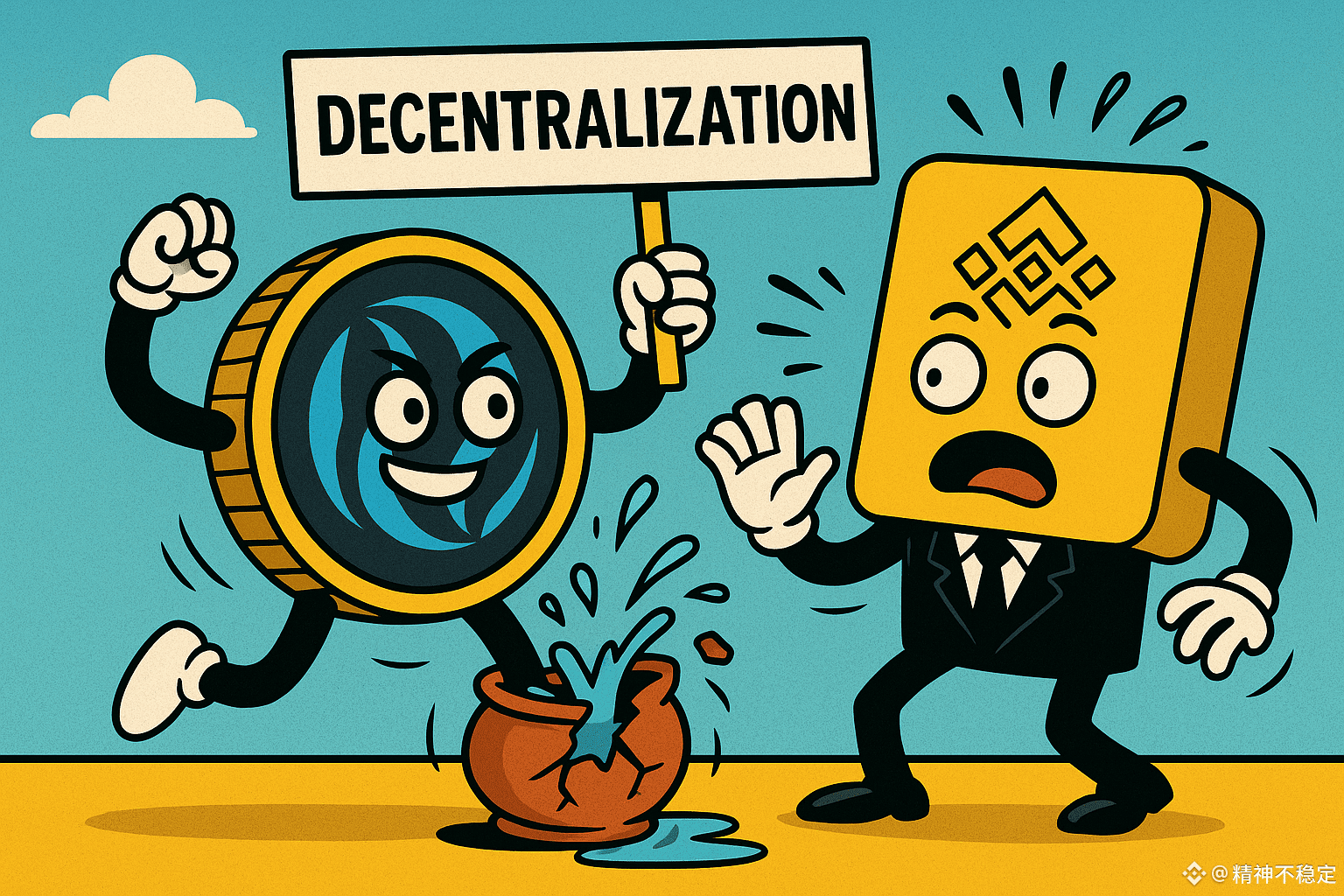
When Binance recently halted deposits and withdrawals for INJ ahead of a network upgrade, many users felt a jolt. That kind of move especially coming from such a dominant exchange tends to create uncertainty. For a token like INJ, with liquidity that often depends on a few major platforms, any disruption tends to ripple fast. With deposit/withdrawal windows off-limits, some traders and holders can’t move their tokens, which strains immediate liquidity and makes trading bumpy. Exchanges delisting or suspending support for a cryptocurrency tends to erode liquidity sharply.
So yes: from a short-term viewpoint, INJ’s liquidity likely saw a dent. For anyone trying to sell or switch platforms quickly, the suspension may have felt like hitting a glut of friction. That kind of environment can feed fear, force rushed decisions, or discourage newcomers.
But – and this is where it gets interesting – the same turbulence may actually be reinforcing a far more durable narrative: that Injective is increasingly defined by decentralization rather than by the convenience of a few big exchanges.
Injective isn’t built around being another generic smart-contract chain. Its identity is more focused and structural: it’s a Layer-1 built for markets, and built on the premise that trading, order books, and financial infrastructure should be native to the chain — not bolted on. In practice, that means the order-matching engine, fee logic, staking, governance — everything — lives inside the chain. INJ isn’t just a token you trade; it’s the lifeblood of the engine.
Because of that architecture, Injective has avenues to remain liquid and functional even if centralized venues wobble. Its staking and validator model means that network security and continuity don’t rest on any single exchange. The more people stake, the more decentralized the validator set becomes — reducing single-point-of-failure risk, reinforcing cross-chain trust, and keeping the chain alive even when trading volumes dip.
Meanwhile, upgrades have recently expanded Injective’s reach. With newer designs (for instance EVM-compatible layers atop its specialized stack), builders familiar with Ethereum-style development can bring their tools and smart contracts into Injective without relearning from scratch. That lowers friction for developers and makes it more likely that new apps — spot markets, derivatives, bridges, synthetic products — will emerge on the chain. That, in turn, can rebuild liquidity from the ground up, not just on exchanges, but within the ecosystem itself.
In a sense, what initially looks like a vulnerability (exchange suspension, reduced liquidity) may be a stress test — one that could force the ecosystem to show whether it can stand without leaning on centralized infrastructure. And so far, there are reasons for cautious optimism. Injective’s on-chain orderbook design, staking security, evolving developer ecosystem, and cross-chain infrastructure provide a foundation that doesn’t rely on Binance or any other single gatekeeper.
That doesn’t mean there aren’t real risks. Reduced exchange liquidity can make trading rough for a while. It could discourage newcomers, or make price swings more violent. If too many users bail, that could hamper network activity and slow growth.
But if Injective’s vision holds — decentralization, robust infrastructure, community participation — then this is more than just a turbulence episode. It could be a turning point: a shift from being “another token on exchanges” to being “a living financial network.” I find that possibility compelling.
Most crypto projects have relied on hype to get noticed, but Injective looks like it’s choosing a quieter, more thoughtful approach.. Its design feels thoughtful, purpose-driven. That doesn’t guarantee success, but it gives it a shot at something more sustainable.
I’ll be watching how liquidity evolves over the next few months: whether on-chain usage and staking compensate for exchange volume, whether developers and dApps begin to adopt Injective more broadly, and most importantly whether the community remains engaged. If it does, I think this “crisis” could end up marking the start of something stronger.
@Injective #injective #Injective $INJ

