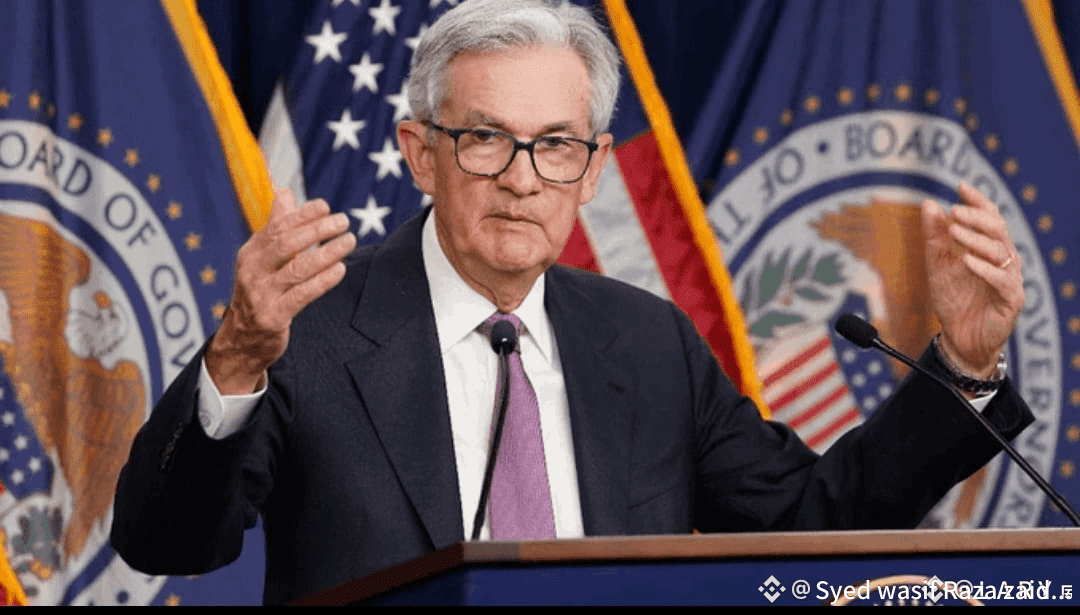
$TRUMP Washington, D.C. — The Federal Reserve has officially announced the end of its Quantitative Tightening (QT) program, marking a significant shift in U.S. monetary policy. The decision brings an end to the multi-year effort to reduce the size of the Fed’s balance sheet, a process that began after inflation surged in the post-pandemic economy. 🏛️
📉 What Ending QT Means
Quantitative Tightening involved the gradual runoff of Treasury securities and mortgage-backed assets held by the Fed. By stopping QT, the central bank is no longer allowing its balance sheet to shrink.
This move effectively stabilizes liquidity in financial markets and signals that the Fed believes conditions are now suitable for a pause in tightening.
🏦 Liquidity Boost to U.S. Banks
Alongside the announcement, the Fed injected additional liquidity into the banking system — a move aimed at keeping short-term interest rates stable and ensuring smooth functioning of credit markets. 💧💵
📊 Market Reaction
Markets responded with a wave of optimism. Major indices showed upward momentum, while several risk-on assets — including cryptocurrencies — saw a noticeable bump. Investors interpreted the move as a sign that the era of aggressive tightening may be coming to an end. 📈✨
🔮 What Comes Next
While the Fed has not formally announced any easing cycle, policymakers hinted that further accommodation could be considered in 2026 if economic conditions soften. Analysts are already debating whether this sets the stage for the early steps toward future Quantitative Easing (QE). 🔄🕊️
📌 Summary
QT officially ended
Balance sheet runoff halted
Liquidity support increased
Markets reacted positively
Possible policy easing in 2026
The decision marks a key turning point in U.S. monetary strategy, one that investors, banks, and global markets will be watching closely in the months ahead. 🌐👀