
#stablecoins
stablecoins
7.4M views
26,154 Discussing
Hot
Latest

Traditional finance is making moves! 🏦 Major banks like JPMorgan are pushing ahead with stablecoin and tokenized deposit plans under the CLARITY Act. This looming institutional competition has sent Coinbase ($COIN ) and Circle shares lower. As TradFi giants enter the arena, the stablecoin wars are heating up. Will crypto pioneers maintain their edge, or will Wall Street take over?
#Stablecoins #Coinbase #TradFi
#Stablecoins #Coinbase #TradFi

Stablecoin rails are not the future of payments — they are already the present, and most people still have not noticed.
Visa processed 15 trillion in volume last year. The entire stablecoin network settled more than 27 trillion — nearly double. Not in 2030. Last year.
The reason this does not feel real is because stablecoins are mostly invisible infrastructure. Businesses do not announce they switched to USDC the way they once announced they accept Bitcoin. It happens quietly, at the settlement layer, where finance actually lives.
What is changing right now:
- Cross-border B2B payments settling in seconds instead of 3-5 days
- Remittance corridors in Latin America and Southeast Asia being replaced entirely
- Payroll for gig workers in emerging markets flowing on-chain with zero conversion delay
Regulatory clarity advancing in the US Senate is not just a win on paper — it is the permission structure that lets banks, fintechs, and Fortune 500 treasury teams build on this infrastructure without legal ambiguity.
The narrative war over which L1 wins is happening while the real adoption story is the boring one: stablecoins as the TCP/IP of money.
$BTC provides the reserve backdrop. $ETH and $SOL are the settlement rails being built on. The infrastructure is here. The volume is real. The window is open.
#Stablecoins #CryptoPayments #DeFi #BlockchainFinance #BinanceSquare
Visa processed 15 trillion in volume last year. The entire stablecoin network settled more than 27 trillion — nearly double. Not in 2030. Last year.
The reason this does not feel real is because stablecoins are mostly invisible infrastructure. Businesses do not announce they switched to USDC the way they once announced they accept Bitcoin. It happens quietly, at the settlement layer, where finance actually lives.
What is changing right now:
- Cross-border B2B payments settling in seconds instead of 3-5 days
- Remittance corridors in Latin America and Southeast Asia being replaced entirely
- Payroll for gig workers in emerging markets flowing on-chain with zero conversion delay
Regulatory clarity advancing in the US Senate is not just a win on paper — it is the permission structure that lets banks, fintechs, and Fortune 500 treasury teams build on this infrastructure without legal ambiguity.
The narrative war over which L1 wins is happening while the real adoption story is the boring one: stablecoins as the TCP/IP of money.
$BTC provides the reserve backdrop. $ETH and $SOL are the settlement rails being built on. The infrastructure is here. The volume is real. The window is open.
#Stablecoins #CryptoPayments #DeFi #BlockchainFinance #BinanceSquare


Visa Hunts For New Stablecoin Partner After BVNK Sale 💰
Visa is issuing an RFP for a new stablecoin settlement partner.
The move comes after BVNK was sold to Mastercard. Visa says it needs to support a "range of stablecoins".
Meanwhile Cash App is also expanding users can now buy ETH, SOL, and USDT via MoonPay.
#Visa #Stablecoins #Payments #Fintech #CryptoNews
Visa is issuing an RFP for a new stablecoin settlement partner.
The move comes after BVNK was sold to Mastercard. Visa says it needs to support a "range of stablecoins".
Meanwhile Cash App is also expanding users can now buy ETH, SOL, and USDT via MoonPay.
#Visa #Stablecoins #Payments #Fintech #CryptoNews

CBDCs vs Private Stablecoins: The Two-Tier Monetary System Nobody Is Talking About
Central banks are racing to deploy CBDCs. Meanwhile, private stablecoins have already processed trillions in volume. The collision course between these two worlds will define the next decade of monetary infrastructure — and crypto sits at the center.
Here is the core tension: CBDCs give governments programmable control — conditional spending, expiry dates, transaction surveillance. Private stablecoins give users programmable freedom — composability with DeFi, 24/7 settlement, global borderless access.
The outcome will not be winner-takes-all. A two-tier system is forming. CBDCs for compliance-heavy corridors: payroll, welfare, regulated payments. Private stablecoins for the open financial layer: DeFi protocols, cross-border commerce, crypto-native rails.
$ETH and $BNB are the settlement platforms that private stablecoins run on — their utility compounds as stablecoin volume grows. $XRP has long targeted the institutional cross-border settlement gap that neither CBDCs nor private stablecoins have cleanly solved yet.
The real opportunity: the infrastructure layers beneath both systems. Wallets, bridges, compliance rails, on-chain FX. These are not glamorous but they are where durable value accrues.
The monetary future is not one thing. It is a stack. Position accordingly.
#Stablecoins #CBDC #DeFi #CryptoInfrastructure #Web3Finance
Central banks are racing to deploy CBDCs. Meanwhile, private stablecoins have already processed trillions in volume. The collision course between these two worlds will define the next decade of monetary infrastructure — and crypto sits at the center.
Here is the core tension: CBDCs give governments programmable control — conditional spending, expiry dates, transaction surveillance. Private stablecoins give users programmable freedom — composability with DeFi, 24/7 settlement, global borderless access.
The outcome will not be winner-takes-all. A two-tier system is forming. CBDCs for compliance-heavy corridors: payroll, welfare, regulated payments. Private stablecoins for the open financial layer: DeFi protocols, cross-border commerce, crypto-native rails.
$ETH and $BNB are the settlement platforms that private stablecoins run on — their utility compounds as stablecoin volume grows. $XRP has long targeted the institutional cross-border settlement gap that neither CBDCs nor private stablecoins have cleanly solved yet.
The real opportunity: the infrastructure layers beneath both systems. Wallets, bridges, compliance rails, on-chain FX. These are not glamorous but they are where durable value accrues.
The monetary future is not one thing. It is a stack. Position accordingly.
#Stablecoins #CBDC #DeFi #CryptoInfrastructure #Web3Finance
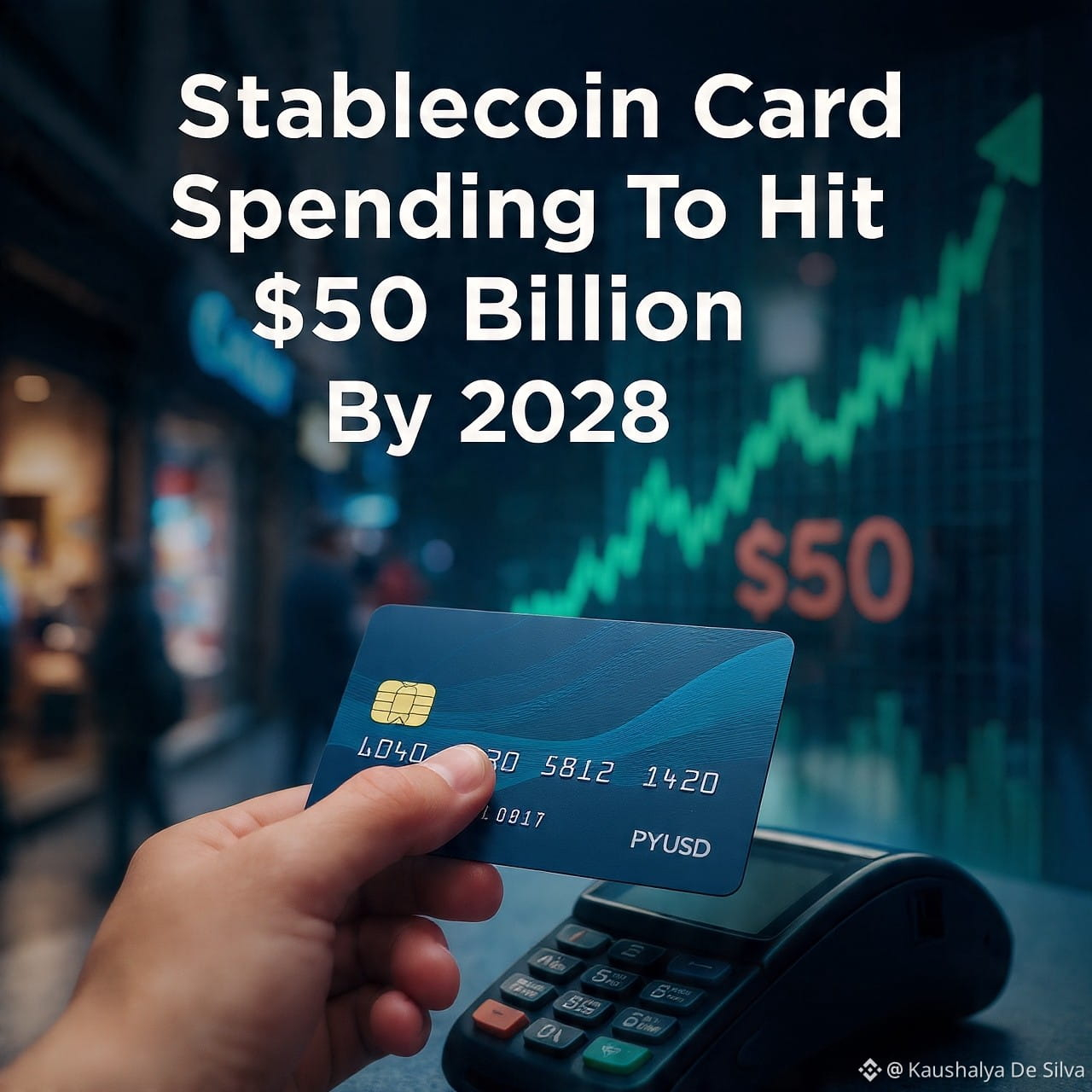
Stablecoin Card Spending To Hit $50 Billion By 2028 💳
Real-world use is booming! RedotPay forecasts global stablecoin card spending will quadruple to $50B/year by 2028*.
July 2026 already saw a record $1B in stablecoin card spend.
Drivers: cross-border payments, treasury ops, and adoption in Latin America + Africa.
"The fastest markets aren't those with the highest crypto penetration" it's about payment pain + easy off-ramps.
#Stablecoins #Payments #CryptoAdoption #USDT
Real-world use is booming! RedotPay forecasts global stablecoin card spending will quadruple to $50B/year by 2028*.
July 2026 already saw a record $1B in stablecoin card spend.
Drivers: cross-border payments, treasury ops, and adoption in Latin America + Africa.
"The fastest markets aren't those with the highest crypto penetration" it's about payment pain + easy off-ramps.
#Stablecoins #Payments #CryptoAdoption #USDT


I was thinking about something interesting while looking at the growth of stablecoin payments.
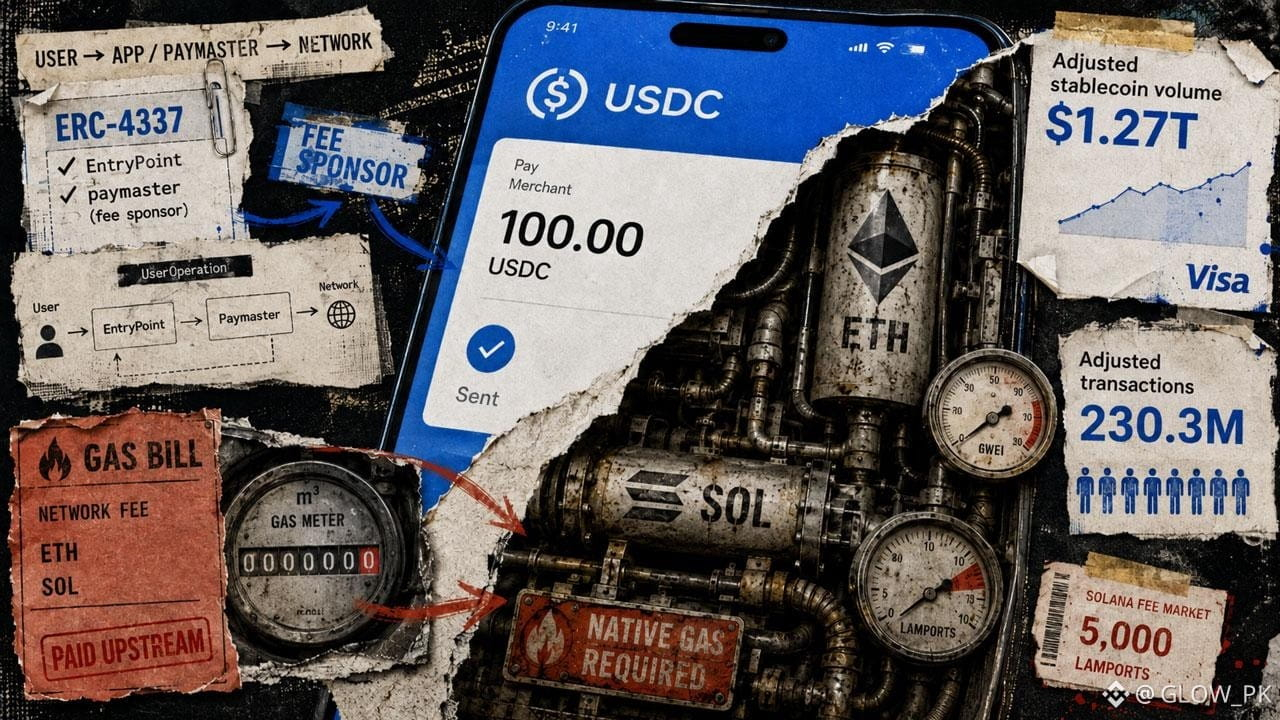
Users may soon be able to move billions in stablecoins without ever needing to buy or hold $ETH or $SOL themselves.
The experience becomes simple: open the app, send USDC, and forget everything happening underneath.
But there’s one thing abstraction cannot remove: the gas bill.
Someone still has to pay for blockspace.
That changes where native token demand comes from. Instead of millions of individual users constantly acquiring gas tokens, demand could increasingly shift toward a smaller group of wallets, paymasters, and infrastructure providers operating at scale.
So the question isn't whether gas demand disappears.
It's who ends up holding the tokens required to pay for it.
That could become one of the most important structural changes in the next phase of crypto adoption. 👀
#Crypto #Stablecoins #Ethereum #solana #blockchain
Users may soon be able to move billions in stablecoins without ever needing to buy or hold $ETH or $SOL themselves.
The experience becomes simple: open the app, send USDC, and forget everything happening underneath.
But there’s one thing abstraction cannot remove: the gas bill.
Someone still has to pay for blockspace.
That changes where native token demand comes from. Instead of millions of individual users constantly acquiring gas tokens, demand could increasingly shift toward a smaller group of wallets, paymasters, and infrastructure providers operating at scale.
So the question isn't whether gas demand disappears.
It's who ends up holding the tokens required to pay for it.
That could become one of the most important structural changes in the next phase of crypto adoption. 👀
#Crypto #Stablecoins #Ethereum #solana #blockchain

$SUI Circle sets Dec 1 deadline , legacy USDC V1 contracts on Noble and Sui must migrate to V2 or lose transfer routes.
Circle gave developers 95 days to migrate off legacy USDC cross-chain transfer routes before the old contracts pause on December 1.
Circle mandates V1 USDC contract migration by Dec 1, forcing Noble and Sui to upgrade to V2 hooks to avoid stranded funds.
Circle gave developers 95 days to migrate off legacy USDC cross-chain transfer routes before the old contracts pause on December 1.
The stablecoin issuer announced the timeline August 28, setting October 31 as the date when burn limits on the V1 contracts begin to ratchet down.
Which bridging protocols still depend on V1 hooks , and what's the migration path for stranded USDC?
$SUI #SUI #Stablecoins #CryptoNews
Circle gave developers 95 days to migrate off legacy USDC cross-chain transfer routes before the old contracts pause on December 1.
Circle mandates V1 USDC contract migration by Dec 1, forcing Noble and Sui to upgrade to V2 hooks to avoid stranded funds.
Circle gave developers 95 days to migrate off legacy USDC cross-chain transfer routes before the old contracts pause on December 1.
The stablecoin issuer announced the timeline August 28, setting October 31 as the date when burn limits on the V1 contracts begin to ratchet down.
Which bridging protocols still depend on V1 hooks , and what's the migration path for stranded USDC?
$SUI #SUI #Stablecoins #CryptoNews

Visa's stablecoin exploration with Dunamu just confirmed what many on-chain data points have been screaming: institutional adoption is accelerating.
This isn't just another crypto headline. Visa, a titan of traditional finance, is actively vetting projects like Open Standard's OUSD for real-world payments. This move signifies a crucial pivot, moving stablecoins from a speculative playground to a utility-driven instrument for remittances and commerce. Think about it: if Visa sees value, the ripple effect on liquidity and accessibility for mainstream users is monumental. We're talking about onboarding millions, not just thousands.
Smart money is already front-running this narrative. Watch for increased inflows into well-established stablecoins and projects with verifiable utility. Expect increased regulatory clarity to be a significant catalyst. #Stablecoins #InstitutionalAdoption #CryptoPayments
The key level to watch is whether stablecoin market cap can break decisively above its current consolidation range, signaling renewed confidence and further integration. A sustained push above $150 billion will be the breakout signal. #MarketAnalysis
What's your price target for major stablecoins by year-end?
This isn't just another crypto headline. Visa, a titan of traditional finance, is actively vetting projects like Open Standard's OUSD for real-world payments. This move signifies a crucial pivot, moving stablecoins from a speculative playground to a utility-driven instrument for remittances and commerce. Think about it: if Visa sees value, the ripple effect on liquidity and accessibility for mainstream users is monumental. We're talking about onboarding millions, not just thousands.
Smart money is already front-running this narrative. Watch for increased inflows into well-established stablecoins and projects with verifiable utility. Expect increased regulatory clarity to be a significant catalyst. #Stablecoins #InstitutionalAdoption #CryptoPayments
The key level to watch is whether stablecoin market cap can break decisively above its current consolidation range, signaling renewed confidence and further integration. A sustained push above $150 billion will be the breakout signal. #MarketAnalysis
What's your price target for major stablecoins by year-end?

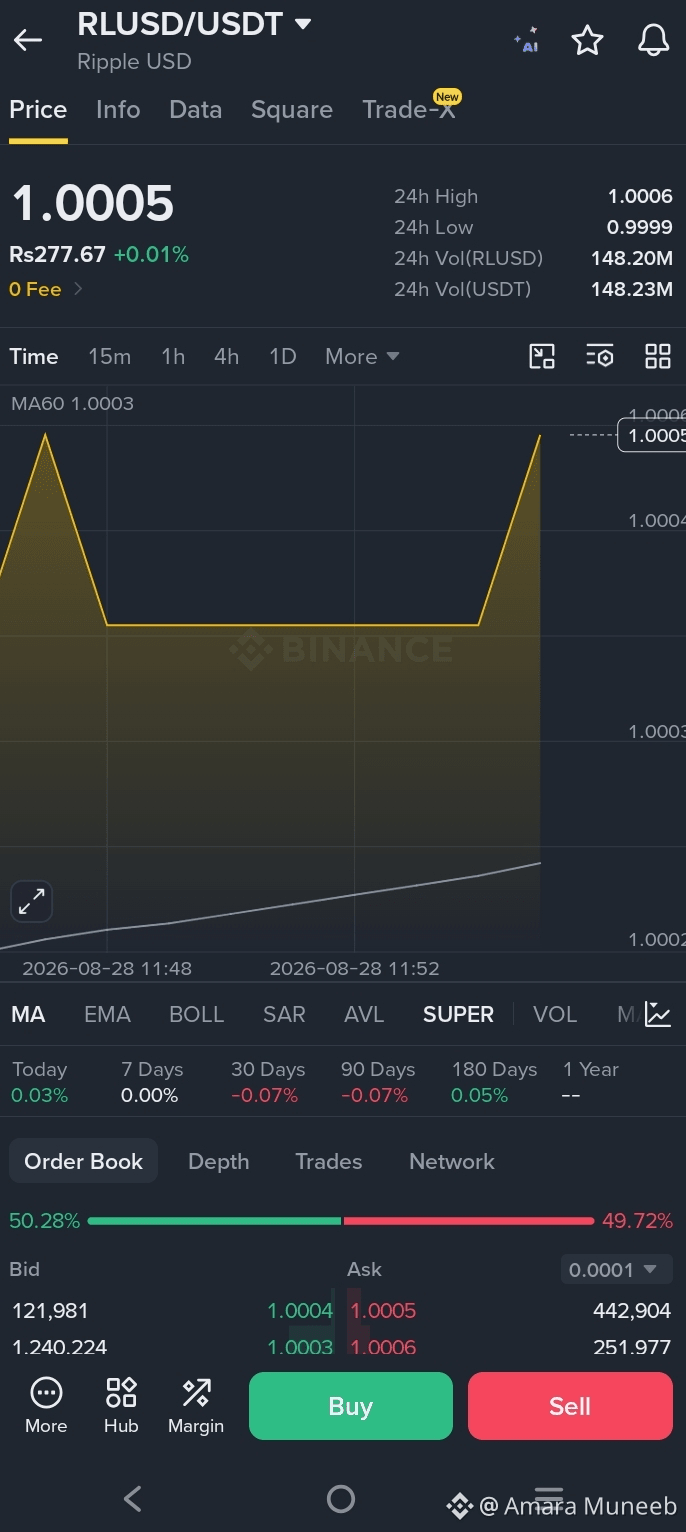
💧 $RLUSD /USDT Market Update! 💵⚡
Ripple USD (RLUSD) is showing strong stability, currently trading at $1.0005 (+0.01%) with over $148 Million in 24-hour trading volume! Order book activity is balanced, with buyers maintaining a slight edge at 50.28% Bids. 🚀
Current Price: $1.0005 (+0.01%)
24h Range: $0.9999 - $1.0006
24h Volume: $148.20M (RLUSD)
Order Book Balance: 50.28% Bids vs 49.72% Asks
How are you utilizing Ripple's stablecoin in your daily trading strategy? Let us know in the comments below! 💬👇
👉 Like, Comment, and Follow for daily technical updates, stablecoin insights, and crypto market updates! 🔥✨
#RLUSD #Ripple #USDT #BinanceSquare #CryptoMarkets #Stablecoins
Ripple USD (RLUSD) is showing strong stability, currently trading at $1.0005 (+0.01%) with over $148 Million in 24-hour trading volume! Order book activity is balanced, with buyers maintaining a slight edge at 50.28% Bids. 🚀
Current Price: $1.0005 (+0.01%)
24h Range: $0.9999 - $1.0006
24h Volume: $148.20M (RLUSD)
Order Book Balance: 50.28% Bids vs 49.72% Asks
How are you utilizing Ripple's stablecoin in your daily trading strategy? Let us know in the comments below! 💬👇
👉 Like, Comment, and Follow for daily technical updates, stablecoin insights, and crypto market updates! 🔥✨
#RLUSD #Ripple #USDT #BinanceSquare #CryptoMarkets #Stablecoins
🌐 $USD1 /USDT Market Update! 💵⚡
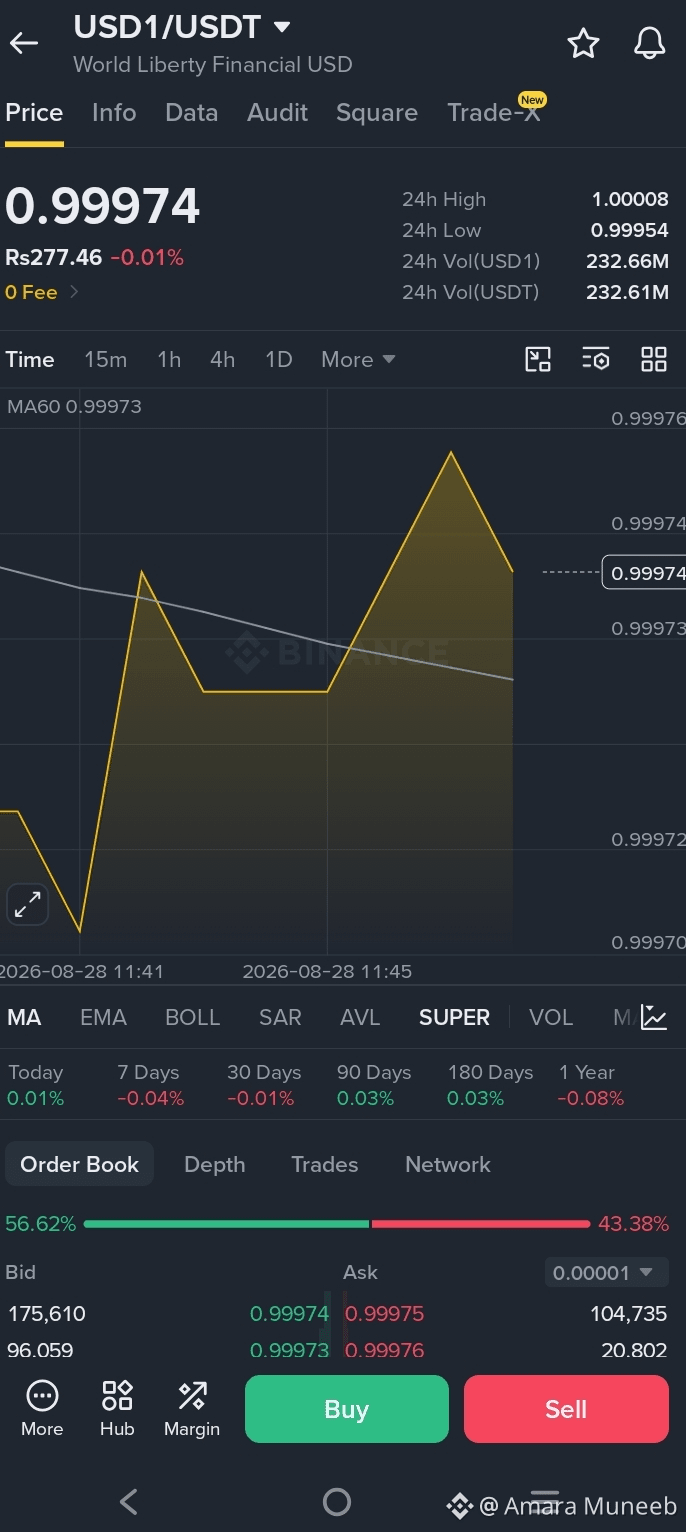
USD1 (World Liberty Financial USD) is holding its stable peg around $0.99974 with steady 24-hour trading volume exceeding $232 Million! Buyers are actively holding order book support with 56.62% Bids. 🚀
Current Price: $0.99974 (-0.01%)
24h Range: $0.99954 - $1.00008
24h Volume: $232.66M (USD1)
Order Book Control: 56.62% Bids vs 43.38% Asks
Stablecoins provide great liquidity and security during market swings! How are you utilizing stablecoins like USD1 in your portfolio today? Share your thoughts below! 💬👇
👉 Like, Comment, and Follow for daily technical updates, stablecoin insights, and crypto news! 🔥✨
#USD1 #WorldLibertyFinancial #USDT #BinanceSquare #CryptoMarkets #Stablecoins
USD1 (World Liberty Financial USD) is holding its stable peg around $0.99974 with steady 24-hour trading volume exceeding $232 Million! Buyers are actively holding order book support with 56.62% Bids. 🚀
Current Price: $0.99974 (-0.01%)
24h Range: $0.99954 - $1.00008
24h Volume: $232.66M (USD1)
Order Book Control: 56.62% Bids vs 43.38% Asks
Stablecoins provide great liquidity and security during market swings! How are you utilizing stablecoins like USD1 in your portfolio today? Share your thoughts below! 💬👇
👉 Like, Comment, and Follow for daily technical updates, stablecoin insights, and crypto news! 🔥✨
#USD1 #WorldLibertyFinancial #USDT #BinanceSquare #CryptoMarkets #Stablecoins

Visa moves deeper into stablecoins
Dunamu and Visa are partnering to explore stablecoin and AI business ventures. The collaboration will also look into the potential usage of Open Standard's OUSD in future projects.
#Stablecoins #Visa
Dunamu and Visa are partnering to explore stablecoin and AI business ventures. The collaboration will also look into the potential usage of Open Standard's OUSD in future projects.
#Stablecoins #Visa
The Gig Economy Just Found Its Settlement Layer
Over 1.5 billion people worldwide participate in the gig economy — freelancers, creators, drivers, remote contractors. They share one persistent problem: getting paid across borders is slow, expensive, and opaque.
Traditional rails charge 3–7% in fees. Transfers take 2–5 business days. Correspondent banking has no weekend hours. For a gig worker in Southeast Asia completing work for a US company, this friction erases real income.
Stablecoins solve this structurally, not incrementally.
A stablecoin payment settles in seconds, costs cents, and travels 24/7. There are no intermediary banks to route through, no currency conversion markups beyond the initial on-ramp, and no business-hours restrictions. The same infrastructure works whether the recipient is in Jakarta or Johannesburg.
This is not theoretical. Stablecoin transfer volumes already exceed major card networks on an annualized basis. The infrastructure is live. What is catching up is the compliance layer — and that is exactly what recent legislation is accelerating.
For $ETH , this means L2 execution volume and settlement finality demand. For $BNB , it means merchant rail velocity and low-cost transfer throughput. For $XRP , it means cross-border corridor adoption where speed and cost are the primary mandate.
The creator economy does not need a banking revolution. It needs a rails upgrade. Stablecoins are that upgrade — already deployed, already scaling.
#Stablecoins #CryptoPayments #Web3 #DeFi #BinanceSquare
Over 1.5 billion people worldwide participate in the gig economy — freelancers, creators, drivers, remote contractors. They share one persistent problem: getting paid across borders is slow, expensive, and opaque.
Traditional rails charge 3–7% in fees. Transfers take 2–5 business days. Correspondent banking has no weekend hours. For a gig worker in Southeast Asia completing work for a US company, this friction erases real income.
Stablecoins solve this structurally, not incrementally.
A stablecoin payment settles in seconds, costs cents, and travels 24/7. There are no intermediary banks to route through, no currency conversion markups beyond the initial on-ramp, and no business-hours restrictions. The same infrastructure works whether the recipient is in Jakarta or Johannesburg.
This is not theoretical. Stablecoin transfer volumes already exceed major card networks on an annualized basis. The infrastructure is live. What is catching up is the compliance layer — and that is exactly what recent legislation is accelerating.
For $ETH , this means L2 execution volume and settlement finality demand. For $BNB , it means merchant rail velocity and low-cost transfer throughput. For $XRP , it means cross-border corridor adoption where speed and cost are the primary mandate.
The creator economy does not need a banking revolution. It needs a rails upgrade. Stablecoins are that upgrade — already deployed, already scaling.
#Stablecoins #CryptoPayments #Web3 #DeFi #BinanceSquare

Clarity Act sparks a policy duel: The Blockchain Association’s Summer Mersinger says the act won’t harm community banks, defending the stablecoin rewards language; community banker Nate Franzén disagrees. The debate could redefine how stablecoins interact with Main Street lenders. $USDC #CryptoRegulation #Stablecoins


Banks spent years worrying about stablecoins.
Now they're considering launching their own.
More than a dozen major financial institutions are reportedly working on a global stablecoin project, while other banking groups are building infrastructure for tokenized deposits and stablecoins.
At the same time, the UK is pushing its central bank to support more innovation around digital currencies.
Crypto adoption might not end with banks being replaced.
It might end with banks using the same rails.
#Stablecoins #Crypto
Now they're considering launching their own.
More than a dozen major financial institutions are reportedly working on a global stablecoin project, while other banking groups are building infrastructure for tokenized deposits and stablecoins.
At the same time, the UK is pushing its central bank to support more innovation around digital currencies.
Crypto adoption might not end with banks being replaced.
It might end with banks using the same rails.
#Stablecoins #Crypto
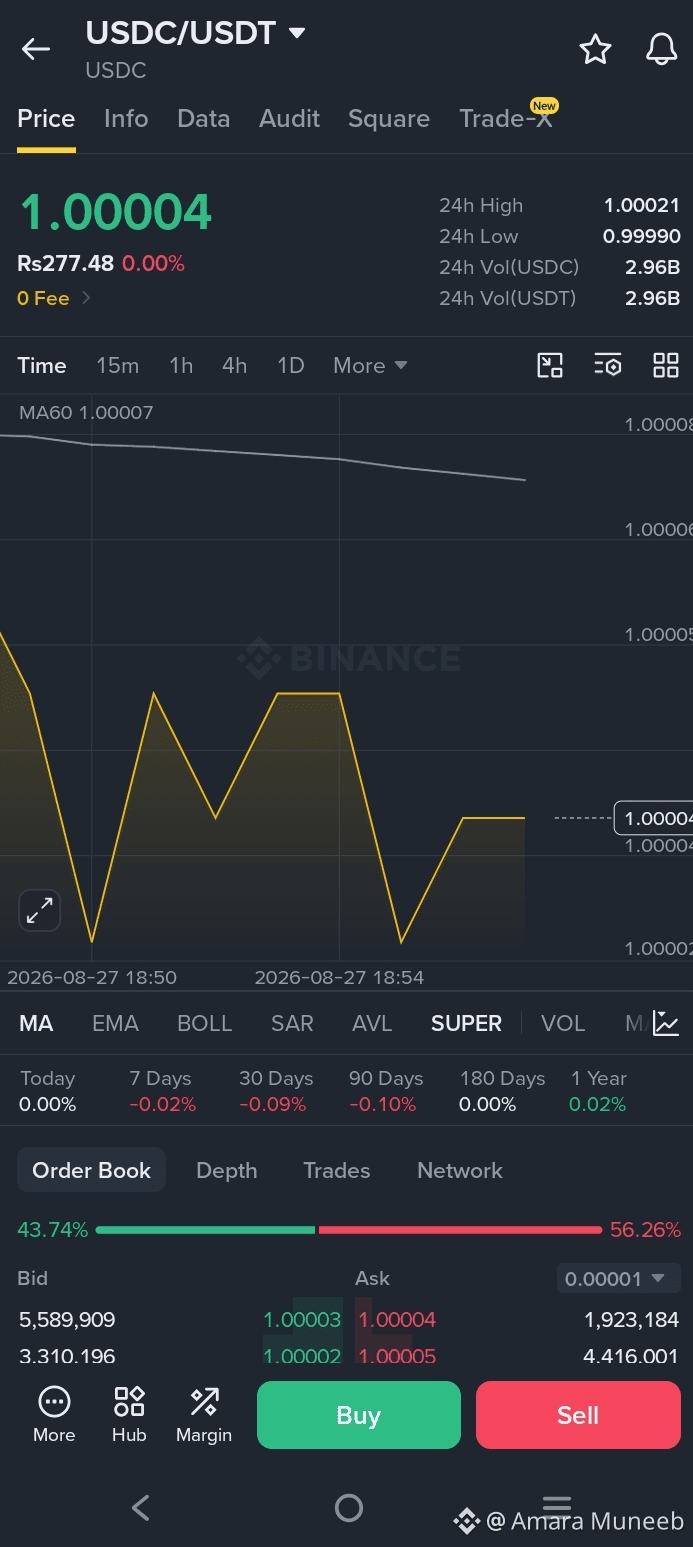
$USDC /USDT Technical Snapshot & Peg Stability 🛡️
USDC maintains solid price stability, currently trading at 1.00004 USDT with 0 Fee trading on Binance.
24h High / Low: 1.00021 / 0.99990
24h Volume: 2.96B USDC (~2.96B USDT)
Performance: High stability with near-zero fluctuation across long-term timeframes (+0.02% 1-year).
Order Book Sentiment: Balanced market liquidity with 43.74% Bids vs 56.26% Asks.
How do you manage risk using stablecoins in your portfolio?
👇 Like this post, share your strategy in the comments, and follow for more crypto updates! 🌐
#USDC #USDT #BinanceSquare #Stablecoins #CryptoTrading USDCUSDT
USDC maintains solid price stability, currently trading at 1.00004 USDT with 0 Fee trading on Binance.
24h High / Low: 1.00021 / 0.99990
24h Volume: 2.96B USDC (~2.96B USDT)
Performance: High stability with near-zero fluctuation across long-term timeframes (+0.02% 1-year).
Order Book Sentiment: Balanced market liquidity with 43.74% Bids vs 56.26% Asks.
How do you manage risk using stablecoins in your portfolio?
👇 Like this post, share your strategy in the comments, and follow for more crypto updates! 🌐
#USDC #USDT #BinanceSquare #Stablecoins #CryptoTrading USDCUSDT
$USDC /USDT Technical Snapshot & Price Analysis 📊
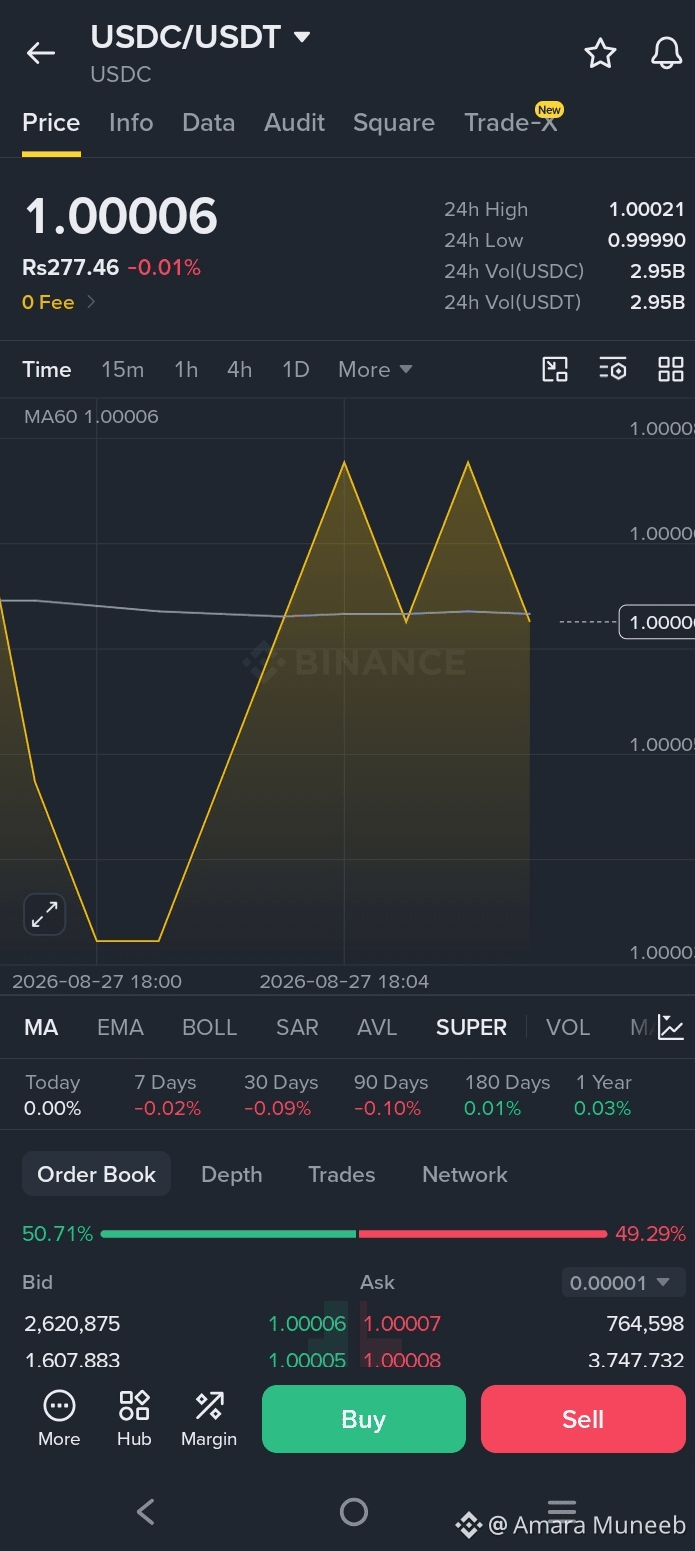
USDC is currently trading at 1.00006 USDT, displaying tight peg stability with zero trading fees on Binance.
24h High / Low: 1.00021 / 0.99990
24h Volume: 2.95B USDC (~2.95B USDT)
Performance: +0.01% over 180 days, maintaining its strong dollar peg.
Order Book Sentiment: 50.71% Bids vs 49.29% Asks, showing balanced liquidity and high market efficiency.
A key stablecoin pair for risk management, low-slippage swaps, and seamless trading activity! 🌐
#USDC #USDT #Binance #CryptoAnalysis #Stablecoins USDCUSDT
USDC is currently trading at 1.00006 USDT, displaying tight peg stability with zero trading fees on Binance.
24h High / Low: 1.00021 / 0.99990
24h Volume: 2.95B USDC (~2.95B USDT)
Performance: +0.01% over 180 days, maintaining its strong dollar peg.
Order Book Sentiment: 50.71% Bids vs 49.29% Asks, showing balanced liquidity and high market efficiency.
A key stablecoin pair for risk management, low-slippage swaps, and seamless trading activity! 🌐
#USDC #USDT #Binance #CryptoAnalysis #Stablecoins USDCUSDT

🚨 WALL STREET CONDEMNED $BTC FOR YEARS—NOW THEY ARE BUILDING ON IT! 🦈
The old financial guard spent a decade labeling crypto a threat while quietly waiting to build their own settlement rails. 🏦 Now the exact banking titans that blocked card purchases are racing to capture digital dollar yield. 💡
Order flow doesn't lie. 🌊 This pivot proves legacy finance isn't here to kill the asset class—they just wanted to control the transactional tollbooths. 📊
💬 Will institutional stablecoins accelerate crypto adoption or hand liquidity control back to legacy institutions? 👇
⚠️ Not financial advice. Always manage your risk. 🛡️
🏷️ #BTC #Stablecoins #TradFi #Crypto #MarketInsights
🔥 💎
The old financial guard spent a decade labeling crypto a threat while quietly waiting to build their own settlement rails. 🏦 Now the exact banking titans that blocked card purchases are racing to capture digital dollar yield. 💡
Order flow doesn't lie. 🌊 This pivot proves legacy finance isn't here to kill the asset class—they just wanted to control the transactional tollbooths. 📊
💬 Will institutional stablecoins accelerate crypto adoption or hand liquidity control back to legacy institutions? 👇
⚠️ Not financial advice. Always manage your risk. 🛡️
🏷️ #BTC #Stablecoins #TradFi #Crypto #MarketInsights
🔥 💎

🏦 TRADFI GIANTS FLIP STRUCTURAL BIAS TO CAPTURE STABLECOIN SETTLEMENT LIQUIDITY $BTC 🚨
The macro narrative shift is clear as legacy banking institutions transition from public skepticism to active infrastructure deployment in stablecoins. 🔍 Smart money didn't reject the asset class; they simply delayed retail expansion until institutional rails were locked in.
With major banks positioning for settlement layers across $BTC , $ETH , and $SOL , the long-term liquidity footprint is shifting permanently on-chain. 📊 This validation secures the macro floor while capital efficiency moves to private rails. 💬 Is this institutional pivot the ultimate macro catalyst or a play to control on-chain liquidity? 👇
⚠️ Not financial advice. Always manage your risk. 🛡️
🏷️ #BTC #Crypto #Macro #Stablecoins #Institutional
🎯 🦈
The macro narrative shift is clear as legacy banking institutions transition from public skepticism to active infrastructure deployment in stablecoins. 🔍 Smart money didn't reject the asset class; they simply delayed retail expansion until institutional rails were locked in.
With major banks positioning for settlement layers across $BTC , $ETH , and $SOL , the long-term liquidity footprint is shifting permanently on-chain. 📊 This validation secures the macro floor while capital efficiency moves to private rails. 💬 Is this institutional pivot the ultimate macro catalyst or a play to control on-chain liquidity? 👇
⚠️ Not financial advice. Always manage your risk. 🛡️
🏷️ #BTC #Crypto #Macro #Stablecoins #Institutional
🎯 🦈

Verified
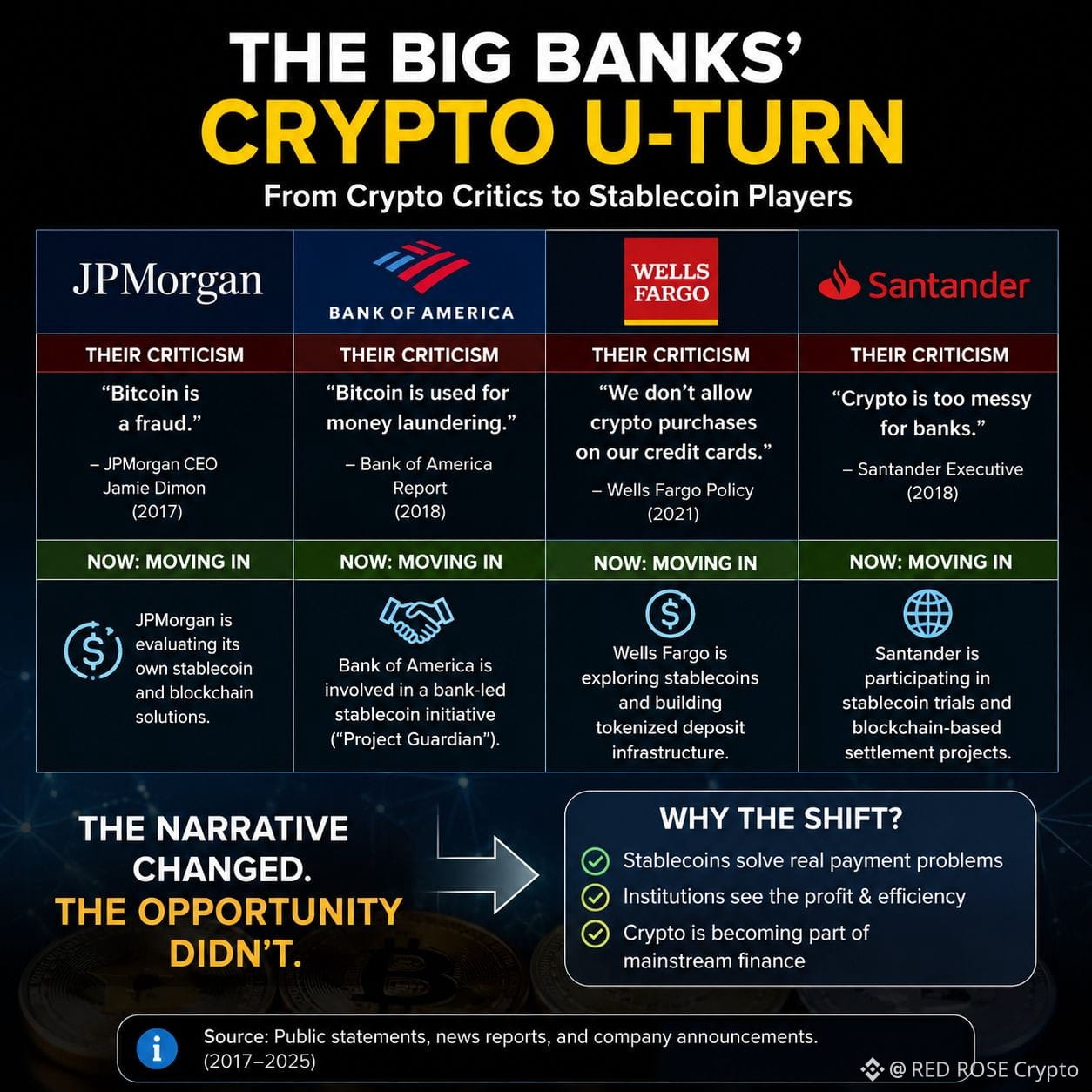
Traditional banks once raised concerns about stablecoins, but the landscape is changing. JPMorgan is evaluating its options, while Bank of America, Wells Fargo and Santander are involved in a proposed bank-led stablecoin initiative. Wells Fargo is also developing tokenized deposits. The shift suggests major banks increasingly see blockchain-based money as part of future financial infrastructure
$BTC #Bitcoin #Crypto #Stablecoins
$BTC #Bitcoin #Crypto #Stablecoins
Log in to explore more content