
#tradingstrategies
tradingstrategies
655,152 views
872 Discussing
Hot
Latest

🚀 Mastering Market Strategies: Why Live Trading Insights Win Big!
Navigating the crypto markets successfully isn't just about timing; it's about having a solid strategy and sharing the journey. Whether you are setting up limit orders for your favorite assets or tracking daily trends, consistency is key.
💡 Quick Tips for Smarter Trading:
Share Real Strategies: Documenting your live trading setups provides massive value to the community.
Stay Disciplined: Always stick to your entry and exit plans, regardless of short-term market noise.
Engage & Learn: Continuous learning—from market analysis to platform tools—keeps you ahead of the curve.
How are you positioning your portfolio for this week's market movements? Let me know your thoughts in the comments below! 👇
#cryptotrading #BinanceSquare #TradingStrategies #Web3 #CryptoCommunity
🚀 Mastering Market Strategies: Why Live Trading Insights Win Big!
Navigating the crypto markets successfully isn't just about timing; it's about having a solid strategy and sharing the journey. Whether you are setting up limit orders for your favorite assets or tracking daily trends, consistency is key.
💡 Quick Tips for Smarter Trading:
Share Real Strategies: Documenting your live trading setups provides massive value to the community.
Stay Disciplined: Always stick to your entry and exit plans, regardless of short-term market noise.
Engage & Learn: Continuous learning—from market analysis to platform tools—keeps you ahead of the curve.
How are you positioning your portfolio for this week's market movements? Let me know your thoughts in the comments below! 👇
#cryptotrading #BinanceSquare #TradingStrategies #Web3 #CryptoCommunity
Navigating the crypto markets successfully isn't just about timing; it's about having a solid strategy and sharing the journey. Whether you are setting up limit orders for your favorite assets or tracking daily trends, consistency is key.
💡 Quick Tips for Smarter Trading:
Share Real Strategies: Documenting your live trading setups provides massive value to the community.
Stay Disciplined: Always stick to your entry and exit plans, regardless of short-term market noise.
Engage & Learn: Continuous learning—from market analysis to platform tools—keeps you ahead of the curve.
How are you positioning your portfolio for this week's market movements? Let me know your thoughts in the comments below! 👇
#cryptotrading #BinanceSquare #TradingStrategies #Web3 #CryptoCommunity
65

Combined Strategy: The Bull Call Spread
Title: Reduce the cost of your Calls with the Bull Call Spread 🐂📉
Content:
Want to buy a Call but find the premium too high? The Bull Call Spread is the ideal technical solution.
📌 How to build it?
Buy a Call with Strike A (closer to the current price).
Simultaneously sell a Call with a higher Strike B (same expiration).
Selling the second Call helps finance part of the first. This way, you reduce your entry cost and overall risk in exchange for a capped gain.
#BullCallSpread #TradingStrategies #OptionsAdvanced #Binance
Combined Strategy: The Bull Call Spread
Title: Reduce the cost of your Calls with the Bull Call Spread 🐂📉
Content:
Want to buy a Call but find the premium too high? The Bull Call Spread is the ideal technical solution.
📌 How to build it?
Buy a Call with Strike A (closer to the current price).
Simultaneously sell a Call with a higher Strike B (same expiration).
Selling the second Call helps finance part of the first. This way, you reduce your entry cost and overall risk in exchange for a capped gain.
#BullCallSpread #TradingStrategies #OptionsAdvanced #Binance
Title: Reduce the cost of your Calls with the Bull Call Spread 🐂📉
Content:
Want to buy a Call but find the premium too high? The Bull Call Spread is the ideal technical solution.
📌 How to build it?
Buy a Call with Strike A (closer to the current price).
Simultaneously sell a Call with a higher Strike B (same expiration).
Selling the second Call helps finance part of the first. This way, you reduce your entry cost and overall risk in exchange for a capped gain.
#BullCallSpread #TradingStrategies #OptionsAdvanced #Binance
66

Demystifying Crypto Liquidity: How Order Books, Market Depth, and Slippage Impact Your TradesLiquidity is frequently cited as one of the most critical factors in financial markets, yet it remains widely misunderstood by intermediate traders. You may hear analysts describe a asset as "highly liquid" or warn that an altcoin suffers from "thin liquidity," but what do these terms mean in practice? More importantly, how does market liquidity directly affect your execution prices, risk management, and overall trading strategy?
At its simplest, liquidity refers to the ease with which an asset can be converted into cash or another asset without causing a significant change in its market price. In a perfectly liquid market, you can buy or sell large quantities instantly at the current prevailing market rate. In an illiquid market, even modest transaction sizes can cause dramatic price shifts, leading to unexpected costs and increased risk.
Understanding the mechanics of crypto liquidity—across both centralized order books and decentralized automated market makers—is essential for any trader looking to move beyond basic spot buying and navigate volatile market conditions safely.
---
### The Architecture of Liquidity: Bids, Asks, and Spreads
To understand liquidity, one must first look at where prices come from: the order book. On a centralized exchange, an order book aggregates all outstanding limit orders placed by buyers and sellers.
- **The Bid:** The highest price a buyer is currently willing to pay for an asset.
- **The Ask (or Offer):** The lowest price a seller is currently willing to accept for an asset.
- **The Bid-Ask Spread:** The difference between the highest bid and the lowest ask price.
The width of the bid-ask spread serves as a primary indicator of immediate market liquidity. In highly liquid markets, such as top-tier assets like Bitcoin or Ethereum on major exchanges, the spread is extremely tight—often fractions of a percentage point. This tight gap exists because high trading activity and competing market makers constantly fill orders close to the midpoint price.
Conversely, in illiquid markets—such as newly launched micro-cap tokens—the bid-ask spread can be wide, sometimes exceeding several percentage points. If you buy at the ask price and immediately sell at the bid price in such a market, you instantly incur a loss equal to the width of the spread, even if the general market price hasn't moved.
---
### Practical Example: The Mechanics of Slippage
Slippage occurs when a trade is executed at a different price than expected. This happens primarily when using market orders in books that lack sufficient depth to absorb the order volume at the top bid or ask level.
Consider a practical example involving a hypothetical altcoin, Asset X:
Suppose the current best ask price for Asset X is $10.00, and you place a market buy order for 10 units. You might assume your order will fill entirely at $10.00, requiring a total spend of $100.00. However, the sell side of the order book looks like this:
- Level 1: 2 units available at $10.00
- Level 2: 3 units available at $10.10
- Level 3: 5 units available at $10.50
Because a market order prioritizes speed of execution over price precision, the exchange's matching engine executes your order by walking up the order book:
1. It buys 2 units at $10.00 ($20.00 total)
2. It buys 3 units at $10.10 ($30.30 total)
3. It buys 5 units at $10.50 ($52.50 total)
Your final average purchase price per unit is $102.80 divided by 10, which equals **$10.28 per unit**.
Although the asset was quoted at $10.00 when you pressed the buy button, you experienced a 2.8% slippage cost due to insufficient liquidity at the top of the order book. For larger order sizes or thinner markets, slippage can quickly erode profitability or amplify losses.
---
### Order Book Liquidity vs. AMM Liquidity Pools
In the crypto ecosystem, liquidity manifests differently depending on whether you trade on a Centralized Exchange (CEX) or a Decentralized Exchange (DEX).
#### 1. Centralized Exchange Order Books
CEXs rely on order-matching engines supported by individual traders and institutional Market Makers (MMs). Market makers continually place limit orders on both sides of the book, providing liquidity in exchange for capturing the spread or receiving maker rebates. Liquidity on CEXs can change in milliseconds, as automated market-making algorithms adjust or cancel orders in response to global price movements.
#### 2. Decentralized Automated Market Makers (AMMs)
DEXs often do not use traditional order books. Instead, they utilize Liquidity Pools managed by smart contracts using constant product formulas, such as $x \cdot y = k$ (where $x$ and $y$ represent the quantities of two pooled tokens, and $k$ is a constant total product).
In an AMM, liquidity is supplied by peer-to-peer Liquidity Providers (LPs) who lock token pairs into smart contracts. Instead of walking an order book, trades alter the mathematical ratio of tokens within the pool, directly shifting the price. In smaller pools, a single large trade can significantly alter the balance, resulting in high price impact (the DEX equivalent of order book slippage).
---
### Key Metrics for Assessing Liquidity
Before executing significant trades, intermediate market participants evaluate several quantifiable metrics to gauge liquidity health:
1. **24-Hour Trading Volume vs. Market Capitalization:** A high volume relative to an asset's market cap generally signals active participation and healthy turnover. However, volume alone can be misleading if generated by wash trading or centralized manipulation.
2. **Order Book Depth (+2% / -2% Depth):** This metric measures the total value of buy and sell limit orders placed within 2% above and below the current mid-price. A market with $5 million in +2% depth can handle large sell orders far better than a market with only $50,000 in depth.
3. **Price Impact Estimation:** Most DEX interfaces display a "Price Impact" estimate prior to swap execution. Monitoring this figure ensures you do not trade against insufficient pool reserves.
---
### Risks, Limitations, and Liquidity Traps
While high liquidity generally reduces risk, misinterpreting market depth can expose traders to severe pitfalls:
#### Low-Float, High-FDV Tokens
Many newer crypto projects launch with a small circulating supply (low float) relative to their total supply (high Fully Diluted Valuation, or FDV). Early on, these tokens may exhibit artificially tight liquidity and stable prices because token unlocks are restricted. However, as large structural token unlocks occur, circulating supply expands rapidly. If buy-side market depth fails to grow proportionally, price collapses can be swift and severe.
#### Illusion of Liquidity (Spoofing and Phantom Orders)
On order-book exchanges, large limit orders placed near the mid-price can create the appearance of deep support. However, malicious actors or algorithmic traders sometimes engage in "spoofing"—placing large orders with the intent to cancel them right before they are executed. Traders relying solely on visible depth without monitoring order longevity can be caught off guard when support vanishes during a sell-off.
#### Liquidity Cascades and Flash Crashes
When market volatility spikes sharply, automated market makers and market makers may temporarily widen their spreads or withdraw buy orders to protect their own balance sheets. As liquidity evaporates, triggered stop-loss orders and forced liquidations enter the market as aggressive market orders. With few limit bids available to absorb the selling pressure, prices can drop rapidly in what is known as a flash crash.
---
### Final Thoughts for Strategy Building
Liquidity should never be an afterthought in your trading process. It dictates which execution methods you should use, limits the maximum trade size you can deploy, and determines how efficiently you can enter or exit positions during high-volatility events.
By using limit orders instead of market orders in thinner markets, evaluating depth metrics before trading lower-cap altcoins, and remaining aware of structural token supply dynamics, you can better protect your capital from silent execution costs like slippage and market impact.
#CryptoEducation #MarketLiquidity #TradingStrategies
Demystifying Crypto Liquidity: How Order Books, Market Depth, and Slippage Impact Your Trades
Liquidity is frequently cited as one of the most critical factors in financial markets, yet it remains widely misunderstood by intermediate traders. You may hear analysts describe a asset as "highly liquid" or warn that an altcoin suffers from "thin liquidity," but what do these terms mean in practice? More importantly, how does market liquidity directly affect your execution prices, risk management, and overall trading strategy?
At its simplest, liquidity refers to the ease with which an asset can be converted into cash or another asset without causing a significant change in its market price. In a perfectly liquid market, you can buy or sell large quantities instantly at the current prevailing market rate. In an illiquid market, even modest transaction sizes can cause dramatic price shifts, leading to unexpected costs and increased risk.
Understanding the mechanics of crypto liquidity—across both centralized order books and decentralized automated market makers—is essential for any trader looking to move beyond basic spot buying and navigate volatile market conditions safely.
---
### The Architecture of Liquidity: Bids, Asks, and Spreads
To understand liquidity, one must first look at where prices come from: the order book. On a centralized exchange, an order book aggregates all outstanding limit orders placed by buyers and sellers.
- **The Bid:** The highest price a buyer is currently willing to pay for an asset.
- **The Ask (or Offer):** The lowest price a seller is currently willing to accept for an asset.
- **The Bid-Ask Spread:** The difference between the highest bid and the lowest ask price.
The width of the bid-ask spread serves as a primary indicator of immediate market liquidity. In highly liquid markets, such as top-tier assets like Bitcoin or Ethereum on major exchanges, the spread is extremely tight—often fractions of a percentage point. This tight gap exists because high trading activity and competing market makers constantly fill orders close to the midpoint price.
Conversely, in illiquid markets—such as newly launched micro-cap tokens—the bid-ask spread can be wide, sometimes exceeding several percentage points. If you buy at the ask price and immediately sell at the bid price in such a market, you instantly incur a loss equal to the width of the spread, even if the general market price hasn't moved.
---
### Practical Example: The Mechanics of Slippage
Slippage occurs when a trade is executed at a different price than expected. This happens primarily when using market orders in books that lack sufficient depth to absorb the order volume at the top bid or ask level.
Consider a practical example involving a hypothetical altcoin, Asset X:
Suppose the current best ask price for Asset X is $10.00, and you place a market buy order for 10 units. You might assume your order will fill entirely at $10.00, requiring a total spend of $100.00. However, the sell side of the order book looks like this:
- Level 1: 2 units available at $10.00
- Level 2: 3 units available at $10.10
- Level 3: 5 units available at $10.50
Because a market order prioritizes speed of execution over price precision, the exchange's matching engine executes your order by walking up the order book:
1. It buys 2 units at $10.00 ($20.00 total)
2. It buys 3 units at $10.10 ($30.30 total)
3. It buys 5 units at $10.50 ($52.50 total)
Your final average purchase price per unit is $102.80 divided by 10, which equals **$10.28 per unit**.
Although the asset was quoted at $10.00 when you pressed the buy button, you experienced a 2.8% slippage cost due to insufficient liquidity at the top of the order book. For larger order sizes or thinner markets, slippage can quickly erode profitability or amplify losses.
---
### Order Book Liquidity vs. AMM Liquidity Pools
In the crypto ecosystem, liquidity manifests differently depending on whether you trade on a Centralized Exchange (CEX) or a Decentralized Exchange (DEX).
#### 1. Centralized Exchange Order Books
CEXs rely on order-matching engines supported by individual traders and institutional Market Makers (MMs). Market makers continually place limit orders on both sides of the book, providing liquidity in exchange for capturing the spread or receiving maker rebates. Liquidity on CEXs can change in milliseconds, as automated market-making algorithms adjust or cancel orders in response to global price movements.
#### 2. Decentralized Automated Market Makers (AMMs)
DEXs often do not use traditional order books. Instead, they utilize Liquidity Pools managed by smart contracts using constant product formulas, such as $x \cdot y = k$ (where $x$ and $y$ represent the quantities of two pooled tokens, and $k$ is a constant total product).
In an AMM, liquidity is supplied by peer-to-peer Liquidity Providers (LPs) who lock token pairs into smart contracts. Instead of walking an order book, trades alter the mathematical ratio of tokens within the pool, directly shifting the price. In smaller pools, a single large trade can significantly alter the balance, resulting in high price impact (the DEX equivalent of order book slippage).
---
### Key Metrics for Assessing Liquidity
Before executing significant trades, intermediate market participants evaluate several quantifiable metrics to gauge liquidity health:
1. **24-Hour Trading Volume vs. Market Capitalization:** A high volume relative to an asset's market cap generally signals active participation and healthy turnover. However, volume alone can be misleading if generated by wash trading or centralized manipulation.
2. **Order Book Depth (+2% / -2% Depth):** This metric measures the total value of buy and sell limit orders placed within 2% above and below the current mid-price. A market with $5 million in +2% depth can handle large sell orders far better than a market with only $50,000 in depth.
3. **Price Impact Estimation:** Most DEX interfaces display a "Price Impact" estimate prior to swap execution. Monitoring this figure ensures you do not trade against insufficient pool reserves.
---
### Risks, Limitations, and Liquidity Traps
While high liquidity generally reduces risk, misinterpreting market depth can expose traders to severe pitfalls:
#### Low-Float, High-FDV Tokens
Many newer crypto projects launch with a small circulating supply (low float) relative to their total supply (high Fully Diluted Valuation, or FDV). Early on, these tokens may exhibit artificially tight liquidity and stable prices because token unlocks are restricted. However, as large structural token unlocks occur, circulating supply expands rapidly. If buy-side market depth fails to grow proportionally, price collapses can be swift and severe.
#### Illusion of Liquidity (Spoofing and Phantom Orders)
On order-book exchanges, large limit orders placed near the mid-price can create the appearance of deep support. However, malicious actors or algorithmic traders sometimes engage in "spoofing"—placing large orders with the intent to cancel them right before they are executed. Traders relying solely on visible depth without monitoring order longevity can be caught off guard when support vanishes during a sell-off.
#### Liquidity Cascades and Flash Crashes
When market volatility spikes sharply, automated market makers and market makers may temporarily widen their spreads or withdraw buy orders to protect their own balance sheets. As liquidity evaporates, triggered stop-loss orders and forced liquidations enter the market as aggressive market orders. With few limit bids available to absorb the selling pressure, prices can drop rapidly in what is known as a flash crash.
---
### Final Thoughts for Strategy Building
Liquidity should never be an afterthought in your trading process. It dictates which execution methods you should use, limits the maximum trade size you can deploy, and determines how efficiently you can enter or exit positions during high-volatility events.
By using limit orders instead of market orders in thinner markets, evaluating depth metrics before trading lower-cap altcoins, and remaining aware of structural token supply dynamics, you can better protect your capital from silent execution costs like slippage and market impact.
#CryptoEducation #MarketLiquidity #TradingStrategies
At its simplest, liquidity refers to the ease with which an asset can be converted into cash or another asset without causing a significant change in its market price. In a perfectly liquid market, you can buy or sell large quantities instantly at the current prevailing market rate. In an illiquid market, even modest transaction sizes can cause dramatic price shifts, leading to unexpected costs and increased risk.
Understanding the mechanics of crypto liquidity—across both centralized order books and decentralized automated market makers—is essential for any trader looking to move beyond basic spot buying and navigate volatile market conditions safely.
---
### The Architecture of Liquidity: Bids, Asks, and Spreads
To understand liquidity, one must first look at where prices come from: the order book. On a centralized exchange, an order book aggregates all outstanding limit orders placed by buyers and sellers.
- **The Bid:** The highest price a buyer is currently willing to pay for an asset.
- **The Ask (or Offer):** The lowest price a seller is currently willing to accept for an asset.
- **The Bid-Ask Spread:** The difference between the highest bid and the lowest ask price.
The width of the bid-ask spread serves as a primary indicator of immediate market liquidity. In highly liquid markets, such as top-tier assets like Bitcoin or Ethereum on major exchanges, the spread is extremely tight—often fractions of a percentage point. This tight gap exists because high trading activity and competing market makers constantly fill orders close to the midpoint price.
Conversely, in illiquid markets—such as newly launched micro-cap tokens—the bid-ask spread can be wide, sometimes exceeding several percentage points. If you buy at the ask price and immediately sell at the bid price in such a market, you instantly incur a loss equal to the width of the spread, even if the general market price hasn't moved.
---
### Practical Example: The Mechanics of Slippage
Slippage occurs when a trade is executed at a different price than expected. This happens primarily when using market orders in books that lack sufficient depth to absorb the order volume at the top bid or ask level.
Consider a practical example involving a hypothetical altcoin, Asset X:
Suppose the current best ask price for Asset X is $10.00, and you place a market buy order for 10 units. You might assume your order will fill entirely at $10.00, requiring a total spend of $100.00. However, the sell side of the order book looks like this:
- Level 1: 2 units available at $10.00
- Level 2: 3 units available at $10.10
- Level 3: 5 units available at $10.50
Because a market order prioritizes speed of execution over price precision, the exchange's matching engine executes your order by walking up the order book:
1. It buys 2 units at $10.00 ($20.00 total)
2. It buys 3 units at $10.10 ($30.30 total)
3. It buys 5 units at $10.50 ($52.50 total)
Your final average purchase price per unit is $102.80 divided by 10, which equals **$10.28 per unit**.
Although the asset was quoted at $10.00 when you pressed the buy button, you experienced a 2.8% slippage cost due to insufficient liquidity at the top of the order book. For larger order sizes or thinner markets, slippage can quickly erode profitability or amplify losses.
---
### Order Book Liquidity vs. AMM Liquidity Pools
In the crypto ecosystem, liquidity manifests differently depending on whether you trade on a Centralized Exchange (CEX) or a Decentralized Exchange (DEX).
#### 1. Centralized Exchange Order Books
CEXs rely on order-matching engines supported by individual traders and institutional Market Makers (MMs). Market makers continually place limit orders on both sides of the book, providing liquidity in exchange for capturing the spread or receiving maker rebates. Liquidity on CEXs can change in milliseconds, as automated market-making algorithms adjust or cancel orders in response to global price movements.
#### 2. Decentralized Automated Market Makers (AMMs)
DEXs often do not use traditional order books. Instead, they utilize Liquidity Pools managed by smart contracts using constant product formulas, such as $x \cdot y = k$ (where $x$ and $y$ represent the quantities of two pooled tokens, and $k$ is a constant total product).
In an AMM, liquidity is supplied by peer-to-peer Liquidity Providers (LPs) who lock token pairs into smart contracts. Instead of walking an order book, trades alter the mathematical ratio of tokens within the pool, directly shifting the price. In smaller pools, a single large trade can significantly alter the balance, resulting in high price impact (the DEX equivalent of order book slippage).
---
### Key Metrics for Assessing Liquidity
Before executing significant trades, intermediate market participants evaluate several quantifiable metrics to gauge liquidity health:
1. **24-Hour Trading Volume vs. Market Capitalization:** A high volume relative to an asset's market cap generally signals active participation and healthy turnover. However, volume alone can be misleading if generated by wash trading or centralized manipulation.
2. **Order Book Depth (+2% / -2% Depth):** This metric measures the total value of buy and sell limit orders placed within 2% above and below the current mid-price. A market with $5 million in +2% depth can handle large sell orders far better than a market with only $50,000 in depth.
3. **Price Impact Estimation:** Most DEX interfaces display a "Price Impact" estimate prior to swap execution. Monitoring this figure ensures you do not trade against insufficient pool reserves.
---
### Risks, Limitations, and Liquidity Traps
While high liquidity generally reduces risk, misinterpreting market depth can expose traders to severe pitfalls:
#### Low-Float, High-FDV Tokens
Many newer crypto projects launch with a small circulating supply (low float) relative to their total supply (high Fully Diluted Valuation, or FDV). Early on, these tokens may exhibit artificially tight liquidity and stable prices because token unlocks are restricted. However, as large structural token unlocks occur, circulating supply expands rapidly. If buy-side market depth fails to grow proportionally, price collapses can be swift and severe.
#### Illusion of Liquidity (Spoofing and Phantom Orders)
On order-book exchanges, large limit orders placed near the mid-price can create the appearance of deep support. However, malicious actors or algorithmic traders sometimes engage in "spoofing"—placing large orders with the intent to cancel them right before they are executed. Traders relying solely on visible depth without monitoring order longevity can be caught off guard when support vanishes during a sell-off.
#### Liquidity Cascades and Flash Crashes
When market volatility spikes sharply, automated market makers and market makers may temporarily widen their spreads or withdraw buy orders to protect their own balance sheets. As liquidity evaporates, triggered stop-loss orders and forced liquidations enter the market as aggressive market orders. With few limit bids available to absorb the selling pressure, prices can drop rapidly in what is known as a flash crash.
---
### Final Thoughts for Strategy Building
Liquidity should never be an afterthought in your trading process. It dictates which execution methods you should use, limits the maximum trade size you can deploy, and determines how efficiently you can enter or exit positions during high-volatility events.
By using limit orders instead of market orders in thinner markets, evaluating depth metrics before trading lower-cap altcoins, and remaining aware of structural token supply dynamics, you can better protect your capital from silent execution costs like slippage and market impact.
#CryptoEducation #MarketLiquidity #TradingStrategies
205

Mastering the Market: How to Spot Liquidity Hunts & Avoid Traps! 📉💡
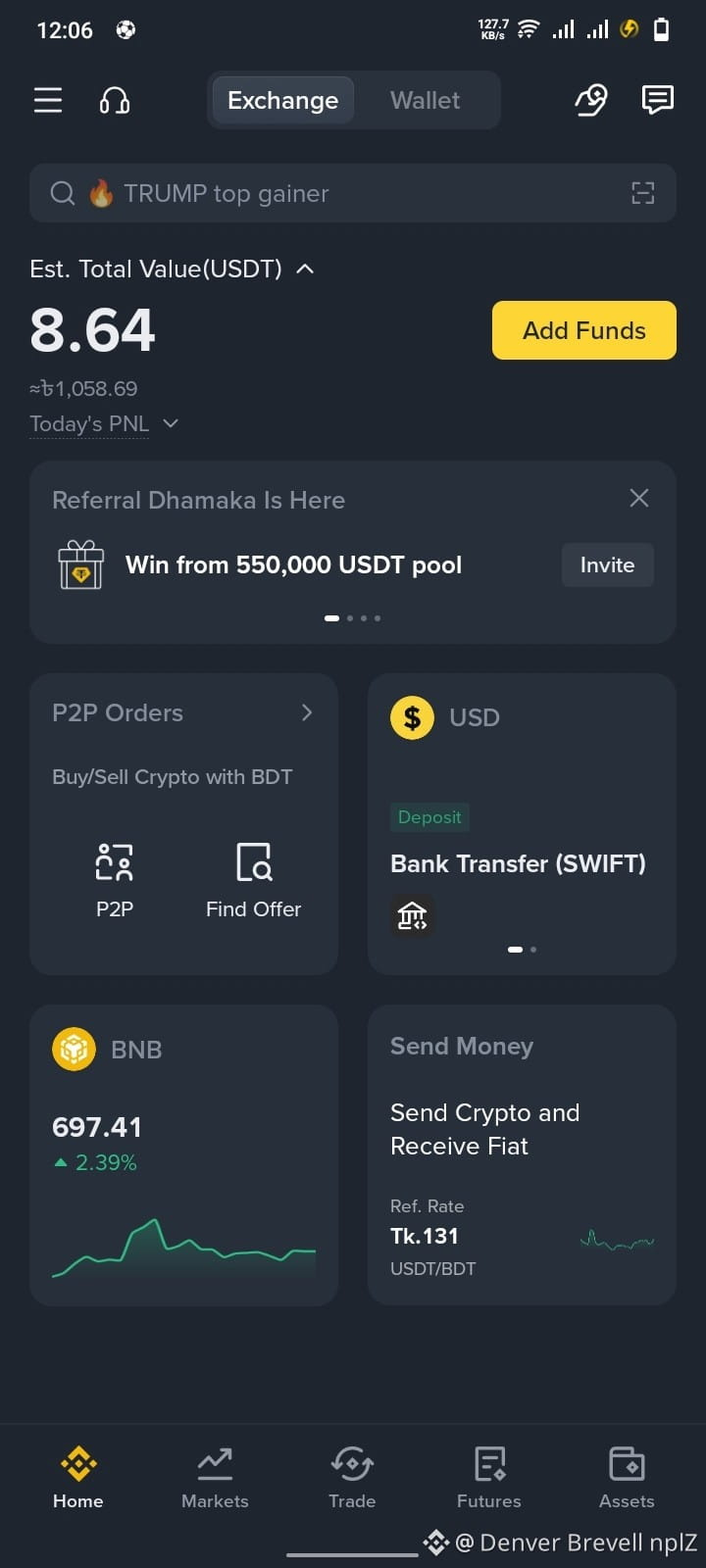
Trading is not just about luck; it's all about patience, structure, and reading the smart money's moves. Today, I experienced a classic market trap where normal stop losses were hunted right before a massive reversal toward the TP!
Key Takeaway: Always combine higher timeframe (H1) trends with lower timeframe (M5) structural breaks and confirmation candles. Don't rush into trades; let the market clear out the weak hands first.
Consistency and risk management are the real keys to winning in this game. Sharing my daily progress and portfolio snapshot here—let's keep growing and learning together! 🚀🔥
#TradingStrategies
#CryptoTrading
#SmartMoney
#BinanceSquare
Building the portfolio step by step! 🚀
Consistent learning, strict risk management, and proper chart analysis are finally paying off. Every small step in the market teaches how to manage risk and catch the right moves.
Let's keep growing and aiming higher! 💪🔥
#BinanceSquare #CryptoJourney #TradingLife #Portfolio #Growth
Mastering the Market: How to Spot Liquidity Hunts & Avoid Traps! 📉💡
Trading is not just about luck; it's all about patience, structure, and reading the smart money's moves. Today, I experienced a classic market trap where normal stop losses were hunted right before a massive reversal toward the TP!
Key Takeaway: Always combine higher timeframe (H1) trends with lower timeframe (M5) structural breaks and confirmation candles. Don't rush into trades; let the market clear out the weak hands first.
Consistency and risk management are the real keys to winning in this game. Sharing my daily progress and portfolio snapshot here—let's keep growing and learning together! 🚀🔥
#TradingStrategies
#CryptoTrading
#SmartMoney
#BinanceSquare
Building the portfolio step by step! 🚀
Consistent learning, strict risk management, and proper chart analysis are finally paying off. Every small step in the market teaches how to manage risk and catch the right moves.
Let's keep growing and aiming higher! 💪🔥
#BinanceSquare #CryptoJourney #TradingLife #Portfolio #Growth
Trading is not just about luck; it's all about patience, structure, and reading the smart money's moves. Today, I experienced a classic market trap where normal stop losses were hunted right before a massive reversal toward the TP!
Key Takeaway: Always combine higher timeframe (H1) trends with lower timeframe (M5) structural breaks and confirmation candles. Don't rush into trades; let the market clear out the weak hands first.
Consistency and risk management are the real keys to winning in this game. Sharing my daily progress and portfolio snapshot here—let's keep growing and learning together! 🚀🔥
#TradingStrategies
#CryptoTrading
#SmartMoney
#BinanceSquare
Building the portfolio step by step! 🚀
Consistent learning, strict risk management, and proper chart analysis are finally paying off. Every small step in the market teaches how to manage risk and catch the right moves.
Let's keep growing and aiming higher! 💪🔥
#BinanceSquare #CryptoJourney #TradingLife #Portfolio #Growth
64

·
--
Bullish
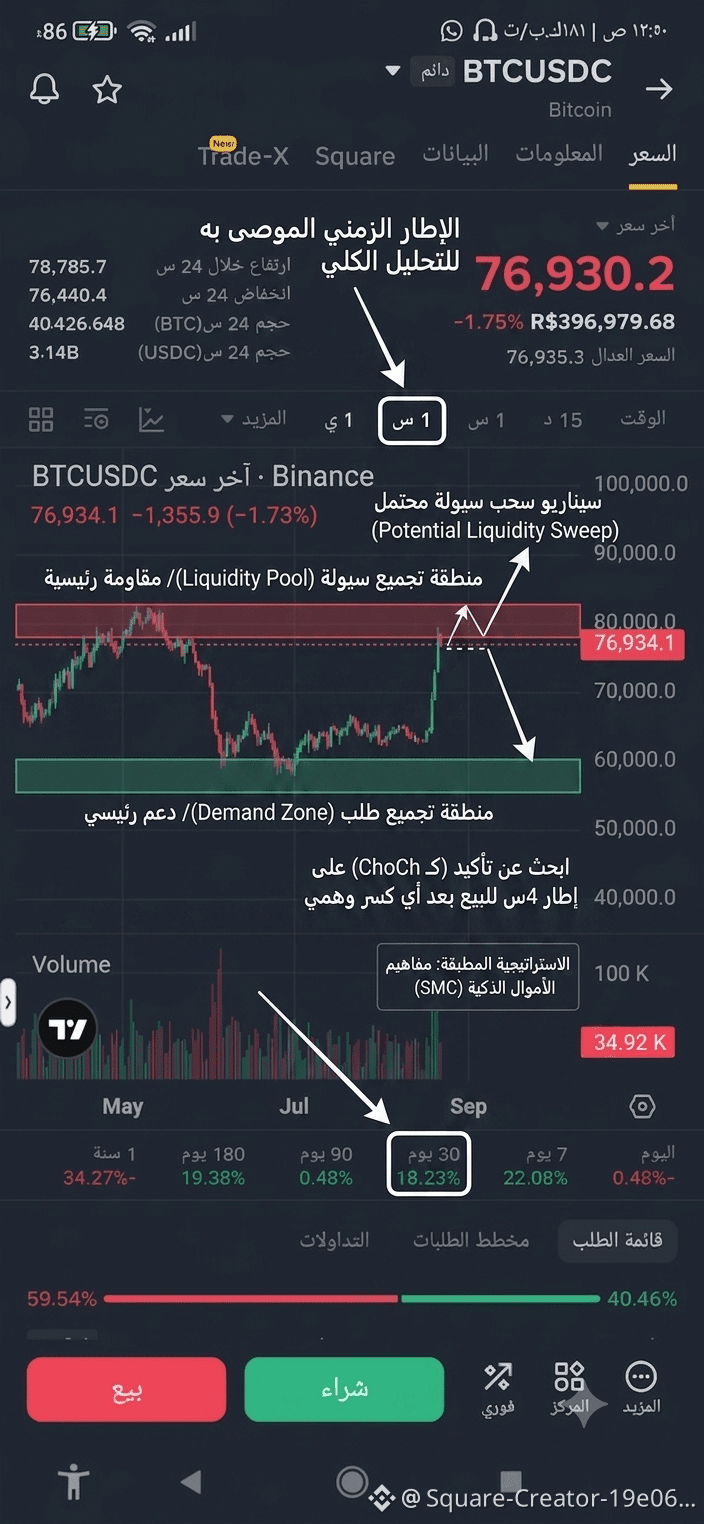
? Whale Trap: The Hidden Mechanism Behind Bitcoin (BTC) Liquidity Pulls
Have you ever wondered why the price reacts immediately after you enter a trade following a strong resistance break? It’s not a coincidence—it’s what’s known as a Liquidity Sweep, precisely engineered by market makers.
The advanced insight that only 1% of traders use to confirm the trap and exploit it instead of falling into it:
1. Watch Open Interest:
Most traders watch only candles, and that’s a catastrophic mistake during a fake breakout. You’ll notice a sudden, sharp drop in the Open Interest indicator at the same time the top is broken. This means only one thing: the whales have just triggered Stop Loss orders and caused Liquidations of small traders.
Small traders get “the fuel pulled from under them,” and an aggressive reversal is imminent.
2. Price Action (Swing Failure Pattern):
A real breakout closes with a full candle body on the larger timeframes (like 4 hours). But a liquidity sweep appears as a "long wick" that pierces the previous high, then quickly closes below it—swallowing the liquidity of late buyers driven by FOMO.
3. Order Flow Divergence (CVD Divergence) — the biggest secret:
Price makes a new high, but the CVD (delta of cumulative volume) indicator declines! This indicates that direct buy orders (Market Buys) from retail traders are being quietly absorbed through massive pending Limit Sells from whales.
#TradingStrategies #Liquidity #BTC
#BinanceSquareFamily #analysis $BTC
{spot}(BTCUSDT)
? Whale Trap: The Hidden Mechanism Behind Bitcoin (BTC) Liquidity Pulls
Have you ever wondered why the price reacts immediately after you enter a trade following a strong resistance break? It’s not a coincidence—it’s what’s known as a Liquidity Sweep, precisely engineered by market makers.
The advanced insight that only 1% of traders use to confirm the trap and exploit it instead of falling into it:
1. Watch Open Interest:
Most traders watch only candles, and that’s a catastrophic mistake during a fake breakout. You’ll notice a sudden, sharp drop in the Open Interest indicator at the same time the top is broken. This means only one thing: the whales have just triggered Stop Loss orders and caused Liquidations of small traders.
Small traders get “the fuel pulled from under them,” and an aggressive reversal is imminent.
2. Price Action (Swing Failure Pattern):
A real breakout closes with a full candle body on the larger timeframes (like 4 hours). But a liquidity sweep appears as a "long wick" that pierces the previous high, then quickly closes below it—swallowing the liquidity of late buyers driven by FOMO.
3. Order Flow Divergence (CVD Divergence) — the biggest secret:
Price makes a new high, but the CVD (delta of cumulative volume) indicator declines! This indicates that direct buy orders (Market Buys) from retail traders are being quietly absorbed through massive pending Limit Sells from whales.
#TradingStrategies #Liquidity #BTC
#BinanceSquareFamily #analysis $BTC
Have you ever wondered why the price reacts immediately after you enter a trade following a strong resistance break? It’s not a coincidence—it’s what’s known as a Liquidity Sweep, precisely engineered by market makers.
The advanced insight that only 1% of traders use to confirm the trap and exploit it instead of falling into it:
1. Watch Open Interest:
Most traders watch only candles, and that’s a catastrophic mistake during a fake breakout. You’ll notice a sudden, sharp drop in the Open Interest indicator at the same time the top is broken. This means only one thing: the whales have just triggered Stop Loss orders and caused Liquidations of small traders.
Small traders get “the fuel pulled from under them,” and an aggressive reversal is imminent.
2. Price Action (Swing Failure Pattern):
A real breakout closes with a full candle body on the larger timeframes (like 4 hours). But a liquidity sweep appears as a "long wick" that pierces the previous high, then quickly closes below it—swallowing the liquidity of late buyers driven by FOMO.
3. Order Flow Divergence (CVD Divergence) — the biggest secret:
Price makes a new high, but the CVD (delta of cumulative volume) indicator declines! This indicates that direct buy orders (Market Buys) from retail traders are being quietly absorbed through massive pending Limit Sells from whales.
#TradingStrategies #Liquidity #BTC
#BinanceSquareFamily #analysis $BTC
116

·
--
The Secret of the Whales: Why 95% of Traders Lose Money (And How to Avoid It Today)
Have you ever jumped into a trade, the price goes up a bit, you get excited, and out of nowhere it plummets and takes you out with a loss? 🛑
You're not alone. The mistake isn't your technical analysis; the mistake is your exit strategy. While most retail traders operate with the fear of missing out on the rise (FOMO), the whales and professionals play chess with two key tools that you're probably using wrong.
1. The Trailing Stop: Your dynamic shield
A fixed Stop Loss is like leaving your car parked on a hill without the handbrake. The Trailing Stop moves automatically as the price goes up.
How it works: If you buy Bitcoin at $60,000 with a 5% Trailing Stop, your initial sell order is at $57,000. If the price goes up to $70,000, your Stop Loss automatically rises to $66,500.
The advantage: If the market crashes at midnight, you secure profits without having to be glued to the screen.
2. "Trailing Profit": Don't be greedy
The biggest enemy of the trader isn't the market; it's their own ego. Seeing a +40% and not taking profits because "it'll definitely go higher" is a straight path to bankruptcy.
💡 Golden rule: It's better to exit 5% before the peak than 20% after the drop. Setting staggered take profit orders ensures your wallet grows, not just your demo account.
🔥 Three Golden Rules to Survive This Week:
Never risk more than 1-2% of your total capital per trade.
If you're already in profit, move your Stop Loss to break even. Make sure the trade is "free".
The market gives second chances every day; your capital doesn't bounce back that easily.
What has been your biggest mistake for not taking profits in time?
👇 Share your experience below so the community can learn. Like and share if this helped you!
#TradingStrategies #RiskManagement #CryptoEducation #BinanceSquare
The Secret of the Whales: Why 95% of Traders Lose Money (And How to Avoid It Today)
Have you ever jumped into a trade, the price goes up a bit, you get excited, and out of nowhere it plummets and takes you out with a loss? 🛑
You're not alone. The mistake isn't your technical analysis; the mistake is your exit strategy. While most retail traders operate with the fear of missing out on the rise (FOMO), the whales and professionals play chess with two key tools that you're probably using wrong.
1. The Trailing Stop: Your dynamic shield
A fixed Stop Loss is like leaving your car parked on a hill without the handbrake. The Trailing Stop moves automatically as the price goes up.
How it works: If you buy Bitcoin at $60,000 with a 5% Trailing Stop, your initial sell order is at $57,000. If the price goes up to $70,000, your Stop Loss automatically rises to $66,500.
The advantage: If the market crashes at midnight, you secure profits without having to be glued to the screen.
2. "Trailing Profit": Don't be greedy
The biggest enemy of the trader isn't the market; it's their own ego. Seeing a +40% and not taking profits because "it'll definitely go higher" is a straight path to bankruptcy.
💡 Golden rule: It's better to exit 5% before the peak than 20% after the drop. Setting staggered take profit orders ensures your wallet grows, not just your demo account.
🔥 Three Golden Rules to Survive This Week:
Never risk more than 1-2% of your total capital per trade.
If you're already in profit, move your Stop Loss to break even. Make sure the trade is "free".
The market gives second chances every day; your capital doesn't bounce back that easily.
What has been your biggest mistake for not taking profits in time?
👇 Share your experience below so the community can learn. Like and share if this helped you!
#TradingStrategies #RiskManagement #CryptoEducation #BinanceSquare
Have you ever jumped into a trade, the price goes up a bit, you get excited, and out of nowhere it plummets and takes you out with a loss? 🛑
You're not alone. The mistake isn't your technical analysis; the mistake is your exit strategy. While most retail traders operate with the fear of missing out on the rise (FOMO), the whales and professionals play chess with two key tools that you're probably using wrong.
1. The Trailing Stop: Your dynamic shield
A fixed Stop Loss is like leaving your car parked on a hill without the handbrake. The Trailing Stop moves automatically as the price goes up.
How it works: If you buy Bitcoin at $60,000 with a 5% Trailing Stop, your initial sell order is at $57,000. If the price goes up to $70,000, your Stop Loss automatically rises to $66,500.
The advantage: If the market crashes at midnight, you secure profits without having to be glued to the screen.
2. "Trailing Profit": Don't be greedy
The biggest enemy of the trader isn't the market; it's their own ego. Seeing a +40% and not taking profits because "it'll definitely go higher" is a straight path to bankruptcy.
💡 Golden rule: It's better to exit 5% before the peak than 20% after the drop. Setting staggered take profit orders ensures your wallet grows, not just your demo account.
🔥 Three Golden Rules to Survive This Week:
Never risk more than 1-2% of your total capital per trade.
If you're already in profit, move your Stop Loss to break even. Make sure the trade is "free".
The market gives second chances every day; your capital doesn't bounce back that easily.
What has been your biggest mistake for not taking profits in time?
👇 Share your experience below so the community can learn. Like and share if this helped you!
#TradingStrategies #RiskManagement #CryptoEducation #BinanceSquare
2
3
613

·
--
Imagine having the power to execute trades at the exact right moment, without getting caught up in the volatility of the crypto market. Today, we're looking at how Ring Protocol is giving users a leg up with Orbs-powered advanced trading orders.
#DeFiExplained #TradingStrategies
So, what are these advanced trading orders? In simple terms, they're like having a personal trading assistant - automatically executing trades when the market conditions are perfect for you. There are two types: dLIMIT and dTWAP. LIMIT orders let you set a specific price for a trade, while time-weighted average price (TWAP) orders average out price movements over a set period, ensuring a smooth trade execution.
Let's see this in action. Ring Protocol, a decentralized exchange that operates across multiple chains, has integrated Orbs-powered dLIMIT and dTWAP orders on Base, Ethereum, Arbitrum, and BNB Chain. This means traders can now access these advanced orders, giving them more flexibility in their trading strategies.
So, what can you take away from this update? To start leveraging advanced trading orders, it's essential to understand the risks and rewards associated with each type. Don't be afraid to experiment and adapt your strategies as the market evolves.
What do you think about the integration of Orbs-powered trading orders? Are you already using similar tools, or is this your introduction to more advanced trading strategies?
Imagine having the power to execute trades at the exact right moment, without getting caught up in the volatility of the crypto market. Today, we're looking at how Ring Protocol is giving users a leg up with Orbs-powered advanced trading orders.
#DeFiExplained #TradingStrategies
So, what are these advanced trading orders? In simple terms, they're like having a personal trading assistant - automatically executing trades when the market conditions are perfect for you. There are two types: dLIMIT and dTWAP. LIMIT orders let you set a specific price for a trade, while time-weighted average price (TWAP) orders average out price movements over a set period, ensuring a smooth trade execution.
Let's see this in action. Ring Protocol, a decentralized exchange that operates across multiple chains, has integrated Orbs-powered dLIMIT and dTWAP orders on Base, Ethereum, Arbitrum, and BNB Chain. This means traders can now access these advanced orders, giving them more flexibility in their trading strategies.
So, what can you take away from this update? To start leveraging advanced trading orders, it's essential to understand the risks and rewards associated with each type. Don't be afraid to experiment and adapt your strategies as the market evolves.
What do you think about the integration of Orbs-powered trading orders? Are you already using similar tools, or is this your introduction to more advanced trading strategies?
#DeFiExplained #TradingStrategies
So, what are these advanced trading orders? In simple terms, they're like having a personal trading assistant - automatically executing trades when the market conditions are perfect for you. There are two types: dLIMIT and dTWAP. LIMIT orders let you set a specific price for a trade, while time-weighted average price (TWAP) orders average out price movements over a set period, ensuring a smooth trade execution.
Let's see this in action. Ring Protocol, a decentralized exchange that operates across multiple chains, has integrated Orbs-powered dLIMIT and dTWAP orders on Base, Ethereum, Arbitrum, and BNB Chain. This means traders can now access these advanced orders, giving them more flexibility in their trading strategies.
So, what can you take away from this update? To start leveraging advanced trading orders, it's essential to understand the risks and rewards associated with each type. Don't be afraid to experiment and adapt your strategies as the market evolves.
What do you think about the integration of Orbs-powered trading orders? Are you already using similar tools, or is this your introduction to more advanced trading strategies?
31

·
--
Hello Binance Square Community!
To be successful in the cryptocurrency market, it's not enough to just buy the right coins, but it's also important to follow some strategies. Here are 3 golden rules, especially for new traders:
1. Risk Management: Never
Don't invest all your funds in one coin. Always keep your portfolio diversified (divided into different coins).
2. Stay away from FOMO: The price of any coin
Don't buy at a high price due to FOMO (Fear of Missing Out) if the price suddenly goes up too much. Wait for the right entry.
3. DCA or Dollar Cost Averaging: Market
To reduce losses due to fluctuations, you can buy small amounts of your favorite coins (such as $BTC, $ETH) at regular intervals.
What is your favorite crypto coin? Let us know in the comments below!
Hashtag:
#CryptoTips #TradingStrategies
#BinanceSquare #cryptoeducation
Hello Binance Square Community!
To be successful in the cryptocurrency market, it's not enough to just buy the right coins, but it's also important to follow some strategies. Here are 3 golden rules, especially for new traders:
1. Risk Management: Never
Don't invest all your funds in one coin. Always keep your portfolio diversified (divided into different coins).
2. Stay away from FOMO: The price of any coin
Don't buy at a high price due to FOMO (Fear of Missing Out) if the price suddenly goes up too much. Wait for the right entry.
3. DCA or Dollar Cost Averaging: Market
To reduce losses due to fluctuations, you can buy small amounts of your favorite coins (such as $BTC, $ETH) at regular intervals.
What is your favorite crypto coin? Let us know in the comments below!
Hashtag:
#CryptoTips #TradingStrategies
#BinanceSquare #cryptoeducation
To be successful in the cryptocurrency market, it's not enough to just buy the right coins, but it's also important to follow some strategies. Here are 3 golden rules, especially for new traders:
1. Risk Management: Never
Don't invest all your funds in one coin. Always keep your portfolio diversified (divided into different coins).
2. Stay away from FOMO: The price of any coin
Don't buy at a high price due to FOMO (Fear of Missing Out) if the price suddenly goes up too much. Wait for the right entry.
3. DCA or Dollar Cost Averaging: Market
To reduce losses due to fluctuations, you can buy small amounts of your favorite coins (such as $BTC, $ETH) at regular intervals.
What is your favorite crypto coin? Let us know in the comments below!
Hashtag:
#CryptoTips #TradingStrategies
#BinanceSquare #cryptoeducation
1
161

Crypto Market Navigation: Why Discipline Beats Short-Term Hype in 2026The cryptocurrency market is moving at a rapid pace. Price swings, social media trending hashtags, and sudden market rebounds often fuel the Fear of Missing Out (FOMO) among traders. However, long-term success in the Web3 space relies heavily on strategic discipline rather than chasing daily pumps.
Key Strategies for Trading & Investing
Focus on Fundamentals: Look for projects with actual adoption, strong developer activity, and clear real-world utility. Short-term hype fades, but solid fundamentals survive market cycles.
Manage Risk Strictly: Never allocate more capital than you can afford to lose. Portfolio diversification across major assets like BTC andBNB helps cushion against sudden market volatility.
* Always DYOR: Always "Do Your Own Research" before executing trades. Relying solely on third-party signals or social media hype often leads to buying at local tops.
Building a sustainable crypto portfolio requires patience, continuous learning, and emotional control.
What strategies are you currently using to manage your risk in this market? Let's discuss in the comments below
#Crypto #BinanceSquare #TradingStrategies
Crypto Market Navigation: Why Discipline Beats Short-Term Hype in 2026
The cryptocurrency market is moving at a rapid pace. Price swings, social media trending hashtags, and sudden market rebounds often fuel the Fear of Missing Out (FOMO) among traders. However, long-term success in the Web3 space relies heavily on strategic discipline rather than chasing daily pumps.
Key Strategies for Trading & Investing
Focus on Fundamentals: Look for projects with actual adoption, strong developer activity, and clear real-world utility. Short-term hype fades, but solid fundamentals survive market cycles.
Manage Risk Strictly: Never allocate more capital than you can afford to lose. Portfolio diversification across major assets like BTC andBNB helps cushion against sudden market volatility.
* Always DYOR: Always "Do Your Own Research" before executing trades. Relying solely on third-party signals or social media hype often leads to buying at local tops.
Building a sustainable crypto portfolio requires patience, continuous learning, and emotional control.
What strategies are you currently using to manage your risk in this market? Let's discuss in the comments below
#Crypto #BinanceSquare #TradingStrategies
Key Strategies for Trading & Investing
Focus on Fundamentals: Look for projects with actual adoption, strong developer activity, and clear real-world utility. Short-term hype fades, but solid fundamentals survive market cycles.
Manage Risk Strictly: Never allocate more capital than you can afford to lose. Portfolio diversification across major assets like BTC andBNB helps cushion against sudden market volatility.
* Always DYOR: Always "Do Your Own Research" before executing trades. Relying solely on third-party signals or social media hype often leads to buying at local tops.
Building a sustainable crypto portfolio requires patience, continuous learning, and emotional control.
What strategies are you currently using to manage your risk in this market? Let's discuss in the comments below
#Crypto #BinanceSquare #TradingStrategies
22

Tool #4: BNB — The Logic of Wide Ranges 🪙
BNB is the native token of the Binance ecosystem. The main advantage of this coin for a newbie trader is its predictable structure during periods of consolidation (sideways movement).
How to use BNB in trading:
- Moderate volatility. This coin is backed by real infrastructure and regular burn events, so it is less prone to panic sell-offs.
- Clear sideways trends. BNB tends to accumulate positions over extended periods within wide ranges. For beginners, this is the perfect mechanism to practice a simple yet profitable strategy: buy at the lower boundary of accumulation, take profit at the upper boundary, while ensuring to account for liquidity grabs outside the box.
#BNBChainSunset #TradingStrategies $BNB #CryptoFREEMEN
Tool #4: BNB — The Logic of Wide Ranges 🪙
BNB is the native token of the Binance ecosystem. The main advantage of this coin for a newbie trader is its predictable structure during periods of consolidation (sideways movement).
How to use BNB in trading:
- Moderate volatility. This coin is backed by real infrastructure and regular burn events, so it is less prone to panic sell-offs.
- Clear sideways trends. BNB tends to accumulate positions over extended periods within wide ranges. For beginners, this is the perfect mechanism to practice a simple yet profitable strategy: buy at the lower boundary of accumulation, take profit at the upper boundary, while ensuring to account for liquidity grabs outside the box.
#BNBChainSunset #TradingStrategies $BNB #CryptoFREEMEN
BNB is the native token of the Binance ecosystem. The main advantage of this coin for a newbie trader is its predictable structure during periods of consolidation (sideways movement).
How to use BNB in trading:
- Moderate volatility. This coin is backed by real infrastructure and regular burn events, so it is less prone to panic sell-offs.
- Clear sideways trends. BNB tends to accumulate positions over extended periods within wide ranges. For beginners, this is the perfect mechanism to practice a simple yet profitable strategy: buy at the lower boundary of accumulation, take profit at the upper boundary, while ensuring to account for liquidity grabs outside the box.
#BNBChainSunset #TradingStrategies $BNB #CryptoFREEMEN
338
·
--
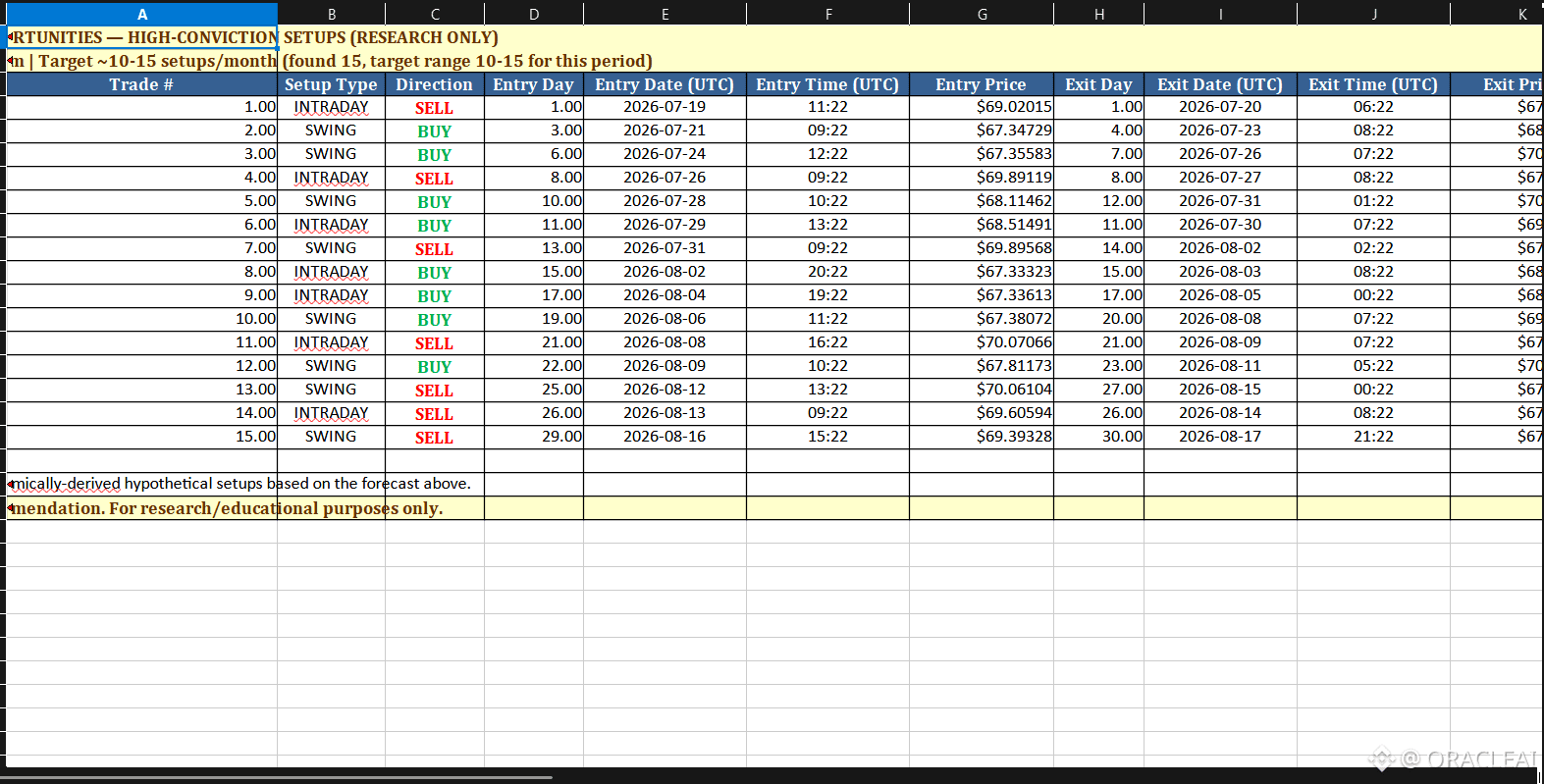
📊 Algorithmic Forward-Testing: Rocket Lab ($RKLB)
Putting my proprietary forecasting engine to a live, out-of-sample forward test for the upcoming monthly cycle (July 19 – August 17, 2026).
Instead of lagging indicators, this multi-model architecture continuously isolates localized trend boundaries in real time. The focus is entirely on structural directional mapping.
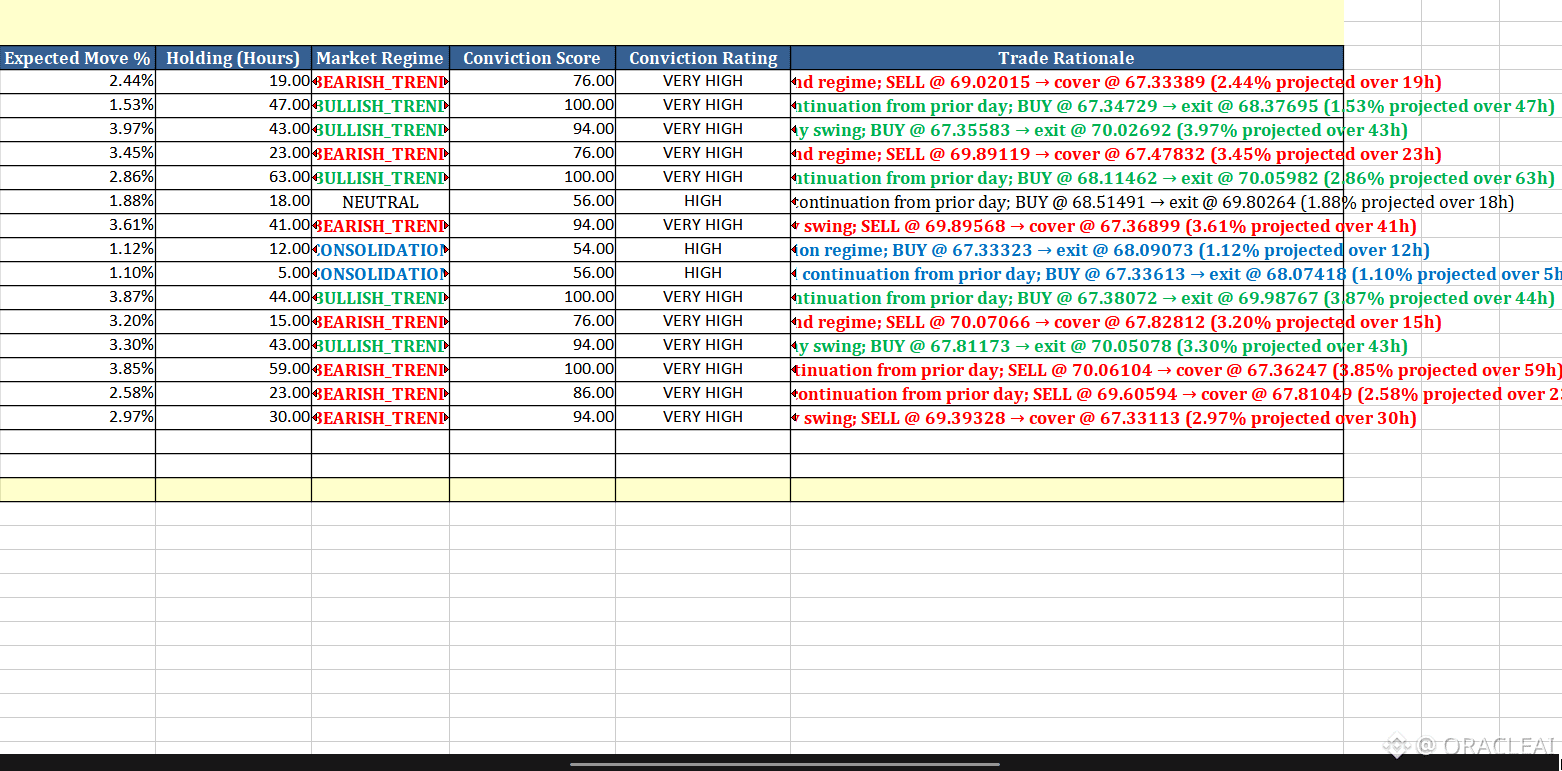
Here are the first 10 high-conviction setups generated directly by the pipeline. Entry times are hard-anchored to the model, while exit execution is driven by personal Take Profit (TP) targets.
🚀 The Monthly Directional Roadmap
🔹 Trade 01 | 07-19 | 11:22 UTC • 🔻 SELL @ $69.02015 [BEARISH_TREND] • Vector: -2.44% (19h)
🔹 Trade 02 | 07-21 | 09:22 UTC • 🟢 BUY @ $67.34729 [BULLISH_TREND] • Vector: +1.53% (47h)
🔹 Trade 03 | 07-24 | 12:22 UTC • 🟢 BUY @ $67.35583 [BULLISH_TREND] • Vector: +3.97% (43h)
🔹 Trade 04 | 07-26 | 09:22 UTC • 🔻 SELL @ $68.89119 [BEARISH_TREND] • Vector: -3.45% (23h)
🔹 Trade 05 | 07-28 | 10:22 UTC • 🟢 BUY @ $68.11462 [BULLISH_TREND] • Vector: +2.86% (63h)
🔹 Trade 06 | 07-29 | 13:22 UTC • 🟢 BUY @ $68.51491 [NEUTRAL] • Vector: +1.88% (18h)
🔹 Trade 07 | 07-31 | 09:22 UTC • 🔻 SELL @ $69.89568 [BEARISH_TREND] • Vector: -3.61% (41h)
🔹 Trade 08 | 08-02 | 20:22 UTC • 🟢 BUY @ $67.33323 [CONSOLIDATION] • Vector: +1.12% (12h)
🔹 Trade 09 | 08-04 | 19:22 UTC • 🟢 BUY @ $67.33613 [CONSOLIDATION] • Vector: +1.10% (5h)
🔹 Trade 10 | 08-06 | 11:22 UTC • 🟢 BUY @ $67.38072 [BULLISH_TREND] • Vector: +3.87% (44h)
Risk Management: While the pipeline calculates baseline move magnitudes, real-world exit execution should always be managed by your own TP parameters to lock in gains.
Let's see how these vectors track on the live tape over the next few weeks!
⚠️ Not financial advice. Research and model verification purposes only.
#RKLB #TradingStrategies #QuantitativeFinance #AlgorithmicTrading $RKLB
📊 Algorithmic Forward-Testing: Rocket Lab ($RKLB )
Putting my proprietary forecasting engine to a live, out-of-sample forward test for the upcoming monthly cycle (July 19 – August 17, 2026).
Instead of lagging indicators, this multi-model architecture continuously isolates localized trend boundaries in real time. The focus is entirely on structural directional mapping.
Here are the first 10 high-conviction setups generated directly by the pipeline. Entry times are hard-anchored to the model, while exit execution is driven by personal Take Profit (TP) targets.
🚀 The Monthly Directional Roadmap
🔹 Trade 01 | 07-19 | 11:22 UTC • 🔻 SELL @ $69.02015 [BEARISH_TREND] • Vector: -2.44% (19h)
🔹 Trade 02 | 07-21 | 09:22 UTC • 🟢 BUY @ $67.34729 [BULLISH_TREND] • Vector: +1.53% (47h)
🔹 Trade 03 | 07-24 | 12:22 UTC • 🟢 BUY @ $67.35583 [BULLISH_TREND] • Vector: +3.97% (43h)
🔹 Trade 04 | 07-26 | 09:22 UTC • 🔻 SELL @ $68.89119 [BEARISH_TREND] • Vector: -3.45% (23h)
🔹 Trade 05 | 07-28 | 10:22 UTC • 🟢 BUY @ $68.11462 [BULLISH_TREND] • Vector: +2.86% (63h)
🔹 Trade 06 | 07-29 | 13:22 UTC • 🟢 BUY @ $68.51491 [NEUTRAL] • Vector: +1.88% (18h)
🔹 Trade 07 | 07-31 | 09:22 UTC • 🔻 SELL @ $69.89568 [BEARISH_TREND] • Vector: -3.61% (41h)
🔹 Trade 08 | 08-02 | 20:22 UTC • 🟢 BUY @ $67.33323 [CONSOLIDATION] • Vector: +1.12% (12h)
🔹 Trade 09 | 08-04 | 19:22 UTC • 🟢 BUY @ $67.33613 [CONSOLIDATION] • Vector: +1.10% (5h)
🔹 Trade 10 | 08-06 | 11:22 UTC • 🟢 BUY @ $67.38072 [BULLISH_TREND] • Vector: +3.87% (44h)
Risk Management: While the pipeline calculates baseline move magnitudes, real-world exit execution should always be managed by your own TP parameters to lock in gains.
Let's see how these vectors track on the live tape over the next few weeks!
⚠️ Not financial advice. Research and model verification purposes only.
#RKLB #TradingStrategies #QuantitativeFinance #AlgorithmicTrading $RKLB
Putting my proprietary forecasting engine to a live, out-of-sample forward test for the upcoming monthly cycle (July 19 – August 17, 2026).
Instead of lagging indicators, this multi-model architecture continuously isolates localized trend boundaries in real time. The focus is entirely on structural directional mapping.
Here are the first 10 high-conviction setups generated directly by the pipeline. Entry times are hard-anchored to the model, while exit execution is driven by personal Take Profit (TP) targets.
🚀 The Monthly Directional Roadmap
🔹 Trade 01 | 07-19 | 11:22 UTC • 🔻 SELL @ $69.02015 [BEARISH_TREND] • Vector: -2.44% (19h)
🔹 Trade 02 | 07-21 | 09:22 UTC • 🟢 BUY @ $67.34729 [BULLISH_TREND] • Vector: +1.53% (47h)
🔹 Trade 03 | 07-24 | 12:22 UTC • 🟢 BUY @ $67.35583 [BULLISH_TREND] • Vector: +3.97% (43h)
🔹 Trade 04 | 07-26 | 09:22 UTC • 🔻 SELL @ $68.89119 [BEARISH_TREND] • Vector: -3.45% (23h)
🔹 Trade 05 | 07-28 | 10:22 UTC • 🟢 BUY @ $68.11462 [BULLISH_TREND] • Vector: +2.86% (63h)
🔹 Trade 06 | 07-29 | 13:22 UTC • 🟢 BUY @ $68.51491 [NEUTRAL] • Vector: +1.88% (18h)
🔹 Trade 07 | 07-31 | 09:22 UTC • 🔻 SELL @ $69.89568 [BEARISH_TREND] • Vector: -3.61% (41h)
🔹 Trade 08 | 08-02 | 20:22 UTC • 🟢 BUY @ $67.33323 [CONSOLIDATION] • Vector: +1.12% (12h)
🔹 Trade 09 | 08-04 | 19:22 UTC • 🟢 BUY @ $67.33613 [CONSOLIDATION] • Vector: +1.10% (5h)
🔹 Trade 10 | 08-06 | 11:22 UTC • 🟢 BUY @ $67.38072 [BULLISH_TREND] • Vector: +3.87% (44h)
Risk Management: While the pipeline calculates baseline move magnitudes, real-world exit execution should always be managed by your own TP parameters to lock in gains.
Let's see how these vectors track on the live tape over the next few weeks!
⚠️ Not financial advice. Research and model verification purposes only.
#RKLB #TradingStrategies #QuantitativeFinance #AlgorithmicTrading $RKLB
207

Market Analysis and Direct Trading Strategy for Risk Management 📊🔥
Hello, Binace Squire Digital community. Successful trading does not rely on individual predictions, but on building clear, digitally proven strategies.
When analyzing the candlestick chart for coin $BTC , we can clearly see price stability and attempts to break through key resistance levels to confirm the upward trend. This strong move positively reflects on the movement of popular alternative coins in the market—especially coin $ETH , which shows excellent steadiness—along with the vital coin in the ecosystem, $BNB.
I have prepared and activated a direct trading strategy based on these technical inputs to manage the portfolio risks precisely. You can see my live trades and the strategy activated alongside this post, so you can review the entry points, targets, and the direct stop-loss.
Follow the attached chart and the strategy details below to keep up with real-time updates!
What is your favorite strategy under the current market conditions? Do you rely on manual trading or automated bots? Share your thoughts in the comments! 👇
#BinanceSquare #CryptoTrading #Write2Earn #TradingStrategies #CryptoAnalysis
Market Analysis and Direct Trading Strategy for Risk Management 📊🔥
Hello, Binace Squire Digital community. Successful trading does not rely on individual predictions, but on building clear, digitally proven strategies.
When analyzing the candlestick chart for coin $BTC , we can clearly see price stability and attempts to break through key resistance levels to confirm the upward trend. This strong move positively reflects on the movement of popular alternative coins in the market—especially coin $ETH , which shows excellent steadiness—along with the vital coin in the ecosystem, $BNB.
I have prepared and activated a direct trading strategy based on these technical inputs to manage the portfolio risks precisely. You can see my live trades and the strategy activated alongside this post, so you can review the entry points, targets, and the direct stop-loss.
Follow the attached chart and the strategy details below to keep up with real-time updates!
What is your favorite strategy under the current market conditions? Do you rely on manual trading or automated bots? Share your thoughts in the comments! 👇
#BinanceSquare #CryptoTrading #Write2Earn #TradingStrategies #CryptoAnalysis
Hello, Binace Squire Digital community. Successful trading does not rely on individual predictions, but on building clear, digitally proven strategies.
When analyzing the candlestick chart for coin $BTC , we can clearly see price stability and attempts to break through key resistance levels to confirm the upward trend. This strong move positively reflects on the movement of popular alternative coins in the market—especially coin $ETH , which shows excellent steadiness—along with the vital coin in the ecosystem, $BNB.
I have prepared and activated a direct trading strategy based on these technical inputs to manage the portfolio risks precisely. You can see my live trades and the strategy activated alongside this post, so you can review the entry points, targets, and the direct stop-loss.
Follow the attached chart and the strategy details below to keep up with real-time updates!
What is your favorite strategy under the current market conditions? Do you rely on manual trading or automated bots? Share your thoughts in the comments! 👇
#BinanceSquare #CryptoTrading #Write2Earn #TradingStrategies #CryptoAnalysis
1
3
435

·
--
Bullish
🚀 $EPIC USDT TP2 HIT! Psychological Breakout Complete 🔥
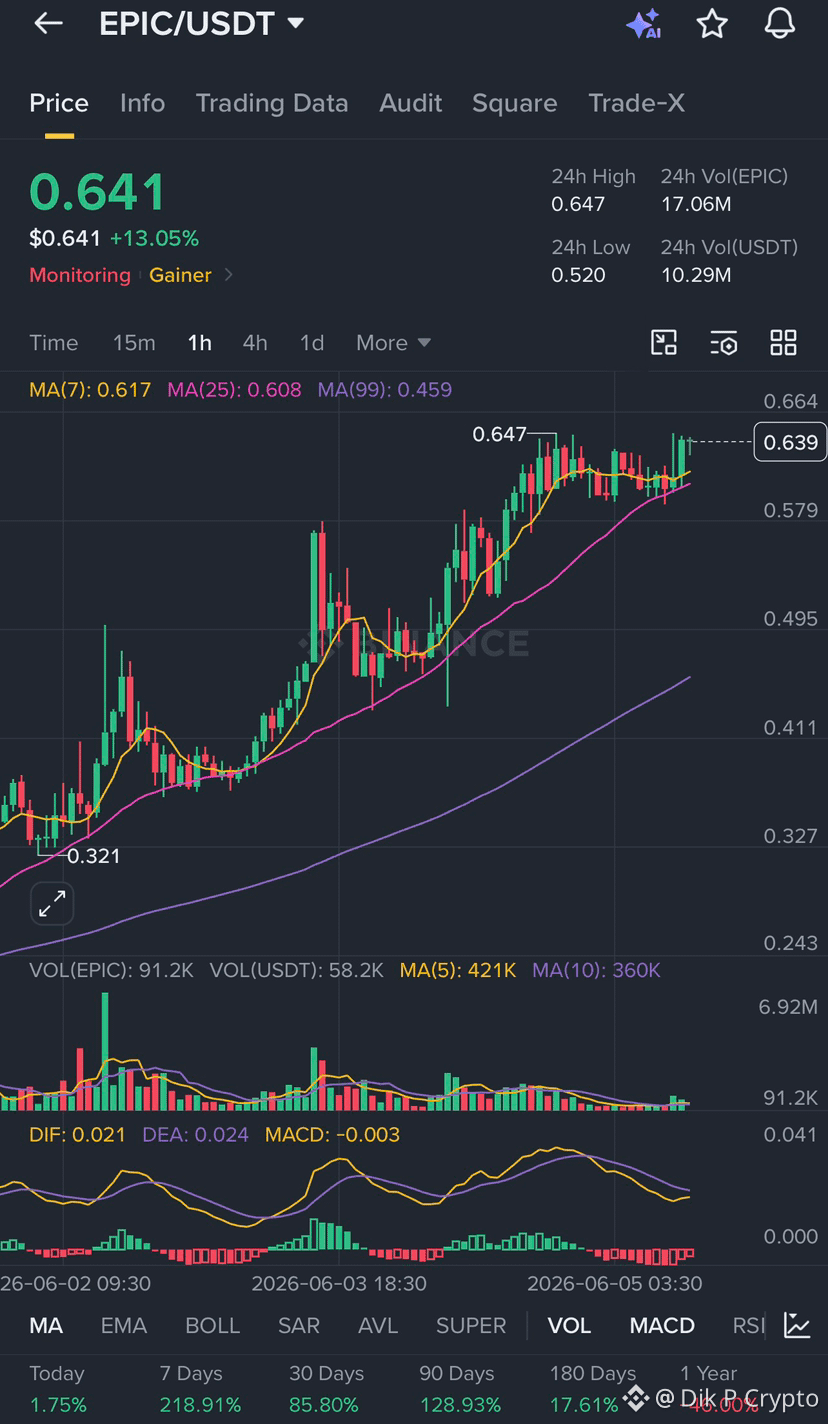
What a beautiful trend! EPIC/USDT did exactly what we lined up in our trade setup — bursting right through the resistance and smashing straight into our TP2 target of $0.620! 🎯
📈 As we mapped out, the coin was printing solid higher lows and looking ready to clear the psychological hurdle. Fast forward to the live chart, and the bulls completely took over, driving the price up to a massive new 24h high of $0.647! It is currently holding up strongly at $0.641, keeping the momentum incredibly healthy.
💰 Trade Recap From Our Last Post:
✅ Entry Zone: $0.510 – $0.540
🎯 TP1: $0.588 ✔️
🎯 TP2: $0.620 ✔️ HIT
🎯 TP3: $0.660 (Extremely Close!)
🔥 Over +15% to +21% pure gains secured so far from our entry zone!
⚠️ What now?
With the price hitting a peak of $0.647 and sitting just under our ultimate TP3 milestone, FOMO buying right here is risky. Smart traders let the market breathe and look for support to solidify before building new positions.
📊 Updated Zones to Watch:
• Support: $0.608 – $0.617 (Right at the MA7 and MA25 lines)
• Resistance: $0.647 – $0.660+
Did you secure your profits at TP2 or are you holding out for the full TP3 moon target? 👇
1️⃣ Profits locked in safely! 💰
2️⃣ Still holding for $0.660+ 🚀
3️⃣ Missed the entry, waiting for the next setup. 👀
#Epic #cryptotrading #BinanceSquare #TakeProfits #TradingStrategies
{future}(EPICUSDT)
🚀 $EPIC USDT TP2 HIT! Psychological Breakout Complete 🔥
What a beautiful trend! EPIC/USDT did exactly what we lined up in our trade setup — bursting right through the resistance and smashing straight into our TP2 target of $0.620! 🎯
📈 As we mapped out, the coin was printing solid higher lows and looking ready to clear the psychological hurdle. Fast forward to the live chart, and the bulls completely took over, driving the price up to a massive new 24h high of $0.647! It is currently holding up strongly at $0.641, keeping the momentum incredibly healthy.
💰 Trade Recap From Our Last Post:
✅ Entry Zone: $0.510 – $0.540
🎯 TP1: $0.588 ✔️
🎯 TP2: $0.620 ✔️ HIT
🎯 TP3: $0.660 (Extremely Close!)
🔥 Over +15% to +21% pure gains secured so far from our entry zone!
⚠️ What now?
With the price hitting a peak of $0.647 and sitting just under our ultimate TP3 milestone, FOMO buying right here is risky. Smart traders let the market breathe and look for support to solidify before building new positions.
📊 Updated Zones to Watch:
• Support: $0.608 – $0.617 (Right at the MA7 and MA25 lines)
• Resistance: $0.647 – $0.660+
Did you secure your profits at TP2 or are you holding out for the full TP3 moon target? 👇
1️⃣ Profits locked in safely! 💰
2️⃣ Still holding for $0.660+ 🚀
3️⃣ Missed the entry, waiting for the next setup. 👀
#Epic #cryptotrading #BinanceSquare #TakeProfits #TradingStrategies
What a beautiful trend! EPIC/USDT did exactly what we lined up in our trade setup — bursting right through the resistance and smashing straight into our TP2 target of $0.620! 🎯
📈 As we mapped out, the coin was printing solid higher lows and looking ready to clear the psychological hurdle. Fast forward to the live chart, and the bulls completely took over, driving the price up to a massive new 24h high of $0.647! It is currently holding up strongly at $0.641, keeping the momentum incredibly healthy.
💰 Trade Recap From Our Last Post:
✅ Entry Zone: $0.510 – $0.540
🎯 TP1: $0.588 ✔️
🎯 TP2: $0.620 ✔️ HIT
🎯 TP3: $0.660 (Extremely Close!)
🔥 Over +15% to +21% pure gains secured so far from our entry zone!
⚠️ What now?
With the price hitting a peak of $0.647 and sitting just under our ultimate TP3 milestone, FOMO buying right here is risky. Smart traders let the market breathe and look for support to solidify before building new positions.
📊 Updated Zones to Watch:
• Support: $0.608 – $0.617 (Right at the MA7 and MA25 lines)
• Resistance: $0.647 – $0.660+
Did you secure your profits at TP2 or are you holding out for the full TP3 moon target? 👇
1️⃣ Profits locked in safely! 💰
2️⃣ Still holding for $0.660+ 🚀
3️⃣ Missed the entry, waiting for the next setup. 👀
#Epic #cryptotrading #BinanceSquare #TakeProfits #TradingStrategies
Dik P Crypto
·
--
🚀 $EPIC EXPLODES +30%! IS IT READY TO SURGE PAST $0.60? 🚀
Take a look at the EPIC/USDT chart in this gainer is looking absolutely massive! It has been printing beautiful higher lows and is currently trading right near its local peak at $0.571, pushing hard to break the key psychological resistance level. If you want to ride this strong upward momentum, here is your easy trade setup! 📈
📊 Why is it pumping?
The chart shows an incredibly healthy trend. The price is riding perfectly above the Yellow Line (MA7: $0.525) and the Pink Line (MA25: $0.492). Even better, the MACD indicator at the bottom has flipped back into the green with rising histograms, confirming that the buyers are safely in the driver's seat. 🔥
💰 Short-Term Trading Plan:
✅ Entry Zone: $0.510 - $0.540 (Looking to buy a minor pullback near the MA7 support line)
🎯 Target 1 (TP1): $0.588 (Testing the recent 24h high)
🎯 Target 2 (TP2): $0.620 (Psychological breakout level)
🎯 Target 3 (TP3): $0.660 (Major profit milestone!)
🚫 Stop Loss: $0.475 (To protect your wallet if the support trends break)
What is your move here?
1️⃣ Buying right now! $EPIC is easily heading over $0.60! 💰
2️⃣ Waiting for a better dip before loading my bags. 📉
3️⃣ Taking my profits here before a potential rejection. 🍿
Drop your answer below! I am replying to every single comment on this thread! 👇
#Epic #cryptotrading #TradingSignals #BinanceSquare #WriteToEarn
Take a look at the EPIC/USDT chart in this gainer is looking absolutely massive! It has been printing beautiful higher lows and is currently trading right near its local peak at $0.571, pushing hard to break the key psychological resistance level. If you want to ride this strong upward momentum, here is your easy trade setup! 📈
📊 Why is it pumping?
The chart shows an incredibly healthy trend. The price is riding perfectly above the Yellow Line (MA7: $0.525) and the Pink Line (MA25: $0.492). Even better, the MACD indicator at the bottom has flipped back into the green with rising histograms, confirming that the buyers are safely in the driver's seat. 🔥
💰 Short-Term Trading Plan:
✅ Entry Zone: $0.510 - $0.540 (Looking to buy a minor pullback near the MA7 support line)
🎯 Target 1 (TP1): $0.588 (Testing the recent 24h high)
🎯 Target 2 (TP2): $0.620 (Psychological breakout level)
🎯 Target 3 (TP3): $0.660 (Major profit milestone!)
🚫 Stop Loss: $0.475 (To protect your wallet if the support trends break)
What is your move here?
1️⃣ Buying right now! $EPIC is easily heading over $0.60! 💰
2️⃣ Waiting for a better dip before loading my bags. 📉
3️⃣ Taking my profits here before a potential rejection. 🍿
Drop your answer below! I am replying to every single comment on this thread! 👇
#Epic #cryptotrading #TradingSignals #BinanceSquare #WriteToEarn
1
1
168

·
--
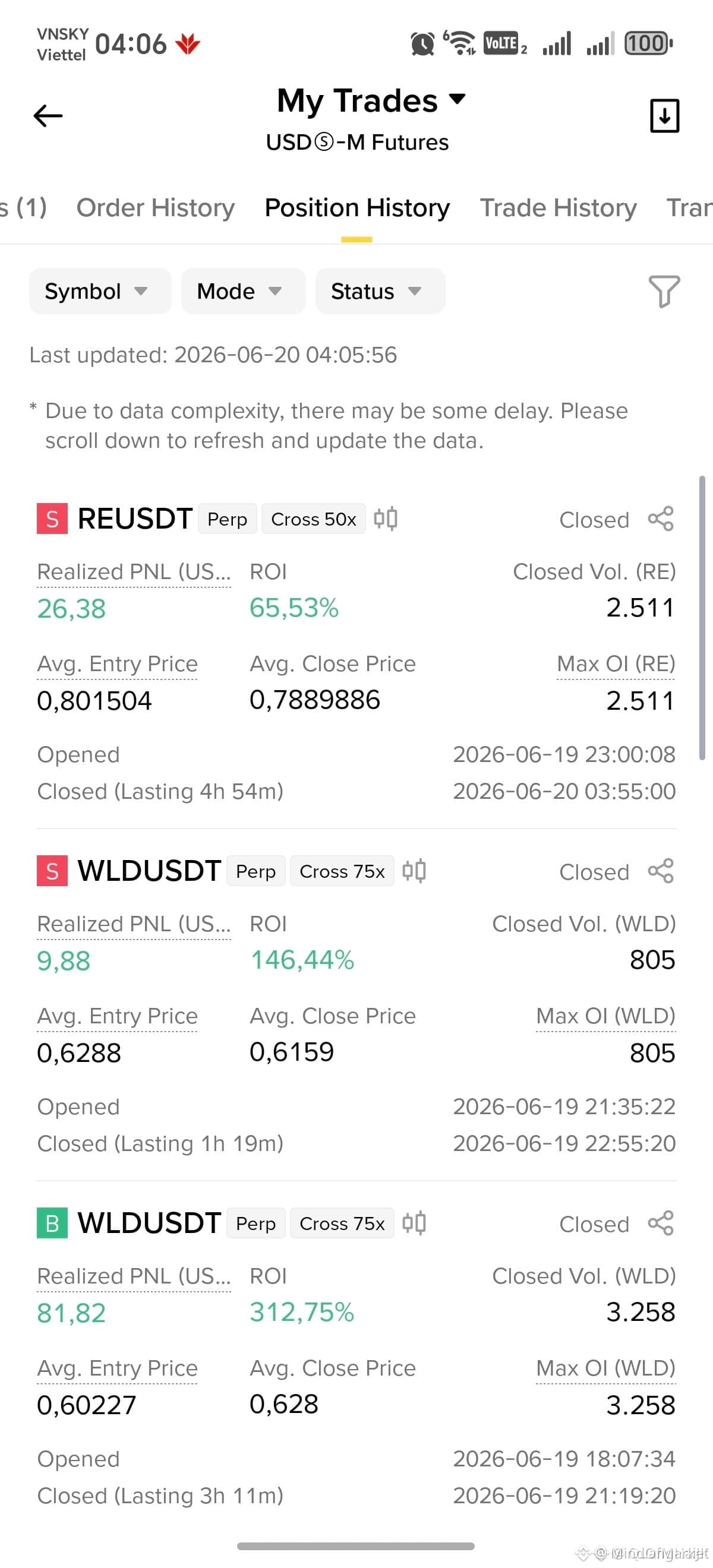
daily updates on real-world trading strategies by quanghaijk with a 98% win rate 🚀 $RE
Entry: 0.85 🔥
Target: 1.20 🚀
Stop Loss: 0.70 ⚠️
trading on a top-tier exchange requires a deep understanding of market structures and liquidity pools, which can help identify key areas of support and resistance, allowing for more informed entry and exit decisions
Not financial advice. Manage your risk.
#RE #LongSetup #TradingStrategies
⚡️
daily updates on real-world trading strategies by quanghaijk with a 98% win rate 🚀 $RE
Entry: 0.85 🔥
Target: 1.20 🚀
Stop Loss: 0.70 ⚠️
trading on a top-tier exchange requires a deep understanding of market structures and liquidity pools, which can help identify key areas of support and resistance, allowing for more informed entry and exit decisions
Not financial advice. Manage your risk.
#RE #LongSetup #TradingStrategies
⚡️
Entry: 0.85 🔥
Target: 1.20 🚀
Stop Loss: 0.70 ⚠️
trading on a top-tier exchange requires a deep understanding of market structures and liquidity pools, which can help identify key areas of support and resistance, allowing for more informed entry and exit decisions
Not financial advice. Manage your risk.
#RE #LongSetup #TradingStrategies
⚡️
529

·
--
Bearish
{spot}(BTCUSDT)
Retail traders buy the breakout and get trapped. Smart money buys the Liquidity Grab.
With $BTC consolidating around $64000, here is how to trade the fakeout on the 15M chart:
1. Identify the clear horizontal floor
2. Wait for a candle to aggresively break below it
3. If the next candle pumps and closes back inside the range, enter a LONG position
4. Stop-loss right below the fakeout wick. Target the mid-range.
Are we sweeping down to $60k next? Drop a comment!
#DayTradingTips #crypto #BTC #TradingStrategies
Retail traders buy the breakout and get trapped. Smart money buys the Liquidity Grab.
With $BTC consolidating around $64000, here is how to trade the fakeout on the 15M chart:
1. Identify the clear horizontal floor
2. Wait for a candle to aggresively break below it
3. If the next candle pumps and closes back inside the range, enter a LONG position
4. Stop-loss right below the fakeout wick. Target the mid-range.
Are we sweeping down to $60k next? Drop a comment!
#DayTradingTips #crypto #BTC #TradingStrategies
With $BTC consolidating around $64000, here is how to trade the fakeout on the 15M chart:
1. Identify the clear horizontal floor
2. Wait for a candle to aggresively break below it
3. If the next candle pumps and closes back inside the range, enter a LONG position
4. Stop-loss right below the fakeout wick. Target the mid-range.
Are we sweeping down to $60k next? Drop a comment!
#DayTradingTips #crypto #BTC #TradingStrategies
1
119
🚨 The Bull Market is Here: 3 Rules to 10x Your Portfolio Without Losing Your Sleep! 🚀
The crypto market is moving faster than ever, and with the recent surges in AI-related tokens and Layer-1 ecosystems, it is very easy to fall for FOMO. But before you ape into the next massive green candle, let’s talk strategy.
Whether you are a seasoned trader or a complete beginner, making it through a bull market requires a plan, not just luck. Here are three simple, golden rules to maximize your gains while protecting your initial investment:
1️⃣ Never Chase a Green Candle 🕯️
It is the oldest trap in the book. You see a token pumping 50% and jump in, only to watch it retrace immediately. Smart money enters during accumulation phases or rides the retest, not during a parabolic spike. If you missed the initial move, wait for the cooldown.
2️⃣ Master the Art of DCA (Dollar-Cost Averaging) 📈
Trying to time the exact bottom or top is nearly impossible. Instead of going all-in at once, scale into projects you believe in over time. By buying fixed amounts at regular intervals, you significantly reduce the impact of volatility on your portfolio.
3️⃣ Set Your Take-Profit (TP) Targets 💸
Hope is not a trading strategy. Before you even enter a trade, know exactly where you plan to exit. Set specific profit targets and stick to them. It is perfectly fine to secure profits and ride the rest of the wave with your "moon bag."
Remember, preserving your capital is rule number one!
What is your favorite altcoin to accumulate right now? Drop it in the comments below! 👇
If you found this guide helpful, hit that Like button, Share with your friends, and Follow me for daily trading tips, market updates, and portfolio strategies! 🎯
$BTC $LUNC $BNB
#crypto #WriteToEarn #TradingStrategies #Altcoins #BullRun
🚨 The Bull Market is Here: 3 Rules to 10x Your Portfolio Without Losing Your Sleep! 🚀
The crypto market is moving faster than ever, and with the recent surges in AI-related tokens and Layer-1 ecosystems, it is very easy to fall for FOMO. But before you ape into the next massive green candle, let’s talk strategy.
Whether you are a seasoned trader or a complete beginner, making it through a bull market requires a plan, not just luck. Here are three simple, golden rules to maximize your gains while protecting your initial investment:
1️⃣ Never Chase a Green Candle 🕯️
It is the oldest trap in the book. You see a token pumping 50% and jump in, only to watch it retrace immediately. Smart money enters during accumulation phases or rides the retest, not during a parabolic spike. If you missed the initial move, wait for the cooldown.
2️⃣ Master the Art of DCA (Dollar-Cost Averaging) 📈
Trying to time the exact bottom or top is nearly impossible. Instead of going all-in at once, scale into projects you believe in over time. By buying fixed amounts at regular intervals, you significantly reduce the impact of volatility on your portfolio.
3️⃣ Set Your Take-Profit (TP) Targets 💸
Hope is not a trading strategy. Before you even enter a trade, know exactly where you plan to exit. Set specific profit targets and stick to them. It is perfectly fine to secure profits and ride the rest of the wave with your "moon bag."
Remember, preserving your capital is rule number one!
What is your favorite altcoin to accumulate right now? Drop it in the comments below! 👇
If you found this guide helpful, hit that Like button, Share with your friends, and Follow me for daily trading tips, market updates, and portfolio strategies! 🎯
$BTC $LUNC $BNB
#crypto #WriteToEarn #TradingStrategies #Altcoins #BullRun
The crypto market is moving faster than ever, and with the recent surges in AI-related tokens and Layer-1 ecosystems, it is very easy to fall for FOMO. But before you ape into the next massive green candle, let’s talk strategy.
Whether you are a seasoned trader or a complete beginner, making it through a bull market requires a plan, not just luck. Here are three simple, golden rules to maximize your gains while protecting your initial investment:
1️⃣ Never Chase a Green Candle 🕯️
It is the oldest trap in the book. You see a token pumping 50% and jump in, only to watch it retrace immediately. Smart money enters during accumulation phases or rides the retest, not during a parabolic spike. If you missed the initial move, wait for the cooldown.
2️⃣ Master the Art of DCA (Dollar-Cost Averaging) 📈
Trying to time the exact bottom or top is nearly impossible. Instead of going all-in at once, scale into projects you believe in over time. By buying fixed amounts at regular intervals, you significantly reduce the impact of volatility on your portfolio.
3️⃣ Set Your Take-Profit (TP) Targets 💸
Hope is not a trading strategy. Before you even enter a trade, know exactly where you plan to exit. Set specific profit targets and stick to them. It is perfectly fine to secure profits and ride the rest of the wave with your "moon bag."
Remember, preserving your capital is rule number one!
What is your favorite altcoin to accumulate right now? Drop it in the comments below! 👇
If you found this guide helpful, hit that Like button, Share with your friends, and Follow me for daily trading tips, market updates, and portfolio strategies! 🎯
$BTC $LUNC $BNB
#crypto #WriteToEarn #TradingStrategies #Altcoins #BullRun
1
256

·
--
Bullish
🎯 Update $DOG coin movement: current opportunities and entry strategy! 🐕📊
We are closely following the exciting current movement of $DOG, as the coin is showing notable momentum and strong fluctuations that open the door to excellent trading opportunities, whether for quick scalping or near-term investment.
💡 Quick technical view and analysis of the moves:
The coin is moving now within strong support zones, and buyers are showing a positive reaction that increases the likelihood of a rebound and testing the next resistance levels. (Make sure to take a look at the attached real-time candlestick chart below this post 👇).
🔥 Details of my live trade:
Based on this analysis, I have already opened a real, direct trading position on $DOG to make the most of the current price volatility and maximize profits without missing the move.
👇 Join me in the trade and check the results:
To ensure full trust and transparency, I linked my real trade and shared it directly with this post. You can now view the entry points, monitor the live performance, or copy the strategy and enter with me directly in one click via the [Copy Strategy / Live Trading] button available below to benefit together!
What are your next targets for $DOG? Share your expectations in the comments! 👇
#BinanceHerYerde Square #DOGE: G #CryptoTrends2024 ptoTrading #MarketSentimentToday etAn$DOGE alysis #TradingStrategies
🎯 Update $DOG coin movement: current opportunities and entry strategy! 🐕📊
We are closely following the exciting current movement of $DOG, as the coin is showing notable momentum and strong fluctuations that open the door to excellent trading opportunities, whether for quick scalping or near-term investment.
💡 Quick technical view and analysis of the moves:
The coin is moving now within strong support zones, and buyers are showing a positive reaction that increases the likelihood of a rebound and testing the next resistance levels. (Make sure to take a look at the attached real-time candlestick chart below this post 👇).
🔥 Details of my live trade:
Based on this analysis, I have already opened a real, direct trading position on $DOG to make the most of the current price volatility and maximize profits without missing the move.
👇 Join me in the trade and check the results:
To ensure full trust and transparency, I linked my real trade and shared it directly with this post. You can now view the entry points, monitor the live performance, or copy the strategy and enter with me directly in one click via the [Copy Strategy / Live Trading] button available below to benefit together!
What are your next targets for $DOG? Share your expectations in the comments! 👇
#BinanceHerYerde Square #DOGE: G #CryptoTrends2024 ptoTrading #MarketSentimentToday etAn$DOGE alysis #TradingStrategies
We are closely following the exciting current movement of $DOG, as the coin is showing notable momentum and strong fluctuations that open the door to excellent trading opportunities, whether for quick scalping or near-term investment.
💡 Quick technical view and analysis of the moves:
The coin is moving now within strong support zones, and buyers are showing a positive reaction that increases the likelihood of a rebound and testing the next resistance levels. (Make sure to take a look at the attached real-time candlestick chart below this post 👇).
🔥 Details of my live trade:
Based on this analysis, I have already opened a real, direct trading position on $DOG to make the most of the current price volatility and maximize profits without missing the move.
👇 Join me in the trade and check the results:
To ensure full trust and transparency, I linked my real trade and shared it directly with this post. You can now view the entry points, monitor the live performance, or copy the strategy and enter with me directly in one click via the [Copy Strategy / Live Trading] button available below to benefit together!
What are your next targets for $DOG? Share your expectations in the comments! 👇
#BinanceHerYerde Square #DOGE: G #CryptoTrends2024 ptoTrading #MarketSentimentToday etAn$DOGE alysis #TradingStrategies
99

Small Capital Growth Head: Flexibility and a Fair Profit Cap!
Can it be true that you can start with the smallest amount and still make a real difference in the trading world? The secret isn’t in having a huge capital—it’s in high flexibility and precise risk management minute by minute.
• Flexible Fast Trading: Enter and exit based on moment-to-moment variables in spot currency trades like $BTC, giving you full control and sparing us long waiting.
• Control and Profit Cap: So profits don’t end up concentrated in the hands of a small group, setting clear strategies with a defined profit cap and a fair distribution of opportunities ensures the market’s sustainability for everyone.
📊 Follow the market movement moment by moment and don’t miss your chance:
(Don’t forget to add the charting tool and candlestick chart from the platform options here)
What do you think about setting a profit cap to protect small traders? Share your thoughts in the comments 👇
#Binance #Crypto #BTC #TradingStrategies
Small Capital Growth Head: Flexibility and a Fair Profit Cap!
Can it be true that you can start with the smallest amount and still make a real difference in the trading world? The secret isn’t in having a huge capital—it’s in high flexibility and precise risk management minute by minute.
• Flexible Fast Trading: Enter and exit based on moment-to-moment variables in spot currency trades like $BTC, giving you full control and sparing us long waiting.
• Control and Profit Cap: So profits don’t end up concentrated in the hands of a small group, setting clear strategies with a defined profit cap and a fair distribution of opportunities ensures the market’s sustainability for everyone.
📊 Follow the market movement moment by moment and don’t miss your chance:
(Don’t forget to add the charting tool and candlestick chart from the platform options here)
What do you think about setting a profit cap to protect small traders? Share your thoughts in the comments 👇
#Binance #Crypto #BTC #TradingStrategies
Can it be true that you can start with the smallest amount and still make a real difference in the trading world? The secret isn’t in having a huge capital—it’s in high flexibility and precise risk management minute by minute.
• Flexible Fast Trading: Enter and exit based on moment-to-moment variables in spot currency trades like $BTC, giving you full control and sparing us long waiting.
• Control and Profit Cap: So profits don’t end up concentrated in the hands of a small group, setting clear strategies with a defined profit cap and a fair distribution of opportunities ensures the market’s sustainability for everyone.
📊 Follow the market movement moment by moment and don’t miss your chance:
(Don’t forget to add the charting tool and candlestick chart from the platform options here)
What do you think about setting a profit cap to protect small traders? Share your thoughts in the comments 👇
#Binance #Crypto #BTC #TradingStrategies
101

·
--
A quick analytical look at Bitcoin ($BTC) price action using EMA crossovers 📊
Welcome, market makers and traders, to Binance Square!
Current price movement on the charts always brings us back to the importance of effective technical tools—most notably the Exponential Moving Average (EMA) crossover strategy. Here’s a quick summary of the current technical read:
* Short vs. long averages: Monitoring the (EMA 9) vs. (EMA 21) crossover across different timeframes gives us early, highly accurate momentum-change signals.
* Trend confirmation: It’s not the crossover alone that matters—always wait for the candle close to provide clear confirmation, to avoid false signals in the market.
* Risk management: Accurately identifying support and resistance levels and setting a stop-loss protects capital and ensures trading continues with full safety.
Share your thoughts and analyses in the comments: Do you expect the current momentum to continue, or are we approaching a new correction zone? 👇
$BTC #BinanceSquare #TechnicalAnalysis #TradingStrategies
A quick analytical look at Bitcoin ($BTC) price action using EMA crossovers 📊
Welcome, market makers and traders, to Binance Square!
Current price movement on the charts always brings us back to the importance of effective technical tools—most notably the Exponential Moving Average (EMA) crossover strategy. Here’s a quick summary of the current technical read:
* Short vs. long averages: Monitoring the (EMA 9) vs. (EMA 21) crossover across different timeframes gives us early, highly accurate momentum-change signals.
* Trend confirmation: It’s not the crossover alone that matters—always wait for the candle close to provide clear confirmation, to avoid false signals in the market.
* Risk management: Accurately identifying support and resistance levels and setting a stop-loss protects capital and ensures trading continues with full safety.
Share your thoughts and analyses in the comments: Do you expect the current momentum to continue, or are we approaching a new correction zone? 👇
$BTC #BinanceSquare #TechnicalAnalysis #TradingStrategies
Welcome, market makers and traders, to Binance Square!
Current price movement on the charts always brings us back to the importance of effective technical tools—most notably the Exponential Moving Average (EMA) crossover strategy. Here’s a quick summary of the current technical read:
* Short vs. long averages: Monitoring the (EMA 9) vs. (EMA 21) crossover across different timeframes gives us early, highly accurate momentum-change signals.
* Trend confirmation: It’s not the crossover alone that matters—always wait for the candle close to provide clear confirmation, to avoid false signals in the market.
* Risk management: Accurately identifying support and resistance levels and setting a stop-loss protects capital and ensures trading continues with full safety.
Share your thoughts and analyses in the comments: Do you expect the current momentum to continue, or are we approaching a new correction zone? 👇
$BTC #BinanceSquare #TechnicalAnalysis #TradingStrategies
119
Demystifying Crypto Liquidity: The Hidden Engine Behind Price Stability and Order ExecutionWhen evaluating cryptocurrency markets, most traders focus heavily on price action, chart patterns, and trading indicators. However, price is only the visible surface of a far more complex system. Beneath every price movement lies an essential structural component: liquidity.
Whether you are executing a small trade on a major digital asset like Bitcoin or rebalancing a portfolio on a decentralized exchange, liquidity determines how quickly, efficiently, and cost-effectively your orders are filled. Understanding liquidity is one of the key milestones that separates beginner traders from seasoned market participants.
In this guide, we will break down what liquidity actually means in the crypto ecosystem, how order books and liquidity pools operate, the hidden risks of illiquid markets, and practical methods for managing liquidity risk in your trading strategy.
---
### What Is Crypto Liquidity?
At its simplest, liquidity refers to the ease with which a digital asset can be converted into cash or another asset without causing a drastic movement in its market price.
- **High Liquidity:** A liquid market contains a dense concentration of buyers and sellers actively placing orders. Trades can be executed quickly at stable prices with minimal slippage.
- **Low Liquidity:** An illiquid market features few active orders or low overall activity. Executing even moderate-sized trades in these environments can cause dramatic price swings.
Liquidity is not static; it fluctuates based on market hours, global macroeconomic conditions, exchange health, and overall investor sentiment. Furthermore, because cryptocurrency trading operates 24/7 across hundreds of centralized and decentralized platforms worldwide, liquidity is highly fragmented compared to traditional financial markets.
---
### The Mechanics: Order Books, Spreads, and Depth
To understand liquidity in practice, it helps to examine how orders are processed on a Centralized Exchange (CEX). Most traditional and crypto exchanges rely on an **order book** system driven by two main participants:
1. **Market Makers:** Traders or institutional entities that provide liquidity by placing limit orders—both buy (bids) and sell (asks)—at various price levels. They profit primarily from the bid-ask spread or volume rebates.
2. **Market Takers:** Traders who execute orders immediately at the current available market prices (using market orders). Takers absorb the liquidity provided by makers.
#### The Bid-Ask Spread
The difference between the highest price a buyer is willing to pay (the highest bid) and the lowest price a seller is willing to accept (the lowest ask) is known as the **bid-ask spread**.
- In highly liquid markets (such as Bitcoin or Ethereum trading against high-volume stablecoins like Tether), the bid-ask spread is extremely narrow—often just a fraction of a cent or a tiny decimal percentage.
- In low-liquidity altcoin markets, the spread can widen significantly, meaning buyers pay a premium while sellers take a discount relative to the prevailing mid-market price.
#### Order Book Depth
Order book depth reflects the total volume of buy and sell limit orders resting at different price levels away from the current market price. Analysts often look at **2% depth**—the volume of orders resting within 2% above and below the current mid-price. Deep order books absorb large trades with minimal price displacement, whereas thin order books suffer severe price impact from even modest buy or sell orders.
---
### Practical Example: The Reality of Slippage
To see why market depth matters, consider an example involving **slippage**. Slippage occurs when there is a difference between the expected price of a trade and the actual price at which the trade is executed.
Suppose you want to execute a market buy order for $50,000 worth of a mid-cap altcoin currently showing a quoted market price of $1.00.
- **Scenario A (High Liquidity Market):** The order book contains $100,000 in sell limit orders between $1.00 and $1.001. Your $50,000 market buy order absorbs orders entirely within this tight range. Your average execution price is $1.0005. Slippage is negligible (0.05%).
- **Scenario B (Low Liquidity Market):** The order book is thin. There is only $5,000 in sell orders at $1.00, another $10,000 at $1.05, $15,000 at $1.10, and $20,000 at $1.20. To fill your $50,000 order, the exchange engine sweeps through all these price levels. Your average execution price jumps to roughly $1.11. You suffered 11% slippage instantly.
This example illustrates a critical rule: **The quoted price on your screen is only guaranteed for the top of the order book.** For larger orders, market depth dictates your true execution price.
---
### CEX vs. DEX Liquidity: Order Books vs. Automated Market Makers
Crypto liquidity operates differently depending on the architecture of the venue:
#### Centralized Exchanges (CEX)
CEXs rely primarily on central limit order books (CLOB). Liquidity is provided by professional market-making firms using automated algorithms to adjust orders continuously based on volatility, order flow, and prices on competing venues.
#### Decentralized Exchanges (DEX)
Decentralized platforms often use **Automated Market Makers (AMMs)** based on smart contracts. Instead of matching buyers and sellers, traders execute swaps directly against a deterministic Liquidity Pool holding paired tokens (e.g., Ethereum and USD Coin).
In standard constant-product AMMs (governed by equations like $x \cdot y = k$), trade size relative to pool size determines **price impact**. Swapping large amounts against small liquidity pools results in high price impact, mirroring the slippage experienced in thin order books. Modern DEX protocols use concentrated liquidity to improve efficiency, but the fundamental constraint remains: smaller liquidity backing a pool leads to worse execution rates.
---
### Illiquidity Traps, Cascades, and Risks
Operating in low-liquidity environments introduces unique structural risks that every intermediate trader must respect.
#### 1. Liquidity Traps and Cascading Liquidations
During periods of severe market panic, liquidity can evaporate rapidly. Market makers may disable their automated software or widen their spreads drastically to protect themselves from extreme directional losses. When market liquidity disappears, stop-loss orders and automated liquidations on leveraged positions hit empty order books, creating rapid price drops or "flash crashes."
#### 2. Illusion of Liquidity (Wash Trading and Spoofing)
High trading volume on an exchange does not always equal genuine liquidity. Unregulated or secondary exchanges sometimes report artificially inflated volume via wash trading (trading with oneself to simulate activity). Additionally, traders may encounter **spoofing**—large orders placed in the order book to create a false impression of support or resistance, only to be canceled right before they are executed.
#### 3. DeFi Liquidity Withdrawal and Rug Pulls
In decentralized finance, liquidity providers can choose to withdraw their deposited tokens at any time unless those funds are programmatically locked. In high-risk altcoin pools, project developers or large liquidity providers may suddenly remove their capital from the pool, leaving other holders unable to swap their tokens back into liquid assets—a event commonly referred to as a "rug pull."
---
### How to Assess Liquidity and Protect Your Portfolio
To improve your execution quality and safeguard your capital, consider incorporating the following practices into your market analysis:
1. **Examine Order Book Depth Beyond Volume:** Do not rely solely on 24-hour volume figures, as volume reflects past trades rather than present order depth. Look specifically at the bid-ask spread percentage and the volume resting within 1% to 2% of the market price.
2. **Use Limit Orders Instead of Market Orders:** In volatile or secondary markets, market orders expose you to unexpected slippage. Utilizing limit orders ensures you control the maximum acceptable purchase price or minimum acceptable sell price.
3. **Break Up Large Orders (TWAP/VWAP):** If you need to execute a position that exceeds the available depth, break the total sum into smaller tranches over time. Algorithmic techniques such as Time-Weighted Average Price (TWAP) help minimize market impact.
4. **Monitor On-Chain Pool Metrics:** When trading on DEXs, check the Total Value Locked (TVL) in the specific liquidity pool, verify whether liquidity ownership is locked, and check the calculated price impact on your transaction pre-flight screen before signing the smart contract.
---
### Summary
Liquidity is the bedrock of transparent, efficient, and healthy financial markets. It dictates how orders execute, governs how volatility propagates, and determines the true cost of entering and exiting positions. By evaluating order book depth, bid-ask spreads, and pool mechanics before executing trades, intermediate traders can significantly reduce unnecessary slippage losses, avoid illiquidity traps, and navigate digital asset markets with far greater precision.
#CryptoEducation #MarketDynamics #TradingStrategies
Demystifying Crypto Liquidity: The Hidden Engine Behind Price Stability and Order Execution
When evaluating cryptocurrency markets, most traders focus heavily on price action, chart patterns, and trading indicators. However, price is only the visible surface of a far more complex system. Beneath every price movement lies an essential structural component: liquidity.
Whether you are executing a small trade on a major digital asset like Bitcoin or rebalancing a portfolio on a decentralized exchange, liquidity determines how quickly, efficiently, and cost-effectively your orders are filled. Understanding liquidity is one of the key milestones that separates beginner traders from seasoned market participants.
In this guide, we will break down what liquidity actually means in the crypto ecosystem, how order books and liquidity pools operate, the hidden risks of illiquid markets, and practical methods for managing liquidity risk in your trading strategy.
---
### What Is Crypto Liquidity?
At its simplest, liquidity refers to the ease with which a digital asset can be converted into cash or another asset without causing a drastic movement in its market price.
- **High Liquidity:** A liquid market contains a dense concentration of buyers and sellers actively placing orders. Trades can be executed quickly at stable prices with minimal slippage.
- **Low Liquidity:** An illiquid market features few active orders or low overall activity. Executing even moderate-sized trades in these environments can cause dramatic price swings.
Liquidity is not static; it fluctuates based on market hours, global macroeconomic conditions, exchange health, and overall investor sentiment. Furthermore, because cryptocurrency trading operates 24/7 across hundreds of centralized and decentralized platforms worldwide, liquidity is highly fragmented compared to traditional financial markets.
---
### The Mechanics: Order Books, Spreads, and Depth
To understand liquidity in practice, it helps to examine how orders are processed on a Centralized Exchange (CEX). Most traditional and crypto exchanges rely on an **order book** system driven by two main participants:
1. **Market Makers:** Traders or institutional entities that provide liquidity by placing limit orders—both buy (bids) and sell (asks)—at various price levels. They profit primarily from the bid-ask spread or volume rebates.
2. **Market Takers:** Traders who execute orders immediately at the current available market prices (using market orders). Takers absorb the liquidity provided by makers.
#### The Bid-Ask Spread
The difference between the highest price a buyer is willing to pay (the highest bid) and the lowest price a seller is willing to accept (the lowest ask) is known as the **bid-ask spread**.
- In highly liquid markets (such as Bitcoin or Ethereum trading against high-volume stablecoins like Tether), the bid-ask spread is extremely narrow—often just a fraction of a cent or a tiny decimal percentage.
- In low-liquidity altcoin markets, the spread can widen significantly, meaning buyers pay a premium while sellers take a discount relative to the prevailing mid-market price.
#### Order Book Depth
Order book depth reflects the total volume of buy and sell limit orders resting at different price levels away from the current market price. Analysts often look at **2% depth**—the volume of orders resting within 2% above and below the current mid-price. Deep order books absorb large trades with minimal price displacement, whereas thin order books suffer severe price impact from even modest buy or sell orders.
---
### Practical Example: The Reality of Slippage
To see why market depth matters, consider an example involving **slippage**. Slippage occurs when there is a difference between the expected price of a trade and the actual price at which the trade is executed.
Suppose you want to execute a market buy order for $50,000 worth of a mid-cap altcoin currently showing a quoted market price of $1.00.
- **Scenario A (High Liquidity Market):** The order book contains $100,000 in sell limit orders between $1.00 and $1.001. Your $50,000 market buy order absorbs orders entirely within this tight range. Your average execution price is $1.0005. Slippage is negligible (0.05%).
- **Scenario B (Low Liquidity Market):** The order book is thin. There is only $5,000 in sell orders at $1.00, another $10,000 at $1.05, $15,000 at $1.10, and $20,000 at $1.20. To fill your $50,000 order, the exchange engine sweeps through all these price levels. Your average execution price jumps to roughly $1.11. You suffered 11% slippage instantly.
This example illustrates a critical rule: **The quoted price on your screen is only guaranteed for the top of the order book.** For larger orders, market depth dictates your true execution price.
---
### CEX vs. DEX Liquidity: Order Books vs. Automated Market Makers
Crypto liquidity operates differently depending on the architecture of the venue:
#### Centralized Exchanges (CEX)
CEXs rely primarily on central limit order books (CLOB). Liquidity is provided by professional market-making firms using automated algorithms to adjust orders continuously based on volatility, order flow, and prices on competing venues.
#### Decentralized Exchanges (DEX)
Decentralized platforms often use **Automated Market Makers (AMMs)** based on smart contracts. Instead of matching buyers and sellers, traders execute swaps directly against a deterministic Liquidity Pool holding paired tokens (e.g., Ethereum and USD Coin).
In standard constant-product AMMs (governed by equations like $x \cdot y = k$), trade size relative to pool size determines **price impact**. Swapping large amounts against small liquidity pools results in high price impact, mirroring the slippage experienced in thin order books. Modern DEX protocols use concentrated liquidity to improve efficiency, but the fundamental constraint remains: smaller liquidity backing a pool leads to worse execution rates.
---
### Illiquidity Traps, Cascades, and Risks
Operating in low-liquidity environments introduces unique structural risks that every intermediate trader must respect.
#### 1. Liquidity Traps and Cascading Liquidations
During periods of severe market panic, liquidity can evaporate rapidly. Market makers may disable their automated software or widen their spreads drastically to protect themselves from extreme directional losses. When market liquidity disappears, stop-loss orders and automated liquidations on leveraged positions hit empty order books, creating rapid price drops or "flash crashes."
#### 2. Illusion of Liquidity (Wash Trading and Spoofing)
High trading volume on an exchange does not always equal genuine liquidity. Unregulated or secondary exchanges sometimes report artificially inflated volume via wash trading (trading with oneself to simulate activity). Additionally, traders may encounter **spoofing**—large orders placed in the order book to create a false impression of support or resistance, only to be canceled right before they are executed.
#### 3. DeFi Liquidity Withdrawal and Rug Pulls
In decentralized finance, liquidity providers can choose to withdraw their deposited tokens at any time unless those funds are programmatically locked. In high-risk altcoin pools, project developers or large liquidity providers may suddenly remove their capital from the pool, leaving other holders unable to swap their tokens back into liquid assets—a event commonly referred to as a "rug pull."
---
### How to Assess Liquidity and Protect Your Portfolio
To improve your execution quality and safeguard your capital, consider incorporating the following practices into your market analysis:
1. **Examine Order Book Depth Beyond Volume:** Do not rely solely on 24-hour volume figures, as volume reflects past trades rather than present order depth. Look specifically at the bid-ask spread percentage and the volume resting within 1% to 2% of the market price.
2. **Use Limit Orders Instead of Market Orders:** In volatile or secondary markets, market orders expose you to unexpected slippage. Utilizing limit orders ensures you control the maximum acceptable purchase price or minimum acceptable sell price.
3. **Break Up Large Orders (TWAP/VWAP):** If you need to execute a position that exceeds the available depth, break the total sum into smaller tranches over time. Algorithmic techniques such as Time-Weighted Average Price (TWAP) help minimize market impact.
4. **Monitor On-Chain Pool Metrics:** When trading on DEXs, check the Total Value Locked (TVL) in the specific liquidity pool, verify whether liquidity ownership is locked, and check the calculated price impact on your transaction pre-flight screen before signing the smart contract.
---
### Summary
Liquidity is the bedrock of transparent, efficient, and healthy financial markets. It dictates how orders execute, governs how volatility propagates, and determines the true cost of entering and exiting positions. By evaluating order book depth, bid-ask spreads, and pool mechanics before executing trades, intermediate traders can significantly reduce unnecessary slippage losses, avoid illiquidity traps, and navigate digital asset markets with far greater precision.
#CryptoEducation #MarketDynamics #TradingStrategies
Whether you are executing a small trade on a major digital asset like Bitcoin or rebalancing a portfolio on a decentralized exchange, liquidity determines how quickly, efficiently, and cost-effectively your orders are filled. Understanding liquidity is one of the key milestones that separates beginner traders from seasoned market participants.
In this guide, we will break down what liquidity actually means in the crypto ecosystem, how order books and liquidity pools operate, the hidden risks of illiquid markets, and practical methods for managing liquidity risk in your trading strategy.
---
### What Is Crypto Liquidity?
At its simplest, liquidity refers to the ease with which a digital asset can be converted into cash or another asset without causing a drastic movement in its market price.
- **High Liquidity:** A liquid market contains a dense concentration of buyers and sellers actively placing orders. Trades can be executed quickly at stable prices with minimal slippage.
- **Low Liquidity:** An illiquid market features few active orders or low overall activity. Executing even moderate-sized trades in these environments can cause dramatic price swings.
Liquidity is not static; it fluctuates based on market hours, global macroeconomic conditions, exchange health, and overall investor sentiment. Furthermore, because cryptocurrency trading operates 24/7 across hundreds of centralized and decentralized platforms worldwide, liquidity is highly fragmented compared to traditional financial markets.
---
### The Mechanics: Order Books, Spreads, and Depth
To understand liquidity in practice, it helps to examine how orders are processed on a Centralized Exchange (CEX). Most traditional and crypto exchanges rely on an **order book** system driven by two main participants:
1. **Market Makers:** Traders or institutional entities that provide liquidity by placing limit orders—both buy (bids) and sell (asks)—at various price levels. They profit primarily from the bid-ask spread or volume rebates.
2. **Market Takers:** Traders who execute orders immediately at the current available market prices (using market orders). Takers absorb the liquidity provided by makers.
#### The Bid-Ask Spread
The difference between the highest price a buyer is willing to pay (the highest bid) and the lowest price a seller is willing to accept (the lowest ask) is known as the **bid-ask spread**.
- In highly liquid markets (such as Bitcoin or Ethereum trading against high-volume stablecoins like Tether), the bid-ask spread is extremely narrow—often just a fraction of a cent or a tiny decimal percentage.
- In low-liquidity altcoin markets, the spread can widen significantly, meaning buyers pay a premium while sellers take a discount relative to the prevailing mid-market price.
#### Order Book Depth
Order book depth reflects the total volume of buy and sell limit orders resting at different price levels away from the current market price. Analysts often look at **2% depth**—the volume of orders resting within 2% above and below the current mid-price. Deep order books absorb large trades with minimal price displacement, whereas thin order books suffer severe price impact from even modest buy or sell orders.
---
### Practical Example: The Reality of Slippage
To see why market depth matters, consider an example involving **slippage**. Slippage occurs when there is a difference between the expected price of a trade and the actual price at which the trade is executed.
Suppose you want to execute a market buy order for $50,000 worth of a mid-cap altcoin currently showing a quoted market price of $1.00.
- **Scenario A (High Liquidity Market):** The order book contains $100,000 in sell limit orders between $1.00 and $1.001. Your $50,000 market buy order absorbs orders entirely within this tight range. Your average execution price is $1.0005. Slippage is negligible (0.05%).
- **Scenario B (Low Liquidity Market):** The order book is thin. There is only $5,000 in sell orders at $1.00, another $10,000 at $1.05, $15,000 at $1.10, and $20,000 at $1.20. To fill your $50,000 order, the exchange engine sweeps through all these price levels. Your average execution price jumps to roughly $1.11. You suffered 11% slippage instantly.
This example illustrates a critical rule: **The quoted price on your screen is only guaranteed for the top of the order book.** For larger orders, market depth dictates your true execution price.
---
### CEX vs. DEX Liquidity: Order Books vs. Automated Market Makers
Crypto liquidity operates differently depending on the architecture of the venue:
#### Centralized Exchanges (CEX)
CEXs rely primarily on central limit order books (CLOB). Liquidity is provided by professional market-making firms using automated algorithms to adjust orders continuously based on volatility, order flow, and prices on competing venues.
#### Decentralized Exchanges (DEX)
Decentralized platforms often use **Automated Market Makers (AMMs)** based on smart contracts. Instead of matching buyers and sellers, traders execute swaps directly against a deterministic Liquidity Pool holding paired tokens (e.g., Ethereum and USD Coin).
In standard constant-product AMMs (governed by equations like $x \cdot y = k$), trade size relative to pool size determines **price impact**. Swapping large amounts against small liquidity pools results in high price impact, mirroring the slippage experienced in thin order books. Modern DEX protocols use concentrated liquidity to improve efficiency, but the fundamental constraint remains: smaller liquidity backing a pool leads to worse execution rates.
---
### Illiquidity Traps, Cascades, and Risks
Operating in low-liquidity environments introduces unique structural risks that every intermediate trader must respect.
#### 1. Liquidity Traps and Cascading Liquidations
During periods of severe market panic, liquidity can evaporate rapidly. Market makers may disable their automated software or widen their spreads drastically to protect themselves from extreme directional losses. When market liquidity disappears, stop-loss orders and automated liquidations on leveraged positions hit empty order books, creating rapid price drops or "flash crashes."
#### 2. Illusion of Liquidity (Wash Trading and Spoofing)
High trading volume on an exchange does not always equal genuine liquidity. Unregulated or secondary exchanges sometimes report artificially inflated volume via wash trading (trading with oneself to simulate activity). Additionally, traders may encounter **spoofing**—large orders placed in the order book to create a false impression of support or resistance, only to be canceled right before they are executed.
#### 3. DeFi Liquidity Withdrawal and Rug Pulls
In decentralized finance, liquidity providers can choose to withdraw their deposited tokens at any time unless those funds are programmatically locked. In high-risk altcoin pools, project developers or large liquidity providers may suddenly remove their capital from the pool, leaving other holders unable to swap their tokens back into liquid assets—a event commonly referred to as a "rug pull."
---
### How to Assess Liquidity and Protect Your Portfolio
To improve your execution quality and safeguard your capital, consider incorporating the following practices into your market analysis:
1. **Examine Order Book Depth Beyond Volume:** Do not rely solely on 24-hour volume figures, as volume reflects past trades rather than present order depth. Look specifically at the bid-ask spread percentage and the volume resting within 1% to 2% of the market price.
2. **Use Limit Orders Instead of Market Orders:** In volatile or secondary markets, market orders expose you to unexpected slippage. Utilizing limit orders ensures you control the maximum acceptable purchase price or minimum acceptable sell price.
3. **Break Up Large Orders (TWAP/VWAP):** If you need to execute a position that exceeds the available depth, break the total sum into smaller tranches over time. Algorithmic techniques such as Time-Weighted Average Price (TWAP) help minimize market impact.
4. **Monitor On-Chain Pool Metrics:** When trading on DEXs, check the Total Value Locked (TVL) in the specific liquidity pool, verify whether liquidity ownership is locked, and check the calculated price impact on your transaction pre-flight screen before signing the smart contract.
---
### Summary
Liquidity is the bedrock of transparent, efficient, and healthy financial markets. It dictates how orders execute, governs how volatility propagates, and determines the true cost of entering and exiting positions. By evaluating order book depth, bid-ask spreads, and pool mechanics before executing trades, intermediate traders can significantly reduce unnecessary slippage losses, avoid illiquidity traps, and navigate digital asset markets with far greater precision.
#CryptoEducation #MarketDynamics #TradingStrategies
55
Log in to explore more content
Join global crypto users on Binance Square
⚡️ Get latest and useful information about crypto.
💬 Trusted by the world’s largest crypto exchange.
👍 Discover real insights from verified creators.
Email / Phone number
Trending Topics
1
#BOJRaisesRatesTo31YearHigh
23,365 views
623 Discussing
2
#BuffettStepsDownAsBerkshireChairman
6,414 views
243 Discussing
3
#XRPExchangeReservesHitSevenYearLow
9,995 views
270 Discussing
4
#HKCompletesFirstHKDStablecoinUseCase
39,242 views
802 Discussing
5
#VietnamPlansFirstCryptoLicensesIn2026
28,764 views
557 Discussing
6
#BTCBreaks80K
284,643 views
4,105 Discussing
7
#BitcoinMarketCapTopsTesla
46,022 views
873 Discussing
8
#SOLJumpsAbout10%
58,788 views
886 Discussing
9
#EthereumReclaims$2600
5,160 views
101 Discussing
10
#LineraShutsDownAfterFundraisingFallsShort
16,046 views
243 Discussing