
#tron
tron
6.1M views
23,693 Discussing
Hot
Latest

·
--
𝐔𝐧𝐝𝐞𝐫𝐬𝐭𝐚𝐧𝐝𝐢𝐧𝐠 𝐇𝐨𝐰 𝐁𝐚𝐧𝐝𝐰𝐢𝐝𝐭𝐡 𝐀𝐧𝐝 𝐄𝐧𝐞𝐫𝐠𝐲 𝐊𝐞𝐞𝐩 𝐓𝐑𝐎𝐍 𝐓𝐫𝐚𝐧𝐬𝐚𝐜𝐭𝐢𝐨𝐧𝐬 𝐄𝐟𝐟𝐢𝐜𝐢𝐞𝐧𝐭
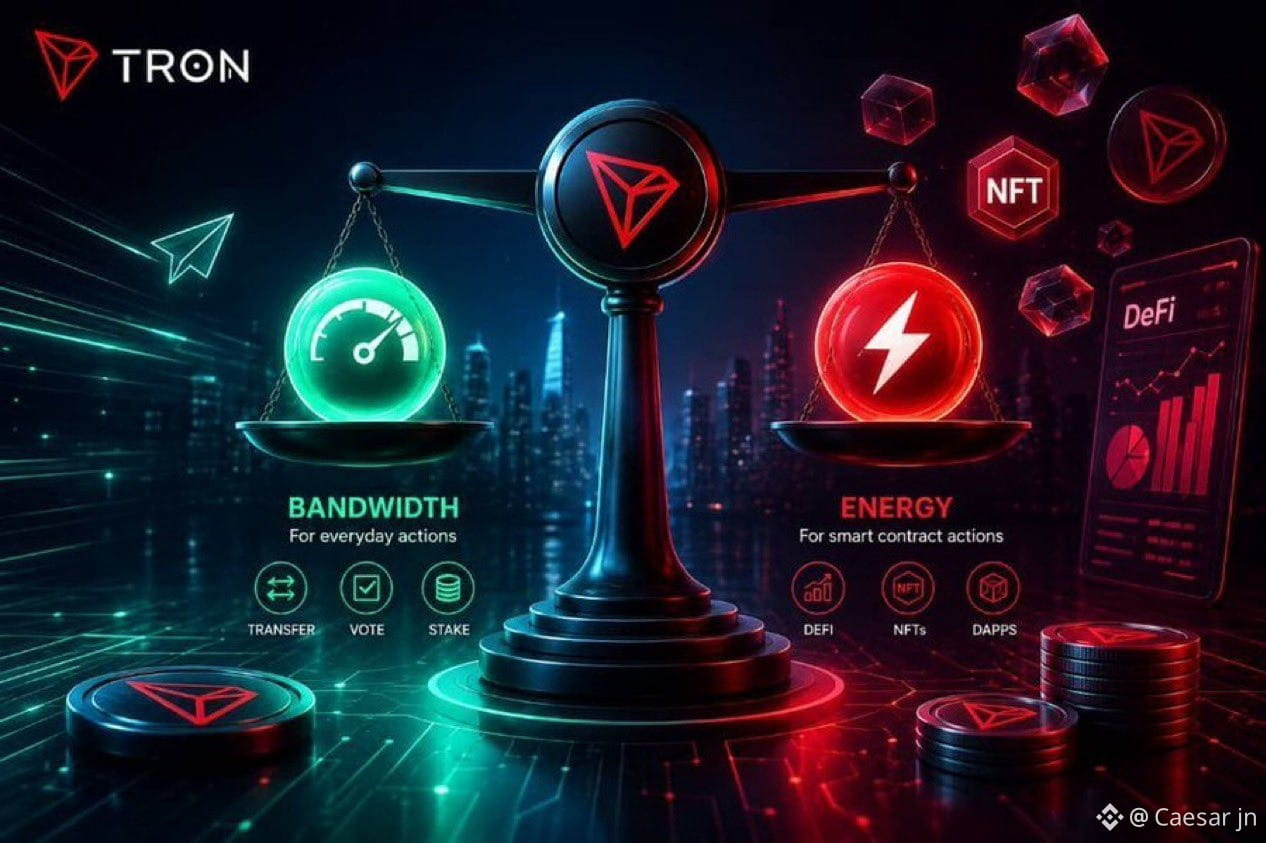
Transaction costs are an important part of using any blockchain, but not all operations consume resources in the same way. A simple TRX transfer has different requirements from executing a DeFi swap or interacting with a smart contract.
TRON addresses this through two core network resources: Bandwidth and Energy.
𝐁𝐚𝐧𝐝𝐰𝐢𝐝𝐭𝐡 𝐇𝐚𝐧𝐝𝐥𝐞𝐬 𝐓𝐫𝐚𝐧𝐬𝐚𝐜𝐭𝐢𝐨𝐧 𝐃𝐚𝐭𝐚
➞ Bandwidth measures the resources required to process transaction data. It supports activities such as TRX transfers and other on-chain operations.
Users receive a daily free allowance, while additional Bandwidth can be obtained through TRX staking or by paying applicable network fees.
𝐄𝐧𝐞𝐫𝐠𝐲 𝐏𝐨𝐰𝐞𝐫𝐬 𝐒𝐦𝐚𝐫𝐭 𝐂𝐨𝐧𝐭𝐫𝐚𝐜𝐭𝐬
➞ Energy covers the computational resources needed to execute smart contracts.
DeFi swaps, lending operations, token interactions, and NFT activities can consume Energy. The amount required depends on the complexity and execution of each contract.
𝐄𝐧𝐞𝐫𝐠𝐲 𝐑𝐞𝐧𝐭𝐚𝐥 𝐀𝐝𝐝𝐬 𝐀𝐧𝐨𝐭𝐡𝐞𝐫 𝐎𝐩𝐭𝐢𝐨𝐧
➞ Users who need additional Energy can explore rental services, including those available through the JUST ecosystem.
This can provide an alternative to freezing substantial amounts of TRX, although the most economical option depends on current rental prices, staking conditions, and usage patterns.
𝐖𝐡𝐲 𝐓𝐡𝐢𝐬 𝐊𝐧𝐨𝐰𝐥𝐞𝐝𝐠𝐞 𝐌𝐚𝐭𝐭𝐞𝐫𝐬
Understanding these resources helps users estimate transaction requirements, avoid unnecessary expenses, and make better decisions about how they participate in DeFi.
@DeFi_JUST @JustinSun #TRON #TRONEcoStar
𝐔𝐧𝐝𝐞𝐫𝐬𝐭𝐚𝐧𝐝𝐢𝐧𝐠 𝐇𝐨𝐰 𝐁𝐚𝐧𝐝𝐰𝐢𝐝𝐭𝐡 𝐀𝐧𝐝 𝐄𝐧𝐞𝐫𝐠𝐲 𝐊𝐞𝐞𝐩 𝐓𝐑𝐎𝐍 𝐓𝐫𝐚𝐧𝐬𝐚𝐜𝐭𝐢𝐨𝐧𝐬 𝐄𝐟𝐟𝐢𝐜𝐢𝐞𝐧𝐭
Transaction costs are an important part of using any blockchain, but not all operations consume resources in the same way. A simple TRX transfer has different requirements from executing a DeFi swap or interacting with a smart contract.
TRON addresses this through two core network resources: Bandwidth and Energy.
𝐁𝐚𝐧𝐝𝐰𝐢𝐝𝐭𝐡 𝐇𝐚𝐧𝐝𝐥𝐞𝐬 𝐓𝐫𝐚𝐧𝐬𝐚𝐜𝐭𝐢𝐨𝐧 𝐃𝐚𝐭𝐚
➞ Bandwidth measures the resources required to process transaction data. It supports activities such as TRX transfers and other on-chain operations.
Users receive a daily free allowance, while additional Bandwidth can be obtained through TRX staking or by paying applicable network fees.
𝐄𝐧𝐞𝐫𝐠𝐲 𝐏𝐨𝐰𝐞𝐫𝐬 𝐒𝐦𝐚𝐫𝐭 𝐂𝐨𝐧𝐭𝐫𝐚𝐜𝐭𝐬
➞ Energy covers the computational resources needed to execute smart contracts.
DeFi swaps, lending operations, token interactions, and NFT activities can consume Energy. The amount required depends on the complexity and execution of each contract.
𝐄𝐧𝐞𝐫𝐠𝐲 𝐑𝐞𝐧𝐭𝐚𝐥 𝐀𝐝𝐝𝐬 𝐀𝐧𝐨𝐭𝐡𝐞𝐫 𝐎𝐩𝐭𝐢𝐨𝐧
➞ Users who need additional Energy can explore rental services, including those available through the JUST ecosystem.
This can provide an alternative to freezing substantial amounts of TRX, although the most economical option depends on current rental prices, staking conditions, and usage patterns.
𝐖𝐡𝐲 𝐓𝐡𝐢𝐬 𝐊𝐧𝐨𝐰𝐥𝐞𝐝𝐠𝐞 𝐌𝐚𝐭𝐭𝐞𝐫𝐬
Understanding these resources helps users estimate transaction requirements, avoid unnecessary expenses, and make better decisions about how they participate in DeFi.
@JUST DAO @Justin Sun孙宇晨 #TRON #TRONEcoStar
1
46

⚡️ LATEST: Crypto giants Tron, Tether, and Binance have quietly shut down their T3 Financial Crime Unit over slow response times and poor coordination, per Bloomberg.
#Tron $TRX #Binance
⚡️ LATEST: Crypto giants Tron, Tether, and Binance have quietly shut down their T3 Financial Crime Unit over slow response times and poor coordination, per Bloomberg.
#Tron $TRX #Binance
#Tron $TRX #Binance

47

While $BTC fell 3.5% and $SOL dropped 7.5% last week, $TRX slipped only 1.9%. 👀
• Price: ~$0.32
• 24h: +1.5%
• 7d: -1.9%
• Still a top 10 coin by market cap
When the market is weak, the coin that falls the least is worth watching. That's not a buy signal, just relative strength. 📊
Do you think $TRX is underrated? 👇
{spot}(TRXUSDT)
#TRX #Tron #Altcoins
While $BTC fell 3.5% and $SOL dropped 7.5% last week, $TRX slipped only 1.9%. 👀
• Price: ~$0.32
• 24h: +1.5%
• 7d: -1.9%
• Still a top 10 coin by market cap
When the market is weak, the coin that falls the least is worth watching. That's not a buy signal, just relative strength. 📊
Do you think $TRX is underrated? 👇
#TRX #Tron #Altcoins
• Price: ~$0.32
• 24h: +1.5%
• 7d: -1.9%
• Still a top 10 coin by market cap
When the market is weak, the coin that falls the least is worth watching. That's not a buy signal, just relative strength. 📊
Do you think $TRX is underrated? 👇
#TRX #Tron #Altcoins
94

·
--
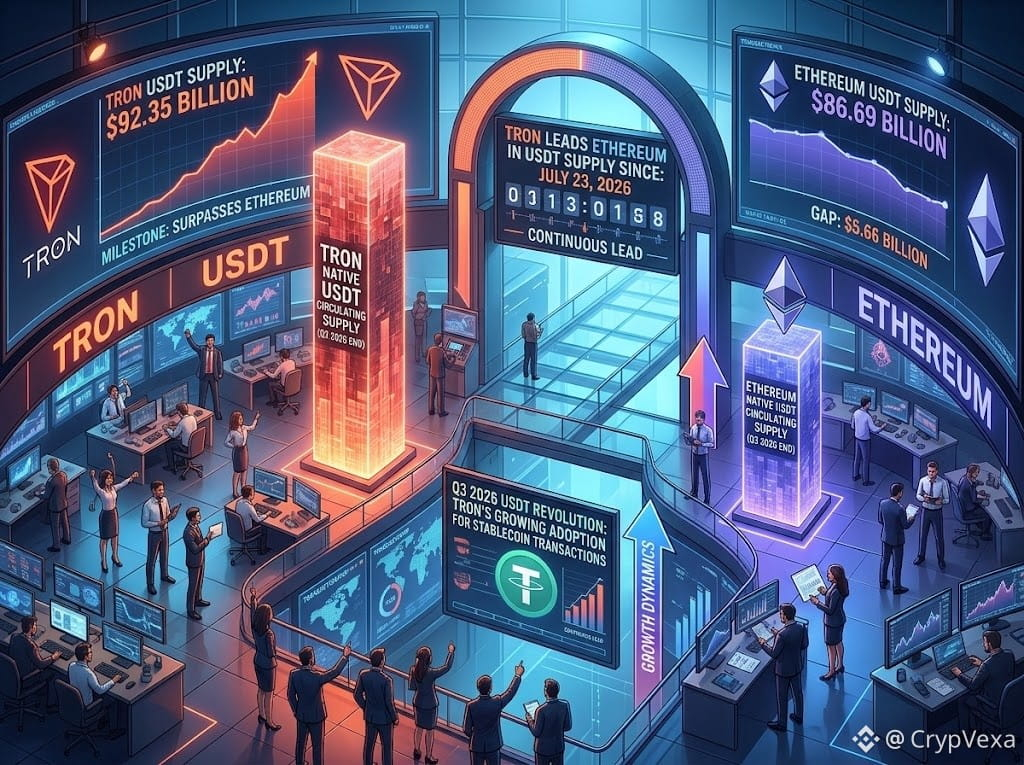
💵 Tron Overtakes Ethereum in USDT Supply
📊 At the end of Q3 2026, circulating USDT supply reached:
🔴 TRON: $92.35 billion
🔵 Ethereum: $86.69 billion
🔥 Tron has maintained its lead since July 23, highlighting its growing role in stablecoin activity.
💡 Why it matters: More USDT on a network can reflect stronger stablecoin adoption and demand for transfers and payments.
👀 Can Tron maintain its lead over Ethereum in stablecoin supply?
#TRON #Ethereum #USDT #Stablecoins
1
245
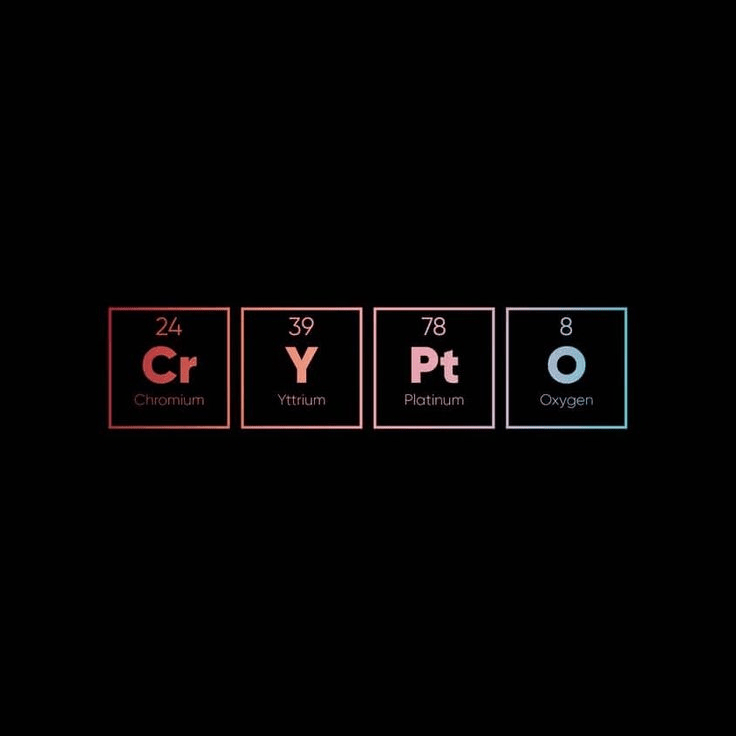
#BREAKING
Reports surrounding Justin Sun have raised questions about his liquidity and recent asset movements, despite his publicly reported net worth of up to $8.5 billion.
According to the circulating claims, approximately 580 million $TRX were pledged to mint 60 million $USDD on the TRON network. The $USDD was then reportedly exchanged for 60 million $USDT through the official redemption pool.
Combined with previous transactions, the reported amount reached approximately 140 million $USDT, which was allegedly allocated to Binance's 10% Wealth Management product.
These claims have not been independently verified. On-chain activity is worth monitoring, but it should not automatically be interpreted as evidence of financial distress.$BTC $ETH $BNB
#TRON #TRX #USDD #USDT #Binance

127

·
--
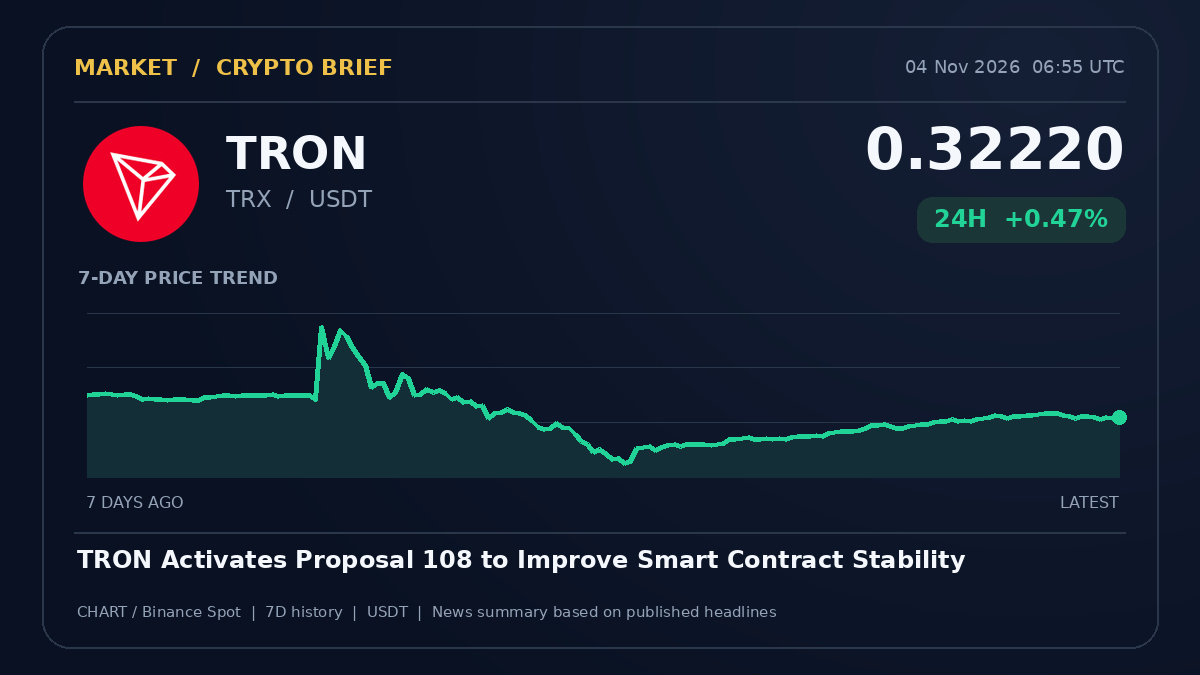
KuCoin reports that TRON has activated Proposal 108, aimed at enhancing smart contract stability across the network. Meanwhile, the $TRX live market snapshot shows the token trading at 0.3222 USDT, reflecting a mild 24-hour gain of +0.47%. Traders continue to monitor how these technical upgrades might influence network performance moving forward. #TRON
KuCoin reports that TRON has activated Proposal 108, aimed at enhancing smart contract stability across the network. Meanwhile, the $TRX live market snapshot shows the token trading at 0.3222 USDT, reflecting a mild 24-hour gain of +0.47%. Traders continue to monitor how these technical upgrades might influence network performance moving forward. #TRON
2
249

·
--
Some blockchain updates make headlines because they add a new feature. This TRON update matters for what happens behind the scenes. 🔧
Proposal 108 took effect on November 2, activating an optimization for how the TRON Virtual Machine handles smart contract storage. The change was prepared in GreatVoyage v4.8.2.4 (Empedocles).
In simple terms, smart contracts need to read and write stored data as they run. This update is intended to make that process more consistent and reliable in certain cases. 🧩
Node operators need a version that supports the change so their nodes can stay in sync. If you use TRON to transfer USDT or interact with apps, there’s no new setting to turn on.
I like updates like this. They may be invisible in your wallet, but dependable infrastructure matters to every app built on the network. ❤️
#Tron #TRONGlobalFriends #TGF
@JustinSun @TRONDAO
Some blockchain updates make headlines because they add a new feature. This TRON update matters for what happens behind the scenes. 🔧
Proposal 108 took effect on November 2, activating an optimization for how the TRON Virtual Machine handles smart contract storage. The change was prepared in GreatVoyage v4.8.2.4 (Empedocles).
In simple terms, smart contracts need to read and write stored data as they run. This update is intended to make that process more consistent and reliable in certain cases. 🧩
Node operators need a version that supports the change so their nodes can stay in sync. If you use TRON to transfer USDT or interact with apps, there’s no new setting to turn on.
I like updates like this. They may be invisible in your wallet, but dependable infrastructure matters to every app built on the network. ❤️
#Tron #TRONGlobalFriends #TGF
@Justin Sun孙宇晨 @TRON DAO

125

·
--
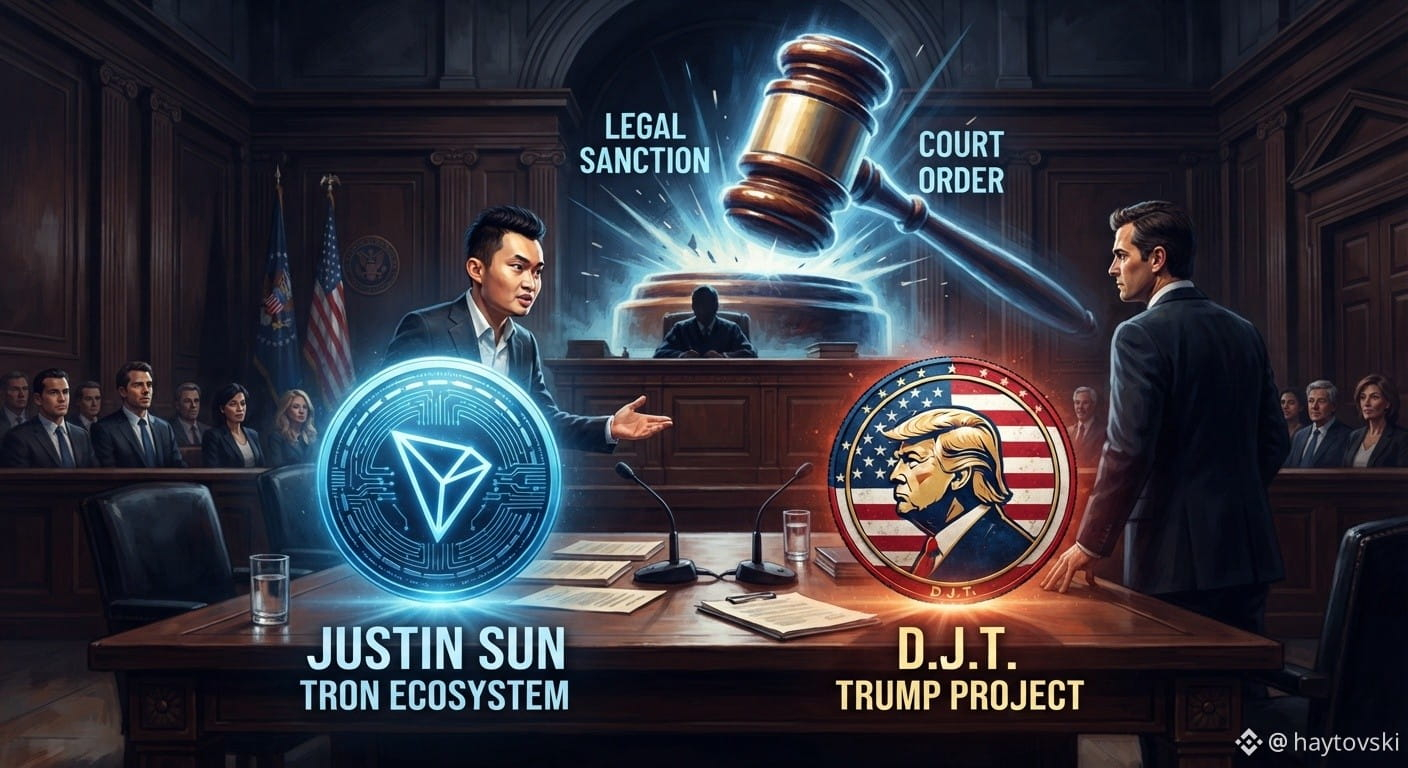
#tron #eth #btc #xrp #sol New Move from Justin Sun Regarding Trump-Linked Altcoin: He Seeks Court Sanctions
Justin Sun has requested that the court impose sanctions on World Liberty Financial—a venture linked to Donald Trump—alleging that the company delayed the disclosure of its ownership details amid an ongoing legal dispute over the freezing of his tokens.
According to a report by The Block, Tron founder Justin Sun announced on November 3 that he had filed a new motion against World Liberty Financial (WLFI). Sun claims that the company attempted to challenge the case being heard in federal court by revealing its ties to the United Arab Emirates (UAE) only months after the legal dispute had already begun.
Sun, who states that he invested $45 million in WLFI tokens, filed a lawsuit in April accusing the company of fraud and the unlawful freezing of his assets. This latest filing brings issues concerning the company’s ownership structure into the scope of the ongoing litigation.

1
188


·
--
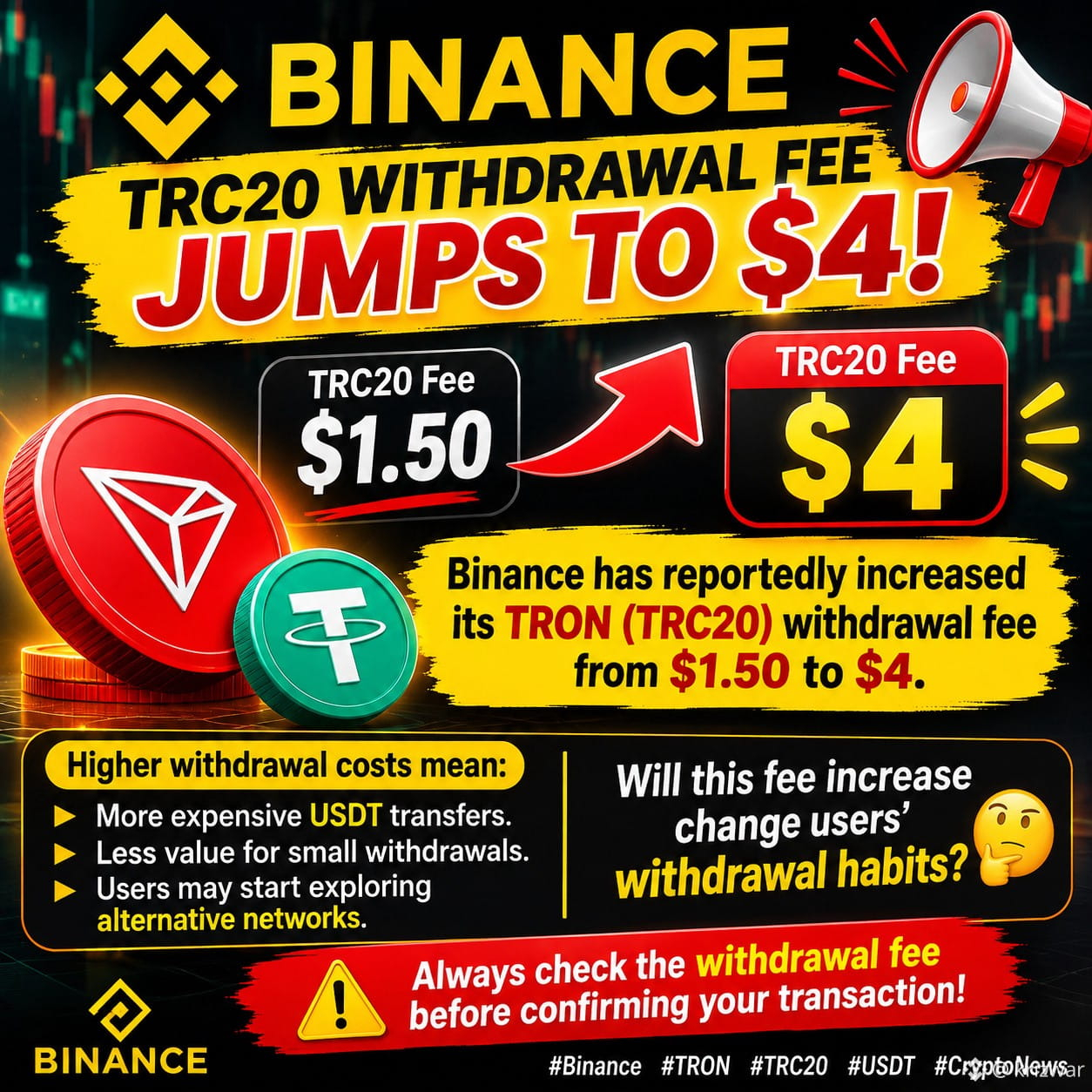
🚨 TRC20 WITHDRAWALS JUST GOT MORE EXPENSIVE!
Binance has reportedly increased its TRON (TRC20) withdrawal fee from $1.50 to $4.
That's a significant jump for users who regularly transfer USDT through the TRON network.
💸 Higher withdrawal costs mean:
🔹 More expensive USDT transfers.
🔹 Less value for small withdrawals.
🔹 Users may start exploring alternative networks.
TRC20 was popular for its relatively low transaction costs. Now the big question is: will this fee increase change users' withdrawal habits?
One thing is clear: always check the withdrawal fee before confirming your transaction! ⚠️
#Binance #TRON #TRC20 #USDT #CryptoNews
1
230

🔥 TRON ($TRX) IS SHOWING RELATIVE STRENGTH!
While several major cryptocurrencies are trading in negative territory, TRON is showing positive 24-hour performance.
📈 Market Highlights:
• 24H price change: +2.08%
• Trading volume: Around $365 million.
• Positive performance among major cryptocurrencies.
Can TRX maintain its strength?
What is your outlook for TRON this week?
$TRX $BTC $BNB
#Tron #CryptoAnalysis #altcoins #TronNetwork
🔥 TRON ($TRX ) IS SHOWING RELATIVE STRENGTH!
While several major cryptocurrencies are trading in negative territory, TRON is showing positive 24-hour performance.
📈 Market Highlights:
• 24H price change: +2.08%
• Trading volume: Around $365 million.
• Positive performance among major cryptocurrencies.
Can TRX maintain its strength?
What is your outlook for TRON this week?
$TRX $BTC $BNB
#Tron #CryptoAnalysis #altcoins #TronNetwork
12

Stablecoins on the Tron blockchain have added $256.5 million to their market value over the past seven days. According to Token Terminal data, this increase marks the highest weekly gain among the blockchains tracked.
#Tron $TRX
{spot}(TRXUSDT)
Stablecoins on the Tron blockchain have added $256.5 million to their market value over the past seven days. According to Token Terminal data, this increase marks the highest weekly gain among the blockchains tracked.
#Tron $TRX
#Tron $TRX
2
476

·
--
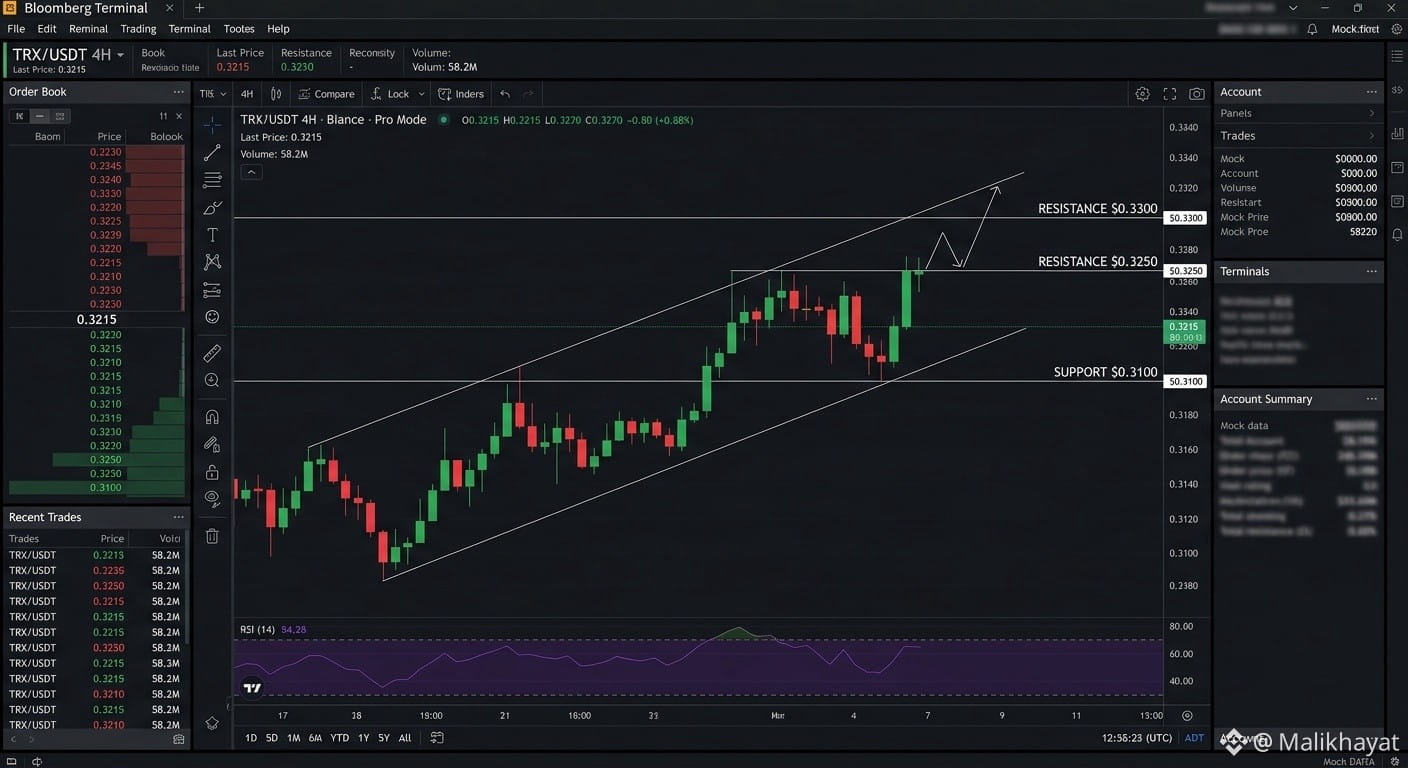
$TRX is demonstrating notable strength while much of the broader crypto market remains under pressure. Positive price momentum, spot accumulation, and trading above the 50-day and 200-day moving averages support its bullish structure. Positive MACD momentum adds to the constructive outlook. However, a deeper Bitcoin correction remains the primary risk.
📈 Bias: Bullish | 🎯 Entry: $0.3150–$0.3170 | 🛡 Support: $0.3100 | 🚧 Resistance: $0.3250 / $0.3300 | 🎯 Targets: $0.3220 / $0.3280 / $0.3350 | ❌ Invalidation: $0.3090
Strategy: Consider support-entry confirmation while the bullish structure holds.
#TRON #TRX #Altcoins #CryptoTrading #Binance
{future}(TRXUSDT)
$TRX is demonstrating notable strength while much of the broader crypto market remains under pressure. Positive price momentum, spot accumulation, and trading above the 50-day and 200-day moving averages support its bullish structure. Positive MACD momentum adds to the constructive outlook. However, a deeper Bitcoin correction remains the primary risk.
📈 Bias: Bullish | 🎯 Entry: $0.3150–$0.3170 | 🛡 Support: $0.3100 | 🚧 Resistance: $0.3250 / $0.3300 | 🎯 Targets: $0.3220 / $0.3280 / $0.3350 | ❌ Invalidation: $0.3090
Strategy: Consider support-entry confirmation while the bullish structure holds.
#TRON #TRX #Altcoins #CryptoTrading #Binance
📈 Bias: Bullish | 🎯 Entry: $0.3150–$0.3170 | 🛡 Support: $0.3100 | 🚧 Resistance: $0.3250 / $0.3300 | 🎯 Targets: $0.3220 / $0.3280 / $0.3350 | ❌ Invalidation: $0.3090
Strategy: Consider support-entry confirmation while the bullish structure holds.
#TRON #TRX #Altcoins #CryptoTrading #Binance
48

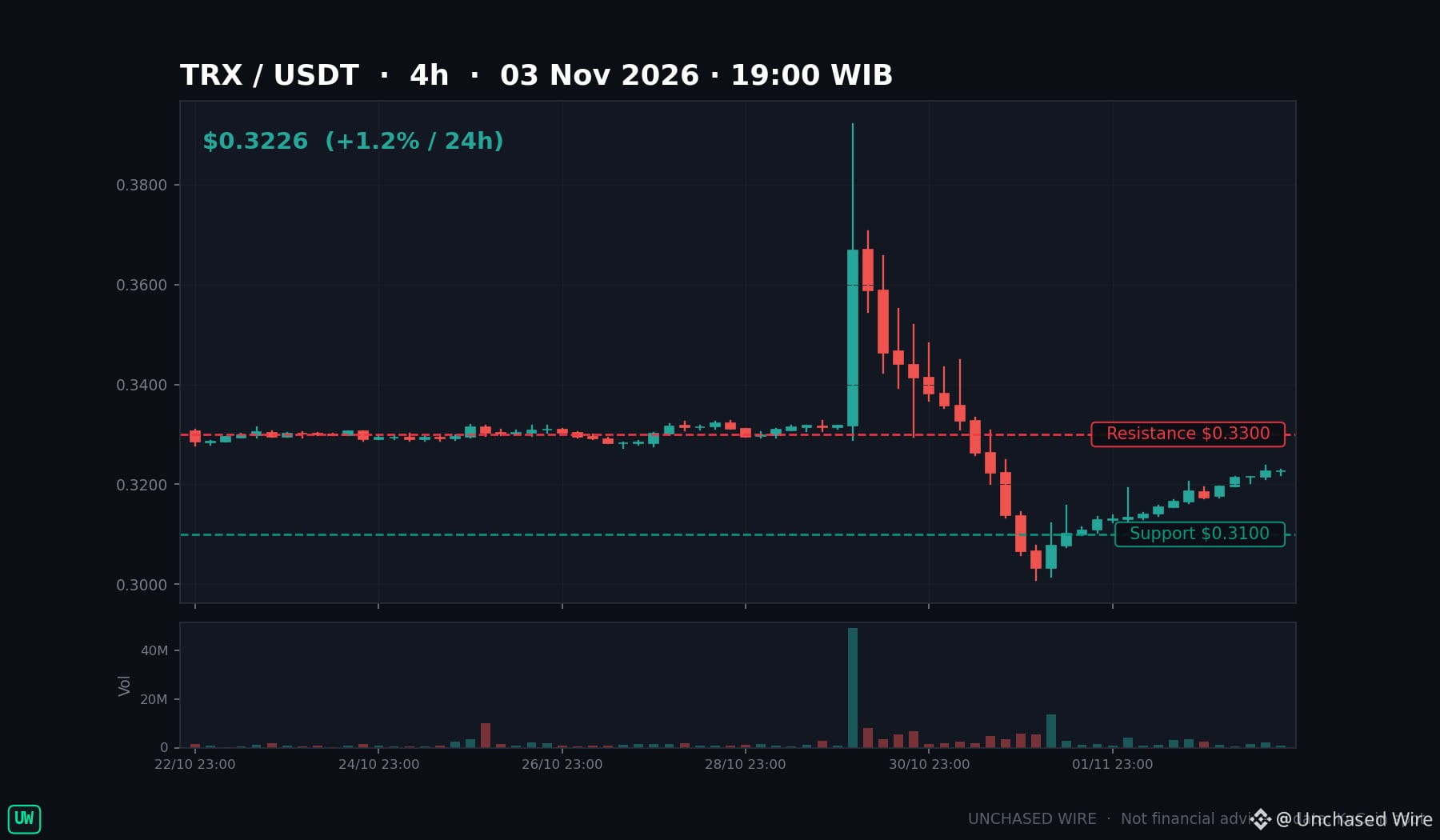
$BTC lost about 2% into the midterm vote. $TRX went the other way — up roughly 2%.
I'm not calling that strength yet — I'm testing it. After the October 29 spike toward $0.39 faded to about $0.30, $TRX climbed back in small, steady closes to near $0.3226. That staircase is real buying, but it stops under a ceiling.
What it proves: buyers defended $0.31 and kept showing up while the market bled. What it doesn't prove: a breakout. A Q3 report shared by TRON DAO put average stablecoin supply at a record $92.25 billion, and TRX withdrawals reopened after the late-October breach — real footing, but footing is not a trend.
My lines: support $0.3100, resistance $0.3300. A daily close under $0.31 breaks the staircase; above $0.33 turns green into strength. Until one prints, green is a test, not a verdict.
If $0.33 rejects again, do you wait — or does only a $0.31 break change your read?
Not financial advice, DYOR.
#TRON #Altcoins #Stablecoins #Midterms
9

·
--
Bullish
🚀 $TRX (TRON) Quick Setup 📊
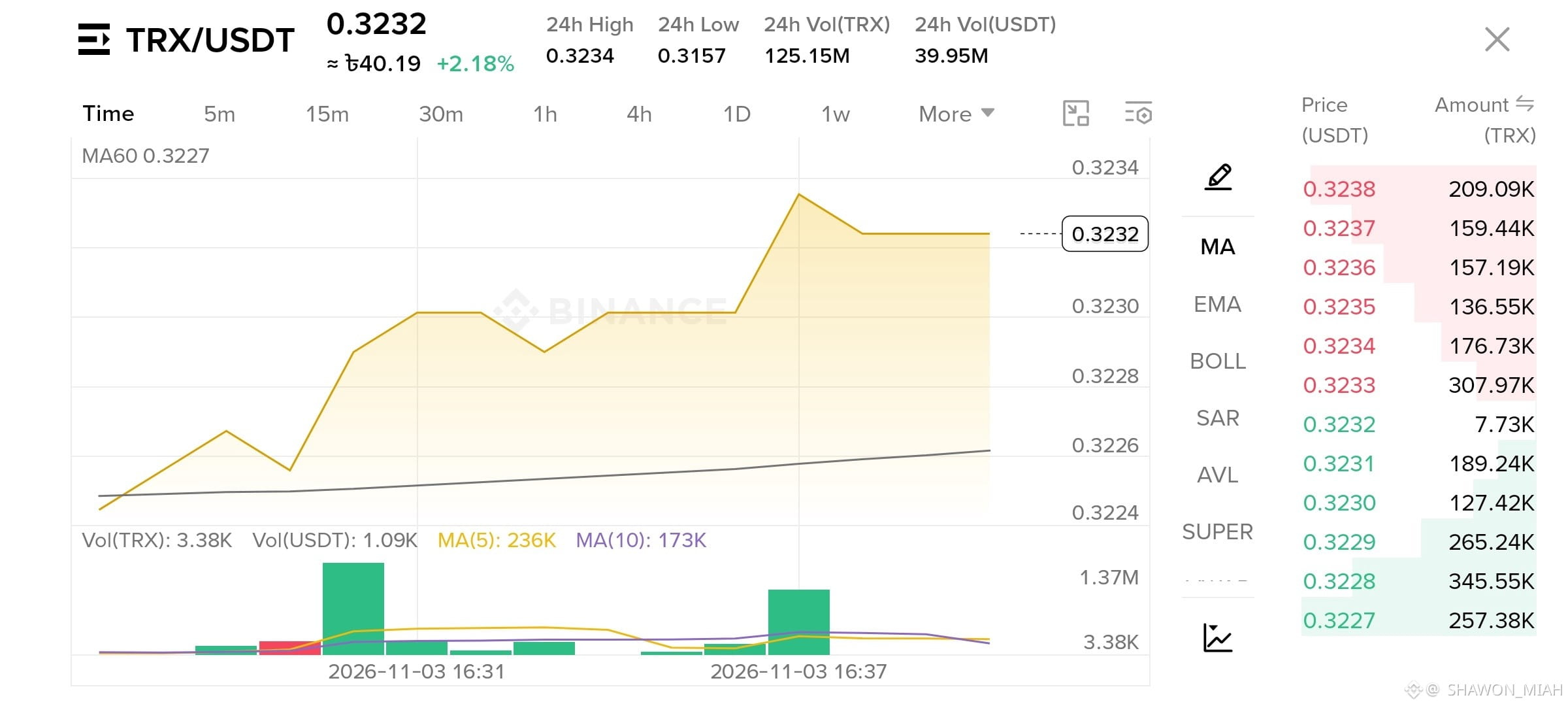
$TRX is currently trading around $0.3210 (+2.07%), showing a steady recovery bounce from the recent low near $0.3020 on the 4-hour chart.
Key Levels to Watch:
* 🎯 Resistance: $0.326 - $0.338 (Moving Average band & previous sell range)
* 🛡️ Support: $0.312 (Cost price / MA zone) & $0.302
The price is curling back up toward the middle bands. A break above $0.326 can open the path for a stronger push higher.
What’s your next move on $TRX? Accumulating or waiting? 👇
#TRX #TRON #CryptoTrading #BinanceSquare
🚀 $TRX (TRON) Quick Setup 📊
$TRX is currently trading around $0.3210 (+2.07%), showing a steady recovery bounce from the recent low near $0.3020 on the 4-hour chart.
Key Levels to Watch:
* 🎯 Resistance: $0.326 - $0.338 (Moving Average band & previous sell range)
* 🛡️ Support: $0.312 (Cost price / MA zone) & $0.302
The price is curling back up toward the middle bands. A break above $0.326 can open the path for a stronger push higher.
What’s your next move on $TRX ? Accumulating or waiting? 👇
#TRX #TRON #CryptoTrading #BinanceSquare
1
352

·
--
Bullish
📊 TRON ($TRX ) — SPOT MARKET UPDATE
💰 Price: $0.3208
📈 24H Change: +1.80%
📊 24H Volume: ~$554M
🕒 Data checked: Nov 3, 2026, ~10:22 UTC
Bias: Short-term mixed / Daily bearish
Technical levels: 🟢 Support: $0.3161 🔴 Resistance: $0.3214
1H RSI is near 70, while 4H RSI is around 53. Short-term momentum is strong, but chasing here carries risk.
SPOT DECISION: WAIT
✅ BUY only after a confirmed 4H close above $0.3214 with strong volume and a successful retest.
⚠️ A break below $0.3161 weakens the setup.
No forced entry. Risk only 0.5–1% of capital per setup.
NFA | DYOR
#TRX #TRON #CryptoAnalysis #SpotTrading
$TRX
{spot}(TRXUSDT)
📊 TRON ($TRX ) — SPOT MARKET UPDATE
💰 Price: $0.3208
📈 24H Change: +1.80%
📊 24H Volume: ~$554M
🕒 Data checked: Nov 3, 2026, ~10:22 UTC
Bias: Short-term mixed / Daily bearish
Technical levels: 🟢 Support: $0.3161 🔴 Resistance: $0.3214
1H RSI is near 70, while 4H RSI is around 53. Short-term momentum is strong, but chasing here carries risk.
SPOT DECISION: WAIT
✅ BUY only after a confirmed 4H close above $0.3214 with strong volume and a successful retest.
⚠️ A break below $0.3161 weakens the setup.
No forced entry. Risk only 0.5–1% of capital per setup.
NFA | DYOR
#TRX #TRON #CryptoAnalysis #SpotTrading
$TRX
126

·
--
$TRX
🚀💎 TRON ($TRX) — A COIN WORTH WATCHING!
📈 Sometimes, the best opportunities come to those who research early and stay patient.
🔥 TRX has an established place in the crypto market, with real-world blockchain utility and an active ecosystem.
💡 Those who believe in TRX's long-term potential may consider exploring it based on their own research and investment strategy.
🎯 Think Smart. Stay Patient. Look Ahead!
⚠️ Every investment carries risk. Crypto prices can go down as well as up. Always DYOR and make decisions at your own responsibility. No profits are guaranteed.
💬 Do you think TRX has a bright future? 🚀
#TRX #TRON #Crypto #BinanceSquare
{spot}(TRXUSDT)
$TRX
🚀💎 TRON ($TRX ) — A COIN WORTH WATCHING!
📈 Sometimes, the best opportunities come to those who research early and stay patient.
🔥 TRX has an established place in the crypto market, with real-world blockchain utility and an active ecosystem.
💡 Those who believe in TRX's long-term potential may consider exploring it based on their own research and investment strategy.
🎯 Think Smart. Stay Patient. Look Ahead!
⚠️ Every investment carries risk. Crypto prices can go down as well as up. Always DYOR and make decisions at your own responsibility. No profits are guaranteed.
💬 Do you think TRX has a bright future? 🚀
#TRX #TRON #Crypto #BinanceSquare
1
149

#JustinSun is currently struggling on the brink of bankruptcy, even though he publicly claims to have a net worth of up to $8.5 billion, but even scraping together $140 million requires piecing it together from all directions.
Pledge 580 million $TRX , mint 60 million $usdd coins on #Tron , then swap them for 60 million $USDT in the official redemption pool, plus the previous swaps, totaling 140 million USDT to invest in #Binance 10% wealth management product.
Pledge 580 million $TRX , mint 60 million $usdd coins on #Tron , then swap them for 60 million $USDT in the official redemption pool, plus the previous swaps, totaling 140 million USDT to invest in #Binance 10% wealth management product.

User-e0f0a99c:
Soo butifull
34
5
117
194.9k

·
--
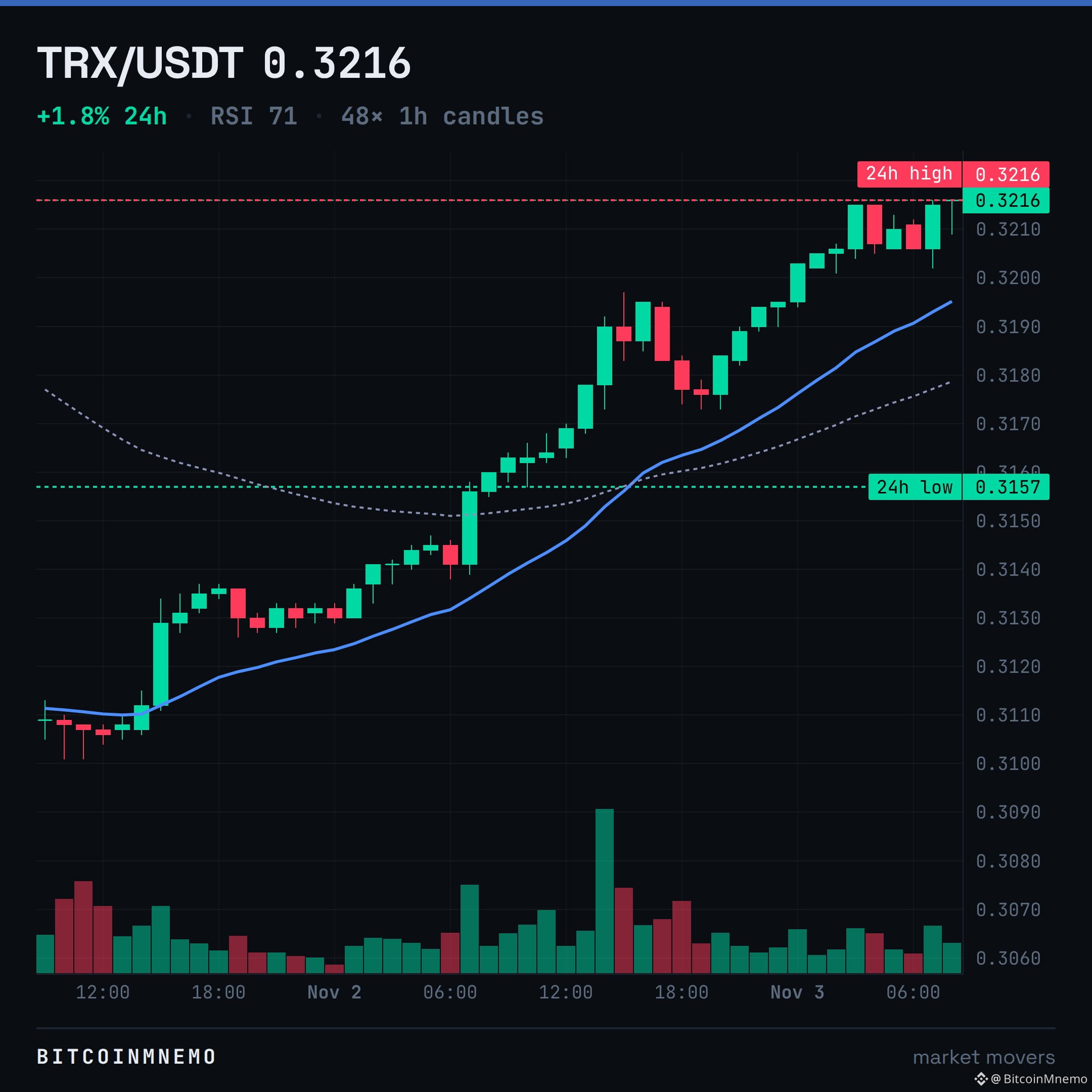
TRX testing its 24h high at 0.322. The hourly RSI just ticked to 71. Hot.
Volume is thin at $39M for this push. Price is floating above the hourly EMAs, but all that matters is the line it's on right now.
Fail to break 0.322 and this entire +1.8% was just a trip to the top of the range.
$TRX #TRON
Would you take this? What stops you out? 👇
Volume is thin at $39M for this push. Price is floating above the hourly EMAs, but all that matters is the line it's on right now.
Fail to break 0.322 and this entire +1.8% was just a trip to the top of the range.
$TRX #TRON
Would you take this? What stops you out? 👇
3

·
--
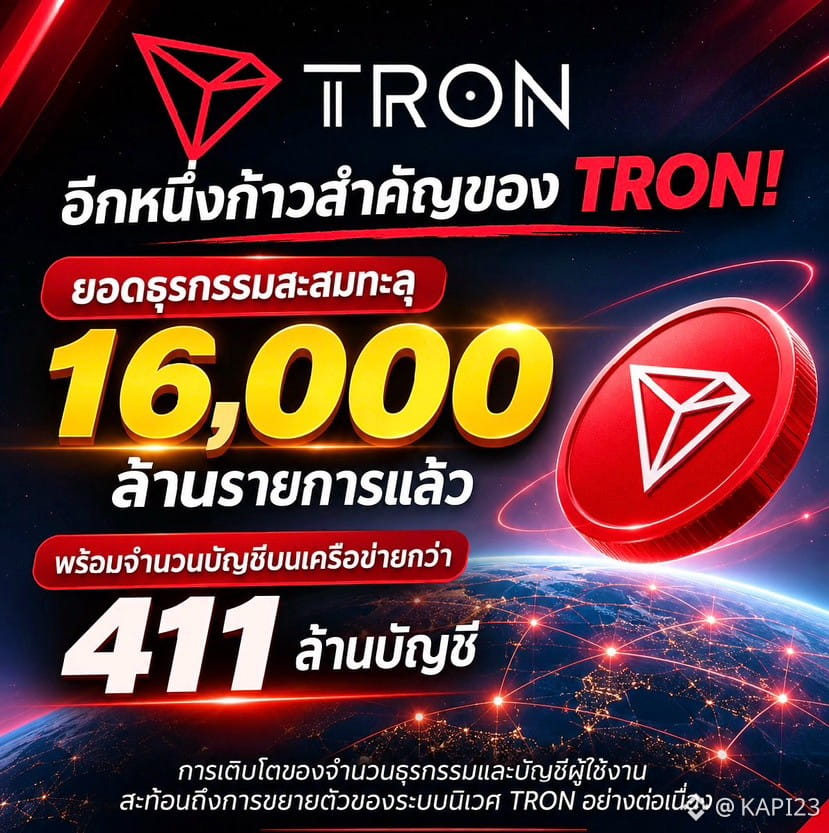
TRON Surpasses 16 Billion Transactions: A Milestone of Ongoing Ecosystem Growth
Did you know that the TRON network continues to grow at a remarkable pace? TRON recently surpassed 16 billion cumulative transactions, with over 411 million accounts on the network. This powerful milestone clearly reflects the continuous expansion of its ecosystem and widespread adoption.
One of TRON’s standout strengths is its robust support for digital asset transactions—most notably USDT (Tether). USDT plays a critical role in global remittances, payments, and seamless value transfer between users worldwide.
This steady surge in transaction volume and active user accounts is a metric worth keeping a close eye on. Beyond simply reflecting the network's massive scale, it highlights how blockchain technology is increasingly becoming an integral part of real-world digital asset utility.
Of course, network growth doesn’t always guarantee an immediate upward price action for #TRX. However, when it comes to long-term ecosystem development, this is yet another major milestone for TRON that is definitely worth following closely.
#TRON @TRON DAO
93

·
--
Bullish
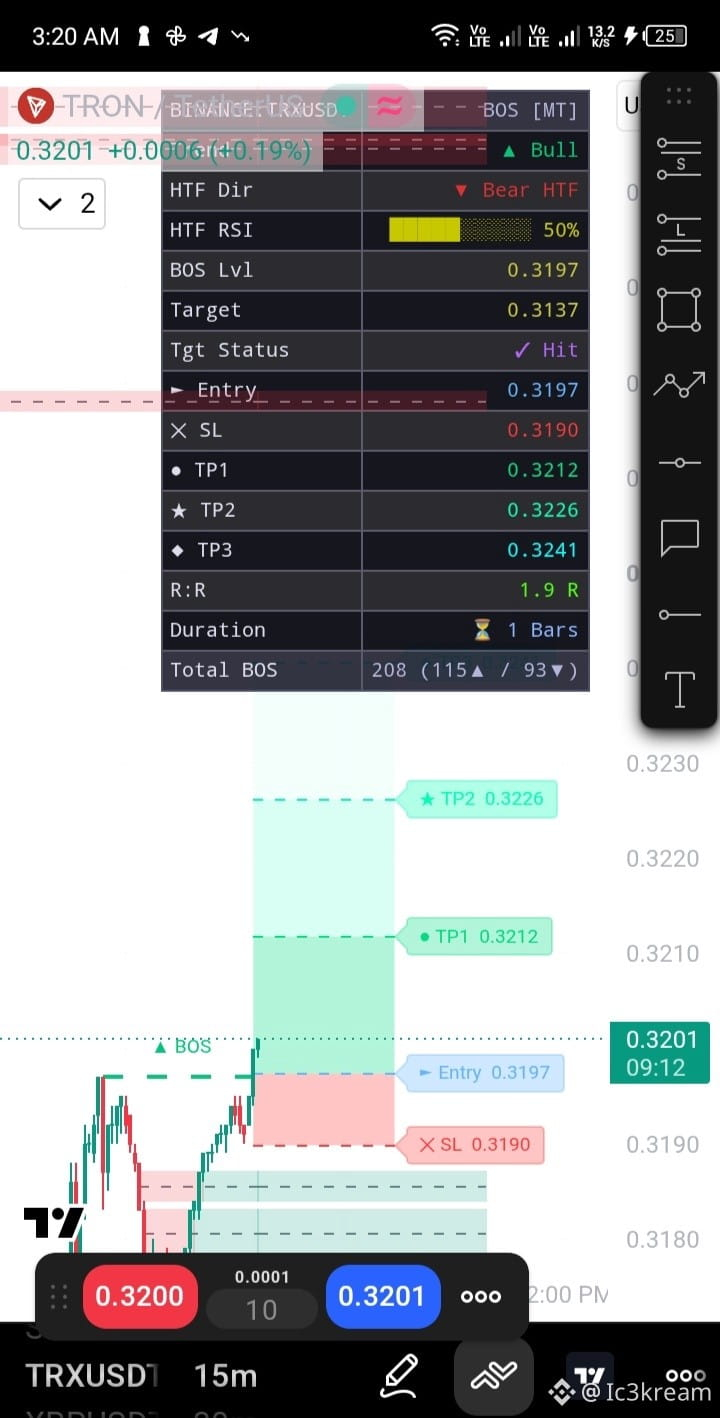
here is another from #Tron break of structure has been confirmed now I'm waiting for price to drop to entry then we come up with BUY positions
$TRX
{future}(TRXUSDT)
there might be a draw down to the inverse FVG below but the price will eventually buy so watch out for that too
here is another from #Tron break of structure has been confirmed now I'm waiting for price to drop to entry then we come up with BUY positions
$TRX
there might be a draw down to the inverse FVG below but the price will eventually buy so watch out for that too
$TRX
there might be a draw down to the inverse FVG below but the price will eventually buy so watch out for that too
2
641
Log in to explore more content
Join global crypto users on Binance Square
⚡️ Get latest and useful information about crypto.
💬 Trusted by the world’s largest crypto exchange.
👍 Discover real insights from verified creators.
Email / Phone number
Trending Topics
1
#BinanceReopensWithdrawalsForMoreAssets
691,738 views
3,485 Discussing
2
#BTCRebounds80K
187,657 views
1,714 Discussing
3
#Binance98PercentReplenished
98,645 views
1,153 Discussing
4
#KazakhstanReportedlyInvests$100MInCryptoFunds
0 views
0 Discussing
5
#StrategySTRCResumesIssuanceAfterOver170Days
1,134 views
65 Discussing
6
#ADPUSPrivateEmployersAdd86000JobsInOctober
14,589 views
263 Discussing
7
#SouthKoreaSeeksCryptoTaxDelayUntil2029
5,154 views
72 Discussing
8
#USMidterms-WhatAreMarketsExpecting?
505,486 views
2,566 Discussing
9
#US10YearTreasuryYieldFallsTo4.845%
5,738 views
75 Discussing
10
#ZcashExpectsNU7ToMake$16MSproutZECInaccessible
677 views
14 Discussing