
#nvda
nvda
1.6M views
8,133 Discussing
Hot
Latest

·
--
Bullish
Verified
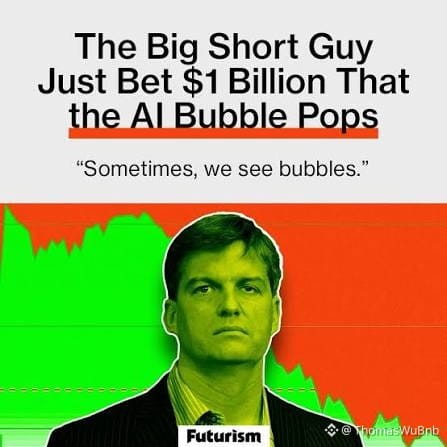
The Big Short is back — and taking some profits.
Michael Burry, the investor who famously called the 2008 housing crash, just placed a ~$1.1 billion notional bet against the AI boom with put options on Nvidia and Palantir. He’s been warning about an AI bubble for over a year and previously shorted NVDA. After the recent sharp sell-off, he has now closed 50% of his NVDA puts to lock in gains, while keeping the rest of his bearish exposure.
“Sometimes, we see bubbles.”
$NVDA #MichaelBurry #NVDA #JensenHuang
1
1
13
19.1k

·
--
Bullish
Verified
I’ve been watching $NVDA , and honestly, today’s move changes the whole picture.
After that brutal drop down to $125, Jensen Huang is officially back as CEO—and the market just exploded +31% in a single session. I’m not chasing a vertical green candle right here, but a healthy pullback to fill part of the gap wouldn’t surprise me.
I’m watching the $156–$158 area for a clean entry.
Entry: $156–$158
TP: $166.5 / $173.5 / $181
SL: $149.5
If it loses that intraday support, I’m out. No point chasing hype. 😂
#NVDA #NVIDIA #Stocks
{future}(NVDAUSDT)
I’ve been watching $NVDA , and honestly, today’s move changes the whole picture.
After that brutal drop down to $125, Jensen Huang is officially back as CEO—and the market just exploded +31% in a single session. I’m not chasing a vertical green candle right here, but a healthy pullback to fill part of the gap wouldn’t surprise me.
I’m watching the $156–$158 area for a clean entry.
Entry: $156–$158
TP: $166.5 / $173.5 / $181
SL: $149.5
If it loses that intraday support, I’m out. No point chasing hype. 😂
#NVDA #NVIDIA #Stocks
355

·
--
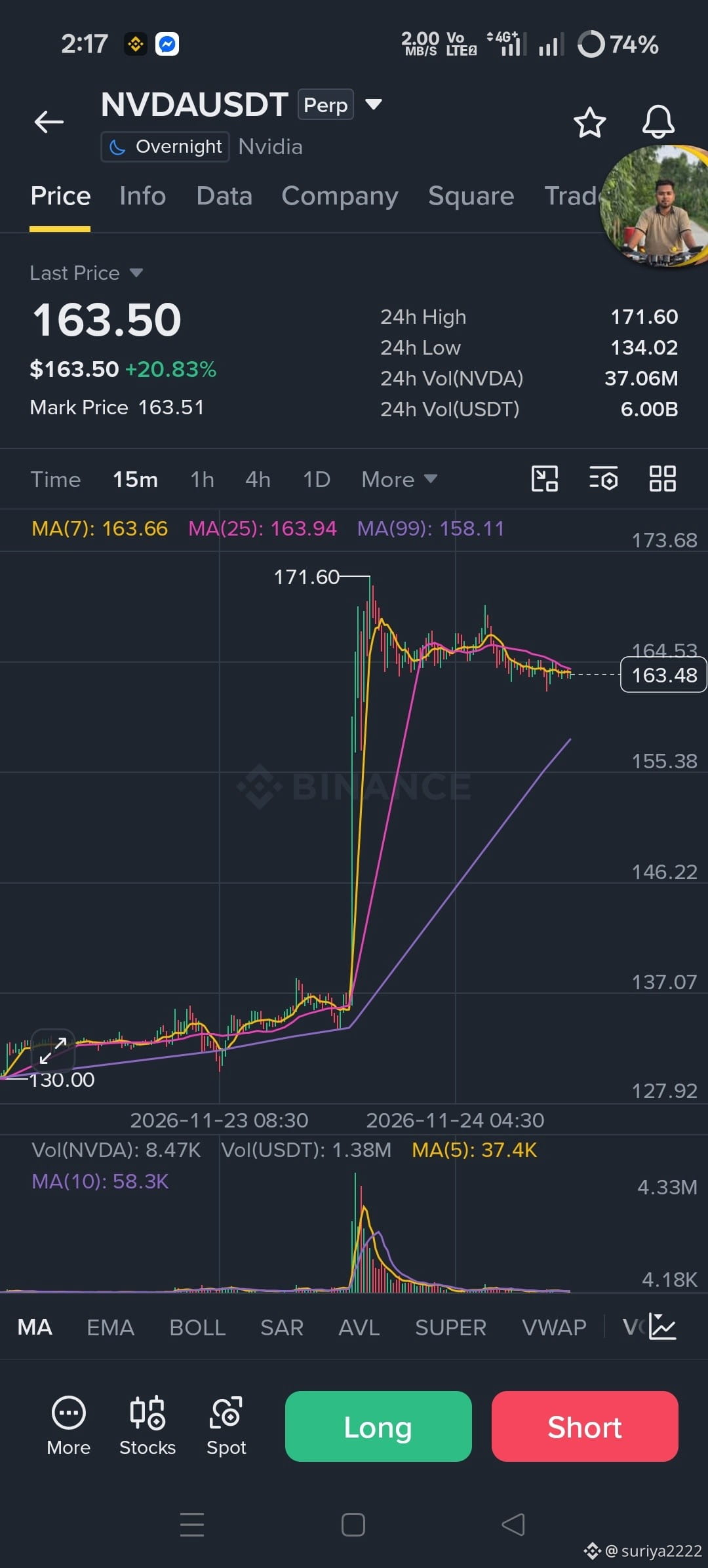
NVDA Perps Rebound Above $164 as Binance’s 200K USDC Carnival Enters Final Week 🚀
NVDAUSDT perpetuals are trading around $164–$167 (24h high near $171.60), staging a sharp bounce after testing lower support earlier in the week.
Key details on Binance’s ANT & NVDA Perps Carnival (running through Nov 30, 2026, 23:59 UTC):
Prize Pool: Up to 200,000 USDC in token vouchers across a 25,000 USDC new-trader onboarding pool and up to a 175,000 USDC volume leaderboard pool.
Multiplier Boost: 3.5x leaderboard volume multiplier on NVDAUSDT and ANTUSDT (3x on select other TradFi perps).
How to Qualify: Register via Join Now, complete at least $1,000 equivalent volume for new TradFi perps users (first 10,000 qualifiers eligible for 2–7 USDC vouchers) or $500+ non-API volume for the leaderboard.
Volatility is elevated—watch liquidity around $170+ and manage leverage carefully. Are you trading NVDAUSDT or ANTUSDT for the leaderboard?
#Binance #BinanceFutures #NVDA #ANT #CryptoTrading
113Tymanoff:
Follow
69
1
4
223

·
--
Bullish
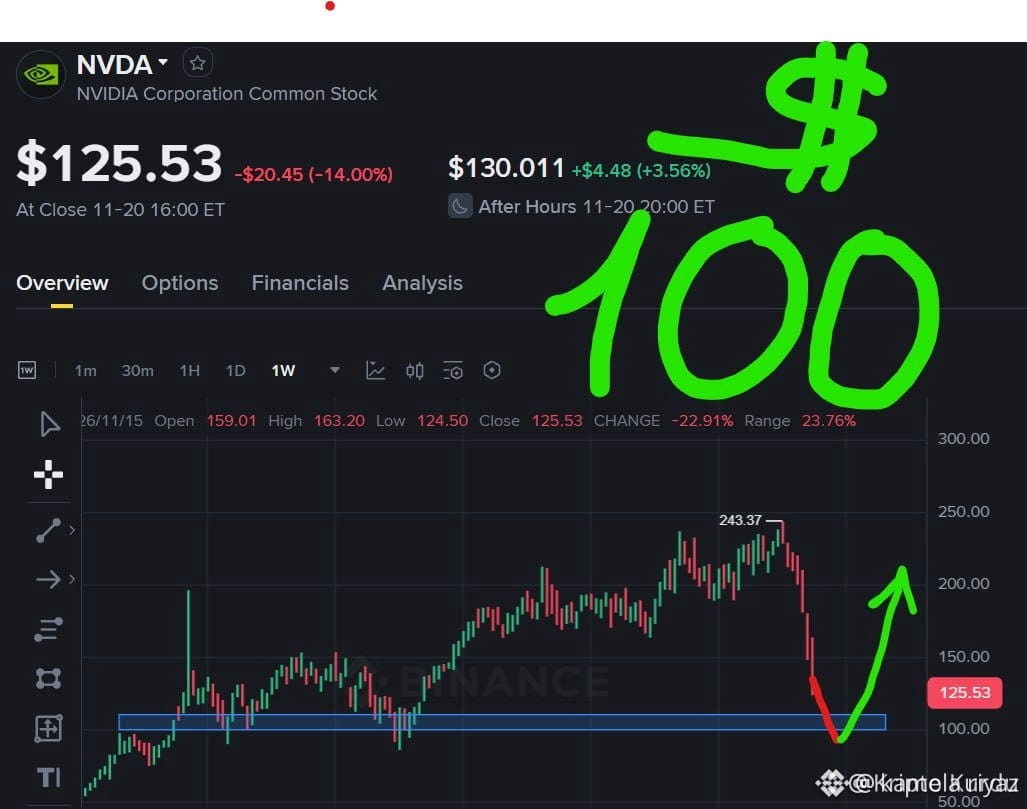
📉 $NVDA TO $100 FIRST… THEN THE REAL BOUNCE? 🚀
{future}(NVDAUSDT)
Nvidia is facing serious selling pressure, and I'm not convinced the after-hours bounce is enough to confirm a reversal.
📊 Market snapshot from the shared analysis:
Friday close: $125.53
Daily drop: 14%
Weekly drop: 23%
Down approximately 48% from its $243 peak
After-hours rebound: 3.5% to $130
🎯 The key zone I'm watching: $100–$110
This was Nvidia's previous base before its last major rally. My scenario is one more move down toward $100, followed by a potential recovery toward $200.
⚠️ CEO-related developments and SEC headlines are adding uncertainty and shaking market confidence.
My invalidation: If $NVDA closes below $100 on the weekly chart, this bullish recovery scenario is wrong.
No blind buying. No chasing the first green candle. Let the chart confirm the move.
Do you see $100 as a potential buying zone, or could $NVDA fall even lower? 👇
#NVDA #Nvidia #StockMarket #Trading #DYOR
📉 $NVDA TO $100 FIRST… THEN THE REAL BOUNCE? 🚀
Nvidia is facing serious selling pressure, and I'm not convinced the after-hours bounce is enough to confirm a reversal.
📊 Market snapshot from the shared analysis:
Friday close: $125.53
Daily drop: 14%
Weekly drop: 23%
Down approximately 48% from its $243 peak
After-hours rebound: 3.5% to $130
🎯 The key zone I'm watching: $100–$110
This was Nvidia's previous base before its last major rally. My scenario is one more move down toward $100, followed by a potential recovery toward $200.
⚠️ CEO-related developments and SEC headlines are adding uncertainty and shaking market confidence.
My invalidation: If $NVDA closes below $100 on the weekly chart, this bullish recovery scenario is wrong.
No blind buying. No chasing the first green candle. Let the chart confirm the move.
Do you see $100 as a potential buying zone, or could $NVDA fall even lower? 👇
#NVDA #Nvidia #StockMarket #Trading #DYOR
1
179


·
--
Verified
Article
NVIDIA Just Doubled Its Revenue. So Why Is NVDA Still Selling Off?NVIDIA reported $115.8 billion in quarterly revenue.
That's 103% growth from a year earlier.
Normally, numbers like that would be enough to get investors excited. But NVDA has been moving in the opposite direction.
And I think the reason deserves a closer look.
On November 17, NVIDIA released its Q3 fiscal 2027 results. Data Center revenue reached $107.6 billion, up 110% year over year.
That means nearly 93% of the company's quarterly revenue came from its Data Center business.
AI infrastructure is now driving almost the entire business.
NVIDIA also expects approximately $130 billion in revenue for the following quarter, although that forecast includes an additional week.
The demand for AI computing certainly hasn't disappeared.
So what's worrying investors?
For one thing, expectations have become enormous.
When a company grows this quickly, the market starts pricing in years of continued expansion.
A strong quarter can still disappoint investors if they begin questioning how long the growth will last.
And NVIDIA faces a problem that comes with being the biggest beneficiary of AI infrastructure spending.
Its customers are investing extraordinary amounts of money in data centers.
Microsoft, Google, Meta, and other major technology companies need computing capacity to train and operate increasingly demanding AI models.
But those investments eventually need to produce financial returns.
If cloud providers decide they've built enough capacity, delay new projects, or struggle to generate revenue from AI services, NVIDIA could feel the impact through slower equipment orders.
That wouldn't necessarily mean AI adoption had failed.
It could simply mean customers need time to make better use of what they've already purchased.
There's another detail in NVIDIA's latest results.
Its GAAP gross margin was 74.8%.
That's an unusually attractive margin for a hardware business. It reflects NVIDIA's strong position in AI computing, where its GPUs, networking equipment, and CUDA software work together.
But margins this high also attract competition.
AMD continues developing AI accelerators. Large cloud companies are investing in custom chips designed for their own workloads.
Those alternatives don't need to replace NVIDIA everywhere to affect its economics.
They only need to become competitive enough in certain applications to put pressure on pricing or future market share.
Meanwhile, NVIDIA's Vera Rubin platform has begun shipping, giving customers another generation of AI computing infrastructure.
The technology cycle is moving quickly.
Whether customers can keep increasing their spending at the same pace is much less certain.
Reuters reported on November 20 that NVIDIA had fallen behind Alphabet in market capitalization, with its valuation around $3.4 trillion during the session.
The selloff came despite another quarter of exceptional revenue growth.
For me, that's the interesting part of NVDA right now.
The business is still expanding rapidly. Investors are becoming more selective about how much they're willing to pay for that growth.
I'd be watching the next round of hyperscaler spending plans, NVIDIA's gross margins, and whether AI infrastructure demand continues growing beyond the current wave of data center construction.
A company can deliver outstanding results while its stock struggles.
NVIDIA is a good reminder of how much expectations matter in the market.
#NVIDIA #NVDA $NVDA
{future}(NVDAUSDT)
NVIDIA Just Doubled Its Revenue. So Why Is NVDA Still Selling Off?
NVIDIA reported $115.8 billion in quarterly revenue.
That's 103% growth from a year earlier.
Normally, numbers like that would be enough to get investors excited. But NVDA has been moving in the opposite direction.
And I think the reason deserves a closer look.
On November 17, NVIDIA released its Q3 fiscal 2027 results. Data Center revenue reached $107.6 billion, up 110% year over year.
That means nearly 93% of the company's quarterly revenue came from its Data Center business.
AI infrastructure is now driving almost the entire business.
NVIDIA also expects approximately $130 billion in revenue for the following quarter, although that forecast includes an additional week.
The demand for AI computing certainly hasn't disappeared.
So what's worrying investors?
For one thing, expectations have become enormous.
When a company grows this quickly, the market starts pricing in years of continued expansion.
A strong quarter can still disappoint investors if they begin questioning how long the growth will last.
And NVIDIA faces a problem that comes with being the biggest beneficiary of AI infrastructure spending.
Its customers are investing extraordinary amounts of money in data centers.
Microsoft, Google, Meta, and other major technology companies need computing capacity to train and operate increasingly demanding AI models.
But those investments eventually need to produce financial returns.
If cloud providers decide they've built enough capacity, delay new projects, or struggle to generate revenue from AI services, NVIDIA could feel the impact through slower equipment orders.
That wouldn't necessarily mean AI adoption had failed.
It could simply mean customers need time to make better use of what they've already purchased.
There's another detail in NVIDIA's latest results.
Its GAAP gross margin was 74.8%.
That's an unusually attractive margin for a hardware business. It reflects NVIDIA's strong position in AI computing, where its GPUs, networking equipment, and CUDA software work together.
But margins this high also attract competition.
AMD continues developing AI accelerators. Large cloud companies are investing in custom chips designed for their own workloads.
Those alternatives don't need to replace NVIDIA everywhere to affect its economics.
They only need to become competitive enough in certain applications to put pressure on pricing or future market share.
Meanwhile, NVIDIA's Vera Rubin platform has begun shipping, giving customers another generation of AI computing infrastructure.
The technology cycle is moving quickly.
Whether customers can keep increasing their spending at the same pace is much less certain.
Reuters reported on November 20 that NVIDIA had fallen behind Alphabet in market capitalization, with its valuation around $3.4 trillion during the session.
The selloff came despite another quarter of exceptional revenue growth.
For me, that's the interesting part of NVDA right now.
The business is still expanding rapidly. Investors are becoming more selective about how much they're willing to pay for that growth.
I'd be watching the next round of hyperscaler spending plans, NVIDIA's gross margins, and whether AI infrastructure demand continues growing beyond the current wave of data center construction.
A company can deliver outstanding results while its stock struggles.
NVIDIA is a good reminder of how much expectations matter in the market.
#NVIDIA #NVDA $NVDA
1
548

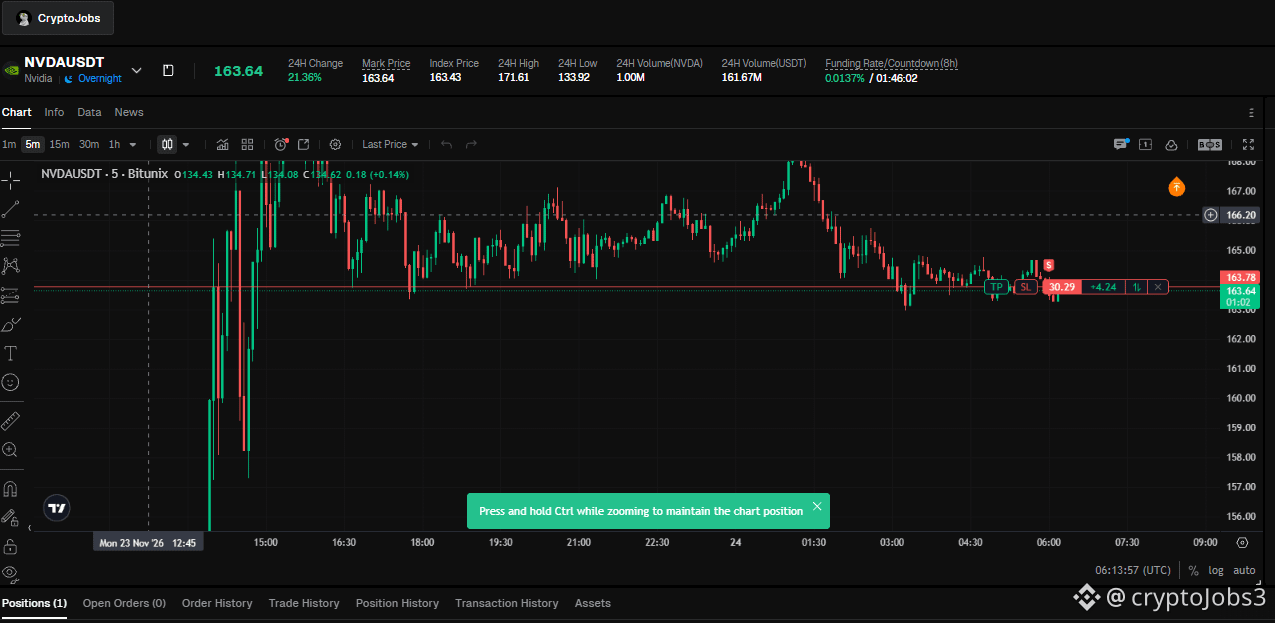

🚨 $NVDA SHOCKS THE STREET WITH A MASTERCLASS IN EXECUTIVE LIQUIDITY SWEEPS! 💥
Institutional order flow often reacts violently to structural governance pivots, mirroring the dramatic executive re-entry we just witnessed on $NVDA . Smart money quickly reassesses systemic risk versus structural opportunity when leadership suddenly reclaims command. 📊 ⚡
This unexpected volatility flush caught reactionary positioning entirely off guard, creating a textbook sentiment trap. Navigating high-beta inflection points requires reading underlying structural momentum rather than headline noise. 💡
💬 Are you treating this leadership comeback as a structural continuation or a psychological trap? 👇
⚠️ Not financial advice. Always manage your risk. 🛡️
🏷️ #NVDA #MarketStructure #Volatility #TradingPsychology
🔥 💎
10

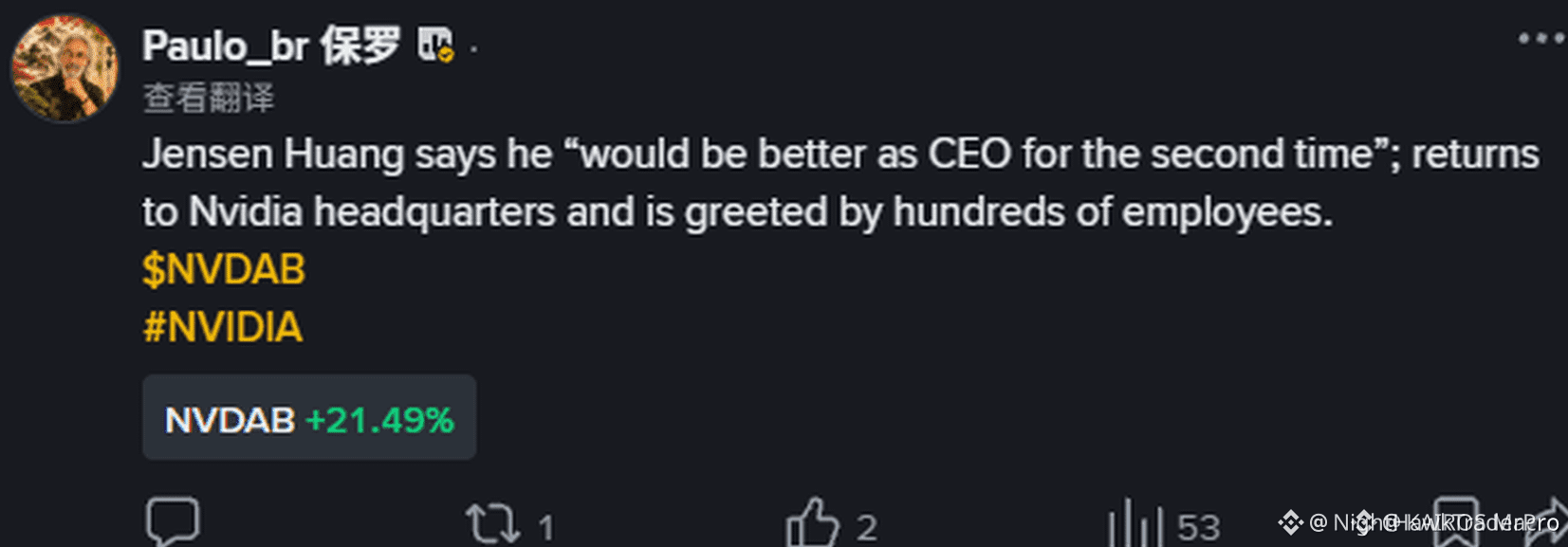
🚨 $NVDA EPIC LEADERSHIP PLOT TWIST SENDS SHOCKWAVES THROUGH THE ENTIRE MARKET! 💥
The boardroom drama playing out around $NVDA just delivered a masterclass in market volatility. 📊 Just when sellers thought the trend was dead, a sudden executive resurrection flipped the script and sent weak hands scrambling. ⚡
This kind of sudden narrative shift acts like a massive liquidity sweep, shaking out impatient players before the real direction reveals itself. 🌊 Are you treating this chaotic pivot as a high-probability breakout or just another psychological bear trap? 🤔
⚠️ Not financial advice. Always manage your risk. 🛡️
🏷️ #NVDA #MarketDrama #Momentum #Volatility
🔥 💎

·
--
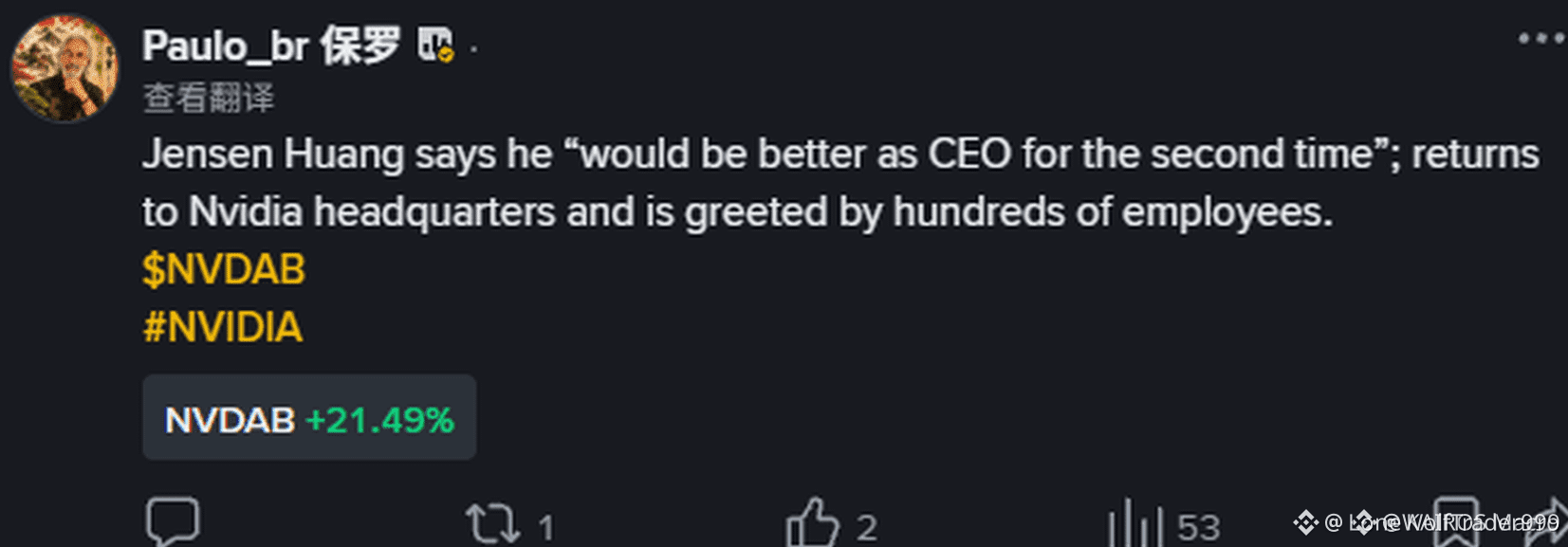
🚨 HOW THE ULTIMATE BEAR TRAP TRIGGERED A MASSIVE 31% SHORT SQUEEZE ON $NVDA 💥
When institutional heavyweights miscalculate momentum, the market extracts a heavy toll. Shedding put positions right before a 31% vertical expansion created a textbook liquidity vacuum that incinerated trapped shorts in seconds. 📊
Smart money adapts rather than stubbornly fighting runaway trend velocity. Chasing green candles blindly here is a fast track to getting caught in a two-sided volatility trap. ⚡
Are you waiting for structural exhaustion to fade the hype, or positioning for the next liquidity sweep? 👇
⚠️ Not financial advice. Always manage your risk. 🛡️
🏷️ #NVDA #ShortSqueeze #Crypto #TradingTips
🔥 💎
8

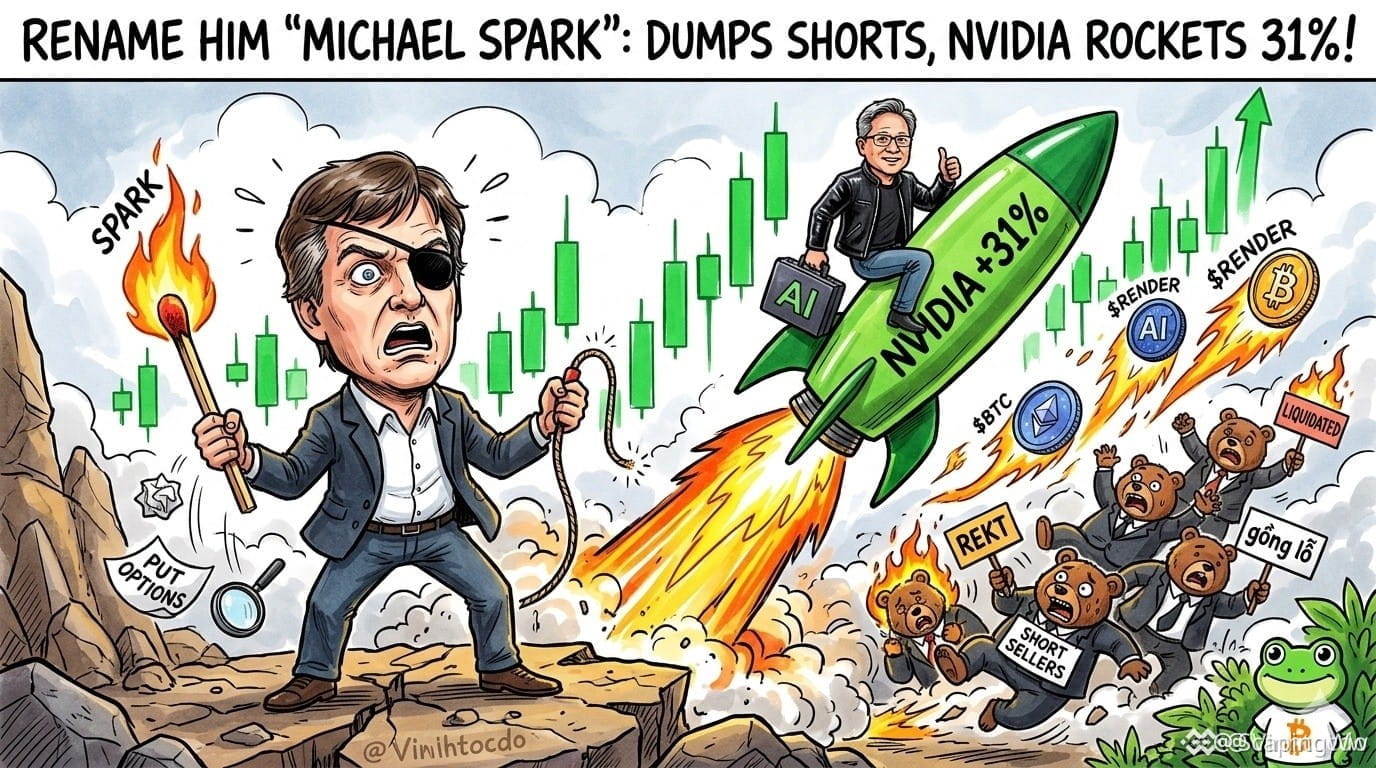
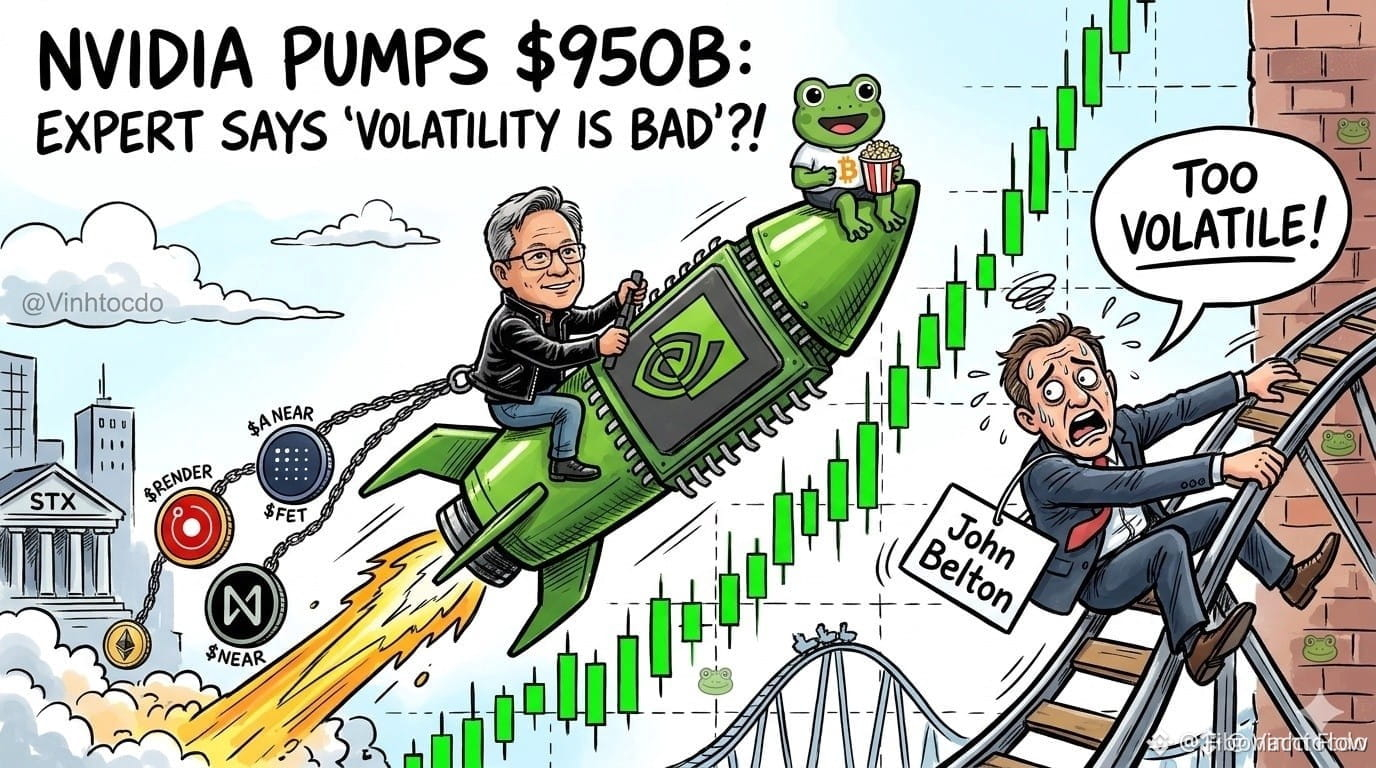
🚨 $NVDA ADDING 950 BILLION IN A DAY IS A LIQUIDITY SHOCKWAVE! 💥
When a single tech titan prints a massive single-day swing, shockwaves ripple straight through high-beta risk assets like $AMD and $EVAA . ⚡ Analysts are sounding alarms over hyper-volatile momentum breeding retail FOMO rather than calculated allocation. 📊
This institutional heavy lifting dictates the liquidity tide for both AI sectors and crypto markets alike. 💡 Never chase vertical candles without a disciplined exit map when macro currents run this hot. 🌊
💬 Are you scaling out into this liquidity surge or waiting for the macro dust to settle? 👇
⚠️ Not financial advice. Always manage your risk. 🛡️
🏷️ #NVDA #Momentum #CryptoMarket #TradingTips #AI
🔥 💎
1
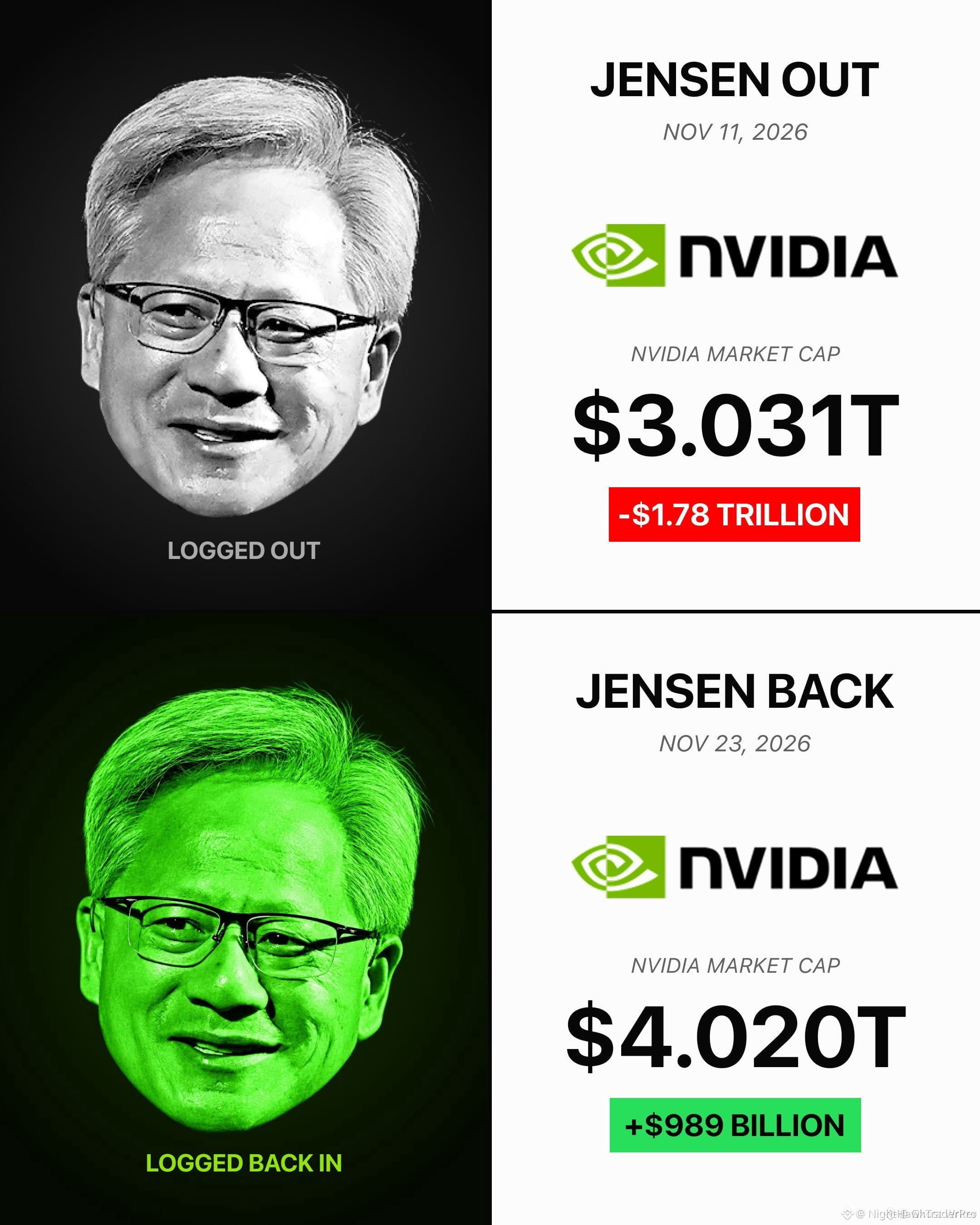
🚨 $NVDA SHATTERS VALUATION RECORDS WITH A NEARLY ONE TRILLION LIQUIDITY SURGE! 💥
Institutional capital allocation just printed a masterclass in aggressive liquidity absorption as $NVDA vaulted from 3.031 trillion to 4.020 trillion in market valuation. 📊 This colossal capital influx reflects aggressive smart money positioning driven by core leadership stability and structural demand. ⚡
When massive institutional blocks re-enter with this velocity, it signals a fundamental shift in macro market confidence and underlying order flow dynamics. 💡
💬 Is this trillion-dollar expansion marking the ultimate structural breakout for the tech sector, or are we witnessing overextended valuation exhaustion? 👇
⚠️ Not financial advice. Always manage your risk. 🛡️
🏷️ #NVDA #SmartMoney #MarketStructure #Equities
🔥 💎
13
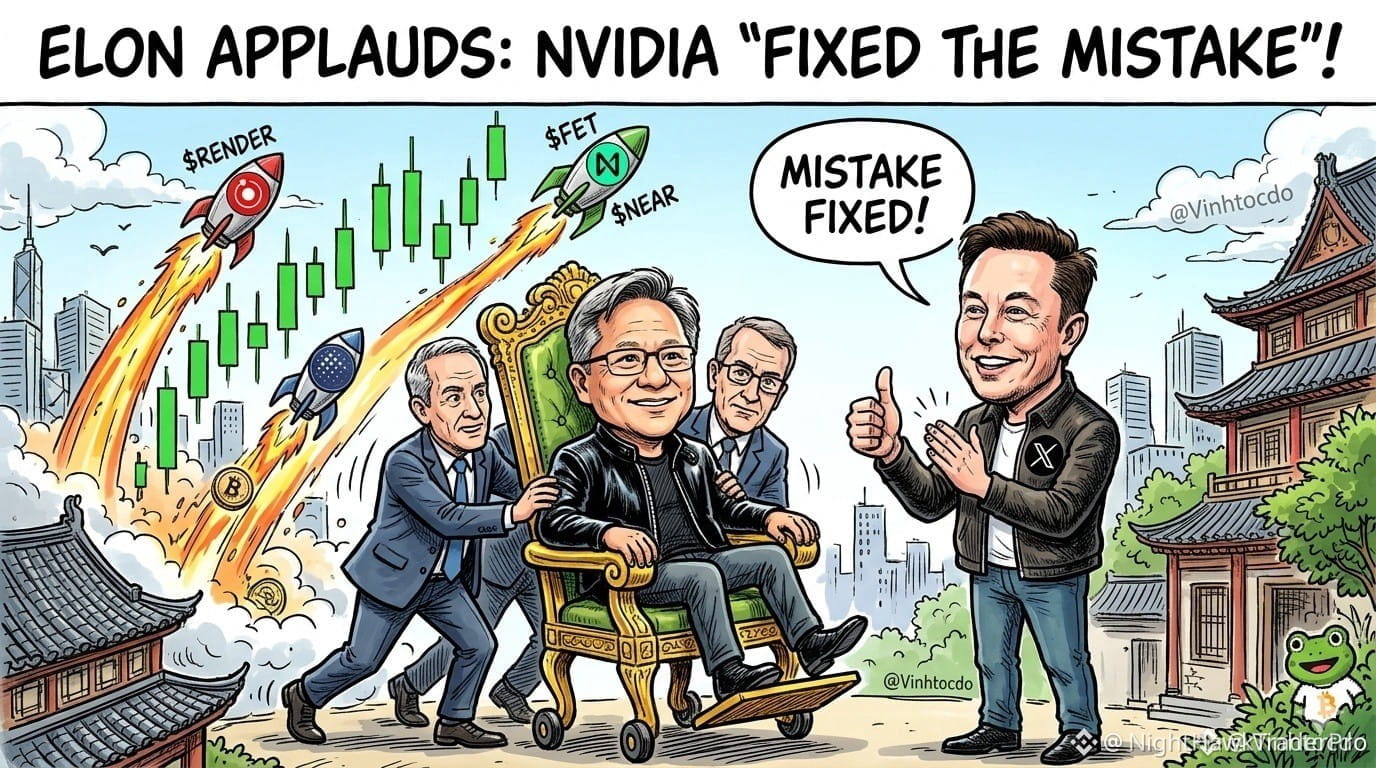
🚨 $NVDA LEADERSHIP STABILITY RESTORES INSTITUTIONAL CONFIDENCE ACROSS AI ASSETS ⚡
The return of key leadership at the helm of $NVDA eliminates structural uncertainty, locking in institutional sponsorship for the broader artificial intelligence narrative. 📊
Smart money capital flows immediately re-align when governance stability is restored, preventing distribution phases and protecting key accumulation blocks from breakdown. 💡
Volatility will expand across high-beta AI sectors as order flow reacts to this fundamental catalyst. 🌊
💬 How are you positioning your risk profiles around this structural shift? 👇
⚠️ Not financial advice. Always manage your risk. 🛡️
🏷️ #NVDA #MarketStructure #ArtificialIntelligence #Trading
🔥 💎
13

$NVDA.US NVDA IS MAKING BIG MOVES!
NVIDIA has seen a massive 31% rally in its latest trading session.
Strong AI demand and renewed leadership confidence are attracting attention.
Can NVDA continue its bullish momentum? 📈
#NVDA #NVIDIA #AI #Stocks
{stock_us}(NVDA.US)
$NVDA.US NVDA IS MAKING BIG MOVES!
NVIDIA has seen a massive 31% rally in its latest trading session.
Strong AI demand and renewed leadership confidence are attracting attention.
Can NVDA continue its bullish momentum? 📈
#NVDA #NVIDIA #AI #Stocks
NVIDIA has seen a massive 31% rally in its latest trading session.
Strong AI demand and renewed leadership confidence are attracting attention.
Can NVDA continue its bullish momentum? 📈
#NVDA #NVIDIA #AI #Stocks
NVDAUS-1.68%
62
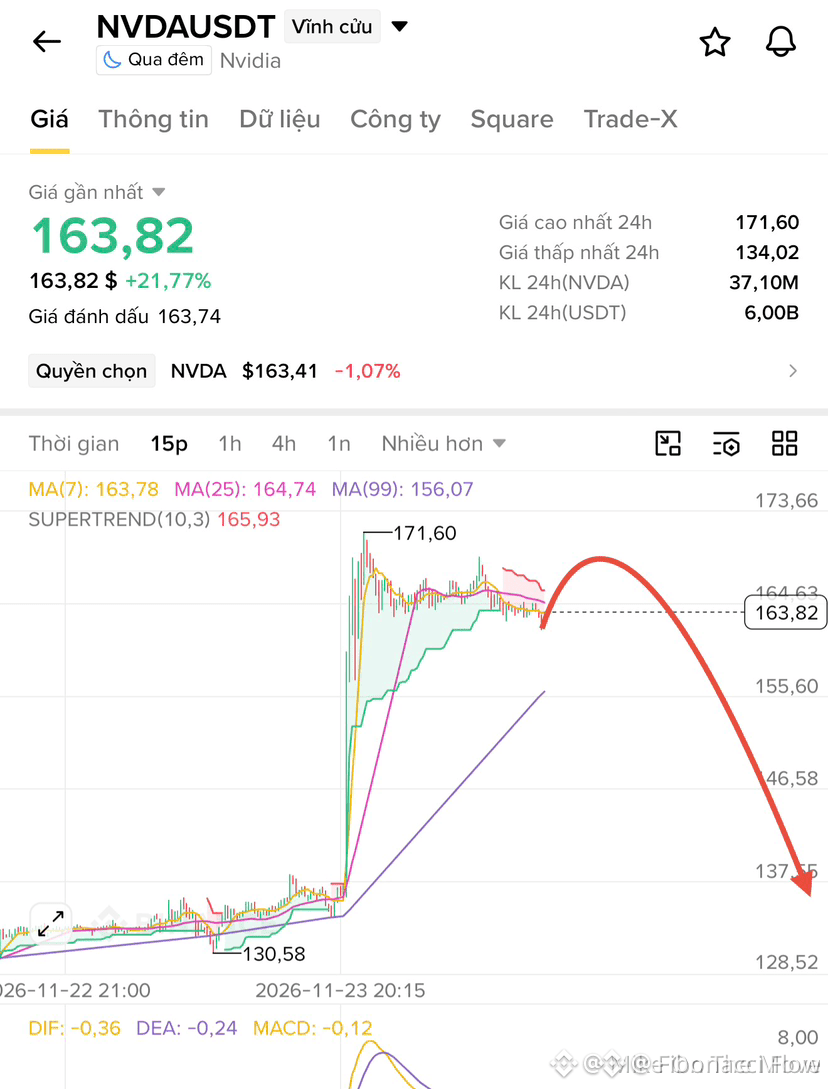
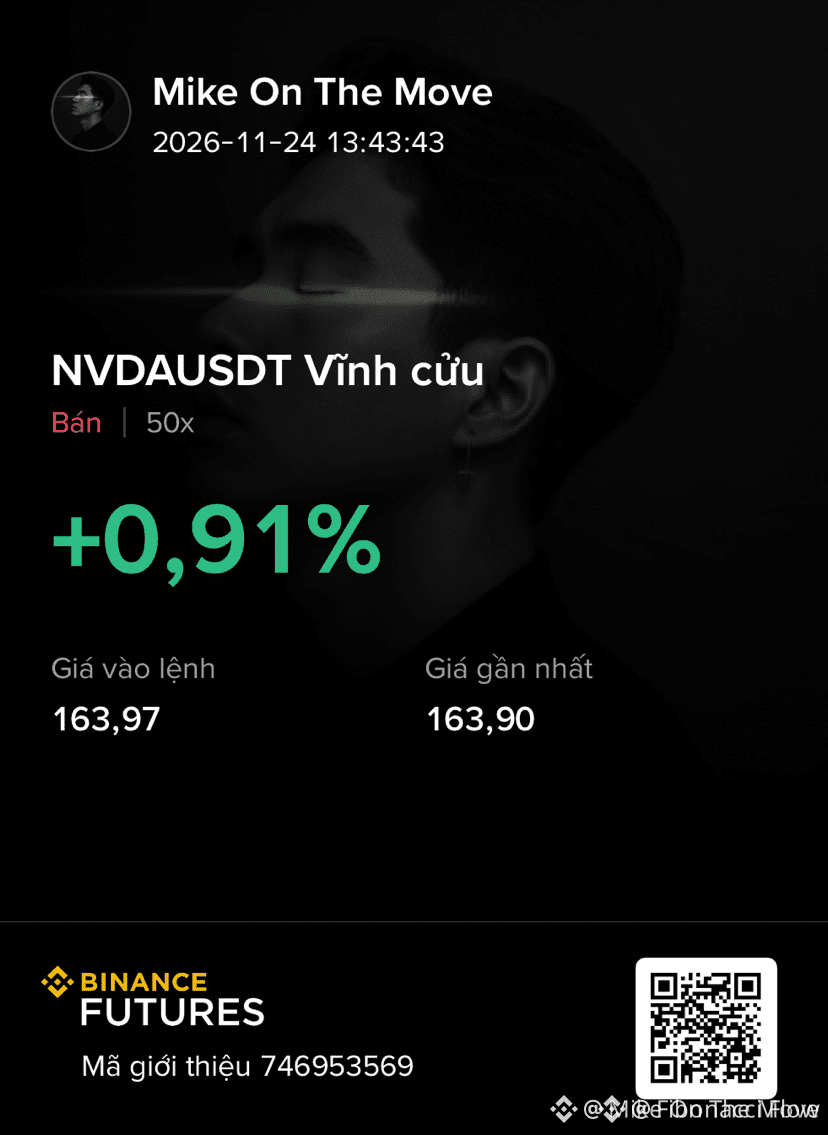
BEARS ARE CIRCLING $NVDA AS SELLER MOMENTUM ACCELERATES INTO OVERHEAD RESISTANCE! 📉 🦈
Entry: 162.36–165.64 ⚡
Target: 150.88 🚀
Stop Loss: 178.0 ⚠️
Sellers are carving out a heavy distribution block between 162 and 165, trapping late retail bulls looking for continuation. Volume profile shows fading buyer aggression on every retest, signaling institutional distribution at higher bounds. 📊
This weakness opens a clean path toward the lower liquidity pocket below 151 as order books thin out. Patient execution around this supply zone sets up a high-probability asymmetric downside play. ⚡
Are you shorting this breakdown or waiting for a deeper sweep before entry? 🤔
⚠️ Not financial advice. Always manage your risk. 🛡️
🏷️ #NVDA #ShortSetup #Bearish #Trading #MarketAnalysis
📉 🩸
5

Worked for 24s 👇
{spot}(NVDABUSDT)
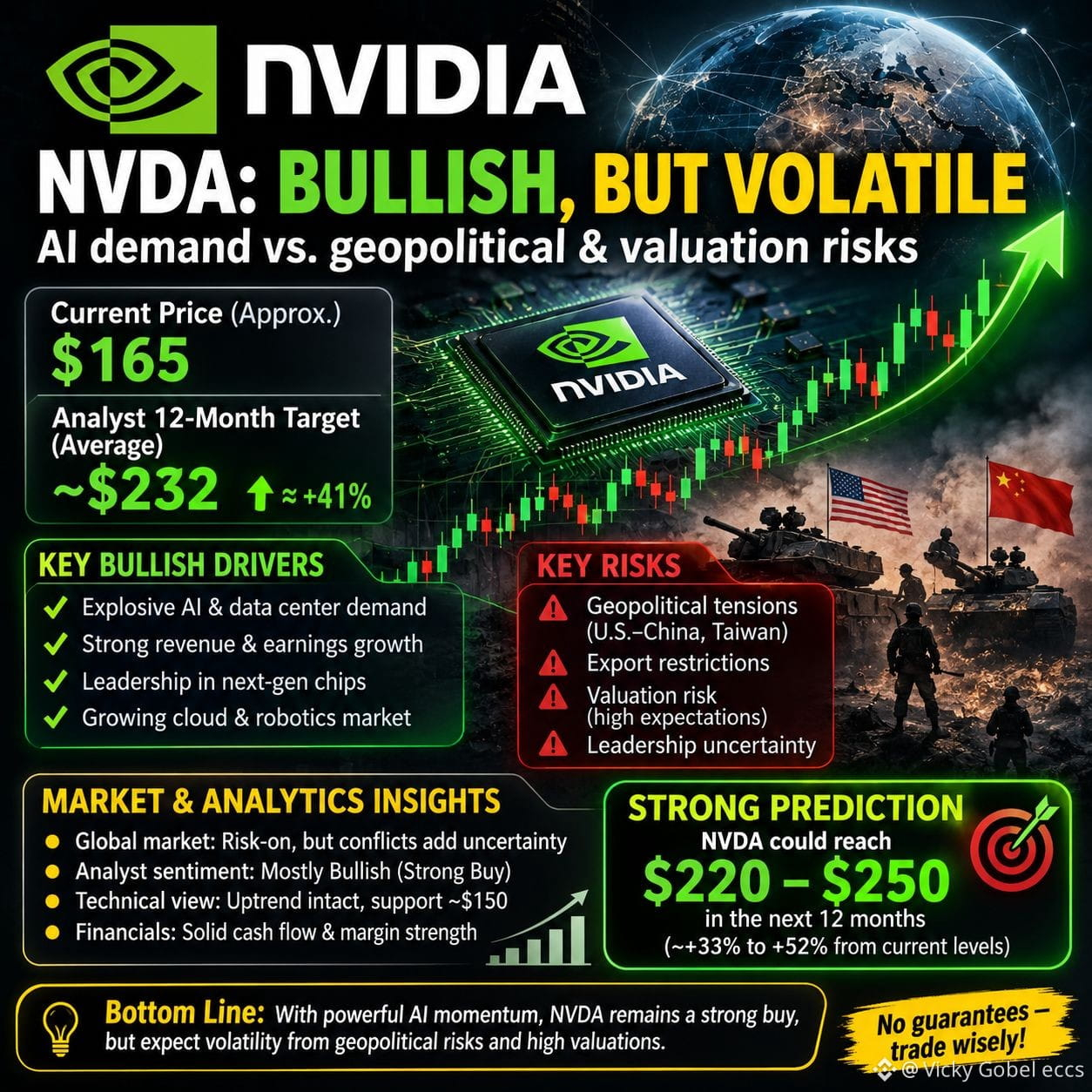
You're asking for a #Binance Square-style post (under 500 characters), with a strong prediction for NVIDIA ($NVDAB ) based on global markets, geopolitical/war risks, analyst sentiment, and financial activity — plus an image to go with it.
{future}(NVDAUSDT)
A strong prediction should still acknowledge the key risk: NVIDIA can benefit from AI spending and data-center demand, but valuation, export restrictions, interest rates, and geopolitical escalation can trigger sharp volatility.
Binance Square post (under 500 characters):
🚀 $NVDA : BULLISH RECOVERY AHEAD?
NVIDIA's $115.8B quarterly revenue (+103% YoY) and $130B revenue outlook signal powerful AI demand. Despite geopolitical tensions, export restrictions and market volatility, AI infrastructure remains a major growth engine.
🎯 My bullish scenario: $220 in the coming months if momentum and earnings hold.
Risk management is essential. Not financial advice. #NVDA #AI #Stocks
The prediction is a $220 bullish scenario, not a guaranteed outcome. The financial figures are drawn from NVIDIA's latest reported results. NVIDIA Newsroom +2
You can post the image above alongside this text on Binance Square.
Worked for 24s 👇
You're asking for a #Binance Square-style post (under 500 characters), with a strong prediction for NVIDIA ($NVDAB ) based on global markets, geopolitical/war risks, analyst sentiment, and financial activity — plus an image to go with it.
A strong prediction should still acknowledge the key risk: NVIDIA can benefit from AI spending and data-center demand, but valuation, export restrictions, interest rates, and geopolitical escalation can trigger sharp volatility.
Binance Square post (under 500 characters):
🚀 $NVDA : BULLISH RECOVERY AHEAD?
NVIDIA's $115.8B quarterly revenue (+103% YoY) and $130B revenue outlook signal powerful AI demand. Despite geopolitical tensions, export restrictions and market volatility, AI infrastructure remains a major growth engine.
🎯 My bullish scenario: $220 in the coming months if momentum and earnings hold.
Risk management is essential. Not financial advice. #NVDA #AI #Stocks
The prediction is a $220 bullish scenario, not a guaranteed outcome. The financial figures are drawn from NVIDIA's latest reported results. NVIDIA Newsroom +2
You can post the image above alongside this text on Binance Square.
32
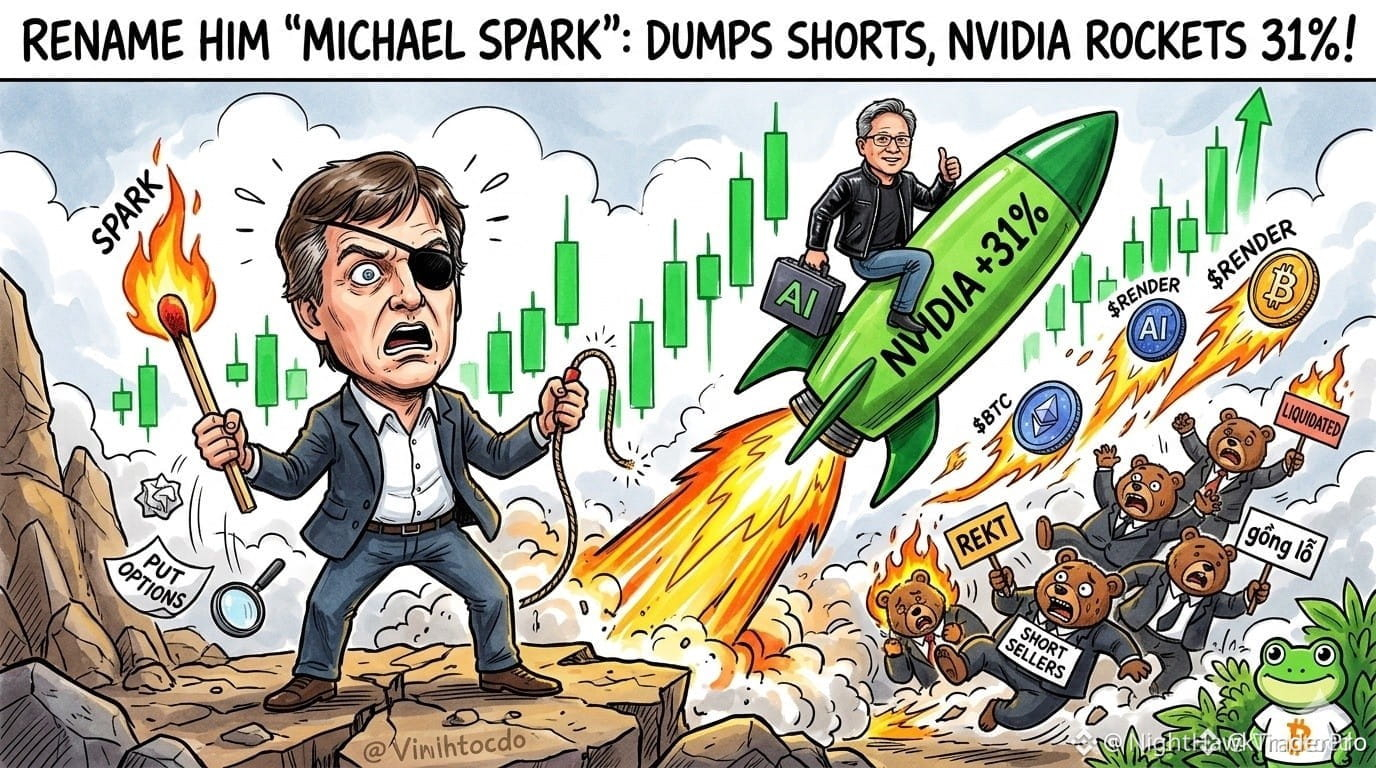
🚨 $NVDA SHORT SQUEEZE SENDS RETAIL LIQUIDITY INTO A MASSIVE VOLATILITY TRAP! 💥
Institutional participants caught leaning too heavily on downside puts in $NVDA just experienced a classic liquidity cascade as price violently reclaimed key overhead resistance. 📊 When high-profile macro positioning forces a rapid unwind, the resulting structural imbalance leaves unprotected short sellers funding an aggressive upward repricing. ⚡
Navigating these dual-sided volatility expansions requires strict structural discipline rather than emotional chasing. 🔍 Are you positioning for continuation toward higher liquidity pools, or waiting for a mean-reversion retest of the breakout zone? 💬
⚠️ Not financial advice. Always manage your risk. 🛡️
🏷️ #NVDA #ShortSqueeze #MarketStructure #LiquidityHunt
🔥 💎
12

·
--
Bullish
NVIDIA JUST DID THE IMPOSSIBLE. 🤯
2 weeks ago, everyone said NVIDIA is finished.
CEO resigned. Stock crashed 33%. $1 Trillion wiped out.
Today?
Jensen Huang is BACK as CEO.
Stock jumped +31% in ONE DAY.
$952 BILLION added in a single day. The biggest gain in history.
This is why you NEVER bet against the King of AI. 👑
Do you think NVDA will hit $200 this week? YES or NO? 👇
#Nvidia #NVDA #JensenHuang #StockMarket
$NVDA
{future}(NVDAUSDT)
NVIDIA JUST DID THE IMPOSSIBLE. 🤯
2 weeks ago, everyone said NVIDIA is finished.
CEO resigned. Stock crashed 33%. $1 Trillion wiped out.
Today?
Jensen Huang is BACK as CEO.
Stock jumped +31% in ONE DAY.
$952 BILLION added in a single day. The biggest gain in history.
This is why you NEVER bet against the King of AI. 👑
Do you think NVDA will hit $200 this week? YES or NO? 👇
#Nvidia #NVDA #JensenHuang #StockMarket
$NVDA

1
428

·
--
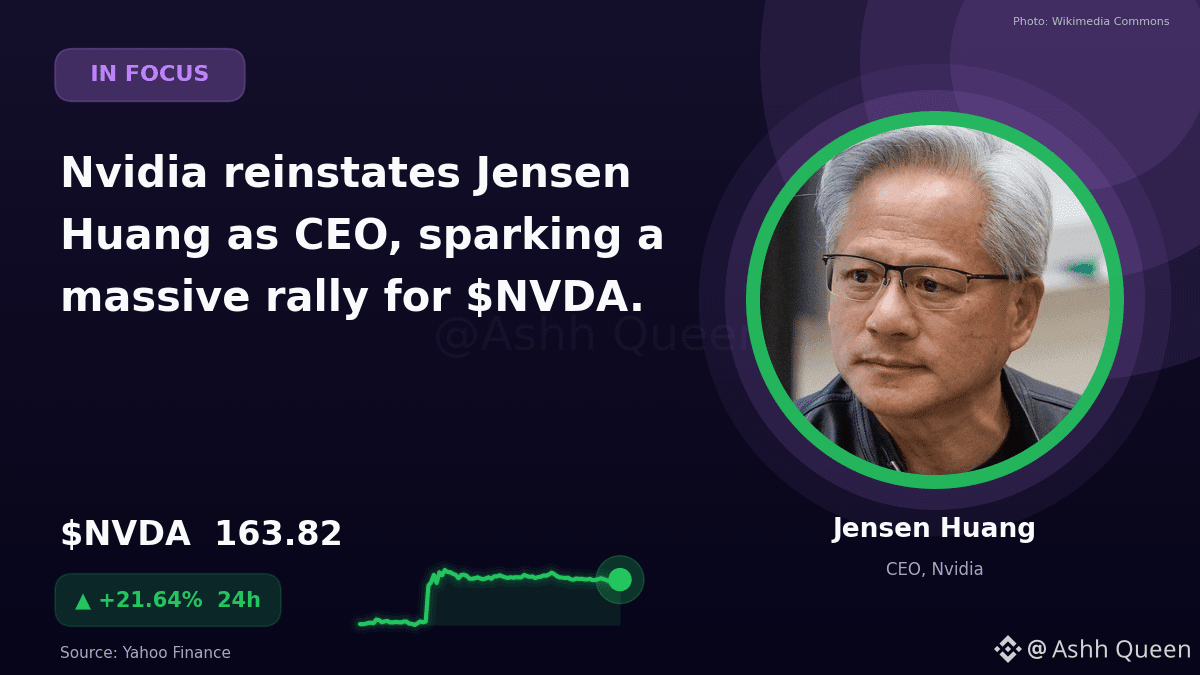
⚡ Nvidia reinstates Jensen Huang as CEO, sparking a massive rally for $NVDA.
Yahoo Finance reports that the chip giant saw its best single-day performance in over a decade following the leadership change. The move helped stabilize market sentiment after a period of intense volatility for the company. 🐂
This price action is also reflected in the NVDAUSDT perpetual contract, which tracks the asset's performance. ⚔️
$NVDA at 163.82, +21.64% in 24h. Support at 163.11.
Do you think this leadership return marks a turning point for $NVDA? 👇
#NVDA #StockMarket #TradFi #HuangExitNvidiaStrategyInFocus
⚠️ Perpetual contracts are leveraged derivatives, not the stock or commodity itself.
Not financial advice. Markets are volatile, so use stop-losses and only risk what you can afford to lose.
⚡ Nvidia reinstates Jensen Huang as CEO, sparking a massive rally for $NVDA .
Yahoo Finance reports that the chip giant saw its best single-day performance in over a decade following the leadership change. The move helped stabilize market sentiment after a period of intense volatility for the company. 🐂
This price action is also reflected in the NVDAUSDT perpetual contract, which tracks the asset's performance. ⚔️
$NVDA at 163.82, +21.64% in 24h. Support at 163.11.
Do you think this leadership return marks a turning point for $NVDA ? 👇
#NVDA #StockMarket #TradFi #HuangExitNvidiaStrategyInFocus
⚠️ Perpetual contracts are leveraged derivatives, not the stock or commodity itself.
Not financial advice. Markets are volatile, so use stop-losses and only risk what you can afford to lose.
1
17
·
--
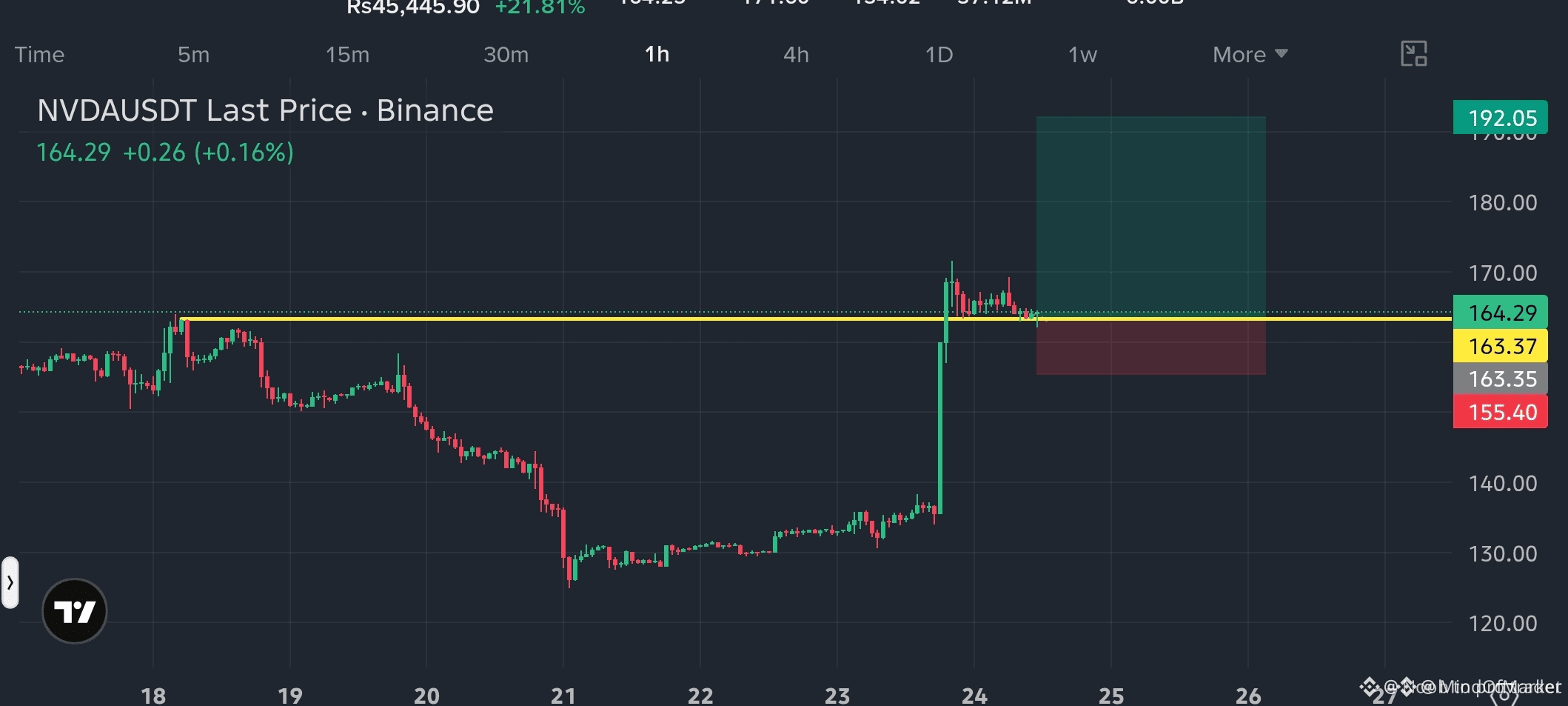
🦈 $NVDA INSTITUTIONAL BID DEFENDS THE KEY LEVEL RETAIL THOUGHT WOULD BREAK ⚡
Entry: 163.35 ⚡
Target: 192.05 🚀
Stop Loss: 155.40 ⚠️
Smart money footprints are clearly visible right at the structural demand zone as institutional limit orders absorb heavy sell-side pressure. 🦈
Order flow indicates patient accumulation while retail panic gets thoroughly flushed below key support, setting up a pristine expansion phase toward higher liquidity pools. 📊 💡
Are you positioning alongside institutional accumulation here or waiting for structural confirmation above local resistance? 🤔
⚠️ Not financial advice. Always manage your risk. 🛡️
🏷️ #NVDA #SmartMoney #Breakout #Trading
🔥 💎
7

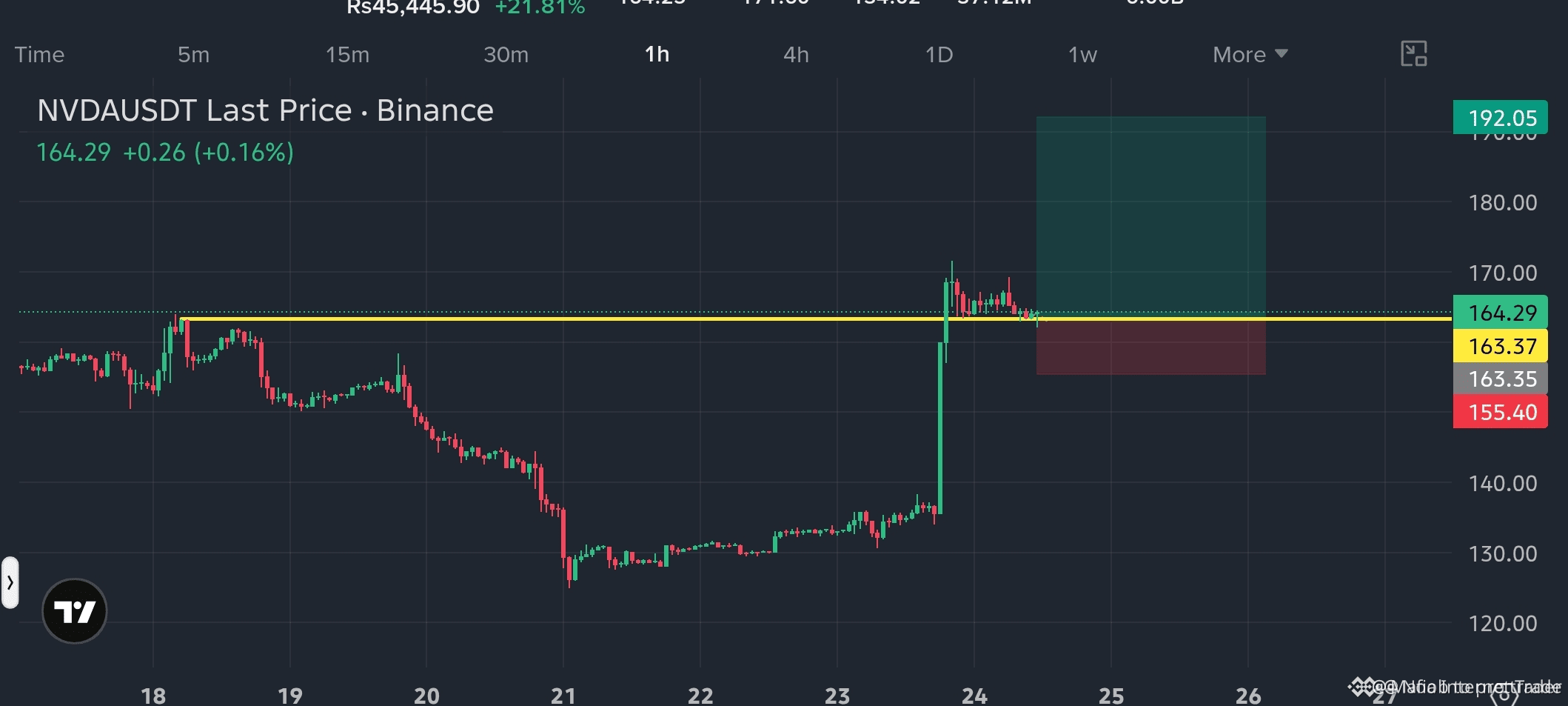
$NVDA BEARS JUST GOT TRAPPED AT THE SUPPORT WALL THAT MATTERS! 🚨💥
Entry: 163.35 ⚡
Target: 192.05 🚀
Stop Loss: 155.40 🛑
Sellers lined up to smash this level, but heavy passive bids absorbed every single share right at the pivot. 📊 Order flow shifted in a heartbeat as trapped shorts started fueling an aggressive recovery bounce. ⚡
We are looking at a textbook defense of key historical structure where momentum traders are stepping back into the driver's seat. 💡 Are you locking in early or waiting for a clean retest of support before pushing higher? 👇
⚠️ Not financial advice. Always manage your risk. 🛡️
🏷️ #NVDA #Breakout #Momentum #Trading
🔥 💎
13
Log in to explore more content
Join global crypto users on Binance Square
⚡️ Get latest and useful information about crypto.
💬 Trusted by the world’s largest crypto exchange.
👍 Discover real insights from verified creators.
Email / Phone number
Trending Topics
1
#Bitcoin'sReboundFadesBelow$60K
7,418 views
145 Discussing
2
#NVIDIAReinstatesJensenHuangasCEO
257,675 views
1,721 Discussing
3
#WillMarketsStageAThanksgivingReliefRally?
333,915 views
2,459 Discussing
4
#WillOctCorePCEShiftFedHikeExpectations?
118,713 views
1,206 Discussing
5
#EvolveAtBinanceBlockchainWeek
240,365 views
1,510 Discussing
6
#SouthKoreaBeginsCryptoProviderShareholderReviews
5,060 views
115 Discussing
7
#USAddsMegaspeedToEntityList
9,887 views
188 Discussing
8
#GrayscaleLaunches2xLeveragedZcashETF
6,493 views
125 Discussing
9
#StrategyValueFallsBelowItsBitcoinHoldings
5,356 views
130 Discussing
10
#CFTCRequiresAtLeast20%HaircutsOnBTCAndETHReserves
2,721 views
89 Discussing