

#energymarkets
energymarkets
445,508 views
1,525 Discussing
Hot
Latest

·
--
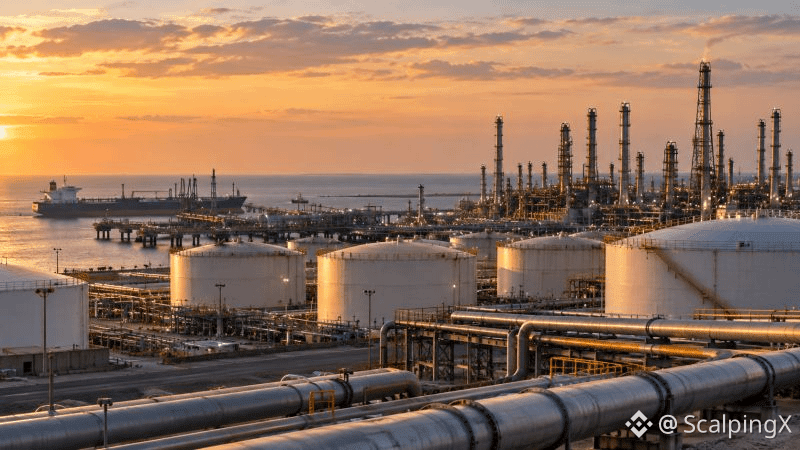
Saudi Aramco CEO speaks out: Yanbu, Sidi Kerir and Port Said continue to shoulder the responsibility of oil exports. Is the oil market shifting direction again? The energy sector is worth watching! #石油出口 #能源市场 $OIL
Saudi Aramco CEO confirms: Yanbu, Sidir Kirir and Damietta ports continue to handle oil exports. Oil market vibes shifting? Energy sector could see some action! #OilExports #EnergyMarkets $OIL
Saudi Aramco CEO speaks out: Yanbu, Sidi Kerir and Port Said continue to shoulder the responsibility of oil exports. Is the oil market shifting direction again? The energy sector is worth watching! #石油出口 #能源市场 $OIL
Saudi Aramco CEO confirms: Yanbu, Sidir Kirir and Damietta ports continue to handle oil exports. Oil market vibes shifting? Energy sector could see some action! #OilExports #EnergyMarkets $OIL
Saudi Aramco CEO confirms: Yanbu, Sidir Kirir and Damietta ports continue to handle oil exports. Oil market vibes shifting? Energy sector could see some action! #OilExports #EnergyMarkets $OIL
3

·
--
Bullish
Crude supply is recovering, but the diesel bottleneck remains unresolved
🛢 Brent ended the week above $102 per barrel, while WTI fell about 1.4% from the previous Friday. Middle East crude exports have recovered to nearly 98% of pre-conflict levels, suggesting physical crude supply is gradually normalizing.
⛽ The main stress remains in refining and finished products. Around 3 million barrels per day of Middle East refining capacity is still offline, while regional diesel exports are only about 25% of pre-conflict levels. Russia is also maintaining diesel export restrictions through the end of October.
📉 U.S. distillate inventories stand at 105.2 million barrels, around 14% below the five-year average. Diesel cracks remain exceptionally elevated, indicating that the market is pricing a shortage of refined products more than a shortage of crude oil itself.
🇨🇳 China has not approved exports of diesel, gasoline or jet fuel for October, further reducing alternative supply to the international market. In the opposite direction, Europe and other G7 members are considering the use of emergency diesel reserves to ease market pressure.
🚢 Hormuz continues to keep a risk premium embedded in seaborne oil as insurance and shipping costs remain elevated. The recovery in Gulf crude exports therefore does not mean the energy shock is over; the bottleneck has increasingly shifted toward refining capacity, transportation and diesel availability.
#EnergyMarkets $CL $NATGAS
Crude supply is recovering, but the diesel bottleneck remains unresolved
🛢 Brent ended the week above $102 per barrel, while WTI fell about 1.4% from the previous Friday. Middle East crude exports have recovered to nearly 98% of pre-conflict levels, suggesting physical crude supply is gradually normalizing.
⛽ The main stress remains in refining and finished products. Around 3 million barrels per day of Middle East refining capacity is still offline, while regional diesel exports are only about 25% of pre-conflict levels. Russia is also maintaining diesel export restrictions through the end of October.
📉 U.S. distillate inventories stand at 105.2 million barrels, around 14% below the five-year average. Diesel cracks remain exceptionally elevated, indicating that the market is pricing a shortage of refined products more than a shortage of crude oil itself.
🇨🇳 China has not approved exports of diesel, gasoline or jet fuel for October, further reducing alternative supply to the international market. In the opposite direction, Europe and other G7 members are considering the use of emergency diesel reserves to ease market pressure.
🚢 Hormuz continues to keep a risk premium embedded in seaborne oil as insurance and shipping costs remain elevated. The recovery in Gulf crude exports therefore does not mean the energy shock is over; the bottleneck has increasingly shifted toward refining capacity, transportation and diesel availability.
#EnergyMarkets $CL $NATGAS
🛢 Brent ended the week above $102 per barrel, while WTI fell about 1.4% from the previous Friday. Middle East crude exports have recovered to nearly 98% of pre-conflict levels, suggesting physical crude supply is gradually normalizing.
⛽ The main stress remains in refining and finished products. Around 3 million barrels per day of Middle East refining capacity is still offline, while regional diesel exports are only about 25% of pre-conflict levels. Russia is also maintaining diesel export restrictions through the end of October.
📉 U.S. distillate inventories stand at 105.2 million barrels, around 14% below the five-year average. Diesel cracks remain exceptionally elevated, indicating that the market is pricing a shortage of refined products more than a shortage of crude oil itself.
🇨🇳 China has not approved exports of diesel, gasoline or jet fuel for October, further reducing alternative supply to the international market. In the opposite direction, Europe and other G7 members are considering the use of emergency diesel reserves to ease market pressure.
🚢 Hormuz continues to keep a risk premium embedded in seaborne oil as insurance and shipping costs remain elevated. The recovery in Gulf crude exports therefore does not mean the energy shock is over; the bottleneck has increasingly shifted toward refining capacity, transportation and diesel availability.
#EnergyMarkets $CL $NATGAS
244
·
--
Bullish
G7 agrees to release 100 million barrels from reserves, with diesel prioritized early
🛢 G7 members have agreed to coordinate through the IEA to release around 100 million barrels of emergency reserves over four months, starting immediately. A significant share of diesel supply is expected to be front-loaded into the first 20 days to ease pressure on fuel markets.
📉 Ahead of the final agreement, US diesel futures fell about 3.25%, while European diesel dropped nearly 5.75%. G7 members also pledged not to restrict energy exports between themselves and to coordinate refinery maintenance schedules.
⚠️ However, the statement does not clearly specify how much of the 100 million barrels represents genuinely new supply, as part of the volume may overlap with IEA commitments announced in March.
🔎 Near-term price pressure could ease if physical barrels reach the market quickly, but the core risk remains refinery capacity and the actual shortage of diesel supply.
#EnergyMarkets $CL
G7 agrees to release 100 million barrels from reserves, with diesel prioritized early
🛢 G7 members have agreed to coordinate through the IEA to release around 100 million barrels of emergency reserves over four months, starting immediately. A significant share of diesel supply is expected to be front-loaded into the first 20 days to ease pressure on fuel markets.
📉 Ahead of the final agreement, US diesel futures fell about 3.25%, while European diesel dropped nearly 5.75%. G7 members also pledged not to restrict energy exports between themselves and to coordinate refinery maintenance schedules.
⚠️ However, the statement does not clearly specify how much of the 100 million barrels represents genuinely new supply, as part of the volume may overlap with IEA commitments announced in March.
🔎 Near-term price pressure could ease if physical barrels reach the market quickly, but the core risk remains refinery capacity and the actual shortage of diesel supply.
#EnergyMarkets $CL
🛢 G7 members have agreed to coordinate through the IEA to release around 100 million barrels of emergency reserves over four months, starting immediately. A significant share of diesel supply is expected to be front-loaded into the first 20 days to ease pressure on fuel markets.
📉 Ahead of the final agreement, US diesel futures fell about 3.25%, while European diesel dropped nearly 5.75%. G7 members also pledged not to restrict energy exports between themselves and to coordinate refinery maintenance schedules.
⚠️ However, the statement does not clearly specify how much of the 100 million barrels represents genuinely new supply, as part of the volume may overlap with IEA commitments announced in March.
🔎 Near-term price pressure could ease if physical barrels reach the market quickly, but the core risk remains refinery capacity and the actual shortage of diesel supply.
#EnergyMarkets $CL

126

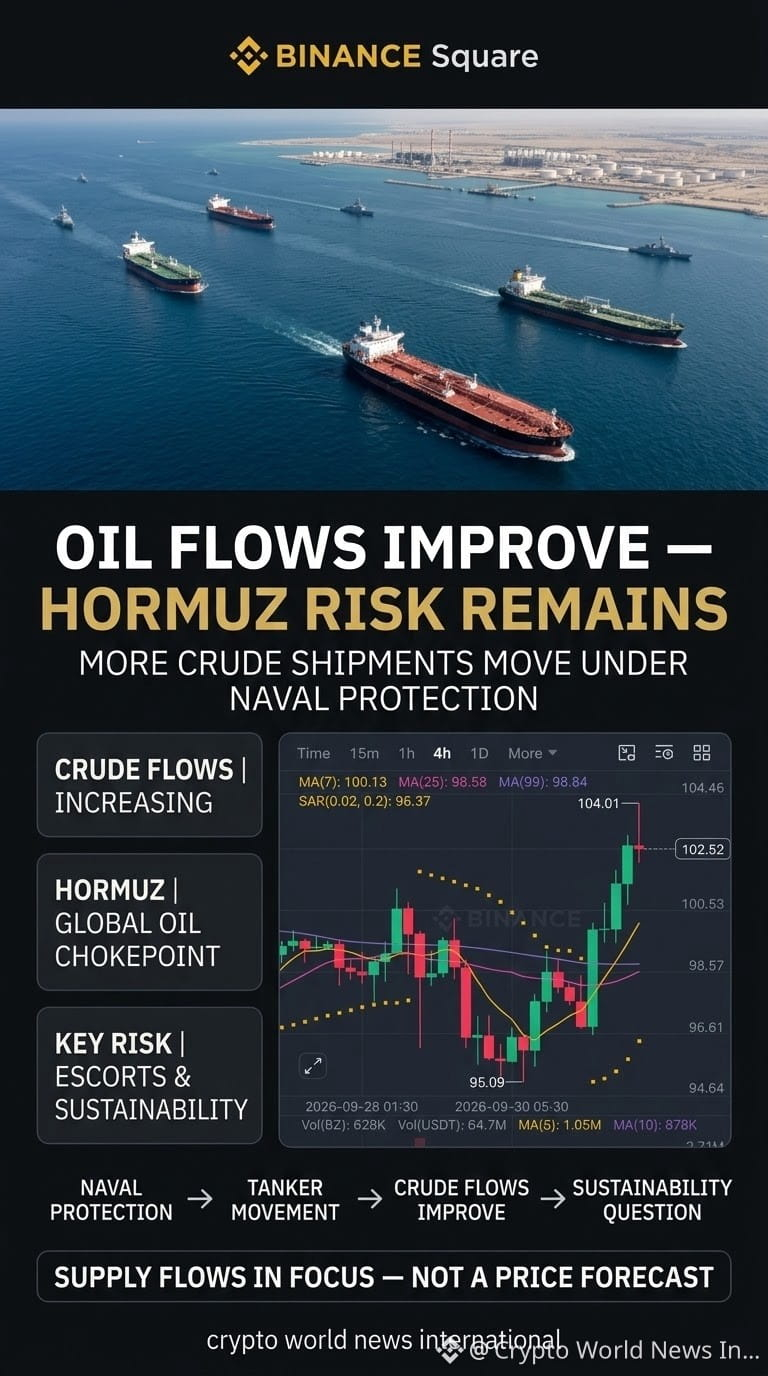
🚨 OIL FLOWS IMPROVE — BUT HORMUZ RISK REMAINS
More Middle East crude is moving through the Strait of Hormuz under U.S. Navy protection, but questions are growing over whether these improved flows can last.
🔑 Key Points:
• Middle East crude exports are increasing
• Tankers are moving under U.S. Navy protection
• The escorts are costly and may be difficult to sustain
• Strait of Hormuz remains critical to global oil supply
• Another escalation could disrupt crude flows again
📊 Market Insight:
Improved tanker movements can ease immediate supply pressure, but the market is still watching whether these flows are sustainable.
For oil traders, the key variable remains the reliability of shipments through the Strait of Hormuz.
🛢️ Asset to Watch: Brent Crude
#oil #BrentCrude #crudeoil #Hormuz #EnergyMarkets $BZ $CL $NATGAS
{future}(NATGASUSDT)
{future}(CLUSDT)
{future}(BZUSDT)
🚨 OIL FLOWS IMPROVE — BUT HORMUZ RISK REMAINS
More Middle East crude is moving through the Strait of Hormuz under U.S. Navy protection, but questions are growing over whether these improved flows can last.
🔑 Key Points:
• Middle East crude exports are increasing
• Tankers are moving under U.S. Navy protection
• The escorts are costly and may be difficult to sustain
• Strait of Hormuz remains critical to global oil supply
• Another escalation could disrupt crude flows again
📊 Market Insight:
Improved tanker movements can ease immediate supply pressure, but the market is still watching whether these flows are sustainable.
For oil traders, the key variable remains the reliability of shipments through the Strait of Hormuz.
🛢️ Asset to Watch: Brent Crude
#oil #BrentCrude #crudeoil #Hormuz #EnergyMarkets $BZ $CL $NATGAS
More Middle East crude is moving through the Strait of Hormuz under U.S. Navy protection, but questions are growing over whether these improved flows can last.
🔑 Key Points:
• Middle East crude exports are increasing
• Tankers are moving under U.S. Navy protection
• The escorts are costly and may be difficult to sustain
• Strait of Hormuz remains critical to global oil supply
• Another escalation could disrupt crude flows again
📊 Market Insight:
Improved tanker movements can ease immediate supply pressure, but the market is still watching whether these flows are sustainable.
For oil traders, the key variable remains the reliability of shipments through the Strait of Hormuz.
🛢️ Asset to Watch: Brent Crude
#oil #BrentCrude #crudeoil #Hormuz #EnergyMarkets $BZ $CL $NATGAS
267

🚨 UPDATE: Gulf oil exports just doubled and fully recovered to pre-war levels, and Wall Street is calling it a "remarkable recovery for a region still at war."
Goldman Sachs estimates Persian Gulf oil exports, including clandestine "dark flows" from vessels running dark with transponders off, hit 23.3 million barrels per day over the past week, now roughly matching the full 2025 average.
Crude alone drove nearly 90% of the recovery, reaching 19 million barrels per day, 108% of 2025 levels. JPMorgan separately confirmed flows through Hormuz itself have climbed back to almost 13 million barrels per day, nearing late-June highs, led overwhelmingly by Saudi Arabia.
"The Middle East's oil export arteries are flowing again," JPMorgan's Natasha Kaneva wrote, adding it's "a remarkable recovery for a region still at war," though uneven across the region.
That unevenness is the real story hiding underneath the headline number. Goldman flagged a sharp divergence: Iranian exports have collapsed, satellite data shows zero seaborne crude or refined product exports from Iran in September, while every other Gulf producer surged to fill the gap. Saudi exports alone more than doubled, pushing past 11.6 million barrels per day.
Refined products tell a very different story than crude. Diesel, gasoline, and jet fuel exports remain stuck at just 50% of normal levels, held back by regional refinery outages running 2 million barrels per day above seasonal norms, plus a simple physical reality: refined fuels are more flammable, making tankers carrying them far riskier to send through a contested strait.
Goldman says the global oil market is now roughly balanced and is holding its Brent forecast at $85 by year-end, $80 in 2027. But the bank isn't declaring victory: "We still worry about renewed potential escalation that damages more energy infrastructure."
Exports are back. The war isn't over. Those two facts are now just coexisting.
#OilPrices #Hormuz #Iran #Geopolitics #EnergyMarkets $CL $BZ
🚨 UPDATE: Gulf oil exports just doubled and fully recovered to pre-war levels, and Wall Street is calling it a "remarkable recovery for a region still at war."
Goldman Sachs estimates Persian Gulf oil exports, including clandestine "dark flows" from vessels running dark with transponders off, hit 23.3 million barrels per day over the past week, now roughly matching the full 2025 average.
Crude alone drove nearly 90% of the recovery, reaching 19 million barrels per day, 108% of 2025 levels. JPMorgan separately confirmed flows through Hormuz itself have climbed back to almost 13 million barrels per day, nearing late-June highs, led overwhelmingly by Saudi Arabia.
"The Middle East's oil export arteries are flowing again," JPMorgan's Natasha Kaneva wrote, adding it's "a remarkable recovery for a region still at war," though uneven across the region.
That unevenness is the real story hiding underneath the headline number. Goldman flagged a sharp divergence: Iranian exports have collapsed, satellite data shows zero seaborne crude or refined product exports from Iran in September, while every other Gulf producer surged to fill the gap. Saudi exports alone more than doubled, pushing past 11.6 million barrels per day.
Refined products tell a very different story than crude. Diesel, gasoline, and jet fuel exports remain stuck at just 50% of normal levels, held back by regional refinery outages running 2 million barrels per day above seasonal norms, plus a simple physical reality: refined fuels are more flammable, making tankers carrying them far riskier to send through a contested strait.
Goldman says the global oil market is now roughly balanced and is holding its Brent forecast at $85 by year-end, $80 in 2027. But the bank isn't declaring victory: "We still worry about renewed potential escalation that damages more energy infrastructure."
Exports are back. The war isn't over. Those two facts are now just coexisting.
#OilPrices #Hormuz #Iran #Geopolitics #EnergyMarkets $CL $BZ
Goldman Sachs estimates Persian Gulf oil exports, including clandestine "dark flows" from vessels running dark with transponders off, hit 23.3 million barrels per day over the past week, now roughly matching the full 2025 average.
Crude alone drove nearly 90% of the recovery, reaching 19 million barrels per day, 108% of 2025 levels. JPMorgan separately confirmed flows through Hormuz itself have climbed back to almost 13 million barrels per day, nearing late-June highs, led overwhelmingly by Saudi Arabia.
"The Middle East's oil export arteries are flowing again," JPMorgan's Natasha Kaneva wrote, adding it's "a remarkable recovery for a region still at war," though uneven across the region.
That unevenness is the real story hiding underneath the headline number. Goldman flagged a sharp divergence: Iranian exports have collapsed, satellite data shows zero seaborne crude or refined product exports from Iran in September, while every other Gulf producer surged to fill the gap. Saudi exports alone more than doubled, pushing past 11.6 million barrels per day.
Refined products tell a very different story than crude. Diesel, gasoline, and jet fuel exports remain stuck at just 50% of normal levels, held back by regional refinery outages running 2 million barrels per day above seasonal norms, plus a simple physical reality: refined fuels are more flammable, making tankers carrying them far riskier to send through a contested strait.
Goldman says the global oil market is now roughly balanced and is holding its Brent forecast at $85 by year-end, $80 in 2027. But the bank isn't declaring victory: "We still worry about renewed potential escalation that damages more energy infrastructure."
Exports are back. The war isn't over. Those two facts are now just coexisting.
#OilPrices #Hormuz #Iran #Geopolitics #EnergyMarkets $CL $BZ
1
271

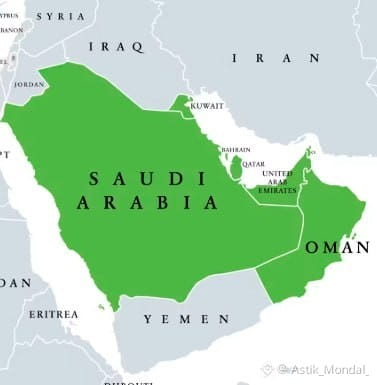
Saudi Arabia has officially restored crude oil exports through its East-West pipeline today, quickly easing regional distribution concerns. Following the operational resumption, global benchmark prices retreated as WTI and Brent dropped nearly $0.80 to trade at $94.21 and $100.34 per barrel respectively.
This infrastructure recovery comes at a time when markets were pricing in potential supply bottlenecks across key Middle Eastern transit routes. The swift restoration of pipeline flows removes immediate supply risk premiums, bringing physical crude availability back in line with baseline expectations.
For broader financial markets, cooling energy prices provide critical relief against persistent headline inflation pressures. Softer crude costs help temper sovereign bond yields and reduce the perceived necessity for extended restrictive monetary policies across major central banks.
For crypto assets, stabilizing energy inputs removes a substantial macroeconomic drag on global liquidity. As systemic inflation anxiety recedes, $BTC and digital assets often benefit from a revitalized risk-on appetite among institutional investors.
#CrudeOil #EnergyMarkets #MacroEconomy
Saudi Arabia has officially restored crude oil exports through its East-West pipeline today, quickly easing regional distribution concerns. Following the operational resumption, global benchmark prices retreated as WTI and Brent dropped nearly $0.80 to trade at $94.21 and $100.34 per barrel respectively.
This infrastructure recovery comes at a time when markets were pricing in potential supply bottlenecks across key Middle Eastern transit routes. The swift restoration of pipeline flows removes immediate supply risk premiums, bringing physical crude availability back in line with baseline expectations.
For broader financial markets, cooling energy prices provide critical relief against persistent headline inflation pressures. Softer crude costs help temper sovereign bond yields and reduce the perceived necessity for extended restrictive monetary policies across major central banks.
For crypto assets, stabilizing energy inputs removes a substantial macroeconomic drag on global liquidity. As systemic inflation anxiety recedes, $BTC and digital assets often benefit from a revitalized risk-on appetite among institutional investors.
#CrudeOil #EnergyMarkets #MacroEconomy
This infrastructure recovery comes at a time when markets were pricing in potential supply bottlenecks across key Middle Eastern transit routes. The swift restoration of pipeline flows removes immediate supply risk premiums, bringing physical crude availability back in line with baseline expectations.
For broader financial markets, cooling energy prices provide critical relief against persistent headline inflation pressures. Softer crude costs help temper sovereign bond yields and reduce the perceived necessity for extended restrictive monetary policies across major central banks.
For crypto assets, stabilizing energy inputs removes a substantial macroeconomic drag on global liquidity. As systemic inflation anxiety recedes, $BTC and digital assets often benefit from a revitalized risk-on appetite among institutional investors.
#CrudeOil #EnergyMarkets #MacroEconomy
152
·
--
Paper oil cools, but diesel and logistics keep the physical market tight
🛢 Brent ended the week near $104.32/bbl while WTI fell to $92.41, widening the Brent–WTI spread to almost $12/bbl, its widest since May. The divergence shows US crude is facing its own pressure from inventories and diesel export risks, while international barrels still command a higher physical premium.
🤝 US–Iran talks in New York helped remove part of the Hormuz risk premium, but physical flows have not materially improved. Kpler estimated oil movements through the strait at around 33.7 million barrels for the week beginning Sep. 20, broadly unchanged from the previous week.
📉 At the same time, the IEA estimates observed global oil inventories have fallen by roughly 507 million barrels since the conflict began. In the US, distillate stocks stand at just 107.4 million barrels, around 12% below the five-year average, even as commercial crude inventories rose by 3 million barrels.
⛽ The strongest pressure remains in refined products. Southern European diesel cracks moved above $100/bbl, while reports that Washington is considering a 90-day diesel export ban sharply weakened US diesel cracks. If implemented, the policy could ease domestic US supply while tightening Europe further.
🚢 Logistics also remain constrained. Gulf-to-Asia VLCC rates briefly reached around $1.27 million per day, while ship-to-ship transfer capacity off Oman has been heavily utilized. That suggests even a smoother Hormuz transit would not immediately remove the physical bottleneck.
📌 The week therefore cannot be read simply as oil falling on diplomacy. WTI is reflecting US crude availability and domestic diesel risks, while Brent remains supported by falling global inventories, tight refined-product supply and elevated logistics costs.
#EnergyMarkets $CL $NATGAS
Paper oil cools, but diesel and logistics keep the physical market tight
🛢 Brent ended the week near $104.32/bbl while WTI fell to $92.41, widening the Brent–WTI spread to almost $12/bbl, its widest since May. The divergence shows US crude is facing its own pressure from inventories and diesel export risks, while international barrels still command a higher physical premium.
🤝 US–Iran talks in New York helped remove part of the Hormuz risk premium, but physical flows have not materially improved. Kpler estimated oil movements through the strait at around 33.7 million barrels for the week beginning Sep. 20, broadly unchanged from the previous week.
📉 At the same time, the IEA estimates observed global oil inventories have fallen by roughly 507 million barrels since the conflict began. In the US, distillate stocks stand at just 107.4 million barrels, around 12% below the five-year average, even as commercial crude inventories rose by 3 million barrels.
⛽ The strongest pressure remains in refined products. Southern European diesel cracks moved above $100/bbl, while reports that Washington is considering a 90-day diesel export ban sharply weakened US diesel cracks. If implemented, the policy could ease domestic US supply while tightening Europe further.
🚢 Logistics also remain constrained. Gulf-to-Asia VLCC rates briefly reached around $1.27 million per day, while ship-to-ship transfer capacity off Oman has been heavily utilized. That suggests even a smoother Hormuz transit would not immediately remove the physical bottleneck.
📌 The week therefore cannot be read simply as oil falling on diplomacy. WTI is reflecting US crude availability and domestic diesel risks, while Brent remains supported by falling global inventories, tight refined-product supply and elevated logistics costs.
#EnergyMarkets $CL $NATGAS
🛢 Brent ended the week near $104.32/bbl while WTI fell to $92.41, widening the Brent–WTI spread to almost $12/bbl, its widest since May. The divergence shows US crude is facing its own pressure from inventories and diesel export risks, while international barrels still command a higher physical premium.
🤝 US–Iran talks in New York helped remove part of the Hormuz risk premium, but physical flows have not materially improved. Kpler estimated oil movements through the strait at around 33.7 million barrels for the week beginning Sep. 20, broadly unchanged from the previous week.
📉 At the same time, the IEA estimates observed global oil inventories have fallen by roughly 507 million barrels since the conflict began. In the US, distillate stocks stand at just 107.4 million barrels, around 12% below the five-year average, even as commercial crude inventories rose by 3 million barrels.
⛽ The strongest pressure remains in refined products. Southern European diesel cracks moved above $100/bbl, while reports that Washington is considering a 90-day diesel export ban sharply weakened US diesel cracks. If implemented, the policy could ease domestic US supply while tightening Europe further.
🚢 Logistics also remain constrained. Gulf-to-Asia VLCC rates briefly reached around $1.27 million per day, while ship-to-ship transfer capacity off Oman has been heavily utilized. That suggests even a smoother Hormuz transit would not immediately remove the physical bottleneck.
📌 The week therefore cannot be read simply as oil falling on diplomacy. WTI is reflecting US crude availability and domestic diesel risks, while Brent remains supported by falling global inventories, tight refined-product supply and elevated logistics costs.
#EnergyMarkets $CL $NATGAS
152
Yemeni armed forces spokesperson Yahya Saree announced retaliatory military strikes targeting Riyadh and Saudi Aramco facilities in Yanbu using ballistic missiles, cruise missiles, and drones. According to Saree, these operations were conducted in direct response to Saudi Arabia launching 1,018 airstrikes across Yemeni provinces such as Marib and Hudaydah.
This escalation marks a critical friction point for global energy security. Direct strikes against Saudi Aramco infrastructure heighten the geopolitical risk premium on crude oil, threatening global supply stability at a time when energy markets remain fragile against persistent inflation.
Across traditional financial markets, renewed conflict in the Middle East typically triggers a risk-off flight to quality. We can expect upward pressure on crude oil and gold prices, alongside higher sovereign bond yields if energy-driven inflation fears resurface, which in turn could delay anticipated central bank interest rate cuts.
For the crypto sector, heightened geopolitical instability often leads to short-term liquidity contraction as traders de-risk. However, prolonged macroeconomic uncertainty may reinforce Bitcoin's positioning as a non-sovereign hedge if fiat stability and global trade routes face extended disruptions.
#Geopolitics #SaudiAramco #EnergyMarkets
Yemeni armed forces spokesperson Yahya Saree announced retaliatory military strikes targeting Riyadh and Saudi Aramco facilities in Yanbu using ballistic missiles, cruise missiles, and drones. According to Saree, these operations were conducted in direct response to Saudi Arabia launching 1,018 airstrikes across Yemeni provinces such as Marib and Hudaydah.
This escalation marks a critical friction point for global energy security. Direct strikes against Saudi Aramco infrastructure heighten the geopolitical risk premium on crude oil, threatening global supply stability at a time when energy markets remain fragile against persistent inflation.
Across traditional financial markets, renewed conflict in the Middle East typically triggers a risk-off flight to quality. We can expect upward pressure on crude oil and gold prices, alongside higher sovereign bond yields if energy-driven inflation fears resurface, which in turn could delay anticipated central bank interest rate cuts.
For the crypto sector, heightened geopolitical instability often leads to short-term liquidity contraction as traders de-risk. However, prolonged macroeconomic uncertainty may reinforce Bitcoin's positioning as a non-sovereign hedge if fiat stability and global trade routes face extended disruptions.
#Geopolitics #SaudiAramco #EnergyMarkets
This escalation marks a critical friction point for global energy security. Direct strikes against Saudi Aramco infrastructure heighten the geopolitical risk premium on crude oil, threatening global supply stability at a time when energy markets remain fragile against persistent inflation.
Across traditional financial markets, renewed conflict in the Middle East typically triggers a risk-off flight to quality. We can expect upward pressure on crude oil and gold prices, alongside higher sovereign bond yields if energy-driven inflation fears resurface, which in turn could delay anticipated central bank interest rate cuts.
For the crypto sector, heightened geopolitical instability often leads to short-term liquidity contraction as traders de-risk. However, prolonged macroeconomic uncertainty may reinforce Bitcoin's positioning as a non-sovereign hedge if fiat stability and global trade routes face extended disruptions.
#Geopolitics #SaudiAramco #EnergyMarkets
4
Global energy markets are seeing notable downward pressure today, with WTI crude falling 1.00% to $88.58 per barrel while Brent crude declined approximately 0.6% to trade near $94.60 per barrel.
This pullback in benchmark crude prices offers a potential breather for headline inflation metrics, which have remained sensitive to volatile energy components over recent quarters. Market participants are closely monitoring whether this softness reflects easing geopolitical supply risks or growing concerns over broader economic growth.
For traditional finance, lower oil prices generally ease near-term cost-push inflation pressures, helping to stabilize bond yields and reducing the urgency for central banks to keep interest rates elevated for longer. A cooler energy complex also supports consumer spending sentiment and corporate margins across major indices.
For the crypto market, any relief on the macro inflation front is constructive for liquidity conditions. When energy prices stabilize, risk appetite tends to recover, creating a healthier macro backdrop for risk assets like $BTC as monetary policy concerns gradually recede. 📊
#CrudeOil #EnergyMarkets #MacroEconomy
Global energy markets are seeing notable downward pressure today, with WTI crude falling 1.00% to $88.58 per barrel while Brent crude declined approximately 0.6% to trade near $94.60 per barrel.
This pullback in benchmark crude prices offers a potential breather for headline inflation metrics, which have remained sensitive to volatile energy components over recent quarters. Market participants are closely monitoring whether this softness reflects easing geopolitical supply risks or growing concerns over broader economic growth.
For traditional finance, lower oil prices generally ease near-term cost-push inflation pressures, helping to stabilize bond yields and reducing the urgency for central banks to keep interest rates elevated for longer. A cooler energy complex also supports consumer spending sentiment and corporate margins across major indices.
For the crypto market, any relief on the macro inflation front is constructive for liquidity conditions. When energy prices stabilize, risk appetite tends to recover, creating a healthier macro backdrop for risk assets like $BTC as monetary policy concerns gradually recede. 📊
#CrudeOil #EnergyMarkets #MacroEconomy
This pullback in benchmark crude prices offers a potential breather for headline inflation metrics, which have remained sensitive to volatile energy components over recent quarters. Market participants are closely monitoring whether this softness reflects easing geopolitical supply risks or growing concerns over broader economic growth.
For traditional finance, lower oil prices generally ease near-term cost-push inflation pressures, helping to stabilize bond yields and reducing the urgency for central banks to keep interest rates elevated for longer. A cooler energy complex also supports consumer spending sentiment and corporate margins across major indices.
For the crypto market, any relief on the macro inflation front is constructive for liquidity conditions. When energy prices stabilize, risk appetite tends to recover, creating a healthier macro backdrop for risk assets like $BTC as monetary policy concerns gradually recede. 📊
#CrudeOil #EnergyMarkets #MacroEconomy
118
·
--
Iran's South Pars gas field recovers half of its capacity! Energy landscape shifts, and global markets are shaken! The power struggle between the traditional and the digital world is just getting started! #能源市场 #地缘政治 $ETH $BTC
Iran's South Pars gas field 50% back online! Energy landscape shifting, global markets feeling it! Traditional vs digital energy battle - just getting started! #EnergyMarkets #Geopolitics $ETH $BTC
Iran's South Pars gas field recovers half of its capacity! Energy landscape shifts, and global markets are shaken! The power struggle between the traditional and the digital world is just getting started! #能源市场 #地缘政治 $ETH $BTC
Iran's South Pars gas field 50% back online! Energy landscape shifting, global markets feeling it! Traditional vs digital energy battle - just getting started! #EnergyMarkets #Geopolitics $ETH $BTC
Iran's South Pars gas field 50% back online! Energy landscape shifting, global markets feeling it! Traditional vs digital energy battle - just getting started! #EnergyMarkets #Geopolitics $ETH $BTC
174
·
--
Bullish
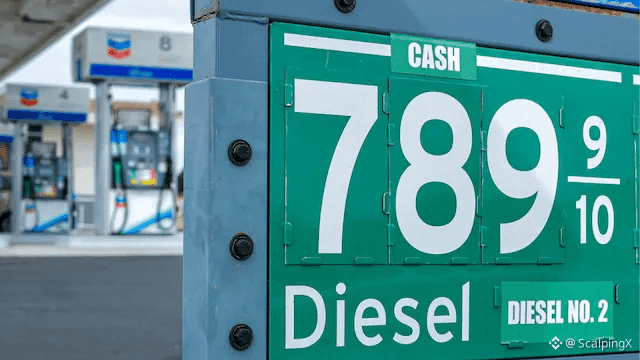
US diesel hits a record $6.529 even as crude oil cools
⛽ The EIA has confirmed that the average US on-highway diesel price reached 6.529 USD/gallon for the week ending September 21, up 0.244 USD in just one week. Prices above 6.50 USD had already emerged over the weekend, but the latest data shows pressure remains elevated.
📉 This contrasts with crude oil, as Brent and WTI have fallen for several sessions. The divergence suggests the bottleneck is increasingly concentrated in refined-product supply, refinery capacity and diesel trade flows rather than crude prices alone.
🏭 Lower diesel supply from Russia and the Middle East, combined with relatively firm transport, agricultural and industrial demand, is keeping retail prices sticky even as crude futures ease.
⚠️ Potential US restrictions on diesel exports are now another key variable. If prices remain elevated, logistics costs and broader goods inflation could stay under pressure.
#EnergyMarkets $CL $NATGAS
US diesel hits a record $6.529 even as crude oil cools
⛽ The EIA has confirmed that the average US on-highway diesel price reached 6.529 USD/gallon for the week ending September 21, up 0.244 USD in just one week. Prices above 6.50 USD had already emerged over the weekend, but the latest data shows pressure remains elevated.
📉 This contrasts with crude oil, as Brent and WTI have fallen for several sessions. The divergence suggests the bottleneck is increasingly concentrated in refined-product supply, refinery capacity and diesel trade flows rather than crude prices alone.
🏭 Lower diesel supply from Russia and the Middle East, combined with relatively firm transport, agricultural and industrial demand, is keeping retail prices sticky even as crude futures ease.
⚠️ Potential US restrictions on diesel exports are now another key variable. If prices remain elevated, logistics costs and broader goods inflation could stay under pressure.
#EnergyMarkets $CL $NATGAS
⛽ The EIA has confirmed that the average US on-highway diesel price reached 6.529 USD/gallon for the week ending September 21, up 0.244 USD in just one week. Prices above 6.50 USD had already emerged over the weekend, but the latest data shows pressure remains elevated.
📉 This contrasts with crude oil, as Brent and WTI have fallen for several sessions. The divergence suggests the bottleneck is increasingly concentrated in refined-product supply, refinery capacity and diesel trade flows rather than crude prices alone.
🏭 Lower diesel supply from Russia and the Middle East, combined with relatively firm transport, agricultural and industrial demand, is keeping retail prices sticky even as crude futures ease.
⚠️ Potential US restrictions on diesel exports are now another key variable. If prices remain elevated, logistics costs and broader goods inflation could stay under pressure.
#EnergyMarkets $CL $NATGAS
215
·
--
Bullish
Trump and Zelensky Prepare to Discuss an Energy Truce in New York
🤝 Donald Trump and Volodymyr Zelensky are set to meet in New York on the sidelines of the UN General Assembly, with Ukraine expected to push for a reciprocal halt to attacks on energy infrastructure.
⚡ Kyiv wants to reduce the risk of further Russian strikes on its power grid and heating systems ahead of winter, while also seeking additional Patriot air-defense support. Washington, meanwhile, is pressing Ukraine to limit attacks on Russian refineries.
🛢️ The issue is particularly relevant for diesel markets as global supply remains tight and prices are elevated. However, crude oil is still being driven heavily by Iran, Hormuz and broader Middle East supply risks, meaning the meeting is unlikely to be the only factor shaping energy prices.
#EnergyMarkets $CL $NATGAS
Trump and Zelensky Prepare to Discuss an Energy Truce in New York
🤝 Donald Trump and Volodymyr Zelensky are set to meet in New York on the sidelines of the UN General Assembly, with Ukraine expected to push for a reciprocal halt to attacks on energy infrastructure.
⚡ Kyiv wants to reduce the risk of further Russian strikes on its power grid and heating systems ahead of winter, while also seeking additional Patriot air-defense support. Washington, meanwhile, is pressing Ukraine to limit attacks on Russian refineries.
🛢️ The issue is particularly relevant for diesel markets as global supply remains tight and prices are elevated. However, crude oil is still being driven heavily by Iran, Hormuz and broader Middle East supply risks, meaning the meeting is unlikely to be the only factor shaping energy prices.
#EnergyMarkets $CL $NATGAS
🤝 Donald Trump and Volodymyr Zelensky are set to meet in New York on the sidelines of the UN General Assembly, with Ukraine expected to push for a reciprocal halt to attacks on energy infrastructure.
⚡ Kyiv wants to reduce the risk of further Russian strikes on its power grid and heating systems ahead of winter, while also seeking additional Patriot air-defense support. Washington, meanwhile, is pressing Ukraine to limit attacks on Russian refineries.
🛢️ The issue is particularly relevant for diesel markets as global supply remains tight and prices are elevated. However, crude oil is still being driven heavily by Iran, Hormuz and broader Middle East supply risks, meaning the meeting is unlikely to be the only factor shaping energy prices.
#EnergyMarkets $CL $NATGAS

232
The Russian Ministry of Defense confirmed today that its forces targeted a cargo vessel in the Black Sea along with the Kremenchuk oil refinery in central Ukraine.
This direct targeting of critical energy infrastructure and commercial maritime assets marks a notable escalation in the ongoing conflict. Disruptions to refining capacity and heightened threats along Black Sea shipping lanes directly challenge regional fuel supplies and elevate supply chain risk across broader energy markets.
Across traditional financial markets, fresh threats to European energy security typically inject a geopolitical risk premium into crude prices while driving immediate defensive flows into safe-haven assets like gold and the US Dollar. Persistent volatility in commodity prices also threatens to complicate global disinflation trajectories.
For crypto assets, sudden geopolitical shocks tend to spark short-term risk-off sentiment, triggering rapid liquidations in over-leveraged positions. While $BTC is increasingly viewed as an alternative macro hedge, sharp escalations historically test liquidity before broader market stabilization resumes.
#Geopolitics #EnergyMarkets #MacroEconomics
The Russian Ministry of Defense confirmed today that its forces targeted a cargo vessel in the Black Sea along with the Kremenchuk oil refinery in central Ukraine.
This direct targeting of critical energy infrastructure and commercial maritime assets marks a notable escalation in the ongoing conflict. Disruptions to refining capacity and heightened threats along Black Sea shipping lanes directly challenge regional fuel supplies and elevate supply chain risk across broader energy markets.
Across traditional financial markets, fresh threats to European energy security typically inject a geopolitical risk premium into crude prices while driving immediate defensive flows into safe-haven assets like gold and the US Dollar. Persistent volatility in commodity prices also threatens to complicate global disinflation trajectories.
For crypto assets, sudden geopolitical shocks tend to spark short-term risk-off sentiment, triggering rapid liquidations in over-leveraged positions. While $BTC is increasingly viewed as an alternative macro hedge, sharp escalations historically test liquidity before broader market stabilization resumes.
#Geopolitics #EnergyMarkets #MacroEconomics
This direct targeting of critical energy infrastructure and commercial maritime assets marks a notable escalation in the ongoing conflict. Disruptions to refining capacity and heightened threats along Black Sea shipping lanes directly challenge regional fuel supplies and elevate supply chain risk across broader energy markets.
Across traditional financial markets, fresh threats to European energy security typically inject a geopolitical risk premium into crude prices while driving immediate defensive flows into safe-haven assets like gold and the US Dollar. Persistent volatility in commodity prices also threatens to complicate global disinflation trajectories.
For crypto assets, sudden geopolitical shocks tend to spark short-term risk-off sentiment, triggering rapid liquidations in over-leveraged positions. While $BTC is increasingly viewed as an alternative macro hedge, sharp escalations historically test liquidity before broader market stabilization resumes.
#Geopolitics #EnergyMarkets #MacroEconomics
30
US President Donald Trump has recently expressed serious concerns over surging diesel prices, actively seeking ways to ensure Russian diesel supplies can access global markets to alleviate ongoing price pressures, according to a report by the Financial Times.
This strategic stance marks a notable shift in US energy diplomacy. Diesel serves as the lifeblood of global industrial logistics and agriculture, meaning persistently high refined product costs directly threaten broader disinflation efforts. Reintroducing or easing friction around Russian energy flows represents a pragmatic, supply-side attempt to cool headline energy inflation before it embeds itself deeply into consumer price indices.
For traditional financial markets, downward pressure on diesel prices helps ease near-term inflation expectations, potentially preventing bond yields from spiking further. However, the geopolitical undertone introduces complex dynamics for the US Dollar and commodities, as balancing sanctions policy against domestic economic relief creates uncertainty across energy trading desks.
For crypto markets, cooling energy prices reduce the risk of stagflationary headwinds and aggressive monetary tightening. A more manageable inflation environment stabilizes risk appetite, supporting liquidity rotation back into major digital assets like $BTC as macroeconomic pressure temporarily subsides.
#EnergyMarkets #Inflation #Geopolitics
US President Donald Trump has recently expressed serious concerns over surging diesel prices, actively seeking ways to ensure Russian diesel supplies can access global markets to alleviate ongoing price pressures, according to a report by the Financial Times.
This strategic stance marks a notable shift in US energy diplomacy. Diesel serves as the lifeblood of global industrial logistics and agriculture, meaning persistently high refined product costs directly threaten broader disinflation efforts. Reintroducing or easing friction around Russian energy flows represents a pragmatic, supply-side attempt to cool headline energy inflation before it embeds itself deeply into consumer price indices.
For traditional financial markets, downward pressure on diesel prices helps ease near-term inflation expectations, potentially preventing bond yields from spiking further. However, the geopolitical undertone introduces complex dynamics for the US Dollar and commodities, as balancing sanctions policy against domestic economic relief creates uncertainty across energy trading desks.
For crypto markets, cooling energy prices reduce the risk of stagflationary headwinds and aggressive monetary tightening. A more manageable inflation environment stabilizes risk appetite, supporting liquidity rotation back into major digital assets like $BTC as macroeconomic pressure temporarily subsides.
#EnergyMarkets #Inflation #Geopolitics
This strategic stance marks a notable shift in US energy diplomacy. Diesel serves as the lifeblood of global industrial logistics and agriculture, meaning persistently high refined product costs directly threaten broader disinflation efforts. Reintroducing or easing friction around Russian energy flows represents a pragmatic, supply-side attempt to cool headline energy inflation before it embeds itself deeply into consumer price indices.
For traditional financial markets, downward pressure on diesel prices helps ease near-term inflation expectations, potentially preventing bond yields from spiking further. However, the geopolitical undertone introduces complex dynamics for the US Dollar and commodities, as balancing sanctions policy against domestic economic relief creates uncertainty across energy trading desks.
For crypto markets, cooling energy prices reduce the risk of stagflationary headwinds and aggressive monetary tightening. A more manageable inflation environment stabilizes risk appetite, supporting liquidity rotation back into major digital assets like $BTC as macroeconomic pressure temporarily subsides.
#EnergyMarkets #Inflation #Geopolitics
17

·
--
According to a report by the Financial Times, US President Donald Trump has recently expressed concern over the continued rise in diesel prices, and publicly called for ensuring that Russia’s diesel supply can enter global markets, in order to ease the supply-side pressure caused by the current surge in oil prices.
This statement has attracted close attention from the market largely because of the game between geopolitical factors and real economic demands. Previously, the West imposed strict restrictions on Russian energy, while inflationary pressure still persists. As diesel is the lifeblood of industry and logistics, its costs directly affect downstream prices. If the United States sends a policy-level signal of loosening for the flow of Russian energy, it would directly disrupt the previously tight global energy supply outlook.
For traditional macro markets, this may put downward pressure on crude oil and refined product prices, helping cool expectations for energy costs. Falling energy-cost expectations typically helps alleviate concerns about re-accelerating inflation, which in turn may influence US Treasury yields and the US dollar. However, there remains uncertainty over whether policy will truly be implemented, given the geopolitical chess match. Commodity markets may therefore continue to see two-way volatility, while investors reassess the pace of macro inflation.
Turning back to the crypto space: if oil prices can cool, expectations of a tightening macro liquidity environment may ease somewhat, which is a marginally positive factor for risk assets such as $BTC by removing a potential downside risk. But in the short term, the geopolitical situation and the policy contest are intricately intertwined; market sentiment remains cautious, and where capital flows next will depend on how subsequent policies are actually carried out. 🤔
#CrudeOil #Trump #EnergyMarkets
According to a report by the Financial Times, US President Donald Trump has recently expressed concern over the continued rise in diesel prices, and publicly called for ensuring that Russia’s diesel supply can enter global markets, in order to ease the supply-side pressure caused by the current surge in oil prices.
This statement has attracted close attention from the market largely because of the game between geopolitical factors and real economic demands. Previously, the West imposed strict restrictions on Russian energy, while inflationary pressure still persists. As diesel is the lifeblood of industry and logistics, its costs directly affect downstream prices. If the United States sends a policy-level signal of loosening for the flow of Russian energy, it would directly disrupt the previously tight global energy supply outlook.
For traditional macro markets, this may put downward pressure on crude oil and refined product prices, helping cool expectations for energy costs. Falling energy-cost expectations typically helps alleviate concerns about re-accelerating inflation, which in turn may influence US Treasury yields and the US dollar. However, there remains uncertainty over whether policy will truly be implemented, given the geopolitical chess match. Commodity markets may therefore continue to see two-way volatility, while investors reassess the pace of macro inflation.
Turning back to the crypto space: if oil prices can cool, expectations of a tightening macro liquidity environment may ease somewhat, which is a marginally positive factor for risk assets such as $BTC by removing a potential downside risk. But in the short term, the geopolitical situation and the policy contest are intricately intertwined; market sentiment remains cautious, and where capital flows next will depend on how subsequent policies are actually carried out. 🤔
#CrudeOil #Trump #EnergyMarkets
This statement has attracted close attention from the market largely because of the game between geopolitical factors and real economic demands. Previously, the West imposed strict restrictions on Russian energy, while inflationary pressure still persists. As diesel is the lifeblood of industry and logistics, its costs directly affect downstream prices. If the United States sends a policy-level signal of loosening for the flow of Russian energy, it would directly disrupt the previously tight global energy supply outlook.
For traditional macro markets, this may put downward pressure on crude oil and refined product prices, helping cool expectations for energy costs. Falling energy-cost expectations typically helps alleviate concerns about re-accelerating inflation, which in turn may influence US Treasury yields and the US dollar. However, there remains uncertainty over whether policy will truly be implemented, given the geopolitical chess match. Commodity markets may therefore continue to see two-way volatility, while investors reassess the pace of macro inflation.
Turning back to the crypto space: if oil prices can cool, expectations of a tightening macro liquidity environment may ease somewhat, which is a marginally positive factor for risk assets such as $BTC by removing a potential downside risk. But in the short term, the geopolitical situation and the policy contest are intricately intertwined; market sentiment remains cautious, and where capital flows next will depend on how subsequent policies are actually carried out. 🤔
#CrudeOil #Trump #EnergyMarkets
323

·
--
In the first trading session of Monday, global energy markets saw a sharp rebound as WTI crude oil rose by 1.24% to 96.5 USD per barrel, while Brent also increased by more than 1%, officially surpassing the psychological level of 100.94 USD per barrel.
Brent’s price recovering and staying above the 100 USD per barrel level carries extremely important implications for the macroeconomic picture. Rising energy costs directly threaten efforts to cool global inflation, while casting a shadow over expectations of an early easing of monetary policy by major central banks.
For traditional financial markets, this uptrend immediately triggers a wave of concerns that inflation may return. Government bond yields tend to edge higher, the US dollar strengthens as a safe-haven, and the stock market faces adjustment pressure due to fears that corporate profit margins will be eroded by rising input costs.
For the crypto market, this development creates short-term headwinds for risk assets such as $BTC. As inflation concerns grow and macro liquidity tightens, speculative capital often turns defensive or stays on the sidelines, leaving the digital asset market at risk of accumulating pullbacks before a clearer trend is determined. 📊
#CrudeOil #MacroEconomics #EnergyMarkets
In the first trading session of Monday, global energy markets saw a sharp rebound as WTI crude oil rose by 1.24% to 96.5 USD per barrel, while Brent also increased by more than 1%, officially surpassing the psychological level of 100.94 USD per barrel.
Brent’s price recovering and staying above the 100 USD per barrel level carries extremely important implications for the macroeconomic picture. Rising energy costs directly threaten efforts to cool global inflation, while casting a shadow over expectations of an early easing of monetary policy by major central banks.
For traditional financial markets, this uptrend immediately triggers a wave of concerns that inflation may return. Government bond yields tend to edge higher, the US dollar strengthens as a safe-haven, and the stock market faces adjustment pressure due to fears that corporate profit margins will be eroded by rising input costs.
For the crypto market, this development creates short-term headwinds for risk assets such as $BTC . As inflation concerns grow and macro liquidity tightens, speculative capital often turns defensive or stays on the sidelines, leaving the digital asset market at risk of accumulating pullbacks before a clearer trend is determined. 📊
#CrudeOil #MacroEconomics #EnergyMarkets
Brent’s price recovering and staying above the 100 USD per barrel level carries extremely important implications for the macroeconomic picture. Rising energy costs directly threaten efforts to cool global inflation, while casting a shadow over expectations of an early easing of monetary policy by major central banks.
For traditional financial markets, this uptrend immediately triggers a wave of concerns that inflation may return. Government bond yields tend to edge higher, the US dollar strengthens as a safe-haven, and the stock market faces adjustment pressure due to fears that corporate profit margins will be eroded by rising input costs.
For the crypto market, this development creates short-term headwinds for risk assets such as $BTC . As inflation concerns grow and macro liquidity tightens, speculative capital often turns defensive or stays on the sidelines, leaving the digital asset market at risk of accumulating pullbacks before a clearer trend is determined. 📊
#CrudeOil #MacroEconomics #EnergyMarkets
433
·
--
Bullish
Crude Oil Cools, but Diesel, LNG and Logistics Stay Tight
🛢 Brent ended the September 14–18 week lower for the first time in three weeks after briefly approaching $110 per barrel. WTI remained above $100 and posted a modest weekly gain, with price action driven mainly by shifting Middle East logistics risks.
🚢 Early in the week, disruptions to the East–West pipeline and Yanbu loadings pushed crude higher. By Friday, Saudi Arabia had increased transfers through Oman and moved toward restoring around 50% of pipeline capacity, easing part of the crude risk premium.
⛽ Refined products remain much tighter. Diesel cracks across several regions are still near $80–100 per barrel, while U.S. distillate inventories remain roughly 13% below the five-year average. Supply pressure is therefore more visible in diesel and middle distillates than in crude itself.
🌍 Regional conditions are also diverging. Aramco continues redirecting significant volumes through Ras Tanura and Sohar toward Asian buyers, while some European term customers received no Saudi crude allocation for October. Paper crude can weaken even as physical European premiums stay elevated.
🚛 Shipping costs remain extreme, with VLCC rates on the Oman–China route near $0.9 million per day and some Gulf-to-Asia routes above 1 million. Delivered import costs therefore remain high despite softer Brent prices.
🔥 Gas markets show a similar split. Henry Hub stays near $2.90/MMBtu, while JKM and TTF remain around $26 as Qatari LNG supply and Hormuz flows have not fully normalized.
📌 Next week, the focus remains on the East–West pipeline, Hormuz and whether diesel can sustain its premium. Crude stress has eased, but the broader energy market remains tight.
#EnergyMarkets $CL $NATGAS
Crude Oil Cools, but Diesel, LNG and Logistics Stay Tight
🛢 Brent ended the September 14–18 week lower for the first time in three weeks after briefly approaching $110 per barrel. WTI remained above $100 and posted a modest weekly gain, with price action driven mainly by shifting Middle East logistics risks.
🚢 Early in the week, disruptions to the East–West pipeline and Yanbu loadings pushed crude higher. By Friday, Saudi Arabia had increased transfers through Oman and moved toward restoring around 50% of pipeline capacity, easing part of the crude risk premium.
⛽ Refined products remain much tighter. Diesel cracks across several regions are still near $80–100 per barrel, while U.S. distillate inventories remain roughly 13% below the five-year average. Supply pressure is therefore more visible in diesel and middle distillates than in crude itself.
🌍 Regional conditions are also diverging. Aramco continues redirecting significant volumes through Ras Tanura and Sohar toward Asian buyers, while some European term customers received no Saudi crude allocation for October. Paper crude can weaken even as physical European premiums stay elevated.
🚛 Shipping costs remain extreme, with VLCC rates on the Oman–China route near $0.9 million per day and some Gulf-to-Asia routes above 1 million. Delivered import costs therefore remain high despite softer Brent prices.
🔥 Gas markets show a similar split. Henry Hub stays near $2.90/MMBtu, while JKM and TTF remain around $26 as Qatari LNG supply and Hormuz flows have not fully normalized.
📌 Next week, the focus remains on the East–West pipeline, Hormuz and whether diesel can sustain its premium. Crude stress has eased, but the broader energy market remains tight.
#EnergyMarkets $CL $NATGAS
🛢 Brent ended the September 14–18 week lower for the first time in three weeks after briefly approaching $110 per barrel. WTI remained above $100 and posted a modest weekly gain, with price action driven mainly by shifting Middle East logistics risks.
🚢 Early in the week, disruptions to the East–West pipeline and Yanbu loadings pushed crude higher. By Friday, Saudi Arabia had increased transfers through Oman and moved toward restoring around 50% of pipeline capacity, easing part of the crude risk premium.
⛽ Refined products remain much tighter. Diesel cracks across several regions are still near $80–100 per barrel, while U.S. distillate inventories remain roughly 13% below the five-year average. Supply pressure is therefore more visible in diesel and middle distillates than in crude itself.
🌍 Regional conditions are also diverging. Aramco continues redirecting significant volumes through Ras Tanura and Sohar toward Asian buyers, while some European term customers received no Saudi crude allocation for October. Paper crude can weaken even as physical European premiums stay elevated.
🚛 Shipping costs remain extreme, with VLCC rates on the Oman–China route near $0.9 million per day and some Gulf-to-Asia routes above 1 million. Delivered import costs therefore remain high despite softer Brent prices.
🔥 Gas markets show a similar split. Henry Hub stays near $2.90/MMBtu, while JKM and TTF remain around $26 as Qatari LNG supply and Hormuz flows have not fully normalized.
📌 Next week, the focus remains on the East–West pipeline, Hormuz and whether diesel can sustain its premium. Crude stress has eased, but the broader energy market remains tight.
#EnergyMarkets $CL $NATGAS
1
254
The Indian Ministry of External Affairs has officially warned that a U.S. congressional bill targeting buyers of Russian oil risks damaging bilateral relations and destabilizing global energy markets. Passed by both the House and Senate, the legislation grants President Donald Trump authority to impose new tariffs on major Russian petroleum importers and is expected to be signed into law within days.
This represents a major escalation in secondary sanctions. By threatening tariffs against vital economic partners like India—the top seaborne buyer of Russian crude—and NATO ally Turkey, Washington is testing key diplomatic alliances in an effort to restrict Russian export revenues.
For broader markets, renewed supply chain friction and potential tariffs pose upside risks to crude oil prices and global inflation. A resurging energy cost backdrop could slow down anticipated central bank rate cuts, keeping bond yields elevated and providing temporary support to the U.S. dollar.
For crypto, increased geopolitical uncertainty and inflation concerns could constrain risk appetite and sideline speculative capital across $BTC in the near term. Conversely, escalating trade and currency friction continues to reinforce the long-term thesis for decentralized, sovereign-neutral financial networks.
#EnergyMarkets #Geopolitics #OilTrade
The Indian Ministry of External Affairs has officially warned that a U.S. congressional bill targeting buyers of Russian oil risks damaging bilateral relations and destabilizing global energy markets. Passed by both the House and Senate, the legislation grants President Donald Trump authority to impose new tariffs on major Russian petroleum importers and is expected to be signed into law within days.
This represents a major escalation in secondary sanctions. By threatening tariffs against vital economic partners like India—the top seaborne buyer of Russian crude—and NATO ally Turkey, Washington is testing key diplomatic alliances in an effort to restrict Russian export revenues.
For broader markets, renewed supply chain friction and potential tariffs pose upside risks to crude oil prices and global inflation. A resurging energy cost backdrop could slow down anticipated central bank rate cuts, keeping bond yields elevated and providing temporary support to the U.S. dollar.
For crypto, increased geopolitical uncertainty and inflation concerns could constrain risk appetite and sideline speculative capital across $BTC in the near term. Conversely, escalating trade and currency friction continues to reinforce the long-term thesis for decentralized, sovereign-neutral financial networks.
#EnergyMarkets #Geopolitics #OilTrade
This represents a major escalation in secondary sanctions. By threatening tariffs against vital economic partners like India—the top seaborne buyer of Russian crude—and NATO ally Turkey, Washington is testing key diplomatic alliances in an effort to restrict Russian export revenues.
For broader markets, renewed supply chain friction and potential tariffs pose upside risks to crude oil prices and global inflation. A resurging energy cost backdrop could slow down anticipated central bank rate cuts, keeping bond yields elevated and providing temporary support to the U.S. dollar.
For crypto, increased geopolitical uncertainty and inflation concerns could constrain risk appetite and sideline speculative capital across $BTC in the near term. Conversely, escalating trade and currency friction continues to reinforce the long-term thesis for decentralized, sovereign-neutral financial networks.
#EnergyMarkets #Geopolitics #OilTrade
11
According to data reported by Reuters on Tuesday, Russian Urals crude oil has surged above $110 per barrel, propelled by resilient international demand and firm benchmark Brent prices. This notable climb reflects persistent physical tightness in global energy markets despite ongoing geopolitical friction.
This move is critical because Urals trading comfortably above $110 highlights the structural resilience of crude demand across key import hubs and illustrates the diminishing bite of Western price-cap mechanisms. Sustained energy strength threatens to reignite cost-push inflation, complicating monetary policy pathways globally.
For traditional financial markets, elevated oil prices inject fresh uncertainty into headline inflation prints. Higher fuel costs typically drive government bond yields upward as central banks are forced to maintain restrictive policy settings longer, creating a firmer US Dollar and pressuring broader risk assets.
In the crypto sector, persistent macro inflation headwinds restrict speculative liquidity expansion. As long as energy-driven rate cut delays linger, broader digital assets like $BTC may experience consolidation before sustainable liquidity inflows return.
#CrudeOil #MacroEconomics #EnergyMarkets
According to data reported by Reuters on Tuesday, Russian Urals crude oil has surged above $110 per barrel, propelled by resilient international demand and firm benchmark Brent prices. This notable climb reflects persistent physical tightness in global energy markets despite ongoing geopolitical friction.
This move is critical because Urals trading comfortably above $110 highlights the structural resilience of crude demand across key import hubs and illustrates the diminishing bite of Western price-cap mechanisms. Sustained energy strength threatens to reignite cost-push inflation, complicating monetary policy pathways globally.
For traditional financial markets, elevated oil prices inject fresh uncertainty into headline inflation prints. Higher fuel costs typically drive government bond yields upward as central banks are forced to maintain restrictive policy settings longer, creating a firmer US Dollar and pressuring broader risk assets.
In the crypto sector, persistent macro inflation headwinds restrict speculative liquidity expansion. As long as energy-driven rate cut delays linger, broader digital assets like $BTC may experience consolidation before sustainable liquidity inflows return.
#CrudeOil #MacroEconomics #EnergyMarkets
This move is critical because Urals trading comfortably above $110 highlights the structural resilience of crude demand across key import hubs and illustrates the diminishing bite of Western price-cap mechanisms. Sustained energy strength threatens to reignite cost-push inflation, complicating monetary policy pathways globally.
For traditional financial markets, elevated oil prices inject fresh uncertainty into headline inflation prints. Higher fuel costs typically drive government bond yields upward as central banks are forced to maintain restrictive policy settings longer, creating a firmer US Dollar and pressuring broader risk assets.
In the crypto sector, persistent macro inflation headwinds restrict speculative liquidity expansion. As long as energy-driven rate cut delays linger, broader digital assets like $BTC may experience consolidation before sustainable liquidity inflows return.
#CrudeOil #MacroEconomics #EnergyMarkets
180
·
--
英文:
Breaking: US energy security just got a major upgrade! Not just crude anymore - refined products getting protection too. 🚀 This could be game-changing for global energy markets & inflation outlook. Less uncertainty = more crypto upside potential? $OIL is definitely one to watch as markets digest this shift. Energy sector could see some serious momentum!
#EnergyMarkets $OIL
中文:
突发!美国能源安全重大升级!不止原油,连精炼产品也纳入保护范围了!🚀 这可能改变全球能源市场格局和通胀前景。不确定性减少=加密上行空间增加?$OIL绝对是关注焦点,市场正在消化这一转变。能源板块可能迎来强劲势头!
#能源市场 $OIL
英文:
Breaking: US energy security just got a major upgrade! Not just crude anymore - refined products getting protection too. 🚀 This could be game-changing for global energy markets & inflation outlook. Less uncertainty = more crypto upside potential? $OIL is definitely one to watch as markets digest this shift. Energy sector could see some serious momentum!
#EnergyMarkets $OIL
中文:
突发!美国能源安全重大升级!不止原油,连精炼产品也纳入保护范围了!🚀 这可能改变全球能源市场格局和通胀前景。不确定性减少=加密上行空间增加?$OIL绝对是关注焦点,市场正在消化这一转变。能源板块可能迎来强劲势头!
#能源市场 $OIL
Breaking: US energy security just got a major upgrade! Not just crude anymore - refined products getting protection too. 🚀 This could be game-changing for global energy markets & inflation outlook. Less uncertainty = more crypto upside potential? $OIL is definitely one to watch as markets digest this shift. Energy sector could see some serious momentum!
#EnergyMarkets $OIL
中文:
突发!美国能源安全重大升级!不止原油,连精炼产品也纳入保护范围了!🚀 这可能改变全球能源市场格局和通胀前景。不确定性减少=加密上行空间增加?$OIL绝对是关注焦点,市场正在消化这一转变。能源板块可能迎来强劲势头!
#能源市场 $OIL
7
Log in to explore more content
Join global crypto users on Binance Square
⚡️ Get latest and useful information about crypto.
💬 Trusted by the world’s largest crypto exchange.
👍 Discover real insights from verified creators.
Email / Phone number
Trending Topics
1
#FedMinutesFocusOnOctoberPause
93,904 views
1,017 Discussing
2
#BinanceLaunchesBinanceIntelligence
1M views
6,255 Discussing
3
#EvernorthDelaysNasdaqDebutToOct12
5,611 views
193 Discussing
4
#RobinhoodAdds$25MInBitcoinToBalanceSheet
2,377 views
59 Discussing
5
#SP500AndNasdaqHitRecordHighs
13,724 views
381 Discussing
6
#USMortgageRatesRiseTo7.49%
16,586 views
327 Discussing
7
#BTCFallsBelow$84K
103,809 views
220 Discussing
8
#DubaiVARAIssuesReserveAssetAuditCircular
40,309 views
911 Discussing
9
#SECApproves3XBitcoinETF
37,753 views
743 Discussing
10
#WinklevossFilesSpotZcashETFApplication
46,198 views
845 Discussing