

#cryptoregulation
cryptoregulation
16.9M views
47,725 Discussing
Hot
Latest

·
--
See translation
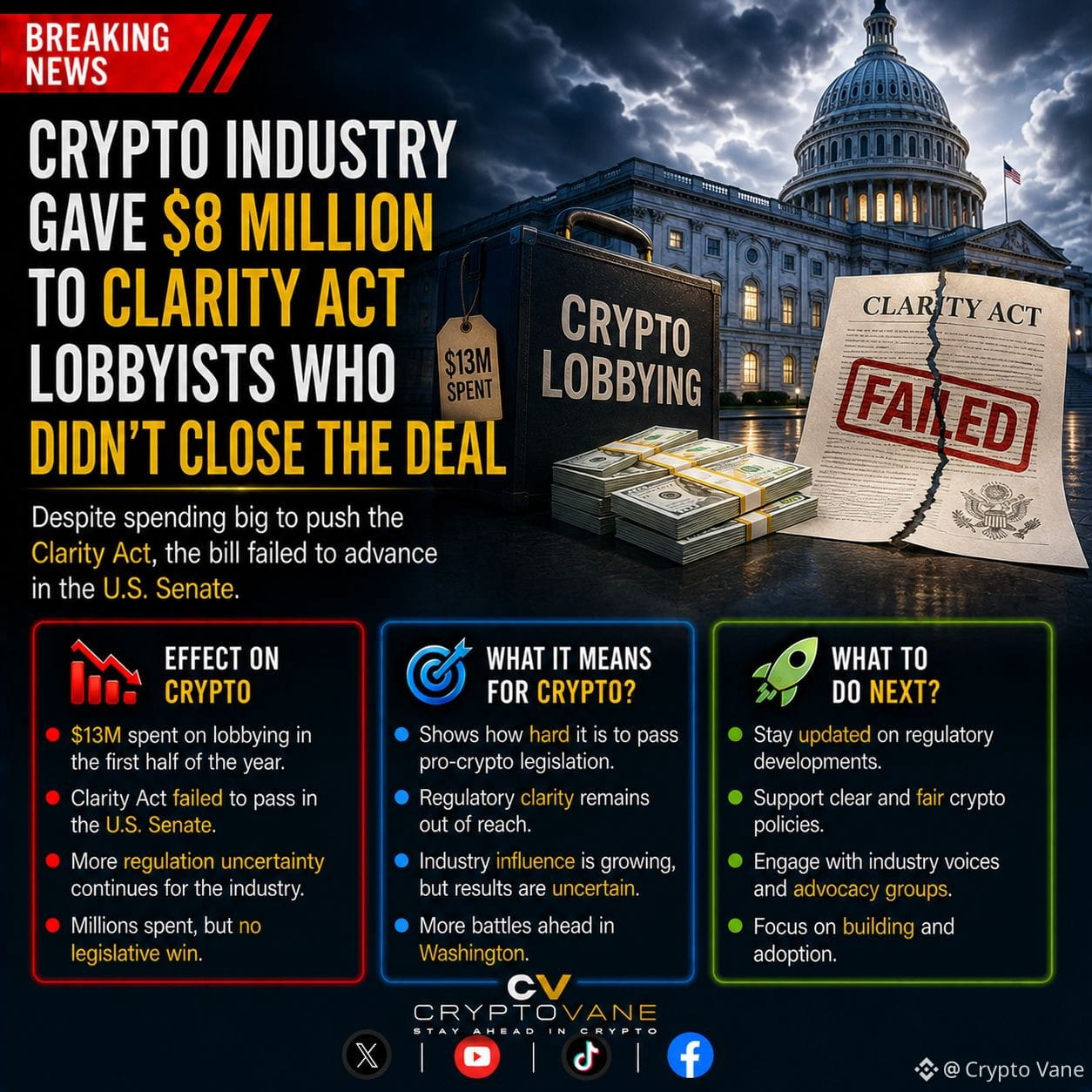
Crypto Spent $8M Lobbying for the Clarity Act — But It Failed 🚨
Crypto companies and groups spent millions lobbying for the Clarity Act, but the legislation failed to advance in the U.S. Senate. The setback highlights ongoing regulatory uncertainty and the industry’s growing push for clearer crypto rules.
#CryptoNews #ClarityAct #CryptoRegulation #bitcoin #blockchain
{spot}(BTCUSDT)
Crypto Spent $8M Lobbying for the Clarity Act — But It Failed 🚨
Crypto companies and groups spent millions lobbying for the Clarity Act, but the legislation failed to advance in the U.S. Senate. The setback highlights ongoing regulatory uncertainty and the industry’s growing push for clearer crypto rules.
#CryptoNews #ClarityAct #CryptoRegulation #bitcoin #blockchain
Crypto companies and groups spent millions lobbying for the Clarity Act, but the legislation failed to advance in the U.S. Senate. The setback highlights ongoing regulatory uncertainty and the industry’s growing push for clearer crypto rules.
#CryptoNews #ClarityAct #CryptoRegulation #bitcoin #blockchain
14

·
--
Bullish
See translation
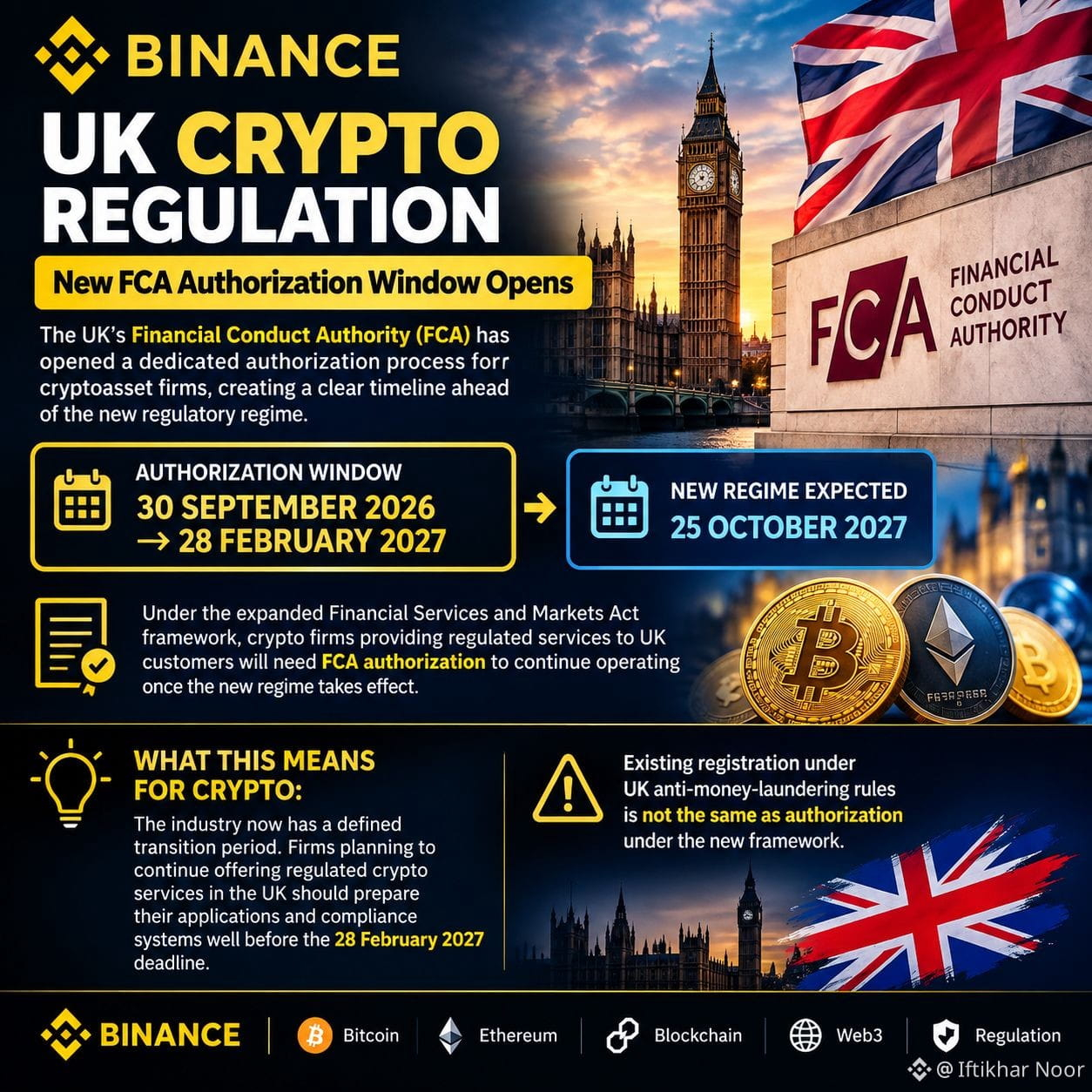
🇬🇧 UK Crypto Regulation: New FCA Authorization Window Opens
The UK’s Financial Conduct Authority (FCA) has opened a dedicated authorization process for cryptoasset firms, creating a clear timeline ahead of the new regulatory regime.
📅 Authorization Window:
30 September 2026 → 28 February 2027
🏛️ New Regime Expected:
25 October 2027
Under the expanded Financial Services and Markets Act framework, crypto firms providing regulated services to UK customers will need FCA authorization to continue operating once the new regime takes effect.
🔎 What this means for crypto:
The industry now has a defined transition period. Firms planning to continue offering regulated crypto services in the UK should prepare their applications and compliance systems well before the 28 February 2027 deadline.
⚠️ Existing registration under UK anti-money-laundering rules is not the same as authorization under the new framework.
#Binance #crypto #BitcoinDunyamiz #Ethereum #CryptoRegulation
$BTC $ETH
🇬🇧 UK Crypto Regulation: New FCA Authorization Window Opens
The UK’s Financial Conduct Authority (FCA) has opened a dedicated authorization process for cryptoasset firms, creating a clear timeline ahead of the new regulatory regime.
📅 Authorization Window:
30 September 2026 → 28 February 2027
🏛️ New Regime Expected:
25 October 2027
Under the expanded Financial Services and Markets Act framework, crypto firms providing regulated services to UK customers will need FCA authorization to continue operating once the new regime takes effect.
🔎 What this means for crypto:
The industry now has a defined transition period. Firms planning to continue offering regulated crypto services in the UK should prepare their applications and compliance systems well before the 28 February 2027 deadline.
⚠️ Existing registration under UK anti-money-laundering rules is not the same as authorization under the new framework.
#Binance #crypto #BitcoinDunyamiz #Ethereum #CryptoRegulation
$BTC $ETH
The UK’s Financial Conduct Authority (FCA) has opened a dedicated authorization process for cryptoasset firms, creating a clear timeline ahead of the new regulatory regime.
📅 Authorization Window:
30 September 2026 → 28 February 2027
🏛️ New Regime Expected:
25 October 2027
Under the expanded Financial Services and Markets Act framework, crypto firms providing regulated services to UK customers will need FCA authorization to continue operating once the new regime takes effect.
🔎 What this means for crypto:
The industry now has a defined transition period. Firms planning to continue offering regulated crypto services in the UK should prepare their applications and compliance systems well before the 28 February 2027 deadline.
⚠️ Existing registration under UK anti-money-laundering rules is not the same as authorization under the new framework.
#Binance #crypto #BitcoinDunyamiz #Ethereum #CryptoRegulation
$BTC $ETH
83

·
--
Bullish
See translation
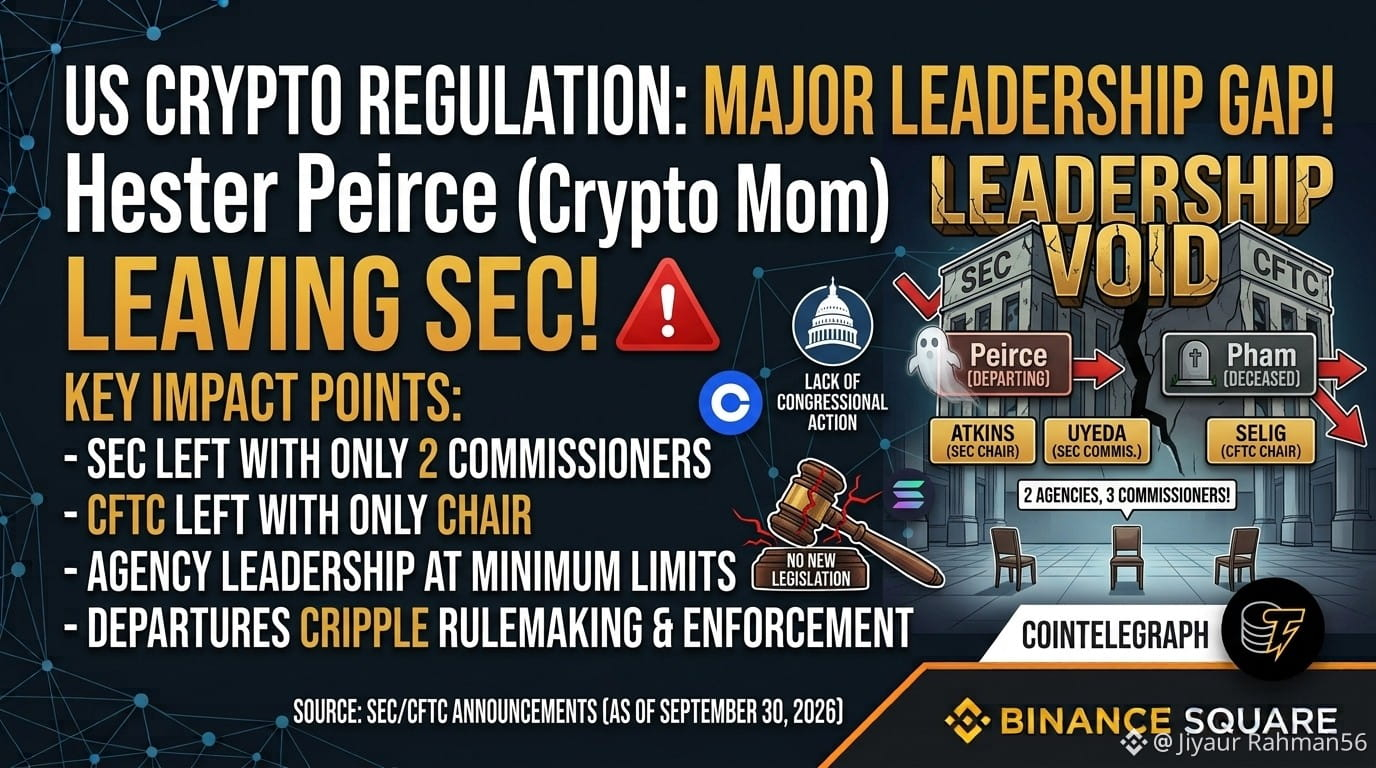
⚠️ $US Crypto Regulation Faces a Major Leadership Gap!
Significant shifts are taking place across key U.S. financial regulatory bodies. Hester Peirce—widely known as "Crypto Mom"—will officially step down from the SEC on October 2 after roughly eight years of service.
🏛️ The Regulatory Landscape Breakdown:
SEC Shortage: Peirce's departure leaves Chair Paul Atkins and Mark Uyeda as the SEC's only remaining commissioners.
CFTC Constraints: The CFTC currently operates with just a single commissioner, Chair Michael Selig, following Caroline Pham’s exit.
3 Commissioners Total: Only 3 commissioners combined now oversee two major federal agencies responsible for U.S. financial and crypto oversight.
With Congress yet to pass comprehensive crypto legislation, both agencies are continuing to shape digital asset rules despite shrinking leadership teams.
How do you think this leadership void will impact crypto regulations and enforcement in the United States?
Share your thoughts in the comments below! 👇
#SEC #CFTC #CryptoRegulation #BinanceSquare
{spot}(USDCUSDT)
⚠️ $US Crypto Regulation Faces a Major Leadership Gap!
Significant shifts are taking place across key U.S. financial regulatory bodies. Hester Peirce—widely known as "Crypto Mom"—will officially step down from the SEC on October 2 after roughly eight years of service.
🏛️ The Regulatory Landscape Breakdown:
SEC Shortage: Peirce's departure leaves Chair Paul Atkins and Mark Uyeda as the SEC's only remaining commissioners.
CFTC Constraints: The CFTC currently operates with just a single commissioner, Chair Michael Selig, following Caroline Pham’s exit.
3 Commissioners Total: Only 3 commissioners combined now oversee two major federal agencies responsible for U.S. financial and crypto oversight.
With Congress yet to pass comprehensive crypto legislation, both agencies are continuing to shape digital asset rules despite shrinking leadership teams.
How do you think this leadership void will impact crypto regulations and enforcement in the United States?
Share your thoughts in the comments below! 👇
#SEC #CFTC #CryptoRegulation #BinanceSquare
Significant shifts are taking place across key U.S. financial regulatory bodies. Hester Peirce—widely known as "Crypto Mom"—will officially step down from the SEC on October 2 after roughly eight years of service.
🏛️ The Regulatory Landscape Breakdown:
SEC Shortage: Peirce's departure leaves Chair Paul Atkins and Mark Uyeda as the SEC's only remaining commissioners.
CFTC Constraints: The CFTC currently operates with just a single commissioner, Chair Michael Selig, following Caroline Pham’s exit.
3 Commissioners Total: Only 3 commissioners combined now oversee two major federal agencies responsible for U.S. financial and crypto oversight.
With Congress yet to pass comprehensive crypto legislation, both agencies are continuing to shape digital asset rules despite shrinking leadership teams.
How do you think this leadership void will impact crypto regulations and enforcement in the United States?
Share your thoughts in the comments below! 👇
#SEC #CFTC #CryptoRegulation #BinanceSquare
34

See translation
🚨 UK FCA UNVEILS INSTITUTIONAL LICENSING FRAMEWORK FOR $BTC AND DIGITAL ASSETS 🏦
The UK Financial Conduct Authority has officially opened applications for its comprehensive regulatory regime, establishing a formal framework for custody, staking, and exchange operations through 2027. 🏦 This institutional greenlight signals a structural shift from regulatory ambiguity to structured capital onboarding across global jurisdictions.
Existing market participants must undergo rigorous re-authorization, proving capital resilience and strict consumer protection protocols. 🔍 As institutional compliance standards tighten, smart money is pricing in long-term structural legitimacy over short-term market noise.
💡 How will this institutional compliance window reshape institutional liquidity allocations across European markets? 👇
⚠️ Not financial advice. Always manage your risk. 🛡️
🏷️ #BTC #CryptoRegulation #FCA #Macro #Crypto
🏦 🔍
🚨 UK FCA UNVEILS INSTITUTIONAL LICENSING FRAMEWORK FOR $BTC AND DIGITAL ASSETS 🏦
The UK Financial Conduct Authority has officially opened applications for its comprehensive regulatory regime, establishing a formal framework for custody, staking, and exchange operations through 2027. 🏦 This institutional greenlight signals a structural shift from regulatory ambiguity to structured capital onboarding across global jurisdictions.
Existing market participants must undergo rigorous re-authorization, proving capital resilience and strict consumer protection protocols. 🔍 As institutional compliance standards tighten, smart money is pricing in long-term structural legitimacy over short-term market noise.
💡 How will this institutional compliance window reshape institutional liquidity allocations across European markets? 👇
⚠️ Not financial advice. Always manage your risk. 🛡️
🏷️ #BTC #CryptoRegulation #FCA #Macro #Crypto
🏦 🔍
The UK Financial Conduct Authority has officially opened applications for its comprehensive regulatory regime, establishing a formal framework for custody, staking, and exchange operations through 2027. 🏦 This institutional greenlight signals a structural shift from regulatory ambiguity to structured capital onboarding across global jurisdictions.
Existing market participants must undergo rigorous re-authorization, proving capital resilience and strict consumer protection protocols. 🔍 As institutional compliance standards tighten, smart money is pricing in long-term structural legitimacy over short-term market noise.
💡 How will this institutional compliance window reshape institutional liquidity allocations across European markets? 👇
⚠️ Not financial advice. Always manage your risk. 🛡️
🏷️ #BTC #CryptoRegulation #FCA #Macro #Crypto
🏦 🔍
26

·
--
See translation
🚨 UK FCA UNVEILS NEW REGULATORY FRAMEWORK FORCING STRUCTURAL SHIFTS ON $BTC INFRASTRUCTURE! ⚡
The UK Financial Conduct Authority just laid out its roadmap for full crypto authorization by 2027, covering everything from trading and staking to stablecoin issuance. 📊 Compliance is no longer an afterthought—it is officially becoming embedded into the core market infrastructure.
While higher operational standards build institutional trust, the rising friction and costs will filter out smaller players and reshape which business models survive. 💡 As compliance costs get baked into order flow, institutional capital will naturally concentrate around fully licensed venues.
Which crypto sectors do you think will thrive under this strict regulatory wall, and which ones will get squeezed out? 👇
⚠️ Not financial advice. Always manage your risk. 🛡️
🏷️ #BTC #CryptoRegulation #FCA #CryptoNews #MarketStructure
🔥 💎
🚨 UK FCA UNVEILS NEW REGULATORY FRAMEWORK FORCING STRUCTURAL SHIFTS ON $BTC INFRASTRUCTURE! ⚡
The UK Financial Conduct Authority just laid out its roadmap for full crypto authorization by 2027, covering everything from trading and staking to stablecoin issuance. 📊 Compliance is no longer an afterthought—it is officially becoming embedded into the core market infrastructure.
While higher operational standards build institutional trust, the rising friction and costs will filter out smaller players and reshape which business models survive. 💡 As compliance costs get baked into order flow, institutional capital will naturally concentrate around fully licensed venues.
Which crypto sectors do you think will thrive under this strict regulatory wall, and which ones will get squeezed out? 👇
⚠️ Not financial advice. Always manage your risk. 🛡️
🏷️ #BTC #CryptoRegulation #FCA #CryptoNews #MarketStructure
🔥 💎
The UK Financial Conduct Authority just laid out its roadmap for full crypto authorization by 2027, covering everything from trading and staking to stablecoin issuance. 📊 Compliance is no longer an afterthought—it is officially becoming embedded into the core market infrastructure.
While higher operational standards build institutional trust, the rising friction and costs will filter out smaller players and reshape which business models survive. 💡 As compliance costs get baked into order flow, institutional capital will naturally concentrate around fully licensed venues.
Which crypto sectors do you think will thrive under this strict regulatory wall, and which ones will get squeezed out? 👇
⚠️ Not financial advice. Always manage your risk. 🛡️
🏷️ #BTC #CryptoRegulation #FCA #CryptoNews #MarketStructure
🔥 💎
19

·
--
See translation
🚨 UK UNVEILS FCA CRYPTO FRAMEWORK AS INSTITUTIONAL RESTRUCTURING BEGINS FOR $BTC 🏛️
The Financial Conduct Authority has officially mapped out the application window for the UK cryptoasset regime through 2027. 🔍 This structural shift forces platforms, staking providers, and stablecoin issuers to integrate institutional compliance directly into their operational stack rather than relying on legacy registrations.
Smart money recognizes that stringent authorization criteria will prune inefficient operators while clearing pathways for deep capital deployment. 📊 The true narrative here is not immediate price action, but which business architectures can sustain high-friction compliance and still capture structural yield.
💡 Market infrastructure is being rewritten in real time, drawing a clear line between institutionally viable protocols and retail-dependent platforms. 💬 Which business models do you expect to survive as regulatory moats widen across major financial hubs? 👇
⚠️ Not financial advice. Always manage your risk. 🛡️
🏷️ #BTC #CryptoRegulation #UK #Institutional #MarketStructure
🎯 🦈
🚨 UK UNVEILS FCA CRYPTO FRAMEWORK AS INSTITUTIONAL RESTRUCTURING BEGINS FOR $BTC 🏛️
The Financial Conduct Authority has officially mapped out the application window for the UK cryptoasset regime through 2027. 🔍 This structural shift forces platforms, staking providers, and stablecoin issuers to integrate institutional compliance directly into their operational stack rather than relying on legacy registrations.
Smart money recognizes that stringent authorization criteria will prune inefficient operators while clearing pathways for deep capital deployment. 📊 The true narrative here is not immediate price action, but which business architectures can sustain high-friction compliance and still capture structural yield.
💡 Market infrastructure is being rewritten in real time, drawing a clear line between institutionally viable protocols and retail-dependent platforms. 💬 Which business models do you expect to survive as regulatory moats widen across major financial hubs? 👇
⚠️ Not financial advice. Always manage your risk. 🛡️
🏷️ #BTC #CryptoRegulation #UK #Institutional #MarketStructure
🎯 🦈
The Financial Conduct Authority has officially mapped out the application window for the UK cryptoasset regime through 2027. 🔍 This structural shift forces platforms, staking providers, and stablecoin issuers to integrate institutional compliance directly into their operational stack rather than relying on legacy registrations.
Smart money recognizes that stringent authorization criteria will prune inefficient operators while clearing pathways for deep capital deployment. 📊 The true narrative here is not immediate price action, but which business architectures can sustain high-friction compliance and still capture structural yield.
💡 Market infrastructure is being rewritten in real time, drawing a clear line between institutionally viable protocols and retail-dependent platforms. 💬 Which business models do you expect to survive as regulatory moats widen across major financial hubs? 👇
⚠️ Not financial advice. Always manage your risk. 🛡️
🏷️ #BTC #CryptoRegulation #UK #Institutional #MarketStructure
🎯 🦈
21

·
--
See translation
The U.S. Crypto Rulebook Is Still Being Written 🎯
Crypto regulation remains one of the biggest themes shaping the market.
Recent policy discussions continue to focus on where the boundary sits between the SEC and CFTC, how tokenized securities should operate, and what stablecoin issuers and trading platforms must do to comply.
$XRP
{future}(XRPUSDT)
The direction is becoming clearer: policymakers are moving from broad debate toward practical rules for market structure, disclosure, custody, stablecoins, and tokenized assets.
$DOGE
{future}(DOGEUSDT)
That does not mean every question has been resolved.
Different regulators, lawmakers, and market participants still disagree on how quickly rules should be implemented and how much flexibility crypto businesses should have.
$ENA
{future}(ENAUSDT)
For the industry, regulatory clarity could affect how products are launched, how institutions participate, and how tokenized markets develop over time.
#CryptoRegulation #SEC #CFTC #Write2Earn
Follow For more Update News...
@5ur1d
@Square-Creator-4f1968b4bd55
@Square-Creator-e36956b8e5e4f
@crypto_inquiad
The U.S. Crypto Rulebook Is Still Being Written 🎯
Crypto regulation remains one of the biggest themes shaping the market.
Recent policy discussions continue to focus on where the boundary sits between the SEC and CFTC, how tokenized securities should operate, and what stablecoin issuers and trading platforms must do to comply.
$XRP
The direction is becoming clearer: policymakers are moving from broad debate toward practical rules for market structure, disclosure, custody, stablecoins, and tokenized assets.
$DOGE
That does not mean every question has been resolved.
Different regulators, lawmakers, and market participants still disagree on how quickly rules should be implemented and how much flexibility crypto businesses should have.
$ENA
For the industry, regulatory clarity could affect how products are launched, how institutions participate, and how tokenized markets develop over time.
#CryptoRegulation #SEC #CFTC #Write2Earn
Follow For more Update News...
@TAJBI
@Marco cryptos
@NIRJHOR CRYPTO
@CRYPTO INQUIAD
Crypto regulation remains one of the biggest themes shaping the market.
Recent policy discussions continue to focus on where the boundary sits between the SEC and CFTC, how tokenized securities should operate, and what stablecoin issuers and trading platforms must do to comply.
$XRP
The direction is becoming clearer: policymakers are moving from broad debate toward practical rules for market structure, disclosure, custody, stablecoins, and tokenized assets.
$DOGE
That does not mean every question has been resolved.
Different regulators, lawmakers, and market participants still disagree on how quickly rules should be implemented and how much flexibility crypto businesses should have.
$ENA
For the industry, regulatory clarity could affect how products are launched, how institutions participate, and how tokenized markets develop over time.
#CryptoRegulation #SEC #CFTC #Write2Earn
Follow For more Update News...
@TAJBI
@Marco cryptos
@NIRJHOR CRYPTO
@CRYPTO INQUIAD


1
225

·
--
See translation
🚨 MICA CONSULTATION CLOSES TODAY AS INSTITUTIONAL FRAMEWORK REDEFINES $MOVR AND $GTC LIQUIDITY ⚖️
The EU MiCA review consultation reaches its deadline today, marking a critical pivot in European regulatory structure. Institutional capital remains on the sidelines waiting for clear compliance frameworks, while potential regulatory friction threatens to push early-stage liquidity offshore. 🏦
As capital efficiency and compliance costs collide, market dynamics could shift rapidly across infrastructure assets like $MOVR and governance protocols like $GTC . Clear regulatory guardrails often act as an institutional green light, yet excessive compliance friction could temporarily squeeze order flow depth. 🔍
Understanding institutional positioning behind regulatory milestones is key to anticipating long-term structural trends. 💡 Should European regulations prioritize lower barriers for emerging protocols or enforce maximum investor protection? 👇
⚠️ Not financial advice. Always manage your risk. 🛡️
🏷️ #MOVR #GTC #MiCA #CryptoRegulation #InstitutionalFlow
🛡️ ⚖️
🚨 MICA CONSULTATION CLOSES TODAY AS INSTITUTIONAL FRAMEWORK REDEFINES $MOVR AND $GTC LIQUIDITY ⚖️
The EU MiCA review consultation reaches its deadline today, marking a critical pivot in European regulatory structure. Institutional capital remains on the sidelines waiting for clear compliance frameworks, while potential regulatory friction threatens to push early-stage liquidity offshore. 🏦
As capital efficiency and compliance costs collide, market dynamics could shift rapidly across infrastructure assets like $MOVR and governance protocols like $GTC . Clear regulatory guardrails often act as an institutional green light, yet excessive compliance friction could temporarily squeeze order flow depth. 🔍
Understanding institutional positioning behind regulatory milestones is key to anticipating long-term structural trends. 💡 Should European regulations prioritize lower barriers for emerging protocols or enforce maximum investor protection? 👇
⚠️ Not financial advice. Always manage your risk. 🛡️
🏷️ #MOVR #GTC #MiCA #CryptoRegulation #InstitutionalFlow
🛡️ ⚖️
The EU MiCA review consultation reaches its deadline today, marking a critical pivot in European regulatory structure. Institutional capital remains on the sidelines waiting for clear compliance frameworks, while potential regulatory friction threatens to push early-stage liquidity offshore. 🏦
As capital efficiency and compliance costs collide, market dynamics could shift rapidly across infrastructure assets like $MOVR and governance protocols like $GTC . Clear regulatory guardrails often act as an institutional green light, yet excessive compliance friction could temporarily squeeze order flow depth. 🔍
Understanding institutional positioning behind regulatory milestones is key to anticipating long-term structural trends. 💡 Should European regulations prioritize lower barriers for emerging protocols or enforce maximum investor protection? 👇
⚠️ Not financial advice. Always manage your risk. 🛡️
🏷️ #MOVR #GTC #MiCA #CryptoRegulation #InstitutionalFlow
🛡️ ⚖️

113

See translation
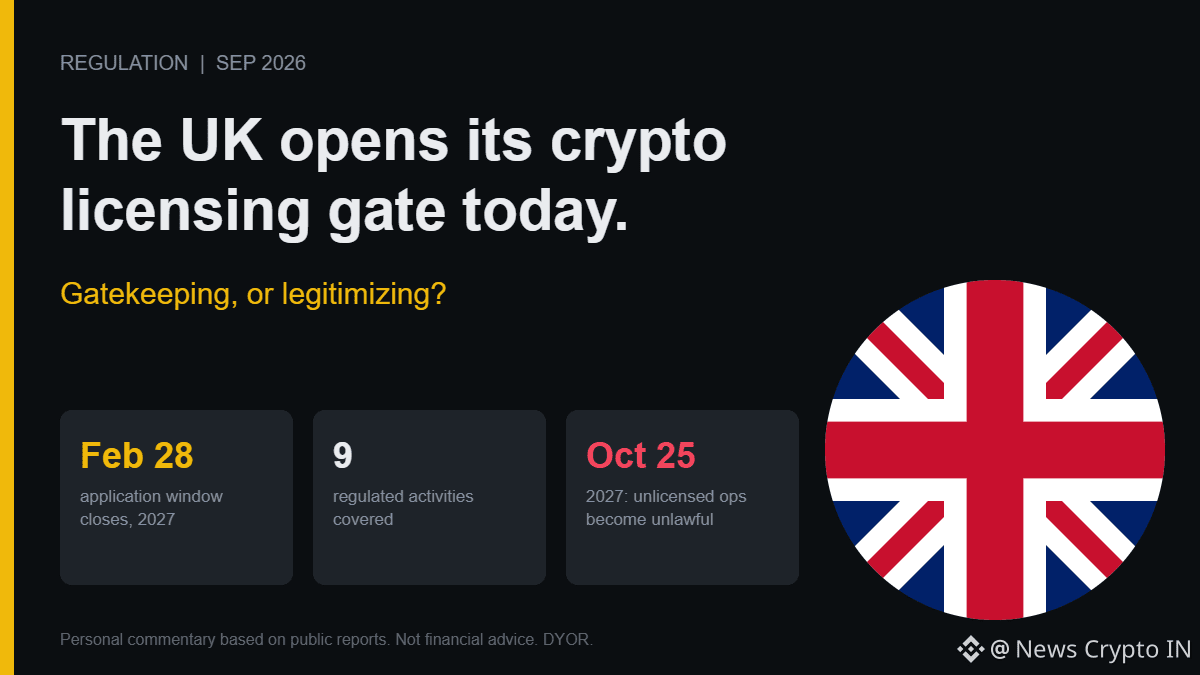
The UK opened its crypto authorisation gateway today (Sept 30). Firms have until Feb 28, 2027 to apply under FSMA for one of nine regulated activities: operating a trading platform, dealing as principal or agent, safeguarding cryptoassets, staking, and more. The new regime becomes fully binding Oct 25, 2027, after that, running an unauthorised regulated crypto activity reaching UK consumers is unlawful.
The detail that matters: existing UK registrations under the old Money Laundering Regulations do NOT convert automatically. Every firm already operating has to file for a brand-new FSMA authorisation, even the ones the FCA has been supervising for years.
There's a real safety net: firms that apply within the window can keep operating in the UK under "saving provisions" while the FCA reviews them. So this isn't an overnight ban. It's a long runway with a hard deadline at the end.
The part that gets skipped: the FCA's perimeter isn't UK-office-bound. Any firm anywhere reaching UK consumers can fall inside it. A US or Asia-based exchange with UK users may need this license just as much as a London startup.
Bulls call this legitimacy, a real regulator building a real pathway to operate. Skeptics call it a filter that only well-capitalized players can clear, the same compliance-cost story we've covered before with stablecoins.
Seventeen months to comply, or lose UK market access. Is that enough runway, or a slow-motion squeeze?
#FCA #CryptoRegulation
The UK opened its crypto authorisation gateway today (Sept 30). Firms have until Feb 28, 2027 to apply under FSMA for one of nine regulated activities: operating a trading platform, dealing as principal or agent, safeguarding cryptoassets, staking, and more. The new regime becomes fully binding Oct 25, 2027, after that, running an unauthorised regulated crypto activity reaching UK consumers is unlawful.
The detail that matters: existing UK registrations under the old Money Laundering Regulations do NOT convert automatically. Every firm already operating has to file for a brand-new FSMA authorisation, even the ones the FCA has been supervising for years.
There's a real safety net: firms that apply within the window can keep operating in the UK under "saving provisions" while the FCA reviews them. So this isn't an overnight ban. It's a long runway with a hard deadline at the end.
The part that gets skipped: the FCA's perimeter isn't UK-office-bound. Any firm anywhere reaching UK consumers can fall inside it. A US or Asia-based exchange with UK users may need this license just as much as a London startup.
Bulls call this legitimacy, a real regulator building a real pathway to operate. Skeptics call it a filter that only well-capitalized players can clear, the same compliance-cost story we've covered before with stablecoins.
Seventeen months to comply, or lose UK market access. Is that enough runway, or a slow-motion squeeze?
#FCA #CryptoRegulation
The detail that matters: existing UK registrations under the old Money Laundering Regulations do NOT convert automatically. Every firm already operating has to file for a brand-new FSMA authorisation, even the ones the FCA has been supervising for years.
There's a real safety net: firms that apply within the window can keep operating in the UK under "saving provisions" while the FCA reviews them. So this isn't an overnight ban. It's a long runway with a hard deadline at the end.
The part that gets skipped: the FCA's perimeter isn't UK-office-bound. Any firm anywhere reaching UK consumers can fall inside it. A US or Asia-based exchange with UK users may need this license just as much as a London startup.
Bulls call this legitimacy, a real regulator building a real pathway to operate. Skeptics call it a filter that only well-capitalized players can clear, the same compliance-cost story we've covered before with stablecoins.
Seventeen months to comply, or lose UK market access. Is that enough runway, or a slow-motion squeeze?
#FCA #CryptoRegulation
1.1k

See translation
🔥 Crypto isn’t being outlawed worldwide – Brazil’s new FX rule simply bars its use in regulated cross‑border payments.
📊 The central bank just announced that crypto can’t route through its newly‑tightened foreign‑exchange system, part of a broader #BrazilFX push to keep cross‑border flows fully regulated #CryptoRegulation, even as Bitcoin trades at $83,399 with a neutral RSI of 46.6.
💡 In the #CryptoWinter narrative, this isn’t a market‑killing event but a cycle‑stage signal: futures open interest sits at $7.83 B, funding is –0.0010% (shorts paying) and long‑short ratio 1.42, showing institutional players still hedging exposure while the broader sentiment reads 71 / 100 on greed. Such regulatory clarity often precedes the next price‑discovery wave, especially when smart‑money wallets are quietly buying Solana (+7099 % on Watermelinu) and other high‑growth assets.
🚀 Practical move: keep BTC exposure for macro‑level hedging, but route any Brazil‑focused remittances through stablecoins or BSC tokens like BNCDAO, which are seeing on‑chain inflows and viral buzz, to stay compliant and capture upside on the next cycle lift.
❓ How are you adjusting your cross‑border strategy now that Brazil’s FX rules have tightened – shifting to stablecoins, diversifying into BSC assets, or holding steady on Bitcoin?
🔥 Crypto isn’t being outlawed worldwide – Brazil’s new FX rule simply bars its use in regulated cross‑border payments.
📊 The central bank just announced that crypto can’t route through its newly‑tightened foreign‑exchange system, part of a broader #BrazilFX push to keep cross‑border flows fully regulated #CryptoRegulation, even as Bitcoin trades at $83,399 with a neutral RSI of 46.6.
💡 In the #CryptoWinter narrative, this isn’t a market‑killing event but a cycle‑stage signal: futures open interest sits at $7.83 B, funding is –0.0010% (shorts paying) and long‑short ratio 1.42, showing institutional players still hedging exposure while the broader sentiment reads 71 / 100 on greed. Such regulatory clarity often precedes the next price‑discovery wave, especially when smart‑money wallets are quietly buying Solana (+7099 % on Watermelinu) and other high‑growth assets.
🚀 Practical move: keep BTC exposure for macro‑level hedging, but route any Brazil‑focused remittances through stablecoins or BSC tokens like BNCDAO, which are seeing on‑chain inflows and viral buzz, to stay compliant and capture upside on the next cycle lift.
❓ How are you adjusting your cross‑border strategy now that Brazil’s FX rules have tightened – shifting to stablecoins, diversifying into BSC assets, or holding steady on Bitcoin?
📊 The central bank just announced that crypto can’t route through its newly‑tightened foreign‑exchange system, part of a broader #BrazilFX push to keep cross‑border flows fully regulated #CryptoRegulation, even as Bitcoin trades at $83,399 with a neutral RSI of 46.6.
💡 In the #CryptoWinter narrative, this isn’t a market‑killing event but a cycle‑stage signal: futures open interest sits at $7.83 B, funding is –0.0010% (shorts paying) and long‑short ratio 1.42, showing institutional players still hedging exposure while the broader sentiment reads 71 / 100 on greed. Such regulatory clarity often precedes the next price‑discovery wave, especially when smart‑money wallets are quietly buying Solana (+7099 % on Watermelinu) and other high‑growth assets.
🚀 Practical move: keep BTC exposure for macro‑level hedging, but route any Brazil‑focused remittances through stablecoins or BSC tokens like BNCDAO, which are seeing on‑chain inflows and viral buzz, to stay compliant and capture upside on the next cycle lift.
❓ How are you adjusting your cross‑border strategy now that Brazil’s FX rules have tightened – shifting to stablecoins, diversifying into BSC assets, or holding steady on Bitcoin?
47


See translation
Flash update. The Clarity Act is dead. 🚨 Democratic opposition just blocked the bipartisan crypto bill on Capitol Hill. Traders are recalibrating regulatory risk now. Here is what matters. 📉 First, federal oversight clarity is officially on hold indefinitely. 🏛️ Second, compliance costs remain messy for firms navigating the $BTC and $ETH ecosystems. ⚖️ Third, policy gridlock shifts focus back to state-level rulings. Stay sharp and manage your exposure. #Write2Earn $BTC $ETH #CryptoRegulation #Policy
Flash update. The Clarity Act is dead. 🚨 Democratic opposition just blocked the bipartisan crypto bill on Capitol Hill. Traders are recalibrating regulatory risk now. Here is what matters. 📉 First, federal oversight clarity is officially on hold indefinitely. 🏛️ Second, compliance costs remain messy for firms navigating the $BTC and $ETH ecosystems. ⚖️ Third, policy gridlock shifts focus back to state-level rulings. Stay sharp and manage your exposure. #Write2Earn $BTC $ETH #CryptoRegulation #Policy
1.4k
·
--
See translation
🚨 WASHINGTON FRACTURES OVER REGULATION AS INSTITUTIONAL $BTC FLOWS AWAIT CLARITY ⚡
Political friction around the Crypto Clarity Act highlights ongoing macro uncertainty, forcing institutional market participants to hedge exposure near critical liquidity zones. 🔍 Smart money continues to treat regulatory headlines as volatility triggers rather than structural trend shifts.
As Capitol Hill shifts blame over delayed policy frameworks, order book depth shows institutional capital sitting patient inside lower time-frame order blocks. 📊 Expect range-bound liquidity sweeps until clear legislative guidelines establish a definitive directional bias for $BTC .
💡 Until structural confirmation arrives, disciplined traders are tracking key market boundaries rather than chasing news-driven noise. 💬 How are you managing risk while institutional capital navigates this regulatory stalemate? 👇
⚠️ Not financial advice. Always manage your risk. 🛡️
🏷️ #BTC #Crypto #MarketStructure #CryptoRegulation
🎯 🦈
🚨 WASHINGTON FRACTURES OVER REGULATION AS INSTITUTIONAL $BTC FLOWS AWAIT CLARITY ⚡
Political friction around the Crypto Clarity Act highlights ongoing macro uncertainty, forcing institutional market participants to hedge exposure near critical liquidity zones. 🔍 Smart money continues to treat regulatory headlines as volatility triggers rather than structural trend shifts.
As Capitol Hill shifts blame over delayed policy frameworks, order book depth shows institutional capital sitting patient inside lower time-frame order blocks. 📊 Expect range-bound liquidity sweeps until clear legislative guidelines establish a definitive directional bias for $BTC .
💡 Until structural confirmation arrives, disciplined traders are tracking key market boundaries rather than chasing news-driven noise. 💬 How are you managing risk while institutional capital navigates this regulatory stalemate? 👇
⚠️ Not financial advice. Always manage your risk. 🛡️
🏷️ #BTC #Crypto #MarketStructure #CryptoRegulation
🎯 🦈
Political friction around the Crypto Clarity Act highlights ongoing macro uncertainty, forcing institutional market participants to hedge exposure near critical liquidity zones. 🔍 Smart money continues to treat regulatory headlines as volatility triggers rather than structural trend shifts.
As Capitol Hill shifts blame over delayed policy frameworks, order book depth shows institutional capital sitting patient inside lower time-frame order blocks. 📊 Expect range-bound liquidity sweeps until clear legislative guidelines establish a definitive directional bias for $BTC .
💡 Until structural confirmation arrives, disciplined traders are tracking key market boundaries rather than chasing news-driven noise. 💬 How are you managing risk while institutional capital navigates this regulatory stalemate? 👇
⚠️ Not financial advice. Always manage your risk. 🛡️
🏷️ #BTC #Crypto #MarketStructure #CryptoRegulation
🎯 🦈
21
See translation
Zero to sixty in US derivatives. 🚀 Ondo Perps CEO David Wells is eyeing a massive opening for perpetual futures domestically under a fresh regulatory framework. This matters because US institutional liquidity could finally unlock for on-chain perps. Watch how the CFTC and compliance models shape up next. #Write2Earn $ONDO #CryptoRegulation #Trading
Zero to sixty in US derivatives. 🚀 Ondo Perps CEO David Wells is eyeing a massive opening for perpetual futures domestically under a fresh regulatory framework. This matters because US institutional liquidity could finally unlock for on-chain perps. Watch how the CFTC and compliance models shape up next. #Write2Earn $ONDO #CryptoRegulation #Trading

165
See translation
🔔 One regulator just slammed the doors on crypto payments in Brazil, and the ripple is already echoing through the global markets.
📈 At 02:00 UTC the Central Bank announced that virtual assets are barred from settlement on its regulated eFX rails, a move that forces traders onto unlicensed channels just as #BTC surged to $84,250, up 1.4% on a Greed‑charged 73 sentiment index. Futures data shows Bitcoin open interest holding steady at $7.85 B with a bullish funding rate of +0.0055% and a long‑short ratio of 1.30, while #Ethereum climbs to $2,725 on a bullish MACD crossover, suggesting institutional appetite is only heating up despite the new roadblock #CryptoRegulation.
💡 The irony? Brazil’s crackdown could actually tighten the supply chain of on‑ramp liquidity, nudging more capital into the very exchanges the ban tries to sideline.
❓ Will this regulatory hammer spark a hidden surge of decentralized swaps, or will it push the market into a silent lull?
🔔 One regulator just slammed the doors on crypto payments in Brazil, and the ripple is already echoing through the global markets.
📈 At 02:00 UTC the Central Bank announced that virtual assets are barred from settlement on its regulated eFX rails, a move that forces traders onto unlicensed channels just as #BTC surged to $84,250, up 1.4% on a Greed‑charged 73 sentiment index. Futures data shows Bitcoin open interest holding steady at $7.85 B with a bullish funding rate of +0.0055% and a long‑short ratio of 1.30, while #Ethereum climbs to $2,725 on a bullish MACD crossover, suggesting institutional appetite is only heating up despite the new roadblock #CryptoRegulation.
💡 The irony? Brazil’s crackdown could actually tighten the supply chain of on‑ramp liquidity, nudging more capital into the very exchanges the ban tries to sideline.
❓ Will this regulatory hammer spark a hidden surge of decentralized swaps, or will it push the market into a silent lull?
📈 At 02:00 UTC the Central Bank announced that virtual assets are barred from settlement on its regulated eFX rails, a move that forces traders onto unlicensed channels just as #BTC surged to $84,250, up 1.4% on a Greed‑charged 73 sentiment index. Futures data shows Bitcoin open interest holding steady at $7.85 B with a bullish funding rate of +0.0055% and a long‑short ratio of 1.30, while #Ethereum climbs to $2,725 on a bullish MACD crossover, suggesting institutional appetite is only heating up despite the new roadblock #CryptoRegulation.
💡 The irony? Brazil’s crackdown could actually tighten the supply chain of on‑ramp liquidity, nudging more capital into the very exchanges the ban tries to sideline.
❓ Will this regulatory hammer spark a hidden surge of decentralized swaps, or will it push the market into a silent lull?
10

See translation
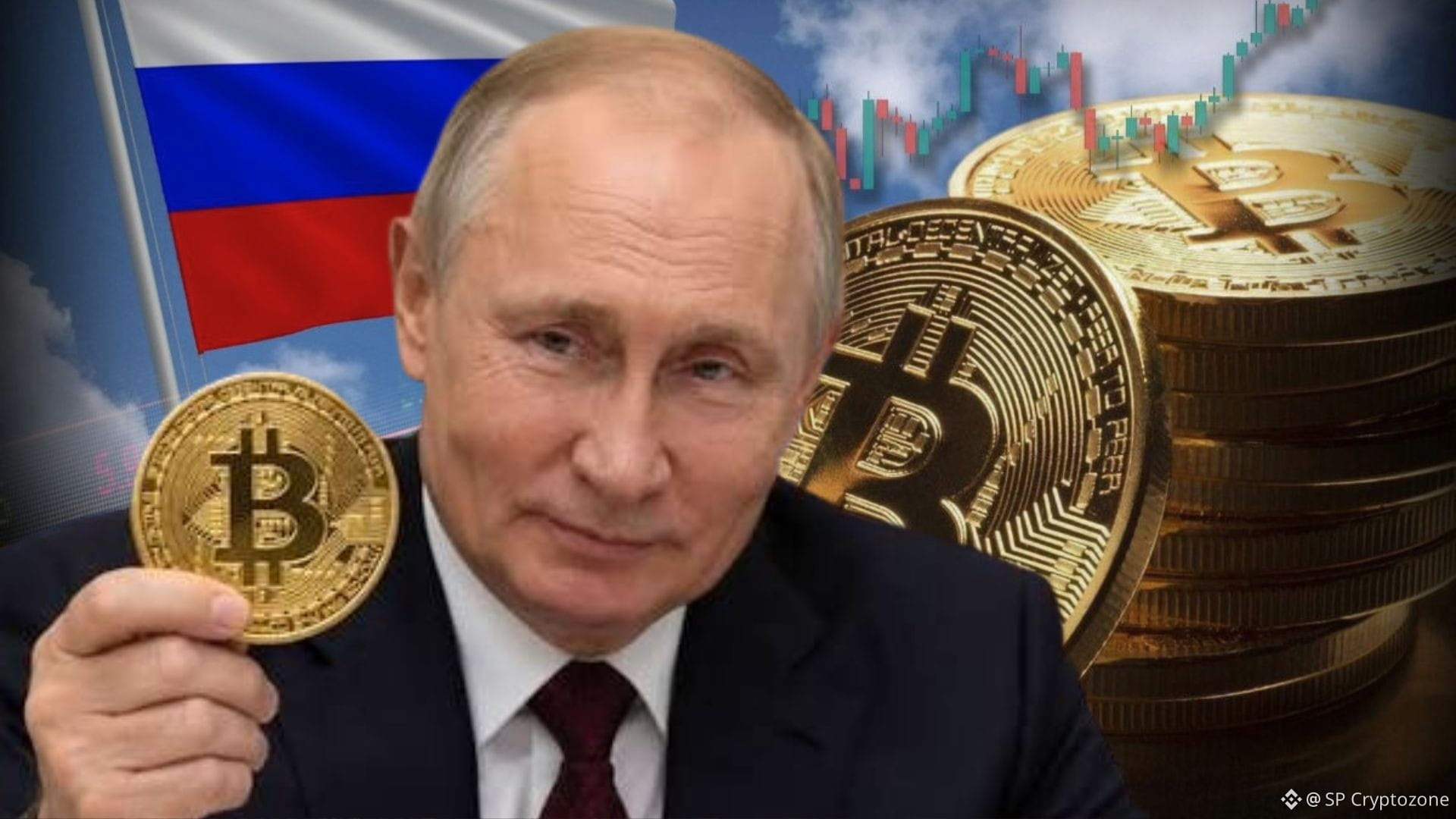
🇷🇺 RUSSIA ADVANCES TOWARD A CONTROLLED CRYPTO MARKET
Russia is preparing to facilitate the establishment of sanctioned cryptocurrency exchanges and digital storage facilities that will be overseen by the Bank of Russia.
Starting October 5, new guidelines for entering the register will take effect, and businesses need to meet certain criteria and regulations to be registered.
A further move has been made in the direction of legitimizing cryptocurrency trading and custodial services in Russia.
#Russia #Bitcoin #Crypto #CryptoRegulation
$BTC
{future}(BTCUSDT)
🇷🇺 RUSSIA ADVANCES TOWARD A CONTROLLED CRYPTO MARKET
Russia is preparing to facilitate the establishment of sanctioned cryptocurrency exchanges and digital storage facilities that will be overseen by the Bank of Russia.
Starting October 5, new guidelines for entering the register will take effect, and businesses need to meet certain criteria and regulations to be registered.
A further move has been made in the direction of legitimizing cryptocurrency trading and custodial services in Russia.
#Russia #Bitcoin #Crypto #CryptoRegulation
$BTC
Russia is preparing to facilitate the establishment of sanctioned cryptocurrency exchanges and digital storage facilities that will be overseen by the Bank of Russia.
Starting October 5, new guidelines for entering the register will take effect, and businesses need to meet certain criteria and regulations to be registered.
A further move has been made in the direction of legitimizing cryptocurrency trading and custodial services in Russia.
#Russia #Bitcoin #Crypto #CryptoRegulation
$BTC
38

·
--
Bullish
See translation
#SECSaysDecentralizedTokenBuybacksNotInvestmentContracts
🇺🇸 SEC Staff Updates Token Buyback Guidance: Decentralization Matters
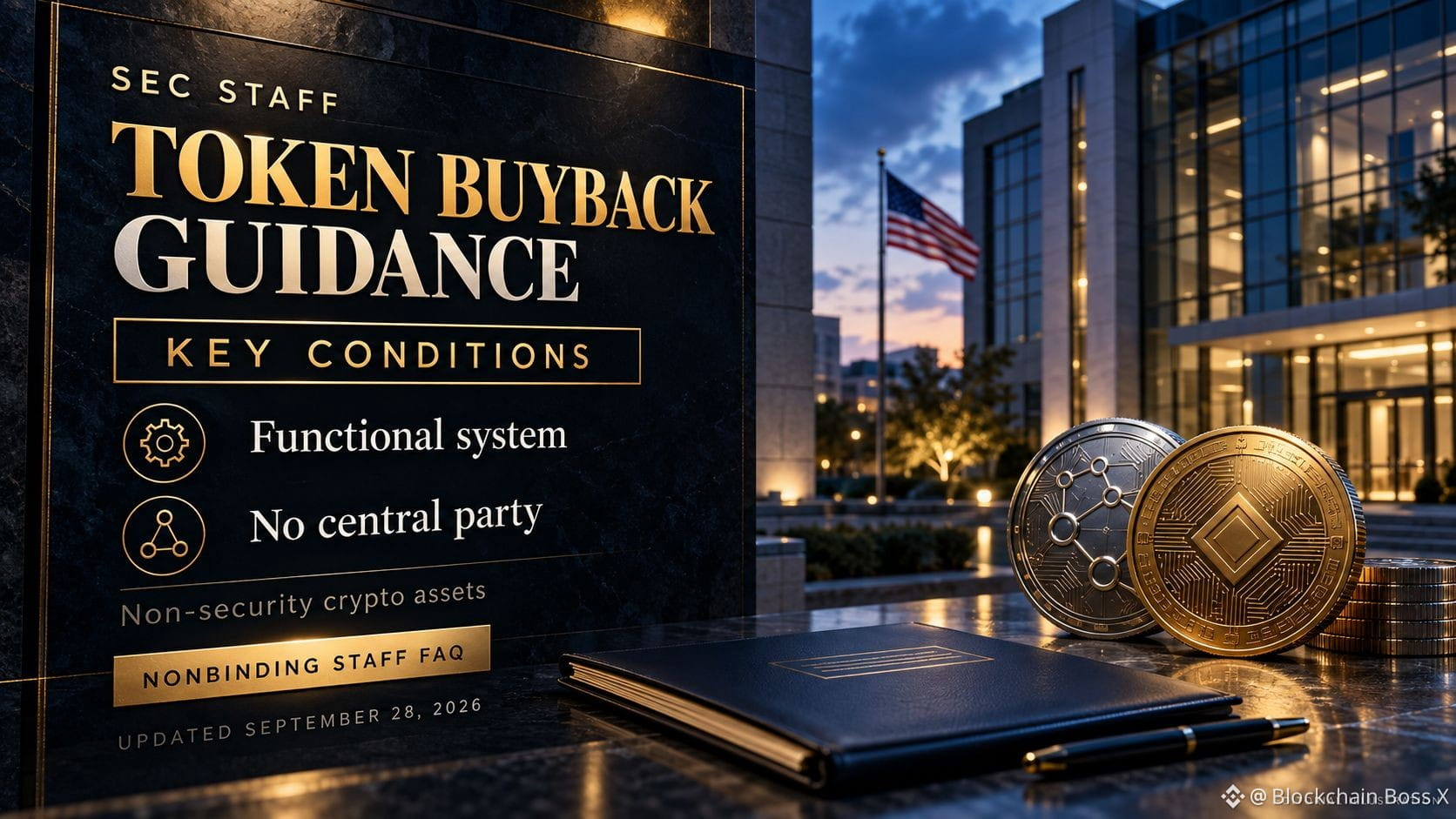
On September 28, SEC staff revised its crypto FAQ, adding an explicit condition to its buyback guidance: the network must be functional and have no central party.
The answer concerns non-security crypto assets. Under those conditions, announcing a buyback would not, in staff’s view, constitute a promise to perform the essential managerial efforts relevant to an investment-contract analysis.
For a network that is not yet functional, presenting a buyback as generating yield or returns could count as such a promise.
These FAQs are nonbinding staff guidance with no legal force. They do not establish a blanket exemption for token buybacks.
My take: I would examine who can change protocol rules, control treasury decisions or override governance outcomes. Those disclosures help readers understand how decisions are made; the word “decentralized” on a website provides little evidence by itself.
I would also assess buyback funding, whether purchases can continue and how repurchases compare with new token issuance. A large announced program may have a different economic effect from purchases consistently funded by ongoing activity.
Legal interpretation and token economics deserve separate attention. This update provides a more specific framework for discussion, while actual governance and execution remain worth investigating.
What evidence would you look for when assessing whether a crypto network has central control?
#SECSaysDecentralizedTokenBuybacksNotInvestmentContracts #CryptoRegulation #TokenBuybacks
$ETH $SOL $NEAR
#SECSaysDecentralizedTokenBuybacksNotInvestmentContracts
🇺🇸 SEC Staff Updates Token Buyback Guidance: Decentralization Matters
On September 28, SEC staff revised its crypto FAQ, adding an explicit condition to its buyback guidance: the network must be functional and have no central party.
The answer concerns non-security crypto assets. Under those conditions, announcing a buyback would not, in staff’s view, constitute a promise to perform the essential managerial efforts relevant to an investment-contract analysis.
For a network that is not yet functional, presenting a buyback as generating yield or returns could count as such a promise.
These FAQs are nonbinding staff guidance with no legal force. They do not establish a blanket exemption for token buybacks.
My take: I would examine who can change protocol rules, control treasury decisions or override governance outcomes. Those disclosures help readers understand how decisions are made; the word “decentralized” on a website provides little evidence by itself.
I would also assess buyback funding, whether purchases can continue and how repurchases compare with new token issuance. A large announced program may have a different economic effect from purchases consistently funded by ongoing activity.
Legal interpretation and token economics deserve separate attention. This update provides a more specific framework for discussion, while actual governance and execution remain worth investigating.
What evidence would you look for when assessing whether a crypto network has central control?
#SECSaysDecentralizedTokenBuybacksNotInvestmentContracts #CryptoRegulation #TokenBuybacks
$ETH $SOL $NEAR
🇺🇸 SEC Staff Updates Token Buyback Guidance: Decentralization Matters
On September 28, SEC staff revised its crypto FAQ, adding an explicit condition to its buyback guidance: the network must be functional and have no central party.
The answer concerns non-security crypto assets. Under those conditions, announcing a buyback would not, in staff’s view, constitute a promise to perform the essential managerial efforts relevant to an investment-contract analysis.
For a network that is not yet functional, presenting a buyback as generating yield or returns could count as such a promise.
These FAQs are nonbinding staff guidance with no legal force. They do not establish a blanket exemption for token buybacks.
My take: I would examine who can change protocol rules, control treasury decisions or override governance outcomes. Those disclosures help readers understand how decisions are made; the word “decentralized” on a website provides little evidence by itself.
I would also assess buyback funding, whether purchases can continue and how repurchases compare with new token issuance. A large announced program may have a different economic effect from purchases consistently funded by ongoing activity.
Legal interpretation and token economics deserve separate attention. This update provides a more specific framework for discussion, while actual governance and execution remain worth investigating.
What evidence would you look for when assessing whether a crypto network has central control?
#SECSaysDecentralizedTokenBuybacksNotInvestmentContracts #CryptoRegulation #TokenBuybacks
$ETH $SOL $NEAR
1
223

·
--
See translation
#ukfcawinscourtordertorecover851400pounds
🚨 Regulatory Enforcement: UK FCA Wins Court Order to Recover £851,400!
The Market Update: Regulatory oversight and asset recovery efforts are intensifying across European financial jurisdictions as the UK Financial Conduct Authority (FCA) successfully wins a court order to recover £851,400 linked to unlawful digital asset operations. This decisive legal action highlights tightening cross-border enforcement, targeting illicit platforms, and safeguarding consumer protection within the regulated crypto perimeter.
What The Enforcement Means for Traders: Heightened regulatory scrutiny reinforces compliance standards for exchanges and custodial service providers operating within major financial hubs. Market participants are increasingly prioritizing fully compliant, audited networks and transparent platforms as regulatory frameworks mature globally.
Highlighted Tradeable Coins to Watch:
$BTC (Bitcoin): The macro market baseline; tracking overall liquidity trends and institutional risk sentiment across regulated jurisdictions.
$ETH (Ethereum): The leading smart contract platform; monitoring decentralized application activity and regulatory adaptation within DeFi.
$SOL (Solana): High-velocity network benchmark; observing ecosystem volume growth and capital flows across major trading pairs.
How do you view the impact of aggressive regulatory asset recovery on the adoption of decentralized versus centralized financial platforms? Let's discuss your thoughts in the comments below! 👇
{spot}(BTCUSDT)
{spot}(ETHUSDT)
{spot}(SOLUSDT)
#CryptoRegulation #compliance
#ukfcawinscourtordertorecover851400pounds
🚨 Regulatory Enforcement: UK FCA Wins Court Order to Recover £851,400!
The Market Update: Regulatory oversight and asset recovery efforts are intensifying across European financial jurisdictions as the UK Financial Conduct Authority (FCA) successfully wins a court order to recover £851,400 linked to unlawful digital asset operations. This decisive legal action highlights tightening cross-border enforcement, targeting illicit platforms, and safeguarding consumer protection within the regulated crypto perimeter.
What The Enforcement Means for Traders: Heightened regulatory scrutiny reinforces compliance standards for exchanges and custodial service providers operating within major financial hubs. Market participants are increasingly prioritizing fully compliant, audited networks and transparent platforms as regulatory frameworks mature globally.
Highlighted Tradeable Coins to Watch:
$BTC (Bitcoin): The macro market baseline; tracking overall liquidity trends and institutional risk sentiment across regulated jurisdictions.
$ETH (Ethereum): The leading smart contract platform; monitoring decentralized application activity and regulatory adaptation within DeFi.
$SOL (Solana): High-velocity network benchmark; observing ecosystem volume growth and capital flows across major trading pairs.
How do you view the impact of aggressive regulatory asset recovery on the adoption of decentralized versus centralized financial platforms? Let's discuss your thoughts in the comments below! 👇
#CryptoRegulation #compliance
🚨 Regulatory Enforcement: UK FCA Wins Court Order to Recover £851,400!
The Market Update: Regulatory oversight and asset recovery efforts are intensifying across European financial jurisdictions as the UK Financial Conduct Authority (FCA) successfully wins a court order to recover £851,400 linked to unlawful digital asset operations. This decisive legal action highlights tightening cross-border enforcement, targeting illicit platforms, and safeguarding consumer protection within the regulated crypto perimeter.
What The Enforcement Means for Traders: Heightened regulatory scrutiny reinforces compliance standards for exchanges and custodial service providers operating within major financial hubs. Market participants are increasingly prioritizing fully compliant, audited networks and transparent platforms as regulatory frameworks mature globally.
Highlighted Tradeable Coins to Watch:
$BTC (Bitcoin): The macro market baseline; tracking overall liquidity trends and institutional risk sentiment across regulated jurisdictions.
$ETH (Ethereum): The leading smart contract platform; monitoring decentralized application activity and regulatory adaptation within DeFi.
$SOL (Solana): High-velocity network benchmark; observing ecosystem volume growth and capital flows across major trading pairs.
How do you view the impact of aggressive regulatory asset recovery on the adoption of decentralized versus centralized financial platforms? Let's discuss your thoughts in the comments below! 👇
#CryptoRegulation #compliance

206 Atlas:
Enforcement targets bad actors, not decentralization. Compliance drives institutional adoption while DeFi remains permissionless regardless of court orders.
1
3.5k
See translation
Nine years on the clock and crypto crypto crypto regulation just shifted. ⏱️ SEC Commissioner Hester Peirce is officially clearing out her desk this week. Why it matters: she was the steady voice pushing for clarity while the agency stalled. Watch how leadership transitions impact pending ETF filings and policy tone next. #Write2Earn $BTC $ETH #SEC #CryptoRegulation
Nine years on the clock and crypto crypto crypto regulation just shifted. ⏱️ SEC Commissioner Hester Peirce is officially clearing out her desk this week. Why it matters: she was the steady voice pushing for clarity while the agency stalled. Watch how leadership transitions impact pending ETF filings and policy tone next. #Write2Earn $BTC $ETH #SEC #CryptoRegulation

45

See translation
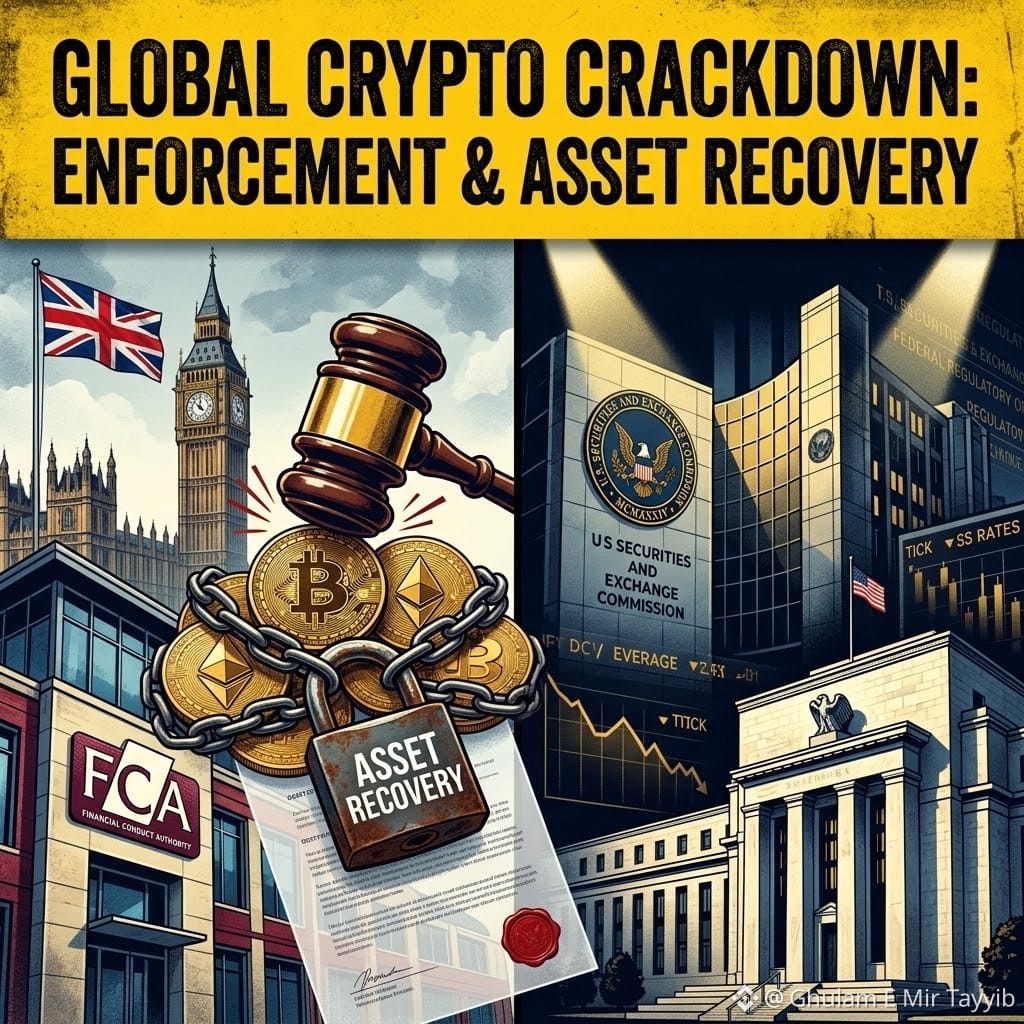
UK's FCA has secured another court-backed win, recovering £851,400 tied to unauthorized crypto-related activity — reinforcing a bigger global pattern.
This comes alongside SEC pushing clearer crypto rules and the Fed's new stablecoin supervision framework under the GENIUS Act. Regulators aren't just writing rulebooks anymore — they're actively clawing money back.
$BTC
{future}(BTCUSDT)
$CRCL
{future}(CRCLUSDT)
$COINB
{spot}(COINBUSDT)
reacting slightly bearish on the regulatory heat.
Is stricter enforcement bullish long-term for crypto legitimacy, or bearish near-term for sentiment? 👇
#FCA #CryptoRegulation #BTC
UK's FCA has secured another court-backed win, recovering £851,400 tied to unauthorized crypto-related activity — reinforcing a bigger global pattern.
This comes alongside SEC pushing clearer crypto rules and the Fed's new stablecoin supervision framework under the GENIUS Act. Regulators aren't just writing rulebooks anymore — they're actively clawing money back.
$BTC
$CRCL
$COINB
reacting slightly bearish on the regulatory heat.
Is stricter enforcement bullish long-term for crypto legitimacy, or bearish near-term for sentiment? 👇
#FCA #CryptoRegulation #BTC
This comes alongside SEC pushing clearer crypto rules and the Fed's new stablecoin supervision framework under the GENIUS Act. Regulators aren't just writing rulebooks anymore — they're actively clawing money back.
$BTC
$CRCL
$COINB
reacting slightly bearish on the regulatory heat.
Is stricter enforcement bullish long-term for crypto legitimacy, or bearish near-term for sentiment? 👇
#FCA #CryptoRegulation #BTC
1
401
·
--
Crypto regulation takes a complex step at the state level in the U.S. Illinois has submitted a draft tax bill that outlines the application of a 0.2% tax on transactions involving digital assets, covering DeFi platforms, stablecoins, bridges, and transfers in self-custody. This move sets an important precedent for how states try to tax on-chain activity beyond centralized exchanges. It matters because it fragments regulatory compliance for decentralized protocols and local users, testing the technical feasibility of applying transaction-level taxes in smart contracts. Watch? The progress of the legal text and whether other jurisdictions replicate this tax model. #CryptoRegulation #DeFi #Stablecoins $BTC $ETH
Crypto regulation takes a complex step at the state level in the U.S. Illinois has submitted a draft tax bill that outlines the application of a 0.2% tax on transactions involving digital assets, covering DeFi platforms, stablecoins, bridges, and transfers in self-custody. This move sets an important precedent for how states try to tax on-chain activity beyond centralized exchanges. It matters because it fragments regulatory compliance for decentralized protocols and local users, testing the technical feasibility of applying transaction-level taxes in smart contracts. Watch? The progress of the legal text and whether other jurisdictions replicate this tax model. #CryptoRegulation #DeFi #Stablecoins $BTC $ETH
39
Log in to explore more content
Join global crypto users on Binance Square
⚡️ Get latest and useful information about crypto.
💬 Trusted by the world’s largest crypto exchange.
👍 Discover real insights from verified creators.
Email / Phone number
Trending Topics
1
#BitcoinClears$85200
7,168 views
182 Discussing
2
#AltcoinSeasonIndexHoldsAbove60For5Days
38,837 views
991 Discussing
3
#USADPAdds90000JobsInSeptember
17,534 views
564 Discussing
4
#USCorePCEEasesTo3%InAugust
13,681 views
450 Discussing
5
#KospiPostsWorstQuarterSince2020
9,964 views
444 Discussing
6
#SECToClarifyOnChainFundraisingRules
23,853 views
614 Discussing
7
#UKFCAOpensCryptoFirmAuthorization
24,320 views
523 Discussing
8
#JapanMOFStudyGroupOnTokenizedGovtBonds
18,380 views
410 Discussing
9
#QNTRises287%
80,831 views
875 Discussing
10
#TrumpRejectsAIRulesForVoluntaryAudits
48,543 views
769 Discussing