
Has Bitcoin entered a new era led by ETFs while the role of individual traders diminishes?
Bitcoin (BTC) takes the spotlight while altcoins struggle to find any momentum. Meanwhile, individual traders (who previously represented the pulse of every rally) have been replaced by the steady and clinical inflows of Bitcoin spot ETFs.
The market feels familiar, yet slightly different.
This is interesting because previous reports have suggested that the Bitcoin landscape in 2025 is shaped by a new "dual strategy," where investors embrace both the ease of ETFs and the control of self-custody. ETFs have seen inflows for several months ranging between $4 billion and $6 billion, while long-term users continue to advocate for the importance of holding their private keys.
Bitcoin sets the pace
Bitcoin continues to dominate the market, and the data makes it hard to argue otherwise.
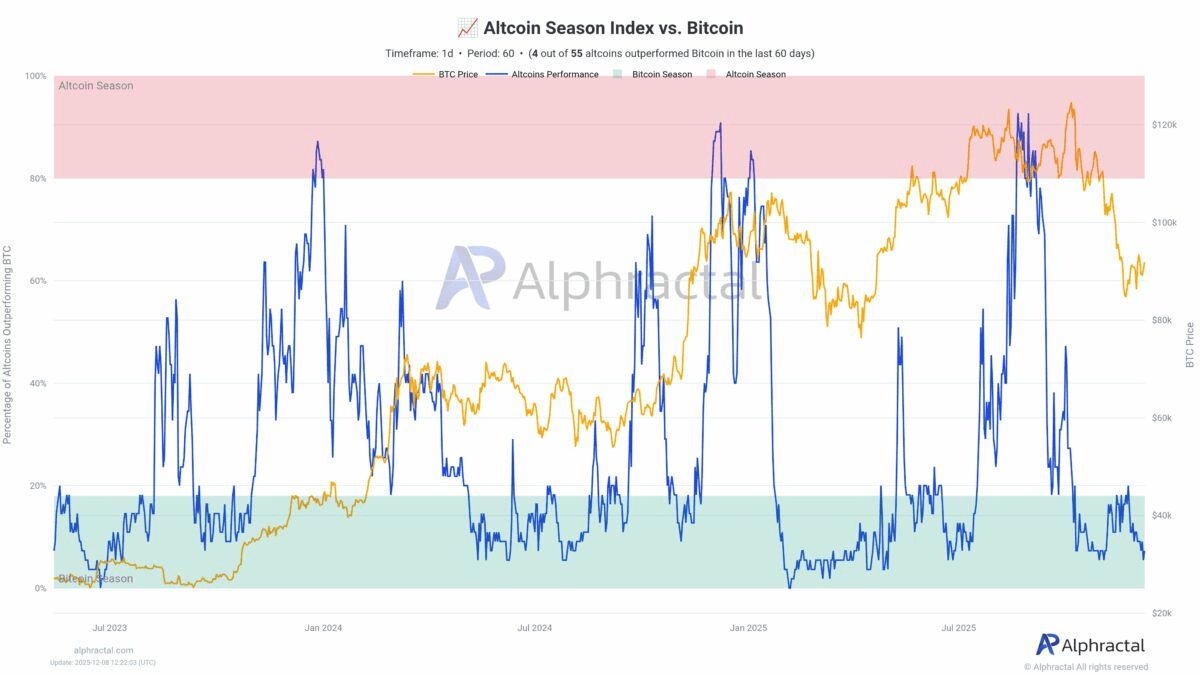
The altcoin season index showed that only 4 out of 55 altcoins outperformed Bitcoin over the past sixty days. This is far below the 75% threshold needed to enter a true altcoin season. Thus, the chart keeps the market deep in "Bitcoin season," with the indicator hovering around the 5-10% range.
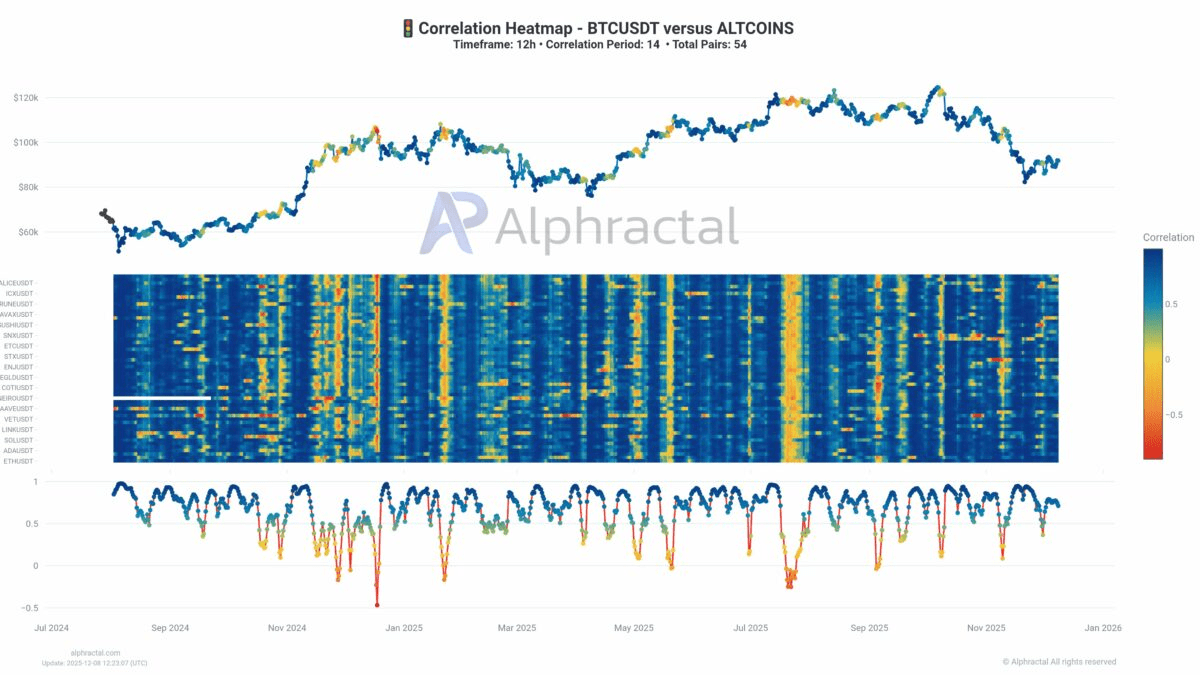
As the correlation chart shows a similar note; most major altcoins are closely correlated with Bitcoin, clustering around an average correlation ranging from 0.7 to 0.9. This means that Bitcoin's movements still dictate the direction of the entire market; altcoins react, rather than lead.
Individual traders have retreated as ETFs take the lead
In addition to Bitcoin's strong grip on the market, the decline in individual trader activity adds to this landscape.
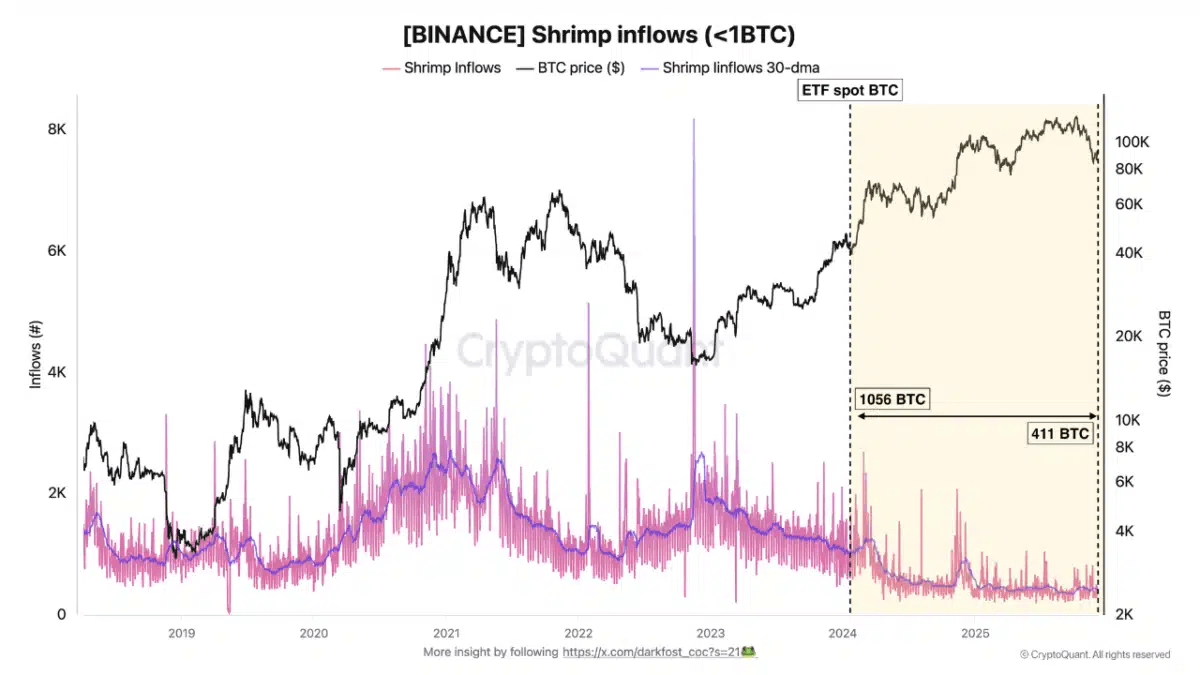
According to analyst Darkfost, small holders (or "shrimps") who own less than 1 Bitcoin sent only 411 Bitcoins to the Binance platform, a significant drop from 2,675 Bitcoins sent during the panic following the FTX collapse in late 2022.
Even within the era of ETFs alone, their inflows have decreased by over 60%, dropping from 1,056 Bitcoins after the launch of spot ETFs to a low of 9 in December.
The timing is strange. Bitcoin was rising, yet the presence of individual traders on exchanges is dwindling. Instead of chasing heights, regular investors now seem to prefer the simplicity and security of ETFs, which may make the market relatively more stable.
There are still some challenges
Bitcoin's price behavior seems hesitant. Bitcoin was trading at $90,196 at the time of writing, and remained stuck below all major exponential moving averages (EMAs) – with the 20-day EMA at $91,315, the 50-day at $96,902, and the 100-day at $102,323. The bullish conviction is likely to remain weak until the price at least regains the 20-day average.
The Relative Strength Index (RSI) showed weak demand, while the Chaikin Money Flow (CMF) at 0.07 indicated only moderate capital inflows. The market seems to be waiting for a clear catalyst. For now, Bitcoin maintains its position... but it is not advancing strongly either.
Closing thoughts
Bitcoin's dominance remains uncontested with rising demand for ETFs. Until Bitcoin regains the key moving averages, it is likely that the market will remain under Bitcoin's control.
