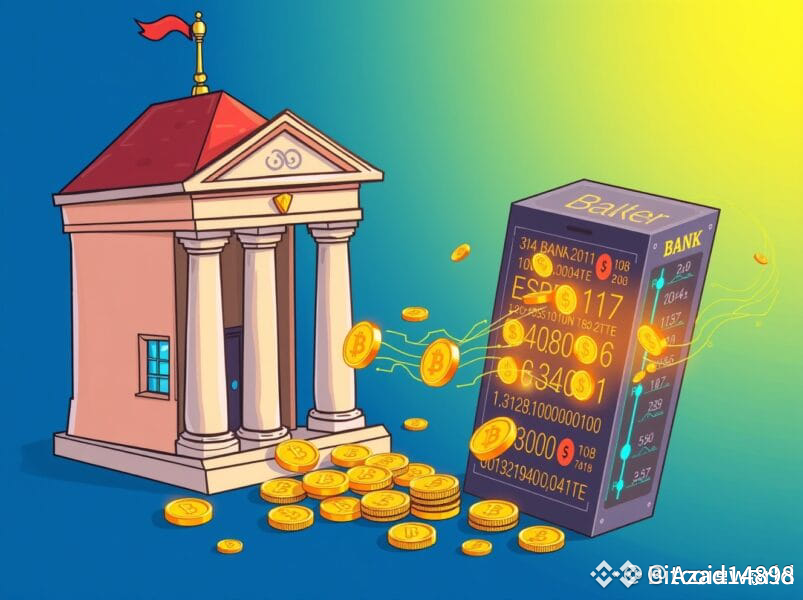
The debate around blockchain once revolved almost entirely around volatile cryptocurrencies and speculative trading. Today, the conversation has shifted—dramatically. In a compelling and forward-looking op-ed, BlackRock CEO Larry Fink, alongside COO Rob Goldstein, declared that traditional finance has finally begun to embrace the deeper power of blockchain technology. Their message is clear: the real transformation is not about coins, but about tokenization, a technology capable of redesigning how global markets operate at their core.
For years, the promise of blockchain was overshadowed by the noise of hype cycles and trading frenzies. Now, the focus has matured. Fink and Goldstein emphasize that tokenization represents a new chapter where blockchain is not seen as a speculative playground, but as the foundational infrastructure for the next generation of finance. In their view, the true impact of this technology is its ability to record, manage, and transfer ownership of financial assets in a manner that is faster, more transparent, and more accessible than anything traditional systems can offer.
Tokenization takes real-world assets—stocks, bonds, real estate, even fine art—and converts the rights to those assets into secure digital tokens on a blockchain. Instead of paperwork, intermediaries, and settlement delays, ownership becomes a verifiable, instantly transferable digital entry. The value of this evolution is enormous. Tokenized assets can settle in seconds rather than days, reducing counterparty risk and freeing capital that would otherwise remain locked within slow, outdated systems. Transparency becomes baked into every transaction, as records on a blockchain are permanent and auditable. Furthermore, tokenization breaks open high-value markets by enabling fractional ownership, allowing everyday investors to participate in investments long monopolized by institutions.
This shift isn’t theoretical—major financial players are already deploying tokenized bonds, real estate funds, and private investment products. Yet the road ahead is not without challenges. For widespread adoption, global regulatory clarity is essential, and governments still struggle to define frameworks around digital ownership. The integration of blockchain with legacy banking infrastructure remains another formidable obstacle, requiring technical collaboration and long-term investment. Still, Fink’s message signals that these hurdles are no longer deterrents—they are milestones on the path to modernization.
The impact on the investor landscape could be profound. As traditional finance absorbs the advantages of tokenization, markets are set to become more liquid, more inclusive, and far more efficient. Investing may no longer be dictated by geographical barriers, wealth thresholds, or bureaucratic delays. Entire markets could evolve into digital ecosystems where assets of every kind—physical, financial, or intellectual—can be accessed and exchanged with unprecedented ease.
The conclusion from BlackRock’s leadership is unmistakable: the world has moved beyond dismissing blockchain as a speculative fad. The technology’s ability to build a faster, safer, and more open financial system is now acknowledged at the highest echelons of global finance. Tokenization is not a futuristic concept waiting for validation; it is an active and accelerating transformation of the economic infrastructure that underpins modern society. And as this shift gains momentum, it promises to democratize investment in ways previous financial systems were never designed to allow.
The era of tokenization has begun—ushering in a financial landscape where access is broader, markets are smarter, and value flows without friction. The world’s biggest institutions have now signaled their endorsement, and with it, a new chapter for global markets is being written in real time.