
👆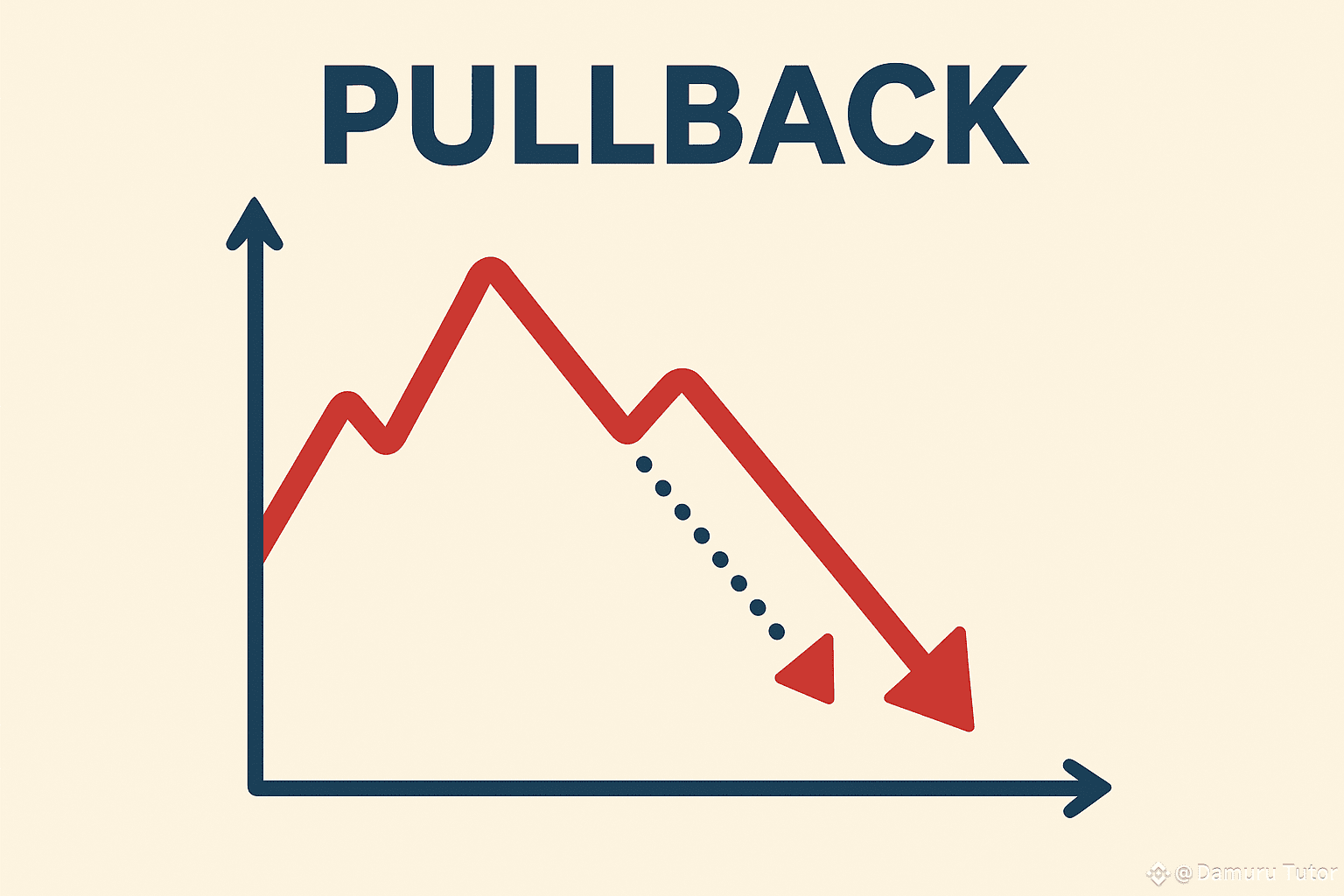 We’ve all seen those days: markets soaring, optimism high—and then, out of nowhere, a drop. That’s a market pullback in action. And believe it or not, it could be exactly what savvy investors have been waiting for. Here’s your crash course on what #MarketPullback really means, what triggers it, and how to use it—without freaking out.
What is a Market Pullback?
A pullback is a temporary dip or decline in the price of a stock, coin, or market after a period of upward momentum. Unlike a full-blown reversal—which signals a major change in trend—a pullback is just a short break before potentially resuming the rise.
Some key points:
Usually 5–10% decline from a recent high.
Happens regularly—it’s part of the natural ebb & flow of markets.
Can last from a few days to a few weeks.
Why Pullbacks Happen
Here are some common reasons behind pullbacks:
1. Profit-taking — Investors cash in gains, causing short-term selling pressure.
2.We’ve all seen those days: markets soaring, optimism high—and then, out of nowhere, a drop. That’s a market pullback in action. And believe it or not, it could be exactly what savvy investors have been waiting for. Here’s your crash course on what #MarketPullback really means, what triggers it, and how to use it—without freaking out.
What is a Market Pullback?
A pullback is a temporary dip or decline in the price of a stock, coin, or market after a period of upward momentum. Unlike a full-blown reversal—which signals a major change in trend—a pullback is just a short break before potentially resuming the rise.
Some key points:
Usually 5–10% decline from a recent high.
Happens regularly—it’s part of the natural ebb & flow of markets.
Can last from a few days to a few weeks.
Why Pullbacks Happen
Here are some common reasons behind pullbacks:
1. Profit-taking — Investors cash in gains, causing short-term selling pressure.
2. Overbought conditions — Indicators like RSI (Relative Strength Index) or price being far above its moving average trigger sell signals.
3. External news or uncertainty — Anything from inflation data to regulatory shifts, or global events can cause investors to pause or pull back.
4. Lack of breadth — When only a few big names are carrying the rally, not much else is pushing forward. Weak participation can foreshadow a pullback.
Pullback vs. Correction vs. Bear Market
It’s useful to know where pullbacks fit in the spectrum of pulls back:
Term Drop from recent peak What it suggests
Pullback ~5–10% Short, possibly healthy dip, might recover soon.
Correction ~10–20% More serious; sometimes signals deeper trouble if not addressed.
Bear Market ≥20% Major downturn; trend reversal likely.
What to Do During a Pullback (and Why It Could Be Good 🎯)
A market pullback doesn’t need to be scary—it can also be an entry point (if you play it smart). Here are strategies to make it work in your favor:
Watch support levels. If prices bounce off key moving averages or previous resistance-turned-support—those are good signs.
Verify with indicators. Use RSI, MACD, trend-lines, and volume. If the dip comes with strong selling volume or weakness in momentum, it could be more than just a pullback.
Don’t try to time the bottom. Tough to do reliably. Better to plan your entry zones (or stop-losses) ahead of time.
Diversify & manage risk. Spread exposure; don’t put all your eggs in one volatile coin or stock just because it dropped.
Look for buying opportunities. Some classes of assets—especially ones that had strong fundamentals—become more attractive during pullbacks.
🚨 What’s Going On Right Now
Right now, analysts are flagging several signs that suggest we may see one of these pullbacks soon:
Weakening market breadth—fewer stocks participating in the rally.
Seasonal weakness: the final stretch of September often brings increased volatility for the S&P 500.
Some big names already showing fatigue; transportation and other indices not confirming same strength as tech-heavy ones.
Morgan Stanley’s CIO, for example, has openly said he expects 5–10% dips due to tariff-related worries—and sees them as potential buying moments.
Final Thought: Fear or Opportunity?
If you're feeling jittery, remember this: pullbacks are normal. They are not the end unless fundamentals have shifted dramatically. For many investors, pullbacks are one of the best windows to accumulate quality assets at lower prices—especially for those with a long game in mind.
So next time you see the market dip, think: is this a chance or a crisis? Big difference in how you’ll act—and profit.
Overbought conditions — Indicators like RSI (Relative Strength Index) or price being far above its moving average trigger sell signals.
3. External news or uncertainty — Anything from inflation data to regulatory shifts, or global events can cause investors to pause or pull back.
4. Lack of breadth — When only a few big names are carrying the rally, not much else is pushing forward. Weak participation can foreshadow a pullback.
Pullback vs. Correction vs. Bear Market
It’s useful to know where pullbacks fit in the spectrum of pulls back:
Term Drop from recent peak What it suggests
Pullback ~5–10% Short, possibly healthy dip, might recover soon.
Correction ~10–20% More serious; sometimes signals deeper trouble if not addressed.
Bear Market ≥20% Major downturn; trend reversal likely.
What to Do During a Pullback (and Why It Could Be Good 🎯)
A market pullback doesn’t need to be scary—it can also be an entry point (if you play it smart). Here are strategies to make it work in your favor:
Watch support levels. If prices bounce off key moving averages or previous resistance-turned-support—those are good signs.
Verify with indicators. Use RSI, MACD, trend-lines, and volume. If the dip comes with strong selling volume or weakness in momentum, it could be more than just a pullback.
Don’t try to time the bottom. Tough to do reliably. Better to plan your entry zones (or stop-losses) ahead of time.
Diversify & manage risk. Spread exposure; don’t put all your eggs in one volatile coin or stock just because it dropped.
Look for buying opportunities. Some classes of assets—especially ones that had strong fundamentals—become more attractive during pullbacks.
🚨 What’s Going On Right Now
Right now, analysts are flagging several signs that suggest we may see one of these pullbacks soon:
Weakening market breadth—fewer stocks participating in the rally.
Seasonal weakness: the final stretch of September often brings increased volatility for the S&P 500.
Some big names already showing fatigue; transportation and other indices not confirming same strength as tech-heavy ones.
Morgan Stanley’s CIO, for example, has openly said he expects 5–10% dips due to tariff-related worries—and sees them as potential buying moments.
Final Thought: Fear or Opportunity?
If you're feeling jittery, remember this: pullbacks are normal. They are not the end unless fundamentals have shifted dramatically. For many investors, pullbacks are one of the best windows to accumulate quality assets at lower prices—especially for those with a long game in mind.
So next time you see the m
arket dip, think: is this a chance or a crisis? Big difference in how you’ll act—and profit.