
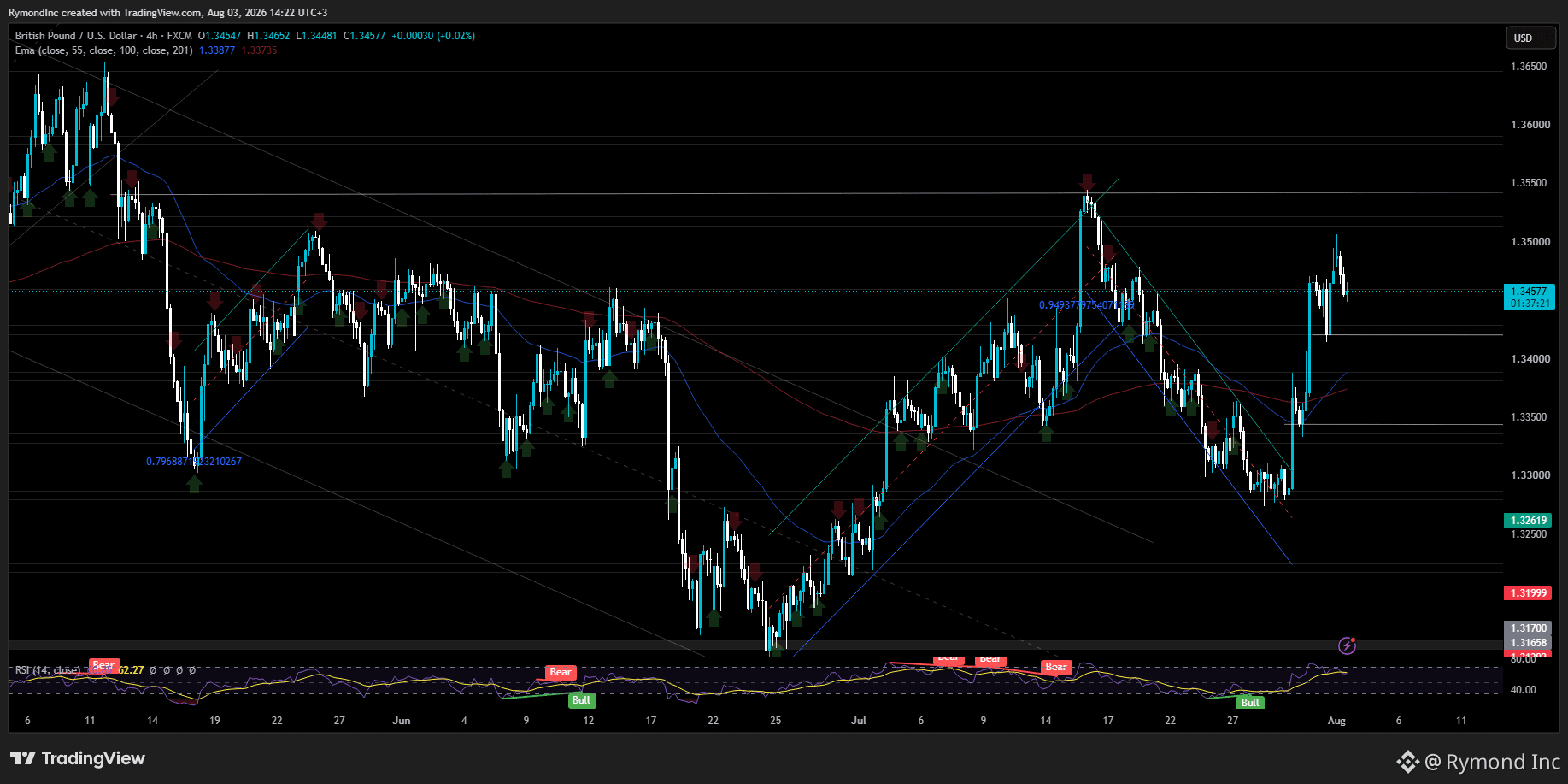
Sterling punched above $1.3500 in the Asian session Monday, its best print in seven weeks. By the time London traders sat down, most of that move had already unwound, with cable drifting back into the mid-$1.346s, down -0.13% from the previous trading session.
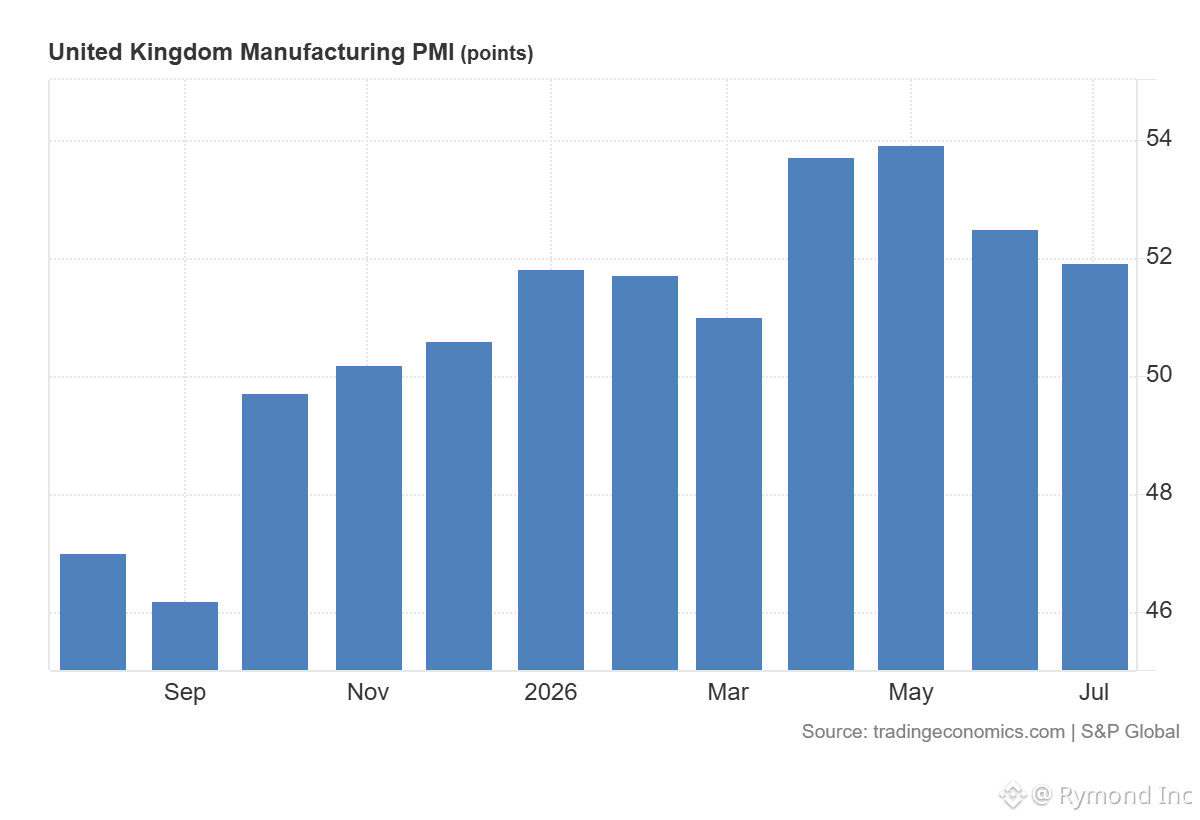
The retreat says more about what drove the rally than what ended it: a soft UK manufacturing reading landed just as an early dollar-driven bid was running out of road. July's final S&P Global UK Manufacturing PMI came in at 51.9, down from a preliminary estimate of 52.8 and softer than June's 52.5 reading. The sector is still growing — anything above 50 counts as expansion — but the trajectory has bent the wrong way. That's an uncomfortable number for a currency that had been leaning on the idea of a resilient domestic economy to argue for a Bank of England willing to tighten eventually. A cooling manufacturing sector, however mild, hands ammunition to the doves inside Threadneedle Street.
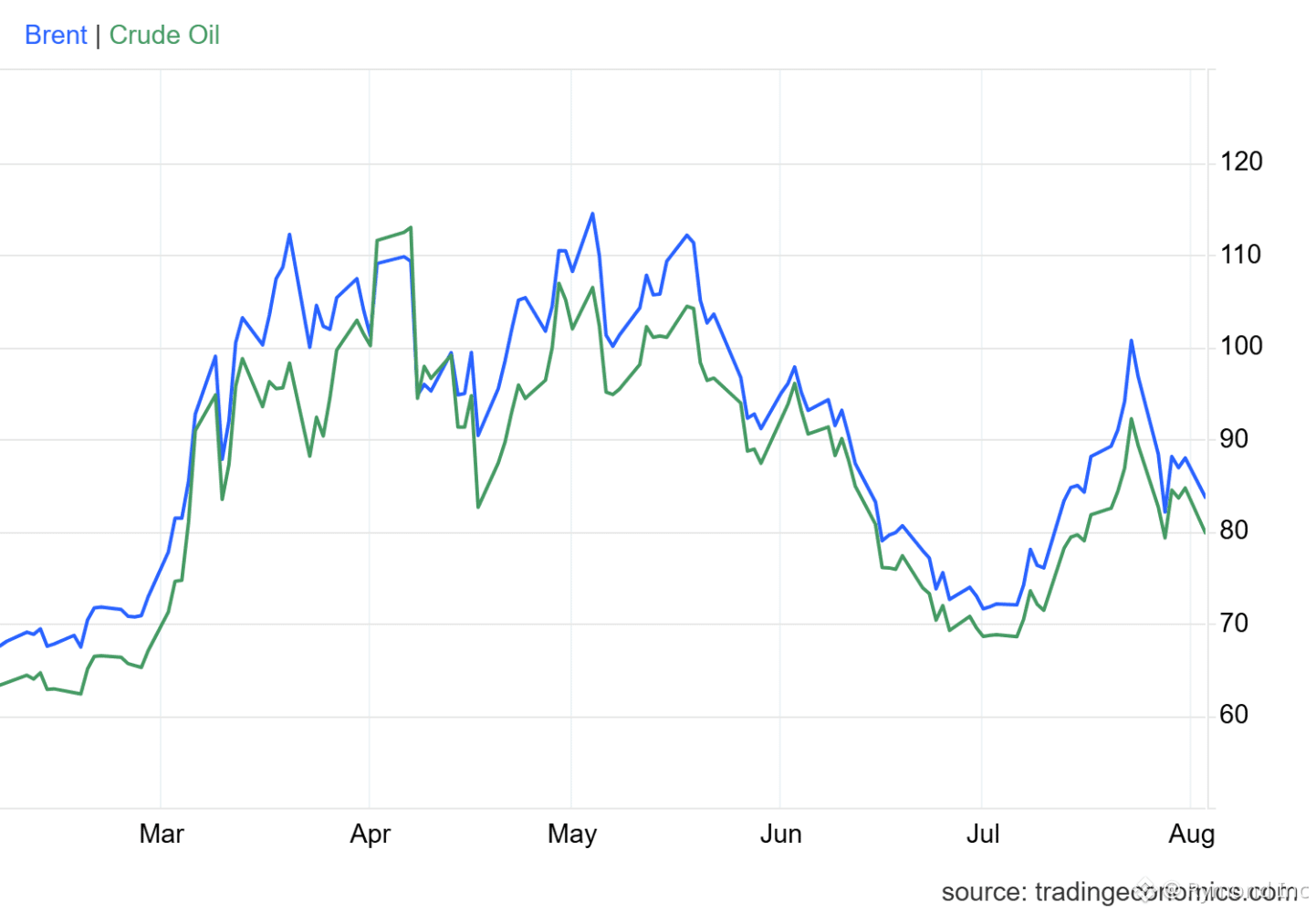
Much of Monday's early sterling strength had little to do with sterling. It was a dollar story. Oil has been sliding on hopes that Washington and Tehran can strike a deal to reopen the Strait of Hormuz, and President Trump's confirmation that negotiations with Iran would resume Monday afternoon pulled some escalation risk out of the market. Brent has fallen more than 5%, trading at $83.53 a barrel. Lower crude means lower near-term inflation risk, and that matters directly for how hard central banks feel they need to lean.
That dollar softness didn't start with Iran, either. Last week's Federal Reserve meeting did more of the damage. The FOMC held its target range at 3.50%–3.75% on a 9-3 vote — the three dissents, all from regional bank presidents, in favor of a hike — and traders still read the outcome as dovish. September rate-hike odds slid from above 80% to around 60% within hours of the decision.
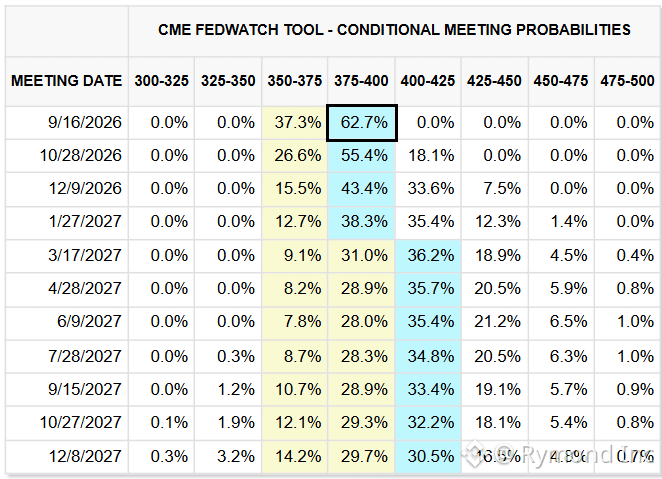
Chair Kevin Warsh offered little in the way of forward guidance, telling reporters the Fed under his watch isn't in the "forecasting business" and would rather watch markets react than pre-commit to a path. A hold that didn't validate the hawks, paired with near-silence on what comes next, was enough to push the dollar lower across the board.
Then came the yen. Japan's currency had slumped to 40-year lows near 163 per dollar last week, prompting Tokyo to step into the market Thursday — its first intervention in three months — which knocked the dollar down as much as 2.4% to a low near 157.80.
A second wave of intervention followed Friday. Today, Japan's Ministry of Finance made it official: it had conducted a coordinated yen-buying operation with the US Treasury on Friday, the first true joint intervention between the two countries since 2011. The ministry tied the action to a bilateral framework agreed in September 2025 and described it as addressing excessive, disorderly currency moves. BOJ data points to Tokyo selling close to $59 billion (5.3 Trillion Yen) in the operation. Between Thursday and Friday, the two countries reversed more than two months of yen losses — a rare and, by recent standards, unusually decisive show of coordinated force.
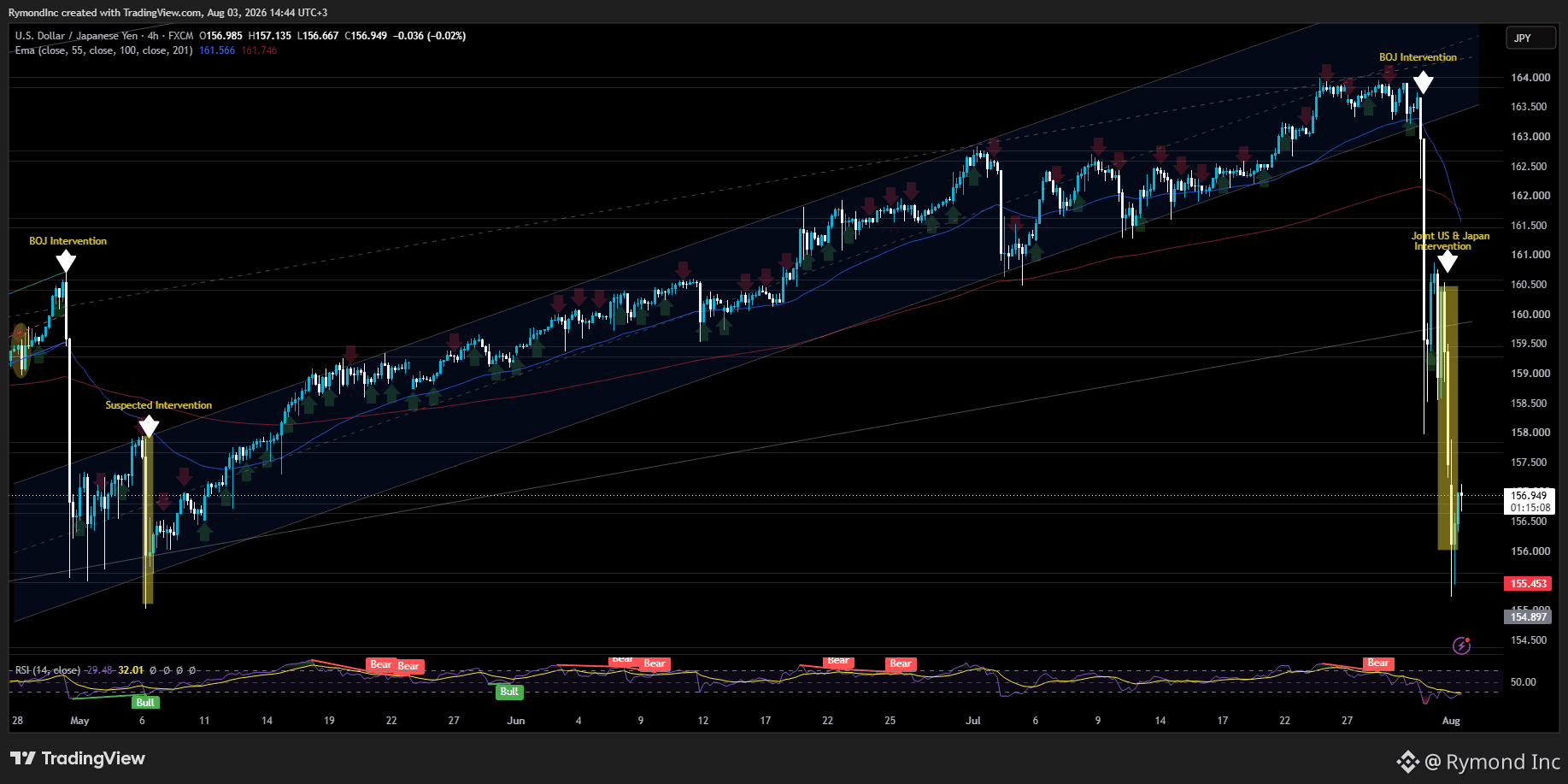
That, coupled with the Bank of Japan decision to hold rates at 1% but flag, for the first time, that underlying inflation could run hot enough to justify hikes as soon as September. By Monday, President Trump and Japan's finance ministry had gone further still, confirming the action was coordinated and backed by the US Treasury. The dollar dropped again on the news, changing hands near 156.90 yen, down -0.33%— a rare, explicit admission of intervention that traders likened to the joint response after the 2011 earthquake.
All of that dollar weakness dragged GBP/USD higher along with most other dollar pairs early Monday. But cable's failure to hold above $1.3500 once the PMI miss landed shows the pound wasn't the strong side of this trade — it was a passenger.
The Bank of England's own decision adds to that picture, though with a twist. Three of the nine rate-setters voted to tighten policy against inflation risks stemming from the Iran war, prompting some economists to label it a "hawkish hold."
Markets read it the other way. The implied probability of no change at September's meeting climbed from 53.6% just before the announcement to 73%. Governor Andrew Bailey spent much of his press conference telling reporters the Bank wasn't preparing them for a future hike, adding that he was fairly comfortable seeing little evidence of oil prices feeding through into broader goods and services inflation.
That leaves sterling with less of its own ammunition just as the dollar's weakness starts to look a touch more fragile too.
Seven Months, No Clean Trend
GBP/USD has spent most of 2026 chopping between roughly 1.31 and 1.39, without ever settling into a direction. January set the tone, with cable rising 1.59% to close the month at 1.3689 after touching 1.3869 — the year's high so far — and dipping as low as 1.3329. February gave almost all of it back, falling 1.48% to 1.3486 inside a 1.3433–1.3735 range, and March pressed the decline further, down 1.93% to 1.3226 between 1.3158 and 1.3486. April delivered the year's sharpest reversal, surging 2.87% to 1.3605, only for May to erase more than a third of that gain with a 1.06% slide to 1.3461. June proved the roughest stretch, dropping 1.47% to 1.3263 and touching 1.3139 — the year's low — before July answered with a 1.65% rally to 1.3482 on a range between 1.3218 and 1.3560. August has opened by giving back a sliver of that, down 0.17% to 1.3459 after Monday's push toward 1.3506, a whisker below the seven-week high.
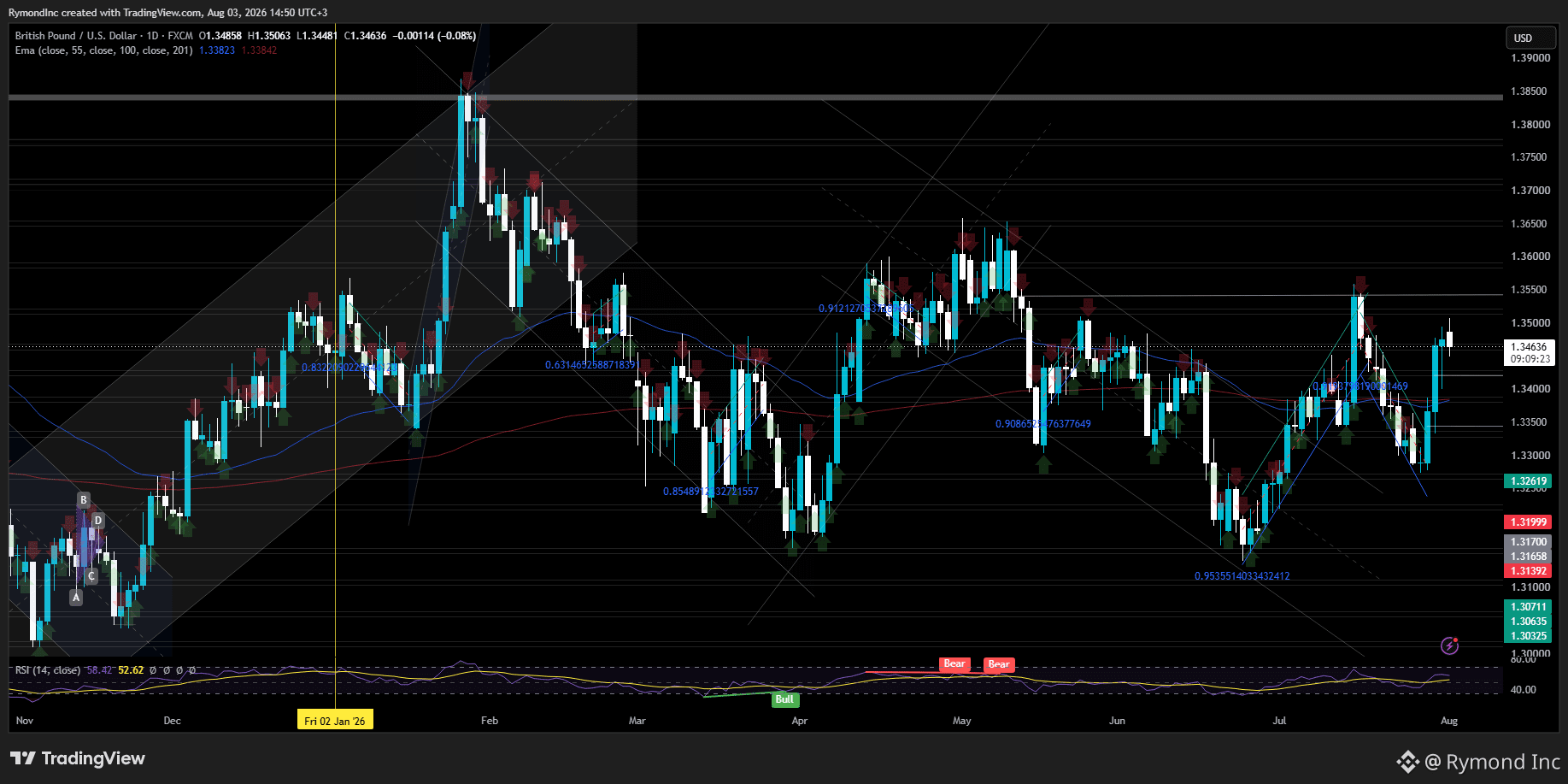
Four of the last seven completed months closed lower, and the pair hasn't managed back-to-back gains all year. July's 1.65% bounce has already started giving ground on the first trading day of August. That one-step-forward, one-step-back pattern fits a market caught between two central banks, neither of which wants to commit to a clear path.
Where the Chart Goes From Here
The broader 2026 range still sits between roughly 1.3009 and 1.3869. Monday's rejection at $1.3500–1.3506 puts cable back into a zone where $1.3400 — near the 200-day moving average — is the level worth watching. Holding above it keeps the recovery from June's 1.3139 low intact and leaves room for another run at $1.3560–1.3600. Slip back below $1.3400, though, and $1.3350 then $1.3300 come back into play. A firmer break through $1.3300 would start to look less like a pullback and more like a resumption of the year's broader downtrend.
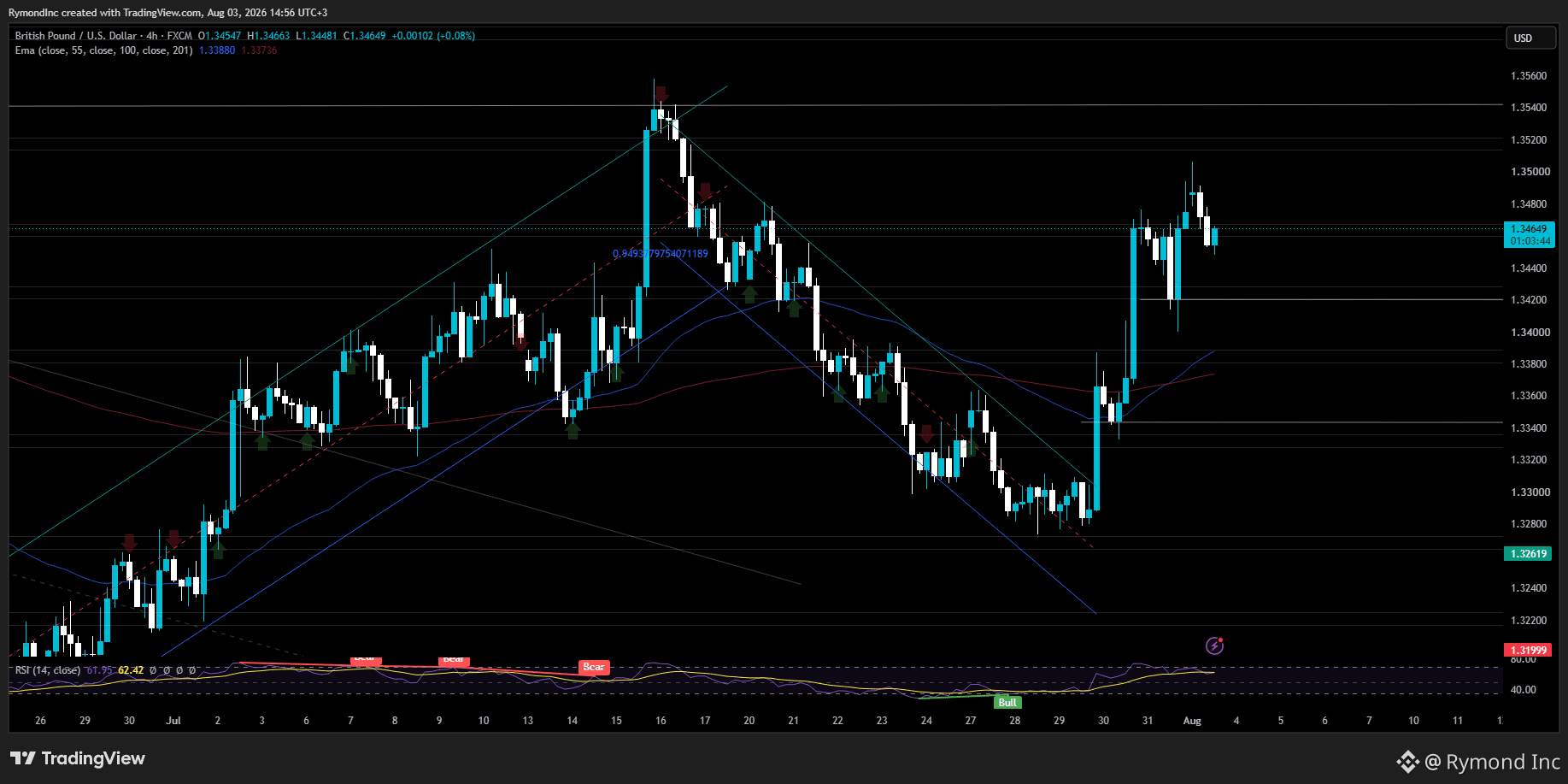
Monday's round trip — fresh seven-week highs to giving most of it back before lunch — is a fair summary of where cable sits right now. The dollar side of the ledger is crowded: a Fed that held rates while sounding anything but hawkish about it, and an extraordinary, officially confirmed intervention in the yen dragging the whole dollar complex down with it. The pound's side is thinner: a manufacturing sector losing momentum, and a central bank that just told markets not to get ahead of themselves on rate hikes. Until the UK side of that ledger improves, sterling looks less like the currency setting the pace and more like the one along for the ride.
This article is for informational purposes and does not constitute investment advice.