

I wasn't planning to spend another evening reading about Newton Mainnet Beta, but that's exactly what happened. I had just finished reviewing my trades from today, and one chart annoyed me more than the others. I ignored my own plan because I assumed the market would respect a support level that existed only in my head. It didn't. That's probably why I ended up thinking less about charts and more about decision-making. I sometimes wonder if crypto has reached a point where better infrastructure isn't about making things happen faster anymore. Maybe it's about reducing the number of bad decisions that are allowed to happen in the first place.
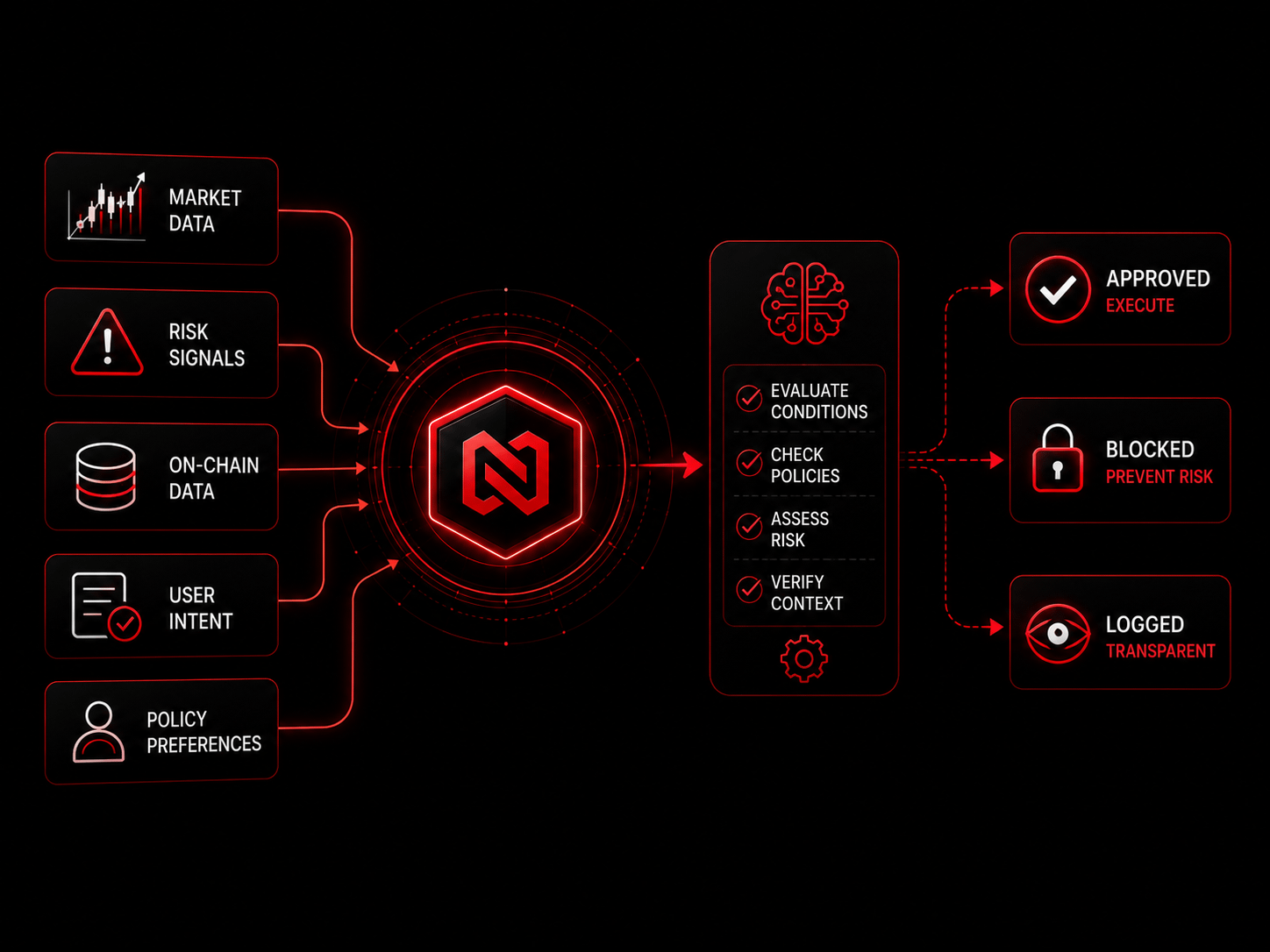
While going through @NewtonProtocol again, one idea kept standing out. The protocol doesn't seem obsessed with transactions themselves. Looking from the outside, it feels much more interested in the conditions surrounding those transactions. That's a subtle difference, but I think it matters. Recent Mainnet Beta developments rely on verified market data so predefined policies can evaluate whether an action should proceed before it's finalized. It makes me think that blockchain might slowly be shifting from simple execution toward contextual execution. But then another question appears. If the surrounding data becomes one of the foundations of every decision, does trust gradually move from the blockchain itself toward the quality of the information feeding it?
I'm not completely sure people are talking enough about that trade-off. Decentralization has always been associated with minimizing trust assumptions, yet modern applications increasingly depend on reliable external inputs. Maybe that's unavoidable. AI agents, automated treasury systems and institutional products can't really operate on isolated onchain information forever. They eventually need context. The interesting part is that Newton seems to treat that context as something verifiable rather than something developers simply hope is correct. Even so, I keep asking myself whether developers will embrace this extra layer or continue building around simpler models because they're already familiar with them.
The longer I follow infrastructure projects, the more I realize success often looks surprisingly boring. If everything works exactly as intended, nobody notices. People only notice the absence of safeguards when something fails. Maybe Newton Mainnet Beta is entering that phase where technical architecture becomes less important than real user behavior. Developers will almost certainly push the system in directions that weren't originally expected, and those unexpected use cases usually teach far more than carefully planned demonstrations ever could.
For now, I don't think the most interesting question is whether Newton Protocol works. I think the more interesting question is whether the ecosystem gradually changes its expectations around what secure onchain execution should actually look like. That's something no documentation or beta launch can fully answer...
@NewtonProtocol #Newt #newt $NEWT
