
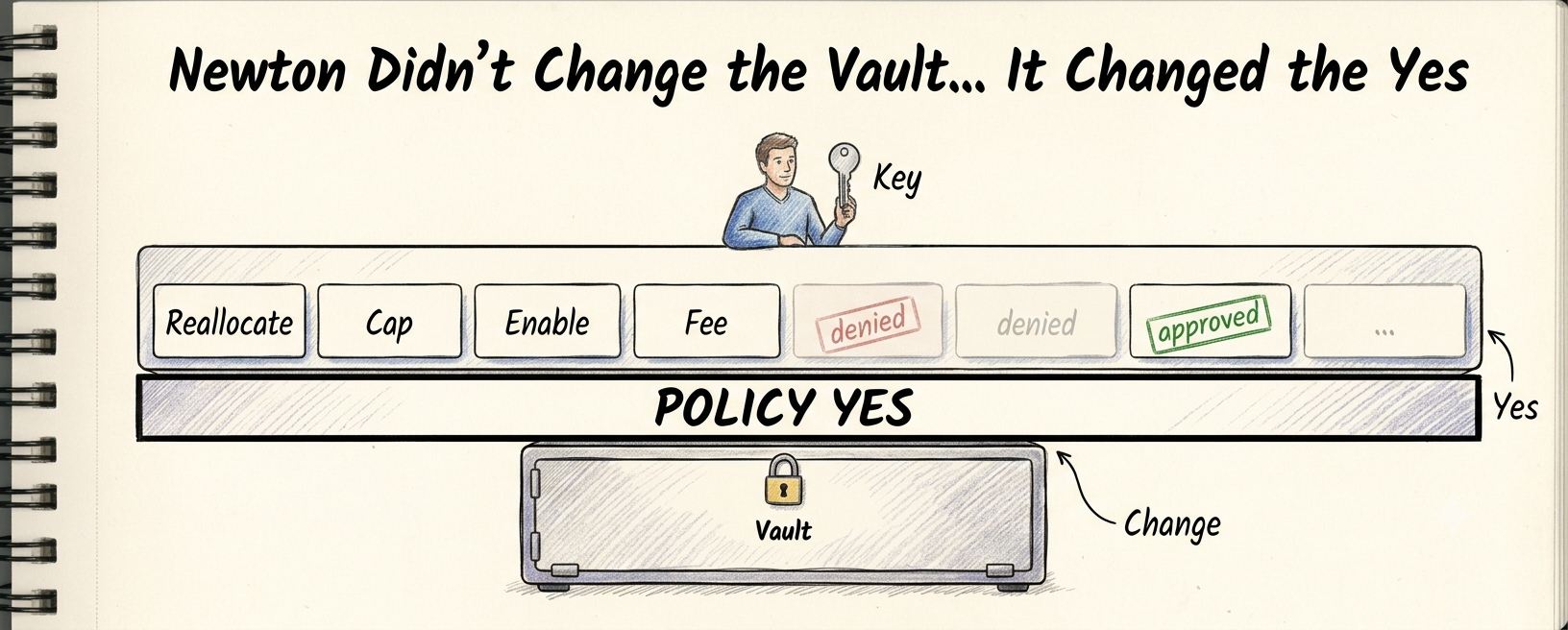
i keep thinking the easiest way to miss what Newton is doing right now is to stare at the vault move and assume the vault move is where the change happened
same vault. same curator. same familiar management flow. same little cluster of actions people in DeFi already know by muscle memory. reallocate here. change a cap there. maybe enable a market, maybe touch a fee.
from the outside it barely even looks like a new policy layer arrived. that’s what keeps bothering me. Newton’s newer VaultKit stuff is explicitly built so the vault and the curator’s tools can stay the same on the surface, while a policy check gets inserted underneath every management action before it executes.
and honestly that feels more revealing than the old cleaner Newton story ever did
because for a while the easy read on Newton was chain unification, one smart wallet, one Unified Balance State, smoother movement, less bridging nonsense, fewer separate chain rooms. fine. that surface was real.
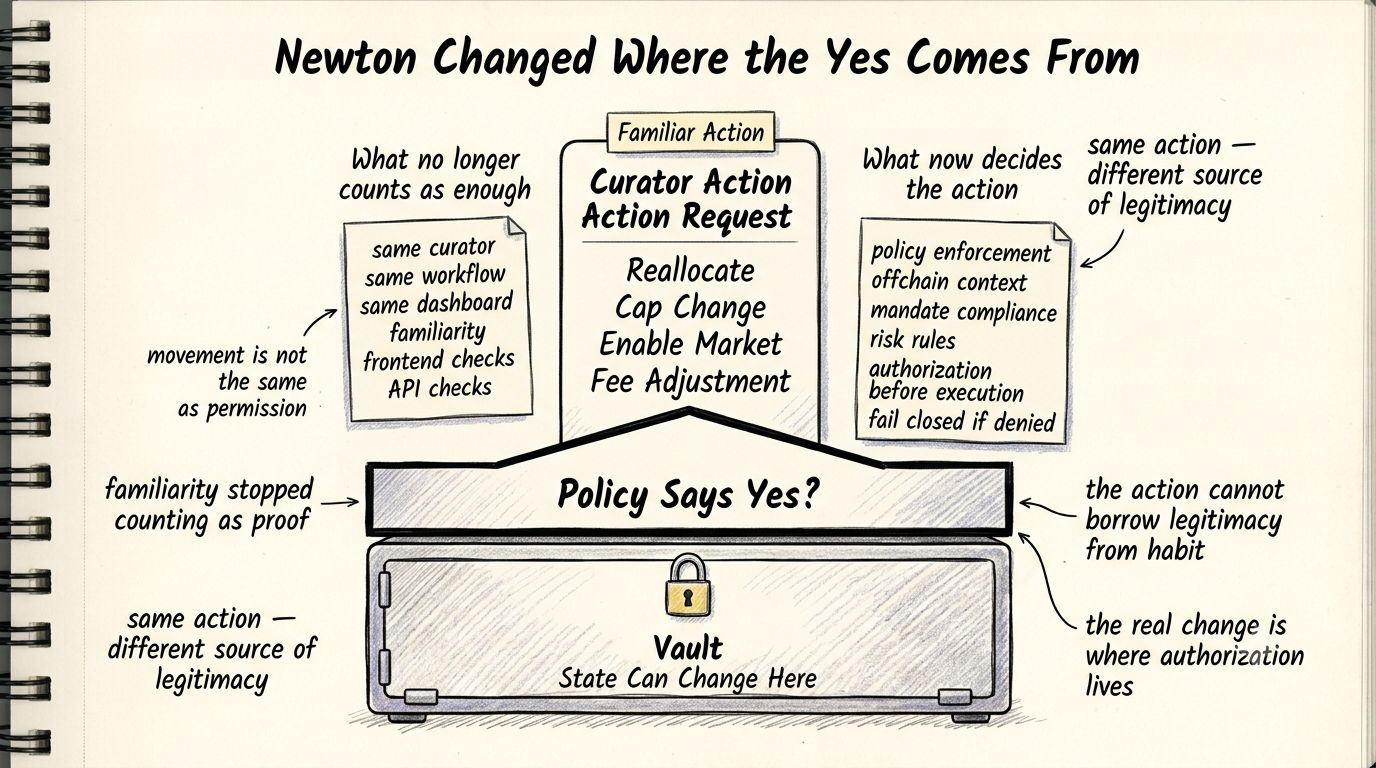
but the older you get around crypto the less impressed you are by smooth execution on its own. things moving cleanly is not the same as things being authorized cleanly. that difference matters more than people like admitting.
or maybe that’s the real split, right there.
movement is easy to show. permission isn’t.
VaultKit kind of drags that into the open in a way i actually trust more
not because it screams some huge revolution. it doesn’t. that’s almost why it works. it just quietly changes where the yes sits.
the manager key still exists, but now it points through a policy layer first. so the real shift is not workflow. the real shift is that policy sits underneath the workflow now. the curator can still feel like the curator. the dashboard can still feel like the dashboard.
but now every curator action has to survive policy before it gets to touch the vault at all. if policy denies it, or if evaluation fails, the action just does not happen. fails closed. that’s the part i can’t stop circling.
what actually changed then, really?
the vault? the curator? or just where the yes comes from?
maybe that is the awkward version of what Newton was trying to become the whole time
not smoother action really. more governed action.
because in the real world, especially once people start pretending institutional capital is here and mature and all that, nobody serious is actually asking whether a vault manager can reallocate capital. obviously they can.
the ugly question is who decided that reallocation was inside mandate, inside risk limits, inside whatever rules everyone nodded along to when the deck was still open on someone’s laptop. and if the answer is basically “well, we trust the curator,” then okay, just say that. don’t dress it up as infrastructure.
because then what is the system really doing.
speeding things up? making trust look tidier?
Newton’s whole live pitch now is basically that smart contracts are blind to offchain context. and frontend filters or API checks don’t really count as enforcement if the action can just route around them. so the point becomes pretty obvious after that. put the rule where the action can’t slip past it.
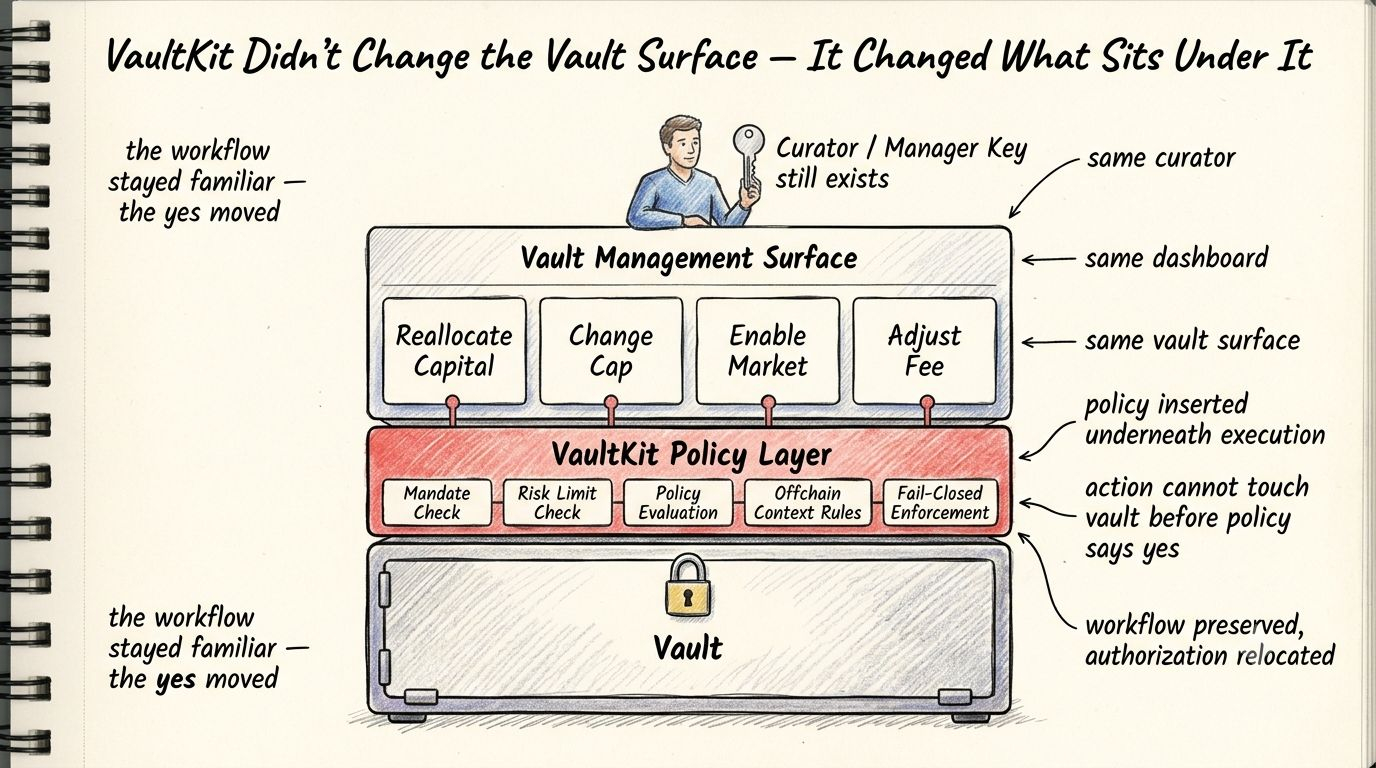
i keep coming back to Newton isn’t even some fancy technical detail. it’s just this ugly little realization that the action doesn’t get to borrow legitimacy from familiarity anymore
same vault is not enough. same curator, not enough either. same workflow, still not enough.
the policy has to say yes to this exact thing in front of it.
that’s the whole mood shift, i think.
familiarity stopped counting as proof.
and weirdly that makes Newton feel less futuristic to me, not more. less agentic-finance theater. less “look what autonomous systems can do.” more like the beginning of a world where onchain systems finally stop confusing speed with permission.
which maybe sounds boring. good. that’s usually where the serious control layer finally shows up anyway.
and i think VaultKit reads so differently to me than the older Newton surface did. not because it abandoned the old logic, but because it grew up enough to put that logic somewhere embarrassing and real: right between the person with the key and the thing they want to change.
Newton mainnet beta is now live on Base and Ethereum, and Newton is explicitly starting with DeFi vault enforcement. honestly that feels like the first time the whole project stopped sounding like a smooth promise and started sounding like a refusal system.
maybe that was always it underneath.
not the action. the refusal.